Cerca:young the giant

Generi
Tutto
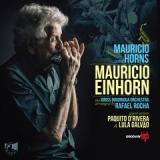
Mauricio Einhorn - Mauricio and Horns LP 2x12"

'Mauricio and Horns' by Bossa Nova legend and harmonica master Mauricio
Einhorn is produced by Jacques Muyal, with the Idriss Boudrioua Orechestra
arranged by Rafael Rocha and with guest artists Paquito D'Rivera and Lula
Galvao
In jazz, we all know the harmonica master, Mr. "Baron" Toots Thielemans, but we are
equaly fortunate to have our "Prince", Mauricio Einhorn. His early contributions in the
1950s to the birth of the Samba Jazz movement in Brazil played a pivotal role in the
creation of Bossa Nova, a genre that quickly became an integral part of the jazz world.
The influence of jazz on Brazilian music - exemplified by the great Carlos Lyra in
"Influencia Do Jazz" - was so profound that local musicians embraced it to forge a
new musical identity. Many of Einhorn's compositions have become timeless
standards performed worldwide since the early 1950s and '60s.
Together with another giant of the scene, alto saxophonist Idriss Boudrioua,
Mauricio's music gets an even grander presentation than ever before. This time, he
teamed up with an exceptionally talented young musician: a big band arranger and
trombonist named Rafael Rocha, who wrote all the arrangements and conducted the
recordings. Rafael's arrangements are nothing short of magical. They are never
overdone, always respecting the beauty of the original harmonies while infusing them
with his deep passion for jazz. His trombone solos recall the phrasing of Frank
Rosolino, and he modulates the pieces with swirling harmonies that evoke the very
roots of Brazilian jazz. In every track, Rafael enhances Mauricio's elegant and
expressive phrases without ever overpowering the artist, creating a "wall of sound"
that gracefully floats alongside Mauricio.

pre-ordina ora21.11.2025

dovrebbe essere pubblicato su 21.11.2025

35,59
Kevin Morby - City Music LP

Kevin Morby

City Music LP

12inchDOC131LPC2
Dead Oceans
21.11.2025

His fourth album, City Music works as a counterpart to Morby’s acclaimed 2016 release Singing Saw, an autobiographical set that reflected the solitude and landscape in which it was recorded. Saw was imagined as “an old bookshelf with a young Bob and Joni staring back at me, blank and timeless. They live here, in this left side of my brain, smoking cigarettes and playing acoustic guitars while lying on an unmade bed.” And now follows City Music, the yang to its yin, the heads to its tails. It is a collection crafted using the other side of its creator’s brain, the jumping off point perhaps best once again encapsulated by an image. “Here, Lou Reed and Patti Smith stare out at the listener,” explains Morby. “Stretched out on a living room floor they are somewhere in mid-70s Manhattan, also smoking cigarettes.” It finds Morby exploring similar themes of solitude, but this time framed by a window of an uptown apartment that looks down upon an international urban landscape “exposed like a giant bleeding wound.”

pre-ordina ora21.11.2025

dovrebbe essere pubblicato su 21.11.2025

25,63
DUSTED ANGEL - THIS SIDE OF THE DIRT
  • Plastic People
  • Death Crushes Hope
  • Redman
  • This Side Of The Dirt
  • Kiss O Shame
  • Little Lizzy
  • The Thorn
  • Seeking The Dawn
disponibile anche

Transparent orange vinyl[24,58 €]


Dusted Angel is a band that likes to keep it in the family. Made up of a group of close friends that have known each since the early 80s, stemming from playing in various intertwined bands engraved in the extended Santa Cruz family of friends. Featuring Ed Gregor, guitar (hedgehog, no use for a name), Eric "Dog" Fieber, guitar (Mock, creature, fire sermon) Steve Ilse drums (creature, Herbert, Automatic Animal) Clifford Dinsmore vocals (Bl'ast!, Seized Up, Spaceboy) and Eliot Young (Lost in Line, Seance) on bass. Formed in 2009, Dusted Angel is a sleeping giant that awakens from time to time to enlighten people with their unique brand of heavy, heavy groove laden music. Now it's time for a new album via Heavy Psych Sounds Records!

pre-ordina ora19.09.2025

dovrebbe essere pubblicato su 19.09.2025

21,81
DUSTED ANGEL - THIS SIDE OF THE DIRT

DUSTED ANGEL

THIS SIDE OF THE DIRT

12inchHPSLTD359
HEAVY PSYCH SOUNDS
19.09.2025

Transparent orange vinyl, limited to 300 copies. Dusted Angel is a band that likes to keep it in the family. Made up of a group of close friends that have known each since the early 80s, stemming from playing in various intertwined bands engraved in the extended Santa Cruz family of friends. Featuring Ed Gregor, guitar (hedgehog, no use for a name), Eric "Dog" Fieber, guitar (Mock, creature, fire sermon) Steve Ilse drums (creature, Herbert, Automatic Animal) Clifford Dinsmore vocals (Bl'ast!, Seized Up, Spaceboy) and Eliot Young (Lost in Line, Seance) on bass. Formed in 2009, Dusted Angel is a sleeping giant that awakens from time to time to enlighten people with their unique brand of heavy, heavy groove laden music. Now it's time for a new album via Heavy Psych Sounds Records!

pre-ordina ora19.09.2025

dovrebbe essere pubblicato su 19.09.2025

24,58
AESOP ROCK - ROADWORK RAPPIN'  (7")
  • Roadwork Rappin' - Main
  • Roadwork Rappin' - Instrumental

After delighting fans of all ages with the surprise children's hit "Long Legged Larry," underground hip-hop icon Aesop Rock returns with "Roadwork Rappin'," a joyful ode to construction vehicles and the kids who love them. Inspired by the fascination many children have with bulldozers, front loaders, and cranes, the track delivers clever rhymes and vivid descriptions in classic Aesop fashion_this time with a whimsical twist. Over a minimal beat with a bouncing bass line that evokes the lumbering roll of oversized construction tires, Aesop celebrates the sights and sounds of work zones, bringing dump trucks and backhoes to life with vivid wordplay. The song is part educational, part imaginative world-building, capturing the wonder of watching giant machines reshape our surroundings. What makes it shine is Aesop's funny and wildly specific wit, packaged in a format that's approachable for younger listeners but still rewarding for longtime fans. With "Roadwork Rappin'," Aesop continues to expand his creative universe in unexpected ways, proving once again that his pen knows no bounds. Whether it's blaring from a car seat playlist or sparking nostalgia in adults who once chased garbage trucks down the block, this track is a joyful celebration of curiosity, machinery, and the poetry hiding in plain sight.

pre-ordina ora12.09.2025

dovrebbe essere pubblicato su 12.09.2025

22,27
American Football - American Football LP 3x12"
  • Silhouettes
  • Every Wave To Ever Rise (Feat Elizabeth Powell)
  • Uncomfortably Numb (Feat Hayley Williams)
  • Heir Apparent
  • Doom In Full Bloom
  • I Can’t Feel You (Feat Rachel Goswell)
  • Mine To Miss
  • Life Support

The quietest voices can be the most durable.

American Football’s original triumph, on their 1999 self-titled debut, was to reunite two shy siblings: emo and post-rock. It was a pioneering album where lyrical clarity was obscured and complicated by the stealth musical textures surrounding it.

Like Slint’s Spiderland, or Codeine’s The White Birch, even Talk Talk’s Laughing Stock, American Football asked far more questions than it cared to answer. But there wasn’t a band around anymore to explain it, anyway. The three young men who made the album – Mike Kinsella, Steve Holmes, and Steve Lamos – split up pretty much on its release.

Fifteen years later, American Football reunited (now as a four-piece, with the addition of Nate Kinsella). They played far larger shows than in their original incarnation and recorded their long-anticipated second album, 2016’s American Football (LP2). The release was widely praised, but the band members still felt like their best work was yet to come.

‘I feel like the second album was us figuring it out,’ says Nate. ‘For me, it wasn’t quite done. I knew there was still more.’

Enter American Football (LP3). ‘We put a lot of time and a lot of energy into it,’ says Mike. ‘We were all thoughtful about what we wanted to put out there. Last time, it was figuring out how to use all of our different arms. This time, we were like – Ok we have these arms, let’s use them.’ The band used the same producer, Jason Cupp, and recorded the album at the same studio (Arc Studios in Omaha, Nebraska) as its predecessor – yet they approached it in a markedly different way. There was a determination to let the songs breathe, to trust in ideas finding their own pace. The final result is a definite, and deliberate, stretching of the band.

As a result, LP3 is less obviously tethered to the band’s past than the second album. An immediate contrast between LP3 and its two predecessors is its cover. The two previous albums featured the exterior and interior of a residence in the band’s original hometown of Urbana, Illinois (now attracting fans for pilgrimages and photo opportunities), by the photographer Chris Strong. But American Football knew that LP3 was an outside record. Instead of the familiar house, this time the cover photo (again by Strong) features open, rolling fields on Urbana’s borders. It is a sign of the album’s magnitude in sound, and of the band’s boldness in breaking away from home comforts.

American Football also joked that LP3’s genre was ‘post-house’, because of this very conscious visual break. But, in a strange way, there are links in LP3 with an actual post-house genre: shoegaze. The more exploratory members of the original British shoegaze scene were inspired by the dreamtime and circularity of house music (ambient house in particular), cherishing its sonic possibilities. That spirit drips into LP3, most obviously on ‘I Can’t Feel You’, a collaboration with Rachel Goswell of Slowdive.

The album also features Hayley Williams from Paramore on the album’s catchiest moment, ‘Uncomfortably Numb’, and Elizabeth Powell, of the Québécoise act Land Of Talk. Mike wrote lyrics in French especially for her.

LP3 is contemplative, rich, expressive, yet with a queasy undercurrent. It is heavy with expectancy, revealing its ideas slowly, eliciting the hidden stories people carry around with them. ‘I feel like my lyric writing has changed a lot over the years,’ says Mike. ‘The goal is to be conversational, maybe to state something giant and heavy, but in a very plain way. But, definitely in this record, I keep things a little more vague.’ As on the first album, the lyrics on LP3 may seem confessional and concentrated, but the more you scrutinize them, the further their meaning slinks away. Or, as Mike tellingly sings on ‘I Can’t Feel You”: I’m fluent in subtlety.

‘Somewhere along the way we moved from being a reunion band to just being a band,’ says Steve Holmes. American Football is now a bona fide ongoing focus, and they are making some of the best music of their lives. American Football (LP3) stands with two other rare reunion successes – Slowdive and My Bloody Valentine’s mbv – as a fine example of how a band refinding one another can augment, rather than taint, their legacy.

‘I think that there are those albums, or the music that you heard when you were younger, and they imprint on you,’ says Nate. ‘And no matter where you go, or what you do they’re always there.’ He is talking of Steve Reich – an early and ongoing influence on American Football – but he might as well be reflecting what is said of his own band, and the ardent following they inspire. American Football stands as an enduring symbol of elusive emotional landscapes, where introspection can be as dramatic as confrontation

pre-ordina ora15.08.2025

dovrebbe essere pubblicato su 15.08.2025

27,31
Sugarfoot - Cosmic Norse Americana
  • Tiger Rider
  • Flatfoot Willie
  • All Dried Up
  • Hungry Man
  • Dolphins Hotel
  • This Love That We Outwore
  • Political Disaster
  • Changing Times
  • Ego In A Bag
  • Time Will Show The Wiser

Formed in 2012 by long-time musical companions Oyvind Holm and Hogne Galaen,
the band quickly grew into the six- piece musical force they are today. Their unique
sound fuses cosmic Americana and rich vocal harmonies with catchy melodies, highspirited improvisation, and contagious musical energy that will leave you craving
more.
The six members come from diverse musical backgrounds but are united by their
shared love of psychedelia and cosmic Americana. They draw particular inspiration
from the California sound of the late '60s, with bands like The Byrds, Crosby, Stills,
Nash & Young, and the Grateful Dead as key infuences.
Between 2012 and 2019, the band recorded and released fve critically acclaimed
albums, two of which were recorded in the California desert at the legendary Rancho
De La Luna, nestled among the Joshua trees. Like many other artists, the pandemic
shook their foundations, forcing the band into an involuntary hiatus. In the aftermath
of lockdowns and other imposed restrictions, the backlash from other projects kept
them from picking up where they had left off.
However, the fall of 2024 brought new opportunities. An unexpected email from Mike
Scott of The Waterboys reignited their spirit and motivation. While on tour in Norway,
Scott discovered one of their albums and was so taken by their sound that he invited
them to contribute vocal harmonies to 'The Tourist,' a track off The Waterboys' new
album Life, Death & Dennis Hopper.
Soon after, an even greater opportunity arose--an invitation to join The Waterboys on
tour in the UK and Scandinavia. To accompany the upcoming tour, we've put together
a beginner's guide to Sugarfoot.
The compilation album Cosmic Norse Americana features nine highlights from
Sugarfoot's career so far, along with a newly recorded cover of Emitt Rhodes' 1967
track "Time Will Show The Wiser."
Sugarfoot:
Hogne Galaen - guitars, vocals
Even Granas - drums
Thomas Henriksen - keyboards
Oyvind Holm - guitars, vocals
Bent Saether - bass
Roar Oien - pedal steel
THOUGHTS AND WORDS
The Sugarfoot story begins back in 2011. But before there was Sugarfoot, there were
the Dipsomaniacs, Kulta Beats, Motorpsycho, Too Far Gone, and Deleted Waveform
Gatherings--bands that, in one way or another, featured future members of what would
eventually become Sugarfoot. Six musicians from diverse musical backgrounds,
united by a shared love of psychedelia and cosmic Americana. Drawing deep
inspiration from the California sound of the late '60s, their musical compass points
toward The Byrds, Crosby, Stills, Nash & Young, and the Grateful Dead.
I say eventually, because Sugarfoot didn't start as a band--it began as a duo. Hogne
Galaen and Oyvind Holm had previously played together in Deleted Waveform
Gatherings. But when their drummer moved out of town, the group was put on ice. Not
ones to sit still, the two of them launched a side project to keep the creative wheels
turning.
Throughout the winter of 2011, they holed up in their rehearsal space, writing and
recording rough sketches of what would soon grow into a full album. And that's when
things got interesting. They drew up a wish list--a dream lineup of musicians they'd
love to bring into the fold.
Among the names on that list were Even Granas, Thomas Henriksen, Bent Saether,
and Roar Oien, all soon to be permanent Sugarfooters. Each was invited to contribute
to the project, adding their parts to the pre-recorded tracks--without knowing what the
others were doing. Like assembling a giant musical puzzle, Galaen and Holm later
pieced the album together from these blindfolded contributions. The result was This
Love That We Outwore, released in the fall of 2012.
From there, things escalated quickly. By the following year, Sugarfoot had become a
proper band. Big Sky Country-- written and recorded collectively-- landed in 2014,
solidifying the group's evolving sound, including favourites such as Dolphins Hotel and
Ego In A Bag. When it came time to record a third album, the band felt the itch for
something new. They wanted a change of scenery--somewhere that could spark fresh
inspiration and leave its own sonic fngerprint on the production. So they asked
themselves: where could they go that carried the spirit, the legacy, the stardust of their
musical heroes?
That search led them to the California desert, to the legendary Rancho De La Luna,
nestled among the Joshua trees. Their next two albums, Different Stars (2016) and
The Santa Ana (2017), were both recorded at the Rancho. In fact, The Santa Ana was
both recorded and mixed during a two- week stay in 2015, making it a true time
capsule in the band's discography.

pre-ordina ora18.07.2025

dovrebbe essere pubblicato su 18.07.2025

27,27
VARIOUS ARTISTS / SOUL JAZZ RECORDS PRESENTS - Punk 45: Kill The Hippies! Kill Yourself! - The American Nation Destroys Its Young: Underground Punk
  • A1: (Theme From) The Monkees; Written-By – Hart*, Boyce*
  • A2: Saturday's Child; Written-By – Gates*
  • A3: I Wanna Be Free; Written-By – Hart*, Boyce*
  • A4: Tomorrow's Gonna Be Another Day; Written-By – Venet*, Boyce*
  • A5: Papa Jean's Blues; Written-By – Nesmith*
  • A6: Take A Giant Step; Written-By – King*, Goffin*
  • B1: Last Train To Clarksville; Written-By – Hart*, Boyce*
  • B2: This Just Doesn't Seem To Be My Day; Written-By – Hart*, Boyce*
  • B3: Let's Dance On; Written-By – Hart*, Boyce*
  • B4: I'll Be True To You; Written-By – Goffin*, Titelman*
  • B5: Sweet Young Thing; Written-By – King*, Goffin*, Nesmith*
  • B6: Gonna Buy Me A Dog; Written-By – Hart*, Boyce*
pre-ordina ora16.06.2025

dovrebbe essere pubblicato su 16.06.2025

45,59
MONKEES - Monkees

Monkees

Monkees

12inch829421001010
FRIDAY MUSIC TWO
16.06.2025
  • A1: (Theme From) The Monkees, Written-By – Hart*, Boyce*
  • A2: Saturday's Child, Written-By – Gates*
  • A3: I Wanna Be Free, Written-By – Hart*, Boyce*
  • A4: Tomorrow's Gonna Be Another Day, Written-By – Venet*, Boyce*
  • A5: Papa Jean's Blues, Written-By – Nesmith*
  • A6: Take A Giant Step, Written-By – King*, Goffin*
  • B1: Last Train To Clarksville, Written-By – Hart*, Boyce*
  • B2: This Just Doesn't Seem To Be My Day, Written-By – Hart*, Boyce*
  • B3: Let's Dance On, Written-By – Hart*, Boyce*
  • B4: I'll Be True To You, Written-By – Goffin*, Titelman*
  • B5: Sweet Young Thing, Written-By – King*, Goffin*, Nesmith*
  • B6: Gonna Buy Me A Dog, Written-By – Hart*, Boyce*
pre-ordina ora16.06.2025

dovrebbe essere pubblicato su 16.06.2025

45,08
LOUIS PHILIPPE & THE NIGHT MAIL - THE ROAD TO THE SEA LP

Louis Philippe und The Night Mail sind zurück mit einem neuen, fesselnden Album, auf dem die Songs wieder einmal makellos sind. Die Reise geht dieses Mal weiter, weg vom Klassischen, hin zum Unerwarteten. Neue Synthesizer und Claps machen das Ganze unmittelbar und plötzlich, während Stimmen wie aus luftiger Höhe und scheinbar spielerisch-furchtlos durch das Album rufen. Neben den üblichen Geschichten, die man sich so erzählt, gibt es eine geheime, parallele Version der Pophistorie, die von den wahren Enthusiasten und Eklektikern geschrieben wurde. Von jenen, für die ein Dauerbrenner wie Pet Sounds nicht nur Anlass zu endlosen Behauptungen über seine Außergewöhnlichkeit war, sondern auch mündete in einer Aneinanderreihung harmonischer Reichtümer, die bis ins einundzwanzigste Jahrhundert reicht. In diesem alternativen Universum ist Philippe Auclair alias Louis Philippe, anglo-französischer Singer-Songwriter sondergleichen, seit vier Jahrzehnten eine bewunderte Größe. Philippes musikalische Anfänge liegen als Pop-Protagonist und Haus-Produzent bei Mike Always legendärem Label él Records. Von hier aus führten ihn seine Ausflüge in den Shibuya-Sound und zur Zusammenarbeit mit Leuten wie Bertrand Burgalat, Dave Gregory von XTC, Sean O"Hagan von High Llamas und Stuart Moxham von Young Marble Giants bis hin zu seinen jüngsten Abenteuern mit The Night Mail. The Night Mail kamen vor zehn Jahren zusammen, um ein Album mit dem unterschätzten Post-Glam-Genie John Howard aufzunehmen. Nach diesem einmaligen Projekt verbrachten sie ein paar Abende in London, um als Begleitband für Robert Forster und Louis Philippe zu spielen, und schlossen dabei eine Allianz mit Letzterem, die 2020 zu ihrem ersten gemeinsamen Album Thunderclouds führen sollte. Angesichts der Komplexität, den reichhaltigen Sound dieses Albums auf der Bühne zu realisieren, holte Philippe seinen langjährigen Partner, musikalische Koryphäe und Multiinstrumentalist Danny Manners an Bord.

non in magazzino

Ordina ora e ordineremo l'articolo per te presso il nostro fornitore.

23,49

Last In: 11 months ago
FRANCESCO SOTGIU - Passing 2x12"

Francesco Sotgiu

Passing 2x12"

2x12inchMJC129005LP
Mono Jazz
21.03.2025
  • A1: Caravan (Tizol, Ellington) 5:50
  • A2: Wishes (F. Sotgiu) 3:05
  • A3: Ballad For Aisha (Tyner) 5:11
  • A4: Stranatole (F. Sotgiu) 2:50
  • B1: Black Bats And Poles (Walrath) 4:14
  • B2: 7Th Street (F. Sotgiu) 4:48
  • B3: Wise One (Coltrane) 3:24
  • A1: Afro Blue (Santamaria) 3:37
  • A2: Duke Ellington’s Sound Of Love (Miingus) 4:48
  • A3: Take Five (Desmond) 5:00
  • A4: Lotus Blossom (Strayhorn) 1:06
  • B1: Passing (F. Sotgiu, L. Bonafede) 7:09
  • B2: Calm (F. Sotgiu) 4:35
  • B3: My Foolish Heart (Washington, Young) 6:37

Francesco Sotgiu has forged a unique and very swinging project of songs. With a quintet consisting of Luigi Bonafede on piano, Emanuele Cisi and Riccardo Luppi on woodwinds, Salvatore Maiore on bass, Francesco on drums, and with special guest Paolo Fresu on trumpet to cap off this heartfelt collection. There is also a nice diversity of groups within this larger collection. A nice trio piece called “Calm” featuring Paolo Birro sitting in with Marco Micheli and Francesco. And one called “Lotus Blossom” where Francesco shows his considerable skills and soul on violin. But the bulk of the material is straight-ahead jazz and is totally swinging and soulful, proving that jazz has no borders and is a worldwide language to which Francesco has added to that tradition with this project and all the great voices he has included here. Bravo maestro.

This is the comment of Gil Goldstein, American accordion player who won 5 Grammys and collaborated with giants such as Gil Evans, Wayne Shorter, and Michel Petrucciani.

This record was recorded in the middle of the pandemic times, and most of the work for preparing this record took place via the telephone: the selection of the songs on paper, the exchange of ideas on arrangements, staff and instruments, a sort of “phone rehearsal” of the structure of the songs, with the choice of a solo; everything else, everything that will happen in the recording sessions, is the result of a controlled improvisation, a jam session masterfully captured in the studio through the use of well-positioned ribbon microphones.

This is why “Passing,” literally “passing” or “crossing”: because the musicians have gone through listening to these songs as teenagers, and find themselves today, as a mature meeting of old friends who create an informal game made of nostalgic fun, great personality, confrontation, and deep spirituality. In the classic “Caravan” by Ellington and Tizol or “Afro Blue” by Mongo Santamaria, Coltrane toning, the Latin accent of the rhythm section supports the interpretation of the theme and the interplay in the solos between the soprano and tenor saxophones by Cisi & Luppi, and the piano by Bonafede.

A certain elegance in the execution distinguishes pieces such as Duke Ellington’s “Sound of Love,” yet another tribute by Mingus to the Duke, with a calibrated solo on the double bass of Maiore and the flute by Luppi, the immortal “Take Five” by Paul Desmond, with the highlighted soprano by Cisi, “Wishes,” “7th Street,” and the eponymous “Passing,” all pieces composed by Sotgiu, characterized by the precise medium/fast drive of the drums and a certain “cinematic” taste of the main themes.

In songs such as “Black Bats and Poles,” composed by trumpeter Jack Walrath for the Mingus Orchestra, and in “Stranatole,” an original piece in which Sotgiu writes a theme of Monk’s influence and enjoys overturning the traditional “Anatole Jazz” structure, the quintet opts for an effective hard bop language, with exciting moments of dazzling virtuosity in Bonafede’s solo. While in Coltrane’s “Wise One” and McCoy Tyner’s “Ballad for Aisha,” we enter a modal, mystical, and ceremonial jazz, of a cosmic depth, which seems to hover in the sweet volume of the great hall of the recording studio. These are truly magnificent interpretations.

A special separate mention for two classics such as “My Foolish Heart” by Victor Young, performed in trio by Sotgiu, Maiore, and the unmistakable trumpet by Paolo Fresu, and the (unfortunately very short) “Lotus Blossom” by Billy Strayhorn and Duke Ellington, which in the piano-violin duo of Birro and Sotgiu, in a minute gives a suspended momentary magic, sums up the roots of African-American jazz music, and also referencing an old-fashioned Italian musical sensitivity, typical of Nino Rota’s music for Federico Fellini’s films.

pre-ordina ora21.03.2025

dovrebbe essere pubblicato su 21.03.2025

26,47
DIAMOND DOGS / CHRIS SPEDDING - Macon Georgia Giants
  • 01: King Of Rock And Roll
  • 02: Hey, Hey, Hey, Hey
  • 03: Spreadin' Natta What's The Matter
  • 04: Shake A Hand
  • 05: Dew Drop Inn
  • 06: True Fine Mama
  • 07: Great Gosh A'mighty
  • 08: Poor Dog
  • 09: Send Me Some Lovin
  • 10: Slippin' And Slidin
  • 11: Bama Lama Bama Loo
disponibile anche

Black Vinyl[22,65 €]


Diamond Dogs may be a bunch of renaissance rockers deeply rooted in the early 70s British rock and roll, but just like our forerunners, we owe
almost everything to Little Richard, the architect of it all! It's impossible to even imagine rock and roll without him.

Little Richard is the soul, spirit and passion of the Diamond Dogs lifestyle, and I was six years old when I first heard 'Rip It Up' with love at first feel.
The raw energy and the blood screaming lyrics over that manic hammering piano embodied everything I craved in music, straight from the speakers to my young heart. Even if I discovered a lot of other influences later on in life, I always kept Little Richard close to where he once hit me. One of Diamond Dogs' early tunes is called 'Lunatic Eye-Rolling Delivery' which is a line nicked from a concert review of Little Richard, and we believe it sums up the essence of his greatness pretty well. He was much more than a rock pioneer, the way he dressed up and spoke was something the world had never experienced before.

Little Richard got Paul McCartney to write 'I Saw Her Standing There', got James Brown a new haircut, and put a silly little mustache on Prince!
So, the idea of recording a homage to the true king of rock and roll had been with all of us for many years when Chris Spedding one day called me
and asked if we should record something together. Of course, I immediately said yes, and then asked him to join Diamond Dogs in the upcoming
studio session to record some well selected Little Richard gems for an LP. All said and done, and Chris was extra thrilled that his favorite 'Send Me
Some Lovin'' was among the songs we picked.

And on a cold and windy January day we gathered the Dogs and the new old puppy in the sweet premises of Dog Pound Studios, along with our
beloved friend and engineer Jonas Åhlén.

So, when the room is geared up, we do our melodies as we normally do it, no rehearsals, all live, straight to tape. One hour per track is usually a
good thing! An amazing energy and swagger filled the atmosphere as Diamond Dogs and Chris fulfilled my dream.

Now that I'm listening through the vinyl, I must say that I've never been prouder of anything we've achieved with this shady bunch so far. It's like
walk the full circle, like I've been graduating from the 12-bar rock and roll academy.
Sulo, Stockholm/Sweden, 2024

Sound Like: The Faces, Rod Stewart, Frankie Miller, Elton John, Mott
The Hoople, J Geils Band, The Rolling Stones, Steppenwolf, Little
Richard

pre-ordina ora14.02.2025

dovrebbe essere pubblicato su 14.02.2025

28,36
DIAMOND DOGS / CHRIS SPEDDING - Macon Georgia Giants

Diamond Dogs may be a bunch of renaissance rockers deeply rooted in the early 70s British rock and roll, but just like our forerunners, we owe
almost everything to Little Richard, the architect of it all! It's impossible to even imagine rock and roll without him.

Little Richard is the soul, spirit and passion of the Diamond Dogs lifestyle, and I was six years old when I first heard 'Rip It Up' with love at first feel.
The raw energy and the blood screaming lyrics over that manic hammering piano embodied everything I craved in music, straight from the speakers to my young heart. Even if I discovered a lot of other influences later on in life, I always kept Little Richard close to where he once hit me. One of Diamond Dogs' early tunes is called 'Lunatic Eye-Rolling Delivery' which is a line nicked from a concert review of Little Richard, and we believe it sums up the essence of his greatness pretty well. He was much more than a rock pioneer, the way he dressed up and spoke was something the world had never experienced before.

Little Richard got Paul McCartney to write 'I Saw Her Standing There', got James Brown a new haircut, and put a silly little mustache on Prince!
So, the idea of recording a homage to the true king of rock and roll had been with all of us for many years when Chris Spedding one day called me
and asked if we should record something together. Of course, I immediately said yes, and then asked him to join Diamond Dogs in the upcoming
studio session to record some well selected Little Richard gems for an LP. All said and done, and Chris was extra thrilled that his favorite 'Send Me
Some Lovin'' was among the songs we picked.

And on a cold and windy January day we gathered the Dogs and the new old puppy in the sweet premises of Dog Pound Studios, along with our
beloved friend and engineer Jonas Åhlén.

So, when the room is geared up, we do our melodies as we normally do it, no rehearsals, all live, straight to tape. One hour per track is usually a
good thing! An amazing energy and swagger filled the atmosphere as Diamond Dogs and Chris fulfilled my dream.

Now that I'm listening through the vinyl, I must say that I've never been prouder of anything we've achieved with this shady bunch so far. It's like
walk the full circle, like I've been graduating from the 12-bar rock and roll academy.
Sulo, Stockholm/Sweden, 2024

Sound Like: The Faces, Rod Stewart, Frankie Miller, Elton John, Mott
The Hoople, J Geils Band, The Rolling Stones, Steppenwolf, Little
Richard

pre-ordina ora14.02.2025

dovrebbe essere pubblicato su 14.02.2025

22,65
DJ Quik - Safe And Sound 2x12"

Dj Quik

Safe And Sound 2x12"

2x12inchBEWITH095LP
Be With Records
31.01.2025

2025 Repress

DJ Quik is a giant of West Coast hip-hop. With 1995’s Safe + Sound, he scaled new levels of musical magnificence with his signature new age P-Funk/laconic G-Funk. A quintessential, sun-scorched LA album, this is pretty much essential. Typical for mid-90s albums the original vinyl copies are now rare so here’s the Be With re-issue, complete with “Tanqueray”, the hidden track from the original CD release.

A preternaturally gifted producer/rapper, DJ Quik has produced scores of LA gangsta rap classics. He’s released platinum and gold records of his own, as well as helped craft them for the likes of Tupac, Snoop Dogg, and Dr Dre. Quik has always been quirkier and more interesting than his gangsta rap peers, both musically and lyrically. An old-school funk producer at heart, he’s also incredibly nice on the mic. His raps often deal in boasts, jokes and good times but also cover his beefs, his trials and his trauma. Partying and pain, all mixed up. DJing and producing hype beat tapes from age 14, Quik’s tracks blended the languid funk and rubbery synths of Zapp and George Clinton with a gangsta aesthetic, creating a more danceable foil to Compton’s more typical nihilistic hedonism. Ultimately, his records sound custom engineered to drift out over sun-soaked barbecues.

By the time of his third album DJ Quik was a household name on the West Coast - California’s premier rapper/producer not named Andre Young. Released on Profile in 1995, Safe + Sound was certified gold. Less reliant on samples and more focused on live instruments, it elevated him from producer to fully-fledged composer. This sound — the quick, winding basslines, tinny high hats, smooth instrumental solos, soulful pipes, and Roger Troutman’s talkbox — defined him. This is an album of full-blown masterpieces. Rich soundscapes and masterfully arranged orchestrations with dense layers of sounds, intricate rhythms, and well-balanced songwriting.

The first track proper, “Get At Me” samples Cameo whilst Quik takes aim at the Judases in his life, the horn-laced chorus providing a triumphant feel. On the horizontal “Diggin’ U Out”, the soulful electric piano of Warryn Campbell lays a relaxed groove for Quik to talk over about one of his favourite topics: sex. Title track “Safe + Sound” chronicles Quik’s formative years over a slick instrumental. The moody bass locks a laidback infectious groove, the hook is catchy and Quik’s delivery is in fine form. On the uber-chilled “Somethin’ 4 Tha Mood”, Quik cooks up a breezy, feel good track of sparkly keyboards, syncopated claps, shuffling hi-hats, woozy synths and a floating two-minute flute solo courtesy of Robert “Fonksta” Bacon. Analysing the highs and lows of an average day in the hood, it echoes Cube’s “It Was a Good Day”.

“It’z Your Fantasy” is a silky smooth soundtrack to Quik’s detailed retelling of a sexcapade with a young lady and whilst “Tha Ho In You” is musically perfect for that midsummer family BBQ, its lyrical content is unsurprisingly decidedly less family-friendly. A real highlight, the infamous “Dollaz + Sense” is one of the most ruthless diss tracks of all time. The brutal lyrics ride a laidback West Coast beat, flipping a sample from Young & Company’s “I Like (What You’re Doing To Me)” as Quik fires lyrical shots at his arch Compton nemesis, MC Eiht. On the loping, hazy “Let You Havit”, Quik is again in gangsta mode, with more bars of barbs aimed at Eiht, rhyming over sun-kissed synthy-rollerskate funk.

Some of the finest tracks on Safe + Sound are those designed to de-stress. The evocative “Summer Breeze” is a classic warm-weather jam, anchored by a twangy funk guitar, breezy string arrangement, and a soulful hook delivered by Dionne Knighton. Quik’s nostalgic lyrics are not far from DJ Jazzy Jeff & The Fresh Prince’s “Summertime”, reminiscing over barbecues at the park, young love, and the brevity of halcyon youth. The relaxed and jazzy “Quik’s Groove III” is another highlight, as bass, guitar, piano and flute combine to create a smooth, soulful instrumental.

The swaggering “Shack Up”-sampling “Sucka Free” features a cameo from Playa Hamm, all funky braggadocio and over much too quikly (pun thoroughly intended). The jazz-flavoured “Keep Tha ‘P’ In It”, again featuring Playa Hamm but this time extending the cameo invitations to Hi-C, 2nd II None and Kam, is pure laidback P-Funk. The deep bass and industrial drums make sure the groove hits hard.

“Tanqueray” was originally a hidden track on the CD version of the album, but it’s too good to hide. This wild party samples Brass Construction’s gigantic “Get Up To Get Down” and soars in its drunk-ebullience. An apt way to close this party-driven set.

This 2022 Be With double LP re-issue has been mastered for vinyl by Simon Francis, cut by Pete Norman and pressed at Record Industry. Unusual for the time, Safe + Sound was originally pressed as a double, so all that was missing was the CD’s hidden bonus track “Tanqueray”, so we’ve fixed that. The original vinyl release never got a picture sleeve, so we’ve recreated the original’s promo-style silver-sticker and plain black jacket. A subtle cover for a wonderfully unsubtle record.

non in magazzino

Ordina ora e ordineremo l'articolo per te presso il nostro fornitore.

27,69

Last In: 6 months ago
Thelonious Monk & Sonny Rollins - Thelonious Monk / Sonny Rollins LP
  • The Way You Look Tonight
  • I Want To Be Happy
  • Work
  • Nutty
  • Friday The 13Th

Released in 1956 this album is a compilation of recordings from different sessions held between 1953 and 1954

Thelonious Monk and Sonny Rollins were both giants of jazz, each known for their individual approaches. Monk, with his unorthodox approach to rhythm and harmony, was one of jazz's most original composers and pianists. Rollins, one of the greatest saxophonists in jazz history, was known for his inventive and bold improvisations. Thelonious Monk was still establishing his reputation during this time. Though considered a genius by some, Monk's highly original style, marked by dissonant harmonies, abrupt rhythmic shifts, and a percussive attack on the piano, was still divisive among critics and audiences in the early '50s. It wasn't until later in the decade, when he started working with Columbia Records and gained wider recognition, that he achieved broader commercial success. Sonny Rollins, though younger, was already a notable figure in the jazz scene by this point, having played with Miles Davis, Charlie Parker, and Bud Powell. He was known for his inventive and bold improvisational style. In these recordings, Rollins was solidifying his status as one of the major voices on tenor saxophone. The album shows both musicians in their prime, experimenting with harmonies and extended forms. Even though the sessions were recorded at different times, there is a strong synergy between them, particularly in how Monk's percussive piano style complements Rollins' flowing saxophone. A record that captures a moment in jazz history, a testament to the artistic brilliance of both musicians and a significant piece of jazz history, blending the freewheeling spirit of jam sessions with complex, forwardthinking compositions.

pre-ordina ora29.11.2024

dovrebbe essere pubblicato su 29.11.2024

20,13
JENNIFER CASTLE - Camelot

Camelot, the legendary seat of King Arthur's court in Early Middle Ages Britain, was probably not a real place. A corruption of the name of a real Romano-Briton city, the word "Camelot" accumulated symbolic, mythic resonances over centuries, until achieving its present usage as a near-synonym of "utopia." In the mid-20th century alone, Camelot inspired an explosion of representations and appropriations, among them the violent, affectless Arthurian court of Robert Bresson's 1974 film Lancelot du Lac and the absurdist iteration of Monty Python's 1975 Holy Grail, both of which feature armored knights erupting into fountains of blood; the mystical Welsh world of novelist John Cowper Powys's profoundly weird 1951 novel Porius, with its Roman cults, wizards and witches, and wanton giants; and the nationalist nostalgia of President John F. Kennedy's White House. Unsurprisingly there are fewer Camelots in more recent memory. Camelot, Canadian songwriter Jennifer Castle's extraordinary, moving 2024 chronicle of the artist in early middle age, charts a realer, more rooted, and more metaphorical place than the fabled Camelot of the Early Middle Ages (or its myriad depictions), but it too is a space more psychic than physical. In Castle's Camelot, the fantastic interpenetrates the mundane, and the Grail, if there is one, distills everyday experience into art and art into faith, subliming terrestrial concerns into sublime celestial prayers to Mother Nature, and to the unfolding process of perfecting imperfection in one's own nature. Co-produced by Jennifer and longtime collaborator Jeff McMurrich, her seventh record is at once her most monumental and unguarded to date, demonstrating a mastery of rendering her verse and melodies alike with crisply poignant economy. For all their pointedly plainspoken lyrical detail and exhilarating full-band musical flourishes, these songs sound inevitable, eternal as morning devotions. "Back in Camelot," she sings on the lilting, vulnerable title track, "I really learned a lot / circles in the crops and / sky-high geometry." The album opens with a candid admission of sleeping "in the unfinished basement," an embarrassing joke that comes true. But the dreamer is redeemed by dreaming, setting sail in her airborne bed above "sirens and desert deities." If she questions her own agency_whether she is "wishing stones were standing" or just "pissing in the wind"_it does not diminish the ineffable existential jolt of such signs and wonders. This abiding tension between belief and doubt, magic and pragmatism, self and other, sacred and profane, and even, arguably, paganism and monotheism, suffuses these ten songs, which limn an interior landscape shot through with sunstriped shadows of "multi-felt dimensions" both mystical and quotidian. The epic scale and transport of "Camelot," with its swooning strings, gives way dramatically to "Some Friends," an acoustic-guitar-and-vocals meditation in miniature on Janus-faced friends and the lunar and solar temperatures of their promises_"bright and beaming verses" versus hot curses_which recalls her minimalist last album, 2020's achingly intimate Monarch Season. (In a symmetrical sequencing gesture, the penultimate track, the incantatory "Earthsong," bookends the central six with a similarly spare solo performance and coiled chord progression, this time an ambiguous appeal to _ a wounded lover? a wounded saint? our wounded planet?) Those whom "Trust" accuses of treacherous oaths spit through "gilded and golden tooth"_cynics, critics, hypocrites, gurus, scientists, doctors, lovers, government, the so-called entertainment industry_sow uncertainty that can infect the artist, as in "Louis": "What's that dance / and can it be done? What's that song / and can it be sung?" Answering affirmatively are "Lucky #8," an irrepressible ode to dancing as a bulwark against the "tidal pools of pain" and the "theory of collapse," and "Full Moon in Leo," which finds the narrator dancing around the house with a broom, wearing nothing but her underwear and "big hair." But the central question remains: who can we trust, and at what cost faith, in art or angels or otherwise? Castle's confidence in her collaborators is the cornerstone of Camelot. Carl Didur (piano and keys), Evan Cartwright (drums and percussion), and steadfast sideman Mike Smith (bass) comprise a rhythm section of exquisite delicacy and depth. This fundamental trio anchors the airiness of regular backing vocalists Victoria Cheong and Isla Craig and frames the guitars of Castle, McMurrich, and Paul Mortimer (and on "Lucky #8," special guest Cass McCombs). Reprising his decennial role on Castle's beloved 2014 Pink City, Owen Pallett arranged the strings for Estonia's FAMES Skopje Studio Orchestra. On the ravishing country-soul ballad "Blowing Kisses"_Pallett's crowning achievement here, which can be heard in its entirety in the penultimate episode of the third season of FX's The Bear_Jennifer contemplates time and presence, love and prayer_and how songwriting and poetry both manifest and limit all four dimensions: "No words to fumble with / I'm not a beggar to language any longer." Such rare moments of speechlessness_"I'm so fucking honoured," she bluntly proclaims_suggest a state "only a god could come up with." (If Camelot affirms Castle as one of the great song-poets of her generation, she is not immune to the despairing linguistic beggary that plagues all writers.) Camelot evinces a thoroughgoing faith not only in the natural world_including human bodies, which can, miraculously, dance and swim and bleed and embrace and birth_but also in our interpretations of and interventions in it: the "charts and diagrams" of "Lucky #8," a daydreamt billboard on Fairfax Ave. in LA in "Full Moon in Leo," the bloody invocations of the organ-stained "Mary Miracle," and all manner of water worship, rivers in particular. (Notably, Jennifer has worked as a farmer and a doula.) The album ends with "Fractal Canyon"'s repeated, exalted insistence that she's "not alone here." But where is here? The word "utopia" itself constitutes a pun, indicating in its ambiguous first syllable both the Greek "eutopia," or "good-place"_the facet most remembered today_and "outopia," or "no-place," a negative, impossible geography of the mind. Utopia, like its metonym Camelot, is imaginary. Or as fellow Canadian songwriter Neil Young once sang, "Everyone knows this is nowhere." "Can you see how I'd be tempted," Castle asks out of nowhere, held in the mystery, "to pretend I'm not alone and let the memory bend?"

pre-ordina ora01.11.2024

dovrebbe essere pubblicato su 01.11.2024

23,49
Jennifer Castle - Camelot	LP

. For Fans Of: The Weather Station, Weyes Blood, Adrianne Lenker, Phoebe Bridgers, Joan Shelley, Lana Del Rey, Cass McCombs, Angel Olsen & Neil Young. Camelot, the legendary seat of King Arthur’s court in Early Middle Ages Britain, was probably not a real place. A corruption of the name of a real Romano-Briton city, the word “Camelot” accumulated symbolic, mythic resonances over centuries, until achieving its present usage as a near-synonym of “utopia.” In the mid-20th century alone, Camelot inspired an explosion of representations and appropriations, among them the violent, affectless Arthurian court of Robert Bresson’s 1974 film Lancelot du Lac and the absurdist iteration of Monty Python’s 1975 Holy Grail, both of which feature armoured knights erupting into fountains of blood; the mystical Welsh world of novelist John Cowper Powys’s profoundly weird 1951 novel Porius, with its Roman cults, wizards and witches, and wanton giants; and the nationalist nostalgia of President John F. Kennedy’s White House. Unsurprisingly there are fewer Camelots in more recent memory. Camelot, Canadian songwriter Jennifer Castle’s extraordinary, moving 2024 chronicle of the artist in early middle age, charts a realer, more rooted, and more metaphorical place than the fabled Camelot of the Early Middle Ages (or its myriad depictions), but it too is a space more psychic than physical. In Castle’s Camelot, the fantastic interpenetrates the mundane, and the Grail, if there is one, distills everyday experience into art and art into faith, subliming terrestrial concerns into sublime celestial prayers to Mother Nature, and to the unfolding process of perfecting imperfection in one’s own nature. Co-produced by Jennifer and longtime collaborator Jeff McMurrich, her seventh record is at once her most monumental and unguarded to date, demonstrating a mastery of rendering her verse and melodies alike with crisply poignant economy. For all their pointedly plainspoken lyrical detail and exhilarating full-band musical flourishes, these songs sound inevitable, eternal as morning devotions. “Back in Camelot,” she sings on the lilting, vulnerable title track, “I really learned a lot / circles in the crops and / sky-high geometry.” The album opens with a candid admission of sleeping “in the unfinished basement,” an embarrassing joke that comes true. But the dreamer is redeemed by dreaming, setting sail in her airborne bed above “sirens and desert deities.” If she questions her own agency whether she is “wishing stones were standing” or just “pissing in the wind” it does not diminish the ineffable existential jolt of such signs and wonders. This abiding tension between belief and doubt, magic and pragmatism, self and other, sacred and profane, and even, arguably, paganism and monotheism, suffuses these ten songs, which limn an interior landscape shot through with sunstriped shadows of “multi-felt dimensions” both mystical and quotidian. The epic scale and transport of “Camelot,” with its swooning strings, gives way dramatically to “Some Friends,” an acoustic-guitar-and-vocals meditation in miniature on Janus-faced friends and the lunar and solar temperatures of their promises—“bright and beaming verses” versus hot curses which recalls her minimalist last album, 2020’s achingly intimate Monarch Season. (In a symmetrical sequencing gesture, the penultimate track, the incantatory “Earthsong,” bookends the central six with a similarly spare solo performance and coiled chord progression, this time an ambiguous appeal to … a wounded lover? a wounded saint? our wounded planet?). Those whom “Trust” accuses of treacherous oaths spit through “gilded and golden tooth” cynics, critics, hypocrites, gurus, scientists, doctors, lovers, government, the so-called entertainment industry sow uncertainty that can infect the artist, as in “Louis”: “What’s that dance / and can it be done? What’s that song / and can it be sung?” Answering affirmatively are “Lucky #8,” an irrepressible ode to dancing as a bulwark against the “tidal pools of pain” and the “theory of collapse,” and “Full Moon in Leo,” which finds the narrator dancing around the house with a broom, wearing nothing but her underwear and “big hair.” But the central question remains: who can we trust, and at what cost faith, in art or angels or otherwise? Castle’s confidence in her collaborators is the cornerstone of Camelot. Carl Didur (piano and keys), Evan Cartwright (drums and percussion), and steadfast sideman Mike Smith (bass) comprise a rhythm section of exquisite delicacy and depth. This fundamental trio anchors the airiness of regular backing vocalists Victoria Cheong and Isla Craig and frames the guitars of Castle, McMurrich, and Paul Mortimer (and on “Lucky #8,” special guest Cass McCombs). Reprising his decennial role on Castle’s beloved 2014 Pink City, Owen Pallett arranged the strings for Estonia’s FAMES Skopje Studio Orchestra. On the ravishing country-soul ballad “Blowing Kisses” Pallett’s crowning achievement here, which can be heard in its entirety in the penultimate episode of the third season of FX’s The Bear Jennifer contemplates time and presence, love and prayer and how songwriting and poetry both manifest and limit all four dimensions: “No words to fumble with / I’m not a beggar to language any longer.” Such rare moments of speechlessness “I’m so fucking honoured,” she bluntly proclaims suggest a state “only a god could come up with.” (If Camelot affirms Castle as one of the great song-poets of her generation, she is not immune to the despairing linguistic beggary that plagues all writers.) Camelot evinces a thoroughgoing faith not only in the natural world including human bodies, which can, miraculously, dance and swim and bleed and embrace and birth but also in our interpretations of and interventions in it: the “charts and diagrams” of “Lucky #8,” a daydreamt billboard on Fairfax Ave. in LA in “Full Moon in Leo,” the bloody invocations of the organ-stained “Mary Miracle,” and all manner of water worship, rivers in particular. (Notably, Jennifer has worked as a farmer and a doula.) The album ends with “Fractal Canyon”s repeated, exalted insistence that she’s “not alone here.” But where is here? The word “utopia” itself constitutes a pun, indicating in its ambiguous first syllable both the Greek “eutopia,” or “good-place” the facet most remembered today and “outopia,” or “no-place,” a negative, impossible geography of the mind. Utopia, like its metonym Camelot, is imaginary
pre-ordina ora01.11.2024

dovrebbe essere pubblicato su 01.11.2024

28,36
Gates Of Light - Gates Of Light II LP

Air, Nico, St Etienne, Kid Loco, Young Marble Giants, Sandy Denny, Vashti Bunyan, Andrew Weatherall, Robert Wyatt and Serge Gainsbourg. Limited edition first pressing of 500 copies on "Mock Turtle" Blue. International collaboration between artists in Glasgow, London, Paris & New York. Mastered by Shimmy-Disc founder Kramer. Accompanying visual art work by Film and art director Tim Saccenti. Inspired by the intensity of lockdown, the self-titled debut album by electro-pop project Gates of Light, is the result of a collaboration between five artists across four cities, three time zones and two continents. Hailing from Glasgow, singer-songwriter Louise Quinn and producer Bal Cooke teamed up with London-based DJ and producer Scott Fraser; Parisian musician, DJ and producer Kid Loco; and film director and photographer, New York’s Tim Saccenti - who has previously worked with Run The Jewels and Pharell- to create a sublime, electro-pop reflection on the grief, insularity and peculiar highs of lockdown. Immediately after hearing the album, revered post-punk musician and producer Kramer offered to release the vinyl edition on his iconic cult label Shimmy-Disc, which boasts an impressive back catalogue of artists including Daniel Johnson, Low and Galaxie 500. A project grounded on collaboration - born from a period of disconnect - Gates Of Light perfectly amplifies the longing, confusion, lucid dreams and appreciation of the outdoors that the pandemic ignited in so many over the last couple of years. Originally written and recorded by Louise and Bal from their bedroom studio in Glasgow whilst their one-year-old twins slept, the tracks were then sent to Scott and Kid Loco who remixed the tracks from home studios in London and Paris before Tim created the artwork and a video for the track ‘When The Leaf Falls’. Gates Of Light is the latest project from Louise and Bal who have released music in the past as A Band Called Quinn and DAWNINGS. Louise and Scott Fraser have also previously collaborated following a chance encounter at a nightclub in Glasgow. Their single ‘Together More’ was released on Andrew Weatherall’s renowned Birdscarer vinyl imprint in 2019 and featured a remix by the Guv’nor himself who described the track as “sublime magik”.

pre-ordina ora06.09.2024

dovrebbe essere pubblicato su 06.09.2024

28,99
The Cat's Miaow - Songs '94-'98 LP

Repress

Songs ’94-’98 is a smart selection of material from The Cat’s Miaow, an Australian indie-pop group that gifted their decade with some of its finest songs. Released on World Of Echo, the album draws from the group’s string of excellent seven-inch singles, a small clutch of compilation contributions, and features one previously unreleased song, “I Take It That We’re Through”, recorded in 1998. Part of the burgeoning international pop underground of the nineties, The Cat’s Miaow’s legend has only built over subsequent decades, as more people discover this most quixotic and curious of groups: a recent appearance on A Colourful Storm’s compilation of Australian indie-pop, I Won’t Have To Think About You, is testament to their enduring influence. In part emulating the selection of tracks on the 1997 CD-only compilation, Songs For Girls To Sing, Songs ’94-’98 is also the group’s first ever full-length 12” vinyl collection. The Cat’s Miaow started out in 1992 as a home-recording duo, Bart Cummings (guitar, bass, vocals) and Andrew Withycombe (bass, guitar) taking time out from duties with Girl Of The World and The Ampersands (respectively), knocking out songs on Withycombe’s four-track. Soon joined by Kerrie Bolton (vocals) and Cam Smith (drums), the quartet spent the next five years quietly, slowly working away in the suburbs of Melbourne, recording gem after gem of independent pop. Like many of their Australian precursors or peers – The Particles, Even As We Speak, The Cannanes – The Cat’s Miaow were more successful overseas, a sadly typical phenomenon within the Australian musical landscape. The Cat’s Miaow were always worldly and stylish, anyway, each seven-inch single a refined artifact, each song a peaceable jewel. You could hear some relationships with other music – someone (if not everyone) in The Cat’s Miaow was a Galaxie 500 fan; there’s a minimalism to the playing and melodies that recalls Young Marble Giants, Marine Girls, Beat Happening – but the spirit in these songs is endearingly individualised, the result of a hermetic vision, an ideal of what a simple, unadorned pop song could be. They had a winning way with simplicity, songs like “Autumn”, “Crying” and “I Can’t Sleep Thinking You Hate Me” passing by in the blink of a moistened eye, and when they stretched out, as on “Firefly”, you can hear hints of the drifting ambience they’d perfect in their other band, Hydroplane. It’s not much of a surprise that The Cat’s Miaow found a receptive audience, and no small amount of support, from the networked communities of indie-pop labels and fanatics that developed in the nineties – they released records on imprints like Drive-In, Darla, Bus Stop and Quiddity, shared a flexi-disc with Stereolab, and appeared on countless compilations over the years. But they also understood the importance of the local: their first few cassettes reached the world’s mail routes via Wayne Davidson’s legendary Melbourne tape label, Toytown; they turned up on a split single with Davidson’s group, Stinky Fire Engine; they appeared on a tribute cassette for one of Australia’s finest, The Sugargliders, and indeed that’s Josh Meadows of said group playing wah guitar on “Stay”. The Cat’s Miaow also rarely played live – one launch gig, for the Munch video compilation, and a few parties – which is a great way to maintain mystique. Cosmopolitan yet homely, dedicated to their craft, The Cat’s Miaow always felt a little like a group moving in slow motion, using that pace and focus fully to embrace the art of the perfectly stated pop song – every element in place, no flash and no fuss, no excess, just the core of the thing. Few managed to tease such fierce poetry from such understated, elegant means. From Australia or anywhere.

pre-ordina ora16.08.2024

dovrebbe essere pubblicato su 16.08.2024

25,42
Stuart Moxham - Fabstract LP

Young Marble Giants' "Colossal Youth" has mystified and beguiled audiences since its 1980 release. Seen by primary songwriter Stuart Moxham as "a last gasp" at making a record, Stuart insisted the one-off 7" deal offered by Rough Trade be altered to allow an entire album . . . that paid off when with a big seller which produces cover versions even from bands whose members were a decade or two away from being born on the album's release. When YMG disbanded, Stuart was at a loss; he'd never envisioned a follow-up. A series of experimental recordings made with pal Phil Legg (Essential Logic) and supported by other YMG members, musicians from This Heat and Swell Maps, old Cardiffian pals, and new friends like Vivien Goldman resulted in an album, "Embrace The Herd", as The Gist. Released just before Rough Trade made bold moves toward pop charts with Scritti Politti, The Smiths and others, the album was odd for its time, but has since taken on the lustre of genius. Years of silence followed, thereafter intermittently broken by the odd release from small labels. Stuart delved into family life, though he never stopped writing and recording. In more recent years, two retrospective compilation of lost recordings by The Gist have been released, as well as a superb collaboration with French arranger Louis Philippe, "The Devil Laughs". "Fabstract" is the final gathering of Stuart's lost recordings. Compiling long-lost YMG-era tracks with the recent brilliance of "Crow, Crow" and "Suburban Monochrome", through bits of whimsy and vastly alternate versions of fan faves, this diverse album shouldn't work . . . but it does, telling a satisfying story of an underrated talent whose mistake was following his muse, not the charts. This album precedes a new recording, years in the making, produced by Dave Trumfio, which promises to be Stuart's most complete - and original - work since "Colossal Youth". Tracks:

pre-ordina ora16.08.2024

dovrebbe essere pubblicato su 16.08.2024

23,74
Articoli per pagina:
N/ABPM
Vinyl