Поиск:z orchestra

Стили
Все
Ichiko Aoba - Windswept Adan LP 2x12"

Ichiko Aoba

Windswept Adan LP 2x12"

2x12inchHERM001LP
Hermine
19.02.2026
  • A1: Prologue
  • A2: Pilgrimage
  • A3: Porcelain
  • B1: Horo
  • B2: Easter Lily
  • B3: Parfum D’étoiles
  • C1: Kirinaki Shima
  • C2: Sagu Palm’s Song
  • C3: Chinuhaji
  • C4: Chi No Kaze
  • D1: Hagupit
  • D2: Dawn In The Adan
  • D3: Ohayashi
  • D4: Luminescent Creatures

Die lang erwartete Neuauflage des von Kritikern gefeierten Meisterwerks der japanischen Singer-Songwriterin und Multi-Instrumentalistin – das Album, mit dem sich Ichiko Aoba endgültig
auf der internationalen Bühne etablierte.
Windswept Adan, Aobas siebtes Studioalbum, wurde ursprünglich 2020 veröffentlicht.

Die ersten Vinylpressungen sind seit über 18 Monaten vergriffen und mittlerweile
auf dem Sekundärmarkt sehr gefragt.
Diese Neuauflage wurde auf schwarzem Eco-Mix-Vinyl gepresst,
um so nachhaltig wie möglich zu sein.

In einer deutlichen Abkehr von ihren früheren, eher einsamen Werken arbeitete Aoba
mit dem Komponisten Taro Umebayashi zusammen, um ein faszinierendes und fantasievolles Konzeptalbum zu schaffen,
das fließend zwischen Ambient-Psych-Folk,
Kammerklassik und jazzigen Kompositionen wechselt.

Windswept Adan wurde als Soundtrack zu einem imaginären Film konzipiert und handelt von einem
jungen Mädchen, das aus seiner Heimat auf die mythische Insel Adan verbannt wird – einen üppigen,
fremdartigen Ort voller seltsamer Kreaturen, reichhaltiger Flora und Fauna und ohne
gesprochene Sprache.
Die orchestralen Texturen und das lebendige Sounddesign schaffen eine
immersive, filmische Welt.

нет на складе

Закажите сейчас, и мы закажем товар для вас у нашего поставщика.

34,03

Последний логин: 61 дн. назад
Lino Capra Vaccina - Antico Adagio (Complete 1978 Sessions) LP 3x12" (Boxset)
  • Elegia
  • Voce In Xy
  • Canti Delle Sfere
  • Frammenti Di Sonno
  • Movimenti E Silenzi Per Spazi Bianchi
  • Antico Adagio
  • Ondulazione Melodica
  • Motus
  • Frammenti Di Suono
  • Vocis
  • E Echi Armonici Part 1
  • F Echi Armonici Part 2

For the first time, all the 1978 recording sessions of Lino Capra Vaccina's legendary Antico Adagio - including Frammenti da Antico Adagio and Echi Armonici da Antico Adagio - collected in one definitive deluxe edition. Minimalism, and so much more. Sheets of resonance, stunning harmonic interplay, intricate rhythms rising as one. Sidelong works of pulsing, hypnotic, ritualistic drone built from vibraphones, marimbas, gongs, bells, and cymbals, threaded by the sustained vocal tones of Juri Camisasca and Dana Matus. A trance-inducing, meditative, cosmic world of sonic interplay - the world beyond, joined with that which lays within.

Before an aberrant idea of progress ludicrously sped up our daily lives, even in hectic Milan it was possible to "play slowly" - with no pressure, simply following the path your art was showing you. This music moves between modal fascinations, ritual evocations, and states of hypnotic trance, evoking the acoustic environment of Tibetan and Zen Buddhist ceremonies and the temporal structures of Noh theatre, from which Vaccina took the name of his original label, Nō. Now, fittingly, this complete collection appears on Ubi Kū, the label of the Italian Buddhist Union.

Lino Vaccina (1953) first gained note as a member of Aktuala, creating a hybrid of rock, avant-garde, and ancient musics while incorporating sonic traditions from across the globe. After leaving in 1974, he studied at Milano's Civica Scuola di Musica, collaborating with Franco Battiato and Juri Camisasca, and forming Telaio Magnetico in 1975. In 1978 he self-released Antico Adagio in a tiny edition and wouldn't be heard from again until 1992. From 1979 to 1985 he was percussionist with the Orchestra of Teatro alla Scala under maestros such as Abbado and Ozawa. His career has been marked by an incredibly high bar of quality and a tragically slim recorded output - a rigorous and sensual language fusing Oriental, Mediterranean, and African influences with ritual elements and a cosmic sense of time.

As Massimo Torrigiani writes: "Lino Vaccina's music captivates through its internal coherence and its ability to generate states of suspension and deep listening - through undulations, small melodic fragments, dialogues between acoustic instruments and resonances that seem to evoke a phantom orchestra. An example of personal exploration, discipline and openness that speaks across time to anyone willing to be drawn into its sound."

Frammenti da Antico Adagio and Echi Armonici da Antico Adagio contain material from the original sessions, restored and issued by Die Schachtel in 2014 and 2017. The new masters, prepared by Giuseppe Ielasi, are based on those restorations and the original material. The package includes previously unpublished photographs from the May 1978 sessions and liner notes by Mauro Radice in Italian, English, and French. Cover art by Dana Matus. Printed by Legno, Milano & Mother Tongue, Verona.

Personnel: Lino Capra Vaccina (vibraphone, marimba, tablas, wooden drums, darbuka, cymbals, gong, metal sheets, bells, bass drum, tom, snare drum, piano, voice), Dana Matus (voice, percussion, cetra), Juri Camisasca (voice), Mario Garuti (violin), Roberto Mazza (oboe). Original production by Massimo Villa & Lino Vaccina with Piero Cannizzaro. Recorded May 1978 at Circle Studios, Milano.

The heights of the Italian avant-garde, at their very best.

Сделать предзаказ13.02.2026

он должен быть опубликован на 13.02.2026

119,12
NDR Radiophilharmonie & Michael England - Epic Anime LP 2x12"

Epic Anime ist eine außergewöhnliche Sammlung neuer, offiziell von den originalen Studios und Verlagen autorisierter Orchesterarrangements einiger der bekanntesten Anime-Titel. Das Album der NDR Radiophilharmonie unter der Leitung von Dirigent Michael England erscheint als 2×180g-Vinyl in "Oxblood"-Färbung und auf CD. Das Album entstand in Koproduktion mit dem Norddeutschen Rundfunk.
Auf Epic Anime findet sich eine hochkarätige Auswahl an Gast-Solist*Innen, darunter die Geiger*innen Esther Abrami, Andrea Cicalese und Niklas Liepe, die Cellistinnen Mariko Muranaka und Raphaela Gromes, Akkordeonist Martynas sowie die Pianisten Tim Allhoff und Louis Philippson. Auf ausgewählten Titeln ist der Chor Pop-Up zu hören, als auch eine Rockband bestehend aus einigen der besten Sessionmusiker*Innen.
Das Album präsentiert neue sinfonische Interpretationen populärer Anime-Themen aus Demon Slayer, Neon Genesis Evangelion, Naruto, JoJo's Bizarre Adventure, Bleach, Kikis Delivery Service, Spirited Away und weiteren Produktionen. Sämtliche Arrangements und Aufnahmen entstanden mit ausdrücklicher Zustimmung der jeweiligen Rechteinhaber und gewährleisten damit höchste Authentizität. Das Album würdigt die vielfältige musikalische Tradition des Anime-Genres und verleiht den Originalwerken eine eindrucksvoll cineastische Dimension.
Epic Anime richtet sich an Anime-Fans, Soundtrack-Enthusiasten und Liebhaber orchestraler Musik gleichermaßen.

Сделать предзаказ13.02.2026

он должен быть опубликован на 13.02.2026

31,30
LEE MASON - MUSIC BY LEE MASON (REISSUE)
  • Top Gear
  • Yorkville
  • The Hunter
  • Summer Girl
  • Free And Easy
  • Blue Bird
  • Big Game
  • Heat Haze
  • Hot Pants
  • Shady Blues
  • Bootsie

Wewantsounds is delighted to announce the reissue of Music By Lee Mason, the cult classic from the Chappell Recorded Music Library, originally released in the UK in 1971. Credited to Lee Mason & His Orchestra, the album is in fact the work of renowned British composer and arranger Pete Moore - best known for producing the iconic "Asteroid" theme in 1968 for the Pearl & Dean cinema advertising company. One of the funkiest library albums of its era, blending cinematic tension, funky grooves, and jazzy undertones, Music By Lee Mason features the track "Shady Blues," famously sampled by Madlib. Newly remastered and featuring liner notes by Kevin Le Gendre, this long-overdue reissue brings a lost classic back to vinyl for the first time since 1971.

Сделать предзаказ13.02.2026

он должен быть опубликован на 13.02.2026

28,53
SABINE MCCALLA - Don't Call Me Baby
  • 1: Sunshine Kisses
  • 2: Louisiana Hound Dog
  • 3: Two Of Hearts
  • 4: Anything Without You
  • 5: Baby, Please Don't Go
  • 6: I Went To The Levee
  • 7: Deep River
  • 8: Tall Lonesome Cowboy
  • 9: Lovely Lonely

Sabine McCalla creates her own version of multi-cultural American roots music. It's a sound that crosses borderlines, pulling everything from Brazilian samba to southern soul to British rock & roll into its orbit. On Don't Call Me Baby, Sabine filters those influences through the lens of her Haitian heritage and her music community of New Orleans, creating a debut album that's every bit as multi-faceted as the woman who wrote its songs.

The daughter of first-generation Haitian immigrants, Sabine was raised in the suburbs of New York City, where she grew up alongside her sister Leyla McCalla (Sons of Our Native Daughters, Carolina Chocolate Drops). Introduced to chamber music at an early age, Sabine began playing classical violin in orchestras, music camps, and conservatory classes as an 8 year old. Back at home, she filled her head with Motown classics, girl group hits, Bob Marley albums, Beatles standards, and Haitian folk music. It was a wide constellation of sound that spanned more than a half century, and Sabine made it all her own, drawn to the connections binding everything together.

Don't Call Me Baby shines a light on those connections. The follow-up to her critically-acclaimed Folk EP, whose pre-war sound earned her a slot at the Newport Folk Festival in 2019, the album transcends genre and generation, creating a raw, rich mix of country, R&B, folk, and soul that exists on its own timeline. Co-produced by Sam Doores of the Deslondes and featuring a cast of New Orleans’ most spirited and gifted (including guest vocals from Riley Downing, Leyla McCalla, and The Lostines), Sabine McCalla reaches beyond her beloved New Orleans Americana scene with Don't Call Me Baby, building a bridge between the world-spanning sounds that have captured her attention.

Сделать предзаказ13.02.2026

он должен быть опубликован на 13.02.2026

23,49
Roudi Vagou & Lauten der Seele - Taghelle Nacht LP
  • A1: Roudi Vagou - Gleisende Lichter
  • A2: Roudi Vagou - Halb So Schwer
  • A3: Roudi Vagou - So Sueß
  • A4: Roudi Vagou - Lila Gibt Es Nicht
  • A5: Roudi Vagou - Iss Mich Ganz Auf
  • A6: Roudi Vagou - Grenzueberschreitung
  • A7: Roudi Vagou - Aufgeben Ist Kein Verzicht
  • B1: Läuten Der Seele - Komischer Anruf
  • B2: Läuten Der Seele - Punkt Mitternacht
  • B3: Läuten Der Seele - Nur Fuer Uns Zwei
  • B4: Läuten Der Seele - Mineralwasserflasche 1
  • B5: Läuten Der Seele - Glaskopf Mit Watte
  • B6: Läuten Der Seele - Rathausdach
  • B7: Läuten Der Seele - Ein Kitzeln In Den Graebern
  • B8: Läuten Der Seele - Mineralwasserflasche 2
  • B9: Läuten Der Seele - Mondraetsel

Across an extensive suite of enchanting miniatures, Matthias Kremsreiter and Christian Schoppik present the hypnagogic vision of Taghelle Nacht. Recording under their respective Roudi Vagou and Läuten der Seele aliases, Kremsreiter and Schoppik combine their distinct but equally accomplished instrumental practices into a new collaboration that weaves swooning samples amongst instrumental passages. They lead us through 16 vignettes that revel in the cognitive dissonance and seductive magic of moonlight at midnight.

Both artists have past form within the folds of contemporary experimental electronic music in Germany. Kremsreiter's work as alibikonkret has manifested on DIY tape releases created with a methodical, technically-minded approach. Debuting his Roudi Vagou pseudonym on Taghelle Nacht, he pivots to a more playful, instinctively felt method that allows the compositions to flow with a natural cadence. Schoppik has been a key figure in the celebrated dark-ambient-folk scene, not least as part of the group Brannten Schnüre. His work as Läuten der Seele includes the acclaimed 'water trilogy' of LPs between 2022 and 2024, with a greater emphasis on instrumental, atmospheric production, and a last, stunning collaborative album with Nový Sv?t's Jota Solo.

On Taghelle Nacht the precise ingredients of each piece soften at the edges as tape loops and swathes of reverb seal the joints between spellbinding melodic refrains. Opening track and lead single 'Gleisende Lichter' sets the tone with ghostly murmurs, spine-tingling string refrains and splashes of cymbal that cut through the gloom with stark clarity. A lilting romanticism stirs at the heart of the orchestral samples that populate the likes of "Grenzu?berschreitung" - old-world beauty sometimes buried in dust, elsewhere rendered with startling clarity. 'So Süß' lets buzzing, sustained drones and dissonant sweeps of extended technique glide in and out of each other. Granular processing subtly breaks apart the mellow swell on 'Komischer Anruf', and forlorn sax calls out into heavy-hearted space on 'Glaskopf Mit Watte'. At every turn a new scene is painted, distinct from the last and yet all bound up in the pervasive, pale blue light cast over the sleeping landscape Kremsreiter and Schoppik have sculpted.

Snatches of song drift by like dreamlike fragments, and achingly tender flourishes fleetingly appear and retreat - ideas and expressions momentarily caught in the light before retreating into the shadows once more. This is the evocative world of Taghelle Nacht - an unsettling depiction of the surreal blend of memories and imagination that merge into each other once the sun goes down.

нет на складе

Закажите сейчас, и мы закажем товар для вас у нашего поставщика.

21,81

Последний логин: 68 дн. назад
VOKA GENTLE - Domestic Bliss LP
  • 1: Cheddar Man
  • 2: Creon I
  • 3: Torpedo Mike
  • 4: Battle Sequence (I'm Atomic)
  • 5: You Deserve It!
  • 6: Kinema
  • 7: The Creature
  • 8: K Sees The Deal Go Down
  • 9: Jude Law For Vogue (15)
  • 10: Ultra Aura Glow Feat. Hamish Hawk

Vintage recording equipment has long been a bit of a fetish, but to sound pioneers Voka Gentle, even the most magical machines are a means to an end. The band, made up of twins Ellie and Imogen Mason, along with Imogen’s husband, William J Stokes, are a family band in the truest sense. Whilst they started as a folk trio, their new album Domestic Bliss is an album of throat-grabbing, avant-garde indie rock songs studded with eccentric choices: a synth with its keys jammed, playing a tune of its own making; field recordings – Morris dancers, motorbikes – captured on binaural headphones.

Domestic Bliss is concerned with power: the abuse of it, being on the cusp of it, and what it really means. The album is
teaming with imaginary people in picaresque scenes that reveal the band’s rich cultural storehouse. The songs draw on history, literature, everyday life and pop culture references (specifically Jude Law’s 1995 Vogue cover), with tracks like Cheddar Man reflecting on climate change and prehistory and Creon I tracing the unease of authority through the lens of Greek mythology.

Recorded in the orchestral studios of City University, the album folds intimacy into scale, from phone-recorded vocals and samples of breath to heavy, tribal electronics in grand acoustic spaces. The result is by far their most refined record yet, where the band treat the recording studio like an instrument.

Сделать предзаказ06.02.2026

он должен быть опубликован на 06.02.2026

24,58
Visions Of Atlantis - Armada - An Orchestral Voyage
  • 1: To Those Who Choose To Fight
  • 2: The Land Of The Free
  • 3: Monsters
  • 4: Tonight I’m Alive
  • 5: Armada
  • 6: The Dead Of The Sea
  • 7: Ashes To The Sea
  • 8: Hellfire
  • 9: Collide
  • 10: Magic Of The Night
  • 11: Underwater
  • 12: Where The Sky And Ocean Blend
Сделать предзаказ06.02.2026

он должен быть опубликован на 06.02.2026

25,84
Original SoundTrack/Star Trek - Star Trek Insurrection LP
  • Ba Ku Village
  • In Custody
  • Children‘s Story
  • Not Functioning
  • New Sight
  • The Drones Attack
  • The Riker Maneuver
  • The Same Race
  • No Threat
  • The Healing Process
  • End Credits

Mit dem Original Soundtrack zu Star Trek: Insurrection erscheint eines der letzten großen Werke des legendären Filmkomponisten Jerry Goldsmith in einer hochwertigen, limitierten Vinyl-Ausgabe. Die Musik kombiniert klassische orchestrale Star-Trek-Themen mit neuen, emotionalen und abenteuerlichen Klangwelten, die die Atmosphäre des neunten Star-Trek-Kinofilms eindrucksvoll widerspiegeln.

Diese LP richtet sich nicht nur an eingefleischte Star-TrekFans, sondern auch an Liebhaber hochwertiger Filmmusik und Vinyl-Sammler. Die warmen, detailreichen Klangfarben des Orchesters kommen auf Vinyl besonders zur Geltung und machen diese Veröffentlichung zu einem echten Highlight jeder Soundtrack-Sammlung.

Сделать предзаказ06.02.2026

он должен быть опубликован на 06.02.2026

21,81
WILL WOOD - IN CASE I MAKE IT
  • Tomcat Disposables
  • Becoming The Lastnames
  • Cicada Days
  • Euthanasia
  • Falling Up
  • That's Enough, Let's Get You Home
  • Um, I Mean, It's Kind Of A Lot
  • Half-Decade Hangover
  • Vampire Reference In A Minor Key
  • You Liked This (Okay, Computer!)
  • The Main Character
  • Against The Kitchen Floor
  • Sex, Drugs, Rock 'N' Roll
  • Big Fat Bitchie's Blueberry Pie, Christmas Tree, And Recreational
  • Willard!
  • White Noise

A pandemic album of songs of heartbreak, virality, and dead rats, which Wood called "goodbye cruel world: the musical." The revealing chamber pop/folk album "In Case I Make it" (ICIMI), which Will Wood playfully dubbed "Goodbye Cruel World: The Musical," turned out to be a surprisingly strong followup to his chaotic and sardonic previous release, "The Normal Album." While divisive among some fans due to its gentler sounds and more traditional vocal stylings than most of his last work, ICIMI attracted new, older audiences and showed a more personal side that provided a new context to his discography. Widely considered to be some of his most powerfully emotional work, both the harshly introspective and humorous songwriting, as well as its unique delivery, are still distinctly Will Wood in their experimental nature and uncompromising unwillingness to conform to the expectations of both die-hard fans and audiences at large. In 2021, the underground singer-songwriter was suddenly the subject of unexpected online attention, which, in tandem with mental health struggles, inspired him to put out a "musical suicide note," intended to express parts of his artistic and personal identity that had gone largely unseen by a fanbase he felt misunderstood. Leading the album with intentionally algorithm-unfriendly singles and putting an eight-minute love ballad as the second track on the LP, Wood aggressively redefined himself as being more than just a handful of wacky, unwitting viral pops. Ironically, the surprise viral success of the deep cut "The Main Character," a relentless satire of online culture, drew attention to the album and its second biggest hit, the angst-ridden yet danceable "Against the Kitchen Floor." However, the immense orchestration and vulnerable writing have kept audiences coming back. Songs like "Euthanasia" and "Tomcat Disposables" have developed reputations as tearjerkers, and songs like "Cicada Days" and "White Noise" have become fan anthems in the years since.

Сделать предзаказ06.02.2026

он должен быть опубликован на 06.02.2026

32,98
Esa Pethman - In Belgium 1967

Esa Pethman

In Belgium 1967

7"-VinylWJ075001
WE JAZZ
06.02.2026

We Jazz Records kicks off their new series of archival 7" releases with Esa Pethman "In Belgium 1967" released 23 September 2022. The two-tracker is licensed from the Belgian VRT radio archives and both of the pieces are previously unreleased. Finnish jazz legend Pethman, heard here on alto flute and tenor sax, joins forces with European jazz greats such as Heinz Bigler, Uffe Karskov and Jean Fanis. This is a small but valuable piece of unheard European jazz history from the early heyday of modern jazz. The physical release is a quality "inside-out"-styled EP with 3mm spine and small center hole on the 45rpm vinyl.

An excerpt from the liner notes by Mikko Mattlar:

"Esa Pethman (b. 1938) was one of the key figures of modern Finnish jazz in the 1960s. His album The Modern Sound Of Finland was the first Finnish modern jazz album and his composition "The Flame" a true modern Fenno-jazz evergreen.

Pethman was born in Kuusankoski, 135 kilometres from Helsinki in the Kymenlaakso area. The jazz scene was active even though it was an area of rural landscapes and paper mills. Pethman discovered jazz when he heard a Charlie Parker record being played at a local music shop in the late 1940s. Following Parker, bebop became his favourite style of jazz.

Young Pethman played flute and saxophone in local bands who accompanied schlager singers. They played tangos and waltzes for dancers, but usually started a typical dance event with an hour of jazz. In 1959 Pethman moved to Helsinki to study music at the Sibelius Academy. Back then it was a strictly classical music academy, but Pethman later described the studies as crucial for his development and career. He quickly made his way to studio sessions and into the best orchestras in Helsinki.

As a student of composition, Pethman also began writing his own music. "The Flame" was a melody he just got on his mind one night, and he decided to write it down. The catchy composition was released as a 7" single in 1964, a year before Pethman's debut album. Both records stand as benchmarks for modern Finnish jazz. The album consisted entirely of Pethman's compositions, not versions of jazz standards like a lot of the Finnish jazz released until then.

In the mid 1960s, Finnish jazz was also taking its first international steps. Pethman's quintet took part in the first Montreux Jazz Festival in Switzerland in June 1967. At the Montreux jazz band competition, the quintet came in fourth of the twelve contestants. Despite not winning the competition, the band got an honourable mention, and Pethman was now recognized outside Finland.

In December 1967 Pethman travelled to Brussels. His visit was organised by the national Finnish broadcasting company Yleisradio and their jazz program producer Matti Konttinen. Konttinen was supposed to go to Brussels with Pethman, but the musician ended up traveling alone.

In the Decca recording studios Pethman played two songs. He recorded a version of his most famous composition "The Flame", where he played the alto flute and was accompanied by Belgian musicians. On Swiss saxophonist Heinz Bigler's composition "Like Steel", Pethman played the tenor saxophone. The band was now more international, consisting of Bigler, the Italian Francesco Santucci, the Dane Uffe Karskov, a Belgian rhythm section and Pethman. After 55 years, Pethman still remembers Bigler's remarkable skills as a saxophonist.

The two-day visit included the recording session, a dinner and a concert. Pethman and the other non-Belgian musicians came to Brussels mainly to play at a jazz concert organised by the European Broadcasting Union EBU. They played at the studio first, and the concert was held the following day. Pethman and all the other soloists played as members of an international big band. The studio and live session were produced by the Belgian Radio and Television jazz section leader Elias Gistelinck."

нет на складе

Закажите сейчас, и мы закажем товар для вас у нашего поставщика.

16,39

Последний логин: 3 г. назад
Knut Avenstroup Haugen - Dune: Awakening (2x12")
  • A1: Awakening
  • A2: Welcome To Arrakis
  • A3: Breath Of Shai-Hulud
  • A4: Prescience
  • A5: Sayyadina’s Lament
  • A6: Into Arrakeen
  • A7: Transcendence
  • B1: When The Sun Is Low
  • B2: Mirages At Dawn
  • B3: The Prophecy
  • B4: Remnants Of Green
  • B5: Legacy Of The Fremen
  • B6: Spice Dreams
  • C1: Crucible Of Sand
  • C2: Whispers In The Wind
  • C3: Beneath Two Moons
  • C4: Echoes Of The Lost
  • C5: The Mind Killer
  • D1: Dance Of The Blade
  • D2: The Narrow Path
  • D3: Descent
  • D4: Children Of The Tube
  • D5: Shadows’ Womb
  • D6: Memories Of Caladan

Bless the Maker: the Great Houses of Laced Records and Funcom have forged a temporary trade agreement to bring you the expansive soundtrack for ‘Dune: Awakening’ on vinyl.  The hit survival game has garnered critical praise for its incredibly faithful and detailed realisation of the Dune universe - from its sprawling vistas to deep lore and political intrigue. The music is integral in recreating the atmosphere of Arrakis, conjuring not only its striking landscapes but the human experience of life on the planet.  Recorded live at Air Studios in London with The Chamber Orchestra of London, Knut Avenstroup Haugen’s soundtrack conjures a planetary sense of scale.

Arcing strings shimmer and twist weightless in the air like heat rising from the desert floor, while resonant brass evokes dawn stretching out across the sands.  The luscious acoustic instrumentation is enhanced and elevated by rippling electronics, capturing Dune's singular blend of science fiction and spiritual tradition.  Soaring vocal performances from Clara Sorace, Eurielle and Emília Rovira Alegre centre this sense of the sacred, pushing the soundtrack to ecstatic emotional peaks.  Black heavyweight double vinyl.  24 tracks from the acclaimed 2025 survival game.  Widespined outer sleeve  Printed, spined inner sleeves.  Bespoke sleeve artwork by Funcom.

нет на складе

Закажите сейчас, и мы закажем товар для вас у нашего поставщика.

36,93

Последний логин: 75 дн. назад
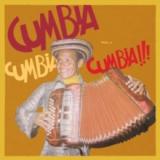
Various Artists - Cumbia Cumbia Cumbia!!! 2x12"
  • Cumbia Ma
  • Cumbiambera
  • Mi Sendero
  • Amores Conmigo
  • Cumbia De Valledupar
  • Dame Un Besito Manuela
  • Yolanda
  • El Clarn De La Montaña
  • Cumbia Pachanga
  • Tiburn Con Pelo
  • Cumbia Panormica
  • La Tormenta
  • Satans
  • Leobigilda
  • Suéltale La Trenza
  • Cumbia Bogotana
  • La Amanecedora
  • El Indio Fiestero
  • La Serrana
  • Cumbia Que Me Alegras
  • La Democracia
  • Cumbia Marina
  • Cuando Te Vayas
  • Sal Con Limn
  • El Mundo Se Va A Acaba
  • Cumbia Casino
  • La Palma
  • Cumbia Continental

After digging deep into the overwhelming archives of Discos Fuentes, Codiscos and Discos MAG in our previous volumes, this fourth instalment in the series "Cumbia Cumbia Cumbia!!!" comprises 28 Colombian cumbia bangers for the dance floor from the deep vaults of Discos Tropical, all of them originally released between 1960 and 1984. The historical origins of cumbia are nebulous and imprecise. The mythology surrounding it suggests an ancient past when Amerindian, African and European musical sounds were mixed together. Discos Tropical was a Barranquilla-based label founded in the mid-1940s by Luis Emilio Fortou Pereira, a visionary who helped define Colombian dancing habits and tastes from the previous century. Until the late '50s, most cumbias were orchestral-based. However, even though formats and styles diversified from the following decade onward, these highly popular big bands spectacularly defined the sound of Discos Tropical and livened up the most cosmopolitan dances in the major coastal cities. After the mid-'60s, the big bands gradually fell into decline, but the popular demand for tropical music did not. Facing this situation, the major record companies created smaller-format groups with one particular feature: they mixed accordion music with brass bands. This new volume of "Cumbia Cumbia Cumbia!!!" combines well-known classics and rarities that are difficult to find in their original formats. An invitation to enjoy and be amazed, above and beyond ethnographic and academic concerns. Double Vinylalbum

Сделать предзаказ06.02.2026

он должен быть опубликован на 06.02.2026

29,20
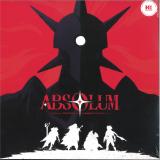
Gareth Coker - Absolum - Original Game Soundtrack LP 2x12"
 
26

This album is the game soundtrack of Absolum, a fully hand-drawn world and unique lore by the team behind Streets of Rage 4, TMNT: Shredder’s Revenge... Known for Ori and the Blind Forest and Halo Infinite, the main composer Gareth Coker brings his signature emotional depth, blending dark fantasy orchestration with medieval-inspired themes and brooding atmospheres.


From orchestral soundscapes to thrilling boss fight themes, this soundtrack features guest tracks by Mick Gordon (DOOM 2016, Wolfenstein: The New Order, Atomic Heart...), Yuka Kitamura (Elden Ring, Dark Souls III, Dark Souls II), Motoi Sakuraba (the Dark Souls Series, Mario Golf, Star Ocean), and Rachel Hardy (Stray Gods, Eternal Strands), setting the tone for the events taking place in this cute but twisted fantasy world. Magic may be forbidden in these lands, but the music is still truly enchanting!

нет на складе

Закажите сейчас, и мы закажем товар для вас у нашего поставщика.

36,93

Последний логин: 75 дн. назад
Various - Wizzz! French Psychorama Volume 5 (67-75)

The journey through French-speaking pop archives continues with this fifth volume, packed with fuzz, gimmicks, and dissent. Far from the charts, the selected tracks display a great creative freedom, often backed by corrosive humor. Welcome to the surprising, kaleidoscopic, and colorful world of the late sixties and early seventies, Wizzz!
Born in Montauban, Robert Pico stumbled into music by chance when he met René Vaneste, then artistic director at Pathé-Marconi. René brought him to Paris to record his first 45 RPM EP in 1964. A year later, Pierre Perret introduced him to Vogue, where he recorded his second album with Claude Nougaro’s orchestra. Sylvie Vartan then introduced him to RCA, where he recorded four singles, including the astonishing "Chien Fidèle," a track backed by a hair-rising fuzz guitar. Alongside his solo career, he also composed for other artists like Alain Delon (the song was recorded but remains unreleased), Magali Noël, Bourvil, and Georges Guétary. In the Paris of the sixties, he mingled with Mireille Darc, Elsa Martinelli, Marie Laforêt, France Gall, Françoise Hardy, Petula Clark, Régine, Dani, Serge Gainsbourg, Joe Dassin, Franck Fernandel, Charles Level, and Roland Vincent. Despite his efforts and winning a Grand Prix Sacem for his final record, Robert Pico didn’t achieve the expected success in show business and decided to leave Paris and return to the Southwest, where he devoted himself to writing. He is the author of 23 books (including Delon et Compagnie, Jean-Marc Savary Editions 2025, a memoir about his youth and his many encounters). Today, he is relieved to never have become a celebrity and devotes himself to his work with passion.
In 1969, the Franco-Italian movie Erotissimo was released, directed by Gérard Pirès (who later directed Taxi in 1998, written and produced by Luc Besson). This pop comedy features Annie Girardot, Jean Yanne, Francis Blanche, Serge Gainsbourg, Nicole Croisille, Jacques Martin, and Patrick Topaloff. The soundtrack was written by Michel Polnareff and William Sheller, with lyrics by Jean-Lou Dabadie. "La Femme Faux-cils," performed by Annie Girardot. It recounts the feelings of a rich CEO's wife who seeks to develop her sex appeal under the influence of advertisement and magazines. Groovy, sparkling and light, this track, with ITS lush arrangements humorously critiques consumer society and feminine beauty standards.
“Je suis l’Etat” (1967) is the flagship track of the first EP by singer-songwriter Spauv Georges, aka Georges Larriaga, better known as Jim Larriaga (1941-2022). Born into a family of bakers, the young man was initially planning to become a hairdresser when he discovered English-speaking music through Elvis Presley and the Beatles. After this revelation, he decided he would become a songwriter and gave himself five years to succeed. He recorded his first two EP’s independently for RCA under the pseudonym Spauv Georges; meaning “that poor George”, a nickname given to him by the mother of her friend Jean-Pierre Prévotat (future drummer of the Players, Triangle, or Johnny Hallyday). Portraying a depressed and eccentric young man, Spauv Georges created corrosive and amusing songs that didn’t reach a wide audience, despite a TV appearance with Jean-Christophe Averty.
Supported by his loyal friend and fellow songwriter Jean-Max Rivière, Georges Larriaga met the future singer Carlos in the early '70s, then Sylvie Vartan’s assistant. He wrote songs for Carlos, including the popular "La vie est belle," "Y’a des indiens partout," and "La cantine", which went onto become a huge hit in 1972. He also composed for Claude François (“Anne-Marie”, 1971), Charlotte Julian (“Fleur de province”, 1972), helped launch child singer Roméo (who sold 4 million records), and later wrote the hit "Pas besoin d’éducation sexuelle" (1975) for the young Julie Bataille. In 1971, Jim recorded an album for Disc'Az: “L’univers étrange et fou de Jim Larriaga”, which featured pop gems like “La maison de mon père”.
The story of the song "Zoé" began when Pierre Dorsay, artistic director at Vogue Records, asked Swiss singer and musician Pierre Alain to write a song for a new female singer. The inspiration came when he realized that Zoé (the artist's name) was also the name of France's first atomic battery, created in 1948, which consisted of uranium oxide immersed in heavy water! The lyrics reflect a bubbling energy that must be handled with caution, while the instrumentation echoes this atomic theme, notably with the use of a theremin.
Zoé’s career lasted only as long as a single 45 RPM, but it seems Christine Fontane was the vocalist behind this pseudonym, who is known for several EPs, a good "popcorn" album in 1964, and a handful of children’s singles in the '70s. Regardless, the photograph on the cover is of a different girl entirely.
Later, Pierre Alain continued his career, writing songs for himself, Marie Laforêt, Danièle Licari, Alice Dona, Arlette Zola (3rd place in Eurovision 1982), and achieving multiple gold and platinum records in Canada. Also an inventor with several patents, president of the Romande Academy, and head of the French Alliance in Geneva, he now composes atonal music, books, and poetry. Moreover, he is also the host of "Les Mardis de Pierre Alain" at "Le P'tit Music'Hohl" in Geneva.
Filled with oriental choruses and fuzz guitar, "Fou" is from Jacques Da Sylva's only EP released by Vogue in 1967. Despite the quality of this recording, all traces of this singer disappear after this first effort.
Valentin is a baroque pop singer born in Belgium. He is the songwriter and composer of most of the tracks on his three singles released in the late 60s in Canada. A legend says that he reincarnated himself as Jacky Valentin during the 1970s for a rock'n'roll revival career in Belgium, but his older brother sadly debunked this story. Valentin's first two singles were arranged by Claude Rogen, a Parisian session pianist who had come to Canada to promote the song “Mister A Gogo”, a cover of David Bowie’s “Laughing Gnome”, adapted by singer Delphine, his wife at the time. Far from his usual network, Claude Rogen arranged music for Polydor, including the arrangements for “Je suis un vagabond” in 1969, a jerk tune with string arrangements and a furious optimism.
Jacques Malia wrote, composed, and recorded his only 45 EP for Festival in 1966. “Histoire de gitan” is an incredible beat track with bohemian scat that tells the story of a gypsy musician who came to Paris to make it in the Music-Hall, to no avail. The hero of the song and its author probably shared a similar fate, as Jacques Malia faded into anonymity after this remarkable attempt.
Bernard Jamet recorded two EPs for Barclay in the late sixties and co-wrote several songs with Christine Pilzer, Pascal Danel, and prolific songwriters Michel Delancray and Mya Simile. The track “Raison Légale” (1968), his masterpiece, immerses the listener in a courtroom right when a murderer is being judged, with jerk rhythm and free arrangements. A unique, paranoid, judicial, and psychedelic oddity.
Jean-Pierre Lebrot-Millers started his career in show business in 1967 as a singer and songwriter for the Philips label. After three singles, he wrote several songs of a new kind with his friend Pierre Halioche, in the midst of the sexual liberation movement and the democratization of drugs. With provocative lyrics, “Les filles du hasard” and “Barbara au Chapeau Rose” were released on a Philips singles in 1968. The character of Barbara was inspired by a queen of Parisian nightlife during the psychedelic years: model Charlotte Martin, who dated Eric Clapton from 1965 to 1968, then Jimmy Page from 1970 to 1983. Jean-Claude Petit’s arrangements, with a table-filled intro, soul brass, and Hendrixian guitar, emphasize the flamboyance of a hedonistic and sexy character, whose dog is named Junkie because “Junkie est un nom exquis”! The track was recorded live in three takes with a full orchestra.
Upon its release, the record was censored by Europe 1 and RTL due to its references to drug use. Jean-Pierre Lebrot was then banned from the airwaves and later dismissed by his record label. He changed his artist name to Jean-Pierre Millers, while his companion Pierre Halioche became D. Dolby for a new dreamy composition, “Chilla”, which Jean-Pierre produced himself with arrangements by Jean Musy. Once again, the song was immediately censored everywhere. After this setback, he decided to stop singing and started taking on odd jobs to support his Swedish wife and their son until the day he met Jean-Pierre Martin, then production manager at Decca, who had worked with Manu Dibango. Martin offered Jean-Pierre Lebrot-Millers, then employed at Rank Xerox, the position of artistic director at Decca. He accepted and became, a year later, promotion director (radio, press, TV). He worked on Julio Iglesias’s first album for Decca, which became a massive hit and allowed him to meet Claude Carrère. The latter asked him to write new songs and find their performers, much like a “talent scout.” It’s through him that Jean-Pierre discovered Julie Pietri and Corinne Hermès. He composed “Ma Pompadour” for Ringo, Sheila’s husband, and took the microphone again for the syncope hit “Rendez-Vous” in 1982.
That same year, Jean-Pierre Lebrot-Millers tried to release a track for which he had heavily gone into debt: “Si la vie est un cadeau”. Having recorded it in London, he presented it to numerous professionals, all of whom refused to get involved. The same thing happened with Antenne 2 and the Sacem when he proposed the song as France’s entry for Eurovision. He then met Haïm Saban, who was producing cartoon soundtracks and had just launched the Goldorak theme song. Saban, having listened to the song, declared it had the potential to become a hit. He sent Jean-Pierre and Corinne Hermès to meet the CEO of the Luxembourg radio and television network. The latter received them, asked to hear a verse and chorus a cappella in his office, and immediately hired them to represent Luxembourg at Eurovision 1983. They reworked the arrangements and recorded a new version with Haïm Saban as co-producer. The song ended up winning Eurovision 1983, a great comeback for our hero. He continued producing and hung out with the band Nacash in Belgium when a couple came to introduce their daughter for an impromptu audition in a hotel room. The girl sang “Les démons de minuit” while dancing to a radio cassette. Impressed, he had her take singing lessons for a year and composed a song for her (for which he had the melody and title, but no lyrics). This required him to go on the hunt for a lyricist, who ended up being Guy Carlier. They recorded the song, which was initially a ballad, at Bernard Estardy’s CBE studio, and gave the singer a new name: Melody. They showed the song around their industry network without success. Later, Estardy called Jean-Pierre to suggest changing the rhythm and making it pop-rock. Orlando, Dalida’s brother, liked the result and decided to co-produce the track. “Y’a pas que les grands qui rêvent » became a classic hit. The song has since been covered by Juliette Armanet (as a ballad, like the original) and Valentina.

Born into an aristocratic Breton family, Hervé Mettais-Cartier worked as a DJ at Queen Kiss, a nightclub in Poitiers, where he formed the band Les Concentrés with Michel (an actor) and Christian (a radio technician). Together, they created a repertoire of whimsical songs (“Ma bique est morte”, “J’suis un salaud”, “Fils de dégénéré”...) that they performed on stage dressed in white (in homage to “concentrated milk”). They performed at Bliboquet and Olympia in 1968 for the 10th edition of the “Relais de la chanson Française” organized by L’Humanité-Dimanche and Nous les Garçons et les Filles, sponsored by Pepsi Cola. Winners in the author-composer category, alongside Danish singer Dorte, their visibility allowed them to record a 45, and appear on television in Jean-Christophe Averty’s show. The A-side of the disc features Bruno le ravageur, a casatchok dedicated to Bruno Caquatrix, the director of Olympia, nicknamed in the song “Coq Atroce” or “croque-actrices”. The B-side is dedicated to “Fils de dégénéré”, a quirky tribute to Hervé's aristocratic roots, mixing absurdity with sophisticated vocal harmonies.
After Les Concentrés, Hervé Mettais-Cartier formed the duo La Paire et sa Bêtise with his friend Olivier Robert. They performed in Parisian cabarets and toured with Pierre Vassiliu. In the late 1970s, Hervé began a solo career. He recorded two albums for the Motors label in 1978 and 1979, which did not achieve their anticipated success due to lack of promotion. In 1980, he met Bernadette, with whom he started a family and created a “Chansons à voir” (songs to see) show that he performed until his death at the end of 2024.

Publicité comes from the final EP by the Missiles (Ducretet Thomson, 1966), a disc that also includes “La (nouvelle) guerre de cent ans”, featured on Volume 4 of our Wizzz! series. Please refer to the booklet for the story of the band.

“He’s 1.82 meters tall, 28 years old, weighs 135 kg, is black and Belgian”: this is the description of singer Hegesippe on the back of his sole single (Decca, 1967). He appears on the album cover wearing a Greek toga, like a hippie gag – we are at the end of the year 1967. In “Le crédo d’Hegesippe”, this former bodyguard of Antoine and the Charlots plays the delightful card of the thick brute converted to Flower-Power and non-violence, with arrangements by Jean-Daniel Mercier, aka Paul Mille.
“Ethéro-disco” was released on a promotional record for clients of the Maréchal company (Liège, Belgium) for the New Year 1979. Over a funky rhythm, celebrity impersonations (Brigitte Bardot, Jacques Dutronc, Fernandel…) deliver an enigmatic text about pharmaceutical products like ether, bismuth, and aspartate. The track was composed by Dan Sarravah (responsible for Joanna's “Hold-up inusité” featured on Wizzz! Volume 3) and Tony Talado, who was also a singer (one 45 in 1967), songwriter (with over a dozen credits between 1964 and 1985 in various styles from surf music to disco), author (Devenez Végétarien, Dricot Editions, 1985), ad designer, and psychologist.

Décollez-les is on the A-side of Mamlouk's only single, a pseudonym for Marsel Hurten, who is known for his work on several EPs in the late sixties, as well as composing music for Hervé Vilard’s “Capri, c’est fini”, Claude Channes' “La Haine”, Annie Philippe’s “On m’a toujours dit”, and Nancy Holloway’s “Panne de Cœur”.
This strange song, with Afrobeat horns and absurd dialogues between a chef and his kitchen staff, is the result of a collaboration between Marsel Hurten and one of his neighbors, a photographer from Pavillon-sous-Bois (93), where the musician settled after returning from the Algerian War. A music video was shot to promote the record.
Marsel Hurten was born in Tourcoing (59) into a musical family. At a young age, he joined the brass band founded by his grandfather, playing the piston before studying trumpet at the conservatory, as well as teaching himself how to play the guitar. As an orchestra musician, he toured in France, Belgium, Germany, and England. He released a series of solo 45’s between 1965 and 1968 for the DMF and Az labels before stopping recording to focus on working for other artists (Gilles Olivier, Noëlle Cordier…).
“L’amour nu” (Vogue, 1971) is the work of the short-lived Belgian band Mozaïque. The track, written by singer Jacques Albin, closely resembles another of his compositions, “Carré Blanc”, which he recorded in 1969 for Disc’AZ.
Represented by the Lumi Son micro-label based in Marignane (Côte d'Azur), Jean-Marc Garrigues released two 45 RPMs in the late sixties, defending the French jerk sound. The song “Je dis Non” is a short, joyful ode to youth, pop music, and rebellion.
Songwriter and performer Jacques Penuel released three singles. The first one, “Astronef 328” (Fontana, 1969), features a dizzying series of chords punctuated by sound effects, a sci-fi story, and arrangements by Jean-Claude Vannier.

We would like to sincerely thank Pierre Alain, Moon Blaha, Marsel Hurten, Bastien Larriaga, Jean-Pierre Lebrot-Millers, Bernadette Mettais-Cartier, Robert Pico, Olivier Robert, Claude Rogen, Micky Segura.

нет на складе

Закажите сейчас, и мы закажем товар для вас у нашего поставщика.

23,11

Последний логин: 81 дн. назад
Leroy Se Meurt - Hier pour toujours

Two years after their debut on Berlin-based Mannequin Records, Parisian duo Leroy Se Meurt returns with their second full-length album, Hier Pour Toujours. Far from any sense of nostalgia, this record offers no illusion of hope—history repeats itself, the future looks bleak, and their brand of electronic punk is the perfect soundtrack to it all.Drum machines dictate the pace while synths saturate the space, looping sequences grind relentlessly, and vocals lead this machine orchestra straight into the heart of the chaos. Drawing from their roots, Leroy Se Meurt pushes their fierce electronics further than ever—experimenting with bold slogans, spoken passages, and powerful sing-along choruses.The album opens with Pas Ma Croix, a commanding anthem built for the stage. It flows into Du Plafond à La Terre, driven by a monstrous electro beat and bassline, flirting with emotional vulnerability in its chorus before exploding into a synth solo. Alevlere Karşı once again taps into the duo’s EBM-meets-Turkish vocals signature style, hitting the mark with dancefloor precision.The title track, Hier Pour Toujours, closes side A with a more intimate, drumless moment—solemn but no less intense.That brief calm is shattered by Déviance, marking the return of guitars and an eruptive chorus brimming with raw energy. From there, the album launches into the furious Révolte Ardente, with its syncopated rhythm and vocals drenched in distortion, and continues with Pro Déclin, a stripped-down rhythmic skeleton carrying anti-growth mantras straight to the point. In a world clouded by confusion, the most direct messages often land the hardest.For a change of scenery, Fütürsüz dives into John Carpenter-esque territory—no drums, eerie night-streaked synths, and, for the first time in the band’s history, nearly clean vocals.Closing the record, Encore crawls at a BPM so slow it’s nearly in reverse. But what it lacks in speed, it makes up for in weight—a crushing incantation capable of toppling sound systems.With Hier Pour Toujours, Leroy Se Meurt isn’t offering optimism, but rather persistence. Nothing is settled yet—and perhaps, just perhaps—there’s still light at the end of the tunnel.

Сделать предзаказ30.01.2026

он должен быть опубликован на 30.01.2026

21,81
Original Soundtrack - Cinema Serenade LP
  • A1: The Color Purple: Main Title Theme
  • A2: Scent Of A Woman: Tango (Por Una Cabeza)
  • A3: Yentl: Papa, Can You Hear Me?
  • A4: Il Postino: Theme
  • A5: The Age Of Innocence: Theme
  • A6: Far And Away: Theme
  • B1: The Umbrellas Of Cherbourg: I Will Wait For You
  • B2: Four Horsemen Of The Apocalypse: Theme
  • B3: Sabrina: Theme
  • B4: Out Of Africa: Main Title Theme
  • B5: Black Orpheus: Manha De Carnaval
  • B6: Schindler's List: Main Theme
  • B7: Cinema Paradiso: Love Theme

Cinema Serenade is an album by John Williams and Itzhak Perlman, featuring orchestral performances of famous and notable film themes,
with Perlman's violin at the forefront.. Amongst others, it features work by Michel Legrand, Elmer Bernstein, John Barry, André Previn and John Williams himself.

All the work on this album is conducted by Williams and performed by the Pittsburgh Symphony Orchestra. It also features exclusive liner notes from well-known film critic,
musicologist and professor Royal S. Brown,
Cinema Serenade is available as a limited edition of 500 numbered copies on aquamarine coloured vinyl.

Сделать предзаказ30.01.2026

он должен быть опубликован на 30.01.2026

34,24
Wiener Philharmoniker & Yannick Nézet-Séguin - Neujahrskonzert 2026 / New Year's Concert 2026 / Concert du Nouvel An 2026 (LP 3x12")

Erstmals steht Yannick Nézet-Séguin beim Neujahrskonzert am Pult der Wiener Philharmoniker. Der Kanadier, schon seit Langem dem Orchester verbunden, ist Chef der Metropolitan Opera in New York und des Philadelphia Orchestra. Er bringt im Goldenen Saal des Wiener Musikvereins neben populären Titeln wie "Rosen aus dem Süden" oder der "Fledermaus-Quadrille" fünf Novitäten, die dort erstmals erklingen - darunter auch Kompositionen der US-Amerikanerin Florence Price (1887-1953) und von Josephine Weinlich (1848-1887), die das erste europäische Damenorchester gegründet hatte. Das Neujahrskonzert ist eines der größten Events der klassischen Musik; es wird in über 150 Länder übertragen und hat über 150 Millionen Zuschauerinnen und Zuschauer.

Das jährliche Neujahrskonzert in Wien ist seit mehr als acht Jahrzehnten, seit 1939, ein großes Ereignis, das im Fernsehen und im Radio übertragen wird und Millionen von Zuschauern in über 90 Ländern der Welt erreicht. Das Konzert wurde bisher von weltberühmten Dirigenten wie Herbert von Karajan, Lorin Maazel, Claudio Abbado, Carlos Kleiber, Zubin Mehta, Riccardo Muti, Nikolaus Harnoncourt, Seiji Ozawa, Mariss Jansons, Franz Welser-Möst, Gustavo Dudamel und anderen geleitet. Als musikalische Botschafter Österreichs senden die Wiener Philharmoniker den Menschen in aller Welt einen Neujahrsgruß im Geiste der Hoffnung, der Freundschaft und des Friedens mit beschwingter und unbeschwerter und zugleich nostalgischer und tiefgründiger Musik aus dem großen Repertoire der Familie von Johann Strauß und seiner Zeitgenossen.

Сделать предзаказ30.01.2026

он должен быть опубликован на 30.01.2026

38,03
The Walker Brothers - Lines LP
  • 1: Lines
  • 2: Taking It All In Stride
  • 3: Inside Of You
  • 4: Have You Seen My Baby
  • 5: We're All Alone
  • 6: Many Rivers To Cross
  • 7: First Day
  • 8: Brand New Tennessee Waltz
  • 9: Hard To Be Friends
  • 10: Dreaming As One

Following their successful comeback, they dropped another album featuring a variety of country and pop songs, as well as covers of artists such as Jimmy Cliff and Randy Newman. The album is a stylistic follow- up to No Regrets , where the group blends their pop songs with romantic orchestral arrangements. The singles "Lines" and "We're All Alone" became firm favourites with fans, and the album is widely regarded as a hidden gem among fans of country pop and yacht rock

Сделать предзаказ30.01.2026

он должен быть опубликован на 30.01.2026

34,24
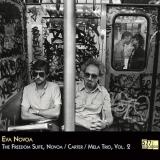
Eva Novoa - The Freedom Suite, Novoa / Carter / Mela Trio, Vol. 2

"Brooklyn-based pianist Eva Novoa returns with The Freedom Suite: Novoa / Carter / Mela Trio, Vol. 2 — the second radiant release from her compelling trio with saxophone icon Daniel Carter and celebrated drummer Francisco Mela. This marks Novoa’s sixth album with 577 Records. The trio first came together live in 2021, followed by a series of performances, including appearances in Cambridge (Boston) and later at the Brooklyn edition of the NY Forward Festival.
"The Freedom Suite is an homage to jazz titan Duke Ellington — particularly his masterful big band suites and legendary orchestra featuring Johnny Hodges and other luminaries who helped define an era of jazz greatness. In contrast, Novoa presents her Suite in a more intimate format: the piano trio. The album comprises twelve pieces — mostly brief — with a few extended tracks such as Free to Be Free and Cyborgs.
"For this recording, Novoa also steps in as a vocalist on several tracks, including Mainstream Media, Big Grande, Global, Free to Be Free, Dream, and Cyborgs. These pieces often feature a vocal dialogue between Novoa and Mela, whose expressive, word-infused style draws from rich Cuban traditions.
'Words are powerful,' says Novoa. 'They define who we are, where we come from, and who we hope to become. Without words, there is no conversation — and without conversation, there is no real sense of time, space, or connection.'
The Freedom Suite emerged from deep philosophical and creative conversations — spoken, written, and improvised — between Novoa, Carter, and Mela. In the studio, Novoa introduced printed texts that served as thematic foundations for spontaneous, in-the-moment musical interpretation. The result is an urgent and organic interplay, where instruments speak to one another in a language as fluid as it is fearless.
"Standout track Cyborgs begins with Novoa’s percussive piano, exemplifying the trio’s dynamic, conversational energy. Creative Destruction features Novoa on electric harpsichord in a wild, electric exchange. While Free to Be Free stands out as the album’s leading single, it also captures the essence and message of the entire Suite.
"Recorded in 2021 at New York City’s legendary Sear Sound Studio, the album captures a creative explosion of sound and spirit. Novoa dazzles on piano, Fender Rhodes, electric harpsichord, Chinese gongs — even whistle — showcasing her expansive sonic palette. Together, the trio embodies the power of free improvisation and emotional storytelling.
"Originally from Barcelona, Spain, Eva Novoa has been cultivating her distinctive voice since childhood. Now a staple of the New York creative music scene, she has performed across the globe and collaborated with some of the most adventurous voices in jazz and beyond."

Сделать предзаказ30.01.2026

он должен быть опубликован на 30.01.2026

23,32
Продуктов на странице:
N/ABPM
Vinyl