LIMITED PRESSING on CLEAR RED VINYL. Formed in 1976, the Zeros were among the pioneers of the Southern California punk scene that included bands such as the Germs, X, and the Weirdos. This album includes all their VINTAGE STUDIO RECORDINGS, SINGLES and DEMOS. Features an INSERT with notes and photos as well as two BONUS LIVE TRACKS (end of side B) RELEASED FOR THE FIRST TIME ON VINYL.
Don't Push Me Around by The Zeros, released 26 January 2024, includes the following tracks: "Main Street Brat", "Beat Your Heart Out", "Cosmetic Couple", "Beat Your Heart Out" and more.
This version of Don't Push Me Around comes as a 1xLP. This release comes with (a) Insert(s).
The vinyl is pressed as a transparent, red disc.
Поиск:zer
Все
"Solastalgia I" ist ein Konzeptalbum und der erste Teil einer Trilogie. Solastalgia ist ein Kunstwort, gebildet aus dem Lateinischen (solacium - Trost)
und dem Altgriechischen (algos - Schmerz), das erstmals in den 2000er Jahren von dem Umweltphilosophen Glenn Albrecht verwendet wurde.
Solastalgia bezieht sich auf den Schmerz und die Trauer über den Verlust unserer Umwelt: Emotionen, die zur Verzweiflung treiben, die wir durch
unsere Gier und Hybris selbst verursachen. Die Klima- und Biodiversitätskrise führt dazu, dass die Zerstörung von Umwelt und Natur immer mehr
zunimmt. Das Album ist eine künstlerische Reflexion und Verarbeitung des Verlustes der Heimat, des Reichtums und der Vielfalt der Natur und der
Lebensgrundlagen allen Lebens, die letztlich zu Zerstörung, qualvollem Tod und Aussterben führen. Ein dystopischer Ausblick und zugleich eine
Warnung für die Gegenwart. Begleitet wird die Trilogie von Kurzgeschichten von Wolf-Georg Zaddach sowie von Fotos und Bildern der Künstlerin Sara
Zaddach.
PRESSING OF 200 COPIES ON CLEAR VINYL.
RIYL Zero 7/ Plaid / Hot Chip / Weather Report / Isolee / Baby Fox
Old friends Julian Bates and Alex Gray —working together as Mighty Truth for the first time since 1995’s From The City To The Sea — filled a car with old analogue synths, kids’ noise toys, and collected field recordings took a road trip down to hole up in an old water mill in southwest England’s bird-twittery, bee-loud Quantock hills.
Things got cinematic: unequal measures of early Weather Report, Wim Wenders, and Serge Gainsbourg kept them wonderfully lost in their imagined world. Back in London with guest singers Allonymous (Paris via Chicago) and Wayne Paul (London), they completed the album and decided to just call it Mighty Truth. With an aim to present the live show at moonlight pop-up cinema venues, Mighty Truth are here for the next chapter in their epic saga.
Back then….
Old friends Julian Bates and Alex Gray first met through their shared obsession with classic cars (both owned old SAAB 96s). At the time, Julian’s band Nightrains was signed to ACE Records in the UK whilst Alex worked first as a session keyboardist for the likes of Edwyn Collins, Billy Mackenzie, and Busta “Cherry” Jones, and later as a mixer and remixer working with S’express producer Pascal Gabriel, Malcolm McLaren, and soul DJ legend Dr Bob Jones.
Working together in the studio for the first time producing Vanessa Freeman (4 hero), Alex and Julian decided to embark on a drop-tempo jazz trip project they named Mighty Truth. Dr Bob heard that first self-released vocal track “Rebirth” and started dropping it on Kiss FM (UK). After guest DJ slots on Coldcut’s Kiss show, Alex and Julian signed to Tongue and Groove records.
The album From the City to the Sea produced a number of singles and both “Rebirth” and “Is it a Wizard or a Blizzard” were licensed to many compilations both in the UK and internationally (eg. Dope on Plastic, Mole Listening Pearls, Eight Ball).
The Sound of Sinners is a NYC boutique record label focused on vinyl and digital releases by Indie, ambient, avant-garde and electronic artists.
Das Innenumschlag-Artwork enthält die vollständigen Liedtexte des Albums. Die erste Auflage der Schallplatte enthält ein limitiertes A3-Poster mit einem besonderen Risographen-Druck. "BITTER SWEET LOVE" zeigt James von seiner besten Seite und bietet dreizehn atemberaubende Songs voller Emotion. Nachdem er wieder auf der Bühne stand, wurde ihm klar, wie sein fünftes Album klingen sollte. Die Menge sang zu seinen Hits mit und tauchte in die Emotionen ein, die James in seiner eigenen Stimme hören konnte. Der aus Middlesbrough stammende und vor kurzem Brit Billion-Award zertifizierte Künstler, kann auf eine Jahrzehnte lang umfassende Karriere zurückblicken. Darunter 4 Studioalben, 16 Milliarden verkaufte Tonträger und unzählige ausverkaufte Konzerte an einigen der legendärsten Veranstaltungsorten weltweit
Mit der Veröffentlichung des Albums 'Kalakuta Show' rächte sich Fela unerschrocken an dem Militärregime, das ihn 1974 angegriffen und brutal behandelt hatte. Die 'Kalakuta Show' war der zweite Angriff dieser Art innerhalb von acht Monaten und ein Versuch der nigerianischen Polizei, die Cause of Justice zu beeinflussen. Nach der ersten Polizeirazzia in Kalakuta im April 1974 wurde Fela vor Gericht angeklagt wegen Besitzes von gefährlichen Drogen und Entführung von "Minderjährigen". Die von der Staatsanwaltschaft vorgelegten Beweise konnten jedoch von der Verteidigung leicht entkräftet werden, die aussagte, dass die in den Räumlichkeiten gefundenen Drogen zur Junction Clinic gehörten, einer staatlich zugelassenen Klinik innerhalb der Republik Kalakuta, die von Felas jüngerem Bruder, Dr. Beko Ransome Kuti, geleitet wurde. Was den Vorwurf der Entführung von Minderjährigen betrifft, so bestritten alle jungen Mädchen, die in Felas Haus verhaftet wurden, minderjährig zu sein und entführt worden zu sein, und sie sagten vor Gericht aus, sie seien aus eigenem Antrieb zu Felas Haus gegangen. Da es keine stichhaltigen Beweise gab, um Fela in diesem vielbeachteten Prozess zu verurteilen, beschloss die Polizei, eine Woche vor der Urteilsverkündung eine zweite Razzia in Felas Haus durchzuführen, in der Hoffnung, dieses Mal Beweise zu finden. Das Ergebnis ist die Schilderung der zermürbenden und brutalen Art und Weise, wie die Polizei ihre Opfer behandelte. Sie führen den Fall auf, und Fela, der mit Kopfwunden und einem gebrochenen Arm vor Gericht erschien, erregte beim Richter mehr Mitleid als das Gegenteil. Eine Menschenmenge von mehr als fünfzigtausend Lagos-Jugendlichen trug Fela vom Gerichtsgebäude im Apapa-Gebiet von Lagos zur Kalakuta Republic - eine Entfernung von etwa sechs Kilometern. Während dieses Jubels kam der Verkehr im zentralen Teil des Festlandes von Lagos für mehrere Stunden zum Stillstand.
":Duett" - der Name ist Programm auf diesem Album, dem zweiten aus dem Hause ASP. Endlich kommen die Fans in den Genuss, auch dieses Werk als limitierte Picture-Vinyl ihr eigen nennen zu dürfen. Nicht nur verhalf das zweite Kapitel des Zyklus den Musikern zum finalen Durchbruch auf den Tanzflächen der Schwarzen Szene, es brachte damals auch viel Licht in die Geschichte rund um den Schwarzen Schmetterling. So wurde die Rahmenstory vor allem in der trancigen "Kleinen Ballade vom Schwarzen Schmetterling" erläutert (und von Pit Hammann im gleichnamigen Bilderbuch kongenial bebildert), und in "Versuchung" wohnt die Zuhörerschaft der Zwiesprache zwischen zwei Wesen bei, die nicht mit- und auch nicht ohne einander können. Eine Zerrissenheit, die vielen Hörern eine ebenso nachvollziehbare wie spannende Reise ins eigene Ich ermöglichte.
Auch das energetische "Kokon" - wie der Rest des Albums noch stark vom elektronischen Sound der Anfangstage geprägt - erhielt einen Ehrenplatz in den Herzen der Fans und stellt besonders im Live-Kontext einen veritablen Nackenbrecher dar. Weitere All-Time-Fan-Favourites wie das epische "Schwarz" oder das zornige "Besessen" runden das Gesamtkunstwerk ab und belegen schon zu Beginn ihrer Karriere die musikalische und textliche Vielseitigkeit des ASP'schen Œuvres.
"Javelin" verbindet musikalischen Schwung mit emotionaler Weite. Manchmal hat man das Gefühl, dass das Album von einem großen Team produziert wurde - aber das ist es ganz und gar nicht: Fast jeder Sound hier ist das Ergebnis von Stevens zu Hause, der selbst etwas geschaffen hat, das sich manchmal wie ein Zeugnis der Studio-Opulenz der 70er Jahre in Los Angeles anfühlt. Die Beiträge stammen von einem engen Freundeskreis - Adrienne Maree Brown, Hannah Cohen, Pauline Delassus, Megan Lui und Nedelle Torrisi -, die bei vielen Songs Harmonien beisteuern, sowie von Bryce Dessner, der bei "Shit Talk" akustische und elektrische Gitarre spielt. Der zärtliche und mystische Abschluss des Albums, "There's A World", wurde von Neil Young geschrieben. Während "The Ascension", das von der New York Times als "ein Schrei der Verzweiflung und ein Gebet um Erlösung" gelobt wurde, eine kunstvolle, aber dringliche Elektronik verwendet, um sich dem Moment zu nähern, beginnt "Javelin" wie ein Selbstporträt, detailliert und doch schlicht. Dies ist Stevens' intimstes Werk, das an "Seven Swans" oder "Carrie & Lowell" erinnert und den Hörer in die Nähe seiner inneren Abrechnung ruft. "Javelin" wird von einem 48-seitigen Booklet mit Kunst und Essays begleitet, die alle von Stevens geschaffen wurden, darunter eine Reihe von akribischen Collagen, zerschnittenen Katalogfantasien, Puff-Paint-Wortwolken und sich wiederholenden Farbfeldern. Die 10 kurzen Essays - abwechselnd lustig, tragisch, ergreifend, stumpfsinnig und spezifisch - bieten kleine Einblicke in Lieben und Verluste, die ihn und diese Lieder geprägt haben.
American Punk-Rock group The Toros formed in 1976 in Chula Vista, California. The band was originally formed with Javier Escovedo (vocals/guitar), Robert Lopez (guitar), Héctor Penalosa (bass) and Baba Chenelle (drums). Often referred to as "the Mexican Ramones," they were just one of many contributors to the city of Los Angeles' Punk explosion in the late '70s, although they never received the acclaim like their contemporaries Black Flag, Circle Jerks or Germs and Wipers. They have more followers and fans outside of the United States, especially Australia, Europe and Spain in particular. The label "the Mexican Ramones" did not take into account their other revealing influences: pre-Punk and Garage-Rock bands. The Zeros make it evident on this album, releasing covers of New York Dolls among others. But the originals, for example "They Say (That Everything's Alright)" and "Handgrenade Heart", also exploit the spirit of loud, strident rock. There are also slow and melodic, sloppy and dirty Pop songs to satisfy all tastes. The quartet broke up in 1981, reformed sporadically for live shows, and recorded the 1999 album "Right Now!". An excellent album. Ideal to have a good time and enjoy good Rock. Also, for those who don't know The Zeros, an excellent introductory album, so you can then review their catalogue. Versions of songs by The Zeros were released by the Los Angeles bands Wednesday Week ("They Say That Everything's Alright"), The Muffs ("Beat Your Heart Out"), the Basques La Secta ("Wild Weekend"), the Australians Hoodoo Gurus or the Swedes The Nomads ("Wimp").
The Zeros is a pioneer punk rock band formed in 1976 in Chula Vista, California. Comparisons with The Ramones are often made when describing the energetic and fierce guitar driven sound of the group. This is their second single, released in 1978 on Greg Shaw's very own Bomp! Records (after the fantastic 1977 "Don't Push Me Around" single). 'Beat Your Heart Out'/'Wild Weekend' is another boss one by Javier Escovedo and it also has Robert Lopez's fantastic 'Beat Your Heart Out' on the flip. These first singles recorded by the band instantly catapulted The Zeros into a top draw on the local scene and have become legendary. First time reissue! incl. artwork replica on retro style record sleeves.
The Zeros is a pioneer punk rock band formed in 1976 in Chula Vista, California. Comparisons with The Ramones are often made when describing the energetic and fierce guitar driven sound of the group. First time single reissue in almost four decades! Incl. artwork replica on retro style record sleeves. This is their debut single, released in 1977 on Greg Shaw's very own Bomp! Records. 'Don't Push Me Around' and 'Wimp' are among the greatest punk rock songs of all time, written by Javier Escovedo. It was followed by another single in 1978, "Beat Your Heart Out"/"Wild Weekend". These first singles recorded by the band instantly catapulted The Zeros into a top draw on the local scene and have become legendary.
This is The Zeros' third single, a pioneer punk rock band formed in 1976 in Chula Vista, California. Comparisons with The Ramones are often made when describing the energetic and fierce guitar driven sound of the group. After a 2-year gap, following their two first singles on Greg Shaw's very own Bomp! Records, the band released this third 45 on Test Tube Records. 'They Say That (Everything's Alright)' is a fabulous song by Hector Peñalosa. "Getting Nowhere Fast" is another classic by Javier Escovedo. In spite of the excellence of these two tracks, The Zeros lost the momentum generated by the first two singles, leaving the third as an afterthought. Soon after, the band broke up. First time reissue! Incl. artwork replica on retro style record sleeves.
- Califia (Stone Rider) - Featuring Suzi Jane Hokom
- The Bed
- Sleep In The Grass - Featuring Ann-Margret
- Leather And Lace - Featuring Nina Lizell
- If It's Monday Morning
- The Night Before
- Bye Babe
- Victims Of The Night - Featuring Ann-Margret
- Chico - Featuring Ann-Margret
- Hey Cowboy - Featuring Nina Lizell
- No Train To Stockholm
- Won't You Tell Your Dreams
- Nobody Like You - Featuring Suzi Jane Hokom
- Trouble Maker
- What's More I Don't Need Her
- Come On Home To Me
- I Just Learned To Run
Erster Release der Light In The Attic Re-Issue Serie zu Ehren von LEE HAZLEWOOD mit Stücken von so essentiellen Alben wie ,Cowboy In Sweden". Mit Duetts mit Suzi Jane Hokom, Ann Margret und Nina Lizell. Extensive Linernotes und bisher ungesehene Photos. Mit seinem Schnurrbart und dem klingenden Bariton war LEE HAZLEWOOD einer der Stars der späten 60er Jahre. Obwohl er wahrscheinlich am bekanntesten wegen seiner Arbeit mit NANCY SINATRA ist (er schrieb ihren Megahit ,These Boots Are Made For Walking"), leistete HAZLEWOOD auch fernab dieser besonderen Glamourkönigin beachtliche Arbeit und fand später große Fans in BECK, SONIC YOUTH und JARVIS COCKER. Für den Record Store Day 2012 präsentiert Light In The Attic den Startpunkt einer Anthologie mit ,Singles, Nudes&Backsides", die LEEs beste Solosongs und Duetts seines Lee Hazlewood Industries Sublabels (LHI) versammelt. Die Serie wird sich Material von LHI widmen (das hier zum ersten Mal von den analogen Originaltapes neu gemastert wurde), zusammen mit LEEs Output bei anderen Labels, Raritäten, unveröffentlichten Schätzen und den Filmen von Torbjörn Axelman. Man muss nur das Cover anschauen: umringt von nackten Mädchen, die alle einen unechten Schnurrbart tragen, spielt HAZLEWOOD im Anzug leicht unsouverän den Playboy. Exakt wie dieses Photo zeigen auch die Songs einen gespaltenen Mann: er ist der zärtliche Romantiker, der gebrochene Loser und der zerfurchte Cowboy zugleich.
Im Gepäck haben sie ihr viertes Studioalbum ‚Expedition One‘, welches die fiktive Geschichte des Lebens auf unserem Planeten im Jahr 2055 erzählt. Der gläserne Mensch ist bittere Realität geworden, körperliche und psychische Erkrankungen bestimmen zunehmend mehr unser Dasein. Angeführt von fünf Kommandanten plant ein Team aus abtrünnigen Mitarbeitern von Geheimdienst, Militär und führenden Technologieunternehmen eine Überlebensexpedition zu fernen Planeten. Ihre Mission: die Menschheit von der zerstörten Erde in eine neue Welt zu bringen, um neues Leben zu schaffen. ‚Expedition One‘ kommt am 19.01.2024 als elegant farbige Ltd. Doppel-Vinyl, als Digipak sowie digital und begeistert mit einer Vielzahl abwechslungsreicher Kompositionen und einer intelligenten Sci-Fi-Story, die aktueller kaum sein könnte.
This is the last album from Rico Puestel. After somehow three decades, Rico misses the cultural impact of Techno music as it has been and declares its spirits gone – at least personally. There's nothing more to tell. The self-consuming scene has reached its grotesque climax and left an empty shell of something once filled with so much passion, warmth, strength, heart and hope. The times just haven't changed – they lost their self-fulfilling purpose and authenticity.
Heavily influenced by prehistoric, tribal rhythms and trance-inducing dances within redundant structures, Techno music once had a natively true and unadulterated essence. A free spirit on the run. Rico found the right spot in time to gather all of his origins in Techno music for a last act of connecting to it. Being on an all-time high as a producer, he crafted the whole album on a course of twelve hours and relived all those deeply rooted moments and memories with Techno in fast motion. While the track titles are counting down from ten to zero in Esperanto, Rico clears up in peace and balance...
What once was, is now without form and void.
I left.
Everybody left.
Techno has left the building.
Farewell!
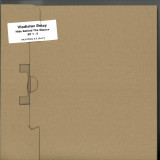
Vladislav Delay's complete "Hide Behind The Silence" series. Intuitive and raw music, momentary and reflective, released on Ripatti's own label Rajaton.
Stillness is a myth. Consider concepts such as ”still water”, or ”still air” for that matter. Go to a restaurant, ask them for a glass of still water, hold it against the light and see where we’re at. Even though the water itself has been captured and imprisoned in the glass, it never stops breathing. It’s filled with tiny particles, dancing. Everything can be explained on a molecular level, but since we’re not scientists – and even if you happen to be – it’s the natural world of perception that moves me.
Still air is very similar. A hot summer’s day with zero wind feels completely still. It’s the closest I have felt to complete stillness. Or for a more urban adaptation, imagine the same vibe inside a normal apartment. In those moments, revelations and mind- blowing experiences can be had with experiments in stillness.
Try this: Just sit down for a minute on a sunny day, making sure there’s enough natural light. Do absolutely nothing. Try not to breathe for a bit. (If you need a mental anchor, you can play Cage’s 4’33” in your head but nothing else.) Watch the tiny dots of dust dancing :..’ ̈.:; ́ ́*°.,’:,. ̈ ̈ ̈ ̈:,.’
The movement is crazy, but the feeling of stillness comes from witnessing how subtle it is. In (perceived) complete stillness, every act of microscopic mobility seems to speak volumes. Yet, it feels both reassuring and oddly threatening that the stillness is never complete. What if we would need absolute stillness? Or is it just enough that we can perceive something as such? Extremes attract, so for both water and air, extraordinary movement is equally fascinating. That is also a luxury item of sorts. For us to enjoy a very ”loud” body of water or air, we need to be safe, in enough control of the situation. So when you are, it’s worthwhile to pay attention and take it all in.
A rapid flowing free with extreme strength and just barely in control. Look at that water go! No still water on this one, only ”sparkling”. A windy day when birds seem surprised how hard it is to fly, but in the end they make it. Trees bend but don’t break. The wind shows you its movement but doesn’t hurt you. It feels friendly, like a big clumsy dog that doesn’t quite understand its size.
It’s beautiful to be a guest of the elements, but not at the mercy of them. A new kind of dialogue forms.
Q&A with Sasu Ripatti:
1) Tell us something about the EP series ”Hide Behind the Silence”, what’s the idea and what can we expect?
Exploration of inaction. Of many kinds. In arts and in personal life, or at bigger and more serious levels. Questioning myself as a human being as well as an artist. Acknowledging the growing activism all around, and the very clear need for it, and how it reflects my own inaction.
Musically speaking, after Rakka, Isoviha and Speed Demon, I finally found some relief, but more importantly lost the need to go musically ever more outward and intensive. I felt quite strongly certain periods/moods from the past and they made me revisit some musical ideas or states of mind I was exploring early on.
It’s about live moments being captured, not much premeditation or editing. More intuitive and raw, even though the end result (to me) feels and sounds quite introspective and calm. It’s not very ambitious. Momentary and reflective.
2) Your music doesn’t sound very silent. Does it come from somewhere behind the silence?
Oh, this time to me it sounds quite quiet and playing with space if not silence. I don’t know what’s actually behind silence, but I think silence is the source of everything. We just don’t understand it yet.
3) What kind of thoughts or experiences gave inspiration to this series?
Writing this in Nov ’22, it’s not a stretch to say the world has been really unwell. Sometimes, like Mika Vainio put it, the world eats you up. I feel a bit like that. And I try to hide in my studio and stay away from it all, but it’s getting harder by the day. I’ve been questioning myself and thinking if what us artists are doing is worth anything, and whether it’s just a selfish thing I’ve been doing for the past 25 years, running away from everything. I haven’t come to a conclusion yet.
4) Is it easy for you to be in silence, or around silence?
Absolutely. I not only hide behind silence but I also love silence. It’s only since I started going back to nature as a grown-up person that I sensed and was enveloped by silence, true silence. I have begun to appreciate it a lot. I think all the people should spend more time in silence.
All tracks composed and produced by Sasu Ripatti.
Artwork by Marc Hohmann, photography by Shinnosuke Yoshimori.
Mastering by Stephan Mathieu for Schwebung Mastering.
Vinyl cut by SST Brueggemann.
Publishing by WARP Music Ltd.
- A1: Please Come Out
- A2: Wicked
- B1: Working With
- IB2: N My Head
- C1: Got Your Money
- C2: Didn't You Know
- D1: Two-Door
- E1: Memory Lane
- E2: Good Girls And Boys
- F1: All I Want From You
- F2: Don't Sell Rock
- G1: What Yours
- G2: Tweets
- H1: You Check
- H2: Hero Forever
- I1: Don't Pick Up
- I2: You Don't Know Me Anymore
- J1: Tenderly With You
- J2: Now Let's Wait
Sasu Ripatti's complete "Dancefloor Classics" series. Music for imaginary dancefloors, released on Ripatti's own label Rajaton.
”Look up, into the light” she said, while the camera shutter clicked. ”Like this? Does it look holy?” His neck felt stiff. Her reply: ”Yes, just like that. What do you mean holy? Like religious? ”No, more like trying to look very far, somewhere beyond what we can see.” ”Okay, stand still, I’m going to come close to you now. The light hits your face great.” click, click, click.
He noticed her fingernails. They were not polished. Natural. Even somewhat rugged, as if something wore out the fingers slightly. What had these hands held besides the camera? What made the edges of her fingernails drift off?
He thought it’s weird to look straight into the camera. The photographer had closed her left eye, the one not looking into the lens. Then it opened, she looked up, perusing the surroundings, then she closed her eye again, then looked up, closed, looking up, very quickly. It all seemed very professional. Maybe she calculated the light, making sure it’s close to perfect. ”What will these photos look like?” – the thought popped into his head briefly. It was liberating to think it wouldn’t matter.
”What’s that song playing?” he asked. ”Wait a sec, Ol’ Dirty Bastard?” she replied. ”Oh yeah, right. But the sample?” ”Hey, could you look up again, like that. No, lower.”
New directions: ”Look out from the window, turn left.” ”My left or yours?” ”Yours, I always try to think from the direction of my model.” How professional! This is a good shoot, so natural. Should I worry about how the photos look like? No, I don’t want to. His thoughts bounced around. What would the story be like? It’s a big newspaper, everyone will read it. Maybe someone drinks coffee and eats a stroopwafel while they do it. Will they place the waffle on top of the mug for a brief while, so that it gets hot and the syrup melts a little? Then it feels wet, and you can bend the cookie.
She broke his train of thought off midway through: ”Now turn right, but look left, and slightly up, but don’t turn your face right.” ”Umm, like this? Sounds like a set of pilates instructions.” she laughed ”You do pilates?” ”Yeah, it’s hard sometimes. Have you tried?” ”No”, she said. ”I’m not good for sports that are done in groups.” ”Yeah, but in pilates you can just be inside your mind, drowning in your private thoughts.”
”What are you thinking in pilates?” she asked, taking more photos. ”Well, mostly just which way is right. And which left.” click, click.
Q&A with Sasu Ripatti:
1) Tell us something about the EP series ”Dancefloor Classics”, what’s the idea and what can we expect?
I’ve been slowly writing these sort of dance music pieces and finally curated them together for a conceptual release. I like to create music for a dancefloor that exists only in my imagination and doesn’t try to suck up to the standardized reality.
2) Your vinyl format is 10” which is quite special (as opposed to LP / 12”). Why did you choose it?
It’s my favourite format, absolutely. The size is perfect, and you can make it sound really good @ 45 rpm. And you still can make great artwork.
3) You seem interested in sampling/repurposing, what does it mean to you as an artist to approach something already existing from a new angle? How does the source material inform you about the approach to take?
I guess i could flip it around and just say I’ve outgrown synths or electronic sounds to a great extend, and having gotten rid off all my synths already good while ago I’ve used samples as my main source material a lot. It’s obvious on this series that i’ve sampled existing music, but I also sample instruments and things in the studio and resample my own library that I have built over the years, it’s quite large. To me the end result matters, not so much how I get there. Once I have something on my keyboard and play around, it’s all an instrument, though with sampling other music it becomes a really interesting and complex one as you’re possibly playing rhythm, but also harmonic content and maybe hooks or whatever, all at once.
I never sample premeditadedly, like listening to records and looking for that mindblowing 3 sec part. I just throw the cards in the air and see what lands where, just full intuition and hopefully zero mind involved, playing tons of stuff, trying things, just recording hours of stuff. Then comes the interesting part to listen to hours of mostly crazy stuff and finding that mindblowing 3 sec part.
4) What is your relationship with the dancefloor (conceptually and/or in experiences / as a performer)?
Very complicated. I have never really felt comfortable on a dancefloor but have always wanted to. There’s something in club music, in theory, that really speaks to me. It has never really materialized for me – speaking mainly from a performer’s point of view who goes to check on a dancefloor for a moment after a concert. I never have DJ’d or felt much interest towards it. But again, I love the idea and concept of DJing. As well as producing music for imaginary DJs. Lately, as in the past 10+ years, I haven’t even performed in any sort of club spaces. So my relationship to the dancefloor is quite removed and reduced, but there’s quite a bit of passion and interest left.
All tracks composed and produced by Sasu Ripatti.
Artwork & photography by Marc Hohmann.
Mastering by Stephan Mathieu for Schwebung Mastering.
Vinyl cut by SST Brueggemann.
Publishing by WARP Music Ltd.
Die gefeierte irische Singer-Songwriterin Sinéad O'Connor veröffentlichte 2014 ihr brandneues Studioalbum "I'm Not Bossy, I'm The Boss" über Nettwerk Records. "I'm Not Bossy, I'm The Boss" enthält zwölf brandneue Songs, die das Beste von Sinéad zeigen und verdeutlichen, was sie so besonders macht: leidenschaftlich und direkt, aber mit einer übergeordneten zerbrechlichen Schönheit. Sinéads Stimme und Texte sind ebenso kraftvoll wie zart. Unter Vertrag bei Nettwerk Records ist "I'm Not Bossy, I'm The Boss" ihr zehntes Studioalbum in einer Karriere, die Jahrzehnte umspannt. Sinéad ist in der populären Musik eine seltene Erscheinung, eine absolut einzigartige Künstlerin. Von ihrem ersten Durchbruchshit, "Mandinka" von 1987, über den globalen Multi-Platin-Erfolg von 1990 mit "I Do Not Want What I Haven't Got" und seinem unvergesslichen Nummer-eins-Hit "Nothing Compares 2 U" hat Sinéad ständig überrascht und erfreut. Von einer Millionen verkaufenden Künstlerin zu furchtlosen genreübergreifenden Ausflügen in die irische Folklore und Roots-Reggae sowie Zusammenarbeiten mit Künstlern so vielfältig wie Peter Gabriel, Massive Attack und The Chieftains hat Sinéad einen einzigartigen Weg beschritten und ist zur ikonischsten irischen Künstlerin der letzten dreißig Jahre geworden.
Black Vinyl[45,34 €]
- New repress Edition - Pressed on Metallic Silver Wax - LP housed in an expanded gatefold jacket - Includes lyric insert and repro archival newspaper fold-out // Reissue of the pioneering group's debut album First Issue. In 1976 Johnny Rotten and the Sex Pistols set the agenda for punk's year zero with 'Anarchy In The UK', a song that summed up the spirit, sound and attitude of the band in one shocking package. Two years later, the Sex Pistols were in tatters, but Rotten was as unsentimental as you'd hope. He reverted to his real name - John Lydon - and set about forming a band whose very identity kicked against press and media manipulation. Featuring bassist Jah Wobble, drummer Jim Walker and guitarist Keith Levene, his new group were Public Image Limited. The public image would be limited. PiL were a very distinct prospect from the Pistols, founded with a greater thought for rhythm, and with a sound that turned the page from snarling punk to a more experimental sound fusing rock, dance, folk, ballet, pop and dub. But that's not to say Lydon's new outfit lacked vitriol. 'Public Image' hits out against the notorious British tabloid press, who never gave Lydon an easy ride, and against his own Sex Pistols public image - "You only saw me for the clothes I wore". The debut single (and the album that followed) operated as a theme song and a manifesto: "_my entrance/My own creation/My grand finale/My goodbye," as the lyrics had it. It is, essentially, the sound of four people letting loose in a studio - and not caring what anyone else thought.
Olive Green Vinyl[30,21 €]
Die progressiven Sludge-Meister LORD DYING aus Portland verwandeln Tragödien in Triumphe. Zwei Alben, angetrieben von zermalmenden Riffs und konfrontierendem Howls haben die Doom Dogs der Welt vorgestellt. Im Jahr 2019 lieferten sie Mysterium Tremendum ab, ein Album, das Kerrang!
als "Prog-Metal-Meisterwerk" bezeichnete.
Die berauschende und abenteuerliche existenzielle Meditation über den Tod bildete den Auftakt zu einer Trilogie. Diese Geschichte wird 2023 mit einem zunehmend ambitionierten Nachfolger fortgesetzt, dem treffend benannten Clandestine Transcendence.
"Letztlich geht es auf dem Album um Selbstfindung und darum, das zu werden, was man angesichts von Hindernissen werden will, egal wie die Karten gegen einen gestapelt sind", sagt Olson. "Ich bin nicht wirklich ein spiritueller Mensch. Aber ein Text auf dem Album handelt von der Umwandlung von Energie und davon, dass Materie weder geschaffen noch zerstört werden kann. Das ist vom issenschaftlichen Standpunkt aus betrachtet." Er lacht. "Aber vielleicht ist die Wissenschaft spirituell."