DOODSESKADER (Dutch for “Death Squad”) is a merging of the minds of Tim De Gieter (Amenra, Much Luv Studio) and Sigfried Burroughs (Kapitan Korsakov, Paard).
Throughout their three years of existence, DOODSESKADER has been relentlessly pushing the envelope of what it means to be a “heavy” band. From the grunge-infused sludge on their EP “MMXX : Year Zero” to the punishing blend of hiphop and hardcore of their debut album “Year One” and the sonic onslaught of relentless rapping on standalone singles such as “FLF” and “Still Haven’t Killed Myself”, they’re breaking free of any form of categorization.
The duo has been compared to genre-defying trailblazers such as Ghostemane, Show Me The Body, and Ho99o9, however, they clearly bring their own sonic palette to the table.
The red thread in all of this has been their brutally honest and introspective lyrics. Far from your run-of-the mill type of band, DOODSESKADER uses their instrumentation as a sonic backdrop for the emotion and message they try to convey; their music serves as a mirror for life itself. Sometimes brutal, sometimes fragile, sometimes energizing, but always unexpected.
Now, on March 8th, with the arrival of their sophomore album “Year Two”, DOODSESKADER takes things up another couple of notches. From silky-soft “Pastel Prison” to the absolute carnage of “The Sheer Horror Of The Human Condition”, this record is a testament to both their creativity and their will to leave their mark on this world. It’s a trip in every sense of the word, tapping into even more genres such as R&B, techno, hardcore punk, and moody ballads reminiscent of the 90s, all blended seamlessly in their musical vocabulary and making for a sonic journey unlike anything you’ve heard before.
Where their last record “Year One” saw the duo struggling with their inner demons both past and present, “Year Two” is an undeniable display of progress; not only introspectively, but also musically. De Gieter and Burroughs sound outright bloodthirsty, ready to take on anyone in their way. Tracks like “Bone Pipe” or “I Ask With My Mouth, I’ll Take With My Fist” paint a vivid picture of the band’s will to plot their own their path through this world, while at the same time slowly coming to terms with their pasts on tracks like “Peine” or “People Have Poisoned My Mind To A Point Where I Can No Longer Function”. “Year Two” undeniably sees DOODSESKADER’s promise fulfilled: it’s both a complete teardown of genres and boundaries, a sonic wrecking ball wielded by two people trying to get better.
Live, DOODSESKADER proves to be an absolute must see, translating into their sold out AB-release and a sleuth shows over Europe playing with acts such as Brutus and Amenra and on the stages of festivals such as Hellfest (FR), Mystic Fest (PL), Lokerse Feesten (BE), Fluff Fest (CZ) and much more.
Suche:zero one
- A1: Got A Fire In My Socket
- A2: Matter Vs Matter
- A3 10: 000 Monkeys + An Argument With Time
- A4: No One Wants To Hear It
- A5: Gotta Cold Feeling
- A6: Entangled Entropy
- B1: Call My City, Don't Call My Telephone
- B2: Josephine Says Explode
- B3: Schrödinger's Apocalypse
- B4: The Elasticity Of Knowing
- B5: A Billion Voices Screaming, Hello Void!
Dez Dare ventures further into the void than ever before on his 4th album and the 1st to be released via God Unknown Records, ‘A Billion Goats. A Billion Sparks. Fin.’. On past records Dare has fought beasts and beats alike, waging a fuzz war and tackling the biggest topics the world has to face; Doom scrolling, capitalist demagogues, a passionate dislike of the beach in summer. On this record he leaves the sardonic frustration behind for sarcastic existentialism, zeroing in on the big philosophical questions, and the pedantic shards of nonsense that make up our existence. Piling up the synths, noise boxes and guitar pedals, Dez set about building a soundscape of noise and ideas around the nature of reality, time, and how we interact with them. From the music you would play in your last moments, to the reverse Darwinism of modern society, to arguing with time itself, and very boring people talking at you, all is covered here for the aspiring existentialist. The self-produced Australian has spent over 3 decades producing music, releasing and touring bands, and doing live sound for z-grade metal bands. Growing up in the coastal town of Geelong (Djilang) in Australia, he was introduced to the DIY punk and rock scene at 15 and this community and the ideas rooted in the underground music scene have guided his output and ethics throughout his career. This year Dez will be joining forces with label titans God Unknown (Cassels / Duke Garwood / James Johnston + Steve Gullick / KLÄMP / Oneida / Oneida / Laura Loriga / Monster Magnet / Wellwater Conspiracy Soundgarden + Monster Magnet) and will be producing a deluxe version of the release that will include a 12 page comic illustrated by long time collaborator Mike Keane. Across the drone of noise and washed out guitars of the final track, ‘A Billion Voices Screaming, Hello Void!’, the chant repeats “We all return to where we begun...” which encapsulates the message that Dare delivers. We are all made from the same stardust and we all return to the universe that spat us out, we just need to enjoy the many shards of nonsense on that swift descent into the void...with wizards painted on the side." MAXIMUM ROCKNROLL "Early 90s-inspired take on DEVO punk... high energy sucker punches on your ear." Weirdo Shrine "Sludgey-grungey-fuzzed psychedelic-noiserock... I like the fact that despite all the edgy complexity, catchy songs emerge again and again."
- A1: Farewell
- A2: Cold Damp Day
- A3: There's No Tomorrow
- A4: Dark Mood S
- B1: One More Time
- B2: Into Extremes
- B3: It's Not Enough
- B4: Courageous
- C1: Losing My Head
- C2: Skindeep
- C3: Courageous (Bonus)
- C4: The Second Time (Bonus)
- D1: There's No Tomorrow (The Frozen Autumn Remix) (Bonus)
- D2: There's No Tomorrow (Fading Colours Remix) (Bonus)
- D3: There's No Tomorrow (Run Level Zero Remix) (Bonus)
- D4: There's No Tomorrow (Original Club Version) (Bonus)
- D5: There's No Tomorrow (Radio Edit Version) (Bonus)
Big Crown Records is proud to present Zero Grace, Liam Bailey's sophomore album on the label. Following the success of 2020's Ekundayo album, the tried and true chemistry of Bailey and producer Leon Michels (El Michels Affair) is on full display again as they take the sound they established and push it further. On Zero Grace they lean more into the bleeding heart singer-songwriter side of Liam. The result, much like Bailey himself, is impulsively honest without reserve. Born and raised in Nottingham, England, the son of an English mother and 2nd generation Jamaican English father, Liam will admit his early childhood was fairly chaotic and filled with "all the cliche racism that happens when people started mixing up in the '80s in England." Liam got his early influences from his mom's record collection. Bob Marley and Dillinger, Stevie Wonder and The Supremes, The Beatles and Jimi Hendrix would eventually shape the singer/songwriter we know today. Fast-forward to 2005, Liam is in London performing at every open mic and acoustic night he could, hustling with hopes of landing a record deal. It was through this time that Liam first teamed up with Michels, musician/producer luminary, and the co-founder of Brooklyn's own Big Crown Records. Liam flew out to New York and those first sessions together produced the now classic tunes "When Will They Learn" and "I'm Gonna Miss You" which still gets spins at Reggae spots around the globe and were co-signed by heavy hitters like David Rodigan & Don Letts. That first trip to NYC brought a lot of industry attention to Liam, including being noticed by a just-famous Amy Winehouse who heard one of Liam's apartment-made, lo- recordings, and liked what she heard. Regardless of the audio quality, Liam's particular sound shone through - all guitar, warm-rough and genuine soul. Eventually Liam signed to Polydor and wound up bumping against the typical major label industry obstacles. They already had an idea of the Liam they wanted to make, promote, and push With the typical large advance enticement, Liam did his best to trust that path. "Maybe I can make it work,' that's what you're thinking," Liam remembers, "but, you quickly find out that you can't." Zero Grace is full of freedom and love, in fact, working with Leon Michels and Big Crown Records has encouraged Liam to be himself. On album opener "Holding On '' Bailey speaks to his observations & fears when looking out at the world in front of him and also to the dedication it has taken to get on the other side of his personal trials & tribulations. "Dance With Me" is an instantly infectious two-stepper that nods to those incredible soul records that were coming out of Jamaica during the early Reggae days. Bailey steps into the dance with hopes of finding a new love and pulls us all out on the dance oor with him. "Disorder Starts At Home" is another close to the chest tune that addresses the difficulties he struggles with from his early chaotic childhood and his progress in getting past them. "Mercy Tree" is a powerhouse of Reggae Rebel Music. Bailey addresses the racial tensions that plague humanity and encourages everyone to step up and do their part to help foster equality. What starts out as a declaration of injustice turns into a call for action and an inspiration for hope.
- Chance Is Her Opera
- Heatwave Pavement
- Green Ray
- Orange Zero
- Late July
- Darkness-Blue Glow
- Mono Valley
- Coastal Lagoon
- Alkaline Eye
- 3: Am Walking Smoking Talking
- Three Fires
- Disc 2
- She Smiled Mandarine Like
- Under The 3000 Foot Red Ceiling
- Orange Zero (Single)
- Chance Is Her Opera (Demo)
- Late July (Demo)
- Alkaline Eyed (Demo)
- She Smiled Mandarine Like (Demo)
World Of Echo are proud to announce the long-awaited reissue, on 17th February, of the self-titled debut album by Bristol’s Movietone. Originally released in 1995 by Planet Records and reissued on CD in 2003 by The Pastels’ Geographic Music imprint, this is the first time Movietone has been reissued on vinyl. An expanded double-LP edition, it includes the extra tracks from the 2003 CD (their first two singles, and an unreleased demo of “Chance Is Her Opera”), and adds three more unearthed gems: demos of “Alkaline Eye” and “She Smiled Mandarine Like”, and an early take of “Late July”, recorded in a garden by Dave Pearce (Flying Saucer Attack) in 1993. Taken together, this is the definitive collection of music from the first phase of one of Bristol’s most remarkable groups.
Movietone was the cumulation of a series of events, explorations, and discoveries, starting at secondary school – the group’s core membership of Kate Wright, Rachel Brook, Matt Elliott and Matt Jones met at Cotham School in Bristol. As for many other groups, their early years were all about experimenting, and finding ways to ‘make do’, a DIY sensibility that would inform Movietone through their decade-long lifespan. From formative rehearsals in a shed in the garden of Brook’s family home, to recording early material to four-track in Redland Library, and on into the Whitehouse and Mr Grin’s studio sessions for their debut album, Movietone’s music fell together in a creatively unpredictable, yet conceptually rigorous manner.
By the time they released Movietone, they’d found a home with Bristol’s Planet, run by author Richard King and James Webster, who had both released their first two singles, “She Smiled Mandarine Like” and “Mono Valley”. There was other music happening around them in Bristol, too, from the Jones brothers’ avant-rock outfit Crescent (who were Movietone’s closest conspirators), through Elliott’s jungle/electronica project Third Eye Foundation, and Brook and Elliott’s membership of Flying Saucer Attack. A closely knit community, Movietone are the centre of this nestling architecture of groups.
The vision in the music, mostly, belongs to Wright, but Movietone ran in democratic creative consort. Listening back to Movietone, you can hear this democracy in action through the wildness of the music, which is balanced by the poetics of Wright’s lyrics and melodies. Full of half-captured memories and entangled abstractions, there’s an elliptical, ruminative quality to much of the writing here that shows the deep influence of the Beat Generation writers, along with a twilight environment captured in the songs that’s pure third-album Velvets, Galaxie 500, early Tindersticks, Codeine. Unpredictable interventions – the crashing glass in “Mono Valley”, the sudden explosions of “Orange Zero” – point towards the noise blowouts of My Bloody Valentine, the unpredictability of Sonic Youth; Wright’s understated vocal cadence suggest a deep, embodied understanding of John Cage’s Indeterminacy.
Movietone would go on to make three fantastic albums for Domino – Night & Day (1997), The Blossom Filled Streets (2000) and The Sand & The Stars (2003) – and their Peel Sessions were released early in 2022 by Textile. Still held in high regard by artists like Steven R. Smith, and The Pastels, whose Stephen McRobbie once described them as “one of the great unknown English groups,” it’s an absolute thrill to listen to Movietone anew – still inspired, still seductive, still magic, still mysterious.
repressed !
It is a smart and airy groove of atoms in space that rules this mesmerizing album, leading off with an irresistibly deconstructed downbeat monstrosity deceptively tagged as the 'Modern Hit Midget' as opposed to actually being a giant. One giant of seven, to be precise: safe in harbour are the seven giants of free Funk who proceed through a variety of way-out psychedelicacies. Which increase in flavour under headphones. The wane of Villalobos' and Loderbauer's free-floating energy of their Re:ECM work is more than offset here by the increase in rhythmic push through sensual syncopation and eruptive bass energy. The duo is the impetus in Perlon's great new swinging machine.
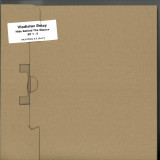
Vladislav Delay presents the fifth and last EP in his "Hide Behind The Silence" series. Intuitive and raw music, momentary and reflective, released on Ripatti's own label "Rajaton".
--
Stillness is a myth. Consider concepts such as ”still water”, or ”still air” for that matter. Go to a restaurant, ask them for a glass of still water, hold it against the light and see where we’re at. Even though the water itself has been captured and imprisoned in the glass, it never stops breathing. It’s filled with tiny particles, dancing. Everything can be explained on a molecular level, but since we’re not scientists – and even if you happen to be – it’s the natural world of perception that moves me.
Still air is very similar. A hot summer’s day with zero wind feels completely still. It’s the closest I have felt to complete stillness. Or for a more urban adaptation, imagine the same vibe inside a normal apartment. In those moments, revelations and mind- blowing experiences can be had with experiments in stillness.
Try this: Just sit down for a minute on a sunny day, making sure there’s enough natural light. Do absolutely nothing. Try not to breathe for a bit. (If you need a mental anchor, you can play Cage’s 4’33” in your head but nothing else.) Watch the tiny dots of dust dancing :..’ ̈.:; ́ ́*°.,’:,. ̈ ̈ ̈ ̈:,.’
The movement is crazy, but the feeling of stillness comes from witnessing how subtle it is. In (perceived) complete stillness, every act of microscopic mobility seems to speak volumes. Yet, it feels both reassuring and oddly threatening that the stillness is never complete. What if we would need absolute stillness? Or is it just enough that we can perceive something as such? Extremes attract, so for both water and air, extraordinary movement is equally fascinating. That is also a luxury item of sorts. For us to enjoy a very ”loud” body of water or air, we need to be safe, in enough control of the situation. So when you are, it’s worthwhile to pay attention and take it all in.
A rapid flowing free with extreme strength and just barely in control. Look at that water go! No still water on this one, only ”sparkling”. A windy day when birds seem surprised how hard it is to fly, but in the end they make it. Trees bend but don’t break. The wind shows you its movement but doesn’t hurt you. It feels friendly, like a big clumsy dog that doesn’t quite understand its size.
It’s beautiful to be a guest of the elements, but not at the mercy of them. A new kind of dialogue forms.
American Punk-Rock group The Toros formed in 1976 in Chula Vista, California. The band was originally formed with Javier Escovedo (vocals/guitar), Robert Lopez (guitar), Héctor Penalosa (bass) and Baba Chenelle (drums). Often referred to as "the Mexican Ramones," they were just one of many contributors to the city of Los Angeles' Punk explosion in the late '70s, although they never received the acclaim like their contemporaries Black Flag, Circle Jerks or Germs and Wipers. They have more followers and fans outside of the United States, especially Australia, Europe and Spain in particular. The label "the Mexican Ramones" did not take into account their other revealing influences: pre-Punk and Garage-Rock bands. The Zeros make it evident on this album, releasing covers of New York Dolls among others. But the originals, for example "They Say (That Everything's Alright)" and "Handgrenade Heart", also exploit the spirit of loud, strident rock. There are also slow and melodic, sloppy and dirty Pop songs to satisfy all tastes. The quartet broke up in 1981, reformed sporadically for live shows, and recorded the 1999 album "Right Now!". An excellent album. Ideal to have a good time and enjoy good Rock. Also, for those who don't know The Zeros, an excellent introductory album, so you can then review their catalogue. Versions of songs by The Zeros were released by the Los Angeles bands Wednesday Week ("They Say That Everything's Alright"), The Muffs ("Beat Your Heart Out"), the Basques La Secta ("Wild Weekend"), the Australians Hoodoo Gurus or the Swedes The Nomads ("Wimp").
The Zeros is a pioneer punk rock band formed in 1976 in Chula Vista, California. Comparisons with The Ramones are often made when describing the energetic and fierce guitar driven sound of the group. This is their second single, released in 1978 on Greg Shaw's very own Bomp! Records (after the fantastic 1977 "Don't Push Me Around" single). 'Beat Your Heart Out'/'Wild Weekend' is another boss one by Javier Escovedo and it also has Robert Lopez's fantastic 'Beat Your Heart Out' on the flip. These first singles recorded by the band instantly catapulted The Zeros into a top draw on the local scene and have become legendary. First time reissue! incl. artwork replica on retro style record sleeves.
- A1: Please Come Out
- A2: Wicked
- B1: Working With
- IB2: N My Head
- C1: Got Your Money
- C2: Didn't You Know
- D1: Two-Door
- E1: Memory Lane
- E2: Good Girls And Boys
- F1: All I Want From You
- F2: Don't Sell Rock
- G1: What Yours
- G2: Tweets
- H1: You Check
- H2: Hero Forever
- I1: Don't Pick Up
- I2: You Don't Know Me Anymore
- J1: Tenderly With You
- J2: Now Let's Wait
Sasu Ripatti's complete "Dancefloor Classics" series. Music for imaginary dancefloors, released on Ripatti's own label Rajaton.
”Look up, into the light” she said, while the camera shutter clicked. ”Like this? Does it look holy?” His neck felt stiff. Her reply: ”Yes, just like that. What do you mean holy? Like religious? ”No, more like trying to look very far, somewhere beyond what we can see.” ”Okay, stand still, I’m going to come close to you now. The light hits your face great.” click, click, click.
He noticed her fingernails. They were not polished. Natural. Even somewhat rugged, as if something wore out the fingers slightly. What had these hands held besides the camera? What made the edges of her fingernails drift off?
He thought it’s weird to look straight into the camera. The photographer had closed her left eye, the one not looking into the lens. Then it opened, she looked up, perusing the surroundings, then she closed her eye again, then looked up, closed, looking up, very quickly. It all seemed very professional. Maybe she calculated the light, making sure it’s close to perfect. ”What will these photos look like?” – the thought popped into his head briefly. It was liberating to think it wouldn’t matter.
”What’s that song playing?” he asked. ”Wait a sec, Ol’ Dirty Bastard?” she replied. ”Oh yeah, right. But the sample?” ”Hey, could you look up again, like that. No, lower.”
New directions: ”Look out from the window, turn left.” ”My left or yours?” ”Yours, I always try to think from the direction of my model.” How professional! This is a good shoot, so natural. Should I worry about how the photos look like? No, I don’t want to. His thoughts bounced around. What would the story be like? It’s a big newspaper, everyone will read it. Maybe someone drinks coffee and eats a stroopwafel while they do it. Will they place the waffle on top of the mug for a brief while, so that it gets hot and the syrup melts a little? Then it feels wet, and you can bend the cookie.
She broke his train of thought off midway through: ”Now turn right, but look left, and slightly up, but don’t turn your face right.” ”Umm, like this? Sounds like a set of pilates instructions.” she laughed ”You do pilates?” ”Yeah, it’s hard sometimes. Have you tried?” ”No”, she said. ”I’m not good for sports that are done in groups.” ”Yeah, but in pilates you can just be inside your mind, drowning in your private thoughts.”
”What are you thinking in pilates?” she asked, taking more photos. ”Well, mostly just which way is right. And which left.” click, click.
Q&A with Sasu Ripatti:
1) Tell us something about the EP series ”Dancefloor Classics”, what’s the idea and what can we expect?
I’ve been slowly writing these sort of dance music pieces and finally curated them together for a conceptual release. I like to create music for a dancefloor that exists only in my imagination and doesn’t try to suck up to the standardized reality.
2) Your vinyl format is 10” which is quite special (as opposed to LP / 12”). Why did you choose it?
It’s my favourite format, absolutely. The size is perfect, and you can make it sound really good @ 45 rpm. And you still can make great artwork.
3) You seem interested in sampling/repurposing, what does it mean to you as an artist to approach something already existing from a new angle? How does the source material inform you about the approach to take?
I guess i could flip it around and just say I’ve outgrown synths or electronic sounds to a great extend, and having gotten rid off all my synths already good while ago I’ve used samples as my main source material a lot. It’s obvious on this series that i’ve sampled existing music, but I also sample instruments and things in the studio and resample my own library that I have built over the years, it’s quite large. To me the end result matters, not so much how I get there. Once I have something on my keyboard and play around, it’s all an instrument, though with sampling other music it becomes a really interesting and complex one as you’re possibly playing rhythm, but also harmonic content and maybe hooks or whatever, all at once.
I never sample premeditadedly, like listening to records and looking for that mindblowing 3 sec part. I just throw the cards in the air and see what lands where, just full intuition and hopefully zero mind involved, playing tons of stuff, trying things, just recording hours of stuff. Then comes the interesting part to listen to hours of mostly crazy stuff and finding that mindblowing 3 sec part.
4) What is your relationship with the dancefloor (conceptually and/or in experiences / as a performer)?
Very complicated. I have never really felt comfortable on a dancefloor but have always wanted to. There’s something in club music, in theory, that really speaks to me. It has never really materialized for me – speaking mainly from a performer’s point of view who goes to check on a dancefloor for a moment after a concert. I never have DJ’d or felt much interest towards it. But again, I love the idea and concept of DJing. As well as producing music for imaginary DJs. Lately, as in the past 10+ years, I haven’t even performed in any sort of club spaces. So my relationship to the dancefloor is quite removed and reduced, but there’s quite a bit of passion and interest left.
All tracks composed and produced by Sasu Ripatti.
Artwork & photography by Marc Hohmann.
Mastering by Stephan Mathieu for Schwebung Mastering.
Vinyl cut by SST Brueggemann.
Publishing by WARP Music Ltd.
Vladislav Delay's complete "Hide Behind The Silence" series. Intuitive and raw music, momentary and reflective, released on Ripatti's own label Rajaton.
Stillness is a myth. Consider concepts such as ”still water”, or ”still air” for that matter. Go to a restaurant, ask them for a glass of still water, hold it against the light and see where we’re at. Even though the water itself has been captured and imprisoned in the glass, it never stops breathing. It’s filled with tiny particles, dancing. Everything can be explained on a molecular level, but since we’re not scientists – and even if you happen to be – it’s the natural world of perception that moves me.
Still air is very similar. A hot summer’s day with zero wind feels completely still. It’s the closest I have felt to complete stillness. Or for a more urban adaptation, imagine the same vibe inside a normal apartment. In those moments, revelations and mind- blowing experiences can be had with experiments in stillness.
Try this: Just sit down for a minute on a sunny day, making sure there’s enough natural light. Do absolutely nothing. Try not to breathe for a bit. (If you need a mental anchor, you can play Cage’s 4’33” in your head but nothing else.) Watch the tiny dots of dust dancing :..’ ̈.:; ́ ́*°.,’:,. ̈ ̈ ̈ ̈:,.’
The movement is crazy, but the feeling of stillness comes from witnessing how subtle it is. In (perceived) complete stillness, every act of microscopic mobility seems to speak volumes. Yet, it feels both reassuring and oddly threatening that the stillness is never complete. What if we would need absolute stillness? Or is it just enough that we can perceive something as such? Extremes attract, so for both water and air, extraordinary movement is equally fascinating. That is also a luxury item of sorts. For us to enjoy a very ”loud” body of water or air, we need to be safe, in enough control of the situation. So when you are, it’s worthwhile to pay attention and take it all in.
A rapid flowing free with extreme strength and just barely in control. Look at that water go! No still water on this one, only ”sparkling”. A windy day when birds seem surprised how hard it is to fly, but in the end they make it. Trees bend but don’t break. The wind shows you its movement but doesn’t hurt you. It feels friendly, like a big clumsy dog that doesn’t quite understand its size.
It’s beautiful to be a guest of the elements, but not at the mercy of them. A new kind of dialogue forms.
Q&A with Sasu Ripatti:
1) Tell us something about the EP series ”Hide Behind the Silence”, what’s the idea and what can we expect?
Exploration of inaction. Of many kinds. In arts and in personal life, or at bigger and more serious levels. Questioning myself as a human being as well as an artist. Acknowledging the growing activism all around, and the very clear need for it, and how it reflects my own inaction.
Musically speaking, after Rakka, Isoviha and Speed Demon, I finally found some relief, but more importantly lost the need to go musically ever more outward and intensive. I felt quite strongly certain periods/moods from the past and they made me revisit some musical ideas or states of mind I was exploring early on.
It’s about live moments being captured, not much premeditation or editing. More intuitive and raw, even though the end result (to me) feels and sounds quite introspective and calm. It’s not very ambitious. Momentary and reflective.
2) Your music doesn’t sound very silent. Does it come from somewhere behind the silence?
Oh, this time to me it sounds quite quiet and playing with space if not silence. I don’t know what’s actually behind silence, but I think silence is the source of everything. We just don’t understand it yet.
3) What kind of thoughts or experiences gave inspiration to this series?
Writing this in Nov ’22, it’s not a stretch to say the world has been really unwell. Sometimes, like Mika Vainio put it, the world eats you up. I feel a bit like that. And I try to hide in my studio and stay away from it all, but it’s getting harder by the day. I’ve been questioning myself and thinking if what us artists are doing is worth anything, and whether it’s just a selfish thing I’ve been doing for the past 25 years, running away from everything. I haven’t come to a conclusion yet.
4) Is it easy for you to be in silence, or around silence?
Absolutely. I not only hide behind silence but I also love silence. It’s only since I started going back to nature as a grown-up person that I sensed and was enveloped by silence, true silence. I have begun to appreciate it a lot. I think all the people should spend more time in silence.
All tracks composed and produced by Sasu Ripatti.
Artwork by Marc Hohmann, photography by Shinnosuke Yoshimori.
Mastering by Stephan Mathieu for Schwebung Mastering.
Vinyl cut by SST Brueggemann.
Publishing by WARP Music Ltd.
Black Vinyl[45,34 €]
- New repress Edition - Pressed on Metallic Silver Wax - LP housed in an expanded gatefold jacket - Includes lyric insert and repro archival newspaper fold-out // Reissue of the pioneering group's debut album First Issue. In 1976 Johnny Rotten and the Sex Pistols set the agenda for punk's year zero with 'Anarchy In The UK', a song that summed up the spirit, sound and attitude of the band in one shocking package. Two years later, the Sex Pistols were in tatters, but Rotten was as unsentimental as you'd hope. He reverted to his real name - John Lydon - and set about forming a band whose very identity kicked against press and media manipulation. Featuring bassist Jah Wobble, drummer Jim Walker and guitarist Keith Levene, his new group were Public Image Limited. The public image would be limited. PiL were a very distinct prospect from the Pistols, founded with a greater thought for rhythm, and with a sound that turned the page from snarling punk to a more experimental sound fusing rock, dance, folk, ballet, pop and dub. But that's not to say Lydon's new outfit lacked vitriol. 'Public Image' hits out against the notorious British tabloid press, who never gave Lydon an easy ride, and against his own Sex Pistols public image - "You only saw me for the clothes I wore". The debut single (and the album that followed) operated as a theme song and a manifesto: "_my entrance/My own creation/My grand finale/My goodbye," as the lyrics had it. It is, essentially, the sound of four people letting loose in a studio - and not caring what anyone else thought.
The first in a four-volume retrospective of Kuduro and tarraxinha pioneer DJ ZNOBIA. Incoming unto the world for a very long time from the musseke of Rangel, home of Casa da Mé&e Ju, in the Angolan capital o Ldanda, one if not the pivotal visionary of his country’s music electronic and digital modernism DJ Znobia, o/fum/an inventor. Usually considered the first purveyor of the fluency regarding tarraxinha (drinking in its foundational slow shuffle from the city of Benguela), as well as a main player in free thinking, spontaneous, funny, depressive, silly, melancholic, hilarious all encompassing beats within kuduro, batida, techno and beyond, his influence as a producer, DJ, MC and public fiuce has had a great imprint in Angolan culture for the better part of the last three ecades. This venture went through over 700 tracks of his archive (more than double are lost in the meantime between his and the NNT library) in order to collaboratively select a fiercely representative albeit balanced affair from his production, between instrumentals for sung kuduro, instrumental kuduro/batida, sung and instrumental tarraxinha, and other creative styling from the late 90’s to the mid 2000’s. Forms now heard around the world which started here, with Znobia a decisively influential contributor, along with several of his peers and collaborators, which will be also in evidence in this four volume retrospective. His story is way too far flung for this endeavor to try and make a simple narrative out of it. You have to be him, you have to be within this territory, and we ask of the people who will approach to ask him what has happened with the history of this music and what is the current reality at ground zero Luanda, as he is a mirror and visionary of its streets, in a country with such complicated dynamics and brutal treatment of its citizens. To try to put in a clean slate for this conversation, let’s talk to a genius of street music. Your question. First, here's the opening collection of what we have to share with you.
- A1: The Arterials - What We Have
- A2: Andre & Zero Plus - Sparkle In A Woman's Eye
- A3: Coast To Coast - I Want You Dear
- A4: Cold Blooded Express - You're The Life Of Me
- A5: Fred Moss - I'll Always Love You
- B1: The Ultimates - Why I Love You
- B2: The Ledgends - A Fool For You
- B3: The 5 Stepping Stars - I'll Never Love Again
- B4: Rick St John - One Heart Hurting
- B5: Young Mods - I Can't Hurt You Back
The follow up to last years initial release, The Key To Our Love Vol.2 continues to highlight the rarer side of Sweet Soul by recording artists from the late 60s onwards.
The album comprises of musicians who shared their hope & dreams through independent vinyl releases. The obscurity of these privately pressed singles limited their audience; originally released in small quantities and sold locally, the artists remained largely unknown but created some of the most poignant & timeless tracks.
- A1: Fazers
- A2: Fastlane (Feat. Biolante)
- A3: Krazy World (Feat. Gian)
- A4: The Final Hour (Feat. Mf Doom)
- B1: Monster Zero
- B2: Next Levels (Feat. Lil’ Sci, Id 4 Winds & Stahhr)
- C1: No Snakes Alive (Feat. Jet-Jaguar & Rodan)
- C2: Anti-Matter (Feat. Mf Doom & Mr Fantastik)
- C3: Take Me To Your Leader
- C4: Lockjaw (Feat. Trunks)
- D1: I Wonder (Feat. Hassan Chop)
- D2: One Smart Nigger
- D3: The Fine Print
- A1: Anti-Matter(7")
- B1: I Wonder(7")
King Geedorahs alias MF DOOM zweites Solo-Album, jetzt in der limitierten 20th Anniversary Edition! Ein zeitloser HipHop Meilenstein!
Format: Ltd Reissue erscheint im originalen Artwork als 2LP im schwarzem Vinyl gebundelt mit der 7inch Anti-Matter (schwarzes Vinyl) inklusive Downloadkarte
Repetitive actions, looping in your head forever. Forever? Never. Zero is endless. All flowers and fades. No permanence is ours. We are a wave, that flows to fit. And yet, “Music for a film”, a cassette tape by Swedish artists Sofie Herner aka Leda, inheres the power for perpetuity. A circulating dreamland, built on loop pedals, guitar, and tape manipulation.
The Malmö based artist, who is already famed in the global experimental, improvisational, lo-fi noise underworld for her own musical creations as well as being part of bands and projects like Enhet För Fri Musik, Källarbarnen, or Neutral, brings music made for the film “Dödfött“ - an interactive flick by director Niklas Hansson about failed online karate and caducity, screened with a stage art performance at Hypnos Theatre, Malmö, in early autumn 2022. Cinematic sounds for all the Velvets, that never awaken from their first DIY Super 8 dream.
Colorful, yet monochrome electrified and acoustic guitar melodies, monotonous, working like drones, getting all stranded in the zones. Six minimal compositions. Full of plenty, always friendly. Heavy, calm, dreamy, shredding, scratching, created for the woman of the world. And all other creatures, that seek features in unbroken repetition. As nobody keeps any of what he has, one day the eternal veil of forgetfulness will warp us all. Until that hour we dance in circles. Making karate moves, sidestepping caducity, reenacting ourselves, endless at the edges, through night and day, craving form that binds. As form is emptiness, emptiness is form itself. Welcome to the world of Leda, riff, 7/4, loop, the young, the middle aged, the old…
Tape is hand-stamped along the top, in printed card housing, with
Leo Zero finally gets some of his much sort after edits onto the black wax, with some classic cut-ups that have all been road tested for max dance-floor detonation.
On this first EP a set of classic soul / disco groovers that have been meticulously remastered and extended for the modern floor.
One for the dancers and romancers, ‘Love Affair’ hits you square in the heart - a big spin at the Faith parties. Next up, a classic mid-tempo Soul weekender cut gets a nice chunky re-version.
The flip kicks off with some new live drums and chunkiness added to a huge underground gem, then we head off into more bulletproof dance-floor disco territory with a souped up version that’s been given maximum wallop to compete with house cuts when played out.
"Zero Set" ist das Zusammenspiel dreier Meister des Krautrock auf einem Album. Dieter Moebius (Cluster, Harmonia), Mani Neumeier (Guru Guru) und der führende Tontechniker Conny Plank (zu viele Projekte, um sie alle zu nennen) nahmen 1982 dieses düstere elektronische und "motorische" Werk auf. Dieses großartige Album ist ein Muss in jeder Krautrock-Plattensammlung. Zum 40. Jahrestag des Albums machen wir eine limitierte weiße Vinyl-Edition, handnummeriert, 500 Exemplare. eng "Zero Set" is three masterminds of Krautrock together on one album. Dieter Moebius (Cluster, Harmonia), Mani Neumeier (Guru Guru), and ledendary sound engineer Conny Plank (too many projects to name them) recorded this dark electronic and "motorik" piece in 1982. This great album is a must in every Krautrock record collection. For the 40th anniversary of the album we"re making a limited white vinyl edition, hand numbered, 500 copies.
mule musiq welcomes british producer jimmy wallace, presenting his debut album “red, yellow, black” - a nine track strong record that partly leaves the dancefloor behind.
since childhood, music has been a strong influence on the 33-year-old artist. his mother, a music teacher, exposed him to classical sounds from an early age.
but it was hearing the electronic tones of the french touch movement, which really ignited his mu-sical journey. a year later he started to dj, acting out his love for four-to-the-floor grooves in local clubs. today you'll find him on the bill with artists like ruf dug, mr scruff, or bradley zero, heating up the dance floors.
as a producer he has already released a handful of stunning eps, including one for sweden’s finest house label studio barnhus, and one for london’s revered rhythm section international imprint.
both feature house tunes with an edge, house tunes with a love for the roots of the genre along-side more reflective, ambient moments. he also runs the label tartan records, where he publishes dancefloor focused white labels.
his music has been championed by titans of the scene such as palms trax, ryan elliott, dj tennis, gilles peterson, dixon, and hunee. axel boman even coined his debut ep as “one of the very best demo emails ever received at label studio barhnus hq”.
an advance praise, that wallace now acknowledges with an album full of deeply crafted music. some tracks lean towards the dancefloor, like the swung sounds of “bubbles”, the hypnotic mael-strom of “good morning”, or the epic, jazzy moments of “labyrinth”.
the theme of nature is evident throughout, with field recordings and environmental sounds he rec-orded on the road, being fused with his own musical ideas.
tracks like “waterfall” and “tokyo street”, draw influence on time spent in asia, whereas "dhq", "by the river", and "by the lake" are inspired by his childhood and hometown in the shropshire country-side. “i’ve been writing ambient and more nature focused material for a few years now without really having a plan for it.
finally, this year after writing the tune “labyrinth” i felt i had a body of work which was both diverse and cohesive enough to bring together on a record. so, the album represents moments of time i have spent in various outdoor spaces around the world, using sound to try and turn these experi-ences into musical format.” wallace discloses.
the result is a mesmerizing long player featuring an evocative, emotional story arc that avoids ste-reotypes and straight party orientated narration. “having written plenty of club music for the past few years, i wanted to show a different side to my sound.
something more intimate, private, experimental which can be listened to away from the party.” he reveals on the meditative, blissful “red, yellow, black” - an album, which has the power to transport listeners to places and spaces new – for inspiration, relaxation, and dancefloor moments off the beaten path