SPHERES second release lands with Gilles Renneson's Callisto EP
Gilles Renneson's Callisto EP is the second release on Rua Sound's SPHERES sub-label. The second on the label following a much loved EP by Noroi in March, this EP delivers dark, UK-influenced broken techno for discerning bass music heads.
Gilles Renneson is one half of the highly acclaimed Brussels-based duo GoldFFinch, and he brings his exceptional production skills to the forefront with Callisto. Gilles has released on respected labels including Innervisions, Turbo, Fuse Music, 877, Dirtybird, and Glasgow's Numbers, and has made a major contribution to the post-dubstep and modern Belgian techno scene.
On Callisto, Gilles rolls out superbly creative percussion that moves between satisfying and anxious over the course of the EP, all loaded over broken kick drums. Fans of Livity Sound and Timedance take note.
The release comes packages with original artwork by Josje Bijl aka Yorobi.
Mastering by Bob Macc at Subvert Central.
out of Stock
Last delivered 3 years ago available to reorder, subject to availability
U.F.O was one of the many highlights of the Swedish Library Grooves Vol 2 LP which was released in 2022.
These explorations of the mid-70's sounds of rare grooves and library music, were all reimagined, recorded and produced by a Swedish duo consisting of multi-instrumentalists Carl Johan Fogelklou and Fredrik Segerfalk aka Falk & Klou.
U.F.O was Jason Boardman's (Before I Die) go to psychedelic jazz-funk party starter so he approached the FK Library about a release on vinyl, with an expanded version.
BiD knew there was only one person for the role and were delighted when Andi Hanley (Misadventures/Nu Northern Soul/Ruf Kutz) accepted and consequently turned out a superb 7-and-a-half-minute psychedelic funk workout, expanding on the original arrangement and taking it to another cosmos.
out of Stock
Last delivered 22 months ago available to reorder, subject to availability
Kristian Matsson has never remained in one place for very long. Having spent much of the last decade touring around the world as The Tallest Man on Earth, Matsson has captivated audiences using, as The New York Times describes, “every inch of his long guitar cord to
roam the stage: darting around, crouching, stretching, hip-twitching, perching briefly and jittering away…Mr. Matsson is a guitar-slinger rooted in folk, and his songs are troubadour ballads at heart.”
Now, Matsson returns as The Tallest Man on Earth with Henry St., his sixth studio album following 2012’s There’s No Leaving Now, full of “vivid imagery, clever turns-of-phrase, and devastating, world-weary observations” (Under The Radar) and 2015’s Dark Bird Is A
Home, his “most personal record… surreal and dreamlike” (Pitchfork). Henry St. notably marks the first time he recorded an album in a band setting. “My entire career I’ve been a DIY person––mostly fueled by the feeling that I didn’t know what I was doing, so I’d just do everything myself.”
But now, longing for the energy that’s only released when creating
together with others, Matsson invited his friends to come and play.
Nick Sanborn (of Sylvan Esso) produced Henry St., which includes contributions from Ryan Gustafson (of The Dead Tongues) on guitar, lap steel and ukulele, TJ Maiani on drums, CJ Camerieri (of Bon Iver) on trumpet and French horn, Phil Cook on piano and organ, Rob
Moose (of Bon Iver, yMusic) on strings and Adam Schatz on saxophone.
Released in the UK in January 1967 by Decca Records and February by London Records in the US – Between The Buttons was the Stones’ fifth British and seventh US studio album. Released as the follow-up to Aftermath, this album marked a high point in the band’s career, continuing their ventures into psychedelia and baroque pop balladry, it is among the band’s most musically eclectic works. Brian Jones sidelined his guitar on much of the album, instead playing a wide variety of other instruments including organ, marimba, vibraphone, and kazoo. Piano contributions came from two session players: former Rolling Stones member Ian Stewart and frequent contributor and studio legend Jack Nitzsche. It was the last album produced by Andrew Loog Oldham, the band’s manager and producer of all of their albums to this point.
The album has one of the most striking sleeves of the period, featuring a classic Gered Mankowitz image on the cover. The photo shoot took place at 5:30 in the morning following an all-night recording session at Olympic Studios. Using a home-made camera filter constructed of black card, glass and Vaseline, Mankowitz created the effect of the Stones dissolving into their surroundings – according to Mankowitz… ""to capture the ethereal, druggy feel of the time; that feeling at the end of the night when dawn was breaking and they’d been up all night making music, stoned.”
The songs continued Aftermath’s lyrics of acute social observation and savage insight, their earlier raw, rootsy power enhanced by other influences of the period – notably The Beatles, The Kinks, and again Dylan. It is one of their strongest, most varied LPs, with many great songs that remain unknown to all but Stones devotees.
The inventive arrangements and innovative instrumentation on brooding near-classics like All Sold Out, My Obsession and Yesterday’s Papers brought a new dimension to the music. She Smiled Sweetly shows their hidden romantic side at its best, Connection is one of the record’s few pieces of more conventional driving rock and album closer Something Happened To Me Yesterday includes Keith’s first solo vocal.
The US version includes contemporaneous hits – the two songs that gave the group a double-sided number one in early 1967: the shameless and controversial Let’s Spend The Night Together and the beautiful, melancholy Ruby Tuesday.
"Released in April 1966 by Decca Records, Aftermath was the Rolling Stones’ fourth British studio album. It was issued by London Records in the US in June 1966. Recorded at the RCA Studios in California, it was their first album released in true stereo.
It is also one of the first ‘popular’ albums to eclipse the 50-minute mark, and contains one of the earliest rock songs to exceed 10 minutes (the blues jam Goin’ Home). The album’s release was briefly delayed by controversy over the original packaging idea and title – Could You Walk on the Water? – due to London Reocord’s fear of offending Christians in the US.
The album was considered an artistic breakthrough for the band, being the first to consist entirely of Jagger–Richards compositions, (after their maverick young manager, Andrew Loog Oldham, had shut them in the kitchen of their flat until they had written some more original songs!).
It also featured strongly the immaculate guitar work of Brian Jones and the remarkably wry, observant song-writing of Jagger–Richards
Jones played a variety of instruments not usually associated with their music, including sitar, dulcimer, marimbas and Japanese koto, as well as guitar, harmonica and keyboards, though much of the music is still rooted in Chicago electric blues. The burgeoning influences of psychedelia, Bob Dylan and the tensions around the world, are evident in classics like Paint It Black, an eerily insistent number one hit, available on the US version of the LP.
Other classics included the jazzy Under My Thumb, where Jones added exotic accents with vibes, and the delicate Elizabethan ballad Lady Jane, with distinctive dulcimer, the wry observational Mother’s Little Helper with its unashamed lyrical drug references, and the overlooked gem – the brooding, meditative I Am Waiting.
The American edition was issued with a shorter track listing, substituting the single Paint It Black in place of four of the British version’s songs, in keeping with the industry preference for shorter LPs in the US market at the time."
All tracks from 2021 transfers and newly remastered - LP editions include a booklet featuring unseen photos and liner notes by Lenny Kaye, plus contributions from Nick Cave and Devendra Banhart // Karen Dalton's 1971 album, In My Own Time, stands as a true masterpiece by one of music's most mysterious, enigmatic, and enduringly influential artists. Celebrating the album's 50th anniversary, Light in the Attic is honored to present a newly remastered (2021) edition of the album on LP, CD, cassette, and 8-Track. All audio has been newly remastered by Dave Cooley, while lacquers were cut by Phil Rodriguez at Elysian Masters. A newly expanded booklet-featuring rarely seen photos, liner notes from musician and writer Lenny Kaye, and contributions from Nick Cave and Devendra Banhart-rounds out the CD (32-pgs) and LP (20-pgs) packages.
A Wednesday song is a quilt. A short story collection, a half-memory, a patchwork of portraits of the American south, disparate moments that somehow make sense as a whole. Karly Hartzman, the songwriter/ vocalist/guitarist at the helm of the project, is a story collector as much as she is a storyteller: a scholar of people and one-liners. Rat Saw God, the Asheville quintet's new and best record, is ekphrastic but autobiographical and above all, deeply empathetic. Across the album's ten tracks Hartzman, guitarist MJ Lenderman, bassist Margo Shultz, drummer Alan Miller, and lap/pedal steel player Xandy Chelmis build a shrine to minutiae. Half-funny, half-tragic dispatches from North Carolina unfurling somewhere between the wailing skuzz of Nineties shoegaze and classic country twang, that distorted lap steel and Hartzman's voice slicing through the din. Rat Saw God is an album about riding a bike down a suburban stretch in Greensboro while listening to My Bloody Valentine for the first time on an iPod Nano, past a creek that runs through the neighborhood riddled with broken glass bottles and condoms, a front yard filled with broken and rusted car parts, a lonely and dilapidated house reclaimed by kudzu. Four Lokos and rodeo clowns and a kid who burns down a corn field. Roadside monuments, church marquees, poppers and vodka in a plastic water bottle, the shit you get away with at Jewish summer camp, strange sentimental family heirlooms at the thrift stores. The way the South hums alive all night in the summers and into fall, the sound of high school football games, the halo effect from the lights polluting the darkness. It's not really bright enough to see in front of you, but in that stretch of inky void - somehow - you see everything. The songs on Rat Saw God don't recount epics, just the everyday. They're true, they're real life, blurry and chaotic and strange - which is in-line with Hartzman's own ethos: "Everyone's story is worthy," she says, plainly. "Literally every life story is worth writing down, because people are so fascinating." But the thing about Rat Saw God - and about any Wednesday song, really - is you don't necessarily even need all the references to get it, the weirdly specific elation of a song that really hits. Yeah, it's all in the details - how fucked up you got or get, how you break a heart, how you fall in love, how you make yourself and others feel seen - but it's mostly the way those tiny moments add up into a song or album or a person.
Like many debut solo albums from musicians in bands, Jared Mattson’s Peanut didn’t originally come from a need to break away. As a composer for the Mattson 2, Jared Mattson was working up a batch of new songs through the winter of 2019-2020, looking ahead to the next album he and brother Jonathan Mattson, the blitzkrieging drummer, would record. As the pandemic hit stateside, Jared holed up in his home studio and kept developing the new music. And during that process it became increasingly clear to them that this wasn’t shaping up to be the next Mattson 2 album. This was a Mattson 1 album.
Jared had been absorbing the guitar work on records by reggae stalwarts Aswad and Burning Spear, and also the Police’s Andy Summer and the ways he gives songs space. And Jared wanted a prominent bass sound, too, where the guitar itself sometimes settles into the passenger seat so that the bass can drive. Lyrically, the album taps into our rattled world, where anxiety, loss, violence, and regret are sometimes pierced by the promise of love. The time spent working on the album was a profoundly introspective time as he reflected on past relationships while living through and writing during the pandemic, he also never lost sight of this truth about himself: Life is great with music.
One of the album’s standout highlights is “Burn Down Babylon,” which is propelled by the bass’s funk-you-say groove. You don’t often encounter many pop songs with so blunt an opening line as, “I got punched in the face last night by a neo-Nazi,”—a true experience that was delivered many years ago in a bar brawl in Carlsbad, California. But to hear the music that goes along with this tale manages a vibe that is less melee and more backyard jubilee.
When “Please Come Here,” with an intro that slinks along like a Cadillac on a Sunday morning drive, kicks in, it’s typical of the album’s melodic pop flourishes, but the twist here is that the vocals are in Japanese (The Mattson 2 have toured Japan 20 times and covered many Japanese pop songs on 2018’s Vaults of Eternity: Japan). Ween’s “She Wanted to Leave” is the lone cover, but the way Jared reimagines the song makes it fits seamlessly within the album’s sonic template. The song’s inclusion was also a personal way to honor one of Jared’s best friends, who died from cancer two years ago. The two had always bonded over the song and marveled at its inherent beauty. Ultimately, Mattson’s solo debut unfolds like a string of fascinating clouds: These are not songs in a hurry; they shift around as they float by, and, most notably, they carry their unique kind of electric charge.
NF is the stage name of rapper and composer Nate Feuerstein, whose raw emotions and honest lyrics launched him into the upper reaches of the charts with his 2017 album Perception. Initially emerging in 2010, NF gained wider attention after his 2015 album, Mansion, and 2016 follow-up, Therapy Session, both reached number one on the Christian charts. That success set the stage for his 2017 breakthrough. Buoyed by the Top 20 hit "Let You Down," Perception hit number one on the Billboard 200. NF's second Billboard 200 chart-topper, The Search, arrived in 2019 and was followed in 2021 by the mixtape Clouds.
For the lowriders, the souleros, and for any armchair drag racer who still has a record player within reach, Mid-Atlantic Story pays tribute to the aftermarket sounds of soul music, inspired by the record industry's metric trunkload of cruising compilations, legitimate and otherwise, that soundtracked an entire subculture. This getaway ride mixtape strips aesthetics from the timeless East Side Story series, and poaches music from the greater Chesapeake Bay region. Roll with a jacked-up masterpiece.
For the lowriders, the souleros, and for any armchair drag racer who still has a record player within reach, Mid-Atlantic Story pays tribute to the aftermarket sounds of soul music, inspired by the record industry's metric trunkload of cruising compilations, legitimate and otherwise, that soundtracked an entire subculture. This getaway ride mixtape strips aesthetics from the timeless East Side Story series, and poaches music from the greater Chesapeake Bay region. Roll with a jacked-up masterpiece.
The 2013 action-adventure game The Last Of Us was originally published in 2013 by Sony Computer Entertainment and was developed by Naughty Dog. The game is played in a third-person perspective and its player controls Joel, a smuggler who is escorting the teenager Ellie across a post-apocalyptic America. The game received critical acclaim, with praise for its narrative, gameplay, visuals, sound design, characterization, depiction of female characters. The Last Of Us became one of the best-selling video grames, selling over 1.3 million units in its first week. The game won multiple Game of the Year awards and has been cited as one of the greatest video games ever made.
The Last Of Us also received acclaim for its score, which was made by composer Gustavo Santaolalla. Santaolalla is also known for his work on Brokeback Mountain and Babel, for which he both won the Academy Award for Best Original Score. The Argentinian composer also created the music for the series Jane The Virgin and Netflix’ Making A Murderer. His soundtrack to The Last Of Us was his first in the video game industry. In 2020, he also returned to compose the music to the sequel, The Last Of Us Part II.
The Last Of Us is available on black vinyl. This 2LP is housed in a deluxe gatefold sleeve, includes printed innersleeves and an
This genre-bending album takes the listener on a sonic journey through moments of gritty hip hop as well as lush soul/R&B soundscapes, also providing a glimpse into modern jazz.
World Champion Battle DJ, Rhettmatic, reminds you why he’s one of the most respected DJs in the world with his masterful scratches throughout the album. In a time where musicians are scrambling to copy whatever the latest trend in music is, more than ever.
JRawls’ signature Jazz-Hop sound meshed with Rhettmatic’s West Coast bounce creates an undeniably hypnotic & original sound that is all their own.
Tracklist RawlsMatic Intro
Play Your Position
Excalibur
State My Case
Doty X & The Sen
Stay Good
Role Reversal
Brazil
Straight Shot Of Whiskey
Everyday Sh-t
The Brink
The Sun
Xanadu
Key Selling Points
-The powerful duo, Rawlsmatic, consists of respected hip hop producer-DJ’s, Rhettmatic (Member of the World Famous BeatJunkies, Cypress Junkies) & J Rawls (Produced for Black Star, Slum Village, Beastie Boys, & more).
-Their debut collaborative album "Role Reversal" via Chavez Sound features Craig G, Blu, Ras Kass, Illa J & Frank Nitt, John Robinson, Wordsworth, Sadat X & El da Sensei, Trek Life & Supastition, Ann One, Cyrus Baty & B-Jazz.
Everything eventually turns to dust. Everyone knows this, but few want to acknowledge that our time on this mortal coil is fleeting, preferring to remain in stasis, in hopes that "the end" will pass them by. Chicago trio FACS (guitarist Brian Case, bassist Alianna Kalaba & drummer Noah Leger) have been perfecting their brand of intense, cathartic post-punk over the course of four ever-evolving albums, beginning with 2017's "Negative Houses" thru 2021's landmark "Present Tense', which saw the trio dig deep into the gaping maw of a black hole & pulling back whatever debris they could grasp onto. Their newest "Still Life In Decay" comes as an addendum to the last album - a "post-event review" if you will. "Still Life In Decay" starts with a squall of white noise before collapsing into the band already locked into "Constellation"s lumbering groove, with Case's guitar a ghostly presence, appearing & disappearing in washes of gauzy feedback throughout the track. FACS have never been more locked in as a unit, and "Still Life In Decay" is a decidedly more focused effort. The apocalyptic chaos that defined their previous album "Present Tense" is waved away in favor of an examination of events with cumbrous clarity. FACS are a heavy band, but they don't necessarily FEEL like one (see side two's "Still Life", where Case's fluttering, melodic guitar lines are buoyed by the insistent, underlying pulse of the bass & drums). As a rhythm section, Kalaba & Leger dance & twist around each other like a double helix, forming the DNA of what makes FACS special. Collectively they approach rhythm from outside the groove as opposed to inside it, creating a lattice where Case weaves guitar lines like creeping vines, which makes the moments on "Still Life In Decay" where the band DOES lock in even more powerful. When the guitar punctures the lock-step swing of "When You Say", it hits like a hammer. Case utilizes his lyrics like a person suffering from anterograde amnesia; repeating phrases & holding onto old memories in a desperate attempt to avoid the slide into oblivion. Freeform poetic missives touching on themes of resignation, cynicism, class warfare, and a search for identity & meaning in a crumbling society; A primal desire to hold onto anything in a post-pandemic barrage of sensory overload. The album is a decidedly local affair; recorded once again at Chicago's famed Electrical Audio by renowned engineer Sanford Parker & mixed at his Hypercube Studio in Chicago's Ravenswood neighborhood & mastered by Matthew Barnhart at Chicago Mastering Service.
Everything eventually turns to dust. Everyone knows this, but few want to acknowledge that our time on this mortal coil is fleeting, preferring to remain in stasis, in hopes that "the end" will pass them by. Chicago trio FACS (guitarist Brian Case, bassist Alianna Kalaba & drummer Noah Leger) have been perfecting their brand of intense, cathartic post-punk over the course of four ever-evolving albums, beginning with 2017's "Negative Houses" thru 2021's landmark "Present Tense', which saw the trio dig deep into the gaping maw of a black hole & pulling back whatever debris they could grasp onto. Their newest "Still Life In Decay" comes as an addendum to the last album - a "post-event review" if you will. "Still Life In Decay" starts with a squall of white noise before collapsing into the band already locked into "Constellation"s lumbering groove, with Case's guitar a ghostly presence, appearing & disappearing in washes of gauzy feedback throughout the track. FACS have never been more locked in as a unit, and "Still Life In Decay" is a decidedly more focused effort. The apocalyptic chaos that defined their previous album "Present Tense" is waved away in favor of an examination of events with cumbrous clarity. FACS are a heavy band, but they don't necessarily FEEL like one (see side two's "Still Life", where Case's fluttering, melodic guitar lines are buoyed by the insistent, underlying pulse of the bass & drums). As a rhythm section, Kalaba & Leger dance & twist around each other like a double helix, forming the DNA of what makes FACS special. Collectively they approach rhythm from outside the groove as opposed to inside it, creating a lattice where Case weaves guitar lines like creeping vines, which makes the moments on "Still Life In Decay" where the band DOES lock in even more powerful. When the guitar punctures the lock-step swing of "When You Say", it hits like a hammer. Case utilizes his lyrics like a person suffering from anterograde amnesia; repeating phrases & holding onto old memories in a desperate attempt to avoid the slide into oblivion. Freeform poetic missives touching on themes of resignation, cynicism, class warfare, and a search for identity & meaning in a crumbling society; A primal desire to hold onto anything in a post-pandemic barrage of sensory overload. The album is a decidedly local affair; recorded once again at Chicago's famed Electrical Audio by renowned engineer Sanford Parker & mixed at his Hypercube Studio in Chicago's Ravenswood neighborhood & mastered by Matthew Barnhart at Chicago Mastering Service.
Everything eventually turns to dust. Everyone knows this, but few want to acknowledge that our time on this mortal coil is fleeting, preferring to remain in stasis, in hopes that "the end" will pass them by. Chicago trio FACS (guitarist Brian Case, bassist Alianna Kalaba & drummer Noah Leger) have been perfecting their brand of intense, cathartic post-punk over the course of four ever-evolving albums, beginning with 2017's "Negative Houses" thru 2021's landmark "Present Tense', which saw the trio dig deep into the gaping maw of a black hole & pulling back whatever debris they could grasp onto. Their newest "Still Life In Decay" comes as an addendum to the last album - a "post-event review" if you will. "Still Life In Decay" starts with a squall of white noise before collapsing into the band already locked into "Constellation"s lumbering groove, with Case's guitar a ghostly presence, appearing & disappearing in washes of gauzy feedback throughout the track. FACS have never been more locked in as a unit, and "Still Life In Decay" is a decidedly more focused effort. The apocalyptic chaos that defined their previous album "Present Tense" is waved away in favor of an examination of events with cumbrous clarity. FACS are a heavy band, but they don't necessarily FEEL like one (see side two's "Still Life", where Case's fluttering, melodic guitar lines are buoyed by the insistent, underlying pulse of the bass & drums). As a rhythm section, Kalaba & Leger dance & twist around each other like a double helix, forming the DNA of what makes FACS special. Collectively they approach rhythm from outside the groove as opposed to inside it, creating a lattice where Case weaves guitar lines like creeping vines, which makes the moments on "Still Life In Decay" where the band DOES lock in even more powerful. When the guitar punctures the lock-step swing of "When You Say", it hits like a hammer. Case utilizes his lyrics like a person suffering from anterograde amnesia; repeating phrases & holding onto old memories in a desperate attempt to avoid the slide into oblivion. Freeform poetic missives touching on themes of resignation, cynicism, class warfare, and a search for identity & meaning in a crumbling society; A primal desire to hold onto anything in a post-pandemic barrage of sensory overload. The album is a decidedly local affair; recorded once again at Chicago's famed Electrical Audio by renowned engineer Sanford Parker & mixed at his Hypercube Studio in Chicago's Ravenswood neighborhood & mastered by Matthew Barnhart at Chicago Mastering Service.
Halestorm’s ‘The Strange Case of Halestorm’ album is repressed on a single clear LP and is a one-time pressing.
This vinyl release is a part of Atlantic Records' 75th Anniversary vinyl collection.
Belgian junk jazz trio schroothoop (which translates as 'junk yard') bring together multi-instrumentalists Rik Staelens (wind & string instruments), Timo Vantyghem (bass & thumb piano) and Margo Maex (percussion). Their new album called 'MACADAM' will be out April 7 via Sdban Records, home of many strongholds in the lively contemporary Belgian jazz and groove scene.
In 2020, schroothoop first emerged with their much-acclaimed and infectious debut album Klein Gevaarlijk Afval (Small Hazardous Waste). "Music on homemade instruments with a surprisingly good result" (De Standaard). "Schroothoop show that material limitation can be liberating and that sometimes the source of new sounds is just old junk."(Written in music). "We assure you that this "scrap heap" is worth gold!" (Le Grigri).
On their second album, to be released on April 7, schroothoop explore the vast sounds of discarded objects found on the macadam streets of Brussels. Wooden crates turn into guitars and lyres. Scrap metal becomes a thumb piano, a cimbalom, or percussion bells. Their compelling collection of semi-improvised songs is born out of several fruitful residencies and live performances during which Margo Maex, Rik Staelens and Timo Vantyghem dive deeper into the possibilities and unique timbres of their DIY instruments.
The junk jazz trio find inspiration in traditional Afro-Cuban and North-African rhythms, New Orleans second line grooves, and Arabic Hijaz scales. On Macadam, the band also explore the realms of electronic music, not shunning hints of drum and bass, dub riddims and ambient soundscapes, using pitch shifting delays or gauzy reverbs. The album delivers a mesmerizing trip through the most diverse capital of Europe, mixed and post-produced by none other than sound wizard Dijf Sanders.
The trio originally met in the Brussels street orchestra scene. One night they found themselves jamming on trash cans, buckets and other illegally dumped materials. Soon after, they started building their own DIY instruments from street trash. Imagine flutes made out of pvc pipes, a scrap metal drum kit, thumb pianos made out of old kitchen knives, a tin can violin, worn-out cutting discs as gongs, and a washtub bass. Delivering their own brand of "junk jazz", Schroothoop literally gives junk a second life by immortalizing a whole range of lost and found objects through music. The Brussels-based group effortlessly incorporates jazz, Northern African music, and Afro-Cuban rhythms, resulting in a danceable and hypnotic trip through the city's melting pot.
Voïvod’s commercial peak and one of their many artistic peaks, 1989’s
Nothingface marked a move away from the Quebec metal band’s thrash beginnings to a more progressive rock sound epitomized by their fantastic cover of Pink Floyd’s “Astronomy Domine.” But it remains quintessential Voïvod, complete with sci-fi themes and tricky tempo changes. Long out of print on vinyl, Nothingface returns with a metallic (natch!) red vinyl pressing remasteredfor vinyl by Peter Moore.
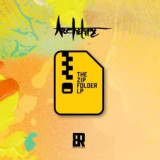
Archetype is known to many as one of the frontmen from cult classic Granville Sessions, plus a
founding Moose Funk Squad member. Now, after 5 years in the making his debut album, The Zip
Folder LP is ready for release.
Archetype called upon Granville Sessions MPC don Giuseppe 'Zippo' Falcone for a selection of
samples. After some deliberation and delay these were then fully recreated with live instrumentation, played largely by Ed Koral (another Granville alumnus and multi-instrumentalist); plus the help
of Berlin-based sax and trumpet players Christoph and Yannick.
"Hollow crown" ist limitiert auf 1000 weiß-orange marmorierte LPs.
Das dritte Album von ARCHITECTS ist nun endlich wieder auf Vinyl erhältlich - als Teil von Atomic Fire Records neuer "Backfire" Serie. Für Vinylfans von Vinylfans.
Nach dreijähriger Abwesenheit meldet sich die Band stärker denn je zurück mit dem neuen Angriff "Showdown".
Dieses Album sprengt alles, was ROTN bisher an musikalischem und künstlerischem Schaffen zu bieten hatte, bei Weitem.
Es vereint in Perfektion alle Elemente, die den Erfolg der Band ausmachen: Abgefahrene Grooves gemischt mit kraftvollen Riffs, unterlegt mit dem bereits bekannten Flow von Vithia, sublimiert durch
Eva-B's epische Soli, und das alles verpackt in ihrem einzigartigen japanischen Shonen-Manga-Universum.
Abgemischt von Johann Meyer (Gojira) und gemastert von Ted Jensen (Sterling Sound), bietet "Showdown" auch eine exzellente Produktion. Die Songs sind so vielschichtig, dass du zum Groove mitspringen, zur Härte headbangen und zu den Hardcore-Breakdowns moshen willst.
Beim Thrash-Riffing zermalmst du dir fast den Nacken, die Refrains singst du reflexartig mit und bei den messerscharfen Soli herrscht Gänsehaut-Alarm.
Wenn es eine Band gibt, die durch ihre Originalität, ihr Universum und ihre Musik hervorsticht, dann sind es zweifellos Rise Of The Northstar.
Indie exclusive red vinyl, ltd ed /100. First new studio album in 20 years, produced by J. Robbins & Liars Academy. Indie Exclusive opaque red vinyl. Limited edition of 100. After two decades on pause, Liars Academy return with Ghosts their most massive album to date. Unofficially a followup to 2004's Demons, Ghosts is an evolutionary step forward for the band and testimony to the timelessness of rock music. The swirling energy of 70's guitar rock and the anthemic swagger of 90's radio rock inform the 11 song trip packed with massive riffs, razor-sharp hooks, and scream-along chest beaters--a spectacular come-back album by a band at its peak. Steadfast Records is proud to present the brand new album from Liars Academy. Ghosts is a relentless cache of rock hits from the post-Demon's powerhouse quartet of Ryan Shelkett, Chris Camden, Fred Fritz, and Eric Fauver. Produced by J. Robbins and Liars Academy, mastered by Adam Boose, and vinyl masters cut by Bob Weston.
Indie exclusive red vinyl, ltd ed /100. First new studio album in 20 years, produced by J. Robbins & Liars Academy. Indie Exclusive opaque red vinyl. Limited edition of 100. After two decades on pause, Liars Academy return with Ghosts their most massive album to date. Unofficially a followup to 2004's Demons, Ghosts is an evolutionary step forward for the band and testimony to the timelessness of rock music. The swirling energy of 70's guitar rock and the anthemic swagger of 90's radio rock inform the 11 song trip packed with massive riffs, razor-sharp hooks, and scream-along chest beaters--a spectacular come-back album by a band at its peak. Steadfast Records is proud to present the brand new album from Liars Academy. Ghosts is a relentless cache of rock hits from the post-Demon's powerhouse quartet of Ryan Shelkett, Chris Camden, Fred Fritz, and Eric Fauver. Produced by J. Robbins and Liars Academy, mastered by Adam Boose, and vinyl masters cut by Bob Weston.
Hawthorne is the powerful new album and short film from Queens-by-way-of-Detroit emcee Motown Priest, a gifted lyricist with a penchant for writing gripping narratives. More than just a gifted storyteller, he also has a phenomenal ear for production that helps to take this project to another level. It’s a cohesive, poignant, and incredible piece of art that serves as a searing look at the world we all live in today. “This album and film weren’t about cheap moralism or heady preaching, it's a very simple idea of confronting who we are, and who we are affects the world around us,” Motown Priest explains. “This is where Hawthorne, in both music and film, connects.” He’s true to his word, too, because the album’s 12 tracks bang just as hard as they make you think. They’re the type of songs you can sit with and unpack, or you can blast them at full volume to make your system rattle - or both. Tracks like “For Sale” and “The Calogero Effect” boast soulful, nostalgic production that fits their more meditative narratives of succumbing to vices and childhood innocence. On the other hand, “Pandora’s Box” straight-up slaps thanks to its distorted guitars and live drums, while “New Religion” is an aggressive, teeth-gritting banger. It’s all part of Motown Priest’s plan to fully engage with his audience while delivering one of the year’s best releases, regardless of genre and medium. In addition to the album, Hawthorne exists as a short film that further explores many of the same themes (ceaseless desire, identity, and capitalism) through the visual format.Within its 35-minute runtime, the film follows the same protagonist as the album, a young man who seeks change and fulfillment but doesn’t consider the pain and damage he causes along the way. It makes for a damning look at so many cultural ills, and it couldn’t have arrived at a more fitting time.
ElCamino, hailing from Buffalo, New York, had a huge 2022 with the release of his Bethlehem EP with Chase Fetti as well as two solo albums, Let There Be Light and ElCamino 3. ElCamino officially signed to Benny The Butcher’s Black Soprano Family imprint in 2022 and was featured on several acclaimed #BSF releases including “80 Bills,” “We Here” and “Saint Maurice” and the B$F album Long Live DJ Shay. Other collaborations with the likes of 38 Spesh, A$AP Ant, Curren$y, Harry Fraud, Jay Worthy and Keisha Plum have proven ElCamino to be one of the hardest-working artists in the game. His notable performance alongside Wiz Khalifa on “Back to Shore” off of the 38 Spesh and Harry Fraud Beyond Belief album was an easy fan-favorite. Here You Go is another high quality release featuring 9 new tracks with ElCamino standing alone and showcasing his supreme lyrical talent. Pressed On Splatter Colored Vinyl! Limited To 500 Copies Worldwide!
French Montana and Harry Fraud reunited to drop one of 2022’s best rap albums. Now they are kicking off 2023 with the release of a vinyl drop of their critically acclaimed Billboard charting album. Peaking at #46 on the Billboard 200 US Chart, Montega delivers what Rolling Stone calls a “delectable array of nouveau boom-bap samples and introspective rhymes that don’t make any obvious concessions to the mainstream.” Entirely produced by Harry Fraud with features from Babyface Ray, Benny The Butcher, Chinx, Est Gee, Fleurie, Jadakiss, Quavo & Rick Ross.
The Beat Bronco Organ Trio are back with 10 heavy-weight instrumental tracks of the finest quality. "Another Shape of Essential Sounds" sees the Madrid trio stick to their winning formula: sublime Hammond organ grooves, nifty guitar work and dynamic drums combine to produce a rich, uplifting, and vintage sound. Straight to the point, no fillers, and no messing around with the longest cut just over 4 mins, these are irresistible, foot-tapping tunes which sound as good on the dance floor as at a dinner party.
Billie Marten has announced her fourth record Drop Cherries for release on 7 April via Fiction Records. Recorded entirely on tape in Somerset and Wales late last summer, Drop Cherries marks the very first time that Billie Marten has both written and co-produced (with Dom Monks) one of her records; following critically-lauded 2021 album Flora Fauna, Feeding Seahorses by Hand (2019) and Writing of Blues and Yellows (2016).
French Montana and Harry Fraud reunited to drop one of 2022’s best rap albums. Now they are kicking off 2023 with the release of a vinyl drop of their critically acclaimed Billboard charting album. Peaking at #46 on the Billboard 200 US Chart, Montega delivers what Rolling Stone calls a “delectable array of nouveau boom-bap samples and introspective rhymes that don’t make any obvious concessions to the mainstream.” Entirely produced by Harry Fraud with features from Babyface Ray, Benny The Butcher, Chinx, Est Gee, Fleurie, Jadakiss, Quavo & Rick Ross.
The Beat Bronco Organ Trio are back with 10 heavy-weight instrumental tracks of the finest quality. "Another Shape of Essential Sounds" sees the Madrid trio stick to their winning formula: sublime Hammond organ grooves, nifty guitar work and dynamic drums combine to produce a rich, uplifting, and vintage sound. Straight to the point, no fillers, and no messing around with the longest cut just over 4 mins, these are irresistible, foot-tapping tunes which sound as good on the dance floor as at a dinner party.