Within Melbourne’s burgeoning cinematic-soul scene, which includes
breakout acts Surprise Chef and Karate Boogaloo, mysteriously sit
The Pro-Teens.
Helmed by prolific drummer and percussionist Hudson Whitlock, who also
plays in both aforementioned bands, this breakaway studio project involves an
interchangeable collective of incognito, Melbourne-based, esteemed instrumentalists playing under outlandish pseudonyms such as “’Dead Honest’ Dean
Amazing” and “Libby Clique-Baite”.
Symbolically led by keyboardist “Snooch Dodd”, new album ‘I Flip My Life Every
Time I Fly’ is the latest musical concoction from Whitlock’s eccentric brain,
marrying the soul/funk roots of sample culture with the principles of boombap hip hop.
Incorporating the colourful comic book stylings of MF DOOM and Kool Keith,
or the dark and exotic flavours of Gravediggaz and The Wu-Tang Clan, The ProTeens also take cues from their composing heroes Galt MacDermot, Richard
Evans and Marc Moulin.
The Pro-Teens bop, zip, whip and fling on this phantasmagorical journey - an
unorthodox patchwork of cinematic soul, hip hop-guided funk breaks, vivid instrumental textures and film score-esque moods.
The Pro-Teens work on the same analogue recording model adopted by the
tight-knit College Of Knowledge label, self-recorded and produced with the ragtag crew of musicians putting tracks down live to tape in crammed attic studios
and sharehouse recording spaces.
The first limited pressing of ‘I Flip My Life Every Time I Fly’ was released on the
‘College Of Knowledge’ imprint in late 2020. It was one of the highlights of the
year at Mr Bongo HQ who loved the concept and felt this tripped out masterpiece from Melbourne needed to be heard well beyond those lucky enough to
have bagged those limited first copies.
Поиск:́71
Все
LA-based rockers The Bronx return for their sixth studio album 'Bronx VI' which comes out worldwide on Cooking Vinyl August 27th. Bronx VI builds on the legacy The Bronx has established in its near two-decade existence, but which definitely proves the door to what’s next has not just been kicked down, but chopped up and burned to a cinder. Yes, the first four tracks – “White Shadow”, “Superbloom”, “Watering The Well” and “Curb Feelers” – bristles with the wild and untamed energy that’s defined the band from the off, but then – all of a sudden, as “Peace Pipe” kicks in – the pace and mood shifts to something a little less aggressive. Elsewhere, “Mexican Summer” and its (relatively) chilled-out mariachi vibes serve as an homage to the band’s alter-ego, Mariachi El Bronx (and was written while that incarnation of the band was on tour), while fatalistic closer “Participation Trophy” masks the Caughthran’s existential dread behind searing riffs and a catchy, defiant and exuberant melody. “The feelings I got when writing for this sixth record is the same type of feeling I got writing “Heart Attack American”. It all comes from the same place and it’s all still 100% genuine and real. Believe me – I’m still feeling the raw emotion that I felt when this band first started. That’s just who I am, that’s who we are as people. You can’t fake stuff like that when it comes to music or art. You have to stay connected. You’ve just got to be real” - Matt Caughthran, vocalist. Bronx VI was produced by Joe Baressi (Melvins, Tool, Bad Religion).
For number 89 in the Brazil45 series, we present a no-nonsense Brazilian funk / samba rock double-sider courtesy of the mighty Golden Boys and Silvio C sar. The Golden Boys were a quartet formed in 1958 by the Correa brothers; Renato, Roberto, Ronaldo, and their cousin Valdir Anuncia o. They enjoyed a stellar recording career, from the 50s through to the 90s, with members of the group still involved in music to this day. For this selection we headed to their self-titled 1975 album released on Odeon and cherry-picked one of the group’s funkiest moments, ‘Segura Na Cintura Dela (O Gavi o)’. By now performing as a trio, they enlisted Paulo Deb tio of Lemos E Deb tio 8206;fame as executive producer and, on the controls, producer Milton Miranda. Miranda was a silent figure behind so many of the much-loved classic Odeon / EMI releases of the 60s and 70s. ‘Beco Sem Sa da’ is another Odeon release, and another classic produced by Milton Miranda. Taken from Silvio C sar’s self-titled 1971 album, here the prolific singer and composer delivers a swinging samba rock / groove. With fantastic arrangements by Geraldo Vespar, this addictive swing was reconstructed in the 2000s when Drumagick sampled it for their track ‘Sambarock’. So here we have two slices of Brazilian dancefloor pressure just waiting to take centre stage again.
- Next installment in BRAZIL45 Series.
- Brazilian funk and samba rock double-sider.
- Both tracks produced by Milton Miranda.
For number 90 in the Brazil45 series, we share a couple of lesser-known discoveries that have become recent favourites here at Bongo HQ. First up we head to the north of Brazil with funky Forr / boogie hybrid monster, ‘Vendedor De Mangaios’ by Josan. Originally released in 1981 on the album ‘Rio De Renova es’ on Copacabana Records. This addictive dancefloor gem is still relatively under the radar, but it has become a firm favourite at Bristol’s Worm Disco Club parties and amongst the DJ’s and collectors of Brazil’s underground dance music scene. Taken from the illustrious singer Bart Galeno’s self-titled 1977 album on Tapecar Records, ‘Vou Tirar Voc Daqui’ is an unusual one. Not easily pigeon-holed, he song sits somewhere between MPB / funk and rock, yet isn’t really any of them. Backed with a big orchestrated sound and tripped-out synths, the track has a truly unique feel. We hope you dig these finds. Another testament to the diversity and depth of Brazil’s rich musical heritage.
- Next installment in BRAZIL45 Series.
- Two lesser-known discoveries
Nobody could believe Willy Mason was only 19 when he appeared on the indie scene, after a chain of events that saw Mason hanging out, performing gigs and touring America with the likes of Conor Obrest and his band, Bright Eyes around the time of releasing 'Humans Eat', the 2004 album and its singles (now classic track "Oxygen" and "So Long") charting in the UK Singles and Albums Charts in 2005. "Already Dead" follows 'Carry On', his 2012 album produced by Dan Carey during his time in South London which also led to Mason's feature on Lianne La Havas' album 'Is Your Love Big Enough' and his 2012 tour with Ben Howard.
Will Young new album Crying On The Bathroom Floor released 6th August 2021 – an album entirely of female cover versions
The new single ‘Gold’ opens with the gritty, fervent soul of AJ Dean-Revington’s vocals, before the band’s patented harmonies surge to the fore, while thunderous drums and a euphoric hook escalate the song’s drama. It offers a timely reminder that challenging experiences will in time fade in favour of a better future. Gold stemmed from the idea of something being more beautiful having been broken. We had chatted about the Japanese art form Kinsugi or Kinstsukuroi and how things are mended with lacquer mixed with gold, and this was the perfect imagery for what we were writing about. Our scars are a visual representation of our struggles and our stories of loss are stories of survival. At the start of 2020 when we were in Woodstock finishing the album with Simone and David, we could not have imagined how the year would pan out. Gold feels even more connected and poignant now, after a year of so much loss and everyone just trying to survive.
A first-time replica re-issue of a highly sought-after, rare Brazilian MPB / Funk nugget from 1974.
Brazilian 7" singles or compacts sometimes get a bit overlooked outside of the world of avid Brazilian collectors and DJs, but here are where some of the most exquisite jewels of Brazil's rich musical tapestry lie.
This release has been a long time in the works, but now finally we are thrilled to present a replica version of one of our favourite Brazilian 7”s - the outstanding 'Morro Do Barraco Sem Água' by Lemos E Debétio (aka Toninho Lemos & Paulo Debétio). Discovering tracks like 'Morro Do Barraco Sem Água' makes you want to go the extra mile. You spend that little bit more time than is rational examining and dusting off a stack of 7”s hunting for an elusive gem, or end up disappearing down an Internet wormhole eating into time you don’t have before you need to be up for work again in the morning. This is a calculated effort, as the reward of the revitalising musical vitamins that you've stumbled upon are the big pay off.
'Morro Do Barraco Sem Água’ was originally released on Odeon Records in 1974, and even though this was a major record label it remains extremely hard to find. From the first moment the needle hits the groove with its guitar and drum break intro you know the song is special. A feel-good addictive melody with fantastic swooping arrangements and a pulsating funk backbeat, which is over all too soon. We hope you enjoy this audio treasure as much as we do!!!
Soul Jazz Records’ new oxblood red coloured vinyl
LP (plus download code) issue of this very rare
deep spiritual jazz album, first released as a
private-press album in 1970 on flautist Lloyd
McNeill’s own Asha Record label in Washington
DC.
Lloyd McNeill is an African-American flautist,
painter, poet and photographer born in Washington
D.C., in 1935. His multi-disciplinary creative life led
to encounters and friendships with Nina Simone,
Picasso, Eric Dolphy, Nana Vasconceles and other
legendary cultural figures. Lloyd McNeill’s hypnotic
‘Washington Suite’ was originally commissioned as
a piece of music for the Capital Ballet Company, in
Washington.
McNeill grew up through the era of the Civil Rights
Movement in the 1960s and his life and work is a
reflection of those ideals. In the mid-1960s he
moved to France where he became friends with
Picasso, working with a number of émigré-jazz
musicians whilst living in Paris. In the late 1960s
he taught jazz and painting workshops at the New
Thing Art and Architecture Center in Washington.
In the 1970s he travelled throughout Brazil and
West Africa studying music and taught music
anthropology in the US.
Lloyd Altamont Thomas Robinson recorded many songs as a singer first for Studio One in 1963 and later for many labels and Jamaican producers including Duke Reid,
Lloyd Daley, Sir JJ and more. Robinson was part of the duo Lloyd and Devon, whom had quite a few good songs under their belt including a hit for Derrick Morgan's Hop label,
"Red Bum Ball.". With Glen Brown, under the name Lloyd & Glen, he wrote and recorded many outstanding Rocksteady & early Reggae tracks, some quite heavily influenced by
Black Soul including the two sublime tracks featured here. He went on to record the big dancehall hit “Cuss Cuss” in 1984 on the Harry J. label.
Glenmore Lloyd Brown, began his career as a vocalist in Sonny Bradshaw’s jazz group before recording duets with Hopeton Lewis, Dave Barker, and Lloyd Robinson.
Later, Brown became the founder and owner of the Reggae/Dub labels Pantomine and South East Music. A sought after producer he worked with many with many
Reggae greats including U Roy, Gregory Isaacs, Big Youth, I-Roy, Prince Jazzbo, Johnny Clarke, Lloyd Parks, and Little Roy.
The heavy rhythms of his Dub productions resulted in his being known as "The rhythm master".
As “Lloyd & Glen”, they composed, sang and recorded together about 15 tracks, ranging from Ska to Rocksteady to Soul on a variety of labels between 1966 and 1968.
Most of these songs are outstanding, many are just sublime with a strong American Soul influence.
Composed as a disco soundtrack for condemned night clubs and empty venues, "I Can See You Outside" is the latest single from Dubstar, a further collaboration with Stephen Hague, who produced their earliest hits.
Recorded at the end of the UK's first COVID-19 lockdown, it forms a companion piece with their previous single Hygiene Strip. While the previous song, “Hygiene Strip”, revealed an ordinary human predicament set within the extraordinary context of the pandemic, I Can See You Outside is a defiant expression of optimism, and the resolution to transcend an existential threat. The EP features brand new Extended and Dub remixes, and will be promoted heavily to the band's highly active fanbase via social networks
This album is a sequel to trumpeter/bandleader Red Rodney’s ‘One For Bird’ recorded live at the Tivoli Gardens 1988. The band he brought from USA includes then up-and-coming young players: Dick Oats (alto saxophone), Garry Dial (piano), Jay Anderson (bass) and John Riley (drums), musicians that have become regular SteepleChase recording artists. Red Rodney (1927-1994) succeeded Miles Davis’ post in the Charlie Parker Quintet from 1949 to 51. This indelible experience enabled him to be an adviser on Clint Eastwood’s 1988 Golden Glove awarded film “Bird”, which featured Red’s character extensively. The publicity that came with the film seemed to have given a boost to his career. Red started to play professional at the age 15 but slowed down during early and mid- 70s due to his addiction. He made a successful come back later and toured the world with his band. “Rodney rockets through most of his solos here, ascending into high-register terrain with the audacity if youth. At 62, he plays with the ebullient spirit more typical of men half his age.” - Mark Stryker, Cadence
Boogie Munster & PUSH BEATS CREWS RAJ MAHAL & DJ MOPPY had a chance encounter at their local plumbing shop with FRANK REYNOLDS of the pre- Motown era soul group THE SENSATIONAL REYNOLDS SINGERS. The result is a modern & moody twist on 2 classics,"AIN’T NO STOPPIN’ US NOW” & “SEARCHIN".
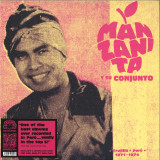
Following the 70s Peruvian cumbia compilation by Ranil last year, Analog Africa returns to Latin America to highlight the work of one of Perú’s undisputed masters of the electric guitar: Manzanita. This 13th release in the Limited Dance Edition Series includes 14 mostly instrumental compositions of electrifying Peruvian cumbia and guaracha. Manzanita's unique guitar lines rest on confident foundations that shifts gears effortlessly. Limited Edition LP in Gatefold Cover pressed on 180g high quality virgin vinyl
"I was in Lima, hanging out with collector-extraordinaire Victor Zela, who had spent the previous few years pouring his passion for Peruvian Cumbia into the blog „la cumbia de mis viejos“, a trove of incredible music. But after the birth of his first child, his priorities shifted and he decided to part with some of his rarest LPs. I was one of the lucky few given an early chance to examine his treasures, and when I picked up the album Manzaneando com Manzanita, Victor said: “Take it! its one of the best LPs ever recorded in Perú … easily in the top five”. That was all the encouragement I needed … two years later many of the songs from that masterpiece have made it onto Manzanita y su Conjunto, a compilation of electrifying Cumbia sides from Manzanita’s golden era.
Berardo Hernández – better known as Manzanita – first surfaced during the psychedelic Cumbia craze. At the head of the scene were the magnificent Los Destellos, whose leader, Enrique Delgado, was such a six-string wizard that other guitarists found it impossible to escape his shadow. But when Manzanita arrived, his electric criollo style sent shockwaves through Lima’s music scene and posed a serious threat to Delgado’s dominance as king of the Peruvian guitar.
Manzanita had come to Lima from the coastal city of Trujillo, five hundred miles up the coast – a place where Spanish, African and indigenous populations had been living and making music together for centuries – and came of age at a time when the first wave of psychedelic rock from the US and UK was starting to sweep the airwaves. But the sounds of Cream and Hendrix disappeared from the radio just as quickly in 1968 when Juan Velasco seized control of the country in a military coup. The new regime, which favoured local traditions over cultural ‘imports’ from the north, was a blessing in disguise for the Peruvian music scene.
Record labels flourished as new bands, raised on a hybrid diet of electric guitars and Cuban rhythms, rushed in to fill the vacuum created by the lack of imported rock. A new genre, known as Peruvian cumbia, was born and Manzanita quickly became one of its most original voices.
Starting in 1969, Manzanita y su Conjunto released a steady stream of singles that used Cuban guaracha rhythms as the foundation for dazzling electric guitar lines. After countless 45s and several years on the touring circuit, the band signed to Virrey, an important Peruvian label, and recorded two LPs acknowledged as masterpieces among aficionados of tropical music. Most of the songs on Analog Africa’s new compilation Manzanita y su Conjunto are drawn from those legendary sessions of 1973 and 74.
Although he scored a few more hits in the later 70s, his dissatisfaction with the music industry caused him to withdraw from the scene for several years; and when he finally retired for good, the golden age of Peruvian cumbia was a distant memory. But when Manzanita was at the top of his game he had few equals. Victor Zela was right: this is some of the best music ever recorded in Perú."
Tampo is a mystic sextet from somewhere out of the hustle and bustle of the busy Helsinki scene. They operate on a level of their own, performing latin jazz inspired by cumbia and mambo. This 7" single release by We Jazz Records features two high calibre cuts, "Keumgang" and "Tampomambo", making this one a solid choice for all lovers of psychedelic music with character.
A year before Wild Pitch Records properly introduced us to the trio of Queens native Large Professor and Toronto’s Sir Scratch and K-Cut, the soon-to-be-legendary group self-released their own debut single. Dropping on Actual Records, the 12” of ‘Think’ and ‘Atom’ was soon a sought after rarity, with scarce originals still fetching upwards of three figures.
On it, they only hint at the greatness to come, while simultaneously showing that they’d already mastered the three-minute rap single – this is concise brilliance with no flab whatsoever.
Engineered by the late, esteemed Paul C, ‘Think’ is a study in how to turn well-worn samples into something new. The combination of several James Brown snatches, along with bits lifted from Lyn Collins and Jimmy Castor Bunch, could have been tired and almost parodic by 1989, but instead the group weave something interesting from old fabric.
‘Atom’ is arguably even better, built around a brace of elements from Marvin Gaye and Tammi Terrell’s 1967 duet ‘Little Ole Boy, Little Ole Girl’. On it, Large Pro gives the first real hints that he’ll not just be a super-producer, but a committed MC to watch. Mixing threats with humour, positivity with braggadocio, it’s a calling card performance on a track that could have still sat comfortably on 1991’s ‘Breaking Atoms’ album.
Heavily bootlegged, this is the first official double-sided 7” release bringing together both these foundational cuts.
Death Drives A Cadillac was Spike In Vain’s second
album, never officially released and unheard in its final
form until now. Like many hardcore bands circa ’84 and
’85, the group was ready to further expand its palette and
ease off the thrash tempos. Recorded roughly a year after
Disease Is Relative with a bigger budget, the album is even
more wide-ranging, and the songs are more fleshed out.
“Despair grew inside her, I grew inside her. She named
me Spirit Death, and this is my song” sings Chris Marec,
the vocalist on half of this LP. Though less “young” than
their debut, that album’s darkness lingers, but here has a
more removed, observational quality, with many songs
sung in character or in the third person, along with a
tendency for anthropomorphic allegory. It has a bit less to
do with screaming for death to come than with a growing
resignation to being the other, a recognition of inescapable
alienation and its relation to childhood trauma. —all with
a heaping side of absurdity and a sense of wonder at the
gradually unfolding endtimes.
That said, many of the tracks wouldn’t be out of place
on the debut, and some feature exotic tunings. Bits of roots
music come into play as well—gospel, blues, and country
figure to some extent in a third of the songs, sometimes
in convoluted, Beefheart-esque ways, and at other times
toying with genre archetypes as a cat does a mouse.
For BRZ45087 we present a split release comprised of two tried-and-tested favourites from the Mr Bongo record bag.
Rio-born pianist and organist Lafayette’s career started in the mid-60s and saw him become a prominent member of the Brazilian musical movement entitled 'Jovem Guarda’. For his inclusion on this selection in the Brazil45 series we move things along a few years to 1982 and the Brazilian boogie gem 'Sol De Verão'. Taken from his album 'Edição Especial’ and originally released on Copacabana Records, 'Sol De Verão' was written by Jorginho Gomes from one of Brazil's greatest bands Os Novos Baianos. It's a superb slice of 80s boogie/funk brilliance with a super catchy ear-worm of a vocal - definitely one for the dancers!
For the flip, we include an absolute monster from the fantastic Marisa Rossi, who we featured previously on number 38 in the Brazil45 series. 'Quem Vem Lá’ is a heavy driving Samba Rock / MPB groove track with female and male call and response vocals. Originally released on a very rare and exclusive 7" also on Copacabana Records, but this time in 1971. Marisa would go on to work with the legendary Arthur Verocai in the 1980s.
Two very different slices and styles of Brazilian music, but both absolute gems.