Search:manzanita y su conjunto

Styles
All
  • 1
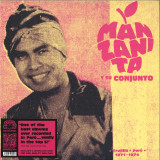
MANZANITA Y SU CONJUNTO - TRUJILLO, PERU 1971 - 1974

Following the 70s Peruvian cumbia compilation by Ranil last year, Analog Africa returns to Latin America to highlight the work of one of Perú’s undisputed masters of the electric guitar: Manzanita. This 13th release in the Limited Dance Edition Series includes 14 mostly instrumental compositions of electrifying Peruvian cumbia and guaracha. Manzanita's unique guitar lines rest on confident foundations that shifts gears effortlessly. Limited Edition LP in Gatefold Cover pressed on 180g high quality virgin vinyl

"I was in Lima, hanging out with collector-extraordinaire Victor Zela, who had spent the previous few years pouring his passion for Peruvian Cumbia into the blog „la cumbia de mis viejos“, a trove of incredible music. But after the birth of his first child, his priorities shifted and he decided to part with some of his rarest LPs. I was one of the lucky few given an early chance to examine his treasures, and when I picked up the album Manzaneando com Manzanita, Victor said: “Take it! its one of the best LPs ever recorded in Perú … easily in the top five”. That was all the encouragement I needed … two years later many of the songs from that masterpiece have made it onto Manzanita y su Conjunto, a compilation of electrifying Cumbia sides from Manzanita’s golden era.

Berardo Hernández – better known as Manzanita – first surfaced during the psychedelic Cumbia craze. At the head of the scene were the magnificent Los Destellos, whose leader, Enrique Delgado, was such a six-string wizard that other guitarists found it impossible to escape his shadow. But when Manzanita arrived, his electric criollo style sent shockwaves through Lima’s music scene and posed a serious threat to Delgado’s dominance as king of the Peruvian guitar.

Manzanita had come to Lima from the coastal city of Trujillo, five hundred miles up the coast – a place where Spanish, African and indigenous populations had been living and making music together for centuries – and came of age at a time when the first wave of psychedelic rock from the US and UK was starting to sweep the airwaves. But the sounds of Cream and Hendrix disappeared from the radio just as quickly in 1968 when Juan Velasco seized control of the country in a military coup. The new regime, which favoured local traditions over cultural ‘imports’ from the north, was a blessing in disguise for the Peruvian music scene.

Record labels flourished as new bands, raised on a hybrid diet of electric guitars and Cuban rhythms, rushed in to fill the vacuum created by the lack of imported rock. A new genre, known as Peruvian cumbia, was born and Manzanita quickly became one of its most original voices.

Starting in 1969, Manzanita y su Conjunto released a steady stream of singles that used Cuban guaracha rhythms as the foundation for dazzling electric guitar lines. After countless 45s and several years on the touring circuit, the band signed to Virrey, an important Peruvian label, and recorded two LPs acknowledged as masterpieces among aficionados of tropical music. Most of the songs on Analog Africa’s new compilation Manzanita y su Conjunto are drawn from those legendary sessions of 1973 and 74.

Although he scored a few more hits in the later 70s, his dissatisfaction with the music industry caused him to withdraw from the scene for several years; and when he finally retired for good, the golden age of Peruvian cumbia was a distant memory. But when Manzanita was at the top of his game he had few equals. Victor Zela was right: this is some of the best music ever recorded in Perú."

out of Stock

Order now and we will order the item for you at our supplier.

24,83

Last In: 4 years ago
Various - Cumbia Beat Volume 1 (2x12")
 
25

Peruvian cumbia, also know as "chicha", brings together tropical music styles from Colombia and Cuba, Western influences such as 60s beat and psychedelic rock, and mixes them with indigenous melodies from the Amazonian jungle and traditional Andean songs. The result is a unique and vibrant style of music which reverberates with life. Vampisoul's compilation includes tracks by the most important bands of the genre. Peruvian cumbia is currently being rediscovered by new audiences and there exists a thriving club and live venue scene in cities like New York, London and Madrid.
36-page booklet with extensive liner notes in English and Spanish plus photos and memorabilia.

out of Stock

Order now and we will order the item for you at our supplier.
40,63

Last In: 4 years ago
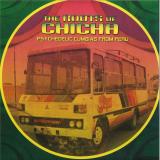
The Roots of Chicha - Psychedelic Cumbias from Peru 2x12"
 
23

The Roots of Chicha, compiled by Barbès Records, was originally released in 2007 and became the first recording to popularize psychedelic cumbia around the world.

From the late 60's through the 80's, Peruvians invented a new popular musical hybrid inspired by music from the Americas. In 1968, Enrique Delgado released his first record on Odeon with his new group, Los Destellos, single-handedly creating Peruvian cumbia. He codified the genre early on by using the electric guitar as the primary melodic instrument, and mixing cumbia rhythms with folkloric huaynos, criollo voicings, Cuban guarachas and guajiras, rock, boogaloo, surf, psychedelia, oriental music, classical music, and bits and pieces from Brazil, France, Chile... All Peruvian cumbia bands for the next thirty years would end up drawing from the exact same sources (Grupo Celeste, Los Mirlos, Juaneco Y Su Combo, Manzanita Y Su Conjunto...).

This new wave of Peruvian cumbia came to be known as chicha. Chicha is originally the name of an alcoholic drink, made of fermented maize, which the Incas were especially fond of. In the past thirty years, however, the word has taken on a pejorative connotation. Peruvian cumbia started being called chicha in the late 70s, around the same time that the music came to be viewed as the expression of the slums – the pueblos jovenes. Little by little, the word became an adjective, and people now talk of chicha culture, chicha press, chicha architecture, even of a chicha president, and none if it – you guessed right – is meant as a compliment. Chicha suggests corruption, shady deals, and cholos – a derogatory term for a person of Andean heritage that, of late, is being reclaimed and worn as a badge of honor by the very cholos it was supposed to demean in the first place.

In Stock

On Stock and ready to ship

26,01
VARIOUS - CUMBIA CUMBIA CUMBIA!!! VOL.3 LP 2x12"
 
28
also available

Vol.1[29,37 €]

Vol. 2[29,37 €]


After digging deep into the overwhelming archives of Discos Fuentes and Codiscos in our previous volumes, this third instalment in the series "Cumbia Cumbia Cumbia!!!" comprises a selection of 28 Peruvian cumbia bangers for the dance floor from the deep vaults of Discos MAG, all of them originally released between 1964 and 1987. "Cumbia Cumbia Cumbia!!!" combines well-known classics and rarities that are difficult to find in their original formats. An invitation to enjoy and be amazed, above and beyond ethnographic and academic concerns. The historical origins of cumbia are nebulous and imprecise. The mythology surrounding it suggests an ancient past when Amerindian, African and European musical sounds were mixed together. MAG had released porros since the label was set up, and by 1957 it was already selling records by the Colombian Lucho Bermúdez, a leading figure in porro and cumbia in orchestra format, from Buenos Aires. Colombian cumbia has come a long way in Peru since those years and put down its own roots, just as it has in other Latin American countries. This third volume of the series "Cumbia, cumbia, cumbia" demonstrates how the rhythm has persisted over three decades of Peruvian recordings, ranging from versions by orchestras and ensembles to original cumbias with electric guitars, with lingering echoes of Caracas-born Hugo Blanco, Tulio Enrique León, Los Teen Agers and Amparito Jiménez. These records were played nonstop in the Peruvian coast, mountains and jungle to the cry of "¡que sigue la cumbia!". Double vinyl LP!

out of Stock

Order now and we will order the item for you at our supplier.

30,46

Last In: 10 months ago
Los Diablos Rojos - Ritmo Satánico

Today, Los Diablos Rojos are known around the world for a unique tropical sound that has transcended passing fashions and managed to hold its own in an era marked by transience and oblivion. Over the years, they have become the forerunners of a trend that has been developing for half a century and is gaining more and more praise and recognition. They have become a musical reference for other contemporary tropical music bands that have found in Los Diablos Rojos, above all, an example of creativity and resilience.

The Peruvian cumbia band Los Diablos Rojos was born within the quincha and adobe walls of Cañete Chico with a proposal very different from what all the musicians of the time were working on: an instrumental tropical music style of their own. Even Enrique Delgado (Los Destellos), Beto Cuesta (Los Ecos) and Berardo Hernandez (Manzanita y su Conjunto), who all found a source of income in música criolla, did not limit themselves to working for hire. They were all crossing the same bridge, the bridge of tropical music. Above all, the sense of renewal was the incentive for this bet. If they wanted to change the paradigm, they would not do it by copying styles they had already heard many times before.

out of Stock

Order now and we will order the item for you at our supplier.

23,49

Last In: 19 months ago
CUARTETO YEMAYA - EL TIC TAC LP

Cuarteto Yemaya

EL TIC TAC LP

12inchVAMPI294
Vampisoul
04.09.2024

This is the quartet's second LP, recorded in 1971, and contains mostly Peruvian songs with a strong Cuban flavor where Pancho Acosta’s electric guitar reaches vertiginous heights and is combined with outstanding conga and timbales playing. Extremely rare and hard to find in its original issue, this is the first-time reissue. Remastered from the original tapes. The guitarist Francisco "Pancho" Acosta Angeles (1946) played a significant role in spreading love for Cuban rhythms across Peru, those sunshine beats breaking through the cloudiness that hangs over Lima most of the year, as the city bears a closer resemblance weather wise to London than to Havana. In 1967, after making a name for himself with his six-stringed skill, he made his vinyl debut with Compay Quinto. Shortly after Pancho left Company Quinto, he joined Los Kintos. When Los Kintos disbanded, Pancho Acosta swiftly moved on to his next project for MAG: the Cuarteto Yemayá, formed by tumba drummer and singer Miguel Montoya, bassist Máximo Pecho and timba drummer José Luis Fiallega, all under Pancho's direction and arrangements. The quartet's debut album, "Ecos del Trio Matamoros", was a tribute to the Cuban trio of the title and comprised cover versions as well as a couple of their own songs. This is the quartet's second LP, recorded between July and August 1971. "El Tic Tac" contains mostly Peruvian songs. The foreign versions on the album include the classic 'Compay Gallo', written by Miguel Matamoros; 'Toribio carambola' and 'El Tic Tac', from the repertoire of the Cuban Trio Servando Diaz; and 'Sandunguéate', best known in Celia Cruz’s version. ‘Oye Mi Son' and 'Oye Mi Guitarra' were composed by the album's lead vocalist, Miguel Montoya. Percussionist Jorge Mariazza (Los Pachas, Manzanita y su Conjunto) co-wrote 'Descarga Yemayá' with Pancho, which features outstanding conga and timbales playing. Pancho also composed tracks on his own: 'Me Voy a Monsefú', 'Mi Provinciana', 'Yo Me Voy de Aquí' and 'Flaca y Fea', the latter
with a Beatle-like intro where his Japanese electric guitar reaches vertiginous heights (he never used sound effects in his recordings). Cuarteto Yemayá released one more album for MAG. In 1973 Los Kintos reformed, with the addition of the bass, percussionist and guitarist from Cuarteto Yemayá. Pancho Acosta has continued his career as a composer and arranger to this day

out of Stock

Order now and we will order the item for you at our supplier.

22,27

Last In: 20 months ago
Various - SATURNO 2000: LA REBAJADA DE LOS SONIDEROS 1962-1983 LP (2x12")

Analog Africa delves deep into the scene of the Mexican's sonideros (sound-system operators) to present the "Rebajada" movement they've created using locally made pitch controls, speakers and sound effects.

"In 2010, I had asked Eamon Ore-Giron - aka DJ Lengua - if he would be interested in compiling a Latin project for Analog Africa, and if so, if he had a theme in mind. He replied, “Have you ever heard of rebajada?“ The question mark above my head, together with the wall of China, must have been the only other object visible from out of space because Eamon, probably noticing I got paralysed, continued, “Rebajada in Spanish means “to reduce, to lower”. It’s basically Mexican sonideros (soundsystem operators) slowing down the beat of a Cumbia to create a much more tangible music to dance to. I’ll send you a mix I made last year and let me know what you think.“ And so he did.

That mix was called Rebajada Mota Mix and I began listening to it on a loop. Although I was not immediately hooked it was intriguing from the get-go, and so I kept listening until magic began unfolding. Slowed down music allows you enough time to hear right through it, revealing itself in ways I had rarely experienced before. Everything became more transparent and I was noticing sounds normally only perceptible by bats. A near psychedelic experience. That mysterious mix included a few Ecuadorian songs by Junior y su Equipo - aka Polibio Mayorga (a cult figure in the sonidero scene), a couple of Mexican tunes, one Colombian, and various Peruvian songs, undoubtedly the driving force behind this project.

The sonidero who brought Peruvian and Ecuadorian music to Mexico was the legendary Pablo Perea from Sonido Arco-Iris, and although his fingerprints are all over the compilation Saturno 2000, this selection of songs in rebajada is exclusive to DJ Lengua. With the exception of a few classics from Polibio Mayorga and La Sampuesana – the queen of all rebajadas – most of these songs were probably never performed as such before, let alone released.

So how did rebajada come to be? In a nutshell; Rebajada started with two families of brothers – the Pereas and the Ortegas – who travelled all over Latin America and returned to Mexico with heavy loads of records which they would sell to the various sonideros always on the lookout for new tunes. Colombian beats especially seemed to fit almost perfectly with the Mexican dance steps – but they were just a bit too fast. As a result some sonideros began experimenting with equipment, and Marco Antonio Cedillo of Sonido Imperial created a revolutionary pitching system that could slow records down to an extent other players could only dream about. And so rebajada was born . . . or so we thought.

At the same time in north of the country, in Monterrey, sonidero Gabriel Dueñez almost got electrocuted by a short circuit that nearly set his record player on fire. As a result the platter started spinning in slow motion for the rest of the party, turning Cumbia into a different affair altogether. The youngsters went crazy for it and started harassing the sonidero with requests to record cassettes for them. Reluctant at first, Dueñez finally began recording a series of pirated cassettes called “Rebajada” which included mainly Colombian cumbia and porro in slow-mo exclusively. Those tapes took the city by storm and turned rebajada into a celebrated and defiant movement of the youth.

Of course it would not be a Mexican urban legend if it didn’t include dramaturgical elements, and so for nearly 30 years, until this day and probably for ever, both cities have been arguing and claiming ownership the creation of rebajada for themselves. But sonidera Joyce Musicolor, who never has time for such trivial arguments, got straight to the point: “Rebajada, and the equipment to perform it, is from here Mexico City but it was Monterrey that popularised it.“

out of Stock

Order now and we will order the item for you at our supplier.

27,69

Last In: 17 months ago
  • 1
Items per Page:
N/ABPM
Vinyl