Death Is Not The End collaborate with Uzbek label Maqom Soul to deliver an LP counterpart to last year's mixtape of the same title, compiling specially picked & fully licensed individual belters from the ex-soviet studios of Central Asian republics between 1978 and 1989 - incl. Uzbek, Tajik, Kurdish & Uyghur artists pulling traditional folk motifs together with pop & rock and psych elements.
"These recordings do not form a smooth or coherent history. They feel more like a sequence of discoveries made at different moments and in different circumstances. Songs and instrumental pieces that once lived inside specific contexts radio broadcasts, philharmonic programs, touring routes now sit side by side, revealing hidden connections as well as clear fractures between them.
Nasiba Abdullaeva appears here as a voice from the end of an era. Trained within a conservatory system, she worked inside the format of the Soviet pop song while filling it with melodic logic that did not come from Moscow or Leningrad. Her voice is soft and sustained, shaped by Eastern melisma, and it never functions as decoration. Even in tightly structured songs there is a sense of resistance, an effort to preserve a musical language rooted in Uzbek tradition rather than fully adapted to an all Union standard.
The ensemble Sintez, later renamed Navo, represents a different path. Beginning as a student rock group, the band was gradually absorbed into the official VIA system with all its limitations and compromises. Yet it was precisely within those boundaries that Sintez and Navo developed a recognizable sound. Electric guitars and jazz rock harmonies do not overpower the folk material but remain in tension with it. Their recordings feel like negotiations between what the musicians wanted to play and what they were allowed to perform.
The Tajik ensemble Gulshan reflects an institutional approach carried to a high professional level. Formed under television and radio structures, the group treated folk material almost as a written score. Carefully constructed arrangements, close attention to orchestration, and restrained use of pop techniques define their sound. There is less spontaneity here, but a strong sense of discipline and structure, where national melody becomes part of a carefully controlled sonic framework.
Koma Wetan occupies a very different space. Formed in the 1970s, this Kurdish rock group approached poetry and folklore as tools of cultural assertion. Their psychedelic rock never feels like a stylistic borrowing. Instead it functions as a contemporary vessel for language and themes that might otherwise have remained unheard. Even today these recordings sound fragile and stubborn at the same time.
The Uyghur ensemble Yashlik, closely connected to a musical drama theatre, operated somewhere between stage performance and popular music. Their songs are built on folk melodies but shaped for wide audiences. What emerges is a constant attempt to preserve the recognizability of Uyghur musical identity without freezing it in a folkloric frame. Yashlik's music exists in a state of balance between representation and development.
Digging Central Asia does not attempt to establish hierarchies or offer a single wayof listening. Names and dates matter less than the sound itself. Tape noise, abrupt transitions, and unexpected timbres remain part of the material rather than flaws to be corrected. This music existed at the crossroads of multiple routes geographic, cultural, and ideological. Heard today in a new context, it no longer feels peripheral. Instead it stands as a reminder that the history of popular music is far more fragmented, layered, and polyphonic than it is usually allowed to be."
Поиск:05
Все
When you notice the cheerful mystery playing with the synths, the edges of this small world start to look slightly distorted. In any era, someone is always creating mysterious music on their own. (7FO)
----------------------------
Music in DNA is an album recorded in the early 1980s in New York City by Yasuhito Ohno, a young Japanese man breaking free from the constraints of his homeland. The album is a naive burst of outsider DIY enthusiasm, inspired by the multiple avant-garde movements of the era, in music, painting and performance, as well as the native energy of 80s NYC. Ohno channeled his youthful "edge" and zeal into open-minded lo-fi musical explorations using a mere two machines: the then-new technological glories of a four-track cassette recorder and that polyphonic synthesizer masterpiece, the Roland Juno-60; on several pieces he vocalizes. These seven tracks have a zestful, innocent, anything-goes charm, free from preciousness and self-consciousness: a raw and youthful human spirit at play in a new world. Ohno was also inspired by the humanistic promise of the general technological developments of the day, including DNA research, personal computing, and early computer graphics, an example of which can be found on the cover. Ohno later returned to Japan, becoming a renowned composer/producer. In an era of jaded cynicism, Music in DNA is a welcome taste of big-hearted innocence, a revival of a raw self. Available on CD/LP/Digital, with E/J liner notes.
2026 Repress
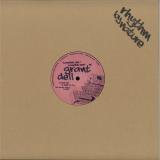
Rhythm by Nature is back with Somefink Old, Somefink New, a three-tracker from seasoned producer Grant Dell that bridges past and present: sketches first laid down in the mid-2000s rediscovered and reworked alongside a brand-new cut, forming a dialogue between memory and renewal.
The EP opens with Feel Me?, a deep tech construction driven by a heavy low-end, its groove unfolding patiently while flashes of disco glimmer through the framework. On Light of Day, Dell shifts into full deep house territory — spacey pads and floating strings suspended across open structures until acidic stabs break through, twisting the track into brighter, playful directions. Closing with Death Disco in Dub, Dell channels the hallmarks of his Tribalation project: dub-infused atmospherics, light percussion and echo-drenched fragments circling around a hypnotic core, equally suited to open or dissolve a night.
With Somefink Old, Somefink New, Rhythm by Nature traces the arc of an artist deeply embedded in the underground, reuniting past forms with present gestures in a release that reaffirms the label’s consistency in quality and commitment to timeless club music.
- 1: Little B’s Poem (3:50)
- 2: Power And Glory (7:57)
- 3: Revelation (:4)
- 4: Chant (:36)
- 5: Western Sunrise (:0)
- 6: The Messenger (4:09)
- 7: Naima (4:28)
- 8: Mighty Mighty (5:47)
- 9: Higher Ground (5:04)
- 10: Fatherhood (4:15)
- 11: Trance Dance (8:39)
- 12: Acknowledgement (8:45)
- 13: Sweet Season (3:54)
- 14: Jihad (7:24)
This album brings together key tracks from Doug Carn recorded for Black Jazz Records in the 1970s.
Doug Carn is one of the most-important (and least-recognised) forces in the creation of the canon of 'deep and spiritual jazz music' - full of powerfully emotive intensity, consciously-uplifting lyricism and addictively beautiful melodies.
All of his LPs during this period have since achieved cult classic status including 'Infant Eyes', 'Adam's Apple', 'Spirit of the New Land' and 'Revelation'.
Aside from his songwriting and keyboard skills, many of the tracks here feature the stunning and powerful 5-octave range vocals of Jean Carn (later Carne), his wife at the time.
Musicians featured on this album include Alphonse Mouzon, Charles Tolliver, Henry Franklin, Michael Carvin, Walter Booker, Ronnie Laws and others. Aside from Carn’s compositions there are also striking interpretations of music by Lee Morgan, Miles Davis, John Coltrane, McCoy Tyner, Bobby Hutcherson and Wayne Shorter.
Black Jazz became one of the defining labels of independent and conscious jazz music in the 1970s alongside other important labels such as Strata-East and Tribe Records. As well as this Best of Doug Carn release, Soul Jazz Records are also releasing a Best of Black Jazz Records collection at the same time.
Der nächste Geniestreich des Hit-Garanten
Mit seinem neuen Studioalbum "Whoever’s Clever!" beweist der vierfach GRAMMY-nominierte Multiplatin-Künstler Charlie Puth erneut, warum er als einer der versiertesten Songwriter und Produzenten der modernen Popmusik gilt.
Nach dem Erfolg seines persönlichsten Albums CHARLIE kehrt er nun mit einem Sound zurück, der technische Brillanz mit unwiderstehlichen Feel-Good-Hooks vereint.
Am 8. Februar 2026 wird er vor einem weltweiten Millionenpublikum die Nationalhymne beim US Super Bowl Finale performen. Dieses mediale Großereignis markiert den offiziellen Startschuss für die Kampagne zu seinem vierten Studioalbum "Whatever’s Clever!", das am 27. März erscheint.
Das Album, produziert von Puth selbst und BloodPop, wird bereits jetzt als eines der Pop-Highlights des Jahres gehandelt.
Zudem wird er für 2 exklusive Konzerte nach Deutschland kommen
05. Juli 2026 – Hamburg, Stadtpark Open Air
06. Juli 2026 – Frankfurt am Main, Jahrhunderthalle
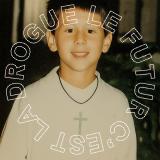
Le Futur c’est la drogue, which should here be translated as The Future Is the Drug, is not to be read as a promise, but as a statement of fact. The present is no longer an experience, but pure consumption. Life itself has taken the form of a dependency.
With this sixth album, Christophe Clébard goes straight to the point, driven by a free and repetitive form of writing, stripped of any syntactic rigidity. Words strike like balls against a wall, revealing darker zones of his mind where guilt, fear, and existential anxiety coexist.
The sound composition, equally minimal, sustains a dense and obsessive mental space, a vortex in which trance appears as the only escape. Driving drum machines, relentlessly hammered electronic loops, and a battered synthesizer, his music unfolds within a physical, strangely hypnotic synth-punk aesthetic that hits viscerally.
The Future Is the Drug is his sixth album.
Anywhere, Anyway captures a selection of club tools that Makèz and their close circle have tested, refined and played across dance floors worldwide. Each track carries that familiar equilibrium the duo keeps guard over, a steady pull between raw club energy and moments meant for intimate listening.
Much like their recent album on No Art, the EP took shape while traveling, moving from session to session with artists from different musical worlds. Those encounters left their marks, subtle shifts in rhythm, harmony and texture, shaping the edges of the EP. The Amsterdam duo keeps seeking creative impulses from unexpected angles, letting ideas find them wherever they are. Anywhere, anyway.
- 01: Maanitus &Amp; Tšiižik
- 02: Markka
- 03: Melkutus
- 04: Letška
- 05: Kuuen Parin Hoirola
- 06: Brišatka
- 07: Tšiižik
- 08: Kirkonkellot
- 09: Kirkonkellot Korkea
- 10: Hoirola, 3 Parin
- 11: Lippa
- 12: Kyngäkiža
- 13: Ristakondra
- 14: Vanha Polkka
- 15: Viistoista
- 16: Vanha Valssi
- 17: Kiberä
- 18: Maanitus Kuokan Kanteleella
- 19: Tuuti Lasta Nukkumahe
Vinyl[22,65 €]
Death Is Not The End present a further volume of Arja Kastinen's eerie amalgamations of 110 year old wax cylinders with her own meticulously transcribed takes, this time focussing in on Armas Otto Väisänen's field recordings of kantele player Iivana Mišukka (b. 1861 d.1919).
"Ivana Mišukka (1861–1919) was one of the Karelian kantele players recorded by the folk music researcher Armas Otto Väisänen on wax cylinders in 1916 and 1917. In the early 20th century, the remote areas of Border Karelia were undergoing the final phase of a transformation in musical culture, with the ancient runo song tradition giving way to newer forms of music. This transition is reflected in Mišukka's repertoire and choice of instrument. The ancient small kantele, hollowed out of a single piece of wood, was already rare at the turn of the century. Mišukka's kantele was a new type of instrument with 26 strings, constructed of several parts, but he played it using the traditional plucking technique. Like other Border Karelian kantele players, his repertoire consisted of music rooted in runosong culture, as well as newer dances and songs from the east and west. Most of the recorded material falls into the latter category.
Ivan Bogdanov Mišukka was born out of wedlock in Suursara village, Suistamo, on 1 May 1861. He began playing the kantele at the age of five or six, quickly mastering the instrument. In adulthood, he was considered one of the area's best master players. Mišukka was landless for most of his life and lived in different parts of the Suistamo parish. His first wife, Tekla Markintytär, died in 1897 at the age of 40, and his second wife, Jevdokia Filipintytär Jeminen, died in 1907 at the age of 50. Seven children were born from the first marriage, two of whom died young. The third wife, Maria Ignatintytär Gurnan (Kuurnanen), was a well-known master of lamentations. Together with Maria, Iivana Mišukka worked as a tenant farmer in the village of Suursara. Mišukka suffered from rheumatism, which prevented him from participating in physical work like Maria. This was apparently partly the reason why Iivana Mišukka went to earn extra money by playing the kantele on gig trips. He often had other traditional artists from Suistamo as his travelling companions, such as the runosingers Konstantin Kuokka and Iivana Onoila. Iivana Mišukka died in Leppäsyrjä village, Suistamo, on 18 May 1919 at the age of 58, and his kantele was donated to Teppana Jänis.
Mišukka only used 14 of the 26 strings on his kantele, playing the same tunes either a fourth higher or lower. He tuned his kantele to the major scale using fifths, except for a low seventh scale degree on the upper strings, but not below the fundamental. Since he did not use the seventh note of the scale on the upper strings at all, he could use the major scale both lower and a fourth higher with this tuning. According to Mišukka, the sound of higher, or 'finer', strings is 'more beautiful', while that of lower ones is 'greater'. Among runosingers, the size of the thirds varied, ranging from major to minor to neutral. A similar phenomenon can be observed in kantele tunings, where the third, sixth and seventh scale degrees vary in a comparable way.
During a meeting, Väisänen suggested that Mišukka play the smaller kantele belonging to Konstantin Kuokka. The idea was to bring it closer to the horn to improve the recording quality. However, the kantele was completely out of tune, and now Mišukka tuned it to the Lydian scale (track 18).
Using the old plucking technique, Mišukka placed his right middle finger on the fundamental tone, his right index finger on the second scale degree, his left middle finger on the third scale degree and his left index finger on the fourth scale degree, and his right thumb on the fifth. The thumb also played the notes above the fifth note of the scale. As Mišukka remarked to Väisänen: 'Peigaloll' tuloo enemb ruadoa' (the thumb has to do more work). However, he did not use the seventh note of the scale on the upper strings at all. Below the fundamental note, he played the seventh and sixth notes of the scale with his right middle finger of and the fifth note of the scale with his right ring finger. This fifth scale degree below the fundamental is almost always used as a drone. Sometimes, when the melody required it, Mišukka, like other players, also varied the fingering. He would also occasionally strike the same string with the side of his fingernail after plucking it.
The wax cylinder recordings of Karelian kantele players are kept in the archives of the Finnish Literature Society in Helsinki, Finland. Copies were made of them onto reel-to-reel tapes in both the 1960s and 1980s. The 1960s copies are mono and the 1980s copies are stereo. However, not all kantele recordings from these decades have survived.
The sound of the kantele is difficult to hear in wax cylinder recordings due to its low volume, and it occasionally becomes completely obscured by noise. During the copying process, the cylinder sometimes rotates unevenly, resulting in breaks or jumps in the music. Additionally, the rotation speed of the cylinder in the copies does not correspond to the performance speed of the original music, which alters the pitch. However, since Väisänen's precise notes are available in the archive, it is possible to deduce the melodies, their speed, and the tuning level of the kantele in the recordings. Of the copies of the original recordings from the 1960s and 1980s, I have selected the one that best met the requirements of this publication and adjusted the speed of the recording to align with Väisänen's notes. To enhance the listening experience, I have replayed the songs, which now partly overlap the old recordings on this release."
— Arja Kastinen
- 01: Maanitus &Amp; Tšiižik
- 02: Markka
- 03: Melkutus
- 04: Letška
- 05: Kuuen Parin Hoirola
- 06: Brišatka
- 07: Tšiižik
- 08: Kirkonkellot
- 09: Kirkonkellot Korkea
- 10: Hoirola, 3 Parin
- 11: Lippa
- 12: Kyngäkiža
- 13: Ristakondra
- 14: Vanha Polkka
- 15: Viistoista
- 16: Vanha Valssi
- 17: Kiberä
- 18: Maanitus Kuokan Kanteleella
- 19: Tuuti Lasta Nukkumahe
Tape[16,39 €]
Death Is Not The End present a further volume of Arja Kastinen's eerie amalgamations of 110 year old wax cylinders with her own meticulously transcribed takes, this time focussing in on Armas Otto Väisänen's field recordings of kantele player Iivana Mišukka (b. 1861 d.1919).
"Ivana Mišukka (1861–1919) was one of the Karelian kantele players recorded by the folk music researcher Armas Otto Väisänen on wax cylinders in 1916 and 1917. In the early 20th century, the remote areas of Border Karelia were undergoing the final phase of a transformation in musical culture, with the ancient runo song tradition giving way to newer forms of music. This transition is reflected in Mišukka's repertoire and choice of instrument. The ancient small kantele, hollowed out of a single piece of wood, was already rare at the turn of the century. Mišukka's kantele was a new type of instrument with 26 strings, constructed of several parts, but he played it using the traditional plucking technique. Like other Border Karelian kantele players, his repertoire consisted of music rooted in runosong culture, as well as newer dances and songs from the east and west. Most of the recorded material falls into the latter category.
Ivan Bogdanov Mišukka was born out of wedlock in Suursara village, Suistamo, on 1 May 1861. He began playing the kantele at the age of five or six, quickly mastering the instrument. In adulthood, he was considered one of the area's best master players. Mišukka was landless for most of his life and lived in different parts of the Suistamo parish. His first wife, Tekla Markintytär, died in 1897 at the age of 40, and his second wife, Jevdokia Filipintytär Jeminen, died in 1907 at the age of 50. Seven children were born from the first marriage, two of whom died young. The third wife, Maria Ignatintytär Gurnan (Kuurnanen), was a well-known master of lamentations. Together with Maria, Iivana Mišukka worked as a tenant farmer in the village of Suursara. Mišukka suffered from rheumatism, which prevented him from participating in physical work like Maria. This was apparently partly the reason why Iivana Mišukka went to earn extra money by playing the kantele on gig trips. He often had other traditional artists from Suistamo as his travelling companions, such as the runosingers Konstantin Kuokka and Iivana Onoila. Iivana Mišukka died in Leppäsyrjä village, Suistamo, on 18 May 1919 at the age of 58, and his kantele was donated to Teppana Jänis.
Mišukka only used 14 of the 26 strings on his kantele, playing the same tunes either a fourth higher or lower. He tuned his kantele to the major scale using fifths, except for a low seventh scale degree on the upper strings, but not below the fundamental. Since he did not use the seventh note of the scale on the upper strings at all, he could use the major scale both lower and a fourth higher with this tuning. According to Mišukka, the sound of higher, or 'finer', strings is 'more beautiful', while that of lower ones is 'greater'. Among runosingers, the size of the thirds varied, ranging from major to minor to neutral. A similar phenomenon can be observed in kantele tunings, where the third, sixth and seventh scale degrees vary in a comparable way.
During a meeting, Väisänen suggested that Mišukka play the smaller kantele belonging to Konstantin Kuokka. The idea was to bring it closer to the horn to improve the recording quality. However, the kantele was completely out of tune, and now Mišukka tuned it to the Lydian scale (track 18).
Using the old plucking technique, Mišukka placed his right middle finger on the fundamental tone, his right index finger on the second scale degree, his left middle finger on the third scale degree and his left index finger on the fourth scale degree, and his right thumb on the fifth. The thumb also played the notes above the fifth note of the scale. As Mišukka remarked to Väisänen: 'Peigaloll' tuloo enemb ruadoa' (the thumb has to do more work). However, he did not use the seventh note of the scale on the upper strings at all. Below the fundamental note, he played the seventh and sixth notes of the scale with his right middle finger of and the fifth note of the scale with his right ring finger. This fifth scale degree below the fundamental is almost always used as a drone. Sometimes, when the melody required it, Mišukka, like other players, also varied the fingering. He would also occasionally strike the same string with the side of his fingernail after plucking it.
The wax cylinder recordings of Karelian kantele players are kept in the archives of the Finnish Literature Society in Helsinki, Finland. Copies were made of them onto reel-to-reel tapes in both the 1960s and 1980s. The 1960s copies are mono and the 1980s copies are stereo. However, not all kantele recordings from these decades have survived.
The sound of the kantele is difficult to hear in wax cylinder recordings due to its low volume, and it occasionally becomes completely obscured by noise. During the copying process, the cylinder sometimes rotates unevenly, resulting in breaks or jumps in the music. Additionally, the rotation speed of the cylinder in the copies does not correspond to the performance speed of the original music, which alters the pitch. However, since Väisänen's precise notes are available in the archive, it is possible to deduce the melodies, their speed, and the tuning level of the kantele in the recordings. Of the copies of the original recordings from the 1960s and 1980s, I have selected the one that best met the requirements of this publication and adjusted the speed of the recording to align with Väisänen's notes. To enhance the listening experience, I have replayed the songs, which now partly overlap the old recordings on this release."
— Arja Kastinen
- 01: D Ballers
- 02: When I Die... (Feat. Emade)
- 03: Home
- 04: Take Some Time
- 05: From Harlem 2 Conant Gardens
- 06: Fuck Ya, Just Clap
- 07: Troubles
- 08: Fall In Love (I&Apos;M Ready)
- 09: Metreeves
- 10: Much Better Smokey
- 11: One
- 12: The Look Of Love (Medley No. 1)
- 13: Woo
- 14: Rockin
- 15: Two Loverz
- 16: Detroit Wisp
- 17: Whut Do U See Harold?
- 18: Whoodonut
- 19: Love Y.o.u
- 20: The Spot
- 21: So Heavy Sir
- 22: Never Hurt U
- 23: The Look Of Love (Medley No. 2)
- 24: Welcome 2... (Feat. Emade)
The album was pressed on double 180g black vinyl.
Limited edition of 200 copies worldwide.
J Dilla passed away 20 years ago. Metro himself paid tribute to the production master.
"Donutroit" is a meticulously crafted tribute to James Dewitt Yancey. Reinterpretations, reworks, and original compositions – a total of 24 tracks produced by Metro, who pays tribute to the legend with this album. Maciej returns with the album after a somewhat lengthy break, but he does it with a bang. This kind of hip-hop with soul elements has been unheard of in Polish music for a long time. This is the first Polish full-length tribute to Dilla. The guests are few, but they are impressive. Emade himself plays drums on two tracks, and Immortal Onion reworked one of James's iconic recordings.
Dawid ObyOby Frańczak is responsible for the full artwork.
The legendary Polish underground label JuNouMi Records is responsible for the pressing.
[l] 12: The Look Of Love (Medley No. 1) [feat. Immortal Onion]
[w] 23: The Look Of Love (Medley No. 2) [feat. Immortal Onion]
- 01: Dune
- 02: Kundela Mawedi
- 03: Paco
- 04: Cameo
- 05: Cacopoulos
- 06: Khettara
- 07: Hell Dorado
- 08: Papambra
- 09: Porpora
Killer Groove Records proudly presents the self-titled debut album by Italian cinematic funk trio Atabasca. A sonic journey where funk, psychedelia and desert groove merge into a timeless narrative suspended between rhythm and vision.
"Atabasca" marks the debut release from the cinematic funk trio, dropping March 27th on limited edition LP, CD digipack and digital formats, the latter featuring an exclusive bonus track. This is a project built on evocative imagery: each song unfolds as an open scene, an emotional landscape where listeners can step inside and write their own ending.
Lap steel, kalimba, percussion and guitars interweave with bass and drums, striking an original balance between tradition and experimentation that evokes unwritten soundtracks for worlds at once distant and familiar. The record navigates between melancholy and irony, tension and release, with a sharp focus on dynamics and sonic narrative.
Deserts, seas, imaginary villages, getaways, pursuits and collective rituals: "Atabasca" emerges as a collection of musical landscapes that unfolds through vivid, evocative imagery.
Jazz-funk, world music, afrobeat, psychedelia and the Italian Golden Age of movie soundtracks merge into a singular emotional geography: warm, analog and deeply human.
The musical journey opens with "Dune", a melancholic statement that leaves room for imagination, before igniting with "Kundela Mawedi" and its cascading lap steel over haunting vocal chants. "Paco" tips its hat to classic westerns, tracing a bandit's trajectory, while "Cameo" drifts back to childhood through minimal rumba and shimmering kalimba. The cinematic imagery continues in "Cacopoulos", a nod to Spaghetti westerns and Eli Wallach, built on raw drum patterns and distorted guitars. Intensity builds in "Khettara", where afrobeat rhythms and Middle Eastern textures intertwine, before "Hell Dorado" tears off in pursuit of the American dream's funk-fueled mirage. "Papambra" weaves hypnotic polyrhythms between kalimba and lap steel, while "Porpora" delivers a sensual, visceral tango of passion and tension. The digital edition closes with "Reprise", a sequel that stretches the album's central theme into an expansive, meditative interpretation.
The tracks were recorded in single takes, capturing the raw energy and natural atmosphere of the performance. Artistic production was handled by the trio alongside Andrea Fabrizii (digger, musician, producer and catalogue curator for CAM Sugar), while Riccardo Ricci mastered the album at Velvet Room Mastering Studio in Brighton.
Like a desert blooming within the evergreen forests of the planet's far north, a unique, alien, disruptive environment. This is the vision behind Atabasca, the project of Luca Mongia (guitars, lap steel, keyboards, vocals), Paolo Mazziotti (bass, keyboards, vocals) and Valerio Pompei (drums, percussion, vocals).
Individually active for over twenty years on both the national and international scenes, the three Italian musicians came together in 2023 to create a project that merges experience, experimentation and creative freedom. Their music is imaginative and at times dreamlike, blending the classic concept of the instrumental trio with the worlds of film scoring and sound design.
Atabasca's sound moves through jazz-funk, world and cinematic territories, weaving together afrobeat, desert and psychedelic influences into a personal and timeless language. Each piece is a scene; each sound, a fragment of a world, a journey between reality and imagination where groove, texture and organic timbre merge into a singular sonic ecosystem: a perpetually shifting balance that generates new inner landscapes.
For fans of Khruangbin, Surprise Chef and instrumental psych-funk!
London Based Deadbeat is a techno label founded in 2000 as an outlet for the more eclectic, risk taking and aggressive elements of the genre. Dedicated to unveiling forward thinking new talent, championing cult underground producers and celebrating established global acts the label has created a loyal fan base and now after more than two decades presents its first vinyl release, a massive six track EP that covers a lot of creative ground and features three artists well known for pushing boundaries while delivering face melting, dancefloor destroying beats.
Sane ( Don't Recordings / Fun In The Murky ) is a Uk based producer and techno DJ who has featured multiple times on the 'Best electronic music on bandcamp' pages. Described there by music journalist Joe Muggs as 'Filthy, dirty, vile and brilliant. His techno will tear the top off your head and make soup with the contents. It screeches, it blurts, it whistles, and it roars. Above all, it crashes and clangs like a dancing mech warrior, crushing all before it. What more do you need to know?'
TSR ( Analog Records / Hörspielmusik ) are a highly regarded creative force of Swedish musical mentalists, a crazed, technologically berserk band of electronic wizards who relentlessly conjure up the most brilliant, silliest, toughest, most dance bootable funky techno on this train of existence. Known for high-energy, raw, and sometimes humorous tracks they have released to high acclaim on many notable labels and played all over the world.
DJ Ze MigL ( Djax-Up-Beats / Minimalistix ) is first and foremost a DJ, but also a producer & a Dude! Creating crazy, funky and sometimes brutal techno mayhem. Residentially from Portugal, he’s been the one of most prolific Portuguese techno producer/ DJ during the last 25 years. Producing and Spinning his own special brand of honkin’ techno, not changing a single cowbell. Never too serious or dark, always with proper party ON!
The record additionally features full sleeve artwork by Ed Twist ( of the influential 'Ugly Funk' label ) and is pressed on yellow vinyl.
- 01: De Alegria Raiou O Dia
- 02: Tudo Era Lindo
- 03: A Cruz
- 04: Hello Mr. Wonder
- 05: Bem Querer
- 06: Pra Que Vou Recordar O Que Chorei
- 07: Zé Marmita
- 08: Bichos E Crianças
- 09: O Metr?
Carlos Dafé (born October 25, 1947) is a singer and songwriter from Rio de Janeiro, recognised as one of the iconic voices of the Brazilian samba-soul era. Born into a family of musicians and trained at the conservatory, he rose to prominence in the 1970s alongside Tim Maia, Cassiano, and Hyldon, shaping the sound of Rio Noir with his warm baritone voice and soulful phrasing. His 1977 album, Pra Que Vou Recordar, became a cult classic among collectors and DJs worldwide, earning him the title of "Prince of Brazilian Soul." Still active today, Carlos Dafé remains an essential reference for artists exploring the boundaries between samba, soul, and MPB (Brazilian Popular Music). Released in 1977, Pra Que Vou Recordar reveals Carlos Dafé at the peak of his art, blending samba-soul, MPB, and the warm groove of the 1970s Rio de Janeiro scene. Surrounded by some of the city's finest musicians, Dafé showcases his baritone voice in deeply melodic arrangements and a series of songs that have become fan favourites. An album imbued with soul and elegance. The sound of BrazilianBlack music at its most sincere and timeless.
Yeun Elez opens a breach: that of a forgotten threshold, a gateway to Hell concealed beneath the peat and legends of the Breton marshes, from which Hoel Moce borrows the name for this project.
Born from Celtic tales passed down in hushed tones, it summons wandering souls, suspended spirits, and those who have already reached the end of their journey. Having escaped from Techno Thriller, Hoel founded Yeun Elez in 2022, as an autonomous and haunting sonic territory.
Surrounded by talented collaborators (Maria: NaturaMorta, Lou Savary de Reymour), he weaves a ritualistic and visceral music, traversed by dreamlike landscapes, misty battlefields, and a fantastical medieval Brittany.
Between pagan symbolism and spectral visions, the project explores the murky depths of the human condition. Thus, birth, love, decline, death: the themes emerge as archaic truths. Betrayal and revenge exist alongside devotion and the quest for an ideal that transcends us.
Mixed by Luc Bersier (Reymour) and then mastered by Tioma Tchoulanov (UVB76, Nze Nze), this album by Yeun Elez doesn't reconstruct the past: it invents it to better haunt it.
Music like a rite of passage, both rooted and timeless, like an inner journey, dark and necessary, to a place where myths refuse to die.
- 1: The Awakening - Mode For D.d. (4.47)
- 2: Doug Carn - Higher Ground (5.06)
- 3: Calvin Keys - Aunt Lovey (7.22)
- 4: Roland Haynes - Eglise (3.06)
- 5: The Awakening - Slinky (6.0)
- 6: Walter Bishop Jr. - Coral Keys (5.33)
- 7: Rudolph Johnson - Diswa (6.34)
- 8: Henry Franklin - Blue Lights (6.57)
- 9: Kellee Patterson - Maiden Voyage (5.17)
- 10: Chester Thompson - Power House (6.33)
- 11: The Awakening - March On (5.31)
- 12: Walter Bishop Jr. - Soul Village (6.16)
- 13: Rudolph Johnson - The Highest Pleasure (7.36)
This album brings together some of the finest music ever released on Black Jazz Records which in its short four-year history, between 1971 and 1975, released over 20 superlative albums which all successfully blending spiritual jazz, funk and soul jazz of the highest calibre. Similar to other independent jazz labels at the time, including Strata-East Records and Tribe Records, Black Jazz focussed on a number of key artists, most of whom first established their career during this period, and all of whom are featured here. Featuring The Awakening, Doug Carn, Walter Bishop, Chester Thompson, Kellee Patterson and more. Black Jazz Records was founded in Oakland, California, by pianist Gene Russell and percussionist Dick Schory.
The label released twenty albums between 1971 and 1975. Artists who recorded for Black Jazz Records included Cleveland Eaton (bassist for Ramsey Lewis), keyboardists Doug Carn and Chester Thompson, vocalist Kellee Patterson, saxophonist Rudolph Johnson, bassist Henry Franklin, and spiritual fusion group The Awakening. The label was distributed and financed by Ovation Records, based in Chicago. Schory founded Ovation in 1969, shortly after leaving RCA. Schory was a Grammy-nominated percussionist who was also known for his development of the stereo recording techniques including Dynagroove and RCA Victor’s Stereo Action. Schory also pioneered quadrophonic sound, and a number of Black Jazz Records were in quadrophonic and other formats such as ¼” tape and 8-track.
Black Jazz launched in 1971 with Gene Russell’s ‘New Direction’. Russell was the creative force behind the label, acting as producer, engineer and A&R and focussed on developing new solo artists. The most successful of these was Doug Carn, who released four albums featuring his wife, Jean Carn, as vocalist. She later changed her name to Jean Carne and became a successful soul singer signed to Gamble and Huff’s Philadelphia International empire.
Celebrating the 5th anniversary of Conway's legendary tape with DJ Green Lantern "Reject On Steroids" with a vinyl reissue in collaboration with Drumwork Music. Tape features guest appearances by Royce Da 5'9" and Benny, and productions by DJ Green Lantern. For the occasion we have two different artworks by Shk, limited to 1500 units each.
- 01: Godevin Le Vilain
- 02: Les Longues Nuits D&Apos;Isaac
- 03: Si J&Apos;Étais Le Messie
- 04: Ballade Pour Une Orgie
- 05: Exode
- 06: La Bataille Du Sucre (Inclus
- 07: Fils De Lumière
- 08: Au Delà Du Délire
Magma, is a French cross-genre, jazz-rock rooted, progressive rock and fusion band founded in 1969 by drummer Christian Vander. Magma have existed in two phases, the first was formed in the summer of 1969 and debuted on LP in 1970, continuing through to 1983. Kobaia was released spring 1970 and 1001 Centigrades was released April of 71.
- 01: Goin&Apos; Away
- 02: Sister Jane
- 03: Crest
- 04: For Years And Years (Cathy)
- 05: Fields Of Gold
- 06: Out Of The Night
Taï Phong is a French progressive rock band formed by two Vietnamese brothers, Khanh Maï (guitar, voice) and Taï Sinh (bass, guitar, voice, keyboards), in 1975.1 They were joined by Jean-Alain Gardet (keyboards), Stephan Caussarieu (drums, percussion), and Jean-Jacques Goldman (guitar, voice, violin). They released three albums between 1975 and 1979: Taï Phong (1975), Windows (1976), and Last Flight (1979). "Sister Jane" (1975), the first single from their first album, was a radio hit.
- 01: Ces Gens La
- 02: Aujourd&Apos;Hui C&Apos;Est La Fête Chez L&Apos;Apprenti Sorcier
- 03: Bivouac (1Ère Partie)
- 04: L&Apos;Espionne Lesbienne
- 05: Bivouac (Final)
- 06: De Temps En Temps
- 07: La Route Aux Cyprès
- 08: Le Cimetière Des Arlequins
Ange (lit. 'Angel') is a French progressive rock band formed in September 1969 by the Décamps brothers, Francis (keyboards) and Christian (vocals, accordion, acoustic guitar and keyboards).
Since its inception the band's music has been inspired by medieval texts, fantasy and the music of Procol Harum and King Crimson. Their music was quite theatrical and poetic.
- 01: Bêle, Bêle Petite Chèvre
- 02: Sur La Trace Des Fées
- 03: Le Nain De Stanislas
- 04: Jour Après Jour
- 05: Ode A Émile
- 06: Ego Et Deus
- 07: J&Apos;Irai Dormir Plus Loin Que Ton Sommeil
- 08: Aurélia
- 09: Les Noces
- 10: Le Marchand De Planètes
Ange (lit. 'Angel') is a French progressive rock band formed in September 1969 by the Décamps brothers, Francis (keyboards) and Christian (vocals, accordion, acoustic guitar and keyboards).
Since its inception the band's music has been inspired by medieval texts, fantasy and the music of Procol Harum and King Crimson. Their music was quite theatrical and poetic.
- 01: Kobaia
- 02: Aïna
- 03: Malaria
- 04: Sohïa
- 05: Sckxyss
- 06: Auraë
- 07: Thaud Zaia
- 08: Naü Ektila
- 09: Stoah
- 10: Mûh
Magma, is a French cross-genre, jazz-rock rooted, progressive rock and fusion band founded in 1969 by drummer Christian Vander. Magma have existed in two phases, the first was formed in the summer of 1969 and debuted on LP in 1970, continuing through to 1983. Kobaia was released spring 1970 and 1001 Centigrades was released April of 71.
Record 1 of the Cartulis Music 15th Anniversary compilation, marking fifteen years of
independent activity across club culture, events, and releases.
Cartulis 15th Anniversary Compilation — 15 years of rhythm, risk, and reverie. Still
dancing, always forward.
Mastered by Alberto Pretto
Artwork by Samantha Millows
- 1: Up In The Air
- 2: Miracle
- 3: 2005
- 4: Freak Out
- 5: Snow Days
- 6: 100Mph
- 7: Floating Through Time (Interlude)
- 8: L Train
- 9: Lost Signals
- 10: Lulu Boy
- 11: Ten Years
“If I never make it home, thank you for everything.” — “Ten Years” It’s hard to believe twenty years have passed since The Academy Is… released their breakthrough debut Almost Here, a record that quietly shaped an underground era. In the years since, the band grew up, lived full lives, and ultimately found their way back. Almost There serves as a conceptual companion to their debut, reexamining the past from the present with clarity, reflection, and experience. “Almost Here was about leaving home,” William Beckett reflects. “This album is about finding your way back.” The songs capture the bittersweet truth that time moves fast, carrying a quiet urgency to chase what matters before it slips away.
- A1: The Sweetest Pain Feat. Terri Wells
- B1: Theme From The Planets
Two of the most iconic Dexter Wansel recordings are being issue for the first time in the UK back-to-back on 7” single. “The Sweetest Pain” features singer Terri Wells who will be in the UK to perform it live for Dexter with his 33 piece MFSB tribute orchestra on Sunday 12th April at the Eventim Apollo. “Theme from The Planets” opens with a drum break that became one of the most sampled beats in hip-hop history—heard in tracks by Kanye West, Lil Wayne, Drake, Rick Ross, J. Cole, Ice-T, and many more.
- A1: Akapaka
- A2: Low Beat
- B1: Whirling
4 tracks by one of the most solid German techno project at the moment !
Pick a Piper is a Toronto-based electronica duo featuring Caribou drummer Brad Weber and vocalist–songwriter Sophia Alexandra. Their music pairs catchy, ethereal vocals with warm synths, upbeat percussion, and a distinctive sense of sound design that feels both grounded and vulnerable.
The duo’s live show is an intoxicating blend of vibrant physicality and immersive lights and visuals, creating an experience that is both danceable and hypnotic. Pulsing with momentum, vocally driven and haunting, it radiates a charisma that unites the band and audience in cathartic release.
Their new album "Dandelion", explores how we exist in the space between opposing feelings while calling for resilience and the courage to recognize that growth is possible and inherently beautiful, even in life’s most difficult experiences. The record employs skippy beats, bass-heavy kicks, warm subs, hyperactive percussion, woozy synths and organic textures, delivered with a lovingly human-curated feel.
Pick a Piper has toured across Europe, the US, Canada, Guatemala, and Colombia, and has shared the bill with Bonobo, Gold Panda, Blue Hawaii, Do Make Say Think and Ghetto Kumbe.
- 3: I'm Lost (You're Dead)
- 1: Lovely Night Of Terror
- 2: Worlds Away (Feat. Justin Hawkins)
- 4: Lady Coachella (Feat. The Lottery Winners)
- 5: Midas Touch (Feat. Pete Doherty)
- 6: Madness (Feat. Dave Mccabe)
- 7: Trace Of Me
- 8: Can't Swim (Do It Again)
- 9: Ego
- 10: Martha's Imagination
- 11 3: Rd Time Mucky
c 3 I'm Lost (You're Dead) feat. Jamie Webster
[c] 3 I'm Lost (You're Dead) [feat. Jamie Webster]
[c] 3 I'm Lost (You're Dead) [feat. Jamie Webster]
- A1: Moth In The Headlights
- A2: Float Away
- A3: Göbekli Tepe
- A4: Absolute Cinema
- A5: Oh Brother
- A6: Medusa
- B1: Carpe Diem
- B2: Mannequin
- B3: This Fascination
- B4: Disappoint Me
- B5: All I Have To Do Is Dream
With their third album, Inanimate Objects of the 21st Century, Newcastle’s The Pale White prove once again that there’s no slowing them down. Following the success of their introspective sophomore album The Big Sad, brothers Adam (vocals/guitar) and Jack Hope (drums) return louder, sharper, and more defiant than ever. This third full-length is their most expansive yet: a record that blends the anthemic punch of classic rock with the urgency and edge of modern alternative.The title, Inanimate Objects of the 21st Century, is a nudge to the uncomfortable irony of our time – as technology accelerates, humanity feels increasingly frozen in place. Lead singer Adam Hope says: “Technology is moving, but we are not. Human civilization entered the 21st century wide-eyed and naive with mobile phones that would barely fit in our pockets. Fast forward a few decades and we’re so far from where we were that it almost looks like a bad 80’s sci-fi movie. Back then, that film would be watched in packed-out cinemas after an eagerly anticipated release, but now they stand emptier than they once were, attended mainly as a nostalgic experience in the age of Netflix and doomscrolling.
The birth of AI, algorithms, cryptocurrency, drones, holographic concerts, autonomous cars… we’re living in a strange transitional period which is both fascinating and terrifying in equal measure. We humans have now in fact become the inanimate objects - mannequins.After our softer, melancholic second album ‘The Big Sad’, we felt it was only right to move as fast as our world is moving and release our next within the year. ‘Inanimate Objects of the 21st Century’ is the evil twin, the Yin to The Big Sad’s Yang.”
- 1: You Always Had A Way With Words
- 2: Zero Sum
- 3: Cycles
- 4 05: 00
- 5: Fading Out
- 6: Sea Swell
- 7: The Stray
- 8: Don't Find Me
- 9: The Underside
Lush in strings and pedal steel, the nine-track 'How I Became A Wave' album features contributions from some of Ireland's most accomplished musicians, headed up by Pat Carey, and featuring string and piano arrangements by Cormac McCarthy (RT Concert Orchestra). 'How I Became A Wave' will be available as a limited edition 12" gatefold vinyl that brings together music and visual art, featuring cover artwork based on the original oil painting 'Towards Pabaigh' by Scottish artist Ellis O'Connor, design by West Cork creative Megan Clancy, insert image by Cork- based artist Leslie Allen Spillane, and handwritten liner notes and lyrics from Pat Carey, who steers How I Became A Wave as a collaborative, multidisciplinary project. Pat Carey says: "At the heart of How I Became A Wave is a sense of collaboration - of connection between artists. Inviting artists of different disciplines into the creative process has been key to the journey. Understanding how other people see, hear and feel my work has been enlightening, affirming and vital, making sure that what we have created is a living body of work that I hope will continue to be expressed in changing ways."
- 01: Hìeratico
- 02: Litho Non-Danse
- 03: Blue Hymne (Feat. Limpe Fuchs)
- 04: Cuerda De Piedra
- 05: Aranha
- 06: Tombal (Feat. Pierre Bastien, Massimo Silverio &Amp; Marco Baldini)
- 07: Boku Ga (Feat. Adele Altro)
- 08: Meridiana (Feat. Giuseppe Ielasi)
- 09: Lode (Feat. Natalia Rogantini &Amp; Jonas Torstensen)
- 10: Sospire (Feat. Roberto Musci)
- 11: Muracetra (Feat. Vipera &Amp; Dròlo Ensemble)
- 12: Vessel (Digital Bonus Track)
Like its cover, Nicolas Remondino's Hìeratico plays in the rich shades of crepuscular spaces. A night-tuned, percussion led album where prepared drums are accompanied by flickers of spoken word, acoustic instruments and muted electronics,
The title translates to 'hieratic', for Remondino a "black and gold" term laden with dualities and complex connotations. A sense of teetering between sparkling light and richly coloured darkness imbues the music, the compositions simulating a sense of heightened acuity as they convey us through a spooky elemental soundworld. The opening title track begins with a metallic shimmer, a drum skin activated in a way that sounds like it's being smelted. A cushioned rhythm enters, a smothered timbre akin to hearing something lurking around the garden. On "litho non-danse", percussion cracks like branches and dried foliage under foot.
Remondino recorded initial outlines for the pieces at Giuseppe Ielasi's studio in Milan, before fleshing out these ideas with his own additional instrumentation and contributions from a globe-spanning network of collaborators. On "blue hymne", chiming percussion equal parts jubilant and sinister heralds spoken word from Limpe Fuchs. "Tombal" opens with Massimo Silverio whispering in the Carnic dialect, a minority language from the Carnic Alps. Around, Marco Baldini, Pierre Bastien and Remondino construct a somber soundscape that cranks and sighs in the crevices.
Hìeratico is an album of hybrids. Diverse voices, accents and dialects deliver its lyrics, the instrumentation underpinning it crosses idioms. The drumkit at its core is modified to amplify its resonant tones and harmonics. Inspired by natural substances and phenomena: stone, wood, wind, earth, metal, grass, rain, clouds and bark, Remondino explores how percussion could evoke their materiality, treating drums as lucid textural instruments as much as rhythmic timekeepers. It gives the album a finely shaded depth and clarity as it conjures the vibrancies that reside in darkened corners. Hìeratico dwells in a sensation that crosses borders, the speckles of light in the oblique night sky. Listening is an aural equivalent to stepping into a pitch black forest and waiting for your eyes to adjust, a lightless void turning into a spectacular tableau of shadows and glows. Daryl Worthington
The Citadel Speaks marks the first recorded statement of ElektrAV as a curatorial imprint.
Rooted in Pamplona’s Citadel —and more specifically within the Arms Hall— this release brings together Alberta Balsam, Boris Divider, Bendiak, Komatssu and µ-Ziq, artists whose practices have resonated within the festival’s ecosystem through a shared sensitivity to space, experimentation and sound as cultural expression. Their contributions are not conceived as documentation of an event, but as part of an ongoing cultural dialogue.
The Citadel is not presented here as a venue, but as an active entity: a space that absorbs, transforms and emits sound. Each contribution responds to that condition, forming a collective statement shaped by place, time and intention.
This first volume initiates a living archive.
What follows is not a catalogue of releases, but a body of work.
The finest Colombian modern techno on KEY Vinyl !!!!
- A1: Apache Talk 05 29
- A2: Jacaranda 03 49
- A3: Gentle Rain 05 18
- A4: You Or Not To Be 02 36
- A5: Strange Message 03 29
- B1: Don Quixote 03 35
- B2: Song Thoughts 03 27
- B3: Danse V 06 48
- B4: Empty Room 06 58
- B5: Sun Flower 05 24
Jacaranda is an album published in 1973 that highlights Bonfá’s refined approach to bossa nova and Brazilian instrumental music, blending Brazilian melody and rhythms with jazz-influenced harmonies. The album is cantered on Bonfá’s classical-influenced guitar technique. Indeed, rather than focusing on vocals, Jacaranda lets the guitar lead the narrative, creating a relaxed yet sophisticated atmosphere which evokes Brazilian landscapes and moods. Compared to his previous album Introspection (HE72018), Jacaranda is less restrained and inward, it does not have a meditative mood but offers warmer harmonies and a stronger melodic richness. This is the first vinyl edition of this album since its first edition in 1973.
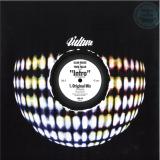
Released in 2000, Alan Braxe and Fred Falke's “Intro” is five minutes of faultlessly melancholy, perfectly elegant, dance music that nudged French House into the future.
“Intro” is now being re-released for its 25th birthday, using the remastered version of the song from the 2023 re-issue of Alan Braxe, Fred Falke & Friends - The Upper Cuts album, with Braxe and Falke also making new remixes of their golden child. Given that “Intro” was pretty much perfect the first time around, the results are astoundingly strong.
Falke’s remix takes “Intro” into new dimensions, cosmic and suspiciously dubby, a newly-recorded bass line sending the mix on its psychedelic way. Braxe’s remix is raw and dirty, a “hotel room edit” as he calls it, that nods to the history of French House as it sparkles up the spine.
Both tunes are evidence that - actually - you can remix the un-remixable, so long as it is done with infinite love and incredible skill.