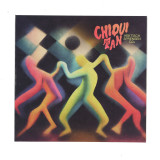
Terra Magica Rec. first 7’’ release „Chiqui Tan“ by the label heads Hektisch Sprengen DJs will be limited to 250 copies. The A-side hits the listener with some 1980s early Electronic-Downtempo-Cumbia-Colombian-Venezuelan-Tablemountain-Dub-Grooves. This reminiscence is leading to an extra full blown up 21st century Bass-Queen alert. And these HSDJ dials hit you into a stripped naked sample of Nigerian-Swedish DJ-dentist-mainstream-star Dr. Alban and his Eurotrash-90s-Pophouse-anthem “No Hash Hash, No Cocaine”. This is for sure no “Ottonormal”-90s-revival thing!
On the flip side Hektisch’s haptic wood razzle move covers the classic 1994-Liquid-Deep-Netherlands-Trance-House-Track “Paper Moon” by 51 Days which back then sampled the rare 1972-MPB-Funk-Cover-Version of Carol Kings “Corazón”. Guess what! It drops like a late 1990s-Ed-DMX-London-classic gone Electroboogie-Miamibass-Break with a SH101-baseline and Sprengen’s take on Spanish-90s-Trance-Vocals. Watch out 4 TERRAMs “Asi me gusta” title caps series as well! Trigger warning: That hidden Sequential Circuit Sixtrack loves you like a windy horse on Acid. Loads to experience on this little innocent wax disc!
quête:10 record cover
Disco Segreta reissues another uber rare 70s Italian disco holy grail !
“Stripiz (Strapazzo)” – a made-up word meaning “Scramble” – was originally recorded in 1978 for the tiny Roman label SGR by Lele Pathà, moniker of musician Emanuele Degni, for what will be his only release, only issued on 45 in just a few hundred copies, specifically targeted to a clubbing environment.
“Stripiz” is a truly unique record in the panorama of Italian 1970s disco during its climax years and is nothing short of pure madness: a fully instrumental track made out of synthesizers, moog lines, bells, drums topped by a male voice that goes “Striiiipiiiiiz”, a picture perfect portrait of the immensely free Italian creative outpour in disco music at the end of the 1970s, not to mention the wonderfully lisergic cover art!
The first ever 12” reissue of “Stripiz” comes lovingly remastered, respectful of the actual tracks’ 70s vibe, and features the original 45 version plus a contemporary reintepretation by Italian mastermind Marcello Giordani DJ that turns “Stripiz” into a dark disco monster!
Note this is a strictly limited edition and – as with all of our 2023 releases – will NEVER be reissued again.
Back in print, note new price. San Diego's own The Sure Fire Soul Ensemble’s sophomore LP on Colemine Records! Cinematic soul is the order of the day from this west coast group. Covering a lot of soulful territory here: deep funk, soul jazz, breakbeats, and more!
The Space Lady began her odyssey on the streets of San Francisco in the late 70s, playing versions of contemporary pop music an accordion and dressed flamboyantly, transmitting messages of peace and harmony. Following the theft of her accordion, The Space Lady invested in a then-new Casio keyboard, birthing an otherworldly new dimension to popular song that has captured the imaginations of the underground and its lead exponents ever since, with the likes of John Maus, Erol Alkan and Kutmah being devotees.
Of her early street sets, only one recording was made, self-released originally on cassette and then transferred to a home-made CD. "The Space Lady’s Greatest Hits"(LSSN021) features the best of these recordings - mostly covers but with some originals - pressed on vinyl for the first time and features archival photographs and liner notes from The Space Lady herself. “Greatest Hits” contains The Space Lady’s personal favourites; her haunting take on The Electric Prunes’ “I Had Too Much To Dream (Last Night),” a frantic “Ballroom Blitz” amidst other reconstructed pop music. Included are also 4 originals that easily match for the Pop canon. Following the release of this archive, The Space Lady will be issuing new material and travelling the world to present her message outside the United States for the first time.
• 180 GRAM AUDIOPHILE VINYL
• INCLUDES COVER FROM LEE HAZELWOOD’S CLASSIC “THESE BOOTS ARE MADE FOR WALKING”
• FEATURES THE TRACKS “SKINHEAD MOONSTOMP” AND “SKINHEAD GIRL” A.O.
• LIMITED EDITION OF 1000 INDIVIDUALLY NUMBERED COPIES ON SMOKEY COLOURED VINYL
Symarip was a ska and reggae band from the United Kingdom and originating in the late 1960s. The group had built their reputation as Prince Buster's backing band. They are widely marked as one of the first skinhead reggae bands. Symarip recorded only one studio album; Skinhead Moonstomp. An instant classic and it includes fan favorites like "Skinhead Girl", "Skinhead Jamboree", and "Skinhead Moonstomp". Singer and trombone player Roy Ellis was the man behind many of their classics. This is the ultimate party album, with an excellent mixture of ska, reggae, and soul music.
Skinhead Moonstomp is available as a limited edition of 1000 individually numbered copies on smokey coloured vinyl.
The incongruous, yet glorious, creative partnership between Nancy Sinatra and Lee Hazlewood was well underway when the two singular artists reunited to record 1972’s Nancy & Lee Again, a follow-up to their bestselling duet debut, Nancy & Lee. Nancy, the eldest daughter of Frank Sinatra, had been working with the Oklahoma-born songwriter since 1965, when she topped the pop charts with “These Boots Are Made For Walkin’.” Over the next five years, the two artists forged a prolific relationship in the studio, with Hazlewood writing and producing many of Nancy’s solo hits. Soon, the duo found success with a series of duets, including “Sand,” “Summer Wine,” and “Some Velvet Morning” – all of which appeared on their highly-influential 1968 debut.
Not long after the critical acclaim and chart success of Nancy & Lee died down, however, Hazlewood unexpectedly relocated to Sweden, leaving his musical partner in the proverbial dust. America, meanwhile, was in the midst of a cultural shift, as the Vietnam War waged on. By the turn of the decade, the musical landscape had changed significantly. “Trivial music and not profound music became unimportant,” recalls Nancy, speaking to Hunter Lea. “It was a tough time.” And yet, despite the circumstances, the stars somehow aligned for the duo to record some of their most magnificent music together.
Returning to Los Angeles for the project, Hazlewood – who reprised his role as producer – chose to take a new direction with the duo’s sophomore album. Nancy recalls, “It was more dramatic; it was more fun to do, more challenging to do…. It was more grandiose.” For the lush, orchestral arrangements, they collaborated with Larry Muhoberac (an original member of Elvis Presley’s TCB band, whose early ‘70s credits also included Barbra Streisand, Neil Diamond, and Lalo Schifrin) and Clark Gassman, who had worked on Hazlewood’s 1970 LP, Cowboy in Sweden. Backing vocals from brothers John and Tom Bahler, who remain two of the most recorded singers in history, added additional texture to several songs.
The big sound that Nancy describes above is exemplified in the album’s cinematic opener, “Arkansas Coal (Suite).” Clocking in at nearly six minutes long, the dynamic overture tells the tale of an ill-fated coal miner (sung by Hazlewood), while Nancy adjusts her vocals to sing as both the miner’s daughter and his wife. Hazlewood’s knack for vivid, nuanced storytelling shines throughout Nancy & Lee Again, particularly in “Paris Summer,” which details the conflict that a married woman faces, as she engages in a passionate affair. Another highlight is the country-inspired hit, “Did You Ever,” which was released as the album’s lead single. After it landed at No.2 on the U.K. pop charts, the song served as an alternate title track in several countries, including LP pressings in the U.K., Germany, and Canada.
One of the most emotionally-charged moments on Nancy & Lee Again is a cover of Dolly Parton’s “Down From Dover.” The heartbreaking tune tells the tale of a pregnant teenager, who has been abandoned by her lover and her family and ultimately gives birth to a stillborn baby. While Parton’s 1970 version was sung from the teenager’s point of view, Hazlewood and Sinatra transformed the country song into a duet. Hazlewood, who offers the man’s side of the story, sings in a notably deeper octave than his signature baritone.
Another poignant selection is “Congratulations,” which describes a soldier coming home from Vietnam. “His face has grown old and his eyes have grown cold/And they tell you of where he has been/Congratulations, you sure made a man out of him,” Hazlewood sings, pointedly. Nancy, who performs as the vet’s wife, argues that the song had a deeper meaning for her duet partner. “Lee started out a hawk, he was an army guy, so he was all for the war in the beginning. We didn’t talk about it, but at some point, he changed radically. ‘Congratulations’ was almost like an apology from him. I don’t want to put words in his mouth, but it was as though he was saying ‘I’m really sorry.’”
The song “Friendship Train” could also be interpreted as an apology of sorts – this time to Nancy. “You’ve been hurt and I’ve been hurt/Now we’re living pain,” the tune opens. When Hazlewood moved to Sweden without telling his longtime musical partner, Sinatra was understandably upset. “I felt pretty betrayed. I mean, who does that? Who just up and disappears like that? I’ll never understand it,” she reveals. But the uplifting duet – a slice of ‘70s pop perfection – offers reaffirming words of love between friends. “Lee felt things very deeply and tended to express his feelings in song instead of in real life,” explains Nancy.
The 10-track album closes with the stripped-down “Got It Together.” Backed by an acoustic guitar, the song is equal parts playful and candid, as the duo has an impromptu, spoken-word conversation about their lives. “I wish that we’d quit getting so old,” laments Nancy, who later shares her wish to have children (she would do so in the next few years). Hazlewood, meanwhile, attempts to remedy his past wrongdoings – this time asking his partner, “Can I go back to Sweden?” With that, Nancy gives her blessing.
This definitive reissue of Nancy & Lee Again also includes two bonus tracks. Both are stylistic departures for the duo – but fit right in with the psychedelic pop of the era. The first one, “Think I’m Coming Down,” is a harmony-filled reflection on a toxic relationship. “I think that was one of [Lee’s] drug things. I don’t mean that he used drugs; I mean that he was trying to be part of that culture. Trying to be hip,” explains Nancy, who delivers an emotive vocal performance on the solo track. Also included is “Machine Gun Kelly,” penned by a staple of the 70s singer-songwriter movement, Danny Kortchmar (James Taylor, Carole King, Linda Ronstadt). Recorded several months after the release of the album, the song found Nancy reuniting with Billy Strange, who arranged many of her solo albums, as well as Nancy & Lee. Sinatra and Hazlewood first performed “Machine Gun Kelly” during their residency at Las Vegas’ Riviera Hotel in February 1972 (later released as a concert documentary on Swedish television). While the recording has long remained a career favorite of Nancy’s, it would be decades before it was officially released.
Nancy & Lee Again remains a creative high point in the careers of Sinatra and Hazlewood and, upon its release, garnered rave reviews from Billboard, Record World, and Cash Box, among others. Yet, Nancy & Lee Again never received the spotlight it so utterly deserved. “We didn’t have label support at all in those days,” recalls Nancy. “Without the strength of a label, records die. We were old. We were old-fashioned. We were just not what was happening. It’s a very ageist kind of business.” Nevertheless, she adds, “I think it’s a very good album. I think it’s timeless.” Now, after years of being a sought-after rarity, this gem in the Sinatra-Hazlewood canon can finally get its due.
Five decades later, Nancy’s legacy only continues to grow, as new generations discover her impressive catalog (which boasts nearly 20 studio albums – her duets with Hazlewood among them – and dozens of charting singles, including the theme song to the 1967 James Bond film, You Only Live Twice). In 2020, Sinatra was recognized by her peers when “These Boots Are Made For Walkin’” was inducted into the GRAMMY® Hall of Fame. That same year, Sinatra partnered with Light in the Attic for Nancy Sinatra: Start Walkin’ 1965-1976, a definitive survey of her most prolific period. LITA has also reissued Sinatra’s classic debut, Boots, and her iconic, 1968 album with Lee Hazlewood, Nancy & Lee. The label looks forward to celebrating Nancy over the coming years with a variety of special releases, exclusive merchandise, and more.
The incongruous, yet glorious, creative partnership between Nancy Sinatra and Lee Hazlewood was well underway when the two singular artists reunited to record 1972’s Nancy & Lee Again, a follow-up to their bestselling duet debut, Nancy & Lee. Nancy, the eldest daughter of Frank Sinatra, had been working with the Oklahoma-born songwriter since 1965, when she topped the pop charts with “These Boots Are Made For Walkin’.” Over the next five years, the two artists forged a prolific relationship in the studio, with Hazlewood writing and producing many of Nancy’s solo hits. Soon, the duo found success with a series of duets, including “Sand,” “Summer Wine,” and “Some Velvet Morning” – all of which appeared on their highly-influential 1968 debut.
Not long after the critical acclaim and chart success of Nancy & Lee died down, however, Hazlewood unexpectedly relocated to Sweden, leaving his musical partner in the proverbial dust. America, meanwhile, was in the midst of a cultural shift, as the Vietnam War waged on. By the turn of the decade, the musical landscape had changed significantly. “Trivial music and not profound music became unimportant,” recalls Nancy, speaking to Hunter Lea. “It was a tough time.” And yet, despite the circumstances, the stars somehow aligned for the duo to record some of their most magnificent music together.
Returning to Los Angeles for the project, Hazlewood – who reprised his role as producer – chose to take a new direction with the duo’s sophomore album. Nancy recalls, “It was more dramatic; it was more fun to do, more challenging to do…. It was more grandiose.” For the lush, orchestral arrangements, they collaborated with Larry Muhoberac (an original member of Elvis Presley’s TCB band, whose early ‘70s credits also included Barbra Streisand, Neil Diamond, and Lalo Schifrin) and Clark Gassman, who had worked on Hazlewood’s 1970 LP, Cowboy in Sweden. Backing vocals from brothers John and Tom Bahler, who remain two of the most recorded singers in history, added additional texture to several songs.
The big sound that Nancy describes above is exemplified in the album’s cinematic opener, “Arkansas Coal (Suite).” Clocking in at nearly six minutes long, the dynamic overture tells the tale of an ill-fated coal miner (sung by Hazlewood), while Nancy adjusts her vocals to sing as both the miner’s daughter and his wife. Hazlewood’s knack for vivid, nuanced storytelling shines throughout Nancy & Lee Again, particularly in “Paris Summer,” which details the conflict that a married woman faces, as she engages in a passionate affair. Another highlight is the country-inspired hit, “Did You Ever,” which was released as the album’s lead single. After it landed at No.2 on the U.K. pop charts, the song served as an alternate title track in several countries, including LP pressings in the U.K., Germany, and Canada.
One of the most emotionally-charged moments on Nancy & Lee Again is a cover of Dolly Parton’s “Down From Dover.” The heartbreaking tune tells the tale of a pregnant teenager, who has been abandoned by her lover and her family and ultimately gives birth to a stillborn baby. While Parton’s 1970 version was sung from the teenager’s point of view, Hazlewood and Sinatra transformed the country song into a duet. Hazlewood, who offers the man’s side of the story, sings in a notably deeper octave than his signature baritone.
Another poignant selection is “Congratulations,” which describes a soldier coming home from Vietnam. “His face has grown old and his eyes have grown cold/And they tell you of where he has been/Congratulations, you sure made a man out of him,” Hazlewood sings, pointedly. Nancy, who performs as the vet’s wife, argues that the song had a deeper meaning for her duet partner. “Lee started out a hawk, he was an army guy, so he was all for the war in the beginning. We didn’t talk about it, but at some point, he changed radically. ‘Congratulations’ was almost like an apology from him. I don’t want to put words in his mouth, but it was as though he was saying ‘I’m really sorry.’”
The song “Friendship Train” could also be interpreted as an apology of sorts – this time to Nancy. “You’ve been hurt and I’ve been hurt/Now we’re living pain,” the tune opens. When Hazlewood moved to Sweden without telling his longtime musical partner, Sinatra was understandably upset. “I felt pretty betrayed. I mean, who does that? Who just up and disappears like that? I’ll never understand it,” she reveals. But the uplifting duet – a slice of ‘70s pop perfection – offers reaffirming words of love between friends. “Lee felt things very deeply and tended to express his feelings in song instead of in real life,” explains Nancy.
The 10-track album closes with the stripped-down “Got It Together.” Backed by an acoustic guitar, the song is equal parts playful and candid, as the duo has an impromptu, spoken-word conversation about their lives. “I wish that we’d quit getting so old,” laments Nancy, who later shares her wish to have children (she would do so in the next few years). Hazlewood, meanwhile, attempts to remedy his past wrongdoings – this time asking his partner, “Can I go back to Sweden?” With that, Nancy gives her blessing.
This definitive reissue of Nancy & Lee Again also includes two bonus tracks. Both are stylistic departures for the duo – but fit right in with the psychedelic pop of the era. The first one, “Think I’m Coming Down,” is a harmony-filled reflection on a toxic relationship. “I think that was one of Lee’s drug things. I don’t mean that he used drugs; I mean that he was trying to be part of that culture. Trying to be hip,” explains Nancy, who delivers an emotive vocal performance on the solo track. Also included is “Machine Gun Kelly,” penned by a staple of the 70s singer-songwriter movement, Danny Kortchmar (James Taylor, Carole King, Linda Ronstadt). Recorded several months after the release of the album, the song found Nancy reuniting with Billy Strange, who arranged many of her solo albums, as well as Nancy & Lee. Sinatra and Hazlewood first performed “Machine Gun Kelly” during their residency at Las Vegas’ Riviera Hotel in February 1972 (later released as a concert documentary on Swedish television). While the recording has long remained a career favorite of Nancy’s, it would be decades before it was officially released.
Nancy & Lee Again remains a creative high point in the careers of Sinatra and Hazlewood and, upon its release, garnered rave reviews from Billboard, Record World, and Cash Box, among others. Yet, Nancy & Lee Again never received the spotlight it so utterly deserved. “We didn’t have label support at all in those days,” recalls Nancy. “Without the strength of a label, records die. We were old. We were old-fashioned. We were just not what was happening. It’s a very ageist kind of business.” Nevertheless, she adds, “I think it’s a very good album. I think it’s timeless.” Now, after years of being a sought-after rarity, this gem in the Sinatra-Hazlewood canon can finally get its due.
Five decades later, Nancy’s legacy only continues to grow, as new generations discover her impressive catalog (which boasts nearly 20 studio albums – her duets with Hazlewood among them – and dozens of charting singles, including the theme song to the 1967 James Bond film, You Only Live Twice). In 2020, Sinatra was recognized by her peers when “These Boots Are Made For Walkin’” was inducted into the GRAMMY® Hall of Fame. That same year, Sinatra partnered with Light in the Attic for Nancy Sinatra: Start Walkin’ 1965-1976, a definitive survey of her most prolific period. LITA has also reissued Sinatra’s classic debut, Boots, and her iconic, 1968 album with Lee Hazlewood, Nancy & Lee. The label looks forward to celebrating Nancy over the coming years with a variety of special releases, exclusive merchandise, and more.
Under The Big Black Sun is the third studio album by American rock band X and was released in 1982. It’s arguably their finest record. All 11 songs are exceptional, from both a performance and compositional point of view.
Before the recording of the album, singer Exene Cervenka’s sister was killed by a drunk driver, and the band decided to work out their grief in the music, which eventually resulted in two of the album’s best tracks: the melodic “Riding With Mary” and the vintage ‘50s sound of “Come Back to Me”.
The record was produced by Ray Manzarek, who is best known as the co-founder of The Doors. The cover art illustration was made by Alfred Harris.
Under The Big Black Sun is available as a limited edition of 750 individually numbered copies on turquoise coloured vinyl and includes an insert.
• 180 GRAM AUDIOPHILE VINYL
• INCLUDES INSERT WITH LYRICS
• PRODUCED BY RAY MANZAREK (THE DOORS)
• LIMITED EDITION OF 750
INDIVIDUALLY NUMBERED COPIES ON TURQUOISE COLOURED VINYL
High Roller Records, black vinyl, ltd 250, 4 page insert, A5 photo card, All audio restored and mastered from vinyl and tape sources by Patrick W. Engel at TEMPLE OF DISHARMONY in October 2021. In den frühen achtziger Jahren war das Londoner East End eine der wichtigsten Keimzellen der glorreichen New Wave Of British Heavy Metal – man denke nur an Acts wie Iron Maiden oder Angel Witch. Das Ruskin Arms spielte für die Evolution der Bewegung eine nicht unwesentliche Rolle, waren es doch die legendären Probeauftritte jeden Donnerstagabend, die den hoffnungsvollsten Bands eine regelmäßige Anstellung im Ruskin sichern konnten. Teil dieser Szene waren auch Dragonfly, eine Gruppe von jungen Musikern, ohne Geld und ohne selbst auferlegte Grenzen, dafür aber mit unbändigem Enthusiasmus. Es dauerte nicht lange, bis die Band anfing, eigene Stücke zu schreiben und sich weit übers Ruskin hinaus einen Namen zu erspielen. Die Frage nach einem eigenen Vinyl wurde in der Folge immer dringlicher. Dieses wurde dann in Form der »Dragonfly E.P.« umgesetzt, eine Auswahl eigener Kompositionen, aufgenommen im Keller einer Zoohandlung ganz in der Nähe des Ruskin Arms. Die in Eigenregie gefertigte EP wurde in einer Auflage von 500 Stück gepresst, die Cover eigenhändig gefaltet sowie zusammengeklebt, und erschien im Jahre 1980. Die Qualität des Materials und das spielerische Können der Musiker machte die »Dragonfly E.P.« zu einer der substanzielleren Veröffentlichungen der NWOBHM, später wiederzuerkennen bei Bands wie Sapphire, Trilogy oder Terraplane. Das wieder erwachte Interesse an der NWOBHM trieb den Preis einer originalen Ausgabe der »Dragonfly E.P.« fortan in schwindelerregende Regionen und fachte zugleich das Interesse nach unveröffentlichtem Material des ausnahmslos in Originalbesetzung agierenden Quartetts an. Das vorliegende Album präsentiert alternative (ältere) Aufnahmen des Songmaterials der »Dragonfly E.P.« und sorgt dafür, dass Dragonfly endlich das breitere Publikum bekommen, das sie von Anfang an verdient gehabt hätten. Cleveres Songwriting, melodische Vocals und messerscharfe Gitarren sind die Schlüsselelemente ihres Sounds.
KUF create emotion-laden dialogues across layers of time and dimensions of sound. With three albums the Berlin trio pioneered an astonishing inversion of the typical electronic band set up, by
pairing a plethora of disembodied, sampled voices with acoustic real-time interaction on bass, drums and keys.
'Yield', their fourth album, presents a shift in focus. Less weight on the vocal core – lots of new integrations of sampling, synthesis and band action in different constellations. This diversification of
sources pulls the conceptual stops out and yields a dazzling array of magical instrumentalism. Bold.
Catchy. Flourishing.
From 'Gold' to 'Universe', KUF solidified an irresistible marriage of android vocal cords and highly energetic beats. Their third album 'Re:Re:Re' applied the concept to remix/cover version hybrids of
classics from Macro's stellar back catalog, tackling originals by the likes of rRoxymore, KiNK, Patrick Cowley, Santiago Salazar and Stefan Goldmann. With proof that the concept could be applied with
supremely gratifying results to such diverse contexts, time was ripe to go back to the drawing board and reimagine the perimeter.
Now 'Yield' breathes the freedom of playful reassembly of the main ingredients. A sampler's cut-up capabilities triggered by frisky fingers. Persistent bass. Adamant drums. Rough soul, intertwined by
improvised outbursts and shaped with the aesthetics of raw MPC-based chunky techno. Twelve slices of hyper-integrated realtime magic.
Building on the themes of her most recent album, `Medieval Femme', Fatima Al Qadiri's newest release sees her pairing up with fellow Kuwaiti vocalist Gumar. The EP - also titled `Gumar', Arabic for "moon" - is an homage to a style of lamentation singing that both Fatima and Gumar grew up with and were heavily influenced by, and for which the latter received formal training as a teenager. On these four short songs, Fatima provides a minimal counterpoint to Gumar's elegant vocals, a coalescence that powerfully and sympathetically complements and extends with cosmic, almost elemental depth. Serious and mournful in tone, the record ruminates on the subject of unrequited love, arguably the most common theme in Arabic music past and present. The cover is an original artwork by Kuwaiti artist Khalid al Gharaballi, Fatima's bestie and long-time collaborator.
- A1: Cobra
- A2: Languid Boredom
- A3: Subtitle Bridge
- A4: Fleeting Happiness
- A5: Messenger From Hell
- A6: Pursuer
- A7: Cosmic Dust
- A8: Walking Into The Unknown
- A9: Rush Hour
- A10: A Gleam Of Hope
- A11: Window Shopping
- A12: Abend
- B1: Labyrinth
- B2: Evil Conspiracy
- B3: My Blue Little Angel
- B4: Seesaw Game
- B5: Twilight Memory
- B6: Silhouette
- B7: Tarcalos Blues
- B8: Smoke Of A Cigar
- B9: Suspicions
- B10: Pulse Of Justice
- B11: Dawn To The Universe
- C1: Solidary Souls (Fast Tempo)
- C4: Reunion With Old Friends
- C5: Ancient History Of Mars Chapter Iii
- C6: Sorrow And Determination
- C7: Python 77 Magnum
- C8: Mirage
- C9: Relaxin’
- D1: Memoirs
- D2: Sorrow And Determination (Fast Tempo)
- D3: A New World
- D4: Secret Desire (Instrumental)
- D5: Turning Your Back On The Sunset
- D6: Fleeting Happiness (Fast Tempo)
- D7: Sunset Rendez-Vous
- D8: Corridor To Purgatory
- D9: Whispers Of The Devil
- D10: Solidary Souls
- E1: Special Moment
- E2: Cogito Ergo Sum
- E3: The Psychogun
- E4: Death March
- E5: Pastoral
- E6: Trailer
- E7: Sweet Happening (Sax Ver.)
- E8: Sweet Happening (Piano Concerto Ver
- F1: Sayonara Man’s World
- F2: Sweet Happening
- C2: Escape To Peace
- F3: Lady
- F4: Secret Desire
- F5: Cobra (Karaoke)
- C3: Joyful Voyage
Space Adventure Cobra is the animated series from the masterpiece of Buichi Terasawa, produced by the prestigious studio TMS Entertainment and broadcasted from 1982. The series was a huge success and remains to this day one of the most appreciated in the world of Japanese animation.
In order to celebrate the 40th anniversary of Space Adventure Cobra, we are pleased to offer this sublime vinyl box set of the OST with its 3 discs gathering a very large selection of music, all the songs (long versions) as well as several covers and rare unused tracks composed at the time, all completed by a 12-page booklet, illustrated with the most beautiful artworks of the master Terasawa!
The legendary soundtrack of Space Adventure Cobra, composed by Kentarô Haneda and YûjiÔno, has greatly contributed to the reputation of the series with notably rhythmic tracks, sublime jazz pieces and unforgettable songs.
Here it is now completely remastered in vinyl format & double CD in this collector's edition!
- 180 GRAM AUDIOPHILE VINYL
- INCLUDES INSERT
- 30TH ANNIVERSARY OF THE LEGENDARY ALBUM
- REMASTERED AUDIO
Fishbone was one of the most distinctive and eclectic alternative rock bands of the late '80s. With their hyperactive, self-conscious diversity, goofy sense of humor, and sharp social commentary, the group gained a sizable cult following during the late '80s.
Truth and Soul is their second album, originally released in 1988. The album features a wide array of genres including punk, ska, reggae, soul, funk, elements of hard rock and blues. Truth and Soul contains a cover version of Curtis Mayfield's Freddie's Dead', originally from the soundtrack of the film Super Fly and it is the first single of the album.
Three other tracks were released as singles Ma and Pa', with a video directed by Mike Lipscombe, Change' and One Day'.
The album was awarded four-out-of-five stars in 2004's The New Rolling Stone Album Guide. Music critic Tom Moon called the album one of his 1000 Recordings to Hear Before You Die' and Robert Dimery listed it as one of his 1001 Albums You Must Hear Before You Die'.
This year we are celebrating the 30th birthday of Truth and Soul. The album is finally available again on vinyl and includes the original insert with lyrics and liner notes.
Third Pressing of Gilroy Mere's Adlestrop on blue vinyl with a blue cover.
Adlestrop is inspired by the remains of the rural railway stations, that were closed in the wake of the 1963 Beeching Report.
“This record started with Edward Thomas’s poem Adlestrop and a chance visit to the village that it takes its title from. I wanted to see the station, but found it was no longer there, all that remains is the old platform sign Adlestrop, now part of a local bus shelter. However as I walked around the village I was struck that; “all the birds of Oxfordshire and Gloucestershire” were still singing away - like ghosts from Thomas’ verse.
Visiting Adlestrop spurred me to get hold of a copy of the Beeching Report which, in Appendix 2, lists all the services and stations recommended for closure in the 1960s. The names read like an epic British poem, from halts to branch-line stops and stations and singular terminals for public schools, mines, ferries and even an asylum. There’s Ravenscar where a resort was planned but got no further in its construction than the station, and a hotel - the grid marked out for the roads never laid. Bethesda, a short branch line from Bangor up towards Snowdonia, was used for slate and passengers and is now just a quiet green valley, Christ’s Hospital on the old Cranleigh Line, opened with seven platforms to cope with the daily flood of pupils attending the famous school nearby which never came as it was a boarding school. Many of the stations have vanished, with just fields and car parks left in their place, some are repurposed as houses, or shops, or abandoned as artefacts of a lone-gone industrial past.
Armed with a digital recorder, and with a copy of Beechings Report as my guidebook I made notes and recordings on my travels around the country, and used them as the starting point for a set of pieces that try to capture the fading layers of history, in the areas where the stations had once stood making sure each track retains something of the real place within them. Back in my studio I reacted, improvised, and crafted musical responses to each station, trying to capture the ghosts and former lives of the stations and their imprint on the present.”
Gilroy Mere is Oliver Cherer who trading as Dollboy, Rhododendron, and Australian Testing Labs as well as his own name has meandered his way through the backwaters of left of centre English folk, ambient and electronic music, issuing numerous albums of original music to much critical acclaim via highly regarded boutique labels such as Static Caravan, Second Language, Deep Distance, Polytechnic Youth, and Awkward Formats.
Never released before recordings from Logos Foundation live sessions at Logos Foundation, January 3, 1981.
The music is free-improvisation - that is we make our music co-operatively while playing : by listening, reacting, throwing in new ideas, not by following preplanned schemes. At its simplest the group's intention can be said to be to play together as well as possible and to enjoy ourselves while doing so. We are very interested in the result and intend that the audience is as well. As well as the musicians reacting to each other the music itself is pretty reactive to context. In other words room acoustics, background noise, audience response have a strong effect on what happens. This is particularly true of the audience. We have done performances where conversation has broken out with some audience members. There is much to see as well as hear - this is partly to do with the instruments. Together Terry, Steve and David have hundreds, all sizes, all sorts, most colours. They completely cover the floor. Many of these are non-western. The wide range of instruments means that an extremely broad sound spectrum is covered, from sudden bangs to very quiet low notes, from squeaks to normal guitar sounds. This is what fixes the overal group sound.
David Toop: Flute, home-made reeds, percussion Peter Cusack: Guitar Steve Beresford: Piano, Small Instruments Terry Day: Percussion, home-made reeds
Logos Foundation, located in Ghent, is a unique professional organisation for the promotion of new music and audio-related arts by means of new music production, concerts, performances, composition, technological research and other activities related to contemporary music. This organisation has been founded in 1968 by Godfried-Willem Raes.
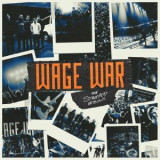
The Stripped Sessions adds to Wage War’s already impressive and numerous career highlights including over 580 total million streams; hitting high marks on Billboard Charts and earning press raves from Revolver, Loudwire, Kerrang!, Alternative Press, Rock Sound, Modern Drummer, and 2021 covers from Kerrang! and UPSET.
After last year's musical excursions to Central & South America and South Africa, Berlin-based reissue label "Matasuna Records" is once again making a detour to the USA for its first release in 2023. Two funk milestones by "United 8" and "Tony Alvon & The Belairs" have been selected from the archives of "Atlantic Records". Apart from a release as part of a Funk45's box set by Warner in 2004, the songs have only appeared on various bootlegs in the past.
Matasuna Records is thrilled tofinally release them as an officially licensed reissue with new mastering as a 7-inch vinyl single. This release is an absolute must-have for all funk enthusiasts, DJs and collectors.
"Getting Uptown (To Get Down)" by "United 8" is a funk classic released on Atlantic Records in 1972. The musicians of United 8 created an infectious sound with a combination of horns, guitars, drums and bass. The drums drive the beat and give the track its distinctive rhythm, while the bass provides a powerful, pulsating foundation. The horns add a jazzy note, while the guitar adds a funky touch.
The result is an energetic, danceable sound that still sounds fresh and exciting today. The song is timeless and has lost none of its appeal.It's no wonder that it has been featured on many funk compilations since the 2000s.
"Sexy Coffee Pot" by "Tony Alvon & The Belairs" is an explosive and energetic funk jointfrom 1969that immediately captivates the listener. The rhythm section lays down a steady, infectious groove, while the guitar and horns provide a funky, dynamic sound that complements each other perfectly.
It's no surprise that "Sexy CoffeePot" has been sampled and covered by so many hip-hop artists over the years, such as "Eric B. & Rakim", "Cypress Hill" or "DJ Shadow", to name a few. B-boys and B-girls also appreciate the upbeat vibe of this song, which has become a staple on battles.
The impossibly cool 1973 album What's Going On from Late, Great Japanese Funk & Jazz Don Takehiro Honda which swings through jazz orchestral renditions of American R&B and Funk Classics like Marvin Gaye's "What's Going On,"
Otis Redding's "Sitting On The Dock of the Bay," and James Brown's "Ain't It Funky Now" turning them into the most Down Home, Grits 'N' Gravy Grooviest Versions and sounding like they were recorded at the studio of the band that taught the Memphis Rhythm Sections all they ever were gonna need to to know.
As well as the aforementioned tracks the album also iconic funk/soul gems from the Impressions (Check-Out Your Mind) & Soul Jazz covers from Eddie Harris (Sham Time), The Crusaders (Greasy Spoon) and a Pacific Soul Jazz Classic in "Ain't Tell You A Good Way But" which was composed by Takehiro Honda.
Original copies regularly change hands for eyewatering sums and the album is seen as a much loved classic of it's era.
- A1: The Star Of A Story Ft. Lisa Fischer
- B1: Deep Burnt Ft. Axel Tosca
- C1: Change Your Mind Ft. Bernard Fowler
- D1: Another Day In My Life
- E1: Seven Mile Ft. Moodymann
- F1: Come Away Ft. Kerri Chandler
- G1: Music Is My Life Ft. Unlimited Touch
- H1: You Got Me Dancing Ft. Audrey Wheeler & Cindy Mizelle
- I1: Chimi Ft. Elements Of Life
- J1: Love Has No Time Or Place Ft. Elements Of Life (Unreleased Instrumental Dub)
- K1: Atmosphere Strut Ft. Dj Spinna
- L1: Cosmic Witch Ft. Anané
- M1: How He Works Ft. Nico Vega
- N1: A Place Where We Can All Be Free Ft. Janine Lyons
- O1: Touch The Sky Ft. Tony Momrelle
- P1: Dreaming Ft. Cindy Mizelle
- Q1: All My Love Ft. Robyn
- R1: Feel So Right Ft. Honey Dijon
- S1: Free To Love (Louie Vega & Karen Harding)
- T1: It's All Good (Louie Vega Remix) (Bebe Winans Ft. Debbie Winans Lowe & Korean Soul)
There is a global musical movement happening right now, and an integral part of this rhythmic and cultural evolution is the legendary Grammy award-winning DJ / Producer / Artist Louie Vega.The movement is comprised of the Expansions In The NYC album and the Expansions NYC events, and it represents the very best in music, dance and club culture from New York City to London to Miami to Ibiza and every locale around the world where people appreciate the power of house music.
Up next in the continuing series of product releases and events in connection with the Expansions juggernaut, a limited edition Expansions In The NYC 7” boxset on Nervous Records.
“Releasing vinyl has always been part of my mantra, but this is a unique one,” said Louie Vega. “For the first time having our music released on a (10) piece 7” set along with new original art by Andrew Thiele (who also created the Expansions In the NYC Album cover), it’s a highlight in the history of all my vinyl releases. Not too many artists release 10 pieces of vinyl within a set. And what makes it even more special is the calibre of all the amazing artists who worked on the tracks and songs with me. This is a landmark and essential collector’s item. A veritable “Must Have!” Never before have all these artists graced one album together from Honey Dijon to Lisa Fischer, Moodymann to Bernard Fowler, Robyn to Unlimited Touch, and Karen Harding to Kerri Chandler. It’s a dancer’s and vinyl collector’s paradise.