Young Detroit-native Kenny Hooper steps up for his debut release on Elypsia Records with not one but three 12 inches full of prime Motor City techno and electro escapism. Titled ,,Detroit Orbiter Volume 1 - 3", each EP features four tracks, showcasing Hooper's brilliant personal take on classic Detroit sounds. The twelve tracks of the ,,Detroit Orbiter" trilogy signal the arrival of yet another Motor City talent ready to rake the world and dance floors by storm with his chunky and funkafied sonic fictions. Elypsia Records is proud to welcome Detroit's next generation!
Buscar:110 sound
Efficient Space is honoured to share the little-heard recordings of three Yolngu songmen from Northeast Arnhem Land - Bobby Bunnungurr, Jimmy Djamunba and Peter Milaynga (d. 2007) - working in collaboration with Victorian musician Peter Mumme. Yolngu are the indigenous peoples of Arnhem Land in Northern Territory, Australia; their clans are the Marangu and Malabirr, the languages Djinang and Gannalbingu. Their songs are of instruction, story and ceremony.
A connection first initiated by Yolngu actor David Gulpilil, Waak Waak Djungi's mid-90s recordings were preceded by years of respectful sharing of culture. Mumme explains that 'the aim was to produce something that is new, not in the sense of a breakthrough, but what emerges from the combining of existing ideas'. What developed was sonically unique - sprawling vocal/electronic soundscapes and field recordings that reimagine the traditional songs of black crows and white cockatoos, sharing, creation spirits and of leaving and returning home to country. Spacious and patiently durational, the songs resound in a big land with a big story to tell.
On the 1997 Waak Waak Djungi album Crow Fire Music, these interpretations were assembled with traditional recordings and additional material from Sebastian Jörgensen and Sally Grice. Falling short of generating public interest, it became well known in the Yolngu homeland. Nearly two decades later, a CD copy filed away in the 3RRR FM library would prompt a three year investigation to meet the people behind the music.
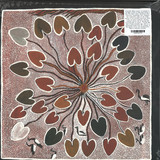
Waak Waak ga Min Min (Black Crow, White Cockatoo) combines the previously unreleased Gandi Bawong with five contemporary versions from the original album, with a new cover painting by Bobby Bunnungurr. Tracing 1997 back to many millennia ago, this is a captivating window into the richness of Aboriginal culture and collaboration.
B From E, an uncommon name but surely soon to be know. This young Danish/Mexican talent has already released a successful Ep on Copenhagen Underground Posse, but now heads for 2018 with a rock solid 3 track Ep at Traxx Underground! B From E delivers a classic and very melodic house sound, in a fusion of US Garage and Soulful Deep House. He is pointing for the stars and ready to spread love, all over the world!
- 1: Räudige Post
- 2: Freedom
- 3: Dunkelheit
- 4: Eine Band Namens Schuld
- 5: Schas Ins Hemd
- 6: Alles Ist Besser Als Wir
- 7: Go Boomer Go!
- 8: Wiss Ma Ned
- 9: Umzingelt
- 10: Warum!
- 11: Wollten Wir Nicht
- 12: Es Muss Sich Was Ändern
Mit ,GO BOOMER GO!" liefert die Wiener Band POST ein kompromissloses Statement zwischen spätem 70er-Punk und kantigem New Wave. Roh, direkt und mit scharfem Schmäh zerlegt die Band Generationenmythen, Selbsttäuschungen und den ganz normalen Wahnsinn der Gegenwart. Gesungen wird auf Deutsch und im Wiener Dialekt - bissig, poetisch, ungeschönt. POST verorten sich musikalisch zwischen der schnörkellosen Energie von Wilko Johnson und der unbändigen Energie von The Clash, kombiniert mit der gesellschaftskritischen Haltung eines Sigi Maron. Harsche Gitarren, minimalistische Arrangements, stoischer Groove und eine rotzige Attitüde prägen den Sound - keine Retro-Show, sondern ein wütend-zeitgenössisches Update des späten Siebziger-Feelings, das - wie wir ja alle wissen - in Wirklichkeit zeitlos ist. ,GO BOOMER GO!" ist keine bloße Generationskritik, sondern eine Zustandsbeschreibung: Zwischen Wut und Witz, Zynismus und Selbstironie seziert POST gesellschaftliche Spannungen, Bequemlichkeit und kulturelle Stillstände - immer mit Wiener Unterton und einer klaren DIY-Haltung.
As Nathan Fake rises from the nocturnal subterranea and rave catharsis of his previous records, on Evaporator, he resurfaces into the domain of daylight, bringing a tangible sense of air rushing against your face, of big skies, and endless landscapes.
The idea of pop accessibility that trickled into 2023’s Crystal Vision is refracted here through the prism of sweeping ambient, deep electronica, and trance uplift. Evaporator is Fake’s idea of “airy daytime music”, with each track a different barometer reading across the album’s varying atmospheres, which range from vibrant sunbursts, bracing rainscapes, and fine mists of clement melodics. “It’s not overtly confrontational electronic club music,” states Fake. “It’s quite pleasant, it’s accessible. As I was progressing through making the tracklist, I called it a daytime album. It doesn’t feel like an afterparty album.” For the past decade Fake has been gingerly introducing collaborations with heroes and friends alike into his lone, idiosyncratic working process.
Border Community alumni Dextro AKA Ewan Mackenzie transmutes his ferocious drumming for Pigs Pigs Pigs Pigs Pigs Pigs Pigs into the blurred choral thump of ‘Baltasound’. ‘Orbiting Meadows’, meanwhile, is his second collaboration with Clark, an eerily idyllic duet where microtonal 18EDO piano clangs slowly twirl around wailing pads. Evaporator marks the junction point of old technology and ever fresh creativity for Nathan. The trusty “dinosaur” age software, particularly Cubase VST5, that has powered two decades of music is rarely updated. “I used to sort of feel a bit ashamed of using such old software, and then I kind of had an epiphany – that’s just how I work”, comments Fake. “That’s just how I play. I’m very fond of these old tools, and I get the most joy out of them, but now I’ve incorporated new technology too.” When an artist accumulates so much synergy with their instrument, music making becomes instinctual. By Fake’s account, much of Evaporator just fell into place. The album title arrived randomly in his head (“it felt completely perfect. Airy.”), ideas looped and developed until things locked into place and just felt right. ‘The Ice House’ is a fleeting glimpse of the sonic world he taps into in this creative state, its glassy FM synths built around a counterpoint between rough-hewn crystalline arpeggios and sparse yet gravitas-bearing bass. “That riff I just wrote out on the keyboard, I just played it forever and ever and ever.
The original track ended up being really short. Here you go, and it’s gone!” These unplanned channellings of sound call forth records from Fake’s past while he looks ahead, perhaps getting at the very essence of his musicianship. The opener ‘Aiwa’ (“the breeziest,” he muses) reminds of the introspection that characterised Providence, excited by the fire and grit of Steam Days’ textural experiments, its chunky slams and clatters surging into a flood of harmonic buzzing as they reach out for old wisdom. ‘Hypercube’ stampedes in a similar chronological confluence, infusing an incessant synth line reminiscent of the golden age of rave with the crackling, ecstatic energy of modern festival anthems. Like the vaporisation of liquid to particles, everything that Evaporator presents has a mutant desire to be amorphous. Sounds rarely settle; the irradiated garage beat of ‘Bialystok’ is pitched downwards to driving, rebounding effect, while ‘You’ll Find a Way’ warps static into shivering energy, cinematic synth strings building anticipation into a gradual gush of chords. This translates into a more expansive stereo field than Fake has explored before.
‘Slow Yamaha’ saves the wildest, most kinetic transformations for last with a cornucopia of crispy melodies and fried drums; a sibilance of cymbals on the left, a susurrus of shakers on the right, and kaleidoscopic lasers pulsing and fizzing all around. Evaporation culminating in pure excited atoms.
- 01: Maanitus &Amp; Tšiižik
- 02: Markka
- 03: Melkutus
- 04: Letška
- 05: Kuuen Parin Hoirola
- 06: Brišatka
- 07: Tšiižik
- 08: Kirkonkellot
- 09: Kirkonkellot Korkea
- 10: Hoirola, 3 Parin
- 11: Lippa
- 12: Kyngäkiža
- 13: Ristakondra
- 14: Vanha Polkka
- 15: Viistoista
- 16: Vanha Valssi
- 17: Kiberä
- 18: Maanitus Kuokan Kanteleella
- 19: Tuuti Lasta Nukkumahe
Vinyl[22,65 €]
Death Is Not The End present a further volume of Arja Kastinen's eerie amalgamations of 110 year old wax cylinders with her own meticulously transcribed takes, this time focussing in on Armas Otto Väisänen's field recordings of kantele player Iivana Mišukka (b. 1861 d.1919).
"Ivana Mišukka (1861–1919) was one of the Karelian kantele players recorded by the folk music researcher Armas Otto Väisänen on wax cylinders in 1916 and 1917. In the early 20th century, the remote areas of Border Karelia were undergoing the final phase of a transformation in musical culture, with the ancient runo song tradition giving way to newer forms of music. This transition is reflected in Mišukka's repertoire and choice of instrument. The ancient small kantele, hollowed out of a single piece of wood, was already rare at the turn of the century. Mišukka's kantele was a new type of instrument with 26 strings, constructed of several parts, but he played it using the traditional plucking technique. Like other Border Karelian kantele players, his repertoire consisted of music rooted in runosong culture, as well as newer dances and songs from the east and west. Most of the recorded material falls into the latter category.
Ivan Bogdanov Mišukka was born out of wedlock in Suursara village, Suistamo, on 1 May 1861. He began playing the kantele at the age of five or six, quickly mastering the instrument. In adulthood, he was considered one of the area's best master players. Mišukka was landless for most of his life and lived in different parts of the Suistamo parish. His first wife, Tekla Markintytär, died in 1897 at the age of 40, and his second wife, Jevdokia Filipintytär Jeminen, died in 1907 at the age of 50. Seven children were born from the first marriage, two of whom died young. The third wife, Maria Ignatintytär Gurnan (Kuurnanen), was a well-known master of lamentations. Together with Maria, Iivana Mišukka worked as a tenant farmer in the village of Suursara. Mišukka suffered from rheumatism, which prevented him from participating in physical work like Maria. This was apparently partly the reason why Iivana Mišukka went to earn extra money by playing the kantele on gig trips. He often had other traditional artists from Suistamo as his travelling companions, such as the runosingers Konstantin Kuokka and Iivana Onoila. Iivana Mišukka died in Leppäsyrjä village, Suistamo, on 18 May 1919 at the age of 58, and his kantele was donated to Teppana Jänis.
Mišukka only used 14 of the 26 strings on his kantele, playing the same tunes either a fourth higher or lower. He tuned his kantele to the major scale using fifths, except for a low seventh scale degree on the upper strings, but not below the fundamental. Since he did not use the seventh note of the scale on the upper strings at all, he could use the major scale both lower and a fourth higher with this tuning. According to Mišukka, the sound of higher, or 'finer', strings is 'more beautiful', while that of lower ones is 'greater'. Among runosingers, the size of the thirds varied, ranging from major to minor to neutral. A similar phenomenon can be observed in kantele tunings, where the third, sixth and seventh scale degrees vary in a comparable way.
During a meeting, Väisänen suggested that Mišukka play the smaller kantele belonging to Konstantin Kuokka. The idea was to bring it closer to the horn to improve the recording quality. However, the kantele was completely out of tune, and now Mišukka tuned it to the Lydian scale (track 18).
Using the old plucking technique, Mišukka placed his right middle finger on the fundamental tone, his right index finger on the second scale degree, his left middle finger on the third scale degree and his left index finger on the fourth scale degree, and his right thumb on the fifth. The thumb also played the notes above the fifth note of the scale. As Mišukka remarked to Väisänen: 'Peigaloll' tuloo enemb ruadoa' (the thumb has to do more work). However, he did not use the seventh note of the scale on the upper strings at all. Below the fundamental note, he played the seventh and sixth notes of the scale with his right middle finger of and the fifth note of the scale with his right ring finger. This fifth scale degree below the fundamental is almost always used as a drone. Sometimes, when the melody required it, Mišukka, like other players, also varied the fingering. He would also occasionally strike the same string with the side of his fingernail after plucking it.
The wax cylinder recordings of Karelian kantele players are kept in the archives of the Finnish Literature Society in Helsinki, Finland. Copies were made of them onto reel-to-reel tapes in both the 1960s and 1980s. The 1960s copies are mono and the 1980s copies are stereo. However, not all kantele recordings from these decades have survived.
The sound of the kantele is difficult to hear in wax cylinder recordings due to its low volume, and it occasionally becomes completely obscured by noise. During the copying process, the cylinder sometimes rotates unevenly, resulting in breaks or jumps in the music. Additionally, the rotation speed of the cylinder in the copies does not correspond to the performance speed of the original music, which alters the pitch. However, since Väisänen's precise notes are available in the archive, it is possible to deduce the melodies, their speed, and the tuning level of the kantele in the recordings. Of the copies of the original recordings from the 1960s and 1980s, I have selected the one that best met the requirements of this publication and adjusted the speed of the recording to align with Väisänen's notes. To enhance the listening experience, I have replayed the songs, which now partly overlap the old recordings on this release."
— Arja Kastinen
- 01: Maanitus &Amp; Tšiižik
- 02: Markka
- 03: Melkutus
- 04: Letška
- 05: Kuuen Parin Hoirola
- 06: Brišatka
- 07: Tšiižik
- 08: Kirkonkellot
- 09: Kirkonkellot Korkea
- 10: Hoirola, 3 Parin
- 11: Lippa
- 12: Kyngäkiža
- 13: Ristakondra
- 14: Vanha Polkka
- 15: Viistoista
- 16: Vanha Valssi
- 17: Kiberä
- 18: Maanitus Kuokan Kanteleella
- 19: Tuuti Lasta Nukkumahe
Tape[16,39 €]
Death Is Not The End present a further volume of Arja Kastinen's eerie amalgamations of 110 year old wax cylinders with her own meticulously transcribed takes, this time focussing in on Armas Otto Väisänen's field recordings of kantele player Iivana Mišukka (b. 1861 d.1919).
"Ivana Mišukka (1861–1919) was one of the Karelian kantele players recorded by the folk music researcher Armas Otto Väisänen on wax cylinders in 1916 and 1917. In the early 20th century, the remote areas of Border Karelia were undergoing the final phase of a transformation in musical culture, with the ancient runo song tradition giving way to newer forms of music. This transition is reflected in Mišukka's repertoire and choice of instrument. The ancient small kantele, hollowed out of a single piece of wood, was already rare at the turn of the century. Mišukka's kantele was a new type of instrument with 26 strings, constructed of several parts, but he played it using the traditional plucking technique. Like other Border Karelian kantele players, his repertoire consisted of music rooted in runosong culture, as well as newer dances and songs from the east and west. Most of the recorded material falls into the latter category.
Ivan Bogdanov Mišukka was born out of wedlock in Suursara village, Suistamo, on 1 May 1861. He began playing the kantele at the age of five or six, quickly mastering the instrument. In adulthood, he was considered one of the area's best master players. Mišukka was landless for most of his life and lived in different parts of the Suistamo parish. His first wife, Tekla Markintytär, died in 1897 at the age of 40, and his second wife, Jevdokia Filipintytär Jeminen, died in 1907 at the age of 50. Seven children were born from the first marriage, two of whom died young. The third wife, Maria Ignatintytär Gurnan (Kuurnanen), was a well-known master of lamentations. Together with Maria, Iivana Mišukka worked as a tenant farmer in the village of Suursara. Mišukka suffered from rheumatism, which prevented him from participating in physical work like Maria. This was apparently partly the reason why Iivana Mišukka went to earn extra money by playing the kantele on gig trips. He often had other traditional artists from Suistamo as his travelling companions, such as the runosingers Konstantin Kuokka and Iivana Onoila. Iivana Mišukka died in Leppäsyrjä village, Suistamo, on 18 May 1919 at the age of 58, and his kantele was donated to Teppana Jänis.
Mišukka only used 14 of the 26 strings on his kantele, playing the same tunes either a fourth higher or lower. He tuned his kantele to the major scale using fifths, except for a low seventh scale degree on the upper strings, but not below the fundamental. Since he did not use the seventh note of the scale on the upper strings at all, he could use the major scale both lower and a fourth higher with this tuning. According to Mišukka, the sound of higher, or 'finer', strings is 'more beautiful', while that of lower ones is 'greater'. Among runosingers, the size of the thirds varied, ranging from major to minor to neutral. A similar phenomenon can be observed in kantele tunings, where the third, sixth and seventh scale degrees vary in a comparable way.
During a meeting, Väisänen suggested that Mišukka play the smaller kantele belonging to Konstantin Kuokka. The idea was to bring it closer to the horn to improve the recording quality. However, the kantele was completely out of tune, and now Mišukka tuned it to the Lydian scale (track 18).
Using the old plucking technique, Mišukka placed his right middle finger on the fundamental tone, his right index finger on the second scale degree, his left middle finger on the third scale degree and his left index finger on the fourth scale degree, and his right thumb on the fifth. The thumb also played the notes above the fifth note of the scale. As Mišukka remarked to Väisänen: 'Peigaloll' tuloo enemb ruadoa' (the thumb has to do more work). However, he did not use the seventh note of the scale on the upper strings at all. Below the fundamental note, he played the seventh and sixth notes of the scale with his right middle finger of and the fifth note of the scale with his right ring finger. This fifth scale degree below the fundamental is almost always used as a drone. Sometimes, when the melody required it, Mišukka, like other players, also varied the fingering. He would also occasionally strike the same string with the side of his fingernail after plucking it.
The wax cylinder recordings of Karelian kantele players are kept in the archives of the Finnish Literature Society in Helsinki, Finland. Copies were made of them onto reel-to-reel tapes in both the 1960s and 1980s. The 1960s copies are mono and the 1980s copies are stereo. However, not all kantele recordings from these decades have survived.
The sound of the kantele is difficult to hear in wax cylinder recordings due to its low volume, and it occasionally becomes completely obscured by noise. During the copying process, the cylinder sometimes rotates unevenly, resulting in breaks or jumps in the music. Additionally, the rotation speed of the cylinder in the copies does not correspond to the performance speed of the original music, which alters the pitch. However, since Väisänen's precise notes are available in the archive, it is possible to deduce the melodies, their speed, and the tuning level of the kantele in the recordings. Of the copies of the original recordings from the 1960s and 1980s, I have selected the one that best met the requirements of this publication and adjusted the speed of the recording to align with Väisänen's notes. To enhance the listening experience, I have replayed the songs, which now partly overlap the old recordings on this release."
— Arja Kastinen
- A1: _Etude No. 1 (Edit) - 04:36
- A2: _Etude No. 2 (Edit) - 03:37
- A3: _Etude No. 3 (Edit) - 02:28
- A4: _Etude No. 5 (Edit) - 05:08
- A5: _Etude No. 6 (Edit) - 03:27
- B1: _Etude No. 8 (Edit) - 03:45
- B2: _Etude No. 10 (Edit) - 03:27
- B3: _Etude No. 16 (Edit) - 03:41
- B4: _Etude No. 17 (Edit) - 05:23
- B5: _Etude No. 18 (Edit) - 03:19
With Figures of Glass (Piano Etudes – Edits), Vanessa Wagner offers a new listening perspective on Philip Glass’s Piano Études, shaping a curated selection of edited versions drawn from her acclaimed recording of the complete cycle. These edits do not alter the substance of the works; rather, they refine their temporal focus, revealing their emotional force with renewed clarity.
Conceived in parallel with Figures of Glass, a hybrid project developed with visual arts collective Scale, the release extends a dialogue between piano and light, sound and space. Between piano and light, Vanessa Wagner interprets Glass’s Études at the heart of a scenographic installation, exploring the visual imagination embedded in the composer’s music. Minimal structures become spatial gestures; repetition opens onto perception, colour, and resonance. Taken together, these edits form a coherent arc through Glass’s language: from tension and propulsion to suspension and introspection, from rhythmic urgency to contemplative stillness. Wagner’s approach is marked by precision, restraint, and a deep attention to resonance, allowing each piece to unfold with an assumed expressive sobriety.
Figures of Glass also exists as a live creation, presented for the first time in Paris at the Théâtre du Châtelet on April 7, 2026. In both recorded and staged forms, the project invites contemporary listening contexts — from focused headphone listening to immersive visual environments — while reaffirming the Piano Études as a major landmark of 21st-century repertoire. Bridging modern classical piano, minimalist writing, and spatial listening formats, Figures of Glass (Piano Etudes – Edits) speaks equally to traditional classical audiences and new listeners discovering Philip Glass through curated, editorial-driven experiences.
- 1: Running
- 2: Soul Woman
- 3: Golden Sun
- 4: You’ll Never Know
- 5: Flow
- 6: Speak To Me
- 7: Pick Up The Pieces
- 8: When All Is Said And Done
- 9: Seasons
- 10: I Thank You
Clear Vinyl in limitierter Auflage von 1500 Stück. Die renommierte US-niederländische Gospel-Soul-Künstlerin Michelle David & The True-tones läuten mit ihrem neuen Album ,Soul Woman", das am 27. Februar 2026 bei Record Kicks erscheint, ein neues Kapitel ein. Aufbauend auf dem von Kritikern gefeierten Album ,Brothers & Sisters" aus dem Jahr 2024, das die Komplexität der Welt widerspiegelte, wendet sich die neue LP ,Soul Woman" nach innen - eine zutiefst persönliche Auseinandersetzung mit Identität, Heilung und spiritueller Widerstandsfähigkeit. ,Wie kann ich andere bitten, sich Zeit zu nehmen, um über ihr Leben nachzudenken, wenn ich das selbst nicht tue?", fragt Michelle David. Dieser Geist der Selbstreflexion und Erneuerung steht im Mittelpunkt von ,Soul Woman" - einem Album, das Verletzlichkeit zulässt und gleichzeitig Stärke ausstrahlt. Musikalisch verfeinert ,Soul Woman" die charakteristische Mischung der Band aus Gospel, Soul und Vintage-Rhythm & Blues und schöpft dabei aus einer breiteren Palette von Einflüssen. Anklänge an Curtis Mayfield, Bobby Womack und The Four Seasons pulsieren durch die Grooves, während das Gospel-Feuer der Blind Boys of Alabama und die fröhliche Ausstrahlung von Diana Ross & The Supremes dem Album sowohl Schwere als auch Glanz verleihen. Im Mittelpunkt steht Michelle Davids unverwechselbare Stimme - rau, warm und voller Entschlossenheit -, umhüllt von reichhaltigen, analog geprägten Arrangements ihrer langjährigen Mitstreiter Paul Willemsen (Gitarre, Bassgitarre), Onno Smit (Gitarre, Bassgitarre) und Bas Bouma (Schlagzeug). Gemeinsam stehen Michelle David & The True-tones an der Spitze der Retro-Soul-Szene - sie verbinden zeitlose Grooves mit moderner Dringlichkeit, unerschütterlicher Authentizität und herzlicher Leidenschaft. Eine Stimme, geboren in der Kirche, geschliffen auf der Straße. Michelle David wurde in New York geboren und wuchs in der Kirche auf. Mit nur vier Jahren begann sie zu singen und trat mit fünf Jahren ihrer ersten Gruppe, The Mission of Love, bei. Ihre kraftvolle Stimme führte sie um die ganze Welt, wo sie in gefeierten Broadway-Produktionen wie Mama, The Sound of Motown, Glory of Gospel und Mahalia mitwirkte und mit Legenden wie Diana Ross und Michael Bolton Aufnahmen machte - alles bevor sie ihre gefeierte Reise mit The True-tones begann. Gemeinsam haben Michelle David & The True-tones sieben von der Kritik gefeierte Alben veröffentlicht und die Bühnen Europas erobert, von Pinkpop über North Sea Jazz bis hin zum London Jazz Festival. Die Band ist bekannt für ihre mitreißenden Live-Auftritte, hat von Spanien bis Skandinavien Standing Ovations erhalten, ist in großen Fernseh- und Radiosendungen aufgetreten und hat sogar bei den Olympischen Winterspielen 2022 gespielt. Ihre Aufnahmen wurden ebenso gelobt: The Gospel Sessions wurde für einen Edison Award (das niederländische Pendant zum Grammy) nominiert, während Truth & Soul aus dem Jahr 2020 von Craig Charles' BBC Radio 6 Music zum Album des Jahres und von FIP (Radio France) zum Album des Monats gekürt wurde. Ihr jüngstes Album, Brothers & Sisters (2024), markierte ihr Debüt bei Record Kicks und wurde zu einem Durchbruch - gefeiert von Rolling Stone France, KEXP, Jazzthing Magazine (Deutschland), De Volkskrant (Niederlande) und BBC 6 Music. Ein Zeugnis der zeitlosen Kraft des Soul: Mit ,Soul Woman" bieten Michelle David & The True-tones mehr als nur eine neue Platte - es ist ein musikalisches Zeugnis der Widerstandsfähigkeit, eine Feier des spirituellen Wachstums und eine Bekräftigung der Fähigkeit der Soulmusik, zu heilen, zu verbinden und zu inspirieren. Gleichzeitig in klassischen Traditionen verwurzelt und neue Wege beschreitend, ist dies zeitgenössischer Soul vom Feinsten. Für Fans von Durand Jones & The Indications, Thee Sacred Souls, Jalen Ngonda, Sharon Jones & The Dap-Kings, Lee Fields, Mavis Staples.
From out of nowhere comes a unique collaborative album from Edvard Graham Lewis (WIRE) & Mark Spybey (ZOVIET FRANCE). Mixing lush electronic rhythms, sonic collage, ambient soundscapes and manipulated field recordings, these six compositions form an album with a strong identity. That this is such a vital and fertile partnership should come as no surprise. After all, both men have made careers out of creating confidently questing musics. Lewis with Wire, He Said, Hox, Dome etc. and Spybey with Dead Voices on Air, Beehatch, Altered Statesmen, Zoviet France and so on. This new album however, is something different again: experimental, yet tightly focused, and not averse to the groove or the sly hook. The pair met via an appearance on a podcast in November 2022, hosted by cEvin Key of Skinny Puppy. They hit it off immediately. “We did a live chat with Graham - which I think, went on for about three days” jokes Spybey. It was Spybey who first broached the idea of collaboration. “It was a bit like shy bairns get nowt: I just said ‘maybe we should make something together.’” And so, with no plan other than to see what might develop, the duo began to assemble the compositions at long distance. Indeed, Lewis and Spybey only met in the real world after the album had been completed. “Mark sent half a dozen tracks in a stereo mix,” says Lewis. “And I looked at the ’topography’, to see where the spaces might be. So then I’d add to those areas. But then, when do you take it away? Sometimes you let it drop off a cliff, land in the shingle, and it gets washed out to sea again.” The process moved at a pace. “Almost everything each of us brought, ending up being incorporated in some way.” Says Spybey. “We didn’t really go down any cul-de-sacs.” As Lewis observes “We have such a sympathetic tone.” Full of inventive sonics that draw on both men’s previous work, ‘Lewis/Spybey’ offers up a richly detailed soundworld
Yesterday it started to rain…
The smell of damp tarmac rising up through open windows, a smell which is uniquely evocative for us all depending on our individual histories: a suburban pavement, a school playground, a basketball court.
The rain cut through a band of low pressure that had been lying over the city for days, pinging rhythmically off metal, causing rolling tyres to hiss and spit.
The music that soundtracked this meteorological shift was the debut full length from Rain Text (Giuseppe Ielasi & Giovanni Civitenga), simply titled III. Scattered throughout the nameless eight tracks there are moments of low-end pressure relieved by the fizz and clatter of metallic rhythms; there is static, there is discord, there is release.
The individuals comprising Rain Text have a long history of manipulating sounds for evocative ends, Giuseppe Ielasi has been making music as one half of Bellows for many years, each album stretching and destroying their sound in beautiful increments. He has also released reliably inspirational music either solo or in collaboration for the likes of Editions Mego, Shelter Press and Faitiche. His sensitive ears are also in high demand as a mastering engineer. It is worth perusing the 800+ releases he has technical credits for on Discogs: from classics of the avant-garde to the freshest faces of the Swedish underground, the chances are some of your favourite albums are included.
Giovanni Civitenga helms the SKYAPNEA long-running NTS show. Joining him, you can enjoy the fruits of a lifetime of deep listening through shows that flit between the industrial and the devotional, a space that is fully explored on III.
The album was recorded quickly over three fertile days in Ielasi’s studio in Monza, but of course results like this can only be achieved at such a pace by spending a lifetime obsessing over the mechanics and possibilities of sound.
Those who are enamoured by the rain—who are returned by it to the surfaces, smells and sounds of a lost and idealised youth; who feel themselves restored—are known as ‘pluviophiles’. Their response to rain may well have a biological explanation: when rain hits tarmac negative ions are released into the air, which are thought to result in feelings of wellbeing and positivity. All the more reason, then, to return to the vivid ecosystem that Rain Text has so carefully cultivated for III."
Words by The Dengie Hundred – August 2024
- Odaat
- Darkest Night
Stephen Murray, for fans of CAAMP, Mt. Joy, and Houndmouth. Stephen Murray is back with another 7" after the success of his first two singles with Soul Step Records. Expanding on those Americana and Folk flavored tracks, Stephen explores R&B and Hazy Indie Rock on these new tunes. ODAAT is where the haze sets in with an introspective indie jam while Darkest Night is a torch ballad that has one of the biggest musical crescendos to wrap up the B-side. Stephen is backed by some of Nashville's best musicians to gather these sounds. Drop the needle on this 45 and soak up this genre-bending artist.
- Mobali Nakobala (Nico – Ngoma J 5127, © Sukisa) Rumba Lingala
- Nalingi Yo Na Motema (Nico, Chantal – Ngoma J 5130 © Sukisa) Kiri-Kiri
- Mokili Makambo (Nico – Sukisa 93) Kiri-Kiri
- Ata Osali (Chantal – Ngoma Dnj 5214, © Sukisa) Rumba Lingala
- 1: Er Boeing (Kwamy – Air Congo) Merengue
- Hommage A Lumumba Patrice (Sukisa 44) Mabanga
- Bougie Ya Motema (Nico – Sukisa 47) Rumba Lingala
- Okosambuisa Ngai (Mizele – Sukisa 66) Rumba Lingala
- Sule (Nico – Sukisa 50) Rumba Lingala
- Okosuka Wapi ? (Josky – Sukisa 110) Danse Kono
- Kamungaziko (Lessa Lassan – Sukisa 114) Danse Kono
- Mokili Matata (Nico – Tcheza 10.001; © Sukisa) Rumba-Kono Lingala
- Baoulé (Lassan – Sukisa 99) Kiri-Kiri
- Beauté (Nico – Sukisa 101) Rumba Lingala
- Mansanga (Nico – Sukisa 131) Rumba Lingala
- Souzi (Sangana – Sukisa 117) Rumba Lingala
- Naboyi Koswana (Sangana – Sukisa 120) Rumba Cha Cha
- July (Julie – Sukisa 120) Madre Rumba
- Runeme Mama (Nico – Sukisa 47) Cha Cha Cha
- A Morow (Arr. Nico – Sukisa 66) Cha Cha Cha
- Apôtre Del Si Boney (Apôtre – Sukisa 73) Charanga
- A La Savana (Arr. Nico – Sukisa 62) Pachanga
- Alto Songo (Arr. Nico – Ngoma J5126, © Sukisa) Rumba Espagnol
- Para Bailar (Nico – Sukisa 50) Pachanga
- Meta Fua Mudia (Kaba – Sukisa 118) Rumba Lingala
- Exhibition Show (Nico – Sukisa 135) Instrumental
- Exhibition Dechaud (Dechaud – Sukisa 71) Instrumental
- Bolala - Ayando (Nico – Sukisa 132) Extrait Show Kasanda
- Excitation - Makwandungu - Ngombele (Nico – Sukisa 132) Extrait Show Kasanda
- Kamulangu
'In collaboration with the children of Nico Kasanda, better known as Docteur Nico, Planet Ilunga proudly presents an anthology dedicated to African Fiesta Sukisa, available as a 3LP set and a digital release with bonus songs. This release is the result of many years of preparations and was realized in close partnership with Liliane Kasanda, Nico’s eldest daughter. Marking forty years since his passing, we felt that the year 2025 was the right time to honor Docteur Nico’s legacy with this original collection.
'Almost all of the African Fiesta Sukisa songs were released on Nico’s Sukisa label which translates in Lingala for “the final accomplishment”. The music on Sukisa, crafted by Nico and legendary vocalists such as Chantal, Sangana, Apôtre, Mizele, Lessa Lassan and Josky, embodies the essence of that powerful phrase with genius, class and depth. The label ran between 1966 and 1975 and released approximately 280 songs. Ngoma also issued the group between 1967 and 1971 and, in addition, reissued material from the Sukisa label. Many of these songs have become part of the collective memory of Congolese society and are still heard, discussed, and analyzed daily across digital platforms worldwide, as well as on numerous Congolese radio and TV stations.
'The album we put together features some of Nico’s signature songs alongside never before reissued tracks from the Sukisa catalog. It furthermore contains a large booklet with song commentary, testimonial interviews from well-known musicians, journalists, fans and Nico’s entourage, besides never before published photography about his personal and musical life.
'Alastair Johnston, author of the book ‘A Discography of Docteur Nico’ and longstanding Planet Ilunga collaborator, designed a stylish booklet and cover using all our collected material. Audifax Bemba, longtime admirer, compiler and connoisseur of Nico’s music, and the author of most of the song commentary in our accompanying booklet, offers his portrait of Docteur Nico:
“After displaying technical virtuosity with African Jazz, expert and accomplished guitar with African Fiesta, which musicologist Sylvain Bemba described as a dream guitar, Nico Kasanda was consecrated ‘dieu de la guitare’ by the public in the late sixties. With his band African Fiesta Sukisa, Docteur Nico displays his wide palette of unusual sounds. While exploring the Hawaiian guitar with its clear, airy, plangent, psychedelic effluvia, he continues to replicate the piano comping technique, and adds two missing strings to his bow: a simulation of the sanza (likembé or thumb piano), whose sounds he reproduces right down to the noisemakers of the tiny tin rings, on the one hand, and the sounds of the Luba balafon on the other. The right note, in the right place, at the right time, is the triptych on which Nico Kasanda’s playing is based, a note dressed in the perfect sound. A guitar of pure emotion. With African Fiesta Sukisa, his playing takes a ‘Chopin-esque’ turn, sending out more notes in a sublime adagio. The true artist is the one who simplifies everything. Docteur Nico is a genius of our time, whose style makes him the supreme exponent of the most important guitar school in Congolese music. He is recognized by his peers as the greatest African solo guitarist of all time. Sculpting sound in a tireless quest for beauty, Nico Kasanda has sublimated the guitar throughout his career.”
[xd] Kamulangu [Outro] (Dr. Kasanda – Sukisa 135) Folklore Baluba
The core duo of Max D and Matt Papich debut on Peak Oil following full-lengths for Future Times and PAN with a fresh suite of tactile, diffuse fusion. Half the collection emerged from a 2021 session at Tempo House rounded out by Dustin Wong, Mezey, and Jeremy Hyman, while the rest took shape in moments both collaborative and isolated, collaged together with CDJs into something more liquid and liminal than the sum of its parts.
Across fractured jazz, pitch-shifted downtempo, revelatory guitar, and interstitial interplay, Lifted’s sound is one of flux, fragments, and filigree. Oblique harmonic synergies dusted in chance encounters and rogue acoustics. Diverse moods mapped with split strings and the space between notes. Music untethered by form or expectation, snaking like an ungrounded cable through a geodesic dome of deep-listening.
- 1: Stay Down
- 2: Kiss Tried To Kill Me
- 3: Just Like A Woman
- 4: Easy Peasy
- 5: Blood Of The Kings
- 6: St Peter
- 7: Mans Ruin
- 8: Medusas Eyes
- 9: Si El Diablo
- 10: What Goods A Rock Without A Roll
Originally released in Feb 2011, next year it will be 15 years young and like every teenager it wants to make a racket. So, in February 2026 the band will be doing just that, with some very special shows celebrating their debut album. Tour Dates for 2026 : Exeter Cavern 12/02/26, Cardiff Fuel 13/02/26, London Lexington 14/02/26, Edinburgh Bannermans 20/02/26, Nottingham Rescue Rooms 21/02/26
"The gauntlet for best album of 2011 is being thrown down early!" Metal Hammer. // “Black Spiders are pure genius, AND, they go onstage on time!” Duff McKagan (yeah, him off Guns n Roses)..// “Their apocalyptic three-man axe assault is awe-inspiring“ Rock Sound..// “Another monolithic slab of thunderous rock. This Sheffield-based quintet have managed to harness the powers of Angus Young and priapic death punks Turbonegro and distil it into a brew fit for Odin himself” KKKK Kerrang. SONS OF THE NORTH was the much anticipated debut album by the United Kingdoms very own rock juggernaut BLACK SPIDERS. Quite literally ten tracks of galloping rock and thunderous roll, heads down, no nonsense, ear splintering, gut wrenching organic, melodic goodness. Classic Rock and Metal Hammer Magazines hailed them as ‘Ones to Watch’, Kerrang, Rock Sound, Big Cheese Magazines, Subba Cultcha and Thrash Hits all reviewed.
2025 Repress
Mihai Popoviciu, one of the most esteemed names in the deep house and minimal scene, is set to unveil his anticipated new album, ‘Puzzle Box’, on Bondage Music. As one of the label’s core artists, Popoviciu returns for his second full-length album release on the imprint following his successful 2016 album, ‘Home’ - available on vinyl from 15th November 2024.
With a career spanning over a decade and with releases on numerous influential labels such as 8Bit to Berg Audio, Popoviciu has firmly established himself as a go-to within the minimal-leaning realms of house music. Known for intricate soundscapes and deep, hypnotic grooves, his work continues to captivate audiences globally. On ‘Puzzle Box’, he delves deeper into his signature stripped-back yet soulful aesthetic, offering a diverse collection of tracks that traverse through various sonic textures.
“With Puzzle Box, each track unlocks something deeper with every listen” - Mihai Popoviciu.
Consisting of thirteen tracks in total, ‘Puzzle Box’ showcases the Romanian’s sound to its fullest. On the vinyl edition, fans are treated to standout tracks like ‘Batiscaf’, ‘Storm Rider’, and ‘Far Gone’ — vinyl-only gems that capture Popoviciu’s talent for layering subtle, dubby tones with groovy rhythms. The opening track, ‘They All Say’, sets the mood with smooth, atmospheric beats with a skippy groove, followed by the dynamic “Video” and the driving, pulsating energy of “Frankfurt.”
Popoviciu’s skill in crafting versatile productions is showcased throughout the album, with each track offering something unique.
From the sleek, melodic strains of ‘Puzzle Box’ to the hypnotic, rolling basslines of ‘Kinetic’, this LP is a journey into his meticulously constructed sound. The digital version also features the bonus track ‘Body Count 2’, offering a final, rhythmic flourish to round off the release.
‘Puzzle Box’ further cements Mihai Popoviciu’s role as a mainstay on Bondage Music, a label which continues to champion forward-thinking, minimal-leaning house music. With this latest LP, Popoviciu once again proves why he remains a favourite, building on his storied career with another masterclass in refined, deep electronic music.
- Gatewood
- Gentle Understandings
- Cuttin' My Hair
- Canada Thistle (All Of My Friends)
- Linda Jean
- Dancin' Man (Locally Known)
- Little Miami
- Capps
Charlie Overman ist für Fans von Tyler Childers, Sturgill Simpson und John Prine. Charlie Overman ist durch und durch Kentucky, und die Songs und Geschichten auf dieser LP strahlen alles aus, was Kentucky ausmacht. Diese Authentizität dringt bis in die Rillen dieser LP vor. Charlies Detailtreue beim Songwriting ist stark von John Prine beeinflusst und zeugt von einer Fähigkeit, die Charlies Alter weit übertrifft. Charlie wird von einigen der besten Musiker des Bundesstaates Kentucky begleitet, die den Sound ergänzen. Sie hören traditionelle Country- und Folk-Klänge, die für ein breites Publikum zugänglich sind. Kommen Sie herein und begeben Sie sich auf eine Reise von Pikeville nach Paducah, während Sie sich in Charlies neue und aufstrebende Stimme in der Americana Musikszene verlieben.
- A1: Les Orques Adorent Le Foie De Requin
- A2: Je Ris Pour Autre Chose
- A3: Calme-Toi Bouge Tes Genoux
- A4: Que La Biche Soit En Nous
- A5: Dieux
- A6: C5
- A7: Soirée Parfaite
- B1: Ce Requin-Baleine Ne Me Sert À Rien
- B2: Cheese Bad Girl
- B3: Uno
- B4: L´archère
- B5: Texte Sur Les Vivants
- B6: Faux Comptes
- B7: Goûter Soir Apéro
Patami isn't a judo mat, an animal defense association or a kind of sausage. Patami is a concept unique to each individual and, above all, unique to singer Stanislas. Patami is a friend to all children. He's at their service, but he's also their king. For the audience, it's whatever they want it to be, as long as it's comforting! Patami is Astéréotypie's third album, an extraordinary musical adventure featuring post- punk, noise and electro sounds. There are also some lovely melodies. Patami will shake your heart with the myths, memories, concepts and rants of the four star MCs: Claire, Stan, Yohann and Aurélien, the greatest songwriters of the moment (a few guests are also expected)! In short, Patami is like nothing you've ever heard before, and what's more, it's a real comfort. Their previous record, Aucun mec ne ressemble à Brad Pitt dans la Drôme, released in the spring of 2022, was warmly received by the public and achieved great critical success. Since then, Astéréotypie has been playing headline shows and festivals all over France. The band's singularity has left its mark. After 10 years of existence, the collective has finally found its audience.
GAISTER (Olivia Salvadori, Akihide Monna and Coby Sey) release their self-titled LP.
The record captures the embodiment of an encounter, one moment of the trio’s ongoing relationship as artists who communicate with each other through sound, voice and music.
After orbiting in the same circles at each other's shows around 2016 in London, Sey and Salvadori eventually crossed paths. In 2017 Sey joined Salvadori’s artistic collective Tutto Questo Sentire on a residency in Capalbio, the southernmost part of Tuscany, Italy, and started working together. Down the line the pair ended up joining with Akihide Monna (of Bo Ningen), performing together in 2019 at Camden Art Centre on Cork Street in London.
When the trio come together something new is created, brought out after laying dormant, like an Icelandic Geysir. The setting of this particular encounter amongst the trio is essential in the album’s sonic palette, process and emotion. The album was recorded in Iceland at
Greenhouse Studios, where the trio formalised a set of intuitions; how nature can provide a guideline in the choices of the instruments, their materials and related rhythms; reflections on the voice as a sculptural element, pure sound and words.
As Akihide has said of the experience during their short and intense recording period: “The sound spontaneously spun out as if we were pulling at each other's hearts and minds with a strange internal connection and sensation. Something pure was brought out.”
‘Gaister’ itself is a made up word, sprung from the German ‘Geist’ to mean ‘spirit’, and made into a sound of its own. A purity, spirit and essence is pulled from the trio, in spite of their varying mother tongues (Italian, Japanese and English), musical genres and identities to create something new. Olivia Salvadori’s operatic vocals run free, flowing and moving in
synergy with Monna’s rhythmic drumming. Sey sings freely with Salvadori, their voices braided together like a waterfall.
This flowing nature is reflected in the album itself, its timestamps and scores are marked by encounters rather than tracks themselves. This album can be considered as one constant piece and a journey of its own that is not foreclosed, in keeping with the band’s ethos of
constant conversation and collaboration.
As Sey speaks of the trio’s relationship: “Olivia, Monchan and I had performed live together once before, several years before this song and this album came to be… and yet, we fully trust each other’s intuition when performing and creating music together because of our unified belief in the ability of sound and music to communicate and connect.”
credits
releases November 1, 2024
Olivia Salvadori: voice
Akihide Monna: voice, drums, percussions
Coby Sey: voice, percussions, synths, wurlitzer
Recorded at Greenhouse Studios in Reykjavik, Iceland
Recorded and producer: Sandro Mussida
Sound engineer: Francesco Fabris
Studio assistant: Domiziano Maselli and Jakob Vasak
Mixing engineer: Kristian Craig Robinson at Total Refreshment Centre, London, UK