Liquid Memory returns with Stephan Bazbaz – Lithium EP, a collection of three dancefloor-certified heavy hitters.
Packed with deep grooves and undeniable energy, this record is destined for the record bags of the most discerning DJs and clubbers—a must-have for those who appreciate expertly crafted club weapons.
A long-time praised producer, Stephan Bazbaz makes a true comeback with this release, marking his first in four years after over a decade of delivering top-tier music. With extensive experience behind the decks and in the studio, he has honed a sound that seamlessly blends minimal dub and crisp house. From his celebrated residencies to his own vinyl-only label, No Waves, his deep understanding of club culture shines through in every groove.
Suche:113
Simon Herody put together a live solo performance sequencing electronic devices on stage for him to jam over with acoustic instruments. He played a lot in hotels and lobbies. The music had to be present but not too intrusive. Subtle electronics to guide his saxophone and flute playing. The setup proved successful and inspired him to compose the works that would become 'Hard Lounge'.
'At the same time, I was working at a bar/record store in Neukölln called Motif. Everything changed when I discovered the album "Heisei No Oto - Japanese Left-field Pop From The CD Age." I remember this guy, Jamie, who would sometimes bring new releases to the shop. This album really changed things for me; I was constantly playing it and it inspired the creation of these works tremendously.
The composition process for "Hard Lounge" was pretty unclear. I never really made conscious choices; I wanted to escape the conflicts that come with picking the right chords. I aimed to create music that transports your imagination to a sort of retro 80s jazz lounge, where people feel comfortable and at ease just sitting and listening. I wanted to act like a music designer, giving people a chance to listen without demanding too much of their attention.'
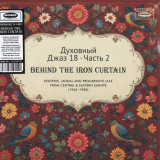
- A1: Leningrad Jazz Ensemble - Aria
- A2: Sh Jazz Quintet - Delilah
- A3: Josef Blaha Trio - Inter Mezzo Forte
- A4: Csaba Deseo Ensemble - Beyond The Csitári Mountains
- A5: Manfred Ludwig-Sextett - Skandinavia
- B1: Anatoly Vapirov - Mystery
- B2: Zbigniew Namyslowski - Piatawka
- B3: Andrzej Trzaskowski Quintet - Synopsis (Expression I)
- C1: Tomsits Quartet - Dhrupad
- C2: Nicolai Gromin Quartet - Corrida
- C3: Valery Kolesnikov, Vyacheslav Novikov, Vladimir Molotkov & Alexander Christidis - Rainbow
- D1: Tone Jansa - Goa
- D2: S+Hq - My Girl (And Other Things)
- D3: Pege Jazz Workshop - Hungarian Folk Song
One of the most politically charged terms of the 20th century, the Iron Curtain was a metaphor for political and cultural division. In a post-war telegram Winston Churchill referred to the fault line that ran through Europe between East and West as "an Iron Curtain is drawn down upon their front. We do not know what is going on behind".
In this two-part album, as far as jazz is concerned, we will showcase, describe and celebrate exactly what was 'going on behind'. We see that music is the power supreme, with the ability to transcend all barriers, be they physical, political or metaphorical.
Our liner notes illustrate the complex and contradictory history of Soviet jazz, and the tracks we've chosen cover the key period of the early 1960s to the 1980s. It was during these dark years of the Cold War that the Soviet Union and its satellite states produced a number of outstanding artists playing in a variety of styles. The impact of modernism, from hard bop and Latin to modal and cool jazz, had found its way through cracks in the curtain. The deeply-felt ancestral strains of traditional European folk music were combined with the exciting new and progressive sounds of the West, and a radical, intoxicating brew was created that no amount of guns, tanks or polonium tea could overcome.
We chronicle the triumph of jazz at a time of extreme geopolitical conflict. What went on behind the Iron Curtain in these countries was once mysterious and unknown to the West, but the perseverance of their artists provided sound and light amid the secretive, dark days of the communist-capitalist standoff. There was no end of life-affirming spiritual jazz behind the Iron Curtain.
"Whether it's by improvisation in the African-American jazz tradition, or by a village kobza player standing on top of a damn hill - he feels connected to the stars."
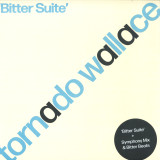
Tornado Wallace arrives at Test Pressing with the main mix being a beautiful long track that develops over ten minutes, starting with keyboard melodies before the tracks goes into the club zone. The ‘Symphony Mix’ takes the train on an ambient mix with the Bitter Beats bringing fin for the DJ squad.
Selekt Sounds proudly launches its vinyl-only imprint Selekt Wax with an evocative EP from Dragomir, one of Bucharest’s most prominent voices in minimal. Deeply introspective yet effortlessly hypnotic, this record is a meditation on space, tension, and the emotional resonance of stripped down groove. Each track pulses with a quiet intensity—crafted with care, driven by instinct, and tuned to the inner ear.
Etched on the sleeve, a poem sets the tone:
the space between the sounds
expansion and contraction
allow what comes up to flow
ebb like the ocean waves
keeping in time with the synchrony
manipulating sound waves
helps navigate the now
can you hear yourself between the sound?
in the space between.
Much like the words that frame it, this release invites listeners to tune in—not just to the music, but to the stillness it surrounds.
A1 Trust - A hypnotic minimal roller built around a looping vocal mantra, jazzy percussive details, and swirling psychedelic textures. Subtle yet immersive, it invites deep focus and surrender.
A2 Mirroring - Moody, meditative, and rich in detail, Mirroring unfolds through broken rhythms and shadowy textures—perfect for reflective moments on or off the dancefloor.
B1 Irresolute - With a steady 4x4 pulse and airy, emotional pads, Irresolute balances tension and release in a way that feels both uplifting and unresolved. A track for when the night blurs into morning.
Renato Cohen, the Brazilian techno and house producer and DJ best known for his iconic track *Pontapé*, has been a powerhouse in the electronic music scene since the late '90s. Born in São Paulo in 1974, Cohen's career has spanned nearly three decades, marked by releases on some of the industry's most respected labels, including Carl Cox's Intec, Technasia's Sino, Marc Romboy's Systematic, Pets Recordings, and Defected. Known not only for his studio work but also for his dynamic live P.A. shows, Cohen is a true legend. We had the fortune to connect with him after a Boiler Room set in Brazil where he played *Sting the Floor*, a true floor-filler that electrified the room. Since then, our friendship has flourished, leading to this powerful EP. The EP features « Roaring », an outstanding house track that channels Cohen's heart and soul into every arpeggio and swirling melody, bringing to mind the best of Todd Terje's hypnotic grooves. It's a piece that builds momentum with finesse, crafting a sound both grand and intimate, resonating with every listener. « Roaring » is Cohen's homage to house music—a track that encapsulates his passion and mastery. Accompanying « Roaring » is « Wet Desert », a high-caliber production that's as immersive as it is intense. The track carries a deep, evocative energy, combining Cohen's deft touch with an expansive, desert-inspired soundscape. Through our connection, we've brought in The Floorfillers for an acid remix of « Roaring », putting a fresh twist on Cohen's original with a pulsating acid bassline that's reminiscent of our own « Edit1 ». It's a version that takes « Roaring » to new, harder-hitting heights, perfect for late-night dance floors. To complete this standout release, Skylax's own Maltitz has crafted a stunning Italo-Balearic remix, drawing from the spirit of the late David Mancuso. With its warm, nostalgic vibes, Maltitz's remix adds a lush, sun-soaked dimension to « Roaring », perfect for balmy evenings and open-air gatherings. This EP marks a powerful comeback for Renato Cohen, celebrating his career while pushing forward with new, fresh sounds that honor his legacy.
"Bassland Prophecy" was a collection of Southern California musicians, including Alex Xenophon (Deep Squared), Stuart Breidenstein (formerly of Skylab 2000), Alissa Kueker (vocals), and Maxx Vaxx (Euterpre, Butterfly Garden).
The act nourished and grew the emerging LA scene and was a renegade force in live electronic improvisation. Rather than composing full tracks, Breidenstein stated over email that they built musical "ingredients" on the fly, syncing DOS and hardware sequencers mid-performance. Their unpredictable sets, from illegal raves to makeshift desert parties, resulted in electrifying, unforgettable sonic trips.
Recalling 90s LA, Breidenstein said: “Before the internet, finding a rave was an adventure. You’d get a flyer with a phone number, call it the night of the event, then drive—sometimes 100 miles or more from a map point to the actual party. The scene was raw and underground, built by music obsessives hunting for the freshest sounds.”
Two standout tracks from 1996—“Nine / Deeper” and “Blue and Purple Starship of Trust”—perfectly represent their unique genre-bending concoctions. Against all odds, the recordings survived and have been given new life, remastered and reissued on Bristol-based *Sex Tapes From Mars*. To produce the wizardry, their setup included a Juno 106, Yamaha FB-01, a Roland S330 sampler, and a Sequential Circuits Pro-One mono synth with external MIDI, and some guitar effects pedals.
“Nine / Deeper,” born from one of their many spontaneous studio sessions, became eerily intertwined with recurring appearances of the number 9 and black cats. So much was the frequency of apophenia episodes that paranoia began to take over the artists. Recorded in a makeshift living room studio, the 14-minute excursion traverses genres and tempos, beginning quick and hypnotic, and climaxing chuggy and drenched in adlibbed acid lines, culminating in a surreal and legendary live performance in Hollywood. The piece captures the raw spontaneity of their sets, crafted with vintage gear, cassette tape recordings, and, as always, a DIY ethos. Breidenstein states, “While improvised sessions often failed, when it succeeded, it was definitely a kind of infectious magic the listener would recognize.”
“The Blue and Purple Starship of Trust” is a deeply personal piece, named after when Breidenstein saw a heavenly blue morning glory on a walk around his neighborhood, and emerged from heartbreak and the following deep depression entrenching his life at the time. Recorded in a single take onto cassette tape, blending piano, guitar, and heart-rending vocals into an emotional, dreamlike journey. The track starts with a lush, cascading synth sound, bolstered up by rolling, reverbing downtempo drums. Using Sequential Circuits Pro-One throughout, the rippling synths and off-key piano licks act like pipetted droplets of water, all elements bleeding into each other in some kind of hallucinogenic swelling, reflecting Breidenstein’s fading relationship. The guitar part is a nod to Bill Withers’ “Ain’t No Sunshine,” and Breidenstein recalls just “bawling as the guitar line was recorded.”
Created in a time of artistic struggle, living in an old school bus, surviving on instant noodles while hauling their gear from venue to venue, and scraping by on gig money, these recordings act as rare artifacts of a movement that thrived on passion and perseverance, standing as a poignant testament to resilience. Though they released a handful of tracks, ranging from deep house to ambient to techno, their true legacy lay in their high-energy, genre-blurring live shows, which are powerfully encapsulated within these recordings and leave a lasting impact on underground electronic music today.
To survive the AI’s purge, humanity encoded its memories into sound and launched them to the farthest corners of the galaxy. Planet Boom is one such archive. A world made of dreams, memories, and fractured timelines, reassembled through sonic fragments.
Planet Boom is the arena. The Serpent has issued a challenge: four warriors, one chance to shift the balance of power through sound alone. Each codebreaker brings their weapon. Sweater with his nimble footwork and striking rhythm combos. Reyer with a crushing, tactical onslaught. Poten with cerebral unpredictability. Lukey with a flowing, adaptive style that reads the room like an open circuit. Only one will decode the final key. The rest will be echoes. Planet Boom is the battleground. Let the soundclash begin.
Little Simz hat ihr sechstes Album Lotus angekündigt, das am 9. Mai über Awal Recordings erscheinen wird. Gleichzeitig präsentiert sie die erste Single Flood, featuring Obongjayar und Moonchild Sanelly. Der Albumtitel Lotus steht für Simz als Symbol für Erneuerung und Wachstum – ein zentrales Thema, das sich durch die musikalische und inhaltliche Reise des Albums zieht und die komplexen Phasen des Lebens reflektiert.
Little Simz gilt als eine der spannendsten und visionärsten Künstlerinnen Großbritanniens – Musikerin, Geschichtenerzählerin und Kulturkuratorin zugleich. So wird sie das diesjährige Meltdown Festival in London kuratieren, wie zuvor schon Superstars wie David Bowie, Yoko Ono, The Queens oder David Byrne. Mit mehreren Brit Awards, MOBOs und einem Ivor Novello Award sowie einer beeindruckenden Diskografie aus Mixtapes, EPs und fünf von Kritikern gefeierten Alben erzählt ihre Musik ihre eigene Geschichte – und die einer ganzen Generation. Simz' Vorgängeralbum "No Thank You" Ende 2022 hat es hierzulande auf die #11 der Charts geschafft. Im Jahr 2023 setzte sie ihren Weg als gefeierte Schauspielerin fort und kehrte in der letzten Staffel des Netflix-Dramas Top Boy zurück. Little Simz' Auftritt auf der Pyramid Stage des Glastonbury Festivals im Jahr 2024 festigte ihren Ruf als unnachahmliche Live-Performerin.
Apnea welcomes VC118A to the label for the first time with Back To Life, his next album following the 2024 collaboration Flow Zone with CRC. Across nine tracks on two 12''s, he delivers a potent mix of deep electronics, acid bleeps, mechanically crafted rhythms, and atmospheric dub infusions--pulling the listener into a hypnotic, meditative space. Driven by futuristic machine grooves and evolving textures, Back To Life moves between fluid, weightless passages and tightly constructed sequences, balancing structure with deep immersion. Each track unfolds with intention, guiding through shifting sonic landscapes that blur the line between motion and stillness. Landing April 2025 on Apnea.
On his second EP for Altered Circuits, "Signal Drift", Jacopo Latini further distills his sound. Taking a more minimalist approach, he unreservedly treats the groove as the focal point. Still relying on his staple talent for weaving melodies and hooks, he delivers four trippy club tracks that show more can be done with less. Opener "Sharp" delivers immediate proof. After starting with a sequence of eerie sci-fi atmospherics and recondite vocoded vocals, the adding and subtracting happens so ingeniously, the track switches to club velocity 303 squelches and enhanced drum programming seamlessly. Similar techniques in building and layering are deployed on "Impulse", but this time, the shifts seem a tad more dramatic. The track revolves around an FM bass melody that's equally effective as it is simple, and its return to this stripped theme, surrounded by characteristic jittery hats, squashed claps, and a little more frills, keeps the listener on his toes. A bass patch, its sustain knob turned wide open, somewhat buried in the mix, drives "Bright Sound" together with a heavily modulated formant mid lead. Deadpan vocals add icing, and slightly euphoric, phased chords bring in a touch of subtle contrast. Closer "Rave Harvey" is a rare diversion as it starts in medias res with chords that reconfigure nineties trance and a distinct bassline immediately going for the limelight. It also shows Latini switching up his palette, trading restraint for vigor, with a slab of direct, unfiltered hi-energy as a result.
- A1: Korogi ‘73 - Fushigi Song
- A2: Yas-Kaz - Hei (Theme Of Shikioni)
- A3: Yoichiro Yoshikawa - Tassili N'ajjer
- A4: Norihiro Tsuru - Farsighted Person
- B1: Geinoh Yamashirogumi - Theme Of Kaneda
- B2: Yoichiro Yoshikawa - Fiesta Del Fuego
- B3: Columbia Orchestra - Heart Beats / Theme For Andrew Glesgow
- B4: Kan Ogasawara - Gishin Anki
LP vinyl only release + 4 page liner notes (comes with hype sticker)
The percussive new age soundtracks of '80s and early '90s Japanese TV, anime and manga built alternative worlds and pushed boundaries in the process.
When Japanese composer Yas-Kaz left Tokyo for Bali in the mid 1970s he had little idea of how influential his trip would become. In studying the storied art of gamelan, the jazz and avant-garde percussionist opened a door to a world of sound and rhythm left behind by the West. The music he and his contemporaries made would become known as new age. It also happened to soundtrack the golden era of anime.
Awash with money and with the prerogative to entertain the burgeoning middle classes, anime in the 1980s experienced a creative and commercial boom. Not constricted by generic expectations, production houses such as the now renowned Studio Ghibli were able to experiment liberally with both form and content. And with it came the space for composers to be similarly adventurous.
TV, Anime & Manga New Age Soundtracks 1984-1993 charts this moment across eight tracks spanning classics of the genre and previously unknown rarities. The collection brings together music that found kinship in electronic and acoustic instrumentation, often combining spiritual or environmental themes with percussive, varied and highly refined syncopations of non-Western musical traditions.
Among them is ‘Kaneda’ by Geinoh Yamashirogumi, the shape-shifting group of self-styled musicians, anthropologists and computer scientists that masterminded the soundtrack to game-changing dystopian anime Akira - and with whom the sound, tuning and breakneck speed of Balinese gamelan has become indelibly entwined.
Reflecting the desires of the era to reach beyond Japan’s borders, many of the soundtracks featured were commissioned for narratives set in distant lands or alternative worlds. There’s violinist and composer Norihiro Tsuru’s ‘Farsighted Person’, written for The Heroic Legend of Arslān, set in ancient Persia; Yas-Kaz’s own ‘Hei (Theme of Shikioni)’, for period sci-fi manga & anime series Peacock King - Spirit Warrior; and two tracks - Tassili N’Ajjer and Fiesta Del Fuego - from Yoichiro Yoshikawa’s soundtrack to NHK’s proto-Planet Earth series The Miracle Planet.
Such was the variety and quality of the music produced, if there is a guiding principle to the tracks collected here it is a sense of escapism and adventure that came with the confluence of modern electronic instruments and a fascination with percussive traditions.
Elsewhere, pioneering children’s TV composer Chumei Watanabe’s ‘Fushigi Song’ (performed by a vocal group Korogi ‘72) offers a trippy and infectious groove with sonic similarities to Don Cherry’s ‘Brown Rice’; little-known jazz-funk library group Columbia Orchestra showcase the best of Tokyo’s session musicians on ‘Hearts Beats - Theme for Andrew Glasgow’; before lawyer-turned-composer Kan Ogasawara closes out the compilation with a dramatic flourish on ‘Gishin Anki’.
Following on from Time Capsule’s acclaimed deep-dive into the world of manga & anime synth-pop in 2022, this vinyl only collection is set to broaden and diversify an understanding of how soundtracks shaped the sound of new age music in Japan for a generation.
Curators: Kay Suzuki, Rintaro Sekizuka (Vinyl Delivery Service)
Artwork: Tu-yang
Bringing together new friends from around the world to deliver the signature LowMoney sound…
Rustam is a Ukrainian DJ and producer with a preference for groovy basslines in dreamy spaces. ‘Happy Comby’ serves up a touch of acid on a rough-edged groove, while Jordan Lakofski’s ‘The Heat’ on the A2 is dripping in nostalgia, driven by an infectious 8-bit synth lead and a rolling bassline.
Glasidum set out to deliver the perfect warmup number, and we think he did it on the B1. Groovy, trippy and deep. And Dutch maestros MASI drop a perfect closer with some dreamy, thoughtful house music. Enjoy…
Dr Packer once again works his magic, this time breathing new life into Mikki’s 1985 boogie-funk masterpiece Dance Lover. With his deep knowledge of disco, funk, and soul, the Ausie remix maestro delivers a sublime update that effortlessly bridges the gap between the past and present.
Staying true to the essence of the original, Dr Packer’s rework retains the flawless synth lines and Mikki’s powerhouse vocals, elevating them with finesse. The groove is deeper, the beats are heavier, and the energy is dialed up, making this an essential addition to any DJ’s arsenal.
Rolling basslines, crisp percussion, and a refined yet powerful disco-funk vibe, Dr Packer has crafted a mix that feels both nostalgic and refreshingly new. Whether you’re a longtime fan of the original or discovering Dance Lover for the first time, this rework is a must-have.
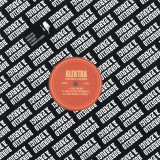
Daniel Monaco and John Noseda join forces for Alektra, a new project born out of a deep love for Hi-NRG and raw 808 sounds. Renowned for their dj sets, trips that delve into tropical obscurities, Chicago jack and Rimini romances, the pair have channelled a unique blend of untamed house and shimmering italo melodies into pure dancefloor euphoria. Their debut release, “Shake Your Body,” drops on Bordello A Parigi. Neon synthwork is punctured by clean punches of percussion, scaling melodies set firmly in the golden analogue era. Key stabs drive the track with Only Bee’s honeyed lyrics pushing the energy levels higher. In true 1980s anthem form, the flip is dedicated to the instrumental with the synthesizers and their hypnotic melodies taking centre stage: Alektra’s machines smouldering with fiery intensity. That same intensity closes, Only Bee’s mellifluous vocals given the limelight for the acapella close. Dancefloor definitions redefined. Welcome to Alektra.
P-Vine Japan does great work once more here by bringing back into print some hugely sought-after sounds from the blues and r&b world. The first release in their new series revives Larry Davis' 1969 Kent Records single, which was originally written by Sherwood Fleming. The A-side, 'For 5 Long Years' delivers a gritty mid-tempo funk-blues groove while the B-side, 'I've Been Hurt So Many Times' (a classic subject for a blues tune) channels Willie Cobbs' signature sound. These will be familiar to anyone who has danced at a Northern Soul event and cannot be slept on.