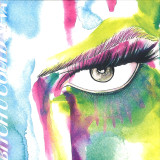
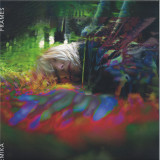
Brand new Emika EP ‘Frames’ just for RSD25.
* Comes with two remixes from the hugely adored Italian DJ Producer Adiel, and Ukrainian Electronic sound artist Hanna Svirska, who is newly signed to Emika Records.
* Brand new bass-heavy, moody pop songs, taking it back to her Bristolian roots: Emika delivers 4 tracks ‘Frames’ which documents her life in sound, lyrics and minor chords as she transitioned from Berlin after 17 years, to The Black Forest. Having unknowingly let the devil in the back-door, the EP tells the story of how self-taught spirituality and meditation brought no light, and a return to nature saved her. ‘Frames’ is about putting hard experiences into a frame, to respect and remember them. Emika put them here into some heavy songs.
* Emika included an instrumental and vocal acapella like in the good old days.
Buscar:17
London based House label Inermu brings the seventeenth release in their Vinyl Only series in the form of this 3 track EP from James Dexter, Dominic Aquila.
Tuskegee returns with serious intent and a fresh club weapon from a recognised statesman of house music, Junior Sanchez. Having written and collaborated with artists including Daft Punk, Armand Van Helden, Todd Terry, and Roger Sanchez, ‘Bitch U Could Neva’ pairs Sanchez with vocalist and songwriter Dave Giles II, riding high himself following link-ups with Honey Dijon, Mike Dunn, and a producer on Beyonce’s anthemic ‘Cozy’.
‘Bitch U Could Neva’ is a powerful, instantaneous trip back into the underground style and attitude shared between both artists, reflecting the vibe of Sanchez’s rise to success in the halcyon days of New York nineties clubbing, alongside Giles II’s own youth in the Chicago creative scene. Living up to the attitude of its title, ‘Bitch U Could Neva’ bumps with peak-time energy, jackhammer drums and chopped-up vocals never undermining its fundamental sensuality, an increasingly rare link between true, authentic dancefloors past and present.
The pair then look to London for a confident, stripped-back take from prestigious record collector and curator GIDEON. The founder of dance music institutions Adonis and Glastonbury’s infamous Block 9 goes deep to find the track’s potential as a minimal, vogue-adjacent house workout, scattered with telephone dial tones and an upfront disclosure; “Bitch, I’m serving.”
Back across the Atlantic, Physical Therapy and Michael Mangan team up under their Fatherhood project to give ‘Bitch U Could Neva’ a seriously bouncy redress, winding tight drums atop a rubbery bassline and paying their own Twilo and Tunnel-era tributes with cut-up vocals and an ecstatic onslaught of rave stabs.
In this post Sounds world, the boundaries of Post Punk have not only broadened but splintered. And over the course of (now) four releases, Index For Working Musik have seen to using the sprawling boundaries to great effect, flexing a polyglot of styles to convey the language of the moment. On Which Direction Goes The Beam, the murky, distant ambience that was 2023's Indexé has been fleshed out, incorporating everything from the Brian Aldiss laced, ground lightning shudder of Dome, to the chamber-like arrangements of This Kind Of Punishment. There's even a candle flickering in the window for Think Fellers Union Local 282 that warmed these ears. And if you're a fan of the great Dutch band, Trespassers W (who isn't?), the collective consciousness IFWM enunciates on here is a similar testament of a band growing more sure footed in the pursuit of not only knowing all the ways in, but carving a few of their own on the way out. And it's discerning releases like Which Direction Goes The Beam that keep us in the hunt. Long may they forge. - Tom Lax. RIYL: Brian Jonestown Massacre, Velvet Underground, TOY, John Cale, Wire, Dome
Twenty-four years on from its original release, Monolake's seminal Gravity receives its first vinyl pressing courtesy of Field Records. Occupying its own space at the intersection of dub techno, minimal and electronica, it's an ageless album of staggering vision and technological prowess which has matured into an all-time pillar of electronic music. This edition, remastered by the album's key architect Robert Henke, follows on from the recent reissue of Monolake's first album, Hongkong.
Arriving just after the turn of the millennium, Gravity marked a turning point for Monolake. With co-founder Gerhard Behles moving on to other ventures, Henke produced most of the album solo and journeyed deeper into spatial exploration and the dub-informed principles that underpinned their project from the start. Minimalism and negative space run through the whole record, from the keen slithers of percussion pinging through lattices of delay to the hypnotising pulse of subliminal basslines anchoring the tracks. Gravity is a record which hangs on techno's linearity as a form of meditation, but the crystalline clarity of the mix allows every micro-fluctuation in rhythm and sound to cut through.
Compared to a lot of overly sterile digital music released in the early 2000s, Gravity endures thanks to the warmth and texture Henke elicited from his processes — even when leaning into none-more-digital effects like bit reduction. He described the ninth-floor view over Berlin from his studio at night as a key influence on the sound of the record, but the space Gravity shapes out feels thrillingly implacable. Unbound by the standard conventions of time and space, Gravity stands proud as a true original and finally gets the ceremonious vinyl pressing it so richly deserves.
- A1: Saddest Smile (3 46)
- A2: A Very Good Life (3 59)
- A3: Albatross (3 59)
- A4: I'm A Reject (3 08)
- A5: Cadaverously Quaint (3 45)
- A6: Bring Your Own Wine (3 53)
- B1: Northern Lights (3 32)
- B2: No One Holds Hands (3 17)
- B3: Why Not Just Be Normal (2 39)
- B4: Somehow We'll Get Through This (3 57)
- B5: Avalanche (5 41)
At the start of the 1980’s X-Plode’s dad had a second-hand colour TV business in Bolton, Lancashire where he would buy, sell, repair and trade TVs. He would come back home with all kinds of things he had traded for a TV but the most memorable, to a 10 year old kid at that time, were the keyboards. He use to watch his dad play songs from the 1960’s on these keyboards and when his dad had gone out, Lee X-Plode would sneak on them and start messing about, experimenting with the drum programs and fiddling with the buttons, trying out ideas. He had to move fast though because these keyboards didn’t stay in the house for long as his dad would trade them again for something else; one time that was an old analogue echo chamber, which Lee also messed about with when his dad was out. That echo chamber was a revelation to Lee and opened up the possibilities of what was possible with sound. So by the time Lee was 16, he decided he wanted his own keyboard and started saving. When his 17th birthday came around he had saved up £200 and visited his local Argos where he bought himself a Yamaha PSS 680, an FM synthesizer with memory banks and a basic drum machine incorporated. ‘It was shit quality like, but I didn’t mind. I just wanted it for the programmable drum machine, the synth and the memory banks that came with it” Lee recalls. The year was 1987 and by this time in Lee’s life he was into reggae and hip hop, the latter he first embraced in 1983 by the way of breakdancing and listening to electro, so all he wanted to do when he got his gear was make reggae and electro sounding beats. Recalling his youth and the fun he had with the echo chamber, the next edition to his home set up was to acquire one of those, which he did via a mate of his. But by the time he got his minimal set up sorted in 1988, his musical tastes had changed. House music had landed here in UK and this was Lee’s new passion, so from that point on wards he started experimenting, trying to nail a decent house groove. ‘I wanted 808 sounds, but I didn’t know what one was!’ Lee explains.
Around late 1990 or early 1991, Lee started to improve upon his set up, purchasing an Atari STE, a Cheetah MS6 , a 6 voice polyphonic/multi-timbre analogue rack mounted synth that linked up to his Yamaha – “It wasn’t a great bit of kit, I kept getting electric shocks from it. Eventually it just blew up!” Lee had acquired a cracked copy of Cubase on floppy disk from his local computer game shop but struggled with it. “It was so complicated to understand and took me ages to get used to it. I was stoned a lot back then and I just couldn’t concentrate on anything for long” Lee laughs, continuing “I also picked up a 4 channel sampler/sequencer which plugged into the side of the Atari and that’s when I first started sampling, I think this would have been late 1991. I had the Simon Harris ‘Breaks, Beats and Scratches’ vinyl that he put out on Music for Life which were a godsend back then. I was also sampling a lot from cassette tapes, especially reggae. I would also record the Stu Allan show on Key 103FM, one of the main stations broadcasting out of Manchester. He would do a 3 hour show with hip hop and house, and then hardcore house came along. Eventually he dropped the hip hop altogether and it was just house and hardcore. I recorded the shows onto cassette most weeks and started to learn more about how house and hardcore was put together by listening to those shows.”
Synaptic Cliffs is committed to discovering unknown and unreleased music in the future, testing it in the past, and selling it in the present. This is the only way to ensure that art is timeless. The recordings on this cassette, however, were purchased in 2073 from a beautiful woman named pdqb at the Marché aux Puces in Paris for only 0.0000000000000000001 Bitcoin, but on the condition that all the material is distributed on one cassette, namely exactly as described hereinafter: The short tracks from the years 1984 to 1989 are on the A-side, and one of these recordings must be supplemented with vocals by Max Müller, the singer of the infamous Berlin band Mutter. On the B-side, there will be a binaural 16.7-tone music composition from the year 2047. Furthermore, all recordings must be mastered by Mike Grinser. Last but not least, only high-quality chrome tape may be used for production. In August 2027, the music magazine Melody Maker, which will be published again from 2026, will write: " ' Vor dem Punkt ist nach dem Punkt' is a surprisingly singular work with a creative force of near-unprecedented degree. It is one of the most beautiful and best-sounding post-punk albums of the last 40 years, and it is certainly the main reason why we are currently experiencing a huge comeback of post-punk, shoegaze, and goth rock."
Ortofon Concorde Scratch MKII System, spherical stylus for scratching, high output voltage, perfect for scratch of all music with deep thomann bass frequences, output power: 10 mV, frequency range: 20 - 18.000 Hz, Tracking force: 4g, without replacement stylus
A two-track offering, available in limited quantities on hand-stamped white-label 7” vinyl. The A-side delivers an open, emotional piece perfect for opening dance floors or setting the tone for mixes, while the B-side brings a fierce, high-energy vibe, ready to deliver under pressure. A versatile addition to any record bag, this release offers exceptional fidelity at 45 RPM, optimized for any sound system.
VINYL ONLY
Meet Kitchen Plug, the Parisian trio that somehow combines the rebellious energy of punk, the synth-driven chaos of electro, and the charisma of a boy band... except, they don’t really dance (yet).
With their new EP "Nice To Meet You," these self-proclaimed nerds have served up an unpredictable, colorful mix of electronic anthems and rock-infused vibes. It's like if your favorite computer-generated juice suddenly turned into an unstoppable emotional rollercoaster.
Expect cheeky melodies, emotional highs (and occasional lows), and enough playful swagger to make you question why you’re not already in their inner circle of "copains" (that’s French for friends, by the way). Kitchen Plug isn’t just making music; they’re creating a sound so lively and full of attitude that you’ll probably feel like you're getting a bear hug from your favorite nerdy best friend — just with more synths and less homework.
"Nice To Meet You" is the kind of EP that doesn't take itself too seriously, but it’ll still make you feel something. So, what are you waiting for? Plug in, and let's see if they can live up to their own hype. (Spoiler alert: They will.)
Since the first release 5 years ago, Jazz Room Records has released an eclectic and interesting selection of releases.
From the Jazzy commercialism of the Take Vibe version of The Stranglers "Golden Brown" (5,000 vinyl single sales) to the 1960's Headshop Sounds of West Coast Fluteman Eric Ghost.
Other notable releases on Jazz Room include the critically lauded album by Vibraphonist Khan Jamal "Infinity", a compilation of Japanese tough funk fusionists indigo jam unit put together by DJ Colin Curtis, Nuyorican Latin House from Tata Vasquez, Jazz Dance Madchester Rave from Cruisic and some South African Holy Grail grooves from Abacothozi! The latest release is the Underground Latin J-Jazz of Copa Salvo, first introduced to London by DJ & Music Legend Jean-Claude.
Next up is an in demand Jazz Funk Obscurity from Educator and Trumpet Player John Lamkin whose self released album "Hot" saw the light of day in 1984 then disappeared into the Rare Jazz ether.
Currently changing hands for €300 and upwards it's again about to see the light of day in 2025!
This is an album that is aptly named with all the elements we love: Latin, Funk, Soul, Jazz and all round Double Hipness. What a Hot item it is too. From the Funky as it gets opening bars of "Ticket" through the Rio bound flight "722", taking in a visit to Wonderland with some Soul Jazz Vocal stylings on "Flower Power" and the Funkiest 17 minute Journey to Trumpet Enlightenment in the Title track "Hot" which is, true to its name, Scorching by the finish line is reached.
Already getting Big Ups on UK Jazz Funk Scene Founder Colin Curtis's Cult Radio Show "Jazz Dance Fusion" it's gonna be getting plenty of plays worldwide at the "Hottest" radio stations and funkiest jazz dance nights near you soon!
Ross Allen: It's brilliant!! Perry Louis: Massive! Dr Bob Jones:I Love Big Time!Colin Curtis: Killer!
The album’s title deftly gestures to the sheer vastness of astronomical dimensions, while simultaneously capturing the musical breadth within, where the eight planets are imagined as the eight notes of an octave. The work draws inspiration not only from earlier compositions —most notably Gustav Holst’s The Planets—but also from the rich astronomical and cultural contexts surrounding these celestial bodies. Here, the focus transcends direct citation of melodic motifs, instead embracing an intriguing conceptual approach on a meta level, unfolding in a series of vividly contrasting soundscapes. These contrasts shape a sweeping sonic journey, one that fully embraces the album format with both arms, inviting the listener to venture into realms both strange and wondrous, feeling the immensity of the interstellar space that lies between them. Contrast, after all, is the brushstroke that enriches our world.
Embarking on an auditory voyage, "Astral Guide" establishes the sonic framework that propels us into the boundless expanses of the cosmos. Its ethereal tones evoke the vastness of space, crafting a mood ripe for exploration within the realms of sci-fi. The subsequent tracks unfold like constellations, weaving a rich tapestry of sound that seamlessly marries cinematic soundscapes with pulsating, club-oriented rhythms. This album invites listeners to traverse its immersive landscapes, whether nestled in the comfort of home or dancing under the starlit sky, each note a guide through the transcendent experience of a nocturnal journey.
"Solar Flares" draws its inspiration from the awe-inspiring expanse of solar phenomena, capturing the majestic power of the sun as it reaches into the cosmos. This track resonates with the idea that energy, while vital, can also be a force of destruction when unleashed with overwhelming intensity. The composition beautifully mirrors the sun’s duality, where brilliance and devastation coexist, inviting listeners to reflect on the delicate balance between creation and annihilation. Through its rich textures and dynamic shifts, "Solar Flares" serves as both a homage to the celestial and a poignant reminder of nature's formidable power.
"Mercury – The Winged Messenger" embodies a meticulously crafted soundscape where artistry meets astronomy. The tempo of 173.6 BPM, derived from precise astronomical data, propels the composition into a vibrant realm that resonates with cosmic energy. Synthwave sound design intertwines seamlessly with the fluid rhythms of Drum’n’Bass, imbuing the piece with an uplifting dynamism that evokes the ethereal grace of Mercury itself. In this sonic exploration, listeners are invited to ascend on wings of sound, navigating the celestial tapestry of the universe with each invigorating beat.
"Venus, The Bringer of Peace" strikes a decidedly cozy note, presenting a poignant contrast to the more tempestuous themes often found in cosmic narratives. This composition evokes a nostalgic vision of an optimistic era, one in which humanity transcended borders and embraced the infinite possibilities of space exploration, where no destination felt too distant. The dense, languid atmosphere envelops the listener, creating a tangible sense of serenity that unfolds gradually, allowing for a meditative journey through sound. Each note serves as an invitation to linger in this tranquil embrace, reflecting on the harmonious potential of our collective aspirations and the beauty of connection in a vast universe.
The central theme of „Gaia, The Bringer of Life“ —originally not part of the planetary cycle— is the profound enabler of life on Earth. The arrangement delicately mirrors the slow, tentative unfolding of this potential, marked by an initially sparse orchestration that gradually builds in momentum. This progression crescendos, embodying the explosive dynamism of the Cambrian burst of life, ultimately culminating in a euphoric fanfare—a triumphant, celebratory flourish echoing life’s victorious emergence.
"Blue Moon" unfolds as a contemplative reverie on the tranquil clarity of a night sky, now seldom glimpsed in its natural purity, unclouded by the relentless haze of urban light. The listener is drawn into the vast embrace of the star-strewn firmament, a journey that sways between euphoric awe at nature’s sublime beauty and a profound melancholy for its fragile and imperiled state. Musically, this duality finds expression in the delicate interplay of modal mixtures, while an ever-shifting triplet groove, poised at the intersection of Outrun and melodic house, lends a pulse that is both nostalgic and forward-looking—echoing the beauty and transience of a world on the brink.
Rather than replicating the original composition of „Mars, The Bringer of War“, this interpretation seeks to evoke its profound, foreboding atmosphere. Cyberpunk emerges here as an ideal genre, channeling the dark, relentless march synonymous with Mars, the ancient god of war. The piece reverberates with intensity, as distorted vocalizations rise, embodying the anguish and visceral torment that shadow war’s violent crescendo. This auditory descent into conflict captures the relentless pulse of warfare, where sound itself becomes an embodiment of suffering and fury.
Majestically, "Jupiter, the Bringer of Jollity" emerges on the celestial stage, sweeping away the somber tones with its radiant vigor. Drawing inspiration from the triumphant strains of the original, and borrowing a melodic motif in the refrain, the piece expresses joy and buoyancy through a shift to a major key and the lilting sway of a danceable 12/8 meter. Spirited and exuberant, it leaps boldly from major to minor and back again, playfully shifting time signatures to capture a mood of unbridled festivity and jollity.
Here, a more conciliatory concept is chosen than in the original inspiration. „Saturn“ aligns with the number six, being the sixth planet from the Sun and bearing the iconic hexagonal pattern at its northern pole. What, then, could be more fitting than to render this piece in a 6/8 time signature? The arrangement unfolds with a multifaceted richness, mirroring the countless stones and ice fragments that form the foundations of Saturn’s majestic rings.
„Uranus“ adopts the theme of a light-footed, dancing instrumentation, giving the impression of perpetual motion, never quite settling. This musical choice harmonizes with the planet’s own orbit, as it spins with breathtaking velocity, teetering and swaying, seemingly unable to attain rest or stability.
The chill and vastness of the cosmos find expression in „Neptune, The Mystic“. At its core, an electronic soundscape envelops a classical arrangement, its unreachability intensified by an ethereal, otherworldly choir. Hovering at the outermost boundaries of the solar system, where warmth is but a distant memory, the composition lingers in a slow, contemplative tempo, evoking a realm where space for speculation stretches wide and silence reigns supreme.
Though Pluto may have lost its planetary status, and its companion Charon never achieved one, this shift in classification subtly aligns with the cosmic scale invoked here—one that mirrors the musical tradition of an eight-note sequence. Fittingly, the album closes with „Kuiper Belt“, a composition emblematic of the turbulence and vitality of countless smaller
celestial bodies that, though diminutive, find their rightful place within the vast architecture of the solar system.
They say nature is the greatest composer, shaping the universe with a symphony of chaos and order, beauty and danger. It is this duality that fuels the artistic vision of Edictum—a producer who, armed with a doctorate in chemistry, delves as deeply into the mysteries of molecules as he does into the depths of sound. In the tension between the vastness of the cosmos and the microscopic processes that dictate life’s rhythm, Edictum creates sonic landscapes that dissolve the boundaries between science and art.
His music is a story of contrasts—a sonic tale where the raw forces of nature clash with the intricate structures of human culture. Opposites intertwine to form a harmonious whole: the primal rhythms of the earth meet the celestial melodies of the cosmos, the rigid laws of physics blend with the boundless freedom of art. Edictum explores these polarities with meticulous devotion, each composition an expedition into uncharted soundscapes—a quest to give voice to the unfathomable.
With over 20 years immersed in the realms of electronic music, Edictum has honed a keen sense for rhythm and movement. His driving beats compel both body and mind into a hypnotic flow. Yet beyond the pulse of dance lies a complex framework of conceptual thought. Today, his creative focus revolves around holistic album projects—self-contained worlds with overarching narratives that embrace contrast and complexity. Each track stands alone as a fragment of the whole, but together, they weave a cohesive tapestry, much like the chapters of a novel that guide the listener on an emotional and sonic journey.
Edictum’s distinctive musical signature has earned him international recognition. With over 150 releases, many on prestigious platforms like the iconic *NewRetroWave* label, and collaborations with artists such as Jan Johnston, Azumi Inoue, Powernerd, and Turbo Knight, he has solidified his place in the global electronic music scene. His latest work, *A Cosmic Scale*, marks his seventh vinyl album and is released under his own label, *Echoes of Expanse*. The label’s name is no coincidence—it captures the essence of his art: echoes of infinity, the vibrations of the universe distilled into a singular sonic experience that carries the listener ever further into the boundless expanse of sound and space.
The 7” SlingBag 60 is a small size bag that holds approximately 60 pieces of 7-inch records. It has a small pocket in the front and mesh pocket in the inside for small accessories. Next to this the bag features the special soft fleeced interior provides protection from bumps and knocks. It comes with a handgrip, detachable and adjustable shoulder strap. The 7” SlingBag 60 the one bag a DJ need to carry around 7-inch records. A perfect size bag for a minimalist DJ set!
Color Black
Weight 0,35 kg / 0.77 lbs
Outer Dimensions (W x H x D) cm: 21 x 21 x 16.5 | inch: 8.3 x 8.3 x 6.5
Inner Dimensions (W x H x D) cm: 20.5 x 19 x 15 | inch: 8.1 x 7.5 x 5.9
Material Water resistant Ballistic Nylon 1680D
Protection:
Soft fleeced interior provides protection from bumps and knocks
Extra's:
Inside mesh pocket for USB drives, SD cards and small accessories
Small front pocket for smaller gears
Adjustable shoulder strap
Convenient carry handles
Fits:
Holds up to 60 x 7” records,
USB drives
SD cards
Small accessories