Suche:1954
- A1: That's All Right
- A2: Mystery Train
- A3: Heartbreak Hotel
- A4: Blue Suede Shoes
- A5: Tutti Frutti
- A6: My Baby Left Me
- A7: Hound Dog
- B1: Don't Be Cruel
- B2: Love Me Tender
- B3: So Glad You're Mine
- B4: All Shook Up
- B5: Let Me Be Your Teddy Bear
- B6: Jailhouse Rock
- B7: Baby I Don't Care
- B8: Doncha' Think It's Me
- C1: King Creole
- C2: Trouble
- C3: Stuck On You
- C4: Fever
- C5: Such A Night
- C6: It's Now Or Never
- C7: Are You Lonesome Tonight?
- D1: Mess Of Blues
- D2: Tonight Is So Right For Love
- D7: Night Rider
- D8: Return To Sender
- D3: Surrender
- D4: (Marie's The Name) His Latest Fame (Marie's The Name)
- D5: Little Sister
- D6: Can't Help Falling In Love
Of all the nicknames given to Elvis, only one of them really seems to reflect his importance in the history of rock: they called him The King.
Together with Chuck Berry, Elvis represented the young generation that vibrated to the music with new rhythms that appeared in the Fifties: Rock’n’Roll. Presley’s personality, not to mention his voice, charm, and a whole series of chart hits, guaranteed Elvis a special place in the hearts of his fans; and not only in his own lifetime, because the same is true some fifty years later.
The thirty titles included in this album are a brilliant demonstration of Elvis’ talents, and the music alone is enough to explain the cult following of his fans, who will worship him forever.
- A1: Leonard Nimoy – Music To Watch Space Girls By
- A2: Martin Denny – The Enchanted Isle
- A3: Yma Sumac – Gopher
- A4: The Bongolian – B-Boy Toga Party
- A5: Los Bitchos – The Link Is About To Die
- A6: Herb Alpert & The Tijuana Brass – The Lonely Bull (El Solo Toro)
- A7: Michael Giacchino & Nouvelle Modernica Orchestra – Sidereal Day: 3 (Instrumental)
- B1: Mel Tormé – Sunshine Superman
- B2: Sergio Mendes & Brasil ’66 – Mais Que Nada
- B3: Lalo Schifrin – Lalo's Bossa Nova
- B4: Quincy Jones – Black Orpheus (Manha De Carnaval)
- B5: Les Baxter & 101 Strings Orchestra – Tropicando
- B6: Pizzicato Five - They All Laughed
- B7: Alain Goraguer – Les Hommes
- B8: Hugo Montenegro & His Orchestra – The Good, The Bad And The Ugly
- C1: Mort Garson & The Lords Of Percussion – Geisha Girl
- C2: Arthur Lyman – Quiet Village
- C3: Les Baxter – Voodoo Dreams / Voodoo
- C4: Cal Tjader – The Lady Is A Tramp **
- C5: Martin Denny – The Enchanted Sea
- C6: Ixtahuele – Mareld 2021
- C7: Keith Mansfield – Morning Broadway
- D1: Mel Tormé – Comin' Home Baby
- D2: Dave Pike – Sweet Tater Pie
- D7: Sheila – Bang Bang
- D3: Jack Trombey – Underlay No.3
- D4: Don Sebesky – Guru-Vin **
- D5: Keith Mansfield – Beat Me Till I'm Blue
- D6: Brian Bennett & Keith Mansfield – Mermaid **
black 2x12"[47,35 €]
BBE Music is thrilled to present J Jazz: Free and Modern Jazz From Japan 1954-1988, a
remarkable large-format book covering some of the deepest, rarest, and most innovative
jazz music released anywhere in the post-war era. Compiled by Tony Higgins and Mike
Peden, co-curators of BBE Music's acclaimed J Jazz Masterclass Series, the book also
features a foreword by Japanese jazz icon, Terumasa Hino.
This is the first time a book of this type has been published outside of Japan and the first
anywhere of this size and scale. It is a unique collection of over 500 albums of free and
modern jazz released in Japan during a period of radical transformation and constant
reinvention. An era that saw Japan return from the ravages of World War Two to become a
global economic power and emerge as both a technological leader and an international
cultural force.
Through a unique gallery of albums, J Jazz charts the development of jazz in Japan from the
first stirrings of the modern jazz scene in the mid to late 1950s and on through the hard bop
and modal jazz of the 1960s. It steers the reader into the radical directions of the 1970s when
free jazz, fusion, post-bop, and jazz-funk opened up a growing number of Japanese jazz
artists to a new global audience before consolidating in the mid to late 1980s with a musical
scene that laid the path for the contemporary jazz generation to follow.
Over 500 full-colour sleeves from many of the leading names in Japanese jazz sit alongside
rare and private pressings that tell a story of constant change and musical exploration. J
Jazz includes profiles of several leading record labels such as East Wind, Frasco, King
Records, and Nippon Columbia as well as critical independents such as Three Blind Mice,
ALM, and Aketa’s Disk.
J Jazz includes interviews with celebrated jazz photographer Tadayuki Naito, and pianist
Tohru Aizawa, bandleader on the totemic spiritual jazz album, Tachibana Vol 1, as well as
free-jazz record collector and jazz musician Mats Gustafsson.
The book also features a chapter on albums by non-Japanese artists that only received a
Japanese release, with collectible, rare, and obscure releases by figures such as Herbie
Hancock, Miles Davis, Mal Waldron, Steve Lacy, and Art Blakey. J Jazz includes Japanese
jazz charts from some of the world's leading jazz DJs including Gilles Peterson, Toshio
Matsuura, Paul Murphy, and Shuya and Yoshihiro Okino. Among the specialist content is a
feature on obi strips by record dealer and Japanese jazz expert, Yusuke Ogawa, plus a
special article on Japanese Blue Note albums.
Across its 300-plus pages, J Jazz includes a detailed introduction contextualising the music,
tracing the story of Japan's fascination with jazz back before the war. It also features
biographical information on many of the key artists involved in shaping the post-war
Japanese jazz scene including Sadao Watanabe, Toshiko Akiyoshi, Masabumi Kikuchi,
Masahiko Togashi, Terumasa Hino, Yosuke Yamashita, Fumio Itabashi, Masayuki
Takayanagi, Takeo Moriyama, Isao Suzuki, and many more
- A1: Leonard Nimoy – Music To Watch Space Girls By
- A2: Martin Denny – The Enchanted Isle
- A3: Yma Sumac – Gopher
- A4: The Bongolian – B-Boy Toga Party
- A5: Los Bitchos – The Link Is About To Die
- A6: Herb Alpert & The Tijuana Brass – The Lonely Bull (El Solo Toro)
- A7: Michael Giacchino & Nouvelle Modernica Orchestra – Sidereal Day: 3 (Instrumental)
- B1: Mel Tormé – Sunshine Superman
- B2: Sergio Mendes & Brasil ’66 – Mais Que Nada
- B3: Lalo Schifrin – Lalo's Bossa Nova
- B4: Quincy Jones – Black Orpheus (Manha De Carnaval)
- B5: Les Baxter & 101 Strings Orchestra – Tropicando
- B6: Pizzicato Five - They All Laughed
- B7: Alain Goraguer – Les Hommes
- B8: Hugo Montenegro & His Orchestra – The Good, The Bad And The Ugly
- C1: Mort Garson & The Lords Of Percussion – Geisha Girl
- C2: Arthur Lyman – Quiet Village
- C3: Les Baxter – Voodoo Dreams / Voodoo
- C4: Cal Tjader – The Lady Is A Tramp **
- C5: Martin Denny – The Enchanted Sea
- C6: Ixtahuele – Mareld 2021
- C7: Keith Mansfield – Morning Broadway
- D1: Mel Tormé – Comin' Home Baby
- D2: Dave Pike – Sweet Tater Pie
- D3: Jack Trombey – Underlay No.3
- D4: Don Sebesky – Guru-Vin **
- D5: Keith Mansfield – Beat Me Till I'm Blue
- D6: Brian Bennett & Keith Mansfield – Mermaid **
- D7: Sheila – Bang Bang
coloured 2x12"[35,08 €]
Art Blakey was an exceptional musician, but not only because he succeeded in recruiting the best players to join his Messengers. He also had the skill to blaze new trails through forms of jazz that continuously evolved. Beginning in the Forties with the big bands of Fletcher Henderson and Billy Eckstine, he went on to play with Charlie Parker, Thelonious Monk and Dizzy Gillespie… And then Blakey met up with Horace Silver in the mid-Fifties to found the Jazz Messengers. It was with this band that Blakey would open his arms to all the best young musicians of this generation: he nurtured the likes of Hank Mobley, Jackie McLean, Lee Morgan,
Wayne Shorter, Freddie Hubbard and many others. The first two sides of this album give an all too brief illustration of this aspect of the drummer, while sides three and four feature the inventiveness and rhythmical sense of a great percussionist who never renounced his African origins.
Lionel Hampton, Showman, Vibraphonist, Schlagzeuger und Pianist, durchlief ein ganzes Jazzjahrhundert. Er war Teil jeder Epoche (Swing, Dancehall, Bebop), schrieb wichtige Musikkapitel und arbeitete mit Louis Armstrong, Benny Goodman, Gene Krupa und Dizzy Gillespie zusammen. Die hier versammelten 11 Titel stammen aus seiner kreativsten und originellsten Zeit, als er sie 1953-54 mit Oscar Peterson, Ray Brown und Buddy Rich aufnahm. Diese hochspannende Allianz schuf eine Musik, die dieses Album zu einem unvermeidlichen Konzentrat der Jazzgeschichte macht.
- A1: The Jitterbug Waltz
- A2: Stompin' At The Savoy
- A3: Round Midnight
- A4: Django
- A5: Night In Tunisia
- B1: In A Mist
- B2: Blues And Sentimental
- B3: Don’tget Around Much Anymore
- B4: Wild Man Blues
- B5: Nuages
- B6: Rosetta
- C1: Autumn Leaves
- C2: A Paris
- C3: What Is This Thing Called Love
- C4: Love For Sale
- C5: Night And Day
- C6: I've Got You Under My Skin
- C7: Siboney
- D1: Sous Les Ponts De Paris
- D2: Paris In The Spring
- D3: April In Paris
- D4: Sous Le Ciel De Paris
- D5: Paris Canaille
- D6: Moulin Rouge
- D7: La Vie En Rose
Michel Legrand was one-of the most gifted musicians of his generation. Born in a musical family, he studied at the Conservatoire in Paris where his precocious talents revealed themselves. Everyone noticed his entry into the jazz world in 1954 with an album of French popular songs for which he wrote jazzy arrangements. That first album’s success gave Legrand the right to make an album of his own with Columbia (Philips making a deal with Columbia US). This new album, entitled 'Legrand Jazz', was a sequel featuring legrandissime arrangements of American jazz standards. You could already, and even with tunes heard a thousand times, hear that distinctive Legrand style and the phrases, themes and leitmotifs that later appeared in 'Umbrellas of Cherbourg' or 'The Young Girls of Rochefort'. These album’s four sides feature all the ingredients composing Michel Legrand style that still “fills the world with envy.”
- A1: Blue Rondo A La Turk
- A2: Strange Meadow Lark
- A3: Take Five
- B1: Three To Get Ready
- B2: Far More Blue
- B3: Unsquare Dance
- B4: Countdown
- B5: Eleven Four
- C1: Audrey
- C2: Brother, Can You Square A Dime
- C3: Ode To A Cowboy
- C4: Nomad
- D1: When It S Sleepy Time Down South
- D2: Calcuta Blues - Part 1
- D3: Maria
- D4: Back To Earth
- D5: Bossa Nova Usa
Take Five is probably one of the jazz titles that is best-known to a mass audience. It was composed by Paul Desmond and it appeared on the album Time Out by the Dave Brubeck Quartet.
Pianist Brubeck had studied veterinary medicine before turning to music, and in 1949 he formed an octet, and then in 1951 his famous quartet with Paul Desmond playing saxophone. He signed with Columbia in 1954 and built up an excellent reputation, but in 1959 he became famous around the globe thanks to two titles, Take Five and Blue Rondo à la Turk.
In France, the singer Claude Nougaro made the quartet’s work popular when he wrote the French lyrics for versions of Three to get ready (adapted as Le jazz et la Java) and Blue Rondo a la Turk (with the title A bout de souffle). Dave Brubeck was “quiet man”, far from the legends and excess often linked with jazz: he would spend six decades in a world where life, and jazz, was “cool.”
- A1: Famous Ward Singers - I'm Getting Richer
- A2: The Harmonizing Five - I Don't Need Nobody But The Lord
- A3: The Sensational Six - Let Freedom Ring
- A4: The Gospel Harmonettes Specials - How Much More
- A5: The Christones - Lord, It's Me
- A6: The Staple Singers - Low Is The Way
- B1: Swindell Brothers - Trouble Of Mine
- B2: The Roberta Martin Singers - I'm Glad I'm A Witness For My Lord
- B3: Jimmy Scott - Sometimes I Feel Like A Motherless Child
- B4: Shirley Caesar And The Caravans - He First Loved Me
- B5: The Blind Boys Of Alabama - On Some Day
- B6: The Hightower Brothers - He That Believed
- C1: North Philadelphia Juniors - There's Something Within Me
- C2: The Selah Singers - The Wicked Race
- C3: The Ward Singers - Let The Train Roll Easy
- C4: The Stars Of Faith - Mean Old World
- C5: Marion Williams - Get Your Business Right
- C6: The Gospel Cavaliers - Are You Listening
- D1: The Caravans - Mercy
- D2: Eddie Williams And The Crusaders - They Won't Believe In Me
- D3: The Davis Sisters - Earnestly Praying
- D4: The Gospel Chimes - My Jesus Love Just Bubbles Over
- D5: The Angelic Gospel Choir - It's The Holy Ghost
- D6: The Angelic Choir - Wade In The Water
The first of three volumes: stomping, rollicking gospel music, intermingling with raw soul, searing blues, hard-rocking doo-wop and jazz, and storming r&b.
Infused and incandescent with the hurting, surging indignation of the Civil Rights movement, here are twenty-four precious scorchers by giants like the Staple Singers and Jimmy Scott, alongside devastating sides by less celebrated names like the Harmonising Five of Burlington, North Carolina, and teen-group the North Philadelphia Juniors, culminating triumphantly with slamming, sanctified versions of Hit The Road Jack and Wade In The Water.
Gatefold sleeve, with full-size booklet; beautifully designed, with stunning, rare photographs and original Savoy artwork.
1954 is the fifth vinyl release on the Modern Cathedrals label by recent Detroit export Altstadt Echo. Staying true to the themes of the the 'year series' that began with the 1913 EP and was followed by the 1905 EP, the artist continues to explore somber, broken beat techno with an eroded, highly-textured percussive focus.
In the previous two EPs from this series, Altstadt Echo was joined by Varg, Abdulla Rashim, Stave, and Evigt Morker on remix duty. For the 1954 EP, he's commissioned UK artist Szare, who delivers a highly danceable revision that combines the ghostly vocals of the original with highly frenetic percussive injections.
The artwork of the EP is aligned with the label's greyscale documentation of Detroit, this time featuring the stunning architecture of the New Center district of the city. The photos were taken by the artist prior to his move to Berlin in Fall 2017.
'A Part Of Me' is the debut album by Ivan Arlaud alias 1954, a young musician from Lyon, France. It's an immersive journey between nostalgic and synthetic sounds, melancholia and hope, fears and confidence. He contrived to describe all the bright, warm, cold and dark moments of his restless imagination in rhythms without being intrusive. As the title says, it's his personal disclosure.
- A1: School Days-Chuck Berry 1957
- A2: Lucille-Little Richard 1957
- A3: That's Alright (Mama)-Arthur Crudup 1949
- A4: Blue Suede Shoes-Carl Perkins 1955
- A5: Bye Bye Johnny-Chuck Berry 1960
- A6: Jailhouse Rock-Elvis Presley 1957
- B1: Baby,Please Don't Go-Muddy Waters 1953
- B2: Johnny B.goode-Chuck Berry 1958
- B3: Tutti Frutti-Little Richard 1955
- B4: Shake Rattle And Roll-Big Joe Turner 1954
- B5: Carol-Chuck Berry 1958
- B6: Heartbreak Hotel-Elvis Presley 1956
Rock and Rock roots, deep down under You'd better believe it! The roots of Australian rockers AC/DC lie in the whirlwind of original fifties rock and roll.
In the early days the group would cut their teeth on the club circuit with a live set that would include a handful of band originals,a few Rolling Stones numbers plus many crowd pleasing Rock and Roll classics.
The Sydney club and bar scene was rough so you had to get the punters on your side.
With their original singer Dave Evans at the helm the group who play residencies at the likes of the New Hampton Court Hotel in Sydney entertaining with their own brand of loud guitar takes of 'Carol' and 'Bye Bye Johnny'by Chuck Berry,'Tutti Frutti'by Little Richard,as well as rocking standards like 'Shake,rattle and roll' and 'Blue Suede Shoes'.
Cranking out cover versions didn't die even when the group composed more original material,a version of 'School Days' by Chuck Berry would appear on their second album' TNT',whilst 'Baby Please Don't Go' would be pulled from their original 1975 debut album'High Voltage' and issued as a single in America.
These roots are the reason that AC/DC have become one of the best loved bands on the planet who never fail to deliver the goods everytime.......
- A1: Chairman Of The Board - Life And Death In G&A (Part 2)
- A2: Curtis Mayfield - (Don't Worry) If There Is A Hell Below, We're All Going To Go
- A3: The Temptations - Psychedelic Shack
- A4: The Chambers Brothers - Time Has Come Today - Single Version
- A5: Brutal Force - The Number For Groove
- B1: Isaac Hayes – Hyperbolicsyllabicsesquedalymistic **
- B2: Bobby Womack - California Dreamin
- B3: The Five Stairsteps - Dear Prudence
- B4: Ebony Rhythm Band - Drugs Ain't Cool
- B5: Doris - You Never Come Closer
- C1: Terry Callier -You Goin' Miss Your Candyman
- C2: Rodriguez - Sugar Man
- C3: Patti Drew - Hard To Handle
- C4: Marlena Shaw - Liberation Conversation
- C5: El Michels Affair - Murkit Gem
- C6: Janko Nilovic - Drug Song
- D1: Kylie Auldist - Nothin' Else To Beat Me **
- D2: Khruangbin - Maria También
- D3: Christian Madden & The Enemy Chorus - Twice As Thick
- D4: Gabriels - Love And Hate In A Different Time
- D5: Michael Kiwanuka - Black Man In A White World
- D6: Mrcy – Purple Canyon
‘Soul Psychédélique’, released on Two-Piers, takes you on a journey into the world of Psychedelic Soul & Funk, from its early beginnings in the 1960s and 1970s to the current crop of artists championing the more Psychedelic, Trippy end of the Soul sound today.
‘Soul Psychédélique’ brings together legends of the Soul Psych scene, such as Curtis Mayfield, The Chambers Brothers, Marlena Shaw, The Temptations, and the brilliant ‘Sugar Man’ by Rodriguez. Place alongside Soul Titans like Isaac Hayes, Bobby Womack, Chairman of the Board, Terry Callier all delivering stunning Psychedelic Nuggets for your Listening pleasure. Throw in some covers like ‘Dear Prudence’ by The Five Stairsteps, ‘Hard to Handle’ by Patti Drew and ‘California Dreamin’’ Bobby Womack and finish with some brilliant modern-day exponents of the scene like Khruangbin, Gabriels and Michael Kiwanuka. The result is a crazy ride through the world of Psychedelic Soul and Funk. If you ain’t dancing and smiling by the end - what the hell is wrong with you!
‘Soul Psychédélique (The Best of Lounge & Exotica 1954-2022)’ is the fourth instalment in the ‘Psychédélique’ Compilation series on Two-Piers, following the critically acclaimed ‘Pop Psychédélique (The Best of French Psychedelic Pop 1964-2019)’, ‘Garage Psychédélique (The Best of Garage Psych and Pzyk Rock 1965-2019)’ and ‘Lounge Psychédélique (The Best of Lounge & Exotica 1954-2022)’ and is available on 2LP Coloured Vinyl
- B6: I Need Love So Bad
- A6: I Need Love So Bad
- A1: Baby I'm Gonna Miss You
- A2: Half A Stranger
- A3: Shake, Holler And Run
- A4: Down Child
- A5: Gotta Boogie
- A7: No More Doggin
- A8: Boogie Chillen
- B1: Bad Boy
- B2: Rock House Boogie
- B3: Let's Talk It Over
- B4: Baby You Ain't No Good
- B5: Looking For A Woman
- B7: Moon Is Rising
- B8: Dimples
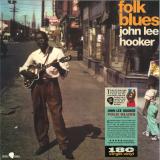
A remarkable release in John Lee Hooker's vast catalogue, Folk Blues, released by the Crown label in 1962, puts together tracks originally recorded for Modern Records between 1951 and 1954.
Among its many highlights are Bad Boy, one of the finest examples of Hooker's wordless humming and singing in unison with his guitar figures, and Rock House Boogie, which offers a sampling of Hooker's use of bottleneck style.
"Essential in any collection of postwar blues." - ***** Downbeat:
f A6. I Need Love So Bad Solo Version
[n] B6. I Need Love So Bad [Group Version]
[f] A6. I Need Love So Bad [Solo Version]
[n] B6. I Need Love So Bad [Group Version]
[f] A6 | I Need Love So Bad [Solo Version]
[n] B6 | I Need Love So Bad [Group Version]
Studio One was founded by Clement "Coxsone" Dodd in 1954, and the first recordings were cut in 1963 on Brentford Road in Kingston.
Amongst its earliest records were "Easy Snappin" byTheophilus Beckford, backed by Clue J & His Blues Blasters, and "This Man is Back" by trombonist Don Drummond. Dodd had previously issued music on a series of other labels, including World Disc, and had run Sir Coxsone the Downbeat, one of the largest and most reputable sound systems in the Kingston ghettos.
The label and studio were closed when Dodd relocated to New York City in the 1980s.
- A1: Sam Hankins - Song For My Father (Feat The Ho-Dads)
- A2: Jolly George - Idella (Feat His Combo)
- A3: The Sounds Of Time - Kool Tool
- A4: Leo Valentine Trio - Behind The Outhouse
- A5: The Rhythm Rogues - Give Me Some Lovin&Apos;
- B1: The Soul Merchants - Ain&Apos;T Gonna Go For That
- B2: Eddie Gough - I`m Coming Home Baby (Feat Traditions)
- B3: Sunday Social - Soul Break
- B4: Tom Hurley Combo - Feeling The Soul
- B5: Bobby Mann - Mercy Mercy Mercy
The Hammond organ was first manufactured in 1935. In 1954, the now famous Hammond B3 model was introduced with additional harmonic percussion feature. When the company went out of business in 1985, around two million of various models of the Hammond organ have been produced.
The Hammond B3 was originally marketed to churches as a lower-cost alternative to the wind-driven pipe organ. It quickly became popular with professional jazz musicians in organ trios. Jimmy Smith's use of the Hammond B3 inspired a generation of organ players, and its use became more widespread in the 1960s and 1970s in rhythm and blues, rock, reggae, and progressive rock.
This collection is centered on the exciting and dynamic sounds of the Hammond B3 organ!
Studio One was founded by Clement "Coxsone" Dodd in 1954, and the first recordings were cut in 1963 on Brentford Road in Kingston.
Amongst its earliest records were "Easy Snappin" byTheophilus Beckford, backed by Clue J & His Blues Blasters, and "This Man is Back" by trombonist Don Drummond. Dodd had previously issued music on a series of other labels, including World Disc, and had run Sir Coxsone the Downbeat, one of the largest and most reputable sound systems in the Kingston ghettos.
The label and studio were closed when Dodd relocated to New York City in the 1980s.
Gatefold 1 LP Paris, 1954. Henri-François Rey wrote the thema of the piece « la bande à bonnot » and asked Boris Vian to write the songs in order it to become a musical comedy. « la bande a bonnot » was the name of a french illegal anarchist group... As soon as the piece was played at Théâtre du Quartier Latin, french authorities made it being stopped. Musical parts have been lost . 1971, Jacques Canetti has been told the original handwritten lyrics of the Boris Vian songs have been found again. Jacques Canetti asked Louis Bessières to re create music parts. 1975, Jacques Canetti released this record with songs being performed by Judith Magre, Yves Robert, Lucienne Vernay , Pierre Jamet, Kim Ibarra, Maurice Barrier & Cécile Vassort. + 2 bonus tracks whose lyrics were suppsoed to be too for the original spectacle : « la java des chaussettes à clous » by Jacques Higelin & « l »anguille » by Magali Noël.
Igor Tamerlan is a stranger in his own land. Born in 1954 the Hague and spent most formative years in Paris, Igor suddenly had the urge to relocate to Bali in 1986. “I want to settle in Indonesia and marry a local girl,” he told his sister shortly before flying out.
His next journey would be as audacious as his time in the Fifth Republic. Born from a prominent Indonesian expatriate family in Paris with ties to Indonesia’s first prime minister Sutan Sjahrir, Igor earned a degree in architecture at Ecole nationale supe´rieure d’architecture de Paris-La Villette.
He could have been a brilliant architect or a political scientist (he was accepted to Sciences Po), but his passion for music distracted him from his academic works. He was after all named after Russian composer Igor Stravinsky.
During his brief stint at Sciences Po, Igor spent most of times hanging out at recording studios and rub shoulders with the likes of singer-songwriter Jean-Jacques Goldman and Michel Polnaref. He had a brief encounter with The Rolling Stones at the Cha^teau de Thoiry studio in the early 1970s.
But Igor’s musical education and his occidental eyes appeared to be ill-suited for Indonesia. His first record, titled Langkah Pertama (First Step) on the mainstream label Musica was met with a shrug and was a commercial dud. An experimental record blending the influence of Spanish motifs, Francophile production and a whiff of hip hop and ska was seen by critics as being too alien. His sarcasm-laden lyrics and his biting critique of excessive materialism among the upper tier of Indonesia’s nouveau riche in the album was met with confusion from the audience. He was just too far ahead of his time.
He left the label Musica – or may had been dropped – soon after Langkah Pertama and decided to go independent. He then relocated to Bali and set up a state-of-the-art recording studio in Sanur, across the street from Southeast Asia’s first boutique hotel where luminaries like Mick Jagger, David Bowie, Sting, Yoko Ono and Ringo Starr stayed for their holiday.
From the studio, Igor recording everything from the sounds waterfalls, geckos, minibuses to motorized rickshaw and mix them with hip hop, jazz, electronica, dub and Balinese gamelan. A visionary, Igor was the first musician to use MIDI, which started to be available globally in the early 1980s.
On paper, songs like “Bali Vanilli” should not work, a mish mash of disparate elements mentioned above, sung in three languages, Balinese, English and Bahasa Indonesia while tackling the subject of overtourism. The song was also the first to introduce rap to an unsuspecting audience. But for some strange reason “Bali Vanilli” became a sensation and overnight Igor became household name. And in 1987, long before overtourism was an issue, Igor broached the subject to a national audience in Indonesia on the possible destruction of nature and culture from tourism.
Ever an iconoclast, Igor decided to step out of the limelight following the success of “Bali Vanilli” and in early 1990s he relocated to Indonesia’s cultural capital, Yogyakarta. Here, he worked on some more experimental music while juggling as music video director. He passed away in 2018 at the age of 64.
The 10 songs in this compilation, Bali Vanilli: Experimental Pop from Paradise Island (1987-1991), are some of Igor’s best works, music that would have gone into obscurity had it not been for the diligent work of film director Alfred Pasifico Ginting, who managed to track down some of the master tapes while researching on a documentary on the musician.
These recordings have never before been released outside of Indonesia. Igor would have been proud with this reissue project.
- A1: Song Of Island
- A2: Morning Tide
- A3: Kemo Sabe
- A4: Groovy Samba
- A5: Song For Hope
- A6: Cumorah
- A7: Phoebus
- A8: ? Samba Ii
- B1: Cumulonimbus
- B2: Burning Cloud
- B3: Planets
- B4: Wolf’s Theme
- B5: Honey Sanba
- B6: Kirisame
- B7: Black Nile
- B8: Acoustic Chicken
Volume 4[43,66 €]
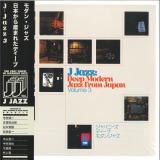
BBE Music presents J Jazz volume 3, the latest in its definitive compilation series exploring the finest modern jazz from Japan. Since the first volume in February 2018, the J Jazz compilation series has showcased some of the most creative, inspired and sought-after jazz recorded in Japan during a golden period spanning the 1960s to the 1980s. Illustrating the richness and versatility of the composers and musicians on this collection, the music spans a wide yet coherent range of styles: samba, funk fusion, modal, spiritual, post-bop and bossa all combine to present an aural portrait of a jazz scene that was constantly moving and shifting its multiple musical centres of gravity. Mastered at the Grammy-nominated Carvery studio in London, many of the tracks featured are reissued for the first time, including mega-rare private press cuts from the Yasuhiro Kohno Trio, Masaru Imada Trio, and Hideyasu Terakawa Quartet. There’s heavy post modal bop by J Jazz legends Kohsuke Mine and Koichi Matsukaze; samba heat from Tatsuya Nakamura, Hideo Shiraki and Seiichi Nakamura; and funky dance floor energy by Hiroshi Murakami, Ryojiro Furusawa Quartet and Shigeharu Mukai. Selected albums from which the tracks are drawn will be reissued in full as part of the acclaimed BBE Music J Jazz Masterclass Series. Released as a deluxe, heavyweight x3 vinyl set in a gatefold sleeve with obi strip and insert, the collection comes with extensive artist biographies and track information. J Jazz volume 3 is also available in a x2 CD set with three bonus tracks, and selected tracks are available across digital platforms for download and streaming. J Jazz is conceived, compiled and annotated by Tony Higgins and Mike Peden for BBE Music.
Swan Song
The vinyl LP at the heart of this éthiopiques 31 tracks 2 to 11 was one of the very last vinyl records ever released in Ethiopia. But above all it represents, we felt, the absolute masterpiece of the Ethiopian Groove – the Swan Song of Swinging Addis. The album leaves a clear idea for posterity of the level of sophistication and mastery that modern Ethiopian music had achieved, before being crushed under the Stalino-military heel of the Derg – as the bloody revolution that was unfolding came to be called.
Ethiopia1976.
The Revolution that broke out in February 1974 rolled on in a ruthless march. The whole of Ethiopian society was utterly stunned. The bouquets of flowers handed joyfully to the first tanks of the coup d'état were to wilt very rapidly. From September 1976 to February 1978, 18 months of Red Terror (the name given by the junta itself) spilled blood throughout the country. This fratricidal conflict took its heaviest toll among students and youth. The shift from feudalism to a cruel and primitive Stalinism left the country's citizens deeply traumatised, and snuffed out any pretence of activism, whatever the sector of society. This ice age was to last for seventeen long years.
ሙሉቀን፡መለሰ Mulukèn Mellèssè Muluqän Mälläsä
It was three tracks by Muluken that served as the opener for éthiopiques-1 more than 25 years ago. Seven more tracks appeared on éthiopiques-3 and 13, all accompanied by The Equators, which was soon to become the Dahlak Band.
The first track, Hédètch alu, also the very first piece that Muluken ever recorded, left audiences both unsettled and amazed. Reflecting the singer's extremely young age (he was just 17 at the time), this angelic voice mystified many, who thought they were in fact listening to a feminine voice. He was not yet 22 when he released his last vinyl record in 1976 with Kaifa Records (KF 39LP), one of the very last to be issued in Ethiopia, before the cassette tape became the dominant medium for music distribution – and before the new revolutionary regime put a stop to all independent musical life, via an unspeakable barrage of prohibitions and other persecutions.
Mulu qèn, literally, “A well filled day”. This tender maternal intention wasn't enough to ward off the cruelty of fate. His mother's premature death drove Muluken to leave his native Godjam, in northeast Ethiopia, to live with an uncle in Addis Ababa. Born Muluken Tamer, he took his uncle's last name – Mèllèssè.
The spelling Muluken appeared in his administrative records. Transcription of Amharic to the Latin alphabet, both in Ethiopia and for scholars, gives rise to controversies and quibbles that can never be neatly settled. French allows for a closer approximation of the original pronunciation, thanks to its battery of accent marks, confusing as they may be to anglophones.
Between rather accommodating administrative record-keepers and the various versions that pop up in interviews given by the artist, Muluken's year of birth oscillates between 1953 and 1955…
1954? One thing is certain: the artist's talent made itself known very early indeed, because he got his start in 1966-67, at the age of 13 or 14. Photos from the period attest to his extreme youth. It's a strange sort of initiation for a very young teenager to become a sensation in the heart of Addis's nightlife at the time, Woubé Bèrèha – the Wilds of Woubé. And what's more, in the club of the Queen of the Night, the Godjamé Assègèdètch Alamrèw herself, the very same that was portrayed by Sebhat Guèbrè-Egziabhér in his novel-memoir Les Nuits d’Addis Abeba2… The legendary female club owner who is remembered to this day by the capital's ageing boomers.
Muluken first tried his hand at the drums, before he grabbed the microphone. He emigrated briefly to the Zula Club, across the street from the old Addis Post Office, one of the ground-breaking bars of the burgeoning musical scene, before joining the Second Police Band in 1968, for around three years. He spent a few months with the short-lived Blue Nile Band founded by saxophonist Besrat Tammènè. As the musical scene grew increasingly successful, and pulled slowly but decisively away from its institutional ties, Muluken released his first 45rpm single in February 1972 (Amha Records AE 440). It was included in two LP Ethiopian Hit Parade compilation albums in September of the same year. All in all, Muluken released eight two-track 45s and the same number of original cassette tapes between February 1972 and 1984, the year that he departed for permanent exile in the USA. After converting to Pentecostalism in 1980, Muluken gradually abandoned all secular musical activity. In 1985, at the end of a concert in Philadelphia, he decided to quit concerts and recording for good. Mèlakè Gèbré, the historic bass player from the Walias band who was playing with him that night, recalls that everything appeared so irredeemably diabolical in Muluken's eyes, that it was to be the end of his contribution to Ethiopian Groove.
The end of the story, the beginning of a legend.
Dahlak Band, forgotten by History
Aside from his personal history and vocal talents, it must be remembered that Muluken Mèllèssè was one of the biggest names in the musical innovations that marked the end of the imperial period. These éthiopiques aim to convince those who are just discovering this hidden gem... As for Ethiopians themselves, they are to this day captivated by this singular and atypical figure in the Abyssinian pop landscape – even though he withdrew from public life some 40 years ago. Incorrigible devotees of poetic twists, of more or less hidden meanings, Ethiopians appreciate above all the care Muluken took in choosing his lyrics and the writers who penned them, such as Feqerte Haylou, Alemtsehay Wodajo and, here, Shewalul Mengistu (1944-1977). Love songs, written by women, a far cry from the conventional drivel that pleases sappy sentimentalists.
Muluken is equally acclaimed for his perfectionism when it came to music, the opposite of the overly casual approach that is all too common. He remained a faithful partner of musicians who came from a lineage that borrowed from several inventive and pioneering bands (Venus, Equators, Dahlak). Amongst them were certain artists who began their musical lives with Nersès Nalbandian at the Haile Sellassie Theatre and who come of age in around 1973 – at just the wrong time, you might say. Among them were the pillars Shimèlis Bèyènè (trumpet), Dawit Yifru (keyboards) and Tilayé Gèbrè (sax & flute). Most notably Tilayé Gèbrè, certainly one of the most important musicians, composers and arrangers of his generation, of the end of the imperial era, and of the early years of the Derg.
It was only in 1981 that a miraculous opportunity arose for Tilayé to escape the Stalinist paradise of the dictator Menguistou Haylè-Maryam. Once again it was Amha Eshèté (1946-2021) who provided a solution. The spirited and courageous producer, who had been in exile in Washington since 1975, succeeded, thanks to his incredible perseverence, in bringing the Walias Band to the USA. It was, in fact an extended Walias Band comprising ten musicians3, six of whom chose to slip away after a few concerts and the recording of an LP (The Best of Walias, WRS 100). Tilayé Gèbrè was one of these. He has been living in the USA ever since. There he joined the then-nascent Ethiopian diaspora, which lived largely unto itself, and was making only very modest headway in the American musical market. It seems unfair that Tilayé Gèbrè and the Dahlak Band were not able to benefit earlier from the public recognition that they do deserve.
A similar draining away of the top-rate talents would lead to the reorganization of the major groups of the “Derg Time”. The remaining artists spread themselves around between Ibex Band (renamed Roha Band), Ethio Star Band and a remodeled Walias Band. That spelled the end of the Dahlak Band.
With this record, produced by the essential Ali Abdella Kaifa a.k.a. Ali Tango, we can appreciate everything that the Derg not only destroyed, but also prevented from flourishing. This gem of Ethiopian-style afrobeat came out in 1976 (and, by way of a parenthesis, before the FESTAC 1977 in Lagos, which was attended by an impressive delegation of Ethiopian musicians — although Fela was already personna non grata in his own country). Despite everything that might distinguish this ethio-groove from Fela’s music – no colonial axe to grind, no question of political confrontation with the authorities, no claims to negritude or Africanism for the Ethiopian musicians, and less extrovertion! –, this LP fits beautifully into the saga of intense and electrified soul of the new “African” groove that Fela and Manu Dibango embodied so well from that point onwards.
In restoring this record to its place in the afrobeat epic, it can be seen that, if nothing else, the timeline bestows a legitimate pedigree and a historical primacy to works that had no international impact when they were originally released.
Warning! Masterpiece!
Aufgenommen 1954/55, markiert dieses Album den Höhepunkt dessen, was manche als die “definitivste
Bop-Gruppe der Ära” bezeichneten. Für ihr zweites von vier Alben, die Brown und Roach gemeinsam
aufgenommen haben, holten sie Harold Land (Tenorsaxophon) mit Richie Powell (Klavier) und George
Morrow (Bass) an Bord, um die Rhythmusgruppe um Roach zu verstärken.
- A1: Part 1
- B1: Part 2
Free Jazz: A Collective Improvisation is a studio album by American jazz saxophonist Ornette Coleman, released in September 1961.
The album features what Coleman called a "double quartet," i.e., two self-contained jazz quartets: each with a reed instrument, trumpet, bass, and drums.
The two quartets are heard in separate channels, with Coleman's working quartet at the time in the left channel, and the second quartet, including
the former Coleman rhythm section of Charlie Haden and Ed Blackwell, on the right.
The two quartets play simultaneously. Free Jazz was the first album-length improvisation at thirty-seven minutes, unheard of at the time.
The original LP package incorporated Jackson Pollock's 1954 painting The White Light. The cover is a gatefold with a cutout window in the lower right corner allowing a glimpse of the painting;
opening the cover revealed the full artwork, along with liner notes by critic Martin Williams.
Free Jazz served as the blueprint for later large-ensemble free jazz recordings such as Ascension by John Coltrane and Machine Gun by Peter Brötzmann.
Free Jazz is available as a limited edition of 1000 individually numbered copies on white vinyl.
- A1: C'est Trop Facile (Ou Grand Jacques)
- A2: Le Diable (Ou Ça Va)
- A3: Il Nous Faut Regarder
- A4: Quand On N'a Que L'amour
- A5: Amsterdam
- A6: Ne Me Quitte Pas
- A7: Au Suivant
- A8: Le Plat Pays
- B1: Les Biches
- B2: Les Bourgeois
- B3: Marieke
- B4: Ne Me Quitte Pas
- B5: Le Moribond
- B6: La Valse À Mille Temps
1954 und 1956 nahm der Rundfunk Jacques Brels erste Live-Auftritte in den Kabaretts Chez Geneviève und Chez Gilles auf.
Achtung, ein verstecktes Juwel! Im Juli 1965, auf dem Höhepunkt seiner Karriere, zeichnete Jacques Brel eine Jam-Session im Maison de la Radio auf, bei der er eine bewegende Version von "Amsterdam" zum Besten gab - begleitet nur von Gérard Jouannest am Klavier und Pierre Sim am Kontrabass.

Die zweite Seite enthält ein Live-Recital, das 1962 für die Sendung Discoparade im Alhambra aufgezeichnet wurde. Dort zeigt sich der Künstler - längst kein Geheimtipp mehr - im Zusammenspiel mit Klavier und Streichensemble.
VERVE ACOUSTIC SOUNDS SERIE: komplett analog von Ryan K. Smith bei Sterling Sound von den
Originalbändern gemastert, QPR-Pressung (180 g), stabiles Tip-On-Gatefold (Stoughton Printing), wattierte Innenhülle.
Wohl kaum ein anderer hat den Titel “King Of The Tenors” mehr verdient als Ben Webster. Zusammen mit Coleman Hawkins und Lester Young bildete er das Triumvirat der großen Swing-Tenoristen. Mit
seinem warmen, gefühlvollen Stil, der im krassen Gegensatz zu seinem oft aufbrausenden Temperament
stand, beeinflusste er zu seiner Zeit unzählige andere Tenorsaxofonisten. Websters erstes Soloalbum unter
der Regie von Produzent Norman Granz erschien 1954 ursprünglich unter dem Titel “The Consummate
Artistry of Ben Webster” bei Norgran, wurde dann aber 1957 auf Granz’ neuem Label Verve Records als
“King Of The Tenors” wiederveröffentlicht.
- A1: Skank On Dub
- A2: Way Out Rockers
- A3: Pablo's Express
- A4: Pablo's Happy Feeling
- A5: Soldier Man Dub
- A6: Well Frozen Dub
- A7: Sweet Cassava Dub
- B1: Talking Dub
- B2: Pablo's Connection
- B3: Skanking With Pablo
- B4: Pablo's Delight
- B5: Death Trap Dub
- B6: Rockers Downtown
- B7: New Train Dub
2024 Repress
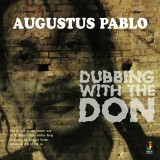
If anyone in the reggae circles could be described as having their own sound it would have to be Mr Augustus Pablo, born Horace Swaby 1954 St Andrew Jamaica. He took the humble melodica a wind blown mouth keyboard and made it shine.
His musical journey started one sunny day in 1969. Walking into Herman Chin- loy's Aquarius Records shop and on playing his melodica so impressed its owner that he was taken off to Randy's Studio 17, the very next day to cut his first record 'Iggy Iggy'. But it was his second tune under the guidance of Clive Chin again cut at Randy's, the seminal 'Java ' that put the young Augustus Pablo on the map. Clive Chin continued his work producing Pablo's debut album 'THIS IS AUGUSTUS PABLO' . An instrumental affair on which the neo-mystical ''Far East'' sound synonymous with Pablo's work emerged.
Having worked with most of the top producers of the time,Lee Perry,Keith Hudson, Bunny Lee, Augustus decided to set up his own label "Rockers", named after his brothers sound system. Where many of his tunes would first be heard.The label came to define a new and exciting chapter in reggae history.Even when versioning acknowledged classic Studio One rhythms there was a precious maturity and depth to Pablo's productions that kept him at the top throughout the late 1970s and into the 1980s. His 'King Tubby meets the Rockers Uptown' set which featured some of these rhythms reworked; Swing EasySkanking Easy, Frozen SoulFrozen Dub, stands as one of the true dub classic albums of any reggae education.
This set of dubs are taken from his classic 70's period.All rare dubs straight from the masters. You may have heard the tune, but not these versions. So sit back and enjoy the Original Rocker..... STILL SOUNDS SWEET.
RESPECT....JAH FLOYD.
Black Vinyl LP with insert (including the story behind the album and lyrics with English translation)
After their first LP, in 1987, Pedro gathered his usual band, Carlos Sousa on keyboard, Bulimundo on drums, Nuno Santos and Zézé on lead and rhythm guitars, Augusto Rasta on bass, Daló on sax and finally Dalú on percussions, for yet another project, one that carried both their names: Jacinta Sanches - Pedro Ramos. Eight days, no more, that’s all Pedro Ramos and Jacinta Sanches needed inside the Estúdios Musicorde. The process was natural, as with all their music, memories recollected and arranged by Pedro on café napkins, rehearsed and perfected at home with Jacinta. Together they imagined music where Cape Verdean saudade could dance together with Kingston’s skank, two island hearts beating inside European concrete.
His name is Pedro Correia Ramos Varela, born in Praia, Santiago, Cabo Verde on April 6th 1954; her name is Jacinta Lopes Veiga Varela, born in Cidade Velha, Santiago, Cabo Verde on January 22nd 1959. The two met in Praia, where a few exchanged words turned into long evening conversations; conversations into friendship; friendship into love; and love into six wonderful children. After the independence of Cabo Verde, they got married in 1978 and moved to Portugal, where Pedro started working as a welder for Lisnave and playing the guitar in a band in Ramada. Trading shipyard sparks by day for the after-hours pulse of Cova da Moura, his love for music proved harder than steel. And in 1982, after seeing Bob Marley and Peter Tosh in Rotterdam, he opened his own Dancing Bar just below their house, a pioneering space for the promotion of reggae music in Portugal.
Their Dancing Bar kept its doors open from 1982 to 1994, seeing the release of two albums and more singles. To this day, Pedro and Jacinta are still making music, one the inspiration of the other. They define themselves as simple people, living happy without prejudice, friends with the world.
Volume 2[22,48 €]
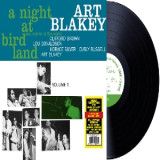
A Night at Birdland Volume 1 is a live album by drummer Art Blakey, recorded in 1954 at the famous Birdland club. This first volume highlights his quintet, featuring Clifford Brown on trumpet, Lou Donaldson on alto saxophone, Horace Silver on piano, and Curly Russell on bass. The album captures the raw energy of emerging hard bop, with intense tracks like “Split Kick” and “A Night in Tunisia.” Blakey asserts his explosive drumming style, foreshadowing the era of the Jazz Messengers.
Volume 1[22,48 €]
A Night at Birdland Volume 2 continues the energy of the first volume, capturing the essence of hard bop in its emergence. Recorded in 1954, it highlights the quintet led by Art Blakey, featuring Clifford Brown, Lou Donaldson, Horace Silver, and Curly Russell. This second volume delivers vibrant performances such as “Wee-Dot” and “Quicksilver”, where Brown and Silver’s virtuosity particularly shines. Blakey, through his rhythmic power, drives each track with unmatched intensity, foreshadowing the spirit of the Jazz Messengers.
Black Vinyl[26,68 €]
- Island Universes (Intro)
- 7: Th Thunders
- The Best Recluse
- Wondering Ascetic
- Put The Work In
- Rhythm Of Water
- Benevolent Beings
- Where Is Your Tribe (Interlude)
- A Kings Mind
- Umbilical Cord
- Shell Of The Soul
- Divine Reality
- The Meet & Greet
- Life Span
- Triple Beam
- The Path Of Stars
In his 1954 book The Doors of Perception, Aldous Huxley theorized that every person lives and experiences life on their own island universe. We can try to explain our experience to others using language, symbols, and art, but we'll never be sure that we're feeling something precisely the same as anyone else. This line of thinking has become a source of inspiration for many prolific artists. Now, Cincinnati-based producer Jason Grimez is inviting us to hear what it sounds like on an island of his own creation. The Island of Dr. Bionic is the third installment in Dr. Bionic's Terrestrial Radio series. Due out 5/2/2025 on Chiefdom Records, it's a collection of instrumental fusion for fans of hip-hop, jazz, funk, and beyond. Grimez is the producer, mixer, and mastermind behind Dr. Bionic. He's a Cincinnati-based creator with a deep understanding of 90s hip-hop and DJ culture, and he draws inspiration from music of all kinds. Grimez' ever-growing catalog is best described as organic groove. He calls on a rotating cast of veteran musicians to join him at his home studio to write, record, and try out new ideas. Long-time listeners will find some familiar names in the liner notes, for good reason. 'Life Span' (track 14) features a head-bobbing beat from Marvin Hawkins. Nick Brown is responsible for the dreamy Rhodes performance on 'Shell Of The Soul' (track 11). If Charlie Suit's unforgettable sax performance on 'The Path Of Stars' (track 16) is stuck in your head for more than 3 days, please consult Dr. Bionic. Once the recording sessions are complete, the real production work begins. "We get together and record a ton of stuff, and then I'll go back and cut it and mix it together," Grimez explained. "It all finds a home over time."
"Chicago became a center for electric blues from 1948 on, when Muddy Waters recorded his first success: ""I Can't Be Satisfied."" But Waters, born McKinley Morganfield was more than a pioneer in the Chicago electric blues scene. He was a great singer of American vernacular music - a vocal artist of astonishing power, range, depth, and subtlety. Presented here is his complete LP The Best of Muddy Waters, a greatest hits album released by Chess Records in April
1958. The twelve songs were originally issued as singles between 1948 and 1954 and most appeared in Billboard magazine's top 10 Rhythm & Blues Records charts.
THE COMPLETE ALBUM +
4
BONUS TRACKS - 180-GRAM VIRGIN VINYL - LIMITED EDITION"
- Ramona
- Al Compas De La Charanga
- The Green Leaves Of Summer
- Persian Shah
- Marta Y Chekis
- Ay, Ay, Ay
- Habana
- Cha Cha # 1
- Never On Sunday
- Esta Es La Charanga
- Salsa
- Rojo Y Oro
- Alla Por La Madrugada
- La Dolce Vita
- Tu Bien Sabes Que Te Quiero
- Cha Cha # 3
First worldwide reissue of this iconic album by Latin jazz master pianist, composer and bandleader Bebo Valdes
The complete LP + 4 bonus tracks - pressed on 180g vinyl, a limited edition of just 500 copies.
Pianist, composer, arranger, and bandleader, Bebo Valdes was one of the most nfluential figures in the history of Cuban music. In 1954, he began recording a series of albums for the Decca record label, which included: Your Musical Holiday in Havana, Music for the Girlfriend and Cha Chas Y Charangas , the latter presented here in its entirety.
[a] Ramona [Cha Cha Cha]
[b] Al Compas De La Charanga [Charanga]
[c] The Green Leaves Of Summer [Cha Cha Cha]
[d] Persian Shah [Cha Cha Cha]
[e] Marta Y Chekis [Charanga]
[f] Ay, Ay, Ay [Cha Cha Cha]
[i] Never On Sunday [Cha Cha Cha]
[j] Esta Es La Charanga [Charanga]
[k] Salsa [Danzon]
[l] Rojo Y Oro [Cha Cha Cha]
[m] Alla Por La Madrugada [Charanga]
[n] La Dolce Vita [Rock Cha Cha]
- A1: Walkin
- A2: Blue N' Boogie
- B1: Solar
- B2: You Don't Know What Love Is
- B3: Love Me Or Leave Me
Released in 1957 on Prestige Records, Walkin’ features a collection of songs that were originally released in 1954. With Davis on trumpet and as band leader, the recordings also feature Horace Silver, Lucky Thompson, J.J. Johnson, Percy Heath and Kenny Clarke. This new edition of the album is released as part of the Original Jazz Classics Series on 180-gram vinyl pressed at RTI with all-analogue mastering from the original tapes at Cohearent Audio and a Stoughton Tip-On Jacket.
- Main Title
- Eiko-Maru Sinking
- Bingo-Maru Sinking
- Uneasiness On Odo Island
- Ritual Music Of Odo Island
- Storm On Odo Island
- Frigate March
- Odo Theme Island
- Godzilla Appears On Odo Island
- Horror In The Water Tank
- Shinagawa Pandemonium
- Attack Godzilla
- Godzilla Comes Ashore
- Fury Of Godzilla
- Deadly Broadcast
- Godzilla To Tokyo Bay
- Repel Godzilla
- Devastated Tokyo
- Oxygen Destroyer
- Prayer For Peace
- Frigate March Ii
- Godzilla Under The Sea
- Ending
Waxwork Records is thrilled to present GODZILLA 70th Anniversary Original Motion Picture Soundtrack by composer Akira Ifukube. Released in 1954 by director Ishirô Honda, Godzilla holds the record for being the longest- running franchise in film history. Waxwork Records worked closely with Toho to create this deluxe 70th Anniversary release, featuring a re-mastered score and all-new art.
When ships begin to go missing near Odo Island off the coast of Japan, the locals look to the government for help. Paleontologist Kyohei Yamane (Takashi Shimura) is sent to investigate the situation. There, he discovers the horrors of Godzilla, who soon begins attacking the Japanese mainland. As the military’s efforts to destroy the monster continuously fail, scientist Daisuke Serizawa (Akihiko Hirata) is called upon to use his “Oxygen Destroyer” to kill the beast. Finding Godzilla in Tokyo Bay, Serzawa’s machine is used and finally, the beast is felled.
Since its release, Godzilla has continued to terrorize audiences around the world. The film has influenced countless filmmakers, with both Akira Kurosawa and Steven Speilberg citing it as one of their favorite films. The genius use of practical special effects and miniatures changed how the Japanese film industry made movies for decades. Godzilla has spawned over thirty sequel films and countless video games, comic books, toys, TV shows, and more becoming a pop culture phenomenon in the process.
The film’s score by Akira Ifukube has become an instantly recognizable piece of film music. Given only the script and a week in which to compose, Ifukube crafted a score that feels as enormous as the kaiju himself. Godzilla’s theme has become a staple of nearly all subsequent Godzilla films and was considered by Ifukube to be the greatest piece of music he had written. Using low-pitched brass and string instruments, Ifukube gives the score a massiveness and weight that complement the terror and destruction brought about by the rampaging monster. Ifukube also used a deeply resonant stringed instrument to create Godzilla’s iconic roar, a trick used to create the roar throughout the franchise.
Waxwork Records is beyond excited to present this vinyl release of Godzilla for its 70th Anniversary. Re-mastered, pressed to colored vinyl, housed in a deluxe gatefold jacket with matte satin coating, an art print, and featuring all-new artwork throughout by Robert Sammelin.