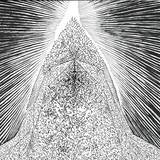
Nach Releases auf Kompakt, Turbo, Rumors und Founders Of Filth und nach Kollaborationen mit Guy Gerber, Tiga, Felix Da Housecat und Jamie Principal, veröffentlicht der kanadische DJ/Produzent Clarian sein Debütalbum nun auf dem australischen Vorzeigelabel Balance. Die 10 Tracks auf "Television Days" weisen einen starken 1980er Synth-Pop-Einfluss auf, den Clarian zuvor schon als Mitglied des Duos Footprintz auf dem von Ewan Pearson co-produzierten Album "Escape Yourself" (Visionquest) vollends auslebte.
quête:1980
S>>D aka Sean Dorris from Belfast delivers his debut album 'Co Intel Pro' on CPU. Refined sampling alongside hip hop influenced breaks sees S>>D operating in a similar dimension to VHS Head. Reminiscent of 1980s sci-fi soundtracks interwoven with IDM-tinged electro, haunting atmospheres prevail throughout with hints of a genre that has yet to emerge. Presented over 2x12" vinyl at 45rpm for superior sound quality.
Fans of Pye Corner Audio, Gescom or indeed anything on Skam will certainly dig this.
The band project Drums Off Chaos was one of the central and on-going projects of the recently deceased drummer Jaki Liebezeit (who is normally associated first and foremost with the Cologne-based band CAN). In the early 1980s he had initiated an - at first - loose collective of drummers, who created a rhythmic concept on the basis of simple, strictly binding codes that enabled expansive improvisations.
Over the years the ensemble became smaller and refined its collaboration marked by repetitive patterns and their variation. You have to play monotonous,' a membr of the audience had already told Liebezeit in the 1960s. He took this to heart and there was hardly any other formation where he could bring this concept to life as regularly and with as much inspiration as in Drums Off Chaos.
During a development spanning more than three decades, this extra-ordinary band, which never saw itself as such, made numerous recordings but rarely any releases. However, in the last few months of his life Jaki Liebezeit, with colleagues Reiner Linke, Maf Retter and Manos Tsangaris, earmarked some tracks for imminent release on vinyl and CD - on different compilations. Liebezeit's death is all the more reason to go ahead with this plan.
(Disclaimer: release notes refer to the combined CD double-album release "Hot Flash: Best of The Voltags" on which all tracks appear together. "Electric Nightmare" and "Danger High Voltag" are released separately on vinyl format)
It does not happen that often any more that unreleased music from 40 years ago surfaces. Even more unlikely it is that the songs put on tape are such treasures. The Voltags were right at the forefront of the local Washington DC New Wave/Punk scene of the late 1970s. Influenced by Kraftwerk, Gary Numan, The Clash, and The B-52's, they have released only one 45rpm single during their existence. But during the time span of not even 18 months, they had recorded enough material for an entire album - but the songs remained in the can.
This is the story of The Voltags, a short-lived band which could have become famous and mentioned in the same breath as the aforementioned music legends of that era - if their songs had been released back in the day. Dive in and enjoy the sound of The Voltags, it is truly special. We here at Perfect Toy are thrilled to be label to finally release their work and we sincerely hope that they are finally getting the appreciation they so richly deserve.
Detailed information:
Dave Bennett and Hangnail Phillips grew up in Brookside Park, Newark, Delaware, USA, a small suburban college town nestled midway between Philadelphia and Baltimore. Their first band project evolved into Pump Productions (Pump) under which they released their only 45rpm single in 1970 (one of the two songs, "Pappy's Rug", can be heard on "Down & Wired 3", Perfect Toy Rec.). Soon after the recording of the single the two graduated from High School and disbanded Pump. Both moved on to form two new Newark bands. Dave was a founding member of "Snake Grinder & The Shredded Fieldmice" and Hangnail co-founded "Rudy Baker & The Vegetables".
In early 1979, two friends of Dave's, Nick Norris and Mike Fisher, became partners in a music production company, White Clay Productions. One of White Clay's first artists was Dave Bennett who had just written two excellent songs: "Electric Jungle" and "Son Of Sam". White Clay set up a recording session and Dave assembled a group of friends to record the songs. Before the recordings were even mixed, Dave asked Hangnail if he would join in a band to support the single and other songs he had written. When James Keesey (drums) and Rick Reid (bass) were added the line-up was complete. For a while they didn't have a name and then one day Nick Norris was looking at a photo of Dave standing next to a "Danger High Voltage" sign. Dave's head was in front of the E in Voltage and Nick laughed "Danger High Voltag" and so it was soon suggested that the band should be called "The Voltags" (pronounced Vol'-togs). After months of preparing a repertoire they were ready to play out. Their first gig was (October 20, 1979) at a gay disco in nearby Wilmington called The Backstage. On December 30, 1979, White Clay decided to put on a big show at the State Theater to celebrate the end of the Seventies ("The End Of The Decade Bash").
For the next year, with the help of White Clay, they recorded 19 songs, both studio and live recordings with White Clay's mobile unit. If not for these "off the board" recordings, many of their songs would have never been recorded. There was always talk of a second Voltags single but the strains of working so closely together were taking their toll on them and Dave decided to leave the group in December of 1980. The Voltags couldn't be The Voltags without Dave, and by the end of 1981, Hangnail, James and Rick, too, were ready to disband.
- all songs previously unreleased
- mastered from the original reel-to-reel tapes
- limited vinyl release
In 1980 Ilitch mastermind Thierry Müller released his second LP, 10 Suicides, on the French imprint S.C.O.P.A. Unlike his debut Periodikmindtrouble (also available from Superior Viaduct), which featured intricately layered instrumentals, 10 Suicides explores a more art-damaged pop sensibility. While distorted guitars and atmospheric synth workouts remain a part of Müller's signature sound, several songs credit the mysterious Ruth Ellyeri, who was not an actual person, but rather Müller's female alter-ego. Opening track "Elle Voulait Que Je Sois Drôle" shows Ilitch's new direction with overloaded vocoders, driving Moog basslines and soft, Eno-like melodic flourishes. The androgynous vocals on "Waiting For Mabelle (Je Ne Viendrais Pas)" resemble an upbeat Gregorian chant bent through a 20th century lens. 10 Suicides is a staggeringly personal album that still sounds years ahead of its time.This first-time vinyl reissue comes with 16-page booklet and is recommended for fans of Ghédalia Tazartès, Chris & Cosey and Monoton.
IMA (Intense Molecular Activity) is the duo of Don Hunerberg (synthesizers) and Andy Blinx (drums and percussion). Based in New York City and active between 1979 and 1982. Don, a studio Sound / music engineer and musician, Andy an electronic clothing designer, drummer and sound reinforcement engineer at downtown clubs like Max's Kansas City, Mudd Club and CBGB. In between doing sessions at Radio City Music Hall Studios for groups such as Ramones, Richard Hell, Sonic Youth, Liquid Liquid, John Zorn, Glenn Branca and many others, IMA took advantage of off hours to create their own music. As far as influences go, Don's background was in electronic music and Andy's in prog rock. To produce the songs, Don used his own method of creating patterns from 2-track tape loops and then edited them together on to a 24-track recorder adding more tracks of overdubs, In a very similar way that sequencers are used today. By 1980 the duo honed their own unique sound and version of Post Punk and No-Wave with the tools of the trade of the early 80s. Situated above the proscenium of the Radio City Music Hall stage, the studio was outfitted with a variety of orchestral instruments (timpani, bells, xylophone, etc). They self-released a 4-song EP titled 'IMA' on an 8' flexi-disc which was distributed by Ed Bahlman of 99 Records. The music bridges the wild psychedelic-rock of the 60s, the synth-punk of the late-70s and the elaborate constructions of progressive-rock. There are nods to the freak-outs of Chrome and the super neurosis of Suicide, but IMA takes a more clinical approach which also takes notice of Hawkwind and Pink Floyd's interstellar overdrive. We've added 4 bonus tracks recorded during the same studio sessions and included them here for the first time on vinyl. DJ Hell lifted elements of IMA's song "Blurb" virtually intact and uncredited for his electroclash club hit "Keep On Waiting" 20 years later. All songs have been remastered by George Horn at Fantasy Studios in Berkeley. The record is housed in an exact replica of the original jacket featuring a spray painted IMA tag a top a red dashed 'Do Not Enter' sign. Each copy includes a double-sided postcard with notes. This Album Is dedicated to the memory of Andy (Blinx) George.
This special collector's edition electronically reproduced stereo 7' single (only 200 copies), comes in two fantastic coloured vinyl options (100 x red vinyl and 100 x purple vinyl). A refreshingly new take on mono to stereo conversion. Elvis fans growing up in the 1960's and 1970's unwittingly listened to his 1950's catalogue in electronically reprocessed stereo, love it or loathe, it was pretty much all there was back then unless you could afford to track down expensive mono copies. To better understand where the electronically reprocessed stereo versions originate from, we need to go back to 1961, at which point RCA had begun the process of taking Elvis' 1950's mono masters and converting them into a stereo sounding effect. By 1960 when Elvis returned from the army, he was recording in true stereo and as far as RCA were concerned, mono was a thing of the past. You just need to listen to the sound quality of the 1960 'Living Stereo' version of the 'Elvis Is Back' album, to appreciate just how much the recording industry had moved on in just two years. Such was the demand for stereo records in the early 1960's most major labels had created their own process for converting mono into stereo or 'fake' stereo as it became known, with some labels producing better results than others. Opinions on Elvis' 1960's electronically reprocessed stereo versions are mixed, with some recordings making the transition from mono to stereo effect better than others. Some DJ's actually preferred playing the electronically reprocessed stereo versions, believing they gave a wider fuller sound on the dancefloor. By late 1970's, RCA had once again begun to re-issue original mono masters, giving many fans their first opportunity to hear how these tracks were originally issued. By the time compact discs had arrived on the scene in the 1980's, electronically reprocessed stereo was well and truly dead and buried. Very few electronically reprocessed stereo recordings ever made it onto a digital format and the few that did are now highly collectible. Recorded at RCA Studio 1, New York on the 30th of January 1956, My Baby Left Me is a driving powerhouse rockabilly masterpiece with a real Sun Records vibe to it (produced by Steve Scholes with Elvis on vocals and acoustic guitar, Scotty Moore on electric guitar, Bill Black on bass and D.J. Fontana on drums). Our flip side Blue Moon Of Kentucky is another rockabilly classic which first appeared as the opposite side to That's All Right (Sun 209) in 1955 (Elvis' first single). Blue Moon Of Kentucky was recorded on the 7th of July 1954 at Sun Records (produced by Sam Phillips with Elvis on vocals and acoustic guitar, Scotty Moore on electric guitar and Bill Black on bass). Both tracks have been painstakingly re-engineered to create a stereo effect sound. The result is a bigger, sharper sound that jumps straight outta the grooves at ya! One reviewer described the process as - it's as if a veil has been lifted off the tracks'. Both tracks are taken from the forthcoming album titled 'Elvis Presley - The 50's In Stereo' (mono to stereo re-visited). For best results play this killer double-sider very loud!!!
MW present two classic Minimal Wave tracks which have been on heavy rotation for years now, Computer Bank' and Like I Am, Comme Je Suis' remixed by The Floor (Veronica Vasicka & Karl O'Connor).
Five Times Of Dust was formed in Bristol, U.K. in 1981 by Mark Phillips and Rob Lawrence. Mark had answered an advert that Rob had placed in a local record shop and later that year they went on to record and release their first tape, The Dadacomputer. A standout track from that tape, Computer Bank' is a seminal, proto-techno banger'. The Floor remixed it a while ago to DJ it out and since then have been receiving many requests about where it could be purchased.
The flip side features Unovidual & Tara Cross' Like I Am Comme Je Suis'. It appeared on our first compilation entitled V/A The Lost Tapes LP, in 2006. Unovidual was a Belgian producer involved with the Micrart Group (Autumn, Linear Movement, Twilight Ritual) and Tara Cross, a long lost girl from Brooklyn' who used to play in small NYC downlown clubs alongside Madonna during the early 1980s when she was still an unknown. Unovidual and Tara collaborated on several tracks through the mail during this time as well as in the studio. Like I Am Comme Je Suis' was recorded in a studio in Ghent, Belgium in 1985.
We find both of these tracks prime examples of innovative and pioneering synth wave tracks that work on and off the dance floor. And through these mixes, The Floor aim to stay true to the artists' original intentions whilst making the songs more dance floor oriented.
Featured alongside these remixes, are two unreleased tracks. Rob Lawrence's Armoured Car' which at one point was released on a compilation CD as Robert (not to be confused with Rob Doran from Hard Corps) and Unovidual's Imponative', a beautiful minimal synth track which has remained unreleased to this day.
The Five Times of Dust / Unovidual & Tara Cross EP is pressed on standard weight royal blue clear vinyl and housed in a hand stamped disco sleeve. Limited to 600 numbered copies.
'Malik' is an unreleased song that was recorded in the early 1980s and features legendary percussionist Bill Summers amongst the players. The sprightly jazz dancer keeps the pressure high with a strong lead which culminates with a series of male and females harmonies to die for at the end. For the first time ever 'A Fool No Longer' is now available on 7" vinyl after originally being included on a German rock compilation in 1981.
This is available for pre-order and is a Love Vinyl DRS Ltd distribution title.
Alésia Cosmos was a collective of musicians led by Bruno de Chénerilles formed in the early 1980s in Strasbourg, France. The group consisted of Pascal Holtzer (guitar, synthesizer, tapes, drum machine, vocals), Pierre Clavreux (vocals, gong), Marie-Berthe Servier (vocals), Bruno (guitar, tapes, synthesizer, drum machine, vocals) and Tunisian percussionist Lotfi Ben Ayed (darbukas, bendir). In 1981 Bruno composed and wrote some sci-fi radio plays for French state radio channel France Culture. Under the influences of William Burroughs, John Cage, Pierre Henry and others, he developed tape music studio work. By 1982 he appeared for the first time under the name Alésia Cosmos Furi Show. It was a solo performance on guitar, voice, analog synth and tapes. This experimental show lead to a music project based on Bruno and Pascal's compositions to be performed and recorded with other musicians in the beginning of 1983.
Exclusivo! was the group's debut album recorded and self-released in 1983 on Planetarium. Pascal and Bruno would compose tunes in their personal home studios. Then they would bring the tapes, electronics, guitar lines and lyrics to experiment and rehearse with the other members of the group. Improvisations and adaptations brought more ideas and the album was recorded in a few days. The result was a musical mixing of electronic music, field recordings, North African and Asian percussion, electric guitars and voices, compositions and free improvisations. All four musicians take turns singing onomatopoeic phrases and backing vocals, even sometimes in an unknown language, a sort of mixed bag between Breton and Japanese. All songs have been remastered cut by George Horn at Fantasy Studios in Berkeley. Each LP is housed in a replica of the 1983 cover and includes a 6-page insert with photos, lyrics, reviews and liner notes by Bruno de Chénerilles.
A new label from Hugo Mendez, co-founder of Sofrito ! A series dedicated to cross-cultural experimentation, kicking off with this exhilarating dive into the African underground of 1980s Paris: a four-track EP from Congolese singer Albert Siassia, backed by a group of young French dreads, rechristened Tokobina — 'let's dance,' in Lingala — for the occasion. A mixture of post-punk, rumba, afro-disco and reggae, in two dancefloor sureshots reviving their sole 12' from back in the day, plus previously unreleased fire from the same session.
It's already been 5 years since the last Zombie Zombie album 'Rituels d'un Nouveau Monde', after which the group explored other territories by signing 2 film scores, namely 'Loubia Hamra' by Narimane Mari and 'Irréprochable' by Sébastien Marnier, as well as creating the music accompanying a contemporary circus show called 'Slow Futur' created by Martin Palisse and Elsa Guérin. Wouldn't these beautiful parentheses make you want to return to the sources After 10 years at Versatile Records, 2017 also marks the decade anniversary of the release of their first album 'A Land for Renegades' in 2007, at the time considered to be one of the 10 best albums of the year according to Rough Trade.
'Livity' - Zombie Zombie's latest opus seems to plunge us deep into science fiction, with a cover designed by the mythic cartoonist Philippe Druillet, who is also the founder of the cult Métal Hurlant comic series. The title of the album is somewhat misleading, as one could mistakenly think of a certain dub record made at
the famous Island Records Compass Point studio in the Bahamas. For the uninitiated 'Livity' or 'Life force' is actually a Rastafarian spiritual concept based on the idea that an energy exists within, and flows through, all people and all living things. The record was recorded last winter in Paris, in a very short time frame. 7 tracks played live in 7 days, by Etienne Jaumet (synthesizers / rhythm box / metallophone / sax), Cosmic Neman (drums / vocals / sound effects), and Dr. Schonberg (percussion / electronics / trumpet), recorded at the Red Bull Studios by Thibaut Javoy and Jerome Caron, 2 very competent engineers. To keep it in the family, the album was then mixed by another member of the Versatile stable, the mysterious and legendary DJ/producer I:Cube, done in the label's Victor Studio.
On this album the principles that are dear to the group rest being respected, still as far away as always from the standards of 'radio play', A living kind of music, composed of long instrumental moments recorded with analog synthesizers and drum machines, accompanied by drums and percussion. But I:Cube's touch may bring the unique energy that one may find at Zombie Zombie's concerts; on certain cuts like title track 'Livity' that the group recorded in Laos, a wild combination of 808 kick drums and bewitching jungle sounds that sound quite unlike anything else out there, and especially on 'Hippocampe', which gives the impression of hearing an old school hip hop rhythm with the power of a metal band who have replaced their guitars with an army of synthesizers: we recommend you listen to this particular track in a convertible while speeding down the highway.
As with all of Zombie Zombie's music the cinematic component is still strong, on titles like 'Ils existent..' 'Acera' which was originally composed for ciné-concerts accompanying the films of Jean Painlevé et Maurice Pialat. The energy of the beginning is still very present, as is - of course - the kraut inspiration. But it's also an album that takes new directions and sonic risks, like on 'Looose', which brings to mind the Art Ensemble of Chicago, or the groove of James Chance in New York in the early 1980's, featuring the free sax solos of Etienne Jaumet and Dr. Schonberg on the trumpet. The group also offers some slower and calmer titles, like 'Heavy Meditation' as well as exploring more experimental tracks in the line of French 70's groups such as Lard Free or Richard Pinhas, for example on the bonus track 'Black Moon'.
Please - Take your time, and enjoy listening!
SPECIAL LIMITED EDITION X 300 WITH BONUS 7 :
Limited special edition with the 7" containing the track "Lune noire", in 2 parts - one per side.
It's already been 5 years since the last Zombie Zombie album 'Rituels d'un Nouveau Monde', after which the group explored other territories by signing 2 film scores, namely 'Loubia Hamra' by Narimane Mari and 'Irréprochable' by Sébastien Marnier, as well as creating the music accompanying a contemporary circus show called 'Slow Futur' created by Martin Palisse and Elsa Guérin. Wouldn't these beautiful parentheses make you want to return to the sources After 10 years at Versatile Records, 2017 also marks the decade anniversary of the release of their first album 'A Land for Renegades' in 2007, at the time considered to be one of the 10 best albums of the year according to Rough Trade.
'Livity' - Zombie Zombie's latest opus seems to plunge us deep into science fiction, with a cover designed by the mythic cartoonist Philippe Druillet, who is also the founder of the cult Métal Hurlant comic series. The title of the album is somewhat misleading, as one could mistakenly think of a certain dub record made at
the famous Island Records Compass Point studio in the Bahamas. For the uninitiated 'Livity' or 'Life force' is actually a Rastafarian spiritual concept based on the idea that an energy exists within, and flows through, all people and all living things. The record was recorded last winter in Paris, in a very short time frame. 7 tracks played live in 7 days, by Etienne Jaumet (synthesizers / rhythm box / metallophone / sax), Cosmic Neman (drums / vocals / sound effects), and Dr. Schonberg (percussion / electronics / trumpet), recorded at the Red Bull Studios by Thibaut Javoy and Jerome Caron, 2 very competent engineers. To keep it in the family, the album was then mixed by another member of the Versatile stable, the mysterious and legendary DJ/producer I:Cube, done in the label's Victor Studio.
On this album the principles that are dear to the group rest being respected, still as far away as always from the standards of 'radio play', A living kind of music, composed of long instrumental moments recorded with analog synthesizers and drum machines, accompanied by drums and percussion. But I:Cube's touch may bring the unique energy that one may find at Zombie Zombie's concerts; on certain cuts like title track 'Livity' that the group recorded in Laos, a wild combination of 808 kick drums and bewitching jungle sounds that sound quite unlike anything else out there, and especially on 'Hippocampe', which gives the impression of hearing an old school hip hop rhythm with the power of a metal band who have replaced their guitars with an army of synthesizers: we recommend you listen to this particular track in a convertible while speeding down the highway.
As with all of Zombie Zombie's music the cinematic component is still strong, on titles like 'Ils existent..' 'Acera' which was originally composed for ciné-concerts accompanying the films of Jean Painlevé et Maurice Pialat. The energy of the beginning is still very present, as is - of course - the kraut inspiration. But it's also an album that takes new directions and sonic risks, like on 'Looose', which brings to mind the Art Ensemble of Chicago, or the groove of James Chance in New York in the early 1980's, featuring the free sax solos of Etienne Jaumet and Dr. Schonberg on the trumpet. The group also offers some slower and calmer titles, like 'Heavy Meditation' as well as exploring more experimental tracks in the line of French 70's groups such as Lard Free or Richard Pinhas, for example on the bonus track 'Black Moon'.
Please - Take your time, and enjoy listening!
Music From Memory's final 12" for 2017 is a reissue of Dub Oven's self released, and sadly one-off, 1983 EP 'Skin N Bones'.
.
Pioneers in the Post Punk Industrial and New Wave scene in 1980's San Francisco, Gary Miles (Voice Farm) and Blaise Smith (Minimal Man), met at San Francisco's notorious 181 Club in December of 1982. This straight/same sex/swing-both-ways late night dive bar was tucked away in one of the city's most risky, drug riddled neighbourhoods. Stationed near the SF Museum of modern Art it attracted a wild audience of local patrons, aspiring young artists and music heads. In the thick of all this the duo felt impartial to a lot what was going on musically and set out to produce electronic music that could break through the "somewhat exhausted post disco sound that was then competing in the local San Francisco clubs". Enlisting soul vocalist Celeste Miller, the duo were also inspired by Lee 'Scratch' Perry / Upsetters dub tracks being produced in Jamaica and created a unique breed of avant guard hybrid New Wave/Electronic Funk.
With it's influences seemingly as much rooted in the past and the present as it was focused on the future, Dub Oven formed a distinct, mystical approach to music intended for the dance floor. All three tracks on this 12" embody a signature groove and an inventive synthesized abstraction to express a languishing urban unsettledness and spiritual awareness. Recorded at L7 Studios in San Francisco with the assistance of the the studio's in house producer Marco Perry (who currently now works with Bjork) the record was unfortunately overlooked by A&R at several major and even local labels and was finally self-released in very limited quantities. Utilising analog electronics and instrumentation, the record draws on elements of dub, new wave, soul and funk to create a sound that is uncategorizable and one that was perhaps simply too forward thinking for it's time.
- A1: Elbernita "Twinkie" Clark - Awake O Zion
- A2: Dee Edwards - Put Your Love On The Line
- A3: Anubis - Ecology
- B1: Guy Cuevas - Ebony Game
- B2: Kiru Stars (Julius Kang'ethe) - Family Planning (Julius Kang'ethe)
- B3: Teaspoon & The Waves - Oh Yeh Soweto
- C1: Leny Andrade - Nao Adianta
- C2: Rosa Maria - Samba Maneiro
- C3: Tom & Dito - Obrigado Corcovado
- C4: Inezita Barroso - Maracatu Elegante
- C5: Joao Diaz - Capoeira
- C6: The Equatics - Merry Go Round
- D1: Elias Rahbani & His Orchestra - Liza... Liza
- D2: The Beaters - Harari
This instalment follows on from our acclaimed 'Volume One' - Lauren Laverne's 'Compilation Of The Week', supported by the likes of Disclosure, Jeremy Underground, Horsemeat Disco, Hunee and Laurent Garnier. 'Volume Two' picks up where the last one left off — with a touch more soul and disco — records we've been spinning in our DJ sets and on the radio show of the same name, that inspired this series.
We opened a new record shop in the centre of Brighton late in 2016 - 13 years after the mighty London store closed it's door. Now situated on the ground floor of our Gloucester Yard home the shop is open every Saturday to sell records that we love, some of which you'll hear on the radio shows, and on this album.
It's been a resounding success and we've been able to host sunny instore events and Facebook Live broadcasts with guests including Nick The Record, Dimensions Festival family Debora Ipekel, Flamingods, Slugabed, The Physics House Band and Remi Kolawole & Sensible J.
In 2017 and beyond, we will be releasing more of our official reissues including lesser-known essentials from Brazil, such as Gal Costa's 'India', Robson Jorge & Lincoln Olivetti, Burnier & Cartier alongside 1980's Mexican psychedelia from Luis Perez. We've been digging deep, and will share another edition of our 'The Original Sound of...' series, this time across the border from Mali to neighbouring Burkina Faso. As ever, you'll hear these first, on our radio shows.
There will be more 'Mr Bongo Presents' events - we brought Alain Mion & Cortex to the Jazz Cafe in London in 2017 - and we've highly anticipated slots at Bestival and Lost Village festivals, plus a return to RAPPCATS in Los Angeles, more guest shows on Worldwide FM and NTS Radio and, of course, the continuation
of our own radio shows.
Compiled by David 'Mr Bongo' Buttle and Gareth Stephens,
plus a few personal favourites from Gary Johnson, Ville Marttila and Graham Luckhurst.
Juris Boiko (1954-2002) and Hardijs Ledinš (1955-2004) were the core members of the NSRD, which is best known as Latvian avant-garde, postmodern, experimental and underground music group active in 1980s. BIG TIP! STROOM BRINGING IT...! comes with download code.
.
Their activities were widely multidisciplinary and they can not be considered as purely musicians since none of them had a professional musical education. Their creativity was manifested through variety of media - music, performance and action art, visual arts, poetry, samizdat, the introduction video art in Latvia etc. NSRD also made a significant contribution to the explanation of the theoretical aspects of art in the interpretation of the postmodernist movement, and developed the independent concept of 'Approximate Art'. At the end of the 80s, NSRD got connected and performed with several artists and musicians living in West Germany, including Indulis Bilzens, Micky Remann and Maximilian Lenz aka Westbam and others.
Professor Rhythm is the production moniker of South African music man Thami Mdluli. Throughout the 1980's, Mdluli was member of chart-topping groups Taboo and CJB, playing bubblegum pop to stadiums. Mdluli became an in-demand producer for influential artists (like Sox and Sensations, among many others) and in-house producer for important record companies like Eric Frisch and Tusk. During the early '80s, Mdluli projects usually featured an instrumental dance track. These hot instrumentals became rather popular. Fans demanded to hear more of these backing tracks without vocals, he says, so Mdluli began to make solo instrumental albums in 1985 as Professor Rhythm. He got the name before the recordings began, from fans, and positive momentum from audiences and other musicians drove him to invest himself in a full-on solo project. It was the era just before the end of apartheid and house music hadn't taken over yet. There wasn't instrumental electronic music yet in South Afric a. As the '80s came to a close, that was about to change. Professor Rhythm productions mirror the evolution of dance music in South Africa. They grew out of the bubblegum mold - which itself stems from band's channeling influences like Kool & the Gang and the Commodores - into something based on music for the club. His early instrumental recordings First Time Around and Professor 3 mostly distilled R&B, mbaqanga and bubblegum grooves into vocal-less pieces for the dance floor. Musically, these were a success and commercially the albums all went gold. There were countless bubblegum albums flooding the marketplace, with nearly disposable vocalists backed by mostly similar-sounding rhythm tracks. Most of the lyrical content was light and apolitical. But the keyboards used formed the musical basis for what would come next. By the time Professor 4 and this recording Bafana Bafana - the name references South Africa's national soccer team - were released in the mid-1990s, k waito had fully emerged. Access to instruments and freedom of expression helped its rise in influence among youth. According to Mdluli, "Once Mandela was released from prison and people felt more free to express themselves and move around town, kwaito was becoming the thing." Lyrically, kwaito championed the local township lingo while adapting "international music," house music, into the local context. "International Music," as house music and early kwaito were interchangeably known, in many ways reflects the sounds coming from America. But South Africans made it their own. Today, the largest part of the music industry is occupied by house music and its relatives.
Mick has been active in the seedier corners of electronic music for more than 30 years, first immersing himself in the world of hi-NRG and new wave before embracing the house, techno, acid and electro explosion of the late 1980s. Aligned with DJ Hell in the 90s and more recently the Intergalactic FM crew, he's the quintessential selector. A life spent digging in the undergrowth for deviant dance music has given him the edge that makes a truly gifted spinner, without riding on hype or studio productions. However, Mick isn't adverse to the odd outing on vinyl, having previously appeared on International DJ Gigolos both solo and as The Kinky Lovers with sometime partner Isabella Venis, but these moments are few and far between. For this release on Arma, Mick has given us two edits that speak to his distinctive style as a DJ - the original tracks are cult choices re-moulded into deadly, subversive club weapons. The brooding darkwave of 'Himmelfahrt 89' is enough to turn the most indifferent bar crowd into swaying, baying denizens of the night, while 'Stay Silent' pummels out a relentless electro motif that teeters on the edge of destruction for 11 thrilling minutes. These aren't crowd-pleasing DJ tools, and neither are they slick and easy edits of obvious classics. This is a peek into the inner workings of a man with decades of experience working masses of flesh into a sweaty fever pitch using sounds you've never heard before. The mastering on Mick's edits was undertaken by none other than Dutch electro legend Rude 66, while the striking artwork on the sleeve sees Arma reach out for the first time to French artist Judex. The nerve-shredding, broken Op-Art assault was originally found in a book published by cult illustrator Sam Rictus. Cover Artwork by J