Another win for the Glowing Pin as Müller & Wandt drop a fresh new age groover on a killer club dub tip. Elsewhere Phazer Boys, Suzanne Kraft, Philipp Otterbach and River Yarra remix the pscht out of their favourite tracks from ‘Instrumentalmusik..’. Expect Goan hits, cosmic trips, loved up rave and chilled out wave on this flawless five tracker.
Growing Bin becomes Glowing Pin for the most anticipated rematch of the century. Back at the beginning of 2018, Wolf Müller and Niklas Wandt went head to head for a box office smash, throwing a high school percussion tray, wall of hardware and voodoo skull into the ring for the tribal trip of ‘Instrumentalmusik Von Der Mitte Der World’. Now the multi-instrumental duo face off once again, but this time it’s a royal rumble with Phazer Boys, Suzanne Kraft, Phillip Otterbach and River Yarra all bringing the noise to the Glowing Pin.
Müller and Wandt dominate the action on the A1, playing loose with sampler vox, serene pads and future primitive rhythms on the unreleased ‘Fun Dub’ of the also unreleased ‘Dub Dub’. Imagine Ferris Bueller’s trampoline tumble trading Chicago to the Weissenhof and you’ll sense the mood of this New Age groove. Germany’s number one party dudes, those freaky Phazer Boys take a break from dropping killer Candomblé cuts to reach for the lasers on the A2, taking ‘Ahu’ to another dimension. Dripping in neon body paint and armed with fire poi, the Düsseldorf duo power up progressive house sequences, didgeridoo bass and thumping tribal house percussion for a wall-shaking, speaker-breaking remix.
The B1 belongs to synth whiz Suzanne Kraft who revels in glistening, gliding glory on an expansive remix of ‘Auflösung’. Sleek, serene and futuristic, the track shimmers like Fritz Lang’s Metropolis, free from inequality and rendered with the 5D(ub?) majesty of a DMT breakthrough.
B2 hears Salon associate and serious talent Philipp Otterbach take over on a stripped back and psychedelic post punk dub of ‘Expedition’. Angular bass by Süne Große and a stuttering rhythm underpin astral flourishes and the hazy vocals of Lucas Croon before the African elements begin to move to the forefront.
Last man standing is Australian outlier River Yarra, who leads us into the Krautback with a chugging dub of ‘Weltraumsandalen’. Lent a lysergic sparkle by a percolating one-note bassline, this slow motion stunner masters perpetual motion amid the eerie echoes of the bush, organic percussion and electronic animal cries fading into the night. Let the pins glow again.
Patrick Ryder
quête:2 elements
The music of Clan Caima´n is primitive and hypnotic. It is located in the pre-rock era and from there, it proposes a different evolutionary path for music from the 1950' s to present day. Like a different musical development in a parallel timeline. Gamelan, Hawaiian music, surf, exotica, rainforest or aquatic; these elements make up the palette which constructs a mystic and profound music that seeks ancestral connection.
Formed in 2016 by Argentinian musician, composer and producer Emilio Haro, looking to create music generated by group dynamics, Clan Caima´n differs from his past two solo albums ( 'Panora´mico' in 2007 and 'Estrambo´tico' in 2012, both on Radiaciones Armo´nicas) in that these were studio works and not meant to be played live.
The quintet's enigmatic sound is built upon the kalimbafo´n, an instrument created by Haro using several kalimbas, Diego Voloschin's wild and hypnotic percussion (no cymbals, no snare), Gonzalo Cordoba's lap steel and baritone guitar, Facundo Gomez's psychedelic guitar tones and Claudio Iuliano's dry and percussive bass sound. This debut album contains eight anachronistic and oddly familiar compositions that range from introspection to trance, tracing their own sonic landscape.
J.C.'s "Farewell for Walls" gives us three well crafted original tracks plus a remix by Hector Oaks.
It starts with an atmospheric breakbeat work-out followed by a more pounding version by OAKS/KAOS boss Hector.
The B-side continues where the remix stopped, upping the energy and sticking to a 4x4 pattern while retaining breaky elements and chopped vocals.
It's with great pleasure that we announce the return of New York's synth wizard Steve Moore to KOMPAKT - pretty much exactly 10 years after his much lauded first appearance 'Bayern Kurve' on our SPEICHER series.
Steve Moore is widely recognized as one half of Italo Disco-tinged horror-prog project ZOMBI, his numerous thriller movie soundtrack works (The Guest, VFW, Mayhem, Bliss, The Mind's Eye) as well has his clubbier output on Ron Morelli's L.I.E.S. imprint.
The title track of this 4 track EP, "Frame Dragging" sees Moore in full spine tingling mode. In case you've ever stepped into a hot bath on a cold day (in case you haven't you should try it) you should be well familiar with the phenomenon of being incredibly cold and hot at once. That's exactly what 'Frame Digging' does to the dance floor. Goosebump massacre.
"Gamma Quadrant" combines emotive balearic elements with a rolling minimal house track that reminds us of early Playhouse glory. Or is it early Kompakt?
'Gravity Well' and 'Protostar' are both taking a more chilled out route. They perfectly bookend both sides of the record and showcase Moore's stunning ability of creating suspenseful, spaced out beauty.
After a false start or two, Ess O Ess have finally joined the Kinfolk stable with a thunderous release featuring Laura Lee of Khruangbin fame.
Totem is the name and four versions is the game.
Starting off, the original mix is a wailing guitar-heavy psyche rock out that sees Laura Lee's vocals carrying it across a peyote-filled landscape.
Saul's Swamp Crawl version sees the slow 'n' heavy rock elements kept in the mix but with added electronic flourishes. Head nodding is an optional extra.
The Hardway Brothers decided to tune in with the spirit of Johnny Jenkins and haul it through New Orleans via a pit stop at John Carpenter's desert holiday home.
Otologic bring up the rear with an altogether different take by donning their finest digi dub garb and take it as far away as they can from it's psyche out beginnings
404 is a young collective based in Paris of 4 very different guys making music together. Last year they released a debut mini LP on Dusseldorf label Candomble and started performing live at Concrete and other prominent venues. This is their second release ever. Dark, improvised, smokey, claustrophobic techno of the highest psychedelic grade, bringing together elements of the « slow techno » sound, industrial textures and dub.
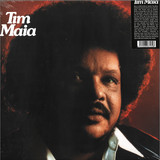
First vinyl reissue of this 1977 LP by one of the great figures of Brazilian music. Brilliant tracks like E necessario, Verao carioca, Venha dormir em casa or Musica para Betinha make it one of the strongest albums to come out of Brazil in the 1970s. Presented in facsimile artwork and pressed on 180g vinyl. TIP!
Tim Maia was born in 1942 in the suburbs of Rio de Janeiro and started his musical career at an early age, along with close friends such as Roberto Carlos or Jorge Ben. Carlos would eventually help him to get a deal for his first single at CBS.
During the 70s Maia started to incorporate soul and funk elements into his style. After a two-year period involvement in the Racional cult in Brazil, Maia's funky style was still at its best when he released this album in 1977. It was his first and only recording for Som Livre, the legendary label that became extremely popular due to the many soap operas soundtracks in its extensive catalogue.
Danny Krivit's fine re-edit of Gary's Gang classic "Let's Lovedance Tonight" first surfaced on Nervous Records back in 2007, and has been something of an in-demand item with disco DJs ever since. This, then, is a more than welcome reissue. The genius of Krivit's scalpel job is that it merely emphasizes the sections of the original that dancefloors want to hear; specifically, the acoustic guitar and organ-heavy groove, killer drum breaks and winding saxophone lines. It's simple but devilishly effective.
"Let’s Do It" by Convertion is another era defining soul-infused disco classic from the Sam Records catalogue. Danny Krivit similarly works his magic bringing out those elements that make the track – originally produced by Greg Carmichael and featuring the legendary Leroy Burgess on vocals – such a must-have item for all collectors.
Having released his last fantastic EP Melodius Hubbub a year previous, ED1999 is back with his newest project, named Moving Glow on Porpax records, illustrated by Graphic Designer Oliver SPERL, representing Belgiums best talent. Remaining serious in sentiment but developing his sound, ED1999 uses elements of light to contrast with the dark. As his previous EP followed the theme of interpreting pathways, this EP isn’t all too much different, as it captures the autonomous and excitable nature of light. Even though the speed of light is the fastest most constant definitive, ED1999 manages to bend, warp and interpret light itself through each track’s alternate paces and elements.
That makes it no surprise that Beam of Light starts us off with a full-body feeling of suspense. His classic momentous techno beat with a gratifying and anchoring kick drives the track the entire way through. Then, as the title foreshadows, the glimmers of light - in the form of synthesisers - manage to push their way through the cracks and eventually bleed out until they’re completed absorbed by the beats and become one.
Unknown Luminescence is nothing short of a fun, intense and gyrating episode; in true groovy techno fashion, it’s designed to get any listener’s shoulders swinging and body’s sweating. The repetition of the light ambient melody throughout gives the sense of a far off signal call, drawing in techno lovers from far and wide to enjoy the experience in synchronicity.
Darker again with more sinister undertones, Flamboyant Ray is an assertive approach to techno, yet cloaked in mystery thanks to its muffled kick drums and reverbs. As a more consistent track meant to maintain intensity, it’s style and confidence hardly alters throughout its duration.
The final track on the EP, Photonic Energy, embodies the environment of electrical currents swimming through dark and damp corridors; reacting and gurgling as electricity meets moisture. Distant murmurs give the effect that the space is alive and every inch of existence is thanks
5 years, after his debut „The Being Of The Beautiful“ (ILYA) was recommended „for every shelf “ by Das Filter, Philipp Priebe inaugurates his STÓLAR imprint and opens with an EP, that is acting as a prequel of sorts to his debut album. Titlecut „The Clouds All Form A Geometric Shape“ leads on the release, fusing dusty drum sounds, a funk infused bass line and hazy, ethereal pads while the focal stages ease in an amalgamation of resonant
acidting ed flutters, metallic chimes, wind instruments and a baroque dynamism from the rhythmic elements. „St.Peters“ opens the BSide next, laying focus on crunchy, swinging drums, choppy bass stabs and intricately unfolding resonant synth licks before an enchanting organ line is introduced to carry the groove for the rest of the composition. Kim Brown then round out the release with their take on „St.Peters“, reworking the original with their own twist , bringing the rhythmic elements to the forefront in the mix and introducing their own playful acid tinged bass hook ebbing and flowing amongst the original’s cinematic elements.
Delroy Edwards keeps the old school fire burning, returning to L.I.E.S. with a new 8 track lp titled "Slap Happy". Once again this is back to basics, no punches pulled Chicago House worship, hitting all ends of the dance specturm. Sparse beat tracks, 80s synth stabs, 727 latin percussion...the elements are all there and put together in perfect form...many try but few can execute the vintage sound like this. What may even be Edward's most mature release, it comes in a time when the roots of dance music have been forgotten to the grotesque trends of the day. This is a reminder of why we were drawn to this music in the first place and what it can sound like.
Canadian born, Berlin based producer Aquarian makes his full length album debutThe Snake That Eats Itselfon Bedouin Records.
This record follows his collaborative EPs with Deapmash as 'AQXDM" and is his first solo release since his 2016 experimental mixtape for Quiet Time. Nearly five years in the making, 'The Snake That Eats Itself' is Aquarian's most complex, diverse and emotive work to date, plunging his trademark UK sound-system/techno hybrids into a self-contained, cinematic universe streaked with heavy influences from industrial, IDM, drone and dark pop music.
It's written in Brooklyn, New York, in a deeply transitional, yet seemingly endless period preceding his relocation to Berlin, the title of the album refers to the Ouroboros, a mythological serpent symbolizing the cycle of birth and death and infinity itself.
'The Snake That Eats Itself' pits Aquarian's most abrasive and brutal moments next to his most wistful and introspective.
Viscerally thick layers of tape saturation envelop the album as sludgy synths ooze against brittle atmospheres; breakbeats fragment, explode and disintegrate into swarms of delay and noise; scorched, metallic percussion - sampled from a year-long demolition and construction project next to his apartment - forge the rhythmic backbone of the album. These elements, however, seamlessly make way to startlingly crystalline and shimmering ambient passages, offering a sense of reprieve and balance.
Adam ‘Adred’ Baker is an imperative part of the US drum & bass scene, providing a home for its fans amongst the cultural hub of New York City. Alongside his work as a promoter for ‘Natural Selection NYC’, he’s also dropped music on labels such as Metalheadz, Soul:R and 31 Recordings, proving that he’s as multi-faceted as they come.
This is something which shines through on his forthcoming LP ‘KIM’ set to be released on Goldie’s Metalheadz; named after his late father whose Fender Rhodes features prominently in much of Adred’s music and is a central part of his inspiration.
The album is an introspective look at the producer’s history and one which will identify the elements which have made him both such a successful artist and drum & bass event host.
Cai Bojsen-Møller co-founded the original Multiplex imprint and released his debut solo album A Bit of Something on the label in 1996. Cai is an accomplished drummer and his acoustic talents shine through in his electronic work and 909 skills. Out of the circuit for fifteen years, he now returns in stunning form!
Released as a two part EP, this is the second half of "The Spirit of Man and Machine". The idea behind which, evolved around the point where organic elements meet and elevates the programmed part of the music. Much music today is completely quantized, but to make things flawless, risks the loss of feeling to digital perfection. Emerging from the Danish rock scene in the early 80's, correctness was nothing to strive for. With the formula of analog synths through an analog mixer and the drums and sequences recorded live, with a mindset for the right vibe, Cai's new tracks ties in well with his 1990's productions.
Mark Broom returns to Multiplex to deliver his “Skank Mix” of Cai’s “Decomp” track, which Broom has churned into a massive, deep, thumbing, dub-techno tune. This is followed by the original version - a timeless example of chord-driven, minimalistic techno. On the flip side we find the beautiful melodies of the melancholic “FaxImprov”, before rounding things of with Skudge, who has remixed the track, resulting in his great signature sound for the dark floor.
Given Jones' rather slack approach to track titles (both being consistent with and sometimes even just supplying them), it's a bit of a relief to realize that two tracks with the same name are indeed related. In the case of "Arab Jerusalem", which makes up nearly half of the newly-released Lalique Gadaffi Handgrenade, that kinship is immediately apparent even though both tracks are clearly their own experiences. Released as the first track on the Minaret-Spearker picture disc 7" in 1996, "Arab Jeruzalem" (spelling also sometimes being fairly slack) is 5:42 of effectively shifting dark ambience, wordless female vocals drifting over the hand percussion, chimes, and static of the track, with eventual conversational loops discussing ... something underneath.
The end of that version is especially striking for the way the woman's wordless singing starts being sampled in such a way that it overlays the whole track (and, slightly, itself). The almost 24-minute "Arab Jerusalem" here might be called the Deer Hunter version of the same story, building with great patience and many more abstract detours towards what now seems like simultaneously an excerpt and, now, a climax.
As with many of Jones' more ambient tracks, the great length just lets it cast its spell more thoroughly and entrancingly. The other three tracks, meanwhile, suggest some of Jones' other work but never evoke them as directly as "Arab Jerusalem". "Jordan River" is nearly as long (a second shy of 20 minutes) but strips out the vocal elements in its predecessor, focusing instead on a more active percussive workout (analogue and digital both) and a river of hiss running down the center of the track. The title track of Lalique Gadaffi Handgrenade might bring to mind the title of "Lalique Gadaffi Jar" from Libya Tour Guide (last reissued by Staalplaat in 2015), but if they're sonically related Jones must have practically melted the other track to get this one.
And the closing "Desert Gulag" (like the title track, a much more manageable length than the first two epic tracks here) bears a slight resemblance to "Negev Gulag" from 1996's Fatah Guerrilla, here what was a piercing, repetitive drone is softened and looped over more of Jones' percussion. The result is a well-rounded release that shows off many aspects of Jones' sound as Muslimgauze, while existing (like many of these DAT tapes do) in conversation with much of his previously released work.
Paella Hair Sex is the beginning of a new chapter in Alexis Raphael’s musical story. The first two EPs will be from the label boss himself, kicking off with ‘Digital Music Almost Killed Me EP’. Then attention turns to new artists joining the PHS family - please email demos to paellahairsex
Alexis came to prominence in 2011 with his seminal track ‘Spaceship’ and followed with a series of lush, sexy and warm house records that gained universal praise and put Alexis’ sound all around the world with fans from Australia to Peru. As the music and scene evolved, so too did Alexis’ sound becoming somewhat harder whilst still retaining some of his signature elements; references to acid house, hardcore and jungle, deep pads and sweet vocals.
However, by 2016, Alexis had become somewhat disconnected with the path of the music and scene he was involved in. It took a long time to put together what was wrong, but what followed was a three year path to this point now of launching PHS.
A return to and playing vinyl at the end of 2016 was the first step to finding his love again and feeling good about the music. This was followed by a halt to gigs where the music expected from him was different from what he wanted to play and a feeling of disconnect from the crowd. Then came the gradual move away from constant social media output.
The final and most important part of this transition was going back to making music simply without any thought of where it can fit or who can play it, or what label it will go into. In essence this is a return to how Alexis started - making music solely from the feeling inside.
And so PHS returns to some of that more sexy, emotive house music that Alexis was originally known for, but with a fresh sound for the new decade.
Paella Hair Sex is set to be a representation of the music Alexis loves, both his own and other artists.
The first EP: PHS001 – Digital Music Nearly Killed Me kicks off with the main room groover ‘Respect & Belief’ . A jazz-infused bass line underpins chunky rolling beats, punctuated with vocal samples calling for unity and love and laden with floating classical pianos and warm pads. A definite party banger !
.
The second A side track “Sex Appeal” references back to Alexis’ original signature House sound. An emotive and sexy track bound to get temperatures rising on the dance floor .
Flip to the B-side and find the after party brother of Respect & Belief - ‘Liberty’. A seminal minute long speech paves the way to the single breakdown moment of the track when lush Jupiter-8 chords make way for an epic moment as the beats drop back in. A unique piece of minimalistic House music for the after hours .
The bonus track, House of Chorge. ends the EP with a bang. An upbeat cheeky groove that stays in your head long after the turntable stops spinning. But who is Chorge.?
Volume one of a four part solo album set. (Monstruos Y Duendes).
The music of Myrddin goes through marrow and bone and is both complex, passionately rhythmic and profoundly emotional. He fully masters the compás of flamenco, which gives him the freedom to converse with elements of jazz or classical music. His swiftness sometimes seems extraterrestrial, but whoever takes the time to listen intensively to his music will soon find an immense world of pure emotions, beauty and peace. After four CDs and numerous concerts Myrddin proves that great virtuosos of flamenco don’t necessarily have to come from Spain.
This album was recorded during Thollem's 2017 residency at Brooklyn-based multi-discipline mecca Pioneer Works. It's the second by Radical Empathy, which combines three uncategorizable improvisors. Michael Wimberly has been astonishing folks since his days in Charles Gayle bands and Steve Coleman & Five Elements in the early '90s, and has gone on become a composer and educator of note. Nels Cline has spent decades changing people's ideas about the role of the electric guitar in multiple contexts, ranging from Wilco to Anthony Braxton (think about that!) as well as many projects as a leader; this is his fourth album in trio with Thollem, and a fifth will follow next year, also on ESP. Some people have given ESP-Disk' flak (and "flak" was not the first word choice here) about putting out Thollem McDonas albums. "He's not in the jazz tradition," they say, and even though their idea of the jazz tradition includes Albert Ayler, we like to think that this album will make their little, closed minds explode.
At home, in the islands of Cabo Verde, there was grog, or grogu, a strong sugarcane moonshine not dissimilar to Colombian aguardiente, copiously consumed at Funaná parties. In the diaspora, in Europe, there was leite quente (hot milk). "I can still remember the taste of the first leite quente I drank in Lisbon," says Antonino Furtado Gomes, Pilon's drummer and current band leader.
Synthesize the Soul, Ostinato Records' second compilation, revealed chapter one of the Cabo Verde cultural story in Europe, zooming in on visionaries like Paulino Vieira who made Lisbon the headquarters spearheading the musical revolution taking place within Cape Verdean emigre communities across Europe in the 1980's. Musicians from across the diaspora would eagerly travel to the Portuguese capital to record.
Grupo Pilon represents the second chapter of the Krioulu diaspora story. In smaller pockets, second generation musicians were independently contributing to one of the most lush periods of cultural innovation by immigrants in Europe. In Luxembourg, in 1986, a group of teenagers formed the largely unknown (outside of Cape Verdean circles) but consistently brilliant band named after the blunt instrument used in the islands to pound corn for Cabo Verde's national dish, cachupa.
With only five members, Pilon combined searing estilo Krioulu drumming and the hybrid ColaZouk style with blissful synth work and rugged guitar licks, creating a stripped-down, addictive sound that masterfully straddled two worlds, a seductive electro-Funaná carnival born from the first few sips of hot milk.
The band drew from the inspiring political changes of the day: the release of Nelson Mandela in South Africa and the fall of the Berlin Wall. The right to democracy became a constant theme in Pilon's songs.
With access to better opportunities than their parents' generation, Pilon's roster were part time musicians. Music was not part of their academic upbringing nor a full-time gig. Their rhythm and style were wonderfully imperfect, made out of rawer skills and inexperience. Pilon did not follow the templates established by revered Cabo Verde bands. Keyboard player Emilio Borges played off beat and the band preferred arranging their songs to start from the beat normally heard in the middle of a composition rather than the beginning.
These two elements made Pilon's music simple, unique, and inimitable. From 1997-2015, a lack of concerts and professional musicians proved near fatal. Today, Antonino and what remain of the original quintet are slowly piecing back together the puzzle of their once mighty outfit from an unlikely pocket of Europe. In it's heyday in the 90's, Pilon serenaded audiences in Paris, Lyon, Marseille, Lisbon, Rotterdam and Frankfurt, securing their reputation as a respected and unifying cultural force.
This LP, drawing from the six most powerful songs from Pilon's three-album catalog, is the serving of still fresh leite quente to spice the summer and maybe even fuel the next generation of musicians in the Krioulu corners of Europe.
Presenting another fully legit, remastered and repackaged reissue from the WD vaults! Brand new style for 2020.
Londons "Warriors Dance" Label was a unique operation + pioneering London label during the late 80's acid house phenomena. Home to an assortment of DJs, MCs and soundmen, they went on to make their own original and indelible mark on the rave scene from the infamous 'Addis Ababa' studio on Harrow Road on the North-West side of the city.
A former reggae and soul studio that was instrumental to the output of influential artists like Soul II Soul and more, a steady diet of reggae, bass, hip-hop, house and techno kept their edgy, and diehard UK sound and style right at the cutting edge of the dance music underground across the globe with the top DJs and producers of the day celebrating the label. The studio, helmed by label owner Tony ‘Addis’, acted as an incubator for artists whose names would go down in the history books.
No Smoke was one of the main and best known outfits on this cult label. Their mammoth worldwide, cult club smash 'Koro Koro' is still in DJ bags across the galaxy today! 'Righteous Rule' is another tuffy from this crew, some heavyweight bassline madness for the dance.
All the elements of the WD sound are here, a perfect mix-up of Reggae vibes, jacking house and tribal badness rolled into one. A proper record, to be played on a proper system! This one's become a rare catch out in the wild, and is fetching some P's on the web among the collectors. Here's a nice 2020 repress for you, done the right way!
No Smoke 'Righteous Rule' is the pure unadulterated WD vibe, featuring original label artwork tweaked by Atelier Superplus and lovingly remastered by Curvepusher, UK. Special thanks to Nicky Trax & Tony Addis. Proudly distributed by Above Board distribution. 2020.