Anything goes, everything is OK,’ is New Cool Collective’s free and easy creed. These eight jazz players are continually reinventing themselves, finding new inspiration and inspiring others. Brilliant as ever under a new spotlight, New Cool Collective excels on their 25th album Everything is OK, released by Dox Records this autumn on 25 October 2024.
Earlier this year, the band celebrated its thirtieth anniversary with a pocket-sized ode to their prolific past: 30 Years Live. Having played and partied, the group turned their attention to the future: what next for an ensemble that thrives on musical experiment and collaboration? Where to now? Which way to go to rekindle that creative spark and foster that flame?
New Cool Collective has met the challenge head-on, determined to surprise their audience, and themselves too. They spent a little time reflecting, considering suggestions, weighing up options – eight creative artists exploring, coalescing. Soon their ideas gelled into something special. They laid down a series of tracks that both build on the band’s thirty-year history and feed on a newfound freedom to simply be New Cool Collective. Everything is OK embodies that sense of a group which knows how to surpass expectations, to make music from the heart, to go back to their roots, back to the essence of those early years.
Anything goes, everything is okay on a record that features extensive brass arrangements and orchestral elements. There’s something magnificent about those seductively intimate tracks, something way beyond the traditional orchestral big band sound. New Cool love to experiment with alternative production techniques, developing the final mix themselves to create a unique, unmistakably recognizable sound – however surprising or unusual the music, you know you’re listening to New Cool Collective – like you’re there and the band is playing just for you.
Everything is OK is brimming with ideas, surprise and humour. The music is contemplative, yet it also leads straight to the dance floor: it gets you moving – body and soul. This is music for the intellect, to take you out of your comfort zone and to show you subtly, ironically: is everything really ok?
Suche:2 elements
- 1: Shrug (Knowing)
- 2: Go To Your Room
- 3: Roll Your Eyes
- 4: Rewind Beethoven
- 5: Replenishment
- 6: Spontaneous Deep Dive
- 7: Polyphonic Creatures
- 8: Metallic Machine
- 9: A Thousand Ways Of Falling
- 10: The Wild Woman Archetype
- 11: Resonance
- 12: Vivid Peace Restored
Composer and performer Stina Stjern have for over 25 years been a steady presence in the Norwegian music scene – starting out as a vocalist in the rock band Supervixen while studying jazz in Trondheim, Stjern’s road has been anything but predictable, and has over the years shown a will to experiment and explore new areas in her music making. Her new album ”Vivid Peace Restored” is perhaps her most radical musical statement yet, as the entire album is made using cassette tape. The sound sources vary from found sounds, various instruments and Stjern’s own voice, but there is no hierarchy, the different elements are given equal importance, and through considerate looping, layering, cut-ups, re-arranging the bits and pieces it forms a rich tapestry of sound. This blurring is intentional, Stjern wants us to get lost in her sound world, a place where nothing is forced or overstated. Tape hiss, subtle melody lines, distant location recordings, gentle waves of noise, and voices melt together creating lush soundscapes
- Wednesday Night Prayer Meeting
- Cryin' Blues
- Moanin
- Tensions
- My Jelly
- Roll Soul
- E's Flat Ah's Flat Too
Blues & Roots is not only a cornerstone in Charles Mingus' body of work but also a testament to the enduring power of the blues as a foundation for jazz
Mingus managed to both honor tradition and push the boundaries of jazz, all while making a deeply personal and politically charged musical statement. The album remains one of the most vital and influential recordings in the history of jazz music. Released in 1960 this album stands out in Mingus' discography as a raw, vibrant homage to the roots of blues and gospel traditions in jazz. Mingus sought to return to his musical roots, drawing from blues and gospel traditions he grew up with, particularly from the African American church music of his youth. The album is a powerful statement of how deeply the blues tradition influenced modern jazz. It combines the unfiltered emotional intensity of the blues with Mingus' forward-thinking and often unconventional compositional techniques. The album's tracks are imbued with a strong sense of the blues, which is especially apparent in songs like "Wednesday Night Prayer Meeting" and "Moanin'." The album carries a loose, jamsession feel, reflecting the church and street-based roots of blues music. The use of call- and- response patterns in several tracks also hints at gospel traditions. Blues & Roots is often cited as a critical album in the development of jazz as a genre that embraced both its past and future. Mingus' ability to integrate traditional musical forms (such as blues and gospel) with more modern, experimental elements opened up new possibilities for jazz. His compositional style, which juxtaposed tightly arranged sections with freewheeling solos, influenced generations of musicians, from avant-garde jazz artists to rock musicians and composers in other genres
- Palo Alto
- Darn That Dream
- When Your Lover Has Gone
- Cork 'N' Bib
- Somp'm Outa' Nothin
- Someone To Watch Over Me
- Uncharted
- Moonlight In Vermont
- The Song Is You
This album is often recommended for fans of modern jazz and is considered a notable addition to the discography of Lee Konitz and Jimmy Giuffre
It exemplifies the ethos of jazz as a medium for exploration and innovation, with a focus on personal expression and artistic dialogue. Released in 1959, featuring two influential figures in the genre this album captures a significant moment in jazz history, showcasing a unique collaboration that emphasizes improvisation and melodic exploration. In the late 1950s, jazz was undergoing significant transformations, with movements such as cool jazz, hard bop, and avantgarde emerging. Lee Konitz and Jimmy Giuffre were both pivotal figures in the cool jazz scene, and their collaboration was a meeting of two innovative minds. Known for his smooth tone and lyrical improvisation, Konitz was influenced by the bebop movement and studied under legendary figures like Lennie Tristano. He often pushed the boundaries of traditional jazz through his emphasis on melody and harmony. Jimmy Giuffre was notable for his unique approach to composition and improvisation, often incorporating elements of classical music and folk traditions. He was a key figure in the West Coast jazz scene and known for his use of space and silence in music. The album features a mix of standards and original compositions, highlighting the artists' ability to reinterpret familiar melodies with Giuffre's arrangements often incorporate complex harmonies, while Konitz's playing brings a sense of lyricism and warmth: an essential listen for fans of jazz.
- Stolen Moments
- Hoe Down
- Cascades
- Yearnin
- Butch And Butch
- Teenie's Blues
The Blues and the Abstract Truth is not just a landmark album in Oliver Nelson's career but in the history of jazz itself
The album features an incredible ensemble of top-tier jazz musicians, often referred to as a "supergroup": Oliver Nelson (alto saxophone, tenor saxophone), Freddie Hubbard (trumpet), Eric Dolphy (alto saxophone, flute), George Barrow (baritone saxophone), Bill Evans (piano), Paul Chambers (bass), Roy Haynes (drums). The early 1960s were marked by a shift from the hard bop of the 1950s to more experimental forms, including modal jazz, free jazz, and the incorporation of avant-garde elements. Musicians like John Coltrane, Ornette Coleman, and Charles Mingus were all pushing the boundaries of jazz, and Oliver Nelson's work fits within this broader movement: in this album there's a perfect combination of modern compositional techniques, virtuosic performances, and emotional depth make it an essential listening experience for any jazz fan. It captures the moment when jazz was evolving into new, exciting directions while staying connected to its roots in the blues. The Blues and the Abstract Truth is considered one of the essential albums in modern jazz where Oliver Nelson's compositional style blends hard bop, modal jazz, and blues influences with sophisticated harmonic structures and striking arrangements. The album is noted for ts rich orchestration despite having a relatively small ensemble with use of textures and colours, particularly in tracks like "Stolen Moments," created a new standard in azz arranging.
In this next installment of Token, Brussels' own Border One steps in to showcase 'Echoes from the Abyss', another swinging, modular-driven project destined for controlled sound systems. In these four tracks, the seasoned producer does what he knows best: engaging the dancefloor through his signature sound design and use of space.
'Echoes from the Abyss' the track, like the EP, is a collection of sound associations that are synonymous with Border One's sound. Resonant and cerebral yet bouncy and full of groove, the A1 presents a shimmering veil of synthwork that gives off a truly hypnotic effect. The follow up is much more sequence-based, focusing on the elements' interactions. The producer plays along freely with his drum machine, responding to a classically loopy and dissonant main synth that insists its way from beginning to end. Tension is everything, especially when met with a sustained chord in the second half, turning the record into a weapon of suspense. 'Celestial Observer' comes back straight and center with a focused tone and a progressive arrangement. With a thick low end and shrill highs, Border One flicks through percussion patterns and filter sweeps to make an intense, at times close eyed dancefloor experience. Ducking back into obscurity for the last track, 'Escaping the Void' takes on a more minimally produced style that breathes a bit after its previous, denser productions. Concluding with a question mark is always very appropriate, and here we're faced with a record caught between ethereal soundscapes and tense implications. With 'Escaping the Void', Border One closes with his latest contribution to Token with class as always, appealing to genre veterans and newcomers alike.
New label Ché Wax launches with a double header: Buzz / Raga.
‘Love Buzz’, originally released in 1969 on Shocking Blue's At Home, gained fame when Nirvana covered it as their debut single nearly 20 years later. The Ché Wax rework enhances its psychedelic drama with acid disco elements, making it a dance floor staple 55 years on.
On the flip, RAGA: In 1982, Indian musician Charanjit Singh fused traditional ragas with Roland TR303-driven disco in Ten Ragas To A Disco Beat, recognized as a precursor to acid house, predating Phuture’s Acid Tracks.
Ché Wax reimagines Ten Ragas with an electro beat inspired by early ‘80s New York music, bringing this hybrid version to vinyl for the first time.
Reissue of the debut full-length album by the leader of the Ukrainian band Edenian, Max Molodtsov, offers a 50-minutes long journey to the world of gloomy and hasteless, but atmospheric doom-death, where brutal elements are contrasted by melancholic interludes.The lyrics of the "Of Ruins..." album are based on the classical English poetry from the 19th century and the original author's verses. Mixed and mastered at Slow Burn Studio (When Nothing Remains, Crypt Of Silence).
Mustapha Skandrani, a luminary of Algerian music, possessed a unique musical sense, able to transcend the borders of musical cultures to create a distinctive fusion of Arabic-Andalusian and European styles.
"Istikhbars and Improvisations", recorded in 1965 in Paris, is a solo piano album presenting a trans-Mediterranean crossover based on traditional Algerian vocal pieces known as istikhbars. Playing these istikhbars (which have roots in the Islamic Arab-Andalusian culture which flourished in Spain) on the piano - that quintessentially European instrument - Skandrani was greeted with derision by some purists. His powerful musical vision, however, perceives the European element involved in Arabic-Andalusian musical culture, a world of exchange and co-existence.
Skandrani's modus operandi on this release is to present each istikhbar, modal in nature, then to play an improvisation based on it, and its attendant mode. This A/B alternation continues throughout. The pellucid clarity of Skandrani's playing on this album may remind the listener of a modal Goldberg Variations, Bach and Glenn Gould transplanted to Andalucia. Other ears will hear the Arabic/Maghreb elements more strongly. Skandrani's precise touch and clear, symmetrical rhythmic sense links both worlds, assuring us that the Mediterranean is not a barrier, but a unifier, and that the differences between the cultures are not so vast. This is an admirable achievement, resulting in beautiful music of a rare charm.
Mustapha Skandrani was born in Algiers in 1920, and died there in 2005. He mastered a number of instruments at an early age, and his musical prowess led him to work with the great singers and ensembles of his day, in live performances, recordings, and radio broadcasts. Later in his life, he devoted much energy to education.
Originally reissued by Em Records as a limited edition of 200 in 2012, now available once again, in offset printed sleeve, with insert of Japanese and English sleeve-notes and rare photosMustapha Skandrani, a luminary of Algerian music, possessed a unique musical sense, able to transcend the borders of musical cultures to create a distinctive fusion of Arabic-Andalusian and European styles.
"Istikhbars and Improvisations", recorded in 1965 in Paris, is a solo piano album presenting a trans-Mediterranean crossover based on traditional Algerian vocal pieces known as istikhbars. Playing these istikhbars (which have roots in the Islamic Arab-Andalusian culture which flourished in Spain) on the piano - that quintessentially European instrument - Skandrani was greeted with derision by some purists. His powerful musical vision, however, perceives the European element involved in Arabic-Andalusian musical culture, a world of exchange and co-existence.
Skandrani's modus operandi on this release is to present each istikhbar, modal in nature, then to play an improvisation based on it, and its attendant mode. This A/B alternation continues throughout. The pellucid clarity of Skandrani's playing on this album may remind the listener of a modal Goldberg Variations, Bach and Glenn Gould transplanted to Andalucia. Other ears will hear the Arabic/Maghreb elements more strongly. Skandrani's precise touch and clear, symmetrical rhythmic sense links both worlds, assuring us that the Mediterranean is not a barrier, but a unifier, and that the differences between the cultures are not so vast. This is an admirable achievement, resulting in beautiful music of a rare charm.
Mustapha Skandrani was born in Algiers in 1920, and died there in 2005. He mastered a number of instruments at an early age, and his musical prowess led him to work with the great singers and ensembles of his day, in live performances, recordings, and radio broadcasts. Later in his life, he devoted much energy to education.
Originally reissued by Em Records as a limited edition of 200 in 2012, now available once again, in offset printed sleeve, with insert of Japanese and English sleeve-notes and rare photos
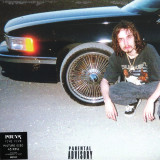
Five Five is the second studio album from the Miami-born underground rap pioneer, Pouya. Marking a slight transition into a more mature sound, Five Five showcases Pouya’s evolution as an artist while maintaining the raw authenticity that has endeared him to his fans. With tracks like "Suicidal Thoughts in the Back of the Cadillac Pt. 2" and "Handshakes," Pouya delves into themes of struggle, resilience, and personal growth, offering listeners a glimpse into his journey. In what became truly a solo effort, Five Five is limited to one feature in Night Lovell, with production primarily handled by Mikey The Magician (Track 4 produced by Chevali). The album draws from elements of Bone Thugs-N-Harmony, yet remains uniquely rooted in Pouya’s own style. Over the years, Pouya has developed a long lasting core fanbase, first bubbling up in Miami alongside artists such as Denzel Curry, and then becoming a nationally celebrated artist. Back in print for the first time since originally released in 2018. Pressed on Wire Wheel Picture Disc Vinyl and cut at 45 RPM.
Who You Selling For is the third studio album by American rock band The Pretty Reckless. It was originally released on October 21, 2016 and since reached #13 on the US Billboard 200, #12 in Canada, and #23 on the UK Albums Chart. Its lead single, "Take Me Down", topped the Billboard US Mainstream Rock chart in October 2016. Produced by longtime collaborator Kato Khandwala, the album is a unique collection of scorching rock tunes with soulful, bluesy undertones. Who You Selling For reveals the band’s continuing evolution in songwriting, as frontwoman Taylor Momsen maintains her signature dark lyrics and raw, sexy vocals while delving deeper into elements of blues and southern rock guitar than on the band’s previous albums.
The ever prolific Teffa is back on LoDubs, albeit for his first Vinyl EP.
As just alluded to, this is the second meeting of the Far West Ruler and the Low End Master from Leeds, although one might be forgiven for blinking and missing the highly sought after (sold out in 5 minutes) Poly DubPlate cut released in early 2023, which was a matter of course in a year where pressing turn times quadrupled. As glad as we are that those days are in the past it also still left the inkling that a full release was necessary once the time and tunes presented themselves.
..And as such, here we have a total of 6 now-ting Grime hybrids (4 on the vinyl, and 2 vinyl-only bonus tracks in the DL and details on how to get those as a poly Dub, only for owners of the vinyl EP), Containing the elastic basslines of a true UKG and Dubstep Stalwart, whilst stretching those elements over syncopated, at time staccato-esque riddims, all beneath a novel modernization of the stilted, subharmonic and eski-esque synth bass pads that are quintessentially Grime. There truly is more to these with each listen, all the while grabbing you at first go.
State of the art: From the one and only Teffa.
»Nuts of Ay«, the thirteenth album by the Berlin-based electronic pop duo Tarwater (Ronald Lippok and Bernd Jestram), is their first in a decade, since 2014’s »Adrift«. Beautifully poised and smartly dressed, it's an album that draws Tarwater’s various pasts into a high-definition present, while bringing the duo, yet again, into productive dialogue with all kinds of fellow travellers.
Tarwater’s music has always been marked by a hypnotic pop-ness, but that’s particularly evident on »Nuts of Ay«, where a song like »Hideous Kiss« weaves together jangling guitar, pastoral flute, and flittering electronics into a gem-like construction. While the lyrics of »Hideous Kiss« are written by the duo, »Nuts of Ay« also continues a longstanding Tarwater tradition of recasting the words of others in their own mould. This time, their remit is broad: poetry from Derek Jarman (»All Nuns«) and Millner Place (»Trapdoor Spider«); lyrics from Jean Kenbrovin (»I’m Forever Blowing Bubbles«), the late Shane MacGowan (»USA«) and, again, John Lennon (»Everybody Had a Hard Year«).
This cast of found and borrowed lyricists also finds collaborative echo in the guest musicians dotted throughout »Nuts of Ay«. Schneider TM turns up on the lovely, Felt-like »Spirit of Flux«, where guitars channel the tangled reveries of Vini Reilly and Maurice Deebank into lush pop. Carsten Nicolai joins, as Alva Noto, dappling »On Waves and Years« with intimate glitching textures; he also provides the album cover art. Elsewhere, Masha Qrella appears on »Down Comes the Goose«, and actor Lars Rudolph pitches in for »USA«.
It may have been ten years since the album's predecessor, but Lippok and Jestram have kept active with other projects. They’ve collaborated with Masha Qrella, Immersion, and Iggy Pop; worked on radio plays with Kai Grehn, some based on the writing of Nick Cave (»The Sick Bag Song«, featuring Tilda Swinton, Paula Beer and Alexander Fehling) and William S. Burroughs (»The Cat Inside«); and made music for several radio-tatorts (radio plays based on »Tatort«, a long-running German police TV series) by playwright Tom Peuckert.
Both voracious and committed in their creative energies, Jestram and Lippok report back from these experiments with »Nuts of Ay«, one of their most compelling, deeply lustrous, dreamlike albums yet. They say there was no concept for the album, which is surprising, perhaps, given its holistic mood, explaining it »grew together like a coral reef in the studio over a period of several years«. There’s something to be said for letting an album gather and mutate naturally, without an overarching framework in place, and »Nuts of Ay« certainly feels like an unforced collection of material that nonetheless inhabits a similar space, one where guitars twist like driftwood next to amorphous, aqueous electronics, Lippok’s droll yet completely convincing vocal delivery riding songs that pulse and plume with curious, unpredictable rhythms.
But you can also hear elements – submerged but still present – of other music that’s inspired the duo: they’ve drawn some connections for us with psychedelic folk, Bowie in Berlin, Burial, and the film music of Popol Vuh and Krzysztof Komeda. This music shares a strong sense of place – whether in the world, or the mind – and the twelve songs on »Nuts of Ay« have such similar presence; a shared mood, a shared world, a shared sense of the possibilities of what electronic pop music could, and should, be. A bold and brave pop experiment.
Artwork by Carsten Nicolai
Mastering by Bo Kondren, Calyx Berlin
»Trapdoor Spider«, »On Waves and Years« & »Breaking Day«: lyrics by Milner Place
»All Nuns«: lyrics by Derek Jarman
»USA«: lyrics by Shane MacGowan
»Down Comes the Goose«: lyrics from a traditional song
»Forever Blowing Bubbles«: lyrics by Jaan Kenbrovin
»Everybody Had a Hard Year«: lyrics by John Lennon
- Once Upon A Time
- Come To Me
- Premonition
- Herr Knock
- Ellen's Dream
- Incantation
- Goodbye
- The Inn / Moroi
- Shrine
- A Carriage Awaits
- Come By The Fire
- Destiny
- The Castle
- Covenant
- The Crypt
- Lost
- Hysterical Spell
- Devourance
- The Monastery
- Solomonar
- Increase Thy Thunders
- The Professor
- Dreams Grow Darker
- Possession
- An Arrival
- A Return
- Grünewald
- Despair In My Coming
- A Curious Mark
- Orlok's Shadow
- The Vampyr
- The First Night
- Death, All Around Us
- I Know Him
- The Second Night
- These Nightmares Exist
- A Priestess Of Isis
- Last Goodbye
- Never Sleep Again
- The Third Night
- The Prince Of Rats
- Daybreak
- Liliacs
Oxblood Vinyl[30,04 €]
Robin Carolan's latest soundtrack for Robert Eggers' highly anticipated Nosferatu is a haunting, gothic-infused and meticulously crafted work that draws from a vast palette of sounds, instruments, and inspirations. Following their successful collaboration on The Northman, Carolan reunites with Eggers to bring the legendary tale of Nosferatu to life, infusing the film with a score that is as complex and nuanced as the story itself. With Daniel Pioro, one of Britain's most exciting young classical musicians, at the helm as the orchestra leader and first chair for a vast majority of the recording, the soundtrack features a vast orchestration, including 60 string players, a full choir, various horns and woodwinds, a harpist, and two percussionists. Despite the grandeur of the orchestration, one of the most challenging pieces was the music box used at the film's beginning. Carolan and Eggers struggled to perfect its sound, a process marked by their meticulous attention to detail, which Carolan describes as almost telepathic. Set in the 1800s, Nosferatu allowed Carolan to incorporate contemporary instrumentation, though he made a deliberate effort to ensure the score didn't sound overly modern. Letty Stott, who also worked on The Northman, contributed ancient horns and pipes, enhancing the soundtrack's eerie atmosphere. Additionally, percussionist Paul Clarvis custom-built a toaca-like instrument for added authenticity. Carolan's inspirations for the soundtrack were as eclectic as they were profound. He frequently drew upon the works of Bartok and Coil, while films like The Innocents, Angels and Insects, and Eyes Wide Shut provided cinematic inspiration. Additionally, he explored the more obscure side of Hammer Horror soundtracks and found a deep connection to the music of the Ukrainian film The Eve of Ivan Kupalo, which helped shape the score's otherworldly tone. Carolan intentionally moved beyond the typical horror score, focusing on capturing the tale's melancholy and tragic elements while weaving in a sense of warped romanticism. The result is a soundtrack that not only complements the film but also stands on its own as a testament to Carolan's artistry and the enduring power of collaboration.
- A1: Once Upon A Time
- A2: Come To Me
- A3: Premonition
- A4: Herr Knock
- A5: Ellen's Dream
- A6: Incantation
- A7: Goodbye
- A8: The Inn/Moroi
- A9: Shrine
- A10: A Carriage Awaits
- A11: Come By The Fire
- A12: Destiny
- A13: The Castle
- B1: Covenant
- B2: The Crypt
- B3: Lost
- B4: Hysterical Spell
- B5: Devourance
- B6: The Monastery
- B7: Solomonar
- B8: Increase Thy Thunders
- B9: The Professor
- B10: Dreams Grow Darker
- C1: Possession
- C2: An Arrival
- C3: A Return
- C4: Grunewald
- C5: Despair In My Coming
- C6: A Curious Mark
- C7: Orlok's Shadow
- C8: The Vampyr
- C9: The First Night
- C10: Death, All Around Us
- C11: I Know Him
- D1: The Second Night
- D2: These Nightmares Exist
- D3: A Priestess Of Isis
- D4: Last Goodbye
- D5: Never Sleep Again
- D6: The Third Night
- D7: The Prince Of Rats
- D8: Daybreak
- D9: Liliacs
Black Vinyl[28,78 €]
Robin Carolan's latest soundtrack for Robert Eggers' highly anticipated Nosferatu is a haunting, gothic-infused and meticulously crafted work that draws from a vast palette of sounds, instruments, and inspirations. Following their successful collaboration on The Northman, Carolan reunites with Eggers to bring the legendary tale of Nosferatu to life, infusing the film with a score that is as complex and nuanced as the story itself. With Daniel Pioro, one of Britain's most exciting young classical musicians, at the helm as the orchestra leader and first chair for a vast majority of the recording, the soundtrack features a vast orchestration, including 60 string players, a full choir, various horns and woodwinds, a harpist, and two percussionists. Despite the grandeur of the orchestration, one of the most challenging pieces was the music box used at the film's beginning. Carolan and Eggers struggled to perfect its sound, a process marked by their meticulous attention to detail, which Carolan describes as almost telepathic. Set in the 1800s, Nosferatu allowed Carolan to incorporate contemporary instrumentation, though he made a deliberate effort to ensure the score didn't sound overly modern. Letty Stott, who also worked on The Northman, contributed ancient horns and pipes, enhancing the soundtrack's eerie atmosphere. Additionally, percussionist Paul Clarvis custom-built a toaca-like instrument for added authenticity. Carolan's inspirations for the soundtrack were as eclectic as they were profound. He frequently drew upon the works of Bartok and Coil, while films like The Innocents, Angels and Insects, and Eyes Wide Shut provided cinematic inspiration. Additionally, he explored the more obscure side of Hammer Horror soundtracks and found a deep connection to the music of the Ukrainian film The Eve of Ivan Kupalo, which helped shape the score's otherworldly tone. Carolan intentionally moved beyond the typical horror score, focusing on capturing the tale's melancholy and tragic elements while weaving in a sense of warped romanticism. The result is a soundtrack that not only complements the film but also stands on its own as a testament to Carolan's artistry and the enduring power of collaboration.
Vinyl The project is the work of a collaborative team headed by Tommy Henriksen - veteran rock session bassist/guitarist, creative director for Alice Cooper and current member of Hollywood Vampires (Rock supergroup featuring Joe Perry, Alice Cooper and Johnny Depp). Henriksen worked alongside the legendary Diamond-certified producer Mutt Lange (AC/DC, Def Leppard, Bryan Adams, Shania Twain) who emerged from retirement to executive produce the project. Combining elements of David Bowie’s apocalyptic vision, The Who’s bombastic fury, and ZZ Top’s power blues, the dynamic album boasts features from Phil Collen of Def Leppard and Nikki Sixx of Motley Crue.
- A4: Get On Your Knees (Feat. Ariana Grande)
- A5: Feeling Myself (Feat. Beyoncé)
- B1: Only (Feat. Drake, Lil Wayne & Chris Brown)
- B4: Favorite (Feat. Jeremih)
- B5: Buy A Heart (Feat. Meek Mill)
- C1: Trini Dem Girls (Feat. Lunchmoney Lewis)
- C5: Bed Of Lies (Feat. Skylar Grey)
- D2: Big Daddy (Feat. Meek Mill)
- A1: All Things Go (4:53)
- A2: I Lied (5:04)
- A3: The Crying Game (Feat. Jessie Ware)
- B2: Want Some More (3:49)
- B3: Four Door Aventador (3:02)
- C2: Anaconda (4:20)
- C3: The Night Is Still Young (3:47)
- C4: Pills N Potions (4:28)
- D1: Grand Piano (4:19)
- D3: Shanghai (3:39)
- D4: Win Again (4:10)
- D5: Truffle Butter (Feat. Drake & Lil Wayne)
First time on vinyl! 2014 release, the third studio album by the enormously successful Rap/R&B diva. Looking to depart from the dance-pop elements from her previous studio album PINK FRIDAY: ROMAN RELOADED (2012), Minaj wanted to make a follow-up record influenced by her traditional hip hop beginnings. She collaborated with producers including Boi-1da, Cirkut, Da Internz, Detail, Dr. Luke, and Polow da Don to achieve her desired sound. Includes the singles 'Pills n Potions', 'Anaconda', 'Only' and 'Bed of Lies'
c A3 The Crying Game (feat. Jessie Ware) 4:25
[d] A4 Get On Your Knees (feat. Ariana Grande) [3:36]
[e] A5 Feeling Myself (feat. Beyoncé) [3:57]
[f] B1 Only (feat. Drake, Lil Wayne & Chris Brown) [5:12]
[i] B4 Favorite (feat. Jeremih) [4:02]
[j] B5 Buy A Heart (feat. Meek Mill) [4:15]
[k] C1 Trini Dem Girls (feat. LunchMoney Lewis) [3:14]
[o] C5 Bed Of Lies (feat. Skylar Grey) [4:29]
[q] D2 Big Daddy (feat. Meek Mill) [3:19]
[3:40]
Matt Gilmour's latest album, "Business As Usual," marks a bold evolution in his sound and lyrical depth. With a blend of introspective lyrics and catchy melodies, the album explores themes of resilience, personal growth, and the complexities of modern life.
The project opens with the infectious lead single, setting a dynamic tone that resonates throughout. Gilmour's signature blend of genres—from rock to pop and elements of electronic—creates a diverse soundscape that captures the listener's attention. Each track delves into various facets of daily life, reflecting both the mundane and the extraordinary.
Collaborating with a range of talented musicians and producers, Gilmour infuses fresh energy into his work, resulting in a polished yet authentic feel. Standout tracks showcase his ability to balance heartfelt ballads with upbeat anthems, all while maintaining a cohesive narrative.
"Business As Usual" is not just an album; it’s a journey through the everyday hustle, reminding us that even amidst routine, there’s beauty to be found. With this release, Matt Gilmour solidifies his place as a compelling voice in contemporary music, ready to resonate with fans old and new.
A1 Northern Lights
Darkly, tense tones take center stage as Northern Lights kicks the LP off, introduced with an eerie synth before classic, striking old school breaks that aficionados will recall from the likes of John Bs Secrets drop, chopped expertly by our Spatial duo to create a quietly vengeful beat pattern with heavy kicks and a unique stuttering detail. Circling menacingly around the mix we are treated to swathes of choral detail, subtle vocal samples and shimmering ambience..
A2 Sunset on Mars
Showcasing the strengths of both producers through a delightfully rich atmosphere, Sunset on Mars opens with soothing echoed effects that ooze a welcoming sense of wonder. Delicate in composition yet still packing a punch, the breaks sit over a sumptuous deep sub bassline which carries our journey through simple key melodies, vivid mood-changing synths superbly to create a pure, wholesome atmospheric bliss.
B1 Totality
Dominant hats and cymbals surf the peaks of the mix early in Totality, detailed old school breakbeats quickly seizing our attention constructed with an effortless attention to detail. A stark, thick atmosphere is carved from a broad backdrop of sound blending vocals and synths, enveloping the listener with a dense, bleak soundscape that develops continually as the breaks roll on with memorable intent.
B2 Reincarnation
A deeply evocative, interstellar intro opens Reincarnation, generating images of lonely spacewalks with trademark Spatial aplomb. The vibe continues through a barrage of heavy analogue amens which crush the mix, edited with a chunky, commanding panache. The listener can picture pillars of isolation and thundering defiance dancing in duality as the elements weave their way fluidly throughout.
C1 Seraphim
Into an intense, epically atmospheric piece next as Seraphim channels the spirit of yesterday for a journey into the souls core via scene-trademark Hot Pants breaks, a moody 808 bassline and swirling atmospheric pads, melodies & synths. Layered with detailed FX demanding repeated listens to soak it all in, Seraphim is a special track which will take over your setlist and the journey home.
C2 Prism of Light
Sit back and relax to another slice of classic atmospheric bliss with Prism of Light, opening with a DJ-friendly hi hat intro before melodic synths generate an instantly unforgettable late-90s vibe. Hot Pants breaks drive us forward with a wondrously simple yet effective mix of 2 step and double kick edits, as blissful ambient washes and vocal hits are drizzled over the mix. Delightful.
D1 Harmonic Function A uniquely constructed beat pattern guaranteed to move you opens Harmonic Function, building up from rushing cymbals and hats intertwined with a fantastic crunchy, metallic half-time snare. Throw in a slew of mournful melodies and blanketed pad work around the mix and youre left with a superbly laid back yet danceable piece from ASC & Aural Imbalance, continually innovating in their music as ever on Spatial.
D2 Fade to Grey
Old school rhythms are on the agenda as our duo close out the album with a tense, meandering exploration through space, circling the planets through mellowed out beats before a layer of dense, analogue breaks are added to the mix as the atmosphere escalates. Exquisitely programmed vocals provide texture and feeling, while an understated bassline rumbling on below, completing a timeless collage of sound.
Words by Chris Hayes (Spatial / Red Mist)
Born in Recife, Brazil, and currently residing in Lisbon, Sam Nóbrega is a singer-songwriter, multi-instrumentalist, arranger, and producer.Influenced by the Brazilian melodies his parents sang and listened to at home and on the radio, and driven by his love for Brazilian folk songs, street culture, and genres and movements like samba funk, forró, Ijexá, Manguebeat, and Bossa Nova, Sam embarked on a journey of musical self-discovery. In 2017, he took the stage with his first shows presenting his original music, performing at the Misturada festival in Florianópolis, southern Brazil, and at renowned venues in his hometown. However, it was in 2019 that Sam Nóbrega unveiled his debut single, "A Vida Vai e Volta," showcasing his instrumental prowess in a live video on top of a building. Subsequent releases like "Ruas Desertas," an independent release during the pandemic, demonstrated Sam's versatility.
His debut album "Ponta de Dois Lados," produced by Sam and Pedro Diniz, is slated for release by the British label Freestyle Records late November 2024. It is a rich sonic tapestry of Brazilian culture, blending traditional and popular elements with an indie and contemporary touch, creating an intriguing fusion of old and new sounds. Influences from João Donato, Marcos Valle, Milton Nascimento, Jorge Ben, Gilberto Gil, Novos Baianos, to the Manguebeat, Tropicalismo, and Vanguarda Paulista movements.