,BMB x OBI II" ist die Fortsetzung der super begehrten Zusammenarbeit zwischen Minnesotas Afro-Psych-Powerhouse Black Market Brass und dem jungen, visionären Talent Obi Original. Beide Seiten zeigen die rohe, hartnäckige Haltung, für die die beiden Künstler einzeln bekannt sind, mit einer Songauswahl, die ein breiteres Spektrum abdeckt als die erste Ausgabe. Obi Original zieht eine direkte Linie zwischen dem Godfather of Soul und dem Vater des Afrobeat und führt das raue 10-köpfige Ensemble auf eine Weise, die an die Bühne von Zaire '74 erinnert. Diese Tracks hauen rein, bleiben heavy und entschuldigen sich nicht dafür. Die A-Seite, ,If I Do My Own", ist Funk. Dieser Track ist schwer auf der Eins und zeigt Obis Bandleitung à la James Brown; wenn man ihn nur tanzen sehen könnte in der Gesangskabine. Gestapelte Blasinstrumente, ein Anführer, der Befehle brüllt, und eine Rhythmusgruppe, die nicht aufhört, führen die Zuhörer ins Land des Get-Down. ,If I Do My Own" ist ein Track, der die Tanzfläche zum Beben bringen wird, mit Bläsern und Gesangshooks, die dir noch lange nach dem letzten Aufruf im Kopf herumschwirren werden. Die B-Seite ,I No Be (Colonizer)" lässt in keiner Weise nach. Mit diesem Song kehrt BMB jedoch zu seinen polyrhythmischen Wurzeln zurück und schafft ein vielfältiges Geflecht aus Zeitgefühl, Metrumkonstruktion und rhythmischer Betonung. Diese Herausforderung wird durch Obis von Ebo inspirierte Texte und Hornmelodien gemeistert, die sich um den Gesang winden, anstatt nur als Hintergrund zu dienen. Kraftvoll, schnörkellos und roh hält sich das Trio nicht zurück, wenn es diesen Rhythmus-Break liefert, der den Song in einen unerbittlichen Four-on-the-Floor-Vamp mit einem auf 11 gedrehten Gitarrensolo verwandelt, das dich aus den Schuhen tanzen lässt.
Buscar:2 jam
Nick Holder’s Iconic ‘Dance, Dance, Dance’ Finally Arrives Digitally with New Remixes from Jason Hodges and Trackheadz.
Definitive Recordings proudly presents a long-awaited milestone: the first-ever digital release of ‘Dance, Dance, Dance’ by Nick Holder’s Fruit
Loops project, originally released in 1995 and repressed countless times on vinyl since. This timeless house anthem, a pure expression of discodriven groove, now returns remastered and refreshed — accompanied by two brand-new remixes from fellow Toronto house legends Jason
Hodges and Trackheadz.
The original version of ‘Dance, Dance, Dance’ captures the raw magic of mid-90s house — a stripped yet irresistible jam that fuses classic 70s
disco sampling with a deep, rolling bassline and a straight house groove. It’s simple, it’s soulful, and it’s pure disco-house sexiness.
Jason Hodges delivers a playful rework that modernizes the cut while keeping its soul intact. His remix adds shuffled percussion, chopped vocals,
and a subtly reworked bassline — injecting a fresh rhythmic twist that stays true to the track’s roots while enhancing its dancefloor punch.
Trackheadz then takes the track into deeper territory, layering lush synth chords, organ lines, and sweeping strings over a steady, hypnotic build
— a masterclass in musicality and atmosphere for the late-night crowd.
A true veteran of Toronto’s house scene, Nick Holder rose to international acclaim in the late ’90s and early 2000s with releases on Definitive,
NRK, Stickmen, and Studio K7, shaping the sound of deep and soulful house. As the founder of DNH Records, he’s been a driving force behind
countless underground classics, including ‘Da Sambafrique’, ‘Trying to Find Myself’, and ‘Summer Daze’.
Jason Hodges, another staple of the Toronto underground, is known for his tough yet groovy sound that bridges New York swing and Chicago
grit. Having remixed the likes of DJ Sneak, Derrick Carter, DJ Heather, and Kaskade, Hodges continues to be a name synonymous with timeless,
floor-filling house. Trackheadz, helmed by Kaje Trackheadz, brings decades of experience in blending sweet strings, soulful brass, and deep club
energy. Responsible for underground staples like ‘Our Music’ and ‘Feel’, he has remixed everyone from Todd Terry to The Sunburst Band, and
continues to expand his vision through Trackheadz Records.
Nearly three decades on, ‘Dance, Dance, Dance’ still grooves as hard as ever — now revitalized for the next generation of house lovers.
- A1: Condition Red - The Goodees
- A2: Go Away - The Murmaids (Of ’66)
- A3: Where Is The Boy Tonight - The Charmaines
- A4: One Way Street - Beverly Williams
- A5: What Did You Do Last Night - The Drake Sisters
- A6: Forget Where I Live - The Half-Sisters
- A7: He Told Me He Loved Me - Miss Cathy Brasher
- B1: Don’t Let Him Hurt You - Les Chansonettes
- B2: He’s A Lover - Tutti Hill
- B3: Anything Worth Having (Is Well Worth Waitin’ For) - Joan Moody
- B4: I’ll Come Running Over - 2 Of Clubs
- B5: Hey Boy - The D.c. Blossoms
- B6: Wild Side - Denita James
- B7: Eddie My Love - The Sweethearts
From Ace Records’ early days, there’s always been a place in our hearts for music’s feminine side. A year having flown by since the release of our last compilation spotlighting the US girl group sound of the 60s – think castanets, anguished teen sirens, Svengali-esque producers and mini-sonatas about dreaming, dancing and moody boyfriends (sometimes deceased) – means the time has come for a new vinyl-only volume.
As 1968 drew to a close, the golden age of girl groups had seemingly been and gone: the Shangri-Las, Ronettes and Chiffons, for example, hadn’t had a hit record of note since 1966. Then along came ‘Condition Red’, a cleverly produced psychodrama performed by the Goodees, who grace the front cover and open the top side of this new comp in dramatic style. Over on the generally more soulful second side, Les Chansonettes are first up with ‘Don’t Let Him Hurt You’, a big production stomper written with Martha & the Vandellas in mind.
Elsewhere, Beverly Williams performs the very Lesley Gore-like ‘One Way Street’; ‘Go Away’ by the Murmaids (of ’66) is a lavishly produced number with a chamber pop vibe; ‘What Did You Do Last Night’ by the Drake Sisters was recorded in Phase-O-Phonic Sound; the lyrics of Denita James’ ‘Wild Side’ call to mind genre classics such as ‘He’s A Rebel’, ‘Out In The Streets’ and ‘Chico’s Girl’; and the Sweathearts close the show with a gorgeous harmony-filled update of the mid-50s oldie ‘Eddie My Love’. As usual in this series, the inner sleeve features a picture-packed 4,000-word track commentary by long-serving compiler Mick Patrick.
- A1: Robert Pico - Le Chien Fidèle
- A2: Annie Girardot - La Femme Faux Cils
- A3: Spauv Georges - Je Suis L'état
- A4: Zoé - Zoé
- A5: Jacques Da Sylva - Fou
- A6: Valentin - Je Suis Un Vagabond
- A7: Jacques Malia - Histoire De Gitan
- A8: Bernard Jamet - Raison Legale
- B1: Jean-Pierre Lebort - Barbara Au Chapeau Rose
- B2: Les Concentrés - Fils De Dégénérés
- B3: Les Missiles - Publicité
- B4: Hegessipe - Le Credi D'hegessipe
- B5: Marechalement Votre - Ethero Disco
- B6: Mamlouk - Decollez Les
- B7: Mozaique - L'amour Nu
- B8: Jean-Marc Garrigues - Je Dis Non
- B9: Penuel - Astronef 328
The journey through French-speaking pop archives continues with this fifth volume, packed with fuzz, gimmicks, and dissent. Far from the charts, the selected tracks display a great creative freedom, often backed by corrosive humor. Welcome to the surprising, kaleidoscopic, and colorful world of the late sixties and early seventies, Wizzz!
Born in Montauban, Robert Pico stumbled into music by chance when he met René Vaneste, then artistic director at Pathé-Marconi. René brought him to Paris to record his first 45 RPM EP in 1964. A year later, Pierre Perret introduced him to Vogue, where he recorded his second album with Claude Nougaro’s orchestra. Sylvie Vartan then introduced him to RCA, where he recorded four singles, including the astonishing "Chien Fidèle," a track backed by a hair-rising fuzz guitar. Alongside his solo career, he also composed for other artists like Alain Delon (the song was recorded but remains unreleased), Magali Noël, Bourvil, and Georges Guétary. In the Paris of the sixties, he mingled with Mireille Darc, Elsa Martinelli, Marie Laforêt, France Gall, Françoise Hardy, Petula Clark, Régine, Dani, Serge Gainsbourg, Joe Dassin, Franck Fernandel, Charles Level, and Roland Vincent. Despite his efforts and winning a Grand Prix Sacem for his final record, Robert Pico didn’t achieve the expected success in show business and decided to leave Paris and return to the Southwest, where he devoted himself to writing. He is the author of 23 books (including Delon et Compagnie, Jean-Marc Savary Editions 2025, a memoir about his youth and his many encounters). Today, he is relieved to never have become a celebrity and devotes himself to his work with passion.
In 1969, the Franco-Italian movie Erotissimo was released, directed by Gérard Pirès (who later directed Taxi in 1998, written and produced by Luc Besson). This pop comedy features Annie Girardot, Jean Yanne, Francis Blanche, Serge Gainsbourg, Nicole Croisille, Jacques Martin, and Patrick Topaloff. The soundtrack was written by Michel Polnareff and William Sheller, with lyrics by Jean-Lou Dabadie. "La Femme Faux-cils," performed by Annie Girardot. It recounts the feelings of a rich CEO's wife who seeks to develop her sex appeal under the influence of advertisement and magazines. Groovy, sparkling and light, this track, with ITS lush arrangements humorously critiques consumer society and feminine beauty standards.
“Je suis l’Etat” (1967) is the flagship track of the first EP by singer-songwriter Spauv Georges, aka Georges Larriaga, better known as Jim Larriaga (1941-2022). Born into a family of bakers, the young man was initially planning to become a hairdresser when he discovered English-speaking music through Elvis Presley and the Beatles. After this revelation, he decided he would become a songwriter and gave himself five years to succeed. He recorded his first two EP’s independently for RCA under the pseudonym Spauv Georges; meaning “that poor George”, a nickname given to him by the mother of her friend Jean-Pierre Prévotat (future drummer of the Players, Triangle, or Johnny Hallyday). Portraying a depressed and eccentric young man, Spauv Georges created corrosive and amusing songs that didn’t reach a wide audience, despite a TV appearance with Jean-Christophe Averty.
Supported by his loyal friend and fellow songwriter Jean-Max Rivière, Georges Larriaga met the future singer Carlos in the early '70s, then Sylvie Vartan’s assistant. He wrote songs for Carlos, including the popular "La vie est belle," "Y’a des indiens partout," and "La cantine", which went onto become a huge hit in 1972. He also composed for Claude François (“Anne-Marie”, 1971), Charlotte Julian (“Fleur de province”, 1972), helped launch child singer Roméo (who sold 4 million records), and later wrote the hit "Pas besoin d’éducation sexuelle" (1975) for the young Julie Bataille. In 1971, Jim recorded an album for Disc'Az: “L’univers étrange et fou de Jim Larriaga”, which featured pop gems like “La maison de mon père”.
The story of the song "Zoé" began when Pierre Dorsay, artistic director at Vogue Records, asked Swiss singer and musician Pierre Alain to write a song for a new female singer. The inspiration came when he realized that Zoé (the artist's name) was also the name of France's first atomic battery, created in 1948, which consisted of uranium oxide immersed in heavy water! The lyrics reflect a bubbling energy that must be handled with caution, while the instrumentation echoes this atomic theme, notably with the use of a theremin.
Zoé’s career lasted only as long as a single 45 RPM, but it seems Christine Fontane was the vocalist behind this pseudonym, who is known for several EPs, a good "popcorn" album in 1964, and a handful of children’s singles in the '70s. Regardless, the photograph on the cover is of a different girl entirely.
Later, Pierre Alain continued his career, writing songs for himself, Marie Laforêt, Danièle Licari, Alice Dona, Arlette Zola (3rd place in Eurovision 1982), and achieving multiple gold and platinum records in Canada. Also an inventor with several patents, president of the Romande Academy, and head of the French Alliance in Geneva, he now composes atonal music, books, and poetry. Moreover, he is also the host of "Les Mardis de Pierre Alain" at "Le P'tit Music'Hohl" in Geneva.
Filled with oriental choruses and fuzz guitar, "Fou" is from Jacques Da Sylva's only EP released by Vogue in 1967. Despite the quality of this recording, all traces of this singer disappear after this first effort.
Valentin is a baroque pop singer born in Belgium. He is the songwriter and composer of most of the tracks on his three singles released in the late 60s in Canada. A legend says that he reincarnated himself as Jacky Valentin during the 1970s for a rock'n'roll revival career in Belgium, but his older brother sadly debunked this story. Valentin's first two singles were arranged by Claude Rogen, a Parisian session pianist who had come to Canada to promote the song “Mister A Gogo”, a cover of David Bowie’s “Laughing Gnome”, adapted by singer Delphine, his wife at the time. Far from his usual network, Claude Rogen arranged music for Polydor, including the arrangements for “Je suis un vagabond” in 1969, a jerk tune with string arrangements and a furious optimism.
Jacques Malia wrote, composed, and recorded his only 45 EP for Festival in 1966. “Histoire de gitan” is an incredible beat track with bohemian scat that tells the story of a gypsy musician who came to Paris to make it in the Music-Hall, to no avail. The hero of the song and its author probably shared a similar fate, as Jacques Malia faded into anonymity after this remarkable attempt.
Bernard Jamet recorded two EPs for Barclay in the late sixties and co-wrote several songs with Christine Pilzer, Pascal Danel, and prolific songwriters Michel Delancray and Mya Simile. The track “Raison Légale” (1968), his masterpiece, immerses the listener in a courtroom right when a murderer is being judged, with jerk rhythm and free arrangements. A unique, paranoid, judicial, and psychedelic oddity.
Jean-Pierre Lebrot-Millers started his career in show business in 1967 as a singer and songwriter for the Philips label. After three singles, he wrote several songs of a new kind with his friend Pierre Halioche, in the midst of the sexual liberation movement and the democratization of drugs. With provocative lyrics, “Les filles du hasard” and “Barbara au Chapeau Rose” were released on a Philips singles in 1968. The character of Barbara was inspired by a queen of Parisian nightlife during the psychedelic years: model Charlotte Martin, who dated Eric Clapton from 1965 to 1968, then Jimmy Page from 1970 to 1983. Jean-Claude Petit’s arrangements, with a table-filled intro, soul brass, and Hendrixian guitar, emphasize the flamboyance of a hedonistic and sexy character, whose dog is named Junkie because “Junkie est un nom exquis”! The track was recorded live in three takes with a full orchestra.
Upon its release, the record was censored by Europe 1 and RTL due to its references to drug use. Jean-Pierre Lebrot was then banned from the airwaves and later dismissed by his record label. He changed his artist name to Jean-Pierre Millers, while his companion Pierre Halioche became D. Dolby for a new dreamy composition, “Chilla”, which Jean-Pierre produced himself with arrangements by Jean Musy. Once again, the song was immediately censored everywhere. After this setback, he decided to stop singing and started taking on odd jobs to support his Swedish wife and their son until the day he met Jean-Pierre Martin, then production manager at Decca, who had worked with Manu Dibango. Martin offered Jean-Pierre Lebrot-Millers, then employed at Rank Xerox, the position of artistic director at Decca. He accepted and became, a year later, promotion director (radio, press, TV). He worked on Julio Iglesias’s first album for Decca, which became a massive hit and allowed him to meet Claude Carrère. The latter asked him to write new songs and find their performers, much like a “talent scout.” It’s through him that Jean-Pierre discovered Julie Pietri and Corinne Hermès. He composed “Ma Pompadour” for Ringo, Sheila’s husband, and took the microphone again for the syncope hit “Rendez-Vous” in 1982.
That same year, Jean-Pierre Lebrot-Millers tried to release a track for which he had heavily gone into debt: “Si la vie est un cadeau”. Having recorded it in London, he presented it to numerous professionals, all of whom refused to get involved. The same thing happened with Antenne 2 and the Sacem when he proposed the song as France’s entry for Eurovision. He then met Haïm Saban, who was producing cartoon soundtracks and had just launched the Goldorak theme song. Saban, having listened to the song, declared it had the potential to become a hit. He sent Jean-Pierre and Corinne Hermès to meet the CEO of the Luxembourg radio and television network. The latter received them, asked to hear a verse and chorus a cappella in his office, and immediately hired them to represent Luxembourg at Eurovision 1983. They reworked the arrangements and recorded a new version with Haïm Saban as co-producer. The song ended up winning Eurovision 1983, a great comeback for our hero. He continued producing and hung out with the band Nacash in Belgium when a couple came to introduce their daughter for an impromptu audition in a hotel room. The girl sang “Les démons de minuit” while dancing to a radio cassette. Impressed, he had her take singing lessons for a year and composed a song for her (for which he had the melody and title, but no lyrics). This required him to go on the hunt for a lyricist, who ended up being Guy Carlier. They recorded the song, which was initially a ballad, at Bernard Estardy’s CBE studio, and gave the singer a new name: Melody. They showed the song around their industry network without success. Later, Estardy called Jean-Pierre to suggest changing the rhythm and making it pop-rock. Orlando, Dalida’s brother, liked the result and decided to co-produce the track. “Y’a pas que les grands qui rêvent » became a classic hit. The song has since been covered by Juliette Armanet (as a ballad, like the original) and Valentina.
Born into an aristocratic Breton family, Hervé Mettais-Cartier worked as a DJ at Queen Kiss, a nightclub in Poitiers, where he formed the band Les Concentrés with Michel (an actor) and Christian (a radio technician). Together, they created a repertoire of whimsical songs (“Ma bique est morte”, “J’suis un salaud”, “Fils de dégénéré”...) that they performed on stage dressed in white (in homage to “concentrated milk”). They performed at Bliboquet and Olympia in 1968 for the 10th edition of the “Relais de la chanson Française” organized by L’Humanité-Dimanche and Nous les Garçons et les Filles, sponsored by Pepsi Cola. Winners in the author-composer category, alongside Danish singer Dorte, their visibility allowed them to record a 45, and appear on television in Jean-Christophe Averty’s show. The A-side of the disc features Bruno le ravageur, a casatchok dedicated to Bruno Caquatrix, the director of Olympia, nicknamed in the song “Coq Atroce” or “croque-actrices”. The B-side is dedicated to “Fils de dégénéré”, a quirky tribute to Hervé's aristocratic roots, mixing absurdity with sophisticated vocal harmonies.
After Les Concentrés, Hervé Mettais-Cartier formed the duo La Paire et sa Bêtise with his friend Olivier Robert. They performed in Parisian cabarets and toured with Pierre Vassiliu. In the late 1970s, Hervé began a solo career. He recorded two albums for the Motors label in 1978 and 1979, which did not achieve their anticipated success due to lack of promotion. In 1980, he met Bernadette, with whom he started a family and created a “Chansons à voir” (songs to see) show that he performed until his death at the end of 2024.
Publicité comes from the final EP by the Missiles (Ducretet Thomson, 1966), a disc that also includes “La (nouvelle) guerre de cent ans”, featured on Volume 4 of our Wizzz! series. Please refer to the booklet for the story of the band.
“He’s 1.82 meters tall, 28 years old, weighs 135 kg, is black and Belgian”: this is the description of singer Hegesippe on the back of his sole single (Decca, 1967). He appears on the album cover wearing a Greek toga, like a hippie gag – we are at the end of the year 1967. In “Le crédo d’Hegesippe”, this former bodyguard of Antoine and the Charlots plays the delightful card of the thick brute converted to Flower-Power and non-violence, with arrangements by Jean-Daniel Mercier, aka Paul Mille.
“Ethéro-disco” was released on a promotional record for clients of the Maréchal company (Liège, Belgium) for the New Year 1979. Over a funky rhythm, celebrity impersonations (Brigitte Bardot, Jacques Dutronc, Fernandel…) deliver an enigmatic text about pharmaceutical products like ether, bismuth, and aspartate. The track was composed by Dan Sarravah (responsible for Joanna's “Hold-up inusité” featured on Wizzz! Volume 3) and Tony Talado, who was also a singer (one 45 in 1967), songwriter (with over a dozen credits between 1964 and 1985 in various styles from surf music to disco), author (Devenez Végétarien, Dricot Editions, 1985), ad designer, and psychologist.
Décollez-les is on the A-side of Mamlouk's only single, a pseudonym for Marsel Hurten, who is known for his work on several EPs in the late sixties, as well as composing music for Hervé Vilard’s “Capri, c’est fini”, Claude Channes' “La Haine”, Annie Philippe’s “On m’a toujours dit”, and Nancy Holloway’s “Panne de Cœur”.
This strange song, with Afrobeat horns and absurd dialogues between a chef and his kitchen staff, is the result of a collaboration between Marsel Hurten and one of his neighbors, a photographer from Pavillon-sous-Bois (93), where the musician settled after returning from the Algerian War. A music video was shot to promote the record.
Marsel Hurten was born in Tourcoing (59) into a musical family. At a young age, he joined the brass band founded by his grandfather, playing the piston before studying trumpet at the conservatory, as well as teaching himself how to play the guitar. As an orchestra musician, he toured in France, Belgium, Germany, and England. He released a series of solo 45’s between 1965 and 1968 for the DMF and Az labels before stopping recording to focus on working for other artists (Gilles Olivier, Noëlle Cordier…).
“L’amour nu” (Vogue, 1971) is the work of the short-lived Belgian band Mozaïque. The track, written by singer Jacques Albin, closely resembles another of his compositions, “Carré Blanc”, which he recorded in 1969 for Disc’AZ.
Represented by the Lumi Son micro-label based in Marignane (Côte d'Azur), Jean-Marc Garrigues released two 45 RPMs in the late sixties, defending the French jerk sound. The song “Je dis Non” is a short, joyful ode to youth, pop music, and rebellion.
Songwriter and performer Jacques Penuel released three singles. The first one, “Astronef 328” (Fontana, 1969), features a dizzying series of chords punctuated by sound effects, a sci-fi story, and arrangements by Jean-Claude Vannier.
We would like to sincerely thank Pierre Alain, Moon Blaha, Marsel Hurten, Bastien Larriaga, Jean-Pierre Lebrot-Millers, Bernadette Mettais-Cartier, Robert Pico, Olivier Robert, Claude Rogen, Micky Segura.
- A1: Original
- B1: Dub Version
The second single from the Skinshape x Horus dub album, “N’tero” is a soulful, dub track featuring Senegalese vocalist Modou Touré, singing in his native tongue Wolof.
Produced using fully analogue techniques and recorded in the spirit of vintage Jamaican dub, this 7" is a perfect blend of old-school authenticity and modern production finesse.
Skinshape (Will Dorey) and Ben Bell (Horus Records / Lion Vibes) bring over two decades of collaboration and deep roots to this project.
Known for their love of rare roots reggae and dub, the pair are now crafting original material with the same dedication to sound and detail that defined the golden era of Jamaican music.
Hamada Kingo's urban mellow masterpieces are released on a 7-inch disc for the first time selected by Muro.
Featuring 2 slow jams from his late 80's work, A-side "Dream Is Alive" is from the soundtrack album 'Earthian' released 1988, and the B-side "Yokaze No Information" is taken from Heart Cocktail originally in 1985.
- In Search Of A Revival Part 1
- Strawberry Kiwi
- Thunderball
- California
- A Little Something
- Here Comes Ben
- In Search Of A Revival Part 2
- Saraswati Puja
- Hollywood Cold
- Tall Grass
- Wildfire
- Honey Bea
Ltd Sky Blue Vinyl[23,49 €]
Auf ihrem Debütalbum ist eine lange Liste von Elite-Musikern aus der Daptone-Familie zu hören, die alle mit ihrem Talent dazu beigetragen haben, Pazners kreative Vision zu verwirklichen. Das Album wurde mit großem Beifall aufgenommen und erlangte schnell den Ruf als eines der besten Instrumental-Soul-Alben des Jahrzehnts – mit Rezensionen von Pitchfork, American Songwriter, Brooklyn Vegan, Rolling Stone u.v.a.. Im digitalen Bereich wurde das Projekt durch ein unglaublich starkes organisches Wachstum bei den DSPs unterstützt, wobei die Streaming-Zahlen alle Erwartungen übertrafen und es zu einem Durchbruchserfolg sowohl für Daptone als auch für Pazner machten. Nach dem Erfolg seines Debütalbums verbrachte Pazner die nächsten Jahre damit, den musikalischen Kosmos zu erkunden – er schrieb Songs mit Lee Fields und begleitete ihn als Keyboarder auf Tournee. In dieser Zeit gründete er auch eine Familie. Diese Reihe von einschneidenden Lebensereignissen bereitete den Boden für das kommende Album „In Search of a Revival“ (Daptone Records).
Dieses Mal, ganze 10 Jahre nach der Veröffentlichung des selbstbetitelten Debütalbums, komponierte, arrangierte und produzierte Pazner das gesamte Album selbst. Mit einer Mischung aus Musikern, die bereits auf dem Debüt zu hören waren, sowie einer Handvoll Freunden und Mitwirkenden, die er auf seiner musikalischen Reise kennengelernt hat, bildete er ein 17-köpfiges Ensemble aus den besten Musikern der Szene. Während „The Olympians“ stark vom klassischen Soul-Stil von Curtis Mayfield und James Brown beeinflusst war, lehnt sich „In Search of a Revival“ an die goldene Ära der Wrecking Crew, die üppigen Texturen der Gold Star Studios, Vintage-Filmmusik und die eher unbekannten Ecken der cineastischen Klanglandschaften an. Von den kaskadenartigen Harfenklängen, die „Sirens of Jupiter“ eröffnen, bis hin zur treibenden Horns von „Sagittarius By Moonlight“ liefern The Olympians einen ganz eigenen neuen Sound: einen alten Traum vom fernen Griechenland, gemalt in üppigen, filmischen Arrangements über harten Rhythmen. In Search of a Revival ist auf dem besten Weg, ein weiterer Daptone-Klassiker zu werden – ein Album, das nicht nur die Traditionen des Instrumental-Soul würdigt, sondern auch einen kühnen neuen Standard für das Genre in den kommenden Jahren setzt.
Auf ihrem Debütalbum ist eine lange Liste von Elite-Musikern aus der Daptone-Familie zu hören, die alle mit ihrem Talent dazu beigetragen haben, Pazners kreative Vision zu verwirklichen. Das Album wurde mit großem Beifall aufgenommen und erlangte schnell den Ruf als eines der besten Instrumental-Soul-Alben des Jahrzehnts – mit Rezensionen von Pitchfork, American Songwriter, Brooklyn Vegan, Rolling Stone u.v.a.. Im digitalen Bereich wurde das Projekt durch ein unglaublich starkes organisches Wachstum bei den DSPs unterstützt, wobei die Streaming-Zahlen alle Erwartungen übertrafen und es zu einem Durchbruchserfolg sowohl für Daptone als auch für Pazner machten. Nach dem Erfolg seines Debütalbums verbrachte Pazner die nächsten Jahre damit, den musikalischen Kosmos zu erkunden – er schrieb Songs mit Lee Fields und begleitete ihn als Keyboarder auf Tournee. In dieser Zeit gründete er auch eine Familie. Diese Reihe von einschneidenden Lebensereignissen bereitete den Boden für das kommende Album „In Search of a Revival“ (Daptone Records).
Dieses Mal, ganze 10 Jahre nach der Veröffentlichung des selbstbetitelten Debütalbums, komponierte, arrangierte und produzierte Pazner das gesamte Album selbst. Mit einer Mischung aus Musikern, die bereits auf dem Debüt zu hören waren, sowie einer Handvoll Freunden und Mitwirkenden, die er auf seiner musikalischen Reise kennengelernt hat, bildete er ein 17-köpfiges Ensemble aus den besten Musikern der Szene. Während „The Olympians“ stark vom klassischen Soul-Stil von Curtis Mayfield und James Brown beeinflusst war, lehnt sich „In Search of a Revival“ an die goldene Ära der Wrecking Crew, die üppigen Texturen der Gold Star Studios, Vintage-Filmmusik und die eher unbekannten Ecken der cineastischen Klanglandschaften an. Von den kaskadenartigen Harfenklängen, die „Sirens of Jupiter“ eröffnen, bis hin zur treibenden Horns von „Sagittarius By Moonlight“ liefern The Olympians einen ganz eigenen neuen Sound: einen alten Traum vom fernen Griechenland, gemalt in üppigen, filmischen Arrangements über harten Rhythmen. In Search of a Revival ist auf dem besten Weg, ein weiterer Daptone-Klassiker zu werden – ein Album, das nicht nur die Traditionen des Instrumental-Soul würdigt, sondern auch einen kühnen neuen Standard für das Genre in den kommenden Jahren setzt.
RYOZO BAND’s New Single “QUIET FOG / FUGITIVE” Coming to 7-Inch Vinyl!
Following their previous release Pleasure and a remix by French beatmaker Lex (de Kalhex) that drew attention from multiple directions, RYOZO BAND
kicks off 2026 with a two track single available on streaming and 7-inch vinyl.
The lead track, “Quiet Fog,” is a mid tempo piece highlighted by a powerful horn ensemble, with an awe-inspiring saxophone solo that steals the spotlight.
It’s a track that showcases the band’s evolving groove and ensemble maturity.
Released simultaneously with the 7-inch, “Fugitive” is a cover of a hidden gem by Jamaica’s legendary ska band The Skatalites.
While paying homage to the original, RYOZO BAND reimagines it with their signature energy and dynamism, delivering an uptempo arrangement full of drive
and vitality. The result is an energetic yet sophisticated sound that promises to ignite live audiences.
RYOZO BAND is led by Ryozo Obayashi (SANABAGUN.), joined by an all star lineup: drummer Masaaki Nagata (Zainichi Funk), saxophonist Takehide
“KIDS” Hashimoto (Zainichi Funk), guitarist Tetsuta Otachi (SAHAS), keyboardist Yusei Takahashi (Setagaya Trio, Terumasa Hino Quintet), percussionist
Ryotaro Miyasaka (Yuta Orisaka Ensemble), and trumpeter Kyotaro Hori (ACO, TAMTAM). Each member brings a highly acclaimed background, blending
their influences into an ensemble rich in depth and vitality, modernizing ska and jazz elements with a contemporary twist.
A release brimming with passion and love for music—perfect for ushering in 2026. This single is proof that RYOZO BAND is evolving to the next stage.
- 1: Motor Spirit (Live At The Gorge ’24)
- 2: Supercell (Live In Oregon ’4)
- 3: Converge (Live In New York City ’24)
- 4: Witchcraft (Live In Las Vegas ’2)
- 5: Gila Monster (Live At Red Rocks ’24)
- 6: Dragon (Live In New York City ’24)
- 7: Flamethrower (Live In St. Augustine ’24)
King Gizzard & The Lizard Wizard’s 2023 thrash metal epic ‘PetroDragonic Apocalypse’–their 24th studio album at the time–gets the Fuzz Club Bootleg treatment with this new live version pieced together out of recordings from their 2024 North American tour. Pulling from shows in/at The Gorge, Oregon, New York City, Las Vegas, Red Rocks and St Augustine, these live versions of the album tracks were recorded from the soundboard by the band’s crew and are exclusively mixed and mastered for this release by James Plotkin using the stems provided by the band. This is a double LP release on buzz-saw shaped vinyl, housed in a gatefold jacket with artwork by Elzo Durt.
After Differently (released in 2024), The Tighters (Roots Reggae) are back with a
new showcase album: Lovely Love — a celebration of unity, spirituality, love, and
freedom.
Side A brings together the vocal versions, while Side B features the dubs. The album was mixed and dubbed by Roberto Sánchez at A-Lone Ark Muzik Studio (Spain) and mastered on tape by Dr Charty at Bat Records Studio (France).
Recorded at Jah Jazz Studio with Julien “Yout” Barker, Lovely Love captures all
the spontaneity and strength of the band.
The album unfolds like a spiritual and emotional journey: from the meditative
Countryside to the love song Lovely Love, and the radiant Worship the Sun. The high point comes with Africa Will Rise, a true freedom anthem performed by the legendary Jamaican duo Keith & Tex (on the Lovely Love riddim).
After their acclaimed collaborations with Oku Onuora (Balance) and Jah Myhrakle
(He is Haile) in 2025, The Tighters continue their path with this new opus, asserting
their identity within the international reggae scene.
A sincere album, blending rich musicality with a powerful, deeply relevant message.
- Swamp
- Sleep No More
- Amphetamine
- White
- Drown
- What Dreams May Come
- Rabies
- Strobe
- 12: Gauge
This release resurrects a long-lost cornerstone of Seattle's early grunge history, showcasing Bundle of Hiss, featuring future Mudhoney and TAD guys and singer Jamie lane, one of the genre's missing links. Between 1986 and 1988, when Seattle was still a circuit of small clubs, four-track tapes and bands sharing drummers and singers, Jack Endino went in to record one of the most solid - and most unfairly invisible - outfits of that scene: BUNDLE OF HISS. Two sessions (1986 at Reciprocal and 1987/88 at Audio Design) fell into limbo, stored in the basement of Mudhoney-Drummer Dan Peters and for years they were a kind of pre-grunge legend, everyone knew they existed, but there was no record, until Loveless Records from NYC released both on CD. The second one, Audio Design Sessions, now sees the light of vinyl for the first time, just as it should have come out in the late '80s: a basement document turned into a collectible artifact. For those who want real grunge, not the domesticated version. It gathers the core of those 1987-1988 recordings done by Endino: the moment when the band is tighter, darker and closer to what the press would later call the "Seattle sound": minor-key melodies, thick fuzz, vocals on the edge, and that mix of hard rock, punk and Sabbath-like heaviness we'd later hear in Mudhoney, TAD or early Soundgarden. And Jack Endino himself summed up these sessions: "Vintage Seattle grunge from one of the original practitioners_ I always felt sad that this hard-working band never managed to get a record out and was almost lost to history. It was a pleasure -and a technical pain!- to resurrect all this." Kinda key release of the early grunge days, first-generation material, recorded by the scene's producer, at the exact moment Seattle was shifting from noisy punk to that heavy, shadowy rock that later blew up. It sounds raw, young and dangerous: this is not a polished compilation, it's a snapshot of the scene.
- Maputxe
- Urrun
- Eguraldi Lainotsua
- Hay Algo Aquí Que Va Mal
- Balazalak
- La Línea Del Frente
- In-Komunikazioa (Intro Free Nelson Mandela)
- Desmond Tutu
- Newroz
- Azoka Eguna
- Euskal Herria Jamaika Clash
- A La Calle + La Familia Iskariote
- Bizitza Zein Laburra Den
- Nicaragua Sandinista
- Dow To The River To Pray
- Black Is Beltza ·
- After-Boltxebike
- Aiako Txikito/Hiri Gerrilaren Dantza
- Bidasoa Fundamentalista
- Jon Maia: Versos A Madrid
- Lehenbiziko Bala
- Itxoiten
- Etxerat
- Zu Atrapatu Arte
- Kolore Bizia
- Radio Rahim
- Dub Manifest
- Yalah Ramallah
- (Intro) Gora Herria
- Sarri, Sarri
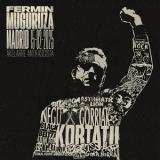
The musical legacy of a night that will live on for years - Fermin Muguruza's 40th anniversary roar! Under the title "Akelarre Antifascista" (which literal translation would be "Anti-Fascist Witches' Coven", but loosely translated as Anti-Fascist Celebration), in a reference to the legendary Akelarre, a wild gathering of Basque witches, this album distils all the intensity, sweat and collective excitement of a night when thousands of voices joined together to celebrate not just a career, but a way of seeing art as resistance. On 15th February 2025, Madrid saw more than just a concert: it was a collective ritual, an anti-fascist demonstration in which thousands of voices came together as one to emphasize the tenacity of a voice that never surrendered. Four decades after lighting the fuse of combative rock in Euskal Herria, the Basque Country, Fermin Muguruza chose the capital of Spain, a city that closed its doors to him so many times and that he has described as "the heart of the beast", to make the definitive record of his 40th anniversary tour. The result is "Akelarre Antifascista", a live album that distils the history of a musical and political resistance that has spanned generations, languages and frontiers. The concert, sold out with 15,000 people, was an explosion of energy, memory and future. Right from the first chord, the Sports Palace of Madrid became an open setting, a free territory where bodies, rhythms, languages and flags mixed freely. Triple 180gr vinyl LP in trifold sleeve.
Released in partnership with our friends at Neon and Filmtrax to release Edo Van Breemen’s score to Osgood Perkin’s latest horror hit The Monkey. Based on the Stephen King short story produced by James Wan (The Conjuring, Saw), The Monkey is a new trip by Longlegs writer/director Osgood Perkins. When twin brothers find a mysterious wind-up monkey, a series of outrageous deaths tear their family apart.
Twenty-five years later, the monkey begins a new killing spree, forcing the estranged brothers to confront the cursed toy. The score is as playful as the movie itself, whimsical when it needs to be, but also managing to be terrifying and tense.
Lenticular edition strictly limited to 1000 copies pressed on brown & green split vinyl, housed in a printed outer O-Card. Composer Edo Van Breeman told us that when they were recording the score, "Mr. King’s Monkey haunted our process for the entire duration of post-production on this film while Mr. Perkins possessed us to mutilate sounds and arrangements in a manner beyond our control. We hope you enjoy this record, and if not... shit, man, that sucks.”
- 1: Downtown
- 2: The Shadow
- 3: Good Intentions
- 4: Gerima
- 5: See The Light
- 6: Hang On
- 7: Summer Rain
- 8: Forgotten Dream
- 9: Ojijican
Continued Sound is proud to present The Shadow by Ojiji.
In 1979, Rupert “Ojiji” Harvey put out one of the most distinctly original albums of a generation. Combining progressive jazz-fusion arrangements with soul, funk, and reggae from his native Jamaica, Ojiji’s The Shadow is an album only he could create.
Ojiji, along with his brother Carl, were performing in nightclubs before they were old enough to legally enter. At just 15, Ojiji was tapped by reggae keyboard legend Jackie Mittoo to join his band The Cougars. Not long after, the Harvey brothers teamed up with other Cougars members to form the funk band Crack of Dawn. This union proved to be groundbreaking, not just in the soul/funk genre, but for Canadian music as a whole. In 1975, they were signed to a major label, Columbia Records, the first Black Canadian band in history to do so. Tracks like “It’s Alright” and “Keep the Faith” still echo in the halls of Canadian funk history.
Personal and industry differences caused Crack of Dawn to break up in 1977, and a young Rupert Harvey was without a band for the first time. However, the creative mind never rests. Outside of the band, Ojiji had been writing and composing his own personal songs since age 17. These songs were a fusion of the sounds and styles he’d soaked up during his time with his musical mentors mixed with new emerging musical influences he was hearing every day.
With the help of his brother Carl and some Crack of Dawn bandmates, he began recording his debut solo album The Shadow. The band's tightness heard in the intricate arrangements are a testament to their interwoven musicianship at the time. Many tracks were recorded in only one-take. Each song in The Shadow’s eclectic glory paints a picture of a young man's singular lived experience through music. Regaling us with where he’s been. Inviting us to where he’s going.
About DJ Yoke..
Born in the small city of Aveiro, Portugal, DJ Yoke (Gabriel Casal) is a hip hop DJ and producer with over two decades of experience shaping the underground scene. In 2011, he was awarded Hip Hop Band of the Year in Portugal and crowned champion of the DMC Battle Supremacy, alongside multiple finalist appearances in the same competition.
Known for blending raw hip hop beats with broken beat and groove-driven textures, DJ Yoke has built a solid independent catalogue, including three solo albums and three beat tapes released independently.
In 2025, he unveils Yoke Fora de Órbita, a landmark release that represents a more mature and refined stage of his artistic journey. The album marks his first physical release, available on vinyl and cassette, and reflects the strong influence of his recent years based in London.
Conceived to be performed both as a live act with musicians and as a DJ set, Yoke Fora de Órbita expands Yoke’s sonic universe beyond the traditional DJ format. Live performances with musicians are scheduled for London, Lisbon, and other European cities.
No longer just a DJ, DJ Yoke continues to redefine his role as an artist — while keeping the turntable as his core instrument.
*Cover Picture: Pauline Oliveros
Practitioner, educator, DJ, and researcher, Femke Dekker (also known as Loma Doom) has long been immersed in both sound and education. Across lecture halls, archives, festivals, art galleries, independent radio stations, and dance floors, she orbits a central question: What if listening itself were an artistic practice? What might unfold when listening becomes method, medium, and material?
Open Field Listening takes shape around these ideas. Presented as a collaboration between Page Not Found—an artist-run platform dedicated to publishing and experimental practices—and the record label Osàre! Editions, the text originates from Dekker’s graduation thesis for the Master Education in Arts at the Piet Zwart Institute, Rotterdam.
There, she honed her skills as a pedagogue, inviting students into improvisational jam sessions, radio-making, and exercises that activate new modes of attention and a heightened sense of sonic curiosity.
Drawing on the work of scholars and artists—most notably Pauline Oliveros—Dekker approaches listening as a call to action: a way of tuning into one’s surroundings, one’s body, and the urgencies that contour our political and social worlds. She emphasizes the radical potential of reorienting knowledge toward collective attunement: the we rather than the I (or the eye). Inspired by Oliveros’s concept of Deep Listening—a way of expanding awareness through focused, embodied perception—Dekker acknowledges the composer as a foundational feminist figure whose insights continue to reverberate through the classroom, the studio, and beyond.
~~~
Page Not Found kindly thanks Mondriaan Fonds and the Municipality of The Hague for their generous support. Page Not Found is a centre for artistic and independent publishing, approaching these practices as vital, collaborative forms of cultural exchange.
Osàre! Editions is a music label founded by Elena Colombi. With a passion for diverse and experimental sounds, Osàre! Editions showcases unique artists and performers from around the world.
- 1: Hole In Your Soul (With Bobby Rush)
- 2: Dead End Street
- 3: Begging For Change (With Shemekia Copeland & Ronnie Baker Brooks)
- 1: Call Your Bluff
- 2: The Blues Is My Biography
- 3: The Harmonica Man
- 1: Real Good Friends
- 2: How You Living?
- 3: Ballad Of The Million Men
- 1: Toxic Love
- 2: Return Of The Roaches
- 3: The Harmonica Man (Instrumental)
Featuring special guests Bobby Rush, Shemekia Copeland, Ronnie Baker Brooks, and The Sons of Blues, the record reflects Billy's lifelong journey through the music he loves. "Every song on this album has special meaning to me," Billy says. "This is the most important work I've ever done - and the best work I've ever done as well." Over his remarkable 50-year career, he has earned numerous awards and accolades, including an Emmy award, three GRAMMYr nominations, and induction into the Blues Hall of Fame. His career reads like a "Who's Who" of the Blues world. Mentored by legends such as James Cotton, Junior Wells, Willie Dixon, and Big Walter Horton, Branch has built an enduring legacy both as a performer and a teacher. In addition to releasing 15 albums with his acclaimed band, The Sons of Blues, he has contributed harmonica to more than 300 recordings by artists including Koko Taylor, Willie Dixon, Eric Bibb, Johnny Winter, Taj Mahal, Keb' Mo', Son Seals, and Big Head Todd, among many others.
- 01: Imprevedibile
- 02: Confabulante
- 03: Melissa
- 04: Mais
- 05: Aglio
- 06: Genziana
- 07: Bucaneve
- 08: Papaveri
- 09: Campanule
- 10: Taurus
- 11: Il Diavolo
The Modern Sound Quartet represents one of the most treasured, yet least documented, outfits in the history of Italian library music. An exceptional studio band of session musicians with a formidable groove, they released only a handful of albums under this name in the second half of the 1970s. However, their sound indelibly shaped dozens of "invisible" soundtracks, often without ever receiving an official credit on the back sleeve.
Led by pianist and composer Oscar Rocchi, and featuring Andrea Surdi (drums), Luigi Cappellotto (bass), and Ernesto Verardi (guitar), the quartet embodies the more jazz-funk, cinematic, and irresistibly groovy side of the 1970s Milan scene. They established themselves as a compelling alternative to the already established groups operating primarily out of Rome, such as I Marc 4 or I Gres.
Juggling late-night club jam sessions, tours supporting Italian pop giants like Ornella Vanoni, and creating rhythmically intense library records, the Modern Sound Quartet forged a unique sonic aesthetic: sophisticated, electric, and profoundly metropolitan.
This boxset celebrates their funkiest side—an irresistible combination of incandescent drum breaks, tight grooves, and high-intensity fusion passages—bringing together some of the most sought-after tracks from legendary LPs like Erbe Selvatiche (1977), Floreama (1977), Horoscope (1978), and I Tarocchi (1980). The selection also delves further back to the roots of their sound, including two powerhouse tracks from Pop-Paraphrenia (1973), a project where Oscar Rocchi—backed by a young, lethal Tullio De Piscopo on drums—sowed many seeds that would fully blossom in the subsequent Modern Sound Quartet output.
Created with DJs, beatmakers, and collectors of Italian library music in mind, this boxset deliberately features tracks that were never previously released on 7 inch—an ideal format for maximizing the rhythmic punch of the quartet's sound.
Available in a limited worldwide edition (500 copies), enriched by iconic 70s-style artwork conceived and designed by Eric Adrian Lee.