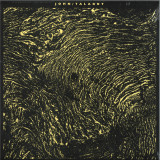
If there is one person, who has been causing a stir on the international club circuit recently, it is Barcelona's John Talabot. Already his debut “My Old School“ (which is meant literally by the way) on Permanent Vacation in 2009 and shortly after that the single “ Sunshine”, which he put out on his own Hivern Disc imprint, made him one of the most promising musicians of the Spanish electronic scene. And those two releases also already set the mark for John Talabot’s unparalleled music: raw, loopy, heavy on the kick drum, sample based, moderate on the tempo, distorted on the drums and light years away from the clean and ever revolving house sound of today. This unique style which also blends influences from afro beat, Detroit techno, Chicago house and cosmic disco, but also northern soul or the energy of Flamenco, immediately turned some heads around. James Murphy, Âme and Aeroplane started including Talabot music in their sets like it was the most natural thing. However - and this is quite rare - he not only gained legions of fans in the house and disco community, but also amongst the leftfield pop and indie rock followers. NME and Resident Advisor both had “Breakthrough“ features on John Talabot and he can be proud of a “Best New Music“ dubbing on
Pitchfork. (Being rather elusive on showing his face in magazines or the web it also came to some funny rumors that John Talabot was the alter ego of a well-known techno producer from Detroit).
At the same time he drew the attention of like-minded artists like James Holden and Luke Abott from Border Community, Blondes or Delorean, which lead to a bunch of fertile collaborations: Luke Abbott and Blondes remixed Talabot’s “Sunshine“ single , John Talabot remixed a track by Delorean and vice versa Delorean’s Ekhi contributed vocals to the track “Journeys “ on John’s album). Another example is the Young Turks Label (home of Jamie XX, Holy Fuck, El Guincho or SBTRKT ) on which he released the “Families“ EP in 2010. It was praised beyond limits. Pitchfork for
instance hailed: “… where pop and house influences sweetly buffer up against one another to provide an unyielding sense of elation“ and even brought Talabot a comparison with artists like Four Tet or Caribou.
While staying true to his sound, John Talabot has nevertheless shown a constant evolution as a producer since his first release. He has traced a solid musical path that has turned him into one of the big references of European House and has made him also a highly in demand Remixer (for the likes of The XX, Francesco Tristano’s “Aufgang” project, Shit Robot on DFA, Thaiti 80, Joakim or Teengirl Fantasy to name just a few ).
A progression that now crystallizes in “ƒin”, his first full-length album for Permanent Vacation. A record, in which the Barcelona mastermind sets aside the danceable immediacy to expand his stylistic palette more than ever. For that purpose, Talabot melts all the elements that have constructed his distinctive sound until now and makes them emerge from a new perspective, in which the construction of complex song structures, intricate rhythms and superpositions of ever-evolving melodies and atmospheres pick up the baton of the “a kick-drum and a sampler” philosophy of his initial productions. The result brings us 11 tracks (we should call them songs really!) dominated by dark ambiances, gaseous textures and bittersweet moods that, above all, reveal a kind of vivacity that’s really hard to find in contemporary electronics. “Fin” is far from being a track collection. From the majestic opener “Depak Ine“ to it’s solemn ending with
“So Will Be Now“ , one of the two tracks that features Talabot’s soul and label mate Pional, each song traces an overall dialogue with the rest, culminating a highly emotional journey through Talabot’s always compelling and unique musical vision.
Search:2 mad
- Elby "Bee" Deshotels - Dessus Le Natchitoches
- Alma Barthélémy - Jamais Je T'oublierai (La Claire Fontaine)
- Alma Barthélémy - Ma Bonne Créole
- Alma Barthélémy - Tu Peux Pas Mettre Ce Macaque Dessus Mon Dos
- Caesar Vincent - Vive Le Vin
- Caesar Vincent - Travailler C'est Trop Dur
- Caesar Vincent - La Chanson De Ma Jolie Maîtresse
- Caesar Vincent - Oh Les Trains Quand Ils Jubutaient
- Raywood Morvant - La Cravate
- Chalvin Godar - Ma Négresse M'a Quitté
- Chalvin Godar - Allons Au Bal, Colinda
- Raywood Morvant - J'ai Passé Devant Ta Porte
- Burton Lemaire - La Marseillaise
- Clifton Chenier - Laissez Les Bons Temps Rouler
- Clifton Chenier - Les Haricots Sont Pas Salés (Zydeco Sont Pas Salé)
- Clifton Chenier - Jolie Blonde
- Isome J. Fontenot - J'ai Traversé La Mer Et Les Montagnes
- Isome J. Fontenot - La Banane À Nonc Adam (Club 73 Special/Acadian Two-Step)
- Isome J. Fontenot - Rythmes De Triangles
- Gabriel Broussard - Train À Vapeur
- Gabriel Broussard - Train À Vapeur Avec Un Chien Qui Essaie D'attraper Un Prisonnier Qui S'est Échappé Du Train
- Chalvin Godar - Oh Oui, Dans La Triste Vise
- Gabriel & Emeline Broussard - J'ai Engagé Ma Promesse Au Baptême
- Cyril Cyril - Evangelione Bebop
- Radio Hito - Bonne Créole
- Yama Warashi - Librement
- Herandu - Jungle Blonde
- _Thesmoothcat - Systems Everywhere
- Juu - Ride Out
- Nappynappa - Fear Of Freedom
- Deafkids - A Travessia
- Madteo - From The Boot To Tap (Foot Version)
- Chimère Fm - Train À Vapeur Avec Un Chien (Hobo Des Limbes Retouche)
- Tanz Mein Herz - Le Natchitoches 06:11
Vinyl + Book[48,32 €]
The songs of Louisiana's Francophone and Creole heritage have flowed through the bayous for centuries, shaped by African, Native American, French, and Caribbean influences. Combining a vinyl record and a bilingual book, Pasé Bél Tan: Francophonies and Creolities in Louisiana celebrates this cultural legacy. It pairs historical recordings with contemporary reflections, inviting artists and scholars to explore this ever-evolving soundscape. Bridging a vibrant present with a painful past, it creates a space for dialogue around identity, memory, and the ongoing transformation of Louisiana’s musical traditions.
The double vinyl compilation and its OBI strip features a staggering 34 songs, ranging from French ballads and Creole renditions to zydeco hooks and reinterpretations by a wide array of contemporary artists such as Madteo, Tanz Mein Herz, Radio Hito, Cyril Cyril, and Deafkids, among others. With archival recordings and contemporary creations side by side, it serves as a bridge across the vast bayou of Louisiana music.
The book is a 272-page bilingual (French/English) publication that seeks to encapsulate the far-reaching implications of Louisiana’s musical heritage within both Louisianan and American society. It explores how this culture has shaped—and been shaped by—its surroundings. With contributions from many key figures of the scene—musicians, researchers, club owners, and other vital witnesses—it aims to present the intricate and singular relationship that exists between Louisiana and its music.
The book only is not available through distribution but only as a bundle with the 2LP version.
- Elby "Bee" Deshotels - Dessus Le Natchitoches
- Alma Barthélémy - Jamais Je T'oublierai (La Claire Fontaine)
- Alma Barthélémy - Ma Bonne Créole
- Alma Barthélémy - Tu Peux Pas Mettre Ce Macaque Dessus Mon Dos
- Caesar Vincent - Vive Le Vin
- Caesar Vincent - Travailler C'est Trop Dur
- Caesar Vincent - La Chanson De Ma Jolie Maîtresse
- Caesar Vincent - Oh Les Trains Quand Ils Jubutaient
- Raywood Morvant - La Cravate
- Chalvin Godar - Ma Négresse M'a Quitté
- Chalvin Godar - Allons Au Bal, Colinda
- Raywood Morvant - J'ai Passé Devant Ta Porte
- Burton Lemaire - La Marseillaise
- Clifton Chenier - Laissez Les Bons Temps Rouler
- Clifton Chenier - Les Haricots Sont Pas Salés (Zydeco Sont Pas Salé)
- Clifton Chenier - Jolie Blonde
- Isome J. Fontenot - J'ai Traversé La Mer Et Les Montagnes
- Isome J. Fontenot - La Banane À Nonc Adam (Club 73 Special/Acadian Two-Step)
- Isome J. Fontenot - Rythmes De Triangles
- Gabriel Broussard - Train À Vapeur
- Gabriel Broussard - Train À Vapeur Avec Un Chien Qui Essaie D'attraper Un Prisonnier Qui S'est Échappé Du Train
- Chalvin Godar - Oh Oui, Dans La Triste Vise
- Gabriel & Emeline Broussard - J'ai Engagé Ma Promesse Au Baptême
- Cyril Cyril - Evangelione Bebop
- Radio Hito - Bonne Créole
- Yama Warashi - Librement
- Herandu - Jungle Blonde
- _Thesmoothcat - Systems Everywhere
- Juu - Ride Out
- Nappynappa - Fear Of Freedom
- Deafkids - A Travessia
- Madteo - From The Boot To Tap (Foot Version)
- Chimère Fm - Train À Vapeur Avec Un Chien (Hobo Des Limbes Retouche)
- Tanz Mein Herz - Le Natchitoches 06:11
Vinyl[28,15 €]
The songs of Louisiana's Francophone and Creole heritage have flowed through the bayous for centuries, shaped by African, Native American, French, and Caribbean influences. Combining a vinyl record and a bilingual book, Pasé Bél Tan: Francophonies and Creolities in Louisiana celebrates this cultural legacy. It pairs historical recordings with contemporary reflections, inviting artists and scholars to explore this ever-evolving soundscape. Bridging a vibrant present with a painful past, it creates a space for dialogue around identity, memory, and the ongoing transformation of Louisiana’s musical traditions.
The double vinyl compilation and its OBI strip features a staggering 34 songs, ranging from French ballads and Creole renditions to zydeco hooks and reinterpretations by a wide array of contemporary artists such as Madteo, Tanz Mein Herz, Radio Hito, Cyril Cyril, and Deafkids, among others. With archival recordings and contemporary creations side by side, it serves as a bridge across the vast bayou of Louisiana music.
The book is a 272-page bilingual (French/English) publication that seeks to encapsulate the far-reaching implications of Louisiana’s musical heritage within both Louisianan and American society. It explores how this culture has shaped—and been shaped by—its surroundings. With contributions from many key figures of the scene—musicians, researchers, club owners, and other vital witnesses—it aims to present the intricate and singular relationship that exists between Louisiana and its music.
The book only is not available through distribution but only as a bundle with the 2LP version.
múm are returning with a new album on Morr Music. »History of Silence« is the first full body of work by the Icelandic collective since 2013's »Smilewound« and their seventh studio album to date—recorded, deconstructed, put back together again, refined and finished over the course of two years. Vibrantly oscillating around a carefully curated palette of electronic and analogue sounds, the eight new tracks reflect the group's continuous strive to explore sonic spaces through subtle yet gripping songwriting.
For a long time now, múm have been exploring the idea of distance in their music. In the beginning, this was born purely out of necessity. Founded in Iceland in the late 1990s, the members soon began embarking on journeys across the world—collectively while touring, but also individually, exploring new places to live and create. Settling in, moving on, catching up: The concept of distance soon became an integral part of the collective's process. »History of Silence« leans into this idea, with space and time becoming indispensable pillars of the arrangements. While being coherent and structured, they echo their origins from different seasons, cities, and spaces—neatly stitched together with unparalleled craftsmanship. They breathe an overall airy and intimate atmosphere, yet resonate with the structural heft of time.
On »History of Silence« time manifests in unexpected, liberating, and mesmerizing ways. It does not move reliably forward; it drifts, takes twists and turns, even disappears completely. Electronic textures blur into acoustic sounds, voices flicker and dissolve, melodies stumble and repeat. The arrangements often feel like they’re wandering, gently resisting direction. »Our Love is Distorting,« for instance, begins with a subtle piano motif, playing hide and seek with feedback noises, digital artefacts, and lush—yet very quiet—string arrangements, before gradually forming into a distinctive song. It's a perfect illustration of múm's general approach on this album. »Mild at Heart« turns this idea upside-down, flowing freely from start to finish with moments of silence sprinkled in—serving to emphasize the musical elements. The music on »History of Silence« moves like weather: unexpected, intimate, quietly detailed. Contrasted with vivid phrases, rhythmic shifts, and small hooks, the album offers a new angle of compositional clarity and vision.
Work on »History of Silence« began at Sudestudio in southern Italy. Additional recordings were made in Reykjavík, Berlin, Athens, Helsinki, New York, and Prague. The strings were recorded by Sinfonia Nord at the Hof concert hall, Akureyri, arranged and conducted by Ingi Garðar Erlendsson, who has worked with the band for many years. The orchestral elements don’t dominate the record—instead, they surface gently, adding depth and resonance to the songs without disturbing the songs' fragility.
Contrary to what the album title suggests, »History of Silence« is a collection of bold and colorful songs, no matter how muted they might sound at times. They tickle like a feather drifting through the wind, ending up in unexpected places, stimulating long-forgotten thoughts and feelings, intimate moments of introspection. The songs move through the echoes those moments leave behind: the emotional traces of things unsaid, the weight of stillness. Offering closeness by means of distance and much-needed support.
múm are returning with a new album on Morr Music. »History of Silence« is the first full body of work by the Icelandic collective since 2013's »Smilewound« and their seventh studio album to date—recorded, deconstructed, put back together again, refined and finished over the course of two years. Vibrantly oscillating around a carefully curated palette of electronic and analogue sounds, the eight new tracks reflect the group's continuous strive to explore sonic spaces through subtle yet gripping songwriting.
For a long time now, múm have been exploring the idea of distance in their music. In the beginning, this was born purely out of necessity. Founded in Iceland in the late 1990s, the members soon began embarking on journeys across the world—collectively while touring, but also individually, exploring new places to live and create. Settling in, moving on, catching up: The concept of distance soon became an integral part of the collective's process. »History of Silence« leans into this idea, with space and time becoming indispensable pillars of the arrangements. While being coherent and structured, they echo their origins from different seasons, cities, and spaces—neatly stitched together with unparalleled craftsmanship. They breathe an overall airy and intimate atmosphere, yet resonate with the structural heft of time.
On »History of Silence« time manifests in unexpected, liberating, and mesmerizing ways. It does not move reliably forward; it drifts, takes twists and turns, even disappears completely. Electronic textures blur into acoustic sounds, voices flicker and dissolve, melodies stumble and repeat. The arrangements often feel like they’re wandering, gently resisting direction. »Our Love is Distorting,« for instance, begins with a subtle piano motif, playing hide and seek with feedback noises, digital artefacts, and lush—yet very quiet—string arrangements, before gradually forming into a distinctive song. It's a perfect illustration of múm's general approach on this album. »Mild at Heart« turns this idea upside-down, flowing freely from start to finish with moments of silence sprinkled in—serving to emphasize the musical elements. The music on »History of Silence« moves like weather: unexpected, intimate, quietly detailed. Contrasted with vivid phrases, rhythmic shifts, and small hooks, the album offers a new angle of compositional clarity and vision.
Work on »History of Silence« began at Sudestudio in southern Italy. Additional recordings were made in Reykjavík, Berlin, Athens, Helsinki, New York, and Prague. The strings were recorded by Sinfonia Nord at the Hof concert hall, Akureyri, arranged and conducted by Ingi Garðar Erlendsson, who has worked with the band for many years. The orchestral elements don’t dominate the record—instead, they surface gently, adding depth and resonance to the songs without disturbing the songs' fragility.
Contrary to what the album title suggests, »History of Silence« is a collection of bold and colorful songs, no matter how muted they might sound at times. They tickle like a feather drifting through the wind, ending up in unexpected places, stimulating long-forgotten thoughts and feelings, intimate moments of introspection. The songs move through the echoes those moments leave behind: the emotional traces of things unsaid, the weight of stillness. Offering closeness by means of distance and much-needed support.
múm are returning with a new album on Morr Music. »History of Silence« is the first full body of work by the Icelandic collective since 2013's »Smilewound« and their seventh studio album to date—recorded, deconstructed, put back together again, refined and finished over the course of two years. Vibrantly oscillating around a carefully curated palette of electronic and analogue sounds, the eight new tracks reflect the group's continuous strive to explore sonic spaces through subtle yet gripping songwriting.
For a long time now, múm have been exploring the idea of distance in their music. In the beginning, this was born purely out of necessity. Founded in Iceland in the late 1990s, the members soon began embarking on journeys across the world—collectively while touring, but also individually, exploring new places to live and create. Settling in, moving on, catching up: The concept of distance soon became an integral part of the collective's process. »History of Silence« leans into this idea, with space and time becoming indispensable pillars of the arrangements. While being coherent and structured, they echo their origins from different seasons, cities, and spaces—neatly stitched together with unparalleled craftsmanship. They breathe an overall airy and intimate atmosphere, yet resonate with the structural heft of time.
On »History of Silence« time manifests in unexpected, liberating, and mesmerizing ways. It does not move reliably forward; it drifts, takes twists and turns, even disappears completely. Electronic textures blur into acoustic sounds, voices flicker and dissolve, melodies stumble and repeat. The arrangements often feel like they’re wandering, gently resisting direction. »Our Love is Distorting,« for instance, begins with a subtle piano motif, playing hide and seek with feedback noises, digital artefacts, and lush—yet very quiet—string arrangements, before gradually forming into a distinctive song. It's a perfect illustration of múm's general approach on this album. »Mild at Heart« turns this idea upside-down, flowing freely from start to finish with moments of silence sprinkled in—serving to emphasize the musical elements. The music on »History of Silence« moves like weather: unexpected, intimate, quietly detailed. Contrasted with vivid phrases, rhythmic shifts, and small hooks, the album offers a new angle of compositional clarity and vision.
Work on »History of Silence« began at Sudestudio in southern Italy. Additional recordings were made in Reykjavík, Berlin, Athens, Helsinki, New York, and Prague. The strings were recorded by Sinfonia Nord at the Hof concert hall, Akureyri, arranged and conducted by Ingi Garðar Erlendsson, who has worked with the band for many years. The orchestral elements don’t dominate the record—instead, they surface gently, adding depth and resonance to the songs without disturbing the songs' fragility.
Contrary to what the album title suggests, »History of Silence« is a collection of bold and colorful songs, no matter how muted they might sound at times. They tickle like a feather drifting through the wind, ending up in unexpected places, stimulating long-forgotten thoughts and feelings, intimate moments of introspection. The songs move through the echoes those moments leave behind: the emotional traces of things unsaid, the weight of stillness. Offering closeness by means of distance and much-needed support.
- Another Grand Offering For The Swine
- Noonday Demon
- Mind
- Ditto
- Freeeee
- Divine Blight
- Happy
- Feliz
- Breeze
- Fantasia
- Songs For The Record Exchange
- How Long Must I Stay In This Place?
Following the "rich jangle and big, well-developed songs" (Bandcamp) of 2023's Bananasugarfire, Edling sought to deconstruct his creative process by centering collaboration instead of a more solitary pursuit in songwriting, even as personal matters made isolation a more natural instinct. He describes taking time to make notes of the ways, timing and forms in which songs came to him in the process of demoing the record, and regularly questioning if his approach was like that of "watching a pot of water boil" or waiting for a bolt of light to appear in the sky. In many ways, Shooting Star is an appeal to the muse, a record of "songs about writing songs" born from Edling's desire to trust his instincts despite the posturings of inner demons and creative roadblocks, and to celebrate the little wins along the way. The result is a sprawling new work packed to the brim with playful eccentricities and dynamism, one that owes as much of its inspiration to mid-century folkies like Michael Hurley and Karen Dalton as it does to alt rock of the nineties like Yo La Tengo and Stereolab. Shooting Star is a constellation of influences, experiences, reckonings-with the state of the world, with others, with creativity, with oneself-with no two songs created in the same way. Instead of holing up in a recording studio, the creation of the record was formed by a patchwork of collaborations in a variety of recording locales, all which were later alchemized by mix engineer Matthew Schimelfenig. - RIYL Sparklehorse, John Cale, Yo La Tengo, Superviolet, Spirit of the Beehive, Horse Jumper of Love, Of Montreal
“When forty, I was still wearing miniskirts, extravagant patterns, pink, fluorescent colours, star shaped earrings. I walked around with my leopardskin hat, my fluffy bag, my floral outfit, until the gaze of others made me feel like it was not age appropriate anymore. Although I am still the same person I was at 16. It's the others I see changing."
There's no better way to describe ageing than through the gap that arises and continues to grow between physical reality and the specular image of the self : one deteriorates over time, exposed to the cruel laws of gravity and oxydation, while the other never ages, remaining intact and unaltered… frozen in a moment of blissfulness. The more time goes by the more the gap becomes a separate entity (ou “world” pour etre plus prosaïque). It can become so painful that many try to escape it, using and abusing every trickery.
“Youth looks so good on you” is a sonic ballad which bizarrely explores the world that lies between reality and self-fantasy, a world where the aesthetic cult of youth becomes sovereign to the people.
This piece was produced in 2022 as part of the Festival « Les Heures Sauvages - Nef des Marges dans l'ombre des certitudes », at the Centre Wallonie-Bruxelles in Paris.
After "A Story of a Global Disease" in 2022, "Youth looks so good on you" is the second piece of music by Naomie Klaus released on moli del tro records.
- 1: 20 Season
- 2: Otherworld
- 3: See Me Old
- 4: Beautiful & Treacherous
- 5: Reincarnated
- 6: Abigail
- 7: Couch Interlude
- 8: Oh No!
- 9: New Bliss
- 10: Miss Universe
- 11: Feel Through
- 12: Aurora
- 13: Running With Scissors
Running with Scissors is a cathartic heart ache and, ultimately, a therapeutic exploration of what it means to be alive—to love, to grieve, to regret, and to grow. It pulses with rawness and authenticity, sincerity and honesty, offering both solace and strength to anyone navigating their own emotional journey.
Running with Scissors is the third full-length album from Canadian trio Afternoon Bike Ride. Residing in Montreal, the group is made up of Lia (vocals, guitar, programming), David (vocals, guitar, drums, programming), and Éloi (vocals, keys, drums, programming). Since their formation in 2019, the band has released numerous projects where indie rock blends with acoustic pop, ambient field recordings, and lofi folk.
With each track on the new album, the three artists explore the rollercoaster ride of life’s most profound lessons—falling in and out of love, embracing grief, and navigating the complex spectrum of human emotion. The album feels like a series of journal entries, capturing moments of vulnerability, self-discovery, and personal growth. A lot has changed since their formation in 2019 but their hearts are still in the right place. Lead singer and songwriter Lia reflects on the bittersweet realization that life is an ongoing journey and we’ll never have all the answers, but we can still find meaning through love, meaningful connection, and the lessons that shape us. If life is one big lesson, then according to Lia, "I guess these songs are some classes I've taken."
The twelve song soundscape blends raw, emotional acoustic elements with subtle electronic layers and indie rock grunge, creating a textured blend that feels as vast and intimate as the album’s themes. It’s an immersive record that shifts perspectives, from the micro to the macro, zooming out to explore the universe and zooming in on the personal experiences that define our lives. Throughout the album, ABR explores the beauty of feeling deeply while embracing both the intensity of emotion and the struggles of finding purpose. "I'm finding my way through this world now," says Lia, "with the comfort of knowing I'll never know it all.”
A new Toy Tonics artist! Brazilian DJ, vinyl collector, party promoter, and style aficionado Martha Pinel has joined the Toy Tonics family.
Originally from Rio de Janeiro, where she is a well-established DJ and a prominent figure in the lifestyle scene, Martha also resides in Berlin, where she became friends with the Toy Tonics crew.
She is the creator of Assembleia, a celebrated party in Rio de Janeiro known for its laid-back and unpretentious atmosphere. Assembleia has also become a Carnival sensation, hosting unforgettable annual editions that are now a highlight of the season. In Brazil, she is also known as the co-founder of the Croma project, where fashion and music merged to revolutionize Rio de Janeiro's alternative scene. She has been featured on the cover of GQ Brazil, which named her one of the "13 artists giving voice to the generation that is changing the world."
Martha has been DJing worldwide at festivals such as KALA Festival, Paris Fashion Week, DGTL, and Boiler Room. She has made a name for herself in the diggers scene, sharing the stage with DJs such as Hunee, Antal, Yusu, Sam Ruffillo, Prins Thomas, and many others.
Martha is passionate about discovering music daily and crafts dynamic, non-linear sets that play with the audience's emotions. Known for her bold approach, her sets are always powerful and brimming with personality. They seamlessly blend ethnic musical influences with cutting-edge productions from Brazil and beyond, incorporating African and Middle Eastern sounds, space disco, Italo disco, Balearic beats, house, and its subgenres.
Martha Pinel's debut EP, Real Rio, was born during a moment of rediscovery in her hometown, Rio de Janeiro, after spending a long time abroad. This project is a celebration of that reconnection, capturing the city's most authentic and visceral aspects-a place where beauty and chaos coexist, with dramatic highs and lows.
In the track "Uber Moto," Martha reflects on the urban phenomenon of app-based motorcycles, which have become a symbol of the city.
"Espírito de Estado," on the other hand, is a track that embodies the spirit of the Carioca Carnival, the greatest party in the world.
Finally, "Assim" offers a personal reinterpretation of Marcos Valle's classic Estrelar. In this track, Martha and Gabto leave their mark on this Brazilian music icon, reflecting on the concept of Body Culture-it's often said that it's impossible to walk along Ipanema Beach without noticing the Carioca cult of the body.
Here we are with the Earth perched on a thin tenuous wire. The neo-liberal order and its fascist mirror world burning through fossil fuels and the souls of vulnerable peoples the globe over. Conflict, warfare, climate degradation, misinformation. The time is nigh to break the spell with music.
Right on time comes IC007 – Four cuts of progressive elektro roots to shine a light on only four of the multitudinous hot spots of suffering while also inspiring a musical movement forward through the storm. Dedicated to the peoples of the Sudan, Palestine, Ukraine, and Taiwan this tune is another ITAL COUNSELOR sound system scorcher.
The message at its very core is to keep keeping on. Never give up. Forward through the storm like an ITAL WARRIOR! This RHYTHM SHOWER is a guideline toward a better tomorrow.
Delivering this message are some of ITAL COUNSELOR MUSIC’s stalwart players. Inyaki Basque Dub Foundation returns to the fold with yet another top-notch original rhythm – A drum and bass workout that harkens back to the best of Sly & Robbie’s Compass Point era science fiction dubwise and just a little bit of Aswad’s “To The Top” era progressive roots. Both raw and rhythmically complex, Inyaki makes the drum and bass hit hard with the mixing help of top studio man James Zugati. The dubwise cuts on side two are of course custom made to make bass bins rumble and weakheart drop.
Alas, we cannot forget Soothsayer horns – here as always proving that they are the best horn section out there. They feel it. They know it. They execute it in the hardest and sharpest of manors. Heavy heavy hornsman manners…
Progressive. Heavy. Horns. Elektro. Roots. Forward.
One Love and Guidance along the Way,
Andy G, IC
- The Voice Of Water
- Lake Of Sphinxes
With »Roto«, Derek Piotr revisits the aqueous terrain first explored in his 2016 album »Drono«, where the paradox of water’s stillness and perpetual motion was refracted into looping voices and glitching textures. Conceived as a »spiritual successor« and recorded in 2019, the album has lain dormant for six years before surfacing on Discreet Archive. That stretch of silence seems to have deepened its charge – the sound feels unearthed rather than made, like a whirlpool biding its time in obscurity until now.
Unlike »Drono«’s mosaic of shorter pieces, »Roto« unfurls as two expansive half-hour tracks, allowing Piotr to probe repetition with greater intensity. Vowels accumulate until they shimmer with alien sentience, drones grow dense and psychoacoustic, and the smallest digital artifacts flicker like neural sparks. The result is a work that denies familiarity; recurrence here only breeds strangeness, unspooling into a procession of hidden pulses and altered voices that resist prediction, drawing the listener deeper into a submerged, otherworldly space.
Derek Piotr is a folklorist, researcher and performer whose work focuses primarily on the human voice. His work covers practices including fieldwork, vocal performance, preservation and autoethnography; and is primarily concerned with tenderness, fragility, beauty and brutality. He has collaborated with artists including Scott Solter, Nathan Salsburg and Thomas Brinkmann across various disciplines.
He is lead archivist and creative director of the Fieldwork Archive.
- Plastic People
- Death Crushes Hope
- Redman
- This Side Of The Dirt
- Kiss O Shame
- Little Lizzy
- The Thorn
- Seeking The Dawn
Transparent orange vinyl[24,58 €]
Dusted Angel is a band that likes to keep it in the family. Made up of a group of close friends that have known each since the early 80s, stemming from playing in various intertwined bands engraved in the extended Santa Cruz family of friends. Featuring Ed Gregor, guitar (hedgehog, no use for a name), Eric "Dog" Fieber, guitar (Mock, creature, fire sermon) Steve Ilse drums (creature, Herbert, Automatic Animal) Clifford Dinsmore vocals (Bl'ast!, Seized Up, Spaceboy) and Eliot Young (Lost in Line, Seance) on bass. Formed in 2009, Dusted Angel is a sleeping giant that awakens from time to time to enlighten people with their unique brand of heavy, heavy groove laden music. Now it's time for a new album via Heavy Psych Sounds Records!
Transparent orange vinyl, limited to 300 copies. Dusted Angel is a band that likes to keep it in the family. Made up of a group of close friends that have known each since the early 80s, stemming from playing in various intertwined bands engraved in the extended Santa Cruz family of friends. Featuring Ed Gregor, guitar (hedgehog, no use for a name), Eric "Dog" Fieber, guitar (Mock, creature, fire sermon) Steve Ilse drums (creature, Herbert, Automatic Animal) Clifford Dinsmore vocals (Bl'ast!, Seized Up, Spaceboy) and Eliot Young (Lost in Line, Seance) on bass. Formed in 2009, Dusted Angel is a sleeping giant that awakens from time to time to enlighten people with their unique brand of heavy, heavy groove laden music. Now it's time for a new album via Heavy Psych Sounds Records!
- In The Rural Pattern
- What To Look For Outside
- Birds In General: And The Rook
- Outline Of Nature
- Moths That Rally To A Soundless Call
- Rotating Seasons
- All The Animals Under A Fractal Sky
First released on August 18, 2023, "Outline of Nature" started as an experiment in building a modular synthesizer system and ended up as a voltage controlled outpouring of love for the natural world. Sylvan-born and pastoral-powered, sap-blooded and lightning-charged, this album grew out of the damp florescent corners of the woods, each note and sound, a fractal extension of their seedling sounds. It was nurtured into being at The Twilight Research Centre, a studio facility situated on the border of Somerset and Dorset. During Covid lockdown 1.0, I spent the outdoor hours we were permitted, wandering through the centre's surroundings, in the green lanes, woodlands and corridors of the wilds with their wary and flickering inhabitants, beneath the distant eyes of the soaring buzzards and the hulking red kites. I didn't expect it, but it was in the quiet, ferociously vibrant dens of nature, that I found a deeply profound connection with the natural world. It once again made sense to feel as much a part of the woods as the trees were; I felt like a natural entity in its habitat again, not something I'd properly felt since running wild through the gullies, dells and fells of the Midlands as a child. And I became afflicted with a powerful urge to build strange electronic sound systems that were organic, chaotic, fractal and in some way reflective of the awesome natural systems that surround us and surround the centre. I plugged in the modular, and went searching for signs of life. Adding to this, just before the lockdowns, I stumbled across a three volume nature encyclopedia in a local charity shop, called "Outline of Nature in the British Isles" by Sir John Hammerton. The sub-heading reads "A Comprehensive Photo-Survey of the Varied Life of Field and Hedgerow, Moor and Mountain, River, Pond and Sea", and it's a stunning collection of grainy photographs, beautiful illustrations and wondrously poetic writing, some of which inspired track titles and of course, the album title. I also rekindled my love of Ladybird nature books such as the "What to Look for in Spring/Summer/Autumn/Winter" series, "Birds and How They Live" and "Butterflies, Moths and Other Insects", rebuilding a small collection I had as a child and discovering numerous volumes new to me. Between the two literary sources, I had a rich well of imagery, writing and pastoral nostalgia to draw from; and coupled with the extended sessions of blissing out in my own heavily ecstatic awe descended on me in the sheer grandness of the wilderness, I set about enticing out of the woods an album of phosphorescent electrical music, abundant with comparatively microscopic, but persistent and wild life-forces.
- 1: Busted
- 2: Where Can I Go?
- 3: Born To Be Blue
- 4: That Lucky Old Sun
- 5: Ol' Man River
- 6: In The Evening (When The Sun Goes Down)
- 7: A Stranger In Town
- 8: Ol' Man Time
- 9: Over The Rainbow
- 10: You'll Never Walk Alone
"Ingredients In A Recipe For Soul proved that Ray Charles didn’t so much ignore genres, but, by the ’60s, had become a genre unto himself. An academic might want to separate this stack of songs into neat little buckets—country, jazz, standards, blues, pop—but those are just the ingredients. Ray Charles sings whatever he likes and whatever he sings comes out as a Ray Charles song, with a flavor all its own.
Two hit singles, “Busted” and “That Lucky Old Sun,” made Ingredients In A Recipe For Soul an instant Top Ten when it was released in 1963. Bootlegged across Europe for decades, this is the fi rst and only legitimate reissue of this essential album on vinyl (and its fi rst appearance on CD since the 1990s), now fully restored and remastered with the full cooperation of the Ray Charles Foundation."
Raff Todesco, one of the founders of Italo Disco, presents his new vinyl produc'on: "Midnight Girl"
and "Heaven," sung by the duo George Aaron and Anita Campagnolo. This marks a magical return
with new sounds and musical structures from the ar'st who made the legendary '80s famous
worldwide.
"Midnight Girl" is a 1985 track by Noe Willer, which was very famous in France. The song was
originally 'tled "Toi, femme publique" before being translated into English as "Midnight Girl" and
arranged in an Italo Disco style by the group Ven Uto. Thus, "Midnight Girl" is an "archaeological"
track that has been appropriately re-envisioned in a modern key by Raff Todesco, George Aaron &
Anita Campagnolo.
On the vinyl's B-side, you'll find a new version of "Heaven," a 2007 track, with modern sounds and
re-sung by George and Anita
- 1: Fragments
- 2: Higher Places
- 3: Deja Vu
- 4: Come To The Garden
- 5: Drifting
- 6: Paper Flowers
- 7: Microscope
- 8: Stupid Things
- 9: Summertime
- 10: Manifest
- 11: Leave Me Out
- 12: Wildflower