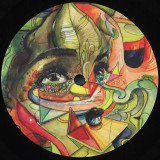
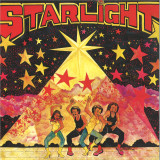
FLASH's monstrous double-sided dynamite is quite hard to find in its original format. We here at TRAMP are mega happy to be responsible for this re-issue and we hope that everybody who learns about it is as pleased as we are. For those who are interested in FLASH's story we strongly recommend to check out PRAISE POEMS Vol.8.
Search:2 responsible
Abrakadabra The success and acclaim of You Can’t Kill My Rock N’ Roll inspired the band significantly and writing for the next record enthusiastically started whilst out on tour. Connecting with so many fans, old and new has helped to influence the shape and sound of the new record, with Adde commenting that the new album “feels like the record we should have released after the Black album”. Abracadabra will be released worldwide on March 25 - 2022, containing 10 hard hitting songs exploding with riffs, attitude, intensity and that magical feeling you get when work is over and the weekend is here. This is an album for the fans and best shared with great friends, cold beers and very loud speakers!! Recorded in 2020 and early 2021 at both Österlyckan and Bombastik in Musikens Hus - Gothenburg, the decision was made early on to once again work with Johan Reiven, who was responsible for production duties on the bands ‘Black Album’. Adde states “Working with Johan was like stepping back in time, there’s a shared intensity and commitment to excel that collectively drives us and ultimately brings out the best in us all… I am 100% happy with the result”. This shared intensity can be heard on every one of the tracks from the defiantly rebellious “Dream in Red” through to the bar soaked philosophy of “One For All” and the thundering powerhouse that is “Catch Me If You Can”. Abracadabra is uncomplicated, Rock N’ Roll escapism and entertainment at its best… sprinkled with a little bit of magick for good measure --
It was certainly unpredictable that a legendary jazz drummer would record one of spiritual disco's most revered songs twenty-three years into his career, but that's exactly what happened when Idris Muhammad laid down the epic "Could Heaven Ever Be Like This" in 1977. Hailing from New Orleans, Muhammad always had more than a touch of funk to his rhythms, and by the late '70s his collaborations with master engineer Rudy Van Gelder on recordings for the CTI and Kudu labels had gelled perfectly with the reigning jazz-funk sound of the day. Arranger Dave Matthews (famously part of the James Brown stable) collaborated with lyricist and former Long Island record store clerk Tony Sarafino on writing the song, which on the original recording unfolds over a nearly 9-minute build. Appearing at the crest of the disco movement, "Could Heaven Ever Be Like This" was an immediate hit with David Mancuso and the attendees of his loft parties, quickly spreading to other venues and even making a small climb up the Billboard R&B charts. For this new issue on Most Excellent Unlimited, Danny Krivit, whose own career as a dancefloor orchestrator from the DJ booth has paralleled the timeframe of the song's existence, has replaced the original loose introduction with a mix-friendly steady groove that maintains the unstoppable pulse of the song while maintaining the cathartic mid-song break and giving the track potential for even more momentum.
Another percussionist is responsible for our flip side track, "Magic's in the Air." Vince Montana was not only an in-house arranger and producer for Philadelphia International and other Philly soul labels, but was an accomplished vibraphone player. His talents are on display and doubly emphasized by Mr. K in this overlooked cut from Ronnie Walker, a falsetto singer who draws a rather strong comparison to the best songs of fellow Philadelphians Blue Magic with this uptempo, subtly synthy 1975 track. Never having appeared on a 12-inch, and indeed never having appeared even on a full-length album, Krivit's edit is the first extended mix of "Magic's in the Air" to date. Alongside "Could Heaven Ever Be Like This," itself notoriously difficult to find in 12-inch form, this latest from MEU's long running series with Mr. K is a bonafide must-have for the discerning DJ.
Third album from North Carolina band who merges raw country with punk grit and pop sensibilities. "Straightforward, undiluted songs about shared hardships and unlikely victories that can bring even the most polarized people together. We are not responsible for other people’s behavior and sometimes we have more say in our own lives than we believe. The moment we realize this we start awkwardly constructing this cerebral bridge that's somewhat clunky and weird but it’s finally taking us in the direction we want to go. The songs on Nightroamer are beautiful, agonizing, magnetic, mischievous, indomitable pieces of the clunky and weird brain bridge to personal autonomy." —Sarah Shook
With a string of releases on Hot Haus, Running Out Of Steam and Distant Horizons, M4A4 is no stranger to creating ear-catching dance music against a backdrop of collective influences, ranging from UKG, house and lunging 2-step. The prolific producer now makes his debut for Breaks ‘N’ Pieces - twisting the standard house template; with one eye on the past and another on the future.
‘Cartier’ creates a spark by combining slinky drums and classic house sounds with an M4A4 signature twist; while also offering a zesty 2-step digi-only version. ‘Enchanter’ is a punchier affair, with layers of nostalgia painted vividly within dreamy pads and M1 organs, before ‘Starbeam’ comes in as smooth as a knife to melted butter, with a bassline as tantalizing as it is hard. Each element within its structures supports another - creating a harmonized symphony of dance-floor conduction.
Responsible for some of the best UK induced music of 21’ - Interplanetary Criminal is on hand to remix, this time with a reflective rendition of ‘Starbeam.’ Neon lights luminate a smoke-filled dance-floor in a kaleidoscope of boundless colour, showing another face to Interplanetary Criminal’s seemingly endless talents.
Kapingbdi came together in Liberia, West Africa, during the late 1970’s and had their own unique style. This six to seven-piece band played original compositions in a vibrant mix of African Rhythms, Soul, Spiritual Jazz, Funk and Rock. Led by Kojo Samuels on sax, flute and vocals “Born in The Night” presents the essential tracks from their rare studio LPs produced between 1978-1981. The work has been carefully edited and remastered in 2019 for vinyl LP and a 6-Page Digipack CD, which includes two additional recordings. Kapingbdi toured through Europe and the U.S. and were the only Afro funk band to ever come out of Liberia.
Kapingbdi hail from Liberia, West Africa and have their own imitable style. They effortlessly combine traditional African music in a modern mix of Jazz, Funk, Soul and Rock. The band is a fusion of the old and the new.
The word "Kapingbdi" is taken from the Sierra Leone language Mende and means "born in the night". Kojo Samuels was given the name by his Latin teacher whilst attending high school in Freetown, They often meet and debate at night in the city and soon after Kojo is called Kapingbdi. The name serves as a description of his origin. Born In Lagos, Nigeria in 1943. The son of slave children. His mother from Nigeria and father from Sierra Leone who moved the family to Liberia, during the 1950’s.
Kojo has played music for as long as he can remember. He starts with the harmonica and later becomes a drummer and percussionist in his first band at school. During his art studies 1965-1972, he tours Germany and works as an art teacher in the USA. His band Kapingbdi is reorganized five times and consists of up to seven musicians. In a VW-Bulli he drives the group from concert to concert and if the drummer fails, he jumps in himself. Between 1978 and 1981 three Kapingbdi LPs are produced for the independent label Trikont, recorded in Hamburg and Munich. During this creative period, the band plays at festivals in Africa and Europe. In 1984, the band tours the United States and shortly after, they came to an end.
At their best, Kapingbdi would rouse the audience with original compositions like "Human Rights", justice for all, especially for South Africans, and "You Go Go You Go Come". The officials and employees in the government departments have no time for the common man, for any questions such as job search, scholarship or similar, he receives the answer "go, come back tomorrow" and the same thing the following day. Or "Now Is The Time For Cry For Love." Now it is time to scream for love and finally, time for humanity and justice. Despite immense difficulties, the musicians consciously live and work in Africa and are at home in Liberia.
On April 12, 1980, ordinary soldiers and non-commissioned officers organize a coup against the government. This is an attempt to put an end to a policy of exploitation of the Liberian people. Whilst efforts to eradicate poverty, lawlessness and illiteracy are obvious throughout the country, Liberia is still Americanized to a high degree. This is evident, as the radio programs of that time almost exclusively played American disco music. Under these conditions, the people seek a reconnection to their folk music, and Kapingbdi were aware of this. Kojo tried many times to come together with traditional Liberian musicians. This passion takes him north of the country. Meeting and playing with the old hornblowers and playing music on traditional instruments, such as the elephant tusk.
Kapingbdi make high quality tape copies of their own vinyl LPs and patiently try to displace all unauthorized tapes from the domestic "market". Nevertheless, it is hard to make a living through music in Liberia. Kapingbdi, is now celebrated. The radio plays are in abundance, but royalties are not forthcoming. Their musical link is the feeling of Afrobeat and Highlife, which is found in each of the many Kapingbdi pieces. They embody Jazz, which is understood to be the most refined example of black music outside of Africa. In Liberia, Jazz is virtually impossible to hear. Bright shining names such as John Coltrane, Charlie Parker or Miles Davis were widely unknown. Thus, the Black Jazz, including its Back-To-Africa movement of the 60’s and 70‘s, passes by without leaving a trace in Africa itself.
Kojo's claim at the time, was to make African music with the depth, sensitivity and the freedom of the technical level of Jazz. This makes Kapingbdi the torchbeares. The underpaid prophets in small Liberia. It is the passion with which the founder of the band continues to work on their music for years. Tirelessly, stimulating and encouraging his fellow musicians. This is ultimately responsible for the success of Kapingbdi in Liberia itself. The local audience seems to listen to the band in fascinated astonishment. One wonders about the ability to develop as demonstrated by Kapingbdi on the basis of their music. It is African and unusually jazzy, danceable and better than the American disco music heard on the radio.
Rather than chase the money and the job opportunities in Europe, Kapingbdi are firmly rooted in Africa. The musicians live in Monrovia, the capital of Liberia, at the Kabingbdi workshop, located in the Congotown area on the eastern edge of the sprawling city. Kojo works here as a sculptor, painter, batik artist and musician. The sales revenue that his activities generate, gives him the opportunity to support the development of African Jazz music. The highest percentage of funds are from Germany and Kojo’s work ethic is “to work on your own thing“. The stance taken aims to support the welfare of Liberians and Africans. The other musicians of the group live in a second house that is nearby.
For the sake of consistency, Kapingbdi is a full-time band. However, the revenue, from all of the sources, could not keep them afloat. Equally, as important to the group are Kojos's knowledge of traditional African music and his sculpting skills. His knowledge is shared with others at the afternoon workshops. It is here that they discuss new lyrics, engage in political debate and the self-imposed task of improving conditions in Africa. At times the debate became heated, especially during rehearsals. This was regarded as good and integrative, sowing the seeds of innitiative to keep the band together.
From 1980 to 1985 Kojo also opened and ran the club "Panjebota", located on the grounds of the U.S. Consulate in Monrovia. Almost every evening Kapingbdi perform the song "Wrong Curfew Walk", whose lyrics lament the killing of citizens during the curfew imposed by the Liberian government. When the head of state Samuel Doe hears the song, he behaves agressively and forces Kojo to close the "Panjebota". Kojo had already moved on. Soonafter he meets Fela Kuti at the Africa-Festival and plays concerts in Germany with Cecil Taylor's workshop band.
Kapingbdi is for thinking, dreaming, dancing. What they sing about is what they have experienced. Kojo Samuels is 76 years old today and still follows his vocation as a critical musician, artist and activist.
Ekkehart Fleischhammer / Sonorama 2019 (with the help of original press sheets and the memories of Kojo Samuels)
- A1: Rings Of Fortune
- A2: Sarah Crazy Child
- A3: Lunacy's Back
- A4: Misty Mist (Highways)
- A5: Beyond The Rising Sun
- A6: One Inch Rock
- A7: Sleepy Maurice
- A8: Jasper C. Debussy
- B1: The Beginning Of Doves (Session 1 July 67)
- B2: Hot Rod Mama #2 (Session 1 July 67)
- B3: Sally Was An Angel (Session 1 July 67)
- B4: Lunacy's Back #2 (Session 2 August 67)
- B5: Beyond The Rising Sun #2 (Session 2 August 67)
- B6: Knight (London March 68)
- B7: Puckish Pan (London March 68)
- B8: Strange Orchestras (London March 68)
- C1: One Inch Rock #6
- C2: Stacey Grove #1 1& #2
- C3: Eastern Spell #6
- C4: Conesuala #2
- C5: Wind Quartets #5
- C6: Juniper Suction #4.1 (Backward Voice)
- C7: Oh Harley #4 (False Start)
- C8: Our Wonderful Brownskin Man #1 #4
- C9: Trelawny Lawn #2#3
- D1: Seal Of Seasons #3
- D2: Warlord Of The Royal Crocodiles #1+2
- D3: Evenings Of Damask Session 1 #3
- D4: Pewter Suitor #2
- D5: Chariots Of Silk
- D6: Cat Black (The Wizard's Hat) Harmonium/Drum Mix
- D7: Do You Remember #1 & #2 Steve Took Vox
- D8: Demon Queen (Overdub Take)
- D9: Blessed Wild Apple Girl #1 & #2
A rarities album of the first incarnation of Marc Bolan’s Tyrannosaurus Rex featuring Steve Peregrine Took. • The First LP collects all the tracks from the early first two sessions from the summer of ’67 • The second LP collects rare and unused alternate versions recorded over the following two years until the departure of Steve Took.• Presented in a deluxe gatefold sleeve with unpublished photos licenced from photographer Pete sanders ( who was responsible for 3 of the 4 Tyrannosaurus Rex LP covers + the first T. Rex LP cover ) • In depth Liner notes by Andrew J Gardner and all royalties go to The Light of Love Foundation for the Marc Bolan School of Music & Film
Martin Rude & Jakob Skøtt Duo released 2 albums in 2020: The Discipline of Assent & The Dichotomy of Control. For the third installation in their Stoic opus, they join forces with Tamar Osborn on saxophone & alto flute. Similar to their first 2 albums, Rude & Skøtt improvised a tidal wave of ideas and grooves in the studio of Causa Sui’s Jonas Munk, the perks of which were shipped to the UK for Osborn’s overdubs of echo-drenched sax and wah-flute. An improvisation rippling across time & space, merging a river of constantly in flux head-on improv, as well as making room for floating harmonies and studio-wizardry. Playful, experimental and explorative, the trio ventures into a free wash of exotica drenched in deep modal jazz-vibes - with splashes of something more futuristic and modern. But contrary to what the title suggests, there are also roaring waves of energy, sizzling funky grooves to complement the ambient undercurrent. It’s a record akin to the library & film music of the 60’s and 70’s and an ode to the willful river of experimental moderation. Far in. Bios: Tamar Osborn: Saxophonist, composer and multi-wind instrumentalist is the creative force behind modal jazz ensemble Collocutor (On The Corner Records). She is a long-standing member of the Dele Sosimi Afrobeat Orchestra, performs and collaborates regularly with Sarathy Korwar, Jessica Lauren, Emanative, Ill Considered and DJ Khalab, and is an in-demand session musician. Martin Rude: Multi-string instrumentalist & lead singer in Sun River, as well as stand-in bass player in Causa Sui. Jakob Skøtt: Drummer in Causa Sui with a slew of side projects on El Paraiso, as well as responsible for the label’s visuals.
- A1: Begin
- A2: Betweemus
- A3: Soaky In The Pooper
- A4: Because You Are The Very Air He Breathes
- B1: Under The Same Moon
- B2: I Will Drive Slowly
- B3: Oh, What A Disappointment
- B4: Hellmouth
- C1: Bon Soir, Bon Soir
- C2: Hickey
- C3: Breathe Deep
- C4: So I Hear You're Moving
- D1: Let's Go Bowling
- D2: What Was He Wearing?
- D3: Cowboy On The Moon
- D4: Or Thousands Of Prices
- D5: The Pack-Up Song
Back in 1994, when Lambchop first lurched lackadaisically into public view, they seemed to many people freakish, outlandish, destined at best for the pages of photocopied fanzines and the graveyard hours of specialist radio stations. A sprawling collective of Nashville musicians —eleven were credited on the sleeve of I Hope You’re Sitting Down / Jack’s Tulips, one of them apparently responsible for “open-end wrenches” —they’d named themselves after a sock puppet, inexplicably given their album two titles, and stuck a painting on the cover of a small, barefooted child holding a dog whose cock and balls are on proud display. Perhaps to counteract this bold depiction of canine masculinity, the inner sleeve offered a black-and-white shot of what the more refined sometimes call a “lady garden.” The back cover offered a painting detail of a wedding dress. So far, so weird.
Where Lambchop brought us was somewhere so singular and bewilderingly gripping that — to perhaps no one’s greater surprise than
the band themselves, whose homeland remained baffled for quite some years to come — the album ended up in British music paper NME’s Top 50 Albums of the Year. In case anyone were to consider this an anomaly, France’s similarly influential Les Inrockuptibles placed it at number 25 on their own list. Not bad for a band who had gathered since the mid-1980s, once a week, purely for pleasure, in that smoky, dimly lit basement. Not bad, either, for a record whose sessions were initially only expected to produce enough material for a handful of 7 -inch singles. Disheveled yet tender, anarchic yet intricate, I Hope You’re Sitting Down / Jack’s Tulips instead provided the springboard for a career — still ongoing, despite repeated reinventions, and still compelled by stubbornly freakish, outlandish intentions — during which Lambchop’s ever-changing line-up has continued to confound expectations. Wagner, meanwhile, remains one of our most cryptic but crucial voices, an authentic poet of the magical banal. Sure, it was weird here, but it was wonderful, too. Over a quarter century later, it still is.
2021 repress of Tupperwear’s 2017’s sophomore album, Mokele Mbembe.
Rising from the ashes of legendary underground Tenerife outfit Colectivo Drone are Tupperwear - an organic electronic duo formed by Daniel García (Salétile) and Mladen Kurajica (Gaf) in 1999, Tenerife. Since then, and for the most of 20+ years they have been unleashing electronic waves of sound from the Atlantic island by way of intense live and a series of uncompromising and unclassifiable albums and EPs.
Taking cues from a wide spectrum of electronic music classics, mostly the more pastoral and frantic electronica of Aphex Twin et all circa the late 90’s, whilst at the same time adding their own mischievous and tongue in cheek approach to composition and performance, Tupperwear have for the last 20 years been responsible for some of the most intense live performances the island has seen whilst also taking their anything goes, improvisation first approach all over the world, tis includes virtually all of Europe (east or west), Japan, China, Peru, Colombia, Equador or Mexico, you name it!
In 2017 the local festival and label Keroxen published ‘Mokele Mbembe’, their 2nd LP of twisted electronica which is here repressed to a wider public after the success of their collaboration with São Paulo Underground and Chicago legend Rob Mazurek. (Saturno Mágico, 2021, Keroxen).
During the mid-1970s, the Aggrovators could do no wrong. This ace team of session musicians that was forged as an off-shoot of the Soul Syndicate were responsible for some of the biggest hits of the decade, recorded with Bunny Lee's rising stars, such as Johnnie Clarke and his rival, Cornell Campbell. Following on from the great Shalom Dub set of 1975, Rasta Dub '76 is another truly magnificent dub set culled from Aggrovators hits (by Johnny Clarke, Cornell Campbell and others), this time, the entire album was given a scintillating mix-down at King Tubby's studio by the great Prince Jammy, and the sonic excellence has stood the test of time. Another must-have for all connoisseurs of dub.
Some people say it’s the hope that kills you, but statistically dreams are responsible for a lot more casualties. The second album from the Icelandic supergroup, not only acknowledges this but celebrates it. To dream is to slowly digest oneself from the inside.
In January 2021 the team was reunited and have since then been writing, recording and releasing a new song every last friday of each month, much like they did in 2018. Dream is Murder is the result a collection of all 12 songs on one album.
Sin Fang, Sóley and Örvar are all established performers, composers and producers in there own right, but their Team Dreams project is so much more than a sum of it’s parts. Even though each of their individual fingerprints can be found all over the album, the result has a distinctive sound of it’s own.
The first three songs on the album display the diverse nature of the project, Imaginary Love is a catchy pop tune, Calling for Your Touch a sprawling cinematic ballad with hints of both Top Gun and Twin Peaks, then there is Shame a gut wrenching tragedy of being born into decay. Where the Maps Run was specially recorded for Amnesty Inter-national in Iceland and given as a part of Amnesty’s 60 year anniversary.
Artwork for each of the songs was conjured up by the one and only Ingibjörg Birgisdóttir and is as much a part of the whole as the music. Each song was accompanied by a res-in sculpture with leftovers from dreams and daily life cast and preserved in with in it. The music takes up three sides of the 2xLP and the fourth and final side holds an exquisite etching by Ingibjörg, depicting the artifacts within.
- Melody
- Ballade De Melody Nelson Valse De Melody
- Ah! Melody
- L’hotel Particulier
- En Melody
- Cargo Culte
- Je Suis Venu Te Dire Que Je M’en Vais
- Vu De L’extérieur
- Panpan Cucul
- Par Hasard Et Pas Rasé
- Des Vents Des Pets Des Poums
- Titicaca
- Pamela Popo
- La Poupée Qui Fait
- L’hippopodame
- Sensuelle Et Sans Suite
- Nazi Rock
- Tata Teutone
- J’entends Des Voix Off
- Eva • Smoke Gets In Your Eyes
- Zig Zig Avec Toi
- Est-Ce Est-Ce Si Bon ?
- Yellow Star
- Rock Around The Bunker
- S.s. In Uruguay
- L’homme À Tête De Chou
- Chez Max Coiffeur Pour Hommes
- Marilou Reggae
- Transit À Marilou
- Flash-Forward
- Aéroplanes
- Premiers Symptômes
- Ma Lou Marilou
- Variations Sur Marilou
- Meurtre À L’extincteur
- Marilou Sous La Neige
- Lunatic Asylum
- Javanaise Remake
- Aux Armes Et Cætera
- Les Locataires
- Des Laids Des Laids
- Brigade Des Stups
- Vieille Canaille « You Rascal You »
- Lola Rastaquouère
- Relax Baby Be Cool
- Daisy Temple
- Eau Et Gaz À Tous Les Étages
- Pas Long Feu
- Marilou Reggae Dub
- Overseas Telegram
- Ecce Homo
- Mickey Maousse
- Juif Et Dieu
- Shush Shush Charlotte
- Toi Mourir
- La Nostalgie Camarade
- Bana Basadi Balalo
- Evguénie Sokolov
- Negusa Nagast
- Strike
- Bad News From The Stars
- Love On The Beat
- Sorry Angel
- Hmm Hmm Hmm
- Kiss Me Hardy
- No Comment
- I’m The Boy
- Harley David Son Of A Bitch
- Lemon Incest
- You’re Under Arrest
- Five Easy Pisseuses
- Baille Baille Samantha
- Suck Baby Suck
- Gloomy Sunday
- Aux Enfants De La Chance
- Shotgun
- Glass Securit
- Dispatch Box
- Mon Légionnaire
- La Decadanse Avec Jane Birkin
- Sex Shop
- Comme Un Boomerang
- L’ami Caouette
- Le Cadavre Exquis
- My Lady Heroïne
- Trois Millions De Joconde
- Goodbye Emmanuelle Avec Jane Birkin
- Sea Sex And Sun Version Longue
- Mister Iceberg
- Je Pense Queue
- Dieu Fumeur De Havanes Avec Catherine Deneuve
- La Fautive
- Je Vous Salue Marie
Here is the second volume of Serge Gainsbourg's complete vinyl collection which traces the artist's career from 1971 to 1987. In order to provide the best sound quality, the original mixed tapes were entrusted to the sound engineer Miles Showell ( responsible for the reissues of the Rolling Stones, Queen, etc.) who did the mastering at Abbey Road studio with Half Speed Master technology. 180 gram vinyl box.Reviews and Ads –, London Macadam, Mojo, Sunday Times, R2
By way of some cosmic miracle, only one Total Hell pops up
when the band moniker is searched on Discogs. And that would
be the band responsible for the five-song blast of heavy metal
sounds at hand. Now active for about two years plus change
and exported from the very metal and punk fertile New Orleans,
Total Hell is DD Deth (aka Drew Owen—Sick Thoughts
wheelman, Trampoline Team etc) on drums / vocals, Henry
Hell (John Henry of Static Static, Heavy Lids) on bass / vocals,
and guitarists Jason “Panzer” Craft (Persuaders, Tirefire) and
Michael Maniac (Michael He-man of Trampoline Team).
If self-deprecation is beyond the listener’s processing skills,
then please know that as self-described purveyors of the “New
Wave of Shitty Heavy Metal”, Total Hell’s big-boy debut is
not “shitty” in any manner whatsoever. These four recordings
(“Desecrate”, “Clones From Hell”, “Violator”, and “Disfigured”)
are melodic monstrosities that hit with a wall-to-wall, floorto-
ceiling hugeness, while doing so in an economical manner.
There will be no mistaking this for Broken Bones screeching out
of an iPhone inside the vegan squat. On the flip, this is no Bob
Rock joint. DD Deth elaborates: “Recorded on a Tascam 8-track
cassette live at home (aka “The Parkway”) by Michael He-Man
and the process was a nightmare. Original tape crapped out on us
back in early 2020 so we had to redo the whole thing. Intros and
interludes were done last minute by me with the cheapest midi
keyboard on the net.” Well, color Goner Records impressed.
One might get momentarily lost in the cavernous drums that
introduce opener “Desecrate”, but soon the buzzsaw-riff-wall
will crush one into a smudge on the bathroom floor. Without
rocking some safety goggles and diving headfirst down a
terminology rabbithole, this is punk jumping into the sack
with metal and leaving black boots on the bedroom floor rather
than white hightops. Xmas came early for fans of Anti-Cimex,
Celtic Frost, pre-shit Discharge, Motörhead, Blitz, Midnight,
Venom, Broken Bones and...one gets the picture.
Mystery Jets announce that their sixth studio album ‘A Billion Heartbeats’ will be released on 27th September on Caroline International. The band also release ‘Screwdriver’, the first single to be taken from the album.
Screwdriver is an uncompromising look at the rise of the rebranded alt-right in the UK, built around a powerfully positive message: "Fight them with love / then the world will be ours".
Lead singer Blaine Harrison says of the song, “Screwdriver is about the mechanics of intolerance. Looking back at times of economic instability in history, we see how easily deep chasms grow in society and the population seeks change wherever it is most convincingly promised. Conflict arises as cultures and belief systems clash, unwilling to accept one another’s place in society, because we are fed the rhetoric that our neighbours are those responsible for our problems: then inevitably nationalism once more raises its ugly head above the parapet. But whereas political agendas fuel divisiveness, music unites and reminds us of all that we have in common. The message of Screwdriver is not a pessimistic one - because perhaps faced with confrontation we can find understanding, and even maybe learn how to listen to, and love one another.”
Each room of the house in the video is a metaphor for the different sections of society in the UK. It wraps around the narrative of the song, that in order to overcome adversity, you have to “Fight Them With Love”. The visual showcases the song’s inherent message, clashing aggressiveness with tenderness, and culminates in showing after anger, we can always come together through love.
All great albums start from a unique perspective. But try a window on the Strand, in an abandoned office block, overlooking the kind of political upheaval London hasn’t seen in a generation. Blaine Harrison was living as a property guardian right around the corner from Trafalgar Square when he found himself witness to an entire year of protests. Every weekend from January 2017 on, people were marching for a different cause: "In the space of six months it was Black Lives Matter, the huge ‘Our NHS’ march, Unite for Europe," he recalls. "Then the solidarity sleep-out organised by Help Refugees, where we slept in Whitehall for the night... The protestors would wake me up in the morning. I’d just walk down and join in.”
Over the course of that year, Mystery Jets' sixth long-player, A Billion Heartbeats, was born. "This album wasn’t about making pointed opinions,” says Blaine. “It was about being a mirror for what’s going on, reflecting back the way people are feeling.” By turns tender and fierce, abstract and full of classic rock energy, A Billion Heartbeats achieves a balance of passion, fear and hope. Amid the colourful cavalcade of rich harmonies, heavy guitars and rallying cries, the album’s essential message - about personal responsibility, and the power in becoming engaged. In a sense, it's not just their "state of the nation” record but their “state of a generation” record too.
We increasingly hear from musicians that music should be an escape these days - that there’s enough suffering in the world, enough misery on the news, without writings songs about it too. A Billion Heartbeats makes all that sound like a bit of a cop-out. These are songs of protest that get the heart racing in joy; high on hope, and serious in their message. Proof, basically, that music speaks louder than words.
ORDER was founded in 2013 by Anders Odden, Rene Jansen, Kjetil Manheim and Billy Messiah, the group respectively responsible for early-stage Norwegian death metal (Cadaver) and the origin of the Norwegian Black metal (Mayhem). In 2014, Jansen sadly passed away, leaving the project unrealized. The remaining members decided to move forward despite the setback. In 2015 Stu Manx (f. Gluecifer) joined the band and set the band back on its quest to make unpolished raw black metal for the 21st century. To honor Jansen the band released the demo tape ‘Folly Grandeur’ - with rehearsal recordings the following year - and the debut album ‘Lex Amentiae’.
It has been four long years since then, and they are now finally ready to release their long-awaited second studio album, ‘The Gospel’. This time showing the world what strong recipe the current lineup represent. While the band was very satisfied with their debut album, according to the band The Gospel is on a totally different level. “This time we have arrived at a place where the creative flow truly feels unique and to the core of ORDER”, Kjetil Manheim says and continues. “In The Gospel you will meet us on a very personal level. In this record we open ourselves and invite you into our innermost, both musically and through the lyrics. If you ever wondered who we are, and where we come from musically this album is an answer.” Together again they made music that brought to life sounds from the early days, and with ‘The Gospel’ they have arrived in the energy field that fueled the early era where they first met; The Deathcrush era.
After being championed by John Digweed on his iconic Transitions radio show, London duo The Pressure team up with Digweed and his long-time studio partner Nick Muir on Counting Down The Days, a soaring, hypnotic, emotive progressive house cut that points to brighter times ahead.
The Pressure are a London-based electronic band. Diverse production and energetic performance form the pair’s foundations, with influences from rave culture and performance-centric dance acts such as Depeche Mode and Underworld prominent across their releases and live shows.
2020 saw them self-release Ride and Planes: two tough club tracks with songwriting at the heart of them. A statement of intent from the duo, both cuts showcased a varied production approach reminiscent of the Bristol-era of UK electronica. Earlier in 2021 they made their debut on Undisputed Music with Saturday Night, a distinctive dance cut that sat somewhere between deep house and crossover electronica, and has to date clocked up more than a million streams across all platforms.
John Digweed is one of the most celebrated electronic artists of all time, and alongside Nick Muir is responsible for an incredible catalogue of music, so even before you listen to it you know this is going to be something special. Counting Down The Days is a stunning collaboration, combining the pure, driving progressive house of Digweed and Muir with the poignant emotion and raw talent of The Pressure to incredible effect.
Passionate about breaking records and being immersed in the music that fuels our most cherished dancefloor moments, Undisputed Music is doing just that with a coalition of existing and new artists spanning many electronic genres, lining up releases to illuminate audiences across the globe.
Founded by industry aficionados Tony Garvey and Marc Thomas, they share over two decades of experience between them. From currently running the UK Electronic roster for world renowned management company, Red Light, to many years within the walls of, Island Records, Def Jam, Priority Records, MCA / Motown, AM:PM, Defected Records, Strictly Rhythm and Universal Music Publishing, their wealth of knowledge is well earned.
DJ Support:
Pete Tong, John Digweed, Nick Muir, Taiki Nulight
An absolute stunner we’re glad to see in print again!!!
Black vinyl LP with two color jacket Pressings: 1976, 2012, 2015, 2018, 2021
It could be argued that this is one of the greatest rock n’ roll records of all time!
Straight from Zambia, we have My Ancestors, a tough rock and roll masterpiece like no other. Overdriven fuzz guitars, pop melodies and even a Black Sabbath- esque song. Must be heard to be believed.
Originally released in 1976, My Ancestors is an essential album from Zambia’s Zamrock scene. Brimming with lo-fi fuzzed-out guitar, the album travels the darker undercurrents of 70s rock and roll, warping and heightening the influences of Jimi, the Stones, the Beatles, Deep Purple, and James Brown. 27 year old Chrissy
“Zebby” Tembo provided drums and vocals while Paul Ngozi of the illustrious Ngozi Family was responsible for the aggressive guitar leads.
- A1: Der Sumpf (Sinfonie Der Gross Stadt)
- A2: Im Licht
- A3: Der Rhythmus Der Maschinen" (Feat Blixa Bargeld)
- A4: People, Let's Dance" (Feat Eera)
- A5: Blue Heaven" (Feat Andreya Casablanca)
- A6: Gib Mir Das Licht" (Feat Eera)
- B1: The Visitor
- B2: Lichtspiel I: Opus
- B3: Lichtspiel Ii: Schwarz Weiss Grau
- B4: Lichtspiel Iii: Symphonie Diagonale
- B5: Ich Und Die Stadt" (Feat Nina Hoss)
Nearing 100,000 UK sales for their breakthrough album ‘The Race
For Space’, indie phenomenon Public Service Broadcasting return
with their fourth album, ‘Bright Magic’, the follow up to 2017’s ‘Every
Valley’, which entered the chart at Number 4 on release. Inspired by the Rory McLean book ‘Berlin: Imagine A City’ and named
after a collection of short stories by Alfred Döblin, the record
celebrates one of the greatest cultural capitals of the world, Berlin. Written and recorded entirely at Hansa Studios in Berlin, the album is
split into three parts - Building A City / Building A Myth / Bright Magic
– and Side B of the album is a homage to Side B of David Bowie’s
‘Low’. Side A of the record includes the singles ‘People, Let’s Dance’
and ‘Blue Heaven’. The album features guest appearances from Berlin legend Blixa
Bargeld (The Bad Seeds, Einsturzende Neubauten), Andreya
Casablanca of Berlin band Gurr and Berlin Based artist EERA. Hansa is world renowned as the studio responsible for classic albums
including ‘Low’ and ‘Heroes’ by David Bowie, ‘The Idiot‘ and ‘Lust For
Life’ by Iggy Pop and Depeche Mode’s third, fourth and fifth albums
‘Construction Time Again’, ‘Some Great Reward’ and ‘Black
Celebration’. The artwork is designed by Berlin artist Torsten Posselt, who has a
long relationship with the Erased Tapes label, designing art for the
likes of Nils Frahm, Olafur Arnalds and Rival Consoles, among
others.
Meditative tropical soundscape of the Hawaiian Islands
Originally pressed in 1980 in limited quantities
Meticulously restored and remastered by Jessica Thompson
A lost gem from the exotica pioneer's catalog: the rarest of all Arthur Lyman releases — and his last recorded album — Island Vibes a meditative tropical canvas of the Hawaiian Islands’ natural beauty.
A welcomed sonic transport to paradise, much needed in these times of chaos. Originally recorded with Broad Records, who’s responsible for Phase 7’s Playtime and other important 1970s and 80s-era local records.
The edition that marks the start of the brand-new Comets Coming could not be more suitable: it is that Rodrigo Brandão, like his grandfather Herman Poole Blount, dust of stars that the world knows as Sun Ra, may have his feet on the Earth, but he has definitely a sidereal head.
Brandão arrived recently to Portugal, but already left a strong mark in the most adventurous Lisbon scene, having performed several concerts in which his language has been wrapped in the exploratory sounds of musicians such as Rodrigo Amado, João Valinho, and Hernâni Faustino. The agitator, poet and spoken word artist, brought a vast experience that over the years saw him collaborate with artists as distinct as the members of Metá Metá or Prince Paul (that one!) on BROOKZILL!.
This work, however, came in his luggage, across the ocean, on the rediscovery trip that brought him from Brazil to Lisbon. OUTROS ESPAÇO was recorded in São Paulo in late 2019 with a luxury crew: Tulipa Ruiz and Juçara Marçal added to the microphone, Thiago França played flute and alto & tenor saxophones, Guilherme Granado dealt with the synthesizers and effects, Marcos Gerez measured the overall pulse with his electric bass, Thomas Rohrer played soprano and 'rabeca' (fiddle), and Paulo Santos dealt with the percussion. In addition to the base band, OUTROS ESPAÇO also features some members of Sun Ra Arkestra's current incarnation. Respectively: Danny Thompson (RIP) on baritone and bongo, Elson Nascimento on 'surdo' (tom drum), Knoel Scott on tenor and soprano, with the giant Marshall Allen in a prominent role leading the collective towards the unknown, while playing the alto sax and synthesizer.
In OUTROS ESPAÇO, Brandão reaches for words from different origins, from contrasting times and cultures, all with magnetic resonance imaging: what is not from his furrow comes to him from Candomblé (“Quando Os Orixás Desfilam Sobre A Cracolândia”), from his readings of Sun Ra (“Eu Sou 1 Instrumento” is an adaptation of the poem I Am An Instrument), or from the school's playgrounds (“Jamais Nos Esqueceremos”). And in these words there are teeth and nails ingrained in injustice (“Quantos Coltrane...?, “Todo o Dia Tem +”) and kaleidoscopic delusions that result from the speed of light (“Sol da Meia Noite”).
The crew that travels through these OUTROS ESPAÇO (PT for "Other Spaces") has freedom as the main fuel, jazz as a measure of their reach, and all swings in the world as maps, so they can lose themselves at the end of the cosmos. There is urgency and reflection, craziness and precision, surprise and well-known ancestral raw material, that makes us vibrate inwardly with the same trembling as the comets that are coming.
The visionary and veteran Scotty Hard was responsible for making everything sound like the music of the spheres, dealing with the mixing from his INGUASONIC SOUND studio in Brooklyn, NY.
And lastly, in January, Rob Mazurek, another frequent ally of Brandão, another notorious space traveler, offered a poem that frames this project. Among other things, he writes:
Make this place sing
Make this place thunder
Make this place shake
It couldn't be in any other way.
- A1: Dubbing In The Front Yard
- A2: Judgement Dub
- A3: Gates Of Dub
- A4: Babylon Dub
- A5: Somewhere Dub
- B1: Carry On Dubwise
- B2: Crab In A Barrel Dub
- B3: Hold Them Dub
- 4: Lowdown Dub
- B5: Overdue Dub
- C1: Jumping Dub
- C2: Skilful Dub
- C3: Ethiopian Dub
- C4: Still In Love Dub
- C5: A Rootsy Dub
- D1: I Cant Go On Without Dub
- D2: A Steppin Dub
- D3: A Rocking Dub
- D4: A Mighty Dub
- D5: The Best Dub
Bunny Lee as producer. Prince Jammy as engineer. The Aggrovators making the tracks. A Holy Trinity of Jamaican Music. Throughout the years, recorded music has been shaped by some enduring partnerships between producer and engineer, such as Teo Macero and Fred Plautt for Miles Davis, Jerry Wexler and Tom Dowd for Atlantic Records, and George Martin and Geoff Emerick for the Beatles. But possibly none were as prolific as the collaboration between Bunny 'Striker' Lee and Prince Jammy at King Tubby's Studio between 1976 and 1982.
In 1977 and 1982 respectively, Conflict Dub and Dubbing In The Front Yard were released in London as white labels in extremely limited quantities. The two LPs found the triumvirate of Lee, Jammy and The Aggrovators on perfect form, with driving instrumentals, flashes of vocal beauty, and mixes that ripped apart and rebuilt traditional notions of sonic structure. Due to the nature of their limited release (not to mention the lack of artwork and even titles) the two dub LPs quickly disappeared into that mythic realm of records whispered about by only the most hard-core reggae collectors. This release is the first-ever reissue of these sought after LPs, and contains all the original songs in both vinyl form (double LP set with both albums on the original labels) and a lush double pack cd with 3 extra bonus tracks. The sleeve notes are by Diggory Kenrick with amazing photos by Howard Johnson, director of the influential Channel 4 documentary 'Deep Roots Music'.
The 3 CD bonus tracks are all remixes. Two from Paolo 'Dubfiles' Baldini for the Dubbing in the Front Yard set. One for Conflict Dub by Diggory Kenrick.
In 2018, Pressure Sounds celebrated its 100th album release since it's founding in 1995. In that time, the label has been responsible for unearthing and celebrating some of the rarest, most influential and unique Jamaican records ever cut.
Mannequin Records is elated to present for the first time on vinyl the reissue of Giovanotti Mondani Meccanici’s first video soundtrack, originally released in 1984 as an audiotape in less than one hundred copies. Giovanotti Mondani Meccanici (literally Mundane Mechanical Youth) or GMM was one of the most unclassifiable audiovisual experiences to emerge from Italy in the 1980s. Maurizio Dami a.k.a. Alexander Robotnick, a pivotal member of GMM, was responsible for the group’s music output.
Founded in 1984 by Antonio Glessi and Andrea Zingoni in Florence, GMM was an art collective whose production represents the quintessential expression of postmodern transmedia hybridity. GMM pioneered the genre of computer comics, created video installations, developed “multiple identity” performances, and was involved in fashion, media, and music productions, and later on produced cyberdelic environments, artificial reality projects, and proto-memes.
Alexander Robotnick’s first contribution to GMM was this soundtrack for the group’s eponymous first video, the animated version of a computer comics they coincidentally published on legendary Frigidaire magazine. Restored by Dami and reissued here for the first time by Mannequin Records, the composition was also split into two “suites” and released as an audiotape distributed by Materiali Sonori, also responsible for other releases by both Robotnick and GMM.
Determining in this work is Dami’s adoption of the alphaSyntauri, also known as the first affordable digital synth (priced less than $2000 when it was released in 1980), which was playable through its own software, “alphaPlus,” on the Apple II computer. The same computer was used by Glessi to “draw” the 3-bit strips scripted by Zingoni recounting the joyrides of the Giovanotti Mondani Meccanici, three merciless cyborgs in black suit and sunglasses dividing their time between nightclubs, rapes and murders.
As Robotnick, Dami developed an innovative formula of Italo disco that was attractive to the dance floor yet at the same time highlighted the expressive properties of the instruments he used, notably Roland drum machines and Korg synthesizers. For the soundtrack of GMM’s videos and installations, he left aside the danceable synth rhythmics in favor of ambient sounds that produced rarefied atmospheres, psychological tensions, and enhanced states of consciousness.
Dami’s scores for GMM’s artworks could be associated with Italian avant-garde music of the 1970s and 1980s, ranging from composers who adopted electronics flirting with pop and songwriting to minimalist musicians exploring seriality and drones, including Franco Battiato, Roberto Cacciapaglia, Francesco Messina, and Riccardo Sinigaglia. Analogies could also be traced with the playful and humanizing approach to personal computers that characterizes the music output of Marcello Giombini and Doris Norton.
The futuristic escapism of minimal synth and ambient music’s psychological nature is infiltrated by drifting harmonics typical of new age, as if in search of a spiritual dimension of technology. Characteristic of the postmodern ethos of GMM Suite, in line with the humanizing approach to technology that is at the base of GMM’s computer comics, is the melancholic take at speculative dystopias in which human beings would find themselves increasingly trapped into identity crises: a true cyborg’s melodrama.
Concentric Records presents Radiant, the third compilation of its introductory release trilogy. Featuring music by ASWA, HOLOVR, Max Loderbauer, Petre Inspirescu, Supply, The Waves, William Selman, the album evokes luminous, iridescent and ethereal sonic spaces - a journey that overcomes struggles, spinning upward towards the light.
The album opens with calm, bright and assertive tonalities, evoking mental spaces prone to exploration and wondering. Molecular textures and real-world sounds bring us closer to an intimate and physical sphere, a voice. Ultimately everything dissolves into a synthetic domain of acid-like washes, in a cinematic sense of departure.
MAX LODERBAUER has been an active engineer, producer, and musician across four decades. He first came to notice in the late ‘80s as a member of Fischerman’s Friend. Known then as Daimler Max, Loderbauer’s associates included Stephan Fischer and Tom Thiel, as well as producer Thomas Fehlmann. Once the group went dormant, Loderbauer and Thiel established Sun Electric; one of the leading sources of entrancing downtempo and ambient techno through the ‘90s. During the 2000s and 2010s, Loderbauer collaborated in numerous settings, including NSI with Tobias Freund, Chica & the Folder with Paula Schopf, and Moritz von Oswald Trio with Vladislav Delay and Moritz von Oswald. Loderbauer was partly responsible for some of the most progressive and experimental electronic music released during these years. In 2011, he and contemporary Ricardo Villalobos assembled Re: ECM, a project that involved radical transformations of ECM label recordings by the likes of Bennie Maupin, Christian Wallumrød, John Abercrombie, and Arvo Pärt. More recently he consolidated the collaboration with Ricardo Villalobos via the Vilod project, and with Samuel Rohrer and Claudio Puntin as Ambiq - both described as ‘a fertile patch of inspiration, shaking up the principles of minimal techno with the loose, expressive qualities of jazz’. The album opening track - ‘Harmonic’ - feels like a glowing dream. Composed of stunning electronics in a polychromatic, blinding and shimmering light; harmonious interwoven melodies calmly wind down invoking a serene mental state and grounding peace.
WILLIAM SELMAN was the very first artist ever approached by Concentric Records prior to the label’s birth, back in 2018, following his defining release ‘Musica Enterrada’. A musician and multimedia artist currently based in Portland, Oregon, his work employs analogue and digital synthesis techniques, live percussion and instrumentation, and his own rich field recordings to create compositions and sound art focused on the ideas of place and environment. Selman's recent works have been released on Mysteries of the Deep and Hausu Mountain.
PETRE INSPIRESCU is an extremely versatile composer. As co-founder of the legendary RPR Soundsystem together with Rhadoo and Raresh, he mostly produced club-ready, heavily textured takes on tech-house and minimal techno. In 2015 he released his first album on Mule Musiq, considered a significant departure from his previous work, scoring piano, strings and woodwind instruments for the first time, resulting in a set that sat somewhere between ambient and neo-classical. Since then, he continued to explore further sonic territories, adding in vintage synthesizers and occasional nods to dub techno, resulting in melodious sequences of musical movements that relate to the work of classical composers, American minimalists and ambient legends. ‘The Garden’ is a dreamy, intimate and nature inspired composition, recorded in his home studio in Ibiza sometime in the Summer.
DJ and producer SUPPLY (youngest so far on the label) was born and raised in Gießen, within sight of the skyscrapers of Frankfurt am Main, and has been living in Berlin since 2017. Musically socialised through hip hop, he found his connection to electronic music produced in Chicago and Detroit in the 90s by moving to FFM in 2013. For almost 6 years he has hosted his own events in his hometown. His productions connect the dots between hip hop, retro futuristic movie soundtracks and techno, he recently released on YAY Recordings. ‘Inhale / Exhale’ was created during a time of stress and mental tension, partly self-inflicted, partly result of my surroundings, as it turned out in retrospect. The track tries to capture a moment of taking a deep breath by releasing that tension for a moment. I came up with the first sketch one night around 4am, the final arrangement found its way onto a C60 Chromoxid Cassette - inhale - exhale.’ - Supply
THE WAVES is a post-punk and synthwave-inspired project led by Maayan Nidam, that places her vocals at its front and centre. As a musician obsessed with sound and the technology behind its creation, her workflow places a strong focus on the studio environment. Triggering chain reactions between guitar pedals, drum machines, modular synths and acoustic instruments, generating sounds in unpredictable ways. Drum machines keep a steady groove as to give support to an array of guitars and synthesisers, all topped with The Waves own, mostly unmasked, lyrics and voice. ‘Hold On’ was written by Maayan during the 2020 pandemic as she dived deeply in studio work in Berlin. Her lyrics are featured as part of the art print insert, and have became a central statement to the LP and its narrative - the power to hold on and break through.
Jimmy Billingham's HOLOVR project has racked up various releases on some of the most forward-thinking electronic music labels over the past few years, including Firecracker Recordings, Likemind, Further Records, Opal Tapes and his own Indole Records. Though best known for melodic, drifting acid techno and electronica, he's equally at home crafting textured ambient soundscapes. HOLOVR's deeply emotional synth passages and pads will take you on a journey into the outer. 'Melancholy of Time came out of a period exploring ways of producing and recording outside of the grid-based structures that I was previously working with. I wanted to strip it back to what I often find to be the emotional core of a piece of electronic music - ebbing and flowing synth pads - but to push and pull it a bit to create a slight disjointedness, unpredictability and shop-worn texture, as if it's coming apart and fraying, yet retaining a sonic clarity. I recorded it live using looped and layered synth phrases, underpinned by a layer of hiss and pin-prick textures. I find reflections on time and its passing to be a recurrent feature of my work, both in a more straightforward way of harking back to music of a certain period or pieces of equipment but also in a more abstract sense of creating a feeling where time doesn't matter - a deep feeling of now; that escape that you find in music and other ecstatic experiences. Though of course we’re always in - and running out of - time, and hence the melancholy.’ - Jimmy Billingham
Hailing from the German underground scene, ASWA aka Attila Fidan has an intricate, hypnotic style of electro, techno and ambient. Coming from visual arts and not primarily a trained musician, Attila produces under various and multiple monikers: ‘I never really start out knowing which moniker the track will be made under’. Since 2017 he runs a boutique Berlin label named ‘Tape Archive’. ‘Dust Palace’ is a synthetic piece that resonates with a cinematic vastness, closing the LP in an uplifting tone that evokes new departures and new beginnings.
The original Rio beach boy returns in style, with a new record of unabashedly feel-good Brazilian party music. Featuring Azymuth bassist Alex Malheiros (responsible for some of Brazil’s all-time funkiest low-end licks), a horn section including Valle’s go-to high-trumpeter Jesse Sadoc, and percussion master Armando Marcal, Sempre has all the masterful composition, exceptional musicality, and forward-thinking ideas you’d expect from the Brazilian titan, and it’s fresher than a fruity caipirinha in the Copacabana sunshine.
Updating Marcos Valle’s seminal boogie-era sound, Sempre spans ecstatic disco, cosmic samba, and late-night jazz-funk, drawing obvious comparisons to some of Valle’s late-seventies and early-eighties output. ‘Estrelar’ (1983), for example, an ode to the joy of exercise, has become one of the biggest Brazilian disco hits of all time. But lyrically the new album is more closely reminiscent of Valle’s progressive early seventies’ releases. Heralding love, tolerance and living in the present, while satirising political corruption, the new release recalls a time in which Valle, together with his brother Paulo Sergio, was writing subtly subversive lyrics in order to bypass the censorship imposed by the military dictatorship, which ruled over Brazil between 1964 and 1985.
The album marries compositional genius with pure pop perfection. From the blistering brass arrangements on up-tempo disco hit ‘Olha Quem ta Chegando’ and the infinitely classy ‘Vou Amanhã Saber’, to the nine-minute synth heavy instrumental funk stepper ‘Odisséia’, which gradually morphs into an interplanetary samba jam, the songs are tightened and given an extra coat of gloss, by London based producer Daniel Maunick (son of Incognito frontman Bluey). More moments of boogie delight come in the form of ‘Minha Roma’ (a musical nod to the famed ‘Estrelar’), and the sunshine anthem title-track ‘Sempre’.
Translating as ‘Ever’, Sempre is a testament to the continual drive for development and reinvention that has defined Marcos Valle’s astounding six-decade career. Ever changing, ever moving forward, he began as one of the second-wave of early bossa nova composers in the sixties, writing the world famous bossa standard ‘Summer Samba (So Nice)’ for his sophomore album ‘Samba 68’. After a brief stint in the States, Valle returned to Brazil, and the early ’70s saw the release of four ground-breaking Valle albums which incorporated progressive rock, psychedelic influences, pop, jazz, soul and cinematic arrangements. These albums would see Valle work alongside a number of hugely influential Brazilian bands, including Milton Nascimento’s backing band Som Imaginaro, the prog-rock band O Terco and jazz funk legends Azymuth. Returning back to the US in ‘75, Valle resided in LA, writing music for the likes of Eumir Deodato, Airto Moreira, Chicago, Sarah Vaughn and Leon Ware, before returning to Brazil once more, where after releasing a handful of hit pop records, he took a hiatus from recording.
Since the mid-nineties, Marcos Valle has been experiencing a renaissance with London based label Far Out Recordings, where his approach to music has remained, as always; decidedly open to new influences, possibilities and technologies. Sempre is Marcos Valle’s fifth album for the label, following 2010’s critically acclaimed Estatica.
Just in time for summer, Sempre is out on Vinyl LP/ CD on 28th June 2019 on Far Out Recordings, and Marcos Valle and band will be touring Europe in May /June (see below for dates).
Thomas Köner is one of the most influential modernist minimal composers. Alongside Wolfgang Voigt's "Gas" project, Köner has been centrally responsible for electronic music's fascination with depth and reduction. His signature sound is vast, seemingly endless, which at first seems homogenous and infinite, but once exposed to it, when our senses calibrate to the fine nuances of changes, we discover and immerse into abundance of textures, richness of modulations and almost infinite range of sonic titilations. Köner's work was inspired by his frequent travels in the Arctic, and listeners feel his music as a journey to mysterious worlds of the Arctic region. The experience of being exposed to the extreme cold, the hightening of our senses and ability to notice even the slightest changes in color, sound, light or density that creates this dangerously reductive environment, is like an immersion in the sonic world of this German artist, where masterfully crafted layers of sound open into colossal spaces, teeming with aural life, waiting to be discovered by those who venture into it. The titles of Köner's highly regarded albums from the 90's ever so often play with this affinity - Nunatak, Permafrost, Teimo - all reference to the world of the Artic region, just as his album Nuuk that points us to the capital of Greenland. Subdued and minimal at first glance, this album is brimming with low-end frequences, shadowy resonances and boreal ambience, but at the same time, constant fluctuation and vulnerability of sonic events, makes it very organic, human and almost comforting, like the tiny harbour existing in the sea of ice, it is named after.
Reissue for John Joseph’s own all-star group 2017 debut album
At its purest, there is little that can match the visceral thrill and empowering spirit of hardcore. As front-man of New York City hardcore kings Cro-Mags, this is something John Joseph knows very well, and with Up In Arms, he and his Bloodclot compatriots deliver a furious collection that hits hard on every level. "In this band we're doing what each of us have always done: give it our all," he states plainly. "We work hard, and we have a lot to say. Look around the planet - people are fed up with the corrupt ruling class. They destroy the planet and kill millions for profit, and the formula for our response is simple: Anger + applied knowledge = results. Don't just bitch. Change it."
The results reflect the roots and passions of the individual members. Danzig/Murphy's Law guitarist Todd Youth was the first piece of the puzzle. "We've always talked about doing this record together, Todd had songs written and I had notebooks full of lyrics. In late September 2015, I went out to LA to do a triathlon and injured my calf muscle, so I couldn't race, and Todd said he could get some studio time. So, we went in and cut the demo. While there are things we may perceive as a negative in our lives, in fact the universe has a bigger plan, and that experience ultimately resulted in the record." Having been friends with Queens Of The Stone Age and Danzig powerhouse drummer Joey Castillo for three decades, the two musicians had long admired each other's work, and their collaboration has been a long time coming. Following Castillo's suggestion of bringing in Nick Oliveri (Queens Of The Stone Age/The Dwarves) to handle bass duties, the lineup was complete. The songs that comprise Up In Arms manifested after the quartet plugged in and let the music speak for them. "We didn't decide to try to play anything, these are the songs that happened when we started jamming, and I love this band because there are no egos involved. Our goal is to make the best music possible, period. I love it when those guys contribute with melodies, etc., and I've even helped with some of the arrangements. Because we all think alike, our lyrics deal with the issues of the day, and that makes for better songs."
Every track on Up In Arms lives up to the rallying cry of the album's title - the bursts of high energy hardcore act as the perfect accompaniment to Joseph setting his sights on injustice and the seemingly endless flaws of the contemporary world. The breakneck thrashing of "Slow Kill Genocide" is an anthem for everyone sickened by those responsible for "killing the planet and all its inhabitants through industry and war. They're fucking maniacs and must be stopped." The suitably titled "Manic" attacks with bared fangs, Joseph making it clear that you can only push someone so far before they will react with violence - a call to arms for the disenfranchised who want tomorrow's world to be better than today's. Tracked at NRG in Los Angeles, the raw, old-school production that leaps out from the speaker comes courtesy of producer Zeuss (Hatebreed, Revocation), and the record was mixed by Kyle McAulay at NRG. From the moment the opening title track explodes to life, it's clear that everyone involved is having a blast and playing from the heart, and that this is no frills / no bullshit music at its most passionate - every song evoking mental images of utter chaos in a heaving mosh pit.
For anyone approaching the album for the first time, Joseph has only this to say: "Turn the volume way the fuck up!" And with plans to tour everywhere, Bloodclot will be getting in a lot of faces in 2017 and beyond. "We are already writing material and the next album is in the works. But, for now, all we want is to hit the stage to support 'Up in Arms', and every single night leave every ounce of ourselves up there."
- A1: Eat Static - Kothluwalawa
- A2: Magic Mushroom Band - Aravinda
- A3: The Ullulators - Zulu Proons
- B1: Ozric Tentacles - Secret Names
- B2: Revolutionary Dub Warriors - Dread V1
- B3: Junkwaffel - Substrata
- C1: The Ullulators - Simply Conscious Dub
- C2: Magic Mushroom Band - Squatter In The House
- C3: Ozric Tentacles - Sploosh!
- D1: Divine Soma Experience - Music Is Magic
- D2: Extremadura - Epsilon
Musique Pour La Danse is proud to present SPACED OUT!, a compilation curated by Belgian artist and producer DJ Athome (Front de Cadeaux) which focuses on psychedelic dub, space rock, and early electronica created in the UK's festival scene between 1986 and 1996, the result of a life long passion and 30 years of following artists from the festival scene.
It was a loosely organized British musical movement born in the early 80s and focused on free festivals in Stonehenge and other countercultural sites across the country. It represented a continuation of the psychedelic spirit of the 60s, with altered states of consciousness, dub production techniques, non-Western influences as well as instruments featuring heavily, along with a desire to side-step mainstream venues, labels, and attitudes.
Musically, it took on many forms, from mind-expanding space rock to third eye-opening electronica to shattering psychedelic dub. Visually, the zines, cassettes, LPs, and CDs created by this scene also displayed heavy influences from 60's psychedelia, updated for the late 80s and early 90s.
In the 90s, the zines and cassettes reached the eyes and ears of DJ Athome, then a young DJ living in Liège. After meeting a group of like-minded individuals organizing local gigs which was single-handedly responsible for putting Liège on the map for many British bands, he dived headfirst into the sights and the sounds of this festival scene, gathering as many albums as possible and joining local collectives involved in the organization of events.
This compilation is in equal amounts an introduction for newcomers and a confirmation for those who already know that this was without a doubt one of the trippiest and most compelling psychedelic musical movements of the last decades, notable for its hybridity, its sincerity, and above all its wonderfully life-changing effects for listeners and performers alike.
The compilation is presented in 2LP format, along with a limited edition Riso printed scene which features a foreword by acclaimed philosopher Timothy Morton, along with liner notes by David Borsu, one of the key players of Liège's musical collectives in the 90s and illustrations by designer Andrew Beltran.
DJ Sotofett and LNS have teamed up with Tresor Records for Sputters. The double-vinyl album with 15 cuts spans a hybrid of warped electro and psychedelic hypnosis, all the while remaining fixed in an unmistakable dance release. Recorded between 2017 – 2020, and bookmarked throughout by intros and interludes dug out from archival material, it's a deconstructed yet classic compound of techno-sonics.
LNS from Calgary, Canada, is rooted in braindance, electro and acid. Releasing 12inches on both her self-titled imprint LNS and Sotofett’s Wania - LNS, whilst in the studio, has often pointed out “the lacking blend of dub and electro in dance music”.
DJ Sotofett, hailing from Moss, Norway, is among a myriad of things commonly known for the extended work of his Sex Tags Mania and Wania labels, without forgetting his afro, dub and jazz releases on Honest Jon's London.
Together both artists give space to a guest appearance by E-GZR, a fellow Wania artist, to open the Sputters journey. The sinus bending drum stutter of K.O. by E-GZR collisions flanging basses and chronic-inducing synth pads to blueprint the technoid atmosphere to come. LNS & DJ Sotofett take control with El Dubbing, evoking an effect-heavy demeanour, typical of the Sex Tags Mania soundworld that DJ Sotofett is responsible for, this time rubbing up against solid electrified rhythms. The hypnotic moods carry over to Dúnn Dubbing's deep delays, freely running over a surprisingly minimal skeleton retaining a solid direction. Crafting a warmly emotive end of Side-A with sparse rhythms to perfection.
A meaner turn introduces Side-B. Hints of electro are scattered everywhere, fat basslines, ricocheting drums and synths that mourn and drift in and out of harmony. Vitri-Oil exposes a tumbling sound design, fog-lit chords of material fragility and nosedives - with an alive mix that wallows and grows in equal measures. The side closes with Shim, a classic drift between house and techno releasing sensual euphoria with the albums first big surprise – grand strings.
“LNS wanted to sell her TR-606, while my reply was for us to make a track with the 606 sounding so fresh that she'd never even think about selling it again” Sotofett states. Side-C proves the artists to be some of the most singular producers around with album centrepiece The 606. Clocking in over 10 minutes, it kicks off as a driving techno banger, chugging bass and big chords. Midway through everything falls away, and out of the void enter scattered drums and improv piano lines emerge, while twisted dubs lead us back in an enduringly warm groove.
Side-D sets the clock back to the original electroid foundation of the album, casting fires with alien vibrations. Synchronic Bass Blort is a hard-hitting electro track, steaming sonics and thrills, its melodic hook diving in subterranean motions. On Sputtering the duo raspily beams into outer space, with fizzy motives that disfigure and dazzle while the harmonies of the closing track is for yourself to experience.
DJ Sotofett and LNS deliver an album inhabiting a world full of sci-fi sonics and fierce groove. Their sound is free and live, simultaneously wondrous and sharp.
Rose City Band is the solo project of Ripley Johnson (Wooden Shjips, Moon
Duo).
Stepping out from behind the psychedelic haze that envelops his other
output, Rose City Band’s lean yet richly textured arrangements lay bare the
beauty of his songcraft. On ‘Earth Trip’, Johnson reveals more of himself
than ever before, colouring the project’s country-rock twang with a
melancholic, wistful undertone. It charts a journey of personal growth and
introspection with surprising honesty, from pining for summers spent with
friends to meditations on space, stillness and the splendour of the natural
world.
It continues Rose City Band’s celebration of summer warmth and the great
outdoors, seen from a new vantage point and with newfound appreciation for
the freedom and joy that nature provides.
Through its daring honesty and masteful arrangements, ‘Earth Trip’ cements
Johnson’s place as a singular songwriter of inimitable skill. Its message of
mindfulness and our interconnectedness to the environment expands on a
long country and blues music tradition that draws a symbiotic relationship
between storyteller and the land, capturing the beauty of the natural world
while also emphasising our responsibility in preserving it for future
generations.
‘Earth Trip’ features an incredible line up of guests including drummer John
Jeffrey (Moon Duo), Sanae Yamada (Moon Duo) on piano, Ryan Jewell and
Barry Walker on pedal steel guitar.
Mixed by Cooper Crain (Bitchin’ Bajas, Cave) at Electrical Audio and
mastering by Amy Dragon at Telegraph Mastering.
Deluxe mini gatefold CD package.
Forest green coloured vinyl and black vinyl are available in deluxe LP
packaging, die-cut jacket with 4-colour printing on both the outside and inside
of the jacket. Also with fully artworked heavy-weight cardstock printed inner
sleeve and digital download card.
“Ripley Johnson has been responsible for some of the past decade’s most
mesmeric and beguiling albums.” - The Guardian
“Johnson’s Rose City Band incarnation may be his most dazzling and
uplifting so far... transforms the fuzz-drenched thrust of Johnson’s usual
music into a beatific choogle, a modest but potent means of escape from the
realities of 2020” - MOJO
Rose City Band is the solo project of Ripley Johnson (Wooden Shjips, Moon
Duo).
Stepping out from behind the psychedelic haze that envelops his other
output, Rose City Band’s lean yet richly textured arrangements lay bare the
beauty of his songcraft. On ‘Earth Trip’, Johnson reveals more of himself
than ever before, colouring the project’s country-rock twang with a
melancholic, wistful undertone. It charts a journey of personal growth and
introspection with surprising honesty, from pining for summers spent with
friends to meditations on space, stillness and the splendour of the natural
world.
It continues Rose City Band’s celebration of summer warmth and the great
outdoors, seen from a new vantage point and with newfound appreciation for
the freedom and joy that nature provides.
Through its daring honesty and masteful arrangements, ‘Earth Trip’ cements
Johnson’s place as a singular songwriter of inimitable skill. Its message of
mindfulness and our interconnectedness to the environment expands on a
long country and blues music tradition that draws a symbiotic relationship
between storyteller and the land, capturing the beauty of the natural world
while also emphasising our responsibility in preserving it for future
generations.
‘Earth Trip’ features an incredible line up of guests including drummer John
Jeffrey (Moon Duo), Sanae Yamada (Moon Duo) on piano, Ryan Jewell and
Barry Walker on pedal steel guitar.
Mixed by Cooper Crain (Bitchin’ Bajas, Cave) at Electrical Audio and
mastering by Amy Dragon at Telegraph Mastering.
Deluxe mini gatefold CD package.
Forest green coloured vinyl and black vinyl are available in deluxe LP
packaging, die-cut jacket with 4-colour printing on both the outside and inside
of the jacket. Also with fully artworked heavy-weight cardstock printed inner
sleeve and digital download card.
“Ripley Johnson has been responsible for some of the past decade’s most
mesmeric and beguiling albums.” - The Guardian
“Johnson’s Rose City Band incarnation may be his most dazzling and
uplifting so far... transforms the fuzz-drenched thrust of Johnson’s usual
music into a beatific choogle, a modest but potent means of escape from the
realities of 2020” - MOJO
The frontwoman of Sugarland, responsible for 30 million records sold, Jennifer has been a country radio staple for over 20 years. She is also an actress having been cast in HBO's The Righteous Gemstones and the 2019 Focus Features film release of the Harriet Tubman Biopic. Jennifer also debuted on Broadway in 2015 as Roxy Hart in the Tony Award winning and record-breaking musical Chicago and she is currently a judge on the TBS reality talent competition Go Big. With multiple Grammys to her credit as well as ACM and CMA awards, she is a music industry institution but what this particular release will prove is her musical proclivities and skills are far wider and more diverse then perhaps previously thought. Jennifer is in fact a brilliant interpreter of songs.
Fistful of Metal’ is the debut studio album by American thrash metal band Anthrax, released in January, 1984 by Megaforce Records in the US and Music for Nations internationally. It includes a cover of
Alice Cooper’s “I’m Eighteen”.
Critical reception to ‘Fistful of Metal’ was mixed. Xavier Russel of Kerrang! called it a great debut album, with songs played “at a hundred miles an hour” Canadian journalist Martin Popoff praised the well-produced sound and the “almost operatic anti-thrash vocals” from Turbin, considering the album responsible for “putting New York back on the US metal map, and quality back in the books of bruising and uncompromising underground metal.”
The term thrash metal was used for the first time in the music press by Kerrang!
journalist Malcolm Dome, referring to the song “Metal Thrashing Mad”. Guitar World magazine placed the album on their list of “New Sensations: 50 Iconic Albums That Defined 1984”.
In June 2019, Decibel inducted ‘Fistful of Metal’ in their Hall of Fame, due to its reputation as one of the best early examples of thrash metal.
Leo Ceccanti should be a familiar name to all followers of the Claremont 56 label. Alongside sometime studio partner Gianluca Salvadori, he was responsible for two delightfully distinctive Almunia albums released on the label, 2011’s New Moon and 2013’s Pulsar. Both sets were filled with golden, sun-kissed sounds, psychedelic grooves and immersive, life-affirming soundscapes.
Now he’s decided to go it alone as Leo Almunia, delivering a debut album for Claremont 56 that’s every bit as alluring, wide-eyed and evocative as those he made with Salvadori. In keeping with his previous work, the album blends layered acoustic and electric guitars with toasty bass, dreamy synthesizers and grooves that variously touch on hypnotic house, chugging mid-tempo disco, sunset-ready Balearic beats and, on the glistening, life-affirming album highlight ‘Wishing Star’, loose-limbed jazz breaks.
What’s most significant about Ceccanti’s personal musical style is not the blend of stylistic influences he draws on – think psychedelic rock, progressive rock, jazz-rock, new age ambient and slow-motion disco – but rather the way he uses it to paint vivid aural images that genuinely linger long in the memory.
After opening with the duelling guitars and chunky dub disco grooves of ‘Sinking Fields’, Ceccanti sashays between magical moments of rush-inducing positivity, heart-tugging poignance and heady nostalgia.
Along the way, you’ll find numerous sonic highlights. On the intoxicating 21st century psychedelia of ‘Panerea’, jangling chords and eyes-closed psych-rock guitar solos ride a chugging, thickset electronic bassline, while ‘Il Cormorano’ is a metronomic, flash-fried workout rich in fuzz-tone guitar motifs, bluesy riffs and echoing instrumental touches.
He cannily joins the dots between Mid-West Americana and throbbing, psychedelic disco-chug on ‘Loveblind’, while ‘Minor Circle’ sits somewhere between Santana, the Pat Metheny Band and sunrise-ready Balearic blues. Arguably even better is the saucer-eyed brilliance of ‘Brillo De Luna’, where a dubbed-out electronic beat becomes enveloped in life-affirming acoustic guitar chords, exotic slide guitar motifs and string-bending solos. If John Lennon had ingested MDMA rather than LSD before writing ‘Across The Universe’, it would probably sound like this.
Then there’s the album’s crowning moment, closer ‘Can’t Hold a Lover’. A heart-aching, largely ambient instrumental that channels the loneliness and anguish felt by many of those separated from their nearest and dearest during the pandemic, it sees Ceccanti brilliantly wrap a variety of sun-bright guitar textures and solos around some of the loveliest synthesizer chords you’re every likely to hear. On an album packed with effervescent, mood-enhancing musical highs, it’s a rare moment of bittersweet bliss.
Red Smoke Vinyl[26,85 €]
John Carpenter, the Legendary Director and Composer behind Halloween, Escape From New York, They Live, Assault on Precinct 13 and many more announces his debut solo album ‘Lost Themes’ out February 3rd on Sacred Bones Records. In anticipation of his debut release, Carpenter shares a new track “Vortex,” a custom-designed video for “Vortex” set to clips from different Carpenter films and the full album artwork and track list.
John Carpenter has been responsible for much of the horror genre’s most striking soundtrack work in the fifteen movies he’s both directed and scored. The themes that drive them can be stripped to a few coldly repeating notes, take on the electrifying thunder of a rock concert, or submerge themselves into exotic, unholy miasmas. It’s work that instantly floods his fans’ musical memory with imagery of a menacing shape stalking a babysitter, a relentless wall of ghost-filled fog, lightning-fisted kung fufighters, or a mirror holding the gateway to hell. Lost Themes asks Carpenter’s acolytes to visualize their own nightmares.
“Lost Themes was all about having fun,” Carpenter says. “It can be both great and bad to score over images, which is what I’m used to. Here there were no pressures. No actors asking me what they’re supposed to do. No crew waiting. No cutting room to go to. No
release pending. It’s just fun. And I couldn’t have a better set-up at my house, where I depended on (collaborators) Cody (Carpenter, of the band Ludrium) and Daniel (Davies, who scored I, Frankenstein) to bring me ideas as we began improvising. The plan was to make my music more complete and fuller, because we had unlimited tracks. I wasn’t dealing with just analogue anymore. It’s a brand new world. And there was nothing in any of our heads when we started other than to make it moody.”
- 01: Il Vuoto - Seq. 1 (Night Jazz Per Vibrafono)
- 02: Il Vuoto - Seq. 2 (Night Jazz Per Sax Baritono)
- 03: Il Vuoto - Seq. 3 (Swing Per Sax Baritono)
- 04: Estasi
- 05: Il Vuoto - Seq. 4 (Cordovox In 6/8)
- 06: Evasione
- 07: Il Vuoto - Seq. 5 (Sud-America - Ritmico Per Voce Maschile)
- 08: Frenesia
- 09: Il Vuoto - Seq. 6 (Twist)
- 10: Il Vuoto - Seq. 7 (Blues Per Organo)
Four Flies is proud and excited to present the first full-album release of the long-forgotten soundtrack composed by Armando Trovajoli for Piero Vivarelli's 1964 movie Il Vuoto.
Rightly considered by many to be a key figure, if not the key figure, in the history of Italian jazz, Trovajoli was responsible for fostering an appreciation and understanding of jazz among the generation of music listeners and musicians raised under Mussolini and Fascist nationalism. His outstanding work as a pianist, composer and conductor contributed immensely to the popularization of the genre among the general public and to the reduction of institutional bias against it.
The collaboration between Trovajoli and Vivarelli did not happen by chance. The latter, now regarded as one of Italy's "kings of the B's" for his work in the 'exotic-erotic' genre (Il dio serpente, Codice d'amore orientale, etc.), was a great music expert, a skilled talent scout for the Italian music industry, and a true lover of jazz.
Most of Trovajoli's score for Il vuoto has a refined smoothness that is clearly reminiscent of cool jazz – many tracks on the soundtrack are performed by a sextet featuring Trovajoli himself on piano, Carlo Zoffoli on vibraphone, Gino Marinacci on baritone sax and flute, Enzo Grillini on electric guitar, Berto Pisano on double bass, and Sergio Conti on drums and percussion. At the same time, Trovajoli explores other jazz styles or sub-styles in faster, more rhythm-oriented tracks influenced by bossa nova, samba, and even rock'n'roll, where instruments like drums and percussion, electric guitar, or flute take center stage.
This stylistic variety demonstrates both the maestro's versatility as a composer and the fine skills of the musicians who performed on the soundtrack. Like Trovajoli, they were all pioneers of Italian jazz and played in Italy's very first 'institutional' jazz orchestra: the Orchestra di Musica Leggera of the RAI (the Italian public broadcasting company), formed under Trovajoli's leadership in 1956 and credited as "his orchestra" in public performances and in the album The Beat Generation (RCA Italiana, 1960).
By making available for the first time ever almost all of the music recorded by Trovajoli for Il vuoto, this LP fills an important gap in the maestro's discography. Most importantly, it offers further insight not only into the history of Italian jazz, but also into the penetration of the genre into Italian film music, which was possible thanks to Trovajoli's mastery as a composer and to the virtuosity of the pioneering musicians who performed in his orchestra.
300: Rise of an Empire is a 2014 American epic action film written and produced by Zack Snyder and directed by Noam Murro. It is a sequel to the 2007 film 300, taking place before, during, and after the main events of that film, and is loosely based on the Battle of Artemisium and the Battle of Salamis.
Its score was created by Dutch DJ and composer Junkie XL. This was made possible because in 2013, Hans Zimmer became responsible for the creation of the score to Snyder’s Man of Steel, for which he asked Junkie XL to collaborate with him and Snyder loved the end result. The score to 300: Rise of an Empire was performed by the Hollywood Studio Symphony, led by Nick-Glennie Smith. The vocals were provided by Hilda Örvarsdóttir and MC Rai. Junkie XL himself added the guitar, bass, drums, piano and synthesizer parts and mixed the full soundtrack at the Computer Hell Cabin studio.
A ground-breaking new collaboration for fans of African music (Ali Farka Touré, Oumou Sangaré) as well as contemporary orchestral music (Max Richter, Olafur Arnalds, the London Symphony Orchestra)
Kôrôlén is a very special collaboration between two titans in music: Toumani Diabaté, the Grammy-winning Malian kora virtuoso, and the London Symphony Orchestra, renowned worldwide for their performances of orchestral music on record, film and stage.
Diabaté, a griot whose musical lineage stretches back generations, is well known as one of the most creative musicians on the African continent, and is almost single-handedly responsible for bringing the iconic sound of the kora to worldwide audiences. No stranger to a genre-defying collaboration, he has recorded two Grammy-winning albums alongside desert blues pioneer Ali Farka Touré, as well as projects with Taj Mahal, Björk, Béla Fleck, Damon Albarn and Afrocubism.
Commissioned as a special project by the Barbican Centre in London and produced by World Circuit, these recordings feature Diabaté and his group of eminent Malian musicians (including Kasse Mady Diabaté and Lassana Diabaté), accompanied by the soaring presence of the LSO, in dedicated arrangements by Nico Muhly and Ian Gardiner and conducted by Clark Rundell.
The title bestowed by Diabaté on this unique and groundbreaking release, ‘Kôrôlén’, translates from the Mandinka language as ‘ancestral’ - a fitting theme for an album that brings together ancient griot melodies and Western orchestral arrangements, resulting in an achingly beautiful and fresh Afro-neo-classical sound that will appeal to admirers of African, traditional and new classical, and ambient music.
Melvin Ukachi needs little introduction, the Lagos (Nigeria) based vocalist and bandleader is a living legend. Melvin is known for his fantastic solo albums, his vocals for the afrobeat star-groups M.F.B. and Ozzobia_but his biggest legacy is without a doubt him being the singer and bandleader of Ofege. Melvin formed Ofege in the early 1970s (when he and the other band members were all still a bunch of teenagers). Due to their vibrant combo of sweet harmonies, hooks & fuzz, Ofege would become one of the most legendary Nigerian groups of all time, with expressive sales and national stardom to follow. At the turn of the century (and because of tracks appearing on various compilations) Ofege would receive international acknowledgment for being the first of their kind and THE ultimate West-African psychedelic funk band! Melvin Ukachi recorded four milestone albums with Ofege: 'Try and Love' (1973) 'The Last of The Origins' (1976), 'Higher Plane Breeze' (1977) and 'How Do You Feel' (1978). When the Ofege story came to an end, Melvin recorded two astonishing solo albums: 'Evolution-Bring Back The Ofege Beat' (1981) and 'I am Ok' (1985). Both of his solo recordings have now become much sought-after holy grails for collectors and fans alike. On the album, we are presenting you today (Evolution-Bring Back The Ofege Beat) the listener is treated to the trademark Ofege sound (as the title of the record obviously suggests). Next to the rootsy and raw Ofege sound, we're shown a perfect glimpse of the late '70s afrobeat works combining soul, jazzy rhythms, William Onyeabor style synths & fluid boogie-danceability Expect some serious 'all-star' guest musicians as well_featured on the album are Chyke Madu (The Funkees) on drums, Berkley Jones (Ofege) on guitar_and many other local legends. To top things off the tracks were recorded and mixed at the legendary Abbey Road Studios in London_all slickly engineered by Rafiu Ayoade (The Apostles) and produced by the president of sound himself Odion Iruoje (known for his work with Manu Dibango, Fela Kuti_and many others). 'Evolution-Bring Back The Ofege Beat' was released on EMI Nigeria in 1981 and is a total Afro-psych-funk classic that begs for a special place in your record collection. It's tight, funky and Melvin's soulful vocals are to die for. This record is a monster! Tidal Waves Music now proudly presents the first-ever reissue (supervised by Melvin Ukachi himself) of this amazing Nigerian Afrobeat album. This RARE classic (original copies tend to go for large amounts on the secondary market) is now finally back available as a limited 180g vinyl edition (500 copies) complete with the original artwork made at Grafikad (who were responsible for designing landmark sleeves for renowned artists such as Fela Kuti).