6

Titanic is a 1997 American epic romance-disaster film directed, written, co-produced, and co-edited by James Cameron. The movie stars Leonardo DiCaprio and Kate Winslet as members of different social classes who fall in love aboard the ship during its fateful maiden voyage.
Upon its release on December 19, 1997, Titanic achieved critical and commercial success. Nominated for fourteen Academy Awards, it tied with All About Eve (1950) for the most Oscar nominations and won eleven, including the awards for Best Picture and Best Director, tying Ben Hur (1959) for the most Oscars won by a single film. With an initial worldwide gross of over $1.84 billion, Titanic was the first film to reach the billion-dollar mark.
Titanic is available as a 25th anniversary edition of 10,000 individually numbered copies on silver & black marbled vinyl and includes an 8-page booklet, XL fold-out poster and a print replica of the historical newspaper front page. The 2 LPs are housed in a deluxe heavyweight gatefold sleeve with alu-brush finish and metallic embossing.

”Reneé Rapp steht mit ihrer Attitüde,ihrer Musik, aber auch ihren Auftritten für eine neue Art des Stars,
der im großen Showkosmos nicht nur ein bloßes Produkt ist, sondern merklich versucht, die Welt ihrer
Anhängerinnen ein bisschen besser zu machen.” (Tagesspiegel)
Sängerin, Songwriterin und Schauspielerin Reneé Rapp veröffentlicht am 01.08.25 ihr drittes Album „BITE
ME“.
Nachdem Reneé als Schauspielerin in Musicals und Serien („Mean Girls“, „The Sex Lives Of College Girls“)
internationale Bekanntheit erreichte, folgten die EP „Everything To Everyone” (2022), das Album „Snow
Angel“ (2023) und der Soundtrack zu „Mean Girls“ (2024), der auch den Hit „Not My Fault“ enthielt.
Nun konzentriert sich Reneé ganz auf die Musik und nimmt ihre Hörer*innen auf „BITE ME“ erneut auf eine
ungefilterte Reise über Selbstakzeptanz und Verletzlichkeit mit und gewährt ihren Fans tiefe Einblicke in ihre
Emotionswelt. Klanglich wechseln sich die Songs zwischen schimmernden Popmelodien und emotionalen
Balladen ab und stellen damit erneut Reneés Vielseitigkeit unter Beweis.

For anyone unfamiliar with Skeleton Recordings, it was started in 1992 by DJ Monita based in West London and had a quality string of releases between 92-94 like Triple 6, Luv To Luv Ya, A Classic Skank, The Razor's Edge, Nightmares, I could go on and on...
In 2014, the label started back up again & I'd been sending some of my music to Monita around this time which led to me releasing an EP called Storylines on the label in 2016, where I was able to put out some of my music that was made in a darker & more modern style than my usual oldskool inspired work. I also had a tune featured on the 25th anniversary release series called Time's Up alongside other favourite artists of mine like Threshold, Gremlinz, Antidote (R.I.P), Future, Theory, Ricky Force & many more.
In 2021, Monita announced that he would be retiring Skeleton Recordings and putting out the final releases, which were single sided represses of Luv To Luv Ya & Nightmares, nearly 30 years after they originally were made. However, I had some great unofficial remixes that Phineus II had done of The Razor's Edge & Full Cry by Steve C & Monita, which never saw the light of day officially and I took a chance by contacting Monita to see if he'd be up for one more Skeleton Recordings release, in conjunction with Future Retro London.
Thankfully, he was up for the release and on top of that, he was able to provide 2 tracks that he made in 1995 that were meant for Skeleton Recordings but never saw the light of day until they were released digitally on Hardcore Junglism for a brief period of time, but never released on vinyl.
Big thanks to DJ Monita of course for allowing me to make this happen (as well as for his work in creating such a great label) & Phineus II for his remixes.
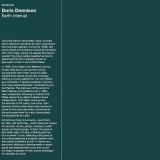
The discovery of Doris Dennison's score represents a genuine musicological breakthrough—what once would have been "a tree falling in the woods" thirty years ago now holds the potential to render "a thunderous clap in our minds." While researching Anna Halprin's lesser-known collaborators, scholar Tom Welsh uncovered the archives of AA Leath, one of Halprin's principal dancers. Buried within these materials was Dennison's handwritten score for Earth Interval, dated May 1956. Born in Saskatchewan, Canada, in 1908, and raised near Seattle, Dennison (1908-2009) encountered John Cage while teaching Dalcroze eurythmics at the Cornish College of the Arts. She joined Cage's earliest percussion quartet—alongside Margaret Jansen, the composer and his wife Xenia—in the group widely regarded as having performed the first complete concert of percussion music in the United States. This historic December 1938 concert was followed by tours and the landmark May 1941 performance at the California Club, comprising Cage and Lou Harrison's Double Music, the premiere of Cage's Third Construction, and Harrison's 13th Simfony.
As Bradford Bailey observes in his extensive liner notes, Earth Interval demonstrates "an extraordinary balance of elements that imbues the piece with a sense of clarity, directness, and constraint that is both distinct and ahead of its time." The work's most remarkable innovation lies in its approach to extended techniques, particularly Dennison's notation for the central movement: "In 2nd movement, 1st player lowers + raises a gong into a tub of water while beating." This technique, absorbed from Cage's experimental vocabulary, generates what Bailey describes as "fields of acoustic abstraction that bend and warp time through sustained resonances, beat, and space." The temporal sophistication of these manipulations anticipated Karlheinz Stockhausen's Mikrophonie I (1964) and Annea Lockwood's water-based sound investigations by over a decade. After joining Mills College as dance accompanist, Dennison maintained crucial connections to the Bay Area's experimental scene, collaborating with figures like Merce Cunningham and programming Cage's music throughout the 1950s.
Comprising three movements—Land Form, Air Tide, and Earth Play—Earth Interval is scored for recorder, drums, gongs, maracas, muted gongs, and bowl gongs. In total, the piece is just under eight minutes: "a fleeting glimmer of moment in time, a life spent at the cutting edge, and a singular creative vision that packs a powerful punch." When viewed in historical context, placed in contrast to roughly contemporaneous avant-garde percussion works by Cage, Harrison, Louis Thomas Hardin (Moondog), and Harry Partch, or important precursors like Edgard Varèse's Ionisation (1931) and Henry Cowell's Ostinato Pianissimo (1934), it's clear that Dennison was following her own path. Earth Interval is not derivative. It is a precursor to what was yet to come, alluding to developments of avant-garde and experimental music that wouldn't begin to appear on the cultural landscape until the 1970s and '80s, with the emergence of Post-Minimalism and more idiosyncratic artists and ensembles like Midori Takada, Ros Bandt, Peter Giger, Frank Perry, Christopher Tree, Michael Ranta, Gamelan Son of Lion, and Niagara.
This recording by Chicago's Third Coast Percussion, captured in March 2022, represents the first complete documentation of this pioneering work. The ensemble's interpretation reveals the piece's remarkable contemporaneity while maintaining its historical specificity. Where Cage, Harrison, and Partch employed "self-consciously off-kilter polyrhythms," Dennison's rhythmic sensibility anticipates minimalist developments by nearly a decade, yet integrates "forceful rests, as well as sharp shifts in sonic character, tempo, and meter, that break the momentum and breathe a sense of life into the piece's structure." This positions her work closer to Post-Minimalism decades before its emergence. The architectural approach demonstrates Dennison's understanding that "the composer almost entirely disappears" in favor of phenomenological listening experience, creating what might be called an egoless music that places its realities and meaning entirely in the ear of the beholder. The present recording, realized by Chicago's distinguished Third Coast Percussion ensemble, represents a significant achievement in experimental music scholarship and performance practice. As specialists in the Cage tradition and contemporary percussion repertoire, Third Coast Percussion approached Earth Interval with the historical sensitivity and technical precision required to illuminate Dennison's subtle compositional innovations. The March 2022 recording sessions, engineered by Colin Campbell, capture both the work's intimate chamber music qualities and its bold exploration of extended techniques. The ensemble's interpretation reveals the piece's remarkable contemporaneity—its ability to speak directly to current musical concerns while maintaining its historical specificity.
This recording serves multiple scholarly functions: it provides the first complete documentation of Dennison's compositional voice, offers insight into the broader network of experimental music practitioners surrounding Cage and Harrison, and demonstrates the sophisticated level of compositional thinking that was occurring within the Bay Area's dance-music collaborations of the 1950s. The work's emphasis on phenomenological listening—what might be called an "egoless" approach to musical experience—places it within a lineage of American experimental music that prioritizes perceptual process over compositional personality. The work's original obscurity—limited to AA Leath's performances at venues like the 1957 Pacific Coast Arts Festival at Reed College—paradoxically allowed it to remain "entirely on its own terms," free from the constraints of historical categorization. Drawing on Jacques Derrida's Archive Fever, the argument emerges that "the archive can acknowledge, celebrate, and resurrect" overlooked voices, transforming our understanding of experimental music history. The present Blume edition, featuring Third Coast Percussion's authoritative interpretation, includes a lavishly illustrated 16-page booklet designed by Bruno Stucchi / dinamomilano, containing complete scholarly apparatus, historical photographs, and detailed production notes. This recording enables "cross-temporal intersectionality," allowing Dennison to "belong to a newly formed and more dynamic understanding of the present and past," demonstrating how forgotten voices can reshape entire historical narratives when given proper scholarly attention and performance advocacy.

Mainstays of the D.C. DIY scene, Pretty Bitter live up to their name. Masters of all kinds of dissonance, they juxtapose stories of haunting and heartbreak with dazzling pop-rock arrangements. Pretty Bitter makes music that gets the emo kids dancing. They’re unafraid to infuse their blistering breakdowns with hits of disco and synthpop—and that’s exactly what they’ve done on Pleaser, their sophomore album, co-produced by Evan Weiss (Into It. Over It., Pet Symmetry) and Simon Small (Strawberry Boy) and out July 25th, 2025 via cult favorite indie label Tiny Engines. Following a string of ethereal singles, their 2022 debut Hinges formally introduced Pretty Bitter and their dreampunk to a rapidly growing audience. Fearlessly led by Mel Bleker and sharing studio and touring members with D.C. punk all-stars Ekko Astral, Pretty Bitter has been embraced by DIY fans far and wide. On Pleaser, Pretty Bitter have amped up the drama of their lush arrangements—a match made in heaven for the emotional ferocity of Bleker’s lyricism. “If everything is out there, nothing’s embarrassing,” they sigh on “I Hope You Do,” expertly toeing the line between the personal and the universal over bright, bubbling synths. On the arresting closer “Outer Heaven,” Bleker sings “Time isn’t a lover in the way it likes to play / I’m getting older, every due I pay / Time isn’t a bandage in the way you always say / I won’t be abandoned by myself again this way.” Their observational, heart-on-sleeve songwriting is as effortless as their flittering between the jangly, dreamy inclinations of rock, pop, and folk. Pleaser is a triumph, an instantly lovable record that reveals just how bright Pretty Bitter’s future is.

Alanis Morissette Delivers the Equivalent of a Spiritual Awakening on Supposed Former Infatuation Junkie:
Introspective Themes and Compassionate Emotions on Eastern-Tinged Album Have Grown More Relevant
1998 Smash Plays with Enhanced Detail, Rich Textures, and Sharp Focus on Mobile Fidelity’s 180g 33RPM 2LP Set:
First-Ever Audiophile Edition Strictly Limited to 3,000 Numbered Copies
1/2" / 30 IPS analogue master to DSD 256 to analogue console to lathe
Alanis Morissette refuses to adhere to convention on Supposed Former Infatuation Junkie. While most artists follow-up their breakthrough with an album that closely parallels the approaches that helped make them famous, the maverick singer-songwriter stayed true to herself and drew inspiration from travel to India before she began the recording sessions. As much as the preceding Jagged Little Pill put her on the global radar, Supposed Former Infatuation Junkie confirmed her role as a vital generational voice — and proved her blockbuster success was no fluke. Having set a mark for most sales of an LP in its debut week by a female artist, the 1998 smash remains a pop-rock staple.
Sourced from the original master tapes, strictly limited to 3,000 numbered copies, housed in a Stoughton jacket, and pressed at Fidelity Record Pressing, Mobile Fidelity’s 180g 33RPM 2LP set of Supposed Former Infatuation Junkie presents the triple-platinum LP in audiophile sound for the first time. Benefitting from defined grooves that befit the album’s nearly 72-minute length, this pressing plays with enhanced detail, refined clarity, sharper focus, and broader dynamics than prior versions.
Those traits are key given Morissette’s use of more textured and atmospheric soundscapes, not to mention her evolution into a more nuanced and controlled singer. Similarly, the scale and reach of David Campbell’s string arrangements come across as orchestrations should. Ditto the synth-based architecture shaped by producer and principal Morissette collaborator Glen Ballard. All in all, Mobile Fidelity’s collectible edition simply delivers more information via transparent means.
Notable for its balance, sophistication, and richness, Supposed Former Infatuation Junkie at heart finds Morissette pausing, taking a breath, and learning how to navigate life in a healthy manner after enduring one of the most exhausting and rocket-to-fame stretches any musician ever experienced. It’s the sonic equivalent of a spiritual awakening, a call to betterment, a brave assessment of the self and humanity as a whole. As such, the tunes on her second international (and fourth Canadian) release teem with gratitude, compassion, love, empathy — emotions that lend themselves to the largely mellow, contoured scope and Eastern-tinged melodies of the songs themselves.
“How ‘bout how good it feels to finally forgive you,” Morissette sings on the lead single “Thank U.” “How ‘bout grieving it all one at a time.” Those sentiments, and the vocalist’s embrace of concepts such as divinity and acceptance, not only provide a foundation on which Supposed Former Infatuation Junkie rests. They also reflect the personal maturation she gained from her embrace of Buddhist culture in India and a mindset bent toward notions of reconciliation, peace, and sensuality that were nearly absent in popular music in the late ‘90s.
Those themes continue on “That I Would Be Good,” a confident reflection that takes stock of one’s mental, physical, and emotional state in the face of both changing and unpleasant circumstances — and concludes with Morissette performing a flute solo, further exposing the raw intimacy of the introspective tune. She channels relatable simplicity and joy on “So Pure,” with her invocations of “dance” and “freestyle” speaking to the freedom of expression that courses throughout Supposed Former Infatuation Junkie. And perhaps no song finds Morissette showcasing her refreshed attitude toward life and opening up more than the relationship-themed “Unsent,” whose unconventional structures and lack of a chorus only add to its directness.
Akin to many albums that were ahead of their time, and despite the critical and commercial accolades afforded it upon release, Supposed Former Infatuation Junkie attracted new appreciation and perspective as it got older. Issued during an era where its ideas of serenity, absolution, tranquility, and contentment seemed largely alien, the record — akin to the ways its predecessor foreshadowed a movement — now functions as a visionary beacon that foretells of way to maintain sanity, dignity, and goodness amid a contemporary landscape filled with constant distractions, polarizing views, and incessant calls to purchase, promote, and produce without questioning the what-for purpose.
Supposed Former Infatuation Junkie dares to ask the questions and, at its best, supplies meaningful answers and alternatives that lead to longed-for enlightenment, healing, and laughter. For these reasons alone, it’s a record that never goes out of style.

Experience the Double-Platinum 1996 Album in Audiophile Sound for the First Time
Mobile Fidelity’s Numbered-Edition 180g 45RPM 2LP Set Is Sourced from the Original Analogue Tapes
1/2” / 30 IPS analogue master to DSD 256 to analogue console to lathe
If great art, as many believe, is inherently polarizing, then the Stone Temple Pilots’ Tiny Music… Songs from the Vatican Gift Shop easily ranks as the California-based band’s finest album. Simultaneously celebrated and castigated upon release in spring 1996, the group’s third full-length finds vocalist Scott Weiland and company expanding their “grunge” palette with a smart blend of glam rock, psychedelia, jangle pop, and other related styles. Having benefited from long-view reassessments that shed the biases and meanness of initial criticisms, the double-platinum effort is now largely and rightly seen as a creative masterwork. All the more reason why it deserves reference-grade production.
Overseen by producer Brendan O’Brien, Stone Temple Pilots used bedrooms, hallways, bathrooms, and the lawn to capture a broad blend of textures, spaciousness, and ambience that helped underline the group’s obvious (and somewhat unexpected) leap from normal “alternative” status to an artist whose aspirations went beyond that of many of its contemporaries. You can hear the multitude of details and tonalities with previously unattained clarity, presence, and scope on this fantastic reissue, which also delivers the impact and punch every rock record deserves. Another tremendous asset: The depth, grain, and pitch of Weiland’s voice.
For all the contagious choruses and glossy melodies that help make Tiny Music… Songs from the Vatican Gift Shop sparkle, the vocal performances of the late singer arguably rank as the best that the much-missed Weiland committed to tape. None other than the Smashing Pumpkins’ Billy Corgan — who, like many peers and critics, felt a pressing need to reevaluate the record as both time marched on and the self-importance attached to the “alternative” scene faded — praised Weiland’s efforts by noting: “Like Bowie can and does, it was Scott's phrasing that pushed his music into a unique, and hard to pin down, aesthetic sonicsphere.”
Smooth and diverse, those traits are everywhere on Tiny Music… Songs from the Vatican Gift Shop. From the clever combination of emotional closeness and distance he brings to the catchy albeit ultimately melancholic “Lady Picture Show”; to the lounge-fly balladeering that causes “And So I Know” to lightly swing akin to a bleary-eyed house band’s final number at a 4 A.M. bar; to the effortless cool and laissez-faire casualness he articulates on the grinding “Pop’s Love Suicide”; to the dimensional raspiness, defiant energy, and let-loose wail that sail through the crunchy “Big Bang Baby.”
The latter tune, the record’s first single and per Weiland a conscious attempt by the band to deconstruct its prior approaches, clearly borrows from the Rolling Stones’ “Jumpin’ Jack Flash.” Because of it, the song drew all kinds of barbs from naysayers. Their disdain extended to most material on Tiny Music… Songs from the Vatican Gift Shop, which indirectly references other prized acts such as the Beatles, Cheap Trick, T. Rex, and Lush. Those cynics failed to grasp that Stone Temple Pilots were paying homage and having a blast, with even Weiland, then battling serious substance-abuse and legal issues, getting in on the action.
Stone Temple Pilots’ skeptics also turned a deaf ear to the records’ stellar pop craftsmanship, sticky hooks, and sly commentary on music-industry machinations and fame. Not to mention the band’s intent, made clear from the outset. In an interview conducted in 1994, guitarist Robert DeLeo stated: “The last thing I wanted to do with this band was make everybody believe we invented something.”
Seen through that lens and the hindsight afforded history, and appreciated independent of the self-righteous authenticity standards of the day, Tiny Music… Songs from the Vatican Gift Shop sounds borderline fearless while authoritatively checking all the right boxes for fun, flavor, and finesse. Part winking send-up, part tribute to the glitter rock age, and part middle finger towards the hip crowd that didn’t know what they were missing, this mid-90s classic repeatedly invites you to drop the needle and press play.

Mobile Fidelity's UltraDisc One-Step 180g 45RPM 2LP Set Plays with Authoritative Tonality, Airiness, and Clarity:
Pressed on MoFi SuperVinyl and Strictly Limited to
3,000 Numbered Copies
1/4” / 15 IPS Dolby A analogue master to DSD 256 to analogue console to lathe
Joni Mitchell is the only artist who could’ve made Hejira. The legendary singer-songwriter said as much when discussing the album decades after its release. Yet that fact seemed obvious from the moment the gold-certified effort streeted in fall 1976. An adventurous travelogue, probing narrative, and offbeat homage to freedom, Hejira remains an inimitable entry in the catalog of recorded music — a spare, gorgeous, meditative series of sonic vignettes comprised of floating harmonic pop, cool jazz, soft rock, and sensitive vocal elements that beckon feelings of motion, discovery, and self-examination.
Sourced from the original analog master tapes, pressed at Fidelity Record Pressing on MoFi SuperVinyl, and strictly limited to 3,000 numbered copies, Mobile Fidelity's UltraDisc One-Step 180g 45RPM 2LP set presents the record ranked the 133rd Greatest of All Time by Rolling Stone with definitive detail, richness, accuracy, and directness. Marking the first time the revered LP has received audiophile treatment, it's one of six iconic 1970s Mitchell records Mobile Fidelity is reissuing on vinyl and SACD.
Playing with a virtually nonexistent noise floor, dead-quiet surfaces, and superior groove definition, this collectible reissue reproduces in enveloping fashion the tones, textures, and craftsmanship that help Hejira function as the equivalent of a liberating trip down an open road with nothing but blue sky, natural landscape, and fresh air in the immediate vicinity. Passages bloom, carry, decay as they do amid an acoustically optimized environment. Soundstages extend far, wide, and deep, with black backgrounds and pinpoint images adding to the realism.
The reference-grade immediacy, airiness, and presence put in transparent perspective Mitchell’s dense strings of words, stream-of-conscious-like phrasing, and unhurried albeit forward momentum. Likewise, the instrumental contributions of her A-list support musicians — a cast that includes L.A. Express members John Guerin, Max Bennett and Tom Scott, plus Neil Young, Victor Feldman, and Abe Most — emerges with breathtaking clarity and dimensionality.
While Mitchell, whose intimate vocals and abstract guitar parts center everything, Mobile Fidelity's restoration of Hejira further reveals the visionary breadth of guitarist Larry Carlton and bassist Jaco Pastorius. Though heard on only four tracks, Pastorius' fretless bass epitomizes the fluid, subtle, flexible, roomy, and shape-shifting characteristics of songs that often appear to transpire out of nowhere akin to the formation of a puffy cumulus cloud overhead. In sync with Mitchell’s voice, Pastorius’ fusion hovers and floats, suspended in a fog you want to deeply inhale. The "grace notes" Mitchell desired on Hejira can now be heard in full. Ditto the luxurious tapestries of alinear lines, fills, and supplements unreeled on Carlton’s six-string.
Visually, the packaging of this UD1S set complements its identity as the copy to own. Housed in a deluxe slipcase, the LPs come in foil-stamped jackets with faithful-to-the-original graphics. This version is for listeners who desire to become immersed in everything about Hejira, including the unforgettable album cover — a pastiche of 14 different photos Mitchell used a Camera Lucida to assemble into one image that’s anchored by a portrait of her in a stoic pose — and the interior shots of Mitchell skating on a frozen Wisconsin lake wearing a pair of black skates, black shirt, and fur cape.
The notion of skating, feeling an awakening wind whipping against your face, and losing yourself to the surroundings are extremely apt for Hejira, which Mitchell wrote after a sequence of trips and relationships prompted her to reflect on the complicated conflicts between independence and marriage, success and satisfaction, duty and desire — and, more specifically, “the cost of being a woman.” The Canadian native delved into such themes before. But never as she does on Hejira, whose liberating, running-away aura doubles as another of Mitchell’s rejections of tradition as well as a suggestion of a better alternative.
At once observational and personal, expansive and insular, cheerful and poignant, Hejira spans a sea of human conditions, emotions, and circumstances. It addresses drifting, isolation, pleasure, place, time, and surroundings with strikingly poetic discourse matched with music that, save for the crooned ballad “Blue Motel Room,” forgoes conventional structures and choruses.
The jazz-based arrangements, marked by scaled-down percussion and all manner of bent, rounded, and unsettled notes, hint that Mitchell has no exact destination in mind. Excursions such as the moody “Furry Sings the Blues,” funky “Coyote” and edgy “Black Crow” throw open previously locked doors to possibility and journey. They signal it’s time for a welcome departure from norms and the past, one that leads to a heightened sense of clarity and perspective. Or, as Mitchell said upon choosing the album title, it’s time for “leaving the dream, no blame.”

A1: Chinese Eyes (40th Anniversary Version)
A2: Fly Me High
B1: Chinese Eyes (7’’ Version)
B2: Chinese Eyes (Extended Version)
Dieses Jahr feiert der 80er-Jahre Italo-Disco-Klassiker „Chinese Eyes“ unfassbares 40-jähriges Jubiläum.
Anlässlich dessen erscheint hierzu am 01.08.25 eine strikt auf 1000 Exemplare limitierte Auflage des unkaputtbaren Hits auf einer hochwertigen 10‘‘ rot-transparenten Vinyl.
Fancy war seiner Zeit stets voraus und Pionier in vielerlei Hinsicht. In einer Zeit, in der Anderssein noch
weitaus stärker polarisierte als heute, schaffte er es willensstark und zielgerichtet auf die unterschiedlichsten
Bühnen der Welt.
Als Produzent (von u.a. Siegfried & Roy), Arrangeur, Komponist, Parodist, Zauberer und Buchautor
arbeitete er mit den größten Namen der Pop-Welt, wie z.B. Michael Jackson und den Pet Shop Boys,
zusammen und prägt bis heute nachhaltig unterschiedlichste Szenen und Subkulturen mit seiner Pionierarbeit.
Auf der Re-Edition sind neben der originalen 7‘‘, sowie der partyerprobten Extended Version auch zwei
brandneue Songs mit dabei. Eine, zum Anlass des 40ten Jubiläums, von Fancy selbst produzierte Version
von „Chinese Eyes“, mit überraschendem Intro, sowie der bislang noch nie von Fancy selbst eingesungene,
aber seinerzeit von ihm für Linda Jo Rizzo (The Flirts) geschriebene und produzierte Euro-Disco-Evergreen
„Fly Me High“.

Ora Cogans ,Formless", veröffentlicht am 25. August 2023, ist ein Album, das Schönheit, Absurdität, Humor und unerwartete Freude in den düstersten Zeiten findet. ,Formless" entstand inmitten von Trauer und pandemiebedingter Isolation. ,Ich habe viel Zeit damit verbracht, mit meinem Hund ziellos durch den Wald zu streifen", sagte Cogan. Das Ergebnis ist eine Flut von Gedanken über ungeschickte Liebe, Schmerz, innere Kämpfe und den Kampf, Wege zu finden, sich gut zu fühlen, wenn alles schlecht läuft. Das Album wurde größtenteils in Live-Takes mit der Rhythmusgruppe David Proctor und Finn Smith auf Analogband im Risque Disque Studio auf Vancouver Island aufgenommen und von Cogan und David Parry von Loving co-produziert. Mit dabei sind internationale Gaststars wie Cormac Mac Diarmada von Lankum, der ,Feel Life" auf der Saitengitarre spielt, und Y La Bamba, die ,Ways of Losing" im Duett singt. Das Album ist thematisch sehr vielfältig: ,Katie Cruel" mit seinem ätherischen Gesang, einer schlurfenden Snare und einer sitarähnlichen Gitarre ist eine tragische Ballade über eine Sexarbeiterin, die mit Soldaten der leichten Infanterie unterwegs ist. ,Cowgirl" ist ein psychedelischer, langsamer Country-Jam, der sich mit sozialer Isolation in Trauer auseinandersetzt; und ,Feel Life" ist ein Track, der durch den Wahnsinn des alltäglichen Tumults und epische, lebensverändernde Verluste tanzt. Mit einer einzigartigen Stimme, die ebenso sensationell wie klangvoll ist, sucht Ora Cogan nach neuen Realitäten im Labyrinth aus Rauch und Spiegeln unserer grausamen Gesellschaft.


Limited Edition 12” of the Remix Contest Winners!
In November 2024, 2 Flying Stones organized a remix contest. Four of the winners are featured on this 12” record.
The Funkhauser remix is already making waves in the jumpstyle scene. It is regularly played on harddance radio shows and festival main stages.
The Andy Cley remix is more downbeat and a great addition to the club circuit. Another winner, young talent Junotheoriginal, his remix takes a more artistic approach and could resonate well within the Gen Z scene.
Rounding out the release is a credible, club-oriented version by Antwerp-based producer Groove 81.
These four different versions, each growing within their own scenes, make for an impactful 12” release!

KEY FEATURES
• 2+1 Mixing channels
• 1 MICRO input
• 2 PHONO inputs
• 3 LINE inputs
• Master Output (HOUSE) on XLR and RCA connectors
• Booth Output on RCA connectors
• 6.3mm Jack and 3.5mm mini-jack Headphone Monitor Outputs
• 3 band full cut EQ for main channels and 2 band full cut EQ for MICRO/LINE channel
• 3 bands isolator (300Hz and 4KHz, -∞/+12dB, 4th order 24dB/oct )
• Maximum Output without distortions: 21dBV (23dBu)
• Mechanized from a solid block of aluminum knob, without visible screw. Ecler Unique design
• Alps Blue Velvet Potentiometers
• FX Send control and Pre/Post fader selector
• Screen-printed faceplate by selective anodizing
• Wooden side panels included
Audio Performances
Inputs Sensitivity nom/Impedance:
—
LINE : 0dBV/50kΩ
PHONO : -40dBV/50kΩ
MICRO : -50dBV/>1kΩ
FX RETURN : 0dBV/>6kΩ
Outputs Level/Minimum Load:
—
HOUSE (BAL) : 0dBV/600Ω 1V *(+12dB 4V)
HOUSE (UNBAL) : 0dBV/2.2kΩ 1V *(+12dB 4V)
BOOTH (UNBAL) : 0dBV/2.2kΩ 1V *(+12dB 4V)
REC : 0dBV/10kΩ
HEADPHONES : 200mΩ/200Ω THD 1%
FX SEND : 0dBV/2.2kΩ
Frequency Response:
—
LINE : 10Hz÷30kHz -1dB
MICRO : 10Hz÷25kHz -1dB
PHONO : RIAA ±0.5dB
FX RETURN : 10Hz÷50kHz -1dB
THD-N:
—
LINE : 70dB @ 1kHz
Signal Noise Ratio:
—
LINE : >99dB
MICRO : >85dB
PHONO : >98dB
FX RETURN : >100dB
Max Undistorted Output Level:
—
HOUSE (Electr.BAL) : 21dBV (23dBu)
HOUSE (UNBAL) : 21dBV (23dBu)
BOOTH (UNBAL) : 21dBV (23dBu)
Trim control:
—
INPUTS 1-2 : ± 15dB
INPUT 3 : ± 20dB
Tone control Inputs 1-2:
—
BASS : +10/-30dB
MID : +10/-25dB
TREBLE : +10/-30dB
Tone control Input 3:
—
BASS : ± 15dB
TREBLE : ± 15dB
Tone control Isolator:
—
BASS : +12/-70dB
MID : +12/-40dB
TREBLE : +12/-70dB
Tone Filter cut frequency at -6dB (slope 12dB/oct):
—
BASS : 200Hz
MID : 200Hz÷6.8kHz
TREBLE : 6.8kHz
Isolator cut frequency at -6dB (slope 24dB/oct):
—
BASS : 300Hz
MID : 300Hz÷4kHz
TREBLE : 4kHz

Am 29. Juli 1985 veröffentlichte C.C. Catch mit I Can Lose My Heart Tonight ihre allererste Single – ein Song, der nicht nur den Startschuss für eine der prägendsten Karrieren im europäischen Synthpop-Universum markierte, sondern zugleich zur künstlerischen Hit-Vorlage für den unverkennbaren Sound der Ära wurde. Vierzig Jahre später erscheint zum Jubiläum eine auf 1.000 Einheiten limitierte Vinyl-Maxi in ikonischem Blau – mit allen vier Original-Versionen des Songs, neu remastered von Blank & JonesDas Remastering 2025 durch Blank & Jones holt die zeitlose Energie dieses Hits mit technischer Raffinesse in die Gegenwart: wärmer, breiter, brillanter – ohne die nostalgische Magie zu verlieren. Ein Song, der Generationen verbindet: I Can Lose My Heart Tonight (2025 Remaster) erscheint am 25. Juli 2025 digital und erstmals als Blue Coloured 12” Vinyl Maxi mit allen vier Original-Versionen.

Following on from 2018's "Wires" LP, their first studio album in over 25 years, and following up with "Humbucker" in 2020, and "in the Dust" in 2023, "Red Eyes" is the latest highly anticipated instalment in the reborn band that even a global pandemic couldn't stop , MOVING TARGETS! MT in the 21st century is a powerhouse, having toured US, Europe and Japan extensively since their reformation, and their latest album couples the next-level songwriting craft of Kenny Chambers with the cast-iron rhythm section of Yves and Emilien in arguably their most complete offering since reforming, "RED EYES" manages to sound reassuringly familiar and new and dynamic at the same time , and is everything you would want and expect from a MOVING TARGETS record, and more. Recorded with J ROBBINS (JAWBOX) at the helm (who also adds some percussion and backing vocals) "RED EYES" continues the MOVING TARGETS rebirth!

Following a string of a successful string of collaboration albums with V Don and Harry Fraud, and after dropping his 3rd album "Charlie Pope" back in July & being sentenced to 7½ years in prison a few weeks later due to witness tampering, Dark Lo releases his 4th full-length outing from behind bars produced entirely by Havoc. Featuring guest appearances by Styles P and Vado, and an exclusive artwork illustrated by Roman artist Claudio Scialabba.

Am 29. Juli 1985 veröffentlichte C.C. Catch mit I Can Lose My Heart Tonight ihre allererste Single – ein Song, der nicht nur den Startschuss für eine der prägendsten Karrieren im europäischen Synthpop-Universum markierte, sondern zugleich zur künstlerischen Hit-Vorlage für den unverkennbaren Sound der Ära wurde. Vierzig Jahre später erscheint zum Jubiläum eine auf 1.000 Einheiten limitierte Vinyl-Maxi in ikonischem Blau – mit allen vier Original-Versionen des Songs, neu remastered von Blank & JonesDas Remastering 2025 durch Blank & Jones holt die zeitlose Energie dieses Hits mit technischer Raffinesse in die Gegenwart: wärmer, breiter, brillanter – ohne die nostalgische Magie zu verlieren. Ein Song, der Generationen verbindet: I Can Lose My Heart Tonight (2025 Remaster) erscheint am 25. Juli 2025 digital und erstmals als Blue Coloured 12” Vinyl Maxi mit allen vier Original-Versionen.
