Limited Edition 180gm heavyweight clear vinyl, Half-speed remaster by Miles Showell at Abbey Road Studios, Insert contains a sleevenote featuring quotes from Alan Parsons and Eric Woolfson The Alan Parsons Project"s million selling album Ammonia Avenue (1984), is re-issued in a variety of formats including a Limited Edition Clear vinyl LP, half-speed remastered by Miles Showell at Abbey Road studios. Like other Alan Parsons Project albums, there were a variety of different lead vocalists employed including Chris Rainbow, Colin Blunstone, Lenny Zakatek as well as Eric Woolfson himself. Plus, a selection of session musicians such as guitarists Ian Bairnson and David Paton and drummer Stuart Elliott with arrangements by Andrew Powell.
Buscar:3 pi
Bristol duo Pume Orenge unspool a world of spectral electronica from cassette loops and instrumental improvisation on their debut album Angel By Milo for Odda Recordings.
It is a world that opens draped in ferric hiss. A fog of sound, dense and yet not quite there, catching the light in strange shades and ambient drifts. Looping and receding, looping and receding, as pucks of static burst like faraway fireworks on a cold winter’s night. Sound sources obscured, ambiguous, not quite what they seem.
Angel By Milo takes its lead from the analogue process and textures by which it was made. Percussive and melodic loops were established, manipulated and responded to with instrumental improvisation, in a give-and-take with the materiality of the medium.
Across these seven intricately developed tracks, the sound fluctuates between the cinematic and the introspective, at times melancholy, at others verging on a kind of restrained anger, before the calm sets in once more. It is music for the small hours, awash with the grainy stuff of memory.
Embedded within Bristol’s independent scene, Pume Orenge’s quiet debut also speaks to the duo’s shared roots in the area, and like many of Odda’s previous releases, contains a sensitivity to place and atmosphere, even when these are no more than implied.
Angel By Milo builds on the DIY ethos of Pume Orenge's 2023 self-titled debut EP, whose tracks were recorded live in single takes, now honing a more intentional, purposeful approach to music making. It is one in which layers of meaning are allowed to reveal themselves, a way of composing that makes a virtue of its labour and the chance occurrences that can arise in the process.
This is music in praise of shadows. Of the things we can’t quite see, the feelings we can’t quite grasp. Heard through the haze, or maybe not at all.
- Miss Maybelle
- Going Down South
- Long Haired Doney
- Peaches
- Black Mattie
- Out On The Line
- Jumper On The Road
- Over The Hill
- Alice Mae
- Skinny Woman
- 44: Pistol (Bonus Track)
TOO BAD JIMS - Over The Hill ist eine leidenschaftliche Hommage an den legendären North-Mississippi-Bluesman R.L. Burnside. Das britische Trio aus Brighton - bestehend aus Little Victor, Son Jack Jr. und Nick Simonon (Bruder von Paul Simonon, The Clash) - verbindet rohe Energie, hypnotische Grooves und den unverkennbaren Hill-Country-Sound zu einem zwingenden, rauen und erdigen Blues-Erlebnis. Was einst als spontane Zusammenarbeit zweier vielfach ausgezeichneter US-Musiker begann, entwickelte sich zu einer Band, die den Spirit der Juke Joints aus Nord-Mississippi in die Gegenwart transportiert. Minimalistische E-Gitarren, treibende Bottleneck-Soli und ungeschliffener Gesang formen einen Sound, der "absolutely scorching" (Living Blues Magazine) und "relentlessly upbeat" (Blues Blast Magazine) genannt wurde. Over The Hill erscheint streng limitiert und liefert einen kompromisslosen, unmittelbaren Blues, der gleichermaßen Tradition ehrt und vor roher Spielfreude strotzt. Für alle, die echten, unverfälschten Hill-Country-Blues lieben.
- A1: Ghidrah
- A2: Partes Nada
- A3: Nos Deixei
- B1: Choros (Edit)
- B2: Choros (Club)
- B3: Sigilo (Megamix)
Bruno Silva, operating here under his restless Serpente alias, returns with Visita do Fogo — a sharp, stripped-back and incendiary counterpoint to the drifting, dream-jazz abstractions of Dias da Aranha. If that record floated like smoke, this one crackles and snaps like dry wood.
Visita do Fogo finds Silva stepping back into the heat of his beat-driven origins, embracing a raw, forward-leaning approach that feels closer to his live detonation than a studio construction. The record is built on stark materials — drum fragments, percussive jolts, scorched-earth loops — all manipulated with his unmistakable “screw” instincts: micro-cuts, sudden pivots, rhythmic false floors and the sense that the track might turn itself inside-out at any moment.
Rather than smoothing edges or leaning into atmospherics, Serpente doubles down on urgency. Each piece moves through the record with a chop-and-go physicality, a kind of ritual propulsion that never settles into comfort. Silva’s rhythmic language remains entirely his own: crooked but precise, feral yet meticulous, rooted in dance structures but constantly mutating away from them.
Visita do Fogo is less a sequel to Dias da Aranha than a flare shot into the same night sky — brighter, hotter, and designed to leave afterimages. It captures an artist burning forward, shedding everything unnecessary, trusting the flame.
- 01: Maanitus &Amp; Tšiižik
- 02: Markka
- 03: Melkutus
- 04: Letška
- 05: Kuuen Parin Hoirola
- 06: Brišatka
- 07: Tšiižik
- 08: Kirkonkellot
- 09: Kirkonkellot Korkea
- 10: Hoirola, 3 Parin
- 11: Lippa
- 12: Kyngäkiža
- 13: Ristakondra
- 14: Vanha Polkka
- 15: Viistoista
- 16: Vanha Valssi
- 17: Kiberä
- 18: Maanitus Kuokan Kanteleella
- 19: Tuuti Lasta Nukkumahe
Vinyl[22,65 €]
Death Is Not The End present a further volume of Arja Kastinen's eerie amalgamations of 110 year old wax cylinders with her own meticulously transcribed takes, this time focussing in on Armas Otto Väisänen's field recordings of kantele player Iivana Mišukka (b. 1861 d.1919).
"Ivana Mišukka (1861–1919) was one of the Karelian kantele players recorded by the folk music researcher Armas Otto Väisänen on wax cylinders in 1916 and 1917. In the early 20th century, the remote areas of Border Karelia were undergoing the final phase of a transformation in musical culture, with the ancient runo song tradition giving way to newer forms of music. This transition is reflected in Mišukka's repertoire and choice of instrument. The ancient small kantele, hollowed out of a single piece of wood, was already rare at the turn of the century. Mišukka's kantele was a new type of instrument with 26 strings, constructed of several parts, but he played it using the traditional plucking technique. Like other Border Karelian kantele players, his repertoire consisted of music rooted in runosong culture, as well as newer dances and songs from the east and west. Most of the recorded material falls into the latter category.
Ivan Bogdanov Mišukka was born out of wedlock in Suursara village, Suistamo, on 1 May 1861. He began playing the kantele at the age of five or six, quickly mastering the instrument. In adulthood, he was considered one of the area's best master players. Mišukka was landless for most of his life and lived in different parts of the Suistamo parish. His first wife, Tekla Markintytär, died in 1897 at the age of 40, and his second wife, Jevdokia Filipintytär Jeminen, died in 1907 at the age of 50. Seven children were born from the first marriage, two of whom died young. The third wife, Maria Ignatintytär Gurnan (Kuurnanen), was a well-known master of lamentations. Together with Maria, Iivana Mišukka worked as a tenant farmer in the village of Suursara. Mišukka suffered from rheumatism, which prevented him from participating in physical work like Maria. This was apparently partly the reason why Iivana Mišukka went to earn extra money by playing the kantele on gig trips. He often had other traditional artists from Suistamo as his travelling companions, such as the runosingers Konstantin Kuokka and Iivana Onoila. Iivana Mišukka died in Leppäsyrjä village, Suistamo, on 18 May 1919 at the age of 58, and his kantele was donated to Teppana Jänis.
Mišukka only used 14 of the 26 strings on his kantele, playing the same tunes either a fourth higher or lower. He tuned his kantele to the major scale using fifths, except for a low seventh scale degree on the upper strings, but not below the fundamental. Since he did not use the seventh note of the scale on the upper strings at all, he could use the major scale both lower and a fourth higher with this tuning. According to Mišukka, the sound of higher, or 'finer', strings is 'more beautiful', while that of lower ones is 'greater'. Among runosingers, the size of the thirds varied, ranging from major to minor to neutral. A similar phenomenon can be observed in kantele tunings, where the third, sixth and seventh scale degrees vary in a comparable way.
During a meeting, Väisänen suggested that Mišukka play the smaller kantele belonging to Konstantin Kuokka. The idea was to bring it closer to the horn to improve the recording quality. However, the kantele was completely out of tune, and now Mišukka tuned it to the Lydian scale (track 18).
Using the old plucking technique, Mišukka placed his right middle finger on the fundamental tone, his right index finger on the second scale degree, his left middle finger on the third scale degree and his left index finger on the fourth scale degree, and his right thumb on the fifth. The thumb also played the notes above the fifth note of the scale. As Mišukka remarked to Väisänen: 'Peigaloll' tuloo enemb ruadoa' (the thumb has to do more work). However, he did not use the seventh note of the scale on the upper strings at all. Below the fundamental note, he played the seventh and sixth notes of the scale with his right middle finger of and the fifth note of the scale with his right ring finger. This fifth scale degree below the fundamental is almost always used as a drone. Sometimes, when the melody required it, Mišukka, like other players, also varied the fingering. He would also occasionally strike the same string with the side of his fingernail after plucking it.
The wax cylinder recordings of Karelian kantele players are kept in the archives of the Finnish Literature Society in Helsinki, Finland. Copies were made of them onto reel-to-reel tapes in both the 1960s and 1980s. The 1960s copies are mono and the 1980s copies are stereo. However, not all kantele recordings from these decades have survived.
The sound of the kantele is difficult to hear in wax cylinder recordings due to its low volume, and it occasionally becomes completely obscured by noise. During the copying process, the cylinder sometimes rotates unevenly, resulting in breaks or jumps in the music. Additionally, the rotation speed of the cylinder in the copies does not correspond to the performance speed of the original music, which alters the pitch. However, since Väisänen's precise notes are available in the archive, it is possible to deduce the melodies, their speed, and the tuning level of the kantele in the recordings. Of the copies of the original recordings from the 1960s and 1980s, I have selected the one that best met the requirements of this publication and adjusted the speed of the recording to align with Väisänen's notes. To enhance the listening experience, I have replayed the songs, which now partly overlap the old recordings on this release."
— Arja Kastinen
- 01: Maanitus &Amp; Tšiižik
- 02: Markka
- 03: Melkutus
- 04: Letška
- 05: Kuuen Parin Hoirola
- 06: Brišatka
- 07: Tšiižik
- 08: Kirkonkellot
- 09: Kirkonkellot Korkea
- 10: Hoirola, 3 Parin
- 11: Lippa
- 12: Kyngäkiža
- 13: Ristakondra
- 14: Vanha Polkka
- 15: Viistoista
- 16: Vanha Valssi
- 17: Kiberä
- 18: Maanitus Kuokan Kanteleella
- 19: Tuuti Lasta Nukkumahe
Tape[16,39 €]
Death Is Not The End present a further volume of Arja Kastinen's eerie amalgamations of 110 year old wax cylinders with her own meticulously transcribed takes, this time focussing in on Armas Otto Väisänen's field recordings of kantele player Iivana Mišukka (b. 1861 d.1919).
"Ivana Mišukka (1861–1919) was one of the Karelian kantele players recorded by the folk music researcher Armas Otto Väisänen on wax cylinders in 1916 and 1917. In the early 20th century, the remote areas of Border Karelia were undergoing the final phase of a transformation in musical culture, with the ancient runo song tradition giving way to newer forms of music. This transition is reflected in Mišukka's repertoire and choice of instrument. The ancient small kantele, hollowed out of a single piece of wood, was already rare at the turn of the century. Mišukka's kantele was a new type of instrument with 26 strings, constructed of several parts, but he played it using the traditional plucking technique. Like other Border Karelian kantele players, his repertoire consisted of music rooted in runosong culture, as well as newer dances and songs from the east and west. Most of the recorded material falls into the latter category.
Ivan Bogdanov Mišukka was born out of wedlock in Suursara village, Suistamo, on 1 May 1861. He began playing the kantele at the age of five or six, quickly mastering the instrument. In adulthood, he was considered one of the area's best master players. Mišukka was landless for most of his life and lived in different parts of the Suistamo parish. His first wife, Tekla Markintytär, died in 1897 at the age of 40, and his second wife, Jevdokia Filipintytär Jeminen, died in 1907 at the age of 50. Seven children were born from the first marriage, two of whom died young. The third wife, Maria Ignatintytär Gurnan (Kuurnanen), was a well-known master of lamentations. Together with Maria, Iivana Mišukka worked as a tenant farmer in the village of Suursara. Mišukka suffered from rheumatism, which prevented him from participating in physical work like Maria. This was apparently partly the reason why Iivana Mišukka went to earn extra money by playing the kantele on gig trips. He often had other traditional artists from Suistamo as his travelling companions, such as the runosingers Konstantin Kuokka and Iivana Onoila. Iivana Mišukka died in Leppäsyrjä village, Suistamo, on 18 May 1919 at the age of 58, and his kantele was donated to Teppana Jänis.
Mišukka only used 14 of the 26 strings on his kantele, playing the same tunes either a fourth higher or lower. He tuned his kantele to the major scale using fifths, except for a low seventh scale degree on the upper strings, but not below the fundamental. Since he did not use the seventh note of the scale on the upper strings at all, he could use the major scale both lower and a fourth higher with this tuning. According to Mišukka, the sound of higher, or 'finer', strings is 'more beautiful', while that of lower ones is 'greater'. Among runosingers, the size of the thirds varied, ranging from major to minor to neutral. A similar phenomenon can be observed in kantele tunings, where the third, sixth and seventh scale degrees vary in a comparable way.
During a meeting, Väisänen suggested that Mišukka play the smaller kantele belonging to Konstantin Kuokka. The idea was to bring it closer to the horn to improve the recording quality. However, the kantele was completely out of tune, and now Mišukka tuned it to the Lydian scale (track 18).
Using the old plucking technique, Mišukka placed his right middle finger on the fundamental tone, his right index finger on the second scale degree, his left middle finger on the third scale degree and his left index finger on the fourth scale degree, and his right thumb on the fifth. The thumb also played the notes above the fifth note of the scale. As Mišukka remarked to Väisänen: 'Peigaloll' tuloo enemb ruadoa' (the thumb has to do more work). However, he did not use the seventh note of the scale on the upper strings at all. Below the fundamental note, he played the seventh and sixth notes of the scale with his right middle finger of and the fifth note of the scale with his right ring finger. This fifth scale degree below the fundamental is almost always used as a drone. Sometimes, when the melody required it, Mišukka, like other players, also varied the fingering. He would also occasionally strike the same string with the side of his fingernail after plucking it.
The wax cylinder recordings of Karelian kantele players are kept in the archives of the Finnish Literature Society in Helsinki, Finland. Copies were made of them onto reel-to-reel tapes in both the 1960s and 1980s. The 1960s copies are mono and the 1980s copies are stereo. However, not all kantele recordings from these decades have survived.
The sound of the kantele is difficult to hear in wax cylinder recordings due to its low volume, and it occasionally becomes completely obscured by noise. During the copying process, the cylinder sometimes rotates unevenly, resulting in breaks or jumps in the music. Additionally, the rotation speed of the cylinder in the copies does not correspond to the performance speed of the original music, which alters the pitch. However, since Väisänen's precise notes are available in the archive, it is possible to deduce the melodies, their speed, and the tuning level of the kantele in the recordings. Of the copies of the original recordings from the 1960s and 1980s, I have selected the one that best met the requirements of this publication and adjusted the speed of the recording to align with Väisänen's notes. To enhance the listening experience, I have replayed the songs, which now partly overlap the old recordings on this release."
— Arja Kastinen
- Stahlwerk Ruhr + Blocco Schengen
- Planlosneu - Derpolier
- The Eschaton - Plague Pits
- Autoscooter Abfahrt - Kühle Matroasen
- She's Gone - Veinspine
- Die Feuerwehr Kommt Nicht - Age O.p.f
- Mondlandschaft - Bêtes Sauvages
- Stromschlag - Der Fotograf
- Keine Gnade - Pleasue Victim
- Immergleich, Immer Stumm - Ruhr
- El Baile De Las Goticas Feas - The Berlangas
- Plastik Fantastik - Weltklang Feat. Akkumuller
- I Wanna Shit - Nuke Kanata
Schmitz is a cool guy. He dreams of meeting the ruler of the universe. One day, his dream comes true: he meets the electro goddess Irma. The compilation is a kind of audiobook in 13 acts, danceable and cool, fast and loud, an homage to all space cats. The LP comes with a booklet introducing the bands and telling the story.
- 1: Bluey Theme Tune (Orchestral Version)
- 2: Sleepytime
- 3: Puppets
- 4: Curry Quest
- 5: Alongside
- 6: Ice Cream (Waltz Of The Flowers)
- 7: Flat Pack
- 8: Hotel
- 9: Seesaw
- 10: Pirates
- 11: Stumpfest
- 12: Tradies
- 13: Relax
- 14: Space
- 15: Mount Mumandad
- 16: We'll See
- 17: Bluey Theme Tune (The Sign Version)
Joff Bush and the Bluey Music team proudly present the brand-new Bluey album. Featuring 17 brand-new recordings including ‘Sleepytime’, ‘Flat Pack’, ‘Seesaw’, and the new ‘Bluey Theme Tune (Orchestral Version)’.
“This was our most ambitious album to date - so we wanted something extra special - something we’ve wanted to make for a long time."..."Hearing the music from episodes like ‘Sleepytime’ and ‘The Sign’ in all its orchestral splendour meant tissues needed to be on hand throughout the mixing process.”
“Fittingly, the theme of this album is ‘growing up’. Much of this music, like the episodes they derive from, explore what it means when kids start to discover their independence and venture out on their own. Whether that’s learning to sleep in their own bed or taking a spaceship to Mars. I hope you enjoy ‘Up Here’, as the opportunity I had to make this album is thanks to YOU!"
- A1: Everybody Ready?!
- A2: Earn The Crown
- A3: A Song For The Outcast
- A4: Minus Celsius
- A5: Pigs For Swine
- A6: One Sound
- A7: Say When
- A8: Year By Year
- A9: Friends
- A10: Be Myself And I
- A11: You Tell Me You Love Me You Lie
Backyard Babies was formed in 1987 in Nässjö and can by rights be called Sweden’s most influential glam punk act. Between 1994 and 2019 they released eight studio albums of which Stockholm Syndrome is their fifth. Here we have another collection of bangers brought to you by the babies with reckless abandon. This time they invited a whole slew of guest musicians such as the Ramones, Danko Jones, The Cardigans, Turbonegro, and The Hellacopters, elevating the whole affair to another level with no signs of stopping. This is the first time the album is available again on vinyl since ten years and features the songs "Minus Celsius", "A Song for the Outcast", and "Everybody Ready?!". Stockholm Syndrome is available as a limited edition of 1000 individually numbered copies on crystal clear & black marbled vinyl and includes a 4-page booklet with lyrics.
- A1: You Got The Love - The Retrosettes Sister Band
- A2: Onward - Mark Kozelek
- A3: Third And Seneca - Sun Kil Moon
- A4: Des Pas Sur La Neige - Préludes (Book 1) - Claude Debussy
- B1: Cavatina "Figlia, Ti Scuoti" From Virginia (Act I) - Saverio Mercadante
- B2: À Ma Manière - Maria Letizia Gorga
- B3: Reality - The Retrosettes Sister Band
- B4: Can't Rely On You - Paloma Faith
- C1: Ceiling Gazing - Mark Kozelek
- C2: Dirty Hair - David Byrne
- C3: Berceuse - Igor Stravinsky
- D1: Just (After Song Of Songs) - David Lang / Trio Medieval
- D2: Simple Song #3 - David Lang / Sumi Jo (Soprano) And Viktoria Mullova (Violin Solo)
- D3: Mick's Dream - David Lang
- D4: Wood Symphony - David Lang
Youth (original Italian title La Giovinezza) is a 2015 comedy-drama film written and directed by Paolo Sorrentino, starring Michael Caine and Harvey Keitel. Set in a luxurious Swiss Alps hotel, the story follows two lifelong friends: Fred Ballinger, a retired composer who has turned his back on performance, and Mick Boyle, an aging film director determined to finish what he hopes will be his final screenplay. While navigating the quirks of hotel life and revisiting the milestones of their own pasts, the film explores themes of nostalgia, personal legacy, affection, and mortality.
The soundtrack of Youth is a blend of original score by David Lang, and a selection of other carefully chosen pieces, ranging from classical works to contemporary songs. The centerpiece, “Simple Song #3,” performed by soprano Sumi Jo, captures the film’s themes of beauty, loss, and reflection. Alongside Lang’s compositions, the music features “Can’t Rely on You” by Paloma Faith, the classical piece Debussy’s “Préludes: Des pas sur la neige”, and “Third and Seneca” by Sun Kil Moon, amongst others, creating a rich, genre-spanning soundtrack that blends contemporary, classical, and indie influences.
The soundtrack of Youth is available as a limited edition on transparent vinyl and includes a 4-page booklet with liner notes.
Yellow Vinyl
Blue Lake reveals his most ambitious album yet, which finds its visionary creator Jason Dungan harnessing the collective alchemy of his band, with ten spirited tracks that resonate with a powerful directness, evoking an ecological connection to the wider world.
The solo project (Blue Lake), now on its fifth album, found its name and inspiration via Don Cherry's 1974 live album, sparking a creative epiphany in Dungan, who set off on a path into his own untapped sonic world, guided by what he cited as the emotional potential found within non-lyrical composition. With a newly inspired ethos aimed toward creating direct and simple instrumental music imbued with a deep sense of feeling, Jason began combining an array of musical elements that gave rise to his highly revered album 'Sun Arcs' (2023), with its "ornate, zither-led lattices" (Pitchfork, Best New Music). Conceived in the blissful isolation of a Swedish cabin set in the woods, this was music that soundtracked spring in full bloom. Then, in contrast to the solitary approach of 'Sun Arcs', the highly lauded mini-album 'Weft' (2025) began to set the tone for a more band-oriented approach to delivering the Blue Lake sound. Jason had by this time experienced a special collective energy with his band during a swathe of live performances, which he then sought to harness and distill on 'The Animal', leading him to take the project into a traditional recording studio (The Village) and its limitless potential along with his gifted cohorts.
'The Animal' at its core vividly celebrates human collaboration and is deeply rooted in a sense of community and non-hierarchical connectivity. The group's creative alchemy transcends outwards and beyond the musicians performing together, to summon an inclusive, existential and ecological connection to the wider world and its inhabited spaces. The album contemplates the idea of the human as an animal as Dungan explains: "I'm quite fascinated in thinking about humans more as part of the animal environment and not as something that's so separated into a "human" realm, or sitting on top of a hierarchical pyramid. So the Animal is also me, or us - that we are just living, existing, in the same way as a piece of moss or a sparrow or a cow.
'The Animal' is a form of musical metamorphosis, still acoustic, yet more amplified, elevating it to new dimensions. The Blue Lake project takes on a new lease of life to encompass collaboration with Jason Dungan bound in a universal connectivity, resulting in his most ambitious album to date. A harmonious rejoicing that cements his reputation as a transformative presence in contemporary music.
Black Vinyl[24,33 €]
Blue Vinyl[26,26 €]
- A1: Natural Disaster
- A2: Nowhere To Hide
- A3: Painting By Numbers
- A4: Helium
- A5: Simple Things
- A6: No Audience
- B1: Prototype
- B2: No Furniture
- B3: Elevator
- B4: Trojan Horse
- B5: Paracosm
- B6: I Just Don’t Know You Yet
- B7: Goodbye Glitter
Singer, songwriter, and producer Absolutely will release her highly anticipated sophomore album Paracosm on February 20, 2026, via Epic Records. A kaleidoscopic mix of pop, electronica, jazz, and R&B, the album features previously released singles “Goodbye Glitter,” “I Just Don’t Know You Yet,” and “No Audience,” each offering a window into the record’s emotional and sonic scope. From the viral, piano-pounding transformative catharsis of “I Just Don’t Know You Yet” — which sparked standing ovations on tour and millions of TikTok views last summer — to the cinematic introspection of recent single “No Audience,” praised by Rolling Stone as “an invitation to create purely for yourself,” Paracosm cements Absolutely as one of the most compelling new voices of her generation and 2026’s de facto artist to watch.
Aufgenommen 1986, ist das die großartige, verschollene Country-LP von Fred & Toody Cole (Weeds, Lollipop Shoppe, Zipper, Torpedoes, Rats, Western Front, Desperate Edge, Dead Moon, Pierced Arrows usw.)! Alle Songs sind Eigenkompositionen - ein paar traurige, beschwingte Balladen und ein paar richtig punkige Nummern. Bei zwei Songs spielen Fred & Toddy mit ,Rollie", einer klapprigen Roland-Drum-Machine, die den Takt nicht so gut halten konnte. Die restlichen Songs wurden mit einer kleinen, knallharten Band aufgenommen.
- Pulse Meridian Foliation 1
- Pulse Meridian Foliation 2
Joshua Abrams" piece for two violas, harmonium and electronics - written in dialogue with Lisa Alvarado"s 2023 REDCAT exhibition - sonically considers her matrix of geographic, geologic and personal histories. On its own, the LP ensures that the exhibit"s expansive ambiance persists, via Alvarado"s graphics and the music"s mesmerizing stream of subtle sonics and polarities, spiraling in and out of change and recurrence on multiple planes.
- 1: Dreams
- 2: Falling
- 3: Johanna’s Blues
- 4: Feel Inside
- 5: Only Love Is Real
- 6: Things
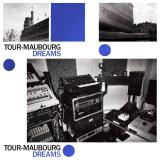
Tour-Maubourg returns with a new 6-track EP, Dreams, further cementing his place as a key figure in today’s electronic music scene. Known for blending soulful house with rich jazz influences, the French-Belgian producer showcases both his DJ sensibility and refined production skills on this long-awaited release for French deep house label Noire & Blanche.
Nearly four years after Floating on Silence - his acclaimed EP for the label that quickly became a staple in DJs’ sets and underground all-night club sessions - Dreams follows the same inspired path while raising the bar even higher. Joined by a carefully selected group of collaborators, including American producer Kareem Ali (praised by Rolling Stone, Pitchfork, and Boiler Room), pop/R&B soul singer Nic Hanson, and Lithuanian producer and musician Cyan Lu, Tour-Maubourg blurs the lines between jazz and house. The result is a deeply musical, immersive EP that reinforces a sound signature now unmistakably his own, designed for both intimate listening and late-night dancefloors.
crédits
Ltd. pink-lilac splatter LP &
- 1: The Auctioneer
- 2: Tour Worn
- 3: Hey You Hey You (Are You Are You Ok Ok?)
- 4: Ducklings
- 5: Some Advice
- 6: The Wardrobe Song
- 7: Party With A Hard T
- 8: Pixels
- 9: Listening
- 10: Top Score
- 11: The Ship Is Still Sinking
- 12: Paintballs
- 13: Keep Eyes On
- 14: Vertical
- 15: A Great Deal
- 16: Can We Get This Straight?
PET NEEDS return with their fourth studio album ‘ELBOWS OUT! THIS IS CAPITALISM’ to be released on Xtra Mile Recordings on 27th March 2026. Recorded by George Perks (Enter Shikari, You Me At Six, Mogwai, Skindred) it follows the release of their Top 20 album ‘Intermittent Fast Living’ in February 2024. The album charts the exploits of the band buying a second-hand punk rock career at auction and trying (and failing) to make it work.
Over the course of the genre-spanning 12 tracks, the story unfolds with a mix of frenetic punk rock defiance; reflective melodic introspective and beat heavy party anthems as well as guest appearance by CJ Ramone, legendary auctioneer Eric Olson and friends The Whops and Jess Guise who help the story develop. The album is a satirical look at the pitfalls of trying to make it as a DIY punk band, delivered by a band at their most creative and bold as they continue on their own ascension of success.
PET NEEDS are a punk fuelled melodic rock fourpiece from Colchester who have toured the world since they signed with Xtra Mile in 2020. Their past three albums have helped catapult the band to the rising stars they are today. They regularly headline tours in UK, Europe and in America as well as huge support tours with Laura Jane Grace, Art Brut, Frank Turner, Flogging Molly, Skinny Lister, Bouncing Souls, NOFX, The Hives. The Lottery Winners, Spike & The Gimmie Gimmies and The Levellers. In the lead up to the album release the band will tour the UK’s regional towns giving fans exclusive listens to some of the new songs. And throughout week of release will perform instores and outstores to push for a high chart position.
- A1: Suite 1
- B1: Suite 2
- C1: Suite 3
- D1: Suite 4
Step inside the shadow-drenched world of The Curse of Frankenstein with this definitive soundtrack release from Hammer Films, celebrating the film that launched Hammer Horror and changed cinema forever.
In early 1957, composer James Bernard wrote, orchestrated and recorded sixteen powerful cues for The Curse of Frankenstein. Created in a remarkably short production window, Bernard’s score became the sonic blueprint for Hammer’s bold new gothic identity.
Although all sixteen tracks were used in the finished film, the original session recordings are now lost. During Hammer’s painstaking 2025 4K feature restoration, approximately 13 minutes of clean music were newly extracted from the film’s original mixed music-and-effects track — a rare archival recovery that brings Bernard’s work back from the grave.
For the first time anywhere in the world, this historic music is released on vinyl, presented as four atmospheric suites across two 45rpm 7" EPs. Carefully curated to preserve the dramatic flow of the score, this release allows listeners to experience the chilling intensity, gothic menace and emotional weight that defined Hammer’s Frankenstein.
Pressed on green vinyl and produced exclusively as a Limited Collector’s Edition, this set is essential for Hammer fans, classic horror collectors and film-music connoisseurs.
This Limited Collector’s Edition includes:
• Four suites of music from the original The Curse of Frankenstein soundtrack
• Two 45rpm 7" EPs pressed on green vinyl
• Liner notes by David Huckvale, biographer of James Bernard
• Liner notes by Hammer music expert John Mansell
Own a landmark piece of horror film history and experience the sound that resurrected Frankenstein. This exclusive vinyl release is available only from Hammer Films — once it’s gone, it’s gone forever.