Known as ‘the Architect of Rock ‘n’ Roll,’ the flamboyant rhythm and blues extrovert, Little Richard, made an incredible impact with unorthodox piano playing and rasping, shouted vocals, yielding a series of pivotal hits in the mid-1950s, but he abandoned secular music for gospel following a tour of Australia in 1957. Lured back into rock by promoter Don Arden, his UK tour featuring The Beatles as support, Little Richard Is Back was his comeback set for Vee Jay, his voice now deeper and seasoned; the range of covers are tackled with plenty of pep, and original ‘Groovy Little Suzy’ was co-written by Harry Nillson. All hail the King!
quête:4 for money
The classic 1983 hardcore scuzz rock debut from Berkeley, CA’s Fang, Landshark is a unique mix of erratic thrashers and slow Sabbath-oid noise riffs. Its best-known tune is without a doubt the rumbling and stumbling opening track “The Money Will Roll Right In,” which has been covered by Nirvana, Metallica, Mudhoney, The Butthole Surfers and god knows who else. The record also includes cheerful odes to the disabled (“Destroy the Handicapped”), the follicle-y challenged (“Skinheads Smoke Dope”), and assorted werewolves, delinquents and drug users. Fang continues to unload their brand of sludge-punk on audiences to this day, with recent tours taking them around the US, Europe and Brazil. This reissue is remastered and back in print on vinyl for the first time in 20 years, with additional vintage artwork inside. The digital download included with the disc also features their entire Where the Wild Things Are release, plus more.
Swami John Reis celebrates his 100th year in rock ’n’ roll with a brand new band and record! “Ride The Wild Night” is neither completely similar nor dissimilar to his previous bands (Hot Snakes, Night Marchers, The Sultans, Rocket From The Crypt, Drive Like Jehu, etc).
Yet the sound is immediately familiar and assuring (like an old friend you lost touch with that comes back into your life only to ask to borrow money).
The music is an amalgam of ’60s folk-punk, ’70s punk-punk and pre-Vietnam War rock ’n’ roll, filtered through the Reis’ unregistered, trademark sensibilities. “I wanted to celebrate some of my favorite rock n roll in its transitional periods. Flaming Groovies, Paul Revere and the Raiders, The Kinks, The Saints and others created some of the most exciting recordings while also connecting the musical past to its future. That really appeals to me”.
Although titled a “solo” record it is predominantly in name only. The record is built on stentorian bedrock of savage drumming by J. Sinclair K. of Hot Snakes and the pounding acoustic piano of Joe Guevara. Also adding their expertise to the mix is Chris Prescott (Pinback) Gar Wood (Hot Snakes), Glen Galloway (Truman’s Water), Jacob Turnbloom (Mrs. Magician) and Jordan Clark (PLOSIVS). With this backing, Swami John Reis finalizes it with his throaty basso and weaponizes the files with roaring electric guitars, rapid acoustic guitar strum and bass.
Hear his defiant, croak-howl in what might be his most autobiographical work yet. “All of these stories are real. They just might not be completely true.” Reis adds, ”The words come from what I overhear through my fence, what I see across the street, pictures I see in my head, experiences that I can’t forget or am grateful to remember.” If there is a loose theme throughout the record he offers, “Musically and lyrically there is a motivation to surrender to a restless and impulsive spirit that can only be satisfied by breaking things. Creating rubble for better or worse. “
Music critics and fans alike have long referred to Reis’s signature voice as “The Velvet Yawn” and never has that description been more apt. “Ride The Wild Night” was recorded by Reis at City Of Refuge (Night Marchers, Black Lips, The Spits) and mixed by Ben Moore (Hot Snakes, Diamanda Galas) at Singing Serpent.
First-ever vinyl repress of her classic 1982 fan-favourite album, third in a series of remastered vinyls of her 1980s albums, and part of Cherry Red’s on-going re-issue campaign of the star’s EMI catalogue in association with RT Industries.
Remastered from the original master tapes and pressed on green coloured vinyl with refreshed artwork including new inner sleeve.
Includes the singles ‘Machinery’, ‘Are You Man Enough’ and ‘I Wouldn’t Beg For Water’ as well as her original recording of ‘Wind Beneath My Wings.’
Sheena Easton rocketed to overnight fame in 1980 with the BBC broadcast of ‘The Big Time’ – arguably the first pop reality show – subsequently breaking records with her first two singles ‘Modern Girl’ and ‘9 To 5’ simultaneously hitting the UK Top Ten. Within a year, she had topped the US Hot 100 with the renamed ‘Morning Train (Nine To Five)’, recorded the Bond theme ‘For Your Eyes Only’, released two platinum-selling albums and become an international sensation.1982 proved another whirlwind year for Sheena – beginning with her ‘Best New Artist’ win at the Grammies, followed by first national US tour, the recording of her first TV special ‘Live At The Palace, Hollywood’ and capped with the release of her third album
– the aptly-titled ‘Madness, Money and Music’. Produced by Christopher Neil, the album ranged from the hyperkinetic new wave-infused ‘Machinery’ via the smooth west coast yacht rock of ‘There When I Needed You’ to classic, Streisand-style balladry on the top 20 AC hit ‘I Wouldn’t Beg For Water.’ It also included one of the earliest recordings of the classic ‘Wind Beneath My Wings’.
Founded in 1971, Matumbi was among the earliest and best British reggae bands. They did, however, also record under different guises, including 4th Street Orchestra. In their acclaimed Rough Guide to Reggae, Steve Barrow and Peter Dalton rate this album (and its counterpart Ah Who She? Go Deh!) as 'the best showcases for Matumbi's talents'. This release marks the first LP reissue of this genuine UK roots monument since 1976.
Original member Dennis “Blackbeard” Bovell (of LKJ and Dub Band fame) knew the local sound system scene like the back of his hand, and most tracks on Leggo! Ah-Fi-We-Dis were initially cut as exclusive 'specials' for his own Jah Sufferer sound system and for fellow soundmen. Hardly anyone hearing these tunes at reggae parties would have guessed they didn't originate in Kingston but were recorded in London. And neither did many who bought the records when they were released a few years later. That's hardly surprising, as the material Bovell & Co churned out could easily compete with the toughest output of their Jamaican counterparts. The solid interpretation of Junior Delgado's "Tichion" and a scorching, melodica-led version of Ras Michael's "None-Ah-Jah-Children" are the most familiar tunes here. And a militant update of Max Steiner's "Theme From A Summer Place" displays good fun as well as guts. But the band's outstanding originals will give many '70s Jamaican classics a good run for their money.
Hitler Bad, Vandals Good ist das bahnbrechende Album von The Vandals auf dem Punkrock-Label Nitro Records. Die kalifornische Band veröffentlichte 1998 ihr bisher kommerziell erfolgreichstes Album, das die Single My Girlfriend’s Dead”, die Fan-Favoriten Idea for a Movie” und People That Are Going To Hell” sowie eine Coverversion von So Long, Farewell” enthält. Zum 25-jährigen Jubiläum ab dem 21.07 als limitierte blaue 1LP verfügbar.
Five years after the release of ‘Luyando’, Zimbabwe’s most celebrated music export returns with their long-awaited follow-up album ‘Tusona: Tracings in the Sand’. The six musicians from Victoria Falls are refining their unique sound: infectious Afro grooves deeply connected to Zimbabwe’s cultural DNA. ‘Tusana’ is their most danceable album to date, a DIY production recorded in Zimbabwe. It features horns by Ghanaian highlife outfit Santrofi.
Every Sunday, there is a gathering in the sweltering heat on grounds of an old local beer hall in the Chinotimba township in Mosi-o-Tunya (Victoria Falls). Entertainment is provided by various traditional groups including the Luvale Makisi masquerade. It is a day full of singing, drumming, dancing and storytelling. Mokoomba’s lead vocalist Mathias Muzaza can often be found here singing with a voice both soaring and vulnerable. In the course of the afternoon the other band members - guitarist Trustworth Samende, bass player Abundance Mutori, keyboard player Phathisani Moyo, percussionist Miti Mugande and drummer Ndaba Coster Moyo - often join in with singing. The drum driven song “Bakalubale” featured on their new album invites you to this gathering.
Mokoomba recorded ‘Tusona: Tracings in the Sand’, the follow-up album to ‘Luyando’ (2017, Outhere), in Zimbabwe during the pandemic. Instead of working with outside producers like Manou Gallo or Steve Dyer as they have in the past, this album was entirely recorded in a DIY fashion by Mokoomba. The collective from Zimbabwe put in all the experiences made over the previous years and have forged their music into a unique Zimbabwean sound. On popular demand from their fans in Zimbabwe they have even re-recorded three songs from their last more acoustic album ‘Luyando’ turning them into dancehall bangers (featured on the CD and digital versions of the album). In short, this album is more Mokoomba than any of the ones before.
On the album Mokoomba are singing about love, loss, courage in a changing society. The first single “Nzara Hapana” means “no money” in Shona. The song talks about a man who wants to ensure the future of his wife and family and is trying to protect them against the greed of his relatives. The danceable up-tempo song “Nyansola” praises the goddess of harvest and asks her for rain. “Makisi” is sung in Luvale. It celebrates the beauty of the initiation ceremony for which the whole community comes together. “Manina” is a song about losing a loved one. It was written during the pandemic and features the young singer Ulethu from Harare. Mokoomba sing in many different local languages. Their songs are in Tonga, Luvale, Shona, Nyanja and even Lingala used in “Makolo” when they team up with Congolese singer Desolo B. (The album also features horns by Nobert Wonkyi Arthur (trumpet), Bernard Gyamfi (trombone) and Emmanuel Arthur (sax) from Ghanaian highlife outfit Santrofi.)
The title of the album is a nod towards their immense respect for tradition. ‘Tusona’ refers to an ancient system of signs and symbols, drawn in the sand and used for instruction during initiation ceremonies by the Luvale in Southern Africa. Another important part of the Mukanda initiation ceremony is the incredible Makisi masquerade. Since 2008 the Makisi dances are on the UNESCO list of intangible heritage. The Makisi are masked characters, representing the spirit of deceased ancestors. During the yearly initiation ceremony the Makisi return to the living world to teach the young children to become responsible adults among the Lubale people of Southern Africa. In the last decade the interest - especially among the young people – has faded and the Makisi dances have nearly died out.
“Our inspiration comes from these gatherings”, Trustworth Samende explains, “from listening to and playing pure traditional music with everyone in the township. We then add influences from music that we listened to in our homes growing up and the sounds we experience travelling around the world.” It is the connection with the cultures around them that gives Mokoomba’s music its spiritual power. When you hear Mathias Muzaza singing and you watch closely, you will see the music carrying him away to a different sphere, a place where he is singing with the ancestors. Only a split second later though Trust Samende’s sparkling guitar riffs kick in, blending Congolese influences from neighbouring Kasai with Zamrock and Mbira inspired Chimurenga music, making you want to hit the dancefloor. It is this unique blend of local musical styles with contemporary dance music that is at the heart of Mokoomba’s music. The strong reference to tradition is also reflected in the cover illustration by young Zimbabwean visual artist Lomedy Mhako.
It has been nearly 10 years since this young energetic band from Zimbabwe has exploded onto the international music scene. Since then they have shared their music with fans all over the world: Mokoomba have performed in over 40 countries, rocking audiences in places like Roskilde festival (Denmark), WOMAD festival (UK), Sziget festival (Hungary), SXSW (USA), Apollo Theatre (New York) to name but a few.
Like anywhere in the world Africa’s musical output has become more and more producer based. Mokoomba are the living proof that Africa’s great guitar band heritage is well alive and ready to set any dancefloor on fire. Most important though is that deep below the surface of Mokoomba’s sound - flowing like the Zambezi River - you can still hear the heartbeat and the rhythm of a community connected by its music. Like ‘Tusona’, it is a source of rejuvenation, resilience and strength in these changing times. May the tracings in the sand not fade.
- 1: Greetings
- 2: Serving (Feat. Hodgy Beats)
- 3: Peroxide (Feat. Dj Romes And Dâm-Funk)
- 4: Get Money (Feat. Frank Nitty)
- 5: Streets (Feat. Dj Romes And Oh No)
- 6: The Stroll (Feat. Amg)
- 7: Knock Knock (Feat. Mf Doom)
- 8: Mad Neighbor
- 9: The Strip (Feat. Anderson .Paak)
- 10: Finer Things (Feat. Likewise And Phonte)
- 11: Burgundy Whip (Feat. Jimetta Rose)
- 12: Drive In (Feat. Aloe Blacc)
- 13: Belly Full (Feat. Black Spade)
- 14: Birds
- 15: The Buzz (Feat. Mayer Hawthorne)
- 16: Whoop-T (Feat. Jimetta Rose)
- 17: Peace
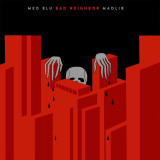
Three hip-hop titans return with the 10-year anniversary of their classic album Bad Neighbor. MED, Blu, and Madlib—each legendary in their own solo careers—reunite to deliver a timeless body of work featuring Anderson .Paak, MF DOOM, Aloe Blacc, Phonte, and other heavyweights of the culture. Across 17 tracks, Madlib’s soulful production provides the perfect backdrop for Blu and MED’s razor-sharp rhymes, giving the album undeniable replay value. The 10-Year Anniversary vinyl edition features a brand-new mix and master, two bonus tracks, and includes all original songs and skits in their original format across a 2xLP. A must-have for any serious record collection.
‘Bad Neighbor’ is a collaborative studio album by rappers MED and Blu and producer Madlib. Originally released on October 30, 2015, the 13 track LP features guest appearances from the likes of the late MF DOOM, Aloe Blacc, Mayer Hawthorne, Jimetta Rose, Dâm-Funk, and Oh No. The album is undoubtedly an extension of all three artists’ signature sounds, but it simultaneously defies all precedents to reaffirm each individual’s position at the forefront of LA’s legendary hip-hop landscape.
For the first since it’s original release date, the album is set to be rereleased on vinyl in a special edition red and black color-in-color configuration equipped with two new mixes of the focus tracks, “The Strip (feat. Anderson .Paak)” and “Knock Knock (feat. MF DOOM).”
"Bad Neighbor is as if the Ruff Ryders albums were reimagined by this trio and all the avant heads get to party, but it is also worth mentioning that the often slept-on MED and Blu seem to steer this beast as much as the beloved Madlib." -AllMusic
- A1: Announcement 1
- A2: Introduction To Solution
- A3: When A Solution Comes
- A4: Money Talks
- A5: Announcement 2
- A6: Shepards Of The Nation
- B1: Scum Of The Earth
- B2: Second Hand Car Spiv
- B3: He’s Evil
- B4: Mirror Of Love
- B5: Announcement 3
- C1: Nobody Gives
- C2: Oh Where Oh Where Is Love?
- C3: Flash’s Dream (The Final Elbow)
- C4: Flash’s Confession
- D1: Nothing Lasts Forever
- D2: Announcement 4
- D3: Artificial Man
- D4: Scrapheap City
- D5: Announcement 5
- D6: Salvation Road
Act 1[27,31 €]
Preservation Act 2 is the 1974 follow-up to The Kinks’ 1973 Preservation Act 1 RCA album, and their thirteenth studio LP.
The album is a finely produced concept of story, theatre, instrumentals, announcements, guest singers and songs.
A further installement of Ray Davies’ musical drama, with the character sketches, wry observations and ballads seen on Preservation Act 1.
Full of The Kinks’ distinctive and unique charm, featuring gems such as ‘Money Talks’, ‘He’s Evil’, ‘Mirror Of Love’ and ‘Artificial Man’.
This is a 2LP black heavyweight 180g vinyl in gatefold sleeve, with original artwork faithfully reproduced. The first repress, apart from a limited edition 2008 US pressing, since the original release in 1974.
Preservation Act 1 is a concept album and the 12th studio LP by The Kinks, originally released on RCA on 16 November 1973.
Preservation is the bands most ambitious project - a rock opera that uses the charming, small-town nostalgia of Village Green as a template to draw the entirety of society and how it works.
Epic opener ‘Morning Song’ sets the scene and mood for the record, followed by a classic sounding Dave Davies’ riff, ‘Daylight’, which echoes themes and sounds tones of one their most recognisable and highly acclaimed albums, ‘The Village Green Preservation Society’.
Standout tracks are the endearingly lazy ‘Sitting in the Midday Sun’ and the beautiful ‘Sweet Lady Genevieve’ – both strong contenders for overlooked Ray Davies masterpieces.
A critically acclaimed album, reviewed by Rolling Stone at the time as "A highly listenable, enjoyable album".
This release is a faithful reproduction of the original 1973 album, on heavyweight 180g vinyl. A must-have for any Kinks fan and its first vinyl re-press, apart from a limited edition 2008 US edition, since the original 1973 LP release.
Puscifer wurde irgendwo in der Wüste von Arizona geboren und ist eine Elektro-Rock-Band, ein Multimedia-Erlebnis, ein Wanderzirkus und Überlebende einer Entführung durch Außerirdische. Der Katalog der Gruppe besteht aus drei Studioalben - V is for Vagina (2007), Conditions of My Parole (2011) und Money $hot (2015) - sowie einer Reihe von EPs und Remixen. Neben dem Kerntrio, bestehend aus Maynard James Keenan (Gesang), Mat Mitchell (Gitarre, Produktion) und Carina Round (Gesang, Songwriting), umfasst die Gruppe Greg Edwards (Bass, Gitarre, Keyboards), Gunnar Olsen (Schlagzeug), sowie eine Reihe von Charakteren wie Billy D und seine Frau Hildy Berger, Major Douche, Special Agent Dick Merkin und viele mehr. Die Gruppe ist bekannt für ihre mitreißende Live-Show, bei der die Grenzen zwischen Konzert und Theater verschwimmen.
777 is a captivating collaboration between rapper Raz Fresco and producer Figub Brazlevic that takes listeners on a remarkable musical journey. Released to critical acclaim, the album seamlessly blends Raz Fresco's introspective lyricism with Figub Brazlevic's masterful production skills, resulting in a project that pushes the boundaries of contemporary hip-hop. 5 different color pressings sold randomly (Purple, Lime, Orange, Red, Green).
- A1: Baby Makes Me Feel Good
- A2: Don't Believe Nothing
- A3: It's Groovier Across The Line
- A4: I've Got My Mojo Working
- A5: I Woke Up This Morning
- B1: He Makes Me Holler
- B2: (The Funky Version Of) Proud Mary
- B3: Ya Ya
- B4: Drifting Blues
- B5: Sit And Hold Your Hand
- C1: Baby Get It On
- C2: Do More Doggin
- C3: Only We Women Bleed
- C4: Knock On Wood
- C5: I'll Be Any Way You Want Me To Be
- D1: He's Mine
- D2: Brain Game
- D3: You Ain't Enough For Two
- D4: Can't Find My Mind
- D5: Money
- A1: Speedboat (2023 Edit)
- A2: Low Res Skyline (2023 Edit)
- B1: Blocks (2023 Edit)
- B2: Burma Heights (2023 Edit)
- B3: Skin Diving (2023 Edit)
- C1: Fukumachi (2023 Edit)
- C2: L O.9.V.e. (2023 Edit)
- C3: Cone (Mix 2)
- D1: Bueno (2023 Edit)
- D2: French Dub (2023 Edit)
- D3: Evil Dub (2023 Edit)
- E1: Blufarm (Abbey Road 2023 Edit)
- E2: Unknown Mind
- E3: Bueno (Ambient Mix)
- F1: Speedboat (96 Demo)
- F2: L O.9.V.e. (Boat Mix, 2023 Edit)
- F3: Redfarm (Abbey Road 2023 Edit)
Dance music has always been grounded in a sense of place. Chicago, Detroit, London, Berlin—a zip code can tell you as much about the music as the year it was made.
But beyond the nuts and bolts of the here and now lies a netherzone where some of the best electronic music floats, impossible to pin down. Swayzak’s Snowboarding in Argentina is one such record.
The title hints at its uncanny placelessness. The music has nothing outwardly to do with Argentina, for one thing. The work of UK producers David Nicholas Brown and James S. Taylor, it was recorded in a number of locations—mostly bedrooms—around London. Yet there is little that is quintessentially British about the music.
Instead, Brown and Taylor drew much of their inspiration from, on the one hand, the luminous chords and silky heft of Detroit techno, and on the other, the staccato drums and clipped textures that were then beginning to bubble out of Berlin and Cologne.
That brings us to the question of time. For if Snowboarding in Argentina belongs to nowhere, it is equally a product of nowhen.
On a practical level, the music took shape in the mid to late 1990s, although it took nearly 10 years for it to come to fruition. Brown and Taylor began jamming on instruments, then machines, in the late 1980s. Then, after Brown suffered a serious car accident, the two musicians began working together more seriously. Trial and error yielded a promising single with a downtempo vibe that a hired-gun studio producer promptly ruined; Swayzak retreated to their bedrooms.
They learned about Chain Reaction from a radio show, found new ways to burrow into the circuitry of their machines, and by 1996 they had hit upon their sound. brought 10 copies of the first to Berlin’s Hard Wax, sold them directly to the shop for a fistful of Deutschmarks, and turned around and spent the money on records; that’s how DIY electronic music worked in those days.) The album itself appeared in 1998 on London’s Pagan label and quickly built a cult following. It was clear that the music was in conversation with its contemporaries: Heard from the right angle, it was possible to imagine it as a halfway point between the proto progressive house of Underworld and the monochromatic minimalism of Kompakt. But it also didn’t quite sound like anything else around; it was a dispatch from an unknown territory that needed no special understanding to decipher.
A quarter century later, Snowboarding in Argentina sounds simply eternal. Certain hallmarks of ’90s production are available—the music’s almost murky warmth is a reminder of what electronic music sounded like before software swallowed everything into its digital maw—but there’s nothing dated about it. The exploratory nature of these tracks, as the result of experimenting with their machines’ limitations, never eclipses their musical or emotional essence.
Long since been deemed a classic, Snowboarding in Argentina remains an underdog in the annals of electronic music. Its semi-obscurity was surely not helped by the decision to publish nine of its original 12 tracks on the CD, and seven on the vinyl, with only four appearing on both formats. Twenty-five years after its original release, Lapsus’ Perennial Series edition unites, for the first time, all the album’s tracks as a single triple-vinyl package, rounding out the 12 original songs with previously unreleased material. Working off the original DAT premasters, Swayzak have created new edits of all the tracks. The result might be considered the definitive edition of the album as it was meant to be, after a 25-year journey. It seems fitting that an album so timeless would continue morphing throughout its lifespan. For fans, it’s the chance to hear a beloved album as never before. And for newcomers, it’s the perfect introduction to a record that, in its own quiet way, reshaped the sound of electronic music, opening up new frontiers unbound by cartography or calendars.
The core of Snowboarding in Argentina appeared on a series of three two-track singles in 1997. (Taylor brought 10 copies of the first to Berlin’s Hard Wax, sold them directly to the shop for a fistful of Deutschmarks, and turned around and spent the money on records; that’s how DIY electronic music worked in those days.) The album itself appeared in 1998 on London’s Pagan label and quickly built a cult following. It was clear that the music was in conversation with its contemporaries: Heard from the right angle, it was possible to imagine it as a halfway point between the proto progressive house of Underworld and the monochromatic minimalism of Kompakt. But it also didn’t quite sound like anything else around; it was a dispatch from an unknown territory that needed no special understanding to decipher.
A quarter century later, Snowboarding in Argentina sounds simply eternal. Certain hallmarks of ’90s production are available—the music’s almost murky warmth is a reminder of what electronic music sounded like before software swallowed everything into its digital maw—but there’s nothing dated about it. The exploratory nature of these tracks, as the result of experimenting with their machines’ limitations, never eclipses their musical or emotional essence.
Long since been deemed a classic, Snowboarding in Argentina remains an underdog in the annals of electronic music. Its semi-obscurity was surely not helped by the decision to publishnine of its original 12 tracks on the CD, and seven on the vinyl, with only four appearing on both formats. Twenty-five years after its original release, Lapsus’ Perennial Series edition unites, for the first time, all the album’s tracks as a single triple-vinyl package, rounding out the 12 original songs with previously unreleased material. Working off the original DAT premasters, Swayzak have created new edits of all the tracks. The result might be considered the definitive edition of the album as it was meant to be, after a 25-year journey. It seems fitting that an album so timeless would continue morphing throughout its lifespan. For fans, it’s the chance to hear a beloved album as never before. And for newcomers, it’s the perfect introduction to a record that, in its own quiet way, reshaped the sound of electronic music, opening up new frontiers unbound by cartography or calendars.

- Mad Rapper Intro – Madd Rapper
- Can’t You See – Total Feat. The Notorious B.i.g
- Flava In Ya Ear (Remix)– Craig Mack Feat. Busta Rhymes, Ll Cool J, The Notorious B.i.g. & Rampage
- You Used To Love – Faith Evans
- Too Old For Me - Jerome
- Mad Rapper Interlude – Madd Rapper
- Can’t Nobody Hold Me Down – Puff Daddy & The Family Feat. Mase
- Feel So Good – Mase
- Money, Power & Respect – The Lox Feat. Dmx& Lil’ Kim
- Mad Rapper Interlude – Madd Rapper
- Only You (Bad Boy Remix) – 112 Feat. Mase & The Notorious B.i.g
- One More Chance/Stay With Me (Remix) – The Notorious B.i.g
- It’s All About The Benjamins – Puff Daddy & The Family Feat. Lil’ Kim, The Notorious B.i.g. & The Lox
- Mad Rapper Outro – Madd Rapper
- Etching
Celebrate Hip-Hop At Fifty with this 25th Anniversary Compilation Album produced by Sean "Puffy" Combs and featuring the biggest hits from the early days of Bad Boy. Tracks include a who's who from the Bad Boy lineup, including The Notorious B.I.G., Mase, Faith Evans, Craig Mack, 112 and Diddy himself. This Limited Edition Black & White Split Vinyl also includes Exclusive Bad Boy Vinyl Etching on side D.
No More Sound, Sad Park’s third full-length, begins with an ending. More specifically, with its own ending. Because the short, just-over-a-minute-long “No More Songs” is kind of a stripped-down reprise of the title track that closes this record. In one way, it means this album—the band’s first for Pure Noise—travels back in time over its 38 or so minutes, but in another it’s also traveling forwards. Because while “No More Sound” is a more fleshed-out version of “No More Songs”, it also contains melodic and lyrical throwbacks to the eleven songs that sit between them. Perhaps more importantly, as everything comes full circle on the record, it offers something that the opener doesn’t. Recorded across ten days at Balboa Studios in Los Angeles, No More Sound is, in fact, the sound of a band really coming into their own.
Elvis Presley’s self-titled debut album forever changed popular culture on release in 1956, its earthquake aftershocks still felt some 65 years later. Gritty adaptations of Carl Perkins’ ‘Blue Suede Shoes,’ Ray Charles’ ‘I Got A Woman’ and Little Richard’s ‘Tutti Frutti’ helped make it the first Rock ‘n’ Roll album to top the Billboard charts, where it remained unchallenged for a full ten weeks. The iconic cover image with its distinctive lettering, showing Presley brandishing his acoustic guitar, helped embed the instrument in rock mythology too, indelibly changing how we conceive of the genre and its axemen. Elvis Presley proved that our hero was already the undisputed King of Rock ‘n’ Roll, just as he still is today.
- Super 8 - Live At Abbey Road
- Shadow Of A Doubt - Live At Abbey Road
- Cutting Room Floor - Live At Abbey Road
- Headspace - Live At Abbey Road
- Forest Fires - Live At Abbey Road
- Kids - Live At Abbey Road
- Skywriter - Live At Abbey Road
- Your Money Or Your Life - Live At Abbey Road
- You Can't Always Get What You Want - Live At Abbey Road
- Feel Alive - Live At Abbey Road
The album was recorded completely live in Studio Two at the legendary Abbey Road Studios and features live versions of songs from Yearbook and Lifeline, as well as brand new track Headspace and an irresistible cover of the Rolling Stones' classic You Can't Always Get What You Want.