Sometime in 2005, a lone box of master tapes escaped an estate sale and made its way through a network of collectors, record dealers, and “junkers” into the hands of leading Ohio soul expert Dante Carfagna, who linked them to Columbus, Ohio’s mysterious Prix label (See: Eccentric Soul: The Prix Label). A bit of research turned up Prix proprietor George Beter, who identified most of the unlabelled material. All it took was an endless series of phone calls and letters and two fields trips in Columbus. But one complete mystery wended its way onto our final Prix compilation. “You and Me,” a simple but irrepressible demo credited only to Penny & the Quarters, was found tacked onto a mixed studio reel. Our survey of every willing lifer left on the Columbus soul scene, including retired DJs, producers, and important local artists, produced not so much as a glimmer of recognition at the name Penny & the Quarters. Though we loved the song from the first play, it may’ve ended up a bit buried on our original compilation, as #18 of 19 tracks.
Поиск:4 reel
Все
- La La La
- Cruz
- Lost Angel
- Taquero
- Dream Suite
- The Mystery Of Miss Mari Jane
- Cha Cha Cha
- Sea Changes
- Cinema Lover
- Die Again, Yesterday
- Hollywood Ten
As Jess Sylvester finished his Hardly Art debut as Marinero in the fall of 2020, he realized it was time for a change. Sylvester grew up in Marin County, on the doorstep of San Francisco. It was a nurturing community for a high-school punk with a pompadour and, later, for a sober songwriter with a proclivity for moody psychedelia. But he wanted to be challenged and inspired by a new setting and scenario around strangers who prompted him to approach his music in unexpected ways. So in September 2020, as the world continued to reel in lockdown, Sylvester headed several hours south to Los Angeles, a city that, despite the relative proximity, the film buff knew largely from classic and cult films situated there. When he arrived, he kept digging into that cinematic past-Robert Altman's The Long Goodbye, with John Williams' classic theme, or classic 90s movies about East LA, many featuring Edward James Olmos. They shaped his understanding of his new town just as it began to open. This is one pillar of the multivalent and endlessly lush La La La, Marinero's new album about sobriety, identity, and fantasy that is playfully named both for the city that helped shape it and the sophisticated pop it contains. Sylvester wrote about characters outside of himself, whether considering the heroine reckoning with her own version of keeping clean or the screenwriters whose work was deemed communist simply as a political convenience. He linked those songs with motivational anthems about self-acceptance and playful numbers about flirting through food, shaping a 12-song set rich with humor, empathy, and encouragement. Sure, La La La is a continuation of the slippery genre play Sylvester started with 2021's Hella Love, 2019's Trópico de Cáncer, or even before that. But it also feels like a fresh beginning for Marinero, as Sylvester realizes how boundless this project can be. He began to think about the music of his childhood, how his mother is from San Francisco with Mexican roots, and how he'd heard so much salsa growing up as an impetuous teenager. So he wrote "Taquero," a red-hot salsa tune that uses tacos and their trappings as a source of endless metaphors for come-ons. And then there was the Ray Barreto or Santana-inspired "Pocha Pachanga," with organ gliding and percussion pulsing beneath his yearning vocals, warped as if by desert winds. In Los Angeles, he found a wealth of players who spoke this music like language itself (including Chicano Batman's Eduardo Arenas), all ready to play with and push these familiar forms. Sylvester has also been sober for 21 years, since a cross-country sojourn to attend college in Boston ended in a chemical haze. Today, he sees friends facing the same decisions he made two decades ago, and he brings bits of that experience to bear in songs that feel like self-help anthems. Recorded with a musical hero (and labelmate) of his, Chris Cohen, "Sea Changes" feels like sunshine breaking through dark clouds, as Sylvester acknowledges the newfound confidence and clarity in a friend who has stepped away from destructive habits. In the past, Sylvester has been intractably linked to his identity as a Mexican-American, born to parents from Mexico and Irish- American descent who settled in San Francisco. That can be limiting, of course, tying him to notions of sound and style that aren't always correct. On La La La, he simultaneously steps into and out of those preconceptions, singing tracks above salsa in joyous Spanish or pondering the dynamics of the Hollywood Ten and blacklists above mysterious lap steel and teasing trumpet. His identity, then, should now be clear: He is a Californian, making music shaped by the diversity of encounters and experiences that are a central part of that state's fabric. Never before has he presented himself so fully and unabashedly on tape as with La La La, an album Sylvester built with new inspirations to deliver new charms.
2025 Repress
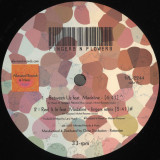
New collaboration project from Larry Heard and Micheal Kuntzman featuring vocalist Madeline as Fingers N Flowers. Larry Heard himself on production duties and it shines through in the detailed, flawless vocal deep house tracks. Mr. Fingers remix and some acidity on the flip for good measures.
- A1: God's Favourite Son
- A2: She Drank Holy Water From The Source
- A3: I Go Downtown
- A4: In My Dying Day
- A5: These Trying Times
- A6: In Times Of Disgrace
- B1: Kid
- B2: Remember Love
- B3: Saigon Wieners Juice
- B4: She's Gone
- B5: The Seventh Seal
- B6: We Are All Alone In This World
'When the Lamb opened the seventh seal, there was silence in heaven for about half an hour. And I saw the seven angels who stand before God, and seven trumpets were given to them’’ heres the children of the pope
We wanted to discard the unimportant.
Songs about life and the living and songs about death and the dead.
Songs about God and the heavenly, songs about hell and the unholy.
Sounds of youthful wonder and the melancholy of time.
Love and hate and the opposites of the the great untold, in extreme, melted together in a boundless pot of sweet surrealist molasses.
The all, through the unmodified eye.
Recording the album was an against the clock under pressure process that turned out very fruitful.
We tracked 12 tracks in 5 days in the dead of witner 2022Snow and ice and trying to explore the depths of our minds in a dim lit room, trying to put surrealism to tape.
Everyhting was was recorded on 2 inch reel to reel in live takes (appart from few overdubs also recorded onto tape)
We did not turn any computer on until the mixing process
"Self-released avant garde jazz – reissued for the first time! Recalling Kraftwerk precursor the Organisation, or contemporaries like Faust, Hünerberg employs flute, organ, bass and balloon to his DIY compositions.
Over top of Gillespie's nimble, pointillist drumming (he also plays piano and harpsichord), Hünerberg employs flute, organ, bass and balloon (that’s not a saxophone on “Cucumber”). The disorienting opener “Cro Magnon/Two” recalls Kraftwerk precursor the Organisation, or contemporaries like Faust. There’s a strange, disconsolate atmosphere to the proceedings, almost as if the air had been sucked out of a recording session booked for some avant-garde jazz heavies.
Instead of Impulse, Phase Murmur should have been bound for ESP-Disk. Alas, the duo were experimenting out in the relative vacuum of southwestern Ohio. Far from any bustling metropolis or curious record labels, Phase Murmur was truly a DIY affair. Not only did the duo press the LP up themselves (down the road at Cincinnati's Rite Record Productions), but the evocative and mysterious photo on the cover is by Gillespie while the layout, with accompanying poem on the back, was assembled by Hünerberg.
It was on Phase Murmur where Hünerberg first found his voice, and the rest is the sound of history, unspooling on a reel-to-reel tape machine.
Includes new liner notes by Erick Bradshaw (Host of Spin Age Blasters with Creamo Coyl on WFMU)"
- A1: Floppy Boot Stomp
- A2: Owed T' Alex
- A3: Harry Irene
- A4: Flavor Bud Living
- A5: Human Totem Pole
- A6: Bat Chain Puller
- B1: Brickbats
- B2: Apes Ma
- B3: A Carrot Is As Close As A Rabbit Gets To A Diamond
- B4: 81 Poop Hatch
- B5: Seam Crooked Sam
- B6: Odd Jobs
Don Van Vliet is Captain Beefheart. 1000 only numbered 180 gram vinyl LPs gatefold sleeve purple vinyl. Sleeve design by legendary Led Zeppelin designer Steve Hardstaff (Jacuzzi). When Don Van Vliet sent these reels of tape to North West promoter Roger Eagle in the 1970s to make sure they got released in the UK they became stuff of legends.
Side 1 :
Side 2 :
- A1: Cornell Campbell - Brighter Tomorrow
- B1: Lone Ark Ridim Force - Brighter Version Dub
The drums, bass, guitar and organ on this riddim featuring vocals and lyrics by Cornell Campbell were recorded live at A-Lone Ark Muzik Studio, with all the musicians together in the same room with just a few ribbon mics. The idea was to recreate the sound of the golden age of rocksteady when all the musicians shared the same room for a recording. According to this idea, the room was not 100% dry and most of the microphones were ribbon mics which gave the recording a unique atmosphere. Additionally, the session was recorded 100% analogue, using an eight track A80 reel to reel multitrack recorder (1 inch).
- A1: Puscifer - The Algorithm
- A2: Ice Nine Kills & Reel Big Fish - Walking On Sunshine
- A3: Perturbator - Dangerous
- A4: Carpenter Brut - Eyes Without A Face
- A5: Unlike Pluto - Sweet Dreams
- A6: Royal & The Serpent - Where Did You Sleep Last Night?
- B1: Diamante - Love Is A Battlefield
- B2: Weathers - Killer
- B3: Charlotte Sands - Miss Murder
- B4: Kittie - Eyes Wide Open
- B5: Ramsey - Ramsey (From The “American Psycho” Comic Series Soundtrack)
- B6: Gvllow & Mothica - Eyes Without A Face
- Trouble In Mind
- If You're A Viper
- When First Unto This Country
- Shiloh Town
- Shuckin' Sugar Blues
- Everytime I Think Of Freedom
- Ribbon Bow
- 8: Blues Jumped The Rabbit
- Lonesome Valley
- When I Get Home
- In The Pines
- Katie Cruel
- Karen Dalton performance featuring seven never before heard songs - Limited pressing on Sky Blue colored vinyl - Old style, Tip-On Jacket, and 8pp heavy insert featuring a treasure trove of newly discovered photos, and a 6,000 word essay by Kris Needs // In 1962, Karen summoned Richard Tucker to join her in Colorado, extolling the healthier lifestyle, and plentiful gigs at Boulder folk club The Attic. Upon his arrival, the pair solidified their personal and professional relationship, riding horses in the mountains, and performing as a duo at parties and venues throughout Denver and Boulder. Stories of the spell they conjured - and rumours of tapes! - have circulated among friends and musicians who witnessed them, but until now, no recorded evidence had turned up. Shuckin' Sugar is the glorious result of three reel to reel tapes that miraculously found their way to us in November, 2018; which featured two complete shows from The Attic in January '63, and a benefit concert for The Congress of Racial Equality (CORE) recorded the following February. Their gigs would often include brief solo sets from Karen and Richard, in addition to the duets, and all seven solo songs of Karen's found on the three reels are included here, as well as five duets, sequenced as close to how it all went down as humanly possible. To describe the record would take a poet, but all I can say is that unveiling a missing chapter in the Karen Dalton story - with six songs we've never heard her sing before - is cause for celebration in Delmore's world.
The prolific, virtuosic original Bjarki Sigurðarson returns to the concept album format, with ‘A Guide To Hellthier Lifestyle’. It’s the first LP to be released on Differance.
‘A Guide To Hellthier Lifestyle’ explores the psychological landscape of contemporary social issues, offering a sideways rumination on lifestyle dilemmas and wellness obsessions, presenting itself as a response to the modern condition. It combines storytelling with innovative sound textures – encouraging listeners to pause and contemplate the absurdities of contemporary life. Neither a critique nor an endorsement, it represents an honest exploration of our world through Bjarki’s sonic lens, gleaming a heart of darkness, but eventually finding light.
The album utilises hyper-stereo techniques, soothing melodies, complex audio structures, AIgenerated voices and sampled vocals – influenced by Coil, Genesis P- Orridge, and Paul Lansky. Bjarki investigates how specific frequencies can impact consciousness, awareness, mood, and mental state, thereby influencing our perception of reality. His vaporous sound design provides a listening experience that bridges the physical and imaginative realms; sometimes placing the listener in contemplative sanctuary, and at others making them lost – somewhere strange, uneasy, disconnected.
Bjarki on his Guide To Hellthier Lifestyle
“This new album has been two years in the works. It’s sort of my take on all the social weirdness and wellness obsessions happening right now. It kicked off with a track I started in California – the story of a soul that got born into the wrong womb. During that time, I was noticing more and more of this whole ‘wellness religion’ everywhere – people trying to sell you ‘good vibes’ and random people offering you life coaching sessions on Instagram who maybe have less life experience than a houseplant. All these apps that track our every move; it’s like they’re repackaging control and calling it ‘self care’. Capitalism in yoga pants. Thats when I started putting ‘A Guide To Hellthier Lifestyle’ concept together. A never ending, self improvement rabbit hole. We are all being sold this idea that we are not quite enough and we need to buy our way out to being better.
At one point, I took a break from the album and started working on another album full of satirical speeches, AI generated voices, where I create my own voices and type in some ideas of speeches, taking the piss out of wellness gurus and life coaches. I messed a lot with these AI voice generators, creating these deep, faux serious monologues. Proper weird stuff, but it cracked me up. Reminded me of the early days, when I was 13, making tracks on Fruity Loops, mucking around with text-to- speech generators. After the break I came back to finish ‘The Guide’ on a much deeper level.
I moved part of my studio to Latvia and continued in the countryside for few months. I realised that I just wanted something beautiful. So, yeah, this album is all of that. It’s spiritual, bits and pieces from the past, all these weird cultural moments, and whatever strange places my head goes. It’s a reflection, a rebellion, a bit of a piss take. But mostly, it’s just me, doing what I do.” - Duncan Clark
The album will be released only in its entirety, December 13th digi, with no advance singles.
- 01: Goldplates
- 02: Makeucum
- 03: Pu$$Y
- 04: Brikbybrik
- 05: Gta
- 06: Stayup
- 07: Actup
- 08: Alladat
- 09: Stillmovin
- 10: Hoodjazz
GFATC Exploring hip-hop’s dustier grooves, sounding similar at times to his early solo work or the 2020 Fly Anakin collaboration Fly Siifu’s.
GFATC’s mode and presentation help distinguish it: It has the air of a daisy-chained DAT tape reel that somehow found its way into your speakers. Without separated tracks, the beginnings and endings of songs (producers include Siifu’s alias iiye, Tony Seltzer, XVII, MVW, West, and IMDEAD) are left to the listener to determine. On paper, it’s a suite; in practice, it becomes more like a sculpture, where multiple angles of engagement over time bring a more weighty understanding.
LTD BLACK VINYL TO 150 COPIES ONLY
Comes with 2 unreleased bonus cuts.
Production: iiye, Tony Seltzer, XVII, MVW & West, IMDEAD
Sound design: iiye x Apollo Rome
Featuring: Butch Dawson, Peso Gordon, Turich Benjy, Apollo Rome
Mixed: iiye, zeroh, kei$ha, anwalk
Mastered: devin burgess, zeroh
- 01: Nevasold
- 02: Deadass
- 03: Why Phone
- 04: Slidewitme
- 05: Breakfast At 7
- 06: May Eye
- 07: Dead Phone
Part 2 in the GFATC series. Fav episode by Boy Q
GFATC Exploring hip-hop’s dustier grooves, sounding similar at times to his early solo work or the 2020 Fly Anakin collaboration Fly Siifu’s.
GFATC’s mode and presentation help distinguish it: It has the air of a daisy-chained DAT tape reel that somehow found its way into your speakers. Without separated tracks, the beginnings and endings of songs (producers include Siifu’s alias iiye, Tony Seltzer, XVII, MVW, West, and IMDEAD) are left to the listener to determine. On paper, it’s a suite; in practice, it becomes more like a sculpture, where multiple angles of engagement over time bring a more weighty understanding.
BLACK VINYL LTD TO 150 COPIES ONLY
Production: Ahwlee, Por Vida, Tony Seltzer x Grimm Doza, Michael White, LastNameDavid, Crem'e, Bobbyy
Sound Design: iiye
Featuring: Cleo Reed, Judah, Ahwlee, VonBeezy, Tyah, Turich Benjy
Mixed: iiye, ahwlee, zeroh, kei$ha, anwalk, bryan
Mastered: devin burgess, zeroh
[b] 02 DEADASS [REMINDER]
- Afterlife
- Wednesday Wedding
- Wire
- Earrings
- Jungle Jenny
- Cold Vermouth
- Eyes On The Floor
- Siam
- Plane
- 78:
Omni - the band, not the hotel - are from the former home of the Braves: Atlanta. Playing lo-fi pop that channels the spectre of the late `70s and early `80s, Omni brings you back to an era where any sane person was reeling from the unfulfilled promise of the Space Age and Age of Aquarius bleeding into the looming threat of "Morning in America." Omni distills the buzz and grit that snakes through the best of Television, Devo, and Pylon into surprisingly danceable, hook-laden slabs of raw, angular, sonic bliss. It's still the summer of '78, and pushing the roots of rock & roll to its limits remains in vogue. "Deluxe" serves as a fresh reminder that rock music can work outside of blues rooted, formulaic progressions without playing it safe behind a wall of effects. Arty enough to impress record enthusiasts, yet melodically attractive enough to transcend to those who've never asked: "'Sister Midnight' or `Red Money'?"
The Invisible Road: Original Recordings, 1985–1990 compiles an unheard, previously unreleased body of recordings by Sussan Deyhim and Richard Horowitz, dissidents from diametric backgrounds who met during the heady days of Downtown New York in the 1980s. This collection reveals the creative and life partners’ radical shared vision of avant-garde pop in all of its boundary pushing freedom, combining Deyhim’s singular approach to vocalization, Horowitz’s invention of new musical languages, and touchstones of traditional music from around the world, creating a new music that ultimately retains a voice entirely its own. Despite their difference in backgrounds and respective journeys, at the time of their meeting in the early 1980s in New York City, Sussan Deyhim and Richard Horowitz were both products of the search for freedom and understanding (and resultant awakenings) that swept the globe and helped culturally define the late 1960s and 70s. Deyhim, born and raised in Tehran, spent her teens dancing with Iran’s Pars National Ballet company, performing weekly on Iranian national television, and travelling her home country studying with master folk musicians and dancers, before relocating to Belgium and joining Maurice Béjart’s prestigious Béjart Ballet of the 20th Century. Horowitz, born and raised in Buffalo, New York, had spent much of the decade before abroad, first departing for Paris under the shadows of the Vietnam War, where he studied piano, Eastern philosophy, and became entrenched the city’s free jazz scene, playing with the likes of Steve Lacy, Anthony Braxton, and Alan Silva, before embarking south to Morocco where his friendship with Paul Bowles helped cultivate a deep passion for the country’s musical traditions and a shift in his musical practice.
The pair met by chance sometime in 1981 at Noise New York, a small studio on West 34th Street founded by the musician and recording engineer, Frank Eaton, as a utopian creative laboratory that beckoned artists and bands like Arthur Russell, Christian Marclay, Liquid Liquid and Butthole Surfers into its orbit. Both artists had recently relocated to the city, Horowitz having recently released his debut album, Oblique Sequences (Solo Nai Improvisations), on the legendary Paris based imprint Shandar, and fallen in with members of New York avant-garde like La Monte Young, Jon Hassell, David Byrne, and Brian Eno, and Deyhim having begun to more actively incorporate singing into her practice, notably recording a vocal score for choreography she was doing at La MaMa Experimental Theatre.
Initially bonding over a cassette tape of field recordings made by Paul Bowles that had been given to mutual friend and writer Brian Cullman (seeking answers for Ornette Coleman’s question “what is the sound of sound”), their earliest collaboration was documented on Horowitz’s 1981 album, Eros In Arabia, with Deyhim contributing vocals to the track “Queen Of Saba.” Over the coming years, their deep connection would routinely gravitate them into the studio, culminating in the body of recordings that would appear on their 1986 album for Crammed Discs, Desert Equations: Azax Attra. Unknown to nearly all but the artists, laying in wait over the decades on numerous multi-track and stereo reels, DAT tapes, and reference cassettes, were a vast array of recordings made by Deyhim and Horowitz bookending Desert Equations. The 13 pieces represented on The Invisible Road: Original Recordings, 1985–1990 were recorded largely between Noise New York and Daylight Studio in Brussels, during a period that Deyhim describes the partnership between herself and Horowitz’s as seeking a music “free of any specific cultural reference, with a personal musical signature,” blossoming into a body of sonority that embraced the energy of contemporary boundary pushing pop and the avant garde, filtered through their mutual love and study of various musical traditions from across the globe and deep engagement with the ideas and tactics of experimental music.
Undeniably rooted in Horowitz’s study of the North Africa ney and the music of the Berber and Gnawa cultures during his time in Morocco, Deyhim’s deep engagement with the folk traditions of Iran, and the couple’s immersion in the interconnected Downtown underground music scenes, each piece on The Invisible Road offers its own vision creative and cultural hybridity. Deyhim sings in both English and Farsi, as well as a composite tongue that she developed by drawing upon numerous indigenous vocal techniques from around the world, intuitively responding to Horowitz’s simultaneous sound syntax forming and combining a wide range synthetic and acoustic instrumentation, and experimental tape techniques, within a visionary series of free-standing expressions.

10 years after their debut, City Of All Times audio-visual enquirers John B McKenna and Richard Greenan re-appear as Devonanon, to share the findings of a decade-long sonic experiment. Like its predecessor, Richard & John is a living, breathing collection of field recordings and compositions, gathered gradually from remote corners of the pair's lives. Familiar waypoints - interwoven microtonal synths, regurgitated live performances, polite whispering, and the gurgling hum of vehicles (land and sea) - all fold into the perpetual stew.
Where City read like a crumpled postcard account of fraternal reportage, Richard & John is a tone poem on something more amorphous, and out of time - a garbled history of human closeness, upheaval and mark-making, that seems to buckle and creak like a tapestry with no beginning or end. No two spoonfuls are the same, as our story reels through kosmische library stylings ('Wilderness Engine'), to cortex-quieting free association ('Generate Countryside'), and baroque instrumentation ('Blood Laughing', which features beautiful turns from Masayoshi Fujita on vibraphone, and Rosa Juritz on bassoon).
The only album to soundtrack both late-'70s Minneapolis lounges and a Travis Scott x Dior fashion show. Recorded in a host of living rooms with only a Fender Rhodes piano, a Donca Matic Mini Pops drum machine, and Senrick's wide-eyed, 20-year-old voice, the 1977 LP disappeared into the wild and joined the Wendigo in Minnesota lore. A provocative mix of marina soul, easy listening, and loner folk, Dreamin' is a sanguine sliver of the American private mind garden. Harsh winters coupled with a relative lack of interest amongst siblings allowed Chuck Senrick years of unfettered access to the family piano in their Farmington, Minnesota, home. Learning both by ear and by instruction, Senrick began gigging professionally at age 15, joining John Zimmer and the CR4 for a weekly rundown of Allman Brothers, Blind Faith, and Cream covers at the Sea Girt Inn in Lake Orchard. Tapping into James Taylor's pop-chart achievements in songwriting and enunciation, Senrick composed the bulk of the songs featured on Dreamin' before graduating from Farmington High School. At 20, Senrick migrated 30 miles north to the Twin Cities to pursue music full-time. Using borrowed equipment and borrowed living rooms, a string of informal recording sessions generated the quarter-inch tape for Dreamin'. "I didn't know how to do it," Senrick says about producing an album. "I just knew it could be done." Constructed with vocals, Fender Rhodes, and an assortment of rhythm presets on his Donca Matic Mini Pops drum machine, a mere 200 copies of the private-press masterpiece were stamped and sleeved and sold hand-to-hand at performances. Chuck's wife Lesli illustrated the album cover_a pen-to-paper portrait of her husband against the backdrop of the Minneapolis Skyline, she and their newborn son situated on a nearby knoll. Any plans for a re-press were quashed when producer Bruce W. Hansen lost the reels during a messy divorce. "I was a kid with big ideas and not much hope to do anything but play," Senrick said of the Dreamin' era. "It still amazes me that people are interested in it."
This re-issue faithfully replicates the original 1971 Island Records UK release in gatefold sleeve and is pressed onto high quality 180g vinyl. Released in June 1971, Angel Delight was the first of two albums of Fairport Convention as a four-piece, after the departure of founder member Richard Thompson that January. The band were living in a converted pub, The Angel, in Hertfordshire where they worked up the material for the album, another blend of the traditional and the original. The title track a pun on the time they were having at the pub, and a nod to the popular British dessert of the same name was a jolly catalogue of their life at the moment, referring to producer John Wood as 'John The Wood' and drummer Dave Mattacks as 'Dave The Drum.' It also mentions the day a lorry crashed into the pub, which, had Dave Swarbrick been in his room at the time could well have killed him. The album Fairport's only Top 10 album in the UK chart is also known for its traditional medley of jigs and reels, The Cuckoo's Nest, the beautiful ballad Wizard Of The Worldly Game and the group's version of the salty English song The Bonny Black Hare
- William, It Was Really Nothing
- What Difference Does It Make?
- These Things Take Time
- This Charming Man
- How Soon Is Now?
- Handsome Devil
- Hand In Glove
- Still Ill
- Heaven Knows I'm Miserable Now
- You've Got Everything Now
- Accept Yourself
- Girl Afraid
- Back To The Old House
- Reel Around The Fountain
- Please Please Please Let Me Get What I Want
Featuring radio sessions and B-sides, as well as the singles 'Heaven Knows I'm Miserable Now', 'How Soon is Now', ‘Please, Please, Please, Let Me Get What I Want' and ‘This Night Has Opened My Eyes’ which are all some of The Smiths’ biggest streaming and most popular tracks globally.
- A1: That Look In Your Eyes
- A2: You Can Be
- A3: Lady In My Dream
- A4: Let Me Start Loviní You
- B1: That’s The Way
- B2: Shake Your Booty
- B3: That True Love Of Mine
- B4: We’re The Band
Disco-Soul-Funk Album With Mixed From The Original Multi-Track Tapes By Kenny Dope! Tucked in the back corner of a linen closet in Macon, Georgia since 1979 sat a box that very few people knew existed. Lost and presumed forgotten, this box contained reel-to-reel tapes of the lost album by the band that issued the lauded Black Gold as The Mighty Chevelles in 1977. By 1979, while transitioning to the name Music Makers Band, the band entered Capricorn Studios and recorded this disco funk opus, finally issued as You Can Be.Nearly all songs have been remixed from the original multi-track masters by Kenny "Dope" Gonzalez.