The latest by UK rave reanimator Low End Activist is a nine-track suite of skeletal hardcore, pointillist drum n bass, and deprivation chamber dub, chopped and brewed in homage to the countryside sites of golden age dance gatherings: Airdrop. From Waterstock to Yarnton Road to White Horse Hill, England’s early 90’s dance summits loomed large in LEA's familial and artistic landscape as a youth, trading tapes and pumping tunes across long weekend afternoons: “Fast music to soundtrack slow days.”
An atomized stew of stabby samples, bubbling bass, airhorns, echo, and blitzed BPMs, the cuts take cues from key heroes of the “where were you in ‘92” set – Tango & DJ Ratty, Top Buzz, DJ SS, DJ Seduction, Dr. S Gachet – then fling them to the four corners. Skittery, stripped, and elevated, this is mad scientist music of voltage, vision, and rewired brains, scraped to its raw genetic essence and deployed for peak kinetic liberation.
Search:4 to the bar
The Libertines are excited to announce the release of their fourth studio album entitled, All Quiet On The Eastern Esplanade. The release marks the band’s first new album in nine years and opens with the infectious new single, Run Run Run. On All Quiet On The Eastern Esplanade, the quartet of unlikely lads have gathered from their new-found homes in France, Denmark, Margate and London to solder a strongest-ever internal bond, and scale new creative heights resulting in the best music of their extraordinary career so far.
Daga Voladora's last album came out in 2016. To alleviate such a long wait, only a couple of celebrated singles. Now, finally, Cristina Plaza (identity gracefully hidden under the Daga Voladora name that was before Gran Aparato Eléctrico and also a quarter of Los Eterno and half of Clovis) releases an album and does it, for the first time, in vinyl format. "Los manantiales" is the title of the happy and long-awaited return of an artist that never completely left.
"Los manantiales" ("The Springs") refers to all those sources from which I drink to make my songs: Stereolab, Broadcast, Galaxie 500, Cate Le Bon... And also some of the flamenco language. Flamenco in my own way, of course," explains Plaza. "Los manantiales" will also bring echoes of acts that the artist has not practiced as much such as Esclarecidos, Vainica Doble, Ana D or Kikí d'Akí. Deep voices for songs with substance.
But there is also that other idea of the spring that gushes forth when it can no longer be contained. "It has taken me so many years to make this album because I had a prejudice related to the previous one "Primer segundo" in which there was a coherence. Not finding that concept or thinking that this or that wasn't Daga Voladora, I couldn't get into it. Until I decided that maybe I didn't have to impose such a rigid direction on myself..."
Sketched in a town bordering Ávila where Plaza decided to get lost in the summer of 2022 and then finished off in a basement in Madrid for several months, the nine songs of "Los manantiales" make up a short album, premeditatedly short ("I don't like the songs to be longer than 2:50") but, above all, varied. Because, as can be sensed in the song Quise ser ( "I wanted to be a fictional hero, an expressionist painter, a promising actress"), here are all the imagined Cristinas and their different lives ("The song Lejos de la multitud is that longing of mine to be a vagabond"), an unmistakable sign that, as the artist confesses, "I am my own spring". And all this joyful dispersion comes from the premise with which Plaza approached the album: "I said to myself: 'Let's play'. I set out to have a good time. Suddenly, I wanted to do a dub track and I came up with Fosforito or a rock song like Lou Reed in the 80s and there was 'Me vi penando'. I wanted a rock record, an experimental record, something like Broadcast, and a musical! I wanted to do a thousand things!"
The result is a playful album, very enjoyable; but above all elegant and extremely precise. In both form and substance. Thus, the melodies are so rounded at first listen; the music would work perfectly on its own, stripped of lyrics that respond to the maxim, so often ignored, that there is really only one way to say things. "I have tried to refine the texts a lot. There are some phrases taken from Steinbeck, other things that emerge in a somewhat magical way. There's also Gary Snyder, Kerouac and his Dharma Bums, echoes of California..."
It's an album made, as usual with her, in the most absolute solitude (except for the collaboration of Andrés Arregui on sax and the final mix by Fino Oyonarte). Bareback. "I recorded everything with my computer, with my instruments, my analog keyboards, my rhythm boxes, little noises I make around... I don't make demos. I just do it. In a rough way. What I do do is repeat. The good thing about this method is that many things happen spontaneously and that's where they stay".
An album that, for all of the above, responds to the best notion of caprice. A whimsical whim, signed and finished off by the splendid cover designed by Beatriz Lobo, which feartures a painting ('La chica del King Creole') by the legendary artist Javier de Juan.
In "Los manantiales" there are many possible worlds, as many dreamed ones. Of course, those of Daga Voladora (not in vain, the album opens with a song titled Cristinópolis), but also those of any curious and sensitive listener who, by the way, will find more than one musical wink along the way. You just have to be attentive.
Dombrance is back with a colourful new EP on Discolypso featuring two new songs and remixes from a stellar cast, including Francois K, Lindstrom,
Dombrance has been described by The Sunday Times as a 'French Jarvis Cocker with a bushy moustache and flares'. He is a musical maverick who last year released his debut full-length album and performed relentlessly across the globe from Glastonbury Festival to Downtown Los Angeles, a set before Underworld at Tropico Festival in Mexico and many more.
‘Bayrou’ is a politician who had to leave the government barely after entering it after being indicted for embezzlement of public funds. It’s a timeless electronic disco sound with sugary chords and glistening arps that bring cosmic warmth to the retro-future beats. ‘Cope’ is a politician who disappeared suddenly from circulation after publicly mistaking the price of a ‘pain au chocolat’. The fantastic tune is a prickly seven-minute disco odyssey with pulsating synth sequences and crunchy percussion. It’s twitchy and edgy and perfect for peak time.
First to remix is the legendary Francois K, who flips ‘Cope’ into a psychedelic wonder that navigates in different directions and through several genres that will make dancers lose their minds. Scandi-disco king Lindstrom then comes through with an exotic remix of ‘Bayrou’ that makes you imagine a cocktail pool party filmed by David Lynch.
Recorded in the past 25 years in different parts of the world, Encyclopedia Sónica Vol. 1 compiles the music and sounds of Leo Heiblum. Comes with insert.
Since Leo Heiblum was a little boy, he always found music everywhere. Listening to the engine of his mother's car and hearing incredible rhythms. He always thought every sound we hear can be made into music, every sound that we hear can be heard as music and it can be felt and understood as music. Every sound has an attack, a decay; some have a pitch. What is more beautiful, the sound of a flute, a bird, a trumpet, a car horn, a violin or a mosquito buzzing? They can all be used to make music.
Leo Heiblum believes that If we learn to hear all sounds as “musical” or at least to have the potential to be used to make music, we might look at the world and listen to the world more lovingly. That car passing by had a beautiful crescendo. That dog barking in the distance created a fantastic melody with an impossible-to- transcribe rhythm. Is there no creative intention behind those sounds? Can the listener give them an intention, can the listener transform them into art? Leo Heiblum is trying to organise them and use them in a way that will be musical for us. He hopes that the next time we hear an ocean wave breaking a bond, fire crackling, or a fly flying, we can enjoy the notes and the rhythms they are making. They are being created by something; who knows what the intention is, but some of the most unique beats he's heard come from rocks falling in cenotes or ice breaking down in a glacier. And the melodies he's heard from bats, dogs fighting, or a newborn dog are both haunting and beautiful. The timber from sounds such as the thorn of a cactus, the voice of a homeless person in the street or a mosquito buzzing can be used to create instruments as beautiful as any instrument. And they have a new sound or a familiar old sound used differently. A way that invites us to hear the music created by this planet.
Genesis' album Nursery Cryme, released in November 1971, marked a significant moment in the band's evolution and showcased the burgeoning talents of their new drummer and vocalist, Phil Collins, plus guitarist Steve Hackett.
Nursery Cryme saw the band take a more aggressive direction of some songs, with substantially improved drumming. The opening piece, "The Musical Box" combined the band's trademark mix of twelve-string guitars with harsh electric guitars and keyboards. The song, a macabre fairy story set in Victorian Britain, became the inspiration for the album cover, and went on to be a live favorite.
This album played a pivotal role in establishing the band's progressive rock sound and laid the foundation for their future success.
Although Peter Gabriel remained the band's primary vocalist, Collins' distinctive voice began to shine through on tracks like "For Absent Friends" and "Harlequin." Collins' vocals added a new dimension to the band's sound, blending seamlessly with Gabriel's, and hinting at the vocal prowess that would later define his solo career. His emotive and versatile singing style contributed to the album's overall charm.
Nursery Cryme is regarded as a crucial stepping stone in Genesis' discography, and with time, became recognized as a progressive rock classic. The album received acclaim for its adventurous and intricate compositions, combining elements of folk, rock, and classical music. Genesis' signature storytelling lyrics, often filled with surreal and whimsical imagery, captivated listeners and added depth to the music.
Critics praised the band's musicianship, with particular attention to the intricate guitar work of Steve Hackett and the melodic basslines of Mike Rutherford.
All the hallmarks of a top-notch Analogue Productions reissue are here for you to savor: Mastered directly from the original master tape by Chris Bellman at Bernie Grundman Mastering and cut at 45 RPM. Pressed on 180-gram vinyl at Quality Record Pressings, and housed in tip-on old style gatefold double pocket jackets with film lamination by Stoughton Printing.
Released in July 1994 by Atlantic Records, Cracked Rear View is Hootie & the Blowfish's most successful album, reaching No. 1 on the Billboard 200 five times during the course of 1995. It was also the best-selling album of 1995 in the United States, selling 7 million copies, and since then has gone on to sell more than 10.2 million copies, making it one of the best-selling albums of all time.
AllMusic's Stephen Thomas Erlewine says Hootie & the Blowfish, on Cracked Rear View, "...deliver the goods, turning out an album of solid, rootsy folk-rock songs that have simple, powerful hooks."
The album played a pivotal role in shaping the career of its lead vocalist, Darius Rucker, who transitioned to country music in the mid-2000s as a solo artist. Cracked Rear View was an instant sensation, with chart-topping hits such as "Hold My Hand," "Let Her Cry," and "Only Wanna Be with You." The album has a distinctive sound, blending rock, pop, and a hint of folk, using Rucker's soulful, raspy baritone as its emotional core, and his heartfelt delivery to win over audiences.
This Analogue Productions (Atlantic Series) reissue of Cracked Rear View has the essential elements that make it a standout for your collection. We turned to Ryan K. Smith at Sterling Sound in Nashville for an exemplary cut direct from the master tape. Pressing on 180-gram vinyl is by Quality Record Pressings, and the album is housed in tip-on old style gatefold double pocket jackets with film lamination by Stoughton Printing.
Cracked Rear View's emotional depth and Rucker's distinctive voice left an indelible mark on the music industry, making Hootie & the Blowfish's debut album a timeless piece of musical history.
The debut solo album (and second studio LP) by German singer Nico, Chelsea Girl was released by Verve Records in October 1967, following Nico's collaboration with the Velvet Underground on their 1967 debut studio album. The title is a reference to Andy Warhol's 1966 film Chelsea Girls, which Nico starred in. Born Christa Päffgen in Cologne in 1938, Nico was a singer, songwriter, actress and model. Besides working with Warhol, she had roles in several films, including Federico Fellini's La Dolce Vita (1960). In the 1980s, she toured extensively. She died in Ibiza on July 18, 1988, as the result of a cycling accident at the age of 49. Musically, Chelsea Girl can be described as a cross between chamber folk and 1960s baroque pop. AllMusic reviewer Lindsay Planer gave it four and a half out of five stars, stating that "Nico's inherently bleak delivery is similar to the more modern contributions of Laurie Anderson, Ann Magnuson, and Patti Smith. An unqualified masterpiece." Produced by Tom Wilson, much of the album features instrumental work and songwriting credits from Velvet Underground members Lou Reed, Sterling Morrison, and John Cale. "I'll Keep It with Mine" was written by Bob Dylan, while three other songs are by Jackson Browne.
"The soundtrack of a sunny day at the Eden Beach Club.
After the commercial and critical success of the album 'Hymne au soleil', Laurent Bardainne and Tigre d'Eau Douce defy the laws of attraction, aiming beyond the sun with Eden as their target in their third album 'EDEN BEACH CLUB.' A return to their successful uninhibited formula, blending lingering groove, luxurious soul, flamboyant jazz, and electronic spirals. Geographically or musically, no map can locate this place of eclecticism anymore, with each track leading to an invitation to dance and celebrate a moment. That of an eternal sunset, striped with electricity by Laurent Bardainne and Tigre d'Eau Douce."
‘Musica E Computer’ is a momentous release from Slow Motion label head Fabrizio Mammarella and Rodion recorded in the legendary Marche Synth Museum (Museo Del Synth Marchigiano).
A fully functional recording space that houses a fusion of several private collections of Italian electronic musical instruments gathered over the many years since their creation. The Marche region, being home to some of the most ground-breaking and foundational instruments, has created the likes of Crumar, Farfisa and Elka with innovative use from the likes of Tangerine Dream, Pink Floyd and Vangelis.
The opening track ‘Iris’ sets the exceptional tone for this release. Fully exploring the realms within the Marche with an eerie, metallic tropical soundscape showing their discoveries’ breadth. ‘A Corrente Alternata’ brings us back to Mammerella and Rodion’s revered partnership as unmatched creators of enigmatic, timeless earworms. The driving bassline sits beautifully within the characterfully saturated drums and tweets of an equally enigmatic synthesiser.
‘Un Segnale Di Speranza‘ launches us into the infectious, mind-bending signature arps of Mammerella and the rising harmonies of Rodion, with another ground-shattering bassline and arcane vocoders that transport you to peak time at Slow Motion’s Italorama Bar. ‘Musica E Computer’s’ soundscapes provide rich blends of the synthetic and organic sounds of the Italian region, acting as a geographic coda that can also be heard in ‘La Domenica Del Villaggio’.
‘La Memoria Dei Sistemi’ slips us back into the energetic, electronic environment that Rodion and Mammerella have so delicately crafted. Driving us through the celestial alchemy of this atmospheric track, which leads us to the chiming finish of ‘Una Nuova Era’. This ties together a transcendent homage to Musica E Computer’s recording surroundings and a bar-setting conclusion to another captivating masterpiece from the duo.
Am 12.04.23 veröffentlicht Unter Schafen Records das Best Of-Album ''Retrospective'' von Sharon Stoned als limit. 2LPVersion bei Unter Schafen Records.
Die experimentelle Lo-Fi-Noise-Rock-Band Sharon Stoned wurde 1995 von Mark Kowarsch und Christopher Uhe direkt nach der Trennung ihrer Band Speed Niggs gegründet. Nach ihrem großartigen Debütalbum „License To Confuse“ und der Tape-EP auf dem Berliner Label City Slang unterschrieben Mark und Krite bei Sony Columbia und veröffentlichten das hochgelobte Doppelalbum „Sample & Hold“, das besondere Gastbeiträge von Künstlern wie Evan Dando enthielt (die Band unterstützte The Lemonheads während ihrer Car Button Cloth Europatour 1996), Lou Barlow, The Notwist, Tom Liwa, Furtips, Gitbox!, Tuesday Weld, Tocotronic und Mitglieder von HP Zinker und Die Goldenen Zitronen.
[g] My Style [feat. The Notwist] (05:11)
[h] Special Plan [feat. Evan Dando] (03:54)
[j] Some [feat. Lou Barlow] (02:40)
[l] Down [feat. Roeland Van Niele] (03:52)
[m] Never Dare To Ask [feat. Dirk Von Lowtzow] (04:00)
[n] Tape [feat. The Notwist] (06:45)
[o] Your Own [feat. Tom Liwa] (03:38)
Nia Archives is the star at the forefront of the latest era of jungle. Since her emergence in 2020, her collagist soundscapes have helped bring the sound to a new generation of clubgoers (though fair warning: don’t call her a “revivalist” – she’s the first to point out that the scene never went away). So when it comes to talk of the 24-year-old producer, DJ, singer and songwriter’s much-anticipated debut album, the odds are you’re thinking of a full-length record of weightless jungle tracks with basslines so intense they’ll leave your ears ringing.
But the reality of the Bradford-born, Leeds-raised artist’s first ever album – while very much replete with that exquisite jungle sound she does so well – is also doing something a little different. On the thrilling and freeing Silence Is Loud, Nia Archives is looking to make music for beyond the rave. As she explains: “I think music can be experienced in different ways, and there’s different kinds of music for different scenarios. Say you’re at a festival listening to music with thousands of other people, that can feel really uniting. But then you might listen to an album on your own in the bus, or in a taxi; and this project is definitely more a record to sit and listen to than a collection of club tracks.” Nia is intent that Silence Is Loud is taken in as a full body of work of something “more song-focussed, putting interesting sounds on jungle.” It means that this is a record which finds gloomy Britpop, warm Motown, soaring indie, a love for Kings of Leon’s Aha Shake Heartbreak, skittering IDM, Madchester, classic rock, old skool hardcore and more, woven and fused into her ragga and junglist tapestry, all layered with feeling, imbued with her songwriterly lyricism about loneliness, relationships, family, navigating her 20s, and the intense potential power of silence.
The vast sonic palette on Silence Is Loud comes down to Nia’s broad array of influences through her life. With her Jamaican heritage, Nia remembers hearing jungle as a child via her nana, as well as at Bradford Carnival, where she was drawn to the soundsystem culture, dancing carefree on the floats in the parade. The first album she ever bought was Rihanna’s debut, Music of the Sun, and she also went to Pentecostal church back then, and was obsessed with gospel. Aged 16, she moved to Manchester, where she didn’t really know anybody: and so, her solution to meeting people was going out. “Partying was a huge part of my life,” she says, “They used to do little freestyle cyphers at the house parties and I would join in – that’s kind of how I got into singing.” She had found music boring at school, but in meeting all these new people she became interested in making her own music as a hobby. “I was making boom-bap kind of stuff which I didn’t really like in the end,” she laughs, “My lyrics are quite deep, so on a hip-hop beat it all sounds really depressing. I wanted people to dance to my music.” And so she began experimenting with faster tempos alongside that melancholy songwriting, teaching herself how to make beats on Logic: “It’s all been a lot of trial and error, really.”
Nia went to study music in London, and was also interested in visual art, making collages and VHS: “Before the music, I was trying to make a visual archive of my life and the people around me,” she explains, “And then my music was like my diary, and a sonic archive, as well.” Hence, she paired the word “archives” with her middle name, Nia. To this day, in her spare time she’s working on pulling together a documentary on the global nature of the jungle scene.
Back on those first two EPs, Headz Gone West (2021) and Forbidden Feelingz (2022), she honed that junglist sound, painting it with new flecks of colour and vibrance. It was only after she started releasing work that she realised pursuing music could be a viable life path for her. The decision has been paying off ever since. Nia Archives placed third in the prestigious BBC Sound Poll for 2023, alongside garnering a nomination for the Brit Awards’ Rising Star prize, plus wins at the DJ Mag, NME, the MOBOs and Artist and Manager Awards. She has also toured the world – be it North America, Europe or Asia – and even opened a show in London as part of a little something called Beyoncé’s Renaissance World Tour. She’s renowned as a party-starter in her own right, too, with takeovers at Glastonbury, Warehouse Project and her own Bad Gyalz day event. She’s done official remixes for the likes of Jorja Smith, had a huge summer hit with her Yeah Yeah Yeahs rework ‘Off Wiv Ya Headz’, and worked with brands like Corteiz, Nike, Flannels, Burberry, FIFA and Apple. In just three years, it’s fair to say that Nia Archives has become a need-to-know name in dance music.
But Nia is not interested in being one fixed thing. Building on the terrain from her third EP, Sunrise Bang Ur Head Against Tha Wall, the universe of Silence Is Loud is not totally unfamiliar territory; but it’s still emblematic of a bolder scope than we’ve heard from the artist before. Working with Ethan P. Flynn (the songwriter and producer known for his work with FKA twigs and David Byrne), the resulting record is an impressive feat of deftly-sculpted textures; sometimes big and euphoric, like the wobbly, lusty bass of ‘Forbidden Feelingz’, or elsewhere notably gentle and quiet – see: the gorgeous, surprisingly drumless ‘Silence Is Loud (Reprise)’, a heartfelt number that sits somewhere in the school of Adele. “I really sharpened my songwriting skill on this project,” Nia says, “I was really intentional about what I was writing about, and I really loved co-producing with Ethan. His process is so different to anyone I’ve worked with before, and he’s got a kind of DIY set-up like me.” Flynn’s flat overlooks the Barbican, adding that unquantifiable futurist urban quality that the area holds to the music. The pair enjoyed the collaborative process so much that the album was done within three and a half months.
Perhaps this is why Silence Is Loud maintains an exuberant immediacy while still being sleek and spacious, interspersed with flourishes of metallic beats, lush melody and topped with her sugary but powerful vocal, floating over it all. There is an intimacy to the record, perhaps in part due to Nia writing most of her lyrics while sitting in bed in her flat in Bow (once a bedroom producer, always a bedroom producer). You can hear it on the refrain for lead single ‘Crowded Roomz’, which finds rippling guitar lines cutting taut through the beats as Nia refrains: “I feel so lonely crowded rooms.” The song is an examination of life on tour, constantly surrounded by people, but not necessarily those she can be herself around; more than that, the track is exemplary in the category of sad bangers.
Silence Is Loud often finds itself in that push and pull between melancholy and euphoria. There’s a celebration of her unconditional love for her younger brother (the title track), a rumination of an evening with an Irish boy she met by Temple Bar (‘Cards On The Table), or a letter to herself on the light and airy ‘Unfinished Business’, even coming to terms with a lover having a past they haven’t quite processed yet (“nobody comes with a clean slate”). The latter was recorded the week after a music festival, and accordingly captures Nia’s vocal in its not quite healed, husky state.
Nia’s work is always a snapshot of where she’s at when she’s making it. This might not be the debut album you were expecting, but that’s what makes Silence Is Loud so special. Nia Archives has learned the rules of her sound, and is unafraid to break them, pushing jungle and herself into new, unchartered territories that, in turn, go some way to map the history of the greats of British dance music. More than that, it plants her firmly in that lineage.
Empires rise and fall every day in the human heart, and riding these cycles--stories with no beginning or end, only transformation--churns us through the reckless, ridiculous, rueful, redemptive. A founding member of Lake Street Dive and writer of some of their most enduring songs, Iowa-born and Brooklyn-based Bridget Kearney is known for writing smart, unexpected lyrics and melodies built for a heart-baring dance or an introspective drive. Kearney writes music as if filtered through a camera lens. Her stories, steeped in nostalgia and joy, construct a bittersweet framework around the memories that make us human, and shape who we are. As the absurdity of life abounds, Kearney can hold these fragile snapshots and rolling reruns with evident notes of levity, and compassion for a past self. On her new album Comeback Kid, produced by Dan Molad (Lucius, Buck Meek), there are reminders to cherish the moments that make up the collage of what we see in the mirror, but to also plant our feet firmly in the present, for those are the times that will come to form the future. The tracks hop through time, from the relentless, obsessive romanticization of the past, to unrestrained lust for a different future, all inherit the spirit of resilience needed for any move forward, whether it's to dive back in, walk away, or wrestle with the memory itself. In moments, our Comeback Kid wishes to encase a night in amber to revive it at will, like the old man in Jurassic Park, but ultimately is hip to the bittersweet truth that it will never be the same when you return. Kearney began making Comeback Kid back in 2021, in between her work with Lake Street Dive, and a new position as a songwriting teacher at Princeton University. During the process of Comeback Kid, Kearney took inspiration from her Princeton students, as well as her peers when she embarked on a song-a-day workshop. As she found herself surrounded by the thoughts and processes of others, she was able to pinpoint what it is about songwriting that she truly cherishes: namely, the textures and flourishes that come to form the mood of each creation. Comeback Kid is soaked in vintage synths, Kearney's soughing vocals and delicate-yet-driving percussion that ushers in a bright and serene tenor. "If you're driving, baby I wanna go," she soothes on opener "If You're Driving," welcoming us to the LP with windows down, eyes closed, air rushing through our fingers. It's a celebration of staying in the moment, of saying "yes," even though you know it won't last forever. With references to real psychological games, like Rorschach tests and the phenomenon of Ironic Process Theory, they help build the theme of the mind bending nature of obsession, memory, and perspective. Just like the acrobatic brain games we play in relationships, Kearney plays with language and references, with multiple meanings of "comebacks and coming back," and nods that run the gamut from Samuel Barber's mid-20th century masterpiece Adagio for Strings to Jerry Seinfeld's late-20th century masterpiece Seinfeld. The single "Security Camera" captures the carefree liminal space of reminiscence, as Kearney collects those significant, special moments of a past love. There is no animosity or even sorrow here but rather a warm, propulsive rush of gratitude and awe. "You have these really wonderful, blissful times in your life that are fleeting," she explains. "It's an attempt to keep loving the moments in your past, to carry them with you." These moments are carried with care throughout Comeback Kid, but with an eye on the farcicality of simply existing. Kearney is both sincere and silly, somber yet spirited, expertly gathering the iridescent spectrum of what it means to be alive.
Necrot continue their ascent to the forefront of American aural extremity, pushing the boundaries of style and continuing to recast metal in their image. Founded by bassist, vocalist and principal songwriter Luca Indrio and drummer Chad Gailey in 2011 – guitarist Sonny Reinhardt joined the next year – the Oakland, California, trio offer Lifeless Birth (in continued collaboration with Tankcrimes) as a culmination of their to-date efforts to encapsulate and push forward the deathly stylings of 2020’s Mortal and their 2017 debut, Blood Offerings. It’s not about giving up a ferocity that’s helped make them a household name among the converted. Instead, Necrot use that same, by-now-characteristic intensity as the backdrop for an expanded songwriting palette. They’ve always been a band who stood out. The maturity they show on Lifeless Birth confirms that’s been the plan all along. It is a vision of what metal can be and do in 2024, tearing down old barriers and keeping those traditional elements that make it stronger. Recorded with Grammy-winning producer Greg Wilkinson (who has helmed all three Necrot albums) and mastered by Brad Boatright at Audiosiege, Lifeless Birth pivots fluidly between technical intricacy, progressive poise and all-out brutality. Scouring lead work will have thrash heads nodding knowingly, and an overarching groove reaches out across the metal microgenres with a righteous call to worship. Its songs are memorable and varied, unpretentious but able to rear up with statelier violence. At the same time, “Drill the Skull,” “Cut the Cord,” “The Curse” and others prove that just because a song is beating you into the ground doesn’t mean it can’t also be forward-thinking. Or catchy. After having their Mortal tour plans scuttled owing to the covid pandemic, family health issues that led Luca, who became a US citizen in 2016 and currently lives in Mexico, to return to Italy for a time canceled what would have been their first tour post-plague. Still, despite this and Chad suffering a broken back, requiring multiple surgeries and intense physical therapy to be able to drum again, period, Luca being struck with Bell’s Palsy the night before he was originally due to fly to the studio to record, and Sonny requiring multiple surgeries on his hands in the months since they finished, Necrot charge forward with material distinguished in its real-world point of view and willingness to look beyond extreme metal tropes in lyrics, the melodies of its guitar solos, and unbridled audience engagement. For a collection of songs that feel so much written for the stage, it should be no surprise tours early in 2024 and summer festivals are to be announced. Mortal (2020, Tankcrimes) was #2 on Billboard's Top New Artist chart, #30 on the Top Current Albums chart, #4 on the Current Hard Music, and #10 on the Heatseeker Albums chart for week of release. Necrot have toured in North America, Europe, Australia and Japan, and shared the stage with Cannibal Corpse, Immolation, The Black Dahlia Murder, Suffocation, Morbid Angel, and hundreds of others. Expect no letup as Lifeless Birth brings Necrot all the more to their own place among metal’s superlatively aggressive proliferators. – JJ Koczan
- 01: Otis Redding - These Arms Of Mine
- 02: James Brown - Think
- 03: Mary Wells - The One Who Really Loves You
- 04: Marvin Gaye - Stubborn Kind Of Fellow
- 05: Ray Charles - Hit The Road Jack
- 06: The Marvelettes - Please Mr. Postman
- 07: Jimmy Ruffin - Don’t Feel Sorry For Me
- 08: Ike & Tina Turner - A Fool In Love
- 09: Wilson Pickett - If You Need Me
- 10: Aretha Franklin - It’s So Heartbreakin’
- 11: The Impressions Feat. Curtis Mayfield - Little Young Lover
- 12: Sam Cooke - Twistin’ The Night Away
- 13: Stevie Wonder - Contract On Love
- 14: The Crystals - He’s A Rebel
- 15: The Drifters - I Count The Tears
- 16: Chuck Jackson - The Breaking Point
- 17: The Isley Brothers - Shout
- 18: The Temptations - Check Yourself
- 19: Maurice Williams & The Zodiacs - Stay
- 20: Booker T. & The Mg’s - Green Onions
- 21: Maxine Brown - Wanting You
- 22: Barrett Strong - Money (That’s What I Want)
- 23: Solomon Burke - Cry To Me
- 24: The Coasters - Yakety Yak
- 25: Ben E. King - Stand By Me
- 11: C.t.a
From the bouncy, catchy acts at Motown (like The Temptations, The Marvelettes, and Stevie Wonder), to the horn-driven, gritty soul of Stax/Volt (such as Otis Redding and Booker T. & The MG’s), there was much diversity within classic soul. This essential LP edition contains 25 of the most legendary original songs of the idiom. If you’re looking for a way to start a soul music collection on vinyl, this would be a fantastic set to begin with. Here you can find the most influential artists, from the genre’s inception in the 1950s until 1962. The track listing covers the period when R&B was giving way to soul music. It includes smashes and classic soul anthems by such celebrated figures as Sam Cooke, Ray Charles, Otis Redding, Aretha Franklin, James Brown, Ike & Tina Turner, Ben E. King, and Marvin Gaye, to name a few. The underlying virtues of the R&B/soul music exposed here are represented by a direct emotional delivery, a pride and artistic integrity, and a feeling within the music which transmits itself to the listener. You can call it soul or R&B, it can be more or less intense, lively or educational, but it has to have those ingredients to truly succeed. From the explosion and growth of American soul, and its lasting impact upon the U.S. charts since then, this defining era is still regarded as one of history’s greatest musical movements. All of this remastered material represents a formidable slice of American popular culture, allowing listeners to experience some of the finest and most emblematic tunes of the soul genre.
The Lunar Effect lift up cosmic spirits with "Sounds of Green & Blue" album, out in April via Svart Records The Lunar Effect, sonic architects known for their gravitational pull of fuzzy, snarling riffs and psychedelic visions, proudly announce the release of their latest album, "Sounds of Green & Blue," available to pre-order now through Svart Records. “Sounds of Green & Blue” is a galactic journey through sound that showcases The Lunar Effect’s evolution and marks a pivotal chapter in their musical odyssey. Formed in 2016, The Lunar Effect burst onto the scene with a distinct blend of grunge and retro hard rock. With a flair for hair and a penchant for barbed and growling riff work, the London-based quartet quickly garnered attention for their dynamic sound and Blues rock reverence. In 2019, they crash-landed onto the Stoner Rock scene with their debut album, "Calm Before the Calm,” firmly establishing themselves as a force to be reckoned with. "Sounds of Green & Blue" sees The Lunar Effect expanding their sonic scope and bending all the elements and eras of Classic Rock into their own unique mold. The album is a testament to their musical growth and willingness to explore new territories while maintaining the brooding vintage sound that defines them. Each track is propelled into orbit by the low-end buzz of distorted chords, powerful enough to blow the moon-dust off your amp. The first single from the album, "Pulling Daisies," is a bristling sojourn that encapsulates the band's celestial rock influences. The track combines classic Blues tones, fuzzy guitars, swirling ethereal vocals, and a dusty, hypnotic rhythm that transports listeners from the past into a screaming, paisley, future wonderland. "Pulling Daisies" sets the controls for the heart of the moon, showcasing The Lunar Effect's ability to craft immersive and soul side musical experiences. From the heyday of The Beatles, Floyd, Zeppelin and Sabbath to newer artists like Graveyard, Radio Moscow and Red Fang, The Lunar Effect have created a masterclass in Psychedelic Rock that takes you firmly by the collar. With a palette that also includes shades of the 90s Grunge scene like Nirvana and Soundgarden into their heady mix, The Lunar Effect paint their own trippy world, where genres blur into their unique brew of heart-felt space rock. "Sounds of Green & Blue" by The Lunar Effect is proudly released by Svart Records, a label known for its commitment to uncovering high-quality, diverse, and boundary-pushing music. Svart Records continues to be a platform for artists who defy conventions, push the boundaries of their respective genres, and break out of the underground.
Black Vinyl[24,79 €]
The Lunar Effect lift up cosmic spirits with "Sounds of Green & Blue" album, out in April via Svart Records The Lunar Effect, sonic architects known for their gravitational pull of fuzzy, snarling riffs and psychedelic visions, proudly announce the release of their latest album, "Sounds of Green & Blue," available to pre-order now through Svart Records. “Sounds of Green & Blue” is a galactic journey through sound that showcases The Lunar Effect’s evolution and marks a pivotal chapter in their musical odyssey. Formed in 2016, The Lunar Effect burst onto the scene with a distinct blend of grunge and retro hard rock. With a flair for hair and a penchant for barbed and growling riff work, the London-based quartet quickly garnered attention for their dynamic sound and Blues rock reverence. In 2019, they crash-landed onto the Stoner Rock scene with their debut album, "Calm Before the Calm,” firmly establishing themselves as a force to be reckoned with. "Sounds of Green & Blue" sees The Lunar Effect expanding their sonic scope and bending all the elements and eras of Classic Rock into their own unique mold. The album is a testament to their musical growth and willingness to explore new territories while maintaining the brooding vintage sound that defines them. Each track is propelled into orbit by the low-end buzz of distorted chords, powerful enough to blow the moon-dust off your amp. The first single from the album, "Pulling Daisies," is a bristling sojourn that encapsulates the band's celestial rock influences. The track combines classic Blues tones, fuzzy guitars, swirling ethereal vocals, and a dusty, hypnotic rhythm that transports listeners from the past into a screaming, paisley, future wonderland. "Pulling Daisies" sets the controls for the heart of the moon, showcasing The Lunar Effect's ability to craft immersive and soul side musical experiences. From the heyday of The Beatles, Floyd, Zeppelin and Sabbath to newer artists like Graveyard, Radio Moscow and Red Fang, The Lunar Effect have created a masterclass in Psychedelic Rock that takes you firmly by the collar. With a palette that also includes shades of the 90s Grunge scene like Nirvana and Soundgarden into their heady mix, The Lunar Effect paint their own trippy world, where genres blur into their unique brew of heart-felt space rock. "Sounds of Green & Blue" by The Lunar Effect is proudly released by Svart Records, a label known for its commitment to uncovering high-quality, diverse, and boundary-pushing music. Svart Records continues to be a platform for artists who defy conventions, push the boundaries of their respective genres, and break out of the underground.
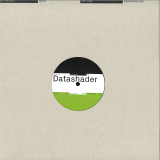
Datashader emerges from the shadows with a striking breaks- and bass-heavy debut release that challenges the fabric of our digital existence. Replete with a Dopplereffekt remix, it nods to the legacy of revered anonymous acts such as Scopex, Drexciya and Underground Resistance, pushing the boundaries of both electronic music exploration and its conceptual underpinnings. As a critique of the erosion of genuine human connection in the digital age, Datashader delivers a barrage of billowing subs, infectious electro, recontextualized jungle, and techno, serving as a poignant counterbalance to current dance floor-centric norms. It’s a contemporary anti-soundtrack that offers a haunting mirror to the societal costs of technological convenience.
In a world engulfed by the digital realm, where social media platforms thrive and dominate every aspect of our lives, the enigmatic project known as Datashader was founded to reflect on the pervasive erosion of authentic human connection through various virtual realities. Artistically, Datashader seeks to critique the impact of technology on human identity and relationships, breaking with an archetype of digital conformity and expressing a profound disillusionment with the superficiality of online interactions through music. Genuine human connection and art cannot be quantified by likes, comments, or followers but rather thrives in the visceral realm of shared sonic experience and human emotion. This idea is at the core idea of Datashader, whose artistic expression ranges from avant-garde composition and electronic experimentations to art, installation, film and more.
Expressed within the varied contexts of diverse artistic mediums, Datashader explores the concept of “technological gentrification”, which describes the gradual displacement of human interaction by technology. Just as gentrification alters the urban landscape, driving out communities and cultures, digital gentrification transforms the social landscape, replacing genuine connection with curated online personas.
Musically, Datashader’s practice confronts this dystopian reality, highlighting the alarming consequence of people becoming mere nodes in a network, reduced to a collection of data points. This is manifested sonically by a blistering assault of breaks, recontextualized IDM, abstract electronics and otherworldly synthscapes, conceived as the aesthetic counterbalance to much of contemporary electronic music’s dancefloor focus.
Datashader dives deep into genres and influences which stand for a form of sonic resistance: A contemporary anti- soundtrack – a sonic mirror of the price we pay for convenience and instant gratification. A self-image in constant flux. No false technological idols.
- Welcome - Please Keep The Theatre Clean
- Let's All Go To The Lobby
- Popcorn And Candy, Yum Yum
- The Greatest Show On Earth
- Lots Of Pretty Pickles
- Carnation Whipped Hot Cocoa
- Oh The Time Is Now, The Time Is Here
- You'll Love Corn Dogs
- James River Smithfield Bbq
- Ready To Serve All Of You
- Instrumental Intermission
- No Smoking, No Littering, No Talking...please
- Sprite Intermission
- Shrimp Rolls / Hot Meatball Sandwich
- Tony's Pizza
- Instrumental Intermission
- Going To The Movies With Harry
- Buttercup Popcorn
- Pik Insect Repellant
- Pepsi Instrumental Intermission
- Go Man Go Dr. Pepper Jingle
- Oh We Ride In The Rodeo Jingle
- Orange Crush Jingle
- Ladies & Gentlemen - Our Next Attraction
- Goodies Machine
- Sprite Instrumental Intermission
- Pepsi Jingle
- Candy Bar Intermission
- Thanks For Coming To Our Show Tonite!
- 3: Minute Clock Countdown
- Drizzle Guard
- Instrumental Intermission
- 5: Minute Clock Countdown
- It's Intermission Time At The Lake City Drive-In Theatre, Florida
- It's Great To Go To A Drive-In Show At The Lake City Drive-In Theatre, Florida
- Fine Entertainment Farewell
- Please Replace The Speaker
- Swv Sound Effect
Welcome to the sweet-but-savory, suspiciously sticky, and slightly sinful world of old-school movie theater intermission messages. It’s where big-band jazz, psychedelic rock, sequin-bedecked disco, virgin vanilla orchestrated pop, and more are pressed into service, with your satisfaction as the solitary goal! Features CD only bonus tracks!
Hey Folks! It's Intermission Time! by Something Weird includes the following tracks: "Popcorn And Candy, Yum Yum", "Lots Of Pretty Pickles", "Oh The Time Is Now, The Time Is Here", "James River Smithfield BBQ" and more.
This version comes as a 1LP on brown vinyl.
Perhaps known as the frontman of Sunfruits and as the drummer for Jade Imagine, Winter McQuinn’s solo music explores psychedelic country and folk rippling with a free-ness similar to Nick Drake, Syd Barrett, Kevin Ayers and more modern 70s soft rock purveyors like Michael Rault and Drugdealer. His impressive 2021 debut album ‘A Rabble Of Bees’ marked the beginning of Winnie’s solo wanderings, showcasing his songwriting talents and DIY inventiveness. Winter McQuinn’s sophomore solo album 'Move To The Trees' is set for April 5th via Third Eye Stimuli Records and Echodelick Records (USA). McQuinn recorded the new album in April 2022 over one weekend in Anglesea, Victoria with Jesse Williams (Leah Senior, Grace Cummings, Traffik Island) as engineer and producer. 'Move To The Trees' showcases a more refined and sonically sophisticated side to Winter McQuinn’s solo music. Featuring talented musicians Jack Kinder and Lewis Mosley from fellow Third Eye Stimuli family, Hot Apple Band, as well as Elena Jones from Sunfruits and Jaspar Robinson, McQuinn and co create a unique space through their artful intersections of hope and tragedy. A series of anthems for the future, settled in a post psych-folk and 70s soft rock energy, McQuinn takes influence from the new-wave of 70s folk and rock influenced artists from the USA's West Coast such as Sylvie, Cut Worms, John Andrews, Anna St Louis, The Lemon Twigs and more. This album showcases a step up in songwriting and production for Winter McQuinn who’s ever evolving style and commitment to creating is inspiring. The album cover design was hand painted by renowned folk / baroque pop artist Leah Senior and portrays McQuinn in different settings around Anglesea and the studio.