On this second vinyl from the new label of Barcelona’s club Les Enfants Brillants, Mannheim-born producer Fabe has taken control of this new release delivering 'Hyped By Light', an EP consisting of four deep club-ready deep house tracks with heavy-bass sound and sparkling groovy notes.
Cerca:4 to the bar
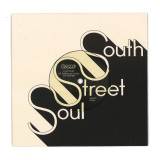
Two stone cold classics right here from the Roy Ayers masterminded RAMP, taken from the holy grail album Come Into Knowledge. Sampled the world over, influentially positive and as prized as they get, South Street’s new sub-label South Street Soul couldn’t have picked a more perfect double header to reissue as their inaugural release.
Although the RAMP acronym Roy Ayers Music Productions bared Ayers’ name, he did not perform with the Ohio band instead writing, arranging and producing the tracks alongside Edwin Birdsong and also William Allen. Drafting in some of the best session musicians in the game, from vocalists Sibel Thrasher and Sharon Matthews, The Spinners drummer John Manuel, guitarist Landy Shores and Cincinnati bass maestro Nate White, the result was pure ethereal excellence.
Rare groove at its finest ‘Daylight’ is one of the standout cuts from RAMP’s only album - soulful, sumptuous and laced with a celestial touch that takes this track to another realm of conscious. A track that was famously sampled by A Tribe Called Quest for their hit ‘Bonita Applebum’ and J Dilla’s remix of Common – Come Close.
On the B side, a Roy Ayer’s masterpiece 'Everybody Loves The Sunshine' given the RAMP revamp, an end of the night masterpiece, a hazed-out dreamer - just downright blissful grooves from start to finish. Ready-made to ride out into the sunset with.
Harold Hutton’s ‘Lucky Boy’ was originally on the Chess sub-label Checker. Released in 1965 an original goes for around £50 these days. ‘Lucky Boy’ was the B-side of his debut single ‘It’s A Good Thing’ which launched him on a career that included regular spots on Soul Train during the 70s.Filled with Motown-esque horn stabs it builds into a bongo-powered frenzy.
The super soulful Dells’ flipside from a year later was originally on Cadet, another Chess subsidiary originally called Argo.Another £30-£50 gem if you can find an original copy. Typical of the band’s close harmony style, ‘Thinkin' About You’ is a mid-tempo groove with an insistent rhythm and some lush strings.
All topped with a heart-warming baritone vocal on a classic piece of soul romanticism.
Moto Music of Zürich presents the "Martina EP" from the mind of Mallorca's talented artist Barcé.
4 classy selections spanning flavors of Bossa House to Deep House and colorful Techno to ethereal Electro, await in the bliss of this vinyl experience suited for dynamic occasions; includes an edit from Dan Piu and mastering by Marco Pellegrino at Analogcut. Pressed on 180 gram vinyl for premium listening quality.
The Martina EP is dedicated the Barcé's niece and Goddaughter.
The atmospheric aquatic adventures of the World Aquanaut Security Patrol (WASPs) provided the perfect grounds for the evolution of Barry Gray’s own musical odyssey. After navigating otherworldly vistas with experimental minimalism in Fireball XL5, Gray anchored Stingray’s underwater exploits with a cannon of earth-bound incidentals. Employing flutes and gentle woodwind sounds to set the scene, Gray’s music drew attention to the wonder of the series premise, employing lush heavenly strings for the series’ closing theme, ‘Aqua Marina’ (a croon brought to life by in-demand vocalist Gary Miller). The off-duty exploits of the WASP characters also allowed Gray to return to his jazzy routes, with the production team adding a loving reference to the composer in the episode Tune of Danger with a ‘Graystein’ Piano. Episodic melodrama was once again brought to life with bold brass, and driving military marches would establish the WASPs’ base, Marineville, and an unforgettable Match of the Oysters (in The Secret of the Giant Oyster). The DNA of the which would foreshadow the iconic theme for the Andersons’ next series…
While the hook line for this new local trio would have to be that bassist/leader Brenda Sauter used to be a member of the later-'80s incarnation of the famous Feelies (and it's notable offshoot, The Trypes), even if you didn't worship at the altar of that group (and especially if you did!), Wild Carnation is a revelation. While
the persistent, pumping beat and hard-played jangle guitars of most of the tracks here emanate from her previous band and from their forerunners, the Velvets (especially), Television,and the Byrds - Sauter's beguiling voice is perfect for the ultra-appealing pop hooks the group writes as well as the thoughtful lyrics she composes.
Way back in the 1990s, a young Delmore stumbled into now defunct NYC nightclub Wetlands (during the sadly also now defunct, NYU Independent Music Festival), just as WILD CARNATION were about to begin their set.
Having lived in NYC / Brooklyn / Hoboken the previous decade, where countless mesmerizing gigs by THE FEELIES, YUNG WU, TRYPES, and SPEED THE PLOUGH had been experienced, it was the chance to see Brenda Sauter fronting her new group that drew Delmore in. A few songs into their set, it was apparent, however, that this trio was more than a Feelies offshoot project, despite melodic similarities, and Brenda's cool vocals / presence.
WILD CARNATION played raw, loud and fast (and occasionally out of control), with Richard Barnes distorted, jangly guitar lines perfectly colliding with Brenda's propelling bass notes, while Chris O'Donovan
kept it together, while pounding the living hell out of his drums. It was a garagey, indie rock mess, more reminiscent of Hib-Tone / Chronic Town era REM, and emergent New Zealand bands like The Bats and The Clean, than The Feelies.
Delmore was smitten, and determined to sign them, despite the fact that the Delmore label did not yet exist.
In 1993, Wild Carnation's debut 7", "Dodger Blue" b/w "The Lights Are On (But No One's Home)", taken from raw home demos recorded the previous year, became the second Delmore release. A full length album was then commissioned, and an evolving Wild Carnation holed up at Mix-O-Lydian recording studios with engineer Don Sternecker (The Feelies, Speed The Plough, Wake Ooloo) to record their debut full length, Tricycle, released in 1994.
On Tricycle, the pastoral quality of their most beautiful ballads was captured perfectly, while retaining enough of the rawness of the live experience. Waves of critical acclaim followed, from now defunct publications (CMJ Jackpot! Raygun, Trouser Press) followed, including this one by Jack Rabid of The Big Takeover, written for All Music Guide:
"While the hook line for this new local trio would have to be that bassist/leader Brenda Sauter used to be a member of the later-'80s incarnation of the famous Feelies (and it's notable offshoot, The Trypes), even if you didn't worship at the altar of that group (and especially if you did!), Wild Carnation is a revelation. While the persistent, pumping beat and hard-played jangle guitars of most of the tracks here emanate from her previous band and from their forerunners, the Velvets (especially), Television,and the Byrds - Sauter's beguiling voice is perfect for the ultra-appealing pop hooks the group writes as well as the thoughtful lyrics she composes.
Trading the occasional Feelies drone for sugar-sweet melodies (yes!) and utilizing the pretty ring of the guitars to maximum effect, songs such as Wings are the perfect pop confectionery, too honeyed and
delightful to miss capturing your bending heart and too consistently insistent and edgy to be wimpy, kind of like Reckoning-era R.E.M. It's all so well captured with pristine production, with balls to match the heart, too!
And though the 12 tracks are largely cut from a similar mode, all seem special just the same on their own.
A truly shining, first-rate effort, along with Lotion's and Nyack's early EPs and the last Flower LP, the best release to come out of a New York group this decade, and exceptionally crafted at that! Do not miss."
Tidal Waves Music proudly presents ‘Fly By Night’ for the FIRST TIME on vinyl (the album was only released as a limited compact disc back in the early nineties).
This unique record comes as a deluxe 180g vinyl edition (strictly limited to 500 copies) with obi strip.NonReturnable.
This vinyl edition also features the original painted front cover artwork by Virgil Grady (known for his work with Tribe records) and back photography by acclaimed Detroit scene photographer & author Barbara Barefield, whose work has appeared in many renowned publications such as The New York Times, LA Times, People magazine and countless others.
Released exclusively for Record Store Day 2023 (UK/Europe) and available in participating stores on April 22, 2023.
Wendell Harrison was born in Detroit in 1942 where he began formal jazz studies for piano, clarinet and tenor saxophone. At 14, while still in high school, Harrison started performing & recording professionally with artists such as Marvin Gaye, Grant Green, Sun Ra, Hank Crawford … and many others.
In 1971, Harrison began teaching music at Metro Arts (a multi-arts complex for youth) where he also connected with Marcus Belgrave, Harold McKinney and Phil Ranelin…soon after they formed the (now
legendary) Afro-centric TRIBE record label and artist collective. TRIBE used the Metro Arts complex as a vehicle to convey a growing black political consciousness. Wendell Harrison also published the very popular TRIBE magazine, a publication dedicated to local and national social and political issues, as well as featuring artistic contributions such as poetry and visual pieces.
In 1978 Harrison and McKinney co-founded REBIRTH, a non-profit jazz performance and education organization, in which many notable jazz artists have participated. Around the same time Wendell Harrison
also created the WENHA record label and publishing company, which released many of his (now classic) recordings as well as those of other artists, such as Phil Ranelin, Doug Hammond and Reggie Fields (The Real ShooBeeDoo).
In the early 1990s, Wendell Harrison was awarded the title of “Jazz Master” by Arts Midwest. This distinction led Harrison to collaborate with fellow honorees and gave him the chance to tour throughout the UnitedStates, Middle East and Africa. Even to this day Wendell Harrison's recordings for the TRIBE, WENHA and REBIRTH labels have a large worldwide fanbase.
It is on WEHHA in 1990 that Harrison released (and self-produced) the opus: ‘Fly By Night’ which we are proudly presenting you today. ‘Fly By Night’ is a monster of an album featuring an all-star line-up that
includes Doug Hammond (Mingus, Lonnie Liston Smith) on drums, Kirk Lightsey (Chet Baker, Calvin Keys) on piano, Cecil McBee (John Hicks, Pharoah Sanders, Alice Coltrane) on bass, Jaribu Shahid (Sun Ra) on contrabass and Pamela Wise (Tribe) on Piano. Harrison is killing it here with this selected ensemble (guys he grew up with in Detroit in the late 50’s, when hard bop was the thing and Miles and Coltrane were the heroes of the day). This group of talented veterans are taking this classic album to unseen heights.
On ‘Fly By Night’ the gloves come off…no more jazzy-funk or poppy-jazz. Wendell picks up his tenor for one tune but the remainder of the sessions he performs on clarinet. Wendell’s mastery coaxes the sweet piquant sound of the instrument and as it re-emerges in the contemporary jazz scene. The eight handpicked tunes demonstrate the fertile new directions Wendell Harrison has been working on, combing standards with a fresh new approach.
On these amazing recordings (recorded at the Rebirth Studios in Detroit) the listener is invited to experience a synthesis of what has been and what is now. The record shows Wendell’s trademark proficiency. All of the above makes this incredible record both timeless and as relevant today as it was back when it was initially
released.
Warehouse find!
Teenage Fanclub have announced news of their tenth studio album, Endless Arcade, released 5th March. Even if we weren’t living through extraordinarily troubling times, there is nothing quite like a Teenage Fanclub album to assuage the mind, body and soul, and to reaffirm that all is not lost in this world.
Endless Arcade follows the band’s ninth album “Here”, released in 2016 to universal acclaim and notably their first Top 10 album since 1997; a mark of how much they’re treasured. The new record is quintessential TFC: melodies are equal parts heart-warming and heart-aching; guitars chime and distort; keyboard lines mesh and spiral; harmony-coated choruses burst out like sun on a stormy day.
In the 1990s, the band crafted a magnetically heavy yet harmony-rich sound on classic albums such as “Bandwagonesque” and “Grand Prix”. This century, albums such as “Shadows” and “Here” have documented a more relaxed, less ‘teenage’ Fanclub, reflecting the band’s stage in life and state of mind, which Endless Arcade slots perfectly alongside. The album walks a beautifully poised line between melancholic and uplifting, infused with simple truths. The importance of home, community and hope is entwined with more bittersweet, sometimes darker thoughts - insecurity, anxiety, loss.
Such is life. But the title track suggests, “Don’t be afraid of this endless arcade that is life.”
A preview from the album came in February 2019 with Raymond’s ‘Everything Is Falling Apart’, an online single released at the outset of a six-month tour and a highlight of Endless Arcade.
Everything is falling apart? Well, yes, but the song was written long before COVID-19 arrived. Neither was Raymond’s inspiration political or social, but more, “the entropy in the universe, the knowledge that everything eventually decays,” he explains. But Raymond says relax. Or rather, “Relax, find love, hold on to the hand of a friend”.
Fortunately, Endless Arcade was virtually finished by the time lockdown was announced, bar the odd tinker under the engine hood. It seems timely, given how everyone had to initially stay home under lockdown, that the album starts with Norman’s ‘Home’, though it was chosen in part because of its opening line: “Every morning, I open my eyes...” The album’s longest track (at seven minutes) typifies TFC’s relaxed groove, culminating in Raymond’s peach of a guitar solo.
Norman’s search for ‘home’ could be literal: after all, he’s been living in Canada for the last 10 years. But it’s also figurative. Like Norman’s other Endless Arcade songs – The Sun Won’t Shine On Me’, ‘Warm Embrace’, ‘I’m More Inclined’, ‘Back In The Day’ and ‘Living With You’ – his words on ‘Home’ are etched by loss and yearning. “Without going into too much detail, the last eighteen months have been challenging for me on an emotional level,” he admits. “But it’s been cathartic channelling some of these feelings and emotions into song.”
In contrast, Raymond’s songs – he’s also responsible for ‘Come With Me’, ‘In Our Dreams’, ‘The Future’ and ‘Silent Song’ – are philosophical and questing. As he sings in ‘The Future’: “It’s hard to walk into the future when your shoes are made of lead”, but he’s still going to try, “and see sights we’ve never seen.”
In the band’s own near future, they’re already planning another new album given they can’t yet tour the one they’re releasing now. Welcome back, Teenage Fanclub, unafraid of this endless arcade that is life.
Warehouse find!
Teenage Fanclub have announced news of their tenth studio album, Endless Arcade, released 5th March. Even if we weren’t living through extraordinarily troubling times, there is nothing quite like a Teenage Fanclub album to assuage the mind, body and soul, and to reaffirm that all is not lost in this world.
Endless Arcade follows the band’s ninth album “Here”, released in 2016 to universal acclaim and notably their first Top 10 album since 1997; a mark of how much they’re treasured. The new record is quintessential TFC: melodies are equal parts heart-warming and heart-aching; guitars chime and distort; keyboard lines mesh and spiral; harmony-coated choruses burst out like sun on a stormy day.
In the 1990s, the band crafted a magnetically heavy yet harmony-rich sound on classic albums such as “Bandwagonesque” and “Grand Prix”. This century, albums such as “Shadows” and “Here” have documented a more relaxed, less ‘teenage’ Fanclub, reflecting the band’s stage in life and state of mind, which Endless Arcade slots perfectly alongside. The album walks a beautifully poised line between melancholic and uplifting, infused with simple truths. The importance of home, community and hope is entwined with more bittersweet, sometimes darker thoughts - insecurity, anxiety, loss.
Such is life. But the title track suggests, “Don’t be afraid of this endless arcade that is life.”
A preview from the album came in February 2019 with Raymond’s ‘Everything Is Falling Apart’, an online single released at the outset of a six-month tour and a highlight of Endless Arcade.
Everything is falling apart? Well, yes, but the song was written long before COVID-19 arrived. Neither was Raymond’s inspiration political or social, but more, “the entropy in the universe, the knowledge that everything eventually decays,” he explains. But Raymond says relax. Or rather, “Relax, find love, hold on to the hand of a friend”.
Fortunately, Endless Arcade was virtually finished by the time lockdown was announced, bar the odd tinker under the engine hood. It seems timely, given how everyone had to initially stay home under lockdown, that the album starts with Norman’s ‘Home’, though it was chosen in part because of its opening line: “Every morning, I open my eyes...” The album’s longest track (at seven minutes) typifies TFC’s relaxed groove, culminating in Raymond’s peach of a guitar solo.
Norman’s search for ‘home’ could be literal: after all, he’s been living in Canada for the last 10 years. But it’s also figurative. Like Norman’s other Endless Arcade songs – The Sun Won’t Shine On Me’, ‘Warm Embrace’, ‘I’m More Inclined’, ‘Back In The Day’ and ‘Living With You’ – his words on ‘Home’ are etched by loss and yearning. “Without going into too much detail, the last eighteen months have been challenging for me on an emotional level,” he admits. “But it’s been cathartic channelling some of these feelings and emotions into song.”
In contrast, Raymond’s songs – he’s also responsible for ‘Come With Me’, ‘In Our Dreams’, ‘The Future’ and ‘Silent Song’ – are philosophical and questing. As he sings in ‘The Future’: “It’s hard to walk into the future when your shoes are made of lead”, but he’s still going to try, “and see sights we’ve never seen.”
In the band’s own near future, they’re already planning another new album given they can’t yet tour the one they’re releasing now. Welcome back, Teenage Fanclub, unafraid of this endless arcade that is life.
Limited to 1000 copies on Sea Blue vinyl! There's freedom to be found in consistency. Until recently, Juan Wauters may not have agreed with this statement. As a touring musician and multinational citizen, transience had always come naturally to him. Circumstance, however, recently prompted him to reconsider the benefits of staying in one place. His most introspective work to date, Wauters' sixth solo album Wandering Rebel finds the artist taking stock of how he's changed, how the world sees him, and what he wants out of life. Written mostly during an extended break from touring, the songs on Wandering Rebel are candid reflections on subjects like career ("Wandering Rebel"), romantic commitment ("Amor Amor"), mental health ("Nube Negra") and the personal toll of touring ("Let Loose"). On "Modus Operandi," he voices his frustration with New York's fairweather residents, who fled the city at the onset of the COVID-19 lockdown. Vocal contributions from fellow New Yorker Greta Kline (Frankie Cosmos) add to the chorus of playful disapproval. On the singalong-worthy "Millionaire," he turns his eye to the west coast: "It's hard to get around Los Angeles / If you don't have a car / I'm staying in a privileged part of town / It's suspicious for me to be walking." The clarity with which Wauters approaches these subjects lyrically is reflected in the music as well. His trademark eclecticism is still present (fans of Real Life Situations' spirited hip-hop should look to track 6, "Bolero"), but it's more refined this time, anchored in his signature Latin-influenced indie folk. Wandering Rebel is peppered with delicate additions that add depth throughout: rain sounds and hand drums on "Nube Negra," a strings section on "Modus Operandi," a gentle vibraphone on "Amor, Amor." Some of these are classic Wauters touches, but others are owed to outside influences, like production from Brooklyn-based Carlos Hernandez (Ava Luna, Carlos Truly) and Brazilian indie artist Sessa, as well as vocal contributions from Kline, Luz Elena Mendoza (Y La Bamba), Zoe Gotusso, and Super Willy K. Throughout Wandering Rebel, Wauters attempts to reconcile the stability he's come to enjoy with the nomadic restlessness that's characterized his life thus far. In the end, though, it's the interplay of both of these elements that makes the album so strong.
FINALLY BACK IN STOCK ON LP!!! Ozma was recorded soon after Melvins made the move from Washington to San Francisco, and was their first release to include the diminutive yet mighty Lorax (Lori Temple Black) on bass. In fact, the first sound one hears at the album’s opening is Lori standing on her tiptoes to switch on her amp, thereby warning the listener of the onslaught to come. Distorted, down-tuned doom riffs start, stop, lurch sideways with no warning, and seem to end before they start. Buzz Osborne adds extraneous guitar static and vocal squeals. Drummer Dale Crover plays as if he’s inside a barrel going over Niagara Falls; the long, slow fall allows the space between beats to grow and grow until he crashes into the water with the vessel blasting apart in an explosion of drum rolls. The classic Melvins heavy grind is set up and broken up by assorted odd sidetracks: “Revulsion / We Reach” flows forward slower and slower until it eventually melts into a gooey feedback drone. “Raise a Paw” is a superball paddled against one’s head by a grinning village idiot. “Love Thing” enlists in the Kiss Army before getting dishonorably discharged.
Night shifting patiently, slowly drifting in constant flux. Where Ancient Plastix’ debut used rhythm to create geometrical sound architectures and craft elaborate mazes, his new offering ‘II’ glides effortlessly, combining incredibly rich textures with soft swan-like strokes, oscillating gently, an unhurried pace that combines the depth of Japanese ambient maestros and the choppy British mist.
Liverpool producer Paul Rafferty aka Ancient Plastix, recorded ‘II’ straight to cassette with a number of different synths (Yamaha Reface, Korg MS20) and keyboards (90s casio and 70s Gem organ) via a collection of guitar pedals, outboard (Roland Space Echo, Melos delay, spring reverb). His tape machine this time was a Japanese Sansui from the 90s, a strange 6 track machine with a pleasing fidelity bought off from an old rave dad who was finally giving up the ghost.
“Musically, this album is more patient in its approach to the predecessor. Recorded towards the end of lockdown in my highstreet basement below a used record shop, the arrangements reflect the personal era. No responsibility, no reasons to adhere to the previous patterns in my music making. As a result the album is a patient trawl through new discoveries and possibilities presented by improvising with old technology.”
There is a widescreen grandeur that permeates Ancient Plastix’ production, a cinematic instinct that steers clear of crescendos by creating paths that revel in warmth and emotion. Flotsam & jetsam, instinct, burnout, heartbreak.
Tobias Freund, the Berlin based producer, musician, and label owner of Non Standard Productions has created an incredible cover record that pays tribute to some of the most iconic and influential artists of the past four decades.
The album Tobias. & Friends - TOP TEN places a unique spin on the original tracks, with its combination of electronic sounds and vocal performances from Javiera González, Barbie Williams, Cormac McAdam, Carlos Cabezas, and Stian Westerhus.
Having already worked with Javiera González on the recent post punk album release “The Mutual Torture - Don’t” (NSP 19), Tobias has once again used his talents to honour some of his favourite bands.
Each track has been carefully re-produced at Non Standard Studios in Berlin, resulting in a perfectly balanced mix of old and new.
- A1: Sand In My Boots
- A2: Wasted On You
- A3: Somebody’s Problem
- A4: More Surprised Than Me
- A5: 865
- A6: Warning
- B1: Neon Eyes
- B2: Outlaw
- B3: Whiskey’d My Way
- B4: Wonderin’ Bout The Wind
- B5: Your Bartender
- C1: Only Thing That’s Gone
- C2: Cover Me Up
- C3: 7 Summers
- C4: More Than My Hometown
- D1: Still Goin Down
- D2: Rednecks, Red Letters, Red Dirt
- D3: Dangerous
- D4: Beer Don’t
- D5: Blame It On Me
- D6: Somethin’ Country
- E1: This Bar
- E2: Country A** S***
- E3: Whatcha Think Of Country Now
- F1: Silverado For Sale
- F2: Heartless
- F3: Livin’ The Dream
- F4: Quittin’ Time
- E4: Me On Whiskey
- E5: Need A Boat
Morgan Wallen veröffentlicht sein mit Spannung erwartetes zweites Album „Dangerous“. Der Künstler schrieb die Songs zum größten Teil selbst und wurde in dieser Zeit zum ”am schnellsten aufsteigenden jungen Star des Landes” (Variety). Morgan sagt über sein Album „Ich wollte auch, dass die Lieder mehrere Lebensphasen ansprechen und mehrere verschiedene Klänge haben, je nach meinen Einflüssen und je nachdem, was mir Spaß macht.“ Das Doppelalbum spiegelt somit den unverkennbaren Sound, den Wallen und Produzent Joey Moi auf seinem Platinum Debüt-Album „If I Know Me“ geschaffen haben, wider. Als Vorgeschmack auf „Dangerous“ sind bereits 8 Songs erschienen, darunter die Single „Somebody‘s Problem“ sowie die beiden aktuellen Country-Radio-Singles von Wallen - Top 3 ”More Than My Hometown” und Top 30 ”7 Summers”. Außerdem ist die Country-Album-Version der 3X Platinum Diplo-Kollaboration ”Heartless” enthalten. Künstler wie Ashley Gorley, Shane McAnally, Eric Church und Jason Isbell wirkten bei „Dangerous“ mit. Außerdem sind selbstverständlich Morgan’s engste musikalische Vertraute Hardy, Ernest und Ryan Vojtesak dabei. Wallen ist der Künstler des Country Genres mit den meisten Streams auf allen Plattformen, welche sich auf weit über 3 Billionen belaufen. Außerdem wurde er im November 2020 mit dem CMA Award als „New Artist of the Year“ ausgezeichnet.
"Wa Do Dem" gilt als bestes Album des Künstler und wurde seinerzeit im Channel One Studio aufgenommen und von Overton "Scientist" Brown, Prince Jammy und Stanley "Barnabas" Bryan in King Tubby's Studio abgemischt. Eine erstklassige Produktion mit dem Gütesiegel Henry "Junjo" Lawes und den Roots Radics als Backing Band, inklusive zeitlosen Stücken wie "Ganja Smuggling", "Noah's Ark" und dem Album-Titelsong "Wa-Do-Dem". Als Riddims konnten der "Shank I Sheck" (B1), "Hot Milk" (B5), "Going Back To School" (A3), "Slowly But Surely" (A5) und "Hunter Man" (B2) identifiziert werden.
We are thrilled to announce the next release on Pleasant Systems from Nu-Cleo, who is widely known for his impressive musical works as Rhythm Of Paradise, Gourment De Funk or Rydm Sectors alongside Nico Lahs, to name a few. Hailing from Bari, Nu-Cleo has garnered much recognition for his releases, which are easily distinguishable by their rich warmth, profound depth, and unpretentiousness. "Never Satisfied" is another demonstration of his mastery, featuring four instant classics that span from the lighter, groovier side of house to a more introspective and contemplative one.
Ultramarine are an English electronic music duo, formed in 1989 by Ian Cooper and Paul Hammond.
Cooper and Hammond first worked together in the band A Primary Industry during the mid-1980s. Following the split of that band, they formed Ultramarine and released their debut album 'Folk' in April 1990 on seminal Belgian label Les Disques du Crépuscule. The duo found critical acclaim with their second long player, 'Every Man And Woman Is A Star', initially released in 1991. Over the next decade or so, they recorded two John Peel sessions, collaborated with Robert Wyatt, toured the States with Orbital, then Europe with Björk. After a hiatus, they began recording again in Ian's home studio, overlooking the Blackwater Estuary in Essex.
The moods and movements of this English estuary can be heard running through the duo's stunning and deeply intriguing new album 'Send and Return'.
Flowing and mutating as it transitions from an Essex river into the open sea, the Blackwater Estuary, north of London, inspired this beguiling collection of hypnotic jazz, itching electronica and softly dazzling ambient shapes.
For the 6-track album, Paul and Ian hired a Thames sailing barge moored on the estuary for one day and recorded below deck in the ship's downstairs wooden saloon; the idea was originally inspired by seeing Robin Williamson of The Incredible String Band perform on a similar barge.
The duo were joined by jazz musician Greg Heath and accomplished percussionist Ric Elsworth for the day, who added stunning saxophones, alto flute, percussion and vibraphone to the mix. It's a contemplative, ambient record with gentle jazz inflections and softly pulsing electronica.
Carole King’s The Legendary Demos will be released April 24th, 2012 via Hear Music / Concord Music Group. A previously unreleased collection of 13 history-making Carole King recordings of some of her most celebrated songs, The Legendary Demos traces King's journey from her days as an Aldon staff writer in the 1960's, where she crafted hit after hit for other artists, to the dawn of her own triumphant solo career in the 1970's, and contains her original recordings of future standards like "(You Make Me Feel Like) A Natural Woman," "It's Too Late," and "You've Got A Friend." Featuring liner notes by acclaimed author and Rolling Stone contributing editor David Browne, the collection brings to light a heretofore missing link in the chain of King's career. Fittingly, The Legendary Demos serves as a companion to King’s long-awaited memoir, A Natural Woman, which is being released April 10th, 2012 via Grand Central Publishing.
Aldon Music used these demos—short for “demonstration records”—to pitch King's material to other artists, from Gene Pitney and Bobby Vee to Aretha Franklin and the Monkees. While the recordings have long been coveted and collected within the industry, they have never before been released to the public.
Whether it was a potential single for the Monkees or a solo performer like Pitney, King’s demos were remarkable in their completeness. “When she sat down to the piano and played a demo of one of her songs, the whole arrangement appeared right in front of your eyes magically,” recalls Brooks Arthur, who engineered a number of these efficient sessions for King at one of several midtown Manhattan studios. “A lot of the smarter producers would adhere to Carole’s demos. If you stuck to that, you’d come home a winner.”
King and then-husband / songwriting partner Gerry Goffin signed with Aldon Music in 1959, and anyone who listened to the radio during the first half of the ‘60s will recognize the songs of teen passion and devastating heartbreak heard in King’s original recordings. “Take Good Care of My Baby” was a No. 1 hit for Bobby Vee in 1961. Goffin’s gift for tapping into teen anguish—in this case, hiding behind a stoic public face—was never conveyed better than in “Crying in the Rain,” which the Everly Brothers took into the top 10 in early 1962. “Just Once in My Life” was the Righteous Brothers’ follow-up to their still-spine-tingling “You’ve Lost That Lovin’ Feelin’,” and King’s demo reveals how she and Goffin were instantly able to tap into the duo’s (and producer Phil Spector’s) dramatic, impassioned sound.
Like many of their fellow songwriters at the time, King and Goffin wrote songs for Don Kirshner’s TV show about a fictional, Beatles-derived pop band that debuted in September 1966. The Monkees turned out to be more credible singers (and musicians) than anyone initially expected, as their high-charting 1967 version of King and Goffin's “Pleasant Valley Sunday” revealed. The Monkees also cut “So Goes Love,” a dreamier ballad heard here, but the track didn’t make their first album and wasn’t released until long after they’d disbanded.
The Legendary Demos includes early takes of six tracks that formed the basis for King’s world-wide solo breakthrough Tapestry. King and lyricist Toni Stern’s ever-poignant “It’s Too Late” is here, along with King’s own “Way Over Yonder,” “Beautiful” and “Tapestry,” all three bursting with the artistic and spiritual renewal infusing King’s life during this period.
Among the collection’s numerous gems is the original 1967 demo for Goffin, King, and producer Jerry Wexler’s “(You Make Me Feel Like) A Natural Woman,” a song that would later appear on Tapestry and of course be famously cut by Aretha Franklin later that same year. King’s version offers several different takes from the Franklin and Tapestry versions. Her delivery in the opening lines is looser (check out the way she stretches out “Lord” in “Lord, it made me feel so tired”), and the bridge is even more imbued with palpable romantic and sexual heat.
And finally, there’s King’s initial take on “You’ve Got a Friend,” a classic entry in the Great American Rock Songbook. Milling around in the Troubadour balcony during soundcheck, her friend James Taylor heard King perform the song on a bare stage and was immediately taken with it; his own version, a massive hit, would arrive the following year.
Ygrok brings a long-awaited fourth release to its catalog. René Audiard's Sakhalin' takes things a step away from traditional club music.
The A side, Vox Out' opens with the skeleton of a rhythm. Scattered tom drums and barely detectable whirs, fading and reeling in the background. When the distorted voices begin their story behind a hissing, grinding off-shaker, you know this will not be your traditional club track. A story develops. The barest hint of a shuffling beat, a subtle reminder of Soren's previous work, pins down the journey into the darkest psychic territory. The title track Sakhalin steps even further into darkness. Crackling electrics and disjointed atmospheres change at a glacial pace over a submerged hydraulic beat. Sakhalin Audiard experimental territory.
Jeffrey Silverstein returns in 2023 with his second full-length release:
Western Sky Music - Based in Portland, Silverstein channels the natural beauty of his adopted Pacific Northwest into guitar-driven explorations of inner landscapes silverstein is joined by Barry Walker Jr. on steel (North Americans + Rose City and), Dana Buoy (Akron/Family) on drums, as well as guest appearances from William Tyler and Karima Walker. Robert Earl Thomas from Widowspeak shared quick note on the album: 'I've really been enjoying Western Sky Music, especially No Rain' and '(Theme From) Western Sky Music.' The back to back pairing of arthy slow core and blissed out tremolo meditations takes me to such a warm lace. It's a great Sunday record' Cosmic country with a gentle sweetness, reminiscent of Beachwood Sparks and silver Jews at their twangiest" - NPR Music
ummer west coast tour. March UK tour.
Appeared on Best-of lists: Aquarium Drunkard, New Commute, Raven Sings the lues, and more.