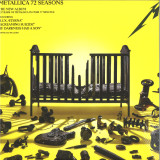
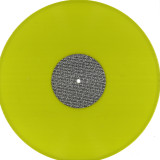
Limited Edition COLOR green lime Vinyl – 75 units Hand numbered
Orlando Voorn is a Dutch DJ and electronic music producer. As a solo artist he has released work since the early 80s under a large amount of aliases containing Balance, Frequency, Baruka, Basic Bastard, Fix, Dope Dog, Boy, Stalker and The Nighttripper. He also produced tracks with Blake Baxter under the name Ghetto Brothers and with Jeff Porter as Designer Loops.
Voorn won the Dutch DMC DJ Championships in 1986 which meant the beginning of a large number of released tracks. As a professional DJ he released his first club tracks under the record label Lower East Side Records. Together with Detroit techno music pioneers Juan Atkins, Derrick May and Blake Baxter he produced tracks under various labels. Voorn's music is characterized by its variety of styles such as Techno, Drum n bass, Ambient, Hip hop and Electro. By many people Orlando Voorn is considered the first one to establish a connection (in music) between Detroit and Amsterdam.
Cerca:4 to the bar
Following up his score for the japanese Netflix Anime series “Carole & Tuesday”, Mocky returns to album mode with his new orchestral opus “Overtones For The Omniverse”. Just days before the first Covid lockdowns, Mocky brought a 16 person orchestra comprising of his usual who’s who of underground talent into LA’s Barefoot Studios (and into the same room where Stevie Wonder recorded “Songs in the Key of Life”) to record a pile of scores he had come up with during his previous year’s sabbatical in Portugal. The result is a stunning orchestral album recorded in 36 hours in one or two takes straight off the written page. Shunning the “possible perfection” of today's recording techniques, Mocky looked back as a way to find an alternate future.
According to Mocky:
“We had to do it quick with no rehearsal to capture that big open sound of people working together in a room - in all its imperfect glory. In the imperfections you find the humanity. And in today’s tech driven spaces you have to fight to preserve a space for humanity. I felt a deep desire to create a sonic trajectory path for us to follow as we ascend and evolve our understanding of love and what it means to be human. This is the inspiration for „Overtones for the Omniverse“”.
The album runs the gamut from Steve Reich infused minimalism overlaid with Dorothy Ashby style harp runs (“Overtures”) to atonal analogue synth sounds over Martin Denny style percussion (“Bora!”). There's a classic Mocky crooning number that gives a Jim Henson-esque take on the state of “Humans” and the album as a whole captures Mocky's skill of bringing together the joyful energy of a unique cast of LA collaborators.
Featuring:
Randal Fisher / Flute, Vicky Farewell / Piano, Vocals, Harry Foster / Bass, Vibraphone, Tubular Bells, Vocals Joey Dosik / Organ and Glockenspiel, Vocals, Guilermo E. Brown aka Pw / Percussion, Vocals, Jhan Lee Aponte (TossTones) / Percussion, Vocals, Timpani, Paul Cartwright / Violin, Molly Rogers / Viola, Gabe Noel / Cello, Contrabass, Liza Wallace / Harp, Coco O. / Vocals, Mocky / Compositions, Drums, Vocals, Roland Sh-1000
O for the O Choir :
Nia Andrews, Leslie Feist, Moses Sumney, Durand Bernarr, Eddie Chacon
Recorded at Barefoot Studios, Los Angeles March 6 + 7, 2020.
All songs written by Dominic “Mocky” Salole and published by Heavy Sheet Music/Warner Chappell except "Wishful Thinking" written by Dominic “Mocky” Salole and Matt Corby and "Bora!" written by Dominic “Mocky” Salole, Guillermo Brown, Aponte Poro.
Produced by Mocky, Justin Stanley and Renaud Letang. Mixed by Renaud Letang at Ferber Studios Paris
Mastered by Emilie Daelemans. Cover artwork by Rand Sevilla. Photo by Vice Cooler.
ABOUT MOCKY
Performer, producer, songwriter, composer and multi-instrumentalist, Dominic "Mocky" Salole came to prominence in the Berlin electronic scene of the mid 2000s, releasing three acclaimed solo albums, co-writing and producing classics like Jamie Lidell's "Multiply" and Feist's "The Reminder" and making waves on stage with close collaborators (and fellow Canadians) Peaches, Feist and Chilly Gonzales.
In 2009, his music took a jazz-inflected turn to the acoustic with the release of "Saskamodie" and in 2011, after work in Big Sur on Feist's "Metals", Mocky relocated to Los Angeles, where he quickly established himself as a co-writer with uncommon credentials and eccentric working methods collaborating with L.A.’s brightest breakthrough artists like Kelela, Joey Dosik, Vulfpeck or Moses Sumney.
Whilst in L.A. songs he has written have been sung by Mary J. Blige, Jill Scott and many more and he has collaborated with artists as diverse as Mali’s Bassekou Kouyate and the GZA. His monthly rooftops gigs at the ACE Hotel breathed new life into the LA live scene and Mocky channeled those new creative energies into his fifth full length album "Key Change" and four digital mixtapes/EPs "The Moxtapes" Vol. I-IV.
After co-producing and co-writing Feist's "Pleasure", Kelela's "Take Me Apart" and Joey Dosik's "Inside Voice", in 2018 Mocky released two albums: "Music Save Me (One More Time)" - a collection of the best of Japan-only/unreleased gems and favorites from his so far digital only "Moxtapes" series and "A Day At United", an instrumental jazz album, recorded in a single day in the legendary LA recording studio United Recording.
In 2019 Mocky delved into soundtrack work by collaborating with legendary Anime director Shinichiro Watanabe (Cowboy Bebop) on the first two seasons of the breakthrough show “Carole and Tuesday” (Netflix) for which he won Best Score at the Anime Awards 2020.
Adrian Marth, based in Barcelona, comes through with his new debut EP Marthians World by Italo Moderni own imprint. His italo is infused in electro tracks that are bound with their vibrancy to make any listener dance, with a killer bassline and super spacial synths.
There is something about these tracks that bring you back with nostalgia to the 80's but without losing a contemporary feel.
Including remixes by the great Baldo, Antoni Maiovvi and Mufti.
Synth lovers rock at its best! Jamaican born and New-York based, Laury Webb is a singer, musician, producer, actor, former model and writer. He's been called both the Opera Dread and the Frank Sinatra of Reggae.
Laury's musical career began with a role as keyboardist and later backing vocalist with the reggae vocal group The Meditations (with whom he continues to perform).
Laury Webb posses a unique and eclectic vocal style. He has performed at some of New York city's premier musical venues, including Lincoln Center's Alice Tully Hall, The Village Gate, S.O.B.'s, The Ritz, The Lion's Den, Joe's Pub, Leopard Lounge, Kenny's Castaway, Central Park Summer Stage, The Baggot Inn and The Brooklyn Bowl.
After enjoying years of being a back-up musician, Laury launched a solo career with his Tigerbone Band. During that period he recorded and releases singles "Woman My Queen" and "It Seems The Same".
He was fresh out of college and touring with The Meditations, when he purchased a small organ for his girlfriend/mother of his two children for Christmas. By the time her birthday came around he was so broke and could not afford to purchase a birthday present for her so he gave her a writing pad and pen and told her to write down whatever came out of her mouth, and he sat at the keyboard and began playing and singing. “Woman My Queen”, was the result.
“It Seems The Same” was begun in America but I did not finish writing it till the music was recorded. My cousin, Barry Biggs, worked with me on this one. We both sang on the backing tracks.
Written, Composed & Arranged by Laury Webb
Artwork by Parade Studio
Woman My Queen:
Recorded at Quadrasonic Studio (New-York) in 1986
Backed by The Tiger Bone Band
Bass: Leroy Guy
Keyboard: Laury Webb
Drums: David Ranglin
Guitar: Royo
Mixed by Peter Lewis
It Seems The Same:
Recorded at Music Mountain Studio (Jamaica) in 1987
Keyboard & Drum Programming: Winston Wright
Backing Vocal: Laury Webb & Barry Biggs
Alternative Hip Hop Artist Rebel ACA Channels his Pain in "Migraine" ft. Spragga Benz, Rodney P
LONDON - The word "migraine" can make you twinge, especially if you experience the pounding head, vertigo, and tinnitus associated with migraines. Imagine if you put all those feelings into music - that is what Rebel ACA did with his latest single, "Migraine."
Rebel ACA's new single flows through his twenty-year journey of advising on international tax by day and rapping and producing by night. Perhaps, the ACA stands for his accounting qualification.
Dropping in April, there will be two versions, an original version and a DJ Phantasy Remix of "Migraine" on streaming platforms. Depending on the version, "Migraine" is a musical representation of a severe headache. The drum and bass mix features a funky, constant drone throughout the track, while the original version is a funk-latent hip-hop song.
"I suffer very badly from migraines every week," said Rebel ACA. "To me, it was logical to write a song about migraines. The lyrics talk about what it feels like by using synthesizers to bring out the feeling of a migraine."
Joining Rebel ACA on the single is Spragga Benz and Rodney P. The duo shares their thoughts on using marijuana to cure a migraine. While Rebel ACA acknowledges he is not a medical doctor, studies have shown that smoking weed can reduce migraine pain.
"We talk about smoking weed to fight the migraine," he said. "The lyrics revolve around what it feels like to have one in your head. Doctors have told me that migraines are caused by triggers like alcohol and getting f*cked up. Then you get a migraine and now you get more f*cked up on pills or weed to feel better." This revolving cycle spirals throughout the single.
Born and raised in the UK, Rebel ACA experienced London's musical melting pot from birth. Hailing from northwest London, he was exposed to the rich Caribbean influence and massive underground music scene.
From squat parties to illegal raves, London's music was all mashed up, and Rebel ACA soaked up every genre and cultural influence. As a result, he is a successful singer/songwriter/producer who fuses hip hop, reggae, and indie sounds to create his unique style.
"Where I come from, the UK hip hop is like the 90s hip hop in America," he stated. "There is a hip hop scene that talks about poetry. I'm trying to keep it real with my lyrics and talk about things that are important other than guns, money, and bitches."
Rebel ACA's music is versatile but uniquely his own by utilizing numerous live instruments and coming in hard with a big boom-bap sound. The Rebel ACA sound is born by adding a funk influence on his tracks aligned with funky bass. On "Migraine," he uses some vintage 70s French influence vibes to give the single a flavor of its own. There is nothing out there like "Migraine."
Rebel ACA records under Buttercuts Records, a company he owns and operates. The London-based production company has been "bashing out buttery beats" since 2000. Buttercuts Records is the go-to place for releasing hip hop, reggae, breaks, funk, soul, and folk records with a tongue-in-cheek attitude and marketing that surpasses witty wordplay.
As "Migraine" gains international attention, it is easy to understand how Rebel ACA combines old and new hip hop with effortless flows and brilliant lyrics. Maybe the world is ready for an international tax advisor who drops bars and vibes out to some wicked rhymes.
Make sure to stay connected to Rebel ACA on all platforms for new music, videos, and social posts.
a A1. DJ PHANTASY VOCAL MIXfeat. Rebel ACA
b A2. DJ PHANTASY DUB MIXfeat. Rebel ACA
[c] A3. DJ PHANTASY INSTRUMENTAL MIX [feat. Rebel ACA]
[d] B1. OLD KOOL F U NKY MIX [feat. Rebel ACA]
[e] B2. OLD KOOL F U NKY INSTRUMENTAL [feat. Rebel ACA]
[feat. Rebel ACA]
The one arm keyboard luminary is well known in the entertainment circle of Western Jamaica. Born on the 2nd of March 1954, the accomplished singer and musician hails from Hayes, Clarendon. In 1969 he went to live in Kingston until 1973. Ancel's first effort in a recording studio was inside the popular Randy's in downtown Kingston. He did a single called 'Riding On' on the Musical Barber label out of Mandeville.
In 1977 he joined a group called Solid Foundation and stayed with them for two years. After that he moved to Montego Bay to sing with Stamma and the Sounds of Mobay, with who he appeared on Reggae Sunsplash festival in 1980.
Johnny made the move for the United States in 1982, and formed his first own band 'Uprisers' in Pittsburgh city.
One of the things he likes to talk about is how he once reunited the famed Clarendonians with Peter Austin and Ernest Wilson. Both pioneer icons were at irreconcilable odds with each other for quite some time. When he came back to Jamaica in 1985, he invited Ernest Wilson to do back-up vocals for him. For the same studio session, he also invited Peter Austin for the same back-up duties, and that was how the reunion came about. Inside famous Aquarius studio, there was Burning Spear's personal Band called Burning. The songs recorded there were 'Moving Out' and 'True Love' with top musicians : Tony Green on the saxophone, Bobby Ellis on the trumpet, Dwight Pinkney on the guitar, Calvin on percussion, Nelson Miller on the drums and Maurice Gordon on bass. This was not the first time Ancel was working with Peter Austin. When the split came in the ranks of the Clarendonians, Ancel was asked to fill the breach. He thus teamed up with Peter Austin and their first single together was entitled 'Out Of Sight'. They later entered the annual Jamaica Festival Song competition in 1975. Their entry was entitled 'Paradise On Earth' which Ancel said was quite popular. However, it was not popular enough to prevent the late Roman Stewart from copping the award with 'Hooray Festival'.
After the release of 'Moving Out', Johnny moved to Miami and continued his career as a solo artist, singing with different local bands. He did a number of singles, notably were 'Faith, Patience and Love' and 'Stand Back' for a producer called Jolly in Miami. In 1988 Powell formed his second band Benja, a band which gained increasing popularity in the time in South Florida. They have performed on several festivals, played in most major clubs and were a big success in Andros Island in the Bahamas for an audience who not necessarily consider Reggae their prime choice of music.
The saddest part of his life was when he lost his left hand to what doctors termed as a cancerous situation in 1977. This did not, however, stop him from learning how to play keyboards. Initially he was taught by the late Bobby Vaugh in Montego Bay and also got further teaching from jamaican saxophinist Reuben Alexander.
Now approaching 70 years old, Ancel is still very active in his music. In previous years he performed at the Marcus Garvey Celebration and is currently working with the “Synergy Band” at Royalton Hotel in Negril under the stage name “Ancel P.” Let the one arm keyboard luminary life and music live eternally !
Produced by Ancel "Johnny" Powell & Patricia Wallace
Engineer: Melvin Williams
Recorded at Aquarius Studio (Kingston, JA) in 1985
Bass: Maurice Gordon
Drums: Nelson Miller
Guitar: Dwight Pinkney
Saxophone: Tony Green
Trumpet: Bobby Ellis
Percussion: Calvin
Keyboards: Winston Wright
Backing vocals: Ernest Wilson & Peter Austin from the Clarendonians
Easily one of the greatest roots reggae albums of all time, Soul Rebels resulted from the intensive partnership brokered by the group and maverick producer, Lee 'Scratch' Perry. It was the first Wailers 'concept' album, conceived as a long-player based on a rebellious theme, rather than a collection of isolated singles, and the presence of the Barrett brothers in the rhythm section pointed the way for greater glories to come. The Wailers first formed as an unruly five-piece in 1963, with Junior Braithwaite as lead singer and Beverley Kelso an early member, sometimes replaced by Cherry Green. During their long tenure at Studio One, Bob Marley gradually shifted to the lead vocal role and the robust core of Marley, Peter Tosh, and Neville Livingston, aka Bunny Wailer, soon emerged as the mainstays of the group. Perry was involved with the Wailers at Studio One, using their talents for backing vocals on some of his solo work, but the partnership that yielded Soul Rebels was in an entirely different league. The title track, Tosh's anguished "400 Years and "Corner Stone" are legendary for their intense power; "It's Alright" set the template for the later "Night Shift," "My Cup" was an individual barebones reading of James Brown's "I Guess I'll Have To Cry Cry Cry," while the playful "Try Me" and "No Water" are suggestive odes. Tosh's dejected "No Sympathy" and the spirited "Soul Almighty" are other winners and the "Cloud 9" revamp "Rebel's Hop" is another joy. All killer, no filler!
We’re still harvesting the fruits of those past days in seclusion, the cabin fever induced creative outbursts, ideas that would probably have never surfaced without these enforced trips to our inner minds. Lockdown transcendence.
“Don’t Cry” by Italo-Brazilian DJ producer Stephan Barnem and Futuristant is another impressive testament of those days. Secluded in Stephan’s studio in Northern Italy, the duo subconsciously conjured the spirits of one of their mutual favorite bands, Depeche Mode and created a fierce, boombappy Neo New Wave smasher contrived to send rays of hope into the darkest corners of this mad world. We had to add a gratuitous beatless version to the EP that amplifies the cinematic depth and healing potency of this song.
If “Don’t Cry” echoes the dark brooding euphoria of Depeche Mode’s “Music For The Masses” era, the flipside cut “Elysium” harks back to the synthwave happy days of their debut “Speak & Spell”. It’s a wonderfully careless track that’s bringing a dearly needed breeze of fresh air to today’s discerning dancefloors.
Boys don’t cry for me Argentina. Save your tears for another day.
Wir ernten immer noch die Früchte jener vergangenen Tage in Abgeschiedenheit, der vom Lagerkoller verursachten kreativen Ausbrüche, Ideen, die ohne diese erzwungenen Reisen in unser Inneres wahrscheinlich nie entstanden wären. Lockdown-Transzendenz.
„Don’t Cry“ des italo-brasilianischen DJ-Produzenten Stephan Barnem und Futuristant ist ein weiteres beeindruckendes Zeugnis jener Tage. In der Abgeschiedenheit von Stephans Studio in Norditalien, beschwor das Duo unbewusst die Geister einer ihrer gemeinsamen Lieblingsbands, Depeche Mode, herauf und schuf einen wilden, boombappigen Neo-New-Wave-Smasher, der Licht in die dunkelsten Ecken dieser verrückten Welt senden wird. Wir mussten der EP eine Beatless-Version von “Don’t Cry” hinzufügen, die die filmische Tiefe und heilende Kraft dieses Songs noch verstärkt.
Wenn „Don’t Cry“ die dunkle, grüblerische Euphorie von Depeche Modes „Music For The Masses“-Ära widerspiegelt, erinnert der Flipside-Cut „Elysium“ an die Happy Synthwave-Tage ihres Debüts „Speak & Spell“. Es ist ein wunderbar sorgloser Track, der den dringend benötigten frischen Wind auf die anspruchsvollen Tanzflächen von heute bringt.
Boys don’t cry for me Argentina. Save your tears for another day.
Deluxe Eco Vinyl LP with 16 page lyric booklet! London slowcore band deathcrash have announced their new album Less, due March 31st via untitled (recs). Recorded at the UK's most remote studio in the Outer Hebrides, Less follows their critically acclaimed 2022 album, Return with a statement in reduction that turns out to be as powerful and potent as it is tender and introspective. "The mission statement was to be super minimal," says deathcrash singer Tiernan Banks. "Just simple and beautiful guitar parts and to be really bare. To be...less." Swiftly following Return, the band initially had no plans to make a full length. "The last thing we felt like doing was making another album," says bassist Patrick Fitzgerald. "It was like, 'let's do this little EP that's aesthetically quite different and pared down'." Less was always planned to be a statement in reduction but it soon became apparent that the songs the band were writing were significant, personal and, despite the intentions to strip things back, bigger. "As time went on, we started putting much more emotional weight into it and it became more important to us," says Banks. The result is a record that is as powerful and potent as it is tender and introspective, with arrangements that manage to feel refined yet detailed and with a deep emotional resonance at the core of the record. Banks' voice shifts from hushed whispers to guttural screams, one minute tapping into the kind of fragile beauty that artists like Elliott Smith managed so well, on tracks such as 'Duffy's' before unleashing a doom metal growl in thundering unison with the band on 'Empty Heavy'. The record has confirmed early press support from a number of UK publications, including a 4-page print feature in Loud & Quiet, a feature in Line of Best Fit, and early indications of support from Stereogum and a number of other U.S. publications too. A radio campaign will also be run for the second single 'Duffy's' and we expect support from BBC 6 Music, Apple Music and other tastemaker stations
‘’Ace Todmorden label makes a significant discovery on its own doorstep: a superb cache of ‘loner folk’ songs recorded in the early-70s by Hebden Bridge’s answer to Nick Drake’’ UNCUT PLAYLIST
"This is music that can confidently hold its own with pioneers such as Davey Graham, Michael Chapman, Bert Jansch and Jackson C Frank, as influenced by jazz, blues and steel guitar as any of the old songbook classics from ancient Albion.” Benjamin Myers
"Defiantly Northern and out of this world" Folk Radio
Anti-counter culture loner folk from a teenage attic in the heart of rural Northern hippiedom.
Today the valley town of Hebden Bridge in West Yorkshire is world-renowned as something of a bohemian backwater. It wasn’t like this back in the late 1960s and the early 1970s, when a disparate selection of radicals, drop-outs, heads, musicians, artists and writers started to be attracted to the Calder Valley. Local lad and future poet laureate Ted Hughes called the area “the fouled nest of industrialisation”.
Over time, those seeds of radicalism and collectivism ensured Hebden Bridge evolved into a place where people could be themselves and all shades of individual oddness not only tolerated but actively encouraged. But back at the turn of the dreary 1970s it remained a monochrome world defined by its unforgiving surrounding landscapes, where the old gritstone over-dwellings were stained with soot and rain lashed down for weeks.
It was here that Trevor Beales, who was born in 1953, grew up, and from where he drew musical and lyrical inspiration.
Perhaps it was this dual nationality heritage, unusual in the valley’s largely white working class population at the time, that gave the teenager Trevor Beale’s music an outsider’s perspective. The discovery of Bob Dylan, Django Reinhardt, The Byrds and James Taylor at a young age, lead to him picking up a guitar at the age of ten, and he was soon writing his own originals and performing them at local (though often remote) folk clubs and pubs.
Recorded in the attic of the family home at Ivy Bank in Charlestown on the verdant wooded slopes at the edge of Hebden Bridge between 1971 and 1974, these early recordings are collected here for the first time and mark Trevor Beales long-overdue solo debut.
In these songs is a suffer-no-fools sense of realism that is defiantly Northern, yet also expresses a worldliness that belies Beales’ young years, whilst also showcasing an inherent storyteller’s ear for narrative. Here is a postcard from the past at that crucial musical period of transition, when the idealistic exponents of the 1960s emerged into an austere new decade that was to be shaped by strikes, rising unemployment and economic upheaval.
Two aspects of this music make it remarkable: Beales’ natural ability showcases a sophisticated guitar-picking style that was leagues ahead of many of his (older, more recognised) contemporaries. This is music that can confidently hold its own with pioneers such as Davey Graham, Michael Chapman, Dave Evans, Bert Jansch and Jackson C Frank, as influenced by jazz, blues and steel guitar as any of the old songbook classics from ancient Albion.
Secondly, his lyrics are a far cry from either the naïve bedroom scribblings of a teenager who has barely left his upland home, nor do they fall foul of the type of lazy cliches and sub-Tolkien imagery that was still in abundance in the early 1970s. Most remarkably the earliest songs here were laid down less than a year after he left school (an unearthed report written by his headteacher on July 3rd 1970 noted he had “a considerable ability and interest in music”, though his education ended abruptly when he simply walked out of a science lesson one sunny day while at sixth form, never to return).
Trevor’s music is grounded in reality – his reality. ‘Then I’ll Take You Home’, for example, considers the Guru Marajai, who encouraged his acolytes to give over their worldly possessions, yet who drove a Rolls Royce and lived like a playboy. Unsurprisingly, this latest in a long line of spiritual charlatans found several followers in Hebden Bridge, and Beales casts a disdainful eye over the growing popularity for such false prophets.
With its ancient narratives and propensity for myth-making, folk has certainly produced it’s fair share of cult figures who have enjoyed rediscovery or career resurgence and with this debut compilation of home recordings, rescued from cassette tapes, Trevor Beales might just be the latest addition. Certainly he was the real deal.
Crucially, Beales' music is never jaded or cynical, but instead possesses a poet’s ear, a strong sense of self and some sound critical faculties. And much of it recorded at an age when he could neither vote nor order a pint of heavy.
Trevor Beales died suddenly and unexpectedly on March 29th 1987, aged 33. He left behind Christine and their young child Lydia.
- A1: Last Broadcast
- A2: Step Outside
- A3: Morning Haze
- A4: Broken Sleep
- B1: Long Highway
- B2: Rolling On
- B3: There Only Once
- B4: Out Of Place
- C1: Signals
- C2: Rise And Fall
- C3: Hideaway
- C4: Celeste
- D1: Long Highway (Inst.)
- D2: Out Of Place (Inst.)
- D3: There Only Once (Inst.)
- D4: Last Broadcast (Alt. Mix)
- D5: Celeste (Alt.mix)
WHITE/YELLOW VINYLS[26,85 €]
There's something intangible about Celeste, the Soundcarriers’ second album, originally released in 2010. It has a light, lucid quality, almost like driving exhausted through a strange city at night. Freeflowing yet tethered, dreamy yet attacking, the band continue the fight to reconcile competing impulses. Various threads just about keep the shimmering tapestry from tearing. Haunting folk melodies underpinned by rhythmic static and the physicality of the totally analogue recording and mixing, baroque keyboard counterpoints and sweeping arrangements. The opener “Last Broadcast” seems to encapsulate this but it's almost as if the album gets the angst out of its system with this track and is free to explore the quieter, less crowded back streets. After the smoke of “Last Broadcast” has cleared, the twisting road takes in the soft introspection of “Hideaway” and “Morning Haze”, both tracks morphing into heavy psyche grooves or the eastern tinged psyche funk of “Signals” and “Rise And Fall”. Or takes another turn with the tightly arranged opening segment of “Long Highway”. Somehow it still manages to fit in ‘60s pop gems like “There Only Once”. An album to really lose yourself in, yet more concise than the sprawling Harmonium and more relaxed and freeflowing than the nervy rush of Entropicalia, Celeste could be arguably their most indispensable album and not to damn it with faint praise, their most listenable.
A deluxe edition as a 2 x LP on yellow vinyl, features bonus demos, b-sides and live session recordings. The Hidden Cameras burst onto the Toronto music scene in the early 2000"s boasting an irresistible combination of pop and queer sensibilities. Playing self-proclaimed "Gay Church Folk Music" a new genre of their own making and songs ranging from haunted, aching ballads to foot-stomping anthems, the band"s outrageous stage shows packed such disparate venues as sweaty dance bars, art museums, a working porn cinema as well as many churches. Fronted by lead singer-songwriter Joel Gibb, the ensemble continues its musical provocations to this day, with Berlin now as its centre of gravity. The Hidden Cameras had yet to release a note of commercially available music when, in early 2002, they became among the most discussed and celebrated unsigned bands in the history of their native Toronto. By the close of the year, they had been the subject of uncommonly sensational features in The Globe and Mail (Canada"s national newspaper) as well as in every daily and weekly in Toronto. The reasons for the reckless enthusiasm of these usually cautious journals was simple: revelatory live performances that attacked and transcended the staid, dispassionate traditions of rock nightclub culture; and the songs of band front-man and mastermind Joel Gibb, a talent of uncommon melodic and poetic gifts. "The Smell of Our Own", The Hidden Cameras debut album was originally released in April 2003 on Rough Trade to tremendous critical acclaim.
Second Editions is pleased to present two new complementing works by René Margraff and Malte Cornelius Jantzen, as a double a-side split album.
Margraff utilizes various beautiful ramblings from the one and only AL and weaves them together two floating pieces that are both a reflection and caricature on what punk (what about ambient?) actually is in the age of ever-bloodsucking tabloid consumerism and commercial image branding, and how to keep your head up as a protagonist/heroine.
Jantzen's side pays homage to a time when a kickflip down a flight of stairs mostly ended in bruised hands and knees. In what can barely be considered field recording, the sound of skateboard decks and wheels on cement and railing, the occasional shouts and murmurs form a "real-time listening piece" (aka a moment), most aptly titled after AL's acclaimed debut album.
Second Editions is coming full circle and is calling it a day. Limited to 100 copies. Half on "not punk pink" and other half on "complicated green" cassette shells. For good luck and good vibes!
- A1: The Beat Goes On
- A2: Little Boat = O Barquinho
- A3: Lou-Ise
- A4: What Is This Thing Called Love?
- B1: Space
- B2: Stronger Than Us
- B3: Mizrab
- B4: Comin' Back
VERVE ACOUSTIC SOUNDS SERIE: Stereo, komplett analog von Ryan K. Smith bei Sterling Sound von den Originalbändern gemastert, QPR-Pressung (180 g), stabiles Tip-On-Gatefold (Stoughton Printing),
wattierte Innenhülle.
Den Hungaro-Amerikaner Gábor Szabó konnte man mit Fug und Recht als einen wahren “Scorcerer”, also Zauberer oder Hexenmeister bezeichnen. Nicht nur wegen seiner Virtuosität an der Gitarre und seiner fantasievollen Improvisationen, sondern auch, weil er es verstand, Popsongs in echte Jazzschmuckstücke zu verwandeln.
Das zeigte er besonders eindrucksvoll 1967 auf “The Sorcerer”, live im Bostoner Jazz Workshop eingespielt. Das Repertoire reflektierte, was damals hip war: eine Bossa Nova von Roberto Menescal, ein
Top-10-Hit von Sonny & Cher und ein Stück des französischen Filmkomponisten Francis Lai.
Gábor Szabós ”The Sorcerer” erscheint am 14. April zeitgleich mit der verschobenen LP: Ahmad Jamal - The Awakening (Verve By Request).
- In The Air Tonight
- Story Of My Life
- Johnny B
- Time After Time
- Where The Streets Have No Name
- Ain't No Sunshine
- Red Baron
- Don't Look Back In Anger
- Mat Piano Song
- Hotel California
- Dancing Queen
- Dream On
- Drum Solo
- Flugzeuge Im Bauch
- Change
- Livin' On A Prayer
- Still Haven't Found
- Seven Nation Army
- When I Was In Town
- Fields Of Gold
”MIXTAPE Live” zum ersten Mal auf Vinyl!
Angelo Kelly ging 2014 das erste Mal auf MIXTAPE-Tour und die daraus entstandenen Liveaufnahmen sind mittlerweile legendär. Zum allerersten Mal wird dieser Klassiker von ihm als Vinyl-Edition erscheinen.
Mit insgesamt 20 Songs wird dieses legendäre Livealbum auf 2 LPs zu hören sein. Beide Schallplatten sind in einem mega coolen White & Black Splattered-Vinyl. Das ganze kommt dann noch in einem Gatefold Cover.
Viele haben danach gefragt und jetzt ist es endlich soweit: ”MIXTAPE Live“ zum ersten Mal auf Vinyl!
Civilistjävel! returns to Copenhagen label FELT with a four track EP following on from 2022's Järnnätter album.
Equally well placed next to the Biosphere / early Fax +49-69/450464 camp as well as various decades of electro-acoustic drone practitioners, Fyra platser (Four Places) also includes a trip-hop leaning collaboration with Cucina Povera. Whilst Järnnätter drew influence from the cyclical, chasmic nature of dub techno, Fyra platser hones further in on the ‘between’ areas in a minimal, reductivist fashion. The rhythms are there to follow but are primarily beatless and more expansive, though skewing perceptions of time in the same trademark manner.
Three locations in the Nordingrå area of the Swedish high coast are exorcised and channelled through sound. ‘Kolugn’ is a deliberately grainy, sepia-tinged continuation of the likes of Robert Rutman’s work across the 70s American avant-garde. It sits in contrast to the more obviously synthesis-led direction of fellow longform piece ‘Valmsta’. The location slowly changes to Finland via Athens, scenes of cafe conversations and hazy polaroids informing the lyrics of ‘Louhivesi’. The result sounds like a 90s illbient record dropped around 30 bpm and the stylus has caught on a perennial 8-bar loop. The balance of Cucina Povera’s cold, reverb-heavy vocal inflections drive the track into another dimension. If Moral were the Scandi Joy Division, this pairing must be the Scandi Massive Attack.
Metallica melden sich mit einem Knall zurück!
Die achtfachen GRAMMY-Gewinner veröffentlichen ihr langersehntes 12tes Studioalbum mit dem Titel „72 Seasons“.
Das Album beinhaltet 12 brandneue Songs, produziert von James Hetfield, Lars Ulrich und der Rock-Produzenten-Ikone Greg Fidelman (U2, Slipknot, Johnny Cash, Slayer, Red Hot Chili Peppers, uvm.) Als Vorgeschmack auf das Gesamtwerk dient der bereits veröffentlichte Song „Lux Æterna“. Mit 77 abwechslungsreichen Minuten bietet das Album darüber hinaus jedem Fan die Möglichkeit, sich vollkommen in das Werk fallenzulassen.
Den Titel erklärt James Hetfield wie folgt: „72 seasons. The first 18 years of our lives that form our true or false selves. The concept that we were told ‘who we are’ by our parents. … Prisoners of childhood or breaking free of those bondages we carry.”
Zusatzinfo:
Zeitgleich mit der Bekanntgabe des Albums und dem Release von „Lux Æterna“ kündigen Metallica auch ihre M72 Welt-Tournee an, die sich über die Jahre 2023 und 2024 erstrecken wird. Im Zuge dessen werden jeweils 2 Shows in Hamburg und München gespielt, jede davon mit einer gänzlich anderen Setlist und Support-Acts.
Metallica melden sich mit einem Knall zurück!
Die achtfachen GRAMMY-Gewinner veröffentlichen ihr langersehntes 12tes Studioalbum mit dem Titel „72 Seasons“.
Das Album beinhaltet 12 brandneue Songs, produziert von James Hetfield, Lars Ulrich und der Rock-Produzenten-Ikone Greg Fidelman (U2, Slipknot, Johnny Cash, Slayer, Red Hot Chili Peppers, uvm.) Als Vorgeschmack auf das Gesamtwerk dient der bereits veröffentlichte Song „Lux Æterna“. Mit 77 abwechslungsreichen Minuten bietet das Album darüber hinaus jedem Fan die Möglichkeit, sich vollkommen in das Werk fallenzulassen.
Den Titel erklärt James Hetfield wie folgt: „72 seasons. The first 18 years of our lives that form our true or false selves. The concept that we were told ‘who we are’ by our parents. … Prisoners of childhood or breaking free of those bondages we carry.”
Zusatzinfo:
Zeitgleich mit der Bekanntgabe des Albums und dem Release von „Lux Æterna“ kündigen Metallica auch ihre M72 Welt-Tournee an, die sich über die Jahre 2023 und 2024 erstrecken wird. Im Zuge dessen werden jeweils 2 Shows in Hamburg und München gespielt, jede davon mit einer gänzlich anderen Setlist und Support-Acts.
Mammal Hands announce spell-binding new album 'Gift from the Trees', their fifth studio album, pointing to subtle shifts and exciting new departures for the unique trio
"We're at a point now where playing and writing together can sometimes feel almost telepathic, that as individuals we can tune in to a collective resonance..."
Mammal Hands fifth album 'Gift from the Trees' offers a fresh perspective on the unique trio's singular music. The first to be recorded in a residential studio, the band enjoyed the opportunity to go late into the night searching for a deeper, more organic experience, closer to both their writing process but also their trance-like live performances. While some of the music was pre-composed and had even been performed live, the band also enjoyed the opportunity to improvise ideas in the studio. Drummer Jesse Barrett explains:
We wanted to have a more immersive experience that felt closer to our writing process. One thing that was really important to us was feeling free to jam out ideas as they came to us. We're at a point now where playing and writing together can sometimes feel almost telepathic, that as individuals we can tune in to a collective resonance and just follow that thread where it wants to go. Sometimes it's something as simple as a rhythmic, textural flow, like in Sleeping Bear.
There was also a conscious decision to move away from the sound and ambiance of the recording studio, with the band opting to engineer the record with their go-to live engineer Benjamin Capp before mixing the sessions with Greg Freeman in Berlin. The idea was to try and capture more of the energy of the band's captivating shows, saxophonist Jordan Smart explains:
Considering the group of tracks we had, it made sense to try and capture this process as organically and honestly as possible, and so a change in studio environment felt like the right move to us. Some of the tracks have a raw joy and energy that came with being able to play together again after a long period of time of having been apart, and capture that feeling of just being happy to be in a room with our instruments altogether again.
Whereas for pianist Nick Smart there was also the chance to really go deep into the band's music:
The new studio environment really opened us up to different ways of working and thinking because we could record at any hour of the day or night. I think this allowed us much more freedom to try unusual ideas and push elements of the music to extremes because we had the time to really focus in on the detail and work on things without time pressure. With some tracks, we were trying to find the boundaries of our playing ability and push beyond that point. With others, it was just getting into the right mindset and putting as much energy and emotion into the take as possible.'
The Welsh environment outside the studio doors seeped into the music presented on Gift from the Trees, with two recording sessions (one in winter and one in the spring) bringing different moods: one bleak and wintery, the other more hopeful and bright – an energy that permeates through tracks such as Kernel and Dimu.
Gift from the Trees opens with wonderfully elevating The Spinner which grew from one of Nick's piano parts and was developed and arranged into a complete tune without losing the feeling of constant flow and motion. It is almost like a dance, with the interaction of different melody parts and the doubling of certain parts melding together and fitting into the overall energetic flow, while Jesse's drums are both floating and deeply melodic. Riser aims to capture the band's raw energy and intriguingly is influenced by both breaks and modern drum production but also minimalist classical composition. Nightingale features the band at their most delicate and lyrical – a band favourite it draws heavily on modern folk with a beautifully realised melody that came unforced to pianist Nick Smart before being jammed out together. It was recorded early one morning, bringing an extra light and brightness to this beautiful performance.
Another album highlight is Dimu which utilises one of drummer Jesse Barret's favourite rhythmic devices from the Tabla repertoire and draws inspiration from Indian, Greek and Arabic music as well as modern folk arrangements. Dimu starts with saxophone over a bed of drones and percussion and moves through many different sections that frame and present the melodies in unique ways. The beguiling, intimate Deep within Mountains aims to place you in the room with the band as they play; it was recorded late at night to capture a dreamlike, liminal ambiance. The piano solo really reflects this mood and energy while the tenor is some of the softest and closest on the recording. Elsewhere, the remarkable Labyrinth started with what Nick describes as "some weird recording on my phone from a soundcheck, where Jordan was playing some crazy sounding bass clarinet part and I quickly recorded him", giving birth to a captivating, complex slice of propulsive 'almost' contemporary classical that like so much of the music on Gift from the Trees really couldn't be any other band than Mammal Hands.
Finally, the album draws to a close with the glorious Sleeping Bear, a tune that was wholly improvised in the studio. Nick and Jesse entered a simple but 'weird' locked groove and Jordan improvises melodies over the top. The track came about without any planning or thought; it was one of those special things that came by surprise and the band felt offered the perfect ending to their latest gift to us all: a deeply enthralling album that captures so much of what makes Mammal Hands a special band while mapping out new routes and paths for their beautiful, beguiling music.
- A1: Song Can Heal The Ailing Spirit - Yevgeni Abramovich Baratynsky
- A2: There Were Storms And Tempests - Yevgeni Abramovich Baratynsky
- A3: La Belle Dame Sans Merci - John Keats (Transl. Wilhelm Veniaminovich Lewick)
- A4: O Melancholy Time! Delight For Eyes! - Aleksandr Sergeyevich Pushkin (Excerpt From “Autumn”)
- A5: Farewell, O World, Farewell, O Earth - Taras Hryhorovych Shevchenko (Excerpt From “The Dream”)
- A6: I Will Tell You With Complete Directness - Osip Emil’evich Mandelstam
- B1: Here’s A Health To Thee, Mary - Aleksandr Sergeyevich Pushkin (After A Poem By Bryan Waller Procter)
- B2: Winter Journey - Aleksandr Sergeyevich Pushkin
- 9: The Isle - Percy Bysshe Shelley (Transl. Aleksandr Solomonovich Rapoport)
- B3: Autumn Song - Sergei Aleksandrovich Yesenin
- B4: Swamps And Marshes - Sergei Aleksandrovich Yesenin
- B5: Winter Evening - Aleksandr Sergeyevich Pushkin
The gentle music and quiet nostalgia of some of the most exquisitely beautiful poetry ever written flows through Hélène Grimaud’s latest album, a tribute to the Ukrainian composer Valentin Silvestrov. Together with baritone Konstantin Krimmel, winner of the 2018 International Helmut Deutsch Lied Competition, Grimaud presented extracts from Silvestrov’s song-cycle Silent Songs at the Stienitzsee Turbine Hall near Berlin last August, in the presence of the octogenarian composer, who has lived in Berlin as an exile from his war-torn homeland since March 2022.