This label is a product from the famous Cosmopolar Club (based in
Erfurt, Germany) who wants to present their residents & friends.
Polar001 was the formerly known OPENDOORS001 - so this is the
official debut release by Raycoux & Stefan with remixes from
workaholic Beatamines and Fabian Reichelt who just released his
debut Album as MARIAN (together with Marek Hemmann).
quête:4 to the bar
After several releases on labels like Bar25, Microtonal, Dantze and Etui Records End Of Tape finally hit the box with their Tape Jam EP.
These guys don´t talk with each other, they just do music and that´s the best. The result of this gone wrong musician friendship (but tight producer team at the same time) you can celebrate with this EP.
This is no snow from yesterday, it´s the musical climatic change of tomorrow - without any opportunity. Played & supported by Paco Osuna, Anderson Noise, Lexy, Electric Rescue, Beatamines, Gabriel Ananda, Piemont, Carlo Lio, Markus Kavka and many more.
Punctuality presents its ninth release, Night Time, a potent four-tracker from Irish born, Berlin based producer New Members. Positioned on the spriitzzier end of the label’s canon, the record is a refined exercise in restraint, channeling classic, deep leaning house through a starry eyed, nocturnal lens.
The arrangements are unrushed and uncrowded, with each track built from a small selection of elements deployed for maximum impact. Evoking the deep cuts of early Balance and Global Underground mixes, the EP deftly weaves golden era progressive influences with neoteric production aesthetics. The result is polished, punctual tech house for late nights that stretch seamlessly into the morning light.
Title track Night Time carries a closing track sensibility: cute, catchy vocals glide over bubbling synths, blossoming pad washes, and jazzy chord stabs, recalling the finest Canadian Riviera house releases of the late 2010s: Total eyes closed on the dancefloor energy. Whisper In the Dark comes in trackier and toolier, with a rolling bassline resplendent with attitude and key changes, while trance and euro referencing stabs add a subtle touch of euphoria to the late night feel of the track.
Wishing Well maintains the afterhours feel with subtle atmospherics, gentle pads, and dubbed out acid wiggles, while chopped vocals and a pulsing low end push the groove forward. Hovering between genres, the result is a sleek, highly playable track for savvy selectors. The EP rounds off with Jealousy, a moodier affair with a dub techno feel that maintains the restraint New Members demonstrates throughout the release. Echoed whispers, delayed stabs, and a barely audible sub meld with delicate pad work and beguiling FX to striking effect. The piece as a whole is a luscious meditation on the hours after dark before light arrives.
As the EP suggests, this is once again not to be slept on. More A grade material from Punctuality HQ.
From Detroit’s techno resistance to Berlin’s elastic minimalism, Lusaka’s ancestral futurism to Chicago’s house communion, When There Is No Sun is a recording project, uniting visionary electronic music producers to reimagine the universe of Sun Ra. One of the most radical musical pioneers of the 20th century, Sun Ra used jazz, electronics, poetry, and performance to expand the possibilities of sound, identity, and imagination. Commissioned by Omni Sound and curated by Ricardo Villalobos, the series brings together Underground Resistance, Chez Damier & Ben Vedren, Calibre, A Guy Called Gerald, She Spells Doom, Barış K, and Ricardo Villalobos himself. Drawing from Omni Sound’s recordings of Living Sky by the Sun Ra Arkestra and My Words Are Music of Sun Ra’s poetry, the producers pull fragments of sound and text into their own creative orbits, passing through the portal that Sun Ra opened into a realm where the impossible is possible. Saul Williams, Tunde Adebimpe, Mahogany L. Browne, Abiodun Oyewole, Anthony Joseph and Tara Middleton are the featured voices that turn rhyme into rhythm and revelation into resistance Rooted in deep reverence for Sun Ra’s legacy, yet reaching forward as a living, generative force, When There Is No Sun is not a tribute but a continuum, balancing the pulse of electronic music with the spirit of experimentation, embodying Sun Ra’s promise that ‘there are other worlds’ if you are willing to see them.
- A1: Underground Resistance - When Angels Speak Featuring Saul Williams
- A2: She Spells Doom - Portrait Of The Living Sky/Sun Ra Arkestra (She Spells Doom Remix)
- A3: Chez Damier & Ben Vedren- The Three Dimensions Of Air Featuring Anthony Joseph (H2H Kora Mix)
- A4: A Guy Called Gerald - Message To Black Youth Featuring Mahogany L Browne (Gerald Rework)
- B1: Ricardo Villalobos - I Have Forgotten Featuring Tara Middleton (Ricardo Villalobos Earlier Than Late Remix 1)
- B2: Calibre - Chopin Featuring Sun Ra Arkestra (Calibre Ambient Remix)
From Detroit’s techno resistance to Berlin’s elastic minimalism, Lusaka’s ancestral futurism to Chicago’s house communion, When There Is No Sun is a recording project, uniting visionary electronic music producers to reimagine the universe of Sun Ra. One of the most radical musical pioneers of the 20th century, Sun Ra used jazz, electronics, poetry, and performance to expand the possibilities of sound, identity, and imagination. Commissioned by Omni Sound and curated by Ricardo Villalobos, the series brings together Underground Resistance, Chez Damier & Ben Vedren, Calibre, A Guy Called Gerald, She Spells Doom, Barış K, and Ricardo Villalobos himself. Drawing from Omni Sound’s recordings of Living Sky by the Sun Ra Arkestra and My Words Are Music of Sun Ra’s poetry, the producers pull fragments of sound and text into their own creative orbits, passing through the portal that Sun Ra opened into a realm where the impossible is possible. Saul Williams, Tunde Adebimpe, Mahogany L. Browne, Abiodun Oyewole, Anthony Joseph and Tara Middleton are the featured voices that turn rhyme into rhythm and revelation into resistance Rooted in deep reverence for Sun Ra’s legacy, yet reaching forward as a living, generative force, When There Is No Sun is not a tribute but a continuum, balancing the pulse of electronic music with the spirit of experimentation, embodying Sun Ra’s promise that ‘there are other worlds’ if you are willing to see them.
- 1: Security T.v
- 2: I Don't Wanna Dance
- 3: Identity Crisis
- 4: Thin Line
- 5: Advice
- 6: Complete Control
- 7: Work Without Pay
- 8: Spit
- 9: Act / Reaction
- 10: Self Contortion
- 11: Wise Up
Die Big Boys begannen ihre Karriere in der Punk-Szene von Austin Ende der 1970er Jahre. An der Spitze der Band stand der gelegentlich als Frau verkleidete Randy ,Biscuit" Turner, begleitet von Tim Kerr an der Gitarre, Chris Gates am Bass und einer Reihe von Schlagzeugern - der bekannteste unter ihnen ist Rey Washam (Scratch Acid). Im Gegensatz zum Rest der damaligen frühen Hardcore-Szene scheuten sie sich nicht, von superschnellen Tempi abzuweichen und stattdessen auf netten White-Boy-Skate-Funk zu setzen. Abgesehen von den Funk-Einflüssen spielte die Band zeitweise eine frühe Form des Post-Punk, nicht unähnlich ihren Zeitgenossen The Minutemen. Dank ihrer Teilnahme an einigen der ersten ,Skate-Compilations" des Thrasher-Magazins waren die Big Boys bei der neuen Skate-Punk-Szene der 80er Jahre enorm beliebt. Sie waren auch dafür bekannt, das Publikum zum Mitmachen zu animieren und so die Barrieren zwischen Künstlern und Zuschauern abzubauen. Sie coverten sogar Kool & the Gang und ließen sich nie beirren, wenn sie sich auf musikalisches Neuland wagten. Also, Leute, gründet jetzt eure eigene Band!
- A1: Eastern Wizard - Le Baiser Du Sorcier
- A2: Mashti - Maine Pyaar Kiya
- A3: Fyordh - Kerala Blues
- A4: Gotama - Twilight Echoes
- B1: Jose Solano - Sal De Mar
- B2: Catching Flies – Tides
- B3: Nato – Apae
- B4: Tamer Elderini - Souq
- C1: Aural - Laulu Mustarastaan
- C2: Nairu - Mariposa Azul
- C3: Majnoon - Hatiralar
- C4: Yaensen / Yancouba Diebate - Kora Café
- D1: Rich Vom Dorf - Heartbroke
- D2: Linear / The Saint - Samadu
- D3: The Ab Brothers - Al Saha
- D4: Dj Phellix / Ablozé - Zal
The Buddha Bar collection is the one of the most emblematic electronic compilation series with over several million copies sold over the years. Discover the 27th Buddha-Bar Compilation, Mixed by DJ Ravin. Immerse yourself in the captivating and unique world of Buddha-Bar with this new « haute couture » selection. This latest edition, masterfully mixed by the iconic DJ Ravin, takes listeners on a mesmerizing sonic journey, blending sophisticated electronic beats, worldwide sounds, and deep chill and house vibes. More than just an album, it’s an immersive experience perfect for setting the mood at any gathering or accompanying moments of pure relaxation. With a legacy of globally acclaimed compilations, the Buddha-Bar series has already captivated millions, creating a lifestyle phenomenon like no other. Available on March 28th, Buddha-Bar XXVII is a must-have for fans of lounge and electro music. Give your customers the chance to escape into this musical adventure
- Eastern Wizard - Chant Of The Blue Wolf
- Maziri - Mi Silencio
- Idin Gorji / Mahdis Soltani - Sarv
- Nato (Fr) - Lonely
- Tamer Elderini - Mawlay
- Majnoon - Mektep
- Christos Fourkis - Aegean Myst
- Glender - Canto De Xisto
- Berk Ocal - Artsunkneri Gisher
- A X L - Awaly
- Marsey / Chris Bell - Reload
- Marco Tegui - Huayna Cocha
- The Saint - Mozanda
- Pablo Denuit - Timon
- Safar / Hind Ennaira - Janguariye
- Ravin / D-Compost - Champagne After Midnight
Mit Buddha-Bar XXVIII öffnet sich erneut das Tor zu einer Welt voller Eleganz, Sinnlichkeit und globaler Klangfarben. Die legendäre Compilation-Reihe, die längst zu einem internationalen Lifestyle-Phänomen geworden ist, präsentiert mit diesem Kapitel erneut einen Mix, der die Balance zwischen elektronischer Finesse, weltumspannenden Melodien und tiefen Chill- und House-Vibes meisterhaft hält. DJ Ravin, seit Jahren prägende Sound-Signatur des Buddha-Bar-Universums, führt Hörer:innen mit sicherer Hand durch eine Reise voller Atmosphäre und subtiler Spannung. Jeder Track reiht sich wie ein Mosaikstein in ein großes Ganzes ein - perfekt geeignet für entspannte Abende, stilvolle Lounges oder Momente der Entschleunigung. "Buddha-Bar XXVIII" steht exemplarisch für die besondere Kunst dieser Serie: Musik als Erlebnis, als Raum, als Stimmung. Eine Einladung, abzuschalten, einzutauchen und die Welt für einen Augenblick in warmen Farben zu hören.
- 1: Apis Bull
- 2: Moon Of Urd
- 3: Phlegraean Fields
- 4: Blind In Abyssal Realms
- 5: Hierothesion
ORDH's debut, "Blind In Abyssal Realms", sets out to redefine what the term 'progressive death metal' truly means. But before ORDH, there was BARISHI. When their bass player threw in the towel to pursue other interests in life, guitarist and vocalist Graham Brooks, "looking for a fresh start", decided the time had come to finally dwell in his favorite genre: death metal. But not just any kind of death metal_ Having drafted BARISHI drummer Dylan Blake, with whom Graham has been playing since he was twelve years old, and Josh Smith from KIEFCATCHER on bass, the trio then spent a few gruelling years working on their debut, with Graham writing most of the music and ironing the songs out with Dylan and Josh. Having toured with COME TO GRIEF when BARISHI was still around, Graham and the latter's singer Jonathan Hébert had hit it off really well, so when the time came to find a vocalist, Jonathan was called upon, "right on time to jump straight into the recording and writing process, as most of the music was ready to go".
- A1: Les Masques - Il Faut Tenir (1969)
- A2: Isabelle Aubret - Casa Forte (1971)
- A3: Christianne Legrand - Hlm Et Ciné Roman (1972)
- A4: Jean Constantin - Pas Tant D'chichi Ponpon (1972)
- A5: Billy Nencioli & Baden Powell - Si Rien Ne Va (1969)
- B1-: Marpessa Dawn - Le Petit Cuica (1963)
- B2: Jean-Pierre Sabar - Vai Vai (1974)
- B3: Sophia Loren - De Jour En Jour (1963)
- B4: Isabelle - Jusqu’à La Tombée Du Jour (1969)
- B5: Sylvia Fels - Corto Maltesse (1974)
- C1: Frank Gérard - Comme Une Samba (1972)
- C2: Ann Sorel - La Poupée Des Favellas (1971)
- C3: Charles Level - Un Enfant Café Au Lait (1971)
- C4: Andrea Parisy - Les Mains Qui Font Du Bien (1970)
- C5: Audrey Arno - Quand Jean-Paul Rentrera (1969)
- C6: Aldo Frank - T’as Vu Ce Printemps (1970)
- D1: Christianne Legrand - Cent Mille Poissons Dans Ton Filet (1972)
- D2: Clarinha - Lemenja (1970)
- D3: Hit Parade Des Enfants - Aquarela (1976)
- D4: Jean-Pierre Lang - Tendresse (1965)
- D5: Magalie Noël - Une Énorme Samba (1970)
- D6: Françoise Legrand - La Lune
Ever since the late 1950s bossa-nova revolution, Brazil’s influence on French music has been undeniable. Pierre Barouh, Georges Moustaki and a vast array of lesser known artists, all made the Musica Popular Brasileira (MPB) an axis of promotion at the service of a cool and metaphysical, modern and mixed Brazilian lifestyle. Some were seduced by the poetic languors of the bossa, some were looking for fun, and others just loved the American hybridization of jazz-bossa, jazz-samba.
What is bossa nova? One of its creators, Joao Gilberto said: "Its style, cadence, everything is samba. At the very start, we didn't call it bossa nova, we sang a little samba made up of a single note - Samba de uma nota so .... The discussion around the origins of bossa nova is therefore useless”. It is nevertheless useful to remember that these magnificent Brazilian songs, which the guitarist describes as samba, were shifted and balanced around improbable chords. "I like things that lean, the in-betweens that limp with grace," said Pierre Barrouh, quoting Jean Cocteau.
With emotion, arrangements for violin and supple guitar licks, bossa nova rapidly changed. A transformation that can be heard in the Tchic, tchic, French Bossa Nova 1963-1974 compilation, the result of a cultural reappropriation, which traveled through the United States and supplemented itself in France.
A musical revolution that has remained significant, bossa nova was born in Rio. From 1956 to 1961, Brazil lived through its golden years. In five years, the country had invented its modernist style. Elected president in 1956, Juscelino Kubitschek de Oliveira, an elegant man with a broad forehead, brandished a promising slogan: "Fifty years of progress in five years". He quickly got to work. Not worried about increasing debt, he launched the project for a new federal capital, Brasilia, designed by the communist architect Oscar Niemeyer. Volkswagen opened state-of-the-art factories and created the “fusquinha”, the Beetle. In Rio, the Vespa made its first appearance. The Arpoador Surf Club crew run into the “girl” from Ipanema, Helô Pinheiro - the tanned garota ("chick"), between a flower and mermaid, who at 17 walked by the Veloso bar, where the fiery author and composer, Tom Jobim and Vinicius de Moraes, were getting drunk on whiskey. From then on, bossa symbolized cool.
In 1958, Joao Gilberto recorded Chega de Saudade, which the directors of Philips denied, calling it "music for fagots". The marketing director, who believed in it, secretly pressed 3000 78-inch vinyls and distributed them at schools around Rio, creating a tidal wave.
American jazzmen then took over. In particular, trumpeter Dizzy Gillespie and guitarist Charlie Byrd. In November 1962, the Brazilian Ministry of Foreign Affairs funded a "Bossa-Nova" concert at Carnegie Hall in New York, inviting the genre’s pioneers. Unprepared, the show soon turned to disaster. But the troupe was invited to the White House by Jackie Kennedy. The first lady loved "the new beat" and in particular Maria Ninguem, a song by Carlos Lyra, later covered by Brigitte Bardot.
In Brazil, the 1964 military coup quickly ended this euphoria. The destructive atmosphere that ensued pushed many Brazilian musicians to leave, if not to exile. Thus, Tom Jobim, Sergio Mendes and Joao Gilberto arrived to the United States. In New York, Joao Gilberto met saxophonist Stan Getz. At the time, he was married to the Bahianese Astrud Weinert Gilberto, who had a German father. She had never sung before, but she knew how to speak English. Getz therefore asked her to replace her husband on The Girl From Ipanema. The Getz/Gilberto record with Tom Jobim on piano, was released in March 1964. Phil Ramone, the "pope of pop" was in charge of sound.
Bossa nova arrived in Paris through the classic “guitar-voice” channel (Pierre Barouh, Baden Powell, Moustaki…) But France loved jazz and Paris had already welcomed its American contributors. All these good people were to pass through Saint-Germain-des-Prés. The cabaret l'Escale became the Mecca of Latin American sound where one could find Pierre Barrouh and his friends, such as the Camara Trio, samba-jazz aces, whose only record was published by the Saravah label. With a band strangely called Les Masques (a band that included Nicole Croisille and Pierre Vassiliu, among others), the Camara Trio recorded an interesting Brazilian Sound, including the track Il faut tenir which is present on this tasty compilation of rarities.
Other enlightened musicians can also be found on the compilation, such as Jean-Pierre Sabar (songwriter for Hardy, Auffray, Leforestier ...) and the French pop rock organist Balthazar. In 1975, Sabar recorded Aurinkoinen Musiikkimatka on a Finnish label, which featured the crazy Vai, Vai, included on this record. We are now following the footsteps of Brazilian electronic musicians such as Sergio Mendes, Eumir Deodato or Marcos Valle who created funk and disco sounds on their keyboards and synthesizers. A style that influenced Véronique Sanson when she wrote Jusqu’à la Tombée de la nuit in 1969 for Isabelle de Funès, the niece of Louis and a great friend of Michel Berger - Sanson did end up singing this track on her 1992 Sans Regret record.
The pinnacle of exoticism and travel, Sylvia Fels’ Corto Maltese includes bongos, sea mist and ocean sounds. The title was taken from Jacky Chalard’s concept album written in 1974, Je suis vivant, mais j’ai peur (I am alive, but I am scared), based on Gilbert Deflez’s science fiction novel.
However, bossa nova extended the scope of popularity. "In the 1970s, I was a fan of Sergio Mendes, Getz / Gilberto. I fell in love with this music that I knew because I had been an orchestral singer, " explained Isabelle Aubret, who in 1971 delivered a composite record of covers by the very funky Jorge Ben, Orfeu Negro, Tom Jobim, Vinicius de Morais and Jean Ferrat. "I recorded this album for Meys Records in Paris, far from Brazil, with wonderful musicians, François Raubert, Roland Vincent, Alain Goraguer...". The latter wrote the arrangements for Casa Forte, a very percussive title borrowed from Edu Lobo, one of the initiators of the bossa who spent time in California. "Jazz and bossa came together and produced very rhythmic music. I love singing, it allows me to dream, to have fun, to feel a high on stage, and these songs brought me joy, made me swing, my singing felt like a dance.”
The world tours of French singers and their desire for the tropics, often brought them to Rio with its hills, forests, caipirinhas and tanned bodies. There are surprises though, like this Iemenja (Iemenja is the goddess of the sea in the Afro-Brazilian candomblé religion). Not unlike the composer and musician Jean-Pierre Lang, based in Sao Paulo, Claire Chevalier taught Brazil to Brazil. In 1970, the singer and painter published a 45-inch vinyl, Mon mari et mes amants (My husband and my lovers), under the improbable pseudonym of Clarinha (little Claire). She was then living in Rio, with her husband, Joël Leibovitz, who founded a band called Azimuth, and who owned a record label specialized in "sambas enredos" songs for samba school parades.
For its B side, she asked Pierre Perret to come up with lyrics for a song composed by Carlos Imperial: "Oh goddess of the sea, o goddess Iemenja, I bring a white rose to adorn your long hair ..." . "Perret came to see us, and we had fun, remembers Joël Leibovitz. We wrote Lemenja for fun, we recorded it at the Havaí studio, behind the Central do Brasil the central station. Erlon Chaves, the arranger who worked with Elis Regina, joined us" adding his share of Afro-Brazilian percussions and funky brass to the mix.
There is a common misunderstanding in Franco-Brazilian history: that bossa, admittedly hedonistic, is perceived as funny, even though the poets who wrote the texts are often philosophizing on the human condition. Its French interpreters pull it towards a carnival inspired universe, far removed from its fundamental essence. Thus, Jean Constantin covered the famous Samba da minha terra, an ode to the art of samba written by the classic Bahian composer Dorival Caymmi, renaming it with the enticing title of Pas tant de tchi tchi pompon: "On your pier there is no tchi tchi / when you arch your back, you know everything is alright ”(lyrics by Gérard Calvi). This expedited bossa aims for the absurd, but retains a certain elegance.
Indeed, Jean Constantin was not an idiot, the rather large man had a huge mustache and liked fantasy, (Les pantoufles à papa, Le pacha, inspired by cha-cha-cha-cha, salsa and jazz) but he was also the lyricist of Mon manège à moi interpreted by Edith Piaf, the composer of Mon Truc en plume by Zizi Jeanmaire and the soundtrack of François Truffaut’s 400 Blows. Le Poulpe, published in 1970, from which this bossa is extract, was arranged by Jean-Claude Vannier, an accomplice of Serge Gainsbourg’s Melody Nelson. In short: "There is enough of samba / By looking at the parasol / Because my poor cabeza / Is going to die in the sun".
Even the American actress Marpessa Down, who was at the heart of the bossa nova revolution with her role as Euridyce in Marcel Camus’ film Orfeu Negro, winner of the 1959 Cannes Palme d'or, fed the clichée with Je voudrais parler au petit cuica - "Tell me how you manage to always make people want to dance / It's true, I must admit that I cannot resist your magic" - in consequence, once can hear the cuica, a little drum inherited from the Bantu.
But bossa nova had many angles. Societal, of course, pushing actresses who were symbols of women's liberation like Brigitte Bardot, Jeanne Moreau, or Sophia Loren to engage in the exercise of accelerated bossa. In February of 1963, Sophia Loren made a record in French in Rome, Je ne t'aime plus, featuring the song De jour en jour, a bossa written by two Italians, Armando Trovajoli and Tino Fornai, which was released a little later by Barclay. Bossa accompanied the 1960s, a decade of moral liberation. Ann Sorel, who interpreted La Poupée des favellas, caused a sensation with L’amour à plusieurs, a provocative song written by Frédéric Bottom and Jean-Claude Vannier. As for the actress Andrea Parisy, she displayed her bourgeois cheekiness in Marcel Carné's Les Tricheurs before interpreting Les mains qui font du bien. And Magalie Noël, the friend of Boris Vian, who sung Johnny fais-moi mal, was hired to sing Une énorme Samba, composed by Alain Goraguer (arranger to Gainsbourg, Bobby Lapointe and Jean Ferrat) with lyrics by Frédéric Botton.
But in the end, of what wood is bossa nova made of? The answer is given by Christianne Legrand, daughter of Raymond the conductor, and sister to Michel the composer: "With me, with jà" - jà means "immediately" in Portuguese. In 1972, the singer, an expert in vocal jazz and a member of the Double Six, published Le Brésil de Christianne Legrand. Two songs included on the Tchic Tchic compilation that demonstrate how bossa, jazz, funk, rock, etc. work like a swiss army knife: the music is used to denounce broken systems, or miracles, HLM et ciné roman, Cent mille poissons dans ton filet, two songs from the O Cafona soundtrack, a successful telenovela broadcast, at the time in black and white, on TV Globo. The first was adapted in French by the fighter and friend of the Legrand tribe, Agnès Varda. The second is content with a play on words, jostling them into a summer fun.
Véronique Mortaigne
- 1: It Is What It Isn't
- 2: Varied Superstitions
- 3: Living Backwards
- 4: Precious Little
- 5: Sorry Wounds
- 6: Jolly Melancholy
- 7: Faze
- 8: No I Shouldn't
- 9: Some People Will Believe
- 10: Your Clothes, Sir
- 11: In This Town
- 12: Pretending
It is with some degree of surpriseand delight that we were contacted by John Andrew Fredrick, the founder and omnipresent member of Santa Barbara’s the black watch to see if Blue Matter would be interested in putting out their newest album. Of course we were. One listen was more than enough to convince us that it would fit perfectly on to the label. Perhaps a little more indie than other albums we’ve released, but sowhat? ‘Varied Superstitions’ is an intriguing collision of Cure-style indie and trippy psych which had us buzzing right away. the black watch (lower case intentional) wasformed in 1987 by John Andrew Fredrick in Santa Barbara, California, and he has been (and still is) it’s guiding light. They have released 25 albums over the last 38 years and show no sign of ageing. With a fantastic band behind him, John has presented us with a wonderful batch of songs ranging from mesmeric psych to indie/punk. In late 2025 John paid a brief visit to the UK to see friends and also to do a couple of live acoustic performances. The Bevis Frond was lucky enough to share the bill with John at London’s Betsey Trotwood for a wonderful evening of acoustic revelry. Not only is he a hugely talented musician/songsmith, but a thoroughly decent fellow. It’s a true privilege to be able to put out ‘Varied Superstitions’ on our label.
BLUE & WHITE COLOUR IN COLOUR VINYL
In the culinary arts, it’s easy to overcomplicate the final product. Theme, presentation, texture…they’re important but should work to complement the raison d'etre of any food. At the end of cooking a dish, it should taste good and feed people. Some dishes, like barbeque or provoleta, resist the tendency towards hollow showmanship. One of their expressions can be more or less aesthetic, but the first purpose is to be simple and tasteful. Argentinian provoleta goes so far as to blur the line between ingredient and dish. It relies on the inherent flavor of provolone being heated at the right speed for the perfect amount of time. You can add garlic or chives or red pepper to the slice, but ultimately they serve to bring out an essence that’s already there.
Los Angeles’ Cousin Feo has developed his rapping acumen in the five years since releasing Provoleta, but returning to the project today shows that he always had the penmanship, grit and delivery that christens an emcee worthy of remembrance. Like the bubbles rising up in the appetizer that is the album’s namesake, Feo showed that true profundity is found in the simple gestures.
Since dropping the project in 2019, Cousin Feo has expanded his vision of a world where hip-hop and football, two proletarian art forms, mingle in creative and compelling ways. He has collaborated across multiple continents, chronicled football histories, aided in canonizing legends, kept the flames high in age-old rivalries and constantly forced his audience to search for the last time they heard bars this hard. In anyone else’s hands it would be too great a task.
The maturity he showed on Provoleta wasn’t nascent, it was an inherent quality forcing itself to the surface. The songs refract his experience as a working class Angeleno through the archetypes of Argentinian football legends. The kernel that unites the two worlds is hustle. When Feo was coming up, missteps had greater consequences than crashing out in the group stage and street deals had the weight of a Boca-River Plate match.
Each track uses slightly different ingredients to let Feo’s underlying talent shine. “Maradona” feels salvific, fitting for a football legend canonized from the Andes to the Alps and a Los Angeles rapper looking to inspire similar hope in the neighborhoods that raised him. On “Di Stefano” Feo massages the instrumental with the same composure of the late forward, until he pierces through the headphones like one of Di Stefano’s arrows. It’s also refreshing to hear a song celebrating Messi before his meme-ification, focusing on the universal truths contained in his footballing talent instead of using number 10 as a stand-in to make a point in a fruitless argument. And he still finds space to show deference to Batistuta, Kempes and other members of the Argentinian pantheon who’ve been erased from the popular imagination by the national team's contemporary success.
Real ones know that true players, true rappers, and true artists will always stand the attacks of time and consensus. In Provoleta’s first verse, Cousin Feo says he moves with the hand of God. Maybe one day he’ll tell the whole truth and let us know how he was able to wrestle the pen away too. Limited edition of 300 hand-numbered copies.
- On N'est Pas Chez Les Colonels
- Intercommunal Blues
- Mazir
- Kan-Ha-Diskan - We Shall Over Come
- African Rythm-N-Logy
2[23,95 €]
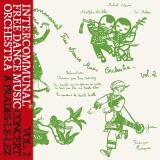
Concert at Prades-le-Lez marks the origins of the Intercommunal Free Dance Music Orchestra. In 1974, François Tusques and his companions (Michel Marre, Jo Maka, Adolf Winkler and Guem), in the spirit of Don Cherry or Chris McGregor, playfully dismantle all borders and all styles of creative music.
On this first volume, the Intercommunal takes its audience from New Orleans to Brittany and on to North Africa. The journey was bold, without a doubt—and its memory remains unforgettable.
“The music that we make is primarily meant to be listened to live,” warned a leaflet from the Intercommunal Free Dance Music Orchestra. This is precisely why the (restored!) reissue of the two volumes of Concert at Prades-le-Lez, recorded on January 25 and 26, 1974 by François Tusques and his comrades, is such an important event.
In 1971, after recording a series of albums that would leave a lasting mark on French jazz (Free Jazz, of course, with Michel Portal, François Jeanneau, Bernard Vitet, Beb Guérin and Charles Saudrais, but also Le Nouveau Jazz with Barney Wilen, or the solo Piano Dazibao), François Tusques founded the Intercommunal—a grouping whose very name called for the fraternization of the various communities making up the country: Our music will help, we hope, to resolve the contradictions that exist between workers be longing to different communities, by breaking down various forms of national chauvinism, and more particularly the chauvinism of certain French people toward the cultures of Third World countries… Long live the friendship between the peoples of the whole world!
Among the great records made by the Intercommunal Free Dance Music Orchestra, the two volumes of Concert at Prades-le-Lez come first, before L’Inter Communal, Vol. 4, Le Musichien, and Après la marée noire (four titles already reissued by Souffle Continu). François Tusques and his companions (Michel Marre and Jo Maka on saxophones, Adolf Winkler on trombone, and Guem on percussion) performed on January 25 and 26, 1974 at the Moulin de Prades-le-Lez, a few kilometers from Montpellier. It was thus in the southern region of Occitanie that the first echoes of this musical vision of a borderless brotherhood were recorded.
“We’re not among the Colonels,” the Intercommunal reassures us right away, performing a stride piano tune carried by African winds that the audience cannot resist for long. The energy is already striking and it never lets up throughout these two recordings, from start to finish: jazz, blues, traditional music, minimalism, even funk… The musicians of the Intercommunal have heard a lot of great music and now delight in reinventing it by mixing it all together.
“We want the song form to take its place as a weapon in the struggle against capitalist exploitation and all those who oppress us morally and materially,” declared an Intercommunal leaflet, quoting Jean-Baptiste Clément, author of the lyrics to “Le Temps des cerises.” The struggle was therefore serious—but it did not prevent François Tusques and his group from waging it in a festive spirit: each piece on Concert at Prades-le- Lez sends out a call for love and fraternity. Fifty years later, the message remains as relevant as ever—and once again, it is François Tusques who makes it heard.
Concert at Prades-le-Lez marks the origins of the Intercommunal Free Dance Music Orchestra. In 1974, François Tusques and his companions (Michel Marre, Jo Maka, Adolf Winkler and Guem), in the spirit of Don Cherry or Chris McGregor, playfully dismantle all borders and all styles of creative music.
On this second volume, the Intercommunal builds unprecedented soundscapes around a song of revolt, a dance tune, or a burst of dissonance. The journey is unforgettable, no question about it. On repeat listening, it even becomes… lunar!
“The music that we make is primarily meant to be listened to live,” warned a leaflet from the Intercommunal Free Dance Music Orchestra. This is precisely why the (restored!) reissue of the two volumes of Concert at Prades-le-Lez, recorded on January 25 and 26, 1974 by François Tusques and his comrades, is such an important event.
In 1971, after recording a series of albums that would leave a lasting mark on French jazz (Free Jazz, of course, with Michel Portal, François Jeanneau, Bernard Vitet, Beb Guérin and Charles Saudrais, but also Le Nouveau Jazz with Barney Wilen, or the solo Piano Dazibao), François Tusques founded the Intercommunal—a grouping whose very name called for the fraternization of the various communities making up the country: Our music will help, we hope, to resolve the contradictions that exist between workers be longing to different communities, by breaking down various forms of national chauvinism, and more particularly the chauvinism of certain French people toward the cultures of Third World countries… Long live the friendship between the peoples of the whole world!
Among the great records made by the Intercommunal Free Dance Music Orchestra, the two volumes of Concert at Prades-le-Lez come first, before L’Inter Communal, Vol. 4, Le Musichien, and Après la marée noire (four titles already reissued by Souffle Continu). François Tusques and his companions (Michel Marre and Jo Maka on saxophones, Adolf Winkler on trombone, and Guem on percussion) performed on January 25 and 26, 1974 at the Moulin de Prades-le-Lez, a few kilometers from Montpellier. It was thus in the southern region of Occitanie that the first echoes of this musical vision of a borderless brotherhood were recorded.
“We’re not among the Colonels,” the Intercommunal reassures us right away, performing a stride piano tune carried by African winds that the audience cannot resist for long. The energy is already striking and it never lets up throughout these two recordings, from start to finish: jazz, blues, traditional music, minimalism, even funk… The musicians of the Intercommunal have heard a lot of great music and now delight in reinventing it by mixing it all together.
“We want the song form to take its place as a weapon in the struggle against capitalist exploitation and all those who oppress us morally and materially,” declared an Intercommunal leaflet, quoting Jean-Baptiste Clément, author of the lyrics to “Le Temps des cerises.” The struggle was therefore serious—but it did not prevent François Tusques and his group from waging it in a festive spirit: each piece on Concert at Prades-le- Lez sends out a call for love and fraternity. Fifty years later, the message remains as relevant as ever—and once again, it is François Tusques who makes it heard.
- 1: Intro
- 2: Arepa 3000
- 3: La Vecina
- 4: Qué Rico
- 5: Cuchi-Cuchi
- 6: Si Estuvieras Aquí
- 7: Masturbation Session
- 8: Mami Te Extraño
- 9: Mujer Policía
- 1: No Le Metas Mano
- 2: Amor
- 3: Pipi
- 4: El Barro
- 5: Domingo Echao
- 6: Piazo E' Perra
- 7: El Baile Del Sobon
- 8: Fonnovo
- 9: Caliente
- 10: Llegaste Tarde
Since their ground-breaking US debut the Amigos have lived a double life. In their hometown of Caracas, Venezuela, they"ve hosted underground club nights for years (the most recent called "Super Sancocho Variety"). Then, insouciant single-entendre songs like "Sexy" and the doggy-style anthem "Ponerte En Cuatro" landed them on MTV and radio, and before long, the six young men found themselves pop idols. It wasn"t hard, but their hearts remain on the dance floor and in the clubs. AREPA 3000 is live instruments, start to finish. "Electronic music tries to simulate human sounds," says the guitarist. "It"s really easy to buy a groove box or an 808 to make us sound like techno. So we try to get those sounds from our instruments, to go the other way. Make the human sounds sound electronic. When we do our club shows, I"ll spin before our set and we"ll add live instrumentation. We can play four, five hours like that.
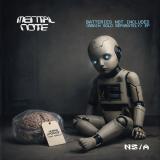
‘Batteries Not Included (Brain Sold Separately)’ EP Arrives Via No Static Automatic
No Static Automatic is proud to announce the new EP from UK Electro legend Phil Klein under his Mental Note alias. Titled “Batteries Not Included (Brain Sold Separately),” this release marks the dynamic follow-up to the acclaimed 2020 debut “Voices In My Head (Noises In My Pants).”
Few authentic Electro producers from the UK can wear the badge ‘legend’ with the same level of justification as Phil Klein, aka Bass Junkie. Active since the late 80s, Klein has tirelessly shaped his distinct vision of Electro, both as a solo artist and through storied collaborations with icons like Dynamix II, Keith Tenniswood (Radioactiveman), and Si Brown (Dexorcist). As a DJ, remixer, live act, and the driving force behind the seminal Battle Trax label, his influence is woven into the fabric of the genre.
With essential releases on labels including DMX Krew’s Breakin’ Records, Andrea Parker’s Touchin’ Bass, and Billy Nasty’s Elektrix, the Bass Junkie sound seamlessly bridges the old-school beats of Electro’s origins with a potent, borderline-industrial edge. As noted by Andy Barton of Bass Agenda: “From funky to ferocious, Bass Junkie’s discography is a must-have for anyone claiming passion for the genre – influential, individual, and infectious with every beat.”
Now, as Mental Note, Klein continues his exploration of electronic psychedelia. The new EP, “Batteries Not Included (Brain Sold Separately),” is a four-track expedition through the Electro cosmos:
“Brainwash” immerses the listener in swirling, hypnotic synths.
“They're Not Blue, They’re Purple” delivers a masterclass in crunchy, textured drums.
“Primordial Soup” showcases frantic, intricate programming.
“Kluster Funk” offers a moment of deep, sonic relief and groove.
Each track reinforces Mental Note’s signature: a journey that is cerebral, raw, and irresistibly rhythmic.
About Bass Junkie/Mental Note:
Phil Klein, operating primarily under the alias Bass Junkie, is a cornerstone of the UK Electro scene. For over three decades, his work has defined and evolved the sound, earning him a revered status among peers and purists. His Mental Note project is a focused outlet for a deeper, more experimental strand of his production genius, further solidifying his legacy as an electronic music innovator.
- A1: The Lisu Mix A Side
- B1: The Lisu Mix B Side
One of the longest standing figures amidst the Discrepant wolfpack, the unstoppable alias of sound collector Laurent Jeanneau returns to the fold 2 years after 'Tanzania II' with this 2.0 update of the celebrated 'The Lisu' sort-of-mixtape released way back in 2014.
Based on recordings of music from the Lisu communities in China and Thailand captured on site, this mix shows Gong more like a selector or dj, restricting electronic processing to a bare minimum in order to convey different histories, places and timeframes within the same mesmerising continuum. A respectful and deeply vivid evocation of all the richness and diversity found among the different strands of lisu music, from ceremonial vocal incantations through a chibeu string instrument "processed" in loco through saturated street speakers to moments of pure poetic radiance, 'The Lisu' flows gracefully with the keen sense of wonder and knowledge of one of this century's most thoughtful and insightful sonic travellers.
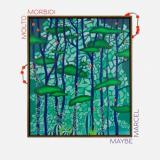
French artist Swan Wisnia, under her solo project molto morbidi, announces her second album Maybe Marcel for release on April 17th via No Salad Records. An experimental album forged in both tenderness and turmoil, combining art / weird pop and baroque pop, the album moves between the intimate and raw to the playful and inventive, creating a universe that is at once dark and hopeful.
"What inspires me are artists who stand by their influences while transcending traditions," she explains. "Artists who are recognisably their own." Drawing inspiration from everything from Siouxsie Sioux to The Raincoats to Broadcast, Lizzy Mercier Descloux, and ESG, Wisnia balances melodic sensibility with the experimentally daring, creating a body of work that is both timeless and wholly original.
- I Am Digital, I Am Divine
- Marble Arch
- Sweet Fruit
- Godspeed
- Silver Spoon
To celebrate the year anniversary of its first release, Erin LeCount launches a limited edition transparent vinyl of her 2025 EP I Am Digital, I Am Divine. The tracklist includes viral hit Silver Spoon which amassed 300K Soundcloud streams before it had even been released, since amassing 21M streams in less than 12 months.
Available for pre-order on the 24th March and set for release on the 17th April 2026.
Erin LeCount is a 23-year-old self-taught artist and producer. A visionary sonic architect and the sole writer and producer of her music, her sound ranges from luscious baroque-pop arrangements to alluring gothic-pop.
At the foreground of her music are diaristic lyrics and captivating synths which offer an enchanting interplay of vulnerability and power. The themes within her music explore everything from identity to relationships and the meaning of life. Erin’s influences include Fiona Apple, Kate Bush, Lorde, Imogen Heap, Charli xcx, and Sampha.
In May 2026, Erin LeCount will embark on her biggest run of shows to date with her new UK tour, entitled the ‘PAREIDOLIA Tour’, which will see her play dates in Manchester, Glasgow, Bristol, and London, the latter of which will take place at the Roundhouse in what is Erin’s largest headline show so far.
This month, Erin was also announced on the line-up for Lorde’s All Points East date on Saturday 22nd August.