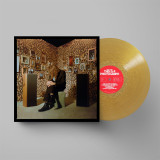
"This Is A Photograph", MORBYs siebtes Album, ist ein Loblied auf die Americana, das Leben und Tod und Blut auf der Leinwand zum Ausdruck bringt. Der kreativ gestärkte Songwriter hat es geschafft, seine besten Songs, seine besten Gesangsleistungen, seine prägnantesten Texte und seine üppigsten Arrangements auf "This Is A Photograph" zu vereinen. Dies ist zweifellos sein bisheriges Hauptwerk. Die Geschichte beginnt im Januar 2020, als MORBY im Keller seines Elternhauses in Kansas City geistesabwesend in einer Kiste mit alten Familienfotos blättert. Nur Stunden zuvor war sein Vater bei einem Familienessen vor seinen Augen zusammengebrochen und musste ins Krankenhaus gebracht werden. In dieser Nacht spürte MORBY noch immer den Schock und die Angst, die ihm in den Knochen steckten. Also sah er sich die Bilder an, bis ihm eines davon ins Auge sprang: sein Vater als junger Mann, stolz und stark und voller Selbstvertrauen, der mit freiem Oberkörper auf einer Wiese posiert. "In the photo he looks young and full of confidence, puffing his chest out at the camera as if he were looking for a fight," erklärt MORBY. "It was not lost on me that this was the same chest, just hours before, I had seen the ambulance put a stethoscope against as he lay on the kitchen floor of my sisters house." Während sein Vater wieder zu Kräften kam, grübelte er über diese Gedanken nach. Und dann machte er sich auf den Weg nach Memphis. Er zog in das Peabody Hotel und verbrachte seine Tage damit, den Träumern, die er bewunderte, Tribut zu zollen und sich vor ihnen zu verneigen; er ging hinunter zum Ufer des Mississippi, zu der Stelle, an der JEFF BUCKLEY sein Ende fand. Er schlenderte durch das Viertel, in dem JAY REATARD seinen letzten Tag verbrachte, und fuhr dann am Stax-Zelt vorbei, um seine Stimmung kurz aufzuheitern. Dann fuhr er an Graceland vorbei, bevor er den Highway 61 überquerte und die Geister zu sich rufen ließ, um seine eigenen Träume zu gestalten. Abends kehrte er in sein Zimmer zurück und hielt seine Ideen auf einem behelfsmäßigen Aufnahmegerät fest, das nur aus seiner Gitarre und einem Mikrofon bestand. Die schwermütigen Songs, die zu all dem passen, was er gesehen hatte, sprudelten nur so aus ihm heraus. Wiederum leitete Sam Cohen (der "Singing Saw" und "Oh My God" produziert hatte) das Projekt. Sie begannen in Cohens Studio im Bundesstaat New York, das sich noch im Bau befand, zusammen mit dem Schlagzeuger Nick Kinsey, und arbeiteten langsam an den Songs, da die Reise der Aufnahme der Start-Stopp-Qualität von 2021 selbst entsprach, mit magischen Momenten, die in die prekären Navigationen eingestreut waren. Mit der Zeit füllte sich die Besetzung. Der ehemalige Tournee-Pianist Oliver Hill sowie seine Mutter Meg und seine Schwester Charlotte sorgten für die Streicher. Die Tourneeleute Cochemea Gastelum (Saxophon), Jared Samuel (Orgel) und Alecia Chakour (Gesang, Tamburin) stießen zu den Sessions hinzu, ebenso wie Eric Johnson (Banjo). Und neue Mitstreiter*innen wie Schlagzeuger Josh Jaeger (Schlagzeug, Perkussion), Brandee Younger (Harfe), Makaya McCraven (Schlagzeug), Cassandra Jenkins (Gesang) und sogar Tim Heidecker und Alia Shawkat (die schrägen Lacher auf "Rock Bottom") fügten sich in das entstehende Bild ein. Und passenderweise fanden die letzten Sessions live in Memphis in Sam Philips Recording Co. statt, das von seinem Sohn Jerry Philips geleitet wird und das Erbe des ursprünglichen Sun Records Studios fortführt.
quête:4 to the floor
"This Is A Photograph", MORBYs siebtes Album, ist ein Loblied auf die Americana, das Leben und Tod und Blut auf der Leinwand zum Ausdruck bringt. Der kreativ gestärkte Songwriter hat es geschafft, seine besten Songs, seine besten Gesangsleistungen, seine prägnantesten Texte und seine üppigsten Arrangements auf "This Is A Photograph" zu vereinen. Dies ist zweifellos sein bisheriges Hauptwerk. Die Geschichte beginnt im Januar 2020, als MORBY im Keller seines Elternhauses in Kansas City geistesabwesend in einer Kiste mit alten Familienfotos blättert. Nur Stunden zuvor war sein Vater bei einem Familienessen vor seinen Augen zusammengebrochen und musste ins Krankenhaus gebracht werden. In dieser Nacht spürte MORBY noch immer den Schock und die Angst, die ihm in den Knochen steckten. Also sah er sich die Bilder an, bis ihm eines davon ins Auge sprang: sein Vater als junger Mann, stolz und stark und voller Selbstvertrauen, der mit freiem Oberkörper auf einer Wiese posiert. "In the photo he looks young and full of confidence, puffing his chest out at the camera as if he were looking for a fight," erklärt MORBY. "It was not lost on me that this was the same chest, just hours before, I had seen the ambulance put a stethoscope against as he lay on the kitchen floor of my sisters house." Während sein Vater wieder zu Kräften kam, grübelte er über diese Gedanken nach. Und dann machte er sich auf den Weg nach Memphis. Er zog in das Peabody Hotel und verbrachte seine Tage damit, den Träumern, die er bewunderte, Tribut zu zollen und sich vor ihnen zu verneigen; er ging hinunter zum Ufer des Mississippi, zu der Stelle, an der JEFF BUCKLEY sein Ende fand. Er schlenderte durch das Viertel, in dem JAY REATARD seinen letzten Tag verbrachte, und fuhr dann am Stax-Zelt vorbei, um seine Stimmung kurz aufzuheitern. Dann fuhr er an Graceland vorbei, bevor er den Highway 61 überquerte und die Geister zu sich rufen ließ, um seine eigenen Träume zu gestalten. Abends kehrte er in sein Zimmer zurück und hielt seine Ideen auf einem behelfsmäßigen Aufnahmegerät fest, das nur aus seiner Gitarre und einem Mikrofon bestand. Die schwermütigen Songs, die zu all dem passen, was er gesehen hatte, sprudelten nur so aus ihm heraus. Wiederum leitete Sam Cohen (der "Singing Saw" und "Oh My God" produziert hatte) das Projekt. Sie begannen in Cohens Studio im Bundesstaat New York, das sich noch im Bau befand, zusammen mit dem Schlagzeuger Nick Kinsey, und arbeiteten langsam an den Songs, da die Reise der Aufnahme der Start-Stopp-Qualität von 2021 selbst entsprach, mit magischen Momenten, die in die prekären Navigationen eingestreut waren. Mit der Zeit füllte sich die Besetzung. Der ehemalige Tournee-Pianist Oliver Hill sowie seine Mutter Meg und seine Schwester Charlotte sorgten für die Streicher. Die Tourneeleute Cochemea Gastelum (Saxophon), Jared Samuel (Orgel) und Alecia Chakour (Gesang, Tamburin) stießen zu den Sessions hinzu, ebenso wie Eric Johnson (Banjo). Und neue Mitstreiter*innen wie Schlagzeuger Josh Jaeger (Schlagzeug, Perkussion), Brandee Younger (Harfe), Makaya McCraven (Schlagzeug), Cassandra Jenkins (Gesang) und sogar Tim Heidecker und Alia Shawkat (die schrägen Lacher auf "Rock Bottom") fügten sich in das entstehende Bild ein. Und passenderweise fanden die letzten Sessions live in Memphis in Sam Philips Recording Co. statt, das von seinem Sohn Jerry Philips geleitet wird und das Erbe des ursprünglichen Sun Records Studios fortführt.
Sean Johnston has put together some righteous compadres to form a new project - The Summerisle Six. Featuring Jo Bartlett (Yellow Moon Band) on vocals, Andy Bell (Oasis and Ride amongst others) & Duncan Gray on guitars, Kev Sharkey (That Petrol Emotion, The Undertones, Elvis Costello to name a few) on percussion, Mick Somerset Ward on Sax (Clock DVA, Was Not Was, Crooked Man). This Is Something is a driving pop groover reminiscent of a late 80's early 90's Indie Dance anthem. The Dub mix invites the OG mix to ALFOS, turns the lights off and presses the smoke button for a chuggy heartwarming trip across the dance floor. There are no words to describe Rico Connings mix other than to say this 10 min journey has to be heard to be believed. A genuine Balearic gem.
Berlin's Cocktail d'Amore and Tokyo's Ene Records have come together once again to present the music of Solidair. The duo of Cocktail alumni Luigi Di Venere and Jules Etienne present three tracks aimed to induce a dance floor hypnosis. Orgonite (Riding the Waves) does just that, a slow build awash in the ebb and flow of acid tinges, just enough to wet your whistle on a Saturday night. The original mix keeps the skeletal support but throws in a life preserver of 8 bit gaming synthesis. Frisky arps call and respond to each other before making way for sinewy pads to lift off. Tiger's Eye sets itself onto cruising speed incorporating elements of late 90's acid techno with the sleek and smooth clubbing aesthetics of modern day Berlin.
Ferocious JP / US free jazz bomb. A rare meeting between the NYC free jazz scene and the Japanese free music scene. Old-style Gatefold LP, with rare photographs & liner notes by Alan Cummings.
Following hot on the heels of the first, mid-sixties generation of Japanese free jazz players like Kaoru Abe, Masayuki Takayanagi, Yōsuke Yamashita, Motoharu Yoshizawa, etc., an exciting second wave of younger players began to emerge in the seventies. Two of its leading members were the saxophonist Kazutoki Umezu and multi-instrumentalist Yoriyuki Harada. Both were post-war babies and immigrants to the city, Umezu from Sendai in the north and Harada from Shimane in the west. They first met as students in the clarinet department at the Kunitachi College of Music, a well-known conservatory in western Tokyo. Harada was already securing sideman gigs on bass with professional jazz groups and was active in student politics, making good use of his connections to set up jazz concerts on campus. It was around this time that the two began to play together in an improvised duo, with Umezu on clarinet and bass clarinet and Harada on piano. They also experimented with graphic scores and prepared piano.
These experiments eventually led to the creation of a trio, with a high-school student called Tetsuya Morimura on drums, that they decided to name Seikatsu Kōjyō Iinkai (Lifestyle Improvement Committee) in joking reference to the Marxist discourse of the student radicals of the time. Around 1973, Umezu and Harada decided to call it a day and go their separate ways. Umezu began playing with the Toshinori Kondo Unit and Harada with the Tadashi Yoshida Quintet. In 1974 Harada formed his own trio and began to play at jazz coffeehouses across Japan.
Then, in September 1974 Umezu travelled alone to New York, where he set about building connections with the loft jazz scene in the city. It was a fortuitous moment to arrive in New York. Rents were cheap in the Lower East Side, possibilities for squatting existed, so many musicians and artists had moved to the area. Umezu soon became known on the scene as Kappo and he started to make connections with some of the young musicians like David Murray, Arthur Blythe, and Oliver Lake. He recalls making the rounds of the lofts every evening, checking out the performances, and getting the chance to sit in with many groups including Juma Sultan’s Aboriginal Music Society and trumpeter Ted Daniel’s orchestra.
Things were going so well that Umezu wrote to Harada and invited him to come to New York. He accepted and arrived in the city in July 1975. Harada and Umezu took the opportunity to resume their artistic collaboration. Their first concert together in over two years took place on July 20th at another loft, Sunrise Studios at 122 2nd Avenue. Umezu remembers Sunrise as an unusually sunny loft with the rarest of things, a grand piano. He invited along Ahmed Abdullah, a trumpeter he had got to know while playing with Ted Daniel. Abdullah led his own group and was a long-term Sun Ra sideman. William Parker, one of the key figures in the loft jazz scene of the period, was on bass. Abdullah also brought along Rashid Sinan on drums. Sinan drummed in Abdullah’s units throughout the seventies, but he had also played on Frank Lowe’s immortal Black Beings album and collaborated with Arthur Doyle, playing on Doyle’s Alabama Feeling album. By all accounts the evening was a huge success, with speed and dynamism of Harada’s piano playing gaining him lots of support.
Since they had managed to save some money from their day jobs, Umezu and Harada decided to set up a recording session with the same line-up on August 11 at Studio We, where there was a well-equipped studio on the third floor. Umezu recalls the session as follows, Of course, we recorded our performances in one take, with zero retakes as far as I remember. On all the tracks we recorded, we moved as one unit, sharp and fast. That was the nature of Lifestyle Improvement Committee, New York Branch.
Umezu and Harada would later become known for the elements of parody and entertainment that they brought to their music, a freewheeling blend of pastiche, humour and on-stage performativity that paralleled the approaches of the Art Ensemble, Sun Ra, and Holland’s ICP. But here, on their first recordings, the humour element is not yet present. Instead, there is a febrile sense of joy in creation and connection. On the Umezu-penned “Kim”, for example, Harada opens the piece with a speedy exploration of the full-range of the keyboard, hitting hard on the bass keys to create a rhythmic bed out of which patterns begin to emerge. Umezu enters at a much slower pace, longer held notes that at first float weightlessly over the urgency of the piano before they begin in splinter and accelerate. When Parker and Sinan kick in, it’s a rollicking tempo with Parker plucking deep and hard and the left-handed Sinan skittering hard across the topside of his kit. Abdullah kicks in a glorious solo twelve minutes in, bright and breathy at once. The piece slows and grows more spacious towards the end, giving Parker a chance to showcase some arco work that shades beautifully into the air against Abdullah’s trumpet.
Tony Rolando's debut »Breakin' Is A Memory« could be your soundtrack. This worldbuilding album of electronic music leaves room for the listener to make big personal connections through subtly complex music resembling a sonic mobile which, as it spins, reveals new forms and colors. This is a collection of very human music with a deceptive simplicity and relaxed intensity. RIYL early OPN, Alessandro Cortini, Caterina Barbieri, Tangerine Dream.
These is cleverly assembled music that you want to flip over and play again, like Rolando's recent cassette on Imprec's Cassauna label. As with all Imprec vinyl releases, great care has been taken to ensure that this is a high quality pressing with low noise floor and loads of sonic detail.
On "Breakin' is a Memory" Tony Rolando invites the listener on tiny adventures questing insignificant treasures. Minimal percussion only suggests rhythm, allowing your mind to wander the crystalline lattices Tony weaves from handfuls of simple arpeggios. Soft analog bass frequencies make your travels more comfortable and the Strega instrument, a recurring recognizable character, is there to lead when you are too lost. The pace of "Breakin' is a Memory" oscillates from restless roadway motion to meditative exploration. The record closes with a celebratory decimation of the graphic memories of these tiny adventures. Play it again to rekindle them.
For more than a decade, Tony Rolando has composed electricity into musical instruments at Make Noise. When he collaborated with Alessandro Cortini in 2019 to create the Strega instrument, the experience rekindled Tony's love of composing and recording music. In 2021 he released "Old Cool Echoes" with IMPORTANT Records/ Cassauna. A third release of music composed entirely for the Shared System instrument he designed will follow later this year.
In a very special edition of our Basement Tracks series, house legends Alan Fitzpatrick and DJ Deeon team up on a Chicago-inspired house track, later flipped by Shall Not Fade family member, DJOKO.
A figure who needs little introduction, Alan Fitzpatrick has long been electrifying dance floors with his big-room selections and production. This EP sees the tech-house icon collaborate with the equally illustrious DJ Deeon on a track which gleams from the Chicago producer's musical heritage in juke and Ghetto house. "Shake That Thang" cruises along a deep house beat whilst Deeon's unmistakable vocal chops float over the top, offering a blissed-out take on the genre before Cologne's house music stalwart DJOKO who brings the funk on a buoyant flip. Rounding things off, "Learning to Love" sees Fitzpatrick fly solo with a sunshine-doused melody and euphoric drops. This one's sure to be heard on festival stages all across the globe this summer.
Closing out another breakthrough year, Anfisa Letyago has established herself as one of techno's most talked about names. An intrepid selector with a positive attitude regarding all things art and dancefloor related, the Russian born starlet has been making seismic waves within the industry for a number of years. Past releases have been featured on revered labels such as Carl Cox's Intec, Nervous Records, Hotflush and Rekids. Letyago returns now with a brand new project primed and ready for her own imprint - N:S:DA. Originally a celebration of her own dark-brooding style of techno, the label has entered a metamorphosis of sorts, welcoming in a host of established producers to remix the labels first releases.
The unapologetically raw house sound of DJ Seinfeld opens up the third and final remix EP, putting his own spin on Letyago's deep cut 'Insidia'. Cavernous synthlines occupy the track's main body, reminiscent of late seventies golden-era Chicago house. The remix is laced with hard hitting percussion and bubbling sound fx, a supercharged production primed for widespread club usage. Seinfeld welcomes us into the project with his trademark, rough and gloriously danceable sound palette.
Letyago follows suit by revisiting 'Nisida', reshaping the track into an electro-acid workout adorned with sharply tuned drums and heavily-treated shimmering vocals. The euphoria-inducing breakdown at the center point of the arrangement unfolds weightlessly, building into an energetic barrage of low-end frequencies. Letyago's ability to raise and release tensions within a track is truly exceptional, a technique she has perfected over several years of DJing, witnessing at first hand the importance of building up to moments of high intensity on the dancefloor for maximum impact.
Drum and bass royalty, Calibre offers his dark and brooding interpretation of 'Don't Hide'. The original track has been wickedly morphed into an after-dark roller fit for extensive basement usage. Commanding and minimal, Calibre's remix has been executed with devastating precision, perfectly balanced space-age pads glide seamlessly across the disjointed rattle of breakbeats and white-noise imbued hi-hats. A painter, fine artist, multi-instrumentalist, writer and producer, this multifaceted Belfast producer never ceases to disappoint.
Closet Yi concludes the compilation with a slow burning techno metamorphosis of Letyago's 'Listen'. Subterranean and primal, the track unfurls from its ambient beginnings into a low-end focused four-to-the-floor rhythm steeped in misty reverb and distant chords. Based in Seoul, South Korea, Yi has played at some of the most respected underground clubs in the capital, including Cakeshop, Faust, Pistil, Contra and more. A welcome addition to the remix project and a seductive end to this shadowy collection of tracks.
Konduku returns to Nous'klaer with a two tracker on the fourth instalment of his K-series. Starting out with Gelgit; a typical Konduku poly groover with mesmerising bells and subtle drops. On the flip we hear Konduku channeling his four to the floor affection into one of his sweatiest cuts yet. Crafted for big soundsystems.
Random orange or black vinyl :).
High Fashion Music enlist an All-Star A Team of world-renowned remixers that includes; Ben Liebrand, Dave Lee, Michael Gray & Luca Moplen. Each step up to the controls and lay down four salacious new grooves on Firefly’s ItaloFunk Disco stomper from the early 80’s – ’Love’ (Is Gonna Be On Your Side).
Each remix brings a new vibe and a fresh wax coating. Ben Liebrand adds his own imitable production values as he brilliantly beefs up the original vibe with sass and verve. Dave Lee brings his encyclopaedic disco know how to proceedings with a classic sounding, Chic like journey, whilst Michael Gray’s version has a stylish new four-to-the-floor drums sound, he keeps the funky instrumentation firing whilst still managing to hark back to the days of hanging out in salubrious NYC nightclubs. Finally, Luca Moplen delivers a dance floor delight, an up to date production with real a get down and boogie retro twist. One can just imagine his mix being played back to back on syndicated radio stations across the USA and Europe!
Milanese producer Nelson of the East sets out on a deeper exploration of percussive house/techno on Sub Erotic, the first release on Tartelet Record’s new dance floor-focused sub-label DANCEMPORIUM – out May 6th.
Following his 2021 album release of Kybele, Nelson of the East (Nicolas Meyer) is embarking on a new area of sonic exploration rooted in club music motifs. His forthcoming EP, Sub Erotic, builds on his accomplished artistic imprint, balancing the urgent pulse of dance music with the rhythmic sensibilities of non-Western cultures. “After the release of Kybele, it took me a while to figure out what would be a good sequel, and I found myself deconstructing tracks from the album,” says Nelson. “I came to the conclusion that the most important thing on the new EP would be the relationship between the different elements, while trying to use fewer layers.” While the lilt and sway of organic musicality remains at the heart of his sound, the Berlin-based producer applies these qualities in a variety of ways. On “Ellipsis”, for example, live percussive patterns were recorded and recreated using synthesis, which Nelson found to be more effective than the acoustic originals. The result is three tracks that pivot around danceable structures while moving well outside the established norms of house and techno. From the pinging textures and staggered beat impulses of “Ellipsis” to the Go Go-flavored funk of “Sub Erotic” and the trance-inducing acid incantation of “Memoria”; Nelson’s distinctive inspirations spill out of his music in intriguing formations.
Danish mainstay Kasper Marott rounds out the EP, applying a seductive pulse to push “Ellipsis” towards a psychoactive peak. The perfect brooding partner to the original, while reinforcing Nelson’s vision of an electronically minded album. Sub Erotic marks the first release on DANCEMPORIUM, Tartelet Records’ new home for dance floor-oriented music. Having grown to become a broad church of musical modes and expressions, the label is now breaking out into more focused sonic spheres. With his use of rich timbres and adventurous spirit, Nelson of the East is the perfect inaugural candidate.
- A1: Magic (Intro)
- A2: Come Into My World (Interlude)
- A3: I Love It
- A4: In Your Eyes
- A5: Light Years
- A6: Supernova
- A7: Light Years (Reprise)
- A8: I Should Be So Lucky (Interlude)
- A9: Dance Floor Darling
- A10: All The Lovers (With House Gospel Choir)
- A11: Say Something (With House Gospel Choir)
- B1: Real Groove
- B2: Slow/Love To Love You Baby
- B3: Monday Blues
- B4: Where Does The Dj Go?
- B5: Love At First Sight
- B6: Last Chance
- B7: Magic
Fans are invited to return to ‘Infinite Disco’, Kylie’s globally successful live spectacular broadcasted in 2020. Released alongside Kylie’s record-breaking album ‘DISCO’, the 50-minute special performance was met with widespread acclaim and deemed ‘a true joy’ by The i. The ‘Infinite Disco’ vinyl features tracks from DISCO, alongside much loved hits ‘In Your Eyes’, ‘Light Years’, ‘Slow’ (a mash up with Donna Summer’s iconic ‘Love To Love You Baby’) and ‘Say Something’, performed with the House Gospel Choir.
- A1: Hard Times Killing Floor
- A2: Sweet Sweet Girl
- A3: Tough Times
- A4: Hoggin
- B1: Don't Let It Be You
- B2: Them Ol Crossroads Blues
- B3: Don't Ever Let Nobody Drag Your Spirit Down
- B4: Midnight Bus
- C1: To Love Somebody
- C2: Something You Heard
- C3: Bring On The Blues
- C4: Ti Fi Une Grande Dame Maintenant (Big Girl) (Big Girl)
- D1: Come On Give Me Some Blues
- D2: My Love Made You Wrong
- D3: Tough Love
- D4: Tick Tock
From the mind of Caserta comes a brand-new imprint. God Hour picks up where Bridge Boots left off putting Caserta right back to work doing what he’s come to be best known for; turning old school joints, usually not meant for the dance floor, into modern day heaters.
'Playa' takes a '70s ballad about the one who got away and makes it a little less heart wrenching and a lot more danceable! The A side features the full vocal surrounded by the driving bass, drums and horns any good disco record should have. With lush Rhodes, strings and synths to warm things up and make you wonder where things went awry even while you’re 2 stepping the night away.
For those of you who cant come to grips with the fact that that special someone is gone or just plain hate lyrics then flip-er on over for a classic Caserta Dub.
For their ninth iteration, Hamburg's The Press Group punches back in with the sizzling hot debut to a VA series bound to scout and shed a broader light on exciting artists from various territories and backgrounds.
Pulsating to the bone, "Future Prospects vol.1" showcases a quartet of heaters courtesy of Germany-based Robert Dietz and Aii PS on the A-side and Kyiv-based Vlad Stuparenko & Ghetto Sunrise plus Sasha Zlykh on the flip. Either sides of the
disc inbound for optimal and non-pareil impact on the dance floor. Dietz's "Salbung" paves the way old-school style, grinding everything from lethal breaks to rowdy drums, via lysergic synth flights straight out a wild sci-fi scenario.
Aii PS' bouncy and oneiric contribution "Donteven" is more of a low-slung affair with its mischievous fusion of filtered synths and acid-informed bass spurts painting the sky all shades of radioactive green.
Flip it over and Stuparenko/Ghetto Sunrise's stealth, aqueous weapon "Pine Water" ushers us in a corridor of groove-enslaved echolocation, delayed stabs and propulsive bleepin' n bloopin' from the depths. A further dusty, shuffling affair
blazing with clanky hats on a Chicagoan tip and futuristic electroid inflections, Zlykh's "Pidozepam" tops it all off in implacable fashion, casting a spell of exquisitely thrilling menace upon the ravers.
You probably heard it before, several times. The opening number ‘Hungry, So Angry’ is to be considered one of the most infectious white funk anthem of the era. The Glitterhouse was released in 1981 on british imprint Cherry Red and soon was hailed as an instant classic for the post-punk generation close to dancefloor. In the same league of A Certain Ratio and newyorkers Bush Tetras the band originally from Nottingham moved behind obscure numbers and twisted grooves showing a revolutionary take on the up and coming new wave scenario. Here’s an unmissable collection with tracks from their three singles, sole studio album, live recordings but also unreleased tracks from an October 1982 demo tape.
Frankel & Harper deliver the appropriately named "Return EP" on their council work imprint. following on from the "Crouching Tiger EP", CWR005 sticks to the signature Council Work sound, bringing together a fusion of UK Garage, Drum 'n Bass, Breakbeat, Dub and many other flavours. The 3 original tracks feature in the shape of Counter Strike, Armshouse and Return, with the release rounded off with an infectious, stripped back remix of the title track from Trule head honcho Al Wootton. From all out dance floor destroyers, to deeper and more cinematic textures, this collection of beats should easily find a home in many record bags.
Melbourne based record label Tanny Records is dropping its debut release in style showcasing a whopping lineup featuring Perlon's Wareika, FUSE label boss Archie Hamilton, vinyl don Charles Eddy and renowned Australian selector Lucca Tan.
The A-side showcases Wareika's tough but melodic minimal dance floor churner "Grapefruit all over me" (Original Mix) as well as his tripped-out experimental minimal groover "Jaguar" (Original Remix).
On the flip side Archie Hamilton delivers his take on "Jaguar" featuring his signature sound, and Label owner Lucca Tan and collaborator Charles Eddy give their twist on the already summer classic "Grapefruit All Over Me".
Blair French returns to Rocksteady Disco with an EP of pan-African dance floor heat. Picking up from where he left off with his The Art Of Us LP and his recent Razor-N-Tape EP, this 3-tracker sounds like being happily lost in a hot jungle. Tons of drums, chants, flutes, and basslines for the finest parties. Limited vinyl pressing, don’t sleep.
Music written and produced by Blair French
Pressed at Archer in Detroit
Mastered by Pontchartrain


