Coloured Vinyl
WRWTFWW Records is absolutely honored to announce the release of Kenji Kawai’s complete soundtrack to Mamoru Oshii's 1993 superb political thriller science-fiction mecha anime PATLABOR 2: The Movie, available on vinyl for the first time ever and housed in a beautiful heavy gatefold sleeve with obi, as well as on digipack CD. Both versions come with liner notes by the great Masaaki Hara.
A true soundtrack maestro, Kenji Kawai is behind the legendary soundscapes of cult animes and movies such as Ghost in the Shell, Avalon, Ring, Ip Man, and Seven Swords among numerous others. PATLABOR 2: The Movie (Original Soundtrack) is one of his most experimental offerings, an outstanding palette of emotion-filled ambient atmospherics and percussion mastery breathing beautifully through Kawai’s minimalism meets modern classical approach. His symphony of moods paints a delicate picture of urban isolation, a central theme in the movie, but doesn’t hide hints of hope for a joyful future.
PATLABOR 2: The Movie (Original Soundtrack) is an ideal companion to Kenji Kawai’s Ghost in the Shell soundtrack, already available on WRWTFWW Records.
Suche:4 ur love
- 1: Haizea - Egunaren Hastapena
- 2: Izukaitz - Xori Bele
- 3: William S. Fischer - Pello Joxepe
- 4: Magdalena - Lanera Sartzen
- 5: Enbor - Agurra Ii
- 6: Itoiz - Ezekielen Ikasgaia
- 7: Koska - Ogia Eska
- 8: Itziar - Ameskoi
- 9: Errobi - Andere
- 10: Lisker - Amets Jazarriak
- 11: Amaia Zubiria Eta Pascal Gaigne - Itxasoan Laino Dago
- 12: Gontzal Mendibil - Hasperen Itun
- 13: Urria - Arrano Beltza Eta Amaia
1972-1985 KATEBEGIAK - Prog-Rock, Psych-Folk & Jazz-Rock Music from the BASQUE COUNTRY. The album KATEBEGIAK, now published by ELKAR, contains 13 tunes on double LP gatefold edition from Haizea, Izukaitz, William S. Fischer, Magdalena, Enbor, Itoiz, Koska, Itziar, Errobi, Lisker, Amaia Zubiria & Pascal Gaigne, Gontzal Mendibil & Taldea and Urria, and the CD-Book edition adds an extra bonus track by the great unknown artist Juan Arkotxa. Complied by Mikel Unzurrunzaga Schmitz aka DJ Makala. Music produced in the 70's in the Basque Country got trapped between two earth shattering artistic currents; Ez Dok Amairu in the 60s and Basque Radical Rock in the 80's, and unfortunately, most of the lovely discs and tunes created at that magical time have been pushed to a remote (and sometimes even despised) corner of our collective memory. 60's and 80's music currents are almost opposite, and both work as magnetic poles with a very strong power of attraction, and maybe also as a burden for any of the later artistic currents. 60's generation of artists searched within their rich and ancient cultural roots to acknowledge and update them, in proud, hopeful and unforgettable folk songs. The 80's one on the other hand, worked in a flammable environment in constant social and political conflict and found in punk the perfect way to express their anger and weariness for so many unfulfilled promises and the lack of opportunities into short, noisy, direct and corrosive songs, technically sparse but full of energy and expressive power. Most of the "classic" names engraved in our memory come from one or the other like Benito Lertxundi, Mikel Laboa, Lourdes Iriondo and Xabier Lete or Kortatu, Hertzainak, Zarama, Las vulpes, Eskorbuto or Cicatriz. 70's generation and their music work somehow as the "missing link" ("katebegia" in Basque) between the two. They loved folky tunes and don't forget their ancient roots, but they also look outside for inspiration and experimentation. Just as the 80's boys and girls found punk the 70's guys found a completely different sonic and aesthetic landscape in the works of Grateful Dead, Fairport Convention, King Crimson, Soft Machine, Gong_ and worked closely with keen souls in other neighboring regions such as Maquina!, Pau Riba or Sisa in Catalonia or Smash and Triana in Andalusia. This resulted in more abstract and poetic lyrical content, much longer psych-folk-prog-jazz tunes, full of complex instrumental passages and mesmerizing structures of sheer ambition and masterful execution in many cases. But, most important of all, they found a voice of their own, rich, unique, and fascinating, and that's what makes them so valuable to us. Not only to us, but also to lots of vinyl collectors and crate-diggers around the world, who have in many cases paid fortunes for some of the original editions of LPs that are the source of tunes in this compilation. Mikel Unzurrunzaga Schmitz aka DJ Makala, DJ and producer of worldwide scope and wisdom, noticed this fact first and decided to pay homage to these wonderful tunes through this masterful and dedicated selection for your pleasure and as an open invitation to dig deeper into your adventures in the dark and hidden side of Basque popular music.
"His music filled me with the urge to connect with the world," Kaitlyn Aurelia Smith says of Emile Mosseri. She first heard his work while watching the 2019 film The Last Black Man In San Francisco; just minutes in, she paused it to look up who did the score and wrote to him immediately. "I love Emile's ability to create melodies that feel magically scenic and familiar like they are reminding you of the innocence of loving life." Those talents saw recognition in 2020 with an Oscar nomination for Mosseri's original score to the film Minari. He was already a fan of Smith's and became increasingly intrigued by her impressionistic process as they started to talk. "The music feels so spiritual and alive and made from the earth," Mosseri says. "I think of her as the great conductor, summoning musical poetry from her orchestra of machines." I Could Be Your Dog / I Could Be Your Moon, their two-part collaborative album, introduces an uncanny fusion of their sonics. Constructed using synthesizer, piano, electronics, and voice, this soft-focus dream world is lush, evocative, and fleeting. It finds two composers tuning their respective styles inward as an ode to mutual inspiration, a celebration of the human spirit and its will to surrender to the currents of life. As a full album set, I Could Be Your Dog / I Could Be Your Moon moves fluidly from track to track, panning through textural vignettes. Two roughly 17-minute halves, the set evokes the bittersweet sense of something too bright or rare to last, a short-lived glimpse into a golden hour. There is a dreamy, elemental intention to this music, which Smith and Mosseri say came naturally, as they both embraced intuitive interplay throughout their creative back-and-forth. The stylistic threads of each composer are recognizable yet become more ambiguous as the album progresses, sewn into a singular vision.
- Sundown (Theme I)
- Pictures Of The Past
- Threat - Outskirts
- Urban Jungle
- Threat - Heavy Industrial
- Black Moonlight
- Garbage Worms
- Threat - Garbage Wastes
- The Coast
- Threat - Shoreline
- The Captain
- Moondown (Theme Ii)
- Floes
- White Lizard
- Threat - Superstructure
- Random Gods (Theme Iii)
- Stargazer
- Grey Cloud
- Threat - Chimney Canopy
- Lovely Arps
- Kayava
- Threat - Sky Islands
- Stone Heads
- Threat - Farm Arrays
- Albino
- Else I
- Pulse
- Deep Light (Theme Iv)
- Raindeer Ride
- Deep Energy
Color Vinyl[32,35 €]
2LP im Gatefold-Sleeve. 100% recyceltes & zufällig gefärbtes Re-Vinyl. "Black Screen Records, Videocult, Akapura Games und Komponist James Primate freuen sich darauf, euch erneut bei der akustischen Reise durch die seltsame "Rain World" zu begleiten. Nachdem der Soundtrack jahrelang ausverkauft war, wird er nun endlich neu aufgelegt. Dieses Mal auf 100% recyceltem & random-coloured "Re-Vinyl". Die Musik stammt von Videocult-Level-Designer und Komponist James Primate - mit Unterstützung von Lydia Esrig (die andere Hälfte des Chiptune-Duos BRIGHTMATE) und Rain World-Schöpfer Joar Jakobsson.Die Platte erscheint in einem Gatefold-Sleeve mit atemberaubenden Artwork von Allegra "Del" Northern. Zusätzlich enthalten ist ein 12" Kunstdruck mit weiteren Illustrationen von Del.
Isoviha was recorded four years ago, inspired by ideas that Sasu Ripatti (aka Vladislav Delay) had been reflecting on for a long time. This album is a counterpart to his two Rakka albums which were a personal reflection on the nature and sound-world of the northern Arctic wilderness, 1000 kilometres north of where he lives on the Finnish island of Hailuoto. It's an area he loves to explore, trekking out alone to enjoy its rugged power. However the sound world of Isoviha is a return to man-made civilization. Musically Isoviha presents a more complicated world than Rakka; overloaded and unpredictable, audio archaeology that layers and juxtaposes everyday sounds into intense sculptures of noise and drone. As a musical observation internally and externally, it's influenced by the heightened anxious intensity Sasu feels when returning from the empty wilderness. The ratcheting up of urban noise on Isoviha is built with insistent loops that seem to malfunction the faster they spiral and the dangerous overwhelming potential of ordinary objects and events: shimmering, hammering, crowds, radio distortion, ancient backfiring engines. It's hypermodern musique concrète, married to a jazz drummer's intuitive sense of rhythm. Going back even further in time but still tethered to the local, Isoviha also means 'the great wrath' and refers to a time in Finland under Russian occupation in the 1700s. A time when all the Islanders of Hailuoto were killed, apart from a single couple who were left to bury the dead. As if time is non-linear, the response to toxicity and madness that drives the album feels even more appropriate now than when it was written four years ago and confirmation that the horrors of the past still darken the present.
A return to form after the departure that was 1980's muddled Panorama, the Cars' Shake It Up bursts forth with a rich assembly of synthesizers, drum machines, electronic blips, and catchy melodies that make it an early 80s pop staple. Known the world over, the famous title track proves the band's arrangement skills were in perfect shape and set the stage for a record overflowing with memorable hooks and complementary rock riffs.
Shake It Up also plays witness to primary songwriter/vocalist Ric Ocasek's increased cynicism and biting wit. While the Cars never took a rosy-eyed view of romance, the songs here impart a newfound sense of sympathy, regret, limbo, and reservation. The beauty of the Cars – and all ten tunes here – is that the music suggests something else entirely. Such subliminal emotions and dynamic contrasts act as a magnet, and the band plays as if it's in on the secret.
Apart from the party vibe of the title cut, the Cars aim for deeper targets and smarter undertones. Shake It Up is defined by an urban edginess and modern feel that comes alive on tunes such as "Cruiser" and circular "I'm Not the One," a pop gem laded with stacked vocals and keyboard lines that double as a horn section. The band's arrangements have never been better – or more involved. Absent the cheesiness that would mar the group's late-period work, the songs ride on the strength of keyboard-heavy lines and layered harmonies. You will not be disappointed.
Recorded at the band's Synchro Sound studios by famed Queen producer Roy Thomas Baker, the album takes advantage of electronic textures and varying timbres in immersing the listener in accessible albeit abstract washes of sound. MoFi's engineers made sure to capture every note and nuance; this marks the first time that Shake It Up has been remastered in any way, let alone from the original tapes.
- A1: Lady Be Good 3’36
- A2: Back Home Again In Indiana 2’48
- A3: I Can’t Get Started With You 3’15
- A4: I Didn’t Know What Time It Was 4’20
- A5: Three Little Words 4’18
- A6: Pennies From Heaven 3’21
- B1: Tea For Two 3’31
- B2: I Cover The Waterfront 3’49
- B3: A. B. Blues 3’14
- B4: There’ll Never Be Another You 3’39
- B5: Almost Like Being In Love 4’01
- B6: Lullaby Of Birdland 3’43
In January 1959, Lester Young was in Paris for a series of concerts at the famous Blue Note Club. He plays with Rene Urtreger on piano, Kenny Clarke on drums, Jimmy Gourley on guitar and Jamil Nasser on bass. On March the 4th, 1959, Eddie Barclay decides to record Lester at Studio Barclay, which will be his last album.
This legendary recording session is poignant and moving in line with the from Coleman Hawkins ‘Sirius’ and the last recording of Billie Holiday. Lester Young is reduced but the grace and genius are still there! Some days later, March 15, 1959, Lester succumb at the Alvin hotel, a few hours after arriving in New York. A heart attack had just one defeat all musicians nicknamed ‘Prez’, The President.
Two years after their first major release on Nice Guys, the band Marcoca returns with a new full-length album Cosmic Blunder. It originated out of the urge to merge new psychedelic sounds with elements of funk, jazz and surf rock, while keeping the stuff that worked on the first record in place. The result is a reverb soaked ride through songs that cover the ups and downs of life and all the questions that come along with it. While some of the songs had been previously arranged, some instrumental parts developed during the recording process in order to preserve the natural flow of the music.
Inspired by their travels around the warm beaches of our beautiful planet, the eight tracks of this long-player help the listener walk through a colorful Californian dream. The husky voice of the singer Marco Rinke invites us to an auditory journey to the 70s. This LP proves to be a real cathartic experience for the ears and the mind.
Cosmic Blunder, the eponymous track of this release, embodies the soul of the whole album, influenced by psychedelic and surf rock. With its groovy elements and symphonic guitars, the four musicians succeed to elevate one’s mind to spheres of beauty and inner peace. Overall, this LP turns out to be a real cathartic experience for the ears and the mind that wants to erase the physical self in favour of the mind.
- A1: Life Is Wonderful (4:20)
- A2: Wordplay (3:06)
- A3: Geek In The Pink (3:55)
- A4: Did You Get My Message? (4:00)
- B1: Mr. Curiosity (3:55)
- B2: Clockwatching (4:23)
- B3: Bella Luna (5:02)
- B4: Plane (5:13)
- C1: O. Lover (3:54)
- C2: Please Don't Tell Her (4:37)
- C3: The Forecast (3:45)
- C4: Song For A Friend (8:08)
- D1: Life Is Wonderful (Instrumental)
- D2: Geek In The Pink (Instrumental - Lillywhite Mix)
- D3: Bella Luna (Instrumental)
- D4: Song For A Friend (Instrumental)
Jason Mraz - amerikanischer Gitarrist, Sänger und
Songwriter - hat sich mit seinem entspannten,
melodischen Pop, der stilistisch an Folk, Jam-Band-Musik,
Hip-Hop und Softrock angelehnt ist, eine große
Fangemeinde erspielt. Seit der Veröffentlichung seines
2002 erschienenen Debütalbums Waiting for My Rocket to
Come wurde Mraz mit mehreren Grammy Awards
ausgezeichnet und erhielt Platin- und
Multi-Platin-Zertifizierungen in über 20 Ländern, während
er durch Nordamerika, Südamerika, Europa, Asien,
Australien, den Nahen Osten und Teile Afrikas tourte.
Sein WMG-Katalog hat bis heute über 7 Milliarden
Streams und über 12 Millionen Album-Äquivalente
generiert.
Jasons zweites Studioalbum Mr. A-Z, das ursprünglich
2005 veröffentlicht wurde, war ein Grammy®-nominiertes,
U.S. Top Five (Billboard Top 200), RIAA Gold-zertifiziertes
Album, das die Hit-Single "Wordplay" enthielt, den zweiten
Einstieg des Künstlers in die Billboard Hot 100 Chart.
Mr. A-Z wurde noch nie auf Vinyl gepresst und die
Veröffentlichung am 22. Juli fällt mit dem 17-jährigen
Jubiläum des Albums (26. Juli) zusammen. Die Doppel-LP
enthält vier bisher unveröffentlichte Instrumentals von
Songs aus dem Standard-Album.
[m] d1. Life Is Wonderful (Instrumental) [4:20]
[n] d2. Geek in the Pink (Instrumental - Lillywhite Mix) [3:55]
[o] d3. Bella Luna (Instrumental) [5:02]
[p] d4. Song for a Friend (Instrumental) [8:08]
- 1: Connais Tu L'animal Qui Inventa Le Calcul Integral?
- 2: Evariste Aux Fans
- 3: Les Pommes De Lune
- 4: La Chasse Au Boson Intermédiaire
- 5: Dans La Lune
- 6: La Faute À Nanterre
- 7: Ma Mie
- 8: Wo I Nee
- 9: Si J'ai Les Cheveux Longs C'est Pour Pas M'enrhumer, Atchoum!
- 10: La Révolution
- 11: Je Ne Pense Qu'a Ça
- 12: Je Chante Pour Vous Faire Marcher
- 13: Je Ne Suis Pas Simple
- 14: Si Les Étoiles Pouvaient Parler
Évariste is one of the rare specimens of artist-cum-scientists. Among his kind stand others like Pierre Schaeffer, a Polytechnique graduate (an engineer but also the father of musique concrète) and the eccentric Boby Lapointe (graduate of the École centrale and inventor of the Bibi-binaire system, patented in 1968). Évariste's songwriting, joyful and full of energy (albeit extremely critical), shrouds an original tragedy: born in 1943 among résistants, Joël Sternheimer (aka Évariste) grew up without a father, lost to Auschwitz. Although he makes little reference to Jewish culture in his music, his origins leave their mark: in 1974, he sings a Hebrew song on television. In 1966, the young Joël sports Princeton's colourful paraphernalia - that's because he's freshly returning from the US, where he was sent to pursue his research on "particle mass and the interpretation of observed regularities, such as the effects of a wave" (will understand who may). When he gets there the country's in the midst of the Vietnam War. With McNamara keen to find an alternative to the nuclear weapon and calling upon the country's biggest brains to undertake the task, there's a "fund shift" within the university - a diplomatic way to give notice to whoever may not be disposed to follow the government's scheme. Joël, who's under the supervision of a rebellious physician, is dismissed. He regardless keeps following the prestigious seminaries of the Institute for Advanced Study, chaired by Oppenheimer, inventor of the atomic bomb. Likely inspired by the hippie movement and music, Joël buys a guitar and starts playing in Washington Square - after all, Bob Dylan himself started there. He blithely skips Oppenheimer and receives a warm (though surprised) welcome from a crowd thoroughly unfamiliar with French. When the ageing physicist questions him about his decreasing attendance, Joël explains how drawn he is to music, and how he thinks it could help him in self-financing his research. Évariste recalls seeing the sickened man, his face torn by remorse, lighten up to his words and say: "What's keeping you - go for it! If I was still young that's exactly what I'd do." The student takes these words as a testimony from his professor - and it's enough to convince him . And so he takes the leap during the Christmas vacations he spends in Paris. A journalist friend he often sees around the Sorbonne introduces him to the artistic director of Disques AZ. The latter passes the tapes on to the label's boss, Lucien Morisse, also program manager on Europe N°1. Morisse is blown away - and signs him onto the label right away. Michel Colombier, arranger for Serge Gainsbourg and co-author of "Psyché Rock", with Pierre Henry, contributes some of his original ideas to the 7 inch "E=mc2": Évariste's preoccupation with the percussion sound on the track "Le calcul intégral" is that it goes "poom poom" and not "tock tock" - Colombier is aware of the issue and records Évariste's guitar like a percussion in an isolated booth. The organist Eddy Louis, who is to participate, in 1969, to the success of Claude Nougaro's "Paris mai", also appears on the record. It's 1966 and the Antoine phenomenon (signed on Vogue) storms through France. The two singers share similarities: Antoine is an engineer of the École centrale, gifted with a great originality in his song-writing. A godsend for the two labels who turn this resemblance into a commercial strategy, setting them out as rivals. To this day though, Évariste still denies what was little more than slushy tabloïd gossip. Success comes around swiftly and in 1967 Évariste launches into a second 7 inch, "Wo I nee", again arranged by Michel Colombier. Quantum mechanics fans finally get their anthem with "La Chasse Au Boson Intermédiaire" (or the "Intermediary Boson Pursuit"). To sum up what's a boson, say he's a close pal of the meson, photon and other gluons. A few months later, it's May 68 and everything's turned upside down. Évariste writes a series of songs inspired by the events, which he immediately submits to Lucien Morisse. When the man behind "Salut les copains", once married to Dalida, hears the song "La révolution" - a father and son dialogue - he can't take any more: AZ simply cannot release this. But there and then Lucien Morisse makes a gesture which will remain engraved in French music's history: sorry to be unable to officially stand by the singer, he encourages him to self-produce the record, but with his tacit support. He calls the pressing factory and asks they apply the same rate for Évariste as they would for AZ. The singer and his musicians use the same studio as for the previous record, all of them playing for free awaiting a return on investment. Évariste keeps singing at the Sorbonne with "Jussieu's gang" and "the young Renaud" he nicknames "le p'tit gavroche" (or "street urchin"). Renaud volunteers to type the lyrics of the song "La révolution" so that the chorus can be sung and recorded. A boy in the group is related to Wolinski and introduces them. The two get along so well that Wolinski ends up drawing the cover for the record "La révolution", for free. The self-released 7 inch "La révolution / La faute à Nanterre" is sold under the table and door-to-door for half the price of a standard record, on and around the boulevard Saint-Michel; and it runs out fast. In the end, there will be 6 releases of the record, and 25000 copies sold. When the theatre director Claude Confortès decides to adapt Wolinski's drawing series titled "Je ne veux pas mourir idiot" ("I don't want to die a fool"), he asks Évariste to write the original soundtrack. His friend, now cartoonist for Hara-Kiri Hebdo, often promotes him in accordance with a principle dear to him by virtue of which he gives a special place to his friends. Dominique Grange (writer of the song "Nous sommes les nouveaux partisans") soon joins the team. After 150 performances, Évariste leaves his place to Dominique Maurin (brother of Patrick Dewaere). Évariste composes the songs for Claude Confortès' next play, "Je ne pense qu'à ça" ("That's all I think about"), co-wrote with Wolinski in 1969. The comedians of the play record the songs on a 7 inch, with a cover signed, again, by Wolinski. In 1971, French television produces the documentary "Évariste et les 7 dimensions", but doesn't air it. Indeed, the scientific sub-comity of the programming comity (sic) censors the show. The given justification is that "Évariste dangerously mixed science with science-fiction, numerology and other non-scientific disciplines". The underlying motive might have been a will to censor the singer-mathematician's political discourse. In the documentary and among other things, Évariste discusses hierarchy, alienation and revolution. Half a century later the documentary remains invisible, though some excerpts resurfaced in 1992 in the cult show "L'oeil du cyclone", on Canal +. Though flourishing, Évariste's career is nearing its end. 1970 is the beginning of a decade in the course of which he is to make a decisive discovery in the musical and scientific domains. Following this breakthrough, he moves away from self-produced music and gaucho magazines to focus on science. He keeps Oppenheimer's encouraging words in mind, now freely pursuing his research thanks to the sales of his records. Joël realises that when decoding protein sequences, one finds musical sequences recognisable to humans. He names them "proteodies". If, when listening to a proteody, one responds by being so sensitive as to finding it beautiful, then it reveals a deficiency of the related protein - and this peculiar music may be the cure. We could trace back the music history in light of proteins lacking in a given artist, or within a public's majority. You always thought these hysterical groupies who'd throw their underwear with passion and faint in the pit had miraculously appeared because they had never heard anything as wonderful as the Beatles? Make no mistake! For Évariste, it all boils down to an intro's protein content. Indeed, the beginning of their first hit "Love Me Do" corresponds to dopamine, the neurotransmitter linked to compulsive buying. An intro like this could only unleash the fervour of groupies, victims of fashion and biology. Évariste's success is such that the income from his sales gives him the autonomy to which he had aspired when confiding to Oppenheimer. It made it possible for him to pursue his research without any institutional constraints. He now devotes himself to his proteodies, sat in the offices of the European University for Research, just around the corner from the Sorbonne he knew so well. Évariste is no more. Joël regained control of this strange and comical beast.
- A4: Eclipse A (Beginnings)
- A5: Eclipse B (First Movement)
- B1: Eclipse C (Hustle Bustle)
- B2: Eclipse D (Funky Side Of Town)
- B3: Eclipse E (Midnight)
- B4: Eclipse F (First Movement Continued)
- B5: Eclipse G (Home)
- A1: Think Positive (Feat Steve Garcia, Edward Garcia & John Ortega - Live)
- A2: Jennifer (Feat Steve Garcia, Edward Garcia, Vincent Anderson & John Ortega - Live)
- A3: Try It All Again (Feat Vincent Anderson, John Ortega, Edward Garcia & Steve Garcia - Live)
First ever repress of the sought after psychedelic tinged funk rock private press album 'Eclipse of the City' from 1980 New York. Originally recorded between 1975 and 1977 in Manhattan's garment district. Eclipse of the City lay dormant on a reel to reel player whilst frontman Carlos Fire Aguasvivas muddled through life working as a data entry clerk away from his fellow band members. It wasn't till he rediscovered the tapes that a sudden life affirming moment drove him to get the music pressed. Putting pen to paper Carlos created the artwork as a homage to his love of comic art and brought the band to life on the reverse with his spindly characters engrossed in the jam. Only 300 copies were pressed at the time leading to eye-watering prices for a copy. with a recent digital re-release from Indian Summer's Anthology Records, Sticky Buttons stepped up to repress the record with a limited run of 500, lovingly manufactured in the UK in all its vinyl glory.
Arriving in the Bronx from the civil unrest of Santo Domingo in the early 60's Aguasvivas was surrounded by the raucous sounds of rock, jazz and prog. Absorbing the humdrum atmosphere of life in New York, Eclipse of the City came from the minds of close friends Carlos Aguasvivas, Steve Garcia and Eddy Garcia. Meeting at Monroe High School the three of them quickly formed a strong bond over their shared interest in music. It wasn't long after that they began rehearsing in a basement under a neighbourhood cleaners and in the attic of Steve and Eddy's family home piecing together their extended sessions of tripped out cinematic psychedelia.
Recording got off to a rocky start as a car accident left the three band members in A&E after taking an early morning cab ride through Manhattan to watch the sunrise on their way into the studio (a theatrical artistic statement of intent conceived by Steve Garcia) - as Eddy mentioned "Eclipse was forged from a lot of pain". Their recording sessions were postponed but a few weeks later they were back and with the added energy of John Ortega on Bass and Vincent Anderson on electric piano and organ - with just a few microphones and a reel to reel recorder, Eclipse of the City was laid down as the stark bold homage to New York's downtown.
Influences ranged from the cinematic behemoth Jaws to the UK prog rock bands of Genesis, Yes and Emerson Lake & Palmer but only could Eclipse of the City take its unique form in the attics and basements of New York with the full band adding their Puerto Rican and Dominican slanted New York energy. Side one includes 3 fully formed tracks breaking out into eerie moments of calm before diving into well timed jolts of reprise as each element weaves over the top of one another whilst side two presents a 30 minute narrative work following the night adventures of a young group of friends exploring the vibrant nightlife of downtown New York. A rumbling half hour of wobbling guitar, tight drumming and synth organ licks jutting out from the glistening lights of the night before the sun rises down Manhattan's East-West axis as the lilt changes and the organ lulls the friends back home. A truly idiosyncratic take on the heady world of New York in the 70's and one that still resonates with our urban landscapes and love for the nights they bring today.
a 01: Think Positive (Live) feat. Steve Garcia, Edward Garcia & John Ortega
b 02: Jennifer (Live) feat. Steve Garcia, Edward Garcia, Vincent Anderson & John Ortega
c 03: Try It All Again (Live) [feat. Vincent Anderson, John Ortega, Edward Garcia & Steve Garcia]
[d] 04: Eclipse A (Beginnings) [Live] [feat. Vincent Anderson, John Ortega, Edward Garcia & Steve Garcia]
[e] 05: Eclipse B (First Movement) [Live] [feat. John Ortega, Steve Garcia & Edward Garcia]
[f] 06: Eclipse C (Hustle Bustle) [Live] [feat. Vincent Anderson, John Ortega, Steve Garcia & Edward Garcia]
[g] 07: Eclipse D (Funky Side of Town) [Live] [feat. Vincent Anderson, John Ortega, Steve Garcia & Edward Garcia]
[h] 08: Eclipse E (Midnight) [Live] [feat. John Ortega, Steve Garcia & Edward Garcia]
[i] 09: Eclipse F (First Movement Continued) [Live] [feat. Vincent Anderson, John Ortega, Steve Garcia & Edward Garcia]
[j] 10: Eclipse G (Home) [Live] [feat. Vincent Anderson, John Ortega, Steve Garcia & Edward Garcia]
- A1: Suena Blanca Espuma (El Kinto)
- A2: Mejor Me Voy (Diane Denoir + Eduardo Mateo) / Mejor Me
- A3: Música De La Película Del Mismo Nombre (Horacio Buscagl
- A4: Musicasion Iii (Urbano Moraes)
- A5: Muy Lejos Te Vas (Rada + El Kinto)
- A6: Sueño De Una Noche De Mermelada (Horacio Buscaglia)
- A7: Si Te Vas De Mi Pueblo (Reinaldo + Mateo
- A8: Príncipe Azul (El Kinto)
- A9: Margaritas Rojas (Mateo + García Vigil + Figares)
- A10: Yo Volveré Por Ti (El Kinto)
- A11: Fabula Moderna Para Ser Cantada Y No Olvidada... (Horac
- A1 2: Hombre (Veronica Indart + Mateo)
- A1 3: Pippo (El Kinto)
- B1: Rosa (Urbano Moraes + El Kinto)
- B2: Mumi (Veronica Indart + Mateo)
- B3: Para Una Musicasion (Horacio Buscaglia + El Kinto)
- B4: Tu Andaras (Urbano Moraes)
- B5: Estoy Sin Ti -En Vivo En El Concierto Beat Iv, (Diane D
- B6: Aquel Payaso -En Vivo En El Concierto Beat Iv, (Rada +
- B7: Base Para "Mirando La Luna" (Urbano Moraes)
- B8: Solo Me He De Quedar (El Kinto)
- B9: Instrumental Para Otra Musicasion (Eduardo Mateo)
- B10: Esa Tristeza -Version Completa- (El Kinto)
- B11: Martín (Urbano Moraes)
- B12: Las Cosas (Urbano Moraes)
- B13: Te Esperaré (Horama)
- B14: Ni Me Puedes Ver -Version Completa- (El Kinto)
LTD 50TH ANNIVERSARY REISSUE
Originally released in 1971, during the dark days of the military dictatorship in Uruguay, this unique album made a strong and lasting impression on Juana Molina when she was a child. The present reissue on Sonamos (Juana's recently-formed owned label) is the result of a patient labor of love conducted by Juana and her associate producer Mario Agustin Gonzalez. This anniversary release comes our as a very limited-edition containing the remastered original LP, a second LP with 16 unreleased tracks, and a thick, informative booklet: Musicasión was a series of collective shows by a group of artists, mixing theatrical elements, poetry, improvised stage effects, and of course music, with a very special blend of rock (then called beat, in a dual reference to British pop bands of the sixties and to Beat Generation poetry), candombe (the percussion-driven style created in Uruguay among the descendants of liberated African slaves) tango, jazz and bossa nova. A combination which bears more than a passing resemblance with Brazilian Tropicália, which originated around the same time.
- A1: R3-V3 & Gfx - Acid Kid
- A2: Koszmar - Vandal Of The Republic
- B1: X&Trick - Explain
- B2: Blaame - Out Race
- C1: Madora - The Moment
- C2: Åmrtrüm - From Behind
- D1: Alt8 - Rise Of The Humanmind
- D2: Thoqy & Minus25 - Mass Hysteria
- E1: Wlkr - Synergy
- E2: Lorenzo Papini - The Power Of Rave
- F1: Dyen - Pow
- F2: Clair - Need Ur Love
Repress back in soon, now on black vinyl. Genre: Rock-Alternative; Dreampop, Indiepop, Lo-fi. RIYL: Jesus and Mary Chain, Galaxie 500, Belle and Sebastian, Sarah Records.
The purest a band can aim for is to present their milieu as a time capsule from the morning of. April Magazine deals deep in the hypnagogic charm of their surroundings. Since the 2018 release of “Shirley Don’t” a sneaky classic that first turned ears outside their SF Bay Area home the band has stirred out a handful of cryptic indie pop recordings nestled in warm aerosol hiss and scrappy hand-drawn cover art. Music that glints in the far back of an urban daydream where guitars could be bells, bells could be voices, and voices hardly find use in words. If The Ceiling Were A Kite is a document of things losing definition and time gone slack. The songs on If The Ceiling Were A Kite were recorded over a span of about two years, after Peter, Mike and Kati started playing together around a four track cassette player in Peter’s bedroom. Other kindred spirits like Julia Waves, Ian Collins, Anthony Comstock OBC, Zach Vito, and eventually David Diaz joined in on some of the recordings and live shows adding to the collective ‘whatever works’ ethos of April Magazine. April Magazine is Peter Hurley, Katiana Mashikian, Mike Ramos, David Diaz.
Halb orange/halb violettes Vinyl. Exklusiv für den Indiehandel! Das einzigartige und von der Kritik gefeierte norwegische Quartett Blood Command meldet sich mit einem brandneuen Album "Praise Armageddonism" über Hassle Records zurück. Das neue Album ist das erste, auf dem Nikki Brumen, ehemals Mitglied von Pagan, als Frontfrau und Leadsängerin der Band zu hören ist. Mit einer Distanz von 10.000 Meilen zwischen Nikki (in Melbourne, Australien) und dem Rest der Band (in Bergen, Norwegen) verlief 2020 nicht ganz nach Plan. Nachdem die ursprünglichen Pläne für die Aufnahmen in Norwegen auf Eis gelegt werden mussten, entschied sich die Band im Januar 2021 dazu, das neue Album aus der Ferne aufzunehmen; die gesamte Musik wurde in Norwegen aufgenommen, während Nikki den Gesang in einem lokalen Studio aufnahm, sobald die regionalen Beschränkungen dies zuließen. "A Villain's Monologue" ist der erste Track des neuen Albums, bei dem Nikki zeigt, warum sie bei Pagan so hoch angesehen war, was Kerrang dazu veranlasste, ihren Gesang als "eine krawallige Zurschaustellung von unbändigem Talent zu beschreiben, die sie zweifelsohne als zukünftigen Star auszeichnet". Die Band, die ihren Sound selbst als als "Deathpop" bezeichnet, ist ein einzigartiges Projekt. Hardcore trifft auf Metal trifft auf Pop trifft auf Punk. Die Band wurde bereits von Rock Sound als "eines der bestgehüteten Geheimnisse der Welt" bezeichnet, erhielt die Auszeichnung als eines der Alben des Jahres in Kerrang! und wurde vom Metal Hammer gelobt.
Clear Vinyl
sferic venture a new set of plasmic ambient entertainment systems by Jonas Wiese’s TIBSLC, mining that slender but heady sweetspot between the earliest Vladislav Delay productions for Chain Reaction, Japanese environmental x architectural recordings and the sort of gear you’d hear from Move D & Jonas Grossmann at the late 90’s Source Recordings heyday.
sferic pick up the mantle of late ‘90s-into-‘00s ambient with a new variant primed for the times. Following the themes of their ‘Decisive Tongue Shifts - Situation Based Compositions’ album of 2021, TIBSLC (The International Billionaire’s Secret Love Child) distills their sferic debut into a crystal clear, hypersensitive set of eight tracks that slip seamlessly into each other’s space, recalling the amorphous end of Jan Jelinek’s ambient shimmers.
Where TIBSLC’s first album sprawled over two discs, this one relates to the same recording sessions, but glimpsed via more succinct windows of opportunity. In effect they’re like Hitchcockian, voyeurist snapshots of other lives in the urban complex woven into a melting emulation of the city at dusk, replete with infrasonic bass from streets below, and streaked with the wistful dream energy and fizzy optimism of a certain city life. In fleeting rounds of ephemeral shrapnel and synth pad washes, the eight parts evoke a sense of mental discombobulation, lending itself to ruminating on the unbearable lightness of being.
"Born in Crystal Palace in 1995, Max moved to Brighton aged five and following his parents’ separation much of his youth was spent travelling between his parent’s homes on the coast and his nan in South East London.
A constant in his world of uncertainty was music. In part, this was thanks to his music obsessive father, who would expose him to an abundance of genres whenever he visited. Max soon developed an insatiable musical appetite of his own. The urgent poetry of Gil Scott-Heron resonated, as did Nick Drake’s intricate folk and the Beatles’ pristine pop. Bill Withers, Graham Coxon, Donny Hathaway and Jimi Hendrix also hit home. Max’s musical church has always been startlingly broad, counting funk, bossa nova, blues, jazz and rock and roll amongst its number and explains why many of these styles surface in his own material."
First time reissue from this essential latin jazz album from 1971 !
Often affectionately referred to as the "Godfather of British Latin music" Robin Jones was truly one of the great performers on the international Latin scene.
Denga, his first recording from 1971 is a scintillating fusion of Afro-Cuban and Afro-Brazillian rhythms laden with heavy Fender Rhodes sounds and no less than three Afro-Latin Percussionists. The hard-to-find album has now been reissued by legendary London jazz DJ Paul Murphy's Jazz Room Records imprint. It should be an essential purchase for anyone who loves Latin jazz.
Feature's Robin's personal favorites including "Goodbye Batucada" which rightfully lays claim to be the first Brazilian Jazz Samba tune recorded in the UK and the Worldwide Sound standard setters "Denga" and "Africa Revisited".
- A1: Cool Water (Feat Ivan Conti (Azymuth)
- A2: Cycle Of Many
- A3: Admira (Feat Gigi Masin)
- A4: Flowers (Feat Venecia)
- A5: Melt Into You (Feat Alex Malheiros (Azymuth)
- B1: Flos Potentia (Sugar, Cotton, Tabacco) (Sugar, Cotton, Tabacco)
- B2: Sphere (Feat Jean-Luc Ponty)
- B3: Warm
- B4: On My Way Home
- B5: What Do The Stars Say To You
White Vinyl[31,51 €]
In 1990 Ronald Lee Trent Jr. was the teenage creator of Altered States – a raw, futuristic techno-not-techno anthem, which in retrospect was something of a stylistic anomaly for the young artist. Across subsequent years, with time spent in Chicago, New York and Detroit, came the development of his signature sound, and renown as a world class purveyor of deep, soul infused house/garage. This story has already been told, and on casual inspection, the well-worn platitude ‘house music legend’ is an old shoe that still fits. However, in fact, he’s actually so much more, and has been for quite a while. A genuine musician, songwriter, and ‘producer’ in the proper, old-school sense, the artist today has more in common with Quincy Jones than he does your average journeyman DJ track-hack.
To those in the know, these broader skills haven’t gone unnoticed, which is why on the highly collaborative, career-topping new LP ‘What Do The Stars Say To You’, it took little persuasion to recruit serious star power. Brazilian royalty Ivan Conti and Alex Malheriros from Azymuth, violin maestro Jean Luc Ponty, ambient hero Gigi Masin, hype band Khruangbin and more performed, whilst NY cornerstone François K provided mastering duties. At various points Ron himself played drums, percussion, keys, synths, piano, guitar and electronics.
Harking back to the 70s and 80s boom in adventurous, luxurious albums, WDTSSTY is a love letter to the longplayer, where rich musicality and a liquid smooth, silky flow make seemingly odd genre bedfellows acquiesce harmoniously. Each song its own high-fidelity odyssey, Trent incorporated a broad range of live instruments and electronics into a sophisticated, euphonic whole. Described by him as being “designed for harmonising with spirit, urban life and nature”, this is aural soul food, gently easing you into balmy nights, where everything is alright.
Originally wanting to be an architect, Trent’s views his approach to collaboration and music in general as having the same principles. A firm believer in the nourishing qualities of sound, he sees direct parallels between the two disciplines, being as the purpose of good architecture is to improve quality of life. “With WARM, through sound design, I built frameworks for the musicians, who furnished and occupied these structures beautifully, which was a big compliment for me”, he comments.
The conditions required for a good collab are more than simply structural though, as Trent expounds, “I’m a huge fan of everyone on the record, especially Jean Luc and Azymuth, who’re part of my DNA. Each track was made with that guest in mind – for example, when I started writing ‘Sphere’, I immediately thought ‘this IS Ponty’. I played the keys in his style, and did a guide violin solo using a synth, which he then re-did, amazingly. ‘Cool Water’ is based around Azymuth themes, so when I sent it to Ivan, he could immediately see himself in the piece; He got what I was going for straight away. For ‘Melt Into You’ I hit up Alex on Instagram, sent him the track, he liked it, and within 24 hours he’d sent back six different bass passes!”
“Conversely, Admira began with a sketch sent by Gigi and became something combining Jon Hassell-esque chords and the feel of ‘Aquamarine’ by Carlos Santana, which links back to Masin’s recurrent nautical theme”, he adds.
With community, history and the need for racial equality never far from Ron’s mind, ‘Flos Potentia’ translates from Spanish as flower power, but rather than promoting some hippy idyll, instead it refers to plants which drove the slave trade: tobacco, sugar and cotton. Joined by Khruangbin, together they propel Dinosaur L, Hi-Tension and afrobeat into an ethereal, clear-skyed stratosphere.
Aside from these esteemed guests, other key influences cited by Trent include ‘Gigolos Get Lonely Too’ by Prince, ‘Beyond’ by Herb Alpert, David Mancuso, Jan Hammer, Tangerine Dream, The Cars, Trevor Horn, Alan Parsons Project and pre-Kraftwerk incarnation Organization. A multitude of others are audible too, including George Bension, Vangelis, Loose Ends, Maze, Flora Purim, Weather Report, Atmosphere, Grace Jones, James Mason and Brass Construction.
On the subject of influences, although opposed to the fences erected by genre tags, to understand where Ron is coming from, and where he’s at, it’s important to acknowledge just how big the palette is from which he paints. Traversing jazz funk, quiet storm, sophisti-pop, new age, new wave, kosmische, Balearic, samba, afrobeat, Latin rock, soft rock and yacht rock, his deeply entrenched digger’s knowledge pays off in dividends.
- A1: Cool Water Feat. Ivan Conti (Azymuth) And Lars Bartkuhn
- A2: Cycle Of Many
- A3: Admira Feat. Gigi Masin
- A4: Flowers Feat. Venecia
- A5: Melt Into You Feat. Alex Malheiros (Azymuth)
- B1: Flos Potentia (Sugar, Cotton, Tabacco) Feat. Khruangbin
- B2: Sphere Feat. Jean-Luc Ponty
- B3: Warm
- B4: On My Way Home
- B5: What Do The Stars Say To You
Black Vinyl[24,79 €]
In 1990 Ronald Lee Trent Jr. was the teenage creator of Altered States – a raw, futuristic techno-not-techno anthem, which in retrospect was something of a stylistic anomaly for the young artist. Across subsequent years, with time spent in Chicago, New York and Detroit, came the development of his signature sound, and renown as a world class purveyor of deep, soul infused house/garage. This story has already been told, and on casual inspection, the well-worn platitude ‘house music legend’ is an old shoe that still fits. However, in fact, he’s actually so much more, and has been for quite a while. A genuine musician, songwriter, and ‘producer’ in the proper, old-school sense, the artist today has more in common with Quincy Jones than he does your average journeyman DJ track-hack.
To those in the know, these broader skills haven’t gone unnoticed, which is why on the highly collaborative, career-topping new LP ‘What Do The Stars Say To You’, it took little persuasion to recruit serious star power. Brazilian royalty Ivan Conti and Alex Malheriros from Azymuth, violin maestro Jean Luc Ponty, ambient hero Gigi Masin, hype band Khruangbin and more performed, whilst NY cornerstone François K provided mastering duties. At various points Ron himself played drums, percussion, keys, synths, piano, guitar and electronics.
Harking back to the 70s and 80s boom in adventurous, luxurious albums, WDTSSTY is a love letter to the longplayer, where rich musicality and a liquid smooth, silky flow make seemingly odd genre bedfellows acquiesce harmoniously. Each song its own high-fidelity odyssey, Trent incorporated a broad range of live instruments and electronics into a sophisticated, euphonic whole. Described by him as being “designed for harmonising with spirit, urban life and nature”, this is aural soul food, gently easing you into balmy nights, where everything is alright.
Originally wanting to be an architect, Trent’s views his approach to collaboration and music in general as having the same principles. A firm believer in the nourishing qualities of sound, he sees direct parallels between the two disciplines, being as the purpose of good architecture is to improve quality of life. “With WARM, through sound design, I built frameworks for the musicians, who furnished and occupied these structures beautifully, which was a big compliment for me”, he comments.
The conditions required for a good collab are more than simply structural though, as Trent expounds, “I’m a huge fan of everyone on the record, especially Jean Luc and Azymuth, who’re part of my DNA. Each track was made with that guest in mind – for example, when I started writing ‘Sphere’, I immediately thought ‘this IS Ponty’. I played the keys in his style, and did a guide violin solo using a synth, which he then re-did, amazingly. ‘Cool Water’ is based around Azymuth themes, so when I sent it to Ivan, he could immediately see himself in the piece; He got what I was going for straight away. For ‘Melt Into You’ I hit up Alex on Instagram, sent him the track, he liked it, and within 24 hours he’d sent back six different bass passes!”
“Conversely, Admira began with a sketch sent by Gigi and became something combining Jon Hassell-esque chords and the feel of ‘Aquamarine’ by Carlos Santana, which links back to Masin’s recurrent nautical theme”, he adds.
With community, history and the need for racial equality never far from Ron’s mind, ‘Flos Potentia’ translates from Spanish as flower power, but rather than promoting some hippy idyll, instead it refers to plants which drove the slave trade: tobacco, sugar and cotton. Joined by Khruangbin, together they propel Dinosaur L, Hi-Tension and afrobeat into an ethereal, clear-skyed stratosphere.
Aside from these esteemed guests, other key influences cited by Trent include ‘Gigolos Get Lonely Too’ by Prince, ‘Beyond’ by Herb Alpert, David Mancuso, Jan Hammer, Tangerine Dream, The Cars, Trevor Horn, Alan Parsons Project and pre-Kraftwerk incarnation Organization. A multitude of others are audible too, including George Bension, Vangelis, Loose Ends, Maze, Flora Purim, Weather Report, Atmosphere, Grace Jones, James Mason and Brass Construction.
On the subject of influences, although opposed to the fences erected by genre tags, to understand where Ron is coming from, and where he’s at, it’s important to acknowledge just how big the palette is from which he paints. Traversing jazz funk, quiet storm, sophisti-pop, new age, new wave, kosmische, Balearic, samba, afrobeat, Latin rock, soft rock and yacht rock, his deeply entrenched digger’s knowledge pays off in dividends.
One of the most legendary LPs from Uruguay remains a hidden treasure in the rest of the world. It is the first LP by singer Diane Denoir. Diane was a regular in the “Conciertos Beat” (“Beat Concerts”) of Montevideo's 1960s scene where she performed with Eduardo Mateo on guitar (leader of El Kinto, one of the most influential bands in "candombe beat", and the ones who coined the term), Roberto Galletti on drums and Antonio Lagarde on double bass. Diane was also Mateo's muse throughout the early years of his career, he wrote several songs for her, among them “Esa tirsteza,” “Y hoy te vi,” and the classic “Mejor me voy.” Eduardo Mateo would become one of the biggest names of all times in Uruguay's musical scene. Diane, instead, found herself outside the country when the military coup installed a non constitutional government in Urugay in 1973 and was wisely advised by friends not to go back home to avoid trouble with the new dictatorial regime. A brave defendant of Human Rights, she had been very active against torture, thus becoming a target for the dictatorial regime military intelligence. She exiled in Argentina and Venezuela, and she later settled in Europe and didn't perform in public or record again until recent years when she returned to her home country.
On her eponymous 1972 debut album, Diane fused all her influences in one solid sound through songs created by Uruguayan songwriters (Eduardo Mateo, Urbano Moraes –bassplayer for El Kinto,– Daniel Amaro, Giuso Bellanca), plus Argentinian lyricist Edgardo Lisi. She had released a couple of 7" between 1966 and 1970, but it is her debut album –which would be her only one until her 2008 comeback– that made her legend grow among future generations of music lovers.
It's hard to name artists in the same dimension as Diane Denoir for reference, but be sure that you will love this LP if you like the candombe beat scene of El Kinto, Tótem or the Fattorusso brothers (Hugo and Osvaldo) in their post Los Shakers works, but also the bossa nova sound and even artists of their own like Vainica Doble.
Very limited edition, only 500 copies made. Remastered sound. Comes in upgraded artwork, gimmick cover with printed inner sleeve.
"Prime Sequences" is the latest album by dj and electronic music producer GummiHz, real name Alexander Tsotsos. Alex has an ear for what he describes as elastic frequencies, thus gummi-hertz! In other words, low bass lines, airy synth phrases and shuffle rhythms, playfully arranged within loose forms. A philosophy that comes across throughout this long player. Elements fall in and out of order, time swings back and forth, all together in perfect harmony! Pushing the boundaries of what has become his signature sound, a fusion of house and techno all the way from Berlin to Detroit! This package features underground music coming straight from the heart, or the Hertz more appropriately! The story unfolds within no less than nine tracks showcasing Alex's versatility in making waves!
The opening track titled "Berlinopolis" is a sonic portrait of the city of Berlin, where Alex lives since more than a decade. A smooth soundscape produced by combining abstract melodies with field recordings of the city's ambience. "'Second Wave" follows airy jazz chords and drum parts to launch the listener into trajectory. It feels like the sort of track that would probably make it into Herbie Hancock's deep house collection! The title track "Prime sequence" is a Detroit brewed piece with some Berlin minimalism rawness in the rhythm section! Combining a mixture of drama, suspense and shaking drums to dominate the dance floor. Next up comes "Submerge", a tight and hypnotic affair carrying the right amount of subtle release. It locks in right from the start and doesn't let go! "Prime Dub" dives deeper into the frequency spectrum. Rhythm and sound stimulate the brain waves as a heavy chord phrase cycles to infinity. "Proto Sequence" follows a simple still infectious groove laced with various modulations. This track has party written all over it! Inspired by proto-house motifs pioneered by artists like Chi-town's Ron Hardy. "Metafunk" reaches out to Berlin's club culture at its core. That is, the youth and street culture! The phrase on repeat signifies the urge to reclaim the streets, while endlessly flowing within finely tuned electronics. "Mindloop" is a track written for the after hours looping state of mind. Another minimal house cut with a fair dose of psychedelic sound design. Lastly, "Descension" relaxes the mood through deep pulsating rhythms and playful arpeggios. Pushing towards a meditative state by stimulating mind, body and soul!?
"Prime Sequences" covers a wide range of styles like ambient electronics, peak time house and techno, as well as seriously effed up after hour minimalism! Made for both djs and music lovers, this is the second long player by GummiHz to come out on vinyl after his debut album "Sleepless Nights" back in 2009! While it succeeds his latest EP, "Groove is in the Hertz". What makes it even more special is that it comes out on brainchild Claap, giving the artist total freedom of expression.
- A1: Signe" (Eric Clapton) - 3:13
- A2: Before You Accuse Me" (Ellas Mcdaniel) - 3:36
- A3: Hey Hey" (Big Bill Broonzy) - 3:24
- A4: Tears In Heaven" (Clapton, Will Jennings) - 4:34
- B1: Lonely Stranger" (Clapton) - 5:28
- B2: Nobody Knows You When You're Down And Out" (Jimmy Cox)
- B3: Layla" (Clapton, Jim Gordon) - 4:46
- B4: Running On Faith" (Jerry Lynn Williams) - 6:35
- C1: Walkin' Blues" (Robert Johnson) - 3:37
- C2: Alberta" (Traditional) - 3:42
- C3: San Francisco Bay Blues" (Jesse Fuller) - 3:23
- D1: Malted Milk" (Robert Johnson) - 3:36
- D2: Old Love" (Clapton, Robert Cray) - 7:53
- D3: Rollin' & Tumblin'" (Muddy Waters) - 4:10
Strictly limited to 10,000 numbered copies, pressed on MoFi SuperVinyl at RTI, and mastered from the original master tapes, Mobile Fidelity's ultra-hi-fi UltraDisc One-Step 180g 45RPM 2LP collector's edition enhances the blockbuster work for today – and the ages to come. Surpassing the sonics of any prior version, it peels away any remaining limitations to provide a transparent, lively, ultra-nuanced presentation of a record that won six Grammy Awards – including prizes for Album of the Year, Best Male Rock Vocal Performance, and Best Rock Song. The expanse and depth of the soundstage, fullness of tones, natural snap and extension of the guitar strings, realistic rise and decay of individual notes, and roll of Clapton's vocals all attain demonstration-grade levels.
Housed in a deluxe box, the UD1S Unplugged pressing features special foil-stamped jackets and faithful-to-the-original graphics that illuminate the splendor of the recording and the reissue's premium quality. No expense has been spared. Aurally and visually, this UD1S reissue exists as a curatorial artifact meant to be preserved, touched, and examined. It is made for discerning listeners that prize sound quality and production, and who desire to fully immerse themselves in the art – and everything involved with the album, from the images to the finishes.
Truly, everything about Unplugged matters. Having sold more than 10 million copies in the U.S. and more than 26 million copies worldwide, the 1992 work resonates with listeners of all generations and speaks a universal language. Recorded for MTV before a very small audience on January 16, 1992, the 14-track set became the signpost for future acoustic-based endeavours that witnessed artists of all stripes re-examining their catalogues and, in many instances, as Clapton does here, placing familiar originals in fresh contexts and unveiling spirited versions of cover material. Needless to say, Clapton's session turned MTV's series into can't-miss programming for which the likes of Rod Stewart, Tony Bennett, Nirvana, Pearl Jam, and more would soon participate.
Kicking off his performance with a spirited instrumental to establish the mood, Clapton immediately wades into the style that originally caught his attention as a British teenager in the early 1960s: American blues. Backed by a superb band that includes guitarist Andy Fairweather Low, pianist Chuck Leavell, bassist Nathan East, and drummer Steve Ferrone, Slowhand delivers a rhythmic, toe-tapping rendition of Bo Diddley's "Before You Accuse Me" that announces he's come to reconnect with his muse. What follows over the course of nearly the next hour stirs the heart, shakes the soul, moves the mind, and invigorates the senses.
Of course, there's no talking about Unplugged without keying in on "Tears in Heaven," the striking ballad Clapton penned about the death of his four-year-old son. More emotional, direct, spare, and healing than the studio version released a year prior, it crackles with an intimacy, maturity, poignancy, honesty, sweetness, and integrity that inform the entire concert. Indeed, how Clapton frames other favorites here – transforming "Layla" into a relaxed, comfortable stroll and ruminating on the seasoned ripples flowing throughout "Old Love," for example – indicate both a creative rebirth and gleeful acceptance of the next phase of his career.
And that very direction (two of Clapton's next three albums would be all-blues projects) is what really makes Unplugged so indispensable. Equivalent in mastery if not in volume to the output that earned him his "God" nickname, interpretations of Jesse Fuller's "San Francisco Bay Blues" (complete with kazoo!), Big Bill Broonzy's "Hey Hey," Robert Johnson's "Walkin' Blues" and "Malted Milk," and Muddy Waters' "Rollin' & Tumblin'" showcase a learned professor in his element and all the wheels turning.
In every regard, Clapton's Unplugged session was appointment listening when it came out in August 1992. With the arrival of MoFi's UD1S pressing, that sensation is more urgent than before.
More About Mobile Fidelity UltraDisc One-Step and Why It Is Superior
Instead of utilizing the industry-standard three-step lacquer process, Mobile Fidelity Sound Lab's new UltraDisc One-Step (UD1S) uses only one step, bypassing two processes of generational loss. While three-step processing is designed for optimum yield and efficiency, UD1S is created for the ultimate in sound quality. Just as Mobile Fidelity pioneered the UHQR (Ultra High-Quality Record) with JVC in the 1980s, UD1S again represents another state-of-the-art advance in the record-manufacturing process. MFSL engineers begin with the original master tapes and meticulously cut a set of lacquers. These lacquers are used to create a very fragile, pristine UD1S stamper called a "convert." Delicate "converts" are then formed into the actual record stampers, producing a final product that literally and figuratively brings you closer to the music. By skipping the additional steps of pulling another positive and an additional negative, as done in the three-step process used in standard pressings, UD1S produces a final LP with the lowest noise floor possible today. The removal of the additional two steps of generational loss in the plating process reveals tremendous amounts of extra musical detail and dynamics, which are otherwise lost due to the standard copying process. The exclusive nature of these very limited pressings guarantees that every UD1S pressing serves as an immaculate replica of the lacquer sourced directly from the original master tape. Every conceivable aspect of vinyl production is optimized to produce the most perfect record album available today.
MoFi SuperVinyl
Developed by NEOTECH and RTI, MoFi SuperVinyl is the most exacting-to-specification vinyl compound ever devised. Analog lovers have never seen (or heard) anything like it. Extraordinarily expensive and extremely painstaking to produce, the special proprietary compound addresses two specific areas of improvement: noise floor reduction and enhanced groove definition. The vinyl composition features a new carbonless dye (hold the disc up to the light and see) and produces the world's quietest surfaces. This high-definition formula also allows for the creation of cleaner grooves that are indistinguishable from the original lacquer. MoFi SuperVinyl provides the closest approximation of what the label's engineers hear in the mastering lab.
SACD
Mastered from the original master tapes, Mobile Fidelity's numbered hybrid SACD enhances the blockbuster work for today – and the ages to come. Peeling away remaining sonic limitations to provide a transparent, lively, ultra-nuanced presentation of a record that won six Grammy Awards (including prizes for Album of the Year, Best Male Rock Vocal Performance, and Best Rock Song), it places Clapton and company in your room. The expanse and depth of the soundstage, fullness of tones, natural snap and extension of the guitar strings, realistic rise and decay of individual notes, and roll of Clapton's vocals all attain demonstration-grade levels. A perennial audiophile favourite, Unplugged now tosses its hat into the ring as a demonstration disc.
- 1: Feat. Melanie Schotz - Letters To The Ancestors
- 2: Feat. Monique Hellenberg - Kunye
- 3: Feat. Ron Spielman - Cape Of Good Hope
- 4: Feat. Zamajobe - Masijabule (Let‘s Be Happy)
- 5: Feat. Melanie Scholtz & Ron Spielman - Every Little Spin You Do
- 6: Feat. Melanie Scholtz - Got To Be You
- 7: Feat. Ron Spielman - Frozen By Fire
- 8: Feat. Zamajobe - Ngeke Ngikwazi (I Cant/ I Won‘t)
- 9: Feat. Melanie Scholtz - Down South
- 10: Feat. Monique Hellenberg - Color Of Love
Small Kingdom ist eine außergewöhnliche Singer SongwriterErfahrung, die sich auf afrikanische Musik konzentriert, ohne Angst zu haben, auch andere Stile westlicher Musik einzubeziehen. Die Band wurde ursprünglich mit der
Absicht gegründet, Klassik mit populärer Musik aus aller
Welt zu verbinden. Schließlich konzentrierte sich die Band
auf südafrikanische Musik und komponierte mit anderen
Kollaborateuren aus Johannesburg und Kapstadt für das
neue Album. Die Band stellt in diesem Projekt verschiedene
Sängerinnen aus Südafrika wie z.B. Zamajobe Sithole,
Melanie Scholtz und Monique Hellenberg vor. Die
kommenden Tourdaten präsentieren diese Sängerinnen,
eine nach der anderen, zu unterschiedlichen Tour Terminen,
wobei der bekannte Sänger und Gitarrist Ron Spielman bei
jedem dieser Konzerte zu hören sein wird.Inspiriert durch den
hundertsten Geburtstag von Nelson Mandela benannte die
Band ihr neues Album „South African Edition”, welches im
April 2022 als CD bei ZYX Music erschienen ist und nun auch
als Vinyl die Herzen höher schlagen lassen wird.
„New Mythology“ ist das neue Album von Singer-Songwriter Nick Mulvey. Es handelt von unserer Zeit - dem Ende der einsamen Wölfe und dem Anfang eines kollektiven Erwachens - und verwebt die uralten Lehren des Buddhismus mit heilenden Melodien und Akkorden. Es bewegt sich weg von den vielfältigen Geschichten der Trennung und des Getrenntseins und hin zu neuen Geschichten - neu zumindest für die herrschende Kultur - des Miteinanders und der Verantwortlichkeit.
Während Nicks gefeiertes Debütalbum „First Mind“ für sich allein stand und ein fesselndes Werk war, das sowohl komplex als auch locker ist und verdientermaßen für den Mercury Music Prize 2014 nominiert wurde, stärkte das zweite Album „Wake Up Now“ seine Position als unverwechselbarer, einzigartiger britischer
Musiker. Seine Musik steht für sich allein und kennt kein Genre.
Benefits are an issues-based music collective from Teesside in the
North East of England. They write songs about the urgencies that
concern them, and they play them loud.
Forming in 2019 and consisting of Kingsley Hall on vocals, Robbie
Major and Hugh Major on synths and noise, and Jonny Snowball
on drums, they quickly evolved from a standard shouty punk rock
outfit into a minimalist, overtly political band that merges noise,
hip-hop and industrial rock, creating an effect that feels urgent,
darkly hilarious and unsettling all at once.
Thus far, Benefits have been completely DIY yet, via a succession
of digital singles and accompanying videos through 2021, they
built a following that enabled them to complete a sold-out headline
UK tour in March 2022. They also gained fans in high places,
including Sleaford Mods, Black Francis, Garbage and Elijah Wood
and Steve Albini.
James and Ryan of Yard Act were also instant admirers and that’s
where their label Zen F.C. comes in. Using their ill-gotten major
label gains Zen F.C. are pressing Benefit’s single ‘Flag’ (backed
with ‘Empire’) on vinyl.
On working with Yard Act, Kingsley comments: “I think Benefits
come at some of the same subject matter that they talk about but
from a slightly different angle (and by ‘slightly different’ I really
mean ‘more frequent swearing’, though we've never said the C
word in a song unlike...ahem). We appreciate every bit of help
we’ve had off them, we just wish we could somehow repay that
kindness (not monetarily mind, we're totally skint).”
Yard Act’s James Smith says of the release: “Lots of bands are
saying all this stuff so what makes Benefits so special? Why do I
need to be told what I already know over and over again by a
shouty man from Teesside? Well, because no one else is saying it
with such physicality they sound like their voice box is about to
leap from their throat and eat your eyeballs. With that little bit of
influence we’ve garnered and the small fortune of money we now
have kicking about, I’m so glad we can play a part in spreading the
word on Benefits, because I think they’re well on their way to a
classic debut album, and I’m going to fucking love being able to
brag about how important I was in making it all happen.”
Das wirklich großartige zweite Album von Paul Konopacka, Klaus Hoffmann, Kristian Kühl, König Wilhelmsburg und Jörkk Mechenbier aka Trixsi erscheint am 3. Juni auf Glitterhouse Records und hört auf den bescheidenen Namen:'And You Will Know Us By The Grateful Dead'. It's not a trick. It's just TRIXSI. Wie meinte unser erstes Bandinfo noch gleich? "Der Moment, wenn der Pantomime ein Bein gestellt bekommt und mit dem Gesicht in der Torte des Clowns landet, noch ehe dieser sie werfen kann, dann ist TRIXSI." Irgendwie so ähnlich jedenfalls. Stimmt auch eigentlich, bis auf die Sache mit dem Pantomimen. Dafür sind TRIXSI zu laut. Und die Sache mit dem Clown passt ehrlicherweise auch nur auf diesen Mechenbier, diesen Frontkasper, diese brüllende Bühnenbulette. TRIXSI sind schwer in Worte, aber ansonsten leicht zu fassen. Hier happened nicht mehr und nicht weniger, als der ganz normale Magic, den man mit einer handvoll Freunde in einem Topf namens "Band" eben so anrühren kann. Hier verdichtet sich ein wenig Erfindergeist und viel Auge für das, was bereits vollbracht wurde und Sinn ergab mit einem hohen Maß an Kreativität. Hier werden Reifen plattgestochen, statt den Versuch zu unternehmen, Räder neu zu erfinden. Angst oder Stress hat hier keiner mehr. Bock umso mehr. Freude trieft aus jeder Pore und tropft zu Boden, während die Bandmitglieder synchron den Kopf schütteln: Über den Zustand dieser Welt, das menschliche Miteinander im Allgemeinen und die Musikbranche im Speziellen. Die Band aus Hamburg spielt sowohl mit den funktionalen, antrainierten Momenten ihrer vorherigen, musikalischen Leben, als auch mit der Freiheit, die das Wegfallen von klanglichen und thematischen Konzepten wie HERRENMAGAZIN, FINDUS und LOVE A nun eben möglich macht. Da darf man beim Hören dann plötzlich an WEEZER und die EAGLES denken, während im Proberaum noch immer irgendwelche Punkrockplakate an der Wand hängen. Erlaubt ist, was gefällt. Und hier gefällt man sich untereinander gegenseitig. Einer ruft Prost, alle anderen nicken. Who the fuck is niezuvordagewesen? Wo bei deutschsprachiger Rockmusik der Spaß aufhört, fangen TRIXSI erst an. Und es steht zu befürchten, dass sie noch lange nicht fertig sind. - Jörkk Mechenbier (also ich selber) für die Band.
„Watertown“ - das vergessene Sinatra-Meisterwerk!
Auf seinem mutigen Album aus dem Jahr 1970 war Frank Sinatra einmal nicht mit Swing oder Balladen aus dem American Songbook zu hören. Stattdessen schlüpfte er mit zehn Pop-Songs in die ungewöhnliche Rolle eines einfachen Mannes mit Kindern, dessen Frau ihn und die Kleinstadt Watertown verlassen hat.
Als „Watertown“ veröffentlicht wurde, waren weder die Fans noch die Kritiker auf diesen Richtungswechsel vorbereitet, das Album ging unter. Aber mit der Zeit hat es einen immer besseren Ruf gewonnen. 2007 beschrieb The Guardian es als „eines von seinen größten Meisterwerken“. Auf „Watertown“ bewegt sich Sinatra im Pop-Territorium von Kollegen wie Glen Campell oder Neil Diamond. Geschrieben und produziert wurde das Album von Bob Gaudio, einem der vier Mitglieder der legendären Pop-Band The Four Seasons.
Jetzt erscheint „Watertown“ als neu gemischte und remasterte Ausgabe, auf Vinyl in der Original-Albumsequenz und auf CD & digital mit fünf Bonustracks aus der Albumsession, zwei Radiospots sowie dem Titel „Lady Day“, der ursprünglich nicht Teil des „Watertown“-Konzepts war. Ein ausführliches Booklet mit Erinnerungen vieler Beteiligter und seltenen Fotos rundet die Veröffentlichung ab.
With their upcoming album "Where Are We Runnin" the German/English Alt Pop band "Mad Hatter's Daughter" have gone all in with a two pronged marketing strategy targeting the UK & GSA markets with their authentically rich and evocative songwriting. The UK team is rapidly growing to catch up with the German side with the latest addition of Grammy nominated engineer & producer Jeremy Murphy (Adele, Mumford & Sons, Emeli Sandé), the band are on an upward trajectory toward the international success they have set out for.
Stone Free was the only album to be released by funk and soul specialist Cecil Lyde in 1980, and its sumptuous body of songs immediately takes hold upon first spin. Originally released with the short-lived Californian label Aladdin Records, Chicago-native Lyde created an album of uncompromising modern soul and boogie that has an urgency to entertain.
- A1: Dobie Gray - Out On The Floor (02:54)
- A2: The Show Stoppers - Ain't Nothin' But A House Party (02:39)
- A3: Richard Temple - That Beatin' Rhythm' (02:16)
- A4: Billy Butler & The Enchanters - The Right Track (02:30)
- A5: The Valentines - Breakaway (02:31)
- A6: The M.v.p.'s -Turnin' My Heartbeat Up (02:17)
- A7: Melba Moore - Magic Touch (02:25)
- A8: The Seven Souls - I Still Love You (02:23)
- B1: James Barnett - Keep On Talking (02:34)
- B2: The Olympics - Baby Do The Philly Dog (02:20)
- B3: The Hesitations - I'm Not Built That Way (02:42)
- B4: Eddie Parker - I'm Gone (02:46)
- B5: Mary Love - Lay This Burden Down (02:38)
- B6: Maxine Brown - It's Torture (02:33)
- B7: Kim Weston - Helpless (02:53)
- B8: Chairmen Of The Board - Give Me Just A Little More Time (02:42)
- B9: Earl Van Dyke & The Motown Brass - 6 By 6 (02:19)
- C1: Ann Sexton - You've Been Gone Too Long (02:16)
- C2: Eloise Laws - Love Factory (03:25)
- C3: Barbara Lynn - Movin’ On A Groove (03:17)
- C4: Tommie Young - Hit And Run Lover (02:34)
- C5: The Montclairs - Hung Up On Your Love (03:22)
- C6: Four Below Zero - My Baby's Got Esp (03:32)
- C7: Freda Payne - Band Of Gold (02:55)
- D2: The Chandlers - Your Love Makes Me Lonely (02:25)
- D3: The Monitors - Crying In The Night (03:05)
- D4: Tommy Good - Baby I Miss You (02:58)
- D5: Chuck Jackson - Hand It Over (02:22)
- D6: Frances Nero - Keep On Lovin' Me (02:25)
- D7: Edwin Starr - Headline News (02:33)
- D8: Jimmy Radcliffe - Long After Tonight Is All Over (02:30)
- C8: Just Brothers - Sliced Tomatoes (02:20)
- D1: Al Wilson - The Snake (03:30)
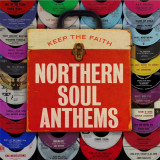
Demon Music is proud to bring together a selection of popular and exciting classic Northern Soul Anthems on a new 2LP thirty-three track collection. These are the original recordings by some familiar names and one or two that may have passed you by.
As the Sixties came to a close and the initial success of labels like Atlantic and Motown began to wane, there remained a dedicated fanbase of Soul devotees who would rather be out on the floor than wearing flowers in their hair. They continued to seek out new and previously overlooked releases, many on small labels that had never enjoyed chart success, making surprise hits of a few in the process.
Northern Soul could easily have passed into music history as a fad, something on the fringes of mainstream popular music; instead its popularity has remained and even grown. It is no longer the preserve of venues in the north of England (who had always attracted coachloads of devotees from across the nation), with Soul clubs opening in Europe, Asia, Australia and even - in perhaps the ultimate example of "coals to Newcastle" – America
Every few years Northern Soul enjoys a resurgence in popularity and welcomes a new generation of younger fans, keepers of the faith. This collection is for those with a passing interest and fans both old and
new - music fashions may change but the quality, the infectious excitement and the urge to get up and dance has endured in these fantastic records.
- A1: Woran Hältst Du Dich Fest, Wenn Alles Zerbricht? Pt. 1
- A2: Lotte & Dxve Angst (Irgendwann Wird Es Besser)
- A3: Dopamin
- A4: Fuck Baby I'm In Love
- A5: Dunkelrot Zu Schwarz
- A6: Lass Die Musik An
- B1: Was Machst Du?
- B2: Angekommen, Vielleicht
- B3: Viel Zu Viel (Nicht Genug)
- B4: So Wie Ich
- B5: Woran Hältst Du Dich Fest, Wenn Alles Zerbricht? Pt. 2
Die 26-jährige Ravensburgerin lässt uns mit ihrem mittlerweile dritten Studioalbum hören und spüren: Nicht nur die Welt hat sich drastisch verändert. Auch LOTTE hat künstlerisch sowie persönlich eine grundlegend-extreme Metamorphose durchlaufen.Auf "WORAN HÄLTST DU DICH FEST, WENN ALLES ZERBRICHT?" macht LOTTE ihre Gefühlswelt so greifbar wie nie - und damit auch angreifbar. Es ist eine akustische Reise zu sich selbst, zurück zum Ursprung, zu dem, was bleibt. Eine Geschichte übers Friedenschließen mit dem, was ist. Eine Einladung, sich selbst anzunehmen, mit all seinen Schwächen und sich selbst ein:e gute:r Freund:in zu sein, weil man sich selbst am Ende doch immer mitnimmt, egal wohin man geht.Es ist ein Album, in dem die Geschichte ganz vorne steht. Mit den bereits veröffentlichten Singles "SO WIE ICH", "ANGST (IRGENDWANN WIRD ES BESSER)" und "LASS DIE MUSIK AN", beweist LOTTE bereits, wie mutig Musik sein kann. Sehr stimmlastig produziert, hört man die Interpretin den Text fühlen, atmen und merkt: Hier haben Worte noch Gewicht.
"His music filled me with the urge to connect with the world," Kaitlyn Aurelia Smith says of Emile Mosseri. She first heard his work while watching the 2019 film The Last Black Man In San Francisco; just minutes in, she paused it to look up who did the score and wrote to him immediately. "I love Emile's ability to create melodies that feel magically scenic and familiar like they are reminding you of the innocence of loving life." Those talents saw recognition in 2020 with an Oscar nomination for Mosseri's original score to the film Minari. He was already a fan of Smith's and became increasingly intrigued by her impressionistic process as they started to talk. "The music feels so spiritual and alive and made from the earth," Mosseri says. "I think of her as the great conductor, summoning musical poetry from her orchestra of machines." I Could Be Your Dog / I Could Be Your Moon, their two-part collaborative album, introduces an uncanny fusion of their sonics. Constructed using synthesizer, piano, electronics, and voice, this soft-focus dream world is lush, evocative, and fleeting. It finds two composers tuning their respective styles inward as an ode to mutual inspiration, a celebration of the human spirit and its will to surrender to the currents of life. As a full album set, I Could Be Your Dog / I Could Be Your Moon moves fluidly from track to track, panning through textural vignettes. Two roughly 17-minute halves, the set evokes the bittersweet sense of something too bright or rare to last, a short-lived glimpse into a golden hour. There is a dreamy, elemental intention to this music, which Smith and Mosseri say came naturally, as they both embraced intuitive interplay throughout their creative back-and-forth. The stylistic threads of each composer are recognizable yet become more ambiguous as the album progresses, sewn into a singular vision.
After moving to California, he was introduced to the Serge Modular Synthesizer through Eliane Radigue and registered for classes in all the colleges of the Bay where there was an Electronic Music Department so that he could use their various electronic instruments. At first, he often plugged in his electric guitar into these monsters rather than use the rather rigid sequencers, but through tape recorders and the delay techniques used by Terry Riley, he was able to quickly combine these “sound producing devices” to create his own music.
He eventually released his first “official” album named simply Music by Xolotl in 1977. Originally issued only in cassette, Wah Wah offers the chance of listening to these works on vinyl format for the first time ever on an LP + bonus 7" edition to fit all the sounds from the cassette.
A strictly limited edition of only 500 and with new artwork featuring one of Xolotl's cosmic paintings and an insert with photos and liner notes.
This second release on Heads High brings an EP from label owner Mike Misiu under the moniker Day Out Of Time. Four diverse tracks forged from a year of studio jams, road tested on airwaves and discerning dancefloors and now honed and available for your delectation.
Opening 4/4 cut 'Rising Tide' builds the atmosphere and tension with synth stabs, morphing arps and a throbbing sub-bass. 'The Urge' struts in on a hybrid electro-funk tip, twisting, chopping and vocoder-ing an 80's rock vocal and sax into a dance-floor detonator.
On the flip side 'Private Ay' chugs along on a mid-tempo Moog bass groove that re-imagines and re-works some infamous guitar licks, before the E.P. climaxes with 'When Love Beckons' - a pulsing electro-discoid ode to love, powered by moody analog bass, acid lines and an impassioned poetic vocal.
All tracks produced by Mike Misiu, mastered by Curved.
Part of The Optic Sevens 4.0 Reissue Series.
Limited to 1000 copies worldwide. Please check your allocation with your sales rep.
Pressed on Red Vinyl.
Includes postcard and poster. Non-Returnable.
The Monochrome Set were something of the unsung heroes of the post-punk world; they fitted into absolutely no category whatsoever and their puckish take on spaghetti western soundtracks meets lounge jazz via the twisted lyrical imagery of vocalist Bid was as singular as it was unique.
Comprising a couple of ex-Ants in Andy Warren and Lester Square, with singer / guitarist Bid and drummer JD Haney, their filmic, playful material found favour with many, including John Peel although they failed to match this with commercial success.
The Jet Set Junta was originally released on Cherry Red in 1983 with its urgent, ringing guitars surrounding Bid’s lyrics telling of dodgy arms dealings and armoured limos as Lester Square’s Ennio Morriconetwang bends and reverbs as a counterpoint.
hree years after the release of their self-titled debut LP, Shark Toys follow it up with ten more bursts of weirdo punk. Nine originals and cover of the Mekons classic, “Where Were You.” Ever since forming in 2008, the band has developed a reputation for sharp and choppy live sets, developing a loyal following around their home town of Los Angeles and around the US, from playing shows with bands like Ty Segall, Protomartyr, Parquet Courts, Terry Malts, the Urinals and many others. This batch of tunes were taken from the same session as the recent 7” single, a split with Florida’s UV-TV, on Emotional Response, earlier this year, recorded by Dave Fox of the Traditional Fools (who also recorded Fuzz, Scraper, Vial, and Wand). "A treble fueled look at Los Angeles that certain fans of Tyvek will consume lovingly. Usually the word shambolic would be thrown in for effect when describing bands attempting to transmit a Homosexuals/Tronics/Desperate Bicycles air, but this band does not have a shambling manner to these ears. They seem very propulsive and on target, with shards of errant guitar whipped into shape by the savagery of the rhythm. … They have a driving down highways at night nihilism that is hard to conjure … with ear slicing guitar “solos” somewhere between sneaker squeak and door creak. … Super catchy bedroom punk for people that clutch the Astral Glamour box set to their hearts and know all the words to Swell Maps B-sides …"— Maximum Rock N' Roll // “Much love for this synth-punk masterpiece, highly recommended by Strangeworld for members of Ausmuteants fan club.” - Strangeworld Records, Australia
Pachakuti is a musician and producer with family roots in Colombia. He plays keys, tenor saxophone and clarinet. While living and working in Berlin, he draws inspiration from the natural world, investigative travels, and ancestral traditions of Latin America and beyond. His expressive and rhythmical playing and his instantaneous compositions are directed at the human core, arousing subtle experiences. While not being conformed to one style, it always invokes a sense of liveliness and depth to be delved in. young.vishnu is a producer and DJ. He has studied philosophy and music in Hildesheim, Germany, which heavily influenced his views on meaning and mythology in music. In his DJ sets he selects and plays classic and contemporary Funk, Soul and Afrobeat. His practice as a DJ informs his work behind the boards directly, adding also more organic grooves and broader spectrum of musical styles to his in Hip-Hop based production. If you had to put one single tag on their forthcoming album Dédalo, the best choice would be Jazz. That being said, Pachakuti and young.vishnu's sound worlds might be better described in their own words: "We just make music and try to incorporate what we love about it". They are musical freethinkers with shared interests in eastern philosophy and botany who interweave Hip-Hop, Latin and Funk with musical storytelling and world mythology. Undoubtedly, their most ambitious work to date, Dédalo (Spanish synonym for labyrinth), recorded and produced over the course of a year, shows Pachakuti & young.vishnu's ambitions and growth. Where their debut work Semilla (2020) centered around the image of the seed, Dédalo takes on the entire garden. Besides playing multiple instruments by themselves, Pachakuti & young.vishnu invited a growing group of befriended musicians into the studio, including percussionist maestro Eric Owusu (Pat Thomas, Ebo Taylor, Jembaa Groove) and drummer Leon Raum (Bokoya, Wyl), as well as Brazilian newcomer vocalist Laíz, and members of their former band project Soularkestra. The 16 recorded songs, ranging from 1:19 to 14:58 minutes, take you on an emotionally honest, metaphoric journey through the maze of human existence, of modern society and mythic poetry. The mostly instrumental tracks build on expressive melodies, layered rhythms, and a wide range of musical instruments, merging the sounds of Jazz with the classical word of orchestras and choirs, and urban soundscapes with traditional instruments such as the Andean Kena and Charango, the Colombian Gaita and Marimba de Chonta, and an Indian harmonium. The Album thus weaves together past and future, and diverse cultural threads, sounds and ideas in an act of cultural appreciation and global conscience. Mixed and mastered by Roe Beardie at The Brewery Studios, Berlin. The album artwork itself merges the visionary art of Mexican painter Sergio Chávez Hollar with an original artwork-inlay of Brazilian artist Laíz and the work of Carsten Pölking of the Nima Compositions Archive.
Dédalo will be available digitally and on double-vinyl with inside-out print cover and colored inlay with credits and painting by Laís De Mello Barbero.
- 1: I’ll Never Not Love You
- 2: My Valentine
- 3: A Nightingale Sang In Berkeley Square
- 4: Make You Feel My Love
- 5: Baby I’ll Wait
- 6: Higher
- 7: Crazy (With Willie Nelson)
- 8: Bring It On Home To Me
- 9: Don’t Get Around Much Anymore
- 10: Mother
- 11: Don’t Take Your Love From Me
- 12: You’re The First, The Last, My Everything
- 13: Smile
28. Januar 2022 – Gut drei Jahre nach seinem letzten Album erfreut Michael Bublé seine weltweite Fangemeinde mit der Ankündigung eines neuen Werkes: „HIGHER“ wird am 25. März 2022 über Warner Records / Reprise Records erscheinen und ist das insgesamt 11. Studioalbum des mehrfachen Grammy-Gewinners, vielfachen Juno-Preisträgers und weltweiten Multiplatin-Superstars. Die erste Single „I’ll Never Not Love You“ erscheint bereits heute und zeigt den Kanadier stimmlich und kreativ in Bestform. Der neue Track wurde von Greg Wells und Bob Rock zusammen mit Allen Chang, Jason „Spicy G“ Goldman und Sir Paul McCartney produziert.
Zu den Highlights des Albums gehören ein magisches Duett mit Willie Nelson für dessen Song „Crazy“, Bublés gefühlvoll gesungene Interpretation von Sir Paul McCartneys Song „My Valentine“ (produziert von McCartney) und der Bob-Dylan-Klassiker „Make You Feel My Love“, außerdem die drei von Bublé neu geschriebenen Titel, zu denen auch die erste Single „I'll Never Not Love You“ zählt. Absolut gelungen sind auch Bublés Interpretation des Sam-Cooke-Klassikers „Bring It On Home To Me”, „You're The First, The Last, My Everything” und das beschwingte „A Nightingale Sang in Berkeley Square". Den Abschluss des Albums bildet eine dramatische und atemberaubende Version von „Smile“, bei der Bublé von einem Gospelchor begleitet wird.
Bublé kommentiert: „Ich habe mich diesmal komplett geöffnet, um neue Dinge auszuprobieren. Ich wühlte mich tief in die Materie ein, umgeben von einigen der großartigsten musikalischen Vordenker, die wir auf diesem Planeten haben – Menschen mit einer gigantischen Vorstellungskraft. Ob ich mich mit Ryan Tedder und Greg Wells für Songwriting-Sessions zusammensetzte, mit meinem Kumpel Bob Rock drei Songs an einem Tag aufnahm – zusammen mit 40 fantastischen Studiomusikern, die seit 15 Monaten nicht mehr musiziert hatten –, oder einfach nur in Unterwäsche lachend und weinend durch mein Homestudio tanzte, weil ein Song genau richtig klang – jeder Moment fühlte sich magisch an. Als hätte sich das Universum verbündet, um mich nach 20 erstaunlichen Jahren genau an diesen Punkt zu bringen. Ich war noch nie so aus dem Häuschen, nachdem ich ein Album fertiggestellt hatte.“
„Michael Bublé ist ein großartiger Tanzpartner“, kommentiert Greg Wells. „Er zollt mir viel Anerkennung, doch der wahre Respekt gebührt ihm – dafür, dass er das Vertrauen hatte, mit einem neuen Team zu arbeiten. Er ist ein phänomenaler Hitmaker.“
Bublés langjähriger Produzent Bob Rock sagt: „Ich habe Michael noch nie so fokussiert und inspiriert erlebt. Er hatte eine ganz bestimmte Vorstellung von dem Album, das er machen wollte, eine klar umrissene Vision. Als wir uns ans Werk machten, hängte er sich bei jedem Song so lange rein, bis er so klang, wie er ihn in seinem Kopf hörte.“
Vor vielen Jahren entdeckte ein damals vierjähriger Michael Bublé im heimischen Elternhaus in Burnaby, Kanada seine Liebe zum Singen – und ließ sie seitdem nie mehr los. Sein selbstbetiteltes Debütalbum bei Reprise Records erschien 2005, gefolgt von einer Serie an Multiplatin- und #1-Erfolgen, darunter „Call Me Irresponsible“, „Crazy Love“, „To Be Loved“ und „Christmas“. Sein letztes Album „Love“ (2018) erreichte u.a. Platz 1 in den USA und UK und Platz 6 in Deutschland. Im Laufe seiner erstaunlichen Karriere hat Bublé über 75 Millionen Alben verkauft, sein Weihnachtsalbum wird auch zehn Jahre nach der ursprünglichen Veröffentlichung weiterhin millionenfach gekauft und gestreamt und seine Stimme ist der Inbegriff von Weihnachtszeit. Auch live hat Bublé in den letzten Jahrzehnten herausragende Erfolge gefeiert und ausverkaufte Shows in über 30 Ländern gespielt. Seine jüngste Tournee „An Evening With Michael Bublé“ (2019 bis 2022) wurde von über einer Million Fans auf der ganzen Welt besucht. Michael liebt Eishockey, Fantasy Football, TikTok und – na klar – Singen. Er ist der stolze Vater von Noah, Eli und Vida.
RIYL: Velvet Underground, Lou Reed, Nick Cave, Patti Smith, Leonard Cohen, Iggy Pop, Radiohead & Tom Waits. "If you have never heard the Doctors of Madness, you should. Musically they are the Velvet Underground, New York Dolls with shades of glam, hippie, prog and punk all rolled into one, yet are still totally original. Vastly underrated, they should have been huge. Pure genius" Vic Reeves…. The DOM are “the missing link between David Bowie & The Sex Pistols” (The Guardian May 2017). Exploding onto the music scene in 1975 with their theatrical, William Burroughs-inspired Sci-fi nightmare, they were misunderstood by many, but those who knew understood the importance of the band’s dangerous, uncompromising approach to lyrics, to music and to performance. Among the many fans of the band were acts as diverse as The Damned, Vic Reeves, Joe Elliott of Def Leppard, Spiritualized, Julian Cope, The Adverts, The Skids and Simple Minds. The Sex Pistols supported them, so did The Jam & Joy Division. They were the first to combine the avant-garde approach of The Velvet Underground with a distinctly European aesthetic. The blue hair, exotic stage-names, the lyrical themes of urban decay, political propaganda, mind control and madness were all taken up by the punk bands who followed in their wake. The DOM were trailblazers, pioneers, adventurers…pushing the boundaries of rock music and theatre to see how far it would go before it bust. What happened after them was due, in no small part, to what they achieved in 3 short years. They may not have been Jesus Christ, but they were, arguably, John the Baptist!!! Now, 40 years after they imploded, they are back…with an album seething with lyrical anger and passion. It is the most potent and incisive musical dissection of modern life and contemporary politics released the decade. With tracks titles like “So Many ways To Hurt You”, “Sour Hour”, “Make It Stop!” and the ground-breaking sonic assault of the title track “Dark Times”, Richard “Kid” Strange proves once again that he has his finger firmly on the pulse of our times, just as he had when he founded the band in 1974. Produced by John Leckie (Radiohead, Stone Roses, Pink Floyd), the new album, Dark Times, features contributions from Joe Elliott (Def Leppard), Sarah Jane Morris (Communards), Terry Edwards (PJ Harvey, Nick Cave etc), Steve ‘Boltz’ Bolton (The Who, Scott Walker) and the young protest singer Lily Bud, alongside the current thrilling and thunderous DOM rhythm section of Susumu Ukei (bass guitar) & Mackii Ukei (drums) of the Japanese extreme glam-metal band Sister Paul, and Dylan O Bates (violin and keyboards). Julian Cope, another rock star who, like Strange, found the confines of music too tight for his ambition, his energy and his imagination, was blown away when he first heard the songs, declaring, “These Dark Times are enormously informing: the RULES OF THE FUTURE are indeed being forged right now”. Top producer Martyn Ware (Human League/Heaven 17) said the album “…reminds me of Iggy Pop’s Kill City album – love it.” and Biba Kopf (The Wire) declared, “Still listening to new DOM album with immense interest and pleasure”. The first single, Make It Stop!, is an impassioned howl against the global drift to right wing extremism and persecution of minorities, and is already a live showstopper for the band. It features the thrilling cross-generational combination of Def Leppard’s Joe Elliott and Lily Bud on backing vocals. In the period since the last DOM gig in 1978, Richard has written a memoir, collaborated on a cantata with internationally celebrated composer Gavin Bryars, worked as an actor on films with Tim Burton, Martin Scorsese, Harmony Korine & Jack Nicholson, toured the world in a Russian version of Hamlet with James Nesbitt as his grave-digging co-star, played Glastonbury, sung baritone in the British premiere of Frank Zappa’s200 Motels at the Royal Festival Hall, directed a multi-media evening celebrating the life and work of William Burroughs, won Best Art Film Prize at the Portobello Film Festival last year, had his own live talk show, worked with Tom Waits and Marianne Faithfull on the William Burroughs/Robert Wilson stage play The Black Rider, curated events for the Tate Gallery, and sung Walt Disney songs with Jarvis Cocker.
Part 2[11,39 €]
Heist welcomes, late 80’s DMC World DJ Championship contender, Techno veteran, and house royalty Orlando Voorn to the label
with his ‘Heist Mastercuts’ EP.
Orlando Voorn is a man who needs little introduction. He’s played a pivotal role in the development of the electronic music scene in the Netherlands, as well as in the USA where he now lives. With countless aliases, he has released everything from old school hiphop to sample heavy breaks, to banging Detroit techno to soulful house music. His recent outings as ‘Frequency’ on Clone, as well as his latest EP on our sublabel Transient Nature, are proof that even after 30+ years, the man is still very much on top of his game.
The Heist Mastercuts EP sees Orlando dig deep in his archive for some of his undercover hits from the nineties that have been remastered for
this EP. On top of that, he delivers a new track in the form of soulful house bomb “Be with you.”
“Be with you” starts off with a hazy groove and distant pads. The steady beat and funky electronic chops set a steady foundation for a rush-inducing string sample that works together with looping diva vocals for maximum dancefloor excitement. No heavy drumrolls, FX or other tools necessary here: It’s clever sampling and Orlando’s soulful touch that make this track tick.
Next up is the vinyl only track “Love Feelings” – originally released in ’96 on Urban Sounds of Amsterdam-. Think 130+ BPM vintage house grooves with hazy pads and you’ll get an idea of what’s coming. Love Feelings is an up-tempo dreamhouse track that, even though it’s almost 25 years old, still ticks all the boxes of a contemporary festival groover.
On the B-side you’ll find 2 versions of “Tenderness”: The original mix and the Late nite dub, both originally released on Clubstitute records back in ’95. The original has a 90’s garage groove with male vocal chops, old school house keys and strings. The late night dub is exactly that: a dreamy ethereal deephouse groove with warm synth hits, introverted percussion some very on point sax loops.
The Heist Mastercuts EP is the first EP of Orlando Voorn on Heist Recordings but considering the connection we’ve built with him over the last year and having heard the music he’s shared with us, we’re sure you’ll see much more of him on Heist in the future.
Yours sincerely,
Maarten & Lars
- A1: Three King Fishers
- A2: Love Is Blue
- A3: Theme From Valley Of The Dolls
- A4: Bacchanal
- A5: Sunshine Superman
- B1: Some Velvet Morning
- B2: The Look Of Love
- B3: Divided City
- B4: Theme From Valley Of The Dolls (Single Version)
- B5: Sunshine Superman (Single Version)
- B6: The Look Of Love (Single Version)
- B7: Bacchanal (Single Version)
The long-awaited reissue of this rare Eastern and psychedelic Jazz LP by the famous Hungarian guitarist, originally
released in 1968. For the first time and as extended Edition with four bonus tracks: radio version from 1968/69 7”
singles 7”. Deluxe 6-sided Digipak CD with 20 page booklet and Gatefold Vinyl comes with long, exclusively written
inner notes by the famous researcher and biographer Douglas Payne.
“The performances on this LP have a restrained, introspective quality. Szabo’s work is lyrical, rather economical, and
somewhat angular, and his tone is warm and glowing.” – Harvey Pekar, DownBeat
“Gabor Szabo is at the musical zenith of his career. This album could rank as his best to date.” - Billboard
“But for sheer lyrical beauty, few players are in Szabo’s class. His startling use of dissonance is a delight, too, and
time and again he will alter a final phrase just slightly, totally reorienting a familiar tune.” – Alan Heineman, DownBeat
“This is definitely one of my ‘go to’ Gabor albums.” Mike Stax, Ugly Things
"Gabor Szabo’s Bacchanal documents one of the earliest and finest examples of what was then known as “jazz rock.”
Years before this new jazz style evolved – or devolved, according to some – into “fusion,” jazz rock was mostly
fashioned by younger jazz players whose ears were open to the emerging sounds coming out of rock and roll,
especially those of the Beatles and, later, Jimi Hendrix. " - Douglas Payne
After recording four albums for Impulse in 1967, the distinctive guitarist Gabor Szabo cut three strongest records for
the Skye label in 1968-1969: "1969", "Dreams" and "Bacchanal" all of them became a legendary classic. This time
EBALUNGA!!! are rediscovers "Bacchanal". Szabo's regular group of the era is heard on record for the last time:
guitarist Jimmy Stewart, bassist Louis Kabok, drummer Jim Keltner and percussionist Hal Gordon. With the exception
of two Szabo originals, the material is comprised of current pop tunes including two songs by Donovan, "Love Is Blue,"
"The Look of Love" and "Theme from the Valley of the Dolls."
Gabor Szabo was one of the most original guitarists to emerge in the 1960s, mixing his Hungarian folk music heritage
with a deep love of jazz and creating a distinctive, largely self-taught sound.
Born in Budapest, on March 8, 1936, Szabo was inspired by a Roy Rogers cowboy movie to begin playing guitar when
he was 14 and often played in dinner clubs and covert jam sessions while still living in his hometown. He escaped
from his country at age 20 on the eve of the Communist uprising and eventually made his way to America, settling
with his family in California.
He attended Berklee College (1958-1960) and in 1961 joined Chico Hamilton's innovative quintet featuring Charles
Lloyd. Urged by Hamilton, Szabo crafted a most distinctive sound; as agile on intricate, nearly-free runs as he was
able to sound inspired during melodic passages. Szabo left the Hamilton group in 1965 to leave his mark on the popjazz of the Gary McFarland quintet and the energy music of Charles Lloyd's fiery and underrated quartet featuring Ron
Carter and Tony Williams.Szabo initiated a solo career in 1966, recording the exceptional album, Spellbinder, which yielded many inspired
moments and "Gypsy Queen," the song Santana turned into a huge hit in 1970. Szabo formed an innovative quintet
(1967-1969) featuring the brilliant, classically trained guitarist Jimmy Stewart and recorded many notable albums
during the late '60s. The emergence of rock music (especially George Harrison, Eric Clapton, and Jimi Hendrix) found
Szabo experimenting with feedback and more commercially oriented forms of jazz.
During the '70s, Szabo regularly performed along the West Coast, hypnotizing audiences with his enchanting,
spellbinding style. From 1970, he locked into a commercial groove, even though records like Mizrab occasionally
revealed his seamless jazz, pop, Gypsy, Indian, and Asian fusions. Szabo had revisited his homeland several times
during the '70s, finding opportunities to perform brilliantly with native talents. He was hospitalized during his final visit
and died in 1982, just short of his 46th birthday.
FOR FANS OF:
Airto Moreira, Gilberto Gil, Chick Corea, George Duke, Jorge Ben, Sabrina Malheiros, Hermeto Pascoal, Chico Buarque, Stanley Clarke, Jaco Pastorius, Carlos Santana, Jose Neto, Dizzy Gillespie, Stan Getz, Milton Nascimento
First new studio album in over 15 years by the “Queen Of Brazilian Jazz” Musician line-up includes Airto Moreira, Jose Neto, Diana Purim and Celso Alberti.
One of the all-time greats of Brazilian jazz fusion, Flora Purim, returns with her first studio album in over 15 years, ‘If You Will’, released on Strut on 29th April.
Conceived as a celebration of her music and collaborations, the album explores new compositions alongside fresh versions of Flora’s favourite personal songs and positive lyrics from across her varied career. Title track ‘If You Will’ reprises a song from her inspired collaborations with George Duke: “You will find... good love, real joy, so much peace of mind, if you will…”; the resilient ‘This Is Me’ updates an Airto jam band tune ‘I Don’t Wanna Be Myself Again’; ‘500 Miles High’ marks the heyday of the late Chick Corea’s Return To Forever band and ‘Zahuroo’ interprets a song by Claudia Villela about “a shapeshifting animal creature, a messenger who acts as a bridge between our thoughts and the universe.” A family affair recorded primarily in Curitiba and Sao Paulo, ‘If You Will’ brings together many of Flora’s closest circle of musicians including Airto Moreira, guitarist José Neto, her daughter Diana Purim on vocals and percussionist Celso Alberti.
The album is the latest chapter in Flora’s long, illustrious and varied career. As well as her celebrated partnership with Airto and her early days with Quarteto Novo, Flora has worked with Stan Getz, Gil Evans, Miriam Makeba, George Duke, Chick Corea (as an original member of Return To Forever), Dizzy Gillespie’s United Nation Orchestra, Uruguayan band Opa and many more. Her solo albums on Milestone remain true jazz fusion classics.
‘If You Will’ is released on CD, LP and digital, supported by a full international PR and marketing campaign worldwide. The album was co-produced by Flora Purim and Roberta Cutolo with package photos by Mel Gabardo in Brazil and cover illustration by Gabriela Barbalho.
FOR FANS OF:
Airto Moreira, Gilberto Gil, Chick Corea, George Duke, Jorge Ben, Sabrina Malheiros, Hermeto Pascoal, Chico Buarque, Stanley Clarke, Jaco Pastorius, Carlos Santana, Jose Neto, Dizzy Gillespie, Stan Getz, Milton Nascimento
First new studio album in over 15 years by the “Queen Of Brazilian Jazz” Musician line-up includes Airto Moreira, Jose Neto, Diana Purim and Celso Alberti.
One of the all-time greats of Brazilian jazz fusion, Flora Purim, returns with her first studio album in over 15 years, ‘If You Will’, released on Strut on 29th April.
Conceived as a celebration of her music and collaborations, the album explores new compositions alongside fresh versions of Flora’s favourite personal songs and positive lyrics from across her varied career. Title track ‘If You Will’ reprises a song from her inspired collaborations with George Duke: “You will find... good love, real joy, so much peace of mind, if you will…”; the resilient ‘This Is Me’ updates an Airto jam band tune ‘I Don’t Wanna Be Myself Again’; ‘500 Miles High’ marks the heyday of the late Chick Corea’s Return To Forever band and ‘Zahuroo’ interprets a song by Claudia Villela about “a shapeshifting animal creature, a messenger who acts as a bridge between our thoughts and the universe.” A family affair recorded primarily in Curitiba and Sao Paulo, ‘If You Will’ brings together many of Flora’s closest circle of musicians including Airto Moreira, guitarist José Neto, her daughter Diana Purim on vocals and percussionist Celso Alberti.
The album is the latest chapter in Flora’s long, illustrious and varied career. As well as her celebrated partnership with Airto and her early days with Quarteto Novo, Flora has worked with Stan Getz, Gil Evans, Miriam Makeba, George Duke, Chick Corea (as an original member of Return To Forever), Dizzy Gillespie’s United Nation Orchestra, Uruguayan band Opa and many more. Her solo albums on Milestone remain true jazz fusion classics.
‘If You Will’ is released on CD, LP and digital, supported by a full international PR and marketing campaign worldwide. The album was co-produced by Flora Purim and Roberta Cutolo with package photos by Mel Gabardo in Brazil and cover illustration by Gabriela Barbalho.
There’s something mesmerising about the fingertips of Dana Gavanski. Conducting each note with a light gracefulness, they appear to dance whilst aiding their owner in expressing the stories behind each of her lighter-than-air tones. Stories which, on her new album When It Comes, may never have been heard if not for healing ‘lost’ vocal cords and a lesson in taking the rough with the smooth. “In many ways this record feels like it is my first,” Dana tells. “When I could use my voice, I had to focus so there is an urgency and greater emotional trajectory than before… it’s very connected to vocal presence, which extended into an existential questioning of my connection to music. It felt like a battle at times, which I frequently lost.” Arriving where introversion and extroversion meet, When It Comes is Dana’s most vulnerable record to date. A Canadian-Serbian artist unafraid of extremes, she seamlessly blends her love of music from the 50s-70s with mythology.
DJINN - the Swedish collective featuring members of Hills and GOAT in their ranks - have proven themselves a potent and mysterious force. Their first release for Rocket Recordings was a portrait of open-minded explorers foraying into the realms of free and cosmic jazz, but never overly reverential or in thrall to their own influences. ltd to 400 copies on black vinyl comes with a download code that also contains as a bonus their 2020 'Avant De Servir EP' that was originally released on cassette via Swedish label Zeon Light.
Swiss musician Delia Meshlir didn’t realize what her voice could do when she started out playing music. Through such groups as the drudge-rock Cheyenne and experimental Primitive Trails, Meshlir let the music lead her singing along. It wasn’t until she began writing the songs for Calling The Unknown that she started allowing her vocals to preside. Unbounded by structure, Delia Meshlir’s first full-length under her name brings layers of beauty, intensity and strength, all coming to a head with her striking vocal delivery.
Having acquired a stocking job at Irascible, a label based in Lausanne, Switzerland, dedicated to promoting local talent, Meshlir had the ideal launching point for her music. Now, in coordination with Irascible, Ba Da Bing will be releasing Calling The Unknown in North America.
Meshlir lost her grandmother while preparing the album, and many of the tracks reflect seeking a path through grief with love. On “A River”, she explores where feelings can exist when they are for someone who has passed. She sings: “I’m calling the unknown / but no one remains.” As the first song on the album, it serves as a perfect introduction, with refined drumming, reverb-wrapped guitars and tasteful saxophone lines. At command of a full band, Meshlir never abuses the opportunity, often having members hold back in restraint and add mere touches of color to her songs. However, when more urgency is required, she adapts beautifully, as on the raw and driven track “Dirty Colors”. Ultimately, the album is an invitation to peace after suffering.
Delia Meshlir is a trained visual artist who is creating her own videos and doing her own artwork for Calling The Unknown. It is a singular artistic work with stunning breadth.
"Way back in the 1990s, Mark Hand, Neil Iceton & Jez Nicholl channelled their love of sci-fi-fired Motor City techno into a string of inspired releases under the alias Cubic Space Collective.
After reuniting for a memorable machine jam at Freerotation festival in 2016, Hand & Iceton headed back into the studio for a one-off session and recorded 'Holiday in Beta Centauri', a musical love letter to Mad Mike and the rest of Detroit's most militant futurist techno crew.
Sending us surging skywards via 'Binary System', where lilting lead lines, fizzing electronics and enveloping chords dance atop a snappy, cymbal-heavy drum machine rhythm, before 'Arps in Hyperspace' sees them step things up a notch via layered waves of synths, sparkling melodies and a driving, hyper-speed groove.
The North-East-based twosome then attempt to warm us to the core in the shape of 'Rigil': restless organ stabs, undulating Michigan bass, alien electronics, psychedelic acid lines and Galaxy 2 Galaxy style chords catching the ear. Bringing us gently back down to earth, they complete their deep space mission with 'Beyond The Nebula (Holiday in Beta Centauri)', a bustling electro number full of stabbing analogue bass, star-burst electronics, meditative ambient chords that shimmer full of night-sky melodies.
A fine return to action for this Teesside UR-loving techno twosome... 3,167 miles away in Detroit, their achievement will be noted."
Falk & Klou thrives in the glorious nostalgia of the golden age of grooving jazz, jazzy libraries and pfunky stuff, reimagined in the year of the Corona. The Swedish duo consisting of multi instrumentalists Carl Johan Fogelklou and Fredrik Segerfalk who haphazardly met over a pile of vintage synthesizers that required immediate attention, only to realize that they had a common goal in this life - to pretend that they were recording producers and artist in the seventies. The urge led to actual sessions, first only the two, later to be followed by horn players, drummers and other desperate pandemic struck musicians. In the end ten prominent tracks emerged, with the common denominator being the love of great music. The library of Falk & Klou.
- A1: A Low-Toned Meadow
- A2: Snow Falling On Black Water
- A3: Death Would Find My Halls & Flood Them
- A4: Unable
- B1: Urn
- B2: Dreaming Splendid Spaces
- B3: If I Were A Garden
- B4: Underwater Sleep Orchestra
- C1: Her Tiny Ears & Paws
- C2: Resembling A Ruin
- C3: The Elsewhere Sleep
- D1: About The Weather
- D2: The Wreckage
- D3: The Other Elsewhere
LP, 150 copies with screen printed artwork Behind Teahouse Radio is Pär Boström… a Swedish ambient musician, visual artist, label/publishing house owner. Together with his sister (also musical partner in crime) he runs the label/publishing house Hypnagoga Press. Most of his music projects are released on this label. But his work has also already found its way to well known labels such as Cyclic Law and Cryo Chamber. Teahouse Radio is one of the many projects by Pär Boström and most lo-fi and to my ears the most melancholy… and thus fitting Vrystaete very well… In 2018 the debut album (and only album so far) “Her Quiet Garden” was released on CD in an edition of 100 copies on Hypnagoga Press. Here (and below) you have a really nice video on the process of the music and artwork being created… The songs themselves were composed from 2004 onwards with intervals and recorded in a few days during late summer 2016. This 2LP vinyl edition of “Her Quiet Garden” captures the delicate, fragile and minimalist soundscapes very well… and features three additional pieces from the same sessions which were never released before… Expect acoustic instruments that are blended with electronic equipment, forming a sombre ambient music of tinkling tape loops and humming pedal drones… like Gurdjieff meets Eno in some sort of way… And… it is also a very personal album and any listener who sits back and pays true attention will witness and experience this. This is what the musician himself says about the album: An album about summer houses and winter towers, about the changing of weather. How one feeling changes to another. The loss of a loved cat. A real garden becoming an imaginary garden. Depression as a pond. Years of therapy and music as the main counterpoint. About escapism. Psychoses. A giant who walked in and out of the world, decorating it nicely. An aural tale. Half in water, another half in the northern woods. Childhood through nostalgic binoculars. A wardrobe to another place, a gentle knock on the door in the oak tree.
Coloured Vinyl
WRWTFWW Records is absolutely honored to announce the release of Kenji Kawai’s complete soundtrack to Mamoru Oshii's 1993 superb political thriller science-fiction mecha anime PATLABOR 2: The Movie, available on vinyl for the first time ever and housed in a beautiful heavy gatefold sleeve with obi, as well as on digipack CD. Both versions come with liner notes by the great Masaaki Hara.
A true soundtrack maestro, Kenji Kawai is behind the legendary soundscapes of cult animes and movies such as Ghost in the Shell, Avalon, Ring, Ip Man, and Seven Swords among numerous others. PATLABOR 2: The Movie (Original Soundtrack) is one of his most experimental offerings, an outstanding palette of emotion-filled ambient atmospherics and percussion mastery breathing beautifully through Kawai’s minimalism meets modern classical approach. His symphony of moods paints a delicate picture of urban isolation, a central theme in the movie, but doesn’t hide hints of hope for a joyful future.
PATLABOR 2: The Movie (Original Soundtrack) is an ideal companion to Kenji Kawai’s Ghost in the Shell soundtrack, already available on WRWTFWW Records.
London alt-rock outfit Curse of Lono share brand new single ‘Let Your Love Rain Down On Me’, a hypnotic widescreen teaser for upcoming album ‘People In Cars’, set for release 19th November via Submarine Cat Records (She Drew The Gun, Alabama 3, John Murry).
Recorded during lockdown with long-term collaborator and producer Oli Bayston (Spiritualized, Teleman, Boxed In) and engineer Iain Berryman (Wolf Alice, Arcade Fire, Kings Of Leon), ‘People In Cars’ is a stunningly cinematic record that continues the band’s musical evolution and reinforces their trajectory as one of the most compelling lyrical voices of the British musical underground.
In March 2020, Tahiti 80 had a plan to start recording their new album in the studio. That plan, of course, along with everything else in the world, got derailed. But the five-piece group was resilient and resourceful. They quickly shifted to a socially distanced plan B that included file swapping and virtual sessions, all refereed by producer Julien Vignon. The result, due for release in March 2022, is the buoyant Here With You, a collection of eleven upbeat songs that unfold like a prescription for a post-pandemic panacea.
“When lockdown in France happened, we said, 'We're not going to stay at home not doing anything,'” says singer-guitarist Xavier Boyer. “And our new plan became a hopeful thing, waking up every morning and seeing what the other guys had worked on. It wasn't always easy, but this new method allowed a freer approach where we could really go all the way with an idea without being influenced by each other’s suggestions. It must've been overwhelming for Julien, who ended up selecting all our arrangements. But he stayed positive all the way through.”
To help stay inspired and focused during their time in isolation, the band created a mood board, with the centerpiece a photo of an early '90s rave in the UK.
Boyer says, “Whenever you see pictures from this era, people seem very innocent. There are no cell phones and everybody is in to what they are experiencing. We kept that picture in mind as a kind of mantra that would help everyone feel connected to this idea of people celebrating, gathering and just having fun. We were missing the connection with people, and thought it would be great if we could create music that would inspire that kind of emotion.”
Indeed, the songs on Here With You are brimming the feeling of communion that we've all been missing over the past two years. It's there in the catchy opener Lost in the Sound, which walks the walk with Chic guitar flicks, urban nightfall sparkles and an inviting chorus (“Your heart grooves like a thousand 808s on the right time”). It's there in the Jackson 5-style syncopated bounce of “Vintage Creem,” the lush, dreamy “Breakfast in L.A.” and the panoramic sweep of “UFO.” And it's there in the first single “Hot,” which matches an irresistible groove with a neon-lit, percolating arrangement that evokes the disco clubs of 1979.
What's remarkable is that though Tahiti 80 displays a clear affection for sounds of the past, from bubble gum to '70s soul, they never trade in mere pastiche. Their take is more a slightly warped and playful carnival mirror mash-up of classic pop styles, given depth through Boyer's hang-gliding, coolly emotive vocals and lyrics that often rub against the euphoric grain of the music.
“I like to think of songs as a three-minute drama,” says Boyer. “This concept of drama definitely adds different levels to our music. There's the melody, the lyrics, then the production that can maybe emphasize or counterbalance the interaction between the yin and yang in a song.
“There's a difference between the very upbeat, sunshine-y soft rock and the lyrics, even on our past albums,” he continues. “Not dark, but a little more melancholy, and also looking for some kind of motivation, talking to yourself. Like with a lot of Motown songs, you get that feeling where you body’s dancing while your mind’s reflecting, reminiscing.”
That alluring blend of happy-sad has been a signature part of the Tahiti 80 sound from the time Boyer and bassist Pedro Resende formed the group in 1993, as students at the University of Rouen. Taking their name from a souvenir t-shirt given to Boyer's father in 1980, the duo recruited guitarist Mederic Gontier in 1994, and with the addition of drummer Sylvain Marchand a year later, the lineup was complete. The foursome released a self-produced and self-financed EP, 20 Minutes, in 1996, which resulted a record deal with French label Atmospheriques in 1998. Their full-length debut Puzzle, produced with Ivy's Andy Chase and mixed by Tore Johansson, went gold and featured the international hit “Heartbeat” that established the band throughout Europe and Asia.
In the years since, Tahiti 80 – with the additions of Raphaël Léger on drums and Hadrien Grange on keys - has released eight acclaimed albums. The band has fused what MOJO called a “glorious entente of old and new technology” (including singles like “Yellow Butterfly,” “1000 Times,” “Sound Museum,” “Crush!” and “Big Day,” which was featured on a FIFA video game soundtrack), while collaborating with such producers and arrangers as Richard Swift, Tony Lash and Richard Anthony Hewson, who famously arranged The Beatles' “Long and Winding Road.” Boyer has also put out two solo albums, the first under the anagram Axe Riverboy and the second under his name. In 2019, the band released Fear of an Acoustic Planet, a stripped-down reimagining of some of their best-loved tracks from the previous twenty years. It served not only as a look back but a reminder of their formidable songwriting skills.
Boyer is definitely a student of the timeless three-minute pop song format pioneered by '60s artists like The Beatles and The Beach Boys. He says, “I see it as kind of a frame for a painting. Most of the songs on this album, I wrote a verse, pre-chorus and chorus. There aren't many middle eights. I wanted it to be very concise. I feel like people have less attention. There's so much music. It's too easy to switch off or skip to another track, so I want to hook the listener. The three-minute song is kind of an easy code to crack, but at the same time you have to figure out a new way to tell the stories that we've heard before.”
And the stories on Here With You are very much about the longing for connection. Of the album title, Boyer says, “In the world right now, that can mean a lot of different things. Like missing our fans, missing going to concerts. In a way, it can be a statement of what happened last year, and a wish of 'I want to be here with you again.' It's our ninth album. We've had some had some very open, conceptual titles like Puzzle, Activity Center. Sometimes they were more specific like Fosbury orWallpaper for the Soul. Here with You, seems more personal, more engaging in terms of relationships. When I suggested that title, everyone in the band said, 'Yeah, that's it.'”
Until Tahiti 80 can resume a full tour schedule, Boyer says he hopes the new record will make that personal connection. “If I see from the point of view as a music fan, sometimes I see albums I like as companions throughout my life. So if we can be a part of people's existence, even if it's a song that reminds them of the time they were driving with the windows open and it was sunny. Or a sad song that resonates with them after a breakup. That's what we're all looking for when we're making music. You do this very personal thing and you want it to touch as many people as possible.”
- A1: Deep Sea Pastures
- A2: Mother Of The Sea
- A3: Encounter
- A4: Ura Town
- A5: Kumiko
- A6: Ponyo & Sosuke
- A7: Empty Bucket
- A8: Flash Signal
- A9: I Become Human!
- A10: Fujimoto
- B1: Little Sisters
- B2: Flight Of Ponyo
- B3: The Sunflower House Caught In The Storm
- B4: Ponyo Rides A Sea Of Fish
- B5: Ponyo & Sosuke Ii
- B6: Lisa's House
- B7: A New Family Member
- B8: Ponyo's Lullaby
- B9: Lisa's Resolve
- B10: Gran Mamare
- B11: A Night Of Shooting Stars
- C1: The Toy Boat
- C2: Towards The Sea Of The Dipnorhynchus
- C3: March Of The Boats
- C10: The Tunnel
- C11: Toki
- C12: Ponyo's Sisters Lend A Hand
- C13: A Song For Mothers & The Sea
- C14: The Grand Finale
- C15: Ponyo On The Cliff By The Sea (Movie Version)
- C4: The Baby & Ponyo
- C5: March Of The Boats Ii
- C6: Sosuke's Voyage
- C7: Sosuke's Tears
- C8: Underwater Town
- C9: A Mother's Love
Montparnasse Musique is a balance of two distinct sensibilities: Algerian-French producer Nadjib Ben Bella’s passion for raw organic beats, and South African DJ Aero Manyelo’s love of DIY synthesis in the digital realm. It’s a bold blend of fresh and processed flavours; the acoustic grit of traditional Africa combined with the pulse of modern Johannesburg — gqom, kwaito, techno, afrohouse. Together they produce an electro-acoustic sound, loaded with infectious hooks, uncompromising and authentic. For their self-titled debut EP, the cross-continental duo collaborates with Congolese bands Kasai Allstars, Konono Nº1, Mbongwana Star and Basokin on five audacious dance tracks forged from the tribal rhythms and mystic voices of the Kasai rainforests, amplified by the aggressive growl of hand-wrought instruments from Kinshasa’s urban wilderness, and augmented with the slick precision of an EDM toolkit. The end result is an inevitable evolution of Congotronics into a sharp-edged, club-ready sound. Nadjib Ben Bella is a DJ and producer who draws influences from the gnawa music of his North African roots and a diverse range of Sub-Saharan sounds from musicians he has worked with over the years. Most recently he has been touring Europe with West African band Les Amazones d’Afrique. Aero Manyelo, a name now synonymous with the burgeoning South African house scene, has honed a distinctive electronic sound that translates across the international club circuit and has attracted a broad range of collaborators — including Idris Elba and The Mahotella Queens on the opening track of an album inspired by the Nelson Mandela biopic Long Walk to Freedom. The EP was recorded and mixed by Kwezydoctor at Khaima Studio in Lille, France.
c 3 Bitumba (feat. Mbongwana Star) Extended
d 4 Sukuma (feat. Muambuyi) [Extended]
[Extended]
Recorded in 1991 by the quintet of vocalist Billie Ray Martin and Birmingham-based electronic musicians Brian Nordhoff, Joe Stevens, Les Fleming and Roberto Cimarosti, Electribal Soul was conceived as the sequel to the band’s 1990 debut album, Electribal Memories.
Electribal Memories had yielded the hits ‘Talking With Myself’ and ‘Tell Me When The Fever Ended’ and pushed Electribe 101 to the forefront of a crossover electronic scene that fused dance music with pop savvy. They were snapped up by Phonogram, managed by Tom Watkins and hailed as “the next band to meet the Queen” by i-D. The band took the coveted support slot for Depeche Mode on their epochal World Violation tour and supported Erasure at Milton Keynes Bowl. Seen as the next big thing, everything pointed toward enduring critical success for Electribe 101, and the band settled into putting their second album together.
“There was a degree of confidence among us when we came to write the second album,” recalls Billie Ray Martin. “To me, the songs we put down sound like some of our finest moments.” More immediately lush and warm than the dancefloor-friendly structures of Electribal Memories, the clue to the sound of Electribal Soul lies in the second word in its title: soul. Songs like the aching sensuality of opening track ‘Insatiable Love’ or the emboldened defiance of ‘Moving Downtown’ showcase Billie Ray Martin’s distinctive vocal range as it moves from haunting quiet to dramatic, euphoric rapture. Lyrics from ‘Moving Downtown’ had found their way into ‘Pimps, Pushers, Prostitutes’ by S’Express, and the song would appear as ‘Running Around Town’ on Martin’s 1996 solo album. The strikingproduction on the version of the song presented on Electribal Soul suggests classic late sixties soul influences, such as those of legendary Motown producer Norman Whitfield, with the long shadow cast by Kraftwerk never being far away.
‘Deadline For My Memories’, the song that provided the title for Martin’s first solo album, was originally intended for the second Electribe 101 album. Its lyrics document a sense of freedom and liberation from the darkness of a bad relationship, accompanied by jazzy piano and organ sounds over a quiet rhythm and discrete electronics. In contrast, ‘A Sigh Won’t Do’ finds Martin in soothing vocal mode, despite its devastating message about the final ending of a strained relationship, her lyrics framed by restrained and subtle beats and sounds.
To spend time with Martin’s voice on Electribal Soul is to find yourself moved deep into the ordinarily impenetrable emotional corners of your own psyche. “I was into big ballads at the time and listening to all kinds of US and UK singers, and I was also young enough to want to prove myself as a belter of ballads,” explains Martin of the classic soul edge the album showcased.
Electribal Soul heads into darker territory with ‘Hands Up And Amen’. Originally written by Martin in Berlin in the period before moving to London and forming Electribe 101, the song was then perfected and enhanced by the band’s production nous. ‘Hands Up And Amen’ savagely documents the mugging of a woman in Queens, NY at gunpoint, only to resolve itself with a middle section that nods reverently toward gospel tradition. The song coalesces around a regimented break and burbling synths, finally ending with layers of urgent synth sounds.
Meanwhile, a cover of Throbbing Gristle’s ‘Persuasion’ takes us into a seedy world of sexual coercion and creepy infatuation, predating Martin’s chilling version of the track with progressive house unit Spooky two years later. Supported by a minimal, nagging rhythm and barely-fluctuating sounds, Electribe 101’s take on ‘Persuasion’ makes for uneasy listening, even though Martin manages to inject a sort of twisted sympathy for the protagonist as the song progresses.
That Electribe 101 were as comfortable offering complicated, nuanced tracks like ‘Persuasion’ alongside pop house bangers like ‘Space Oasis’ – written by Billie Ray Martin with Martin King before Electribe 101 was formed – is testament to the way the band wove their way effortlessly through electronic music reference points. Framed by light, jazzy piano melodies and string sounds, the energy of ‘Space Oasis’ soars so high that it could easily reach the moon, while highlighting how well-suited Martin’s voice has always been to club music. We hear the same reminder of her dance music credentials on ‘True Memories Of My World’, finding her describing a Hollywood actress who reflects on being used by directors to sell her ‘tears’.
Hooking up with the Birmingham-based Nordhoff, Stevens, Fleming and Cimarosti after placing a Melody Maker ad in 1988 (“Soul rebel seeks musicians – genius only”), it was clear that Martin had found a group that recognised the unique power and importance of her voice. Having worked with genres as diverse as reggae, rock and R&B, the four producers proved to be perfect collaborators, presenting carefully-sculpted backdrops that emphasised the towering emotional dexterity of her voice.
“Listening back to these tracks now, I was reminded of what a bunch of great musicians they were,” says Martin. “They had a rule that if a part still sounded good after a day or two then it could stay. If it bothered the vocals, it would go.” Even more so than on Electribal Memories, Electribal Soul places Martin at the captivating centre of these pieces, surrounding her voice with everything from dubby rhythms to chunky R&B beats to nascent trip hop breaks; wiry, acid-hued synths uncoil gently without ever dominating, while horn samples and lush, disco-inflected strings provide a rich, naturalistic accompaniment for Martin’s emotional outpourings.
The band finished mixing the album at London’s Olympic Studios in 1991. They were assisted by Apollo 440’s Howard Gray on production duties for ‘Deadline For My Memories’, ‘Insatiable Love’ and ‘Space Oasis’, with Gray supported by talented engineer Al Stone. Pre-release promo tapes were issued and an enthusiastic energy started to build around the band’s anticipated second album.
It was not meant to be. Against a backdrop of a worsening relationship with Tom Watkins, and a disinterested Phonogram, instead of receiving a positive reaction to the new tracks, Electribe 101 were swiftly dropped by their label. Electribal Soul languished, unreleased, and the band yielded to pressures that had been building and split up. After collaborating with Spooky and The Grid, Billie Ray Martin went on to release her seminal debut solo album in 1996, with it securing the era-defining hit ‘Your Loving Arms’, while the other group members continued to work together as The Groove Corporation.
Thirty years after the songs were recorded, we’re now finally able to hear what the second and final chapter of Electribe 101’s story sounded like. Electribal Soul shows that the band had really only just got started when they dropped their first album in 1990. Heard only by a select and privileged few, what followed elevated the band’s music to a completely new level, making Electribal Soul musical buried treasure of the most precious and rare variety.
Electribal Soul will be released on LP, CD and digital formats on 18th February 2022 through Electribal Records. The physical formats include extensive liner notes from Billie Ray Martin, and the album sleeve features unseen archive photographs by Lewis Mulatero from the original 1990 sessions with the band that were never used in the sleeve designs for Electribal Memories.
Ahead of the release of his much awaited debut album « blablablue » , Belgian singer-songwriter Delv!s just shares a new single, the dreamy “Human Trumpet”.
It’s no secret that Belgium owes much of its cultural prestige to its vibrant music scene. Lately, with much of the attention turned to Flanders, the Flemish side of the country is playing host to many exciting, genre-bending projects, including a tremendously innovative rap scene and a lively pool of electro bands walking in the footsteps of pioneers such as Soulwax: A tradition that Delv!s, one of the country’s most exciting newcomers to the soul, blues, disco-funk and pop genres, is set on honouring.
Delv!s is now ready to introduce “blablablue" to the world: a soul album infused with electro, funk and rock sounds, blended with a score of field recording samples; twelve tracks all penned by himself, unveiling a whirlwind of emotions that fuel the singer’s unique voice. The nostalgic brass arrangements and vintage-sounding harmonies may evoke Billie Holiday, Nina Simone or even James Brown at times, but “blablablue” nevertheless triumphs as a current and socially relevant record thanks to its topical commentary and diverse influences. Addressing many of the great issues plaguing the world today, including the sense of urban solitude, this is the first offering by a great artist, a sensitive soul also fluent in the language of love. Something to reflect on, unite us and even comfort us at times when we need it the most.
- A1: L A. Rockz (Egyptian Lover Remix)
- A2: I Am Nuklear
- A3: Doctorz Of Crime
- A4: Marz Rover
- A5: Comming Up From Underground
- A6: 808 Plague
- A7: Git Up On Dis!!
- A8: Fuck All Ya
- B1: The Train Ride To Coconino
- B2: Mexaniko
- B3: Everlastin' Bass
- B4: Back Up Off My Tip
- B5: Compton
- B6: Whats Up With The Music?
- B7: Nuklear Prophet
- B8: Solar Winds
- B9: The Mars Goblin
Hailing from downtown Los Angeles, Nuklear Prophet, aka Erik Villalpando, is heavily influenced by West Coast Hip Hop and Electro. Winning multiple DJ awards, including 3x World Records DJ Competition under his DJ Dope-E alias, Villalpando cites his inspiration as coming from some of the most influential Los Angeles DJs of his childhood, including Tony G, DJ Joe Cooley, Julio G, and DJ Aladdin.
With releases on Urban Connections, Abseits Recordings, Diffuse Reality and Bass Agenda Recordings as Nuklear Prophet, the LA-based DJ/producer readies his full-length album 'Prophecies 11:21' for Utrecht-based U-Trax. Formed of an eclectic and energetic collection of gems mined from his overwhelming archive, the album takes in genres such as Electro, Hip Hop, Footwork, Juke, and beyond.
Leading the release is the 808 luminary Egyptian Lover's remix of 'L.A. Rockz', featured on the recently released 'L.A. Rockz' EP, kicking off the LP with his trademark 808-infused sound. A nod to Detroit-flavoured Electro is presented via the dark and brooding tracks 'Nuklear Prophet' and 'Compton', with the lighter atmospherics of the genre covered on 'Solar Winds'. The pounding electro killer '808 Plague' sounds like it came straight from the sewers of The Hague.
'Everlastin' Bass', 'Back Up Off My Tip', and 'The Train Ride To Coconino' offer Footwork inspired bangers, with the latter previously featured on the Legowelt curated U-Trax compilation 'U R Here!' earlier this year.
Moving across a spectrum of tempos, styles, and moods across the album, exemplified on the sluggish trip-hop of 'The Mars Goblin', Nuklear Prophet expertly touches on a range of bass-driven genres, displaying his widespread influences and knack for hard-hitting production throughout.
On the tribute album Songs for Tres, Psychic Ills band members come together to commemorate the late Tres Warren who passed away just as the world turned upside down in March of 2020. Isolated, feeling helpless and lost by the death of her musical soul mate and collaborator of 18 years, bassist Elizabeth Hart found making music to be her only outlet in a time where people were unable to be physically together to mourn. So, she reached out to Adam Amram, Jon Catfish DeLorme and Brent Cordero, the main players in the Ills line up since the release of their last full length album Inner Journey Out (2016), to ask if they would embark on this cathartic journey with her. This was a different kind of production endeavor for Hart driven solely by “the aching need and urgency” to do something to honor her friend.
Hart, Amram, DeLorme and Cordero reunited for the first time five months after losing Warren at Amram’s loft – the same spot where they’d rehearsed countless times before – although this time with a different objective. In an effort to share, support and create, the old friends joined in the painful and healing experience of making this tribute album to cope with their loss. The band members wrote, arranged, and rehearsed for months and the result of their work culminated in a weekend of recording in the southern Catskill mountains at the end of 2020. This isolated and intimate environment was a perfectly serene and fitting location to finalize their story.
Throughout the album, Hart, Amram and DeLorme take turns as the vocal lead on each of the songs while Cordero showcases his finger-picking guitar skills in addition to his piano and organ playing, which he is known for. Along with the core band members, a number of other musicians played on the album, many of whom had collaborated on prior Psychic Ills releases and wanted to be a part of this last collaboration in memory of Warren. Keeping the project in the Ills family, Hart produced the album alongside Iván Diaz Mathé, the long-time Psychic Ills sound engineer.
The album consists of five original tracks and four cover songs. Initially, learning the covers was just a method for the musicians to “break the ice” and play together again for the first time without their band leader. However, those tracks became just as important to include as the originals because of their essential role in the process of coming together to make the album. The cover songs were chosen because of their unique connections to the band’s memories of Warren. Dennis Wilson’s "Rainbows" and Fleetwood Mac’s "Station Man" come from two of Warren’s favorite albums, Pacific Ocean Blue and Kiln House. The band also recorded Blaze Foley’s "Clay Pigeons" and Powell St. John’s "Right Track Now." The idea for the latter was suggested by Amram. Warren once sent him a clip of Roky Erikson singing a moving rendition of that song in the film Demon Angel and it had stuck with him ever since.
Hart wrote "I’ll Walk With You" on the day of Warrens’ passing, at the time not knowing what it meant. When she got the call with the heartbreaking news, it became clear to her what the song was about. Relying on a gently lilting string arrangement to set the tone, this duet features Mazzy Star vocalist Hope Sandoval alongside Hart. Sandoval previously collaborated with Psychic Ills accompanying Warren on "I Don’t Mind" (2016). The ideas for "Home" and "Walk Around," two other songs on the album by Hart, started simply with an acoustic guitar and lyrics, a hopeful exercise to connect with her lost friend. Brent Cordero’s instrumental "Whole Lotta Piece of Mind" is nothing short of a transcendental experience. By running his pedal steel through a Leslie speaker, Jon Catfish DeLorme crafts the unique tone showcased on Wonderful Feeling, a moving example of studio experimentation combined with old school techniques. DeLorme describes it as “an attempt to highlight the musical experience I shared with Tres both sonically and thematically. What resulted is the unguarded exaltation I feel lucky to have shared with my fellow bandmates.” Adam Amram’s “Into the Sea” was composed spontaneously the week Warren passed. The melodic tune has a hopeful lightness and Amram describes it simply as “a song to my brother”. Their connection shines through.
In fact, the entire album is one that radiates the layers of friendship, love and music that will forever exist between this family of musicians. As the band themselves state: “This album was made out of love and a commitment to honor our dear friend and bandmate.” A portion of the proceeds from the album will be donated to RAICES, a charity who aids children who have been displaced at the Texas/Mexico border.
Lined up next on Cosmocities is a special delivery and direct nod to our formative years’ loves - in this very case, trance music. Fruit of 90s cross-channel outfit Prism, the collaborative endeavour of French producer Pascal Eloy and UK-based Grant Wilkinson, the three-track EP “CMSR006” mixes unreleased music (Refraction), a 1996-issued goodie (Rain) and an exclusive remix from SYO, better known for his ambitiously retro-futuristic output under the S.O.N.S moniker.
Originally released as part of Planet Dog’s 1996 compilation “Feed Your Head”, “Rain” retains all of its original mystique and soulful use of modern production tools - letting a cascading flow of arpeggiated synths, stealth bass onslaughts and 303-borne trippiness pour down as a fully immersive digital shower for the senses.
An unheard gem from the vault, initially written and recorded in 1995, “Refraction” pulls further dynamic traction from a bubbling drum programming and damp, urban jungle-y atmosphere - beaming us straight back in the rave’s most compelling heyday with its feverish maelstrom of fluttering bleeps, spiralling tribal motifs and faux-organic, Neo-Easternmost harmonics.
Adding his ever innovative spin to the table, SYO cuts into the flesh of the original to deliver a further syncopated and spacious version, flush with complex rhythmic sleights of hand and subtle melodic trickery throughout, bound to keep you on the edge with every bar. 25 years on since it was first designed, Prism’s lasting relevancy shines bright on this all-road, bold-to-the-full trance epic that’s lost nothing of its flair.
Fiat Lux is the debut album by Tarta Relena, a Barcelona-based project featuring Marta Torrella and Helena Ros. The group approaches the oral traditions of the Mediterranean from a contemporary perspective using a unique combination of ancient vocal melodies and subtle electronic textures.
Tarta Relena’s inspiration for Fiat Lux comes from historical characters, such as the Virgin Mary and Hildegard of Bingen, and timeless verses that deal with the cyclic nature of the human experience: “E suïcidi i el cant” (1) is an adaptation of a traditional poem by Pashtun women in Afghanistan; “Esta montanya d’enfrente” (3) is a traditional Sephardic song; “Safo” (9) is based on the love poems by Sappho of Lesbos.
Singing in Catalan, Spanish, Greek, Latin, English, and even Sephardi, the language of Hispanic jews, Tarta Relena explore a complex array of Latin cultures through the simplicity of voice. They draw from vocal techniques that range from flamenco to jazz, introducing elements of electronic music to redefine the melodies.
In January 2019, Tarta Relena released their first EP, Ora Pro Nobis: eight a cappella songs with minimal electronics. In April 2020, they released their second EP, Intercede Pro Nobis: a five-song dialogue between voice and electronics.
Fiat Lux expands on past experimentations, moving away from organic harmonies to embrace digital textures and distortions. The musical production of Juan Luis Batalla and Òscar Garrobé is remnant of Holly Herndon or Eartheater.
Tarta Relena have perhaps been best described by Pitchfork in their review of Pack Pro Nobis: “Tarta Relena is a celebration of musical exchange. At a time of rising nationalisms across Europe, Tarta Relena’s songs are a testament both to the porousness of borders and the ideas that unite disparate cultures, running beneath the centuries like a pedal tone”.
Loss and hope, isolation and communion, the cessation and renewal of purpose. Timeless and
salient, these themes echo throughout the fifth album from Midlake, their first since ‘Antiphon’
in 2013.
From the cover to the title and beyond, a longing to reconnect with that which seems lost and
seek purpose in its passing sits at the record’s core. The cover star is keyboardist/flautist Jesse
Chandler’s father, who, tragically, passed away in 2018. As singer Eric Pulido explains, “He
was a lovely human, and it was really heavy and sad, and he came to Jesse in a dream. I
reference it in a song. He said, ‘Hey, Jesse, you need to get the band back together.’ I didn’t
take that lightly.”
A desire to commune with the past and connect with present, lived experience asserts itself
from the opening of the album. ‘Bethel Woods’ sustains and develops that reconnection,
evoking the steadfast and contemplative urgency of ‘The Trials of Van Occupanther’ to back a
lyric steeped in yearning for a paradisal time and place of hope and optimism. Soaring guitars
and atmospheric noise effects extend a sonic scope further developed by ‘Glistening,’ where
arpeggios dance like light glancing off a lake. In just three songs, Midlake reintroduce
themselves and reach out into fresh territory with a richly intuitive dynamism, honouring their
past as a seedbed of possibility.
Elsewhere, the prog-enhanced funk-rock of ‘Gone’ seeks to find hope in relationships that
seem fragile. The ELO-esque ‘Meanwhile…’ draws inspiration from what happened when
Midlake paused after ‘Antiphon’, developing universal resonance as a song about the beautiful
growths that can emerge from the cracks and gaps between things. ‘Dawning’ draws on 1970s
soft-rock stylings for another song searching for hope, its keyboard line reaching out towards
an uncertain future while everything seems to collapse around it; ‘The End’ reflects on the
difficulties of partings.
On-hand was new collaborator John Congleton, who produced, engineered and mixed the
album, marking Midlake’s first record with an outside producer. “I can’t say enough just how
much his influence brought our music to another sonic place than we would have,” says Pulido.
“I don’t want to record without a producer again. Part of that is the health of the band, because
as you get older you get more opinionated and you kind of need that person who says, ‘No, it’s
going to be this way!’ It’s hard to do that with your friends.”
The result is a powerful, warming expression of resolve and renewal for Midlake, opening up
new futures for the band and honouring their storied history. Formed in the small town of
Denton, with roots in the University of North Texas College of Music, Midlake delivered an
auspicious debut with 2004’s ‘Bamnan and Slivercork’. For the follow-up, they looked further
afield and deeper within to deliver 2006’s wondrous ‘The Trials of Van Occupanther’, a modern
classic pitched between 1871, 1971 and somewhere out of time: between Henry David
Thoreau and Neil Young’s ‘After the Gold Rush’, between 1970s Laurel Canyon thinking and a
longing for something more mysterious.
Confidence bolstered by a growing fanbase and a developed sense of their own far-reaching
abilities, Midlake - a band acutely attuned to seasonal shifts - then embraced change. In 2010,
they visited darker psych-folk thickets for ‘The Courage of Others’ and backed John Grant on
his lustrously spiky breakthrough album, ‘Queen of Denmark’. When singer Tim Smith departed
Midlake in 2012, Pulido stepped up to the lead vocal role for 2013’s freshly exploratory
‘Antiphon’, teasing out singular routes through vintage electric-folk pastures.
In reuniting, the bandmates were adamant that Midlake needed their absolute focus. The result
is an album of tremendously engaged thematic and sonic reach with a warm, wise sense of
intimacy at its heart: an album to break bread and commune with, honour the past and travel
onwards with. In ‘Bethel Woods’, Pulido sings of gathering seeds. On ‘For the Sake of Bethel
Woods’, those seeds are lovingly nurtured, taking rich and spectacular bloom.
LP pressed on 180g vinyl in a gatefold sleeve printed on matt card and printed inner sleeve
with lyrics and digital download card.
- A1: Red Velvet Corridor
- A2: Helpless Child
- B1: I Was A Prisoner In Your Skull
- B2: Live Through Me
- B3: Yum-Yab Killers
- B4: The Beautiful Days
- C1: Volcano
- C2: Mellothumb
- C3: All Lined Up
- C4: Surrogate 2
- D1: How They Suffer
- D2: Animus
- E1: Red Velvet Wound
- E2: The Sound
- E3: Her Mouth Is Filled With Honey
- F1: Blood Section
- F2: Hypogirl
- F3: Minus Something
- F4: Empathy
- G1: I Love You This Much
- G2: Yrp
- G3: Fan's Lament
- H1: Secret Friends
- H2: The Final Sacrifice
- H3: Yrp 2
- H4: Surrogate Drone
Ursprünglich 1996 veröffentlicht, ist 'Soundtracks for the Blind' das finale Swans-Album, bevor die Band um Frontmann Michael Gira sich 1997 zwischenzeitlich auflöste und erst 2010 wieder zusammenfand. Die 26 Tracks darauf zementieren den ikonischen Status der ersten 15 Swans-Jahre, in denen die Band nach und nach größeren Einfluss auf unzählige folgende Post- und Experimental-Rock-Bands nahm.
'Universal Deluge' marks a significant shift for Ethan P. Flynn and is the by-product of an intensely fruitful creative few years. His unique songwriting craft, ear for production, and versatility have already seen him work with a diverse host of familiar names, including David Byrne, Celeste, and Black Country, New Road. He also co-wrote several songs and performed on FKA twigs' hugely acclaimed album 'Magdalene' and most recently collaborated with esteemed experimental producer Vegyn on the single 'Superstition'. Created over a three-year period, 'Universal Deluge' showcases the depth and breadth of Ethan P. Flynn's distinctive, multi-faceted production methods. Building on the success of his debut album B. Sides & Rarities Vol. 1, the Universal Deluge EP plunges into the darker side of experimental pop. Combining electronic experimentation with stripped-back acoustics, it is a further example of the swirling, psychedelic lo-fi masterpieces Flynn conjures. A sound which has seen him described "as great as Bowie, I'm just waiting for the world to see it... he's a legend in the making" by UK rapper Slowthai. Speaking on the newly released single 'Father of Nine', Ethan P. Flynn says "This song is about complex family relationships between people who haven't met each other. It isn't necessarily a love song at all. There's an urge to feel a kind of affinity with your ancestors but a lot of them were probably really terrible people. I was also thinking about how many weddings had to happen in the past for a person to exist- like an incomprehensible amount of weddings led to your birth."
Loss and hope, isolation and communion, the cessation and renewal of purpose. Timeless and
salient, these themes echo throughout the fifth album from Midlake, their first since ‘Antiphon’
in 2013.
From the cover to the title and beyond, a longing to reconnect with that which seems lost and
seek purpose in its passing sits at the record’s core. The cover star is keyboardist/flautist Jesse
Chandler’s father, who, tragically, passed away in 2018. As singer Eric Pulido explains, “He
was a lovely human, and it was really heavy and sad, and he came to Jesse in a dream. I
reference it in a song. He said, ‘Hey, Jesse, you need to get the band back together.’ I didn’t
take that lightly.”
A desire to commune with the past and connect with present, lived experience asserts itself
from the opening of the album. ‘Bethel Woods’ sustains and develops that reconnection,
evoking the steadfast and contemplative urgency of ‘The Trials of Van Occupanther’ to back a
lyric steeped in yearning for a paradisal time and place of hope and optimism. Soaring guitars
and atmospheric noise effects extend a sonic scope further developed by ‘Glistening,’ where
arpeggios dance like light glancing off a lake. In just three songs, Midlake reintroduce
themselves and reach out into fresh territory with a richly intuitive dynamism, honouring their
past as a seedbed of possibility.
Elsewhere, the prog-enhanced funk-rock of ‘Gone’ seeks to find hope in relationships that
seem fragile. The ELO-esque ‘Meanwhile…’ draws inspiration from what happened when
Midlake paused after ‘Antiphon’, developing universal resonance as a song about the beautiful
growths that can emerge from the cracks and gaps between things. ‘Dawning’ draws on 1970s
soft-rock stylings for another song searching for hope, its keyboard line reaching out towards
an uncertain future while everything seems to collapse around it; ‘The End’ reflects on the
difficulties of partings.
On-hand was new collaborator John Congleton, who produced, engineered and mixed the
album, marking Midlake’s first record with an outside producer. “I can’t say enough just how
much his influence brought our music to another sonic place than we would have,” says Pulido.
“I don’t want to record without a producer again. Part of that is the health of the band, because
as you get older you get more opinionated and you kind of need that person who says, ‘No, it’s
going to be this way!’ It’s hard to do that with your friends.”
The result is a powerful, warming expression of resolve and renewal for Midlake, opening up
new futures for the band and honouring their storied history. Formed in the small town of
Denton, with roots in the University of North Texas College of Music, Midlake delivered an
auspicious debut with 2004’s ‘Bamnan and Slivercork’. For the follow-up, they looked further
afield and deeper within to deliver 2006’s wondrous ‘The Trials of Van Occupanther’, a modern
classic pitched between 1871, 1971 and somewhere out of time: between Henry David
Thoreau and Neil Young’s ‘After the Gold Rush’, between 1970s Laurel Canyon thinking and a
longing for something more mysterious.
Confidence bolstered by a growing fanbase and a developed sense of their own far-reaching
abilities, Midlake - a band acutely attuned to seasonal shifts - then embraced change. In 2010,
they visited darker psych-folk thickets for ‘The Courage of Others’ and backed John Grant on
his lustrously spiky breakthrough album, ‘Queen of Denmark’. When singer Tim Smith departed
Midlake in 2012, Pulido stepped up to the lead vocal role for 2013’s freshly exploratory
‘Antiphon’, teasing out singular routes through vintage electric-folk pastures.
In reuniting, the bandmates were adamant that Midlake needed their absolute focus. The result
is an album of tremendously engaged thematic and sonic reach with a warm, wise sense of
intimacy at its heart: an album to break bread and commune with, honour the past and travel
onwards with. In ‘Bethel Woods’, Pulido sings of gathering seeds. On ‘For the Sake of Bethel
Woods’, those seeds are lovingly nurtured, taking rich and spectacular bloom.
LP pressed on 180g vinyl in a gatefold sleeve printed on matt card and printed inner sleeve
with lyrics and digital download card.
Sprints unveil details of their ‘A Modern Job’ EP, out on Nice Swan
Records.
Lyrically, ‘Modern Job’ finds singer Karla Chubb at her sardonic and
angry best, detailing her own personal wish list: “I wish I had the guts / I
wish I had the gall / I wish I had a girl,” all set to cascading guitars and a
formidable rhythm section; working in unison to create unrelenting
tension, all the while echoing the subject matter Chubb explores in her
lyrics.
On the new single, Karla offers the following: “‘Modern Job’ is a critique
of modern existence but also an exploration of growing up queer. In your
formative years, you are bombarded with media, books, news that depict
what a ‘normal’ life should be. Grow up, fall in love, get married… long
live the nuclear family.
“By contrast when you grow up queer all these ordinary things can seem
extraordinary, out of reach and in some parts of the world, illegal. It
leaves you feeling lost, excluded and confused. I wanted ‘Modern Job’ to
capture those feelings; chaotic energy, loneliness and longing of
normality while trying to find acceptance within yourself.”
Sprints have received support from the likes The Guardian, Clash, NME,
DIY and Dork, as well as love at Radio 1 and Radio 6 Music. Recent
single ‘How Does The Story Go?’ (also on the EP) was premiered by
Steve Lamacq, who praised it as “their best song yet! These guys are
going to be something,” The single was also leading in playlists from
NME, Loud & Quiet and others.
Sprints combine guitar-driven hooks, motoric rhythm and emotive
lyricism to create a unique sound that pulls from garage, grunge, punk
and beyond. Like the Irish guitar acts who have paved the way for them -
Fontaines D.C., Silverbacks and Girl Band - the sound of Sprints is
urgent and vital at every turn.
Sprints have hit a nerve. Driven by experience, tough political climates
and social and economic uncertainty - their music is honest, often
politically charged and authentic.
“On course towards future raucous, beer-soaked headline festival sets.” -
NME
“Screw-you power, relentless motorik rhythms and impressively large
choruses.” - The Guardian
"Sprints may be the latest to emerge from Dublin’s fertile stable of guitarwielding new heroes, but their two-fingers-up, no-nonsense rattle ‘n’ roll
arrives as the natural heir to Amyl and the Sniffers’ grot punk” - DIY
nothing,nowhere. commented on the new album detailing, “TRAUMA FACTORY is an accumulation of songs written during a confusing time. it is about accepting the present and following your true north through the pain and suffering of human life. I wanted to make an album that was truly genreless and inspire others to challenge themselves artistically. I believe the most inspiring art is unpredictable and unrestrictive. to me that’s what TRAUMA FACTORY is.”
Over the course of 15 tracks, TRAUMA FACTORY cuts deep and finds nothing,nowhere. once again emerging from darkness, shedding external expectation, and moving forward into the glow of pure creation. Whether it be the anesthetized beats and intoxicating lull of “love or chemistry,” the cold piano-laden longing of “crave,” or the emotional immediacy of “upside down,” nothing,nowhere. paints from a wide palette of pain.
nothing,nowhere. is the musical endeavor of Vermont songwriter, singer and guitarist Joe Mulherin. For Mulherin, nothing,nowhere. is about a connection. It’s one he finds with fans around the world, who gather to see him play on tour and to listen to his songs online. It’s that connection that urges the singer to place his fears aside and step onstage each night to share his art. He sees the potential to help, to make a change, however small it may be and that is why he brings his music out of the Vermont wildness.
**LTD BLACK AND RED MARBLE**
As humans, we are aware of our inner beast and should therefore be able to control it. We understand our hard-wired primal urges and why they exist in an evolutional sense. We understand the relationship between mind and body. Highly evolved and intelligent, we should be able to recognize these genetic hangovers and control them as a means to act positively and move forward as a compassion-ate species. Unfortunately, this is not the case. Recent global events have proven this. The human race is consuming itself.
World Eater, the new album by Benjamin John Power's Blanck Mass project, is a reaction to this. There is an underlying violence and anger throughout the record, even though some of these tracks are the closest Power has ever come to writing, in his words, actual love songs.'
Maybe subconsciously this was some kind of countermeasure to restore some personal balance,' Power explains.
On World Eater, Power further perfects the propulsive, engrossing electronic music he has created throughout his impressive decade-plus career, both under the Blanck Mass moniker and as one-half of Fuck Buttons, as he elaborates upon the sound of 2015's brilliant double album Dumb Flesh. As massive as the sonic world of the new record often feels, its greatest achievement is in its maximization of a limited set of tools, a restriction intentionally set by Power himself.
As an exercise in better understanding myself musically, I found myself using an increasingly restricted palette during the World Eater creative process. Evoking these intense emotions using minimal components really put me outside of my comfort zone and was unlike the process I am used to. Feeling exposed shone a new light on this particular snapshot. I feel enriched for doing so.'
(A) 1. John Doe's Carnival of Error
(B) 2. Rhesus Negative
(C) 3. Please
(D) 4. The Rat
(E) 5. Silent Treatment
(F) 6. Minnesota / Eas Fors / Naked
(G) 7. Hive Mind
After their celestial Arcturian Corridors opened proceedings on Quindi, London-based brothers Clive and Mark Ives are back with a new record. When Woo first began recording at home in the early 70s, Clive and Mark were the embodiment of furtive genius. Since re-emerging in 2013, they've released scores of albums, collaborated with Seahawks, and have now struck up a productive relationship with Quindi.
On Paradise In Pimlico, you're hearing a very different sound to the one gently creaked out on early classics like Into The Heart Of Love. This is fulsome, contemporary production rich in detail and artful sound design, but crucially, Clive and Mark's gorgeously melodic approach remains open and inquisitive, even with the sheen and shimmer of modern studio techniques.
Woo sound more confident than ever in their composition, too. The crystalline, fragile tones of 'Cadenza D'Innocenza' glide through key changes that spell out an engrossing narrative, while the cascading melodies on 'Moment To Moment' pirouette across the space between notes with masterful poise. 'Paradise In Pimlico' is an illustrious suite of orchestral composition played out with the lightest touch, framed by the slightest of synthesized fauna and topped off with tender sax and flute. Album closer 'In Case Love Fails' takes on a subtly cinematic urgency with its undercurrents of walking bass and the strike of the string section (synthetic or otherwise).
There's space for markedly new approaches, too. The rhythm section on 'The Motorik Mirror' clunks and pops with a tactile, high-definition quality which teeters between electronic sculpture and clockwork, organic machination. The deft, lightly-brushed drums coursing through 'Even More Notes' see Clive and Mark step into a different mood, celebrating the beat as another fluid, tonally-rich texture in the mix and adding a smoky, jazzy hue to the Woo repertoire.
It's far from a drum-focused exercise though. At every turn, you're confronted with aching beauty and timbral surprises. If there's one constant throughout Paradise In Pimlico, it's the omnipresent chimes. These twinkling drops of light scattered throughout are something of a hallmark of Woo, ensuring the lilting, lullaby-like magic of their music persists whichever direction they head in.
- A1: 1/4 Dead
- A2: Blissful Myth
- A3: The Psycho Squat
- A4: Rotten To The Core
- A5: Poppycock
- A6: Cosmic Hearse
- A7: The Cloud Song
- A8: Vampire State Building
- A9: Blasphemy Squad
- A10: When You Are A Martian Church
- A11: Pig In A Blanket
- B1: Inside
- B2: Nothing But A Nightmare
- B3: Flesh Crucifix
- B4: Slimy Member
- B5: Love Is Not
- B6: Radio Schizo
- B7: Happy Farm
- B8: Alice Crucifies The Paedophiles
- B9: Army Of Jesus
- B10: Dutchmen
The words legendary, seminal, and classic get thrown around at will these days, but Rudimentary Peni’s debut album is all of them. Recorded over two days at Southern Studios by John Loder and originally released in 1983 by CRASS off-shoot label Corpus Christi, “Death Church” showed a band moving away from the urgency of their two early 7”s and into their own realm. Creating a template that bands have been trying to replicate ever since, while ticking all the boxes to become a genre-defining album. Iconic artwork, a unique sound and their own lyrical universe. All merging seamlessly. Sonically the album is full of Nick Blinko’s extraordinary vocals and equally remarkable guitar, Grant Matthews’ big meandering driving basslines and Jon Greville's tight and relentless drum work which together made something intricate and hard hitting, with a sequence that makes the 21 songs on the album flow perfectly. Visually, the album is every outsider art lover’s wet dream. A six-panel poster sleeve with every inch covered in Nick Blinko’s claustrophobic black and white line drawings, while lyrically the songs deal with madness, religion, death, and questioning humankind from a dark poetic place rarely found in any art form. Remastered from the original master tapes by Arthur Rizk and housed in a replica poster sleeve, including the original insert, “Death Church” is back in print in LP, CD and cassette after nearly a decade of no official reissues.
New limited pressing on 180g Electric Blue Vinyl. L.A. Witch’s self-titled debut album unfurled like hazy memories of late-night revelries in the city center creeping back in on a hungover Sunday morning. Guitarist/vocalist Sade Sanchez purred and crooned over jangling guitar chords, painting pictures of urban exploits, old American haunts, and private escapades with a master’s austerity. Bassist Irita Pai and drummer Ellie English polished the patina of the band’s vintage sound, adding a full-bodied thump and intoxicating swing to the album’s dusty ballads, ominous invitations, and sultry rock songs. The album had an air of effortlessness like these songs were written into the fabric of the Western landscape by some past generation and conjured into our modern world by three powerful conduits. The band readily admits that L.A. Witch was a casual affair and that the songs came together over the course of several years. That natural flow hit a snag when the band’s popularity grew and they began touring regularly, so a new strategy became necessary for their sophomore album, the swaggering and beguiling Play With Fire
"The core of confusion and upheaval that drove some of the band's most fiery earlier work, however, is replaced by a more stabilized undercurrent, a mentality that's reflected in songs not afraid to try new things and honestly explore uncomfortable feelings. When combined with exciting production and songwriting choices, that mindset helps make Feels So Good // Feels So Bad one of the Shivas' best albums.” - AllMusic "Portland, Oregon-hailing psych-surf band The Shivas accomplish another time-traveling, reverb-ridden sound that refuses to get boring. Jared Molyneux’s guitar work knows when to be bright or bashful at the right times, breaking into guitar solos that possess a late-’60s groove… The Shivas seem to blissfully flourish” - Paste "a consistent treat for the ears” - The Vinyl District "Though the psych-tinged guitar riff that drives 'Feels So Bad' was written while The Shivas were still on the road, its lyrics didn’t fall into place until the band was well into lockdown, unsure of when they’d be able to return to their most imperative true love: Live shows... Accordingly, 'Feels So Bad' permeates with a sense of urgent desperation, building off a chugging prog-rock instrumental.” - Consequence (on “Feels So Bad”) "They hooked the audience with their throwback rock sounds. The guitar strums and rhythmic drum beats were layered atop smooth and hallucinogenic vocals. The eyes can tell the take at times and there was a sparkle there that said that the band members just love doing live performances." - California Rocker "This single layers on the fuzz but keeps it dreamy, with an especially sticky guitar riff sure to lodge itself in your brain with minimal effort." - Portland Monthly (on “If I Could Choose”) “'My Baby Don’t' translates the genuine vibrant joy
of the live experience into the studio, bringing the band’s ‘60s garage rock roots, sharp pop vocal harmonies, and fervent performances along for the ride." - Under The Radar "Perfectly straddling the line between a solid-head bopping track and an introspective deep cut, The Shivas’ 'Undone' is a rock & roll gem. The track sounds straight out of the late 60s and fits seamlessly in the Portland band’s electrifying catalog." - The Luna Collective "The first time I clicked play on this track, I knew it was a yes for me." - Ear To The Ground Music (on “If I Could Choose”) "The harmonies would make the “Happy Together” Turtles blush, but the unsettling guitar doesn’t shy away from the woollier implications of the ’60s." - Willamette Week (on “If I Could Choose”) "'Undone' is just the perfect song for the good days and the bad ones." - GlamGlare "another hit" - Austin Town Hall (on “Undone”) "one of the best forthcoming albums of the year" - Austin Town Hall RADIO: #3 Most Added @ NACC - 50 official adds BIO Every working musician has had their life turned upside down by Covid-19. For The Shivas, who had recently released a new LP and normally keep a rigorous touring schedule, it was a particularly screeching halt. “We were about to go to SXSW, the following weekend was Treefort in Boise, and then we were going to open for our friends’ band on tour in the US before going to Europe,” Jared Molyneux remembers. Then everything just stopped. They were faced with a dilemma. “It forced us to adapt or just quit,” Molyneux says. “The reality is that shows are our job.” In truth, live shows aren’t just The Shivas job: they are the band’s greatest love. Shivas shows are bombastic, explosive and thoroughly communal live rock and roll experiences where barriers between the performers and their audience seem to dissolve into the sweat and sound. The stage—or the basement, or the living room—that’s The Shivas’ true element. It’s their raison d’etre. It’s their religion. The band’s live urgency may have been born in 2006, when the band’s young members—who began booking West Coast tours while still in high school—waited without fanfare on sidewalks or in parking lots, before being rushed onstage for their sets at 21-and-up clubs. Maybe it developed a little later, as The Shivas blasted their way through Portland’s storied and unsanctioned mid-aughts house show scene. Whatever the origin of their famously kinetic live experience, it’s the show that keeps them coming back after over 1,000 performances spread over 25 countries in 15 years. In those 15 years, The Shivas have grown tight-knit as a group. Guitarist/singer Jared Molyneux, bassist Eric Shanafelt and drummer/singer Kristin Leonard have all been with the band since its earliest days; guitarist Jeff City, another high school friend, joined in 2017. Together they’ve learned to thread a seemingly impossible needle: They’ve honed and tightened their performances without sacrificing the element of surprise that makes each show special. And despite touring and recording for most of their lives, they speak about their project with humility, in the DIY vernacular of their Pacific Northwest upbringing. They talk up their own favorite bands, play all-ages shows as much as possible, and bring a sort of blue-collar humanism to the live performances they relish so much. “We just want to make people feel good,” Molyneux says. “We want them to forget they have to work tomorrow.” Kristin Leonard elaborates, “The live show is all about that feeling of catharsis—in ourselves and in everyone who comes out. We’re creating this safe space where we can all let go. Where we can exhale. And it feels really good when we are able to facilitate that.” So when Covid hit, the band knew it was time for transformation. After a settling realization that live music would be grounded for the foreseeable future, The Shivas booked significant studio time with Cameron Spies, who also produced the 2019 Dark Thoughts LP. They also transformed their lives: three of the band’s four members found work with a local nonprofit serving unhoused Portland residents. They became engaged in protests and fundraisers for social justice. They spent a whole summer actually living in Portland, settling into the city they had always called home, but that sometimes felt like a temporary stop between tours. “We got into a more community-minded headspace,” Leonard says. “And that did give us some purpose. It felt cool to see everybody come together to stick up for what they believe in. It feels like an incredibly formative last twelve months.” The album that emerged from this new moment finds The Shivas reborn as a band that seems seasoned and perfectly at home with itself. There is a calm, even a hopefulness, to Feels So Good // Feels So Bad that sounds new. The Shivas didn’t write or record the album with a particular theme in mind, but one seems to have emerged: where Dark Thoughts was about confronting your demons with fearless self-examination, much of Feels So Good // Feels So Bad is about what happens once you find that peace: how being honest with yourself changes your relationships and your priorities. “I do think it’s about acceptance,” Leonard says. “There’s a weird relaxation that comes with being at peace with things you can’t control or have regrets about.” Maybe that’s why the squealing, riff-laden break-up song opener, “Feels So Bad,” is such a shock to the system. But it’s more of an exorcism than a melodrama: more a song about not being able to do the thing you love (in
this case, playing live shows) than splitting with a partner. “It’s like part of you goes to sleep,” Leonard says. As bandmates who are also in a long-term relationship, Molyneux and Leonard know that their songs might be seen as glimpses into their personal lives, but their songwriting is rarely autobiography. Leonard compares their process to something more akin to screenwriting. “There’s bound to be some autobiographical material in there,” she says. “But the common denominator is the exploration of universal feelings: ones that everyone experiences or can relate to.” The goal is to use the music to drill down into something genuine and sincere, beyond genre or stylistic affectation. That’s where The Shivas have arrived. Whatever growth led the band to Feels So Good // Feels So Bad, plenty of their fascinations remain. They’re still turning love songs into psychedelic, transcendent epics. “Tell Me That You Love Me” subverts doo-wop extravagance and dabbles in Flamenco rhythms. “Rock Me Baby” is a bubblegum anthem soaked in so much reverb that we might just be hearing it from the stadium nosebleeds. “Sometimes” is almost impossibly huge, like a witchy outtake from the Brill Building era. Those songs feel like logical expansions from a band that has always excelled at a timeless sort of rock and roll that tinkers with and explodes elements from every era. But on the towering and mournful “You Wanna Be My Man,” a slow-burning six-minute shoegaze prayer for a higher sort of love, there is a level of emotional nuance that feels like something altogether revolutionary. It’s there again in the stripped-down vulnerability of the album-closing elegy “Please Don’t Go.” Yes, Feels So Good // Feels So Bad is an album about acceptance. Sometimes that acceptance feels enlightened and sometimes it feels like the end result of a lot of kicking and screaming. The Shivas have adapted in both of those ways. With new tours scheduled and a new album on the way, they’re still hoping--like all of us--for a new era of vibrant, cathartic live music. The lessons they learned from having their normal upended, though, have only helped them grow
The Nonesuch debut of Hurray for the Riff Raff (aka Alynda Segarra), LIFE ON EARTH, is a departure for the Bronx-born, New Orleans-based singer/songwriter. Its eleven new “nature punk” tracks on the theme of survival are music for a world in flux – songs about thriving, not just surviving, while disaster is happening. Hurray for the Riff Raff tours North America this spring, beginning March 19 in Atlanta and continuing through April 20 in Nashville, with stops in Austin, Chicago, Los Angeles, and New York, among others. International tour dates will be announced shortly.
For her eighth full-length album, Segarra (they/she) drew inspiration from The Clash, Beverly Glenn-Copeland, Bad Bunny, and the author of Emergent Strategy, adrienne maree brown. Recorded during the pandemic, Life on Earth was produced by Brad Cook (Waxahatchee, Bon Iver, Kevin Morby).
Life on Earth’s first single, ‘RHODODENDRON’, is about “finding rebellion in plant life. Being called by the natural world and seeing the life that surrounds you in a way you never have. A mind expansion. A psychedelic trip. A spiritual breakthrough. Learning to adapt, and being open to the wisdom of your landscape. Being called to fix things in your own backyard, your own community,” says Segarra.
Of the ‘Rhododendron’ video, which was directed by New Orleans-based artist Lucia Honey, Segarra says: “It is really far out and fun. I got this bodysuit that just looks like the inside of the human body. It looks like you’re skinless. It’s in a scene where I’m playing to an audience of plants. Just really absurd, but I put that suit on and I was like man, this feels really good. It feels like, ‘This is who I am. Let’s just take the skin off.’
“It reminds me a little bit of Kids in the Hall,” they continue. “With this ‘Rhododendron’ shoot, something clicked in me where I was like, ‘All I have to do is be myself.’ I had been thinking that I had to be something bigger than myself. I felt like I was just never quite making the mark and then something clicked where I was like, ‘I just gotta be me. I could do that. I could show up and be me. And if people don’t like it, then I don’t know what to fucking tell them.’ It was like a brain shift of, ‘Oh, this can be fun. It doesn’t have to be suffering.’ With so many videos and photo shoots before, it really felt like suffering. I felt so uncomfortable being perceived. I didn’t know who I was.”
Honey adds: “We wanted to create something surreal, playful, and saturated that indulged heavily in the aesthetic of the early ‘90s. Alynda and I had many overlapping visual and philosophical references which sparked the initial collaboration. We wanted to make this video an homage to Gregg Araki’s Teenage Apocalypse trilogy but as a nature documentary crossover. I came across Araki’s work as a queer teenager, and he’s always been a big inspiration. Sex, blood, punk rock, camp, etc.
“We live in a moment where the future is bleaker and more unknown than ever, so there becomes a deep comfort in nostalgia and reliving the past. Through our talks, I realised Alynda’s new album touches on many of these same subjects, but perhaps in reverse; running from a past that is always haunting you. Shifting into a more refined self/identity through confronting one’s trauma and baggage. It was easy to reach collaborative synergy for this video project because we’re both interested in tackling similar issues.”
Alynda Segarra was born and raised in the Bronx, which they left at the age of seventeen, running away from everything and everyone they knew, hopping freight trains or hitchhiking across the country in the company of a band of street urchins. Segarra moved to New Orleans in 2007 and formed two bands: Dead Man’s Street Orchestra and Hurray for the Riff Raff. In 2015, Segarra decamped to Nashville, then to New York, to make her most recent album, 2016’s critically praised The Navigator, an ambitious and fully realized concept album that was her quest to reclaim her Puerto Rican identity. Segarra’s previous records as Hurray for the Riff Raff are Crossing the Rubicon (EP, 2007), It Don’t Mean I Don’t Love You (2008), Young Blood Blues (2010), Hurray for the Riff Raff (2011), Look Out Mama (2012), My Dearest Darkest Neighbor (2013), and Small Town Heroes (2014).
Sam Evian knew he wanted to leave New York City almost as soon as he arrived, more than a decade ago. An upstart songwriter and producer, he, of course, loved its creative wellspring—the ideas, the instrumentalists, the energy. But he’d grown up in the woods of upstate New York and, later, along the coast on the rather empty eastern end of North Carolina. The city was expensive, anxious, and unsettling, however inspiring it could be. So in the Summer of 2017, he and his band decamped to a rented house upstate to cut his second album, the magnetic You, Forever. He then realized he could no longer resist the urge; two years ago, Sam and his partner, Hannah Cohen, split from the city, building their refuge in the quiet of a Catskills town. That reflective, relaxing environment inexorably shaped Time to Melt, his third LP and debut for Fat Possum. A glowing set of soulfully psychedelic pop gems, Time to Melt is a testimonial to the life and wisdom to be found when you give yourself the mercy of space..
- A1: Opening - 03 24
- A2: Call Center - 02 22
- A3: End Love - 00 58
- A4: Sister - 01 39
- A5: Mdma - 01 33
- A6: Paris 13Th - 01 52
- A7: Mother - 01 27
- A8: Arrival - 01 43
- B1: Nora - 02 05
- B2: Humiliation - 1 34
- B3: One Month Later - 02 37
- B4: Camille & Emilie - 01 39
- B5: Emilie Dance - 01 54
- B6: Looks - 01 10
- B7: Porno - 2 40
- B8: Nora & Amber - 2 56
Sixteen musical vignettes of electrifying emotion at the crossroads of ambient, modern synthesizer productions and organic orchestral music experimentation, which tint French director Jacques Audiard's new feature film with the illuminated glow of a whole new generation.
Textextext - (add your write up)
When Jacques Audiard contacted him, Rone was just a few weeks away from receiving the Cesar award for best film score for his very first soundtrack "Night Ride", the highest honor in French film for a composer.
Throughout his career, the French director has been able to surprise his audience by playing on the codes of "genre films", while remaining faithful to the aesthetics of "art film". His cinema is both profound and entertaining, sophisticated and accessible, dark and dreamlike.
"Jacques' cinema is physical, sensual, modern", Rone says about the director, "when he asked me to do the music for Paris, 13th District , I immediately accepted, without seeing any images or reading the script. He is simply one of the greatest contemporary filmmakers."
His new feature film deals with youth in general and their sexuality in particular in a way no one may have done before. The story is based on four young characters and their existential questionings, whose destinies intertwined against the backdrop of the Parisian "Olympiades" high rises in the 13th arrondissement.
But time was already running out, as the film was set to be nominated for *Cannes' Palm D'or* at the rescheduled edition of the festival in July 2021. Between the releases of "Rone & Friends" and his remixes for Agnes Obel, Go Go Penguin and Jehnny Beth (who also plays a role in the film), the producer decided to lock himself away in in his brand-new Isola Studio in Cancale, French Brittany. He also invested in a large screen on which he projected loops of the film and started manipulating his gear. "I had Miles Davis in mind and the way he composed "Ascenseur pour l'échafaud" by improvising with his band while watching excerpts from the film."
After a first conclusive test on three scenes of the film which allowed Rone to showcase the skills he had developed in composition in various musical fields, a relationship of trust developed between the musician and the director, which resulted in over 45 minutes of Rone's music used for the final cut.
"There was a lot of music to be made in a short time, but the talks with Jacques were very stimulating. He had a fairly precise idea of what he wanted, while at the same time, I think, having the desire to be surprised, or even a little shaken up."
If the black and white aesthetic recalls the great hours of the "Nouvelle Vague", Rone´s music gives a new layer to the film which fits resolutely with 2020's zeitgeist.
This second soundtrack by Rone is a sonic urban adventure in itself. As it is used in the film, colouring in the lives of Audiard's protagonists, it will have the same impact on us, the listeners, in our own everyday lives.
Pinegrove’s new album, ‘11:11’, is an unqualified triumph, an
album that seizes listeners with hook-filled songs imbuing
feelings of warmth, urgency and poetic beauty, even as it
asks some of life’s big and difficult questions.
On previous Pinegrove recordings, band member Sam
Skinner usually oversees mixing duties, but this time out,
noted producer and former Death Cab for Cutie member
Chris Walla has assumed the role. Calling previous album
‘Marigold’’s production “crisp and contained,” Hall, who coproduced ‘11:11’ with Sam, sought more of a “messier” feel
for these new songs. Most of the recording took place at two
Hudson Valley facilities (Levon Helm Studios in Woodstock
and The Building in Marlboro) with the final touches done
side by side with Walla in Seattle.
‘11:11’ features lush soundscapes, organs, Megan
Benavente’s melodic and adventurous bass playing, Josh
Marre’s signature guitar work and a special guest - Doug
Hall, Evan’s father- playing piano on many tracks. The record
sounds intimate, yet expansive.
“It spends equal time on optimism, community, reaffirming
what we are and how it’s our duty to look out for one
another,” says singer Evan Stephens Hall. “There’s anger,
love, hope and grief. The record has all of that.”
The opening mini epic track, ‘Habitat’, is a two-part
masterpiece of texturalism, brimming with robust, percussive
guitars and driven by unsettling shifts. Another key track is
‘Alaska’, a happy-go-lucky romp of dense, bracing guitar
rock, lurching out of the gate with tectonic force and boasting
hooks at every turn. Later, the breezy, pastoral folk-tinged
‘Iodine’ glistens with exquisite vocal harmonies, and ‘Flora’ is
a beautifully appointed apology to nature, its luxurious
country rock feels connected to past masters like the Flying
Burrito Brothers or early Wilco.
Brand new in name but certainly not in heritage: Bass player Fatty is a founder member of Submotion Orchestra and has played with the likes of Newham Generals, Andreya Triana and Outlook Orchestra. Illaman is one of the fizziest, most versatile MCs in the game with a previous that flexes from Goldie’s live band to Flux Pavilion co-labs. Pravvy Prav, meanwhile, has a long career smashing tubs for Foreign Beggars, Jorja Smith, Gentleman’s Dub Club, Maverick Sabre and Jehst.
PENGSHUi is the latest project in this shared line of credentials. And quite possibly the heaviest, too. A raucous fusion of punk, grime, metal, bass and beats, PENGSHUi adds to a slow-cooking piquant gumbo of uncompromised sonic fire that’s been bubbling since 1986 when Run DMC and Aerosmith advised us to walk in a certain direction. Always bubbling but never over-boiled into a flavourless formulaic gloop, the fusion of metal and electronics still feels fresh, unruly and energetic over 30 years later.
Combining our favourite tracks from Situationism Records latest 2 part compilation, where ‘2UP 2DOWN’ met the 'In The Bag' series, we are releasing a special 12" vinyl sampler of only previously digitally released grooves…
Javonntte 'Soul People' – released digitally earlier this year on his 'JMarsFrank EP' is an Amp Fiddler style groove of pure soulful underground Detroit badness …enough said!
Laroye’s 'Best Girlfriends' (Soulful mix) - released digitally last year - is a lovely Rhodes laden bumping kinda groove. Nice and heavy organ driven chunkiness, bringing an infectious swing around those urgent vocal samples. Some pretty tasty synth solos in there too.
BRS 'Night To Remember' - released digitally as a single last year, is a classic BRS house groover, with deep chords over an irresistible 4/4 shuffle with rhythm guitar, meandering flute and boogie bass, building and keeping you locked until that vocal bursts through to finish the job.
Mike 'Agent X' Clark’s 'Journey Thru Afroism' was an exclusive for the compilation and is as the title suggests a true journey into Mike’s world of Afroism with cleverly hypnotic sampled chants over a deep tribal style groove and soaring synths and hints of jazz.
"We all know what teenagers are like. Bratty little gobshites. Moody shits. Forever toeing the line between cocky arrogance and whiny self-doubt, and to hell with anyone who gets caught in the crossfire. And this old fucker should know; he was really good at all of the above (still keeping on top of the ‘gobshite’ part, you’ll notice). For some reason, the entirety of rock’n’roll is predicated on music made for and about these states of mind - well, I guess if you mix ‘em all together, they can make for one helluva sense of reckless abandon. So it shouldn’t come as a surprise that Melbourne quartet Mr Teenage sound exactly like their name suggests: chaotic, raw, emotionally volatile… and of course they bind all this together with their own brand of heroically melodic garage rock. Produced by Billy Gardener (of Ausmuteants, Smarts, Cereal Killer and god knows how many other vital Aus-punx), this debut EP snarls, spits and swaggers with all the glorious self-belief of a drunken 4am stumble to the petrol station to buy a pack of skins. And the songs are fucking great too. Title track ‘Automatic Love’ expertly showcases the combined sounds of their cited influences (Thin Lizzy, Dictators, Martha Reeves, etc), with frontman Nic Imfeld’s voice at times edging close to the sandpaper soul of their countryman Shogun (ex-Royal Headache). Meanwhile ‘Waste Of Time’ sees him blending their garage licks with Joey Ramone bubblegum, just as ‘The Loser’ fashions a delightfully adolescent chorus of ‘the loser says what?’ from an airy melody that either The Shangri-Las or Del Shannon would be proud of. They wrap things up with another slab of pure punk/pub rock genius called ‘Kids’ that’ll get the hairs on the back of your neck standing on end, as you fight the urge to crank-call your former school teachers and blame the kid who used to take your lunch money. Of course, singing about ‘kids these days’ marks Mr Teenage out as being older than their name suggests, and sure enough their name comes from an old wrestler rather than identifying with an age bracket they’ve outgrown. But with tunes like this… honestly, who gives a fuck what they’re called? This record is perfect." Will Fitzpatrick.
'The second pressing of Mountain Caller's debut album 'Chronicle I: The Truthseeker' is limited to 500 copies, cream vinyl housed in a single sleeve with printed inner, plus a full download.' Mountain Caller are ready to engage hyper-drive and launch their debut album into the riff time continuum. Mountain Caller are El, Claire and Max and hail from London. They describe themselves as a heavy progressive instrumental three-piece, who are driven to tell stories with music and want listeners to conjure up cinematic scenes in their minds. And that they do … in spades. If one needs a sonic ballpark, think the infectious jamming of Elder and the dynamic cinema-scapes of Mogwai, underpinned by the mantric riffs of Sleep. A rich amalgam of Progressive Rock, Post Metal and Doom. Nevertheless, Mountain Caller do succeed in weaving their own unique spell. The band are already buzzing, pricking up the ears of those in the know, and now after two years honing their chops with a clutch of immersive live performances under their belts (including a slot at Desertfest) Mountain Caller are ready to bring you their debut album. Chronicle I: The Truthseeker. Recorded in January of 2020 at No Studio in Manchester by producer Joe Clayton of Pijn, and mastered by Magnus Lindberg of ‘Cult Of Luna’. For the band, it’s a labour of love; the fruit of three years of jamming, crafting, and conceptualising; a collaborative piece, where each instrument takes centre stage, within a heady mix of chasmic riffs and panoramic, reflective soundscapes. Chronicle I: The Truthseeker is a feminist allegory created in tandem with the music. As the band describe it … In The Truthseeker, we join The Protagonist at the edge of the Twilight Desert, compelled by an indefinable but urgent need to set forth on an Odyssean journey to rediscover her memory and her voice. Over the course of 42 minutes, we travel from barren wastelands to mysterious cities, encountering trials of both body and spirit. It is indeed a 6 track instrumental journey. Full of winding roads, brooding valleys and strange encounters, all vividly evoked by a canny grasp of dynamics, melody and heavy, but hooky riffs, executed with peerless playing. 'Journey Through The Twilight Desert' opens the album in soundtrack mode, and develops in weight and riff (as if Goblin have taken up the baton) and closes in a full wide screen Mogwai trip .... and that's just the opening track. Elsewhere Mountain Caller pushes to noisier, heavier groovier places. Whether it’s the chiming guitars on the Krautrock/post-rock groove of 'I remember Everything' or 'Trial by Combat' and its doom meets Deftones vibe. To album closer 'Dreamspirals' with its melodic hooks and huge earworm riffs, it’s an album that more than stands up to listening on repeat as there plenty to discover.
Black Truffle is pleased to announce For McCoy, a new work by Eiko Ishibashi dedicated to the widely loved character of Jack McCoy, portrayed by Sam Waterston in Law & Order. Following on from Hyakki Yagyō (BT064), For McCoy finds Ishibashi further exploring the unique space she has carved out in recent years, bringing together musique concrète techniques, ECM-inspired jazz, lush layers of synths and hints of pop into immersive and affecting structures crafted in her home studio, aided by a group of close collaborators.
Beginning with overlapping layers of descending flute lines, the expansive ‘I Can Feel Guilty About Anything’ (whose two parts stretch out over more than thirty minutes) unfolds with a free-associative logic, embracing dreamlike transitions and unexpected cinematic cuts. As a hovering cloud of synthetic tones and multi-tracked voices fans out from the spare opening moments, Joe Talia’s skittering cymbals settle into a gently propulsive groove, soon joined by melodic fragments performed by Daisuke Fujiwara on multi-tracked saxophone. As the drums cede to field recordings and ominous synth figures, the uncommon meeting of saxophone and electroacoustic techniques call to mind the more spacious moments of Michel Redolfi and André Jaume’s Synclavier-propelled oddity Hardscore or the early work of Gilbert Artman’s Urban Sax. As the piece continues on the LP’s second side, distant dialogue rumbles beneath a surface of processed flutes, blurring into a cavernously reverberant backdrop for stark ascending lines performed by MIO.O on violin. Eventually, the piece settles into a gorgeous passage of abstracted dream pop, where Ishibashi’s multitracked vocal harmonies glide atop synth chords, errant pings and snatches of outdoor sound.
Fragments of melodic material reappear throughout the spacious opening piece, finally stepping to the forefront on the closing track, ‘Ask Me How I Sleep at Night’. Here, over a shuffling groove supplied by Jim O’Rourke on double bass and Tatsuhisa Yamamoto on drums, layers of flutes, saxophones and guitars sound out melodies whose combination of twisting irregularity and soulful immediacy calls up prime Keith Jarrett, while their closely voiced harmonies suggest Kenny Wheeler or even Wayne Shorter’s Atlantis. In a classical gesture of closure, the web of melodic lines eventually leads back to the descending flute figures with which the record began. Presented in an immersive, impeccably detailed mix by Jim O’Rourke and arriving in a sleeve featuring Ishibashi’s beautiful drawings of Jack McCoy, For McCoy is an essential release for anyone following the enchanted and unique path being forged by Eiko Ishibashi.
- 1: Farewell
- 2: The Boy If Named
- 3: Penelope Halfpenny
- 4: The Difference
- 5: What If I Can’t Give You Anything But Love
- 6: Paint The Red Rose Blue
- 7: Mistook Me For A Fool
- 8: My Most Beautiful Mistake
- 9: Magnificent Hurt
- 10: The Man You Love To Hate
- 11: Death Of Magic Thinking
- 12: Trick Out The Truth
- 13: Mr Crescent
On January 14th, 2022, Elvis Costello and The Imposters release, ‘The Boy Named If,’ a new album of urgent, immediate songs with bright melodies, guitar solos that sting and a quick step to the rhythm. Costello tell us, ”The full title of this record is 'The Boy Named If (And Other Children’s Stories).’ ‘IF,’ is a nickname for your imaginary friend; your secret self, the one who knows everything you deny, the one you blame for the shattered crockery and the hearts you break, even your own." Produced by Sebastian Krys & Elvis Costello - the album is a collection of thirteen snapshots, “That take us from the last days of a bewildered boyhood to that mortifying moment when you are told to stop acting like a child - which for most men (and perhaps a few gals too) can be any time in the next fifty years," as Costello put it.
Fresh sounding and (mostly) slower paced house tracks with a twist coming out of Detroit. Filled with a sample-soaked miasma of sonic mutations that will appeal to fans of Moodymann, Theo Parrish, Urban Tribe... From the first to last thud, it moves the listener from head-shaking bewilderment to head nods of agreement at a moment's notice. Not much is known about K-6000, but based on this initial offering it is evident that the orbit of this group is broad...
- A1: 1/4 Dead
- A2: Blissful Myth
- A3: The Psycho Squat
- A4: Rotten To The Core
- A5: Poppycock
- A6: Cosmic Hearse
- A7: The Cloud Song
- A8: Vampire State Building
- A9: Blasphemy Squad
- A10: When You Are A Martian Church
- A11: Pig In A Blanket
- B1: Inside
- B2: Nothing But A Nightmare
- B3: Flesh Crucifix
- B4: Slimy Member
- B5: Love Is Not
- B6: Radio Schizo
- B7: Happy Farm
- B8: Alice Crucifies The Paedophiles
- B9: Army Of Jesus
- B10: Dutchmen
The words legendary, seminal, and classic get thrown around at will these days, but Rudimentary Peni’s debut album is all of them. Recorded over two days at Southern Studios by John Loder and originally released in 1983 by CRASS off-shoot label Corpus Christi, “Death Church” showed a band moving away from the urgency of their two early 7”s and into their own realm. Creating a template that bands have been trying to replicate ever since, while ticking all the boxes to become a genre-defining album. Iconic artwork, a unique sound and their own lyrical universe. All merging seamlessly. Sonically the album is full of Nick Blinko’s extraordinary vocals and equally remarkable guitar, Grant Matthews’ big meandering driving basslines and Jon Greville's tight and relentless drum work which together made something intricate and hard hitting, with a sequence that makes the 21 songs on the album flow perfectly. Visually, the album is every outsider art lover’s wet dream. A six-panel poster sleeve with every inch covered in Nick Blinko’s claustrophobic black and white line drawings, while lyrically the songs deal with madness, religion, death, and questioning humankind from a dark poetic place rarely found in any art form. Remastered from the original master tapes by Arthur Rizk and housed in a replica poster sleeve, including the original insert, “Death Church” is back in print in LP, CD and cassette after nearly a decade of no official reissues.
For 100 LIMOUSINES’ third release, mad genius KEMETRIX unleashes 8 tracks of pure, raw, underground Detroit techno.
As a long time member of URBAN TRIBE, the name KEMETRIX rings out loud throughout the underground as a force to be reckoned with. Yet only the savviest of listeners seem aware of the prophetic depths of this artist’s unique style of anthemic, futuristic street music. HERE AND NOW explores a terrain of paranoid industrial soundscapes - an extinction level event at the centrifuge of a particle collider that endlessly creates a vast universe. This album is a clinic in the sacred and profane, the horror and the beauty, that can only be brought to you by someone that has truly lived it.
HERE AND NOW will appeal to lovers of ONYX, CYBOTRON, WU-TANG, and the SP-1200.
The second release in January to celebrate the 25th anniversary of Frank de Groodts career as a recording artist is a re-press of his legendary Sonar Bases 4 10 double 12 . Exactly 21 years ago, in January 1997, Frank elevated to electro stardom with this astonishing combination of dark electronica and electro beats.
Frank at the time lived just outside the city of Amersfoort, which is where he was born and lives again these days, some 30 minutes northwest of Utrecht. His first ever release in January 1994 was a techno EP on U-TRAX, as Pieces of a Pensive State of Mind. Later that year, he released his first 12"-es on Djax records as The Optic Crux, and he continued to keep making up artists names in the following 25 years, like Fastgraph and The Operator. He is also one half of the live outfit Random XS (together with DJ Zero One), collaborated with Arno Peeters (a.k.a. Spasms) as Urban Electro and with Detroit's Dennis Richardson as Ultradyne. And that s not even all of his alter egos.
The sound of these eight unique tracks called for a new moniker back in the nineties: Sonar Base (ironically misspelled on the original release as Sonar Bass). All track on this re-press have been remastered for maximum impact. The double vinyl goodness kicks off with Earth Probe, that very subtly creeps towards us, before it kicks in with a rather obese bassdrum. As if Frank wanted to ease his listeners into his then new sound, this track basically is in techno/acid style, but has the slower tempo that characterizes the rest of the electro tracks of this release.
Immediately following, is the unrivaled beauty of Welcome To Sonar Base #4, a track that slowly builds up before it takes us on a deep space journey at two thirds. The 11 minute Sonar Base #5 has been a DJ favorite for 21 years, reaching out to both electro and techno lovers, while Sonar Base #6 is the type of ultra-pure electro that really puts your woofers to the test.
Arrival At Dwell Probe is another one of our favorites, with superfine beats, desolate voice samples and deep and moody synths. Very musical, truly a top piece that will leave you totally unprepared for Blunted. This track has the rolling type of hiphop-style beats that mix well with LL Cool J's Mama Said Knock You Out, but of course has the space-station atmosphere that makes it unmistakably a Sonar Base track.
The fast pace and merciless beats of Intergalactic Anecdote rush us to the finale: Sonar Base #10, a worthy closing track, with deep bassdrum patterns and melancholic strings that also please fans of broken beats. It stops and goes and keeps demanding your attention, making you wanting to go back again to the first track disc and start your Sonar Base trip all over again.
'There is a sense of mirth rising within me as I riddle these notes down. I'm here at the Cube Cinema in Bristol with John Stevens from Qu Junktions in the garden talking music, while Rhodri Karim whizzes through setting up gear for Matana Roberts and Kelly Jayne Jones. They are in situ for three days for another playthecube.
All the while I lounge back and time-travel back to Dec '17, picturing the times we all shared with the musicians you hear in these
recordings. To slow things down a wee touch is such a powerful gesture, it feels. Ali and Jamie Lindsay (from the Cube) where so gentle in setting up the framework for Tartine de Clous and Neil to
join in and and spend five epic days and nights with us. Showing old and new films, talking, singing tight together around a table and then en masse with the Bristol Sacred Harp group, everything weaved around the Microplexian complex. The ad hoc series playthecube is inspired by olden-day folks stopping by settlements to sing, jest and make love for a hazy period, as well as urban fairytale jazz residencies and the desire to jig up the connections that frizzle between The Cube's curious volunteer workforce, visiting artists and our audiences when you have a little more time on your hands.
Over the two nights, Tartine de Clous, Alasdair Roberts and Neil McDermott entertained plenty. The computer capturing the music at the back of the auditorium and the exquisitely placed hanging mics, like flowers at a fête, all added to the recording angel ritual. On the first evening every breath, every track and each chair inch mattered; they shuffled things round and, on the second evening, the suite of song swept the crowd and the musicians together into a fine fettle.
To have this album and to hear these songs is to taste the stews we ate, the stories we swapped, the technology we manipulated and the people we touched. The cubic circles rippled and we all loosed a little, and the way I figure it, you can hear it.'
WRWTFWW Records is absolutely honored to announce the release of Kenji Kawai’s complete soundtrack to Mamoru Oshii's 1993 superb political thriller science-fiction mecha anime PATLABOR 2: The Movie, available on vinyl for the first time ever and housed in a beautiful heavy gatefold sleeve with obi, as well as on digipack CD. Both versions come with liner notes by the great Masaaki Hara.
A true soundtrack maestro, Kenji Kawai is behind the legendary soundscapes of cult animes and movies such as Ghost in the Shell, Avalon, Ring, Ip Man, and Seven Swords among numerous others. PATLABOR 2: The Movie (Original Soundtrack) is one of his most experimental offerings, an outstanding palette of emotion-filled ambient atmospherics and percussion mastery breathing beautifully through Kawai’s minimalism meets modern classical approach. His symphony of moods paints a delicate picture of urban isolation, a central theme in the movie, but doesn’t hide hints of hope for a joyful future.
PATLABOR 2: The Movie (Original Soundtrack) is an ideal companion to Kenji Kawai’s Ghost in the Shell soundtrack, already available on WRWTFWW Records.
- Melody
- Ballade De Melody Nelson Valse De Melody
- Ah! Melody
- L’hotel Particulier
- En Melody
- Cargo Culte
- Je Suis Venu Te Dire Que Je M’en Vais
- Vu De L’extérieur
- Panpan Cucul
- Par Hasard Et Pas Rasé
- Des Vents Des Pets Des Poums
- Titicaca
- Pamela Popo
- La Poupée Qui Fait
- L’hippopodame
- Sensuelle Et Sans Suite
- Nazi Rock
- Tata Teutone
- J’entends Des Voix Off
- Eva • Smoke Gets In Your Eyes
- Zig Zig Avec Toi
- Est-Ce Est-Ce Si Bon ?
- Yellow Star
- Rock Around The Bunker
- S.s. In Uruguay
- L’homme À Tête De Chou
- Chez Max Coiffeur Pour Hommes
- Marilou Reggae
- Transit À Marilou
- Flash-Forward
- Aéroplanes
- Premiers Symptômes
- Ma Lou Marilou
- Variations Sur Marilou
- Meurtre À L’extincteur
- Marilou Sous La Neige
- Lunatic Asylum
- Javanaise Remake
- Aux Armes Et Cætera
- Les Locataires
- Des Laids Des Laids
- Brigade Des Stups
- Vieille Canaille « You Rascal You »
- Lola Rastaquouère
- Relax Baby Be Cool
- Daisy Temple
- Eau Et Gaz À Tous Les Étages
- Pas Long Feu
- Marilou Reggae Dub
- Overseas Telegram
- Ecce Homo
- Mickey Maousse
- Juif Et Dieu
- Shush Shush Charlotte
- Toi Mourir
- La Nostalgie Camarade
- Bana Basadi Balalo
- Evguénie Sokolov
- Negusa Nagast
- Strike
- Bad News From The Stars
- Love On The Beat
- Sorry Angel
- Hmm Hmm Hmm
- Kiss Me Hardy
- No Comment
- I’m The Boy
- Harley David Son Of A Bitch
- Lemon Incest
- You’re Under Arrest
- Five Easy Pisseuses
- Baille Baille Samantha
- Suck Baby Suck
- Gloomy Sunday
- Aux Enfants De La Chance
- Shotgun
- Glass Securit
- Dispatch Box
- Mon Légionnaire
- La Decadanse Avec Jane Birkin
- Sex Shop
- Comme Un Boomerang
- L’ami Caouette
- Le Cadavre Exquis
- My Lady Heroïne
- Trois Millions De Joconde
- Goodbye Emmanuelle Avec Jane Birkin
- Sea Sex And Sun Version Longue
- Mister Iceberg
- Je Pense Queue
- Dieu Fumeur De Havanes Avec Catherine Deneuve
- La Fautive
- Je Vous Salue Marie
Here is the second volume of Serge Gainsbourg's complete vinyl collection which traces the artist's career from 1971 to 1987. In order to provide the best sound quality, the original mixed tapes were entrusted to the sound engineer Miles Showell ( responsible for the reissues of the Rolling Stones, Queen, etc.) who did the mastering at Abbey Road studio with Half Speed Master technology. 180 gram vinyl box.Reviews and Ads –, London Macadam, Mojo, Sunday Times, R2
LP+Buch
Limited Edition Deluxe Version comes with 50 page children's book inspired by the album. Written by Francine Prose and illustrated by Omar "El Oms" Juarez. The colored vinyl is red. Fresh off of their 2020 offering Adult Themes, El Michels Affair is back with a new full-length release. Titled Yeti Season, this newest album has everything we've come to expect from EMA's patented cinematic style of instrumental soul music. Where Adult Themes inspired a soundtrack to an imaginary film, Yeti Season brings us to a different place in time_with new inspirations. Taken with Turkish-styled funk and an almost Mumbai-esque take on soul, El Michels Affair offers us a different kind of drama and imagination with Yeti Season. If you've been following along, this shouldn't be viewed as too far a departure for El Michels Affair. The first single off of Yeti Season showed their hand back in 2018. A double-sided banger, that release brought the musical textures to the fore that dominate this record. The first song, titled "Unathi," is fully realized with the beautifully haunting-yet-hopeful vocals of Piya Malik, formally of 79.5_another Big Crown artist. Singing in Hindi, Piya's ethereal voice is telling us to work and strive together toward progress. Even if you don't understand her language, you can still hear the urgency of purpose, creating a lasting vibe that sits on top of it all. Leon Michels explains that Piya had a vital influence on this record: "When Piya started singing in Hindi, she had a different voice, a different tone. I knew we had to do something together." And so Piya appears on three other songs on Yeti Season: "Zaharila," "Murkit Gem," and "Dhuaan." Each providing particular signatures to the album. "Zaharila" is a building and changing love song punctuated by blaring trumpets, driving drums, and Piya's pleading lyrics. While the more upbeat "Murkit Gem" opens with a fuzzed out, Wu-Tang-esque baseline that buoys Piya's stylings. The psychedelic guitar and Piya's changing tones and textures singing about an all-consuming love are what pushed "Dhuaan" on to the second single from Yeti Season. There is also a vocal appearance from Shannon Wise of The Shacks, yet another Big Crown artist. Her song called "Sha Na Na," lies more in the familiar EMA vein: melodic, hypnotic, soulfully visual. But between Shannon's airy singing, the jumpy baseline, moody vibes, the active drum lines, it sounds like a pensive walk home after a strangely dramatic night. So what is Yeti Season? It could be more of a feeling than an actual place or time of year. It's a heavy album_as evidenced by the signature musicianship and dramatic vocal expressions. But it's also a hopeful record, with phrasings, textures, and chord changes that hint at something better_or fuller_coming our way. You hear it in songs like "Ala Vida," with its stabby, pulsing chords laying a bedrock for EMA's bright, atmospheric horn lines. Or even in "Fazed Out," which leaves you with a feeling of determination, a striving for resolution even though the driving, march-like song structure should accompany some conquering army. This persistence has to come from the fact that Leon Michels and company finished this record during the lockdown. It was a tough and troublesome time. But look at what has come of it: Yeti Season_a record of high and heavy drama, but also one of hope and promise. It may take a year like 2020 behind us to find hope in a winter big footed creature like a Yeti, but that's where we are.
London alt-rock outfit Curse of Lono share brand new single ‘Let Your Love Rain Down On Me’, a hypnotic widescreen teaser for upcoming album ‘People In Cars’, set for release 19th November via Submarine Cat Records (She Drew The Gun, Alabama 3, John Murry).
Recorded during lockdown with long-term collaborator and producer Oli Bayston (Spiritualized, Teleman, Boxed In) and engineer Iain Berryman (Wolf Alice, Arcade Fire, Kings Of Leon), ‘People In Cars’ is a stunningly cinematic record that continues the band’s musical evolution and reinforces their trajectory as one of the most compelling lyrical voices of the British musical underground.
If The Fall truly is a cult band, then Slates both benefits from and reinforces such shrouded obsessions. In presenting these six particular songs as a 10-inch EP, the inherent and attractive difficulty of The Fall's sound is made physical, framing the urgency of their singles from this period (notably How I Wrote 'Elastic Man' and Lie Dream of a Casino Soul) alongside lengthy rumblings normally restricted to long players.
The tumbling and phased "Middle Mass" begins on an incredible high note, segueing into the snake-charm hypnotism of "An Older Lover Etc." "Slates, Slags, Etc." is built on stretched VU-inspired riffing, complete with ace feedback bleed that doubtlessly went on long after fade-out. Ultimately, it's the piercing chimes of guitar and marching drum grind of "Prole Art Threat" that elevates Slates beyond oddity. Truly one of Mark E. Smith's finest, busiest and most enigmatic performances, equally matched by a band at the peak of their powers.
Superior Viaduct's edition is the first time that Slates has been available on vinyl since its initial release in 1981. Liner notes by Brian Turner.
Ajo Sunshine (pronounced “Ahh-Ho”) is heralded by
an alarming horn ensemble, stabbing with the dramatic
urgency of a killer’s theme in a midnight movie. It’s a
jarring but appropriate entry point for this brilliantly blasted
listen, an array of exquisitely sharp edges punctuated by
kaleidoscopic respites of throbbing warmth and surprising
tenderness. J.R.C.G. (Justin R. Cruz Gallego)’s previous
work with Seattle’s excellent Dreamdecay may foreground
the broad strokes here, but he’s pushed things way outward
in terms of his sonic palette. Abutting field recordings
captured from rodeos off Ajo Way, a stretch of highway
that leads one westward out of Tucson Arizona directly into
the sun, both acoustic instruments and gleaming walls
of synthetic noise are framed in dour and dissonant chord
shapes, crackling with overdriven drum mics and seasick
waves of distortion. It’s homage that plays out like a
collage, a dream switching from station to station, a series
of dedications broadcast on late night radio. All pin-hole
size images from scenes never seen whole, strung together
in but one version of complete, all making for a dazzling
listen.
- A1: Que Bolá (Feat. Oldjay, Buddy Sativa)
- A2: Luchando (Feat. Dela, Medline, Oldjay
- A3: La Sombra De La Palma (Feat. Niko Coyez, Florian Pellissier)
- A4: Luna Habanera (Feat. Obsession)
- B1: El Café De María Y El Baile De Celso (Feat. Buddy Sativa)
- B2: Oda (Feat. Jorge Bolaño, Florian Pellissier, Dan Amazig)
- B3: La Lanchita De Regla (Feat. Oldjay, Dan Amazig)
- C1: Babalawo Y Caracoles (Feat. Niko Coyez, Dan Amazig)
- C2: Caminando Tu Lumbre (Feat. Florian Pellissier, Dan Amazig)
- C3: Planchao Y Criollos (Feat. Oldjay, Medline)
- C4: Batido De Trigo (Feat. Niko Coyez)
- D1: Taínos (Feat. Fulgeance)
- D2: La Danza De Mis Muertos
- D3: Ella Y El Resto De Mis Dias (Feat. Vinczdef)
You have to know how to move away from the rich, strong and noisy streets, if you want to discover another Havana. A Havana far from the tourist circuits and preconceived images. A Havana where one discovers bucolic, but hard and stripped too after slow journeys in the crowded buses, a Havana with which Al Quetz maintains a passionate history since more than fourteen years.
Installed in one of those neighborhoods that can only be reached by going deeper into the alleys, from the open window of the studio comes the sound of banging drums and thumping bass. The sound reaches the streets on which the day rises.
The place wakes up in a growing tumult, with some rare engines coughing, conversations under the windows, songs of the street vendors , an urban ballet sets up as the sun darts its rays.
Far from the musical clichés with percussions and horns, Cuba is an island bombarded with influences that one discovers.
An island which vibrated for the jazz, the soul, the psychedelic rock , from the waves coming from the Caribbean to those of the bulky neighboring ogre.
A musical flowering as varied as abundant that the glorious post-revolutionary label Areito has on thousands of recordings,
and that Al Quetz has designated as the sole source of his samples to compose Habanologia.
From the ambiences that punctuate the local daily life caught by his samplers, he let the melancholy infiltrate his hip hop beats, the nostalgia melting in the depths of his grooves. Nostalgia in the Cuban air, even during moments of intense laughter, which never totally disappears.
Habanologia restores these moments when the song of the birds has extinguished those of the cars. Where, sitting on a doorstep, we comment on the life of the neighborhood, we watch the women's swaying at eye level. The whole day if necessary, the coffee at one peso, after a certain hour, which leaves its place to the Planchao rum. Wandering through its streets where a chance encounter can itself bring others and lead to the essence of the habanera life. From Regla, after a short trip on the bus-boat that crosses the bay, savor the end of the day, observe the capital from afar, let the nocturnal insects ensure some arrangements and drift towards mysterious horizons, bringing to the contemplation of the place and the moment.
A flute, a keyboard, percussions or a voice. Al Quetz also invited his friends from the island or elsewhere to decorate his productions with their live touch. To share with him this Havana for which he covered his tracks, mixed times and distorted space-time to make it timeless.
To write with Habanalogia, a declaration of love to the Cuban capital, to make Havana, His Havana.
gem-K is the femme fatale alter-ego of Maria Korkeila, a Finnish multidisciplinary artist working at the intersection of fashion, graphics, textiles, photography and music. Super Utu and Korkeila first crossed paths in 2017 at The Community, a small independent art gallery then located in Paris’s 10th arrondissement run by a group of Finnish expats. It was from then we learnt that Korkeila’s artistry is influenced not by any one discipline but by praxis itself. This can be observed through her myriad creative explorations: In My Room - a site specific installation at Kämp Garden, Helsinki; Her Aalto University grad collection - a junction of photography and textile design through a feminist lens; and Fiskars by Maria Korkeila - a gender-neutral gardening and urban exploration clothing collection.
- One I
- Or Are You Just A Technician Ii
- Chant Iii
- Quatro Two Iv
- Requiem V/Stuki Vi
- Along Came Poppy Three Vii
- Brother Viii/Duet With Piano Ix
- Darkness Here Four X
- Catos Revisited Xi
- The Truth Xii
- How Unbelievable Five Xiii
- Bruce Xiv/Keir Xv
- Neil Six Xvi
- Mike Xvii
- Alan Xviii
- Anthony
A Paean to Wilson is still arguably Vini Reilly and the Durutti Column's most important and consistent piece of work since the demise of the original and seminal Factory Records in the early 1990's. On this release we have the ‘F4 Heaven Sent’ tracks released on vinyl for the first time. They first appeared in 2005 via Wilson's project F4, as being the fourth version of Factory Records. Originally it was download-only release, Heaven Sent (It Was Called Digital, It Was Heaven Sent). A six track CD of personal dedications by Vini ironically the last piece is titled Anthony. Originally this was commissioned for the MIF (Manchester International Festival) where it was premiered in July 2009. Vin had already composed pieces for Tony to listen to whilst he was ill in hospital and it was from here that the project developed. This release belatedly coincides with the new Paul Morley Biography ‘Manchester with Love: The Life and Opinions of Tony ...’Ever critical of Vini's voice, but ever a fierce champion of his talent, the late Tony Wilson would surely appreciate this instrumental tribute by The Durutti Column. ‘Near the beginning of the final night of the Durutti Column's 70-minute international festival tribute to Tony Wilson, A Paean to Wilson, guitarist Vini Reilly announced that he wouldn't be singing: "So you won't have to put up with my awful voice and schoolboy lyrics." If Wilson was with us, he would have chuckled. The Granada presenter-turned-Factory Records boss spent years urging his first signing to stop singing, and concentrate on the virtuosity that led Red Hot Chili Pepper John Frusciante to call Reilly "the greatest guitarist in the world". Two years after his death, Wilson got his way, one of many lovely touches in a very personal, emotional and often warmly funny musical tribute. Wilson signed Joy Division and Happy Mondays, yet never gave up on this cult band he adored, working with them even after his legendary label went bankrupt. A complex man, Wilson was an academic thinker who revelled in Steve Coogan's affectionate, Alan Partridge-style send-up of him. And this tribute was no different. At one point, Reilly known for melancholy launched into something resembling an Irish jig. "Tony loved to laugh," he explained. "He loved absurdities." After the humour came exquisitely mournful music. With Reilly and drummer Bruce Mitchell augmented by bass, keyboard, violin, electric piano, drum machine and trumpet, the band's beautiful pieces reflected Wilson's love of rock and classical. Reilly's plangent guitar work showed grief's emotional spectrum, from sadness to overdriven anger. As in life, Wilson had the last word, his recorded voice expounding thoughts on socialism with an eerie echo. Silence followed as Manchester pondered the loss of one of its truly larger-than-life characters. Then everybody cheered.' Dave Simpson The Guardian 20/7/09
- A1: What's Going On
- A2: What's Happening Brother
- A3: Flyin' High (The Friendly Sky) (The Friendly Sky)
- A4: Save The Children
- A5: God Is Love
- A6: Mercy Mercy Me (The Ecology) (The Ecology)
- A7: Sad Tomorrows
- B1: Right On
- B2: Wholy Holy
- B3: Inner City Blues (Make Me Wanna Holler) (Make Me Wanna Holler)
- B4: Head Title
Originally released in 1971. "What's Going On is not only Marvin Gaye's masterpiece, it's the most important and passionate record to come out of soul music, delivered by one of its finest voices, a man finally free to speak his mind and so move from R&B sex symbol to true recording artist. With What's Going On, Gaye meditated on what had happened to the American dream of the past -- as it related to urban decay, environmental woes, military turbulence, police brutality, unemployment, and poverty. These feelings had been bubbling up between 1967 and 1970, during which he felt increasingly caged by Motown's behind-the-times hit machine and restrained from expressing himself seriously through his music. Finally, late in 1970, Gaye decided to record a song that the Four Tops' Obie Benson had brought him, 'What's Going On.' When Berry Gordy decided not to issue the single, deeming it uncommercial, Gaye refused to record any more material until he relented. Confirmed by its tremendous commercial success in January 1971, he recorded the rest of the album over ten days in March, and Motown released it in late May. Besides cementing Marvin Gaye as one of the most important artists in pop music, What's Going On was far and away the best full-length to issue from the singles-dominated Motown factory, and arguably the best soul album of all time." John Bush, AllMusic
* Jonny L is widely and rightly regarded as one of the most talented and influential artists working in the scene today. His style is hard to define as he rarely repeats an idea or theme in any track, and this can be easily felt in this eclectic but essential selection of previously unreleased work. Each track here was made in the early years of rave, and yet each maintains the standard high quality and accomplished sound you would expect from Jonny L. This is a rare opportunity to grab hold of some of his formative work, and as an EP, it is simply outstanding and unmissable..
Sound & Color" ist das zweite Studioalbum der amerikanischen Rock-Soul-Alternative Band Alabama Shakes. Ursprünglich erschienen 2015 feiert die Band um Stimmwunder Brittany Howard nun den 6-jährigen Geburtstag ihres 4-fach mit einem Grammy ausgezeichneten Werk mit einer Special Deluxe Edition. Die Edition hat ein neues Artwork und enthält 7 Bonustracks. 1. Sound & Color 2. Don't Wanna Fight 3. Dunes 4. Future People 5. Gimme All Your Love 6. This Feeling 7. Guess Who 8. The Greatest 9. Shoegaze 10. Miss You 11. Gemini 12. Over My Head 13. Drive By Baby 14. Joe 15. Someday 16. Don't Wanna Fight (Live from Capitol Studio A) 17. Future People (Live from Capitol Studio A) 18. Dunes (Live from Capitol Studio A) 19. Over My Head (Live from Capitol Studio A)
My Morning Jacket proudly announce the upcoming release of
their ninth studio album, the self-titled ‘My Morning Jacket’.
The band’s first new music since 2015’s GRAMMY Awardnominated ‘The Waterfall’, ‘My Morning Jacket’ reaffirms the
rarefied magic that’s made My Morning Jacket so beloved,
embedding every groove with moments of discovery, revelation
and ecstatic catharsis.
Produced and engineered by James over two multi-week
sessions at Los Angeles, CA’s 64 Sound, the album came to life
after what looked like a permanent hiatus for the band. But after
performing four shows in summer 2019 - beginning with two
mind-blowing nights at Red Rocks Amphitheatre - My Morning
Jacket were overcome with the urge to carry on.
That sense of purpose can be heard throughout the thrillingly
expansive ‘My Morning Jacket’. For all its unbridled joy, songs
like ‘Regularly Scheduled Programming’ and the otherworldly,
album-closing ‘I Never Could Get Enough’ once again reveal My
Morning Jacket’s hunger for exploring the most nuanced and
layered existential questions in song form while simultaneously
harnessing the hypnotic intensity of their legendary live show
more fully than ever before.
“I hope this album brings people a lot of joy and relief,
especially since we’ve all been cooped up for so long,” says
James. “I know that feeling you get from driving around blasting
music you love, or even lying in bed and crying to the music you
love. The fact that we’re able to be a part of people’s lives in
that way is so magical to us, and it feels really good that we’re
still around to keep doing that.”
CD in digisleeve with 12pp booklet.
Double LP on clear vinyl featuring a gatefold jacket with artwork
by Robert Beatty, custom inner-sleeves with lyrics and digital
download. (Once this format has sold out, a standard black vinyl
format - ATO0573LP - will be made available.)
Third album from Pablo Infernal. Altin Asllani, Fabio Schoeni, Flavio Scano and Jan Jossi – four friends from Zurich with Swiss, Albanian, Brazilian and Italian roots, who have been sharing an ardent passion for music for more than a decade. With their third album 'Mount Angeles' they are now setting out to conquer all Rock enthusiasts beyond their country’s borders.
Their mutual love and enthusiasm for the rock music of the 70’s speaks to style-defining bands such as Deep Purple, Frank Zappa and all the progressive rock pioneers. For years, the band’s first choice for retreating and letting the artistic urge flow freely has been a 19th century house in the middle of the Swiss Alps, called Gasthaus Gruenenwald. The former train station and inn situated in Engelberg (which means nothing else than “angel mountain” in German, hence the album name), has become an essential part of the group’s songwriting process.
Mixed by none other than five-time Grammy Award winner Chris Lord-Alge from Los Angeles (Aerosmith, Muse, Foo Fighters, Green Day and many more) and finalized by Bill Skibbe at Jack White’s Third Man Mastering Studio in Detroit, 'Mount Angeles' presents the preliminary zenith of Pablo Infernal’s work.
Biffy Clyro will release the surprise new project ‘The Myth of the Happily Ever After’ on October 22nd. The record is a homegrown project that represents a reaction to their #1 album ‘A Celebration of Endings’ and a rapid emotional response to the turmoil of the past year. It is the ying to the yang of ‘A Celebration’, the other-side-of-a-coin, a before-and-after comparison: their early optimism of 2020 having been brought back to earth with a resounding thud. It’s the product of a strange and cruel time in our lives, but one that ultimately reinvigorated Biffy Clyro.
“This is a reaction to ‘A Celebration of Endings’,” says vocalist / guitarist Simon Neil. “This album is a real journey, a collision of every thought and emotion we’ve had over the past eighteen months. There was a real fortitude in ‘A Celebration’ but in this record we’re embracing the vulnerabilities of being a band and being a human in this twisted era of our lives. Even the title is the polar opposite. It’s asking, do we create these narratives in our own minds to give us some security when none of us know what’s waiting for us at the end of the day?”
Grounded by lockdown, Biffy Clyro recorded ‘The Myth’ in a completely different way to how they approached ‘A Celebrations’. Rather than spending months in Los Angeles, they traded one West Coast for another by recording for just six weeks in their rehearsal room (converted DIY style into a fully functional studio by rhythm section brothers James and Ben Johnston) in a farmhouse closer to their homes.
The trio went in with the intention of completing some unfinished songs from ‘A Celebration’, but instead ‘The Myth’ took over as it started to take shape late in 2020, with everything written and recorded within a ten-mile radius. Traditionally, 90% of Biffy songs have been written in Scotland before the band head to London or Los Angeles for recording, but this represented the first time they’ve ever recorded in their homeland. As Simon jokes, “It’s our first full-on tartan album!”
‘The Myth’ blends experimental flourishes with flashes of old school Biffy. ‘Existed’ is the moment that shaped the record an elegant expression of self-doubt that redefines the sonics of the band’s catalogue of vulnerable slowburners, while ‘DumDum’ is an even bigger departure, having been constructed primarily around soft synths sampled from Simon’s voice. And ‘Slurpy Slurpy Sleep Sleep’ is just as audacious a closer as ‘Cop Syrup’ from ‘A Celebration’. It also represents one of a selection of “easter eggs” or “turns of phrase” that subtly complement and contrast the two records.
At the other extreme, devoted fans will connect with the feral anger of ‘A Hunger In Your Haunt’, the arena-scaled drama of ‘Errors In The History of God’ and the sheer catchiness of ‘Witch’s Cup’.
‘The Myth’ has been launched alongside the new track ‘Unknown Male 01’. In six adventurous minutes, the band explore every facet they’re renowned for, taking in the unguarded emotion of its introduction, a skewed off-kilter breakdown, and a jagged, spiralling riff that builds towards a cataclysmic crescendo. The song reflects on friends who have taken their own lives.
“When you lose people that you love deeply and have been a big part of your life, it can make you question every single thing about your own life,” he says. “Like a lot of creative people, I struggle with dark thoughts. If you’re that way inclined you realise you’re staring at darkness, but you don't want to succumb. Those moments don’t stop. As the song says, ‘The devil never leaves.’ There’s never a day where you wake up thinking, ‘I feel great, it won’t cross me ever again.’”
A recurring concept of the album is the power of personal convictions, which have taken on an almost religious fervour via the echo chambers of social media and news platforms. But that idea has the nuance to rise above contrasting sides of an argument, arguing that greater unity and open-mindedness is the only way forward. Elsewhere, it spans everything from gaslighting to the ultimate devotion of cults and the beautiful failure of a Japanese racehorse.
‘The Myth of the Happily Ever After’ is now available to pre-order here, with ‘Unknown Male 01’ provided as an instant download. It will be released on CD and digital formats, as well as a limited edition red vinyl which is packaged with a must-have bonus CD for fans: full audio of the acclaimed livestream show that Biffy Clyro performed at Glasgow Barrowland in August 2020 to commemorate the release of ‘A Celebration of Endings’.
After headlining Reading and Leeds in August, Biffy Clyro will also play further large-scale outdoor gigs this summer at Cardiff Bay and Glasgow Green. Plans for 2022 are also taking shape, with April’s long sold-out ‘Fingers Crossed’ intimate tour and a huge Saturday night headline set at Download. Please see the band’s official website for a full list of shows and ticket information.
- 1: Blossom
- 2: So Far Away
- 3: Machine Gun Kelly
- 4: Carolina In My Mind
- 5: It's Too Late
- 6: Smackwater Jack
- 7: Something In The Way She Moves
- 8: Will You Love Me Tomorrow
- 9: Country Road
- 10: Fire And Rain
- 11: Sweet Baby James
- 12: I Feel The Earth Move
- 13: You've Got A Friend
- 14: Up On The Roof
- 15: You Can Close Your Eyes
Black vinyl[37,19 €]
”Live at The Troubadour” ist ein Live-Album von James Taylor und Carole King, das ursprünglich im
Jahr 2010 veröffentlicht wurde. Im November 1970 traten die beiden aufstrebenden Stars zum ersten
Mal gemeinsam im The Troubadour in West Hollywood, Kalifornien, auf. Sechsunddreißig Jahre später
kehrten James Taylor, Carole King und Mitglieder ihrer berühmten Originalband ”The Section” (mit dem
Gitarristen Danny Kortchmar, dem Bassisten Leland Sklar und dem Schlagzeuger Russell Kunkel) für drei
Nächte und sechs Shows in den Troubadour zurück, um das 50-jährige Jubiläum des Veranstaltungsorts zu
feiern. Diese historischen Momente sind in ”Live at The Troubadour” dokumentiert. Die bemerkenswerte
Aufnahme enthält 15 Songs und 75 Minuten atemberaubende Auftritte ihrer größten Hits, darunter ”You’ve
Got A Friend”, ”Fire and Rain”, ”I Feel The Earth Move” und viele mehr.
Das Album debütierte auf Platz 4 in den USA und bescherte James Taylor in jedem Jahrzehnt seit den
1970er Jahren ein Top-10-Album und Carole King ihr erstes Top-10-Album seit 1976.
Das Album ist nun erstmals in HiRes und auf Vinyl (2-LP-Set auf 180g-Vinyl, gepresst bei Quality Records
Pressing) erhältlich.
Nanocluster Vol 1. is an album with some serious pedigree. It sees Immersion (aka Malka Spigel and Colin Newman of influential groups Minimal Compact and Wire respectively) collaborating with some of the finest left field artists of our era: Tarwater, Laetitia Sadier, Ulrich Schnauss and Scanner. The project was born out of a Brighton based club night, also called Nanocluster, run by Spigel and Newman alongside writer, broadcaster and DJ Graham Duff, and promoter Andy Rossiter. The club features a range of influential and cutting edge music acts. But the unique aspect of the evenings is that each show climaxes with a one off collaboration between Immersion and the headliners. The songs having been written and recorded in the studio in just three days prior to the performance - or one day in the case of Schnauss. "It could have just been a series of performances." Says Newman.? "But the fact that we had built the tracks in the studio for the performances means we had these recordings." Says Spigel. The recordings have since been developed with Immersion heading up pro- duction duties. The result is a beautiful and unique album.? "I think the really interesting thing is how different everybody is," says Spigel. "Both as people and creatively." - Immersion and Tarwater: The German duo of Ronald Lippok and Bernd Jestram have created an impressive body of work. Yet their involvement with Immersion has opened out their sound, creating a more panoramic soundscape. The opening instrumental 'Ripples' is a gentle breathe of optimism, all purring tones and sun dazzled synths. Meanwhile, 'Mrs. Wood' is a dubby psychedelic shuffle, Lippok's vocal cool and assured over a fat bass line and skybound eastern melodics. It feels like a more spacious take on the Tarwater of albums such as 'Suns, Animals and Atoms'. The four musicians' 3rd collaboration is Nanocluster's most pop moment: with a heartfelt yet unsentimental lyric unfurling over feline rhythms, 'All You Cat Lovers' is a feel-good anthem for cat lovers everywhere. - Immersion and Laetitia Sadier: An original and distinctive presence in contemporary music, Sadier made her name with the inimitable Stereolab, but she's also created several impressive solo works. The instrumental 'Unclustered' sees Sadier's spidery guitar weaving through Immersion's lush web of synths drones. The following 'Uncensored' has a subtle melodic tug with a classic Spigel guitar line underpinning Sadier's sweet yet worldly wise vocal. 'Riding the Wave' is another feel good song, swapping between Newman's plaintive vocal, and Spigel's vocal and Sadier's backing vocals. With its uplifting chorus: 'Things have a way of working out' 'Riding The Wave' feels like it might be the sound of the summer we've all been waiting for. - Immersion & Ulrich Schnauss: A highly respected solo artist, as well as being a member of Tangerine Dream, Schnauss' skill with electronics is legendary. The opening 'Remember Those Days On The Road' skips along on a rimshot rhythm with Spigel's honeyed vocal telling a tale of life on tour. Yet it is far removed from such usual fare. This feels vulnerable and flecked with melancholy. 'Skylarks' opens with a lattice of arpeggios before a gently nag- ging guitar enters and everything takes a turn for the sublime. 'So Much Green' is everything you'd hope a collaboration between Newman, Spigel and Schnauss could be. A constantly spiralling urban-kosmisch, with Spigel's plangent bass anchoring the celestial sounds. The addition of her wordless backing vocals and recordings of real birdsong only serve to elevate the mood further. - Immersion & Scanner: Scanner - aka Robin Rimbaud - is one of the most prolific and diverse artists currently working in contemporary music. Spigel and Newman have of course collaborated extensively with Rimbaud before: alongside Max Franken in the art-pop group Githead. But this is something very different. Their opening piece together: 'Cataliz' is the album's moodiest moment. With its serpentine synth drones it sounds like the soundtrack to a mysterious thriller. The rich pulsing 'Metrosphere' recalls Immersion's early work whilst adding another layer of grainy uncertainty. The closing 'The Mundane and the Profound' opens with a "Rimbaud scanned" recording of an irritated flight attendant but this is eventually subsumed by a simple yet emotive piano figure: a gentle and touching end to a unique collection of songs. Nanocluster Vol.1 is a testament to a remarkable synergy between a diverse assembly of strongly individual talents. The fact that it not only succeeds, but excels should be cause for celebration.
Inner City’s sojourn at Network resulted in a series of classic recordings.
As well as perfectly crafted vocal tracks including “Your Love”, “Share My Life” and “Do Me RIght” it meant that Kevin Saunderson could also return to his Techno roots with underground Inner City tracks.
None more so than the wonderful “Ahnonghay” which perfectly joined the dots between electronica and the brutal urgency of Kevin’s Reese persona which helped shape the early Detroit Techno landscape.
This 12 contains the Saunderson original plus wonderfully contrasting remixes from Detroit’s Carl Craig and the UK’s Dave Clarke which were equally acclaimed when released on Network’s six6 label.
Another reissued gem from Network.
No less than 12 months later arrives ‘Deep Blue View’ – not so much of a follow-up, as a mini-flipside moving the Jazz from AM to PM, between city and sea.
“I originally had AM Jazz down as walking around some New York backstreet at 4am, smoking in a fedora, looking for crimes to solve but it now ends as night begins,” reveals Al, of his latest tale’s gradual evolution. “Deep Blue View is the night-time album now… like losing yourself deeper in the fog, or disappearing in the sea… would someone, or some 'thing' come to save you or would they , or it , come along for the ride?”
Usually by now, Daveyhulme’s own could-be John Barry would have left distractions of success for suburban side-projects and writing with his fellow Mancunian musicians, but AM Jazz left unfinished business - and, with 50 or so session recordings leaving a litter of sonic debris strewn about the cutting room floor, one major clean-up. Deep Blue View is 6 brand new tracks crafted from its reconstructed and revived remnants, unfurling like Sinatra’s Wee Small Hours to reinforce the strangely beautiful atmosphere of Al’s now revered repertoire. “I had the urge to create something new and started playing around with different EPs and pseudonyms but when I sequenced these tracks, I was really happy how smoothly they flowed; it just needed an opener. I quickly wrote ‘Deep Blue View’ and it fell into place. It’s great, so I carried on, knowing it was time to save the best stuff for myself,” Al grins.
Just as AM Jazz was created in the spirit of his earlier working style on debut album Tower of Love, Deep Blue View fuses Al’s love of finding the ‘right’ in the odd, weird, back-to-front and everything in between, with the hi-fi meets lo-fi sounds of his crate-digging curiosity and empathy for TV themes and movie soundtracks. Guided by melody, his home-based sorcery of working with analog, tape and field recordings opposed to the lure of studio mechanics allowed his inner subconscious to tap at the door and reveal itself in new musical forms. “In the studio it’s tempting to turn everything up loud but I’ve got bad tinnitus and don’t want to write anything else in a Beatles style. I have done all that now… at home I have a computer, a microphone and just go crazy and lose myself staring at the screen. Then suddenly loads of music is written.”
Setting his inner autopilot to flight mode, ‘Peppergone’ adds to the tracks’ nocturnal narrative and appears reborn after a last-minute culling from AM Jazz’s initial tracklist. Like a beautifully romantic ode to Beethoven’s Moonlight Sonata, it is a fitting tribute to dearly departed best friend 'Batfinks', written in the middle of a tough night. “I have no idea why or how the song came about because I was so upset to do anything, let alone record any music. But there you go. Somehow I did and it’s a really special thing. I know he would have dug me using his chords; growing up we’d both try to create the perfect chord sequence. This is his idea of that. I hope he doesn’t think it’s shit,” Al jests.
Also revived from AM Jazz’s archive is the simmering groove of ‘Night Talk Late Street’ and instrumental ‘Star Six Seven’, whilst ‘Have Another Cigar’ weaves its own semi-autobiographical fairy-tale with lyrics written and sung by long-time pal and former housemate Aidan Smith. Transformed from backing track into a cool morsel of story pop, it recalls the drunken joy of when the pair would make recordings together between singing the Everly Brothers at full volume. “I’m sure it’s about not wanting the musical party to stop and having to get on with real life,” Al says.
‘String Beat’ meanwhile, soars like a beautiful Bond theme with the shimmer of Lee Hazlewood holidaying in Palm Springs, alongside perhaps, the waltzing string-like synthonies of some long-lost rhythm and blues orchestra of Davyhulme (whose real-life origins reside with the Berlin Symphony Orchestra), introduced to him by Super Furry Animals’ Cian Ciaran. “I’ve never created anything this moody before and have always threatened to do something John Barry-esque with some slightly dark and spooky musical changes.”
"Future indie classics that reek of modern New York City Charm” – DIY Magazine
"Captures honest-to-god truths in a new light’ – The Line of Best Fit
“A nostalgia-tinged hit, filled with jangly guitars and contagious melodies” – Wonderland
‘WANDERKID’ is the sophomore album from New York’s next lo-fi legend, JW Francis, and will be released whilst its creator is in the middle of trekking 2000 miles along the Appalachian Trail in the US. The follow up to JW’s critically acclaimed debut album ‘We Share A Similar Joy’, ‘WANDERKID’ will be released on 3rd September by Sunday Best Recordings. “WANDERKID is an album about escape. It’s supposed to be a gut punch of a record about an anti-hero named WANDERKID who wants to get OUT: out of his living situation, out of his head, out of his life. This album is like looking out the car window with an urgent desire to be on the other side. It was finished during the most recent global pandemic, so hopefully folks find it relatable.”
JW is fast making a name for himself as one of the most exciting new artists around. Born in Oklahoma, JW landed in New York City at 19 to study Economics at Columbia University, but not before making stops, stays and stints in Vermont, aged 12 and Paris, aged 13. Whilst at Columbia, the troubadour started music blog Rare Candy and founded student-run recording studio CU Records. Musically, JW takes his lead from the greats of the Downtown scene - Patti Smith, The Velvet Underground, Television, Talking Heads, The Strokes, Yeah Yeah Yeahs - and is fast emerging at the forefront of the next generation.
Events currently taking place throughout the world only serve to stoke a fire under the likes of Pillow Queens, who find themselves continually inspired by a Dublin that is no stranger to fighting social injustice. Street artists, fashion designers, musicians, film makers and more comprise a scene which routinely champions queerness and marginalized groups, and engages with and activates young people in response to the likes of the city’s ongoing housing and mental health crises. Pillow Queens’ songs of togetherness and unity ring out louder than ever before.
In their short lifespan as a band they've released two demo EPs, performed on a successful string of UK & Irish dates & festival appearances, had playlisting from BBC 6 Music, and found themselves opening for the likes of American Football and Pussy Riot, as well as stadium performances opening for IDLES and Future Islands.
With all this under their belt, the band began working with Mercury Prize nominated producer Tommy McLaughlin for their single 'Gay Girls' – which received a nomination for the RTE Choice Music Prize song of the year, as well as International pickup from NPR’s World Cafe and KEXP. The song also found its way into the heart of actor Cillian Murphy and his BBC6 mixtape show.
2019 saw Pillow Queens venture into mainland Europe, as they lit up the Eurosonic festival and completed a string of tour dates opening for Soak. The tour was a messy and joyous affair captured beautifully in the DIY video for the bands summer single 'HowDoILook'.
In Waiting is Pillow Queens’ debut album, the result of four years of brotherly love in a sisterly unit from Ireland’s most urgent, yearning, rock band. Crafted from our lives, and honed in a studio in rural Donegal in the northwest of Ireland, this is a record by queens in waiting and kings in the making. It’s an album about love; self-love, queer love, the anxiety-inducing fault lines of romantic love, and the love for a city and a country that simultaneously has your back and is on your back.
The Altered Hours have just announced details of their second full length album ‘Convertible’. The Irish group have just signed with Pizza Pizza Records and the 8 track album is set for release in May 2021. Following on from some successful headline tours across Europe supporting their debut album & some blistering EP’s along the way, the group found themselves looking for the next step in their ever- evolving journey. Having previously recorded in Anton Newcombe’s Berlin studio for their debut singles & ending up in the infamous Funkhaus studios to lay down what would become their debut album ‘In Heat Not Sorry ’, the band decided once again to
change the approach & take their new songs back to the privacy of their own studio space on the outskirts of Cork City. The new LP ‘Convertible’ is the result of countless late night/early morning sessions that took place over the past 2 years. Choosing to self produce and engineer this record was a conscious choice as the band felt an urge to take what they had learned on the road & in various studios previously, and condense all of this energy back into the boiling pot of their own rehearsal space.
The group have been a part of some exciting movements since the beginning and their path has been an organic one. They quickly became known in their hometown for taking over an ex-government building in the heart of Cork city, turning into a studio and creating a hub for the scene that surrounded them. The years that follow shine a light on the relentless energy of this group and unwavering love for playing shows anywhere & everywhere. Having been invited to perform at Liverpool Psych Fest numerous times, supporting the Brian Jonestown Massacre, selling out venues, churches & clubs, playing rip-roaring DIY shows in friends’ basements, getting joined by members of Spacemen 3 on stage and more recently, being invited by fellow Irish rockers Fontaines D.C to join them on their 2019 European tour playing sold out shows in venues like The Bataclan, Paris & Paradiso, Amsterdam. It’s been a wild ride for The Altered Hours so far & their music keeps evolving & growing as the experiences build. This is a group with the spirit of music deeply ingrained in them and a passion for making rock music something that you can believe in.
Their second full length album ‘Convertible’ is a window into the band’s idiosyncratic tendencies, a closer look into how their writing & sound continuously moves forwards while somehow remaining rooted in their own unique world all at once. The Altered Hours seem born to be an underground affair, something that they wear with pride and this album is a wonderful culmination of their DIY upbringing, their unfiltered rock ‘n’ roll spirit along with a confident stride into personal songwriting.
The Men’s hugely influential album Leave Home came out during an exciting time in New York City. DIY lofts and shitty bars littered downtown Manhattan and North Brooklyn. The Acheron had just opened its doors. Kill Your Idols had broken up. Toxic State Records was just getting started with Crazy Spirit, Dawn of Humans, Hank Wood and Perdition EP’s. The city was alive with punk and noise and filth. And right at that time, The Men were the show to be at.
Every gig was dripping with sweat. Hallways and sidewalks were packed between sets. Chaos reigned in the pit. The Men hit like a bag of hard cement, a hardcore band with a familiar sound but with an aura of absolute chaos and intensity, like everything was on the brink of going off the rails at every moment of their set, a downhill freight train with no brakes. During these shows one’s focus could shoot back and forth between the intimidatingly angry-eyed, bald-headed Chris Hansell (who went on to front Warthog) and the long haired hippie punks Mark Perro, Nick Chiericozzi and Rich Samis, that made up the surrounding band.
Just one of the many juxtapositions the band embraced. If The Men were a chapter in Michael Azzerad’s Our Band Could Be Your Life, the early EP’s and cassettes would obviously be Minor Threat and Black Flag, while Leave Home would likely be… Sonic Youth. It was just before they made the full jump into each record being a smorgasbord of underground genres, from dream pop to folk;
before they had tracks called “Country Song,” for example. But it was a preview of what was to come. Leave Home was a pivot from pure hardcore punk (some might even call it mysterious guy hardcore), as the band got lost in the groove in a way one couldn’t on a straight up punk record. That groove was so strong on “If You Leave…,” “(),” and “Bataille,” while they spaced out on “Shitting With The Shaw,” and stayed as aggro as ever on “LADOCH.” But of course, Leave Home had a re-recording of their hardest track to date, “Think,” making it clear that they were still the moshers we all had come to know and love. If The Men raised their flag as an important New York punk band with Immaculada, they started waving it in the freakiest way with Leave Home.There is no doubt that Leave Home was one of the most influential records of the last decade.
You can hear their mark everywhere from Ty Segal and The Oh Sees to Milk Music and Hank Wood. Few bands have traversed as many genres as The Men and even fewer have done it so well. It is a testament to the band’s undying authenticity and adventurism that the record sounds as timeless and urgent now as it did when it blew the doors of New York punk off its hinges ten years ago, leaving a giant hole for bands of all kinds to come racing through.
THE NIGHT FLIGHT ORCHESTRA is back! The band that formed as an idea of friends from several well known rock/metal bands (SOILWORK, ARCH ENEMY, MEAN STREAK) back almost a decade ago and has been dropping jaws ever since. With 5 albums already under their belt, 2 nominations for the Swedish Grammies, countless live shows and praises from fans and media alike, TNFO have steadily upped their game when it comes to paying tribute to a decade that influences all sorts of people and even industries to this day - the 80s. With hits like ‘Domino’, ‘Lovers In The Rain’, ‘West Ruth Ave’, ‘Divinyls’ or ‘This Time’, the band manages to maintain a variety of vibes and emotions within every album. From hard rockers, poppy digressions to progressive epics, disco-esque songs and almost cheesy yet loveable ballads.
Enter 2020, TNFO had just released their recent record, ‘Aeromantic’, and kicked off their European tour in support of it, when the Covid-19 pandemic hit. Björn Strid, the AOR dictator helming this exceptional collective called NFO, recalls “We made it one week into the tour after some absolutely amazing shows and then it all went south and we had to go home. Just about everyone on the tour got sick when they came home, with varied conditions.”
The band didn’t step back and accept the situation but decided to do what they do best instead: “It was pretty clear after some months into the Covid madness, that it was here to stay and that we weren’t gonna be able to tour for quite some time. So we made the best out of it. The remedy was simply to hit the studio again as soon as everybody was well again. It ended up being an incredibly creative 1,5 years and so many amazing songs came out of it.”
That being said, the second part of the ‘Aeromantic’ saga really captures what this band is all about: being in motion and romanticizing traveling, sometimes even with a broken heart - accompanied by the good things in life. Namely with songs like ‘White Jeans’, yet another jaw dropping classic rock gem about hot young love, cramped with nostalgia, or ‘Change’, which encompasses all the vibes you know from your favorite decade: Urgency, emotion, warmth and excitement. But also groovy danceable songs like ‘Chardonnay Nights’, a groovy, dreamy, yet uplifting homage to parties and hot love, or ‘Burn For Me’, a true feel good anthem for the summer - driving people to dance in the streets, all worries aside, to a brighter future.
On the other hand there are tracks like the almost progressive ‘Amber Through A Window’. A little throwback (at least titular) to the NFO’s epic 2017 album ‘Amber Galactic’: “Amber is with us wherever we go and I think she’ll keep coming back. She’s our mascot of escapism. The song was very interesting to compose. It takes you on quite a journey with key changes and goes from minor to major when you least expect it and throws you between different set of emotions. At the same time it feels pretty direct and operates like a mini epos. Really happy with how it turned out“, cites Strid.
Besides all this, the band has also stepped up their game when it comes to music videos for their timeless anthems. “White Jeans” for instance features Swedish TV personality Fredrik Lexfors and is a sweet little homage to the LGBTQIA+ community. “Fredrik is a good friend of mine and has loads of experience in the musical/theatre world and is super creative. He created this character called ”Kantorn” (The Cantor) some years ago and became a hit on YouTube. He has a very twisted and unique way of singing and acting, which is very funny. He was a part of Sweden’s Got Talent TV Show and went really far and became a crowd favorite. Fredrik has a lot of friends in the LGBTQIA+ community and I also have quite a few. We saw it as a joyful tribute and we’ve only gotten really good response. It’s of course also humorous but has a very nice balance and a very positive message.”
The bold and jovial video for “Burn For Me” on the other hand maybe among the biggest and best productions, the NFO ever recorded for the depths of the internet: “I’ve had this idea to film a ”Dancing in the Streets” video, where curious people come out of the woodworks and join the party in the streets. It’s a very classic 80’s scenario and very common in videos back then. Sort of the video to IRENE CARA’s ”Fame”. You don’t see it very often these days. We felt that it was needed and after “Burn For Me” was done I immediately envisoned it being the perfect ”post corona dancing celebration in the streets-song”.”
Those two videos are by far not everything the band will have to offer visually, but we won’t tell any more just for now. To be continued…
With all that new greatness up their sleeves, NFO are ready to take the world by storm – again! Even though coming up with a setlist for their scheduled tour starting in September may prove to become problematic according to the AOR Dictator: “Making a setlist might end up being a nightmare haha… I would be up for doing only songs off »Aeromantic I« and »Aeromantic II« since that’s really where we’re at right now, but I think most of our the Midnight Flyers would like to hear some old stuff, too. Maybe we could get away with it as long as we play “West Ruth Ave” as the ending song and create the good old conga train?”
- A1: L.a. Memphis Tyler Texas
- A2: Hello L.a., Bye|Bye Birmingham
- A3: Georgia Morning Dew
- A4: Lucas Was A Redneck
- A5: Light Blue
- A6: I'm Gonna Make Her Love Me
- A7: Hawg Frog
- A8: Fire And Brimstone
- B1: Street People
- B2: Funky Business
- B3: Stud Spider
- B4: Piledriver
- B5: Ohoopee River Bottomland
- B6: H E Made A Woman Out Of Me
- B7: Bayou Country
- B8: I Walk On Gilded Splinters
Was zur Hölle ist Country Funk? Eine berechtigte Frage. Die Antwort ist kompliziert, was zum Teil daran liegt, das Country Funk ein trotziges Genre ist, das sich allen Bemühungen einer Klassifizierung erfolgreich entzieht. Der Stil umfasst die positive Attitüde des Gospel und vereint sie mit der sexuellen Forschheit des Blues; die Harmonie des Ländlichen (=Country) trifft auf die harten Seite des Urbanen. Country Funk ist abwechselnd spielerisch und melancholisch, zwischen langsamen Jams und zündenden Arschwacklern. Er ist zugleich im Studio poliert und an der Theke gegrölt. Und während diese Kombinationen unmöglich erscheinen, macht bei näherem Hinhören alles Sinn. Light In The Attic präsentert ,Country Funk 1969-1975", einem Schmelztiegel mit der Musik von Dale Hawkins, John Randolph Marr, Cherokee, Johnny Adams, Mac Davis, Bob Darin, Jim Ford, Gray Fox, Link Wray, Bobby Charles, Tony Joe White, Dennis The Fox, Larry Jon Wilson, Bobbie Gentry, Gritz und Johnny Jenkins. Dazu gesellen sich extensive Linernotes von Jessica Hundley (MOJO, The New York Times, Vogue), Originalartwork der ursprünglichen Alben und neue Illustrationen von Jess Rotter. Dieses Paket ist nicht nur Balsam für die Ohren, sondern auch ein Fest für die Augen. Stellt Euch ein Wunderland vor, in dem die METERS aus der Josie-Ära die Backing Band eines jungen ELVIS sind, der von KRIS KRISTOFFERSON geschriebene Melodien über das bäuerliche Leben in Amerika singt. Hier beginnt das Territorium des Country Funk. Alle Tracks sind neu gemastert. Mit 24-seitigem Booklet und raren Tracks von Bob Darin, Gray Fox, Dennis The Fox, Cherokee, Gritz und vielen anderen.
LTD Edition!
Wenn ein Großteil von DJ Seinfelds früherer Arbeit von sepiafarbenem Dunst geprägt war - ein Ergebnis der absichtlichen Lo-Fi-Produktionstechniken des Produzenten - dann rückt seine Musik auf dem brandneuen Album, „Mirrors“, fest in den Fokus.Aufgenommen zwischen Berlin und Malmö, ist „Mirrors“ der Nachfolger von DJ Seinfelds von der Kritik gefeiertem Debütalbum, „Time Spent Away From U“, von 2017 und sein erstes für Ninja Tune. Benannt nach einem Zitat von Armands Lieblingsschriftsteller, dem argentinischen Romancier Julio Cortázar, findet sich der Produzent auf dem Album in einer ruhigeren und geerdeten Stimmung wieder, nachdem ein unglücklicher Vorfall in seiner Familie ihn in den letzten Jahren dazu zwang, mehr Zeit zu Hause in seiner Heimat Schwedenzu verbringen.
2016 als Teil der Lo-Fi-House-Szene neben Produzenten wie Ross From Friends und Mall Grab bekannt geworden, veröffentlichte DJ Seinfeld (dessen Name auf ausgedehnte Sessions beim Schauen der klassischen US-Sitcom nach einer Trennung und einem Umzug nach Barcelona zurückgeht) 2017 sein Debütalbum, das unter anderem vom internationalen Rolling Stone und Pitchfork gelobt wurde. Es erregte auch die Aufmerksamkeit von Zeitgenossen wie Flume, Flying Lotus, Bonobo und Martin Garrix und führte dazu, dass DJ Seinfeld zu einem weltweit gefragten DJ wurde, der überall von Glastonbury bis Coachella, Warehouse Project, Sónar By Night und MoMaPS1 Sets spielte und die Bühne mit zahllosen Künstler*innen teilte, von Jeff Mills bis Stormzy, Underworld und Bicep, außerdem begleitete er Disclosure auf einigen Terminen ihrer US-Tour. Im Jahr 2018 erschien seine DJ-Kicks, wodurch er zu einer auserwählten Gruppe von DJs und Produzent*innen katapultiert wurde, zu der auch Moodymann, DJ Koze oder Nina Kraviz gehören. Um das Ganze abzurunden, eröffnete Aphex Twin seine Live-Shows mit dem DJ Seinfeld-Track, „Sakura“.
Emerging from the Toronto warehouse scene, Tush is a rising electronic music act powered by Kamilah Apong and Jamie Kidd. Taking inspiration from electro funk, early disco, post-punk and '90s house; their debut album 'Fantast' embodies the rawness, vulnerability, and intimacy of the dancefloor.
'Fantast' kicks off with the slow burning 'Wavy Baby', an invitation to get close, get intimate and submit to the groove: "Vulnerability is the key to us getting to that next step of intimacy". Up next is lead single 'Chrysalis', a high octane ride through a technicolour fantasy world of heady synths and driving rhythms that propel Kamilah's voice into an erotic stratosphere.
'Don't Be Afraid' is about having the courage to love defiantly, urgently, and with intention. Driven by Jamie's infectious bass lines and FX blasts, it smoothly transforms into an uplifting gospel-infused track.
Two high points of the album, 'Jessica F***' and 'Marathons', highlight Tush doing what they do best. These tracks are the sound of the warehouse scene that birthed the project in the first place and the late night jam sessions that were full of possibility pre-pandemic. Here, Tush really stretch their improvisational muscles - the interplay of raw soulful vocals, hypnotic basslines, synth pads, and heavy disco rhythms is at the core of what makes them so invigorating.
'Fantast' closes with the uplifting sunrise energy of 'My Joy', the light at the end of the tunnel. "This song is enchanted by the backing vocals of my friends and chosen family, who are my cornerstones to working through the wonderful mess that I am". Kamilah adds "The track gives me this feeling that - no matter how hard the world tries to beat it out of me - I can and I have had to work hard to cultivate my own happiness in my own sacred spaces - one of those being Tush. Ultimately, this is all I really need".
Fractal City, the latest Cubenx album is a collection of terrestrial jams and arachnean ambient ballads that are particularly apt for urban listening. If its predecessors cracked the musical codes in force and shone by the versatility of their references, this new opus offers its listener an intense and symbolic sound environment.
The raw material of Fractal City was first conceived as a series of sound patches, designed to run in parallel with Canadian digital artist Maotik's installation. Broadcasted in real-time by generative patches reacting to various external and non-human data, those musical excerpts have been rendered in hundreds of nuances and extended over infinite durations. This unusual approach confers to the recording of the finished album's outstanding immersive strength.
Recorded live on a single track over a short period of a few weeks, the nine compositions of Fractal City capture the obsessions of its author for postmodern urban landscapes, and the revelation of new perspectives on the city of Paris.
The opening piece `Ssarg´ seems to hide the figure of the Mexican ambient producer Jorge Reyes. Cubenx built a cocoon of energetic layers, a new home of the mystical kind harmoniously integrated in a flourishing rainforest ecosystem.
`Transect ´refers to the urban development model of the same name, which is based on a division of the city into autonomous "fractal" zones. It also echoes the concept of "metro polarities" which considers the city as a mosaic of social groups. "By cycling in the evening with a friend, we could get away from the city centre to the suburbs of Paris. The contrasts are striking. You move from chic districts to bedroom communities, from industrial zones to improvised caravan camps. But there is a kind of energy in this heterogeneity that pushes you to always pedal further."
A few miles away, it would look like Art and urbanism have tried to level the cultural and social discrepancies of the outskirts of Paris. "Architectural sites like the Arcades of Bofill are splendid. There are completely extravagant projects, which seem to emerge from nowhere."
These buildings with ambitious aesthetics off the beaten tourist track, deteriorate over time and often remain far from the expectations of the local population. A feeling of nostalgic beauty is particularly perceptible on the slowest and most introspective ballads of the album as 'Urban Decay', 'Hagel' or 'Axe Majeur'. The producer leaves nonetheless no room for melancholic emptiness. "Every time, I have the impression that urban culture is taking its rights back and that young people appropriate the places in one way or another."
Just like `Transect', ` Quantified' and `Fractal City' present themselves as mirrors of a daily urban life in constant motion. All three are empowered by an overheated factory, which dispatches hypnotic beats and burst of analogue compressors with a clinical precision and direct them straight away to the reptilian areas of their listener's brains.
The sequencing leaves however space and time to take breath and makes way for aerial sonic excursions of spiritual and enlightened nature. On `Human Dilemma', Cubenx shows some concerns to opening the Pandora's box of transhumanist theories. While a long cosmic wave gives the listener a feeling of perfect fullness, a dizzying guitar distortion cast doubts on long term outlooks. `Smash Other' on the other way alternates gentle dissonances over an ocean of white noise and concludes the album on ethereal note.
With ´Fractal City", Cubenx eludes his irreconcilable love for shoegaze pop song and techno to concentrate exclusively on the production of mutant experimental materials. The result is an uncanny musical object, rich in image and sensation. Cubenx give us a guiding framework, enthralling enough to engage the listener to a tour of town. But he leaves it to the sole listeners to design their own projection of the city.
Anlässlich des 25-jährigen Jubiläums der Spice Girls Debütsingle ’Wannabe’ (ursprünglich am 8. Juli 1996
in Großbritannien veröffentlicht) bringen Virgin / USM am 9. Juli 2021 eine neue vier Songs umfassende
’E.P’ (Extended Play) auf 12ff Picture Disc und Kassette heraus.
Neben der Original-Single und einem gefragten Remix von Junior Vasquez (ursprünglich ein Bonustrack
auf der 1996er ’2 Become 1’ CD-Single) gibt es die Original-Demo-Aufnahme und ’Feed Your Love’,
eine Ballade, die von den Spice Girls und ’Wannabe’-Co-Autoren Richard ’Biff’ Stannard und Matt Rowe
geschrieben wurde und für das Album ’Spice’ aufgenommen, aber bisher nicht veröffentlicht wurde.
Wannabe” war eine Nr. 1 Single in 35 Ländern (Quelle: Billboard Magazin) mit physischen Verkäufen von
über 7 Millionen Exemplaren. Im Jahr 2020 war ”Wannabe” der meistgestreamte 90er-Jahre-Song eines
weiblichen Künstlers auf Spotify.
Paper Birch is a collaborative experimental noise rock duo formed by Fergus Lawrie (Urusei Yatsura) and Dee Sada (NEUMES / An Experiment On A Bird In The Air Pump) in May 2020. United by mutual feelings of despair, fragility and hope, they passed ideas and sounds between London and Glasgow whilst the UK was in lockdown. The resulting 9-track debut LP morninghairwater is set to be released on vinyl, CD and digital. A melting pot of genres, morninghairwater twists and turns through moments of 60’s inspired
indie-pop, fuzzed out angular shoegaze and glitchy electronic soundscapes with astonishing ease. This album draws not only on the influence of both Lawrie and Sada’s individual back catalogues but which at times echoes with everything from Heavenly to Joy Division. The album also marks the beginnings of a collaborative relationship with renowned visual artist, Thomas James who has created thrilling films for Ghostpoet, Paloma Faith and most recently, The English National Ballet. Whilst morninghairwater may be a product of the universally challenging time in which it was recorded, the duo has already started work on their second album and Paper Birch looks set to be an enduring fixture of the UK experimental scene. Press and radio coverage for Paper Birch “an intoxicating squall of noise pop” - God Is In The TV “Sada’s signature softly cooed atmospheric translucent vocals prove a congruous fit with Lawrie’s
deeper, more grunge-y despondency; sounding at times like Psycho Candy-era Jesus And Mary Chain in harmonious matrimony with Mazzy Star, or, the Pop Group hooks up with MBV” - Monolith Cocktail “mixing in disparate elements from classic 60s pop to glitchy electronica to transportative effect” – Joyzine “with a strong baseline and a sea of roaring guitar, a bit like The Pastels vs My Bloody Valentine (nothing wrong with that!)” - Is This Music “The texture is suggestive, the atmosphere hypnotic and the climate oppressive” - Sun Burns Out “A true jewel of modern and underground psychedelic pop” - Acute Pop
- A1: Backmask (Warning)
- A2: Bitches
- A3: Boomin’
- A4: Clarissa
- A5: Cocaine And Toupees
- A6: Dicks Are For My Friends
- A7: F
- A8: Faggot
- A9: Futures
- A10: Golden I
- A11: Harry Truman
- A12: Holy Shit
- A13: I Hate Jimmy Page
- A14: I’m Your Problem Now
- A15: J
- B1: Keepin’ Up With The Kids
- B2: Kick The Bucket
- B3: Kill The Rock
- B4: Last Time I Tried To Rock Your World
- B5: London Bridge
- B6: M
- B7: Masturbates
- B8: Planet Of The Apes
- B9: Played
- B10: Ready For Love
- B11: Royally Fucked
- B12: Seven-Eleven
- B13: Step Up Ghetto Blaster
- B14: Whipstickagostop
Frankenstein Girls Will Seem Strangely Sexy is the second album by the electropunk band Mindless Self Indulgence. The album contains 30 songs, all of which are ranked by their title, including “Bitches”, “Dicks Are For My Friends”, “Holy Shit” and “Royally Fucked”. Industrial madness mixed with hip hop and electronic rock (or, as the band like to call it: industrial jungle pussy punk) packed with crazy lyrics sang by falsetto singer Jimmy Urine. It’s a fascinating record where you’ll discover something new every time you listen to it.
Frankenstein Girls Will Seem Strangely Sexy is available as a limited edition of 1500 individually numbered copies on pink coloured vinyl.
STANDARD 2LP VINYL EDITION - LIMITIERT Geboren 1970 in Tokio, verbrachte Jonathan Meese seine frühe Kindheit in Japan, und kam mit drei Jahren 1973 gemeinsam mit seiner Mutter zurück nach Deutschland. Als Kind sprach er nur japanisch und englisch. 1995-1998 Studium an der HfbK in Hamburg, 1998 Durchbruch als bildender Künstler auf der Berlin Biennale. In seinen Gemälden, Performances und Aktionen thematisiert Meese immer wieder die Rolle Deutschlands und deutsche Mythen. Eine ursprünglich beauftragte Meese-Inszenierung des ûParsifalë 2016 in Bayreuth wurde 2014 wegen angeblicher Unfinanzierbarkeit gekündigt. Der Münchener Techno- und House-Produzent Hell ist seit zwei Jahrzehnten ein Bewunderer Meeses. Als Hell vor zwei Jahren bei Jonathan Meese anfragte, ob dieser das Cover für Hells neues, kürzlich erschienenes Album ûHouse Music Boxë gestalten wolle, sagte dieser sofort zu. Die Wertschätzung entpuppte sich als gegenseitig. Man verabredete eine experimentelle Studiosession, um auszuloten, ob die polarisierenden Sprachperformances von Jonathan Meese in Verbindung mit Musik von Hell eine eigene Qualität entwickeln würden. 2019 nahmen Hell und Meese zum ersten Mal gemeinsam auf. Meese steuerte Textideen auf Papier bei, Hell hatte Instrumentals vorbereitet, die sowohl Hells stilistische Interessen, als auch Meeses musikalische Vorbilder - von DAF über Sisters of Mercy bis hin zu Kraftwerk - berücksichtigten. Hell: ûMir wurde in vielen gemeinsamen Gesprächen klar, wie musikaffin er eigentlich ist und wie viel unterschiedliche Musik er kennt. Und vor allem: Wie sehr die Musik ihm auch in seiner Kunst als Inspirationsquelle dient.ë Die Sessions - insgesamt drei, davon zwei gemeinsam mit Meeses 91-jähriger Mutter Brigitte - fanden im Trixx-Studio am Berliner Moritzplatz statt. Meese assoziierte Freestyle über Beats und Loops von Hell. Hell: ûIch bewundere Jonathan Meese nicht zuletzt als performativen Künstler - und gerade auch seinen stimmlichen Vortrag. Im Studio sang, sprach oder flüsterte er dann seine improvisierten Texte über die Tracks, die ich vorbereitet hatte.
"Red Rocks 2020 covers an amazing range of music from Rateliff’s celebrated career, music that had never been performed together live before the ill-fated tour including several jewels from And It’s Still Alright, and Rateliff solo albums, In Memory of Loss, Falling Faster Than You Can Run and the Shroud EP, along with “Still Out There Running,” a haunting and urgent track from 2018’s much loved Night Sweats LP, Tearing at the Seams.
The stellar cast of musicians includes Rateliff (guitar) with fellow Night Sweats Joseph Pope III (bass), Mark Shusterman (keys), Patrick Meese (drums, keys, guitar) and Luke Mossman (guitar), along with James Barone (drums, guitar), Joy Adams (cello), Rachel Sliker (viola), Adrienne Short (violin), and Chris Jusell (violin).
In addition, close friend Kevin Morby joins Rateliff and the band here for an amazing version of Leonard Cohen’s “There Is A War”."
Tape
"Precision ambient might be a suitable genre description for metra.vestlud's work. Every element has a clearly delineated meaning and purpose, and the precise interaction between these elements makes the musical pieces seem more like songs rather than Eno-style ambiences. From flowing water, to nervous birds and rich emotional textures, ∞ sends us onto a deep and thoughtful sonic journey about the flow of life and the many springs therin."
Artem Dultsev was born in 1993, in Revda, Russia. In 2010 he started to write music and later released under different aliases: Artem Dultsev, Moon Rabbit, Virusmoto. In 2017 he founded with a friend Daniil the label Faktura, where they began to release records from the Urals region. The history of metra.vestlud began In 2019 with the release of the album - Hydrogen Lifeforms (Faktura).
metra.vestlud began as a protest against the standard principles of sound recording and musical theory. All the rules and boundaries were shifted towards the unconscious - that something unique would emerge. But on the album ∞ - the other side of this sub-personality showed itself, the sensual side. The music of metra.vestlud is inspired by the eco-futurism and new age of the 80's-90's.
“The album is dedicated to my wife. In April 2021 we had a son.”
"Two days before the birth of our first child, I was sitting at home alone while my partner was already in the hospital. I wasn't able to visit due to Covid restrictions. Anxiously waiting for any updates, while Germany being in complete lockdown, searching for distraction, I did something I rarely do: look into the public-facing email account of my previous label. Normally, I only find spam in there, but this time there was an email that looked different, it was a demo I was supposed to consider for release. I could tell this person had listened to previous music I had been involved with and deliberately chose to send this to me. I could also tell right away that something special was being sent to me. I downloaded the music, listened to it, and to my surprise, was moved to tears. This was on a Friday night in Leipzig, around 32 hours before our child was born.
Sometimes this world can be incredibly strange but in the most beautiful way. For some reason, someone from Yekaterinburg in Russia, close to where the European and Asian continental plates meet, decided to send me an unspeakably beautiful album for release on my new label (which I technically hadn't even founded yet). The album is centered around love and birth, and it sounds like emotion-fueled beginnings, like a meta-version of spring you can visit any season you like. And I received it less than two days before the birth of our child and a couple of months before the birth of their child - what are the odds? And not just that, I had visited Yekaterinburg many years ago with my parents due to a somewhat mysterious obsession my father had with the place and it had left quite an impression on me. There are some moments in life where you think: "please just pinch me". I am just not sure anymore how much of all of this can be attributed to chance. Probably a lot, but if so, it also means incredibly unlikely and beautiful things do happen even if they probably shouldn't.
In any case, I am grateful metra.vestlud reached out to me at this very special moment in time and I am grateful we have created something that will forever document a very special time in our lives. And we are incredibly happy that we are able to share this document with the world." - kofla tapes
∞ is dedicated to metra.vestlud's wife, In April 2021 they had a son.
Hot on the heels of releasing indie/dance single ‘Treat You Right’, The Jungle Giants reveal their highly anticipated fourth studio album Love Signs. It will feature their trademark alternative dance-pop hooks that veer from dissonant to euphoric. Love Signs was written and produced solely by Sam Hales and features previous singles ‘Treat You Right’, ‘Heavy Hearted’, ‘Sending Me Ur Loving’, and ‘In Her Eyes’. Not only was making this album “really self-affirming” for Hales, it’s also shaping up to be The Jungle Giants’ most successful. With a recent ARIA Nomination for ‘Best Song Of The Year’, multiple platinum and gold singles, alongside back to back Top Ten entries in triple J’s Hottest 100, this album is shaping up to be one of Australia’s best releases this year.
Am 16. Juli veröffentlicht Fantasy Records “Layla Revisited (Live At LOCKN’)” der Tedeschi Trucks
Band - eine einmalige Live-Aufnahme des Derek & The Dominos-Albums “Layla and Other Assorted Love
Songs”, das mit Special Guest Trey Anastasio aufgeführt wird. Aufgenommen am 24. August 2019 auf
dem LOCKN’ Festival in Arrington, VA, fängt Layla Revisited die Tedeschi Trucks Band in ihrer besten
Form ein, wobei Anastasio die perfekte Ergänzung von Gitarrist Derek Trucks und Gitarristin/Sängerin
Susan Tedeschi darstellt.
Der Auftritt von Layla kam für die Fans völlig überraschend. Ursprünglich nur als ”Tedeschi Trucks Band
featuring Trey Anastasio” angekündigt, erwähnten die Künstler nichts von der Musik, die sie im Vorfeld
fleißig geprobt und geplant hatten. Aber die Verbindungen zwischen der Band und dem Album sind tief
in das Gewebe ihrer Existenz eingewoben. Angetrieben von zwei der größten Gitarristen des zwanzigsten
Jahrhunderts, Eric Clapton und Duane Allman, wurde Layla and Other Assorted Love Songs zufällig am
9. November 1970 veröffentlicht, dem Tag, an dem Susan Tedeschi geboren wurde. Später waren Chris
und Debbie Trucks solche Fans des Albums, dass sie inspiriert wurden, ihren erstgeborenen Sohn Derek zu
nennen. Jahrzehnte später war Trucks fünfzehn Jahre lang Mitglied der Allman Brothers Band und tourte
ausgiebig mit Clapton. Die Verbindung zwischen der Musik und den Interpreten ist so tief, dass sich dieses
Album fast schon vorherbestimmt anfühlt.
Finnish producer Sasu Ripatti has been torching the fringes of electronic music since the mid 1990s, a process that's found him melting a wide spectrum of musical innovation into his cult brand of experimental minimalism. From the skeletal jazz deconstructions of his 1997 Vladislav Delay debut "The Kind of Blue EP" to the blurred dub techno variations of 2000's "Multila" and 2012's "Kuopio", Ripatti has betrayed a restless, voracious passion for sound. "Fun is Not A Straight Line" builds on this impressive legacy, retaining his sonic signature and adding a playfulness that harks back to his beloved deep house smash, Luomo's "Vocalcity". After becoming frustrated by the inflexibility of the 4/4 house idiom, Ripatti found solace in rap and bass music's rhythmic complexity and anarchic structures. "I bought Nas's 'Illmatic' when it came out in '94 and have more or less been listening to rap since," he explains. "I'm not really sure why now, but that rap influence wanted to come through." Chopped rap vocals, booming subs and gritty, neck-snapping beats are the primary colors of "Fun is Not A Straight Line", painted into the foreground and blended into an immediately recognizable rhythmic palette. The tracks cross into the same continuum as Chicago footwork, with stuttering samples that build thick walls of bass and flurries of wordless rhymes amid a narcotic haze of beats. On 'monolith', Ripatti's love of New York rap is in full focus as he obscures chipmunked vocals with tight, crackling percussion that disintegrates into rolling kicks; 'speedmemories' is even more upfront, channeling the raw sunshine energy of So So Def electro into rhythms that are powerfully skeletal. Elsewhere, syrupy Southern-fried TR-808 bass womps are tangled with molasses-slow vocals on 'videophonekitty', fuzzed into textured, dissociated ambience. Since the beginning, Ripatti has tried to find a balance between his experimental urges and drive to create more universal music. As his more recent albums have traveled into darker, more extreme realms, he has craved something different for balance. By drawing a crooked line between DJ Premier, DJ Screw and DJ Rashad, Sasu Ripatti has emerged with the most accessible and unashamedly enjoyable album he's produced in years.
Marking his first full-length album in six years, Five-Time GRAMMY Award nominee and diamond-selling performer, actor, entrepreneur, and philanthropist Robin Thicke makes a return in 2021 with the long awaited new album, "On Earth, and in Heaven." Setting the stage for the record, the scorching single "That's What Love Can Do," ignited this new flame and hit #1 on the Urban A.C. charts. The second single, "Forever Mine," garnered high praise from Vibe, and has already amassed over 2 million Spotify streams and counting. Presenting the same bold, bright, and boisterous R&B that turned him into a household name, he ascends to new heights on his eighth full-length album.
“French blues-rock singer Veronique Gayot is a one-of-a-kind and bundle of
energy rarely found.
Her distinctive voice is recognizable among thousands. She has the expressiveness of a wildcat. She is strong and uncompromising, yet vulnerable. She sings
as if a single life is not enough. Her deep, smoky voice easily joins the great
voices of the Blues.
Animal contains 10 original compositions inspired by traditional blues. Mixed
with modern urban sounds, the album offers a wide range of different moods.”
Kojaque follows his critically acclaimed cult concept record, ‘Deli Daydreams’, with an
expansive, urgent debut album. In this landmark debut, Kojaque mines both his
emotional interior as an artist, and the external forces of a love triangle barrelling
towards chaos. ‘Town’s Dead’ is a mind-bending, explosive and expansive trip,
documenting a tumultuous love triangle that unfolds across New Year’s Eve in a
place where gentrification poses as much a threat as the violence of street dealers.
Sonically, the record smashes any previous expectations, stretching an aural palate
that leaps from rage to solace, from clattering musical combustions to tender
ruminations. The tremendous scope and scale of ‘Town’s Dead’ demonstrates an
artist utterly untethered to assumptions about what a particular voice or genre should
be, and instead explores radical musical territory. Dark corners of parks, bedrooms,
clubs, streets and psyches are excavated and pouring over the rubble is an artist
who refuses to conform, unafraid of the vulnerabilities that are exposed when the
voice rings true, because there’s just no point in being anything else.
Kojaque is part of a new wave of Irish artists flooding the world with blistering and
sophisticated literature, film and music - ideas and work that emerged from a social
revolution stonewalled by late-stage capitalism. Welcome to that state of mind, where
the path less travelled is the only one worth taking.
On the announcement of his debut album Kojaque has said: “‘Town’s Dead’ comes
from the potential that I see in Dublin and in the people I’m surrounded by day in and
day out. There’s nothing but talent and ambition among young people, I’m constantly
reminded of that through the art and music that I see being made but I think so often
the city grinds you down, it takes your hope and your ambition. I know that it can
change because so many of my friends express the exact same wants, desires and
frustrations with living in Ireland. If so many of us are on the same page then I know
that things can change, there just needs to be some sort of catalyst to kick start that
change and for me that’s always been art and music. Time and time again, amazing
art continues to be made in spite of the struggles and setbacks that are presented
when living here. The title track and the album is a fight against what can sometimes
feel inevitable, it’s a rejection of what people tell you is your destiny as a young
person in the city, Town’s NOT dead it’s just Dormant.”
CD housed in digisleeve containing 12-page lyric and photo booklet.
Black double vinyl housed in 5mm wide spine single sleeve with 12-page lyric and
photo booklet.
“Hints of Odd Future and its offspring... Kojaque is not your average rapper” - i-D
“Dublin’s hip-hop community are making waves right now... an intimate introduction
to the world this bold artist inhabits” - Clash
“Social realist rhymes set to silky hip-hop” - NME
“Likeable and funny” - Trench
“The Dublin MC forcing us to face real life; both the gory and the glory” - Wonderland
“Ireland’s freshest hip-hop hope, Kojaque, serves ‘soft hip hop’ with a side order of
poetry and performance art” - Notion
Finnish producer Sasu Ripatti has been torching the fringes of electronic music since the mid 1990s, a process that's found him melting a wide spectrum of musical innovation into his cult brand of experimental minimalism. From the skeletal jazz deconstructions of his 1997 Vladislav Delay debut "The Kind of Blue EP" to the blurred dub techno variations of 2000's "Multila" and 2012's "Kuopio", Ripatti has betrayed a restless, voracious passion for sound. "Fun is Not A Straight Line" builds on this impressive legacy, retaining his sonic signature and adding a playfulness that harks back to his beloved deep house smash, Luomo's "Vocalcity". After becoming frustrated by the inflexibility of the 4/4 house idiom, Ripatti found solace in rap and bass music's rhythmic complexity and anarchic structures. "I bought Nas's 'Illmatic' when it came out in '94 and have more or less been listening to rap since," he explains. "I'm not really sure why now, but that rap influence wanted to come through." Chopped rap vocals, booming subs and gritty, neck-snapping beats are the primary colors of "Fun is Not A Straight Line", painted into the foreground and blended into an immediately recognizable rhythmic palette. The tracks cross into the same continuum as Chicago footwork, with stuttering samples that build thick walls of bass and flurries of wordless rhymes amid a narcotic haze of beats. On 'monolith', Ripatti's love of New York rap is in full focus as he obscures chipmunked vocals with tight, crackling percussion that disintegrates into rolling kicks; 'speedmemories' is even more upfront, channeling the raw sunshine energy of So So Def electro into rhythms that are powerfully skeletal. Elsewhere, syrupy Southern-fried TR-808 bass womps are tangled with molasses-slow vocals on 'videophonekitty', fuzzed into textured, dissociated ambience. Since the beginning, Ripatti has tried to find a balance between his experimental urges and drive to create more universal music. As his more recent albums have traveled into darker, more extreme realms, he has craved something different for balance. By drawing a crooked line between DJ Premier, DJ Screw and DJ Rashad, Sasu Ripatti has emerged with the most accessible and unashamedly enjoyable album he's produced in years.
Martín Buscaglia's Chuza gets all shook up by Guedra Guedra and turned into an implacable, bassline-fueled trailblazer, with echoes of the Berber dance music and shadows of the Uruguayan Pampa. It's a fascinating trip from Montevideo to Casablanca via Chicago.
If Buscaglia's original was a tad trippy, Abdellah M Hassak takes it to the next level. One for the open-minded global explorers.
All pressed on a (very) limited red translucent 45.
Esteban Adame aka Frequencia drops the track list for an intergalactic backyard party with the Chicano Boombox EP. Esteban’s music career started as a DJ in L.A.’s East Side backyard party scene, he then stepped up his musical game by collecting gear and studying the piano. His evolution into a professional musician led him to gigs around L.A.’s jazz and salsa scenes. But he never lost his love for DJ culture and electronic music and that led him to join Mad Mike’s Galaxy 2 Galaxy band through his mutual friendships with UR’s Santiago Salazar and Yaxteq’s own DJ Dex. He’s released music on esteemed labels such as Underground Quality, Dolly, Mister Saturday Night, EPM, Jealous God and more. He also collaborates with DJ Dex as El Coyote.
“Rush The Floor” makes you want to do just that with its hypnotic lead synth and a breakdown that will leave the dancefloor wanting more. “Deep Function” flexes musical chops via soulful chords and a perfectly timed solo all riding over a thumping house beat. “Still Here” recalls classic Detroit Techno methodology as a reminder to keep the inspiration flowing. The EP is rounded out with “The Promise” a driving yet euphoric track perfect for watching the sunrise after a long night.
Almost all records are a snapshot, a musical ribbon bow that documents a very specific moment in time or simply ties-off everything up to that point. Indigo De Souza’s I Love My Mom, her debut LP initially released in 2018, was the latter; a collection of the best songs she’d written in the few years that preceded it, recorded quickly and breathlessly and thrown out into the world.
Consisting of ten songs, I Love My Mom feels both raw and unabashed. Indigo pulled a band together for the first time, and was quickly encouraged to commit her songs to tape. Recorded at her friend’s house, they played almost everything live in just a few days, and released the record naturally, with little fanfare. That the record quickly took on a life of its own, deeply resonating with those who heard it, is a testament to Indigo’s songwriting which took inspiration from the unique worlds created by Arthur Russel, Sparklehorse, The Microphones, as well as contemporaries such as LVL UP and Happyness.
Two of the songs have racked up more than a million streams each on Spotify: “Take O Ur Pants” and “How I Get Myself Killed.” The former balances an often breezy lead vocal with gnarly undercurrents of guitar before the whole thing lets rip in its punchy chorus, while the latter, the album’s opening track, finds a different mood entirely, a slacker rock gem that repeats its chorus as a chest-beating mantra. Elsewhere, “Good Heart” furthers the dichotomy which sits at the record’s core, each moment of quiet introspection soon met by a cacophonous burst of energy.
Rubyworks are pleased to present a vinyl release of 'Marcata', the much-loved 2011 debut album by Dublin rock-trio The Minutes. To celebrate the 10th anniversary of its release. 'Marcata' will be released on a limited edition fluorescent pink vinyl pressing. 'Black Keys' from the album is currently soundtracking a Jameson Whiskey TV advert. 8/10 - The Goes The Fear An underground classic debut from one of Ireland’s loudest - live4ever One of the Top 30 album releases of 2011 - Hot Press. It is as fine a rock record as you'd expect from Ireland, or any other country for that matter - entertainment.ie Artrocker - The greatest rock 'n' roll band in Dublin. **** A cacophonous, confident and crushing slab of authenticity, steeped in the anarchic history of rock 'n' roll – Hot Press “A thundering combination of old school rock 'n roll with modern guitar music. The Minutes have taken their time in getting here and it was worth every second” 8/10 - State.ie **** “You want to bang your head until it and your neck ache” - Irish Daily Mail **** “Loud, energetic and worth the wait” - News Of The World ***1/2 “A melodic and irresistible strut that makes for compelling listening” - Heineken Music *** “This debut booms, bangs and pulsates from the first note. Boiling over with a sense of urgency” - The Sunday Times *** “Fans of straight up, 'classic' rock will find lots to enjoy here” - The Irish Independent “Marcata certainly cements their status as one of the most exciting sounding bands on the scene at the moment” – Goldenplec “Full of raucous thrills and high-voltage riffage” – The Guardian “Authentically gritty, pulse-quickening rock 'n' roll in the grand style” 7/10 – AU magazine “The Minutes’ debut is a classic rock n’ roll album” – We Are Noise “Heavy riffs, urgent vocals, and pounding beats, the way rock'n'roll should be” – The Herald
Growing Bin switches back into reissue mode with an off-kilter obscurity from Austrian eccentrics Molto Brutto. Equal parts amateur funk, indie jangle, art rock and idiot pop, "2" is a real weird bastard with a whole lot of charm. As the Bin continues to grow in all directions, there's plenty of space for new sounds to take root. Alongside patches of Ambient, Balearic, Kosmische and Jazz, Hamburg's audio allotment now stretches to accommodate the strange waves of Molto Brutto.
Basso dug their first LP a decade back in Stuttgart's Second Hand Records, embracing their abrasive style of sandpaper sonics and experimental urges. Interest piqued, he made the journey through their DIY catalogue, capturing excellent collaborations under the Ganslinger alias before bumping into the second of their two LPs. Originally released on their Golfdish imprint in 1988, "2" walks into the pub with an air of accessibility, but quickly unravels into glorious chaos - pissing in the corner and passing out on the bar. Pop structures are suggested then subverted.
Pints of Paisley slosh out of a broken Glass, tape loops spool onto shabby Material, and indie janglers are just a couple of stamps short of a Postcard.
Turning you tipsy, this loveable rogue starts to tell you his life story, but you're going to have to fill in some blanks. They miss 'Blackie', but who is he - a dog? What happened on the 'Deadly Vacation'? Is that song really about a 'Goldfish', or did they find out the name of America's horse? Words repeat until they lose all meaning, awkward poetry masks a lost laureate and a drunken Wurlitzer sends the room into a spin.
The pubs are shut, so get happy drunk with Molto Brutto.
Patrick Ryder
After decades on the road and the never-ending hustle of life as an artist, Lou Barlow has tapped into a new confidence in the chaos. In 2021, the concept of balance feels particularly intimidating. Now more than ever, it's clear life isn't just leveling out a pair of responsibilities. Instead, we're chasing after a flock of different ideals with a butterfly net. On Barlow's new solo album, Reason to Live, he has come to an understanding of that swirl rather than trying to contain it. As a long-time indie legend, Barlow has found a life akin to a middle-class musician. In recent years, he's moved from Los Angeles back to Massachusetts, where he lives with his wife and three kids. And yet rather than settle into a comfortable malaise or yearn for the open road, Barlow's strengthened urgency finds a way to merge the two instincts. Reason to Live is shambolic and grand yet intimate and doting, warmly acoustic and crackling with grit. "I had been struggling for a way to connect both my home life and my recorded life, but this record is the first time I've integrated that," Barlow says. By folding the many facets of his life into one package, Reason to Live radiates with a renewed balance and calm. That comfort in complexity shines through even in the recording process, with select songs having origins in decades past and others written in the early stages of 2020. The multitude of whirring messages of Reason to Live are united by Barlow's roiling multilayered arrangements and the understanding that change is inevitable - and that it can bring you a new reason to live in the darkest times. "This album is me really opening up, and the album follows that through its many different themes," he says. "Some of my other work could be almost claustrophobic in its insistence on being all tied together but there's space for people to live inside these songs." After albums with Sebadoh, Dinosaur Jr., Folk Implosion, and under his own name, listeners may have felt they knew the construction of a Barlow song, even that they knew Barlow himself. "People have this vision of me as this heartbroken, depressed guy, but this record feels so true to who I am, to this rich life I now have full of people I love," he says. "The songs culminated over the last five years to show that music has returned to its central comforting role in my life. Now I'm home."
- A1: –The Bostweeds Faster, Pussycat! Kill! Kill! 2:36
- A2: –Ronnie Cook & The Gaylads Goo Goo Muck 2:39
- A3: –Link Wray And His Ray Men Fat Back 2:50
- A4: –Dwight Pullen Sunglasses After Dark 2:13
- A5: –Glen Glenn Everybody's Movin' 2:47
- A6: –Roy Orbison Domino 2:20
- A7: –The Sonics Strychnine 2:16
- B1: –The Groupies Primitive 3:33
- B2: –Ronnie Dawson Rockin' Bones 1:56
- B3: –The Third Bardo I'm 5 Years Ahead Of My Time 2:15
- B4: –Warren Smith Uranium Rock 2:07
- B5: –Mel Robbins Save It 2:07
- B6: –The Novas The Crusher 2:03
- B7: –Wanda Jackson Funnel Of Love 2:07
Debut solo album by the Red River Dialect songwriter. Recorded at the Hotel2Tango, Montreal, by Howard Bilerman. Featuring Thor Harris (Swans, Thor & Friends, Shearwater) on drums and Thierry Amar (GYBE!, ASMZ) on bass, with guest appearances from Tom Relleen (RIP) (Tomaga, Melos Kalpa), Catrin Vincent (Another Sky) and Coral Rose (The Silver Field, Red River Dialect).
David has written five critically acclaimed collections of songs under the Red River Dialect name. The last two albums (released by Paradise of Bachelors) achieved a glowing Pitchfork review and a Folk Album of the Month award from the Guardian. Selected press below.
“Folk Album of the Month. Alert, anti-colonialist folk. Songwriter David Morris brings alternate seduction and disquiet on this worldly album steeped in the British landscape... a wide-eyed, curious creature, willingly alert to the world.” – 4/5 The Guardian
“Animated with a new intensity, the Cornwall band’s fifth album may be its most ingenious and immersive mix of folk and rock yet. It’s also Morris’ most compelling set of songs. He invests small sensations with outsize power, finding joy in sensory pleasures as well as in the mystical inquests that music allows. Even as the record is steeped in the long history of British folk music, that balance of the tactile and the spiritual anchors these songs in the present moment.” – Pitchfork
“The most underrated folk-rock band in Britain. The idea of them as a Cornish-born, Buddhist-inclined Waterboys is more potent than ever. Their fifth album of elementally-battered, rueful and rousing folk-rock ... is as stirringly anthemic as they've managed thus far.” – MOJO
“A beguilingly atmospheric record… imagine Steve Gunn transplanted to Kernow.” – Clash
“Gorgeous and moving, anchored by the heft of the physical but reaching for more. The epic spareness, the way it manages to be both still and an enveloping swirl, reminds me most of Talk Talk. There’s a prayerful intensity to the quiet bits, a listening, wondering awe, that makes the rock payoffs more powerful. The album works as a restless, searching, gorgeous whole. Morris and his band have never been better.” – Dusted
“It’s not often that a band comes along and over the course of nine songs both plays to the tradition and stands it on its ear. RRD has taken the challenge of playing with reckless abandon to heart, generating an album that stands on the shoulder of giants showing no fear.” Folk Radio
Monastic Love Songs continues the tradition that David has established over the course of five albums with Red River Dialect: using a song cycle to articulate a relationship with inner and outer landscapes, inspired by the Taoist approach of observing the movement of the heavens in order to understand the cosmos within, and vice versa. The joyful closing track Inner Smile was initially written as a poem of thanks to his Tai Chi teacher Hollis and takes its name from a Taoist practice.
The songs were written during the final weeks of a nine-month retreat at Gampo Abbey, a Buddhist monastery in Nova Scotia where David took ordination as Buddhist monk. The album title is sincere, with a little tongue-in-cheek. The songs mostly explore human relationships within the community, with outliers: Gone Beyond shimmers with cosmic devotion, in Rhododendron a reverie grows from the shadow of a flower. Steadfast concerns the love to be found beyond the urge to like and be liked, when you can’t avoid that difficult person. Leonard Cohen, on his six years living in a monastery:
“You know, there’s a Zen saying: ‘Like pebbles in a bag, the monks polish one another.’
David considers this album to be a follow up to 2015’s Tender Gold and Gentle Blue. The cover of that lp featured an image of him on top of Skellig Michael, in the years before the island was made famous as the home of the Jedi. He considers the visit to that abandoned Celtic monastic site to be one of the influences that stirred up his motivation. Skeleton Key speaks of what was given up to go, and what he was giving up to leave, referencing the Tibetan concept of the ‘bardo of becoming’.
The album came about through a series of fortunate encounters. David’s friend Tom Relleen visited him at the Abbey in May 2019, mentioning a postponed plan to visit the Hotel2Tango. A spark was sown: this studio had long figured in David’s imagination. Many of the releases on Constellation Records, which he had become a die-hard fan of in his teens, were recorded there. Tom contributed some Buchla synthesizer to the opener New Safe, which concerns healing in emptiness and light.
In May David was given permission by the senior monastics to acquire a guitar, which was swiftly baptised as “Malibu Barbie”. Having let the identity of being a songwriter loosen up, not playing an instrument in six months, he was unsure what would happen. In the single hour he was permitted to practice each day, songs began to cascade. The first, Purple Gold, concerns a reacquaintance with first love. David wrote to the Hotel2Tango asking if they had any days available in mid-July?
Engineer and studio co-owner Howard Bilerman replied that they did, and a date was set. Did Howard know any local drummers or bass players who might do a session? He did, too many to choose from, what kind of style? David decided to ask for his ideal: did Thierry from Godspeed ever do sessions? Howard sent him the demos. Thierry was up for it. On the day he went deep into the cover of traditional song Rosemary Lane, his double bass singing on this and on Circus Wagon.
David asked if there were any local drummers he would recommend? Thierry said “many, what style?” David tried his luck again, “two of my favourite drummers are Thor Harris and Jim White.” Thierry said let’s invite them. Thor, having met David a decade earlier, flew from Austin to Montreal for that July day in the studio. Nine months of watching thoughts come and go in meditation helped David recognise this as an opportunity to practice enjoying the day without expectations.
He is, however, grateful that this album came out the way it did, channelling some of what it was like to live those nine months in a monastery overlooking the Gulf of St Lawrence, frozen and flowing.
Mixed by Jimmy Robertson at SNAFU, London, mastered by DenisBlackham.
UK South coasters relocating from West to East, Katja
Rackin and Sam Stacpoole have been grafting and
honing alone, away from the expertise of music
producers and other governors since 2016. The result
is unadulterated and unclean, unabashed and
uncompromised.
Through their love of artists such as The Kinks, Alex
Chilton and The Nerves, or any other artist who
spends less time with the polishing cloth and more
time with the power shower, Holiday Ghosts make
music with a lean and primitive rock ‘n’ roll spirit.
Drums are stripped naked to the point of metronome
status and no stomp boxes, nor cajóns or didgeridoos
are found to obscure the energy of guitars at their
rawest.
In stories of landlords, steady jobs, wrong turns, short
straws, sunny moods and city life, Kat and Sam share
lead vocals alongside returning bandmate and
songwriter Charlie Murphy and a host of other
musicians from Falmouth, Cornwall where the band
began.
Two albums in with Punk Slime Records and Holiday
Ghosts are back with their third full length, ‘North
Street Air’, their first for FatCat Records. Twelve songs
of love, hate and everything in between.
For fans of White Fence, Goat Girl, Porridge Radio,
Juan Wauters, Yo La Tengo, Total Control, Terry,
Chubby and the Gang, Uranium Club, The Velvet
Underground, Violent Femmes, Modern Lovers.
„Music To Be Murdered By: Side B (Deluxe)“ ist ab sofort als 4-Piece Vinyl Album erhältlich! Die Deluxe
Version seines 11. Studioalbums umfasst neben den ursprünglichen 20 Songs 16 komplett neue Tracks.
Die Liste der weiteren Features beinhaltet u.a. Dr. Dre, Ty Dolla $ign, Ed Sheeran, Juice WRLD, Don
Toliver, DJ Premier und viele mehr. Als Executive Produzent fungierte Dr. Dre, doch auch Eminem selbst
war maßgeblich an der Produktion des Albums beteiligt.
Be With is delighted to present Jorge López Ruiz’s El Grito (Suite Para Orquesta De Jazz), eternal Argentinian magic released on CBS in 1967 that must be one of the most sought-after South American jazz LPs.
Living in Buenos Aires in the 60s, driven by creative impulse and rage Jorge López Ruiz used music as his platform to protest the Argentine military dictatorship: “I could never stand dictatorships, to be told how you have to think, what you have to do. Nor did I endure discrimination”.
A young López Ruiz had appeared on a television panel alongside writer, politician and philosopher Arturo Jauretche, criticising the Onganía dictatorship. Jauretche told López Ruiz “Now say it with music”. This was the deep inhale that lead to El Grito, literally “The Scream”. As López Ruiz later explained “Jauretche urged me that my protests should not remain in words and acquire the consistency of a work… but it was not so much what he told me but how he told me, what prompted me to make the work take shape, first in a live concert and then in a recording”.
As the police and military began resorting to kidnapping, torture and summary executions to quiet dissent, with depressing inevitability the artist community and their work were a particular target of the increasingly brutal regime. El Grito was banned not long after it was released and the majority of original copies were unceremoniously destroyed.
The work of a genius artist living under an opressive dictatorship, erased by the government of the time, this is buried treasure in every sense and it’s been a rare record for over 50 years. But it isn’t just being hard to find that has pushed up the prices of those few original copies that survived, this is a foundational record in the development of jazz in South America.
El Grito (Suite Para Orquesta De Jazz) is a showcase for Jorge López Ruiz’s skills as a composer and arranger as he leads a virtuoso orchestra of the likes of Mario Cosentino (alto sax), Baby López Furst (piano), Pichi Mazzei (drums), Gustavo Bergalli (trumpet), Oscar López Ruiz (guitar), Arturo Schneider (flute) and Jorge López Ruiz himself plays double bass on the fourth and fifth movements.
As the album’s sub-title explains, The album is a Jazz orchestra concept suite. Five movements, to be heard as a whole, that end where they begin.
“When I wrote it there was no history of a cyclical work in jazz. But I didn't notice that, I needed to express something and I did it. At that time they told me I was crazy, that such a thing was very difficult to do. But hey, I like challenges”.
Yet this is not challenging jazz. There are certainly avant garde, free jazz flourishes, but the hard bop characteristics make this a very accessible album: easy to listen to without being easy listening. López Ruiz’s love of film brings a definite cinematic feel.
The title movement opens the album in bombastic style. “El Grito” grabs you by the lapels and refuses to let go. Raw then controlled, it’s by turns stabbing then soothing, with rage weaved in and out of the elegant styles. “M.A.B. = Amor” is our favourite here. With a tense introduction and a patient build, a gentle sax sweeps in to lift everything up to meet the serene piano and soft drums. Elegantly paced, it moves back and forth between deep contemplation and a more urgent call and response between strings and horns. A near-eight-minute, slow motion marvel.
The second side eases in with the beautifully-titled “Hasta El Cielo, Sin Nubes, Con Todas Las Estrellas” (“Up To The Sky, No Clouds, With All The Stars”) a relatively brief mid-tempo piece featuring López Ruiz’s insistent bass notes high in the mix, and again blending the sublime with the emotive with its wild horns and tight rhythm section.
It’s followed by “Tendré El Mundo” (“I Will Have The World”) which also leads with hypnotic bass, but this time swifter, driven by crashing drums, rapid horn conversations and effortlessly cool piano flourishes. Rounding out the suite, “De Nuevo El Grito” (something like “The Next Scream” or “The Scream Renewed”) is a stylish closer. Whilst López Ruiz’s bass shifts the track along, the horns and piano are more restrained, yet no less stunning.
This Be With edition of El Grito sounds sensational, if we do say so ourselves. Working with audio from the original analogue tapes, the vinyl mastering chops of Simon Francis are on full show here in what he considers to be some of his best ever work for Be With. Pete Norman’s cutting skills have made sure nothing is lost. The tortured artwork has been restored here at Be With HQ as the finishing touch to helping this revered work find a rightful place in every protest art collection.
After a year of sadness comes an album fit to resist it. Detritus, the third solo LP by violinist/composer Sarah Neufeld, confronts anguish with beauty, turmoil with grace, gliding through the present like a dancer mid-motion, reaching through space 'til she's caught. Detritus originated with a collaboration: in 2015, Neufeld was invited to appear on stage with the legendary dancer/choreographer Peggy Baker. Baker had prepared a solo piece based on work from Neufeld's second album, The Ridge, to which Neufeld added an original lyrical prelude. The live result was an incendiary duet, almost a sort of face-off, which left each artist unsated. They agreed to reunite for a more extended collaboration - a full-length show with Baker's company, where Neufeld would write to (and perform music alongside) Baker's choreography. It was a fertile partnership, uniting the two women's intense, curious, ferocious sensibilities across an age difference of 29 years. Baker had conceived the show around the title of Neufeld's prelude, "Who We Are In The Dark," exploring themes of loss, betrayal and the emptiness of space; Neufeld was herself in crisis mode, reacting to a specific, earthbound kind of grief (including the end of a relationship). Making work together, they drew on these raw feelings - insistent, urgent darkness but also something that was, for Neufeld at least, much more unexpected: a romantic, tender-hearted love, inspired by the movements of the dancers before her. The work premiered in February 2019. Even before Neufeld and Peggy Baker Dance Projects set off on tour, she had the intuition that this music might take another form: as a distilled set of songs, refined and developed beyond the versions performed on stage. Starting that summer, she began arranging this lush and soloistic material - work that eventually became Detritus - and performed some of these experiments at her own solo gigs. Neufeld worked throughout the process with her Arcade Fire bandmate Jeremy Gara, whose drums, synths and ambient electronics co-anchored the Peggy Baker shows and helped shape the reimagined album versions. She would go on to add foot-pedal bass synth, wordless vocals and swells of French horn courtesy of Bell Orchestre compatriot Pietro, bringing in woodwind wizard Stuart Bogie as a one-man flute ensemble, layering clusters of chords atop Neufeld's luminous compositions.
Cuernavaca / Stateville / Frankincense And Myrrh / Apsara / Ancestral / Spin / Zincali
Approaching his eighty-fifth birthday, sharp and lean, Phil Cohran lives a couple of blocks from the lake on the north side of Chicago. His modest apartment is filled with a palpable richness. His cornet and trumpets, zithers, French horn, harp and frankiphones (an electric kalimba of his own invention); his beloved telescope; African art; a mural of the Chinese monastery where Muslim monks bestowed on him the name Kelan ('holy scripture'); hand-printed posters from the culture wars of 1960s Chicago; all reflect a life dedicated not just to music, but also to science and astronomy, to history and activism. In its range of subject matter the track-list of Kelan Philip Cohran & The Hypnotic Brass Ensemble embodies this invigorating and all-embracing curiosity: a Mexican hill-town filled with perfume and flowers... an Illinois state prison where Cohran taught inmates in the 1960s... heavenly dancers in the temples of Cambodia... a tribute to a sixteenth-century Venetian musicologist. Welcome to the musical world of Kelan Philip Cohran.
Cohran was born in Mississippi and grew up in St Louis. In the immediate post-war years St Louis was a jazz heartland, home of stalwarts like Clark Terry and Oliver Nelson (both of whom he played with), not to mention a genius called Miles Davis. In 1950 Cohran moved to another heartland, Kansas City, where he played trumpet in one of the hardest swinging swing-groups, led by Jay McShann (who famously had given Charlie Parker his first job). With McShann he spent 'the best year of my life', touring as far as Mexico and playing proto-rock'n'roll in Texas with the likes of Big Mama Thornton on vocals. Back in St Louis Cohran led his own group, the Rajas Of Swing, whose show involved wearing red jackets, grey slacks, blue suede shoes and turbans.
Then in the mid-50s he moved to Chicago. He had a small group with a friend, the legendary tenor saxophonist John Gilmore, whose regular gig was to play at Sarah Vaughan's weekly 'birthday' parties, an excuse for the Sassy One to splash the cash and have some fun. ('What, Sarah Vaughan would sing with you and John Gilmore' 'No way, Sarah didn't sing, she was too busy partying.') And in 1959, through Gilmore, he was invited to join Sun Ra's Arkestra, at a crucial period in the evolution of that extraordinary group. Effortlessly wrapping traditions as divergent as boogie-woogie and electronica in an Afro-centric, intergalactic mythology of his own making, Sun Ra casts a huge shadow across conventional narratives of jazz history. 'With Sunny', Cohran simply says, 'I found my own voice'.
You can hear the emergence of this voice on the LP Angels And Demons At Play, recorded in 1960 - Sun Ra's masterpiece from the period. On the track Music From The World Tomorrow, against the urgent whipped and chopped percussion of the Arkestra, it is Cohran's zither, initially bowed and then plucked and strummed, which is the track's magic ingredient. More profoundly it was Sun Ra's example - his defiant self-confidence and sense of purpose - that set Cohran on his own (to quote another Ra composition) 'pathway to unknown worlds'. Indeed this spirit of self-belief led Cohran to turn down the invitation to accompany the Arkestra when Sun Ra moved east in 1961.
Staying in Chicago, Cohran founded the Affro-Arts Theater and performed with the Artistic Heritage Ensemble, recording the group for his own Zulu Records imprint. (Co-members went on to become Earth Wind & Fire; Cohran taught the group's leader Maurice White the mysteries of the frankiphone). The AACM, a musicians' collective of immense influence and importance, had its first meeting in Cohran's front room. With Oscar Brown Jr and Gene Page he wrote and performed in a show celebrating the nineteenth-century Afro-American poet Paul Lawrence Dunbar. He taught music tirelessly in schools and prisons. His studies into music theory and history led him to the discovery of a key book in his life, Gioseffo Zarlino's treatise on harmony, published in Venice in1558. Astronomy is another passion and another area of expertise. One of the gems of the Cohran discography is African Skies, with its lovely harp playing, commissioned by the Chicago Planetarium in 1993.
In Chicago he also raised a large family. Many of his children have gone on to become professional musicians; eight of them are the Hypnotic Brass Ensemble. For each of them, their first teacher was their father, who famously insisted on giving them music lessons not just for several hours after school, but for several hours before school as well. Their father's music was all around them as children; they all vividly remember lying in bed at night not being able to sleep because their father was rehearsing with the Jazz Workshop downstairs.
For the Hypnotic Brass Ensemble, the voyage to where they are now - whether tearing up festivals from Glastonbury to Melbourne, or touring with Gorillaz, or recording their first album on Honest Jon's - has involved a necessary stepping away from their father's shadow. Phil Cohran is the first to recognise this, happily allowing their sound - heavy on the funk, with the urgency of hip hop never far away - to blossom.
But likewise this album is for all of them a natural step. Recorded in Chicago in June 2011, the idea was beautifully simple - 'my music and their band' as Phil puts it, 'we don't have to rattle on more than that'. Only to point out perhaps that here - in the majestic surge of Zincali, for instance, or in the sheer verve and bounce of Cuernevaca - is music not just filled with the warmth of home. This is music that plumbs the depths and rings with joy.
'Cuernevaca is a town in the mountains south of Mexico City. I was there in 1950 when I was on the road with Jay McShann's band. It's a place close to paradise, a city filled with the fragrance of flowers. I always wanted to go back... In 1974 I taught workshops at the prison in Stateville, the Big House where Al Capone spent time. There's a huge wall around the prison, and once I took Hypnotic there - ha - to see what the future holds for them... Makeda, the Queen of Sheba, sent a caravan of gifts to King Solomon - a caravan that took more than a day to pass one point - and the main gifts were Frankincense And Myrrh... I wrote Apsara in 1967, when Jackie Kennedy was in the news with her visit to the temple of Angkor Wat in Cambodia. Apsara were celestial beings, dancers who brought forth the civilization of ancient Cambodia, by dancing in the holy nectar called Amrita... Ancestral is a meditation drone written for my Friday-night residence at the Ethiopian Diamond Restaurant in Chicago's Rogers Park... Spin is the latest of these compositions. Everything in the cosmos spins, from the smallest objects we can see in a microscope to the largest galaxies. Spin is the motion of all things whether it looks like it or not... Zincali is a name Spanish gypsies call themselves. 'Zin', East Africa; 'cali', the people. One of the offshoots in my research into Moorish Spain has led me to Gioseffo Zarlino, the sixteenth-century master of music at St Mark's in Venice. It's said that Bach lost his sight reading Zarlino's treatise on counterpoint. His greatest composition is his setting of the Song of Songs - 'Nigra Sum', 'I am black'. This is my tribute to Zarlino and to the zincali.'
Repress
Dakar, Senegal. From this hostile land Midnight Menace is the latest KAOS assigned and one of its kind. You all with your support to the label via bandcamp fixed his computer so he can deliver this first one as an introduction. His Schranz/hard techno beat dives into a trance-mission direct to your brain in order to make your body shake.
Moving on to France JKS is half of Jawbreakers his techno rave music is really influenced by iconic figures from the 90's rave culture (Dave the Drummer/ Stay up Forever) name track is a retrotesque beat with a powerful bass-line moving between trance, body music and electro clash. With a ton of class.
Next one on the list delivering one of those weirdo tracks that from time to time we love to showcase on our compilations. DJDJ debuts with a darkroom alike anthem. Job Sifre and DJ Dorien punishing with a high intensity Body music song, taste their Bloody Mary.
Closing this record P.E.A.R.L goes pure HEARTCORE, with his already known Spanish primitivism, a gabber kick and a dismounted amen break dissolves into a mood melody to chill a floor at the peak ready for the next explosion.
This are HEARTCORE ESSENTIALS pls use them responsibly.
#oftenplusneverminus8
Womack updates his material for the 80s, creating grown-up sensual soul.
The passion for earthy R&B seemed to have dimmed as the 80s began.
Synthesised confections abounded and veteran Bobby Womack, the Midnight Mover, was at a crossroads. His peers were either in the wilderness (Marvin Gaye, James Brown and Isaac Hayes) or otherwise indisposed (Sam Cooke, Jackie Wilson, Sly Stone), so it was left to Womack to fly the flag for down-to-earth, quality soul.
Womack had been a recording artist for best part of two decades when he made The Poet. After making his name with The Valentinos in the 60s, he cut a string of heartfelt, emotional albums for Minit, United Artists and Columbia throughout the 70s. The Poet was written with great optimism; Womack was out of contract and was approached by agent Otis Smith to set up on his new label, Beverly Glen.
Working with Patrick Moten, Womack crafted eight songs that sounded breathlessly contemporary. If this material had been put in the hands of a soul crooner, it could have sounded perfunctory. The Poet works because of the juxtaposition of Womack’s feral growl with the album’s sweet, smooth, urbane soundtrack. This is grown-up, sensual music; from So Many Sides of You to its epic closer Where Do We Go From Here, this is a luscious collision of Womack’s soul mastery and slick musicianship. It rises and falls, with Womack sidestepping cliché thanks to his preaching, heartfelt delivery. For example, when he cries “I wanna dedicate this song to all the lovers tonight / And I expect that might be the whole world,” on If You Think You’re Lonely, it sounds honest, simple and sincere.
The Poet put Womack back on the map, and gave him his first US R&B chart-topper and first mainstream top 30 album. It was adored in the UK, and sent many back to investigate his grittier 70s heyday as an albums artist. The album became the best-selling record of Womack’s career
Womack cut the equally sublime follow-up The Poet II, released in 1984.
Daryl Easlea – BBC
- 1: Love Has Finally Come At Last
- 2: It Takes A Lot Of Strength To Say Goodbye
- 3: Through The Eyes Of A Child
- 4: Surprise, Surprise
- 5: Tryin’ To Get Over You
- 6: Tell Me Why
- 7: Who’s Foolin’ Who
- 8: I Wish I Had Someone To Go Home To
- 9: American Dream
Womack updates his material for the 80s, creating grown-up sensual soul.
The passion for earthy R&B seemed to have dimmed as the 80s began.
Synthesised confections abounded and veteran Bobby Womack, the Midnight Mover, was at a crossroads. His peers were either in the wilderness (Marvin Gaye, James Brown and Isaac Hayes) or otherwise indisposed (Sam Cooke, Jackie Wilson, Sly Stone), so it was left to Womack to fly the flag for down-to-earth, quality soul.
Womack had been a recording artist for best part of two decades when he made The Poet. After making his name with The Valentinos in the 60s, he cut a string of heartfelt, emotional albums for Minit, United Artists and Columbia throughout the 70s. The Poet was written with great optimism; Womack was out of contract and was approached by agent Otis Smith to set up on his new label, Beverly Glen.
Working with Patrick Moten, Womack crafted eight songs that sounded breathlessly contemporary. If this material had been put in the hands of a soul crooner, it could have sounded perfunctory. The Poet works because of the juxtaposition of Womack’s feral growl with the album’s sweet, smooth, urbane soundtrack. This is grown-up, sensual music; from So Many Sides of You to its epic closer Where Do We Go From Here, this is a luscious collision of Womack’s soul mastery and slick musicianship. It rises and falls, with Womack sidestepping cliché thanks to his preaching, heartfelt delivery. For example, when he cries “I wanna dedicate this song to all the lovers tonight / And I expect that might be the whole world,” on If You Think You’re Lonely, it sounds honest, simple and sincere.
The Poet put Womack back on the map, and gave him his first US R&B chart-topper and first mainstream top 30 album. It was adored in the UK, and sent many back to investigate his grittier 70s heyday as an albums artist. The album became the best-selling record of Womack’s career
Womack cut the equally sublime follow-up The Poet II, released in 1984.
Daryl Easlea – BBC
The sound of MARTIN MERZ is a scenario of gloomy soundscapes and analogue bass figures, paired with elements from Industrial and EBM which takes the listener into the abyss of an urban future.
For his electronic compositions MARTIN MERZ isn’t only fishing in technowaters as he also lets his listeners glide through ambient landscapes which transform into pumping organic shapes of groove and synth melodies.
It’s those bubbly basslines making love to space-filling spheric sounds and tribal drums that turn everything into a timeless and dancy work of art.
· First release of the Jagjaguwar 25th anniversary celebration happening in 2021. · Features production and composition accompaniment from Bon Iver, Mary Lattimore, Angel Bat Dawid, Gia Margaret, and Sam Gendel. · Limited edition Opaque Green vinyl. Over the last 12 years, Ross Gay's poems have given us indelible images and phrases of radical empathy and unabated gratitude; about community, collaboration, connectedness and hard work. They have crept into our hearts and made a home of all of us. And so we are launching our 25th Anniversary celebration with `Dilate Your Heart', our first spoken word album since titan Robert Creeley's self-titled release twenty years ago. "Catalog of Unabashed Gratitude" is given a gorgeous, slowly creeping bed of vines by Bon Iver, as Gay's unadorned voices speaks a lifetimes of Thank You's. On "Burial," harpist and composer Mary Lattimore's lunar landscape follows Gay's voice into space, telling of our endless energy exchange with nature. Chicago's Angel Bat Dawid dances with the frenetic, joyous scene Gay leads us through on "To the Fig Tree on 9th and Christian," in which a group of Philadelphia strangers scramble together to harvest the fruit of the titular urban fig tree. Songwriter Gia Margaret provides a mystical, amniotic environment for Gay's "Poem To My Child If Ever You Shall Be," a love letter to an imagined future child, treating Gay's voice like a message in a bottle to a far off idea made only of love and potential. Sam Gendel, a secret weapon collaborator, affects Gay's voice on "Sorrow Is Not My Name" to something glassy and almost singsongy. Throughout, Gay recites his poems with bright aliveness, his voice as warm and easy when he speaks about death as when he speaks about mercy, or love.
Australian award winning producer Plutonic Lab returns with a sophisticated, genre defying Double A Side Single ‘Blind Eyes’ and ‘Give It Up.’
Pluto brings together a strong list of talented artists: The soulful, smoky voice of Natalie Slade, New Zealand based Rwandan rapper Raiza Biza, and multi instrumentalist 8H.
The two tracks mark an intoxicating return for the producer, showcasing how he is able to bring together artists’ of diverse backgrounds and styles to display skills, restraint and synergy in a moment in time.
Plutonic Lab says, “I feel the sound of these two pieces have a great balance between electronic textures, acoustic instrumentation, jazz, tough beats and clout.”
The two songs are an example of Plutonic Lab’s collaborative, versatile nature and his ability to cross genres without limitations.
Plutonic Lab
Plutonic Lab has provided the backdrop for countless artists over a mammoth career spanning over two decades, collaborating with artists locally and internationally including Black Milk, Drapht, Hilltop Hoods, G-Love (US), Lanks, Guilty Simpson (US) and Wiley (UK).
Plutonic Lab’s 2016 LP “Deep Above The Noise” attained feature album status on Double J and Won “Best Hip-Hop Album’ at the AGE Music Victoria Awards 2016. Notably he produced Dialectrix’s 2013 album, “The Cold Light of Day” which was shortlisted for the Australian Music Prize, won the 2009 UK Mercury Prize for his work with Speech Debelle, and was nominated for ‘Best Urban Release’ at the 2008 ARIA Awards as half of the hip-hop duo Muph & Plutonic, who also placed 2 songs in the Triple J’s “Hottest 100.”
Pluto has toured across extensively across Australia, internationally and as tour drummer for Hilltop Hoods in the U.S, Canada, UK & Europe.
Fresh off of their 2020 offering Adult Themes, El Michels Affair is back with a new full-length release. Titled Yeti Season, this newest album has everything we've come to expect from EMA's patented cinematic style of instrumental soul music. Where Adult Themes inspired a soundtrack to an imaginary film, Yeti Season brings us to a different place in time_with new inspirations. Taken with Turkish-styled funk and an almost Mumbai-esque take on soul, El Michels Affair offers us a different kind of drama and imagination with Yeti Season. If you've been following along, this shouldn't be viewed as too far a departure for El Michels Affair. The first single off of Yeti Season showed their hand back in 2018. A double-sided banger, that release brought the musical textures to the fore that dominate this record. The first song, titled "Unathi," is fully realized with the beautifully haunting-yet-hopeful vocals of Piya Malik, formally of 79.5_another Big Crown artist. Singing in Hindi, Piya's ethereal voice is telling us to work and strive together toward progress. Even if you don't understand her language, you can still hear the urgency of purpose, creating a lasting vibe that sits on top of it all. Leon Michels explains that Piya had a vital influence on this record: "When Piya started singing in Hindi, she had a different voice, a different tone. I knew we had to do something together." And so Piya appears on three other songs on Yeti Season: "Zaharila," "Murkit Gem," and "Dhuaan." Each providing particular signatures to the album. "Zaharila" is a building and changing love song punctuated by blaring trumpets, driving drums, and Piya's pleading lyrics. While the more upbeat "Murkit Gem" opens with a fuzzed out, Wu-Tang-esque baseline that buoys Piya's stylings. The psychedelic guitar and Piya's changing tones and textures singing about an all-consuming love are what pushed "Dhuaan" on to the second single from Yeti Season. There is also a vocal appearance from Shannon Wise of The Shacks, yet another Big Crown artist. Her song called "Sha Na Na," lies more in the familiar EMA vein: melodic, hypnotic, soulfully visual. But between Shannon's airy singing, the jumpy baseline, moody vibes, the active drum lines, it sounds like a pensive walk home after a strangely dramatic night. So what is Yeti Season? It could be more of a feeling than an actual place or time of year. It's a heavy album_as evidenced by the signature musicianship and dramatic vocal expressions. But it's also a hopeful record, with phrasings, textures, and chord changes that hint at something better_or fuller_coming our way. You hear it in songs like "Ala Vida," with its stabby, pulsing chords laying a bedrock for EMA's bright, atmospheric horn lines. Or even in "Fazed Out," which leaves you with a feeling of determination, a striving for resolution even though the driving, march-like song structure should accompany some conquering army. This persistence has to come from the fact that Leon Michels and company finished this record during the lockdown. It was a tough and troublesome time. But look at what has come of it: Yeti Season_a record of high and heavy drama, but also one of hope and promise. It may take a year like 2020 behind us to find hope in a winter big footed creature like a Yeti, but that's where we are.
- A1: Makoto - Spread Love (Feat Pete Simpson)
- A2: Logistics - Jungle Music (Drs & Dynamite Vs Logistics Remix)
- B1: Cyantific - Don't Follow (Feat Diane Charlemagne - Unglued Remix)
- B2: Netsky - Memory Lane (Flava D Remix)
- B3: Danny Byrd - Salute (Feat Mc Gq - Remarc Remix)
- C1: Blame - Hindsight (Dj Marky Remix)
- C2: Kings Of The Rollers - Shella (Feat Chimpo - Halogenix Remix)
- D1: Sonic - Piano Anthem (Spy Remix)
- D2: B-Complex - Beautiful Lies (L-Side Remix)
- D3: Urbandawn - Come Together (Feat Tyson Kelly - Dillinja Remix)
- E1: Voltage - Save Me From Myself (Harriet Jaxxon Remix)
- E2: Metrik - Cadence (Feat Reija Lee - Vip)
- F1: London Elektricity - Build A Better World (Thomas Oliver Remix)
- F2: Skc & Bratwa - Heart Of Love (Loxy & Ink Remix)
- F3: Fred V - Away (Feat Vonne - Kyrist Remix)
- G1: Degs - 4 Days (Grafix Remix)
- G2: Nu Tone - Tides (Feat Lea Lea - Winslow Remix)
- H1: Etherwood - The Time Is Here At Last (Feat Hybrid Minds - Mitekiss Remix)
- H2: Nu Logic - New Technique (Stay-C Remix)
- H3: Phuturistix - Beautiful (Feat Jenna G - A Fruit Remix)
- I1: Hugh Hardie - Tearing Me Apart (Feat Kyan - Bop Vs Subwave Remix)
- I2: Inja Vs Pete Cannon - Blank Pages (Nookie Frequency Alignment Remix)
- J1: Keeno - I Wonder (Feat Ellie Madison - Whiney Remix)
- J2: Landslide - Drum & Bossa (Ray Keith Remix)
- J3: Syncopix - Happy, Happy, Joy, Joy (Euphonique Remix)
LTD. CLEAR BLUE VINYL
Fresh off of their 2020 offering Adult Themes, El Michels Affair is back with a new full-length release. Titled Yeti Season, this newest album has everything we've come to expect from EMA's patented cinematic style of instrumental soul music. Where Adult Themes inspired a soundtrack to an imaginary film, Yeti Season brings us to a different place in time_with new inspirations. Taken with Turkish-styled funk and an almost Mumbai-esque take on soul, El Michels Affair offers us a different kind of drama and imagination with Yeti Season. If you've been following along, this shouldn't be viewed as too far a departure for El Michels Affair. The first single off of Yeti Season showed their hand back in 2018. A double-sided banger, that release brought the musical textures to the fore that dominate this record. The first song, titled "Unathi," is fully realized with the beautifully haunting-yet-hopeful vocals of Piya Malik, formally of 79.5_another Big Crown artist. Singing in Hindi, Piya's ethereal voice is telling us to work and strive together toward progress. Even if you don't understand her language, you can still hear the urgency of purpose, creating a lasting vibe that sits on top of it all. Leon Michels explains that Piya had a vital influence on this record: "When Piya started singing in Hindi, she had a different voice, a different tone. I knew we had to do something together." And so Piya appears on three other songs on Yeti Season: "Zaharila," "Murkit Gem," and "Dhuaan." Each providing particular signatures to the album. "Zaharila" is a building and changing love song punctuated by blaring trumpets, driving drums, and Piya's pleading lyrics. While the more upbeat "Murkit Gem" opens with a fuzzed out, Wu-Tang-esque baseline that buoys Piya's stylings. The psychedelic guitar and Piya's changing tones and textures singing about an all-consuming love are what pushed "Dhuaan" on to the second single from Yeti Season. There is also a vocal appearance from Shannon Wise of The Shacks, yet another Big Crown artist. Her song called "Sha Na Na," lies more in the familiar EMA vein: melodic, hypnotic, soulfully visual. But between Shannon's airy singing, the jumpy baseline, moody vibes, the active drum lines, it sounds like a pensive walk home after a strangely dramatic night. So what is Yeti Season? It could be more of a feeling than an actual place or time of year. It's a heavy album_as evidenced by the signature musicianship and dramatic vocal expressions. But it's also a hopeful record, with phrasings, textures, and chord changes that hint at something better_or fuller_coming our way. You hear it in songs like "Ala Vida," with its stabby, pulsing chords laying a bedrock for EMA's bright, atmospheric horn lines. Or even in "Fazed Out," which leaves you with a feeling of determination, a striving for resolution even though the driving, march-like song structure should accompany some conquering army. This persistence has to come from the fact that Leon Michels and company finished this record during the lockdown. It was a tough and troublesome time. But look at what has come of it: Yeti Season_a record of high and heavy drama, but also one of hope and promise. It may take a year like 2020 behind us to find hope in a winter big footed creature like a Yeti, but that's where we are.
With XXI Century remastering: "La Ventana" (1973) by Los Jaivas is released now on vinyl format for the very first time. Los Jaivas has often been considered one of the most important rock bands in Chile and South America. This influential Chilean band formed in 1963 mixes psychedelic rock and progressive rock with Latin American folk instruments and rhythms. In this album Los Jaivas shows many different artistic facets from improvisation and song writing to the first steps of symphonic creation. "La Ventana" version 2020, is the first work of a series to rescue the musical heritage of the band, which includes the search for archival material saved for years and the reissue of other historical titles of Los Jaivas. More info: Finally available on vinyl, 47 years after its original release on the Chilean label IRT, here it is Los Jaivas' "La Ventana", the iconic album that includes the anthems 'Todos juntos' and 'Mira niñita'. Original master tapes have been used for this reissue, following the reels find at the IRT vaults after years unavailable. State of the art technology has also been used to guarantee a top-quality remastered sound that shows music details barely noticeable in the original pressing. The artwork restoration process has been undertaken by Martín Uribe, a member of the band's team, with great attention to detail, by using several copies of the original issue. According to Felipe Domínguez (Al Albordaje Muchachos SPA), supervisor of this reissue project, "we aimed to publish a top-quality release, improving on previous rather average reissue editions. So, when we opened the box containing the tapes of "la Ventana" and found the reels with all the annotations made at the time, we knew we would be able to make a difference." This is the first in a series of various projects that will make the musical heritage of Los Jaivas available again, including recordings that have remained archived for years and the reissue of other historical titles of the band. This is the aim of the Los Jaivas Cultural Foundation: "to pass on its experience to new generations, along with encouraging a love for music without distinction of race, faith, political color or gender", highlights Mario Mutis, bassist and vocalist of the band. This 2020 reissue is presented in its original artwork and complete tracklist.
“The rumors are true; Providence, Rhode Island is permeated with a mysterious energy”. So says Dave Litifreri, guitarist and vocalist of
Urdog. “Some of us focused this energy, learned to live with the ghosts and tell their story.” It’s a story chronicled on Long Shadows, the new Urdog retrospective on Rocket Recordings - the work of a mercurial band whose music may have been summoned from fog and ghosts, yet possesses considerable staying power beyond their brief time on the planet. “We were influenced by the horror of late-capitalism in general every day” says drummer and vocalist Erin Rosenthal, “This glued and glues us together, also love of bicycles, french fries and faerie folk. Big influences for me were Robert Wyatt, Incredible String Band, Dagmar Krause, but especially This Heat, Riot Grrrl and 90’s hardcore.” From such disparate inspiration came psychically heavy jams and wild improvisational voyages from this triumvirate which chart an instinctive and wild journey, drawing the interplanetary dots between early ‘70s freak-flag-waving transgressions and the folk-tinged frontiers of the early 21st century US underground. Mantric repetition, ceremonial ambience
and fuzz/wah tinged blowouts take equal prominence in this dreamlike realm. Drawing the interplanetary dots between the drone ’n’ klang of Amon Düül II and the cultish hallucinations of Sunburned Hand Of The Man, and replete with both an earthiness of approach and a powerful celestial intensity. “We used our intuitive connection to let three distinct voices be heard” reflects Dave. “There was no foundation; they supported each other. Once that is achieved, a vibe develops. Getting into the space of a song is something you can’t notate. We had the keys, but getting to the door was the trick. Some nights we got all the way through the roof to the stars.”
- A1: Various Artists - I Remember All My Lovers
- A2: Aeox - Gruft
- A3: Rouage - Rush Hour
- A4: Aeox - Fragile
- B1: Aeox - Kesseltreiben
- B2: Aeox - Bekifft
- B3: Various Artists - Dreierlei Fickblick
- B4: Cnm - Deform (Rmx)
- C1: Aeox - Guitarmad
- C2: Aeox - Culture Houze
- C3: Rouage - Fierce
- C4: Aeox - Ficken
- D1: Rouage - Touch It (Stellwerk Rmx)
- D2: Aeox - Denksport
- D3: Rouage - Syrinx (In Öl)
First released by Cazzo Film in 2001, ebo hill’s Bonking Berlin Bastards has long achieved the status of an underground punk porn classic. Like the Cazzo productions of director Bruce LaBruce, hill’s vision was both ahead of its time and a playful distillation of 90s and early-2000s Berlin Zeitgeist: queer, industrial, hypersexual, exhibitionist and fueled by electronic music. The story is told in large part by the soundtrack, to be released for the first time on Ostgut Ton sublabel A-TON. The music follows a group of squatters, punks and drag queens as they fuck, party and stumble their way through an empty city at the turn of the millennium. Approaching these themes more through location than plot, the film’s narrative freedom is also a narrative of freedom; between chance encounters and sex in public, atop the maze of roofs in the city’s former East, bent over bridges and moaning in ecstasy at oncoming traffic, pants down in telephone booths, packed into sex clubs, in the shadows of abandoned factories and techno clubs lost in time. Composed by improvisational techno trio AeoX and noise / industrial producer Rouage aka CNM (respectively), the music spans a broad range of appropriately pounding industrial, weird techno, noise, ultra-stoned ambient, improvised dub and electro. It’s a sonic spectrum that connects Berlin’s queer hardcore techno and squatter party scenes from which AeoX and Rouage emerged, drawing a direct line between the likes of Berghain-forerunner OstGut (a primary meeting point for the film’s cast & crew) to the more industrial, breakcore and noise- oriented independent party collectives and locations who provided multiple settings for the film, including Grüne Hölle and Stellwerk.
*Artists:* CNM / Rouage (Kathinka): Born in 1975 and raised in East Berlin. Co-organization of subcultural events since 1998 in Berlin, Potsdam, Leipzig and Barcelona. Experimental music, collaborations, exhibitions and audiovisual shows since 2000.
AeoX: Active between 2001 and 2007. Originally a quartet, then a trio, the group eventually shrank to two permanent members: Alex.E and Hanno Hinkelbein. The latter founded Null Records, where AeoX released two album and numerous EPs. They also released on Mental.Ind.Records founded by former OstGut resident Cora S. Musically, the group experimented with combining improvisational hardware techno, breaks, traditional instruments (guitar, clarinet, piano) industrial and metal.
Ursprünglich 2001 von Cazzo Film veröffentlicht, hat Bonking Berlin Bastards von ebo hill längst den Status eines Underground-Punk-Pornoklassikers erreicht. Wie die Cazzo- Produktionen von Regisseur Bruce LaBruce, war auch hills Vision seiner Zeit voraus und ein spielerisches Destillat des 90er- und Anfang-2000er Berlin-Zeitgeists: queer, industriell, hypersexuell, exhibitionistisch, angetrieben von elektronischer Musik. Die Geschichte wird größtenteils über den Soundtrack erzählt, der auf Ostgut Tons Sublabel A-TON zum ersten Mal veröffentlicht wird. Die Musik folgt einer Gruppe von Hausbesetzern, Punks und Drags, die ficken, feiern und durch die leere Stadt um die Jahrtausendwende streifen. Bonking Berlin Bastards erzählt diese Themen mehr über die Drehorte als über die Handlung. Die erzählerische Freiheit des filmischen Narrativs ist gleichzeitig eine Erzählung von Freiheit: Von zufälligen Begegnungen bis hin zu Sex in der Öffentlichkeit, auf Dächern im früheren Osten Berlins, sich über die Brüstungen von Straßenbrücken beugen, trotz und wegen des Verkehrs stöhnen, mit heruntergelassenen Hosen in Telefonzellen, in überfüllten Sexclubs, im Schatten aufgegebener Fabriken, zeitverloren in Technoclubs. Der Soundtrack wurde sowohl vom Improvisationstechnotrio AeoX als auch von Noise-/Industrial-Producer Rouage aka CNM komponiert und spannt einen weiten Bogen von explizit pumpendem Industrial, schräg klingendem Techno, Noise, ultra-stoned Ambient, improvisiertem Dub und Electro. Das musikalische Spektrum verbindet Berlins queere Hardcore-, Techno- und Hausbesetzer-Party-Szenen, aus denen AeoX und Rouage selbst hervorgingen und zieht dabei eine direkte Linie zwischen dem Berghain- Vorgängerclub OstGut (ein wichtiger Treffpunkt für die Darsteller und Crew des Films) und den eher Industrial-, Breakcore- und Noise-orientierten Independent-Partykollektiven und -Locations wie Grüne Hölle und Stellwerk, welche mehrfach als Drehort und Kulisse des Films auftauchen.
CNM / Rouage (Kathinka): 1975 geboren nd aufgewachsen in Ost- Berlin. Co-Organisation subkultureller Events seit 1998 in Berlin, Potsdam, Leipzig und Barcelona. Experimentelle Musik, Kollaborationen, Ausstellungen und audiovisuelle Shows seit 2000.
AeoX: Aktiv zwischen 2001 und 2007. Ursprünglich ein Quartett, dann ein Trio, dann verkleinerte sich die Gruppe auf zwei permanente Mitglieder: Alex.E und Hanno Hinkelbein. Letzterer gründete Null Records, auf dem AeoX zwei Alben und zahlreiche EPs veröffentlichte. Ebenfalls Veröffentlichungen auf Mental.Ind.Records, welches von der ehemaligen OstGut resident Cora S. gegründet wurde. Musikalisch kombiniert die Gruppe improvisierten Hardware- Techno mit Breaks, traditionellen Instrumenten (Gitarre, Klarinette, Klavier), Industrial und Metal.
In early 2018, Nathan Jenkins returned from the coast of Arrábida to his new home studio in a cottage tucked behind the grand hotel setting of Wim Wenders’ Lisbon Story. Breaking for lunches under a Datura tree in the garden and a far cry from the Finsbury Park basement flat he rented the previous year, a set of recordings followed that galvanised into an EP - ‘We Had A Good Time’. Music informed by out-of-town trips in a 1987 Renault 9 Super, Pitchfork attributed “remarkable healing powers” to lead song ‘Hula’.
After leaving London for a spell in Portugal, Nathan lost his taste for the night life and drew a line under a long-running NTS radio show. Much of the time spent abroad was dedicated to a longstanding collaboration with Westerman, whose album they recorded in a remote part of the Algarve countryside in 2019. Nathan’s own discography opened in 2007 with ‘Pet Sounds: In The Key Of Dee’, before pivoting in a more electronic direction via ‘Get Familiar’ and ‘Young Heartache’. From the sampledelia of 2011’s ‘Too Right’, the new wave and rave of ‘Say Arr Ee’ to the Robert Wyatt-influenced ‘Love Me Oh Please Love Me’, he’s mapped a deliberately peculiar path. 2015’s ‘Rooster’ was Eno & Byrne’s ‘Bush Of Ghosts’ given a shangaan-electro lick and clip. While Nathan’s partnership with fellow out-there pop auteur Jesse Hackett, as Blludd Relations, staggered like a half-cut Prince.
Collaged, rhythmic alternatives. Syncopated avant-garde sambas. Off kilter Sci-Fi jazz. Think Asha Putli in the spot at the Star Wars cantina. Arty, angular. Rich, but uncluttered. Frenetic, electric, blurring the boundaries between what is sampled, what is played. Nathan’s is a wilfully weird Pop, showcased in 2016 on his album ‘Loop The Loop’. Wayward but woven with hooks that come out of nowhere. Lyrical, often beautiful, solos on violin, oboe and desiccated guitars. Songs that demonstrate a nose-thumbing playfulness, a refusal to sit still. Where there’s always the urge to interrupt a carnival beat with a burst of galloping horse hooves. Or juxtapose ambient chords with a kazoo.
A roll call of Nathan’s broader musical adventures encompasses work with Paul Epworth, Sampha, Westerman and Nilüfer Yanya. Commissioned remixes reach from Dita Von Teese to Model 500, Tricky, Todd Terje and Lee “Scratch” Perry. Solo efforts gracing labels Honest Jon’s, R&S, Young Turks, Whities and The Trilogy Tapes. ‘Blue Pedro’, on the latter, making it into Crack Mag’s Top 100 Tracks Of The Decade.
In 2012 Nathan started his own label, DEEK Recordings, assuming the role of inhouse producer to collaborators. The imprint’s tagline and aesthetic - Pop, not slop! - is illustrated by an ongoing playlist of the same name and further explored in a series of compilations where Nathan and friends cover and reinterpret unsung ‘unclassics’ from alt. country to obscure 80s European arthouse scores, bouncing between Captain Beefheart, The Pixies, Sade and Mazzy Starr. DEEK’s roster is equally eccentric, non-linear and pop-literate. Laura Groves and Nautic - the realization and crystallization of a shared love for the Cocteau Twins.
12” pressed on crystal clear vinyl.
Conceived and produced by Luciano Cantone, co-founder of Schema Records, and written by Alex Puddu, The Afro Soul Prophecy is a musical project that stands out of time and trends and that finally releases a full-length after some 2017 singles/Ep's. "Heat in the City" is an almost completely instrumental black funk music-based album, that often indulges in afrobeat, latin, disco and urban blaxploitation music. The multi-ethnic nature of this project ensures a multi-faceted work, where the music language has been able to unite musicians from all over the world.
- Halcyon - Lost Horizons Feat. Jack
- Wolter
- I Woke Up With An Open Heart
- Lost Horizons Feat. The Hempolics
- Grey Tower - Lost Horizons Feat
- Tim Smith
- Linger - Lost Horizons Feat
- Gemma Dunleavy
- One For Regret - Lost Horizons
- Feat. Porridge Radio
- Every Beat That Passed - Lost
- Horizons Feat. Kavi Kwai
- Nobody Knows My Name - Lost
- Horizons Feat. Cameron Neal
- Cordelia - Lost Horizons Feat
- John Grant
- In Quiet Moments - Lost Horizons
- Feat. Ural Thomas
- Circle - Lost Horizons Feat. C
- Duncan
- Unravelling In Slow Motion - Lost
- Horizons Feat. Ren Harvieu
- Blue Soul - Lost Horizons Feat
- Laura Groves
- Flutter - Lost Horizons Feat. Rosie
- Blair
- Marie - Lost Horizons Feat
- Marissa Nadler
- Heart Of A Hummingbird - Lost
- Horizons Feat. Lily Wolter
- This Is The Weather - Lost
- Horizons Feat. Karen Peris
Lost Horizons release their new album ‘In Quiet Moments’ via Bella Union. The album features a stellar array of musical guests including John Grant, C Duncan, Marissa Nadler, Porridge Radio, Penelope Isles, Karen Peris (the innocence mission), Tim Smith (Midlake), Ren Harvieu and many more.
In 2017, Simon Raymonde and Richie Thomas had both abstained from making music for 20 years until they united as Lost Horizons and released a stunning debut album, ‘Ojalá’ - the Spanish word for ‘hopefully’ or ‘God willing.’
“These days, we need hope more than ever, for a better world.” Thomas said at the time. “And this album has given me a lot of hope. To reconnect with music.... And the hope for another Lost Horizons record!” Thomas’ hopes had a mixed response.
On the plus side, the new Lost Horizons album ‘In Quiet Moments’ is an even stronger successor to ‘Ojalá’ with another distinguished cast of guest singers and a handful of supporting instrumentalists embellishing the core duo’s gorgeously freeflowing and loose-limbed blueprint that one writer astutely labelled, “melancholydelia.”
On the minus side, any hope for a better world, as Earth continues to freefall toward political and social meltdown. Then, to make matters worse, as Raymonde and Thomas buckled down to create the improvised bedrock that Lost Horizons is built on, the former’s mother died. At least Raymonde had a way to channel his grief.
“The way improvisation works,” he says, “it’s just what’s going on with your body at the time, to let it out.”
Raymonde (bass, guitar, keyboards, production) and Thomas (drums, occasional keys and guitar) forged ahead, creating 16 instrumental tracks to send to prospective guests. When he did, Raymonde suggested a guiding theme for their lyrics: “death and rebirth. Of loved ones, of ideals, at an age when many artists that have inspired us are also dead, and the planet isn’t far behind. But I also said, ‘The most important part is to just do your own thing, and have fun.’”
Lost Horizons’ melancholy-delia also feels buoyed aloft by airy currents, informed in part by Raymonde and Thomas’ former respective bands: the legendary Cocteau Twins and Dif Juz. Their former bands were labelmates on 4AD in the mid-80s, which is how they first met.
“I think ‘In Quiet Moments’ is more in the direction of where we’re going,” Thomas concludes. “People have retreated into their lives and, in those quiet moments, reflected on the world, how we fit in and who we and trust. Maybe the next album will be about rebellion! But the road is long and winding. We just need to express ourselves in how we feel at the time.”
Coloured vinyl 2LP (disc one green, disc two blue) in PVC outer sleeve with printed text, 350gsm wide spined sleeve on uncoated/reverse board, 16pg booklet on standard paper with contributions from all featured artists and digital download code.