- A1: Sandy Chambers– Give It Time (Original Extended) 6:27
- A2: Sandy Chambers– Give It Time (Fuzzy Hair Remix) 7:47
- B1: Sandy Chambers– Give It Time (Eighties-B-Side) 6:25
- B2: Sandy Chambers– Give It Time (Original Extended Instrumental) 6:27
- A1: Dhany– Miles Of Love (Original Extended) 5:54
- A2: Dhany– Miles Of Love (Original Extended Instrumental) 5:54
- B1: Dhany– Miles Of Love (Beeside Club) 6:11
- B2: Dhany– Miles Of Love (Beeside Club Instrumental) 6:11
- A1: Point Guards– Mary's Prayer (Club Mix) 6:30
- A2: Point Guards– Mary's Prayer (Ole Van Dansk Remix) 4:43
- B1: Point Guards– Mary's Prayer (Chris Deelay Remix) 5:21
- B2: Point Guards– How Do You Feel 4:51
- A1: Niels Van Gogh– Bombs Away (Club)
- B1: Niels Van Gogh– Bombs Away (Filippo "Dj Naughty" Moscatello Remix)
- A1: Pedro Ferrari– Way Of Love (Original Mix)
- A2: Pedro Ferrari– Way Of Love (Burton & Moriny Instrumental Club Mix)
- B1: Pedro Ferrari– Way Of Love (Pedro Ferrari Vs. A. Laßman Remix)
- B2: Pedro Ferrari– Way Of Love (C_Reiss Remix)
Suche:43
- A1: Glen Gray & The Casa Loma Orchestra– Opus One 2:59
- A2: Billy May And His Orchestra– For Dancers Only 2:43
- A3: Les Elgart– A Foggy Day 2:17
- A4: Billy May And His Orchestra– The Man With The Golden Arm 2:48
- A5: Ray Anthony & His Orchestra– Peter Gunn 1:54
- A6: Nelson Riddle Feat. Ella Fitzgerald– All The Things You Are 3:19
- A7: Duke Ellington, Count Basie & His Orchestra*– Take The “A” Train 3:47
- A8: Lionel Hampton– Paulette’s Boogie Woogie 4:49
- B1: Benny Goodman– Sing, Sing, Sing 8:08
- B2: Les Brown And His Orchestra– Lullaby Of Birdland 3:21
- B3: Harry James And His Orchestra– Two O’clock Jump 2:59
- B4: Les Elgart– When I Take My Sugar To Tea 2:37
- B5: Louis Armstrong And His All-Stars– Basin Street Blues 5:50
- B6: Billy May And His Orchestra– Top Hat, White Tie And Tails 2:41
- A1: The Wild Rover 2:49
- A2: The Lark In The Morning 3:09
- A3: The Lifeboat Mona 3:57
- A4: Weila Weila Waile 2:37
- A5: Down By The Glen Side 3:34
- A6: Lord Of The Dance 2:24
- A7: Danny Farrell 3:25
- A8: The Mero 2:50
- B1: Champion At Keepin' Them Rolling 2:43
- B2: Free The People 3:10
- B3: Louse House At Kilkenny 3:06
- B4: Gentleman Soldier 2:08
- B5: And The Band Played Waltzing Matilda 6:17
- B6: Joe Hill 2:46
- B7: Whiskey In The Jar 2:44
- A1: Sagittarius A (Right Ascension) 05 15
- A2: Pleasure Discipline 05 57
- A3: Ertrinken 05 38
- B1: Growth Cycle (Featuring Robert Owens) 05 52
- B2: Zahlensender 08 04
- B3: The Approach 03 27
- C1: Nylon Mood 06 26
- C2: Alphabet City 05 43
- C3: Don't Ask, Don't Tell 06 10
- D1: No Entiendes 06 56
- D2: Kurzstrecke 06 43
- D3: Golden Dawn (Featuring Stefanie Parnow) 07 14
- E1: Interdimensional Interferenc 05 58
- E2: Distant Paradise 08 05
- F1: Be (Featuring Robert Owens) 04 50
- F2: Vampir 06 29
- G1: Downtown | 161 11 38
H- side is etched
The American cable-television industry exploded in the 1980s, pushing broadcasts of diverse programming and emissions of low-laying cultures into homes. Community stations piggybacked on the digital developments of the time, extending their existence through telephony and broadcast a iliates. For those growing up in this time, in locations such as New York City, the localized communications beamed into their homes exposed them to an impressionable array of disparate sounds and visions.
Move into the 1990s and New York was filled to the brim of emergent cultures drawing from this ebullition of communication. From Rammellzee’s shapeshifting to the late Judy Russell and Frank and Karen Mendez’s Nu Groove imprint fusing reggae, poetry and house, nascent ideas emanated from the city walls, from within stores such as Sonic Groove store and on VHS releases such as Stakker’s The Evil Acid Baron Show, a legendary technicolor psychedelic trip along the wildest frontiers of acid house. As scenes expanded and identities developed, such individuals weather the events of the visceral now, expressing themselves right into an unpredictable future.
Function’s long career has seen him uncover a vast range of sonic identities, a mainstay through house, techno and industrial with collaborations with the likes of Regis, Damon Wild alongside his highly influential Infrastructure imprint. With influences deeply tied to pop art, rave and gay scenes, and early memories of block-parties emitting Kraftwerk and Strafe, he found himself seeking out the undercover illegal nights of the 90s on a quest of sexual unearthing, mixing the ever-yearning escapology mission of disco with the influential DJ sets of Jeff Mills.
For his new album Existenz, he marks a clear step away from the corporeal techno of his recent releases. Pivoting around themes of religion, sexuality, trauma and healing, it is a work expansive and celebratory, a clear liberation from a deeply internalized past. Formed from a collection of recordings made in a period from late 2016 to mid 2019, Existenz takes the form of a creative outburst in reaction to a number of traumas - recent, childhood and throughout Function’s life. Life partner Stefanie Parnow assisted the production process in its entirety, providing inspiration, spiritual healing and featuring vocal contributions.
Cosmic synths soar and swoop in ‘Pleasure Discipline’ through towering stacks of rhythm that stutter and creak to a halt before rebooting, a firm robotic response to human intervention. ‘Zahlensender’ reflects a spatial tetris of urban life, as digitalization set within an XYZ matrix confronts the sprawling city. Constant arpeggiated meditations echo synaptic transmissions, e ecting a dissolution of boundaries. ’The Approach’ recalls the unification of the self, a state of delirium non-subjective and smooth, as all connections and functions give way to simple intensities of feeling, crossing the threshold into spirituality. ’Golden Dawn’, featuring Stefanie Parnow, marks a further elevation of dubbed-out euphoria, as once more positive rays emerge. His ode to the effortless short-trip urban navigation 'Kurzstrecke' finds Function in motion, upfront and bold, snapshots of conversation and flickers of light. 'Ertrinken' finds metallic bass jabs swamping snipped synthetic voices, with hidden stores of emotion set as a nod to the history of vocoders as a tool for encrypted military communication. House icon Robert Owens features on 'Growth Cycle' and 'Be', entrenching a celebratory atmosphere over Function's clubwise leanings. Closing track 'Downtown 161' reflects the unmistakeable filtered and squashed interjections of television, and sampled dance vocals - a sound for the curious, dreamers and dancers.
With Existenz, Function reveals an essential body of work, spread over 4LP - thought experiments on the role of identity and spirituality after a lifetime of upheaval and trauma. Leading up until the release date, Function will undertake an album promo tour with select dates - A/V shows at Berlin Atonal and Rural festival in Japan, and three dates as part of his Bassiani residency.
Steering his dance label, Frank Music, all the way through the last decade, Johannes Albert would like to welcome a bunch of new and old friends for its 10 years anniversary. Berlin’s Amount steers the ship into contemporary disco waters with his „Dphrase". All hands on deck please! The Captain Of Your Heart is more than a good friend. He is the boss from Zürichsee actually. We „L.ove“ his Synth Pop all the way. Darmstadt’s finest Levitation Venue are back with the calm yet groovy „Everything’s Good“. Now we set sail for the flipside. High waves and a storm comes up on the floor when Johannes drops his „Dynamo“. A very 90s informed rave affair! Sir Iron Curtis takes over the realm and shows a little respect for classic Electro. We travel to „Münster West“. The sea calms again with the bittersweet symphony of Max Lessig’s „Make me cry“. We reach safe havens. To the next 10!
- A1: Erotic Aroma 04 28 Min
- A2: Pachamama 05 34 Min
- A3: Cool Dudes In Hot Water 05 43 Min
- B1: Ipsum 04 55 Min
- B2: Dance 04 28 Min
- B3: Awry 05 16 Min
- C1: The Coming 04 49 Min
- C2: Cosmic Pratt 05 54 Min
- C3: Htp 06 02 Min
- C4: Hot Mm & Hmm’s 03 09 Min
- D1: Way With Fantasy 04 11 Min
- D2: Yardmaster Pt Ii (Feat. Eden Burns) 06 15 Min
- D3: Hot Mm & Hmm’s (Club Mix) 05 45 Min
Sharing with you the debut Album of Nice Girl titled “Ipsum”.
As a natural progression from her prior singles on Public Possession the music has a very capturing energy, although essentially machine music every single sound on the record seems connected with mother earth.
It’s rooted in the common ground that is home to all of us: the soil that nurtures flora & fauna, the air we breath, the water we drink, the sun & moon that shine upon our bodies.
One tribe, a million rituals, a common ground: The Dance (the Beat). Repetitive rhythms creating a sense of community & togetherness.
VALHALLA was a Long Island, NY based band comprised of Don KRANTZ (guitar,some bass), Rick AMBROSE (bass,vocals), Eddie LIVINGSTON (drums), Bob HULING (percussion,vocals) and leader Mark MANGOLD (keyboards,vocals) that played a combination of heavy psychedelic blues with powerful symphonic arrangements. The band released their eponymous and only album in 1969, a wildly eclectic affair that at times recalls DEEP PURPLE, PROCOL HARUM, CREAM, ELP, and fellow symph-psych outfits as ROOM. Although the band swings from sixties folk-pop to jazz and the addition of an orchestra lends a pompous, almost cinematic feel to the album, Valhalla was always a psych-blues band, and this influence can be felt across the record. Sadly, Valhalla would not have time to mature their sound and they shortly broke up. However, Mark MANGOLD's love of the organ (among other symphonic keyboards) would continue in his later AOR, heavy keyboard experiments, including the mid-70s group AMERICAN TEARS. VALHALLA is recommended for fans of Deep Purple, as well as fans of the 60s-meets-70s prog-edelic sound.
Some people say it’s the hope that kills you, but statistically dreams are responsible for a lot more casualties. The second album from the Icelandic supergroup, not only acknowledges this but celebrates it. To dream is to slowly digest oneself from the inside.
In January 2021 the team was reunited and have since then been writing, recording and releasing a new song every last friday of each month, much like they did in 2018. Dream is Murder is the result a collection of all 12 songs on one album.
Sin Fang, Sóley and Örvar are all established performers, composers and producers in there own right, but their Team Dreams project is so much more than a sum of it’s parts. Even though each of their individual fingerprints can be found all over the album, the result has a distinctive sound of it’s own.
The first three songs on the album display the diverse nature of the project, Imaginary Love is a catchy pop tune, Calling for Your Touch a sprawling cinematic ballad with hints of both Top Gun and Twin Peaks, then there is Shame a gut wrenching tragedy of being born into decay. Where the Maps Run was specially recorded for Amnesty Inter-national in Iceland and given as a part of Amnesty’s 60 year anniversary.
Artwork for each of the songs was conjured up by the one and only Ingibjörg Birgisdóttir and is as much a part of the whole as the music. Each song was accompanied by a res-in sculpture with leftovers from dreams and daily life cast and preserved in with in it. The music takes up three sides of the 2xLP and the fourth and final side holds an exquisite etching by Ingibjörg, depicting the artifacts within.
The Ethiopians are one of the great vocal groups to come out of Jamaica. Singing songs of life and times as they found them, themes that resonated with the people of the Island that made them such a treasured group. Lenard Dillon (b. 9 December, 1942, Port Antonio, Jamaica) the founding member of the Ethiopians began his singing career at Clement 'Coxonne' Dodd's Studio One. Initially he recorded under the name of Jack Sparrow, and backed by the Wailers, cutting 'Ice Water' and 'Suffering In The Land'. Under The Wailers encouragement, he went on to form his
own vocal group. Recruiting singers Stephan Taylor (b.1944, Portland, Jamaica) and Aston 'Charlie' Morris to become The Ethiopians. They cut 'Live Good', 'Why You Gonna Leave Me Now' and 'Owe Me No Pay Me'. Although receiving favourable response, Aston Morris decided to leave the band and the remaining pair carried on and cut 'I'm A Free
Man' and 'Don Dead Already' and 'For You'. On meeting contract builder Leebert Robertson who had recently returned to live in Jamaica, ashad he wanted to get into the music business, a session was booked for Treasure Isle Studios. The session produced their seminal 'Train To Skaville' track, which became an immediate hit in Jamaica and in the UK, when in 1967 it reached number 40 in the charts. They also cut 'Engine 54', which became the title of their debut album. Its
follow up 'I Need You / Do It Sweet', did not fare so well and the band moved over to Sonia Pottinger's stable, where they cut 'The Whip / Cool It Amigo' which revived their fortunes and proved another big hit for the band. Two more hits followed 'Stay Loose Mama' and 'The World Goes Ska', after which the band decided to return to a trio, adding
Melvin 'Mellow' Reid to the line up. The band now hit another run of successes with producer JJ Johnson 'Everything Crash, 'Gun Man', 'Hong Kong Flu' and 'The Selah'. Many hits followed leading the band to work with a variety of Jamaican producers. Such tracks as 'I Want To Be a Better Man, ' Conquering Lion', 'Fire A Mus Mus' Tail', and the timeless 'Reggae Hit The Town' to name a few. Two albums 'Reggae Power' (1969) and 'Woman Capture Man' (1970), pulled a lot of these tunes together. Sadly Taylor was killed in 1975 after been struck by a van in a road accident. Dillon returned to Port Antonio till 1977, when he was persuaded to return to Treasure Isle studios with producer Niney The
Observer and cut the Rasta based album 'Slave Call'. Additional members who joined for this album were Bro Fatty, Bro Ewing, Bro T, Mello and Hychi Dread. An album that showed all the Ethiopians magic had not been lost.
For this release we have included the full 'Slave Call' set, 'Ethiopian National Anthem', 'Slave Call', 'Guilty Conscience', 'Hurry On', 'Mus Follow Babylon'(on CD Edition), 'Train To Skaville (1977 version, on CD Edition), 'Culture', 'Obeah Book', 'Let It Be' and 'I Love Jah'. Alongside some of the bands early hits including the original version of 'Train To Skaville', 'Engine 54', the great and poignant 'Everything Crash', 'Reggae Hit The Town' and 'The Selah'. An interesting set to remind us what a great group the Ethiopians really were.
• The “Fickle Heart” LP was a real team effort. Initially, demos were brought to Chiswick Records by drummer/producer Lou Salvoni. Though more associated with the bar band and punk end of music, Chiswick was much more musically diverse. There is a drive in the lead track ‘Driver’s Seat’ which was the signature sound of what was a tougher record than much of the similar music around it. Engineer Barry Farmer was brought in from Pathway Studios, where he had been at the controls for some earlier Chiswick releases as well as those on Stiff. This was older school than the new upstarts and the band was made up of some of the top musicians around London at the time. Much of it was recorded at Regents Park Studio, where Steve Lipson joined the production team.
• ‘Driver’s Seat’ first came out in the UK in October 1978, as well as in Spain, Holland and Germany, where it charted. But it was the July 1979 US release through Atlantic when it really took off, with a Top 20 chart position. The album came out in November of that year.
• Though ‘Driver’s Seat’ is the featured track, it is far from being a one-track album, with confident arrangements and musicianship throughout and production that all adds up to an enduring record of great songs. Though set in its period, it transcends it, still sounding fresh today, some 43 years after its release.
• The album hasn’t been available on vinyl since 1995; remastered from the original tapes, it sounds better than ever.
Recommended if you like: Chet Baker, Norah Jones, Kamasi Washington, BADBADNOTGOOD, Wild Nothing, DIIV, Kevin Krauter. "improvisational jazz, classical music, and Stereolab... his songwriting owes more to loop-based composition than garage-bound woodshedding." – Pitchfork // Inspired by a love of artists such as Bill Evans, Lester Young, Chet Baker and Vince Guaraldi, Dustin Payseur reimagines some of his greatest hits from the Beach Fossils catalog alongside a group of formally trained jazz musicians. A rich and mellow mix of piano, saxophone, upright bass and brushed drums explore the contours of familiar songs, soaring Payseur’s melancholic harmonies to new heights.
French producer and remixer Nicolas Laugier aka The Reflex is a name synonymous with supreme remixes and reimaginings of disco, soul, funk and dance classics. This brand new and essential double-pack sees Laugier take on some of the immense Salsoul catalogue, lovingly reworking classics alongside deep digs from the seminal NYC disco labels vaults. There's something for every dancefloor occasion here with Inner Life, Metropolis, Leroy Burgess and Aurra all getting The Reflex touch. These new versions are more than just re-edits, these are proper remixes utilising master stems, session tapes and the original spirit of these incredible recordings. It's no wonder The Reflex's 'revisions' have found themselves in the hands of tastemakers, DJs and hardcore record fiends alike! You need these....
These brand new mixes have been mastered with love, care and respect for Salsoul / BMG. Artwork and design courtesy of Al Kent / Million Dollar Disco. Worldwide manufacture and distribution courtesy of Above Board distribution, 2021.
- A1: Mon Amour Tu Bois Trop - 3 27
- A2: Les Chants De Maldoror (Kraut Koto) - 4 37
- A3: À Rebours (Hang Bôté) - 3 33
- A4: Intérieur Négro - 3 13
- A5: Vowel - 2 33
- B1: Hard Billy - 3 41
- B2: La Mort De Pierre - 2 38
- B3: Le Cirque De Consolation - 3 40
- B4: Il Pleut Des Hommes - 3 43
- B5: Dandelion (Piano Solo) - 2 15
- B6: Missing Love - 3 22
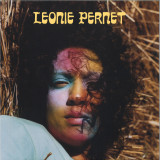
Léonie Pernet's second album Le Cirque de Consolation, to be released November 19th on InFiné & CryBaby, inhabits a world where borders dissolve and everyone makes their own unique and singular utopia. Hereby, the record questions the links between pop music, African cultures and electronic music, neo-classical music or the role of voice, whether human or synthetic. Sophomore albums can be a painful process for an artist - how refreshing it is to hear one so decidedly optimistic.
Textextext - (add your write up)
The sought after whirlwind of French Pop that exploded onto the scene with her debut "Crave", Leonie Pernet, returns with her second album, "Le Circque de Consolation", a sort of double negative of her first. While the yearning that sat at the center of "Crave"might not have been resolved, the young multi-instrumentalist and singer has found a new perspective - a more open and positive outlook on her own life and work. Perhaps telling, then, that the title was the first element of the album to exist: as it is and has always been a journey of personal (and collective) consolation first, a musical confrontation with the self.
"This record parallels my life's journey," confirms Léonie, "it reflects what has happened in my life since 'Crave' came out and how I feel today. There's still a lot of melancholy, but a lot more sunshine and light. In four years, I've become sober, which has saved me; I've worked a lot on my voice, which is a part of a desire to speak, to address my audience more directly, and also a more pronounced pop desire." In line with her new-found "openness", Leonie invites another musician into her creative process for the first time on "Le Cirque de Consolation": Jean Sylvain le Gouic, who lended his coproduction and perspective to her, while Leonie still plays almost all instruments herself with an astounding prowess.
Leonie's voice oozes with a new-found self-confidence and takes center stage amidst eclectic, distinctively fun and open-minded production. Sometimes she sings in English, mostly in French: "I worked a lot on my voice," confirms Léonie, "I didn't dare to sing before, neither live, nor on record, nor in the studio." Surrounding her astounding, intoxicating voice are forays into any direction imaginable: from harsh, experimental electronics to the more sombre, organic and quiet moments - and everywhere, there is the vision of Africa, (also Middle East) it's many sonic gifts and cultures.
Leonie has found a universal utopia that she craves for - a musical, cultural amalgamation that is decidedly non-western, political and poetic, rooted in self-discovery and the connection with other humans: African and oriental percussion, synthesizers, drum-machines; Léonie mixes genres and instruments with ease and precision. The French novelist and philosopher Édouard Glissant - whose work and writing had a big influence on Pernet - coined the term "Creolization ", the "bringing together of several cultures or at least several elements of distinct cultures, in one part of the world, resulting in new data, totally unpredictable in relation to the sum or the simple synthesis of these elements."
From "Hard Billy ", a techno-influenced rebellious anthem, to "Les Chants de Maldoror," a club and dance song propelled forward by feverish derboukas, to the deeply moving "A rebours" and its Afro-electronic rock. Léonie Pernet inhabits a world where borders dissolve and everyone makes their own unique and singular utopia. Hereby, the record questions the links between pop music, African cultures and electronic music (Intérieur Négro), neo-classical music (Le Cirque de consolation, Dandelion), or the place of the voice, whether human or synthetic as in the atmospheric "Vowel". Sophomore albums can be a painful process for an artist - how refreshing it is to hear one so decidedly optimistic.
A-side inside and B-side outside: this single is very loosely influenced by the collective experience of the long wait to be released; adding to the already exhausted canon of cultural covid artefacts. Cheeks is centred around the sub-bass of an old Italian organ and the honking sax of Iain McCall, telling the tale of a squashed individual. The over zealous approach to layers hopefully adds to the feeling of claustrophobia and mundane delirium.
If Cheeks is the wind up, Mild Weather is the release. An ode to the modern desire of one week in the sun, accepting that prize and returning back to the slog. Jayne’s beautiful vocal provides the centre-point to a casio led symphony, with acoustic and electronic drums fighting for attention throughout. As is the current norm, these tracks were written and recorded remotely and in a couple of sessions in Edinburgh at the beginning of 2021.
Have we ever needed great storytellers so badly? Voices to snap us out of our collective grey funk, to pull us out of our narrow, hemmed-in worlds and to lighten our days and enlighten us with their perspectives, Immersing us in their worldview and history. People who can make us laugh, cry, gasp or nod sagely, to see our world anew and not feel so alone. We need stories, vignettes, new windows to look out of, and narrators to help those new visions make sense.
In short, we need Scott Lavene. Born and raised in Essex, but a man of the world who has wandered far and wide, Lavene’s a storyteller who can capture all the madness, joy and frustration of life while singing about worms writhing in the ground. Lavene’s been in bands since his teens, but only really located the voice that makes his new album Milk City Sweethearts so remarkable – that combination of wry observation, humble wisdom, unguarded vulnerability and unpredictable humour – in a music workshop for alcoholics and addicts, long after he’d bid farewell to childhood dreams of pop stardom, and the ghosts and demons that accompany those dreams.
He released an album as Big Top Heartbreak, 2016’s Deadbeat Ballads, and followed it with his first album under his own name, 2019’s droll and marvellous Broke. “I was signed to a little label in Bristol, but then they went skint,” he remembers. This time, however, the disappointment didn’t shake his confidence or his resolve. “I started writing prose, like ‘flash fiction’, and I’ve begun a novel,” he says. “And I’ve started some creative writing workshops for people who’ve come out of my situation.”
Amid all this activity, the songs that became Milk City Sweethearts began to take shape. Lavene noticed the border between his prose and his songwriting beginning to become porous, and the album feels like a clutch of excellent short stories set to music. Without a label, he recorded the album at home, and assembled it in a week in his mum’s garage during lockdown’s heavy manners. It’s a warm, witty, charismatic record with a dark heart at the centre, Lavene sounding dislocated and therefore able to write his everyday stories with a left-handed brilliance and blunt honesty that keeps them so fresh, like classic Kinks, or David Bowie if he’d never had to go to space to feel otherworldly. His songs are talking blues, set to loose and minimal and excellent art-rock with a pop sensibility, the honk of Roxy sax and the guttural weird-funk of Ian Dury’s Blockheads haunting their grooves.
Have we ever needed great storytellers so badly? Voices to snap us out of our collective grey funk, to pull us out of our narrow, hemmed-in worlds and to lighten our days and enlighten us with their perspectives, Immersing us in their worldview and history. People who can make us laugh, cry, gasp or nod sagely, to see our world anew and not feel so alone. We need stories, vignettes, new windows to look out of, and narrators to help those new visions make sense.
In short, we need Scott Lavene. Born and raised in Essex, but a man of the world who has wandered far and wide, Lavene’s a storyteller who can capture all the madness, joy and frustration of life while singing about worms writhing in the ground. Lavene’s been in bands since his teens, but only really located the voice that makes his new album Milk City Sweethearts so remarkable – that combination of wry observation, humble wisdom, unguarded vulnerability and unpredictable humour – in a music workshop for alcoholics and addicts, long after he’d bid farewell to childhood dreams of pop stardom, and the ghosts and demons that accompany those dreams.
He released an album as Big Top Heartbreak, 2016’s Deadbeat Ballads, and followed it with his first album under his own name, 2019’s droll and marvellous Broke. “I was signed to a little label in Bristol, but then they went skint,” he remembers. This time, however, the disappointment didn’t shake his confidence or his resolve. “I started writing prose, like ‘flash fiction’, and I’ve begun a novel,” he says. “And I’ve started some creative writing workshops for people who’ve come out of my situation.”
Amid all this activity, the songs that became Milk City Sweethearts began to take shape. Lavene noticed the border between his prose and his songwriting beginning to become porous, and the album feels like a clutch of excellent short stories set to music. Without a label, he recorded the album at home, and assembled it in a week in his mum’s garage during lockdown’s heavy manners. It’s a warm, witty, charismatic record with a dark heart at the centre, Lavene sounding dislocated and therefore able to write his everyday stories with a left-handed brilliance and blunt honesty that keeps them so fresh, like classic Kinks, or David Bowie if he’d never had to go to space to feel otherworldly. His songs are talking blues, set to loose and minimal and excellent art-rock with a pop sensibility, the honk of Roxy sax and the guttural weird-funk of Ian Dury’s Blockheads haunting their grooves.