LEE MOSES is a cult figure amongst rare funk and deep soul collectors with his lone album, Time And Place, the holy grail of his brief but majestic recording legacy. Despite working with the likes of Eddie Billups, King Hannibal, Freddie Terrell, Barbara Hall and Gladys Knight & The Pips, he remains obscure and yet revered. He recorded just eight singles over a period of eight years and scratched a living playing the bars and R&B clubs in Atlanta. “Bad Girl” is a funk/soul masterpiece that is heavily in demand around the world as the three million views on YouTube lays testament. It was recorded in New York in 1967 and is produced by the legendary Johnny Brantley who captures the very soul of Moses in every tortured second of this 5-minute opus that stretches over both sides of the 45.
Buscar:45 king
"15 sizzlin’ surf guitar cuts recorded at the crest of the genre! Brothers Richard and Thomas Frost, more known for their work as Powder, shred through these surf-rockin’ standards – all tucked away until now!
Turning in a smoking rendition of studio guitarist Jan Davis’ “The Fugitive,” later covered by the Ventures (and much later, Laika & the Cosmonauts), they also lay down a hot version of “Opus Twist” – also by way of the Ventures, written by Tommy Allsup and J.I. Allison of the Crickets. Three other instrumentals came from the Let’s Hide Away & Dance Away With Freddy King album: “San-Ho-Zay,” “Just Pickin’,” and “Sen-Sa-Shun.” He delivers a lovely “Sleep Walk” sans Santo & Johnny’s steel guitar, and converts pianist Floyd Cramer’s “Last Date” to guitar.
Balancing out the program are live tracks from Big Al’s Gas House in neighboring Belmont, showing the emergence of British Invasion along with credible renditions of R&B warhorses “Linda Lu” and “Come On.” “Route 66” is obviously the Stones version, with Rich playing the Keith Richards guitar solo – “and ‘Roll Over Beethoven,’ you could tell it was the Beatles’ version because my guitar licks are George Harrison.”
Vividly illustrating the band’s meld of R&B and surf are the two versions of “San-Ho-Zay” – the relaxed groove in the bedroom versus the furious live rave. Lord knows what’s going on in “The Fight” – a typical set-opening/closing riff breaking up a brawl?
Though they never released even a 45, these live cuts and “Bedroom Tapes” prove without a doubt that they’d have been up to the task had the opportunity presented itself."
- You're So Cool (Main Title)
- I Think I Love You
- To The Club
- Not My Clothes
- I'm Your Son
- Father Goodbyes
- Stars At Dawn
- Alabama Hit
- Start Over
- Needed Gun
- Elevator Tension
- Police Comes In
- Shootout
- End Scene
- You're So Cool / Main Title (Alternate I)
- You're So Cool / Main Title (Alternate Ii)
- You're So Cool / Main Title (Remix)
- You're So Cool (Extended Single Version)
- Stars At Dawn (Extended Single Version)
- Amid The Chaos Of The Day
Enjoy The Ride Records in conjunction with Morgan Creek Entertainment proudly presents the True Romance Original Motion Picture Score, composed and conducted by Hans Zimmer.
In celebration of the iconic film's 30th anniversary, the True Romance Original Motion Picture Score is pressed at 45 RPM across 2 LPs for optimal sound quality.
Recorded on a budget of nine musicians (after being told the plans for a full orchestra had to be scrapped due to director Tony Scott going over budget), Hans Zimmer's True Romance score features percussion instruments xylophones, and marimbas to create innocent noise, a reflection of the lead characters - Alabama and Clarence Worley - in the violently dark comedy written by Quentin Tarantino. Featuring original art by Steven Wild, the art captures the spirit of the iconic characters of the cult classic film.
German film score composer and record producer Hans Zimmer has composed over 150 film scores in his vast career, some of which include Crimson Tide, The Dark Knight Trilogy, Gladiator, The Lion King, The Pirates of the Caribbean series, and True Romance. This carefully mastered score will bring you back to the innocence and intensity of the film, which fans had only been able to experience by watching the film in the theater or in their homes.
Los York's became the epitome of Peruvian garage sound. 'Abrázame' features a beat-influenced go-go twang guitar garage psych tone throughout and the unique voice of the iconic frontman of the band resulting an irresistible Latin garage hipshaker! Set the dance floor on fire with this first time 45 reissue of the Latin garage anthem 'Abrázame'! Los York's became the epitome of Peruvian garage sound, and the kings of the multi-group concerts which teenagers flocked to on Saturday and Sunday mornings in Lima's main movie theaters. The group was in tune with the youth from popular districts who were gradually turning morning concerts into dynamic gigs as the fashion for solo rock-ballads waned and garage sounds by bands like Los Shain's, Los Derbys, Los Juniors, Los Flyers and, of course, Los York's took over. Their supportive fans would follow them to every gig. After releasing their three first singles on MAG, featuring covers of popular hits, it took them a year to turn their ideas into songs for their first LP that was successfully released at Christmas in 1967. The original version of 'Abrázame' was included in this album and also released as a single. Although clearly based on Don Covay & The Goodtimers' r&b classic 'Mercy Mercy', the recording features a beat influenced go-go twang guitar garage psych tone throughout and the unique voice of the iconic frontman of the band, Pablo Luna, resulting an irresistible Latin garage hipshaker! A rawer, fuzzier version of the same song was released one year later and renamed as 'Abrázame baby'. How cool and handy is to have both versions together on one single artifact? Set the dance floor on fire with this first time 45 reissue of the Latin garage anthem 'Abrázame'!
Repress!
Melody A.M. is the debut studio album by Norwegian electronic music duo Röyksopp, released on 13 September 2001 by Wall of Sound. The album reached number one in the Norwegian Albums chart. In the UK, it reached number nine in the country's Album chart, and topped both the Dance Albums and the Independent Albums charts. As of 2005, the album had sold 750,000 copies worldwide,1 with 454,271 sold in the United Kingdom alone.
- A1: Mirage Theme 3 33
- A2: The Shadows We Walk 1 38
- A3: Madinat Al-Salam 2 32
- A4: Daughter Of No One 3 47
- A5: Tales Of Baghdad 2 26
- A6: Bloodflower 2 27
- A7: Nightshade 2 14
- A8: Retribution 1 37
- B1: Leaving For Alamut 1 31
- B2: Serpent's Kiss 1 38
- B3: Outside The Walls 2 00
- B4: Sand Drift 2 22
- B5: Hushed Blades 2 07
- B6: The Wild 0 26
- B7: City Under Stars 1 50
- B8: The King Sun 2 06
- B9: Singing Dunes 2 18
- B10: Whispers 2 09
- B11: True Sight 1 45
- C1: Pools Of Blood 2 55
- C2: A Path Of Shadows 1 21
- C3: A Path Of Heat 1 55
- C4: The Round City 0 31
- C5: Incense Trails 2 07
- D1: The Center Of Science 0 24
- D2: Without Mercy 1 54
- D3: Deadly Shade 2 07
- D4: Noxious 1 44
- D5: Truth Of Masks 1 33
- D6: The Jinni 0 47
- D7: You Are Never Alone 1 59
- D8: A New World Awaits 2 14
- D9: Ezio's Family (Mirage Version) 2 15
- D10: Mirage Theme (Menu Version) 2 53
- D11: Onerepublic Feat Mishaal Tamer Mirage 2 13
- C6: Assassin's Lament 2 03
- C7: The Escape 2 04
- C8: The Bureau (Mirage Version) 1 27
- C9: Spices 1 46
- C10: Marketplace 1 28
- C11: Baghdad Murmurs 2 25
Seit 2007 erfreut sich die Videospielreihe "Assassin's Creed" großer Beliebtheit. Jede der Stories versetzt uns dabei zurück in verschiedene bedeutende Epochen der Geschichte. In der rätselhaften Welt von "Assassin's Creed Mirage" durchleben die Spieler das konfliktreiche Schicksal von Basim Ibn Ishaq im goldenen Zeitalter Bagdads, der sich vom Straßendieb zum Meister-Assassinen entwickelt. Der "Assassin's Creed Mirage"-Soundtrack erscheint auf Doppel-LP und enthält den Titelsong "Mirage" von One Republic sowie die Musik von Brendan Angelides. Der Soundtrack, gepresst auf bernsteinfarbene Platten, schafft eine klangvolle Verbindung zu einer Welt, in der Mythen und Realität miteinander verschmelzen. Das exklusive Artwork erweckt die Geschichte mit ihren geheimnisvollen Charakteren visuell zum Leben.
-Only available on vinyl.
The third record in a set of Soul In The Horn's very first 45 pressing featuring tracks from Rockwilder and KingPros.
Rockwilder "Love In Need" unveils a stunning mid-tempo house rendition of a classic tune by the esteemed hip-hop super producer, Rockwilder. This transformative piece takes the original track and infuses it with the soulful rhythms and melodic textures characteristic of mid-tempo house music.
King Pros "You Had to Know" - Hard-hitting soulful mid-tempo rework of one of the most revered voices in Black American Music.
-Only available on vinyl.
The first record in a set of Soul In The Horn's very first 45 pressings featuring tracks from KingPros and Daniel Crawford aka Dshon82 aka Tricky Tracy.
Daniel Crawford, known for his diverse musical talents, presents a remarkable reinterpretation of 'Mountains,' originally by TAFKAP. Crawford offers an incredible twist on this cherished classic, infusing it with his own creative flair and imaginative vision.
KingPros "Love to Love You" - 107BPM reimagining of soulful unreleased goodness from the purple vaults.
- A1: 1000 Light Years Ft. High Times Players, Lloyd Obeah Denton
- A2: In The Shadow Ft. Vin Gordon, Glen Dacosta, Sheldon "Atiiba" Bernard
- A3: Whitewater Ft. Ibo Cooper, Lew Chang
- A4: Memories Of Old Ft. Ernest Ranglin, Tyrone Downie
- A5: Rose Hall’s Birds Ft. Vin Gordon, Glen Dacosta
- B1: Squirrel Inna Barrel Ft. Ernest Ranglin, Vin Gordon, Karl Bryan
- B2: Under The Cotton Tree Ft. Glen Dacosta, Ibo Cooper, Cat Coore
- B3: 45 Charles Street Ft. Roots Radics, Dwight Pickney, Dean Fraser
- B4: Everlasting Love Ft. Sly & Robbie, Dean Fraser, Peace Diouf
Bringing together over 50 of Jamaica's greatest session musicians, whose work spans from the birth of reggae in the late 1960s until today, Roots Architects is the largest gathering of Jamaican musical talent on one all-instrumental album. Never before have so many veterans, who helped create the immortal rhythms that made reggae internationally successful, been assembled to play on new material without vocals. This album aims to celebrate and pay tribute to the unsung heroes of reggae music: the rhythm builders or Roots Architects.
The project is the brainchild of Swiss keyboardist and producer Mathias Liengme. In 2013, he travelled to Kingston, Jamaica, to produce The Inspirators project, an all-star album gathering Leroy ”Horse-mouth” Wallace, Lloyd Parks, Earl ”Chinna” Smith and Sangie Davis, the four of them acting both as musicians and vocalists. This first experience in Kingston studio life paved the way to what would become the Roots Architects project. In February and March 2017 Mathias Liengme travelled for the fifth time to Kingston to record as many of reggae’s greatest living veteran musicians as he could. With the help of a few of these Architects like Robbie Lyn, Fil Callender or Dalton Browne, he managed to gather over 50 session musicians aged 60 to 85 on nine instrumental songs.
Roots Architects are legends back together in Kingston studios doing what they do best: creating in-strumental music all together!
- Listen Up Punk ! (1.15)
- 430: Kings Road (Punk Meets Rock’n’roll) (1.34)
- Machine Bubble Disco (1.15)
- Dangerously Close To Love (1.08)
- Buzz-Cocks Are Coming (1.05)
- I’m A Damned Disciple (1.07)
- The Class Of 76 (Punk Year Zero) (1.30)
- The Punk Rockers Gig Prayer (0.37)
- Someone Dropped A Bomb In The Uk (0.59)
- Looking At The Decals On Steve Jones Guitar (1.39)
- Anarchy Tour After Grundy (Punks Out On Parole) (2.47)
- The Satellite Kid (0.59)
- All You Need Is Punk (2.03)
- I Used To Play Bass In A Punk Rock Band (1.07)
- A Punky Night In Soho (1.19)
- When The Two 77’S Clashed (1.31)
- Kiss Me Punk (Till My Mouth Gets Numb) (1.05)
- Punk Rock Fanzines (1.24)
- Punk Rock Clothes For Heroes (1.06)
- Punk Times (1.06)
- 45: Random Punk Memories (2.46)
- Punk Rock Jubilee 77 (0.56)
- The Ballad Of Johnny Rotten (1.42)
- Punk Badge (0.45)
- Punk Rock Pictures On My Wall (1.38)
- Not Another Punk Rock 45 (1.31)
- Holiday In Someone Else’s Misery (1.21)
- The Last Punk On Portobello Road (Ode To Joe) (1.48)
- Flogging Punk Rock (0.38)
- Never Seen A Bad Picture Of Debbie Harry (2.12)
This Album is a collection of what I call Punk Art Poetry.
Poetry put together like a lyric to tell a certain story or explain a thought on some punk related matter. Some of these stories did actually turn themselves into a song which I released on my Punk Art imprint.
Most of these poems were influenced or inspired a piece of art I was working on.
Hope you like them or can relate to these stories.
Thanks for your indulgence
Origu and Unique Records bring you a UK Hip Hop Holy Grail.
For the first time on vinyl this double sider features two standout tracks from the 1993 "The Rhyme Wrecka EP“.
The short lived group Freakin’ Inglish from Salford & Manchester gained massive respect in the Hip Hop scene with their tape only debut just to break up in the year after. After a digital only release in 2013 and a CD reissue by Chuck D’s SpitSlam label in 2021, the uptempo title track and the cleverly produced „A-Dorable“ make their vinyl debut.
Freakin' Inglish is a Hip Hop group from Salford & Manchester, (United Kingdom). Formed in 1993, The group originally consists of Emcee's (Red Venom, Eric-T & Yozzer) the group quickly split up the following year. They released their debut EP "The Rhyme Wrecka" in '93, along with other tracks via Fat City Records and other stores round the UK.
A reunion on the 2nd decade (2013) of their formation in (1993) was planned by Red Venom & Hip Hop Producer: Nate Whittaker Featuring original members Red Venom & Eric-T along with Nate Whittaker as the missing 3rd member, taking Yozzer's place in the group, but as a producer. red venom has now gone on too be a member of the rhyme syndicate and is putting out albums and a reunion is set now for 2021 with eric t and red venom and a new member .
, Old fat furry cat-puss , Wake up and look at this thing that I bring, Wake up, be bright , Be golden and light , Bagpuss, Oh hear what I sing. 12th of February, 1974, and for an audience of small children at 1:45pm, a life irrevocably coloured by the wayward wonderings of one saggy cloth cat. Some 44 years later and Earth Recordings opens the door to Bagpuss & Co. once again, revealing for the first time the original music in all its newly-mastered splendour. The 32 tracks that make up the main body of the compositions are – like all good folk music – a patchwork of traditional pieces, half-remembered tunes and pure improvisation. It's testament to Sandra Kerr and John Faulkner's musicianship that the recordings work so well, not only within the context of the television episodes, but as an album in its own right. Of the recording, Oliver Postgate (in his exquisite autobiography 'Seeing Things') says: "Between them Sandra and John could play every sort of instrument from a mountain dulcimer to an Irish fiddle. They knew and could sing every tune in the world and didn't bother with written music, except as a last resort. They were exactly suited to Gabriel the Toad and Madeleine the Rag Doll and in those roles were happy to play whatever music and sing whatever songs would be needed." Those songs manifested themselves as reworkings of familiar tunes ('I Saw A Ship'; 'Row Your Boat'; 'Bucket's Burning'), takes on traditional ballads ('Brian O'Lynn'; 'The Frog Princess'; 'Weaving Song'; 'The Old Woman Tossed Up in a Basket') and delicious flights of fancy ('The Bony King of Nowhere'; 'Turtle Calypso'; 'Uncle Feedle'). The counterpart to Madeleine and Gabriel's more polished ditties are the interludes from the mice; a raggle-taggle chorus that accompanies the creatures' efforts of help (with the mice once famously going on strike when they were not permitted sang as they worked). Again, Postgate muses: "Once I had worked out a few episodes I would make a very rough list of the bits where I though music would be appropriate. I would send it to Sandra and John to think about. Then we would borrow a fairly silent room in a remote house and, taking the various articles that we intended to celebrate with us, would spend a happy day with a tape recorder, thinking up and recording whatever songs and tunes came to mind." The outtakes provide an intimate – and often very humourous – insight into the trio's work ethic, if it can be called such a thing. (By all accounts they sound as though they're having a very jolly time indeed.) Highlights include alternative opening words and end music, as well as Postgate sound-checking in character as Bagpuss. This never-before heard audio provides a real treat for fans (and indeed those new to the Smallfilms stable) – affirmation again to the enduring quality of these special recordings, and the beloved programme that inspired them. "An accidental classic of the folk-roots underground that we never dared hope we’d hear with such clarity."Stewart Lee
- A1: Hopeton Lewis - This Music Got Soul
- A2: Hopeton Lewis - Let Me Come On Home
- A3: The Zodiacs - Walk On By
- A4: Termites- We Gonna Make It
- A5: The Dynamites - Fountain Bliss
- B1: Hopeton Lewis - Rock A Shacka
- B2: Hopeton Lewis - Don't Cry
- B3: The Royals - House Upon The Hill
- B4: The Tartans - Real Gone Sweet
- B5: The Tartans - Rolling Rolling
- C1: Hopeton Lewis - I Don't Want Trouble
- C2: Lester Sterling - Lester Sterling Special
- C3: The Dynamites - If You Did Love Me (Take 1)
- C4: The Tartans - Don't Take That Train
- C5: Lynn Taitt & The Jets - Batman (Early Take Version)
- D1: Hopeton Lewis - Oh Tell Me Darling (Take 1)
- D2: The Tartans - I'm Ready
- D3: Henry Buckley - Take Me Back
- D4: Roland Alphonso - Sounds Of Silence
- D5: Lynn Taitt & The Jets - Batman (Rehearsal Version)
- D6: The Federal All Stars - Merritone False Starts (Pt. 2)
Part 1[31,72 €]
repress !
The birth of rock steady portrayed in a consummate collection from the vaults of Federal Records
Most of them drawn directly from Ken Khouri's master tapes this miscellany of cool rock steady includes marvellous music from the originator of the genre, the one and only Lynn Taitt, alongside an array of Jamaica's greatest singers and vocal harmony group
American rhythm & blues fervour, boosted by a multitude of sound systems playing 78rpm records on increasingly larger sets, gripped Jamaica from the late forties onwards but, towards the end of the decade, the American audience began to move towards a somewhat softer sound. The driving rhythm & blues discs became increasingly hard to find and the more progressive Jamaican sound system operators, realising that they now needed to make their own music, turned to Kingston's jazz and big band musicians to record one off custom cut discs. These were not initially intended for commercial release but designed solely for sound system play on acetate or 'dub plates' as they would later be termed. These 'specials' soon began to eclipse the popularity of American rhythm & blues and the demand for their locally produced music proved so great that the sound system operators began to release their music commercially on vinyl and became record producers. Clement Coxsone' Dodd, Duke Reid 'The Trojan' and Prince Buster, who operated his Voice Of The People Sound System, were among the first to establish themselves in this new role and the nascent Jamaican recording industry now went into overdrive.
In 1954 Ken Khouri had numbered among the first far sighted entrepreneurs to produce mento records with local musicians (mento is Jamaica's original indigenous music) before progressing to opening Jamaica's first record manufacturing plant. Three years later he moved his operation to Foreshore Road (later renamed Marcus Garvey Drive) where, with the assistance of the inestimable Graeme Goodall, he updated and upgraded his recording studio. The importance of this enterprising move was critical to the development of Jamaican music and its influence both profound and far reaching.
"It was Ken Khouri's Federal Recording Studio, the womb that gave birth to the talented writers, artists and musicians that gave Jamaica its musical identity." Prince Buster
Federal Records was not only the place for the sound system men to record their music but it was also where they had their records manufactured and, consequently, the company enjoyed a near total monopoly on recording and record pressing in Kingston. In 1963 Ken Khouri sold his one track board to Clement 'Coxsone' Dodd, who established Studio One, and Ken imported the first stereo equipment to Jamaica and Federal began making stereo records. The following year WIRL (West Indies Records Limited) opened but the competition served to drive the company on to higher heights. Ken Khouri continued to work on his own productions and, in 1966, the seven inch release of Hopeton Lewis' 'Take It Easy', recorded under the guidance of Trinidadian guitarist Lynn Taitt, ushered in the rock steady era.
These two essential albums showcase a stunning selection of well known hits, and not so well known rarities, from the vast Federal catalogue. All tracks have been transferred direct from the master tapes and assembled with the invaluable assistance of Ken Khouri's son, Paul Khouri, who generously gave Dub Store unlimited access to the Federal tape vaults. The extensive liner notes feature extracts from extensive interviews with Paul Khouri whose knowledgeable recollections of working on Marcus Garvey Drive, not only as a producer but as an engineer and musician, are illuminating and educational. Both sets present an insight into the birth and growth of Federal Records and the Jamaican recording industry and are essential to an understanding of the real roots of reggae music.
This 4 track 45RPM 7inch comes to you courtesy of Copacetic Frequency Productions. 2 vocal cuts by Ozzie Dee & Izaba, a melodica cut by Ray Ranking & the version by label owner Dawehdread.
Engineered & mixed by Dawehdread & Kingsway at Earth Works Amsterdam.
Nach einer stürmischen Headliner-Show beim PowerTrip Festival in Kalifornien kündigten die Metal-Götter Judas Priest am Wochenende auf der Bühne ein brandneues Studioalbum mit dem Titel 'Invincible Shield' an, das am 8. März 2024 über Columbia Records erscheinen wird. Die erste Singleauskopplung "Panic Attack" wird am Freitag, den 13. Oktober veröffentlicht. Judas Priest wird 2024 zudem auf Welttournee gehen. Die Tour beginnt am 11. März in Glasgow und führt die Band am 3. April 2024 in die St. Jakobshalle in Basel. In den vergangenen 50 Jahren haben Judas Priest weltweit mehr als 50 Millionen Alben verkauft und standen in den größten Stadien der Welt auf der Bühne. Mit der Zeit entwickelte sich eine starke, einzigartige Identität, ein Look, der sowohl Judas Priest definiert als auch zukünftige Generationen von Metal-Bands auf der ganzen Welt beeinflusst hat. Mit jedem Jahr wächst die Legende Priest weiter; 2022 wurden sie in die Rock & Roll Hall of Fame aufgenommen und absolvierten eine ausverkaufte, verschobene Welttournee anlässlich ihres 50-jährigen Bestehens
One of the rarest, and greatest, horn instrumental dub albums of the seventies featuring the soaring saxophone of Tommy McCook in combination with Glen Brown, 'The Rhythm Master', is finally given a legitimate release.
The original title for this long playing release was initially advertised on the label of the seven inch release of 'Determination Skank' as 'The Sannic Sounds Tommy McCook', however the album was released in Kingston in 1974 in very limited quantities on a white label in a plain recycled cover rubber-stamped 'Tommy McCook Dub'. Three years later the set was released through Grounation in London, once again on a white label and without a cover, where it was known as 'Horny Dub'. It gave music lovers a fascinating opportunity to compare and contrast the work of Tommy McCook, one of the architects and builders of the Jamaican sound, with Glen Brown's role in taking and breaking it into pieces...,
Dub Store Records is the Ska, Rocksteady, Reggae, Roots and Dancehall reissue label run by the eponymous Tokyo based record store. The label aims at accurately covering the 50-plus years of Jamaican music, and pass on many rare and magnificent recordings, which are non-commercial and highly artistic. Carefully handing down the tradition of reggae music, Dub Store Records has so far issued recordings from labels and artists such as Studio One, Federal Records (Federal, Kentone, Merritone), Bunny Wailer's Solomonic, Familyman's Fam's, Jammys, King Tubby's Firehouse, Derrick Harriott, Kiddus I, Redman International, BMN and much more to come.
- A1: Solomonic Reggae Star - Anti-Apartheid
- A2: Solomonic Reggae Star - Solidarity
- A3: Bunny Wailer - Arab Oil Weapon (12" Disco Mix)
- B1: Bunny Wailer - Love Fire
- B2: Bunny Wailer - Love's Version
- B3: Bunny Wailer - Bright Soul
- C1: Bunny Wailer - Rise & Shine
- C2: Solomonic All Stars - Solomonic Dub
- C3: Bunny Wailer - Riding
- C4: Bunny Wailer - Galang So
- D1: Bunny Wailer - Troubles Is On The Road Again
- D2: Bunny Wailer - Cease Fire
- D3: Bunny Wailer - Rule Dancehall
- D4: Solomonic All Stars - Rule Dancehall (Dub Version)
At the same time that Neville 'Bunny Wailer' Livingston recorded his debut solo long playing masterpiece, 'Blackheart Man', he was also creating a series of singles for his own Solomonic label. These records were every bit as good, at times even better, but they have never been released outside of Jamaica. Until now...,
It is next to impossible to ever overstate the importance of The Wailers to the history of Jamaican music and, as the last surviving member of the group, Bunny Wailer rightly regards himself as the sole keeper of their history ever mindful of the group's exalted position in the story of reggae music and the importance of their legacy. In 2010 Dub Store were proud to be able to work with Bunny on re-releasing a selection of his earliest recordings for the Solomonic label, lovingly restored and presented in reproduction sleeves and labels, on limited edition seven and twelve inch singles. Now, taking another step forward, we are more than proud to present Bunny's timeless music on two beautifully packaged CD's and double LP's. Bunny's first solo album, 'Blackheart Man' originally released in 1976 on his own Solomonic label in Jamaica and on Island in the UK, is one of the undisputed all time classics of Jamaican music and established Bunny Wailer as a highly respected, world renowned artist in his own right. During this period Bunny also produced a series of singles released in Jamaica and the UK in strictly limited quantities without the benefit of international distribution, that are every bit as good and, in some cases, even better than this awesome debut long player. Original copies have subsequently become highly prized, and highly priced, collector's items. "Classic rarities" is an overused and abused term too often employed to describe average records that failed to sell on their initial release but both 'Tread Along' and 'Rise & Shine' are packed from beginning to end with a searing selection of some of the greatest and hardest to find reggae records ever produced. 'Tread Along' opens, naturally enough, with 'Tread Along' from 1969, one of the last singles for The Wailers' own Wail N Soul M label, and runs through the first release on the Solomonic label, 'Searching For Love' also known as 'Search For I', 'Bide Up' released as 1974 drew to a close, a radical reworking of 'Pass It On' and a marked contrast to the version on The Wailers' 'Burnin'', album, 'Life Line' and the prophetic 'Arabs Oil Weapon' kept the pressure on as Bunny began outlining the flawless 'Blackheart Man' album. Each release was a certified classic in its own right. Peter Tosh's melodica version to Bunny's 'Amagideon' ('Armageddon'), the first track on 'Rise & Shine', is followed by 'Love Fire', an update of another Wail N Soul M track, 'Fire Fire'/'Babylon Burning', through to one of the deepest roots records ever created, 'Rise & Shine', on to 'Riding' from the 'Bunny Wailer Sings The Wailers' sessions (but not featured on the album) and a huge hit in the UK in 1981, and closing with 'Rule Dance Hall' from 1985. No idle boast..., The liner notes feature the story of The Wailers, as told to Dub Store by Bunny himself in Kingston in an enlightening 2012 interview, and rarely seen contemporary photographs complete these essential releases. The music of Bunny Wailer was not only a medium for change and protest but also to elucidate and educate and 'Tread Along' and 'Rise & Shine' finally complete the canon of un-compiled Wailers music. "I'm quite satisfied, you know, reggae music is the kind of music that although sometimes you would look at it and say..., boy, it's hard..., then again you look at what it has done for the people of the world you know that that couldn't be locked up in a little place like Jamaica!" Bunny Wailer
Of the countless accolades and analyses that surround Blue, no point is more significant than the fact that the 1971 Joni Mitchell album continues to become more popular, revered, referenced, and relevant with each passing day. Such vitality is not only extremely singular; it is the ultimate measure of great art and, in the context of Blue, indisputable proof of the record's accessibility, integrity, and timelessness. If the most brilliant and everlasting music seeks to find truths shared by all of humanity, Blue can be said to be universal doctrine.
Sourced from the original analogue master tapes, pressed on MoFi SuperVinyl, and strictly limited to 12,000 numbered copies, Mobile Fidelity's UltraDisc One-Step 180g 45RPM 2LP box set presents the landmark album with reference-grade detail, tonality, and directness. Marking the first time the beloved LP has received audiophile-quality treatment, it's one of six iconic 1970s Mitchell records Mobile Fidelity is reissuing on definitive-sounding vinyl and SACD sets.
Everything about Blue sounds more intimate, involving, and inescapable on this transparent pressing, which benefits from a virtually non-existent noise floor and superior groove definition. Mitchell's voice, positioned front and center, and primarily accompanied by minimalist acoustic guitar, piano, and dulcimer playing, comes across clearly and prominently. Suspended notes and radiant chords double as question marks, commas, and phrases. The in-the-room presence and spatial dimensionality make absolute the full-range spectrum of introspective emotions — hurt and distress, self-awareness and joy, difficulty and uncertainty, warmth and desire — Mitchell navigates, queries, and contemplates throughout the record. The defencelessness the singer once spoke about is laid bare here like never before.
The packaging of the Blue UD1S set complements its distinguished status. Housed in a deluxe box, both LPs come in special foil-stamped jackets with faithful-to-the-original graphics that illuminate the splendor of the recording. This UD1S reissue exists as a curatorial artifact for listeners who prize sound quality and production, and who desire to engage themselves in everything involved with the album, including the unforgettable cover photograph of a ruminative Mitchell shot by Tim Considine.
Deemed the third Greatest Album of All Time by Rolling Stone; universally celebrated by critics, fans, artists, and educators; and defined by a spell of disarmingly vulnerable songs that are at once confessional, intense, spare, honest, painful, hopeful, and exquisite, Blue charts love, spiritualism, independence, and loss like no record before or since. Widely considered the album that established the singer-songwriter template, the largely autobiographical LP changed everything shortly after its original release in June 1971. Amazingly, it continues to do so more than five decades later.
An incalculable influence on generations of artists, it stands as the through-line from Carole King, Elton John, James Taylor, Joan Armatrading, and Leonard Cohen to Patti Smith, Carly Simon, Emmylou Harris, and Rosanne Cash to 21st century contemporaries like Brandi Carlile, Taylor Swift, Sharon Van Etten, and Courtney Barnett. Teetering between agony and optimism, it is — to borrow a phrase from Mitchell's eternal "A Case of You" — a bottomless "box of paints."
The beauty of the stripped-down arrangements, intoxicating melodies, and Mitchell's wisdom on Blue didn't go unnoticed. Critical acclaim, coupled with the depth of the material and Mitchell's reputation, propelled the album into the Top 20 in the U.S. and Top 10 in the U.K. Yet while so much pop music diminishes with age, Blue has defied norms and headed in the opposite direction. Its 50th anniversary year witnessed an outpouring of tributes, reflections, and testimonials that helped frame the record's escalating importance and symbolism — apt in an age in which women have become the prominent trailblazers in rock, R&B, and hip-hop.
Perhaps most succinctly, in a 2021 article celebrating the LP, the Los Angeles Times declared: "In 1971, nothing sounded like Joni Mitchell's Blue. 50 years later, it's still a miracle." Nothing, indeed. Yet "miracle" suggests Blue partially owes to a divine agent or inexplicable circumstance. And though Mitchell's bracing conviction and forthright sincerity can appear otherworldly, her musical approach and lyrical storytelling is nothing if not personal and human. What we hear is pure truth — no matter how aching, complicated, or stark.
Much has been written about the circumstances that inspired the songs on Blue: Mitchell's romances; her time overseas; her disdain for celebrity; her lingering sense of loss at having given up her daughter for adoption; her treatment by the very same industry that her music made uncomfortable; her prolonged search for resolution. These situations and experiences pushed Mitchell to question everything — especially big-picture concepts that have always obsessed mankind: fulfilment, autonomy, love, honesty, being.
"I wanna make you feel free," Mitchell sings on the record-opening "All I Want." Mission accomplished. Blue is liberation — and the start of a freedom that continues to impact music, culture, and identity today.
More About Mobile Fidelity UltraDisc One-Step and Why It Is Superior
Mobile Fidelity Sound Lab's UltraDisc One-Step (UD1S) technique bypasses generational losses inherent to the traditional three-step plating process by removing two steps: the production of father and mother plates, which are created to yield numerous stampers from each lacquer that is cut. For UD1S plating, stampers (also called "converts") are made directly from the lacquers. Since each lacquer yields only one stamper, multiple lacquers need to be cut. Mobile Fidelity's UD1S process produces a final LP with the lowest-possible noise floor. The removal of two steps of the plating process also reveals musical details and dynamics that would otherwise be lost due to the standard multi-step process. With UD1S, every aspect of vinyl production is optimized to produce the best-sounding vinyl album available today.
Produced by Henry Jenkins (Surprised Chef), cinematic funk combo The Diasonics are back with a limited edition 45 feat. an explosive version of soul stormer "Beggin'. Limited to 500 copies worldwide.
Produced and mixed by Henry Jenkins (Surprised Chef), Russian cinematic funk combo The Diasonics unleash a limited edition 45 featuring an explosive version of soul classic "Beggin'. Composed by Bob Gaudio and Peggy Farina and initially brought to success by the Four Seasons of Frankie Valli in 1967, "Beggin" became a classic of the Northern soul scene in the United Kingdom in the late 1970s. With a tight rhythm section, a super funky bassline and heavy wah-wah guitars The Diasonics version is an instant floorfiller. On the flip side the brand new track "Take One", an irresistible hammond-funk mover, full of heavy breaks and eastern spices.
Active since 2019 The Diasonics are five young and seriously talented Muscovite musicians: Anton Moskvin (drums), Maxim Brusov (bass guitar), Anton Katyrin (percussions), Daniil Lutsenko (electric guitar) and Kamil Gzizov (keyboards). In just a few years the band has amassed a cult following, releasing collectable and in-demand 45s on labels such as Funk Night Records and Mocambo Records. In 2021 they released their debut album "Origin of Forms" on Record Kicks produced by Henry Jenkins, producer amongst the others of the Australian cult instrumental band Surprise Chef. Thanks to the Diasonics's unique style that blends infectious Funk Instrumentals, East European flavours, abstract hip-hop and psychedelia, the album rapidly went sold out on vinyl and it's heavily praised on the international cinematic-funk scene.
High Roller Records, reissue 2023, black vinyl, ltd 450, 425gsm heavy cardboard cover, 4 page insert printed on uncoated paper, A5 photo
High Roller Records, reissue 2023, bone/ purple bi-color w/ red splatter vinyl, ltd 450, 425gsm heavy cardboard cover, 4 page insert printed on uncoated paper, A5 photo
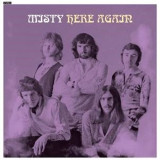
First ever vinyl release of the album recorded in 1969/70 by UK prog-psych band Misty. Including their terrific mod-psych “Hot Cinnamon” 45.
A dazzling fusion of classically-inspired progressive rock and song-based psychedelic pop with an organ-based sound, in the vein of Procol Harum and The Nice.
“In October 1969, King Crimson released their debut, In The Court Of The Crimson King, Pink Floyd unleashed Ummagumma and Led Zeppelin put out their second LP. At the same time, Misty were in London’s Regent Sound Studios recording what turned out to be the only album of their career with producer, Adrian Ibbetson, who had cut his teeth as an engineer working with everyone from the Beatles to the Equals.
After only a handful of gigs, Misty signed a deal with Parlophone and began to gather momentum with the release of Hot Cinnamon. Although they received a lot of airplay, the single failed to chart and the band’s hopes of releasing their debut album were dashed. Reluctantly, Misty went their separate ways and the Here Again master tapes sat gathering dust on a shelf until Gelardi came across the original acetate and decided it was time for the album to finally see the light of day.
Bridging late psych and early prog, songs like Life Has Just Begun, Witness For The Resurrection and the title track were played with a perfect mix of high-flying experimentation and virtuosic musicianship. Blurring the fine lines between rock, jazz, classical and chamber pop, Here Again is a transcendent kaleidoscope of colour that is beyond definition.
Maybe you can tell an album is truly timeless when it takes half a century for it to be properly appreciated. Misty were a rare bird, a brilliant, truly original band who should have left an indelible mark instead of joining what now seems like the never-ending line of half-remembered and long-forgotten flotsam and jetsam of the psychedelic era.
Both the first and the final statement from a group who never really got their chance to be heard, Here Again is a slice of pristine psychedelic pop that so embodies the dizzying energy and the progressive spirit of the time, it’s astonishing that it stays afloat under the weight of its own intentions. But float it does, like mist in the air - a half-forgotten diaphanous dream slowly coming back to you after 50 years of silence.” – Jonathan Wingate
Hard-hitting Conguero, Johnny Blas has performed and recorded in the world of Latin music and jazz for over 45 years. He returns with his most recent and sixth musical production as a soloist, Salsa Para Ti. With a career spanning over 30 years, Blas has performed with distinguished artists sucha as Francisco Aguabella, Mindi Abair, Chuck Loe, Boney James, Evevlyn Champagne King, Max Bennett, Bobby Allende, Terry Gibbs, Dave Koz and Poncho Sanchez among many others. On the bongo, congas or timbales, Blas belongs to the cream of the crop. But in this instance he takes it further, by adding saxophone and flute solos to his percussion.
After his recordings A Night In LA (Dos Coronas, 1994), Skin and Bones (Cubop 1997), Mambo 2000 (Cubop 1998), King Conga (Cubop 1999) and Indestructible Spirit (Cubop 2007), Blas presents Salsa Para Ti, 11 pieces consisting of his own material plus some Jazz and Salsa classics such as Boranda, Round MIdnight and Baila Que Baila.
- A1: George Michael - "Praying For Time" (4 34)
- A2: Elton John - "Sacrifice" (4 55)
- A3: The B-52'S - "Love Shack" (4 13)
- A4: Belinda Carlisle - "(We Want) The Same Thing" (4 09)
- A5: Kylie Minogue - "Better The Devil You Know" (3 45)
- A6: Kim Appleby - "Don't Worry" (3 25)
- A7: Roxette - "It Must Be Love" (4 10)
- B1: The Klf - "What Time Is Love" (Live) (3 47)
- B2: New Order - "World In Motion" (4 21)
- B3: Duran Duran - "Violence Of Summer (Love's Taking Over)" (3 23)
- B4: Halo James - "Could Have Told You So" (3 38)
- B5: Julee Cruise - "Falling" (4 02)
- B6: Chris Isaak - "Wicked Game" (4 41)
- B7: Pet Shop Boys - "Being Boring" (4 43)
- C1: Deee-Lite - "Groove Is In The Heart" (3 50)
- C2: Snap! - "The Power" (3 44)
- C3: Whitney Houston - "I'm Your Baby Tonight" (4 04)
- C4: Dusty Springfield - "Reputation" (4 08)
- C5: Go West - "The King Of Wishful Thinking" (3 52)
- C6: Paul Simon - "The Obvious Child" (3 59)
- C7: Sting - "Englishman In New York" (The Ben Liebrand Mix) (4 22)
- D1: Adamaski & Seal - "Killer" (3 41)
- D2: Bass-O-Matic - "Fascinating Rhythm" (4 01)
- D3: Happy Mondays - "Step On" (4 14)
- E4: Lonnie Gordon - "Happenin' All Over Again" (Hip Hop Radio Mix) (3 15)
- E5: Adventures Of Stevie V - "Dirty Cash (Money Talks)" (3 51)
- E6: Blue Pearl - "Naked In The Rain" (3 46)
- E7: Dna & Suzanne Vega - "Tom's Diner" (3 41)
- E8: Vanilla Ice - "Ice Ice Baby" (3 36)
- F1: Sinead O'connor - "Nothing Compares 2 U" (4 54)
- F2: Jon Bon Jovi - "Blaze Of Glory" (5 24)
- F3: Tina Turner - "Steamy Windows" (3 53)
- F4: Alannah Myles - "Black Velvet" (3 54)
- F5: Cher - "Just Like Jesse James" (3 58)
- F6: Maria Mckee - "Show Me Heaven" (3 43)
- F7: Deacon Blue - "I'll Never Fall In Love Again" (2 42)
- D4: The Stone Roses - "One Love" (3 22)
- D5: The Charlatans - "The Only One I Know" (3 53)
- D6: Candy Flip - "Strawberry Fields Forever" (4 04)
- D7: They Might Be Giants - "Birdhouse In Your Soul" (3 13)
- D8: The Beautiful South - "A Little Time" (2 51)
- E1: Pet Shop Boys - "So Hard" (3 56)
- E2: Jimmy Somerville - "You Make Me Feel (Mighty Real)" (3 48)
- E3: Kylie Minogue - "Step Back In Time" (3 00)
NOW Music is proud to present the next instalment in our ongoing ‘Yearbook’ series – and the second to celebrate the ‘90s, NOW – Yearbook 1990; 79 tracks from a fantastic year in Pop! Available on 4CD deluxe book format with 79 tracks , 4CD std digi with 79 tracks and 44 tracks from a fantastic year in Pop, pressed on gorgeous translucent triple orange vinyl. Disc One includes #1s from New Order, New Kids On The Block, Steve Miller Band, and The Beautiful South, as well as Pop smashes from The KLF, The B-52’s, Kylie Minogue, Whitney Houston Kim Appleby, and concluding with the theme from Twin Peaks, Julee Cruise’s ‘Falling’, Chris Isaak with ‘Wicked Game’ and Pet Shop Boys defining ‘Being Boring’. Dance floor-fillers kick off Disc 2 from Deee-Lite with ‘Groove Is In The Heart’, #1s from SNAP!, and from Adamski & Seal plus club classics from Bass-O-Matic and Adventures Of Stevie V with ‘Dirty Cash (Money Talks)’, plus the unexpected collaboration between DNA & Suzanne Vega. Disc 3 opens with the still-breathtaking interpretation of Prince’s ‘Nothing Compares 2 U’ from Sinéad O'Connor. Up next are film related hits; Maria McKee’s ‘Show Me Heaven’, from the ‘Days Of Thunder’ soundtrack, and the ‘Young Guns II’ track ‘Blaze Of Glory’ from Jon Bon Jovi
Analogue Productions (Atlantic 75 Series) Celebrating the 75th Anniversary of Atlantic Records! 180-gram 45 RPM double LP Mastered by Bernie Grundman from the original analog tape Contains Otis Redding's posthumous hit "Sittin' On the Dock Of the Bay" Appeared on Rolling Stone's 500 Greatest Albums of All Time, rated 161/500! Pressed at Quality Record Pressings Gatefold old-style "tip-on" jacket by Stoughton Printing Hybrid Mono SACD Mastered directly from the original master tape by Bernie Grundman The guts of the story are this: While on tour with the Bar-Kays in August 1967, Otis Redding's popularity was rising, and he was inundated with fans at his hotel in downtown San Francisco. Looking for a retreat, he accepted rock concert impresario Bill Graham's offer to stay at his houseboat at Waldo Point in Sausalito, California. Inspired, Redding started writing the lines, "Sittin' in the morning sun, I'll be sittin' when the evening comes" and the first verse of a song, under the abbreviated title "Dock of the Bay." He had completed his famed performance at the Monterey Pop Festival just weeks earlier. While touring in support of the albums King & Queen (a collaboration with female vocalist Carla Thomas) and Live in Europe, he continued to scribble lines of the song on napkins and hotel paper. In November of that year, he joined producer and esteemed soul guitarist Steve Cropper at the Stax recording studio in Memphis, Tennessee, to record the song. Cropper remembers: "Otis was one of those the kind of guy who had 100 ideas. ... He had been in San Francisco doing The Fillmore. And the story that I got he was renting boathouse or stayed at a boathouse or something and that's where he got the idea of the ships coming in the bay there. And that's about all he had: 'I watch the ships come in and I watch them roll away again.' I just took that... and I finished the lyrics. If you listen to the songs I collaborated with Otis, most of the lyrics are about him. ... Otis didn't really write about himself but I did. Songs like 'Mr. Pitiful,' 'Fa-Fa-Fa-Fa-Fa (Sad Song)'; they were about Otis and Otis' life. 'Dock of the Bay' was exactly that: 'I left my home in Georgia, headed for the Frisco Bay' was all about him going out to San Francisco to perform." Redding and Cropper completed the song in Memphis on Dec 7, 1967 with tragedy, unknowingly, looming. Just two days later Redding lost his life on a routine commute to a performance when the small plane he was in crashed. The other victims of the disaster were four members of the Bar-Kays — guitarist Jimmy King, tenor saxophonist Phalon Jones, organist Ronnie Caldwell, and drummer Carl Cunningham; their valet, Matthew Kelly and pilot Fraser. Cropper and bassist Donald "Duck" Dunn completed the music and melancholic lyrics of "(Sittin' On) The Dock of the Bay' which was taken from the sessions — Redding's final recorded work. Cropper added the distinct sound of seagulls and waves crashing to the background. This is what Redding had wanted to hear on the track according to Cropper who remembered Redding recalling the sounds he heard when he wrote the song on the houseboat. One of the most influential soul singers of the 1960s, Redding exemplified to many listeners the power of Southern "deep soul" — hoarse, gritty vocals, brassy arrangements, and an emotional way with both party tunes and aching ballads. At the time of his tragic death he was 26. ‘(Sittin’ On) The Dock of the Bay’ was released just a month following Redding’s death and became his only ever single to reach number one on the Billboard Hot 100 in January 1968. The album, which shared the song's title, became his largest-selling to date, peaking at No. 4 on the pop albums chart. "Dock of the Bay" was popular in countries across the world and became Redding's most successful record, selling more than 4 million copies worldwide. The song went on to win two Grammy Awards: Best R&B Song and Best Male R&B Vocal Performance. With the album, Redding confirmed himself as a talent lost far too soon. All the hallmarks of a top-notch Analogue Productions reissue are here for you to savor: Mastered directly from the original master tape by Bernie Grundman and cut at 45 RPM. Pressed on 180-gram vinyl at Quality Record Pressings, and housed in tip-on old style gatefold double pocket jackets with film lamination by Stoughton Printing.
*Limited to 150 copies worldwide*
Dave Wallace and Shaun O’Hara created Mad Dog as their first collaboration project back in 1992, later to go on and also form Fugitive – both projects being released in the early 90’s by Bournemouth based Underdog Recordings.
In 2018 Vinyl Fanatiks repressed their first EP and in 2019 Mad Dog 2 was re-released. This 7” is the 7” edits of Mad Dog 2 – a huge release back in the day and more recently for us, selling out in a few months.
This jukebox holed release is one for the collectors and those who like to drop 7” selections in their sets.
King of the mini platters…
Analogue Productions (Atlantic 75 Series)
Celebrating the 75th Anniversary of Atlantic Records!
Bad Company's eponymous 1974 debut featuring "Ready for Love"
180-gram 45 RPM double LP
Mastered directly from the original master tape by Ryan K. Smith at Sterling Sound
Pressed at Quality Record Pressings and RTI
Tip-on old style gatefold double pocket jackets with film lamination by Stoughton Printing
From the wreckage of Free came Bad Company, the English hard rock supergroup fronted by singer Paul Rodgers and featuring his drummer bandmate Simon Kirke, Mott the Hoople guitarist Mick Ralphs, and King Crimson bassist Boz Burrell. Peter Grant, who managed the rock band Led Zeppelin, also managed Bad Company until 1982.
The group's eponymous 1974 album debut decidedly proves the band is proudly not progressive — the details make a difference, as do the pastoral acoustics of the closing "Seagull" — reducing their rock 'n' roll to a strong, heavy crunch; compare "Ready for Love," a tune Ralphs brought over from Mott the Hoople, to the original to see how these quartet members keep their heads down as they do their business. Appropriately enough given their name, there's a sense of slow, churning menace to Bad Company, writes AllMusic reviewer Stephen Thomas Erlewine.
Their first three albums, Bad Company (1974), Straight Shooter (1975), and Run with the Pack (1976), reached the Top Five in the album charts in both the U.K. and the U.S.. Many of their singles and songs, such as "Bad Company," "Can't Get Enough," "Good Lovin' Gone Bad," "Feel Like Makin' Love," "Ready for Love," "Shooting Star," and "Rock 'n' Roll Fantasy," remain staples of classic rock radio. They have sold 20 million RIAA-certified albums in the U.S. and 40 millon worldwide.
The self-titled debut album was recorded at Headley Grange, Hampshire, in Ronnie Lane's Mobile Studio. The album reached No. 1 on the Billboard 200 in the U.S, and No. 3 on the U.K. Albums Chart, spending 25 weeks on the U.K. charts. The album has been certified five times platinum in the U.S., and became the 46th-best-selling album of the 1970s. The singles "Can't Get Enough" and "Movin' On" reached No. 5 and No. 19 on the Billboard Hot 10.
All the hallmarks of a top-notch Analogue Productions reissue are here for your pleasure: Mastered directly from the original master tape by Ryan K. Smith at Sterling Sound and cut at 45 RPM. Pressed on 180-gram vinyl at Quality Record Pressings and RTI, and housed in tip-on old style gatefold double pocket jackets with film lamination by Stoughton Printing.
Born in South Carolina and raised in Harlem, Etta Jones began her career in the mid-1940s, recording for Black and White and RCA, and performing with Earl Hines’ sextet. Further recordings for Decca and King helped solidify her reputation but Prestige truly upgraded her status with the million-selling album Don’t Go To Strangers, the most outstanding of her career. Her expressive voice is never short of excellent here, as heard on Fine And Mellow and an excellent arrangement of I Love Paris, and most especially on the title track, which hit the US top 40. Get your copy of this great LP now and savour every moment of it!
A real soul gem from 1970 on the James Brown affiliated Deluxe label, the first and only album by this mysterious singer: Marie Queenie Lyons.
It is perhaps apropos that Queenie Marie Lyons’s best known song is titled ‘See And Don’t See.’ For all the acclaim that song has accrued, and all the times it has been compiled, reissued and, yes, bootlegged — for all the times it has been seen — Queenie herself has somehow remained unseen. How did a singer from Ashtabula, Ohio record one of the great female-led soul albums and then simply fall off the map, never to record or perform again? Queenie was a natural performer and a gifted singer. At the age of fifteen, she was doing three shows a week at a local venue. In early 1962, Queenie moved to Queens and was soon playing gigs across the city — an early engagement was with Gene Krupa at the famous Metropole Café in Times Square — as well as touring with established acts like Fats Domino and Ray Charles. The following year, Queenie made her debut recording, for a subsidiary of RCA called Groove, credited to an entirely fictitious “Shelley Shoop and the Shakers.” It remained Queenie’s only presence on wax until early 1968, when a Nashville-based label called Sims gave her her first accurately attributed single, “A Minute Of His Goodtime / Good Soul Lovin’.” Although the 45 is now a highly collectible part of the Northern Soul and Lowrider Oldies pantheons, it made no impact at the time, as Sims was focused on more typical Nashville sounds. A few months later Queenie was back in New York City, performing R&B and pop covers with her band when a man passed her his business card at a performance. The card read James Brown Enterprises. James Brown “was my idol,” she says, and someone whose business acumen and stage presence she strove to emulate. Although Queenie ended up on tour with James Brown for only a month or so, when the group reached Cincinnati in mid-’68 she entered the King Records studio there to record what would become the
album you hold in your hands. The songs were a combination of covers, some of which she’d been doing in her live shows, like ‘Fever’ and ‘Try Me,’ and originals written by producer Henry Glover and pianist Don Pullen, who was the bandleader on the session. The album opener, ‘See And Don’t See,’ was also recorded by the veteran R&B singer Maxine Brown, but Queenie’s version blows hers away. “Soul Fever” is a supremely funky and soulful affair, with Queenie’s powerful and captivating voice magnetically attractive, with an urgency that is impossible to ignore. ‘Your Thing Ain’t No Good Without My Thing,’ ‘Your Key Don’t Fit It Anymore,’ and ‘I Don’t Want Nobody To Have It But You’ are as funky and soulful as the best of Tina Turner and Aretha — a statement not to be made lightly!
The album was critically acclaimed — the October 10, 1970, issue of Billboard listed it as their sole “four star” pick in the Soul category — but perhaps due to the tumult at Starday-King, whose stewardship had turned over several times in only a few years, it never seemed to be able to break through to a larger audience.
How does one express the bone-chilling loneliness of having lost the love of his or her mate, even as the relationship continues in the present tense? We would venture to say that “Element Of Love”, the inaugural 45 on S’plat Records, and the record debut of vocalist Gervis Myles, pretty well answers the question. The song and the performances elevate this record well beyond many efforts which seem to get lost in the mannerisms of soul, but ultimately miss the point. Gervis Myles tears into the song, which has the feeling of a scorching King Records hard soul lament from, say, 1960. He moans, shouts, unleashes falsetto outbursts, and hits ever more impossibly high non-falsetto notes as the song goes on. Bootsy Collins commented: “Y’all takin’ me back while moving forward. I love the way you funkin’ with me!” The band, which we call “Suite Crude Revue”, consists in this instance of Andrew Spadofora on saxophone, whose solo work on the record contributes considerably to its searing intensity, John Paul Simons (upright bass), Bryan Rogers (piano), Dave Schoepke (drums) and Daniel Zelonky on guitar. The B side, “I’m Thirsty,” is a rhythm and blues stomp about drinking away “woman problems.” Standout piano work from Rogers and a blistering solo by Spadafora, in addition to the raw vocal performance, make one want to …. drink! Written, arranged, and produced by Daniel Zelonky (aka Low Res).
- A1: Joseph Trapanese Feat. Percival Schuttenbach I Importune You 1:11
- A2: Joseph Trapanese Feat. Percival Schuttenbach A Time Of Contempt 5:58
- A3: Joseph Trapanese Feat. Percival Schuttenbach Shaerrawedd 3:08
- A4: Joseph Trapanese Lessons In Smiling 1:05
- A5: Joey Batey Extraordinary Things 3:17
- A6: Joseph Trapanese Feat. Percival Schuttenbach Jackapace 2:45
- A7: Joseph Trapanese Whispers Of A Dozen Bounties 4:29
- B1: Joseph Trapanese Death Itself 1:17
- B2: Joseph Trapanese Feat. Percival Schuttenbach Let Me Guess, You Have A Plan? 0:29
- B3: Joseph Trapanese He's A Spoon 1:36
- B4: Joseph Trapanese A Mission For You 2:07
- B5: Joseph Trapanese Aeschna 1:55
- B6: Joseph Trapanese Feat. Percival Schuttenbach She Was Gone 3:05
- B7: Joseph Trapanese You Sure About This? 3:51
- B8: Nathan Armarkwei Laryea, Glor1A, Josh Weller, Jose All Is Not As It Seems 3:38
- B9: Joseph Trapanese Feat. Percival Schuttenbach The Melange (A Witcher Tango) 4:30
- C1: Joseph Trapanese Break The Bind 2:33
- C2: Joseph Trapanese Feat. Percival Schuttenbach Failure Of Judgement 2:58
- C3: Joseph Trapanese Arrogance Will Be Your Undoing 3:53
- C4: Joseph Trapanese Korath 4:15
- C5: Freya Allan, Joseph Trapanese, Feat. Percival Schu A Little Sacrifice 2:50
- C6: Joseph Trapanese Feat. Percival Schuttenbach Little Horse 1:15
- C7: Joseph Trapanese Feat. Percival Schuttenbach You Will Change Everything 4:12
- D1: Joey Batey, Joseph Trapanese, Feat. Percival Schut Enchanted Flowers 3:02
- D2: Joseph Trapanese Brokilon 2:09
- D3: Joseph Trapanese Feat. Percival Schuttenbach Chaos Has Consequences 4:45
- D4: Joseph Trapanese Long Live The King 1:54
- D5: Joseph Trapanese Feat. Percival Schuttenbach Rats 3:05
- D6: Joseph Trapanese Feat. Percival Schuttenbach Fair Fight 3:33
- D7: Joey Batey, Joseph Trapanese, Feat. Percival Schut The Ride Of The Witcher 3:27
Der mitreißende Soundtrack zur dritten Staffel von "The Witcher". Komponist Joseph Trapanese wird bei dieser Staffel von der polnischen Folk Metal Band PERCIVAL SCHUTTENBACH unterstützt. Diese verleiht dem Soundtrack mit der Expertise im Bereich der slawischen Musik sein markantes und authentisches Klangbild.Die Doppel-Vinyl wird begleitet von einem doppelseitigen Poster mit zwei von insgesamt vier erhältlichen Motiven (insgesamt vier Poster erhältlich).
The classic (anti) Britpop album issued on vinyl for the first time since its original 1996 release. Contains 4 UK top 40 singles: Candy Girl, Goodnight, Cornershop and the massive top 3 hit and radio favourite, You’re Gorgeous. The LP will be included in National Album Day in October which this year is 90s themed and the album will be featured across NAD promo including the BBC.
Bristol's soul jazz kings The Jazz Defenders release a new vinyl 45 single this autumn as a taster for their third album, which is destined for release in spring 2024. Once again, they are bringing together their love of 1960's soul jazz and golden era 90's hip-hop, just as they did on a couple of tracks on their last album "King Phoenix" (Haggis Records 2022). This new single sees them reunited with London MC/rapper Doc Brown, who guested on the track "Perfectly Imperfect", and his flow sits so naturally over the Jazz Defenders' music and beats, you'd think he's a permanent band member.
The A-side "Rolling On A High" is a real old school boom bap style party hip-hop jam. Big beats, rolling bassline (acoustic double bass), Ramsey Lewis soul jazz piano vamps, funky Hammond organ and some punchy horn section business, all topped off with Doc Brown bouncing bars back and forth with that laid back vibe he always brings to the mic. A guaranteed dance-floor bomb, whether you're a breaker, a jazz dancer or simply a Saturday night disco shuffler. The B-side "Looking Back" takes the tempo right down. An 'end of the night' number when the lights in the club are low, the last drinks are being drained and you're thinking and reminiscing about times gone by. The good times and bad, successes and mistakes. And made even more poignant and reflective halfway through when the mellow strings come into the song (once again excellently arranged by pianist/bandleader George Cooper). If "Rolling On A High" is the fire then "Looking Back" is definitely the ice. Proof that the Jazz Defenders can rock the party and grab the dancers but also dig deep with emotive tunes that draw in the discerning listener.
The Jazz Defenders, led by keyboard maestro George Cooper from The Haggis Horns, have been building a reputation as a great musical unit since their debut Blue Note/hard bop-inspired album "Scheming" appeared on Haggis Records back in 2019, which received a huge amount of praise from critics, and subsequently went on to spend 5 weeks in the top ten of the American jazz charts In 2021, their double A-side vinyl single "The Big Man/Love's Vestige" got them the breakthrough they deserved. It garnered heavy support on radio from top folks like Craig Charles (BBC6 Music), Helen Mayhew (Jazz FM), Jamie Cullum (BBC Radio 2), and Worldwide FM resident DJ's Ashley Beedle and Colin Curtis. They further enhanced their reputation as a rocking band with album number two "King Phoenix" and by electrifying audiences at sold out live shows across the UK, including the legendary Ronnie Scott's Jazz Club in London.
Album number three is well on its way but for now, check out this tasty limited edition 45 single on Haggis Records. The JDs and Doc Brown...the perfect combination, still keeping that sweet jazz/hip-hop love affair alive today.
Animal Collective veröffentlichen ihr neues Studioalbum "Isn't It Now?". Das Quartett, bestehend aus Avey Tare, Panda Bear, Deakin und Geologist, nahm das Album mit dem Grammy-Preisträger und Produzenten Russell Elevado (D'Angelo, The Roots, Kamasi Washington) auf, der es auch mitproduzierte und abmischte.
Die Struktur von Animal Collective ist seit langem eine Spielwiese, ein offener Raum, um neue Ideen und Einflüsse auszuprobieren und auszuleben. Und warum auch nicht? Es kann bedeuten, dass man Panda Bear erlaubt, sich mehr auf sein Schlagzeugspiel zu konzentrieren, oder dass man Deakin ermutigt, tiefer in sein Klavierspiel einzutauchen. Oder man lässt dem aufkeimenden Interesse von Avey Tare und Geologist an der Musik der Renaissance - dem Flötenspiel, der Drehleier, der vergoldeten Polyphonie - Raum zur Entfaltung. Diese Impulse sind der Kern von "Isn't It Now?", dem zweiten Animal Collective-Album in ebenso vielen Jahren und ein markanter Meilenstein auf ihrer fröhlichen Rundreise. Mit 64 Minuten ist Isn't It Now? das längste Animal-Collective-Album aller Zeiten, wobei fast ein Drittel der Laufzeit auf die hinreißende und eruptive 22-minütige Ode an die hoffnungsvolle Beharrlichkeit, "Defeat", entfällt. Sie haben es in nur 12 Tagen fertiggestellt und dabei höchstens 24 Kanäle verwendet, was nicht nur davon zeugt, dass sie diese Songs auf der Time Skiffs-Tour aufgenommen haben, sondern auch davon motiviert, dass sie wieder in einem Raum zusammen waren.
Animal Collective veröffentlichen ihr neues Studioalbum "Isn't It Now?". Das Quartett, bestehend aus Avey Tare, Panda Bear, Deakin und Geologist, nahm das Album mit dem Grammy-Preisträger und Produzenten Russell Elevado (D'Angelo, The Roots, Kamasi Washington) auf, der es auch mitproduzierte und abmischte.
Die Struktur von Animal Collective ist seit langem eine Spielwiese, ein offener Raum, um neue Ideen und Einflüsse auszuprobieren und auszuleben. Und warum auch nicht? Es kann bedeuten, dass man Panda Bear erlaubt, sich mehr auf sein Schlagzeugspiel zu konzentrieren, oder dass man Deakin ermutigt, tiefer in sein Klavierspiel einzutauchen. Oder man lässt dem aufkeimenden Interesse von Avey Tare und Geologist an der Musik der Renaissance - dem Flötenspiel, der Drehleier, der vergoldeten Polyphonie - Raum zur Entfaltung. Diese Impulse sind der Kern von "Isn't It Now?", dem zweiten Animal Collective-Album in ebenso vielen Jahren und ein markanter Meilenstein auf ihrer fröhlichen Rundreise. Mit 64 Minuten ist Isn't It Now? das längste Animal-Collective-Album aller Zeiten, wobei fast ein Drittel der Laufzeit auf die hinreißende und eruptive 22-minütige Ode an die hoffnungsvolle Beharrlichkeit, "Defeat", entfällt. Sie haben es in nur 12 Tagen fertiggestellt und dabei höchstens 24 Kanäle verwendet, was nicht nur davon zeugt, dass sie diese Songs auf der Time Skiffs-Tour aufgenommen haben, sondern auch davon motiviert, dass sie wieder in einem Raum zusammen waren.
The story of the invention of the term, 'deepfunk' is probably only known among fans and practitioners of this niche-genre. In short, it all started in the 1990s when DJs like Keb Darge, Mark 'Snowboy' Cotgrove and others began spinning obscure and feral Funk 45 RPM singles from local American bands, ostensibly generating another sub-category branch off of the mighty Northern Soul tree. The dance-club phenomenon inevitably spilled over to contemporary groups on the funk scene which immediately tried to record their music the way their idols did. The 'rare groove' and 'acid jazz' movements had run their course and there was a concerted effort to reinstate primitive idiomatic styles and techniques into the music, most notably by 90s funk collective The Poets of Rhythm. As more years passed by the number of bands steadily increased (although in tiny numbers, compared to the mainstream market). Almost every country had a representative with the majority of them coming from the United Kingdom. The deepfunk sound was still a niche, however a very few bands made it onto the mainstream charts, most notably Sharon Jones & the Dap Kings.
At the height of the retro-soul movement a questionable development took place. As more bands arrived on the scene, the production became more and more polished and pop-ish. Some of that squeaky-clean tidiness began to creep into the recordings, encouraged in part by the signature sounds of the digital recording technology available at that time. Some bands even tried to jump onto the possibility of promoting their music as 'deepfunk' although they were actually playing slick, funky pop music. This way some people who thought they were listening to raw, energetic funk actually felt quite ambushed when hit with real deepfunk. In fact, a certain percentage of funk music produced within the past 20 years does not deserve to be described as 'deepfunk' at all. Fortunately there were (and are) some pleasant exceptions which did not just imitate but actually rendered amazing funk music just like some of the finest funk combos of the 1960s and 70s.
One of those creative minds is without a doubt Joel Ricci aka Lucky Brown. Originally from Seattle, Washington, USA, he has enriched the deepfunk community since the mid-2000s with his stellar abilities. He is not only an amazing musician playing multiple instruments, but also a brilliant composer, arranger, and producer too. But for us here at Tramp he is much more, a close friend and remarkable human being. Whenever we were struggling, whether with the label or in private life, Joel and his musical work helped us to overcome everything and to keep going our path.
So here we are in 2023. The songs you are listening to right now are the complete Space Dream collection, split into two parts, representing the two living-room recording sessions from which his 2011 Tramp Records debut was compiled. Each fully remastered album contains unreleased material and comes with brand new, beautifully reimagined artwork by Ricci himself, housed in an authentic 1960s tip-on cover. A first class product from a first class musician for the discerning funk enthusiast.
The story of the invention of the term, 'deepfunk' is probably only known among fans and practitioners of this niche-genre. In short, it all started in the 1990s when DJs like Keb Darge, Mark 'Snowboy' Cotgrove and others began spinning obscure and feral Funk 45 RPM singles from local American bands, ostensibly generating another sub-category branch off of the mighty Northern Soul tree. The dance-club phenomenon inevitably spilled over to contemporary groups on the funk scene which immediately tried to record their music the way their idols did. The 'rare groove' and 'acid jazz' movements had run their course and there was a concerted effort to reinstate primitive idiomatic styles and techniques into the music, most notably by 90s funk collective The Poets of Rhythm. As more years passed by the number of bands steadily increased (although in tiny numbers, compared to the mainstream market). Almost every country had a representative with the majority of them coming from the United Kingdom. The deepfunk sound was still a niche, however a very few bands made it onto the mainstream charts, most notably Sharon Jones & the Dap Kings.
At the height of the retro-soul movement a questionable development took place. As more bands arrived on the scene, the production became more and more polished and pop-ish. Some of that squeaky-clean tidiness began to creep into the recordings, encouraged in part by the signature sounds of the digital recording technology available at that time. Some bands even tried to jump onto the possibility of promoting their music as 'deepfunk' although they were actually playing slick, funky pop music. This way some people who thought they were listening to raw, energetic funk actually felt quite ambushed when hit with real deepfunk. In fact, a certain percentage of funk music produced within the past 20 years does not deserve to be described as 'deepfunk' at all. Fortunately there were (and are) some pleasant exceptions which did not just imitate but actually rendered amazing funk music just like some of the finest funk combos of the 1960s and 70s.
One of those creative minds is without a doubt Joel Ricci aka Lucky Brown. Originally from Seattle, Washington, USA, he has enriched the deepfunk community since the mid-2000s with his stellar abilities. He is not only an amazing musician playing multiple instruments, but also a brilliant composer, arranger, and producer too. But for us here at Tramp he is much more, a close friend and remarkable human being. Whenever we were struggling, whether with the label or in private life, Joel and his musical work helped us to overcome everything and to keep going our path.
So here we are in 2023. The songs you are listening to right now are the complete Space Dream collection, split into two parts, representing the two living-room recording sessions from which his 2011 Tramp Records debut was compiled. Each fully remastered album contains unreleased material and comes with brand new, beautifully reimagined artwork by Ricci himself, housed in an authentic 1960s tip-on cover. A first class product from a first class musician for the discerning funk enthusiast.
NEW 45 BY DEEP-FUNK PIONEER LUCKY BROWN RECORDED DURING THE NOW LEGENDARY SPACE DREAM SESSIONS!
In around 2001, Joel Ricci, the trumpet player/composer behind his former stage alias, Lucky Brown, went traveling on a worldwide "quest for funk". During that pilgrimage, he went to London England in time to attend Keb Darge's 'Legendary Deep Funk' 6-year anniversary at Madame Jojo's. While in the middle of the dancefloor, he was moved so significantly by this obscure brand of 'deep funk' Mr. Darge was unveiling, he became overcome by a mystical sense of 'coming home'. Additionally, he spent a week at Camden's Jazz Cafe to meet The Poets of Rhythm, The Breakestra, The Sugarman Three, DJ Snowboy, DJ James Trouble, and others. When Joel mentioned the nature of his quest to Neal Sugarman, he warmly invited him to come visit Brooklyn and kick it with members of Antibalas, Binky Griptite & The Mellomatics, and the Dap Kings. But before the trip back to the states, Joel spent some time in Paris playing his trumpet at a club called 'Cithea' where they would host weekly 'rare groove' jam sessions. During the jams, Parisian students of Tony Allen would overtake the stage with their instruments and their full African clothing, chant the word, 'Fela', and begin to play this intense free improvised funk and afrobeat. While traveling by train from Paris to the south of France to visit family, Joel began hearing this inspiring polyrhythm swirling in his inner ear and mixing with the "clack-clacka" of the train moving down the track. As soon as he arrived at his destination, he sat down at a piano and jotted down the polyrhythm, bass line and fundamental horn cluster on a piece of sheet music paper. The simple tune was finally rendered to tape ten years later with Lucky Brown's Crawdad Farmers aka The Funk Revolution on the Magik Carpet at drummer Olli Klomp's Lakeside log cabin in Stanwood, Washington. The tune became the title track to Lucky's first full-length on Tramp Records (Lucky Brown's Space Dream, TRLP-9011).
Space Dream is so titled in part to commemorate a soulfunk masquerade party Joel threw at a temporary all-ages Bellingham Washington music venue called 'The Pickford Dream Space'. This is Joel's stripped-down tape-only remix and re-edit which has never before appeared on 45RPM and commemorates the re-release, remaster and repackaging of upcoming Tramp LPs, "Space Dream" and "Don't Go Away", the fully realised 'director's cut' featuring Ricci's early group funk experiment: "The Funk Revolution."