Avant Garde, Repetitive, Minimal, Stoner Rock, Religious.
A french trio called France, using drums, bass and amplified hurdy-gurdy. They perform only live, in the middle of the audience - turned in to face each other - full on smoke machines and strobes. And they play only one 'song' for the duration of their hour-long set. And it's the most transfixing live experience of intense physical and mental focus. The distorted hurdy gurdy plugs France's sound into the country's history of folk music and popular festivities, of communal trance and immersive pleasure. The rhythmic basis is pretty much the same throughout the whole live. One doesn't need to actually be tripping balls for the auditory illusions to start coming thick and fast. Those who've stayed for the whole duration of their performances know they've shared something. However disparate the phantom forms each might have discerned in the midst of the howls and groans. Gigs like this you leave feeling you're not quite the same person who went in, even though you'd be hard-pressed to pinpoint precisely what has changed. One certainty remains at least, that there is still a France we can believe in. David McKenna (The Quietus). The Release: Initially released as a 50 copies CD-r in 2009, swiss Mental Groove has teamed with french Standard-Infi to reissue this classic live performance onto glorious vinyl edition. The 45 minutes are radically sliced onto the two sides. The recording is raw and the mastering is fat. The first two pressings made in 2014 and 2015 were distributed confidentially and during the numerous live performances of the band. They are long time sold out and sought after.
Hailing from Mali, Amadou Bagayoko and Mariam Doumbia first met as children at Mali's Institute for the Young Blind—both lost their vision at an early age. It was here that they started performing in the institute's Eclipse Orchestra, eventually marrying and began recording together in the '80s.
Over the span of three decades Amadou (guitar and vocals) and Mariam (vocals) developed an international following having recorded eight full-length albums and toured around the world. Their album Welcome To Mali (2008) was nominated for the Best Contemporary World Music Album' at the 52nd Grammy Awards. Tour highlights for the duo include supporting U2 on their U2 360 Tour, performing at the 2010 World Cup for FIFA's Kick-Off Celebration and performing alongside major acts across multiple genres such including Blur, Coldplay and Pink Floyd's David Gilmour.
The album also includes the hit single Bofou Safou,' which Stereogum calls the funk, the whole funk, and nothing but the funk.' The band discussed La Confusion and performed new music on a recent stop at KCRW's Morning Becomes Eclectic' during their recent sold out North American seventeen city headline tour — watch HERE. The band played major markets including New York, Los Angeles, San Francisco, Chicago, Washington D.C., Philadelphia, Montreal.
Amadou & Mariam recently released the Bofou Safou EP via Because Music. The EP includes the first two La Confusion singles, Bofou Safou' and Filaou Bessame,' alongside remixes of the EP's title track by Fatima Yamaha, Africaine 808, Henrik Schwarz and more. The term bofou safou' is a Bambara (the Malian national language) nickname given to nonchalant young men who would rather dance than work. Of the new EP, the group notes, We really like the remixes that were made for the EP. You get to hear our music in a different form, which is great. All five remixes manage to catch the essence of our song while really pushing those enticing afro pop and electronic vibes further.'
A first-ever collection of the highly sought after and largely previously unheard recordings of the one of Turkish pop and rocks best kept secrets - featuring the two rare has hen's teeth 1 Numara 7' singles (which fetch in excessive of £200 on certain internet auction sites) - including a previously unreleased extended version of Evren The missing component in the history of Turkish pop and one of the earliest exponents of Turkish electronic music alongside Ilhan Mimaroglu and Bülent Arel, Gökçen Kaynatan electrified the rock and roll scene of the late 50s/early 60s - sending teenagers wild with his custom built guitars and back lines - helping charge the climate for the birth of Anatolian rock. Then, from the sanctuary of his private studio, he revolutionised the industry with his pioneering use of electronics whilst hanging the sonic wallpaper in the living rooms of an entire generation of telly addicts as in house composer of choice for Turkey's first national television channel TRT 1. Despite having a modest discography of only four 7' singles to his name his influence is a major current that flows through over 50 years of Turkish pop culture. Compiled with unparalleled access to his private studio vault, Finders Keepers proudly presents the first-ever collection of Gökçen Kaynatan's pioneering early electronic works. Featuring a selection of his experimental pop and rock recordings dating from as early as the 1968 it features both of the highly sought after 1 Numara singles - including a never before heard extended version of Evren - as well as previously unheard archive material and songs recorded for and broadcast exclusively on TRT 1 - most of them never to be repeated. In helping Gökçen end his self-imposed 44-year exile from the record industry we can now share with you the first of these important recordings from a genuine maverick who helped shape the face of modern Turkish music, as well as shedding some light on the rise of one of Anatolian rock and pops must fruitful and experimental periods that began with the arrival (and subsequent explosion) of domestic synthesisers on the Turkish scene.
Celebrating the immortal legacy of the late director Finders Keepers Records compile a detailed and comprehensive music cabinet of some of the finest musical moments from his initial directorial decade between 1968-1979, which provided a m much needed platform for the freak rock and free jazz that mirrored the distorted erotic visions in his own mind's eye. Imagine Gong-gone-wrong meeting the Art Ensembles Of Châteauroux...
.Rising out of the smokey Parisian Mai 68 shrapnel and claiming his stake as the first French vampire movie director, the inimitable father of European Horrortica, Jean Rollin (1938-2010) has smudged the painted face of surrealist cinema for over five decades. Dragging his roots from beneath the Letterist/Situationist movements, avant-garde theatre and Belgian fine art groups and entwining them around the minds of sexual revolutionaries, the European comic book cognoscenti and the Parisian free jazz and rock scenes, Rollin stopped at nothing to bring his macabre phantasies of zygotic vampyrism and backwoods blood cults to Gallic cinematheques and beyond.
[A] A1 | Blind Songbird - Sung by Nicole Romain (Viol Du Vampire)
With their second album Kin Sonic, Jupiter and Okwess transcend the Congo's unexplored musical heritage and dive into a pool of modernity. We're invited to savour his latest recipe, the Okwess ('food' in the Kibunda language) which is the fruit of all the encounters and influences he has absorbed during his many journeys around the world. It's a recipe based on perfect alchemy.
This special collector's edition electronically reproduced stereo 7' single (only 200 copies), comes in two fantastic coloured vinyl options (100 x red vinyl and 100 x purple vinyl). A refreshingly new take on mono to stereo conversion. Elvis fans growing up in the 1960's and 1970's unwittingly listened to his 1950's catalogue in electronically reprocessed stereo, love it or loathe, it was pretty much all there was back then unless you could afford to track down expensive mono copies. To better understand where the electronically reprocessed stereo versions originate from, we need to go back to 1961, at which point RCA had begun the process of taking Elvis' 1950's mono masters and converting them into a stereo sounding effect. By 1960 when Elvis returned from the army, he was recording in true stereo and as far as RCA were concerned, mono was a thing of the past. You just need to listen to the sound quality of the 1960 'Living Stereo' version of the 'Elvis Is Back' album, to appreciate just how much the recording industry had moved on in just two years. Such was the demand for stereo records in the early 1960's most major labels had created their own process for converting mono into stereo or 'fake' stereo as it became known, with some labels producing better results than others. Opinions on Elvis' 1960's electronically reprocessed stereo versions are mixed, with some recordings making the transition from mono to stereo effect better than others. Some DJ's actually preferred playing the electronically reprocessed stereo versions, believing they gave a wider fuller sound on the dancefloor. By late 1970's, RCA had once again begun to re-issue original mono masters, giving many fans their first opportunity to hear how these tracks were originally issued. By the time compact discs had arrived on the scene in the 1980's, electronically reprocessed stereo was well and truly dead and buried. Very few electronically reprocessed stereo recordings ever made it onto a digital format and the few that did are now highly collectible. Recorded at RCA Studio 1, New York on the 30th of January 1956, My Baby Left Me is a driving powerhouse rockabilly masterpiece with a real Sun Records vibe to it (produced by Steve Scholes with Elvis on vocals and acoustic guitar, Scotty Moore on electric guitar, Bill Black on bass and D.J. Fontana on drums). Our flip side Blue Moon Of Kentucky is another rockabilly classic which first appeared as the opposite side to That's All Right (Sun 209) in 1955 (Elvis' first single). Blue Moon Of Kentucky was recorded on the 7th of July 1954 at Sun Records (produced by Sam Phillips with Elvis on vocals and acoustic guitar, Scotty Moore on electric guitar and Bill Black on bass). Both tracks have been painstakingly re-engineered to create a stereo effect sound. The result is a bigger, sharper sound that jumps straight outta the grooves at ya! One reviewer described the process as - it's as if a veil has been lifted off the tracks'. Both tracks are taken from the forthcoming album titled 'Elvis Presley - The 50's In Stereo' (mono to stereo re-visited). For best results play this killer double-sider very loud!!!
This special collector's edition electronically reproduced stereo 7' single (only 200 copies), comes in two fantastic coloured vinyl options (100 x red vinyl and 100 x purple vinyl). A refreshingly new take on mono to stereo conversion. Elvis fans growing up in the 1960's and 1970's unwittingly listened to his 1950's catalogue in electronically reprocessed stereo, love it or loathe, it was pretty much all there was back then unless you could afford to track down expensive mono copies. To better understand where the electronically reprocessed stereo versions originate from, we need to go back to 1961, at which point RCA had begun the process of taking Elvis' 1950's mono masters and converting them into a stereo sounding effect. By 1960 when Elvis returned from the army, he was recording in true stereo and as far as RCA were concerned, mono was a thing of the past. You just need to listen to the sound quality of the 1960 'Living Stereo' version of the 'Elvis Is Back' album, to appreciate just how much the recording industry had moved on in just two years. Such was the demand for stereo records in the early 1960's most major labels had created their own process for converting mono into stereo or 'fake' stereo as it became known, with some labels producing better results than others. Opinions on Elvis' 1960's electronically reprocessed stereo versions are mixed, with some recordings making the transition from mono to stereo effect better than others. Some DJ's actually preferred playing the electronically reprocessed stereo versions, believing they gave a wider fuller sound on the dancefloor. By late 1970's, RCA had once again begun to re-issue original mono masters, giving many fans their first opportunity to hear how these tracks were originally issued. By the time compact discs had arrived on the scene in the 1980's, electronically reprocessed stereo was well and truly dead and buried. Very few electronically reprocessed stereo recordings ever made it onto a digital format and the few that did are now highly collectible. Recorded at RCA Studio 1, New York on the 30th of January 1956, My Baby Left Me is a driving powerhouse rockabilly masterpiece with a real Sun Records vibe to it (produced by Steve Scholes with Elvis on vocals and acoustic guitar, Scotty Moore on electric guitar, Bill Black on bass and D.J. Fontana on drums). Our flip side Blue Moon Of Kentucky is another rockabilly classic which first appeared as the opposite side to That's All Right (Sun 209) in 1955 (Elvis' first single). Blue Moon Of Kentucky was recorded on the 7th of July 1954 at Sun Records (produced by Sam Phillips with Elvis on vocals and acoustic guitar, Scotty Moore on electric guitar and Bill Black on bass). Both tracks have been painstakingly re-engineered to create a stereo effect sound. The result is a bigger, sharper sound that jumps straight outta the grooves at ya! One reviewer described the process as - it's as if a veil has been lifted off the tracks'. Both tracks are taken from the forthcoming album titled 'Elvis Presley - The 50's In Stereo' (mono to stereo re-visited). For best results play this killer double-sider very loud!!!
'What was old is new again'... The old adage is so tired that nobody takes its proper measure: all people hear is the word 'old', when the important one is 'new'. Making new things out of old things is an act of alchemy. The proof is in this fifth album - no rest for the wicked of Perpignan - which is blown right open here and there by a few very contemporary guests. After the opener, 'Ouverture', with its almost surf-like guitars, comes 'Le Premier Jour', where Lionel Limiñana talks about his rock baptism with the punks, the mods, the skinheads and the Lambrettas of his youth in the South of France. What comes just after is the seismic shock of 'Istanbul is Sleepy': the Imprimatur of Anton Newcombe of The Brian Jonestown Massacre is simply enormous. Then comes Emmanuelles Seigner's super sexy tornado on the title track; and 'Dimanche' follows, with Bertrand Belin. Lionel sees him as a 'French Nick Cave who writes songs that resemble films.'. 'The Gift' features Peter Hook who scrapes his bass guitar again here; obviously a song reminiscent of an early period New Order. Finally, the Limiñanas on their own send out an instrumental cavalcade with a furious beat, like a Kraut Morricone, 'Motorizzati Marie' followed by 'Pink Flamingos', introduced with psych rock pads played backwards forming a vaporous song bathed in acoustic arpeggios. A respite in the album... before the fuzz and the abyssal bass of 'Trois Bancs' violently shakes the ghost of Gainsbou
Hi5Ghost meets Peder Mannerfelt - HOTLINE014 is here. The long overdue appearance from Hi5Ghost on Hotline, coming forward with pure dubplate pressure in the form of 'No Sleep' which gets a mind altering remix from Peder Mannerfelt on the flip - an unlikely pairing but one that makes total sense on Hotline - This disc has something for the school of eski grime and for the techno rave freaks - whatever twists your hip, both sides are tried and tested bassbin damagers. 500 copies with printed sleeve. Vinyl-only. 12 cut and mastered by Lewis at Stardelta. Sleeve design by Studio Tape-Echo. Housed in a neon pantone sleeve. Stickered centre labels.
Carl Gari is a group of three from Munich: Jonas Yamer, Till Funke and Jonas Friedlich. They released their well received and idiosyncratic debut (NPR mentioned it as one of the 50 best albums in 2016) on The Trilogy Tapes, for which they collaborated with Egyptian singer and spoken word artist Abdullah Miniawy. For the second release on Permanent Vacation they perfected their unique blend of psychedelic ingredients, dubbed out drums, drony sounds and a general hazyness. The mystic chants of Abdullah, who is also featured on two tracks, weave themselves into the band's lively sound texture. Apart from that Carl Gari showcase the diversity of their analogue driven and melodic approach to electronic music through four beautifully detailed tracks.
Blurt are perhaps the act who have played live at Optimo more than any other. Active for close to 40 years they are one of the UK's all time great acts, phenomenal live and on record and supremely underrated.
Blurt mainman Ted Milton is a living legend. Now in his 70s but more vibrant on stage than most artists 50 years his junior, he is a man of many talents; artist, poet, musician, performer....
In 1984 he released a solo 12'; 'Love Is Like A Violence', a no doubt accidental dancefloor gem completely out of kilter with any other music of the era that now makes total sense in 2017. Dubbed-out stabs, programmed rhythm, trademark sax squeals and a more subdued than normal vocal that is strangely reminiscent of Vincent Price. Thee definition of a cult classic and much in demand, side A of this 12' presents the A and B side (the equally outre 'It's Only Recently That Stalins Have Begun To Roost') of this mighty 12' on one side of vinyl.
'The Ruminant Plinth' is but one of multiple classic tracks in the Blurt catalogue and is a long, long time personal favourite that takes pride of place of the other side. Tribal hypno rhythms, chicken wire guitar, sax and Milton's voice on fire, this was a genuine party starter on the Optimo dance floor on Sunday nights Glasgow. So louche it should probably be banned.
12' vinyl release in full picture sleeve designed by Glasgow artist Andrew Beltran.
Continuing the very successful 'From The Vault' series of classic, previously unreleased Rolling Stones live shows this release is taken from their performance at Roundhay Park in Leeds, England on 25 July 1982. This show was the last concert on their 1982 European Tour in support of 1981's acclaimed 'Tattoo You' album which would be their last live tour for seven years. About half of the 'Tattoo You' album is included in the set including the hit single 'Start Me Up'. This would be the last Rolling Stones show to feature Ian Stewart on piano. The footage has now been carefully restored and the sound has been newly mixed by Bob Clearmountain for this first official release of the show.Key Selling Points: Simultaneous release on DVD, SD Blu-ray, DVD+2CD and DVD+3LP. The 'From The Vault' series is now firmly established with Rolling Stones fans and has been very well received by critics. Full length concert of The Rolling Stones performing at their very best. Includes 'Under My Thumb,' 'Black Limousine,' 'Let's Spend The Night Together,' 'Beast Of Burden,' 'Honky Tonk Women,' 'Jumpin' Jack Flash,' 'Angie,' 'Tumbling Dice,' 'Miss You,' '(I Can't Get No) Satisfaction,' 'Start Me Up,' 'Shattered,' 'Brown Sugar' and many more!
Nicole Willis, known for her collaborations with The Soul Investigators & Jimi Tenor produces an album including some of the tracks she composed with the former as well as originals specifically for a fresh collaboration with UMO Jazz Orchestra. Jimi Tenor, who is a multi-faceted artist, has penned all arrangements for the big band and their talented rhythm section. Pete Toikkanen who is a mega-talent guitarist from The Soul Investigators, along with the two, composed those original tracks that highlight their alternative influences. Indie god & personal hero of Ms Willis, Ian Svenonius introduces Ms Willis on the first track and wraps up the LP with a final plea.
In recent years Moiré has become an integral figure in re-imagining club music. The enigmatic artist has travelled a note-perfect path and in just a few years has collaborated with fundamental record labels such as R&S, Werk Discs and Rush Hour. After his second and long awaited album "No Future" (Ghostly International, 2017), Moiré's "BBOY EDITS 01" is the first signing on C.E.E. The four track EP is comprised of unreleased material designed for the dance floor and provides continuity to his much prized Neversleep series. Club Excursionista de l'Electrònica (C.E.E.) is a moral, spiritual and cultural entity founded in 1875 in Vall de Camprodon. C.E.E. includes thousands of anonymous members who are organized into subdivisions and enjoy Sunday excursions into nature to end the weekend, where the joys of nightlife give way to clean air and mountain pursuits. C.E.E. can be described as "electronica folklorists", with a select catalogue of sounds from across the continent and beyond that represent an ethnographical journey through the most modern treatments of songs and popular dances practiced in clubs and tents all over the region.
It's impossible to talk about this album without acknowledging the spectre of death that hangs over it - not only is it the third entry in Strata-East Records' Dolphy Series, a collection of archival recordings from some of the label's close associates honoring the recently deceased multi-instrumentalist, but it is actually dedicated to two members of the band, Wynton Kelly and Kenny Dorham, who died in between the recording sessions and its release. The point is driven home even further by the fact that the album begins with a tribute from Payne to the fallen Martin Luther King, Jr., a piece that acts as a de facto solo for Dorham - his playing all rosy elegance and regal warmth - before shifting into the lighter (though equally coolly-paced) "I Know Love," a showcase for Payne's sax. While not the most somber jazz track ever recorded, this opening suite is a low-key and mournful way to open the affair, but thankfully the album really picks off and shows these musicians more in their element the rest of the way.
"Girl, You Got a Home" is a funky piece, beginning very soulfully with some tight interplay among the rhythm section of Kelly, bassist Wilbur Ware and drummer Albert Heath. Ware is in especially fine form on this track, tying together the disparate passages of the piece by grounding the more ponderous moments in a deep funk, while Kelly's playing is especially ear catching in the way he stabs at his piano like it's an organ. After the first two tracks take up nearly twenty minutes, the four-minute "Slide Hampton" feels almost impossibly brief, a feeling that's enhanced by its quick, jittery, and infectious rhythm, driven by some really dexterous work from Kelly. The final track, "Flying Fish," may be the album's highlight, a Caribbean-inspired composition that casts the rhythm section as flighty ground for both Payne and Dorham to vamp on. The track is oddly danceable for something released on Strata-East, maybe the most fun moment ever for the label, and relentlessly uptempo. Though this release may be in part defined by the deaths that preceded it, it's clear that the recording process was actually a lot of fun for everybody, as their enthusiasm and energy jumps right out of the speakers. This is one of the first Strata East records I really got into and is still one of my favorites, a must-hear for any fans of the flightier moments of Dorham or Kelly's career, and a fitting tribute for both master musicians.
Around the time of this recording, Stanley Cowell had achieved a degree of prominence as the pianist for the advanced bop quartet Music Inc., which he co-led with trumpeter Charles Tolliver, as well as for unusual projects like his Piano Choir. With Regeneration he chose another path, essentially trying to produce a jazz-infused pop album with strong African roots, perhaps owing a little bit to Stevie Wonder. He assembled an extremely strong cast of musicians for the venture, including Marion Brown, Billy Higgins, and Ed Blackwell, as well as several African string and percussion masters and, by and large, succeeded conceptually if not commercially. A few songs use vocals in a fairly standard pop framework, and, while they are performed capably enough, the lyrical content leaves something to be desired in typical mid-'70s fashion. But much of the rest of the music makes up for this with, among other things, a delightful fife and drum piece by Brown and strong bass work by Bill Lee (Spike's dad). Regeneration is an interesting, often enjoyable album which, aside from its own small pleasures, provides a snapshot of some of the cross-fertilization in genres occurring at the time.
'Y.O.U' is an emotive album of tripped out ambient hip hop instrumentals by FROM, written and recorded in the mid 90s under Trevor Jackson's infamous production persona The Underdog. Originally planned as a vocally-led, song-based project that should've surfaced between his production for The Brotherhood's legendary British hip hop album 'Elementalz' in 1996 and his acclaimed debut PLAYGROUP release in 2001, for multiple reasons it hasn't seen the light of day, until now.
Only Available as a ultra limited edition Vinyl and CD release, the LP consists of 11 tracks. Dream-like synth lines, ambient melodies, blissful guitars, raw beats and soft, fractured vocals draw you into a hallucinatory 12bit world. Drawing on Jackson's progressive and jazz rock influences as well as psychedelia and early electronics, the album closes with 'Belladonna'- a piano-sampled homage to the east coast golden age hip hop pioneers. NB: The CD features a longer version of 'Veratrum' not available on the vinyl version. All created on an Akai S950 mono sampler (limited to only 20 seconds sampling time), an Akai MG1212 12 channel mixer (which recorded on Betamax style tapes) and primitive outboard gear, Jackson honed his skills from his bedroom, where he produced the majority of his output at the time. With a huge collection of obscure vinyl, he dug deep into uncharted territories for samples and sound clips
- using material no one knew about (or would think about touching) in the mid 90s. The Underdog's initial releases were on Jackson's own Bite It! recordings label, which was started in 1991. A unique platform for UK hip hop with a visual aesthetic and ethos more akin to ECM and Factory
than other rap labels, its mission was to push artists beyond musical and cultural limitations prevalent at the time.
Home to artists like The Brotherhood, Scientists of Sound, Little Pauly Ryan and Lewis Parker (who later signed to Massive Attack's Melancholic label), Bite It! became a great success;
finally British rap had artists and releases that looked and sounded as good as their revered American counterparts. In 1993 Richard Russell (who had just started running XL recordings) asked Trevor to remix House of Pain, resulting in a top ten record, which helped launch Jackson's musical career via further remixes Massive Attack, Run DMC, U2, The Cure and countless others. Off the back of his remix success, The Brotherhood signed a deal in 1994 with Virgin Records. Their 'ELEMENTALZ' album was produced by Jackson and is still lauded by many as one of the finest British hip hop albums of all time.
Jackson continued to remix and produce as The Underdog until managerial issues forced him out of the project he'd been instrumental in instigating.
Soon after his close friend and manager tragically passed away - which when combined with the UK hip hop scene becoming increasingly volatile and the moral demise of rap culture in general - convinced Trevor to hang up his hip hop hat for good.
After leaving The Brotherhood he started Output Recordings. Internationally and sonically diverse, it gave Jackson a free reign to do as he pleased, with genre twisting releases from the likes of Fridge, Four Tet, Sonovac, Colder, his own PLAYGROUP project, The Rapture and LCD Soundsystem. With a non-compromising attitude, strong DIY aesthetic and consistently groundbreaking releases across its ten year life between 1996 and 2006, it became one of the most important and respected independent labels in the world.
"Invisible Cities", the first collaboration between AIDAN BAKER (NADJA, B/B/S) and bass clarinetist GARETH DAVIS (OISEAUX-TEMPÊTE), offers finest ambient / chamber jazz / subtle drones of a highly meditative quality. Available as 180gr LP and download.
Be it solo, as member of the drone duo NADJA or B/B/S (his trio with ANDREA BELFI and ERIK SKODVIN / SVARTE GREINER) or in various collaborations with artists like TIM HECKER or THISQUIETARMY: the Berlin-based Canadian is one of the most productive and versatile artists when it's about postrock, drone or ambient and without doubt a true master on his instrument, the guitar. In recent years BAKER also starting exploring new grounds as a composer of contemporary / ensemble music - e.g. his composition "An Instance Of Rising" was commissioned by SPÓLDZIELNIA MUZYCZNA CONTEMPORARY ENSEMBLE and SACRUM PROFANUM FESTIVAL for their 2017 edition. "Invisible Cities" marks BAKER's first collaboration with GARETH DAVIS whose eclectic oeuvrespans contemporary classical, free improvisation and orchestral music through to rock, noise and electronica. The bass clarinetist is a steady member of the critically acclaimed post-rock formationOISEAUX-TEMPÊTE and A-SUN AMISSA, interpreted compositions by ALVIN LUCIER with MACHINEFABRIEK, worked with BERNHARD LANG and PETER ABLINGER, performed with musicians likeNY Downtown veteran Elliott Sharp, MERZBOW or ROBIN RIMBAUD (aka SCANNER) and realized multimedia work with artists including CHRISTIAN MARCLAY and PETER GREENAWAY.
Recorded in November 2016 at MUZIEKHUIS, Utrecht, the four tracks create a calm, even meditative atmosphere in their reduced manner that gives much room to the individual instruments / sounds, occasionally spiced up by field recordings that intensify the overall chamber jazz / ambient moods.
Discrepant is proud and excited to present a magical live recording from the legend that is Pierre Bastien, showcasing his mecanoid orchestra at its intricate best during a performance at Studio M, the historical studio-concert hall of Radio-Television of Vojvodina, Serbia.Around 1986, French composer and multi-instrumentalist Pierre Bastien started creating and building his own orchestra called Mecanium: an ensemble of musical automatons constructed from meccano parts and activated by electro-motors, that "play" on acoustic instruments from all over the world. On this record the Mecanium plays amplified Meccano parts, drums, reeds, rubber bands, paper, nails and flutes whilst Pierre plays kundi, rubber band, prepared trumpet, video loops, nail violin and râbab. Recorded live at Studio M, Novi Sad, October 8, 2016.
World excluding FR. Blackstrobe Records under exclusive licence to Because Music . LP with Printed Inner Sleeves. House music broke through in 1987, at the same time when AIDS arrived in France with the first contamination peak in gay and drug addict circles. In 1989, the founders of Act-Up Paris knew that both the fight against AIDS and triumphant house music should be joined together.
House music broke through in 1987, at the same time when AIDS arrived in France with the first contamination peak in gay and drug addict circles. In 1989, the founders of Act-Up Paris knew that both the fight against AIDS and triumphant house music should be joined together. From 1992 to 1995, the period covered by '120 BPM", house reached its most beautiful plateau even though techno was becoming dominant. '120 BPM' is a get-together moment through clubbing, this moment where fears are forgotten by dancing with one's friends, what we called 'the chosen family' at Act-Up. Boys and girls dancing in a club where the walls cannot be seen, flooded with simple light. This is their activist recess. Arnaud Rebotini, composing the soundtrack of Robin Campillo's previous film, 'Eastern Boys", is a recognized DJ, a composer and a kind man, which is for me the most important quality. Here, his work is marked by restraint of his love for house and after techno. I believe he deliberately withdrew himself in relation to the film's power and the AIDS theme. He accompanies and supports the image on the screen and even his remix of Small Town Boy by Bronski Beat is in a process marked by respect and almost intimidation (even if I would have
Originally issued as a cassette on the ROIR label alongside the likes of Bad Brains, Suicide and The Contortions, this second album from 1983 is an uncompromising collection of heavy dub manners and experimental studio soundscaping. Dreader than dread roots rhythms sit alongside delay-baked post-punk instrumentals such as Drilling Equipment' and Synchroniser'.
.
First ever international vinyl edition, re-cut as a double LP at 45rpm for improved frequency response, includes bonus track Blood Shed Dub' from the classic disco plate series, download card, and gatefold sleeve with sleevenotes by Michael Dub' Shore and Steve On The Wire' Bar
Rough and rugged Jahtari 7-floppy disc with a rudebwoy riddim by the rub-a-dub hacker team Art & Naram, well known in the community for their Red Robin productions. Epic drunkard's tale by the fast chat originator himself on the A-side - Peter King is heading down to the pub this time, returning from Maffi's Killah Tape EP' with even more story twists, odd rhyme meters and a recipe for disaster. Jammed straight to an 8-track cassette deck in the Jahtari studio, mixed by disrupt and coming with an high density dub on the flipside. LOAD...... Limited 500 copies edition!
'Utopia' is the ninth studio album from the iconic artist Björk, out November 24th via One Little Indian Records. The album's artwork was created in collaboration of M/M, Jesse Kanda and James Merry and reflects the records sonic direction, optimism, lightness, utopia.
Of the album she explained to Dazed this Summer that, Maybe that's why it became a utopian theme - if we're gonna survive not only my personal drama but also the sort of situation the world is in today, we've got to come up with a new plan, If we don't have the dream, we're just not gonna change. Especially now, this kind of dream is an emergency.'
Björk wrote, produced and recorded the album between Reykjavik and New York, working closely with Arca and writing for, conducting and recruiting a thirteen piece flute orchestra which will be on the road with her next year.
NPVR is moniker taken on board by PITA AKA Peter Rehberg and Factory Floor's Nick Void. 33 33 is their debut recording made in July, 2017 at The Premises, London.
Peter and Nik both share formidable reputations in the post industrial shape-shifting world of sound and form with a vast range of releases and collaborative endeavours over a number of years. Together they tie together their collective experience into a vast array of sonic devices unleashing an album of pragmatic imbalance and psychedelic orientation. Blurring the lines of techno, ambient, avant garde, noise etc
33 33 positions itself in the nebulous realm of contemporary (dis)comfort presenting itself on the border of music and sound, the social and the private.
All tracks by Nik Void & Peter Rehberg
Recorded and edited at The Premises, London, July 2017
Mastered by Russell Haswell at Haswell Studio, London, August 2017
Cut by CGB at Dubplates & Mastering, Berlin, September 2017
Artwork by Nik Void
*Partial Records celebrate their 50th 7' with an instrumental sound system stomper originally intended as a dubplate only but now released due to popular demand.
*The rhythm on `73 Salute' was originally the raw blueprint for Amelia Harmony's vocal cut `Fear and Love' that was released earlier on this year.
*Produced by Partial Records owner Liam Partial and mixed by veteran London-based dub producer Dougie Wardrop.
Das 1973 von Neu!- und Cluster-Mitgliedern gegründete Trio markierte eine Wende im Krautrock: Weg von der Fusionitis, weg vom überambitionierten Gegniedel, weg von der Ironie, die allzu oft nur lausige Fähigkeiten kaschierte. Harmonia spielte seine impressionistischen Skizzen mit minimalistischem Gestus. Kein Text trübte den Sound, alles war repetitiv, friedlich atmosphärisch und irgendwie LoFi. Brian Eno hörte sich so tief rein in diese kitschlosen Versponnenheiten, dass er den Ambient erfinden konnte. Heute, nach 31 Jahren, klingt das etwas unfertig, vor allem die Ein- und Ausstiege, doch der naive Charme der Musik blieb erhalten. Das Album bildet den Auftakt einer Reihe von remasterten Neuauflagen legendärer Brain-Platten. Darunter auch "II" von Cluster. Hat Eno natürlich auch intensiv gehört.
Into the mystic. Crank up the amp and drop the needle on the record. Exclusively on vinyl only, it's the cross-genre collaboration everybody's talking about - between the don of drum'n'bass and one of the godfather's of grime. Goldie and Skepta share a birthday, an elemental connection and an impeccable taste in beats. Upstart is the blistering outcome of their studio sessions together - a fierce, futuristic alchemy of tense horrorshow melodics, street-level rhymes and bangin' breaks. Minted somewhere between Blade Runner and A Clockwork Orange, it's for the kind of kids who want to ram-raid tomorrow, become a ghost in the machine, a contagion that cannot be stopped.
In recent years the clamour for the funkier side of AOR, Blue eyed soul, funky rock or any other description you'd care to imagine has reached heightened places. The hardest diggers have been endlessly searching for breezy, soulful and rock-infused R&B gems hidden away in the recesses of the major and independent label archives. Miami's CAT Records - one such independent, and an off-shoot of the hugely successful TK Disco empire had made it's mark since the early 70's with stellar sides from Little Beaver, George & Gwen McCrae, Raw Soul Express and many more. It was later, 1977 to be precise, in the height of the Disco era when Chocolateclay appeared. Their self-titled and sole LP has long been a thing of sought after beauty, a real Miami rarity that showcases a classy blend of funk, soul and AOR stylings delivered by the solid pairing of George 'Chocolate' Perry and Clay Cropper. Perry's name is well known among rare soul aficionados due to his involvement in some classic underground records from that scene (Wizzdom 'I'm So In Love With you' etc) and his part in writing, producing and arranging for artists like Blowfly, Milton Wright, King Sport, Bobby Caldwell, Latimore, Joe Walsh and many more. Cropper was also well known as a solid Miami session man who played keys, wrote and produced for a plethora artists from that part of the world throughout the 70's and 80's including Betty Wright, George McCrae, Frederick Knight and more. To say these 2 guys were seasoned pro's would be an understatement. No surprise then that their contribution to the CAT catalogue is a finely tuned, funky, sunkissed LP of jams that will bring unlimited joy and warmth to you via your turntable. Languid, melodic, grown-up soul music here folks, drenched in that sunshine state goodness. Oozing positivity and class - Chocolateclay is as deep as it gets. Often selling on-line for tidy sums (£60 +) this LP is a true gem, now is your chance to own a %100 legit, TK Disco sanctioned, vinyl copy of this killer Soul LP. Re-issued just the way it originally came out in 1977, no tricks. Essential!
Written and recorded at Cats Abbey in November 2016 by Anthony Child and Daniel Bean.
Anthony and Daniel played the Buchla Music Easel, harmonium, shruti box, bass guitar, hurdy gurdy, symphonie, glockenspiel, hand bell, Electro Harmonix 45000, Strymon Blue Sky, Strymon DIG, and Roland RE 101 Space Echo.
Front cover image by Ali Wade
Rear cover image by Cathrin Queins
Design by SOMA
The title of the debut lp from The Transcendence Orchestra outlines the modus operandi of this pairing of Anthony Child and Daniel Bean. Recorded in a remote English rural setting over a period of 24 hours this is an apt location for a recording that eschews time and space in favour of methodological displacement and deep psychological navigation.
Modern Methods For Ancient Rituals is an experiment in acoustic and synthetic symbiosis which is deeply influenced by the atmosphere and acoustics of the rural location of Cats Abbey resulting in a set of recordings which can aid to the transformation of consciousness. Deploying a range of ancient and modern instruments and effects including Buchla Music Easel, harmonium, shruti box, bass guitar, hurdy gurdy, Electro Harmonix 45000, Strymon Blue Sky and Roland RE 101 Space Echo among others, Child and Bean conjure an audio experience which encapsulates elements of drone, trance, pulse, rhythm and melody subtly shifting all into a psychologically penetrating experience beyond the aesthetic and into the comforting unknown.
Russian producer Nocow debuts on Rekids with five murky tracks this December. Based in St. Petersburg, Nocow is undoubtedly one of Russian electronic music's
most remarkable protagonists having released on Clone, Figure, Fauxpas Musik, Gost Zvuk and Styrax. Recognised for maintaining consistency whilst traversing various sub-genres, Nocow is as comfortable producing intricate IDM and robust
techno as he is calm ambient and melancholic electronica.
In 'Soul Connection' a spoken word vocal mutters over metallic percussion and ominous stabs whilst a dense pad washes over everything. An undulating synth and ethereal effects make up 'Disappear' before moving onto syncopated drums
and shadowy atmospherics in 'Samaya Dolgaya Noch'. Next up, 'Stop' is comprised of mesmerising melodies, sturdy kicks and a looped vox until Nocow concludes the package with a short 2-step cut titled 'Aesthetic Mind'.
Most of the musicians who gathered to record this fantastic spiritual jazz record for the Strata-East label on May 24th, 1974 had crossed each other's paths in various musical pairings over the preceding few years. Husband and wife team Dee Dee Bridgewater (vocals) and Cecil Bridgewater (trumpet) had been working together on albums like Frank Foster's "Loud Minority", and Roy Ayers' "Coffy" and "Virgo Red". Ten weeks before the "Freedom Of Speech" session, the couple had been joined in Tokyo by Cecil's brother Ronald Bridgewater (tenor saxaphone) to record Dee Dee's debut album, the beautiful "Afro Blue". Also in the studio on May 24th, 1974 was Donald Smith, (piano, vocals), fresh from recording on his older brother Lonnie Liston Smith's "Cosmic Funk" - on which Ronald Bridgewater had also played percussion. Cecil McBee (bass) was also there - just two weeks before, he'd completed his own Strata East date "Mutima", and in February he'd played on Mtume's "Rebirth Cycle" - with both albums also featuring Dee Dee Bridgewater on vocals. He'd also played on Lonnie Liston Smith's "Astral Travelling".
So 1974 was a huge year for all five of these people. Donald Smith and Cecil McBee were six months away from recording on Lonnie Liston Smith's massive "Expansions", with McBee fitting in a few Pharoah Sanders albums in between.
AND THEN, THE MYSTERY ... So with all this fervent activity, the question has to be asked ...Who was Billy Earl Parker Jr (drums), the leader of this session
Billy Parker remains unlisted as a musician on all major jazz sites. His only other recording appears to be as a percussionist on Charles Tolliver's "Impact" in 1975. Then there's nothing.
Finally, by backtracking one of those Zoom info pages, I found a summary of a "SUNY Rockland Community College" 2002 press release that no longer exists :
"Billy Parker's Fourth World Legacy Concert ...The concert, Billy Parker's Fourth World Legacy, is the eighth annual tribute honouring the late percussionist and RCC educator, Billy Parker. A long-time Rockland County resident, Parker began his affiliation with RCC in 1987, building its jazz program and maintaining his life-long tradition of teaching and inspiring others. A lifelong student himself, Parker was near completion of his doctorate in music education at New York University when he died in 1996.
But then people began to read this blog post, and in the comments, Aaron Fuller said :
"Billy Parker was my uncle. He was an incredibly talented, smart, and kind man. I'm very happy to see that folks are still enjoying his masterpiece. Just to give you a bit more information about him... He was born and raised in Buffalo, NY and then attended college at Michigan State University. He met my aunt in Lansing. They lived in NY and toured in Europe for quite a while. Sometime later they relocated to Nyack, NY and he ended up on the faculty of the community college while he pursued advanced degrees from NYU. He was an Ellington scholar. Although his name isn't well-known even among the most avid jazz fans, I think that if you were to talk to some of the great NY musicians that were around in the late 60s and 70s you would find that most knew him. He also had a huge impact as a music educator and I have no doubt that his former students are all over the place, continuing to put his love of the art into practice."
Back fighting, kicking and beating as strong as or perhaps even stronger than ever before, Ivan 'Mamao' Conti is releasing a brand new solo album next year. Now fitted with a new iron hip- thanks to the immense generosity of his fan base who crowdfunded the operation - the Azymuth drummer still remains one of the greatest and outright funkiest drummers alive anywhere in the universe as he enters this new bionic era. As people of earth are not yet quite ready to hear the explosively ethereal cosmic samba of his new album just yet, we're easing into it with a series of appropriately propulsive percussive jazz-headed remixes. For the second 12' of the series we've enlisted two of the most on-fire producers in Germany: Max Graef and GlennAstro, along with one of the UK's brightest ascendant producers.
Purveyors of enigmatic dreamscapes and organic, danceable electronica, Leeds-based, electronic-soul quartet Noya Rao are set to release their debut album, Icaros, this November. Founded by producer Tom Henry (Cosima, Yellow Days) Noya Rao was originally conceived as a solo production project with a separate live band representation. Alongside bassist Jim Wiltshire and drummer Matt Davies, whom Tom had met playing in other bands within the Leeds music scene, the project grew to become a collaborative effort mixing Tom's production ideas with the attributes of Jim's unique bass synth lines and Matt's polyrhythmic beats. Their compositions drew on the influences of jazz, hip-hop and electronic music whilst incorporating the sounds of the bass-heavy-dub music synonymous with the Leeds music scene. Their sound really came into focus when they met vocalist Olivia Bhattacharjee who brought her gospel style and complex choral harmony to the band. Developing from raw, psychedelic improvisations, their sound became more defined and minimal, underpinned by live instrumentation and more structured song writing. This co-existing electronic and organic thread gives the band a strong identity and their powerful live show sets them apart from other producer-led bands. Matthew Halsall from Gondwana Records saw the band perform at an intimate show in Manchester in 2016 and blown away, signed the band on the spot.
Icaros takes the listener on a journey through the band's unique sound-world amplified by Tom Henry's bold and inventive production techniques. Sometimes fragile, sometimes raw and visceral the album opens with the ethereal Azimuth. It's contrasting sections and mysterious chords offer echoes of the band's instrumental beginnings whilst the repeated vocal harmony layers at the end demonstrate a signature feature of the new Noya Rao sound. Moments is the first tune they wrote together and reflects upon taking joy in the everyday: the opening womb-like chords are another distinct sound of the band. The gritty Golden Claw describes the effects of a manipulative heartbreaker, it's darker, more driving and has a ruder '80s flavour. Midas demonstrates the band's use of linear structural forms and complex rhythms influenced from around the globe. It tells the story of someone who, led by greed, made some regrettable decisions. The atmospheric Dreaming Part 1 and Part 2 are sumptuous dreamy soundscapes. They were born from the same epic improv-based writing sessions as Fly, which has a trippy disco vibe, offset with wonky chords and crunching vocal harmony. The hook-led I Feel points to future ventures for the band: mixing their electronic textures with a more formal song-writing approach. A sublime slice of dreamy space-jazz, Same Sun Will Rise, finds Olivia contemplating mankind's utter selfishness and a desire for change, "Over borders we've assigned, same sun will rise'. Minimal and spacious, This Time demonstrates the merging of ethereal edginess and delicate songwriting. It is this combined with their electronic and live approach and more than a hint of Leeds attitude that gives Noya Rao their unique sound.
Keysound Recordings presents a weightless album from label boss Blackdown. 'Those Moments' is his first solo LP, features fellow 'Margins Music' contributors Trim, Dusk & Farrah and, like the imprint's Rollage sub series, is centered at 130 bpm. Each of the tracks is a distillation of a fleeting moment. The tracks and LP itself are short and constrained, relying on only voices, synths and sub bass. The album came about in a quick intense burst and many of the tracks represent snapshots of brief instances - a bitter-sweet moment of inflection, a moment of positivity, digital over stimulation, awe, loss, intensity, anger, nostalgia, regret, honesty, relief and joy. 'I'd had a tough 6 months...' explains Blackdown. 'I'd had to hold it together and not lose my nerve. Early on in the months I'd so nearly had a massive, positive life change but... it slipped out of my grasp. I was so focused on holding it together, I couldn't allow myself to really write music. Then, when things resolved themselves, and I'd figured out this new weightless way of working, 'Those Moments' just came flooding out. I'd heard other musicians talk about this - but that had never happened to me.' Recent releases from Rinse FM's Blackdown include a contribution to the #SaveFabric CD, three 4 track 12's of the new Rollage sub series ('WDYM!', 'Keysound Sessions Anthem' and the 'C-Troit' EP) and a remix of Jamakabi & Terror Danjah's 'Juicy Patty.'
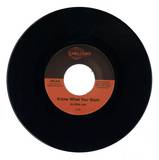
Melodies International proudly moves forward with an elusive piece of mid-tempo Chicago soul originally performed by Gloria J. Jennings in 1977.
Gloria was signed to Stage Productions as a gospel singer with pure and raw talent she had developed in the choir of her father's Southern Baptist Church. She was 16 years old at the time. To tutor her for R&B vocals, Willie C. Nance of Stage Productions spent 3 months taking the artist back and forth for vocal training 25 miles each way, 3 days per week.
At the time, Mr. Nance had made plans to work with singer and songwriter Theresa Eagins to record Know What You Want'. However, two days before the recording was set to begin, Ms. Eagins refused to move forward with the recording as she chose to take her religious faith more seriously and forgo the singing of secular music. Hence, Stage Productions turned to Gloria Jay to perform a song that would go on to move people thousands of miles away, many years later.
One of them was Patrick Forge: Back around 1990 I had a residency upstairs at the Wag Club on a Friday night alongside Paul Martin (he was Gilles P's A&R right hand man at Talkin Loud), the night was called Respect and we played mainly Soul, Boogie and Jazz-Funk. Many years later I bumped into Paul at a record shop and he quizzed me about a tune I used to play at the end of the night at Respect. Hhe described it as being an independent Soul seven inch on a red label, slow to mid tempo... and more to the point a bullet of a record. It piqued my curiosity so much I burrowed through my seven inches and even made Paul a compilation of likely contenders, his response was lovely selection, but it's not on there!'. Damn, a mystery! Many moons later whilst I was living in Japan, my tenant in my London flat said she'd found an old mixtape I'd done for her way back when and was desperate to know the identity of something she was calling the choo choo song'. Eventually when I was back in London she played the mixtape and I quickly identified her tune as Fabrica' by Cesar Mariano, however letting the tape play some time later a familiar descending chord sequence catapulted me back to those Friday nights at The Wag, and Gloria Jay's plaintive vocals reminded me of a record that had been absent from my life for far too long. I've no idea what happened to my original copy, I hunted another one down straight away, and I've kept it close ever since. Know What You Want' is a song that goes deep in such a simple, unaffected, almost naive way, Gloria's voice is both sweet and raw, it's built on simple chords and obvious instrumentation, but it's so much greater than the sum of its parts.
Know What You Want' is soul music, pure and unadulterated, there's nothing getting in the way of the feeling, it's straight from the heart.' Carefully re-mastered from the tapes, MEL008 comes forth in its original 7' format with a 14'x14' poster.