Originally released in 1999 on the Duet imprint, Robert Hood's "Sophisticcato" stands as a concise but potent example of his late-'90s minimal techno philosophy. Built around four tracks, including the title cut, "The First Night" and two versions of "Cobra Seed", the record features his signature approach with stripped-back drum patterns and hypnotic loops that prioritise rhythm over unnecessary embellishment.
Throughout the year M-Plant's Perpetual Masters series has been releasing one track per week from Robert Hood's extensive music archive, remastered by legendary German producer, Thomas Heckmann. Alongside those weekly digital transmissions are accompanying vinyl drops, so following April's "Psychic / Pole Position" 12" is the "Sophisticcato" EP in May.
Поиск:51
Все
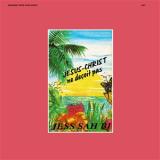
Jess Sah Bi is well-known as half of the legendary duo Jess Sah Bi & Peter One who brought homegrown Country-Americana to the West African masses with their smash debut Our Garden Needs Its Flowers in the mid-1980s. Touring stadiums and reaching listeners worldwide, their music has racked up millions of spins on YouTube and remains imprinted in the hearts of Ivorians of a certain age. ATFA reissued their album in 2018, garnering critical acclaim from publications including Pitchfork and Rolling Stone and reaching a new generation of listeners outside Ivory Coast (Cote d'Ivoire). Sometime in the early 90s, Die Sahbi - or Jesse, as he known to friends-became gravely ill with an unknown ailment and almost died. He visited various doctors and all kinds of religious healers and nothing helped. One day he went down to an Evangelical Christian revival in his neighborhood. They prayed over him and he was delivered. He says, "Their prayers helped chase out whatever demons and unhealthy spirits were inside me. After that my illness went away. When I went to the United States a few months later on an exchange program I wanted to make music to thank God because I was saved." He recorded an album of music praising God in order to honor a promise he made to himself at the depths of his desperation in the hospital. The album Jesus-Christ Ne Deçoit Pas Jesus Christ Does Not Let Us Down came out in 1991 and sold around 3000 cassettes in Ivory Coast. The master tape was lost along the way so the recording has never been on digital platforms until now. Jesse didn't have much time to record while visiting South Carolina, hence the relatively short album, 6 songs including two reprises for filler. A local pastor connected him with a studio and some American musicians (Robert Fortner and Gary Davis) to help. They added acoustic guitar, percussion and keyboard accompaniment to Jesse's soaring French and Gouro vocals, harmonica and finger-picked acoustic. The resulting recording is deeply soothing and contemplative music that perfectly compliments the songs already embraced by millions. But he had to find the rest of the studio expenses-$600 total-which he secured drawing cartoons for UNICEF. Jesse is Ivory Coast's first political cartoonist, a vocation for which he was widely celebrated at the time. It also made him a few enemies which lead to him leaving the country permanently a few years later. Jesus-Christ Ne Deçoit Pas is Jess Sah Bi's first and only gospel album. Fortunately, fans responded with enthusiasm: widespread radio airplay and concerts followed, along with a growing solo profile in the country. The first big gospel artists in Ivory Coast were the duo Mathieu et Constance, who emerged in 1989. There was a bigger gospel music movement in English-speaking counties like Ghana and Nigeria (Christians make up roughly 40% of the population in Ivory Coast, slightly less than Muslims). Jesse didn't have any intention of working in Christian music but he realized, "You don't make music to make money-you want to send a message." In the years since Jesus-Christ's release, gospel music in Ivory Coast has grown to become a key part of music culture in the country. Spiritual music appears in community actives across the public and private spectrum from religious gatherings and parties to television broadcasts and music festivals. And, as it has evolved and indigenized locally, gospel music has picked up elements of traditional Ivorian music, reggae and soul. The album ultimately precipitated the demise of the duo, who were soon separated geographically as Peter One relocated to Nashville. He went on to become a nurse and release a successful solo album on Verve following the ATFA collaboration. Nowadays Jesse lives in the Bay Area and continues to record and perform music wherever and whenever he has the chance. He is publishing a new book of humorous cartoons in 2025 and his most recent album Never Give Up came out in 2020
Originally produced by Visnadi with vocals by Janice Robinson,
this 12-inch includes the re-edited "original club mix,"
and for the first time on vinyl, remixes by Paul Morrell and Michael André & SMB.
Over 13 million streams on Sound Cloud,
over 10 million views on YouTube,
over 50 million plays on TikTok in the last few months.
Shaped from fragile, emotionally charged piano motifs that distort, disappear and transform into dense, cinematic textures, 'CANALS' is a debut that's finely matured, the result of years of friendship and growth. Italian artist Vanja Sturno and Montréal-based Belgian-Spanish composer Pablo Geeraert (aka Sanea Ima) have worked together extensively on various projects up until now, but 'CANALS' is their first official release as a duo. Having both studied music academically, the pair were eager to work more intuitively, so applied their well-honed set of skills to sound that, instead of fitting into a conceptual box, reflected more personal experiences.
Back in 2023, Geeraert travelled to Rome to support his friend at a difficult time and, during the trip, received some bad news of his own. The complicated feelings unconsciously surged through a series of delicate Ryuichi Sakamoto-inspired piano improvisations and a new project began to coalesce. They didn't realize it at the time, but once the record was finished, Sturno and Geeraert began to understand that the entire process had been a form a joint catharsis - a release of pressure. They were able to function so effortlessly and swiftly because they had already provided the space for each other to resonate emotionally and the music flowed from that point.
So the album's title, while remaining ambiguous, suggests its formation: a sequence of eight interconnected channels that feed a creative whole. On the first segment, Sturno and Geeraert's initial recordings can be perceived most nakedly, the melancholy, Satie-like phrases floating peacefully for a moment before the tranquility is agitated by stormy distortions and swelled into thick waves of harmony. The piano provides the record with its emotional anchor, offering focus and clarity as multi-dimensional noise wells up around it before inevitably dissipating, leaving gentle, unadorned sounds once again.
And the familiar instrument is reshaped into a wheezing artificial organ on the animated 'CANALS III', punctuated by percussive, tape-warped pitch fluctuations that seem to bite into its very essence. Gauzy acoustic granulations snowball into a powerful, bass-heavy crescendo on the fourth part, setting the tenor for the album's second half. But after the crushing 'CANALS VI', possibly Sturno and Geeraert's heaviest track, a brief tremolo-heavy vignette that ripples through experimental rock and ambient music's braided history, the duo clear the air with a jazzy diversion, introducing soft woodwind blasts as a palate cleanser before an epic, widescreen finale.
It's an album that's best absorbed as a whole, a vortex of ritualistic, rhythmic repetitions that Sturno and Geeraert appropriately refer to as "spiral listening".
Berlin-based duo Mug present their debut album 'The Well'. With a range of influences from no-wave, shoe-gaze, rock, and ambient, “Mug’s” emotional rawness refracts through a lens of spectral soundscapes and austere textures.
Intimate and sincere, 'The Well' is about licking your wounds after a breakup, finding light within the cracks and letting it grow.
Ludwig Wandinger and Yves B Golden began their musical collaborations based on mutual respect and interest in each artist's vastly different backgrounds. Golden grew up singing in her grandmother’s pentecostal church, but is known widely for published essays and poetry. Wandinger, is an internationally acclaimed drummer, music producer and visual artist, interacting in various fringe music scenes.
What began as long distance collaborations released under various outlets such as Caterina Barbieri´s light years, Wandinger and Golden, now living in the same city, morphed into a protracted exploration of songwriting and improvisation, a process defined by immediacy and unfiltered expression: “first thought, best thought.”
Though “The Well” marks the first release from this impulse driven duo, this album promises an ongoing evolution, or discovery, wherein genre specificity is inconsequential.
- A1: Jungstötter Overturn 00:05:30
- A2: Jungstötter Sunk 00:04:10
- A3: Jungstötter That Noise 00:03:30
- A4: Jungstötter Possess 00:03:01
- A5: Jungstötter Tell This Lover 00:04:45
- B1: Jungstötter Loud Fingers 00:05:30
- B2: Jungstötter Seaweed 00:02:51
- B3: Jungstötter / Ronja Again 00:04:21
- B4: Jungstötter Consume Me 00:04:00
- B5: Jungstötter If Int 00:01:30
- B6: Jungstötter Elastic Avenue 00:03:55
‘Sustained’ is the new album by Jungstötter, the solo project of Berlin-based songwriter and musician Fabian Altstötter. With sparse, poignant arrangements of piano, strings, electronics, and noise, Jungstötter composes a tender, raw, and poetic song cycle of exquisite romanticism, featuring a cast of close collaborators including the Berlin-based artist Ronja (Roomer). Evoking the fervent vocal versatility of ANOHNI and Scott Walker, Jungstötter adopts the human breath as a central metaphor in a miraculously moving opus of intimacy, vulnerability, and communion.
Across ten tracks of experimental pop songcraft, notes oscillate, soft strings linger, piano ambles, noise billows up and sears back into itself – and all of it is bound by a distinct voice that roams from a remote, warped undertone to an immediate melodic intensity.
Distorting the soft edges of vocal melody with rattling tactile noise, ‘Sustained’ is a mercurial portrait of layered lyric and contracting sound. The third album by Jungstötter, ‘Sustained’ bends away from the more dense, knotted sounds of his last two solo albums, ‘Love Is’ (2019) and ‘One Star’ (2023), toward a particular rawness that reestablishes the strength of poetics, of vocal sound, and the softness of song when reduced, restrained, redirected.
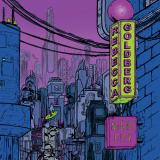
Rebecca Goldberg presents the release of her debut full-length album, Night City, a deeply personal and expansive body of work that reflects a decade of artistic growth, exploration, and connection. Produced and arranged by Goldberg, this album captures the evolution of her sound through years of practice, travel, collaboration and mentorship.
Including 12 tracks across a 2x LP, Night City draws from the rich lineage of Detroit electronic music. Goldberg cites influences from dystopian cityscapes and futurism to space exploration and the possibilities of technology. The result is a forward-thinking genre-spanning collection.
The album features two notable collaborations: “444,” created with Jnn Aprl and recorded in her studio in Seoul, South Korea, and “Tunnel,” featuring Detroit techno artist Tiptonaires. Each collaboration adds a distinct voice and texture to the record’s immersive sonic world.
Night City was mixed and mastered by Andy Toth, with album artwork illustrated by Mark Sarmel. A limited run of vinyl is available for preorder now, pressed at Archer Record Pressing Co. in Detroit. The album will be released on Detroit Underground.
At its core, Night City is an offering shaped by experience and guided by curiosity, marking a significant milestone in Rebecca Goldberg’s musical journey.
The fifth release from Diggers Society Records is signed by one of the most influential duos in the underground electronic scene of the past 20 years: The Analogue Cops. Lucretio and Marieu deliver a finely crafted, dancefloor-oriented EP, strongly defined by the techno, electro, acid, and house sounds that have become their unmistakable signature. The A-side opens with two full-on techno dancefloor bangers, ‘Fake Black Out’ and ‘Do What You Want’, while the B-side leans more towards house, driven by the hypnotic progression of ‘Milano Gipsy’ and the intense bassline of ‘Chinese Coffee’. The duo’s creativity and brilliance shine through in raw, unconventional solutions that surface in every moment of the EP.
This special edition also includes a 10" limited to 100 hand-numbered copies, featuring two exclusive productions: “Burning Jack” and “Yes Or Not”.
Artwork by @designattitude_graphic
- A1: Return Of The Knödler Show 2 52
- A2: The Frogs Of Miwa - Cho (1) 4 52
- A3: Waiting (I) 5 38
- A4: An Old Friend Passes By 3 46
- A5: Coco Bolo Strip (1) 5 25
- B1: Peace And Pipe Utopia 3 14
- B2: Unidentified Dancing Object 1 44
- B3: The Call (I) 2 41
- B4: Wenn Das Rohr Dommelt 4 03
- B5: Mariahilf (Live Version) 3 36
- B6: Watching The Shades (I) 2 59
- B7: Playing The Table Music (Ii) 2 43
- C1: Could Be Nice Too 5 29
- C2: Ox Of Inner Depth 4 51
- C3: Ymir Shows Up 3 58
- C4: Could Be Nice 5 24
- C5: Playing The Table Music (I) 4 23
- D1: Coco Bolo Strip (Ii) 4 52
- D2: Locusts Looking Like Men 5 55
- D3: Waiting (Ii) ︎ 3 36
- D4: No Stove 2 29
- D5: An Old Friend Passes By Again 3 00
- D6: Heimkehr Der Holzböcke 3 16
Black Truffle is thrilled to announce Dalbergia Retusa, an extensive double LP selection of the solo guitar music of Hans Reichel, compiled by Oren Ambarchi. Last heard on Black Truffle as one quarter of the joyously anarchic Bergisch-Brandenburgisches Quartett, Hans Reichel (1949-2011) is one of the great figures of experimental guitar music. Though perhaps lesser known than peers like Derek Bailey, Fred Frith and Keith Rowe, Reichel’s rethinking of the instrument was in some ways the most radical of all. Early on, he dispensed with existing guitars to build a series of his own that explored the use of additional strings and fretboards, moveable pickups, extra bridges, special capos, and other innovations documented in the extensive booklet accompanying this release.
Reichel was a long-term resident of Wuppertal, the small Western Germany city that became an unlikely centre of European free jazz in the late 1960s, also home to Peter Brötzmann and Peter Kowald. His solo debut Wichlinghauser Blues was an early entry into the FMP discography and began a relationship with the label that stretched into the 1990s; all the solo performances heard here were first released on FMP. As Reichel says in the charming archival interview with Markus Müller included here, he was ‘always a cuckoo’s egg at FMP’, a label that began as an outlet for roaring European free jazz. What strikes the listener right from the opening selection on Dalbergia Retusa—‘Return of the Knödler show’, from 1987’s The Dawn of Dachsman—is the extraordinary beauty of Reichel’s music, at once alien in the shimmering sonorities and unconventional pitch relationships made possible by his invented instruments, and deeply lyrical, even romantic in its harmonic content. Growing up in West Germany in the 1960s, Reichel’s formative influences were mainly British and American rock bands, a background that shines through in many of the pieces included here: ‘An old friend passes by’ is haunted by the ghost of Hendrix’s rhythm guitar, and the wild closer ‘Heimkehr der Holzböcke’, taken from a rare 1975 7” and the only piece to use overdubbing, layers errant hammer-on and slide tones over a Canned Heat boogie chug.
Reichel was an important source for the development of Oren Ambarchi’s own extended approach to the electric guitar. Appropriately enough, his selection opens with the very first piece by Reichel he ever heard, on a flexidisc included with a 1989 issue of Guitar Player magazine. Though Reichel collaborated with others extensively in many settings and also performed on violin and his other major contribution to instrument invention, the daxophone, his music for solo guitar remains at the core of his oeuvre. Focusing exclusively on solo pieces recorded between 1973 and 1988, the 23 pieces on Dalbergia Retusa showcase the range and consistency of Reichel’s work, allowing the listener to see how his performances developed hand-in-hand with his instrumental inventions. On a piece from his very first LP, played on an 11-string instrument (partly strung with piano strings and using a schnapps glass a slide), we hear his intensive exploration of fret-hammering to create zither-like, chiming tone, which Reichel would hone further in later years with a double fretboard guitar specifically designed to be hammered rather than fretted and picked. On a piece from 1979’s Death of the Rare Bird Ymir, Reichel uses two steel-string acoustic guitars at once, with beautiful results: ‘some even say too beautiful’, he jokes in the interview included here. Many of the pieces from the 1980s make use of varieties of the ‘pick behind the bridge guitar’, instruments of uncanny harmonic richness primarily designed to be played on the ‘wrong’ side of the bridge. At times the unexpected behaviour of attacks, resonance, and decay can almost seem electronic, conjuring up the technology-assisted work of Henry Kaiser or even Fennesz, but realised solely through Reichel’s unorthodox techniques on his invented instruments. Extensively illustrated with photos and Reichel’s own plans and drawings of his instruments, Dalbergia Retusa is an essential introduction to the unique world of Hans Reichel. Rarely has music been at once so strange and so beautiful.
- Easy Peeler
- The Carpet Song
- Willows
- Sunny Day (Deadline)
- Blue Star
- Front Row
- Nothing Can Be Fixed In This Place
- Dirty Dream
- Japanese Garden#
- I've Stopped Getting Chills For A While Now
- Cruel
- Sleep It Off
- It Never Happened
- Hot Wheels
Germany's most exciting new indie voice BROCKHOFF opens a bold new chapter and announces her debut album Easy Peeler, out June 5th 2026 via PIAS Recordings. “Easy Peeler” is the ambitious culmination of BROCKHOFF’s musical coming-of-age journey. It's an album that bridges grunge-laced indie rock and early-2000s pop textures, wrapped in a deeply authentic songwriting voice. It’s a reminder that even when life feels uncomfortable, there’s beauty in being an easy peeler. For Fans of: Modern indie acts Phoebe Bridgers, Snail Mail, Soccer Mommy as well as 90s bands such as Weezer or The Cardigans Tracklist: 01. Easy Peeler 02. The Carpet Song 03. Willows 04. Sunny Day (Deadline) 05. Blue Star 06. Front Row 07. Nothing Can Be Fixed In This Place 08. Dirty Dream 09. Japanese Garden# 10. I've Stopped Getting Chills For A While Now 11. Cruel 12. Sleep It Off 13. It Never Happened 14. Hot Wheels
- A1: School
- A2: Baby
- A3: Harpsichord
- A4: Teenage Birdsong
- A5: Romantics
- B1: Love Salad
- B2: Insect Near Piha Beach
- B3: Hi Hello
- B4: Istm
- B5: Something In The Sadness
- C1: 1993 Band Practice
- C2: Green
- C3: Bubbles At Overlook 25Th March 2019
- C4: 4T Recordings
- C5: This Is For You
- C6: Mama Teaches Sanskrit
- D1: Locked Groove 1
- D2: Locked Groove 2
- D3: Locked Groove 3
- D4: Locked Groove 4
- D5: Locked Groove 5
- D6: Locked Groove 6
- D7: Locked Groove 7
- D8: Locked Groove 8
- D11: Locked Groove 11
- D12: Locked Groove 12
- D13: Locked Groove 13
- D14: Locked Groove 14
- D15: Locked Groove 15
- D16: Locked Groove 16
- D9: Locked Groove 9
- D10: Locked Groove 10
A new voice enters the orbit. MBM carves three slow-burning studies in tension and release – merging patterns with fragile harmonics, melancholia, and restraint. Everything feels carefully placed yet emotionally exposed. Moments of pressure give way to space, steel meets softness, rhythm turns inward. No peaks. No breaks. Just pulse, texture, and tone – in constant negotiation. Music for the body, drawn from the depths. Soultones hits hard. Feel it.
It Goes Further...IDREN NATURAL & THE UK PLAYERS reissue! The original version of 'Further' was recorded by the INI Oneness, Idren Natural & The UK Players on analogue tapes at the Jah Works '7th Sense' Studio in UK in the late 90's. The tune went on to have great success on sound systems around the world and since became a highly sought after collectible.
Jah Works & The UK Players are reconvening at Earth Works Studio in Amsterdam to record more music together in tribute to their mutual friend and musical collaborator, Idren Natural, who is sorely missed by many in our musical family & those that worked with him intend to make sure that his music and message lives on! This 10" has an alternative vocal mix & alternative dub cut to the original 7", carefully remastered from the original tape mixes & now presented on 10" at 45RPM.
Here it is, finally.. something new, or is it new? A new classic jungle EP consisting of analog synthesizer, sine-wave bass, and direct-from-vinyl drums sampled on a hardware Akai sampler for a classic-style Jungle EP. The first in a series of (?) EPs direct from the source, in a limited vinyl release made for the listener of alternative environments, out-world spaces, and ether-real places, to be found only here.
Marking their 51st release, long time label collaborator and friend Owain K returns to 200 with a brand new solo 4 track EP, Kinematic Equations.
Having joined 200 back in 2012 with the “Colonius EP”, a lot has happened in that time. With 50+ releases on the imprint and Owain setting up his own blog and a label under the Innate banner. However, some things remain - mutual friendship, a shared love of underground Electronic music and Kölsch!
15 years on the Welsh rooted, Bristol (UK) based artist delivers some of his best music to date in the shape of the “Kinematic Equations”. A four track journey into astral electronics that weave together his take on deep space sounds, fused with a healthy dose of dubby aesthetics that are close to the label’s heart.
Starting with the rhythmic pulse of ‘Axial Shifts’ on side A, chords steadily arc into life as the intensity rises and falls, all whilst keeping a measured trajectory. Drifting into the ether, ‘Open Cluster’ fills the zone where heavy sub meets filtered percussion to a rounded 909 kick, set with dreamy atmospherics and shimmering delays.
On side B ‘Eta Aquarid’ blazes a powerful trail to machine-like rumbling and evolving pads which burst brightly over the course. Last but not least, the magical aura of ‘Ghost Of Jupiter’ appears - a fusion of glimmering melodies that float over driving bottom end and steady percussion, bringing the EP to a perfect conclusion.
Written and produced by Owain Kimber
Mastered by Emanuel Geller at Salz Mastering
- 01: L'école De La Nuit (:51)
- 02: La Règle Du Vieux (:56)
- 03: Hà Mar (Feat Alvaro Lancellotti) (:07)
- 04: Rêve 36 (01:58)
- 05: White Light (Feat Monica Tormell) (03:58)
- 06: R Ville (04:21)
- 07: A Thousand Frames (Feat Monica Tormell) (03:48)
- 08: Beauté Tarée (02:41)
- 09: A Presença (Feat Julio Pimentel) (01:58)
- 10: Deep Side Center (03:54)
- 11: Monsieur Zinzin (02:58)
- 12: Souffle Sauvage (01:38)
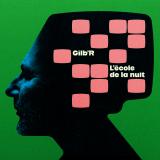
“L’École de la nuit” marks Versatile Records’ 30th anniversary with a musical découpage by label founder Gilb’R. The album’s 12 songs and numerous collaborations form an adroit exploration of life and music, all threaded together by lifelong “partner in crime” I:Cube’s signature mixdowns.
“Hà mar” represents the peak of the album’s organic spectrum—an instantly captivating melodic and percussive Brazilian song featuring Alvaro Lancellotti on guitar and vocals—while “White Light” serves as its electronic counterpart, with a classic pop feel, featuring Swedish singer Monica Tormell
Musically, “L’École de la nuit” moves across many different landscapes and languages, intersecting rock, shoegaze, ambient, electronica, and, of course, jazz. Gilb’R collaborates with a rich arsenal of guest musicians: saxophonist Quentin Rollet; guitarist and producer Maxime Delpierre; French artist Judah Warsky, with whom Gilb’R previously released an album; Jonny Nash, producer and guitarist; as well as Ben Shemie. Not least, father and son Julio and Julinho Pimentel contribute their distinctive percussion, alongside François Creamer on bass clarinet.
“L’École de la nuit” is the 50th album release on Versatile Records. It was initiated in Amsterdam, then entirely reimagined and rebuilt in Paris. It stands as a manifesto for the album format and a tribute to the listener.
Damian Dalla Torre returns with People Pleaser, a record shaped by movement, collaboration and an ever-deepening relationship with sound as environment.
The Leipzig-based multi-instrumentalist, composer and producer first found wide attention with his 2022 debut Happy Floating, and his subsequent album I Can Feel My Dreams was named the #1 Contemporary Album of 2024 by The Guardian, an accolade that broadened his audience and deepened confidence in his evolving voice. That second album, written between Europe and South America, opened unexpected doors and took Dalla Torre to stages across New York, Japan and Italy. “When you release music, it’s very intimate,” he reflects. “You show your emotions pretty raw. I was kind of scared. But getting so much positive feedback gave me a lot of self-confidence to try out more.”
People Pleaser begins in that quiet shift of confidence.
The title stayed with him for months before he committed to it. “It was a working title for a long time,” he says. “I didn’t actually think I would use it. But this term also felt somehow relevant in connection with the phase of self-negotiation during the development process. Some aspects are related to pressure, others are positive.” The ambiguity felt right. Rather than presenting it as a statement, Dalla Torre leaves it open, an invitation rather than a confession.
At the centre of People Pleaser is collaboration. Guitarist Bertram Burkert, whose playing stretches from classical delicacy to electric abstraction, joined Dalla Torre in the studio for an intensive three-day session, recording a wide palette of textures that would become the backbone of the album. Vocalist Laura Zöschg, a key live collaborator, harpist Babett Niclas, organist Felix Römer, tape experimentalist Markus Rom, marimba and vibraphonist Volker Heuken and Japanese artist Manami Kakudo also contribute, creating a sound that feels intimate yet expansive.
Collecting Orders For 2026 Repress
It's safe to say that Mark E is something of a master when it comes to doing a hell of a lot, with not very much at all.
Back in 2011 'Call Me' was heard everywhere, especially the splendid Dixon edit, which teased out the drama and made the most of that spoken Ms Ross vocal.
It's testimony to the staying power of this track, and the fact it's quite rightly regarded as a Deep House classic that it's had a recent revival, largely from Luke Unabomber across his head-spinning summer tour schedule. We started getting video clips from the curious..."Do you know this track, sounds like Carl Craig remixing 51 Days ?"
Given that we sold out the initial run in a matter of days back then, we thought it was high time we put the call in for a reload.
So here you go, the classic 'Call Me' backed with a truly wonderful new jam from Mark, which is another zinger in a catalogue choc full of 'em...
- A1: Echi Tribali 2 01
- A2: Danza Della Pioggia 2 31
- A3: Totem 2 51
- A4: Danza Della Morte 3 14
- A5: Rito Della Fecondazione 2 45
- A6: Danza Di Guerra 2 29
- B1: Rito Nuziale 1 55
- B2: Iniziazione 2 09
- B3: Rito Del Sole 1 14
- B4: Invocazione 1 07
- B5: Rito Della Fertilità 1 23
- B6: Danza Dello Stregone 2 28
- B7: Rito Di Propiziazione 2 35
- B8: Adorazione 1 58
“Alle Sorgenti Delle Civiltà Vol. 3 - Africa, Australia, Nuova Zelanda” (1971) is the third and final chapter of a triptych of folk-based sound recordings released by Folkmusic. The album contains a total of fourteen tracks by Braen and Raskovich, i.e. the a formidable multi-instrumentalists Alessandro Alessandroni and Giuliano Sorgini, each grappling with seven different compositions characterised by a tribal mood. Among the grooves of this record, repressed on vinyl for the first time by Musica Per Immagini, it is possible to discern an in-depth study of one of those forms of popular culture referring to a specific geographic area, comprising the types of traditions often handed down orally and concerning knowledge, beliefs, fairy tales, legends, myths, narratives linked to the dimension of the fantastic, customs and traditions, namely music. Festivals and propitiatory rites, fights and dances, magical and sacred representations were all expressions of life whose sound and rhythm contributed to an appropriate description of the environment. Alessandro Alessandroni and Giuliano Sorgini have chosen some of the most significant musical characters that even belong to specific ethnic realities scattered across two distant continents, where the use of some of the typical instruments has favoured the realisation of sonorities of considerable interest.