Reverse board tip on with silver pantone print. The first ever reissue of Dorothy Carter's 1978 folk/psych/drone masterpiece. A truly unique album in Dorothy's catalog of otherwise traditional psaltery folk music, Waillee Waillee's essence sits in the confluence of Dorothy's mastery of the dulcimer; its shimmering notes fully enmeshed with the tremulous, cavernous drones of Bob Rutman's bowed steel cello. The core of this album, Dorothy's only with a full band, lies in the contradiction of traditional psych-folk idioms and the minimal avant-garde, referencing Henry Flynt and Laraaji as much as Karen Dalton. This LP version includes 12 page booklet with unpublished manuscripts, drawings, photographs, and songbooks of the songs from the album, as well as extended liner notes from friends and family of Dorothy Carter, including notable musicians such as Laraaji, Bob Rutman, and Alexander Hacke (of Einstürzende Neubauten). Drops soon - a joint release between Palto Flats & Putojefe Records.
Dorothy Carter was many things - a virtuoso player, storyteller, historian of Celtic and Appalachian folk music, avid lifelong busker, avant-garde musician, and itinerant troubadour, laying a framework for music that existed both within and outside of standard folk idioms - never better represented than on her 1978 masterwork, Waillee Waillee. Underscored by Bob Rutman’s cavernous bowing of the steel cello, the richness of Waillee Waillee’s sound produces an album unlike any other in her discography. In particular, its two side-ending pieces, “Summer Rhapsody” and “Tree of Life,’’ glide with the shimmering filigree of hammered dulcimer and Dorothy Carter’s ephemeral voice floating over Rutman’s droning buzz of the steel cello. The elements of these two tracks suggest something akin to a transcendental Appalachian raga or whirling cosmic folk music, an effortless combination that serves to add additional substance to the remaining tracks on the album.
The title track is one of her most enduring compositions, often performed in stripped down versions throughout her career, and one of her sole recordings featuring a full band, with the contrapuntal interplay of tremulous flute, vibrating steel cello, bass and drums. Lyrically and tonally, her voice would never sound as stirring and refi ned as on this, her most outwardly accessible song.
She counted musical colleagues as diverse as Constance Demby, Einstürzende Neubauten and Laraaji, as well as her lifelong artistic partner and friend Bob Rutman, whose imprint is felt throughout the grooves of this record. The master tapes for this recording were fortuitously discovered in Rutman’s Berlin studio, many, many years later. As recounted in Laraaji’s contribution to the liner notes, Dorothy was “someone who really influenced my early zither exploration and vocabulary and inspired my shift toward hammered zither performance and recording,” after encountering him busking on the sidewalk one day in the 1970s. Later, when living in Berlin in the early 1990s, Dorothy would begin work on manuscripts detailing the history of the dulcimer family and providing extensive sheet music, selected material of which is reproduced in the twelve page booklet included with this release. Dorothy would find later success touring and performing in the late 90s with the ensemble Mediæval Bæbes, which she led with British musician Katherine Blake, playing a prominent role on their first four albums.
Suche:6 th studio
Mates now for many moons - Mr.G and Duncan Forbes met at the time of Duncan’s Animated project; forging a friendship through weekly record shopping trips; a love of Soho; and regular banter over Duck and Rice. But it was their chance meeting at Glastonbury a few years back which finally sparked them to work together; since leading to a string of remixes for both Phoenix G and 49North, and culminating in their first, combined studio creation, ‘Curry Nite’, in late 2022.
Fast forward to Spring 2023, and what we have here is their first, collaborative full-length on vinyl - artist album, ‘All Under One Moon’. Conceived and created in Duncan’s studio on a long, full moon weekend with cosmic forces at play; the pair - both chomping-at-the-bit with excitement and no real plan or outcome in mind - set about creating, with a pure love of making music and the freedom to go wherever it might take them as their only guide. As G sums up for us…
“Two friends of old with a shared love of music ,having fun making music together in D’s studio. It was a long time coming but in truth caught us both off guard… the sum of both parts being sooo much more (y). The beauty of being free, making music. What a great moment”
So, on paper, we have - two mates, excited to play away in the studio with their favourite toys until they have to come up for air. But on record, what we actually have is - two close friends, united by a deep love of House, Techno and everything between / beyond - relishing a rare opportunity to jam, and with freedom…. it’s only when you consider quite how almanack-like our two music-obsessed pals are anyway, as individuals; that it begins to dawn on you, just how mind-meltingly rich and stylistically explosive - an album, that’s the sum-of-their-parts - is inevitably going to be.”
After more than 20 years of studio work, it can be said that this album is the result of long hours of introspection and solitude. The inquisitive, investigative and analytical listening of the earliest works of artists such as Robert John Brown & Sean Booth, Mike Paradinas or Jochem George Paap influenced me a lot during the execution of this EP. The deconstruction or deconstructive process was something I needed to explore and put into practice, giving as a result naked periplos or sound spaces, in which the protagonism belongs solely and exclusively to sounds or textures that for my part deserved a thorough review and analysis, making these periplos a challenge in themselves, giving way to resulting works where the rhythmic section was in the background or simply disappeared. In relation to the cover design, thanks to Julian Schnabel and T?fol Cruz for the inspiration and the final artwork respectively.
microCastle's final offering of 2023 welcomes Colossio and Luke Garcia to the label for their debut EP. Colossio has been a rising force across the Indie Dance spectrum for the better part of a decade. Based in Mexico and taking inspiration from krautrock, psychedelia and the golden age of Mexican cinema, the Monterrey resident has continued to open up endless creative avenues and furthered his boundless appeal with releases via Borders of Light, Calypso Records, Duro and Exit Strategy. Meanwhile, Spanish artist Luke Garcia has enjoyed similar success across his decade-long career. The Madrid resident has been praised for his borderless approach to production, in turn landing standout projects for Diynamic, Innervisions, Sum Over Histories and TAU. As occasional studio partners since the beginning of 2023, Colossio and Luke made their collaborative debut via Engrave Ltd with ‘Let Go’, a release which would precede a recent contribution to Innervisions ‘Secret Weapons’ Part 16. Now, continuing to build on their creative partnership, Colossio and Luke end the year with their microCastle debut ‘Amen / Ryen’.
Played by Ame during the summer season, EP opener 'Amen' finds Colossio operating in solo capacity and taking square aim at the dancefloor. Full of rejuvenating energies, the Monterrey resident cleverly blends robust kick drums and electric grooves with swerving chord stabs and chanting vocals. Colossio’s creative attitude reveals itself further across the main break; with a hyperventilating build dropping out into a rush of main room alchemy, all laid out over a bed of percolating acid. Selection two ‘Ryen’ finds Luke Garcia crafting a feel-good indie-dance excursion that’s nicely suited for those uplifting club moments. Booming yet dreamy, its colourfully cruising hypnotism instantly commands your attention, through snatches of vocal fragments and siren-like synth flares, eventually culminating in a finale of rave-inspired euphoria.
The EP’s halfway point is marked by the behemoth sized vibes of ‘Situation’. Here, Luke and Colossio masterfully synthesize their talents while breaking down boundaries to serve up a melting pot of hard-edged dance. Its pneumatic energy turns over quickly, flowing through a brutalist maze of mutated vocal gates and fiery rhythmic fractures, before reaching a hyperspeed collision of sonics for the ultimate high-octane drop. Rounding out the release is ‘My Body’ which once again finds Colossio and Luke combining their extensive forces. The cross-continental duo drive each other forward beyond their individual comfort zones for a mature club-effective record; one where thunderous beats, weighted rhythms and looping vocals prelude a collection-closing melodic finale. Artwork: Mauricio Seidel.
Dub versions of the songs "ShiningDub" and"Shut Up Dub" from the new Lee "Scratch" Perry Album 'Heaven', recorded and mixed at "Secret Lab's studio" by Olivier Gangloff assisted by Romain Gangloff Voices recorded by Olivier Gangloff at "Studio God LSP".
“Sainen Hildo” is an album based on Miguel’s original compositions, recomposed and rearranged for accordion and voice by the two composers. Using the natural resonance and harmonics of these two instruments to influence their introspective interactions, resulting in evolving drones and tones and puzzling percussive outbursts. Unusual and at times unsettling, they manage to create a calibrated, deep and complex exploratory universe of ambience and drone where listening becomes a ritual. Highest recommendation for fans of Pauline Oliveros, Eliane Radigue or Phill Niblock.
Garazi Navas (accordion + voice). Original compositions by Miguel A. García. Recomposed and rearranged by Garazi Navas & Miguel A. García. Recorded by Ibon Rg at Azkuna Zentroa (Contemporary Art Centre in Bilbao) in June 2022, as part of the associated artists program. Mixing and mastering by Juan Carlos Blancas. Compiled by Mikel Acosta.
Acrylic painting on heavyweight paper by Maite Mugerza Ronse. Limited edition of 300 black vinyl LP’s housed in a coloured matt laminated cover. Released by Hegoa Diskak.
Dopelganger is the project in collaboration between classically trained accordion player and singer Garazi Navas (Usansolo, Bizkaia-Biscay, 1995) and Miguel A. Garcia (Vitoria-Gasteiz), an artist living in Bilbao with an extensive career in the fields of experimental music and sound art.
Garazi Navas / Classically trained at Musikene School of Music in San Sebastian with a masters in traditional music, Garazi, is a restless accordionist who, despite her young age, has taken part in a multitude of projects in theater, poetry, ballet, art installations and even playing with the Bilbao Symphony Orchestra. Her works are a personal interpretation of the close relationship which she feels exists between cutting-edge and traditional music.
Miguel A. García / Has performed extensively in Europe, America and Asia, both as a solo artist, improvising and in multiple ensembles. He has collaborated with dozens of artists (Al Karpenter, Jean Luc Guionnet, Sébastien Branche...) in studio and live, and appeared in more than a hundred albums. At the same time, he is organizer and curator of events, being founder of Club Le Larraskito, director of Zarata Fest, and part of the coordination of the cycle Hotsetan at Azkuna Zentroa itself
LTD repress !
With their new EP on their own label, Italian duo Orion deliver a record full of lowkey atmospherics, textures and sublime frequencies. 2 original tracks and 2 remixes from italian artists Primal Code and Luigi Tozzi.
“Lie” opens the record with those classic emotional elements coming out from a long cloudy day in the studio.
As previously heard on their Smoke Machine live podcast “Orange” plays with layers, cinematic pads and hypnotic drums.
On the flip Primal Code’s “Lie” version encapsulates their dreamy and tribal approach with an intricate acid bassline that will take you on a journey.
Luigi Tozzi’s dark and loopy remix is something for your brain. Subtle hypnotic melodies and roaring low frequencies are the main elements for this club version of “Lie”.
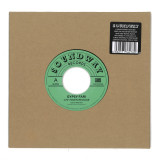
Reissue of the highly sought-after 7” from 1979 by Chicago
reggae outfit Gypsy Fari.
Gypsy Fari was a project born in the south side of Chicago
after a chance meeting between St Kitts expat Leroy Webster
and local music grad Kevin Coleman. The pair set out to blur
the boundaries of genre with their unique brand of music,
spearheaded by Webster’s Caribbean roots and fused with
the soul and blues the midwest is famous for.
A striking stand-out of the band’s repertoire comes via their
debut recording, laid down at Curtis Mayfield’s legendary
Curtom Studios. The EP opens with Chi-Town Reggae - a
super-charged blend of reggae and disco, led by Websters
infectious vocal, steeped in soul and powered by a relentless
rhythm section. Hail Jah follows closely, written on the hilltops
of the outskirts of Kingston, Jamaica, it’s a deadly roots reggae
missile that pays homage to Websters beginnings.
Once dubbed by a local news outlet “Gypsy Fari are to
Chicago reggae what Muddy Water is to Chicago blues” -
now remastered, repackaged and made available again for
the first time since its initial release
Francesco Sancricca aka Sancra is a new coming very productive Italian artist. Based in Rome he’s recently releasing his music on independent labels or on his imprint Ipso Facto while playing for local and international venues like, The Magick Bar, Coropuna or Starlane in London. Very emotional and complex when both producing and djing for this release he showcases his ability to blend dark and appealing sounds being never boring but always mental and uplifting like for the A1, a masterpiece ready to smash every dance floor with that endless bassline closing perfectly on the straight 4/4 beat with techno electro influences. The A2 powerful and more techno it’s a 90s echo of warehouse parties together with the malefic melody of the B1 while “closing” the ep with a more breaky B2.
Eternal Return is a must-have for fans of techno, electro, new wave driving music and anyone looking for a unique and innovative take on techno. With its mental sound and high-quality production, this EP is sure to become a classic in the world of electronic music.
Mastered in UK at The Fish Tank Studios pressed and distributed by Vinylfuture.
When Cicadas appear in the area they cause a huge uproar. It’s hard to escape the distinctive noise these critters make, reaching up to 120 decibels. The hypnotic, trance-inducing sound disappears with the insects. A few months after Cykada's explosive debut, the world was hit by turbulence and from Cykada there was silence - fortunately only seemingly, because the next cycle began underground, in the privacy of the studio. It was there that the cicadas matured, waiting for a metamorphosis.
The year 2019 was very successful for Cykada, with a brilliantly received debut album, concerts at numerous festivals in the UK and Europe such as Glastonbury, Wilderness, London Jazz Festival, BAM Festival, La Defense Jazz Festival or Love Supreme Festival, along with constantly composing and preparing material for the second album. As the musicians entered the studio, the coronavirus pandemic was already in full swing across the globe. It was clear then that the world would never be the same. With increasing restrictions Cykada went underground, waiting for changes to surface again. Unfortunately the expected change that was happening seemed only for the worse - Brexit and its socio-economic consequences, worldwide disinformation, accelerating climate catastrophe and Russian invasion of Ukraine. The collapse of the old world order is the perfect moment for metamorphosis and with this message Cykada steps out again into broad daylight, matured and carrying a message with their long-awaited second album “Metamorphosis”.
The meaning behind the title is multifaceted. It refers both to changes taking place in our society and changes to our world as nature defends itself from human stupidity and greed. It is also a reference to the personal and musical development of the band members in that difficult period. It all became a foundation to bravely attempt to make new beginnings.
The metamorphosis is also clear in the musical aspect of Cykada. Their debut album was already difficult to shoehorn into specific genres with their sound that balanced jazz, electronics and elements of global music styles. With the second album their eclectic style has evolved into something distinct and innovative, combining folk/jazz song form and improvisation with heavier sounds inspired by sound system culture and rock. The band grew into a septet thanks to multi-instrumentalist Rob Milne, expanding the horn section to 3 instruments and galvanising its sound. But the biggest change that happened compared to the first album is the singing of Cykada leader Jamie Benzies in singles “So Divided” and “The Crack in the Bricks”. Both songs carry an important message, showing us that the changes in the world are already happening and that only we can make it head in the right direction. This unique sonic mix along with the message unleashes a powerful energy that the musicians want to send to and infect every listener.
Jackie Mittoo is one of the most important artists in the history of Jamaican music. As founding member of the legendary Skatalites, as in-house arranger/producer at Studio One and as a solo artist in his own right leading groups such as The Soul Brothers, Sound Dimension and Soul Vendors.
These classic and rare recordings were made in the mid 1960's at Studio One. The Soul Brothers bridged the gap between Ska and the arrival of Rocksteady mixing it all up with Funk, Jazz and Latin styles. The Soul Brothers recorded at Studio One between 1965-1967. This was the transitionary period between Ska and Rocksteady where the music was a mixture of Funk, Latin and Jazz sometimes with a reminder of Ska and the hint of Rocksteady.
The previous era of Ska had been dominated by the Skatalites, the first in-house band at Studio One who created classic hits such as "Guns of Navaronne", "Man in the Street", "El Pussy Cat" and many more. Unfortunately the strong personalities in the group meant that The Skatalites stayed together for less than two years. It was also around this time that the mentally unwell Don Drummond was arrested for the murder of his girlfriend, the dancer Margerita.
In August 1965, barely a week after the demise of the original Skatalites, The Soul Brothers (featuring ex-Skatalites members Jackie Mittoo, Roland Alphonso, Johnny Moore and Lloyd Brevitt) were up and running as the new house band at Studio One.
The Soul Brothers were essentially a collective, releasing material under their own name or under a nominal leader (usually Jackie Mittoo or Rolando Alphonso). The group line-up changed over time with Bobby Ellis (trumpet), Bryan Atkinson (bass), Dennis Campbell (Sax), Harry Haughton (guitarist) and Joe Isaacs (drummer) replacing various members alongside the ever present Jackie Mittoo.
REVIEWS
"Jackie Mittoo was a true star of Jamaican music; a founder member of The Skatalites, a prolific composer and the keyboard powerhouse behind many a classic tune. His simple, often hypnotic approach, to ska, rocksteady and reggae made him one of the most distinctive sounding musicians of the era." BBC.
"Jackie Mittoo was one of the great names in Jamaican music, manning the keyboards for the Skatalites, the Soul Vendors, and Sound Dimension-- three of the greatest house bands of the 60's
(and I mean anywhere, not just in Jamaica)." PITCHFORK.
Earl Lindo production from 1984... TIP!
Teenage twins Ruffy & Tuffy deliver an apocalyptic slab of synth drenched Rub a Dub with what could be the first use of Vocoder in Reggae for 1982’s If The 3rd World War Is A Must. This release draws from both the original 12” and the master tapes combining the best vocal cut and dub versions.
Though not prolific musicians, many may recognize the twins sparring in matching red Pony track suits in Ted Bafaloukos’ iconic 1978 film Rockers. Ahead of its time in almost every way, the lyrics dealing with global war and the nefarious use of technology, sadly seem as relevant now as they did in 1982 though some of the actors may have changed. Surrounded by elite reggae musicians from childhood it was nothing unusual for the brothers to be in the presence of elders like Gregory Isaacs, Burning Spear, Augustus Pablo, Jacob Miller and especially Bob Marley at recording sessions and in daily life.
If The 3rd World War was their first venture into the studio as solo artists in 1982 first at Channel One and then Tuff Gong where Wailers alumni Earl Wire Lindo and Tyrone Downie (keys and Vocoder) laid down their space age additions to the track creating a genre bending Reggae /Electro/ Dub concoction that still sounds fresh 41 years later. Wire Lindo & the twins took the mastertapes to Texas based mechanical engineer and producer Stephen “Iya” James who ran Marcus Garvey Records and the label African Unity Productions in the unlikely Reggae hub of Austin Texas. The track was not released until two years later in 1984 as a 12” which had a run of only 500 copies and is no easy find these days.
Jimmy Whoo and Muddy Monk have definitely never left each other's side. Since their first - and divine, like the title of the song - collaboration in the summer of 2019, the French producer and the Swiss singer have enjoyed meeting up in the studio to compose four-handed. Their budding friendship has quickly developed into a lasting artistic bond. There's an instant chemistry between them in their joint compositions. After once again inviting Muddy Monk on the track Aqua from his Motel Music trilogy, Jimmy Whoo has come up with a more developed collaboration for a fascinating EP, To the Moon, which will brighten up the autumn.
Gathered in the Ciel Rouge Studio in Paris, the two acolytes bring their instruments and machines, a priori to compose instrumentals, and we know their affinity for contemplative, floating and addictive music. When we work together, we produce sounds that have a common touch," explain Jimmy Whoo and Muddy Monk. We share the same taste for freedom, travel, dreams and the desire to ride in music". As always between them, their circumstantial meeting leads to a healthy emulation, an obvious magnetism. There's a clear cinematic quality to the heady melodies and harmonic patterns, reminiscent of some of the big names in dreamy electronica (Boards of Canada) or retro-futurist pop (Air).
Of the four tracks on the EP, To the Moon and So Close to You sound like potential singles on first listen. Muddy Monk must have written a few lyrics on these instrumental tracks, and you'll immediately recognise his free-spirited style ("Walking on the moon/Let me please come home", co-written with Jimmy Whoo on vocals) and pensive style ("Perdu en terre étrangère/J'éliminais quelques doutes"). Mixed by Stéphane 'Alf' Briat and illustrated by a graphic cover by 22note, this EP brings together two talents for a superb musical journey from the earth to the moon.
Orphic Apparition follow up their inaugural release by RAFRAM, the collaborative project of Toronto's Raf Reza aka Raf Rizzla and UK acid house luminary Ramjac Corporation, with a new two-tracker from the transatlantic bass warriors. Where the RAFRAM 12" gifted us five variations on the same live jam cut from Grow Tottenham, here we have a spontaneous track written by Paul (Ramjac) on the A-side and a fully warped dancehall mix from Raf on the B. (short)
'Press 1 to Repeat' began as an on-the-spot demonstration of the musical self, a natural response to being asked 'What is it that you do?'. Within a few minutes Ramjac had his laptop out and was bashing out a quintessentially English sort of kitchen tabletop version of Kraftwerk - Numbers, the tongue in cheek automated voice on the other end of the line querying his account balance in tow. Proudly showing his friend Ryoko his improvisatory skills, a £10 hifi from a Japanese 2nd hand shop served as the portable monitors whilst the track waited to be brought back to his studio in London. The track is anchored by a bouncy, Irdial-reminiscent percussive workout which punches above its weight for its humble beginnings. Add the dubbed out synth pads and sort of electrical static FX in the background and everything syncs together in cosmic harmony. Hopefully Ryoko now gets the gist!
Raf Rizzla takes the stems and channels some inspiration from the Jamaican movie “Third World Cop” by turning the track on its head with a double-time baseline and half-time melody to craft a big dancehall version with a bit of a modern day On-U twist. Here Raf shows yet another side to his truly versatile production chops which have seen him release house, trance, breaks and downtempo cuts on a variety of Canadian labels prior to starting Orphic Apparition.
Debut album of heavy Colombian salsa by the obscure and short-lived El Clan Antillano. Founded in 1975 by singer Jacky Carazo and radio personality / composer Mike Char and backed by a studio orchestra comprised mostly of Fruko Y Sus Tesos band members. The record has been remastered from the original tapes, with an additional three bonus cuts taken from two rare 45 singles, including the sought after track ‘Alma’. First time reissue. 180g Vinyl.
El Clan Antillano was an obscure, short-lived salsa group started in 1975 by singer Jacky “El Caballo” Carazo, originally from Cartagena, and radio host / song composer Mike Char, from Barranquilla. The band was active only until 1977, with a mere two albums to its name. Carazo and Char, “los amigos costeños” (friends from the Caribbean coastal area) created El Clan Antillano as a fresh start after the previous group Carazo had been the lead singer for, El
Afrocombo, had become inactive.
Char primary passion was music, especially songwriting. One of his skills in this area was adapting foreign songs, often in a different language, rhythm, arrangement or genre, and refashioning the tune in an uptempo Caribbean dance mode as a salsa or cumbia. This formula, as well as his own original compositions, soon brought him success not only with costeño friends like Carazo and Vicentini, but also with Medellín’s Fruko, allowing him to make a name for himself with record labels in that city. It was at this juncture, in 1975, that El Clan Antillano was born. This is their first album and was recorded with local studio musicians. It’s been said that most on the first album were from Fruko Y Sus Tesos (the voice of Joe Arroyo can be heard on coro) as well as others involved with various groups like La Protesta (de Colombia) and Juan Piña’s La Revelación.
The album kicks off with ‘Donde ‘sta? Donde ‘sta?’, a medley of costeño lyrical phrases quoting various popular porros. Gradually changing the vibe, this is followed by Enrique Aguilar’s ‘El baile del
ratón’, a humorous cumbia that changes into a salsa halfway through. As if El Clan Antillano were not entirely confident about featuring purely salsa from the start, the same cumbia/salsa hybrid formula is used in the third piece, a faithfully rendered version of Eddie Palmieri’s ‘Mi cumbia’.
‘Estás equivocada’ rocks hard like the best Venezuelan salsa of the time. ‘Esta mañana’ is a cover version of an obscure bolero from Curaçao’s Erwin Castaneer with Super Combo Castaneer. ‘En la oscuridad’ is an interesting mashup of Puerto Rican bomba and New York style pachanga. ‘El despertar’ is a sunny sounding pop song reinvented as a Nelson y sus Estrellas style salsa/cumbia hybrid with a fantastic ‘montuno’ section.
Up next is a hard salsa jam in the ‘pregón’ (street vendor’s cry) genre, written by Fruko Y Sus Tesos percussionist Álvaro Velásquez (composer of ‘El preso’). The original album track list closes out with a fantastic rendition of Puerto Rican singer/composer Bobby Capó’s classic ‘El negro bembón’ that the world first leaned to love through Cortijo y Su Combo. Three bonus tracks have been added to the album as it was originally very short. Interestingly, there were four songs from two 45 singles cut by the band that were never included on either long play. While the ephemeral El Clan Antillano may not be as well known as the groups it’s related to, namely El Afrocombo and Fruko Y Sus Tesos, it certainly deserves credit as a worthy participant in the historical evolution of salsa colombiana.
*Repress*
An artist as imaginative and unique as Ana Mazzotti doesn’t come around often. Dubbed a “super-musician” by fellow Brazilian virtuoso Hermeto Pascoal, Mazzotti’s short but rich musical career culminated in just two studio albums: Ninguem Vai Me Segurar (1974), and Ana Mazzotti (1977). Outside circles of Brazilian funk aficionados, these two gems of spellbinding samba-jazz, lysergic funk and trippy bossa have remained relatively obscure. This was partly as a result of Mazzotti’s premature death (she lost her battle with cancer in her mid-thirties), but also due to financial restraints and the prejudice she faced as a female songwriter in a fundamentally sexist society.
Born in Caixas, in Brazil’s Rio Grande do Sul municipality, Mazzotti began to play the accordion aged five, before moving with prodigious ease onto the piano. By the age of twelve she was already conducting her convent school’s choir, and at twenty-one she led her city’s premier chorus, the Coral Bento Goncalves. When rock and roll hit South America in the sixties, a young Mazzotti was one of the early adopters, fronting various guitar groups including an all female Beatles cover band, and an eclectic, eight-piece psychedelic group Desenvolvemento. Before moving to Sao Paulo to start her career proper, Mazzotti met drummer, producer and fellow music educator Romido Santos, who she would later marry. Romildo introduced Mazzotti to jazz, and music by the likes of Chick Corea and Hermeto Pascoal who she would later befriend and perform with.
In 1974 Mazzotti recorded her first album Ninguem Vai Me Segurar (1974), enlisting the in-demand arrangement talents of Azymuth’s original keyboard maestro Jose Roberto Bertrami who co-wrote several of the tracks and plays organ, piano and synthesizers on the album. It also features Azymuth’s bassist Alex Malheiros and percussionist Ariovaldo Contestini, with Romildo Santos who produced the album on drums. Recorded in Estudio Haway around the same time Azymuth recorded their debut album there, it’s no wonder the samba jazz-funk pioneer’s distinctive aesthetic is present throughout, and Mazzotti’s sensational compositions are made even more beautiful for it.
Kicking off with the swirling samba-jazz-dance masterpiece ‘Agora Ou Nunca Mais’, the album hosts several groove-heavy Brazilian cult-classics including ‘Roda Mundo’ and ‘Eu Sou Mais Eu’. Deeper moments come in the form of the alluring future soul synth sounds on ‘Bairro Negro’ and ‘Sou’, and Mazzotti’s tender, hallucinatory version of ‘Feel Like Making Love’ (made famous by Roberta Flack) perfectly reflecting the idiosyncratic genius Mazzotti achieved with Bertrami’s visionary arrangements, and Romildo’s impeccable production approach.
Far Out Recordings is proud to present the official reissue of this cult favourite Brazilian treasure. Remastered and pressed to 180g vinyl, Ninguem Vai Me Segurar (1974) will be available on vinyl LP, CD and digitally from 13th September.
On March 26, 2015, a surprising announcement sent shockwaves through the Belgian music scene. Noe?mie Wolfs declared her departure from Hooverphonic, the band she had fronted as the lead singer for over five years. She described it as the end of an incredible chapter in her life and expressed her desire to forge her own musical path, which she did by releasing her critically acclaimed debut album "Hunt You" a year later.
In February 2020, the long-anticipated second solo album by Noe?mie arrived, titled "Lonely Boy's Paradise," brimming with melancholic hues. Taking her time to craft and record this album, Noe?mie delivered a collection of songs that resonated even more deeply with her. At the production helm was Yello Staelens (also known as Yong Yello). With "Lonely Boy's Paradise," her confidence grew, allowing her to embrace risk and unconventional ideas. However, the international lockdown soon threw a spanner in the works, as the society shut down a day after her celebrated sold-out release show at the Ancienne Belgique. Rather than sit by, she therefore retreated to her home studio to work on new music.
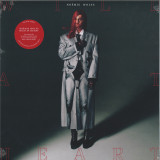
Making music from the heart has always been in the DNA of Belgian singer Noémie Wolfs and yet this time it is a tad different as she's gearing up to release her third album, "Wild At Heart," in November. This time around, she joined forces again with her partner in crime, Simon Casier (of Balthazar and Zimmerman), to write and produce the album in their home studio. Despite being in the business for years, the upcoming project also immediately presented a challenge for her because this time she was involved both as a writer, but more importantly as a producer, giving the album an even more personal touch. Everything was done from an emotion or a vision, you notice and hear the love for enchanting arrangements immediately.
The ten tracks on "Wild At Heart" promise a distinct sound, enriched with meticulous attention to detail. The melodies are interwoven with dreamy, melancholic strings and an array of synths, revealing a new facet of Noémie's musical evolution. The new sound of Noémie evolved from a hip-hop-oriented use of samples on her second album "Lonely Boys Paradise" to a more electronic approach, where danceable beats with analog synths join forces with big orchestrated strings to capture the different facets of a love story.
"Strings are actually very hopeful or often form a warm blanket for many people, but can also be very frightening, oppressive, dark, and sad. It might even be my favourite instrument, which is why I definitely wanted to use them on this album. Sometimes you can even hear 42 violins at the same time, with which we wanted to capture the grandeur of Hollywood," she says about including strings.
The upcoming album is not a sonic continuation of her previous albums, but a deliberate exploration of what has always inspired her. "Wild At Heart" tells the story of two lovers who cannot live with each other, but also cannot live without each other. The dramaturgy of the album also reflects itself musically, which is immediately evident with the first single "Lonely Heart". In almost eight minutes, you feel the matchless passion in her music and her voice remains the narrative thread that makes you forget time and space around you for a moment. Noémie Wolfs' new music is therefore the perfect way to take a break from the daily grind and digs deep into all forms of romance.
"Wild At Heart" is Noémie Wolfs' reintroduction and her most personal project so far. For dreamers, lovers, and travelers.
After his first album on BLESSYOU "Turquoise", Mogwaa aka Seungyoung Lee from Seoul is back with another stellar contribution this time re-visiting his earlier days of musical appreciation in Reggae music.
This album is another entirely instrumental work with 8 tracks, effortlessly displaying his confidence in the studio when it comes to dreamy dubbed out ambient sounds intertwined with heavy digi/stepper and even dancehall influences.
A refreshing treat to the ear when it comes to contemporary productions as Mogwaa approaches the Jamaican genre with a refined aesthetic of his own. From Korea with much craft and dedication for the music, a pleasure to have him back. Mastered at Manmade mastering.
Balearische Grammophon is back with another EP featuring two previously unreleased remixes of one of Germany's biggest contributions to hairstyle and nylon sales.
To some less reputable musicologists these versions of "Brother Louie" are to the original version what AMG is to Mercedes Benz - pure performance.
B-side refutes any claims that Ketamine might have been less prevalent throughout German recreational circles during the 80s. If not in the streets, surely in the recording studios, whatever happened, this was not meant for radio play. For select dance floors only.