You Can Can is an echoed affirmation, an album which traces song forms around silence, field recordings, and degraded analog memories. This is folk music transmogrified and mutated, as if recorded and reconstructed in Pierre Schaffer’s GRM studio.
Not your typical Mariposa folk duo, the group is comprised of Toronto avant-music scene stalwarts, vocalist Felicity Williams (Bernice, Bahamas) and bricolage artist and synthesist Andrew Zukerman (Fleshtone Aura, Badge Epoch). The album feels like a somnambulant conversation, fragmented and half-remembered with Williams’ vocals traveling through a landscape of field recordings and Zukerman’s saturated concrète topographies. It is an electro-acoustic assemblage, both analog and digital, comprised of air, electricity, minerals, wood, and water. Although the album nods towards traditional forms of folk and musique concrète (if at this point it can be called a traditional form), it is outwardly and inwardly contemporary; non-linear, citational, opaque, and sui generis. In a way it feels like a sonic index of the narrative experiments found on the infamous Language school-related publisher The Figures, in the work of Lyn Hejinian, Clark Coolidge, and Lydia Davis. In the musical continuum, the album picks up where Linda Perhacs left off in the early 70’s—explored by Gastr Del Sol in the ‘90s—a convergence of rural acoustic idioms and urban avant-electronics. This is country music for the discerning cosmopolitan citizen of the 21st Century.
RIYL: Luc Ferrari, Brannten Schnüre, William Basinski, Oval, Eric Chenaux, Emmanuelle Parrenin About Everything In Time and Failure Figures, Felicity Williams says:
Everything In Time is indebted to the language of Brazilian author Clarice Lispector (as translated by Alison Entrekin). Drawing on insights from psychoanalysis, we trace the roots of melancholy to render them available to consciousness; words from the ghostly realm of the transpersonal filter through dreams and shine a beam of light onto a lone trillium in a forest at night. Other influences include the experience of not knowing, of being subject to a gestation outside of one’s control. This is an ode to the power of naming to obliterate, to set free.
Failure Figures is a meditation on the radical contingency of reality and the vicissitudes of the will. With Slavoj Zizek as my guide (think: “Hegel for dummies” - I’m the dummy in this scenario), I wander through the valley of the shadow of death, and take heart. The last verse refers to an experience I had recording at a studio in Brussels. I was singing in French, with which I have some fluency, and the producer was complaining to the artist whose song it was that my delivery was not convincing. Thinking I was out of ear shot, he said in French, “c’est comme elle n'est pas là”; I was pronouncing the words correctly, but I failed to express anything. So what or whom is responsible for conveying meaning, if not the form of the word itself? And if the connection between meaning and form is broken, how do we fix it?
Gratitude to Thom Gill (guitar) and Daniel Fortin (bass) who joined us on the recording of Failure Figures. Thanks as well to my old roommate Christopher Willes, who unwittingly left behind his hand bells deep in the hall closet. We unearthed them by accident, and the bells became an important sound element. Thanks to other past roomies Robin Dann and Claire Harvie, whose childhood piano and guitar respectively still reside with us, and were used in the recording. Field recordings were made in Toronto, Canada and Celestún, Mexico in 2020.
Buscar:6 th studio
From New Jersey via The Netherlands: longstanding US craftsman Joey Anderson makes his debut on Deeptrax with his inspiring new album… ‘Exotic Sequence’
His fourth LP to date, ‘Exotic Sequence’ is a fully instrumental deep dive into both Joey’s machines and mindset, as he explains himself… “The title ‘Exotic Sequence’ stood out to me because throughout the LP I tended to use a sequencer for the main melody of most of the tracks. Almost every time I approach a track with techno intentions it eventually ends up being deep / housey,” states the artist who broke through 15 years ago on Qu’s Strength Music and has worked closely with the likes of Dekmantel and, more recently, Avenue 66.
Now at home on the relatively new and positively thriving label arm of Dutch record store institution Deeptrax, Joey tells us where he’s at with a body of work that poignantly reminds us that it’s not the destination that counts; it’s the journey we endure to get there.
In this sense, ‘Exotic Sequence’ is the sound of Joey letting his instruments guide, inform and inspire him. Cuts like the constantly rising and hopeful ‘Sky Children’, the deep 808 bubbles and dreamy reflections of ‘Behind The Valley’ and the emotionally rich ‘Stop’ are just a handful of examples of Joey being lost in deep flow, channeling the creative energy in his studio.
It lands exactly three years after his last album ‘Rainbow Doll’, neatly bookending the strangest and most surreal start to any decade we’ve lived through since house and techno culture took root in the 80s. A timeless document that looks forward and back and remains unhurried, thoughtful and crafted with longevity, ‘Exotic Sequence’ is arguably the most honest and frank side to Joey Anderson we’ve heard in his extensive career so far.
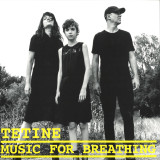
We've been writing new material as a trio since the first lockdown in the spring of 2020.
An organic and electro-acoustic impulse that translates both mine and Eliete's need of self-archiving,
re-inventing and auto-cannibalising Tetine's past, present and
future in order to explore other aural
landscapes and modes of composing intuitively, while at the same time, re-experiencing moments of our
trajectory as a hybrid organism.
Music For Breathing was born as a respiratory, meditative, and improvisatory piece of DIY
tropical-mutant-punk "chamber music" written for cello, voice, piano, organ and electronics.
The work responds to the suspended acts of breathing and vertigos experienced in contemporary polluted
environments in political, social and philosophical transitions, whilst investigating the
secret ontologies of inanimate objects and architectures, as well
as the echoes and ethics of modes of operating things.
Recorded during the intense period of heatwaves that hit London between July and August 2022, in
a small studio set up in our flat's kitchen - so that we could capture the acoustic instrumentation
(in particular, for the recording of cellos) without much
noise interference from the street -
this vinyl version of the album comprises of 5 distinct yet complementary reflective movements.
Musically and lyrically, it explores the atmospherics and syntaxes of time and space, voice, rhythm,
as well as themes such as hearing loss, menopause, pollution and respiration. It builds an expanded suite of unexpected
electro-acoustic textures through repetition, minimalistic motives, simple melodies, chromatic
developments, free counterpoint and atonalism. Conceived as an ode to the poetics of slowness,
the sounds you hear give continuity to the music we composed for the performance-film
The Ether - Prelude No.1 over the first lockdown in 2020 as it simultaneously explores the warmth,
melodiousness and power of the cello in conjunction with electronics.
Music For Breathing evokes this transitory moment: a place and time where language runs out,
communication and information lose their functions, sound and meaning do not correspond. Facts do not correspond to contexts. Spaced Out in Paradise. The last degree of the structure, the
loss of memory. The lost voice.
The album also features our 12-year-old daughter Yoko Afi on cello and vocals. It reflects
a period of free sound experimentation influenced both by romantic composers of the late
19th / early 20th centuries and contemporary electronic music. The pieces you hear were composed, arranged, and recorded
with the joy and melancholy of "those who do not know". In other words, "with the arrogance
of a second childhood" as Derek Jarman once put it. 'Agile and candid as a child'(1).
1) Manifesto da Poesia Pau-Brasil, Oswald de Andrade, Correio da Manhã, 18 de Março de 1924.
The very first initial Minimum Success Records release features the legacy of some finest mix of breakbeat, gabber & hardcore influenced tracks with some ghetto touch produced in the studio sessions between 1993-1997 by the duo Amalgam 5 at West 20 Studio in Turku, Finland. Well after a decade being buried in the deepest master tapes archives these tracks are finally seeing a daylight and becoming available on a beautifully designed vinyl release by Bank™.
After the first EP released in 2019 with Mother Tongue label, the French band never stopped reinventing itself. Oscillating between future jazz, house, the alchemy found within the band proves to be quite unstoppable. Whether it’s live or in the studio, the Gin Tonic Orchestra reinvents, innovates and experiments constantly. The idea is to create a live experience that resembles a DJ set, strongly influenced by club culture and jazz. For the first album « Shyance », the collective starts with a cataclysmic intro that introduce « No I Can’t Be Free » which connects Stefania EP to the new album. The other tracks cross Fusion (Shyance), Hisaishi harmonies (Yubaba), DnB (Rage Jaune), Deep House (La Couenne Rance), Cosmic Disco (Crush) and Thrash R&B (Can U Plug My SM58 Tonight).
- A1: Dixie Beat (Side 1 The Beginning Of The End)
- A2: Crazy Calypso
- A3: Northern Kremisphere
- A4: Wrinkly's Safe Cave
- A5: Hangin' At Funky's
- A6: Crystal Chasm
- A7: Sub-Map Shuffle
- A8: Stillt Village
- A9: Bonus Time!
- A10: Mill Fever
- B1: Frosty Frolics (Side 2 Danger Zone)
- B2: Brother Bear
- B3: Swanky's Sideshow
- B4: Cranky's Showdown
- B5: Boss Boogie
- B6: Treetop Tumble
- B7: Wrinkly
- B8: Hot Pursuit
- B9: Enchanted Riverbank
- C1: Brothers Bear Blues (Side 3 The Wild World)
- C2: Water World
- C3: Cascade Capers
- C4: Get Fit Agogo
- C5: Nuts & Bolts
- D1: Big Boss Blues (Side 4 K Rool's Reckoning)
- D2: Game Over
- D3: Baddies On Parada
- D4: Krematoa Koncerto
- D5: Rocket Run
- D6: Mama Bird
- D7: Chase
- D8: Jangle Bells
- C6: Pokey Pipes
- C7: Rockface Rumble
- C8: Cavern Caprice
- C9: Jungle Jitter
Musique Pour La Danse is proud to present the Donkey Kong Country 3 OST Recreated of the much appreciated and globally followed Donkey Kong Country OST recreation project led by NY-based composer and producer Jammin’ Sam Miller.
Using hex SPC data crudely converted to MIDI, Jammin' Sam Miller painstakingly recreated DKC's soundtrack note by note, by finding the original equipment used to create it, translating the MIDI into a modern studio context, adding in keyboard samples, and re-mixing the sounds with added effects and mastering. To find out more about his process watch an explanatory video here: cutt.ly/ulUHE6J
Remastered for vinyl, licensed, and presented in a limited edition blue cascade double LP.
Die Nautik Doom Metal Meister AHAB stechen endlich wieder in See!
Acht Jahre nach ihrem von Fans und Presse gefeierten, letzten Studio Album „The Boats Of The Glenn Carrig“, welches 2015 als erstes Nautik Doom Album ever die deutschen Album Charts enterte, sowie der Veröffentlichung von „Live Prey“ (2020), wird die Doom Metal Größe AHAB im Jahr 2023 ihr 19-jähriges Bandjubiläum in glorreichem Stil feiern. Dieses Mal inspiriert von Jules Verne’s Meisterwerk 20000 Leagues Under The Sea, kehren die Wegbereiter eines ganzen Genres am 13. Januar 2023 mit ihrem fünften Studioalbum, The Coral Tombs, über Napalm Records zurück!
Die Meister des Nautik Doom Metals interpretieren musikalisch wie seither einen maritimen Roman. Doch Album Opener „Prof. Arronax’ descent into the vast oceans” entpuppt sich zunächst als Überraschung, als ein Sturm aus Blastbeats über den Hörer herein bricht, bis er in die epische Erhabenheit unendlicher
Melancholie-meets-Heavyness eintaucht, die AHAB’s unverkennlichen Sound definiert.
Auf dem Album geben sich hochkarätige Gäste wie Chris Dark von ULTHA sowie niemand Geringerer als der Meister des extremen Dooms höchstpersönlich, Greg Chandler – Sänger und Mastermind von ESOTERIC – die Ehre.
AHAB haben vor rund 19 Jahren nicht nur das Schiff ihres Genres erbaut und steuern es bis heute, doch mit The Coral Tombs werden sie ohne Frage unerreicht als eine der besten Funeral Nautik Doom Metal Bands die Top- 2023- Album Listen des Jahres anführen!
2023 Repress
Those with an internet connection may be familiar with Paolo Di Nicolantonio through his incredible YouTube channel, SynthMania. His channel is hub showcasing his endless arsenal of synths and drum machines from his home studio in Italy. Unlike his italo-heavy channel, this record consists of two original tracks; one old-school deep house number and an additional beatless Juno-60 jam to boot. Craigie Knowes also welcome their first remixer to the label, the impeccable UK deep techno producer, John Shima.
- A1: Nobody Knows (Intro)
- A2: Seance
- A3: Smooth Ride (Feat Confucius & Jehst)
- A4: Only Just Begun
- B1: Oxford Scholars (Feat Vitamin G & Verbz)
- B2: Myself (Feat Cazeaux Oslo)
- B3: Star Of Sirius
- B4: Figure Out What's Right (Feat Jace Xl)
- C1: Open Book (Feat Indira May)
- C2: Association
- C3: Lion's Gate (Interlude)
- C4: Trembling The Marrow (Feat Ag)
- D1: First Date (Feat Indira May)
- D2: Row Your Boat
- D3: The Revealer (Feat Sickinthehead)
- D4: Portal (Outro)
High Focus Records are excited to share a new full length offering from prolific Brighton based producer Mr Slipz, this time with a fresh label signing, Australian rapper Nelson Dialect. A landmark release and signing for High Focus with Nelson being the first international signing on the label. UK listeners might have first heard Nelson collaborating with Verbz & Mr Slipz on the song ‘Hope’ from their acclaimed LP ‘Radio Waves’ released on High Focus in 2020. Nelson has a cult following in his own right in Australia, and previously released music on the legendary U.S label Fat Beats to great acclaim. Now teaming up with one of the most exciting and respected UK producers, Nelson & Mr Slipz deliver ‘Ever Since’. A statement piece by two artists with well over a decade spent on their craft which sounds as urgent and refreshing as if it were their first time releasing music. The album’s title is a reference to the endless quest for a timeless sound, reflecting the creative partnerships which spark from a seemingly forever existing thread of music. The two artists crossed paths whilst Nelson was on tour in Brighton, and a chance introduction to Slipz made this album a reality. As fate would have it, due to a cancellation of plans and changing of schedules during Nelson’s tour, the pair ended up in the studio for 8 days straight together which is when the bulk of the album was created. They each saw this as a cosmic alignment and thus played into the albums astrological artwork themes and overarching concept. Striving to capture the lightning in a bottle moment, what resulted musically on this album was an inspired surge of energy and intense creative output that is felt across the entire LP. Equal parts personal and lyrically dextrous, Nelson explores a multitude of concepts over the hard hitting drums and jazzy samples producer Mr Slipz is renowned for through his previous work with artists including Verbz, Kofi Stone, Vitamin G & Datkid among many more. The album features a slew of impressive guest verses including label mates Vitamin G & Verbz on the emphatic ‘Oxford Scholars’. Two legends Jehst & Confucius MC combine on ‘Smooth Ride’. Bronx pioneer & D.I.T.C legend A.G delivers a show stopping verse on ‘Trembling the Marrow’. There are hypnotic singing performances by Indira May on ‘First Date’ & ‘Open Book’ as well as Hiatus Kaiyote back up vocalist Jace XL on the soul stirring anthem “Figure Out What’s Right”. U.S rappers SickInTheHead & Cazeaux O.S.L.O round out the impressive guest list on the album with their inspired verses. Listeners caught their first glimpse of the duo with their debut single ‘Only Just Begun’. A whirlwind 3 verse tune showcasing the relentless wordplay and imagery Nelson is regarded for over a moody, hard hitting Slipz production. With a buzz already around what Nelson Dialect & Mr Slipz are brewing, the duo have just released their second single ‘Oxford Scholars’ featuring label mates Vitamin G & Verbz
Shift Into The Rogue presents two tracks from an as-yet unreleased album Pier Bucci recorded using only one synthesizer for all parts of the entire project - his 25-year companion, the Moog Rogue.
Combining his unique musical and rhythmic sense, love for alternative electronic music from the 90’s (particularly sounds coming out on WARP Records at the time), and the technical abilities gained from years in the studio, Pier has crafted emotional, groovy, raw yet nuanced tracks - inspired by ‘the analogue, alternative, positive, very beautiful music from that time.’
- A1: Approach 1' 52
- A2: Omaggio A Fellini 1' 50
- A3: Pipes 4' 05
- A4: Orgal 3' 38
- A5: Babbel 3' 54
- A6: Yaya 4' 21
- B1: Ba Loon 3' 17
- B2: Clocking 3' 37
- B3: Wail 8' 34
- B4: Bottom 3' 34
- B5: Feeder 1' 36
- C1: Spindrift 3' 35
- C2: Surfer 4' 00
- C3: Low Roller 3' 24
- C4: Still 4' 56
- C5: Beating 3' 51
- D1: Picolo 5' 41
- D2: Wire 2' 07
- D3: Knock 6' 21
- D4: Wah 3' 02
- D5: Aah 1' 40
Tod Dockstader's Aerial series, an electronic/drone masterpiece, is cherished among fans of the artist's work and this second volume is available in an audiophile quality double LP edition.
Tod Dockstader's Aerial series is sourced from his life long passion for shortwave radio. Dockstader collected over 90 hours of recordings, made at night, and comprised of cross signals and fragments plucked from the atmosphere.
Opening with airwave drones, Dockstader gradually allows elements to slowly come and go, summoning an ominous atmosphere of ethereal cloud clouds. Malignant placidity continues, giving the feeling of eavesdropping upon late-night audio activity not unlike discovering number stations while sweeping the dials. These sounds pull you in as their density and rhythms come and go.
Backward voices, deep echoing choruses of conversations flowing under the surface, ocean sounds, pulsing electro-rhythms, all seem to be created via the collaging of many hours of source recordings. A masterwork of collage and juxtaposition by an overlooked pioneer of American electronic music.
Artwork by John Brien (Imprec) is inspired by the propagation of shortwave radio signals throughout the earth's atmosphere.
"This return of Dockstader is something to cherish, not just because his output has been so limited and scarce but because what we do have is so intriguing, persuasive and cliche-free; the music of an inspired explorer who trails in nobody's slipstream." The Wire
"One of the great figures of musique concrete composition." Dusted
The Aerial project
I've written before of my interest in shortwave radio, in the notes to the Quatermass CD. Also, in the notes to the Omniphony CD (which has my first "Aerial" mix, "Past Prelude," in it), I mentioned "The Aerial Etudes," which was my working title for what became the three CDs you have. And, at the end of an interview with Chris Cutler (which can be found in the "Unofficial TD Website"), the piece I mentioned I was starting to work on at the time became Aerial.) When I was very young, people got most of their entertainment from radio. They called it "playing the radio," as if it were a musical instrument. That's what I've tried to do in this piece. About this time, a few people encouraged me to look into using a computer for this work.
I'd never used one, but I saw it would allow me to keep my mixes digital - no more transfer losses. So, at the end of 2001, I got a computer and an editing program for it, and spent what seemed a long time learning it. I began selecting mixes and loading them into the computer in late March, 2002. Out of the 580, I selected 90 "best" mixes - eventually reduced to 59, the ones on the CDs. Finally, in assembling the CDs, I followed David Myers' suggestion to allow each piece to flow into the next - making a continuous journey to the end. Tod Dockstader, 14 september 2003
About Tod Dockstader: Dockstader moved to New York in 1958 and became a self-taught sound engineer and sound effects specialist and apprenticed as a recording engineer at Gotham Recording Studios. It was around this time that he started to use his off-work hours to experiment with mixing and manipulating sounds on magnetic tape (musique concrète). By 1960 he had amassed enough material to assemble his first record Eight Electronic Pieces which was released on the Folkways label in 1961 (this would later be used in the soundtrack of Fellini’s Satyricon). The last of the eight pieces was later re-worked into his first stereo piece. In 1961 he applied to use the facilities at the Columbia-Princeton Electronic Music Center and was denied access by Vladimir Ussachevsky. Ussachevsky’s official reason was the “overstrained” scheduling of the studios, although many suspect that Dockstader’s lack of academic training was a factor in the decision. He continued to create music throughout the first half of the 60s, working principally with tape manipulation effects. His last piece at Gotham was Four Telemetry Tapes in 1965, after which he left to work as an audio-visual designer on the Air Canada Pavillion at Montreal’s Expo ‘67. It was around this time in 1966 that some of Dockstader’s pieces were released on three Owl L.P.s, and his work became known to a larger audience. He achieved modest recognition and radio play alongside the likes of Karlheinz Stockhausen, Edgard Varèse, and John Cage.
Speedy J and Steve Rachmad join forces as Speedy & Steve for a four-track techno EP on Luke Slater's Mote-Evolver this February.
Dutch artists Speedy J and Steve Rachmad have long been defining the techno underground with seminal tunes on a range of influential labels. For their new release, the duo jammed in Speedy's studio for their new release, working the live results into four fresh and powerful new tracks, kicking off a new series of live collaborations on Luke Slater's Mote-Evolver.
The intense and textural 'Reddo' kicks off with industrial synth lines designed for maximum warehouse impact before 'Dabler Nine' brings its deep rolling drums and mind-melting synth lines late into the night. 'Right Well and Clean' has fresh, airy kick drums rolling beneath harsh and icy hi-hats before 'Rotor' closes the release in cosmic fashion with spiralling pads and intensely layered synths and drums.
This new series will see artists collaborating in person, with each EP capturing the creative moment as it happens, with results aimed squarely at the dance floor. Each release in the series has artwork in a specific style that combines one item from each artist, which means something to them, into one new image.
The debut studio album from multi-platinum singer RAYE. Featuring number one single Escapism feat. 070 Shake.
Four times BRIT nominated, RAYE is one of the most streamed artists in the world with over
2.3 billion streams of her music. She has a double-platinum, four platinum, two gold and
three silver singles to her name. She is also indisputably one of the UK's premier
songwriters. Her songs have amassed over 3 billion streams, having written for some of the
world’s biggest artists including: John Legend, Ellie Goulding, Khalid, David Guetta, Diplo,
and Beyonce. In 2019 she was awarded The BMI Impact Award in recognition of her 'groundbreaking artistry, creative vision and impact on the future of music, in 2022 she was
nominated for the Ivors Songwriter of the year, landed R1 Brits List and made her debut solo
TV performance on Jools Holland. During the summer of 2021, her cries of frustration for not being able to release her album were heard worldwide, leading to a mutual separation from her label and allowing her to
carve her own path. Having made her public tirade, followed by her personal 'declaration of
independence', Raye in effect has obligated herself to deliver the ground-breaking first
album that her 2019 BMI award prophesied.
Berlin based sound artist Sa Pa delivers AI-33, titled ‘Atmospheric Fragments’. Originally intended as a soundtrack to accompany ten short experimental films as part of a physical exhibition in 2020 curated by Manon Bernard, Atmospheric Fragments was alternatively premiered online as a digital showroom - with its music performed and recorded both live and independently in 2021.
Atmospheric Fragments was conceived as a collaborative audio-visual project, positing the viewer inside a sonic boom of introspective parenthesis and offering a place for internal dialogues under the circumstances of a largely unknown and rapidly changing modern world.
Sa Pa’s work presents a fresh sonic reinterpretation of urban landscapes, skylines and modern environments, procuring from its source material a whole new kaleidoscopic world of its own. The record consists of two mixes - ‘Studio’ and ‘Live’ - which demonstrate a deep explorational study of our everyday surroundings, plunging the listener into a realm of heightened sense experience and microscopic detail. Where the ‘Studio’ mix embodies the precision and management of the studio workspace and is more ambient in nature, such intricacies are exchanged for a larger, livelier sound stage and alternative sonic material in the ‘Live’ mix.
A nebulous ocean of shifting spaces and effervescent textures, Sa Pa augments and modulates field recordings into a fluid and ever-evolving narrative. Seen through a viewfinder of deep and immersive observation, new transients, momentary artefacts and poetry in motion begin to reveal itself. In a world caught in momentary stasis, Atmospheric Fragments is a forensic inquiry into our perceptive environment, with its augmented lens placing us on the cusp of the ungraspable.
In October 1974, the first number of “L'Indépendant du Jazz”, a small self-produced magazine DIY -before punk supposedly invented the concept- was launched by Jef Gilson, Gérard Terronès, Jean-Jacques Pussiau and a few other specialists of a different kind of jazz in France, it looked at the already long career of Jef Gilson and in detail at the album with saxophonist Philippe Maté:
“The ‘Workshop’ is, with Philippe Maté (alto-sax), an undeniable success. Maté is genuinely ‘the’ most inventive French saxophonist since Michel Portal burst onto the jazz scene (who has also worked with Jef Gilson on both “Enfin” and “Gaveau”).”
Even though the author of the article is a mysterious I.H. Dubiniou, and it is difficult to know if it is a real person or a pseudonym used by one of the merry bunch, it is also tempting to hear it as what Jef Gilson really thought about his new discovery. Even more so as the two men would work together over a long period, as Maté became one of the key figures of Gilson’s Europamerica orchestra up until the 1980s.
Philippe Maté had started to make a name for himself with the Acting Trio when they released an album on the BYG label in 1969, and he was also one of the regular sidemen for the Saravah studios (he can notably be heard on albums by Higelin, Fontaine or his cult duo album with Daniel Vallancien).
The album was recorded on 4 February 1972, at the Foyer de Montorgueuil, where Gilson had set up his studio, with more or less the same team found on “La Marche Dans Le Désert” by Sahib Shihab + Gilson Unit (recorded ten days later). This was drummer Jean-Claude Pourtier and pianist Pierre Moret (regular Gilson accomplices since “Le Massacre Du Printemps”), alongside Maurice Bouhana and Bruno Di Gioa on various percussions and/or wind instruments. On bass is Didier Levallet, of the now mythical Perception, (Jean-François Catoire would replace him with Shihab) and Philippe Maté who took top billing, rather than the American saxophonist afterwards. The two albums are however quite different. This “Workshop” is more abrasive, more free. Made up of two long improvisations each of over 22mn, “L'Œil” on side A and “Vision” on side B (Gilson specialists would recognise the nod to one of his albums from the 60s), the album plunges you into the depths, attempting to drown you in electronic waves, dragging you back to the surface by the collar, giving you a good shakedown, before showing you the light, leaving you breathless on the shore after 46mn of the most intense music French has to offer. “An undeniable success”, they said. (by Jérôme "Kalcha" Simonneau)
- A1: Dillinger - Tighten Up
- A2: Sir Lord Comic - Django Shoots First
- A3: The Upsetters - Uncle Charley
- A4: The Upsetters - Sokup
- A5: The Upsetters - Double Power
- A6: The Upsetters - Lover (Version)
- B1: The Upsetters - Rumpelsteelkin
- B2: Dillinger - Skanking
- B3: The Upsetters - Kuchy Skank
- B4: Dillinger - Connection
- B5: The Upsetters - Opperation
Rhythm Shower is the 1973 studio album by The Upsetters, but also features tracks by Dillinger and Sir Lord Comic. Many of the rhythms on the album are known as those done by Lee “Scratch” Perry. Originally released in a very limited Jamaican pressing with no sleeve, it became better known after its reissue by Trojan Records as part of The Upsetter Collection.
Rhythm Shower is available as a limited edition of 1500 individually numbered copies on orange coloured vinyl. Since the original release contained no sleeve, this edition is housed in a custom made sleeve by Music On Vinyl in collaboration with Trojan Records.
Arma Records is about to drop its 25th release, an album by Vakula, an Ukrainian producer, active contributor to the underground community that has been united around Moscow's Arma17 since early 2010s.
On the 25th of June, '108 Mysteries' — a double vinyl comprising 9 tracks created by Vakula at his studio, mostly by the artist himself, few in collaboration with the vocalist Amrita Ananda — will be available on major distribution platforms.
Affected by circumstances, the release was repeatedly postponed until a mutual decision to move forward with its publication was made by the artist and the label. The tragedy that was forced upon Ukrainian and Russian people, throwing both nations into an unthinkable circle of pain, hatred and death, had a devastating effect on our cultures, historically perceived as a whole. The catastrophe unwraps further, taking lives, burning homes, destroying connections between people. At that terrifying moment we, the community of artists, still have the voice that used to bring us together — our music.
Philosophical and meditative, '108 Mysteries' is a new chapter in Vakula's discography. 'Highest Love', 'A Breath Of Life', '?????? ?????', 'Spirit Okarine' are a high-spirited mix of oriental and Ukrainian folk motifs — an unusual combination that happens to sound so full of life.
'Intensely textured, interlocking guitar riffs weave together on New Bright Object, the debut album from Berlin and Edinburgh-based duo I’m Not You.
Working under the name I’m Not You, artist Alex Gibbs (bass & vocals) and sound designer Niall McCallum (guitar & drums) have honed a sound that draws in equal measure from jazz funk of Weather Report and the math rock of Don Caballero. Their debut album, New Bright Object is their most developed statement to date, an intricate, robust and unique collection of songs born from serpentine jam sessions in rural idylls.
The duo make no secret of their admiration for bands like Battles and Tortoise. They reference Jim O’Rourke’s lounge numbers and the droll lyricism of Modern Lovers’ Jonathan Richman. There’s a touch of Vini Reilly in their sparse and serpentine guitar lines. A hint perhaps of Mogwai. All these names place New Bright Object within a constellation of albums made with bigger budgets for wider audiences.
New Bright Object opens In a flash of light, comet-like, with the sound of ‘Mr. Wind- Up Bird’. The threads they weave are full with intent, as moments of density rise like hills from the track’s quieter valleys. It’s easy to imagine the pair looking out over the rolling fields of the garden studio in East Lothian where they recorded the album, as they assiduously try and draw their own landscapes in sound.
Similarly, there is a crispness to ‘A Certain Arrangement Of Atoms’ - every clipped hat, rim-shot snare and tightly wound tom a fine-tipped mark on the score. It is intricate and precise, a result perhaps of Niall’s attention to detail. Then there is the piano, Alex’s grandmother’s, slightly out of tune, which adds a few expressionist strokes to this pointillist composition. The piece loosens, until all we’re left with is the bass.
Although the album orbits around the pendulum sway of ‘The Older I Get’, it is ‘What Cats Think About’ that stands out most. That it does is by design – a nod to the Sun City Girls and albums that like to throw their listeners a curveball every now and then. Pleasantly ramshackle, confusingly domestic, agreeably strange.
All this speaks to the spirit of the album and the creative relationship between two best friends whose differences seem to have been the only things they could agree on.'
Andreas Koeper is a German contemporary/experimental composer and drummer with a background in Philosophy and Art history. “Niemand Tanzt” was originally released in 1989 and in the past years it has become a sought after obscurity amongst diggers ever since Chee Shimizu put it on the radar after unearthing it throughout inspection rounds in Berlin record stores. Although the A-side might have been the essence of the single at the time, it's the B-side's “Pink Rhythm” that puts this release on the map for DJs, the track's gradient from an empty half tempo to rich 4 on the floor patterns serves any well versed DJ as an on-ramp for new gears to be put into place as the track grows into various ramifications of Andreas' studio production techniques: playful percussive elements, provocative guitar riffs over a solid rhythm section. Freshly remastered by manmade in Berlin.
Franco Esse is the moniker of Francesco Semproni, who in the late 60s began working as a music and recording assistant in major recording studios in Rome, Italy. He started out at Dirmaphone (then located in Via Pola) under sound engineer Gianni Fornari, before following him to the Emmequattro studios in Viale Mazzini, which at the time were the headquarters of Edipan, the record label founded by composer and conductor Bruno Nicolai after parting ways with friend and fellow composer Ennio Morricone.
Semproni tried to become a singer-songwriter in the early 80s, when he recorded a number of demos with the session musicians who gravitated around the studios. None of these demos was ever released though, for reasons that are still unclear today – his thorny and stubborn personality may have been a factor, since it apparently made him reluctant to compromise with the major record labels of the time.
The unsuccessful efforts to launch his solo artist career led to a personal crisis, and Franco Esse eventually quit music to go to work as a sales assistant in a toyshop in Rome's Prati neighbourhood.
Today he seems to have vanished without a trace, but after extensive research, we managed to dig some of his demos out of an abandoned archive and miraculously bring back to life two semi-instrumental tracks he recorded in 1983.
Both of them reveal Franco Esse as a refined musician with a reserved personality, an almost minimalist approach to lyric-writing, and a strongly cinematic synth-pop style that is in line with the musical trends of the time and gives a nod to the soundtracks of Fabio Liberatori, falling somewhere in between slow-wave and new-romantic.
These two ballads would have been the perfect soundtrack to cold winter nights in the early 80s, with snowflakes floating down on ski slopes, people clad in puffy down jackets, and music pouring into headphones from walkmans kept in back jean pockets.