
5
Discover Backbone (Remixes) by Bestial Mouths, electrifying remixes that blend darkwave, industrial, and post-punk elements. With haunting vocals, pulsating beats, and eerie synths, this release delivers an intense and immersive sonic experience.
Discover Backbone (Remixes) by Bestial Mouths, electrifying remixes that blend darkwave, industrial, and post-punk elements. With haunting vocals, pulsating beats, and eerie synths, this release delivers an intense and immersive sonic experience.


Obsidian, the upcoming album from Pennsylvania's own riff-titans Crobot, and likely the band's most introspective journey yet, is set for release on the extraordinarily lucky 13th Friday. Produced by Crobot, recorded at The Machine Shop Studios in Austin, TX, and engineered, mixed, and mastered by Alberto De Icaza, the 12 tracks on Obsidian dive into the deep, murky waters of the human condition, threading ancient myths with personal demons across its tracks.
While the band's primary songwriters - Bishop and Yaegley - tend to leave their songs somewhat ambiguous, the upcoming album's new tunes touch upon very personal growth, conflicts, and reflections. "Each song descends into the darker reaches of the psyche," Bishop says, "set to a relentless rhythm of heavy, pulsing beats and gut-wrenching guitar solos, and offers a stark reflection of internal struggles." "'Obsidian' is almost a rebirth of our career," Brandon adds. "We were able to take a different approach to the writing and recording of this album, so the experience was very rewarding and different from past projects. Conflicts and reflections make you a better person, even in those darker moments, but I know I become a better person for it. I think that's what symbolizes this entire album for us. It's been a real breath of fresh air."

Death and the Maiden’s Uneven Ground draws back the velvet curtain on the trio’s crepuscular dreamworld with nine songs of their distinctive shadowy slow-motion fusion of underground electronic dance music and post-punk guitars washed through with psychic unease. The trio’s name is taken from that of a nineteenth century engraving by Edvard Munch: an artwork steeped in mythology, exploring the dark boundaries between love and death, strength and frailty, beauty and decay. Their three albums to date each reinforce the symbolism of the name, and Uneven Ground’s title could apply as much to their own journey in the years since Wisteria, their previous album, as to the times in which we live. Bassist and vocalist Lucinda King is the bedrock, guide and storyteller. Guitarist Hope Robertson weaves swooping, soaring motifs and sometimes deconstructed layers of noise to build analogue atmosphere for these alternate worlds. Danny Brady’s beats mix old-school drum machines with electronic tones and distortion, while his synth arrangements blend elements of psy-trance and acid house with more amniotic ambient and industrial textures. While Uneven Ground may be the most overtly “pop”-sounding album in their catalogue, it also ratchets up the ominous atmosphere, noise and experimentation. Once again King’s evocative lyrics appear as cryptic stories, built from events, memories, dreams, moments, warnings, regrets; where questions raised are left unanswered, and possibilities remain open.

Zak Olsen, the creative force behind the guitar riffs of Australian doom psych band Orb, is set to release his highly
anticipated solo album, Ghost Notes, under his Traffik Island moniker. 12 Esoteric Instrumentals for Ethereal Beings
feels like going on an acid trip through a haunted house, where folk melodies merge seamlessly with jazz rhythms and
psychedelic textures. Creating freakout moments such as the track ‘Pandemoniom!’ featuring Kenny Ambrose-Smith of
King Gizzard and haunting folk horror moments on ‘winds’ Fans of esoteric instrumentals and spooky soundscapes alike
will find much to love in this haunting collection. Frank Maston of Maston captures the essence of Ghost Notes perfectly:
“Olsen has created a monster - channeling Joe Meek, Goblin, and Broadcast in this cursed disc of groovy fugues. Traffik
Island may be alive and well in these tracks, delivering premium melodies with ease, but the undead certainly had their
say. Mixing terrifyingly sick beats with warped organs, sinister synths, and spooky found sounds, this is the horror movie
soundtrack we deserve. An instant Halloween classic.”
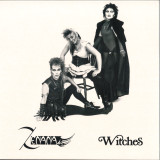
2024 repress
Rush Hour’s RSS series excels in unearthing buried treasure, offering a second chance for artists and releases that have long been overlooked. That’s certainly the case with ‘Witches’, the superb sole single by British 1980s wave trio Zenana.
Originally released on seven-inch by the tiny PRM label in 1986, ‘Witches’ was the product of a sister-brother songwriting team whose music was mostly recorded in the front room of a terraced house in Nanpean, a small industrial village in Cornwall, England’s most south-westerly county. While the single was infectious, impeccably produced and dancefloor-ready, it sold in limited quantities at the time.
Zenana’s story can be traced back to the early 1980s, when singer-songwriter Anita Tedder founded the all-female trio as a vehicle for her musical ambitions. To bring her songs to life, she joined voices with her brother Mike, an early adopter of electronic music who had built a studio – nicknamed MFR, short for ‘Mike’s Front Room’ – in his Cornish home.
Countless Zenana tracks were recorded at ‘MFR’ between 1984 and ’86, with the resultant demo cassette securing the band a management contract, a slew of live bookings, a video shoot and even a television appearance. Buoyed by this underground success, they headed to the remote Sawmills Studio in Cornwall – famously only accessible by boat – to re-record ‘Witches’, a song inspired by local folk tales of witches gathering near Mike’s home.
While this version of ‘Witches’ failed to make an impact at the time, it has become something of a cult classic following its’ rediscovery by crate digger Kiernan Abbott – and subsequent championing by other dusty-fingered DJs including Antal, Skyrager, Trevor Jackson and Luke Una – in early 2023. The buzz inspired Zenana to perform live again for the first time in decades, with the story of their surprise comeback being covered by British media outlets including the BBC and (more surprisingly) the Daily Mail.
Now presented in re-mastered form, ‘Witches’ is a genuinely slept-on gem. Propelled forwards by punchy drum machine beats, a killer synth bassline and fizzing keyboard sounds, the song benefits greatly from strong vocals and an extra-percussive middle eight layered with vocalisations, cosmic spoken word sections and swirling noises.
It comes backed by a brand-new extended ‘spell of love’ courtesy of Bristol duo Bedmo Disco, AKA music journalist Matt Anniss (author of Join The Future: Bleep Techno and the Birth of British Bass Music) and DJ/production partner Gareth Morgan. Anniss is a long-time friend of Mike and Anita Tedder who has fond memories of visiting Mike’s home studio with his family around the time that ‘Witches’ was recorded.
Working from Zenana’s original MFR eight-track recording (tapes of the single version were lost years ago), Anniss and Morgan have turned in the extended ‘dance mix’ the track never had first time around. More atmospheric, clandestine and dancefloor-focused, it offers authentic nods to New York proto-house, mid-80s Shep Pettibone dubs, and the pioneering synth-pop productions and dub mixes of Factory Records regular Martin Rushent.

Comparsa is the third studio release by the musical group Deep Forest. The group consists of the duo Michel Sanchez and Éric Mouquet and are known by composing a style of world music, mixing ethnic with electronic sounds and beats. Comparsa features a pronounced focus on Latin and Caribbean grooves, provided by musicians from Cuba, Belize, Mexico and Madagascar, among other places. It became #8 French export album of 1998 and was certified Platinum by SNEP Export Awards, with more than 500,000 albums sold outside France.

A momentous signing for DDD, as the label welcomes one of the most influential artists in dubstep’s history: CASPA.
On his Inner Space EP, which drops on September 6th, the producer takes refuge within his introspective sanctuary of ice cold beats, deep pulsating bass and futuristic sound design - presenting a four-track tour de force of 140 that is at once impactful as it is cohesive and holistic.
This one is also available as a limited edition picture disc vinyl.

>
Brooklyn underground rap heroes Tanya Morgan drop a two-track heatrock of a 7-inch that lights up dancefloors while maintaining their true-school status with clever wordplay and progressive beats.
Since breaking on to the blog-era rap scene in 2006 with their debut LPMoonlightingand solidifying their status in 2009 with the now-legendaryBrooklynati, Tanya Morgan has represented the best of underground hip-hop. Your favorite rapper's favorite group, they combine trademark witty wordplay with tough, headnodding beats that demand rewinds and repeat listens. Bouncing back in recent years withRubber Souland other one-off cuts, the duo of Donwill and Von Pea has teamed with producer 6th Sense and quietly set about building the next chapter of their rock-solid legacy.
"Move It Or Lose It" is the latest manifestation of Tanya Morgan, a cut that is neither throwback nor trend chasing, but does double duty on the dancefloor as well as a headphone banger. Irresistibly funky, with Mathien's guitar and vocal the icing on top, and riding at a perfect tempo to get dancers bubbling, it got immediate attention from DJs when the group teased the digital version online.
The double A-side single continues on the flip with "Don't Look Up," another grown-man rap (as Von Pea asks, "How you want the old me acting brand new?") set to 6th Sense's progressive uptempo beat that recalls Q-Tip's adventurous recent productions, and featuring Mia Jae on vocals driving the chorus. Donwill's commentary on getting older and wiser in the music industry hits home to any of us who've been around the block: "Slow growth while the roots spread / Somebody said rap group's dead / They prolly wrote it as a sponsored ad."
Both cuts are primed to move feet and represent the continued lineage of quality underground hip-hop, proudly coming straight from the heart of Brooklyn as a collab with BK-based indy vinyl masters Names You Can Trust.

Every Trick in the Book' is the new single from Bristol-based beat makers, The Allergies. True to form, they've whipped up a sun-kissed groove that'll add a splash of colour to your day, whatever the weather. This A-side takes a vintage vocal sample from the 'Queen of Rock n Roll' herself – none other than Tina Turner! Yeah, you know 'Private Dancer', 'What's Love Got To Do With It', 'We Don't Need Another hero' etc. That Tina Turner! Jeez Louise!
Well the guys have supplemented her pipes with loops from a long-forgotten Latin boogie 12", and layers of live horns, cuts, drums, and FX, to give us a joyous mid-tempo groove that you'll be humming for weeks. While the flipside takes it back to '91, as long-time Allergies collaborator, Andy Cooper, reworks his hero Big Daddy Kane's classic 'Nuff Respect'.
This cover version takes the fast raps of the original, tweaks them, and fires them back over an explosive backdrop of scratches and b-boy beats.

The brand new album "Pacific Voyage" by Nautilus from Tokyo is a breezy summertime soundtrack which combines sunny Yacht Rock with a touch of cool 80s City Pop.
The Japanese Jazzfusion trio reinterpretates stone cold classics from this era in their typical signature way of playing.
Songs like the heavy sampled "What You Won't Do For Love" by Bobby Caldwell and Toto's "Georgy Porgy" get a completely new coat of paint and fresh interpretation translated into now and tomorrow.
Followed by a who's who of tracks from Donald Fagen, Michael McDonald, Shuggie Otis, Nohelani Cypriano and Toshiki Kadomatsu to name a few.
Guest appearances on this album are from UK soul singer John Turrell (Smoove & Turrell), German rap legend Toni-L (Advanced Chemistry with Torch) and Japanese soul singer Ryuto Kasahara who worked with Grooveman Spot and DJ Mitsu The Beats so far.
Enjoy this pacific voyage.


Y2K! is a sugar rush of playful sensuality and unbothered cool—a true representation of the Bronx baddie herself. Ice Spice, born on January 1st, 2000, brings the Y2K vibes and undeniable beats that will make you want to party like it's 2000, before you had to worry about your late-night social media going viral. Ice Spice lives up to her name, bringing straight fire to your speakers this season.

Original Cover[27,52 €]
Honour's debut album is a ligament stretching from Lagos to London and to New York, curling across the diaspora and brushing the darker hues of blues, hip-hop, free jazz, ambient, gospel with Christian mythology and Yoruba folklore. As cinematic as it is painterly, Alàáfíà is a meditation on themes of life, death and love that pulls inspiration from the unexpected poetic profundity of casual conversations, field recordings, literature, ephemera, or personal archives. The result is an impressionistic vision in Black and Blur that both exhausts and implicates language_substantiating a mythos proposed by Fred Moten that sublimates boundaries between everywhere and nowhere; history and the present; the individual and the universal. Alàáfíà delineates a gothic landscape cut by overdriven beats, swooping orchestral blasts, choral bursts and ear- splitting fuzz, where the fleshly and spiritual realms commune. Dedicated to Honour's late grandmother, the title track began to take form after their last embrace and remains steeped in her influence and spirit_a tape-saturated composition that starts in Lagos and ends in London's smoke-stained cityscape, the song's dream-like quality developed out of the artist's grief and PTSD coping with this loss. Beneath the stretched guitar drones and stuttering loops, their grandmother's shared faith bubbles to the surface. "When Angels Speak of Love," borrows its title from two works by Sun Ra and bell hooks, respectively. Sculpting echoes of praise music into disorienting spirals perforated with syrupy DJ Screw-inspired breaks and sharp splinters of melancholic guitar, "When Angels Speak of Love" engages a conceptual dialogue with the spirits of both late thinkers, folding them into Honour's pantheon of ancestral guides. The album's ninth track, "Giz Aard ($uckets)," is a dirge of regimented drums which anchor this somber melody as it whirls into a blizzard of heartache, uncertain if its consequence will be death or eternal joy. The album's sole lyrical offering, "Pistol Poem (Lead Belly)," begins with a darkly humorous bar, "He went thru hell and back/ came back/ 2 get the strap," that swells into a haunting allegory based on the life of Philip "Hot Sauce" Champion. A modern take on the Blues, Honour's lyrics reify the artist's status as a student of both literature and popular culture, crossbreeding the artist's clever wordplay with additional references to Richard Pryor, Robert Johnson, Kelly Rowland & Bryon Gysin. Setting core principles of hip-hop, R&B, jazz and gospel music to atemporal soundscapes and compositions, Honour crafts a record that marinates in its own knotty contradictions. The ghosts that sit on the artist's shoulders have never been more tangible than with this emotive debut.

’The Blues’ was B.B. King’s second Crown LP drawn from his RPM singles recorded between 1951-1958. This album traces his early development into a world class artist. ‘The Blues’ used a single hit tune (in this case “When My Heart Beats Like a Hammer,” a Top Ten R&B chart entry in 1954) to help sell a package of lesser-known material, but thankfully the label also picked some great tunes that hardly sound like filler, even if they didn’t make the charts. King’s songwriting was already stellar, with “I Want to Get Married,” “Don’t You Want a Man Like Me,” and “Ruby Lee” demonstrating his way with a melody and a lyrical conceit. ‘The Blues’ demonstrates he was already near the top of his class. The LP is extended with 2 bonus tracks.

LIMITED REPRESS ON 180g DOUBLE VINYL WITH DOWNLOAD CARD. This is the debut album from multi talented musician and producer Quantic. Having just turned 21 years old at the time of completion, this album was a positive indication of things to follow. Like the Bonobo album Animal Magic , this entire album was recorded in the writers bedroom - showing that DIY culture is strong and healthy in the UK and that good creative music can successfully be made and released to an appreciative audience without unnecessary hype. 'The 5th Exotic combines a variety of influences from jazz to soul to funk to hip hop. All the tracks have a strong musical element and a variety of tempos but each individual song has a connection which makes the album work as a whole. Like any good album this is one that grows on you with each listen. Richard Dorfmeister (Kruder & Dorfmeister) described The 5th Exotic as one of the best beats albums I have heard . Overall, The 5th Exotic is a truly accomplished debut album with a sound and style that is truly original.

Over 20 years of friendship and Reggie Dokes and Red D are still at it. Their first joint E.P. was released on Red D’s We Play House Recordings label and kicked off the label’s much-lauded U.S. Series. Moving back across the pond we now find Reggie and Bart sharing a release on Reggie’s legendary Psychostasia imprint.
On the A-side Reggie is bringing his trademark sound and taking it deeper than ever. Moody melancholy paired with solid beats and drums to take you into deep house heaven. On the flip Red D brings his Detroit inspiration into deep and swinging techno territory reminding us of Scan 7 and the likes with a vocal that gives a respectful nod to an Underground Resistance classic. Can you get into the sound?

On their seventh long player The Breaks - their second for Joyful Noise Recordings - SUUNS are lost in limbo. For some artists, being caught in flux may result in songs that are either naive, out of touch or both, simply as a consequence of being cut off from human civilization. But for SUUNS, a band who have grown more than comfortable in the oblique and the intermediate, it actually had the opposite effect. The Breaks marks the Montreal experimental rock outfit's most emotionally resonant and tonally rich collection of music to date. The trio of Ben Shemie, Joseph Yarmush and Liam O' Neill leans more zealously than ever into their pop instincts. Yet remarkably enough, with that same dauntless abandon, SUUNS have mined a more extreme sonic palette this time around, one that stretches far beyond their core fundamentals as a band. The Breaks finds Shemie, O'Neill and Yarmush gleefully experimenting with loops, synths, samples and MIDI-instruments like a post-millennial Tangerine Dream messing with downtempo triphop beats. O' Neill took point in the producer's chair for The Breaks, arranging, structuring and editing many of Shemie and Yarmush's ideas from sporadic rehearsal sessions into Pro Tools, reimagining the songs over and over during a two-year time frame. Forged between countless plane rides, road trips, van tours and text threads, The Breaks became a product of endurance and a lot of trial-and-error. It's a record forged in tight fissions of freedom, where spells of whispered intimacy - like on the stunning ballad "Doreen" - are allowed to branch out into the vast glacial dreamscapes of the album's majestic title track. It captures SUUNS at their most panoramic, curious and exuberant: a constant relay of being adrift and enlightened anew, geared up to eleven. And guess what: the wheels keep on spinning.

Belarusian post-punk / synth pop group Molchat Doma have always exuded the kind of brutalist aesthetic of the architecture that adorns their album art. It's cold, gray, imposing, industrial and yet there are human hearts beating within those foundations. In the wake of their breakthrough success in 2020, the trio endured a polarity of experiences, from the nadir of an uprooted life and forced relocation away from their native Minsk to the apex of headlining massive shows across the world. It was in this headspace that the band settled into their new home of Los Angeles to finish writing their fourth album Belaya Polosa, a testament to change in difficult times, a love letter to the digital pulse of the `90s, and a technicolor reinvention of the band's somber dancefloor anthems. From the opening synth swell and drum machine throb of "Ty Zhe Ne Znaesh' Kto Ya," to the goth / post-punk austerity of "Son", to the swirling electronic textures mixed with reverb-drenched guitar flourishes, expansive space, and yearning vocals of title track "Belaya Polosa" - that suggests Depeche Mode at their most reflective or The Cure at their most downtrodden - to the sultry and seductive "Chernye Cvety"_ a track reminiscent of Duran Duran's early `90s output in its fusion of dreamy guitars and authoritative mechanized beats _ and the interwoven layers of instrumentation, soaring chorus, and melodic sophistication of "Ya Tak Ustal", it's clear that Molchat Doma are operating on another level. Molchat Doma gained following with earlier albums that sound like third-generation bootlegs of banned recordings from the Eastern Bloc made after a few key entries in the Factory Records catalog were smuggled in from the West. Belaya Polosa propels them into a new direction while retaining their cold minimalist delivery they're known for. The basement grime and dirty tape-head sound of their previous work are now making space for digital luster and shimmering production values. And while Molchat Doma's broadened aural spectrum adds a synesthetic power to Belaya Polosa, the mood remains rooted in stark and unflinching self-reflection. Molchat Doma retain the duality of being both cold and feverish in their delivery while pushing their music into expanded territories through an armory of new textures. The trio continue to harness the sound of harrowing beauty thriving under harsh realities.

Belarusian post-punk / synth pop group Molchat Doma have always exuded the kind of brutalist aesthetic of the architecture that adorns their album art. It's cold, gray, imposing, industrial and yet there are human hearts beating within those foundations. In the wake of their breakthrough success in 2020, the trio endured a polarity of experiences, from the nadir of an uprooted life and forced relocation away from their native Minsk to the apex of headlining massive shows across the world. It was in this headspace that the band settled into their new home of Los Angeles to finish writing their fourth album Belaya Polosa, a testament to change in difficult times, a love letter to the digital pulse of the `90s, and a technicolor reinvention of the band's somber dancefloor anthems. From the opening synth swell and drum machine throb of "Ty Zhe Ne Znaesh' Kto Ya," to the goth / post-punk austerity of "Son", to the swirling electronic textures mixed with reverb-drenched guitar flourishes, expansive space, and yearning vocals of title track "Belaya Polosa" - that suggests Depeche Mode at their most reflective or The Cure at their most downtrodden - to the sultry and seductive "Chernye Cvety"_ a track reminiscent of Duran Duran's early `90s output in its fusion of dreamy guitars and authoritative mechanized beats _ and the interwoven layers of instrumentation, soaring chorus, and melodic sophistication of "Ya Tak Ustal", it's clear that Molchat Doma are operating on another level. Molchat Doma gained following with earlier albums that sound like third-generation bootlegs of banned recordings from the Eastern Bloc made after a few key entries in the Factory Records catalog were smuggled in from the West. Belaya Polosa propels them into a new direction while retaining their cold minimalist delivery they're known for. The basement grime and dirty tape-head sound of their previous work are now making space for digital luster and shimmering production values. And while Molchat Doma's broadened aural spectrum adds a synesthetic power to Belaya Polosa, the mood remains rooted in stark and unflinching self-reflection. Molchat Doma retain the duality of being both cold and feverish in their delivery while pushing their music into expanded territories through an armory of new textures. The trio continue to harness the sound of harrowing beauty thriving under harsh realities.
