Soave Records dusts off the psych/synth album by Doctor Steven T. Birchall recorded in 1973 in Indiana, U.S.A. with the following equipment: VCS-3 (The Putney) by EMS, Ampex MM-1000 16 trk, dbx noise reduction, SpectrasSonics Console, Studer A80 Recorder, Eventide Clockworks, Instant Phaser, Cooper Time Cube, EMT Reverb. The absolutely penetrating high tones of the opening track 'Music Of The Spheres' announce us that we are on board, passengers in the hands, or perhaps better to say in the mind, of Birchall who aims to go beyond those "normal" boundaries that we call reality. It is a new world of music that still amazes after half a century. A higher stage of truth projected into the cosmos. Cover art by Earl. E. Hokens.
Поиск:7 record cover
Все
Jamie Cullum quickly became a household name with this, his award winning
2002 debut album. With a mischievous and lighthearted approach that has
become his calling card, it endeared him to jazzophiles and pop fans alike. And
with it's infectious blend of jazz standards, American songbook classics, original
compositions, and hip contemporary covers, 'Pointless Nostalgic' went straight to
the top of the charts and demanded attention. This album has been remastered
by legendary mastering engineer Bernie Grundman.
Since its beginnings, Hypnótica Colectiva has always shown a special interest in the music recorded and released in the city of Detroit.
A place with which we have both a blood and spiritual bond because of what occurred there socially and artistically during the 20th century.
This love led us to become ambassadors of what was happening there on a musical level, holding cultural events to screen documentaries translated into Spanish, as well as a number of themed sets at our events, dedicated motor city sections in our record shop or recently lectures on the history of the city and its music at the Museum of Illustration and Contemporary Art of Valencia (Muvim).
The time has now come to bring all this history, this musical influence, to the editorial section of our label HC records.
Detroit Legacy was born from the idea of capturing these influences on vinyl. Seeking artists from all over the world who share this passion that inspires them to create their music, what we can define as the universal Neo-Detroit.
For this first edition or first volume, the collective has enlisted in its ranks creators affiliated to the label who have shown us in their careers, this influence and this feeling.
Paul Cignol opens the record with Distance. From Dublin he offers us a track of warm sequences inspired by Deep Techno, with deep pads responding to organ keys and a subtle touch of 303.
Mallorcan LLuis Barcelo Sureda is responsible for the second track Funk Station. With a Techno Soul character that we might hear from Detroitish labels like Acacia or producers like Blake Baxter.
A real eminence in Techno is the Catalan Don Alex Martín, who already released in the mid-90s on Monssieur Garnier's label (France Communications). The Barcelona native brings his wealth of experience and wisdom through Megatech, which transports us to the spectrum of Derrick May’s Transmat who, in his day, was nicknamed "The Innovator". This track provides agile sequences of complex syncopated rhythms, combining with a dreamy Michigan style synth.
The anthem of the album comes from Ghent. The sublime Belgian creator, Mariska Neerman, once again makes our hairs stand on end and our hearts melt with a heavenly composition entitled Stellium.
No one interprets Neo-Detroit quite like Mariska, whom we baptise as a sovereign heiress of the genre in the world. If we have to think of an influence for this piece, we go straight to the genius of Detroit, the one and only Jeff Mills, in his most symphonic and harmonic facet of tracks released on his label Axis Records such as "The March", A Universal Voice That Speaks To All That Will Listen or A New Found Sense Of Being.
Some of these songs have been re-interpreted by world class philharmonic orchestras such as the Montpellier Philharmonic Orchestra at the 2005 Blue Potential (Pont Du Garde). Mariska's score in this song fuses organ keys with harmonic layers and violin - favourite instruments of the Detroitian extraterrestrial - with a harmonic result of strength and hope. An authentic anthem of classic emotional Techno.
Old School electro takes centre stage with the Master from Terrassa Ivan Arnau a.k.a. Dark Vektor. In the influence of Juan Atkins (the creator) as Cybotron or Model 500 and later creators who developed this sound like Aux 88. Metaverso Frik is a great recital of a urban poetry created and interpreted by Ivan, to completely devastating effect.
Croatian Bojan Jascur a.k.a. N-TER, closes the vinyl with We Will Emerge, in a exercise of vindication, a common weapon in the context of Detroit music. Raging, trippy electro in the purest style of Cosmic Force or Dynarec.
This first tribute to 8 Mile doesn't end with the vinyl, as 2 digital bonus tracks are included in the release.
We return to Barcelona with Pastin Futon in another sequence of consecutive oscillated rhythms oscillated much like Kevin Saunderson (The Elevator) in his day and the Techno Groove that we know today.
The most robotic touch of the release is the closer with this synthetic jigsaw puzzle of a track with echoes of the 1967 Detroit Riot, the Detroit Rebellion. Again produced by another Barcelona native, The Bandit (Dj Spy / Util Records). The sequences are very reminiscent of Arpanet and Drexciya.
The idea for the cover comes from Motor City itself by Jon Yowell, first cousin of HC records founder and head of HC records David Verdeguer.
Born, raised and a lifelong resident of Detroit, Jon is an enormously talented musician capable of writing lyrics, performing them on the mic and manipulating a number of stringed instruments as well as the drums, where he is a true master.
The cover is a tribute to the formative backgrounds of many of the city's musicians in every sonic trend. Wayne State University in the capital of Michigan.
Founded in 1868, it has offered didactic teaching to many of the city's musicians.
Not all of Detroit's creators went to university, and even less so when talking about Techno, many artists are self-taught or learned in a non-academic way, but it seems to us a good base to begin to highlight the origins of the city's music in a historic building, where those who have the opportunity to learn about music have been and continue to be educated.
The adapted designs are the work of our image manager Dani Requeni.
Mastering by Steve Voidloss at Black Monolith Studios in London (UK).
In a career laden with highlights and hallmarks in the annals of soul history, 'Just As I Am' is rather overlooked as one of the best soul debuts ever issued. Beautifully remastered, 'Just as I Am' is presented to a new generation of listeners who may have missed out the first time. With this remastering comes an intimacy, warmth, and immediacy to the recordings that was only hinted at with previous versions; it's almost as if Withers is in a living room singing to a small group of people, rather than making a record. Of course, the instantly recognizable anthem "Ain't No Sunshine" gets all of the acclaim it so richly deserves, but also in tracks like "Harlem", 'Grandma's Hands' and "Better Off Dead" you can hear the intensity and maturity of Bill's performances. Even when he's doing covers, Withers makes them sound as if they are his own compositions.
Give this classic record a spin, and get ready to be submersed in the Soul of one of the true masters of the genre!
Limited Edition RED Vinyl – 100 units Hand numbered
Omid's parents were Iranian but he spent his childhood in Putney, London. He grew up listening to rock music, and listed Jimi Hendrix, Neil Young and the Cure among his favourite artists – after Robert Smith became a fan Omid would later remix various Cure songs. He learnt to play guitar and formed a rock band, but after hearing hardcore records played on pirate music stations he began making his own tracks on basic equipment that he had bought. Beginning in 1995, his early house and techno singles were released on his own Alola and Disclosure labels under the names of 16B and Phaser, but they soon attracted the attention of big-name DJs such as Derrick Carter, François Kevorkian and Sasha, and he signed to Sven Väth's Eye Q label to release his debut album Sounds from Another Room in March 1998, which was described by the Independent on Sunday as "avant-garde" and by Muzik as "quite breathtaking".
Although he started out as a producer, Omid gradually moved into DJing, at the request of friends who asked him to play records at parties. He secured a regular spot playing the Elements club night run by Hooj Choons record label boss Red Jerry. In October 2001 Omid released The Witch/Which Equation under the alias of the Sixteen Million Dollar Man.Inspired by Prince initially releasing his Planet Earth album as a covermount with a British newspaper, Omid released his third studio album Like 3 Ears and 1 Eye (Part 1) in a similar manner as a covermount with the November 2007 issue of DJ Mag.
Omid also formed the SOS collective of DJs, consisting of him, Desyn Masiello and Demi. The trio secured a residency at London's Ministry of Sound nightclub, and were asked to produce the club's first mix CD in 2010
Beautiful, soulful jazz record by Jimetta Rose and The Voices of Creation, a Los Angeles-based community choir, a mainstay of the local scene. Highly recommended!!
The Voices of Creation are a community-based choir led by vocalist, songwriter, arranger, producer and mainstay of the Los Angeles scene Jimetta Rose. Made up of a multigenerational group of mainly non-professional singers backed by some of the city’s finest musicians,their music marries hip strains of gospel with layers of jazz, soul and funk. While aspects of their music might recall Kamasi Washington, The Staple Singers or Sly Stone, Jimetta’s unique vision has resulted in new spiritually-charged forms of music whose whole-hearted embrace of love, joy and peace act as sonic healing balms for the soul.
For Jimetta - whose resume includes collaborations with Miguel Atwood Ferguson, Georgia Anne Muldrow, Sa-Ra Creative Partners, Angel Bat Dawid, Shafiq Husayn, MED and Blu - the very act of creation was part of a healing process: “I was very low at the time and I wrote most of the songs going through hardship. But I found comfort in the songs and a way to adjust my mindset to where things got better. So I thought ‘if this music works for me, maybe it will work for other people’ I believe that every person has their own voice and their own note and that we can use our voices to heal ourselves. That’s the intention behind creating the project.”
After putting out a call on social media for people interested in joining her choir she was met with a sea of replies. Members were chosen in less-than conventional fashion: “I recruited people based on their interest in healing themselves and others, not necessarily on their musical experience or being seasoned performers” she says. Among those accepted into the ever-evolving collective, which was begun initially as a community choir, were the likes of Sly Stone’s daughter Novena Carmel, better known as a radio DJ for KCRW’s flagship breakfast show. Jimetta’s upbringing in the Pentecostal church, where she was a youth choir director, fed into her otherwise intuitive teachings of her songs and arrangements to the inexperienced members with help from the group’s seasoned organ player/co-musical director Jack Maeby.
Produced by Mario Caldato Jr. (Beastie Boys, Seu Jorge) and his wife Samantha Caldato the results show the incredible sense of togetherness and communal spirit that the group had built up over time in the rehearsal sessions. The six tracks of their debut album, a mixture of originals and rearranged covers, are performed in a wide-eyed mix of styles that reflect Jimetta’s vision for borderless music: “It’s new black classical music,” she explains. “It’s all the hodgepodge of being an African American but also with creativity and vision for the future. It has a taste of what is to come and what we can do. What we have gone through and who we are now.”
The group’s propensity for warm and buoyant sonics finds representation on album opener Let The Sunshine In, a sparkling rework of the Sons and Daughters of Lite’s deep jazz classic. Their version finds the group’s dynamic group harmonies offset with Allakoi Peete’s nimble afro-percussive touches and plenty of soul- drenched keys courtesy of pianist Quran Shaheed and organ player Jack Maeby. A similarly uplifting take on Rahsaan Roland Kirk’s choral jazz classic Spirits Up Above follows, with Maeby’s groove-laden organ lines inspiring some gorgeous group harmonies as well as prime solo turns from the likes of Kellye Hawkins, Zavier Wise, Tamara Blue, and Khalila Gardner.
Another Sons and Daughters of Lite cover follows as Jimetta leads the choir in the groove-drenched ode to self-affirmation Operation Feed Yourself. Written as a series of mantras for everyday living, the Jimetta-penned composition How Good It Is harnesses the full transformative power of music to generate a stirring and joyful ode to positivity - it’s chanted declarations bringing out some of the group’s most deeply-felt and affecting vocal performances over some superlative piano and organ accompaniment with a surprise feature vocal from Novena Carmel.
Jimetta’s talent for re-imagining songs in her own light is highlighted in Answer The Call, her vivid re-telling of Funkadelic’s Cosmic Slop: “When I listened to the original song, the Mom in the story was really going through it. I thought of how I could turn this into a song that can encompass the glorification of all mothers and I thought of the Egyptian cosmic goddess Nut. To that mother we’re all the seeds planted in the garden. Answering the call in your life is literally that. Finding out exactly what you’re here for through your heart.”
The album finishes with the standout original gospel number Ain’t Life Grand. Over swaying organs and clapped percussion Jimetta’s lyrical mantras serve to emphasise the good feelings that come to those with a grateful heart. Good feeling is an apt descriptor for the mood of the album as a whole. Its shining positivity provides a welcome ray of light in an increasingly dark world. “It’s a shortcut if you will to the better feelings” Jimetta says. “The hope that we need to keep pressing forward. We are saturated and inundated with images of chaos and destruction, death and hatred. There’s so much we can witness. So, I want to make sure that there is a representation sonically of the other parts that are still there to witness so that we can continue to build those things. So that the systems we support actually reflect what we want to experience. So it’s like: “Don’t give up and Let The Sunshine Into You” and then find out what your purpose is and answer the call.”
Italian producer duo 'Crossroads' are back 10 years after their first release.
Inspired by classic R&B, Disco and Neo-Soul they have had the knack of finding talented unsigned vocalists from all over the globe to feature on their tracks. This time around, the Italian singer Raffaella Zago covers a super soulful track originally composed in the 70's by the disco-soul duo Grey & Hanks.
'If You're In Need' is the perfect link between original 70's disco to contemporary soulful nu-disco, mixing live instruments with modern rhythms and synths. The b-side starts with a more uptempo remix by French DJ and producer Young Pulse, who is set to establish himself as one of the best remixers in the contemporary disco scene. Last but not least 'Call Me Dub' pays more attention to the instrumental parts of the track taking you on a deeper journey into the whole song.
Following up his score for the japanese Netflix Anime series “Carole & Tuesday”, Mocky returns to album mode with his new orchestral opus “Overtones For The Omniverse”. Just days before the first Covid lockdowns, Mocky brought a 16 person orchestra comprising of his usual who’s who of underground talent into LA’s Barefoot Studios (and into the same room where Stevie Wonder recorded “Songs in the Key of Life”) to record a pile of scores he had come up with during his previous year’s sabbatical in Portugal. The result is a stunning orchestral album recorded in 36 hours in one or two takes straight off the written page. Shunning the “possible perfection” of today's recording techniques, Mocky looked back as a way to find an alternate future.
According to Mocky:
“We had to do it quick with no rehearsal to capture that big open sound of people working together in a room - in all its imperfect glory. In the imperfections you find the humanity. And in today’s tech driven spaces you have to fight to preserve a space for humanity. I felt a deep desire to create a sonic trajectory path for us to follow as we ascend and evolve our understanding of love and what it means to be human. This is the inspiration for „Overtones for the Omniverse“”.
The album runs the gamut from Steve Reich infused minimalism overlaid with Dorothy Ashby style harp runs (“Overtures”) to atonal analogue synth sounds over Martin Denny style percussion (“Bora!”). There's a classic Mocky crooning number that gives a Jim Henson-esque take on the state of “Humans” and the album as a whole captures Mocky's skill of bringing together the joyful energy of a unique cast of LA collaborators.
Featuring:
Randal Fisher / Flute, Vicky Farewell / Piano, Vocals, Harry Foster / Bass, Vibraphone, Tubular Bells, Vocals Joey Dosik / Organ and Glockenspiel, Vocals, Guilermo E. Brown aka Pw / Percussion, Vocals, Jhan Lee Aponte (TossTones) / Percussion, Vocals, Timpani, Paul Cartwright / Violin, Molly Rogers / Viola, Gabe Noel / Cello, Contrabass, Liza Wallace / Harp, Coco O. / Vocals, Mocky / Compositions, Drums, Vocals, Roland Sh-1000
O for the O Choir :
Nia Andrews, Leslie Feist, Moses Sumney, Durand Bernarr, Eddie Chacon
Recorded at Barefoot Studios, Los Angeles March 6 + 7, 2020.
All songs written by Dominic “Mocky” Salole and published by Heavy Sheet Music/Warner Chappell except "Wishful Thinking" written by Dominic “Mocky” Salole and Matt Corby and "Bora!" written by Dominic “Mocky” Salole, Guillermo Brown, Aponte Poro.
Produced by Mocky, Justin Stanley and Renaud Letang. Mixed by Renaud Letang at Ferber Studios Paris
Mastered by Emilie Daelemans. Cover artwork by Rand Sevilla. Photo by Vice Cooler.
ABOUT MOCKY
Performer, producer, songwriter, composer and multi-instrumentalist, Dominic "Mocky" Salole came to prominence in the Berlin electronic scene of the mid 2000s, releasing three acclaimed solo albums, co-writing and producing classics like Jamie Lidell's "Multiply" and Feist's "The Reminder" and making waves on stage with close collaborators (and fellow Canadians) Peaches, Feist and Chilly Gonzales.
In 2009, his music took a jazz-inflected turn to the acoustic with the release of "Saskamodie" and in 2011, after work in Big Sur on Feist's "Metals", Mocky relocated to Los Angeles, where he quickly established himself as a co-writer with uncommon credentials and eccentric working methods collaborating with L.A.’s brightest breakthrough artists like Kelela, Joey Dosik, Vulfpeck or Moses Sumney.
Whilst in L.A. songs he has written have been sung by Mary J. Blige, Jill Scott and many more and he has collaborated with artists as diverse as Mali’s Bassekou Kouyate and the GZA. His monthly rooftops gigs at the ACE Hotel breathed new life into the LA live scene and Mocky channeled those new creative energies into his fifth full length album "Key Change" and four digital mixtapes/EPs "The Moxtapes" Vol. I-IV.
After co-producing and co-writing Feist's "Pleasure", Kelela's "Take Me Apart" and Joey Dosik's "Inside Voice", in 2018 Mocky released two albums: "Music Save Me (One More Time)" - a collection of the best of Japan-only/unreleased gems and favorites from his so far digital only "Moxtapes" series and "A Day At United", an instrumental jazz album, recorded in a single day in the legendary LA recording studio United Recording.
In 2019 Mocky delved into soundtrack work by collaborating with legendary Anime director Shinichiro Watanabe (Cowboy Bebop) on the first two seasons of the breakthrough show “Carole and Tuesday” (Netflix) for which he won Best Score at the Anime Awards 2020.
Tape
"And we"re coming out of dreams / And we"re coming back to dreams" is the first thing you hear Bill say as you remake your acquaintance on YTILAER. Right out the gate, he"s standing in two places at once: meeting up with old friends behind the scenes and encountering them on the record, finding himself coming round the bend and then again as someone else on down the line. Like the character actor he played on Gold Record, writing stories about other people, telling jokes about everyone, and in singing them, becoming the songs. "You do what you"ve got to do / To see the picture" Bill"s got a full band sound going on this one, with him and Matt Kinsey on guitars, Emmett Kelly on bass and backing vocals, Sarah Ann Phillips on B3, piano and backing vocals and Jim White on drums. Jim and Matt sing on one song, too, and some other singers come in, too. Bill plays some synth here and there, and Carl Smith drifts in and out of the picture with his contra alto clarinet, as do Mike St. Clair and Derek Phelps on brass. Somehow in between them all, you might think you hear the distant sound of a steel guitar. And you might - but you might not, too. In this company, Bill continues his journey, tunneling underneath the weathered exterior of what seems to be and into the more nuanced life everything takes on in the dark. With Bill"s voice making the extraordinary leaps and bounds that measure the lives of the songs, the band follow him through passages that seem to invent themselves; other times playing with deeply soulful grooves and/or desperate intensity, as these moments come and go. There"s nothing they can"t do. "I wrote this song in five and forever / I"m writing it right now" Bill sings on "Natural Information" - an admission of the everyday alchemy he"s forever trafficking in. Time passes, triangulating the encounters that went into any one record with two out of any three others, all of it made flesh, new constitution, in our stereo speakers. If every album is its own life, it stands to reason that they"re invariably passing in the night. Cascading images flowing from the stream of consciousness. Turning like pages from the journal, unspeakably personal, then suddenly become tall tales, like a book pulled off the shelf, completely unbound. Headlines flow through. Mirror images, mirthful ones. Bill"s lyrics strain at the lines on the page, not content to separate the printing of the fact from the myth or be confined to ink on paper. They want to fly free. And they do. "I realize now that dreams are real" On YTILAER"s inner sleeve, alongside his lyrics, Bill celebrates the "exhilaration and dread" of cover artist Paul Ryan"s paintings. Paul"s another one met up with again down the road, his indelible cover imagery on Apocalypse and Dream River now an axis of meaning in the Callahanian world - and in the bright colors found in these new images, a parallel to Bill"s recognitions here. "A breath of exquisite air as we come up from drowning", sounds like the desired hope for those hearing the songs of YTILAER.
Repress!
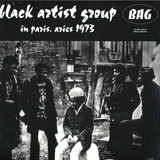
Outstanding free jazz session recorded in 1973 in Paris by Chicago outfit BAG.
It was Lester Bowie, trumpeter with the Art Ensemble of Chicago, who suggested that the Black Artists' Group (BAG) should head for Paris. In 1972 several members of BAG took his advice and flew to France for an extended stay. The following year a concert featuring saxophonist Oliver Lake, trumpeters Baikida Carroll and Floyd LeFlore, drummer Charles Bobo Shaw and trombonist Joseph Bowie (Lester's younger brother) was recorded and subsequently issued as In Paris, Aries 1973, a strictly limited edition LP on the group's own label.
Since the formation of Black Artists' Group in 1968, the home of this multidisciplinary arts collective had been St Louis, Missouri, the city where the Bowie brothers had grown up. It was there that Lester Bowie had started to investigate the expanding horizons of jazz before moving, in 1966, to Chicago where he joined the recently established Association for the Advancement of Creative Musicians (AACM). His close friend Oliver Lake visited Bowie, attended AACM concerts and meetings and was inspired not only by their artistic vision and integrity but also by their efficient organisation. In Chicago musicians were making things happen for themselves, taking control of their own destinies and giving shape to their lives as creative artists.
In June 1969, the Art Ensemble of Chicago had taken their music to France. During the preceding decade Paris had established a reputation for audiences that were unusually well-informed and open-minded, receptive to the uncompromising music of black American innovators such as Cecil Taylor, Ornette Coleman, Albert Ayler and Sun Ra. The city that had nurtured not only Cubism and Surrealism, but also Jean-Luc Godard and contemporary cinema's Nouvelle Vague was well prepared for the sonic collage forms and stylistic dislocations of the Art Ensemble. During that same month violinist Leroy Jenkins, trumpeter Leo Smith and saxophonist Anthony Braxton also arrived in Paris, three further emissaries from the AACM.
The adventure of collective improvisation resonated with the Parisian zeitgeist. Enthusiastic audiences attended their concerts and coverage in the media. In Paris, Aries 1973 offers an isolated and fascinating glimpse into that phase of the group's existence. The album is dedicated to the memory of Kada Kayan, a bassist who had hoped to make the trip from St Louis to France but, tragically, had grown ill and died. His absence adds special poignancy to the sound of the bass when it appears on this recording, played by Baikida Carroll. Listeners keen to hear Kayan himself in the company of Lake, Bowie, Shaw, LeFlore and Carroll should seek out Red, Black and Green by the 10-piece Solidarity Unit, Inc. That album, recorded on 18th September 1970 and dedicated to Jimi Hendrix, who died on that day, features an earlier version of Shaw's composition 'Something to Play On.'
In Paris, Aries 1973 reveals BAG's musical affinities with the Art Ensemble of Chicago. Both groups preserved an independently minded approach to the notion of free jazz and a carefully filtered awareness of pan-African musical practices, while their creative interest in space, mobile structure, chance occurrences and simultaneity also suggests parallels with the concerns of leading experimental composers working at that time. These performances in Paris of Shaw's 'Something to Play On' and Lake's 'Re-Cre-A-Tion,' plus two collective compositions/improvisations, display the dedication to structural fluency and sensitivity to coloration that accompanied BAG's unorthodox group dynamics and their unconventional instrumental combinations. In this case the musicians embrace congas, log drums, marimbas, woodblocks, cowbells and gongs. This is not a showcase for solos, but a shape-shifting and multi-centred statement of togetherness, quest and discovery. Removed from BAG's original multidisciplinary context the music still exudes an exhilarating spirit of collaborative exploration and shared excitement.
High Roller Records, ULTIMATE EDITION, 3rd pressing, black vinyl, ltd 250, 425gsm heavy cardboard cover (revised) , lyric insert, poster (revised), black vinyl bonus 7" in picture sleeve, restored & mastered by Patrick W. Engel at Temple of Disharmony
High Roller Records, ULTIMATE EDITION, 2nd pressing, black vinyl, ltd 250, 425gsm heavy cardboard cover, lyric insert, poster, black vinyl bonus 7" in picture sleeve, restored & mastered by Patrick W. Engel at Temple of Disharmony, Cutting by SST
Marcos Díaz has been part of Buenos Aires underground for many years, being in projects like Bosques and making solo music under the pseudonym Entidad Animada (animated entity). Under this project, Marcos has explored sounds that involve a mix of feedback/distortion through synthesizers, guitars and drum machines that hint at the influence of Stereolab, Spacemen 3, and mid-nineties shoegaze. However, there are also ambient soundscapes with a slight rubbed of the ritualistic psychedelia of the Popol Vuh. The display of colours in his music comes together in the midst of a playful, relaxed and optimistic environment that is simultaneously melancholic. Because of the nature of those pieces, but also because in Entidad Animada there is also space for collage sounds that blend randomly with textures of a primitive analog sound, which inevitably causes a paradox between what is alive and what is inert. And it is because Entidad Animada is precisely that, a spectrum or a vision, a ghost. And these sounds are proof of his existence.
Pruebas de existencia (proofs of existence) is a collection of recordings that Marcos has made in recent years and that we have selected for this album, his first work on Umor Rex. A couple of these pieces were only released digitally, while the others have been on ltd cassette editions through Fuego Amigo Discos in Argentina. Pruebas de existencia is an Umor Rex compilation and remastered edition.
Guitar, sampler, synthesizer, organ, bass, drums & electronic beats, vocals, recording and mixing by Entidad Animada in Buenos Aires. Mastered by Rafael Anton Irisarri at Black Knoll Studio, NY. Cover photography Natch Tablescape (1979) by Langdon Clay. Layout by Daniel Castrejón, Mexico City.
PASCOW beenden die Experimente, die auf dem letzten Album "Jade" zu finden waren. Obwohl sich die Band beim Songwriting erneut am Rande ihrer Möglichkeit bewegt und mit insgesamt 4 Wochen deutlich mehr Zeit mit Kurt Ebelhäuser und Michel Wern im Tonstudio 45 verbrachte, ist "Sieben" geradlinig, verdichtet und klar, wie kein PASCOW Album zuvor. Sowohl musikalisch als auch textlich. 14 Stücke, keine Ballade. Punkrock, Metalriffs, Violinen - dazu Texte über Daniel Johnston, Wall E und Eve, das Bethanien oder die Königin im Ritzen. Was wie eine Mixtur des Grauens klingt, ist auf "Sieben" geschlossen. Hinzu kommt eine Reihe an Gästen: Apokalypse Vega von Acht Eimer Hühnerherzen, Nadine Nevermore von NTÄ oder die Trierer Sängerin Hanna Landwehr seien hier exemplarisch genannt. Das Mastering von "Sieben" übernahm Andi "Dog" Jung in Berlin. Das Artwork stammt von André Nossek (Via Grafik), der bereits das Cover zu "Diene der Party" gestaltete.
- 01: Eisenhower To The West Side
- 02: Do You Feel Fine?
- 03: Guillotine
- 04: Same
- 05: Money's Ran Off
- 06: Pray To Christ In Heaven
- 07: No Man For No Home
- 08: Last July
- 09: Sister Say
- 10: Dirt
- 11: I Tried
- 12: Summer City
- 13: Jess
- 01: Stay In Line
- 02: Get Your Fix
- 03: On Fear
- 04: Momma's Way
- 05: Herculean House Of Cards
- 06: The Leaving
- 07: In Between - Live
- 08: Ain't Nobody's Fault - Live
- 09: Fool's Gold - Live
- 10: Even Jesus Christ Had Died - Live
- 11: Eisenhower To The West Side (Ballad Reprise) - Live
- 12: Hammer Out The Edges
Gold Vinyl[35,84 €]
Trey Gruber's posthumous debut double LP Herculean House of Cards. A compilation of early demos, studio demos, and live recordings. A tortured songwriter and struggling addict who jolted the tired Chicago DIY scene with his own brand of primal despair, Trey Gruber and his band Parent were on track to join the ranks of Twin Peaks, Mild High Club, and Whitney. His death in 2017 at the age of 26 brought it all to a halt. In his final years Trey wrote and recorded hundreds of previously unheard demos, dandelions in the cracked concrete of 21st century disconnect, an alphabet's worth of which have been compiled by his family and friends for his only album: Herculean House Of Cards. The 26-song 2xLP covers years of material, from home tape recordings, sessions at Mathew Roberts (Mild High Club) & Paul Cherry's home studio, to a studio session with Charles Glanders (Whitney) at Chicago's Foxhall Studios, along with audio taken at The Hideout during his last live performance, among others. Though Gruber was an unrelenting perfectionist who was constantly self-deprecating about his best demos, Herculean House of Cards is a wholly comprehensive and accurate reflection of his infectious charisma and raw songwriting. He had a charmingly distinct way with words but also could be disarmingly vulnerable. Like he was in life, Gruber never shied away from being open with his struggles with alcoholism and addiction. On the vivid opener "Eisenhower to the West Side," he sings in painstaking detail of, "A jail-skin cell, a junkies fight/Corner-boys full of grace/And Jesus Christ full of spite." He told then-future bandmate flautist Rebecca Ridge, "It's not some Lou Reed glorification of drugs _ `makes me feel like a man'_ I talk about the disconnect and the ugliness. They're sad pop songs." But even with the pain and the darkness in his lyrics, Gruber's songs had an unmistakable sense of hope and catharsis.
- A1: Eisenhower To The West Side
- A2: Do You Feel Fine?
- A3: Guillotine
- A4: Same
- A5: Money's Ran Off
- A6: Pray To Christ In Heaven
- A7: No Man For No Home
- A8: Last July
- B1: Sister Say
- B2: Dirt
- B3: I Tried
- B4: Summer City
- B5: Jess
- C1: Stay In Line
- C2: Get Your Fix
- C3: On Fear
- C4: Momma's Way
- C5: Herculean House Of Cards
- C6: The Leaving
- D1: In Between - Live
- D2: Ain't Nobody's Fault - Live
- D3: Fool's Gold - Live
- D4: Even Jesus Christ Had Died - Live
- D5: Eisenhower To The West Side (Ballad Reprise) - Live
- D6: Hammer Out The Edges (Bonus Track)
Black Vinyl[35,84 €]
Trey Gruber's posthumous debut double LP Herculean House of Cards. A compilation of early demos, studio demos, and live recordings. A tortured songwriter and struggling addict who jolted the tired Chicago DIY scene with his own brand of primal despair, Trey Gruber and his band Parent were on track to join the ranks of Twin Peaks, Mild High Club, and Whitney. His death in 2017 at the age of 26 brought it all to a halt. In his final years Trey wrote and recorded hundreds of previously unheard demos, dandelions in the cracked concrete of 21st century disconnect, an alphabet's worth of which have been compiled by his family and friends for his only album: Herculean House Of Cards. The 26-song 2xLP covers years of material, from home tape recordings, sessions at Mathew Roberts (Mild High Club) & Paul Cherry's home studio, to a studio session with Charles Glanders (Whitney) at Chicago's Foxhall Studios, along with audio taken at The Hideout during his last live performance, among others. Though Gruber was an unrelenting perfectionist who was constantly self-deprecating about his best demos, Herculean House of Cards is a wholly comprehensive and accurate reflection of his infectious charisma and raw songwriting. He had a charmingly distinct way with words but also could be disarmingly vulnerable. Like he was in life, Gruber never shied away from being open with his struggles with alcoholism and addiction. On the vivid opener "Eisenhower to the West Side," he sings in painstaking detail of, "A jail-skin cell, a junkies fight/Corner-boys full of grace/And Jesus Christ full of spite." He told then-future bandmate flautist Rebecca Ridge, "It's not some Lou Reed glorification of drugs _ `makes me feel like a man'_ I talk about the disconnect and the ugliness. They're sad pop songs." But even with the pain and the darkness in his lyrics, Gruber's songs had an unmistakable sense of hope and catharsis.
1988 machte sich ein Mitarbeiter der Firma Noise Records
selbstständig und gründete TRC (The Record Company). Neben
den Dirty Strangers (mit Mitgliedern der Rolling Stones) und
der spanischen Hardrockband Helpless, gab es diese seltsame
Platte mit dem futuristischen Auge auf dem Cover: MYSTERY.
Schon bei Veröffentlichung im Jahr 1988 hat die LP gnadenlos
polarisiert. Während man sich im deutschen Metal Hammer mit drei
Punkten und einer etwas hilflos wirkenden Kritik zufrieden geben
musste, erntete man im englischen Kerrang eine Vier-K-Wertung
und Aussagen wie „Was wir hier haben ist der interessanteste
Progressive-Thrash-Crossover, den ich seit Langem gehört habe“.
Rückblickend ist dennoch klar: Für dieses Album war die Welt 1988
noch nicht bereit.
Hört man sich die hochgradig eigenwilligen und definitiv auch
einzigartigen Stücke von Mystery an, dann kann man bereits
vermuten, dass hier keine jungen Heavy Metal Fans am Werke
waren, die auf den Pfaden ihrer Idole wanderten. Die Songs stecken
voller Ideen, die die meisten Metalmusiker niemals in dieser Form
gehabt hätten. Und auch die Umsetzung ließ schon immer den
Verdacht aufkommen, dass hier Profimusiker aus einem anderen
Genre beauftragt wurden, ein Heavy Metal Album zu schreiben und
aufzunehmen – natürlich standesgemäß mit Künstlernamen wie
The Lion oder Mike Battista. Genau dies hat sich nun nach Jahren
der Nachforschungen bewahrheitet und wird am VÖ-Tag enthüllt.
Danach dürfte die Scheibe auch bei einer anderen Zielgruppe zu
einem Objekt der Begierde werden…doch mehr wird hier und heute
noch nicht verraten.
Das Booklet enthält Liner Notes von Sänger „Gerald L.“, die die
Hintergründe (inklusive Namen und Orten) erzählen. Dazu gesellt
sich Neudi (Manilla Road, Trance, A&R bei Golden Core), der als
großer Fan der LP seit den Neunzigern an der „Aufklärung des Falles
Mystery“ gearbeitet hat und erst 2022 damit Erfolg gehabt hat.
Dies hat zeitgleich zur Wiederveröffentlichung geführt, nachdem die
Rechteverhältnisse (es gibt nur noch einen lebenden Musiker der
Mystery-Besetzung) geklärt werden konnten.
Auch heute wird nicht jeder Metalfan in die Welt von Mystery
hineinfinden, doch wer es schafft, hat ein Album fürs Leben
gefunden und muss sich der Suchtgefahr hingeben. Gleichförmige
Metalalben gab es in den letzten 40 Jahren schon genug…
Auch die Schweiz hatte (und hat) in punkto harter Musik
einiges zu bieten. Sacrifice aus Délemont gründeten sich
bereits 1982 und machten zwei Jahre später mit einer heute
sehr raren EP auf sich aufmerksam. Der griffig arrangierte Mix
aus Heavy Metal und Hardrock kam nicht nur überregional gut
an, sondern rief auch die deutsche Firma GAMA auf den Plan,
die 1985 das Debüt „On The Altar Of Rock“ auf ihrem Label
Camel veröffentlichten. In gutem Zustand müssen Sammler
heute mit 50 Euro und mehr rechnen, um die Original-LP mit
dem geschmackvollen Cover zu erstehen. 1990 erschien eine
CD der Platte (Aurophon). 1991 nahm man unter dem Namen
Jade ein weiteres Album auf, welches sich eher dem Hardrock
zuwendet.
„Encyclopedia Metallum“ listet die Band als Heavy/Power
Metal und damit liegt man, zumindest für das Jahr 1985, auch
richtig. Viele Jahre blieb die LP unbeachtet, bekam aber mit
dem Aufkommen des Internet und sozialen Medien immer
mehr (junge) Fans dazu. So erscheint eine CD Version des
Albums bei einer südamerikanischen Firma, während Golden
Core das Vinyl neu ins Rennen schickt.
Diese Wiederveröffentlichung entstand in Zusammenarbeit mit
einigen ehemaligen Bandmitgliedern, so dass ein bedrucktes
Inlay mit Liner Notes und Fotos möglich war. Die Spielzeit ist
trotz den Bonustracks auf einem Level geblieben, welches eine
bestmögliche Klangqualität garantiert.
Der Track „Little Killer Man“ wurde Ende 2020 auf der von
Golden Core veröffentlichten Doppel CD „The Best Of And
The Rare Of GAMA Records“ veröffentlicht und bekam in
zahlreichen Reviews eine Nennung.