Exploration, collaboration and curiosity define the rhythm at the beating heart of Mehmet Aslan’s exemplary compositions. The Swiss-born producer of Turkish heritage has already forged a singular path through production, DJing and full-band performances, navigating the more esoteric corners of Berlin’s club culture without sacrificing his musical heritage or innate creativity.
A conceptual new LP ‘Auguri’ follows on from 2021’s gnomic, ornate ‘The Sun Is Parallel’, which saw Aslan musically associate with the likes of Valentina Magaletti and Niño De Elche. ‘Auguri’ also has its foundations in collaboration, born out of a musical lab at Lyon’s annual
Nuits Sonores, the forward-thinking festival with whom Aslan has maintained a lengthy creative relationship.
The resulting audio-visual performance, ‘Bird Signals For Earthly Survival’ introduced Aslan, to the Greek filmmaker Stratis Vogiatzis. Drawing on the philosophy of Donna Haraway and envisioning new ways of being, of living on earth, Aslan and Vogiatzis crane their necks to the sky to witness flocks of birds performing spectacular movements in unison. Fluid and ancient, their organic waltz provides inspiration for Aslan’s extension of the project, spanning sonic shades of electro, ambient and modern folk psychedelia.
On the coastline of Vogiatzis’s home country of Greece, as in many places across the world, climate change threatens to effect the ancient migration pattern of millions of birds, just as their fellow beings on terra firma become increasingly entangled in a man-made disaster of their own creation. In unison, ‘Auguri’ is adorned by artwork from designer Xavi Bou. Known for his ‘ornithographies’, this striking visual captures avian life not only as a force, but a wry observer.
“We need to transform our connections with other living beings to protect the Earth and live together harmoniously”, reflects Aslan. “Personally, this project has made me more sensitive to this issue. I wanted to give back in return for the inspiration I've received."
Perhaps upending expectations of a more traditional ‘ambient’ album, Aslan commits some of his finest compositional work and understated songwriting to this urgent imperative, creating original music that nonetheless, has nature flowing through it. ‘Critters’ presents a spectral sound collage on which Aslan himself speaks from the texts composed at the residency, conjuring visions of “the birds flying… shape of the future”. Meanwhile, the undulating, psychedelic ‘Pigeon Blinks’ takes inspiration from more domestic scenes, charting the unexpected roosting and hatching of an egg on a kitchen window, while ‘Auguri’ gives the album it’s title in connecting to a higher plain, demonstrating Aslan’s ability to lure melody and catharsis from looping hypnosis.
Opener ‘Spectra’ provides a forceful, almost industrial breakbeat that establishes the exigency of the album as well as its sense of wonder, while ‘Euphoria’ reaches the potency of its promise slowly, with Aslan’s modular melodies meeting the flourishing percussion of guest player and multi-instrumentalist, POPP. Finally, ‘Aura’ delivers a cinematic conclusion, mixing an elegiac organ motif, haunting guitar chords and the prophetic sense of a scorched earth. Here, with patience and soaring production, Aslan once more makes the abstract and the unthinkable somehow tangible, mixing in sampled birdsong.
Accordingly, ‘Auguri’ is being released in accordance with EarthPercent, the music industry’s climate foundation, co-founded by Brian Eno. A portion of the album’s publishing will be credited as part of ‘The Earth As Your Co-Writer’ initiative, allowing artists to directly credit The Earth in their new compositions. Here, streaming and publishing from Aslan’s recorded sounds are automatically paid back to a number of vital initiatives worldwide.
Leaning into some of the most vital questions and anxieties of our time, ‘Auguri’ is not a project without a sense of hope. From studio to sea, Mehmet Aslan continues to look to the skies and beyond.
Suche:75
Heavyweight special-effect 12" vinyl (three colors, marbled) with two-sided printed information insert about the album. Mastered and lacquer cut by Stefan Betke (Scape Mastering).
Taevalaotus delivers his second album "Ringlus" ("Circulation") as the second release from Estonian based Taevas Records label, comprised of five original tracks plus a remix from Octal Industries.
In a way, everything eventually returns to its starting point. With everything in constant movement, departure and arrival are nothing more than the beginning and the end of a circle. "Ringlus" as an album wanders along the path of its creator's fantasy. No third-party samples are used, the music's fabric is woven from original, natural sounds such as analog oscillators, vibrations of bass guitar strings, sonic echoes of nature, and cracking of the ice recorded underwater. The tracks contain sound and field recordings from the years 2013 to 2017 that were almost forgotten but then rediscovered from Studio Master 468 archive tapes. The aim was to circulate without taking notice of time and to create soundscapes with original resonance, structure and flow that serve as an antidote to contemporary rushed consumerism.
Hardware used: Alesis A6 Andromeda, Dave Smith Instruments Evolver, Elektron Analog Rytm, Yamaha electric bass, Tibetan singing bowls, wooden drum, Otari MTR-12, Drawmer 1974. 1973 & 1978, various analog effect pedals, scientific hydrophone in ice lake, Konka hand made ("organ-pipes") long distance microphone and portable Sony pcm-d50 in the field recordings.
Beat machine freak duo Bill Converse and Patricia (Max Ravitz) present 380/750, a new EP on Acid Test that blends the two producers’ singular styles to form an emotive “introspection on the dance floor” experience over the course of 4 tracks.
Recorded at Ravitz’s Brooklyn studio over the course of two days, 380/750 features raw, no-multitrack, no-edit live recordings that showcase the duo’s intuition for expressive rhythm tracks. Considering Converse’s roots in the 90’s Michigan rave scene, and Ravitz’s Chicago upbringing, the midwestern strains really shine through. With rhythm-composer mutations, acid dripping over atmospheric synth textures, and the ever-present jack throughout, 380/750 offers a deep sound to get lost in that feels both new and classic at the same time.
Revelation is the 2010 album by dub pioneer Lee ""Scratch"" Perry (born Rainford Hugh Perry). From his Jamaican based Black Ark Studio, he created some pivotal works by producing new instrumental or vocal versions of existing tracks. Later, he moved to Switzerland, where he reinvented himself as a performance and visual artist and collaborated with artists such as The Beastie Boys, The Clash, and Adrian Sherwood among others. For his album Revelation, he collaborated with Keith Richards and George Clinton. The album is the last in a series of three albums he made with English musician and producer Steve Marshall a.k.a. John Saxon. The album is accompanied by the full-length film The Revelation of Lee “Scratch” Perry, which looks behind the scenes of the recording sessions and features an in-depth interview with the great man. The 2LP Revelation is available as a limited edition of 750 individually numbered copies on translucent yellow coloured vinyl, housed in a gatefold sleeve.
Nightclub S Replacement Stylus
The Nighclub S stylus is amongst the top performers in its category, Scratch and Mix.
A spherical diamond and a customised design provide the basis for the cartridge's undeniable supremacy.
The stylus remains in the groove during the scratching and back-cueing, making it unfailingly reliable - even when giving a night-long performance.
Nightclub S Stylus Technical Data
Output voltage at 1000Hz, 5cm/sec. - 6 mV
Channel balance at 1kHz - 1,5 dB
Channel separation at 1kHz - 23 dB
Channel separation at 15 kHz - 15 dB
Frequency response - 20-18.000 Hz +3 / - 2 dB
Tracking ability at 315 Hz at recommended tracking force - 80 μm
Compliance, dynamic lateral - 7 μm/m N
Stylus type - Spherical
Stylus tip radius - R 18 μm
Tracking force range - 2.0-5.0 g (20-50 mN)
Tracking force recommended - 3.0 g (30 mN)
Tracking angle - 20°
Internal impedance, DC resistance - 750 Ohm
Internal inductance - 450 mH
Recommended load resistance - 47 kOhm
Recommended load capacitance - 200-600 pF
Concorde cartridge weight - 18.5 g
TRM-202MK3 ROTARY MIXER
Back to the roots For some time now, rotary mixers have been making a big comeback in the world of electronic dance music. The TRM-202 MK3 from Omnitronic offers the DJ all the classic features of a rotary mixer with its ALPS knobs (Blue Velvet RK27) and the built-in 3-band frequency isolator.
Smooth transitions
The high-quality components provide a good and appealing sound. The large knobs of both channels allow very smooth transitions, which are difficult to set with a conventional mixer (with faders). For both channels, you can switch between 2 x line & phono inputs or sources. A microphone input is also available. The isolator's kill characteristics completely eliminate bass, midrange, and treble for creative mixing
Classic Rotary Mixer With 2 Input Channels And Integrated 3-band Frequency Isolator For Djs
Gain Control, 2-way Equalizer (highs/lows) And Phono/line Switching Per Channel
Dedicated Boost And Kill Cut
Kill Cut Feature Allows Djs To Completely Remove Low, Mid And High Frequencies For Amazing Mixing
Vintage Alps Potentiometers (blue Velvet Rk27)
High-grade Components Ensure Long Life And Excellent Sound Quality
Dj Microphone Input With Separate Level Control
Prefader Listening To Input Channels And The Master Output Via Adjustable Headphones Output, With Cue Mix/split Function
12-digit Stereo Led Level Meter And Master Level Control
Booth Output With Separate Level Control
Inputs: 4 X Line And 2 X Phono (rca L/r), Dj Microphone (xlr) And Headphones (jack)
Outputs: Master And Booth (xlr/rca L/r), Record (stereo Rca)
Technical Specifications
Power Supply: 100-240 V Ac, 50/60 Hz
Gain:
Line: 20 Db
Phono: 60-75 Db
Mic: 44 Db
Max. Output Level: 22 Dbu
Frequency Range:
Line: 20-20000 Hz
Phono: 40-18000 Hz
Mic: 20-20000 Hz
S/r Ratio:
Line: 85 Db
Phono: 77 Db
Mic: 80 Db
Thd:
Line: <0.03 %
Phono: <0.1 %
Frequency Isolator: - To +9 Db
Lows: 20 Hz To 300 Hz
Mids: 300 Hz To 4 Khz
Highs: 4 Khz To 20 Khz
Inputs:
Line: Rca L/r
Phono: Rca L/r
Dj Microphone: Xlr
Outputs:
Master: Xlr/rca L/r
Booth: Xlr/rca L/r
Rec: Rca L/r
Headphones Output: 6.3 Mm Jack (min. 32 Ohms)
Dimensions (w X D X H): 190 X 250 X 107 Mm
Weight: 2,7 Kg
Power Consumption: 6,5 W
Height: 10,7 Cm
Depths: 25 Cm
Width: 19 Cm
Pro S Replacement stylus
The Pro S entry-level cartridge is perfect for newcomers on the DJ scene who want to start off with decent, but not too expensive equipment.
The Pro S has a spherical diamond stylus which minimizes scratching and a solid cantilever which can survive hectic activity at the turntable.
No matter what the application, the Pro S provides remarkable versatility for virtually any setting.
The sound quality is absolutely not to worry about.
The Pro S is a consistent performer and a fine all-arounder!
Pro S Stylus Technical data
Output voltage at 1000Hz, 5cm/sec. - 5 mV
Channel balance at 1kHz - 2 dB
Channel separation at 1kHz - 20 dB
Channel separation at 15 kHz - 15 dB
Frequency response - 20-18.000 Hz +/-2 dB
Tracking ability at 315 Hz at recommended tracking force - 70 μm
Compliance, dynamic lateral - 7 μm/m N
Stylus type - Spherical
Stylus tip radius - R 18 μm
Tracking force range - 3.0-5.0 g (30-50 mN)
Tracking force recommended - 4.0 g (40 mN)
Tracking angle - 20°
Internal impedance, DC resistance - 750 Ohm
Internal inductance - 450 mH
Recommended load resistance - 47 kOhm
Recommended load capacitance - 200-600 pF
Concorde / OM cartridge weight - 18.5 g / 5.0 g
The Rolltop Backpack III is an extremely rugged, entirely weather-proof and multi-functional backpack that is suitable for a wide variety applications. From carrying your DJ- equipment, to convenient carry-on luggage, or just as a regular daypack, the Rolltop Backpack III does it all well. Its bicycle messenger inspired design features a variable “rolltop” opening that gives you an extra 24 cm when unfolded to fit oversized gear like the Pioneer DDJ-SX2/DDJ-RX, the Numark NS-6, 2-octave keyboard controllers, or even multi-effect pedals.
+ BASICS
Crafted from hardwearing and 100% waterproof PVC Tarpaulin
PVC-coated (waterproof zippers)
Especially designed to carry the MAGMA CTRL CASE series
Flexible height adjustment through variable Rolltop Closure
Zippered side access laptop compartment with waterproof zippers
Two accessory pockets with waterproof zippers
Ergonomic padded back panels, s-curved backpack straps, chest strap and hip belt
Hand-luggage compatible (up to 56 cm height)
+ SPECS
+ Outer dimensions: 53-75 x 33 x 20 cm
+ Inner dimensions: 51-70 x 32 x 19 cm
+ Weight: 1,7 kg
Made from 80 0,5l (16oz) recycled plastic bottles, the SOLID BLAZE PACK 80 is a lightweight daypack designed with a minimalistic footprint to accommodate your DJ/production essentials and daily needs.
The SOLID BLAZE PACK 80 is crafted from only the highest quality materials, such as a water-repellent RPET 900D shell and YKK® AquaGuard® zippers to protect your laptop, tablet, timecode records and other expensive gear from the elements. The interior layout features numerous compartments, pouches and zippered pockets for organization and quick access. Travel comfortably knowing your gear is safe inside the MAGMA SOLID BLAZE PACK 80.
Fabrics made from recycled PET plastic bottles (Global Recycling Standard certified)
Outer material crafted from roadworthy and water-repellent RPET 900D Polyester (with eco-friendly water- based PU-coating)
Lining made from RPET TC Polyester
Lockable dual PVC-coated YKK® AquaGuard® zippers (padlock not included)
Separate compartment incl. padded laptop (up to 17“) and tablet sleeve (This compartment also fits 12” records)
Numerous internal pouches, compartments and zippered pockets to organize smaller gear
Quick-access front-compartment
Hanging mesh pocket for headphones or camera storage
Expandable side-pocket for bottle storage
Comfortable air channel back padding with hidden document pocket
Contoured and ergonomic riveted shoulder-straps with metal buckles
Adjustable chest-strap
Trolley-Sling
Cabin luggage compatible
+ Outer dimensions: 49 x 32 x 20 cm / 19.25“ x 12.5“ x 7.8“
+ Inner dimensions: 45 x 30 x 8 cm / 17.75“ x 11.75“ x 3.5“
+ Weight: 1,3 kg / 2.8lb
+ Color: black/grey (Item-No.: 47893 / EAN:4041212478931)
Scratch Replacement Stylus
As implied by the name, the Scratch is intended especially for the disciplines of scratch and back-cueing.
It is made of a fluorescent neon-red material with the intention it becoming highly apparent in spotlight and luminous in ultraviolet light. For DJs that require increased tracking ability, the Scratch is up to the task.
Featuring a reinforced rubber suspension, DJs need not worry about compromising sound quality and stylus life when working with higher tracking forces. With solid bass reproduction and extended highs, the Scratch is great for any style, providing energetic, in-your-face sound.
Very high output! Maximum scratch performance guaranteed!
Scratch Stylus Technical data
Output voltage at 1000Hz, 5cm/sec. - 7 mV
Channel balance at 1kHz - 1,5 dB
Channel separation at 1kHz - 25 dB
Channel separation at 15 kHz - 15 dB
Frequency response - 20-15.000 Hz 3dB/-2dB
Tracking ability at 315 Hz at recommended tracking force - 80 μm
Compliance, dynamic lateral - 6 μm/m N
Stylus type - Spherical
Stylus tip radius - R 18 μm
Tracking force range - 3.0-5.0 g (30-50 mN)
Tracking force recommended - 4.0 g (40 mN)
Tracking angle - 20°
Internal impedance, DC resistance - 750 Ohm
Internal inductance - 450 mH
Recommended load resistance - 47 kOhm
Recommended load capacitance - 200-600 pF
Concorde cartridge weight - 18.5 g
Classic rotary mixer with 4 input channels and integrated 3-band frequency isolator for DJs Gain control, 2-way equalizer (Highs/Lows) and phono/line switching per channel Dedicated boost and kill cut Kill cut feature allows DJs to completely remove low, mid and high frequencies for amazing mixing Vintage ALPS potentiometers (Blue Velvet RK27) High-grade components ensure long life and excellent sound quality DJ microphone input with separate level control
Prefader listening to input channels and the master output via adjustable headphones output, with cue mix/split function
12-digit stereo LED level meter and master level control
Booth output with separate level control Dual inputs for DJ microphone and headphones on the top and front panel
Inputs: 8 x line and 4 x phono (RCA L/R)
Outputs: master and booth (XLR/RCA L/R) and record (RCA L/R)
TECHNICAL SPECIFICATIONS
Power supply: 100-240 V AC, 50/60 Hz
Gain:
Line: 20 dB
Phono: 60-75 dB
Mic: 44 dB
Max. output level: 22 dBu
Frequency range:
Line: 20-20000 Hz
Phono: 40-18000 Hz
Mic: 20-20000 Hz
S/R ratio:
Line: 85 dB
Phono: 77 dB
Mic: 80 dB
THD:
Line: <0.03 %
Phono: <0.1 %
Frequency isolator: - to +9 dB
Lows: 20 Hz to 300 Hz
Mids: 300 Hz to 4 kHz
Highs: 4 kHz to 20 kHz
Inputs:
LINE: RCA L/R
PHONO: RCA L/R
DJ microphone: XLR
Outputs:
MASTER: XLR/RCA L/R
BOOTH: XLR/RCA L/R
REC: RCA L/R
Headphones output: 3.5 mm jack and 6.3 mm jack (min. 32 ohms)
Dimensions (W x D x H): 247 x 330 x 107 mm
Weight: 4.05 kg
Power consumption: 7,2 W
Height: 10,7 cm
Depth: 24,7 cm
Width: 33 cm
Marina Herlop is often described as a pianist, a lingering remnant of her classical training. But what strikes the listener on Herlop’s breakout track miu is the intricate trickery of her voice, tracing rhythmical clusters around the subtlest of musical beds, in a technique inspired by Carnatic music of Southern India.
miu, the opening track of Herlop’s new studio album Pripyat, was among the first songs that the young Catalan artist made on a computer, after two albums – 2016’s Nanook and 2018’s Babasha – that brought spectral elegance to the sound of piano and voice. This spirit of adventure continues into Pripyat, Herlop’s first full album produced on a computer, and her most intensely emotional work to date.
Listening to Pripyat you can feel the emotional toil and creative endeavour that went into the record. Fans of Nanook and Babasha will recognise the combination of melancholic piano and elegant vocal lines that is found on Pripyat tracks like abans abans. But Pripyat has a far fuller, almost chaotic sound when compared to Herlop’s previous work, with the addition of electronic drums, electric bass lines and a wealth of sublime production effects.
A true masterpiece, full of dashing solos and containing some of Freddie King's finest vocals since his heyday in the late '50s and early '60s. Released by Shelter Records in 1972, Texas Cannonball is similar to his first Shelter outing (Getting Ready), but with
more of a rock feel. It covers tunes by Jimmy Rogers, Howlin' Wolf, and Elmore James, tackles compositions by Leon Russell and, more unexpectedly, Bill Withers, Isaac Hayes-David Porter, and John Fogerty (whose "Lodi" is reworked into "Lowdown in Lodi"). King's own pen remained virtually in retirement, as he wrote only one of the album's tracks. In 2007, the Houston Chronicle listed
Texas Cannonball among the 75 essential Texas blues albums.
4th release on the “Classics” Division of Nocturbulous Records., Paradise 3001 “Blue Highway” is a reissue of the classic ep”, remastered for vinyl and repressed for the first time since 1993.
A trancey journey into the very unique ambiance and beautiful atmosphere of the legendary D-Shake, a must have for real amateur.
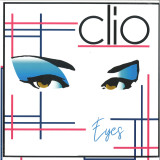
The decade of the 80s is revived through recordings like "Eyes" that allow you to travel through the music and trigger those old emotions of innocence, joy and adventure. It's possible you don't understand a word of what they're singing in the chorus, but the song is very catchy! Maybe not even Maria Chiara Perugini knows what she sings about, but she makes you hang on to every word of her like a nursery rhyme of synths, beach and bubblegum. "Eyes" is so amazing, so mesmerizing and more and more people are discovering this italo-disco masterpiece that usually satisfies and makes fun of you at the same time. If you try playing it at 75% speed gives a hypnotic vapor wave vibe! And even more, the song would have fit well in the dance club scenes from Scarface. Beyond the words - difficult to find a text that makes sense, sometimes out of context, unundestandable even for a French listener - the piece is so surprisingly likeable for the unique tone of Clio's voice, a strange cross between teenager and adult, and the part where she spoke another language, with some really cool synthesizers, are people's favorite parts. 0:31 "Je suis bien heureuse" , 0:47 "La nuit a ses merveilles", 0:57 "Il y a de quoi y perdre la tete, pour toi, sha, pour toi", 1:36 "Je n'ai plus de bulles", 1:52 "Je vous prie applaudissement". "Eyes" by Clio contains all the emotions that a dance-pop song should contain plus the essential element of mystery, a kind of magic that takes place between the chorus and the bass line, a shot in the dark drizzly night of the Italo-Disco. made by Roberto Ferrante, a guarantee for the perfect productions of the 80s, when he was only 20 years old.
Limited Edition COLOR Green Dark mixed Vinyl – 75 units Hand numbered
Mourad started djing in the mid-eighties. His mixing style and musical knowledge have taken him all over Europe and all the way to Asia. Born and raised in Tunis, Tunisia where he sharpened his skills by playing hip hop and electro but also soul, reggae and rare groove. His love for soul and jazz came from an eclectic father who was and still is very serious about his music. As a DJ Mourad plays a blend of Detroit techno and deep house. His sets are known for being diverse and highly loaded with soul and funk. He has played alongside people like Larry Heard, Farley jack master funk, Derrick May, Juan Atkins, Alexi Delano, Dimitri from Amsterdam, Olivier le Castor, BRS, Club Session,Darren Price, Joel Mull , Cari Lekebusch , Subject 13, Alex Reece, Ivan Smaghe , Alton Miller, Jeff Mills , Damon Wilde, 4 Hero , etc. (too many to mention all of them here). Production wise Mourad started producing music during the early 90s and Put out his first release in 1995 as CHRISMOUR Production, in collaboration with his soul brother Calico (svek, deep touch, lace, etc ) The journey continues…
Limited Edition COLOR green lime Vinyl – 75 units Hand numbered
Orlando Voorn is a Dutch DJ and electronic music producer. As a solo artist he has released work since the early 80s under a large amount of aliases containing Balance, Frequency, Baruka, Basic Bastard, Fix, Dope Dog, Boy, Stalker and The Nighttripper. He also produced tracks with Blake Baxter under the name Ghetto Brothers and with Jeff Porter as Designer Loops.
Voorn won the Dutch DMC DJ Championships in 1986 which meant the beginning of a large number of released tracks. As a professional DJ he released his first club tracks under the record label Lower East Side Records. Together with Detroit techno music pioneers Juan Atkins, Derrick May and Blake Baxter he produced tracks under various labels. Voorn's music is characterized by its variety of styles such as Techno, Drum n bass, Ambient, Hip hop and Electro. By many people Orlando Voorn is considered the first one to establish a connection (in music) between Detroit and Amsterdam.
A lost MPB gem from rural Finland! We Jazz presents the first ever reissue of this rare 1990 local release by Brazilian duo Rosanna & Zelia. 7" EP with inside out 3mm spine sleeve. RIYL: Gilberto Gil, Joyce, Musica Popular Brasileira, bossa nova, bossa jazz
Liner notes by Mikko Mattlar:
"Rosanna & Zélia were a Brazilian duo of singers and musicians Rosanna Guimarães Tavares and Zélia Nogueira da Fonseca. They moved from Minas Gerais, Brazil to Europe in 1988, released five albums in Germany between 1993–2004 and featured vocals on an Ian Pooley house track Coração Tambor before Rosanna died of cancer in 2006. Zélia still continues her career in Germany, touring actively and releasing new music.
The duo's journey from Brazil to Germany also included two brief visits to Finland. In the years 1989–1990, they spent time in the small town of Seinäjoki in Ostrobothnia. Rosanna & Zélia performed Brazilian music in Finnish clubs and festivals and recorded a 7" EP for local label Maumau Music. The record was distributed mostly in the Seinäjoki area, but the three songs are well-performed and authentic Brazilian MPB, so the largely unknown record now gets its first reissue for a wider audience on We Jazz Records.
But how did two Brazilian women find their way to a small Finnish town to record an EP? The main reason for this was music journalist and promoter Risto Vuorinen, who was on a holiday in Albufeira, Portugal, where a friend of his lived. The streets were almost empty that evening, but Vuorinen and his friend heard fine guitar playing and singing from a bar. There were Rosanna and Zélia performing on a small stage, and the two Finnish men happened to be the only customers. When the artists ended their performance, Vuorinen's friend, who spoke Portuguese, went to talk to them. Rosanna and Zélia told him they had recently come from Brazil and are trying to gain ground in Europe with their music.
Because Rosanna and Zélia didn't know where they would head next, and because Vuorinen liked their music, he thought of bringing the duo to his hometown, Seinäjoki. They immediately liked the idea, and in the autumn of 1989 they arrived in Finland. The national Finnish jazz festival was held in Seinäjoki, and Vuorinen thought Rosanna & Zélia's Brazilian music would fit right in. They performed at the festival and in November 1989, also made recordings in a local studio with backing musicians from Seinäjoki.
Music enthusiast Pertti Hakala had a record shop and label Maumau Music in Seinäjoki releasing music from local artists. He released a three-track EP from the sessions. with two tracks written by Rosanna & Zelia themselves and their cover version of Extra (Brazilian Reggae), written and originally performed by Gilberto Gil in 1983. A small pressing was made for the Finnish market, and Hakala also sent a box of records to Brazil, but for some reason it was sent back.
After their first visit to Finland, Rosanna & Zélia headed back to central Europe, but Vuorinen decided to organize more performances for them for the next summer. Maybe he also wanted to show them the beautiful Finnish summer, as Rosanna and Zélia had so far seen the country only during the darkest autumn. The duo came back to Finland for the summer of 1990 and performed at the Womad world music festival organized as a part of local Provinssirock. They also played in Nummirock and Puistoblues, both respected music festivals, and performed on TV in Helsinki.
Rosanna and Zélia lived in a small apartment in Seinäjoki and played two to three gigs per week all summer. Because there were only two of them, even small pubs could afford to book them, and in 1990 the economic situation in Finland was good. It was before a major economic depression hit the country. The duo travelled by bus or train, and because they were an acoustic duo, they could easily carry their instruments in public transport. Vuorinen got excellent feedback from organizers. Rosanna and Zélia were good performers, but also really nice people.
With the income from their summer gigs, Rosanna and Zélia could buy a PA mixer and other musical equipment. When the summer 1990 turned to autumn, they continued their journey from Seinäjoki to Germany where they settled down."