
Suche:75

Warehouse Find!
Flight Mode makes a welcome return to Delusions, this time joining forces with Joel Brittain to come up with another killer release in the form of Burn This. Those who caught his last one It’s So Nice last year will know the drill…. epic, rolling, dubbed-out loopy uptempo house based around a classic disco bassline which patiently builds, increasing in intensity Wild Pitch style. Burn This treads similar waters with subtle arpeggios floating around an incessant groove whilst layers of vocal pads build to a crescendo over a beautiful ten minute ride. Completely flipping the script we’ve got the man like Medlar stepping up for remix duties and delivering just the kind of bonkers reworking we were hoping for. Keeping the trippy vibe of the original in place but opting for a more drum machine-programmed groove Medlar’s remix turns the shuffle factor up to ten and adds a rude bassline and intense synths which make it a real ear worm. Finally, Flight Mode gives us his own Tricky Dub of Burn This which adds a straighter 4/4 vibe and goes heavier on the FX creating a perfectly bubbling track which seems to simmer without ever boiling over.

5

4
Timeless Legend are a soul group from Columbus, Ohio. Their 'Synchronised' album from 1980 is one of the rarest 'rare grooves' and both original copies and the single 'I Was Born To Love You' currently sell for over £1,000 a copy.
For RSD, Love Vinyl in conjunction with Expansion bring you an earlier 1979 single 'Everybody Disco' (itself worth over £200), a remix and 'I Was Born To Love You' on a 12' single limited to 750 copies. The remix of 'Everybody Disco' is by The Mighty Zaf & Phil Asher who command major respect from the current disco scene and have transformed the song into what will become one of the most significant disco style dance releases of 2018. This is the first and only time for these tracks on 12' single.

(en) Good things take time - ideally, including a great deal of oomph. At least when it concerns new tracks from within Monkey Maffia's inner circle. It has been four whole years since we received the momentary last piece of the 'Monkey Maffia Music Club', 12 inches full of funky nasty beasts dedicated to the best dancefloors of this world. In the meantime, a remix was released here and a track was presented there, but now we may once again enjoy a full load of Monkey Maffia. And on top of that the now 75th release of Freude am Tanzen!
Monkey Maffia is personally providing the soundtrack for this ceremonial occasion. His tracks continually supply tremendous amounts of oomph to parties as well as loads of gravity and funk. After all, as an experienced DJ he simply knows what an awesome night looks like - a straight bass drum fractured while simultaneously amplified with infinitely warm synths. On one track, bass and percussion are throwing all our worries overboard, on the next one pads and vocals are shimmering to the bet. Whatever may happen, it can be said with utmost certainty that it will never become boring on either secular flat earth.
A1 - Bad Or Good
A total brain and leg screw, that spins and spins and spins. Any DJ willing to test how much funk a dancefloor can bear up to the third decimal place, will be perfectly served with this track as proof.
A2 - Fake Heroes
Short reminder, but detailed clattering minimal with soul does still exist. At first, 'Fake Heroes' frostily shines through aerial heights; however, then submerges all the more into unforeseen depths.
B1 - MiniMi
Somehow jazzy, but was meant as house. Similarly hypnotic, equally free. Common thread is the bass drum, along which anything is possible. File under: secret weapon for truly late hours and DJs with guts.
B2 - Schörless
This is a track that sends Larry Heard on an Orient trip and thereby extends over a much longer period than its brief four-and-a-half-minute length. For all those who are still serious about 'deep' in house.
(de) Gut Ding will Weile haben - und reichlich Wumms am besten gleich noch mit dazu. Zumindest dann, wenn es sich mal wieder um neue Tracks aus dem engsten Kreis der Monkey Maffia handelt. Ganze vier Jahre ist es inzwischen her, dass uns von dort aus der vorerst letzte Teil des - Monkey Maffia Music Club' erreichte, eine 12-Inch voll funky-garstiger Biester für die besten Dancefloors dieser Welt. Zwischendurch erschien ein Remix hier und ein Track dort, doch nun gibt's endlich wieder Monkey Maffia satt. Und das nunmehr 75. Release auf Freude Am Tanzen gleich noch mit dazu!
Der Soundtrack zu diesem feierlichen Anlass kommt von Monkey Maffia höchstselbst. Stichwort Wumms: den bringen seine Tracks stets genauso mit zur Party wie massig Tiefe und Funk. Denn als routinierter DJ weiß der Mann einfach, was eine lange Nacht alles braucht - hier wird die gerade Bassdrum gebrochen, dort mit endlos warmen Synths unterfüttert. In einem Track klappern uns Bass und Percussion die Sorgen aus dem Leib, im nächsten flirren die Pads und Vocals sehnsüchtig um die Wette. Was auch immer passiert, langweilig wird's auf dieser wie jener weltlichen Erdscheibe mit Sicherheit nicht.
A1 - Bad Or Good
Totale Hirn- und Beinschraube, die dreht und dreht und dreht. Wer als DJ testen will, wieviel Funk bis auf die dritte Kommastelle genau so ein Dancefloor eigentlich aushält, ist mit diesem Track als Messgerät bestens bedient.
A2 - Fake Heroes
Kleiner Reminder, aber kleinteilig-klappernder Minimal mit Seele, das gibt's noch immer. - Fake Heroes' schimmert zunächst kalt durch die luftigen Höhen, taucht dann aber umso weiter vor in ungeahnte Tiefen.
B1 - MiniMi
Irgendwie Jazz, aber als House gedacht. Ähnlich hypnothisch, genauso frei. Als roter Faden dient die Bassdrum, entlang dieser geht aber eigentlich alles. File under: Secret Weapon für die ganz späten Stunden und DJs mit Mumm.
B2 - Schörless
Ein Track der Larry Heard auf Orient-Reise schickt und dabei viel weiter trägt als seine knapp viereinhalb Minuten Spielzeit. Für alle, die das - Deep' im House noch ernst meinen.

8
Originally released by Legowelt's Strange Life on a CD-r back in 2007, 'Mons Testaceum' finally has its first vinyl press on Mannequin Records.
First full length released by Heinrich Dressel aka Valerio Lombardozzi, boss of the mighty Minimal Rome, 'Mons Testaceum' together with 'Escape From The Hill' and 'Completion Of The Amphoras Table ' represented the first of a trilogy dedicated to the 'Monte Testaccio', an artificial mound in Rome composed almost entirely of 'testae', fragments of broken amphorae dating from the time of the Roman Empire.
'Mons Testaceum' is the second appearance of Valerio Lombardozzi on Mannequin Records, after the noirish atmospheric 'Sighing Melodies Thru The Graves' mini lp released in 2012 as MNQ 027 on white vinyl.
The sound of the album is moving somewhere hidden between Fabio Frizzi ('Paura Nella Città Dei Morti Viventi') and Goblin ('Buio Omega'), thanks the extensive use of the Italian - better, Roman - legendary synthesizer Elka Synthex in every single track, with touches of the Berlin electronic school, 'mixed with irresistable futuristic soulfunk synth solos (Kool and the Gang goes cosmic!)'.
Impressive stuff, which influenced deeply the sound of Mannequin Records itself during the years after it was released. TIP! Mastered by Andrea Merlini.
Graphic design by Dave Grave and Alessandro Adriani.
Limited Edition of 400 copies.

This label is a product from the famous Cosmopolar Club (based in
Erfurt, Germany) who wants to present their residents & friends.
Polar001 was the formerly known OPENDOORS001 - so this is the
official debut release by Raycoux & Stefan with remixes from
workaholic Beatamines and Fabian Reichelt who just released his
debut Album as MARIAN (together with Marek Hemmann).


4
Two jewels in the crown of the soulful electronic music scene in NYC unite for a spellbinding EP on Rhythm Section International. ”Full Circle” is a brand new body of work from Musclecars & Toribio.
To call this 12” simply epic would almost be doing it a disservice. The breadth of musicality and execution of ideas contained across 3 compositions is nothing short of miraculous. I use the word composition intentionally: these are not merely tracks - these are 3 movements making up a concerto - with a dub thrown in for good measure!
The record kicks off with a soulful house behemoth, “ That’s My Story” featuring NJ legend Roland Clark on vocals giving sweet sweet testimony. In many ways, this track feels like a coming together of the trios influences. The lyrics contextualise it, giving it this intimate, confessional feel. The latin drums shuffling amidst the 909 kick drive it forward and the organ swimming freely amongst it all takes us to church. It’s a timeless track - paying homage to the various New York traditions laid down by Louis Vega, Timmy Regisford, Joaquin Claussell , Ron Trent et al - all heroes and collaborators of the composers who - with this effort - have surely now earned their place in the pantheon of American Soul Music.
‘
Be Honest’ maintains the confessional tone with the lyrics but takes things right back down in terms of tempo. Is it a love song, an ultimatum or a cry for help? Whichever way you interpret it, this track is Toribio’s time to shine as a lead vocalist and he hits all the notes, leaving not a dry eye in the house. This is a delicate tour de force, delivered with such raw emotion and vulnerability it allows the instrumentation takes a back seat - just a gentle groove, swelling strings and some unresolved chords are all that’s required to transform us to the main character of this story. We’re left hanging, and it’s oh so relatable.
Agua De Florida serves as an uplifting, fast paced finale to the concerto and this one’s all about the trumpet - masterfully performed by Melbourne born, London based virtuoso Audrey Powne. If Herb Alpert was making house music - I imagine this is what it would sound like. Throbbing bass and noodling synths join the melee and crank the joy up to 11. If the EP is a story arc over 3 tracks, then we’re definitely not left hanging with this one. All is resolved, things are moving onwards and upwards and the circle is complete.

11
Niagara return to Discrepant with Buxtehude, a new work bending the legacy of Dietrich Buxtehude into their own fractured, electro-organic language.
Rather than a tribute, Buxtehude feels like an abstract dialogue with the Baroque composer’s sense of structure and flow—reimagined through Niagara’s raw synth work, off-grid rhythms and subtly warped melodic cycles. The trio let the music grow from the inside out: patterns expand and contract, harmonies tilt slightly off their axis, and small details accumulate until each piece reveals its own internal gravity.
There’s a clarity to Buxtehude that feels carved rather than composed. Tracks move with a quiet insistence, like mechanical organisms finding coherence through repetition and drift. Melodic fragments surface briefly, disappear, then return transformed, lending the album a strange balance between austerity and warmth.
With Buxtehude, Niagara continue to refine their unmistakable approach—playful yet rigorous, minimal yet full of life— remaining entirely their own.

- A1: Cannibal Forecast
- A2: Roses
- A3: Clock
- A4: Death And Deliverance
- A5: Runaway Heart
- A6: People You Long To Forget
- A7: Consequences
- A8: Party Of Fleas
- A9: You'll Rot
- A10: The Spiders Line
2
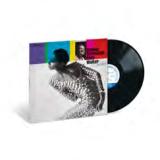
Der Tenorsaxofonist Stanley Turrentine hatte sich in den frühen 1960er Jahren einen Namen als gefühlvoller Soul-Jazzer gemacht. Oft war er auf den Alben dieser Zeit gemeinsam mit seiner damaligen Frau, der
Hammond-Organistin Shirley Scott, zu hören. Mitte der 1960er Jahre öffnete sich Turrentine auf Alben wie
“Easy Walker” progressiveren Jazzklängen, ohne dabei seine Identität zu verlieren. Das abwechslungsreiche
Programm von umfasste hier sowohl hart groovende Nummern als auch sinnliche Balladen.
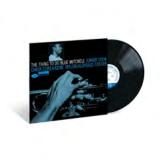
Mit seinem gefühlvollen, swingenden Hard-Bop-Stil verkörperte der Trompeter Blue Mitchell in der zweiten
Hälfte der 1960er Jahre das Blue-Note-Ethos wie nur wenige andere Musiker. “The Thing To Do” war
1965 das erste Album, das Mitchell bei dem Label veröffentlichte (sein eigentliches Debütalbum “Step
Lightly”, das 1963 aufgenommen wurde, erschien trotz Spitzenbesetzung erst 1980). “The Thing To Do”
ist historisch allein schon deshalb bedeutend, weil auf dem Album zwei junge Musiker zu hören sind, die ein
paar Jahre später mit der Jazz-Rock-Band von Miles Davis Weltruhm erlangten: der Pianist Chick Corea
und der Schlagzeuger Al Foster. Das Repertoire des Albums, das bei AllMusic die Höchstwertung von fünf
Sternen erzielte, reicht von Hard Bop über Balladen bis hin zu einem von Calypso beeinflussten Stück.
Wie Amerika selbst ist auch die Geschichte von Chess Records eine Geschichte von Chancen in neuen Ländern, in denen Grenzen zwischen Hautfarbe und Kultur überwunden wurden, um Rhythm and Blues-Musik
zu schaffen, die Zuhörer auf der ganzen Welt beeinflusste. Das beeindruckende Künstleraufgebot von Chess
– und seine Gründer – haben den Blues von Volksmusik zu populärem Sound weiterentwickelt und verändert.
Chess Records wurde 1950 von den polnischen Einwanderern Leonard und Phil Chess gegründet und entstand im Süden Chicagos, aber der Einfluss ist weltweit und über Generationen der Popmusik hinweg spürbar
– von Acts der British Invasion wie den Beatles, den Rolling Stones und Eric Clapton, die Chess-Künstler
als ihre Vorbilder nannten, bis hin zu den heutigen Stars wie Beyoncé, Jack White, Questlove und Bruce
Springsteen.
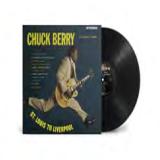
Am 17.04.2026 erscheinen die Alben von Chuck Berry ”St. Louis To Liverpool” und Etta James ”Tell
Mama” im Rahmen des 75.ten Bestehen von Chess Records
Wie Amerika selbst ist auch die Geschichte von Chess Records eine Geschichte von Chancen in neuen Ländern, in denen Grenzen zwischen Hautfarbe und Kultur überwunden wurden, um Rhythm and Blues-Musik
zu schaffen, die Zuhörer auf der ganzen Welt beeinflusste. Das beeindruckende Künstleraufgebot von Chess
– und seine Gründer – haben den Blues von Volksmusik zu populärem Sound weiterentwickelt und verändert.
Chess Records wurde 1950 von den polnischen Einwanderern Leonard und Phil Chess gegründet und entstand im Süden Chicagos, aber der Einfluss ist weltweit und über Generationen der Popmusik hinweg spürbar
– von Acts der British Invasion wie den Beatles, den Rolling Stones und Eric Clapton, die Chess-Künstler
als ihre Vorbilder nannten, bis hin zu den heutigen Stars wie Beyoncé, Jack White, Questlove und Bruce
Springsteen.
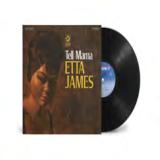
Am 17.04.2026 erscheinen die Alben von Chuck Berry ”St. Louis To Liverpool” und Etta James ”Tell
Mama” im Rahmen des 75.ten Bestehen von Chess Records
aut drum science and steely atmospheres are the order of the day as Terrain deliver a moody, stripped-back four-track EP for Livity Sound. The partnership of Forest Drive West and Voytek has so far yielded sharply-focused releases for Delsin's Mantis series and Vargmal, finding the synergy between lean, intricate drum & bass and heads-down, experimental techno.
On 'Barossa Dub', the pair pitch down to a half-time, dancehall-angled groove to propel a heavily-dubbed soundscape and system-ready bass. 'Nica' maintains the low-slung swagger while steadily ratcheting up the dread. On the flip, 'Scatter' winds the pressure back up with a punchy broken techno workout that teeters on the edge of breakbeat. 'Hive' opts for a brooding, purring techno meditation that thrives on slow release and intricately crafted sound design, capping off a diverse trip through austere club modernism.

8
A cocktail of rebellious queer vocal fragments, deceptive percussive granules and swaying hammered vibrations, upsammy and Valentina Magaletti's first collaboration trembles with suspense. The seeds of 'Seismo' were sown following a commission from Amsterdam's Rijksmuseum to soundtrack an exhibition of work from the Museum Boijmans van Beuningen in Rotterdam and the duo didn't want to approach their collaboration flippantly. So, wandering the museum's maze of rooms, they recorded various improvised percussive sounds with their arsenal of microphones, using the space to inform various rhythms and textures that were sculpted later into electroacoustic vignettes. This was just the starting point, though; as Magaletti and upsammy began performing together, the project evolved and 'Seismo' began to take shape. The duo had struck on a salient aesthetic concept, using mostly digital and acoustic mallet instruments to blur the boundary between their roles and create friction between the synthetic and the authentic. And the finished record is a phantasmagoric push-and-pull between its various conflicting elements: harmony and dissonance, randomness and predictability, openness and constraint. 'Seismo' isn't the first time that upsammy has studied her environment in search of revelation. On her acclaimed second album, 2024's 'Germ in a Population of Buildings', the Amsterdam-based DJ, producer and multidisciplinary artist erected her complex, unorthodox rhythms and eerie melodies around a modernist frame of field recordings collected in various cityscapes, countering heavyweight basslines with subtle, microscopic sounds. London-based Italian vanguard Magaletti, meanwhile, has applied her unique logic to innumerable projects at this point, working with everyone from batida icon Nídia and hardcore-dub outfit Moin to French writer Fanny Chiarello and British bass scientist Shackleton. For years she's approached the drums with criticism, attempting to challenge any preconceptions, something that's most visible on 2020's 'A Queer Anthology of Drums'. And both artists' thoughtful perspectives are welded together seamlessly on 'Seismo', a dizzying suite of eight eccentric statements that's fragile but never insecure, gauzy but not indistinct. An unnerving sense of space characterizes 'It Comes to an End' as Magaletti's in situ improvisations herald for upsammy's microscopic glitches and chiming pitch-bent melodies. It's almost unbalancing to witness the track's impossible dimensionality, the interplay between reverberant marimba hits and bone-dry synths, or percussion that's been recorded and processed in consciously different settings. A new architecture emerges in the sound itself that the two artists scan and explore meticulously, testing its boundaries with undulating hybridized rhythms on the invigorating 'Superimposed' and offsetting the powdery drums with liquified smacks and alien voices. The duo's vibrations are knotted with piano flourishes on 'Hyperlocalize', balanced with artificial clanks and clangs that disappear into the track's sonorous atmosphere, replaced by whispers and half-hallucinated insectoid chirps. 'Seismo' is an album that feeds off the energy generated by its juxtapositions: the tension and anticipation that's melted by rapid, hyperactive movement and the finely drawn rhythms disrupted by a layer of indistinct, barely perceptible microsounds. It's a collaboration that sounds like two minds challenging each other but not wrestling, each peering from their own distinct vantage point and imagining a third landscape shaped by optimistic, queer vibrations.

7
2025 Reissue.
Münchenbuchsee, a suburb of Bern, Switzerland. Stephan Eicher is the youngest of three children. His father, a radio and TV repairman, is also a jazz violinist and a sound tinkerer in his spare time. In the family home's converted fallout shelter turned studio, Mr. Eicher experiments with homemade sequencers, tortures handcrafted drum machines, and abuses reel-to-reel tape recorders—all under the fascinated gaze of young Stephan.
The boy quickly develops a musical curiosity, exploring sound through various experiments and wanderings. Alongside his younger brother Martin, Stephan crafts audio plays on a homemade multi-track recorder (essentially several cassette decks hooked together!), which they write, record, add sound effects to, and perform for family and friends. Just a couple of nice kids, really...
Then comes 1972, and Lou Reed's Transformer album changes everything for the Eicher kids. For 13-year-old Stephan, it's a revelation—especially "Vicious", the opening track, which he plays on repeat for months. He convinces his father to buy him an electric guitar. Not stopping there, his father also builds him a tube amp using an old radio.
Then comes adolescence. A rough one. Stephan leaves home at 16 and moves to Zurich. With obvious artistic talent, he persuades his art teacher to help him get into F+F, a radical, alternative art school—despite his young age. Accepted, he starts learning video techniques, determined to become a filmmaker.
At F+F, Stephan organizes Dada-style happenings and concerts with a group of friends known as the Noise Boys. Among them: one of his teachers on bass, Veit Stauffer on drums (who would later found ReR/Recommended Records), his girlfriend Sacha on vocals, and Stephan on guitar. In one of their early performances, they release a remote-controlled mouse covered in dull razor blades into the audience to create panic and chaos. Keeping with this aggressive, confrontational spirit, they once played a concert while wearing headphones blasting Tristan and Isolde, trying to perform their own songs simultaneously—to maximize the cacophony. The goal was always the same: clear the room.
Their “songs,” if you can call them that, followed suit. Take "Hungeriges Afrika", for instance—performed entirely with power drills and some drum feedback.
To make ends meet, Stephan returns to Bern on weekends to work as a waiter at the Spex Club, the city’s main punk venue. On September 16, 1980, during a show by proto-electro group Starter, the police raid the club and arrest everyone. Stephan, who manages to avoid arrest, seizes the opportunity to “borrow” Starter’s gear left behind. He suddenly finds himself in possession of a Roland Promars synth, a Korg MS20, and a gorgeous CR78 drum machine, which he runs through a Big Muff distortion pedal to get that perfect gritty sound.
He then sets out to reinterpret some Noise Boys tracks, reworking them during impromptu sessions recorded on a dictaphone (yes, a dictaphone—now the lo-fi sound makes more sense, doesn’t it?). He ironically titles the resulting cassette "Stephan Eicher spielt Noise Boys" ("Stephan Eicher plays Noise Boys"). This gem features seven tracks, which are the ones reissued here.
Back in Zurich, he visits his friends Andrew Moore and Robert Vogel, who have a DIY cassette duplication setup. They make 25 copies of Stephan Eicher spielt Noise Boys for Stephan and his friends. Robert encourages him to visit Urs Steiger of Off Course Records and play him the tape.
Without much hope, Stephan shows up at Urs’s office. But Urs is instantly hooked and suggests releasing a 7” single. Due to space constraints, they reluctantly drop two of the seven tracks ("Hungeriges Afrika" and "One Second"). As for the musical score featured on the cover—it was randomly chosen and remains a mystery to this day. Calling all music theory nerds!
The 7-inch is pressed in 750 copies and released in the first week of December 1980—a date Stephan remembers well, as it’s the same week John Lennon was killed. Smartly, Urs sends a promo copy to François Murner, Switzerland’s answer to John Peel, who hosts a show on alternative station Sounds. Murner falls in love with the record and starts giving it airtime. To Stephan’s surprise, sales follow—and people actually seem interested in his music.
Even this modest underground success scares Stephan a bit. He stops making music for a year and moves to Bologna, where he works as a programmer at Radio Città, a feminist radio station.
Meanwhile, Stephan’s younger brother Martin, who’s also involved in the punk scene, joins the band Glueams as a singer and guitarist. Glueams, named after the fanzine run by two of its members (drummer Marco Repetto and bassist GT), eventually rebrands as Grauzone. Stephan is invited to their shows to project hacked Super 8 visuals live on stage.
Urs Steiger, now working on a compilation titled Swiss Wave – The Album, asks Grauzone to contribute alongside bands like Liliput, Jack and the Rippers, The Sick, and Ladyshave (Fall 1980).
For the album, Martin tasks Stephan with producing their recording sessions. Under Stephan's artistic direction, two tracks emerge: "Raum" and "Eisbär". During "Eisbär", Martin plays a minimalist bass line borrowed from post-punk band The Feelies (just an open string). Drummer Marco Repetto struggles to keep time. Later that evening, unhappy with the takes, Stephan builds a four-bar drum loop from a ¼-inch tape and uses it instead of the flawed original. He then adds bleepy synths and wind sounds to complete the track’s icy vibe before handing it over to Urs.
The Swiss Wave – The Album compilation is released quietly at first, but things snowball thanks to "Eisbär", which eventually becomes a smash hit—selling over 600,000 singles.
Meanwhile, Stephan plays in a rockabilly band called SMUV (named after Switzerland’s social security agency) and begins producing artists, including the debut album of Starter (1981), which includes a more pop-oriented version of "Minijupe".
By early 1982, Stephan starts spending time with the post-punk girl band Liliput (formerly Kleenex). They’re older than him, and he happily drives them around in his Renault Major, acting as their roadie.
By 1983, Grauzone—signed to the major label EMI, which turned out to be a misstep—is falling apart. Stephan begins to pivot toward a more mainstream pop sound with his debut solo album Les Chansons Bleues.
But that... is already another story.
