New music from Philadelphia’s recently rediscovered soul powerhouse Ron Aikens and his backing band the Hip Tones is a soon-to-be classic double sider. Following in the traditional “soul 45 rpm” single format, a ballad side with a funk side on the flip, here is the first physical release from the forthcoming LP “Ron And The Hip Tones”. The lowrider soul feel on “Tear On My Chin” comes from a brainstorming session with Ron, producer P. Maxwell Ochester, and the two main songwriters Dave Cope & Fred Berman.
It tackles heartache, pain, and loss coupled with the slow grinding groove only true heartache can produce. On the flip, you will find a nod to Ron’s former band, Power Of Attorney, and their breakout single “Changing Man” which inspired the uptempo groove and sweet flute part. Hinting at the classic Philly Soul style, there are lush strings and as a bonus, the impactful and powerful message delivered by Philadelphia poet Ursula Rucker.
Search:8 ball
“Not a lot of people talk about the true origins of bluegrass music,” says Swamp Dogg, “but it came from Black people. The banjo, the washtub, all that stuff started with African Americans. We were playing it before it even had a name.” Blackgrass, Swamp Dogg’s remarkable new album, is no history lesson, though. Produced by Ryan Olson (Bon Iver, Poliça) andrecorded with an all-star band including Noam Pikelny, Sierra Hull, Jerry Douglas, Chris Scruggs, Billy Contreras, and Kenny Vaughan, the collection is a riotous blend of past and present, mixing the sacred and the profane in typical Swamp Dogg fashion as it blurs the lines between folk, roots, country, blues, and soul. The tracklist is an eclectic one—brand new originals and vintage Swamp Dogg classics sit side by side with reimaginings of ’70s R&B hits and timeless ’50s pop tunes—but the performances are thoroughly cohesive, filtering everything through a progressive Appalachian lens that nods to tradition without ever being bound by it. Special guests like Margo Price, Jenny Lewis, Justin Vernon, and The Cactus Blossoms all add to the excitement here, but it’s ultimately the 81-year-old Swamp Dogg’s delivery—sly and playful and full of genuine joy and ache—that steals the show. The result is a record that’s as reverent as it is raunchy, a collection that challenges conventional notions of genre and race while at the same time celebrating the music that helped make Swamp Dogg the beloved iconoclast he’s known as today.
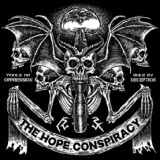
"Tools of Oppression / Rule by Deception" ist das neue Album von The Hope Conspiracy. Das Album wurde von Kurt Ballou und Zach Weeks in den God City Studios produziert. Das Artwork für die Veröffentlichung stammt von dem gefeierten Künstler Alexander Heir (Death/Traitors).
Dies ist wahre akustische Gewalt, die sich gegen politische Spaltung, wirtschaftliche Manipulation, Kriegsgewinnlerei, Medienpropaganda und andere abscheuliche Formen globaler Unterdrückung richtet. Luftschutzsirenen heulen auf, während die ahnungsvollen "Those Who Gave Us Yesterday" und "The Prophets and Doom" wie brennende Schrapnells explodieren. Der Höllenritt geht weiter mit "A Struggle For Power" und "Live In Fear", zwei bösartigen Blasts, die vor Bosheit und Verachtung nur so strotzen. "Shock By Shock" und "Of A Dying Nation" leiten die doomig-düstere Schwere ein
und drosseln das Tempo auf ein mittelschnelles Sperrfeuer. "Confusion/Chaos/Misery" zieht das Tempo an und geht mit verbrannter Erde auf die soziopolitischen Alpträume los, die uns alle umgarnen, während "Broken Vessels" die Opioid-Krise und die Sucht als Ganzes thematisiert. Dies führt zu "The West Is Dead", einer dystopischen Hardcore-Hymne mit vielen Hooks, und dem epischen Schlussstück "The Specter Looms"; ein unheilvoller Soundtrack zum stetigen Niedergang unserer modernen Zeit.Keine Frage, The Hope Conspiracy ist zurück, um eine kalte, harte Aussage über die Existenz in der Endzeit zu treffen.
SIMON AND GARFUNKEL’S SWAN SONG: BRIDGE OVER TROUBLED WATER FEATURES METICULOUS PRODUCTION, GORGEOUS SONGWRITING, AND HEALING SPIRIT
Sourced from the Original Master Tapes and Limited to 4,000 Numbered Copies: Mobile Fidelity’s 180s SuperVinyl 33RPM LP Plays with Staggering Detail, Clarity, and Definition
1/4" / 15 IPS analogue master to DSD 256 to analogue console to lathe
Unifying, soothing, comforting: Simon and Garfunkel's Bridge over Troubled Water quickly became the album of an era upon release in 1970, the benchmark set serving as a beacon of hope and hymn of reassurance during a time marked by polarizing changes, social unrest, uncertain politics, and the dawn of a new era. These uplifting reasons — to say nothing about the gorgeous songwriting, meticulous production, and watershed performances — attest to why it is more relevant than ever in our current climate. Music, Bridge over Troubled Water simultaneously suggests and proves, heals all wounds and lifts all boats.
The seminal effort Rolling Stone named the 51st Greatest Album of All Time reaches illustrious sonic and emotional heights on Mobile Fidelity’s 180g SuperVinyl 33RPM LP. Pressed on MoFi SuperVinyl and strictly limited to 4,000 numbered copies, this ultra-hi-fi collector's edition brings you closer to music that picks up where the duo's Bookends leaves off. You'll enjoy deep-black backgrounds and pointillist details. Seemingly every note, breath, and movement is reproduced with exquisite accuracy, clarity, and balance. Each rotation benefits from SuperVinyl’s ultra-low noise floor and superb groove definition.
The best-selling record in the U.S. for several years running and winner of six Grammy Awards — including nods for Record of the Year, Album of the Year, Song of the Year, and Best Engineered Recording — Bridge over Troubled Water endures as a staple of accessible sophistication, angelic elegance, effortless singing, unhinged ambition, and therapeutic spirit. While it would turn out to be the final studio set for a duo surrounded by creative and personal disagreement, Simon and Garfunkel's collaborative ethos and soaring harmonies — combined with reflective narratives centred on the American experience, friendship, romance, and farewells — combine to turn the 11-track work into a paean to resolution, reconciliation, calm, and balance.
Home to the legendary title track graced by Garfunkel's pacifying solo lead vocals as well as the equally famous folk ballad "The Boxer," Peruvian-based "El Condor Pasa," upbeat "Cecilia," and rock ’n’ rolling "Baby Driver,” Bridge over Troubled Water remains as renowned for its musical diversity as its lyrical poignancy. Moving beyond the templates they'd perfected on four prior albums, Simon and Garfunkel embrace a then-unimaginable swath of styles. Rock, pop, gospel, country, R&B, South American, and jazz strains course throughout the songs, each sparked with bold experiments yet grounded in a well-orchestrated melange of melody, rhythm, and classicism that makes everything personal, familiar, and warm.
Not for nothing is Bridge over Troubled Water one of the finest-sounding albums ever made. Featuring instrumentation helmed by members of Los Angeles' fabled Wrecking Crew as well as multiple choral and string sections, songs took hundreds of hours to complete and involved pioneering recording techniques. Evoking both Phil Spector's live"Wall of Sound" approach as well as inventive effects, Bridge over Troubled Water is a triumph of texture, atmosphere, and architecture. Our audiophile edition brings the record's unique traits to the fore.
Whether the reverberation generated by Garfunkel's cassette recorder on "Cecilia," echoing drums captured in a corridor heard throughout "The Boxer," automobile noises peppering "Baby Driver," layer upon layer of voices dotting "The Only Boy Living in New York," or echo-chamber percussion on the title track, details comes through with stunning accuracy, clarity, and dimensionality. In every regard, Bridge over Troubled Water exudes genius.
Unadorned with any post-production tricks or overdubs, Garcia/Grisman breathes with naturalism and presence. You will effortlessly detect the full body of the instruments, witness the woody grain textures, and get lost in the surprisingly velvety qualities of Garcia's lullaby-like singing. Our pressing also marks the first time this delightfully joyous affair has been issued in analogue form. You will never hear a better-sounding Americana-styled recording.
Pals since the mid-1960s, Garcia and Grisman bonded over their love for traditional folk and bluegrass. The two teamed up amidst what became a gold rush of top-notch productivity and creativity for Garcia. Partnering with bassist Jim Kerwin and percussionist/fiddler Joe Craven, the pair approaches every passage with innate ease, as if either musician could finish the others sentence. The affable chemistry and soothing interplay wash over a selection of songs as notable for their diversity as the way Garcia and "Dawg" turn them into the equivalent of old friends you haven't seen in years.
Exquisite melodies and jewel-shaped notes decorate the simple, convivial structures of tunes that hop, jump, skip, skitter, and bop. The atmosphere is reminiscent of the legendary gypsy-jazz exchanges between Django Reinhardt and Stephane Grappelli, and equally sharp. Swirling with Middle Eastern modality, the closing 16-minute-plus rendition of Grisman's rippling "Arabia" – complete with a section based on a Cuban fold theme - is alone enough worth the price of admission to this sensational session. But there's so much more.
The quartet delves into Celtic themes ("Two Soldiers"), jazz-grass ("Grateful Dawg"), old-world ballads ("Russian Lullaby"), and Appalachian flavours ("Walkin' Boss") with nonpareil skill and soulfulness. Garcia and Grisman's tandem picking throughout epitomize sublime. And for many listeners, the duo's revised version of the Grateful Dead staple "Friend of the Devil" ranks as the finest-ever recorded, the pace patient, the narrative vocals heartfelt, and the synchronous solos tailor-made for the enveloping progression. Better yet, it's all captured in astonishing fidelity.
"Tools of Oppression / Rule by Deception" ist das neue Album von The Hope Conspiracy. Das Album wurde von Kurt Ballou und Zach Weeks in den God City Studios produziert. Das Artwork für die Veröffentlichung stammt von dem gefeierten Künstler Alexander Heir (Death/Traitors).
Dies ist wahre akustische Gewalt, die sich gegen politische Spaltung, wirtschaftliche Manipulation, Kriegsgewinnlerei, Medienpropaganda und andere abscheuliche Formen globaler Unterdrückung richtet. Luftschutzsirenen heulen auf, während die ahnungsvollen "Those Who Gave Us Yesterday" und "The Prophets and Doom" wie brennende Schrapnells explodieren. Der Höllenritt geht weiter mit "A Struggle For Power" und "Live In Fear", zwei bösartigen Blasts, die vor Bosheit und Verachtung nur so strotzen. "Shock By Shock" und "Of A Dying Nation" leiten die doomig-düstere Schwere ein
und drosseln das Tempo auf ein mittelschnelles Sperrfeuer. "Confusion/Chaos/Misery" zieht das Tempo an und geht mit verbrannter Erde auf die soziopolitischen Alpträume los, die uns alle umgarnen, während "Broken Vessels" die Opioid-Krise und die Sucht als Ganzes thematisiert. Dies führt zu "The West Is Dead", einer dystopischen Hardcore-Hymne mit vielen Hooks, und dem epischen Schlussstück "The Specter Looms"; ein unheilvoller Soundtrack zum stetigen Niedergang unserer modernen Zeit.Keine Frage, The Hope Conspiracy ist zurück, um eine kalte, harte Aussage über die Existenz in der Endzeit zu treffen.
Another Michael's next chapter begins with Pick Me Up, Turn Me Upside Down, their new album due out this spring on Run For Cover Records. Following last year's sibling album Wishes to Fulfill, Pick Me Up is a more expansive output, patiently unfolding to reveal an exploratory side that brings new hues into the band's vibrant sound. Helmed by lead singer/songwriter Michael Doherty and producer/bassist Nick Sebastiano-along with signature contributions of multi-instrumentalist/vocalist Alenni Davis, drummer Noah Dardaris, and longtime engineer/co-producer/confidante Scoops Dardaris-Pick Me Up, Turn Me Upside Down came to life over three years of intermittent writing and recording sessions that proved unexpectedly fruitful. The band decamped at Headroom Studios in Philadelphia, PA, as well as the same Ferndale, NY house where they made their debut LP, 2021's New Music and Big Pop. The songs on Pick Me Up, Turn Me Upside Down often take the knack for melody that defined Wishes To Fulfill and apply it to left turns like the hypnotic quasi-krautrock of "I've Come Around To That," the sparse balladry of the title track, or the pulsating synth explorations of "The Diner's Spoon." The album's world is weirder and more improvisational, like in the twisting ends of "Hub of Dreams" or the spontaneous performances of "Like I Won A Car"-but Doherty's warm singing and conversational lyricism always keep things grounded. On Pick Me Up, Turn Me Upside Down, the band didn't set out to capture the all encompassing, existential value of music, but they did contribute to it-offering more songs to the world, and with them, chances to create one of those moments.
Es fühlt sich an wie eine Infusion: die Kochsalzlösung strömt durch die Kanüle in dich hinein, ist aber etwas kühler als deine Körpertemperatur, deshalb breitet sich diese angenehme Kälte in dir aus. Klar, diese Infusion ist die 7"-EP von MANTAROCHEN, dieser lichtscheuen Kreatur aus den Untiefen der Leipziger Unter(wasser)welt. Die verhuschte Gitarre, grobkörnig verpixelt wie eine VHS-Kassette aus den 80ern, flangert sich durch ein Labyrinth aus melodisch-organischen Bassläufen. Die Rhythmusmaschine treibt die sechs Songs gnadenlos und nonchalant an den Abgrund. Seltsamerweise hauchen die Synths keine zusätzliche Kälte ein, viel mehr hüllen sie den Coldwave in eine wärmende Decke. Keine Kuscheldecke, eher eine dieser gold-silbernen Folien-Rettungsdecken. Über all dem schwebt eine distanziert, unterkühlte Stimme. "Alles wird gut, es ist bald vorbei" scheint sie dir zuzuraunen. Doch es werden tiefe Wunden besungen und die Sehnsucht, den Ballast und die ganzen Banalitäten hinter sich zu lassen. Das jedoch völlig unverkrampft. Die Tragik lauert zwischen den Zeilen, während sich dein Verstand schon im Bann der Hooklines verabschiedet hat. MANTAROCHEN, das sind Diana, Sebi und Tom. Alles ist selbst aufgenommen und gemixt. Das Mastering übernahm Jean-Baptiste Meyrieux (u.a. in Broncho Libre & Laxisme aktiv). Die 7"-EP erscheint am 31.05 auf It's Eleven Records.
"Tools of Oppression / Rule by Deception" is the new full length album by The Hope Conspiracy. The album was engineered by Kurt Ballou and Zach Weeks at God City Studios. Artwork for the release was created by acclaimed artist Alexander Heir (Death/Traitors). This is true sonic violence aimed at political division, economic manipulation, war profiteering, media propaganda and other vile forms of global oppression. Air raid sirens wail as the foreboding "Those Who Gave Us Yesterday" and "The Prophets and Doom" explode forth like burning shrapnel. The hell ride continues with "A Struggle For Power" and "Live In Fear", two vicious blasts supercharged with malice and contempt. "Shock By Shock" and "Of A Dying Nation" introduce doom and gloom heaviness, grinding down the tempo to a mid-paced barrage. "Confusion/Chaos/Misery" picks up the pace, going scorched-earth policy on the sociopolitical nightmares that ensnare us all while "Broken Vessels" plows into overdrive about the opioid crisis and addiction as a whole. This leads to "The West Is Dead" a dystopian hook laden hardcore anthem, and epic closer "The Specter Looms"; An ominous soundtrack to the steady decline of our modern age. There is no question, The Hope Conspiracy is back to make a cold hard statement about existence in the end times.
A landmark recording and masterful symphony of performance, composition, and execution, Miles Davis' E.S.P. established the template jazz would follow for the following decade. The 1965 record splits the gap between accessible hard-bop and the cutting-edge approach Davis increasingly pursued into the 1970s. Adventurous, sophisticated, and yet altogether cohesive, E.S.P. stands out not only due to its elastic compositions but via its chemistry, interplay, and feeling attained by the instrumentalists. The first album Davis' classic second quintet made together, it's also very arguably the group's best. Never before has the effort been experienced in such transformational sound.
Pressed at RTI, this 180g 45RPM 2LP set of E.S.P. renders the music's dynamics, pitch, colors, and textures with lifelike realism and proper scale. Reference-caliber separation, wall-to-wall soundstages, and distinct images magnify the intensity and beauty of Davis and Co.'s creations. Whether it's the distinctive snap of Tony Williams' drum sticks against the snare head, air moving through Davis' trumpet, acoustic thrum of Ron Carter's bass, or upper register of Herbie Hancock's piano, the sound is better than you'd even hear in the most intimate jazz clubs. Prepare to be swayed on every level.
For many, E.S.P. looms among the decade's best albums if only because of the significance of Davis' line-up. While Hancock, Williams, and Carter are holdovers that began playing with one another on 1963's Seven Steps to Heaven, Wayne Shorter functions as the secret weapon and key addition responsible for this ensemble hitting a new peak. Indeed, the saxophonist helped pen two of the seven compositions here – notably, E.S.P. is entirely comprised originals and clocked in as one of the longest-running jazz LPs issued at the time – and, more importantly, grants Davis the confidence and leeway necessary for the eruption of enigma, steadiness, and tension.
As he did with John Coltrane year earlier, Davis hangs back and picks his moments to solo, with Shorter stepping up to supply the churn. Their bandmates respond in kind, itching to take off into new stratospheres all the while keeping their improvisations grounded and connected to the piece at hand. Guided by Davis' visions and inspired by current boundary-pushing works by the likes of Ornette Coleman, Cecil Taylor, and Coltrane, the magnificent results spark with variation, harmony, emotion, energy, and brilliant movement.
Interlocking lines drive "Little One," alternating rhythms pulse through the funky "Eighty-One," melodies soar on the balladic "Iris," the aptly titled "Mood" broods over minor-key structures, and "Agitation" – goosed by a two-minute percussive introduction by Williams – delivers on its promise. No record – and no group of musicians – have ever balanced coherent themes and exploratory playing in better fashion than Davis' quintet on E.S.P. It's the avant-garde record even jazz traditionalists love, and essential on every level.
1974 soundtrack from Ennio Morricone Pressed on Red Vinyl & includes a 30x30cm insert Liner notes and audio remastered by Claudio Fuiano “Allonsanfàn” is a 1974 historical film written and directed by Paolo and Vittorio Taviani; set in 1816 in Italy during the Restoration period, its cast features, among others, Marcello Mastroianni, Lea Massari, Laura Betti and Mimsy Farmer.
“Allonsanfàn” is the first collaboration between the two directors and Morricone, who would also compose the music for the film “Il prato” (The Meadow, 1979). The soundtrack starts with a main marching theme, “Rabbia e tarantella”, introduced by the piano and reworked in a thrilling way by the full orchestra; Giuseppe Tornatore liked it so much that in 2009 he asked Morricone to write a similar musical theme for a sequence of the film “Baarìa”. This motif is alternated with the bucolic passages for flute and orchestra of “Ritorno a casa”, the festive “Dirindindin”, the classical piece “Te Deum Laudamus” for orchestra and choir and “Frammenti di sonata” for solo violin and small ensemble.
This score was only partially issued on vinyl in 1979, and subsequently only on CD; for the first time, then, it’s here released on clear red vinyl in an extended version, including a 30x30cm insert. Liner notes and audio remastered by Claudio Fuiano.
- A1: Pioggia Sul Tuo Viso
- A2: La Diva
- A3: La Donna Gattina
- A4: La Donna Romantica
- A5: Pizzicato
- A6: Pioggia Sul Tuo Viso (#2)
- A7: La Duchessa
- B1: Pioggia Sul Tuo Viso (#3 - Titoli Di Testa)
- B2: Alta Moda
- B3: Alla Corte Di Re Luigi Xvi
- B4: Pioggia Sul Tuo Viso
- B5: Pizzicato #2
- B6: Pioggia Sul Tuo Viso (#5 - Finale)
1966 soundtrack from Ennio Morricone Pressed on Transparent Green Vinyl & includes a 30x30cm insert First ever release of four tracks on vinyl! “Come imparai ad amare le donne” (How I learned to love women) is a 1966 romantic comedy directed by Luciano Salce; the cast includes internationally renowned actors such as Anita Ekberg, Michèle Mercier and Robert Hoffman, as well as a very young Romina Power who was only 14 years old at the time. The beginning of the artistic collaboration between Ennio Morricone and Salce dates back to 1961, with one of the Maestro’s very first soundtracks, “Il federale” (The Fascist); the partnership then continued with “La voglia matta” (Crazy Desire), “La cuccagna” (A Girl… and a Million), “Le monachine” (The Little Nuns), “Slalom”, “El Greco” and, finally, “Come imparai ad amare le donne”.
For this film, Ennio Morricone composed a soundtrack that is a true hymn to love, with an elegant and refined atmosphere led by the beat ballad “Pioggia sul tuo viso” performed by the English group The Sorrows, and by various romantic themes such as “La diva”, “La donna gattina” and “La donna romantica” that alternate with classical compositions such as “Alta moda” and “Alla corte di Luigi Xvi”. The love theme returns in a danceable version in the opening credits.
Originally released in 1966 and reissued in 1985, this soundtrack is finally reissued on clear green vinyl LP with a new artwork and a 30x30cm insert. In addition, four tracks are here released on vinyl for the first time. Liner notes and audio remastered by Claudio Fuiano.
Tuk Smith & The Restless Hearts is an American rock band from Nashville founded and fronted by former Biters leader Tuk Smith, originally from Atlanta, now living in Nashville. The band released their debut single "What Kinda Love" on January 10, 2020 and were also added as an opening act for The Stadium Tour with Def Leppard and Mötley Crüe on the same day. Then came the onset of Covid 19. “When the pandemic hit, it was like hitting the reset button on my music career” recalls Tuk, “everything got taken away…album campaign, stadium tour, record deal. The world was in lockdown, and the only way to escape was to throw myself into writing. My thoughts began exploring the past, and the inspiration for the songs just came in tidal waves.”
The new collection is a rock ‘n roll silver lining that came out of the solitude and reflection of the pandemic. Ballad Of A Misspent Youth is the new single (and subsequent album of the same name) released summer of 2022 on Tuk’s new record label MRG, through Virgin Music. Tuk explains, “I decided to make a rock and roll record for me and what I like because there was no label, there was no committee involved…just me and my stories. I wanted to create a setting and an authentic feeling about everything. I reunited with long-time friend Dan Dixon and recorded these songs in his garage studio, and there is a purity to the work that came from all the circumstances of that time.” Growing up as an outsider in rural Georgia, Tuk found solace in hardcore punk acts like Black Flag and The Exploited. From there, Smith branched out into exploring seventies New York bands like The Dead Boys and New York Dolls, which lead him across the sea where he embraced first-wave British acts like The Buzzcocks and the Clash. Smith wasn’t just a casual fan of these acts, he was obsessed with them and traced their lineage with fervent dedication. “I was always into the Clash growing up and Mick Jones’ favorite band was Mott The Hoople, so through the years I ended up developing a love of the first wave of British glam, power pop and things like that,” he explains. Soon Smith was forming his own acts, touring relentlessly and building a following with his high-energy live shows, including his tour of duty as lead singer for the Biters, who he fronted for nearly a decade. He offers “Then after being on the road for years, I had a reckoning about where I was at and the future ahead. …I realized the only way to achieve something meaningful was to be a good songwriter…that clicked. I went on a musical diet where I stripped the obscure stuff away, and I really started focusing on the greats. When I started clicking that it was just about the songs, things changed. I had already put my 10,000 hours in the van to play in the dive clubs, but then I put my 10,000 hours into figuring out how to write. I also started working with other songwriters. I humbled myself… it was an education, like going to school.” Tuk elaborates, “I wanted to kind of branch out musically and do different things, and I figured to go solo would be better. My manager actually suggested I call my new band “The Restless Hearts” and that's what he would call me all the time. It was the title of a Biters song that people loved and I’d seen a few restless hearts tattoos at our shows along the way… and so Tuk Smith & The Restless Hearts was born. I was in a period where I changed everything including the way I lived my daily life. I experimented with different ways to tap into positive/creative energy…it was an evolving overall process (and still is).” Tuk summarizes, “Things used to be about debauchery, and now they’re more about dedication. I mean, I was always driven, but I was sometimes focusing on the wrong things. Now I focus on the music and the craftsmanship of writing and producing and performing. “
ora’s most innovative modern exponent bathes in communion with a re-imagined classical guitar, unveiling a new and previously unsuspected musical universe. In a meeting between instruments, not traditions, these maestros emerge from quite different and distant musical worlds. Ballaké Sissoko’s kora tradition and lineage traverse the once powerful West African empire known as Kaabu. South African Derek Gripper’s roots are in European classical guitar but infused with a unique jeli music mastery that takes guitar’s modern history in a captivating new direction.
But we are not hearing these traditions in dialogue: these masters meet on the sonic groundings of the kora, instrument of the griots, resonant vessel of the sacred and profane, sound carrier of history and wisdom. Through two decades of commitment and study, it is to this terrain that Gripper brings his guitar to meet its multi-stringed cousin.
The two men do not share a spoken language, but if it is true that music speaks universally, then they were already involved in profound dialogue long before they met for the series of London concerts which yielded this recording session – a session which matches deep communion with sparkling improvisation, which pushes a living tradition into brand new sonic spaces, and opens a live and direct channel of communication between kora and guitar. In the complex web of theme and variations spun by Sissoko’s twenty-two strings and Gripper’s six, a new African string theory is elaborated.
“Musically we tested each other,” says Sissoko, explaining that the most magical aspect of their encounters are spontaneity. “We have the mastery of our instruments, the technique and a good ear. Derek is very curious, that’s very important.”
“He’s just such a good listener,” says Gripper about Sissoko. “It’s not what he plays, it’s how he plays it. He’s an amazing interpreter, the prime master of timbre.”
Recording by Taylor Pollock at Platoon Studios, London.
Mixed, edited and produced by Derek Gripper.
Mastered by Murray Anderson at Milestone Studios, Cape Town.
Produced for vinyl by Chris Albertyn and Matt Temple at Matsuli Music.
Mastered for vinyl and lacquers cut by Frank Merritt at The Carvery, London.
Vinyl pressed at Pallas GmbH, Germany.
Sleeve notes by Francis Gooding, French translation by Paulo Goncalves.
Cover design by Toby Attwell at Twoshoes, Cape Town.
The Samosa label gets its Re-Funk Head on once again with Part 2 of the exciting sonic laboratory project.
Opening this outrageously good EP are Samosa alumni Dirty Elements & Drunk Drivers feat E.M.E and their all-powerful and energy blasting ‘Disco Ball’ – a track that never even attempts to hide its sassiness. The brass ensemble fanfare (which is truly one of the best disco riffs in the known universe) acts as a victory parade through Samosa City – all tickertape and confetti raining down on smiling faces. A serious, serious groove which has featured in sets by Art of Tones on his Ultimate Mix Show for Glitterbox Ibiza and by Folamour in his Amsterdam gigs in March 2024.
Track 2 is respected Italian Maestro, Moplen and the wonderful ‘Ain’t No Doubt About It’. There’s an immediate dance floor lure to the disco beats and bongo rhythms here. Take a good helping of ‘pew-pew’ laser bolts, cow bells and hand claps; add a masterful bassline and you have some serious, serious disco business. You could be sipping evening cocktails in Club Coco Bongo or taking in a beach at sunrise - this track would make you want to dance regardless.
On the B-side the disco theme continues with the most aptly titled ‘Sexy Thing’ by Jazzyfunk. At 122bpm, this heads quickly into soaring, heavenly strings and punchy bassline territory, enveloping your ears like a warm duvet. The melody is a dance floor dream – it demands that you join the hands-in-the-air crowd and there really is no point in resisting. ‘Sexy Thing’ is one of those rare ‘moment in time’ tunes that could either kick a night off or act as the grandest of grand finales. Pure, unadulterated disco pleasure.
Closing the EP with Track 4 is DeGama himself and ‘Feel The Groove’. Make no mistake, this is a powerful, brooding beast of a tune that bursts out of the traps in no time at all. At a very deceptive 120bpm, ‘Feel The Groove’ starts with a warm, housey vibe that quickly breaks into a jumping, blues inspirerd guitar battle. The solid beat bounces gorgeously in tandem with the filthy rhythm guitar riffs and sultry saxophone in a knee-slapping, somersaulting, backsliding explosion. A seriously filthy tune from DeGama.
Re-Funk Head Part 2 acts as a perfect companion to its predecessor – featuring an all-star cast of some of the best talents to grace Samosa. A must for all serious record collectors.
7" Record Bag !
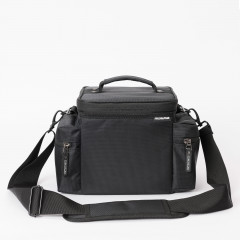
The new MAGMA 45 RECORD-BAG 100 is the latest addition to MAGMA’s 45 bag range and perfectly holds up to 100 x 7-inch records. The fully padded main body features a reinforced semi-hard PVC-body, providing excellent protection and a stable fit even in the pre-selected position of the records. Additional accessories such as headphones, a needle-case and 45-adapters can be stored in the two zippered side-pockets.
fits:
100 x 7” Vinyl-Singles
45 Adapters & accessories
basics:
Heavy duty and 100% waterproof 1680D Ballistic-Nylon
Integrated PVC walls for ultimate protection and stable fit
Two side pockets fits headphones, needle-case and 45-adapters
Internal zippered mesh-compartment
Detachable shoulder-strap
specs:
Outer measures: 29 x 20 x 21 cm (incl. side pockets)
Inner measures: 19,5 x 18 x 19 cm
Weight: 0,9 kg
Color: camo-green/bordeaux-red
ohann Wolfgang von Goethe is always a reliable source for a good quote: "We must always change, renew, rejuvenate ourselves; otherwise, we harden." Sure as death, there is an excerpt of his that states the opposite. In the case of Robert Dietz, it holds true. Since his first appearance on Running Back in 2009 (Forward Snipping), he did a marvelous job staying on his toes as a producer and DJ.
Rejuve-Nation showcases his talent in various alleys of electronic (dance) music with Crane Song being the prime cut here. You will get exposed to proggy house with an intelligent brush in two slightly different mixes. Imagine if Euro dance went to get a college degree or a bumper car floor and you are almost there: an almost irresistible sing a long without lyrics.
If you need help afterwards, Deranged Self Therapy is exactly what you need. IDM meets new wave drums, poignant synths mix with an upbeat hook to create a ballet piece for lovesick robots.
Centro Di Gravita reconnects those qualities with the aforementioned Crane Song ones, while giving it an acid spin, before the ambient salts of Any Plan(t)s This Weekend closes the EP off like a confident sketch for the end of a beautiful summer. A bouquet of bangers for different needs.
Short: One Rejuve-Nation EP under a groove with Robert Dietz' return on Running Back. Proggy meets acid house, IDM leanings mix with stylistic devices of new wave and extra special ambient aerobatics round out the EP. Special attention goes to Crane Song and its peak time perfection. A bouquet of bangers for different needs.
Aided by her producer, the Osaka- born saxophonist Hisatsugu Suzuki, and his band, Wong has created a stylish jazz album brimming with her trademark soulful vocals drizzled over syncopated grooves. Taking well- known songs from the repertoires of pop music acts as diverse as Phil Collins ("Against All Odds"), Pet Shop Boys ("It's A Sin"), Dead Or Alive ("You Spin Me Round") and Toploader ("Dancing In The Moonlight"), Wong refashions her source material to reflect the cool jazz-flavored sophistication that is at the heart of her unique artistry. From emotive ballads to buoyant uptempo material, Susan Wong reveals her outstanding interpretative skills, revealing that she is a song stylist supreme.