Norman Westberg (guitar), Giridhar Udupa (ghatam, konnakol, khanjira, percussion) and Jacek Mazurkiewicz (double bass, electronics)An extraordinary meeting of three artists from three different musical worlds and three different continents. Norman Westberg (ex-Swans) and Jacek Mazurkiewicz have already released one album together "First Man In The Moon" in 2021 (published by the Swiss label Hallow Ground).In the new project, they are accompanied by Giridhar Udupa, an Indian master of ghatam (a clay percussion instrument that looks like a jug). The album will feature 3 long trance compositions, referring to ambient, krautrock, free jazz and Indian music.Jacek Mazurkiewicz describes the creation of this album as follows:"I met Norman Westberg while supporting the Swans tour in Poland as 3FoNIA. A few years later, during Norman's tour with Gira, we recorded a duet.The trio session took place similarly to the previous duet session during Norman's solo concert in Warsaw on the Swans tour.Recorded with Adam Toczko, a quick meeting on a day off from work.I invited Giridhar Udupa to the trio, whom I had met earlier during the period when I co-founded the band Limboski. I once invited Wacek Zimpel to play a few concerts with Giridhar. Wacek later created Saagara and I was wondering about some unusual musical context in which I would find myself with Giridhar. I was looking for an interesting sound configuration, but also a cultural one, with a different approach to creating music. I got the impression that for both Norman and Giridhar it was a fairly fresh meeting, not obvious. And on the other hand, ordinary - everyone did their own thing."Detroit guitarist Norman Westberg moved to New York in 1980 and became a part of the experimental music scene that was experiencing its golden age. Westberg himself became a permanent fixture when he joined the iconic avant-rock band Swans in 1983, and was the only member other than frontman Michael Gira to play with them for most of the band's run, both until their 1997 disbandment and his return in 2010. Westberg has also been involved with other legendary New York noise-rock acts, including Jim Thirlwell's Foetus and the post-Swans Heroine Sheiks, in which he played with Cows frontman Shannon Selberg; and in 2014, he joined the noise-rock supergroup Hidden Rifles, whose members included Mike Watt of Minutemen and Mark Shippy of U.S. Maple. Westberg's solo compositions, most often for solo guitar and a set of effects, draw on drone and post-minimalism, bringing to mind dark ambient passages from Swans albums.Giridhar Udupa is an extremely valued teacher and world-renowned artist, an Indian master of ghatam (a clay percussion instrument that looks like a jug). He was born into a family with long musical traditions. He began learning to play at the age of four, guided by his father. At the age of twelve, he already had his first performances behind him. He currently gives concerts alongside the greatest masters. He has received many prestigious awards. He performs in the USA, Spain, Canada, France, Switzerland, Germany, Oman and Kuwait. Giridhar Udupa is a member of the band of the Indian vocalist Bombay Jayashri, nominated for an Oscar for the best song for the film Life of Pi. He is one of the founders of the Layatharanga band. He also plays virtuoso other traditional instruments of South India, such as mridangam and kanjira, and is excellent at using the konnakol technique (a type of rhythmic vocalization).For three decades, the artist has been a global ambassador and icon of Carnatic music. He is the founder of The Udupa Foundation, a charity organization established in 2015 to promote Indian music, performing arts and culture. He has participated in recording dozens of albums. He is also well-known in our country thanks to his cooperation with Polish performers, which resulted in excellent artistic effects, such as the famous Indialucia - Michał Czachowski's group / project or the Saagara formation, led by Wacław Zimpel. Udupa also played on the album Lechoechoplexita, released by Leszek Hefi Wiśniewski, and on the album of the band Layatharanga, released in our country.Jacek Mazurkiewicz is interested in music in the broad sense. He puts his sounds together based on emotional impressions and pulse. Combining acoustics with electronics, he is constantly looking for a new sound. Solo as 3FoNIA, in a duet with Mikołaj Trzaska or Tomek Dąbrowski, the JMB trio with Wojtek Jachna and Jacek Buhl, in the Modular String Trio quartet, the Afrobeat quintet Faso Tamala are just some of his musical incarnations. With Patryk Zakrocki, as part of an audio mission, he massaged hundreds of pairs of ears in the Inner Ear Massage Office. He also deals with sound design, composing and producing music for films and theatre performances. He collaborated with many Polish and foreign artists.
Suche:9 west
Emerging from the suburbs of North London in the early 1990s, Hulusi was an experimental electronic music collective formed by four friends of multi-ethnic origin: Cypriot, Caribbean, Indian and English heritage. Cultivating their musical practice within very specific parameters of time and space, Hulusi instills the essence and spirit of the acid house movement (and its aftermath) that had taken much of England by storm from 1988 onwards. The ‘Dream’ EP was the collective's first release of their self-funded and limited output, offering up a categorically elusive record that could soundtrack the most esoteric and life affirming club moments, whilst simultaneously satisfying the ears and obscure desires of those found dwelling in the heavily occupied ‘chill out’ rooms and nocturnal after parties. As the emerging UK rave scene aligned with newfound accessibility of music production, the late 80s and early 90s became a fertile ground for experimental electronic music, spawning a generation of bedroom and basement producers interacting with and creating music for often the very first time. Like many, Hulusi was a musical project that connected the dots between DIY spirit, technological advancements and the burgeoning cultural phenomenon of acid house. The project operated outside of the then perceived, traditional band conventions, instead developing their sound and exchanging ideas through the format of demo tapes and floppy disks, nurturing their work through individual bedroom studios and feedback sessions. Considered a crucial and possibly defining element of the record, is Hulusi’s unconscious exploration of the groups hybrid cultural identity. Rooted in a shared desire for self-invention, the Dream EPreflects Hulusi's response to a world of rapid musical and technological change. Each track on the record draws inspiration from both Western and Eastern musical frameworks, symbolized through the record’s structure. The ‘Western Side’, featuring "Dream," echoes the ambient techno and acid house influences of early rave culture and bands like 808 State and Orbital. In contrast, the ‘Eastern Side’ of the record is highly decorated with samples, yet stripped back, through its purposeful use of organic sounds, reflecting the group's fascination with blending Western modernism with imagined Eastern themes. Despite operating in near obscurity, Hulusi - The Dream EP acts as an audible catalyst to transport the listener to a different time and place, offering a lucid snapshot into the musical and cultural explorations of the past whilst simultaneously remaining a timeless piece of music.
- A1: La France Nouvelle
- A2: In Brightest Black
- A3: Tomorrow We Live
- A4: Food For Powder
- A5: Ad Vindicta
- A6: By Tradition
- B1: Dannazione
- B2: Bring Me The Head Of Romanez
- B3: The Western Wall
- B4: White Flags
- B5: Jupiter
- B6: Mar'yana
- B7: Men Against Time
- B8: Herculaneum
A Man Against Time...
Die Schatten des Krieges verdunkeln Europa. Die 20er Jahre des neuen Jahrtausends erwecken beklemmende Erinnerungen an jene Zwischenkriegszeit einhunderte Jahre zuvor, aus der unweigerlich der Zweite Weltkrieg entstand. Nun steht die Ukraine in Flammen, täglich bedrängt von russischen Angriffen. Und Europa ist zerrissen in diesem Konflikt, der oft nur wie der Vorbote eines viel größeren Katastrophe wirkt.
Jerome Reuter hat mit seiner Band ROME die Musik als Mittel gewählt, Europas Schicksal zu kommentieren und zu verarbeiten. Seit 2005 schreibt er Lieder und Konzeptalben, die sich den Schlüsselmomenten der Geschichte widmen, ihre Mythen und Narrative reflektieren und kommentieren. Dabei behandelt er historische Themen aus einer künstlerischen Distanz, dekonstruiert Ereignisse und Ideologeme, betrachtet sie aus unterschiedlichsten Perspektiven und gibt sie uns als Frage zurück. Er wird vom mal melancholischen, mal wütenden Zeitzeugen zum teilnehmenden Beobachter, aus dessen individualsubjektiver Sicht die Dinge unmittelbar mit Pathos aufgeladen erscheinen. Mit ROME sollen wir erkennen, beobachten, erschauern und erschrecken, aber auch neu erstrahlen: "We walk in brightest Black towards the Sun".
Reuters Songwriting gleicht oft einer Reise, auf der sich visuelle Eindrücke mit persönlichen Gesprächen mischen. Als lese man in seinem Tagebuch nach einem turbulenten Tag, der persönlich reflektiert und schließlich in ikonische Metaphern gegossen wird. "Civitas Solis" soll ausdrücklich nicht als Konzeptalbum verstanden werden, wie wir es zuvor so oft von ROME erleben durften. Immer schien sich Reuter ganz jenen Themen zu verschreiben, ging in emotionaler Hingabe und Identifikation auf, nur um dann wieder Distanz einzunehmen, um das Geschehen aus einer neuen Perspektive und in anderem Licht zu betrachten.
Jerome Reuter ist ein Suchender auf den verschlungenen Wegen der Geschichte, getrieben von einer Sehnsucht nach Europa, dem Mythos, der Utopie - zwischen aufgeklärtem Manifest und irrationaler Festung. Als zentrale Metapher dient ihm diesmal Civitas solis, der "Sonnenstaat" aus der utopischen Schrift des Dominikaners Tommaso Campanella (1623). Darin wird der wirtschaftliche und politische Aufbau eines idealen Staates imaginiert - eine der ersten gesellschaftlichen Utopien. In der Welt von ROME kann dieses Modell höchst ambivalent gelesen werden, denn Reuter bewegt sich von jeher assoziativ zwischen Anarchismus und Traditionalismus.
Stilistisch bedient sich ROME auf "Civitas Solis" einer ungewöhnlichen Bandbreite - angelegt zwischen der Liedermacherkunst von Jacques Brel, Leonard Cohen und Townes van Zandt, kalten Dark Wave-Akkorden und akzentuierten Akustikgitarren. Das Wechselbad aus martialischen Hymnen und introspektiven Balladen kehrt zu zahlreichen Schlüsselmomenten aus zwanzig Jahren Bandgeschichte zurück und wie alle ROME-Alben wirft es vor allem Fragen auf. Provozierende Fragen. Was wird unsere Zukunft bringen? Und was bedeutet das für Europa? Uns bleibt nichts übrig, als in die Fern blicken, "standing on the Western Wall". Jerome Reuter ist ein "Man against Time" und mit ihm bezeugen wir den Sturm.
- A1: Love To All Doulas! 03 52
- A2: Some Rest For The Midwives . . . 07 19
- A3: Real Vital Organs 03 57
- A4: Surges, Expansions 02 43
- A5: In Appreciation Of Chico Hamilton's Vast Influence On The West Coast Sound 02 44
- B1: Birthworkers Magic, And How We Get Hear . . . 07 21
- B2: This "I" Was Not 02 37
- B3: Placenta, Nourishment, New Home, The Galaxy 09 03
- C1: Carla's Beads 01 51
- C2: Moonlight Watsu In Dub 04 34
- C3: Generous Pelvis 04 26
- C4: Bi-Location 09 08
- D1: Play Kerri Chandler's Rain" 17 32
black 2x12"[28,15 €]
Placenta is the fourth collection of broadly imaginative and highly collaborative Carlos Niño & Friends music released on International Anthem since 2021. But perhaps more notably for the zeitgeist of today, it is the first new music to be released by Carlos Niño & Friends following the November 2023 release of André 3000’s New Blue Sun – an album which Carlos produced alongside André, while co-writing, performing, and co-mixing every song. The announcement of Placenta also comes while Carlos is in the middle of tours with André to support New Blue Sun, where Carlos wields an immense presence as music director, bandleader, and percussionist, and performs alongside many of the same musicians that are present on his recent & Friends albums, including this new one.
Placenta is announced on the 1st solar return of Moss Niño, of whom Carlos and his partner Annelise are Earth parents. Their experience of pregnancy, labor and delivery were all profoundly impactful for Carlos. Becoming a father again (a whole 25 years after the birth of Azul Niño, who has become a regular artistic collaborator for Carlos) he felt total Inspiration for this set of recordings, and hence it is perhaps the most conceptually-grounded Carlos Niño & Friends album we've yet to present–fully connected to the spirit of family, birth, and "how we get here."
In Niño’s words, Placenta is “dedicated to Mothers, Children, Babies, Aunties, Doulas, Midwives, Birthworkers...,” and a short list of track titles includes: "Love to all Doulas!," "Some Rest for the Midwives," "Real Vital Organs," and "Generous Pelvis." The centerpiece of the album, the sprawling "Placenta, Nourishment, New Home, The Galaxy," is an unbelievably vivid immersion in the sonic architecture of Niño's memory-scape...like being present in his energy field...or being present in a birthing room, or maybe even being born yourself. And it just might be the most powerful, unique piece of music Niño has ever created.
Featured artists on Placenta, in order of their entry on the album, include: Nate Mercereau, Jamire Williams, Sam Gendel, Jamael Dean, Dexter Story, Brandon Eugene Owens, Maia, André 3000, Jesse Peterson, Ariel Kalma, Surya Botofasina, Annelise, Haize Hawke, Aaron Shaw, Devin Daniels, Tiffany de Leon, Michael Bolger, Michael Alvidrez, Moss, Iasos, Photay, Deantoni Parks, Adam Rudolph, Andres Renteria, and Cavana Lee.
Red Vinyl[25,84 €]
One of the UK’s most exciting breakout stars of the past decade, Rebecca Lucy Taylor AKA Self Esteem emerged from cult favourite status to mainstream hero following the huge success of her empowering, truth-telling 2021 single ‘I Do This All The Time’. The song resonated intensely as a perfect example of Taylor’s affectionately termed ‘trojan horse’ or ‘salad and chips’ approach, fearlessly packing important, emotive messages into witty, resonant pop music.
Self Esteem’s wildly acclaimed second album Prioritise Pleasure quickly followed, tackling the hypocrisies and joys found in her experiences of modern day womanhood across dating, friendship, comparison culture, self love, women’s safety and sexual assault and much more. Prioritise Pleasure received Mercury Prize, BRIT Award, Sky Arts and NME Award nominations, was crowned The Guardian and Sunday Times Culture’s Album of the Year, and ‘I Do This All The Time’ was also named The Guardian’s #1 song of 2021.
Quite the opposite of an overnight success, Taylor spent a decade as one half of indie duo Slow Club before adopting the pop star persona she’d always dreamed of. She released her first Self Esteem album Compliments Please in 2019, featuring fan favourite singles ‘The Best’, ‘Girl Crush’ and more.
Gathering a passionate and vast legion of fans ever since, Taylor has appeared on The Graham Norton Show, Celebrity Gogglebox, Friday Night Live & Taskmaster, performed three times on Jools Holland including the NYE Hootenanny, graced the covers of magazines from Grazia to NME to Sunday Times Style, and is one of a handful of artists to have been playlisted across BBC Radio 1, 2 and 6 Music simultaneously.
Having reached new heights of acclaim, Taylor continued to grow, diversify, and create in 2024. Branching out into the world of acting, Taylor starred in a regular role in the Sky series SMOTHERED before completing a run playing Sally Bowles in the multiple Olivier Award-winning production of 'Cabaret at the Kit Kat Club' in London's West End. Starring alongside Jake Shears (Scissor Sisters) as Emcee, the pair’s time on stage was extended due to popular demand and showcased the sheer range of talent in Taylor’s repertoire. Last year’s releases ‘Big Man’ and ‘Love Second Music First’ followed a collaboration with Becky Hill on her song ‘True Colours’.
- 01: The Stone, Part I (Live)
- 02: The Stone, Part Ii (Live)
- 03: The Stone, Part Iii (Live)
- 04: The Stone, Part Iv (Live)
- 05: The Stone, Part V (Live)
- 06: The Stone, Part Vii (Live)
PURPLE TRAP, the powerful trio of KEIJI HAINO (voice, guitar), BILL LASWELL on bass and RASHIED ALI (drums), recorded live on stage at The Stone.
Recorded in december 2005, this furious live album by what can easily be called a super group remained unreleased till in 2023 BILL LASWELL made it accessible in a rough-mixed digital version for his bandcamp subscribers program exclusively. For this vinyl version, the music has been newly mixed by DIRK DRESSELHAUS (SchneiderTM) and mastered / cut by RUY MARINÉ at Dubplates & Mastering Berlin.
PURPLE TRAP, the trio of LASWELL / HAINO / ALI, reunited for this one-off gig as part of a 5-day-HAINO-festival at John Zorn's venue "The Stone", seven years after its only album Decided ... Already The Motionless Heart Of Tranquility, Tangling The Prayer Called "I" had been recorded (released on Tzadik in 1999).
The six untitled tracks (+ one as digital bonus) deliver what can be expected from such musical masters:
RASHIED ALI, iconic free jazz drummer who played with JOHN and ALICE COLTRANE, PHAROAH SANDERS, SONNY ROLLINS, JAMES BLOOD ULMER and countless more, is all drums, from quiet tiny sounds to high-energy rhythm patterns.
KEIJI HAINO, one of the most prolific artists of the Japanese experimental / noise scene for almost 50 years now, switches between truculent guitar splatters and full-on psychedelic outbursts.
BILL LASWELL, who as producer and musician created a massive body of work in fiields as diverse as ambient, world music, funk, jazz (and often hybrids of these), has proven his mastery in improvisation in projects like MASSACRE, PAINKILLER or (early) MATERIAL and provides the low-end grounding with his signicature bass sound, or adds effect-laden ornaments to the whole.
An overdue addition to a very small body of work by a clearly under-documented supergroup!
Credits:
KEIJI HAINO: voice, guitar BILL LASWELL: bass RASHIED ALI: drums
Recorded at The Stone, New York, december 15th, 2005. Edited by James Dellatacoma at Orange Music, West Orange, NJ. Mixed by Dirk Dresselhaus at the Zone, Berlin. Mastered & cut by Ruy Mariné at D&M, Berlin.
Layout & design by kaidoh. Cover photography by Jasmin Bär.
Vilhelm Hasselgren is a Gothenburg-based producer and DJ with a focus on Jungle and productions that move between 160-170 bpm. Vilhelm focuses a lot on complex rhythms and ambient soundscapes and takes inspiration from both older and modern Jungle, as well as other electronic acts such as Basic Channel, Mala, Skee Mask and Arkajo. Vilhelm tries to create soundscapes that move between different musical starting points.
He has previously released on Rezonant Body, Canape Records, Bukva Sound and Of Paradise Records. Also has an upcoming EP releasing on Bukva as well as a V.A on Western Lore. In 2025, Vilhelm also has a residency at London-based Subtle Radio.
Vilhelms words:
Central Line EP is an EP that I'd myself consider to be my debut EP. The tracks were created within a two-and a half year span, with some tracks being re-worked and replaced. Later ending up with the final track-list, which I am very happy in how it ended up in the end. One of the tracks that were later added onto the EP being 1000 a co-production with my brother Einar (Local Arms), which we spontaneously recorded at our parents house over a weekend.
I mostly start from percussion, onto bass and later melody in my productions. The title track "Central Line" was started when I lived in Brighton for half a year, together with Theo Soderlund (Theomega). The Eski sample is a bit tricky one, but wanted to experiment with it, further I chopped an Amen and a Think break with an idea to create a pretty simple rhythm that could leave the riff to speak for itself. Even though the tracks were created within a pretty long span of time, I feel like they portray a sound that I want to further explore and produce at this point. Also Arcne adding a monster remix of Central Line that has been getting lot of love. Could not be happier to release it on Bukva Sound which prior releases I think really captivate a sound that has been really inspiring throughout the process.
LA-based composer/producer/guitarist Dustin Wong returns to Hausu Mountain with Gloria, his third album on the label since 2018. Wong has established a multifaceted career over the last two decades that encompasses his solo work centered around guitar performance and live looping, roles as a guitarist in Baltimore-based bands Ponytail and Ecstatic Sunshine, and a wide catalog of collaborations with artists including Takako Minekawa, Good Willsmith, and Patrick Shiroishi. In composing his solo music, Wong has always transmuted his own life experiences into the thematic source material for emotionally resonant works rippling with fine-grain details and intricate looping architectures. With Gloria, the composer channels specific memories and pieces of his family history into a deeply personal narrative arc focused on his grandmother Gloria Violet Lee Wong, who passed away in January 2024, just shy of her 96th birthday. Using a road trip they took together down the west coast of America in 2023 as the direct inspiration for the individual scenes and flashes of imagery that form the album’s continuously unfolding structure, Wong presents Gloria as a memorial to her storied life and a celebration of the warmth and kindness that characterized their close relationship. A moment-to-moment travelogue that zooms out in its full scope to evoke a multi-generational memoir that spans decades and continents, Gloria gives Wong space to open his heart and uncover his roots — all while experimenting with new techniques in live performance and sound design that lead his music into territories that he has never before explored.
Die irische Musikerin Maria Somerville kündigt ihr zweites Album "Luster" für den 25. April an. Es ist zugleich ihr Debüt bei 4AD. Mit dem Announcement erscheint die Single "Garden". Der Track taucht ihre sirenenhaften Vocals in einen Sound aus schwirrendem Feedback, luftiger Percussion und nostalgischen Gitarren, der Erinnerungen an die klassische 4AD-Phase heraufbeschwört. Bereits im letzten Jahr war der hypnotische Shoegaze-Track "Projections" erschienen, mit dem Somerville eine erste Spur in Richtung des Sounds ihres kommenden Albums gelegt hatte. Somerville wuchs im ländlichen County Galway an der bergigen und rauen irischen Westküste auf. Sie zog später nach Dublin, wo sie an ihrem Signature-Sound arbeitete: atmosphärischem Dreampop, der von der Landschaft ihrer Jugend geprägt bleibt. Die ätherischen Gitarrenklänge, spärlichen Rhythmen und elektronischen Ambient-Sounds hielt sie erstmals auf dem 2019 selbst veröffentlichten Album "All My People" fest, einem Werk, das knietief in Nostalgie und Sehnsucht watet. Erst als sie nach Connemara zurückkehrte, in ein Haus nicht weit von dem, in dem sie aufwuchs - und von wo aus man einen der größten Seen des Landes, den Lough Corrib, überblicken konnte - begann Somerville mit der Arbeit an Musik, die schließlich zum neuen Album "Luster" werden sollte. Während ihr DIY-Debüt Erinnerungen und Melancholie in nebligen Slowcore hüllte, zeigen die zwölf neuen Tracks eine Künstlerin, die sich des Weges, den sie eingeschlagen hat, viel sicherer ist. "I can see more clearly than I could before. I know now what"s true for me", singt sie passend in "Trip". Gestärkt durch die neue, alte Umgebung und ermutigt durch ihre Community, entwickelte Somerville wieder kreative Energien. Der Boden erwies sich im wahrsten Sinne als fruchtbar, als sie in lockeren Wohnzimmer-Sessions erste Demos aufnahm, die später u. a. mit J. Colleran und Ian Lynch (Lankum) ausgearbeitet und schließlich vom New Yorker Engineer Gabriel Schuman (Oneohtrix Point Never, Princess Nokia, David Byrne) gemixt wurden. Eine gewisse Popularität erreichte Somerville auch durch ihre "Early Bird Show" auf NTS Radio, wo sie seit 2021 zwei Mal die Woche ein Morgenprogramm hostet, in dem sie Musik zwischen Shoegaze und traditionellem irischen Folk vorstellt. Im selben Jahr unterschrieb sie ihren Vertrag bei 4AD, wo sie bislang zwei Compilation-Beiträge veröffentlichte und mit ihren Labelmates Dry Cleaning auf Tour ging. 2025 wird sie mit Band Shows auf der ganzen Welt spielen, darunter auch Konzerte in Deutschland.
- Spin It To Win It
- Spot On A Planet
- Mrs Perfect
- Crazy Times
- The Hole
The Modbirds kombinieren souligen Ska und mitreißenden Punk. Obwohl sie erst 2023 gegründet wurden, bringen sie mit Mitgliedern von Los Placebos und The Porters einen reichen Schatz an Bühnenerfahrung mit. Ihr Live-Debüt bei "Ska im Westend" in Dortmund hat sofort gezeigt, dass sie gekommen sind, um zu bleiben. Jeden Frühling kehren die Zugvögel aus ihren Winterquartieren zurück! Also aufgepasst, denn auch die Modbirds sind im Anflug mit ihrer ersten Mini-LP "Spin it to win it". (Release Date 25.04.25) Mit ihrem musikalischen Mix aus Ska, Reggae und Punk feiert die Band in fünf Songs verteilt auf zwei Seiten ihre Liebe zum Vinyl, lässt vergangene Jugendlieben aufleben und schwelgt in den Erinnerungen an unbeschwerte Zeiten. Getrieben von druckvollen Bläsern, eingängigen Melodien und dem tanzbaren Offbeat werden aber auch gesellschaftliche Missstände oder das Thema mentale Gesundheit besungen. Also nicht den Arm am einarmigen Banditen ziehen, sondern den Tonarm auf den Plattenteller legen mit 45RPM im 12-Inch Format für den bestmöglichen Vinyl-Sound:, eben "Spin it to win it" - hier sind The Modbirds! Ska, Reaggae, Soulpunk, klassisch schwarzes oder farbige 12"-Vinyl erhältlich.
- A1: My Little Girl - Bobby Garrett
- A2: Baby, Without You - Danny Monday
- A3: Lighten Up Baby - Ty Karim
- A4: You Hit Me (Right Where It Hurt Me) –Alice Clark
- A5: Cigarette Ashes - Jimmy Conwell
- A6: (Just A Little) Faith And Understanding - The Magicians
- A7: I Can Feel Your Love - Felice Taylor
- B1: Gone With The Wind Is My Love – Rita & The Tiaras
- B2: You Turned My Bitter Into Sweet - Mary Love
- B3: Would You Believe - Jackie Lee
- B4: Try My Love - Toni & The Showmen
- B5: The Same Old Thing - The Olympics
- B6: What Good Am I Without You - Darrow Fletcher
- B7: What Should I Do - Little Ann
Northern soul is in the news again, as once more this most resilient of dance floor cults is discovered by a new generation. For four decades now Ace Records has been a natural home for the music and using that experience we are bringing you our first ever all classics collection of some of the scene's greatest hits. All on one LP.
The recordings featured on this release are tried and tested, often in the hot forge of the scene's earliest day, when new discoveries were coming thick and fast, and only the strong survived. These did.
So we have 14 tracks which filled floors in Wigan, Blackpool, Cleethorpes, London's 100 Club and many other legendary venues. From West Coast Mirwood and Kent/ Modern label classics by Jackie Lee, Bobby Garrett, Mary Love and Danny Monday, to the big City Chicago soul of Darrow Fletcher via the super rare recordings by Rita & The Tiaras and Little Ann, which are now accepted standards of the scene.
This is an album for the beginner, those who want to know what all the fuss is about, or those older hands who just want to relive some exceptional memories.
Black Vinyl[30,46 €]
One of the UK’s most exciting breakout stars of the past decade, Rebecca Lucy Taylor AKA Self Esteem emerged from cult favourite status to mainstream hero following the huge success of her empowering, truth-telling 2021 single ‘I Do This All The Time’. The song resonated intensely as a perfect example of Taylor’s affectionately termed ‘trojan horse’ or ‘salad and chips’ approach, fearlessly packing important, emotive messages into witty, resonant pop music.
Self Esteem’s wildly acclaimed second album Prioritise Pleasure quickly followed, tackling the hypocrisies and joys found in her experiences of modern day womanhood across dating, friendship, comparison culture, self love, women’s safety and sexual assault and much more. Prioritise Pleasure received Mercury Prize, BRIT Award, Sky Arts and NME Award nominations, was crowned The Guardian and Sunday Times Culture’s Album of the Year, and ‘I Do This All The Time’ was also named The Guardian’s #1 song of 2021.
Quite the opposite of an overnight success, Taylor spent a decade as one half of indie duo Slow Club before adopting the pop star persona she’d always dreamed of. She released her first Self Esteem album Compliments Please in 2019, featuring fan favourite singles ‘The Best’, ‘Girl Crush’ and more.
Gathering a passionate and vast legion of fans ever since, Taylor has appeared on The Graham Norton Show, Celebrity Gogglebox, Friday Night Live & Taskmaster, performed three times on Jools Holland including the NYE Hootenanny, graced the covers of magazines from Grazia to NME to Sunday Times Style, and is one of a handful of artists to have been playlisted across BBC Radio 1, 2 and 6 Music simultaneously.
Having reached new heights of acclaim, Taylor continued to grow, diversify, and create in 2024. Branching out into the world of acting, Taylor starred in a regular role in the Sky series SMOTHERED before completing a run playing Sally Bowles in the multiple Olivier Award-winning production of 'Cabaret at the Kit Kat Club' in London's West End. Starring alongside Jake Shears (Scissor Sisters) as Emcee, the pair’s time on stage was extended due to popular demand and showcased the sheer range of talent in Taylor’s repertoire. Last year’s releases ‘Big Man’ and ‘Love Second Music First’ followed a collaboration with Becky Hill on her song ‘True Colours’.
Purple Vinyl
House music, nightlife entertainment and DJ/Producer virtuoso Louie Vega has proven over and over again that he's a master chemist in the studio. His latest release is an uptempo and speaker-knocking remix of Funkadelic's 'Ain't That Funkin' Kind of Hard on You' (produced by George Clinton and & G Koop) from the album 'First Ya Gotta Shake the Gate'.
The original version is nothing short of a classic, but it's as if the song had never been invited to a Louie Vega post-midnight global extravaganza. Was the song not aware that spellbound dancing and high BPMs were the standard for House Music Normally, such a blaring disregard for nightlife decorum would relegate a song to the pits of sonic hell, but we're talking about George Clinton here!The original opens up with a G-funk groove that screams Westside and lowriders. The listener is then blessed with Clinton as he adds his sage, soulful and pimpadelic vocals, complemented by Funkadelic singers asking him about the pains of the funk. The semblance of a beat that could drive the dancefloor into the morning hours is there, but in no way has it blossomed into its full glory. Enter Louie Vega.
His remix immediately greets listeners with a decadent spread of instrumentation and chutzpah. The original song's DNA populates the first thirty seconds of the remix but then an explosion takes place and the song assumes a new identity. The transcendent experience is akin to taking the elevator to a rooftop party and once the doors open- boom! The remix begs you to dance, the G-funk groove is now in your face instead of being laidback and percussion takes a front seat to take you away. The song is alive, there's no other way to describe it.
Be sure to buy your vinyl at an outlet near you! the Louie Vega remix of Funkadelic's 'Ain't That Funkin' Kind of Hard on You' on Vega Records!
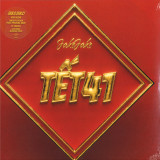
T?t 41 is the latest record by modular synthesist and Berghain resident JakoJako (Sibel Koçer), marking her album debut for Mute.
Recorded during a trip to Vietnam and bookended by field recordings from T?t Lunar New Year celebrations, the album is illuminated by references to Koçer's heritage. The melodic palette breaks away from traditional Western scales, drawing instead from the tonal intricacies of the Vietnamese language, inspired by overheard conversations. The album and track titles further honour the vibrant T?t festivities, shrines, and landmarks she encountered during her travels.
This album is, in many ways, a distillation of ideas she has been exploring for years. Tapping into a deep understanding of machine-based music, crafted with a minimalist setup consisting of a Eurorack and Waldorf Iridium Core, T?t 41 reflects on notions of rebirth, and the pursuit of a sonic core. From this simplicity emerge some of her most expansive, unworldly compositions to date.
T?t 41 is available on vinyl in a limited run of just 500 copies worldwide.
The Ibex Band, with Giovanni Rico and Selam Woldemariam at the creative helm, provided the musical backbone for legends like Aster Aweke, Girma Beyene, Tilahun Gessesse, Mulatu Astatke, and Mahmoud Ahmed, including the iconic album Ere Mela Mela, shaping modern Ethiopian music as we know it today. This 1976 album (Ge’ez Year 1968) played a pivotal role in that legacy and has now resurfaced to set the record straight.
There’s a tendency to talk about the seventies as a golden age of Ethiopian music. There are good reasons for that, and just as good reasons against it. However, the notion of a golden past privileges the role of Western explorers and suggests that the pinnacle of Ethiopia’s musical culture is something only a foreigner can appreciate and unearth. It downplays the complexities of Ethiopia’s culture and history, creating an artificial divide between then and now. And it underestimates the constantly evolving sound that has followed.
The legendary musical outfit The Ibex Band, later metamorphosed into The Roha Band, has played a central role in defining the sound of many of the greatest stars on the music scene of Ethiopia from the mid-seventies onwards–but their golden output has never really waned. The story of the origins of the band that provided the musical backbone for greats such as Aster Aweke, Girma Beyene, Tilahun Gessesse, backing the solo career of group member Mahmoud Ahmed as well as backing Mulatu Astatke and many others has yet to be properly told.
Two misconceptions plague the image of Ethiopian music, one is that the music is pure because it is, by some notion, unexploited, the other is that it is all traditional. To begin with, a combination of political changes between the late sixties and the mid-nineties created an environment where only the most dedicated and skilled musicians struggled on and pursued a musical career against fierce odds. The whole Ibex Band, with Giovanni Rico and Selam “Selamino” Seyoum Woldermarian at the creative helm, are arguably the origo of the vibrant scene in the mid-seventies, and the said pair are foremost responsible for not only navigating the band through troubled times, but also modernizing the 6/8 chickchicka rhythm to a contemporary form. Giovanni laid the rhythmic foundation with heavy looped basslines that reinvented traditional melodies as dance music, and with Selamino’s innovative guitar work they influenced scores of musicians from Abegaz Kibrework Shiota to Henock Temesgen. Even Giovanni’s Fender bass and Selamino’s Gibson guitar inspired younger musicians in their choice of instruments. Not only in choice of instruments but also in sound–even as the digital revolution hit Ethiopian music, a lot of popular music still took its cue from the masters from Ibex and Roha.
Ibex emerged out of the ashes of the sixties group the Soul Echos band, adding Giovanni and Selamino to their ranks and taking their cues from a slew of influences, such as Motown and The Beatles, fused with traditional music. A tighter-knit unit than most bands at the time – Ibex has remained six to seven members throughout their whole career, compared to many bands that were as large as fifteen or sixteen men strong when Ibex set out. Their playing has been viciously focused, economical yet heavy. Just a year before the recording sessions of the album in your hands, Giovanni and Selamino made a contribution to the popular musical lexicon of Ethiopia that was simply defining the popular sound: their arrangement and recording of bandmate Mahmoud Ahmed’s solo effort and real commercial breakthrough tune and eponymous album, Ere Mela Mela, from 1975.
Selamino has never limited himself to being an adroit lead guitarist, but has always been a scholar of history, and as such he has probably contributed as much to modern Ethiopian music with his guitar playing and compositions as with a deepened understanding of modern or contemporary – Zemenawi – Ethiopian music. Selamino’s contributions serve as a metaphor for those of the whole band, at one and the same time creating and defining a new, danceable and updated sound anchored in Giovanni’s bass, whilst also elevating the broader scene through their support for others on the scene and on top of that, increasing the understanding of the music.
There is an understandable desire to romanticize the musical heyday Ibex and Roha were at the forefront of, because so much of the output is sorrowfully hard to come by. Ibex creativity was nothing short of ridiculously fierce compared to many of their Western contemporaries. Based on their sheer recorded output alone they could have usurped the title “hardest working in show business” from James Brown, recording more than 250 albums or 2500 songs in the seventies and eighties. Some only surface as cassettes today, others were never given full LP release, and some are simply impossible to find today. In the light of that, it’s nothing short of a miracle that the recording Stereo Instrumental Music from 1976 (Ge’ez Year 1968) has resurfaced. Unearthed in perfect condition on a chrome cassette, this is musical history comes alive–to set the future straight. Stereo Instrumental Music was recorded in collaboration with Karl-Gustav Lundgren, a Swedish national working for the Radio Voice of the Gospel. It took two sessions at the Ras Hotel ballroom in Addis Ababa. The Ibex Band was the first band in Ethiopia to employ a four-track recorder for their recording (the first available in the country, lent by Karl-Gustav). Later the same week, Giovanni and Selamino realized that, lengthwise, the recorded material fell short of what they wished for, so they recorded four more tracks in one more session on a single-track recorder. The Ras Hotel and Ghion Hotel, where the Ibex Band held musical residencies were to Ethiopia in general and Addis Ababa in particular what Motown was to the USA and Detroit a few years earlier – a hotbed of musical creativity and showmanship.
The most astonishing thing about Ethiopian music of the last half century is how tradition and modernity are intertwined. Because of this feature, it’s kind of hard to tell when there ever was or when we are in a “golden age”. So much of music from the past has been criminally neglected, but because of the hardships in the past, it would be an oversimplification to say that said past was a golden age. Probably, the golden age is what we are approaching, because for the first time both the past and future are accessible, and the monumental contributions from before can lay a firm foundation for a thriving music scene today. The Ibex Band stands firmly in the past, present and the future. That, if anything, is golden.
The detailed history of Stereo Instrumental Music is in many ways unique. To begin with, it couldn’t have been recorded earlier (there were no four-track recorders available) and it really couldn’t have been recorded afterwards either, at least not in the years directly following, because of the toll the musical scene took from the unfavorable political climate that followed when the nascent Derg regime and rival groups tried to assert themselves, the musical equipment lent from The Voice of Gospel Radio simply disappeared from Ethiopia when the radio station folded in 1977. Karl-Gustav Lundgren,
the Swedish foreign national who assisted during the recording, worked with the Ethiopian Evangelical Church Mekane Yesus at the time, recalls how they only had about fifteen minutes to get the microphones in place for the recording as to not alert neither the management at Ras Hotel nor the authorities and most importantly, to complete the recording before the curfew came into effect at midnight. In leaping to the opportunity to use previously unavailable equipment to push their sound forward and improvising to meet the logistical challenges, the Ibex Band displayed the very avant-gardism and adaptability that explains their longevity as a band through the years. The recording of Stereo Instrumental Music is from a given time in history, but it sounds as beyond time.
Much of the energy that burst out of the scene that Stereo Instrumental Music came out of dissipated or got sidetracked during the societal changes Ethiopia went through in the 1970s and 80s. Whilst leaders might have professed to be revolutionary, the work ethic of the Ibex Band can truly be described as that. They never called it quits, but adapted, toured extensively abroad in Africa, Europe, and the Middle East, and found ways to work even in the face of the curfew that curtailed a lot of musical life. They even played major arenas in the nineteen eighties, despite said curfew and restrictions. The whole extent of their legacy has never been told, but their music speaks louder than words, so therefore… tune in to the Ibex Band’s Stereo Instrumental Music.
Fully remastered Detroit classic incl. 3 extra tracks from the CD version that were never released on vinyl before. This album has a unique blend of raw, warm and futuristic Detroit sounding electro and techno. Originally released on 430 West back in 1999.. We cant recommend it enough, big tip!
- A1: Opening (3 11)
- A2: Crabby Beach (3 03)
- A3: Dark Ruins (3 02)
- A4: Cryptic Relics (3 08)
- A5: Stadium Attack (3 07)
- B1: Crumbling Castle (3 10)
- B2: Frosty Retreat (Inside) (3 09)
- B3: Frosty Retreat (Outside) (3 05)
- B4: Snowy Mammoth (3 24)
- B5: Specter's Factory (Outside) (2 05)
- C1: Thick Jungle (Woods) (2 55)
- C2: Thick Jungle (River) (3 04)
- C3: Molten Lava (2 52)
- C4: Results (1 03)
- C5: Molten Lava (T-Rex) (3 04)
- C6: Coral Cave (3 35)
- D1: Specter Circus (2 49)
- D2: Hot Springs (3 07)
- D3: Hot Springs (Maze) (3 08)
- D4: Laboratory (0 58)
- D5: Monkey Madness (2 58)
- D6: Wabi Sabi Wall (3 09)
- E1: Staff Roll (Normal) (2 59)
- E2: Opening (3 11)
- E5: Tv Tower (3 11)
- F1: City Park (3 04)
- F2: Stage Select (0 49)
- F3: Specter Boxing (2 54)
- F4: Primordial Ooze (3 22)
- F5: Western Land (3 12)
- F6: Fossil Field (3 10)
- G1: Staff Roll (2 59)
- G2: Dexter's Island (3 05)
- G3: Specter's Theme (2 57)
- G4: Ski Kidz Racing (Type A) (2 52)
- G5: Ski Kidz Racing (Type B) (3 04)
- G6: Ski Kidz Racing (Type C) (2 53)
- H1: Movie From Opening (1 05)
- H2: Movie From Shifting Time (1 34)
- H3: Crumbling Castle (Alternative Version) (3 11)
- H4: Hot Springs (Alternative Version) (2 59)
- H5: Specter Boxing (Training Version) (2 21)
- E3: Sushi Temple (3 17)
- E4: Peak Point Matrix (3 09)
4XLP. Hardcover slipcase box. Liner notes from Soichi Terada, Colour: translucent red, clear, blue, and yellow vinyl
It has been 25 years since the release of Saru Get You (サルゲッチュ), known stateside and in the UK as Ape Escape. Ape Escape marked a significant milestone for the PlayStation, as it was the first game to require use of the PlayStation's DualShock (analog) controller. In Ape Escape, the use of the analogue sticks goes beyond camera rotation and acts as an extension of Kakeru's (Spike's) own character, controlling his many gadgets like the stun club, time net, and sky flyer. It's a unique form of control that, really, didn't become popularized until the release of the Nintendo Wii. It feels like a distinctly Japanese design, the sort of off-the-wall design that is either embraced or rejected on a global scale. In Ape Escape's case, the mechanic caught on.
Ape Escape is fast, frantic, and—at times—downright frustrating. Pipo monkeys dash, taunt, and swim away from your advances. They ride water monsters, fly UFOs, and even shoot uzis! Whether it's Kakeru, his friends, or the monkeys themselves, the characters are always running across the levels. This mad dash is enhanced by the game's soundtrack, composed by legendary composer Soichi Terada. As he recalls, the director of the production said, "Spike and his friends always have the image of running." In response, Terada happily produced fast songs with an average speed of over 170bpm. The resulting gameplay and audio is a match made in heaven.
Ape Escape is the first game soundtrack Mr. Terada ever created. The producers of the game heard one of his singles, "Sumo Jungle," and thought his frenetic drum-and-bass (Jungle) would be perfect for the game. The marriage of Ape Escape's charming overworld and Soichi's upbeat compositions is nothing short
of sublime. Especially now, it is difficult to separate the mischievous Pipos and fast-paced action from Soichi Terada's silky smooth synthesizer and heart-pounding bass. Earlier this year (2024), Soichi Terada's Ape Escape work was celebrated by the six-track EP Apes in the Net, which includes music from Ape Escape 1 and 3 (Terada did not compose the series' second installment). The label, Rush Hour Music, has prestigiously championed almost all of Soichi Terada's music, especially his (specifically non-VGM) house, jungle, and drum and bass releases (Sounds from the Far East, Asakusa Light, and more).
Before Apes in the Net, Terada's Ape Escape music was only available on CD, released in Japan around 2010. This release featured reconstructed tracks created by Mr. Terada himself, identical to the music arrangements featured in the game. The biggest difference, of course, was that they were of higher fidelity than was originally available on the PS1 disk format. Completing all of the aforementioned releases is this box set, released by Far East Recording in partnership with Cartridge Thunder and officially licensed by Sony Computer Entertainment. This box set release includes four LPs, housed individually by a hardcover slipcase. This box set includes every song from Ape Escape 1, except those available on Apes in the Net. This box set release also includes one bonus song, previously unreleased anywhere else (including the game itself!).
The music on this box set was meticulously mastered by Justin Perkins of Mystery Room Mastering. Using Mr. Terada's premastered source files, the music was completely and specifically mastered for vinyl. Rounding out the audio is absolutely stunning artwork created by Gobo3D. CT worked with Gobo to recreate some of Ape Escape's most iconic characters, referencing the original Japanese guidebook and other promotional materials. The result is visually delicious 300dpi artwork that takes you straight back to 1999. As uber-fans of the original PlayStation game, Cartridge Thunder and Far East Recording are proud to celebrate Soichi Terada's music and pay our respects to such a legendary PlayStation franchise—on the original hardware's 30th anniversary no less! It's with a happy heart, then, that Far East Recording and CT present to you Soichi Terada's Ape Escape Originape Soundtracks in a Box.
Please note: due to licensing exclusivity, this release does not include tracks previously released on Apes in the Net
- 1: Mass Death And Destruction
- 2: Nowhere To Run
- 3: Visions Of Chaos
- 4: But Still Work (Victims Of The Mine)
- 5: Apocalypse Of Death
- 6: Neverending War
- 7: Yesterday's Fairytale, Tomorrow's Nightmare
- 8: The Sound Of Disaster
- 9: Crawling Chaos
- 10: Wardead
Repress!
Layer upon layer of noise and distortion, like ashes of nuclear apocalypse raining down. The final LP Disclose released, in 2004, captured the band at a high point. When other d-beat raw punk bands were running low on ideas, Kawakami reinvented the sound, incorporating more metallic influences like Broken Bones while still sticking assiduously close to the template. Originally released for Disclose’s tour of the US west coast, ‘Yesterday’s Fairytale, Tomorrow’s Nightmare’ includes ten tracks and closes with a rampaging masterpiece, the 10-minute ‘Wardead,’ which exists on another astral plane from generic Discharge copyists. This authorized reissue reproduces the original artwork and includes a new insert with liner notes by Stuart Schrader.
- I Got Exactly What I Wanted
- Target Offer
- Dub Vultures
- Pray'r
- Waiting For A Train
- Opportunity
- Cafe Style
- That's Why I Never Became A Dancer
- Rats
- 2022:
- Western Pepsi
- Cola Town
- Vanity Shapes
- Fake That Feeling
On their second record as The Convenience, Like Cartoon Vampires, New Orleans multi-instrumentalists Nick Corson and Duncan Troast embrace a hypnotic physicality and collage-y, spur-of-the-moment approach to composition. The result is an avant-rock soundworld, peppered with spidery, atonal guitar work, pointy rhythms, and strident feedback, which may strike as a total reinvention following the sugary funk-pop of their 2021 debut album Accelerator. With their second LP, following their inspiration meant creating with their hands much more than buttons or switches. Sessions were characterized by gnarly, improvisational jams as they tinkered with everything from cassette loops, found sounds, and 808s. Tracks like "Target Offer" and "Fake the Feeling" quake with ear-splitting guitar feedback, while "Pray'r" and "Rats" eschew their groove worship in favor of haunting minimalism. Song after song, Accelerator's pop influences are traded in for more eccentric frontiers, with the clear common denominators of their first two records being the duo's spellbinding, funky instincts and a mastery of texture. Lyrically, Like Cartoon Vampires collects dispatches from a dying empire-characters are devoured by alienation and vanity, though society doesn't bat an eye. But make no mistake, these songs are not merely disaffected ennui-music-making and collaboration are intensely emotional practices for The Convenience, and they reflect a shrieking lust for life.