Ian Pooley returns to Radio Slave’s Rekids with Studio A Pt. 2 this February. The second entry in a three-part series of music based around his studio, Ian Pooley’s ‘Studio A Pt. 2’ for Radio Slave’s Rekids imprint sees the bonafide house legend deliver another choice selection of grooving
hardware productions.
Leading the A-side is the fluttering synths and warped vocal samples of ‘JV Organ & Matrix’, which twists and turns through delightful FX and rumbling bass. ‘Version 2’ of the track follows, contorting elements of the original into a heads-down groover, with washed-out processing and stereo wizardry meeting classic dub techniques.
On the flip, ‘Back Up’ keeps it live and direct with hard-hitting, chunky drums and menacing acid lines, with an additional stripped back digital ‘Beats Bass’ version included. Rounding out the 12” is 101202, a dreamy slice of razor-sharp house, with gorgeous, filtered pads drifting in tandem with strung out low end and skippy percussion.
Active since the early 90s, the German DJ/producer has released on the likes of Force Inc, V2 Records, and his own Pooledmusic, remixing for the likes of Deee-Lite, Carl Cox and many more, as well as being one of the few to be remixed by Daft Punk.
Cerca:90s process
As the 21st century was born, so Kreator underwent what was nothing less than a seismic creative rebirth. By this time, the iconic German band had released nine studio albums in the 1980s and '90s, which had established them as one of the most important metal names of these decades.In the first period, they had helped to shape and pioneer the thrash scene through such releases as 'Pleasure To Kill' (1986), 'Terrible Certainty' ('87) and 'Extreme Aggression' ('89). During the following decade, the band had opened up exciting horizons of experimentation on albums like 'Coma Of Souls' (1990), 'Renewal' ('92) and 'Endorama' ('99).
Now, though, it was time to move into a fresh era, as vocalist/guitarist Mille Petrozza explains.
“During the 1990s, we were definitely experimenting with what the band were doing. But (drummer) Ventor and I decided that for this album – our first of the new millennium – we wanted to go back to the sort of sound that we had at the start of Kreator. In other words, to get back to the reason why we began the band in the first place.”
There was also new guitarist introduced, as Sami Yli-Sirniö (who had made his reputation with Finnish band Waltari) took over from Tommy Vetterli. The latter (also known as Tommy T. Baron) had joined in 1996 and played on the 'Oucast' (1997) and 'Endorama' albums.
The producer for this album was Andy Sneap, who was now making a name for himself as one of the pre-eminent masters of this art in the modern metal world.“I had known and liked Andy since the days he had been the guitarist in Sabbat, as they were signed to Noise Records as Kreator were on that label. He was our first choice to work on this new project. I liked what he'd done for Testament on their album 'The Gathering' (released in 1999). He had given them a sound they'd never had before, and that really was what we were after. It was natural and organic, and also very modern. I remember phoning him at his Backstage Studios in England (Ripley in Derbyshire). And Warrel Dane, the vocalist in Nevermore, answered. Andy was producing their new album at the time ('Dead Heart In A Dead World', 2000). And when I heard this, again I was very impressed. So, I was delighted when he agreed to produce the new Kreator album.”
The album title came from something Petrozza had read. “In a book I came across a comment that John F. Kennedy said (in 1962). This was: "Those who make peaceful revolution impossible will make violent revolution inevitable”. I thought 'Violent Revolution' would make a good title for an album. So, I kept it in my mind for this record. I think 'Violent Revolution' is a title that makes a real impact.”
One interesting aspect of the track listing was that the 52 second instrumental 'The Patriarch' actually came after the opening song 'Reconquering The Throne'. Fans might have been expected that it would have opened the album. But for Petrozza, there was a logical reason for this not to happen. “We really wanted to lead off with a thrashing track, to show everyone what we were now doing musically. After 'Endorama', it was important that everyone should recognise this was a new era for Kreator.”
'Violent Revolution' is without question an excellent album. While in some ways it does hark back to the glories of the band's earlier days, nonetheless it does not sound at all nostalgic. The performances and production values are very much part of the contemporary era, and the strength of the compositions themselves are of the highest values. Rising to the challenge offered by a new generation of ambitious metal bands, Kreator proved they were far from being a spent force. Unlike so many of their peers, here was a band who still had so much creativity to offer, and were also clearly excited themselves by what they were doing. And when you hear the band themselves enjoying the entire process, then you know this is a bona fide revitalisation.
Miles Davis Kind of Blue meets Analogue Productions' UHQR, the pinnacle of high-quality vinyl!
Best-selling album in jazz history; mastered from the original master tapes by Bernie Grundman
Pressed at Quality Record Pressings using Clarity Vinyl® on a manual Finebilt press
Purest possible pressing and most visually stunning presentation and packaging!
Dream team of Davis, Adderley, Coltrane, Evans, Kelly, Chambers, Cobb make history.
Legends have a way of sticking around. If there was ever an album awaiting a high-fidelity, custom-pressed vinyl treatment of the level you now hold in your hands, it is Miles Davis' Kind of Blue. The top-selling jazz album of all time, it has been lauded, entered into "Best Of" lists and Halls of Fame, and universally acknowledged as a landmark recording — a five-track masterpiece of melancholy mood and melody.
It continues to be one of the most listened-to and studied recordings of all time, a required primer for many young musicians, and one of the most transcendent pieces of music ever recorded. Davis played trumpet sublime with his ensemble sextet featuring pianist Bill Evans, drummer Jimmy Cobb, bassist Paul Chambers, and saxophonists John Coltrane and Julian "Cannonball" Adderley with Wyton Kelly playing piano on "Freddy the Freeloader."
Now Analogue Productions, together with Quality Record Pressings, is putting Kind of Blue where it belongs: the Ultra High Quality Record (UHQR) pressed on Clarity Vinyl on a manual Finebilt press with attention paid to every single detail of every single record.
The 200-gram records will feature the same flat profile that helped to make the original UHQR so desirable. From the lead-in groove to the run-out groove, there is no pitch to the profile, allowing the customer's stylus to play truly perpendicular to the grooves from edge to center. Clarity Vinyl allows for the purest possible pressing and the most visually stunning presentation. Every UHQR will be hand inspected upon pressing completion, and only the truly flawless will be allowed to go to market. Each UHQR will be packaged in a deluxe box and will include a booklet detailing the entire process of making a UHQR along with a hand-signed certificate of inspection. This will be a truly deluxe, collectible product.
Kind of Blue is more than Miles Davis's most enduring recording, it's a testament to Miles' experimental approach, drastically simplifying modern jazz by returning to melody unlike the chord complexity more often heard at the time. "The music has gotten thick," Davis complained in a 1958 interview for The Jazz Review. "... There will be fewer chords but infinite possibilities as to what to do with them." Kind of Blue is, in a sense, all melody — and atmosphere.
None of the musicians had played any of the tunes before heading into the first of two recording sessions in early spring of 1959. In fact Miles had written out the settings for most of them only a few hours before the session. Miles also stuck to his old recording procedure of having virtually no rehearsal and only one take for each tune.
Miles remained proud of the album, performing at least two of its tracks — "So What" and "All Blues" — for years after, until his musical path took him in a different direction.
History was on the side of Kind of Blue; it was born in 1959, at the peak of the golden age of high-fidelity, featuring innovations in studio equipment (magnetic tape, high-quality condenser microphones), matched by advancements in home audio reproduction (long-player records — LPs; high-end turntables, and other stereo components). Kind of Blue also benefited from Miles' being signed to the leading major record company of the day — Columbia Records, a part of the CBS media conglomerate. Columbia had the means and wisdom to invest in cutting edge recording technology, and their own professional recording studio.
A minor audio complication with Kind of Blue has been addressed with this UHQR edition. The motor on the studio's 3-track master recorder was running slowly the day of the album's first session. This speed issue affected the album's first three tracks, "So What," "Freddie Freeloader" and "Blue in Green," making them a barely perceptible quarter-tone sharp. Before now, it was only addressed in 1995 for the Classic Records edition and by Columbia Records — or their latter-day parent, Sony Music — on a CD reissue in the late '90s.
Sixty years have passed; this LP bridges that time span in the best way possible, struck from the master reel of Kind of Blue, free of speed issues and replete with all the instrumental detail, sonic environment and minimal noise. As we set out to make our UHQR series the world's best-sounding vinyl records, we have also used Clarity Vinyl, which is free of any carbon black pigment which might introduce surface noise. All-in-all this edition of Kind of Blue meets the highest audiophile standards and offers the truest sound for the most enjoyment.
- A1: Sagittarius A (Right Ascension) 05 15
- A2: Pleasure Discipline 05 57
- A3: Ertrinken 05 38
- B1: Growth Cycle (Featuring Robert Owens) 05 52
- B2: Zahlensender 08 04
- B3: The Approach 03 27
- C1: Nylon Mood 06 26
- C2: Alphabet City 05 43
- C3: Don't Ask, Don't Tell 06 10
- D1: No Entiendes 06 56
- D2: Kurzstrecke 06 43
- D3: Golden Dawn (Featuring Stefanie Parnow) 07 14
- E1: Interdimensional Interferenc 05 58
- E2: Distant Paradise 08 05
- F1: Be (Featuring Robert Owens) 04 50
- F2: Vampir 06 29
- G1: Downtown | 161 11 38
H- side is etched
The American cable-television industry exploded in the 1980s, pushing broadcasts of diverse programming and emissions of low-laying cultures into homes. Community stations piggybacked on the digital developments of the time, extending their existence through telephony and broadcast a iliates. For those growing up in this time, in locations such as New York City, the localized communications beamed into their homes exposed them to an impressionable array of disparate sounds and visions.
Move into the 1990s and New York was filled to the brim of emergent cultures drawing from this ebullition of communication. From Rammellzee’s shapeshifting to the late Judy Russell and Frank and Karen Mendez’s Nu Groove imprint fusing reggae, poetry and house, nascent ideas emanated from the city walls, from within stores such as Sonic Groove store and on VHS releases such as Stakker’s The Evil Acid Baron Show, a legendary technicolor psychedelic trip along the wildest frontiers of acid house. As scenes expanded and identities developed, such individuals weather the events of the visceral now, expressing themselves right into an unpredictable future.
Function’s long career has seen him uncover a vast range of sonic identities, a mainstay through house, techno and industrial with collaborations with the likes of Regis, Damon Wild alongside his highly influential Infrastructure imprint. With influences deeply tied to pop art, rave and gay scenes, and early memories of block-parties emitting Kraftwerk and Strafe, he found himself seeking out the undercover illegal nights of the 90s on a quest of sexual unearthing, mixing the ever-yearning escapology mission of disco with the influential DJ sets of Jeff Mills.
For his new album Existenz, he marks a clear step away from the corporeal techno of his recent releases. Pivoting around themes of religion, sexuality, trauma and healing, it is a work expansive and celebratory, a clear liberation from a deeply internalized past. Formed from a collection of recordings made in a period from late 2016 to mid 2019, Existenz takes the form of a creative outburst in reaction to a number of traumas - recent, childhood and throughout Function’s life. Life partner Stefanie Parnow assisted the production process in its entirety, providing inspiration, spiritual healing and featuring vocal contributions.
Cosmic synths soar and swoop in ‘Pleasure Discipline’ through towering stacks of rhythm that stutter and creak to a halt before rebooting, a firm robotic response to human intervention. ‘Zahlensender’ reflects a spatial tetris of urban life, as digitalization set within an XYZ matrix confronts the sprawling city. Constant arpeggiated meditations echo synaptic transmissions, e ecting a dissolution of boundaries. ’The Approach’ recalls the unification of the self, a state of delirium non-subjective and smooth, as all connections and functions give way to simple intensities of feeling, crossing the threshold into spirituality. ’Golden Dawn’, featuring Stefanie Parnow, marks a further elevation of dubbed-out euphoria, as once more positive rays emerge. His ode to the effortless short-trip urban navigation 'Kurzstrecke' finds Function in motion, upfront and bold, snapshots of conversation and flickers of light. 'Ertrinken' finds metallic bass jabs swamping snipped synthetic voices, with hidden stores of emotion set as a nod to the history of vocoders as a tool for encrypted military communication. House icon Robert Owens features on 'Growth Cycle' and 'Be', entrenching a celebratory atmosphere over Function's clubwise leanings. Closing track 'Downtown 161' reflects the unmistakeable filtered and squashed interjections of television, and sampled dance vocals - a sound for the curious, dreamers and dancers.
With Existenz, Function reveals an essential body of work, spread over 4LP - thought experiments on the role of identity and spirituality after a lifetime of upheaval and trauma. Leading up until the release date, Function will undertake an album promo tour with select dates - A/V shows at Berlin Atonal and Rural festival in Japan, and three dates as part of his Bassiani residency.
Debut album Moveys was released to critical acclaim from the likes of The New York Times, NPR, NYLON, AV Club, Stereogum, and more. Pigeons & Planes Rising Band To Know For 2021. Future Touring: European tour spring 2022. RIYL: Alex G, Beabadoobee, Big Thief, Soccer Mommy. Slow Pulp follow up their triumphant debut album 'Moveys' with two 'Deleted Scenes'. "At It Again (Again)" reinterprets the grunged-up album track as a soft and gentle acoustic version. Emily Massey’s vocals float light as a feather over strumming acoustic strings and staccato guitar rhythms. "Iowa" is a hazy, fever-dream take on 'Moveys' standout "Idaho". Recalling the ethereal allure of alt 90s acts such as Mazzy Star or Enya, this adaptation finds the band experimenting with new sonic textures. Somehow both haunting and comforting, the pitched-down, androgynous vocal delivery gives “Iowa” its unique charm. 2020 was a turbulent year of ups and downs for the band. In the process of making their debut record, the Chicago- based indie rock band powered through health challenges, a severe car accident, and a pandemic. On the other side, they emerged with 'Moveys', 10 compelling tracks of blistering energy and emotional catharsis, highlighting the band's resourcefulness and resilience to come together even when the odds were stacked against them. Their debut long-play was released to critical acclaim from the likes of The New York Times, NPR, NYLON, AV Club, Stereogum, and more. Pigeons & Planes recently dubbed Slow Pulp a rising band to know for 2021. To support 'Moveys' and its counterpart, 'Deleted Scenes', the band will embark on a full US headline tour this November and December. Stops will include shows in New York City, Los Angeles, and their hometown of Chicago.
With the release of their new single ‘R&B’, the ever-exciting
English Teacher prove they could be your new favourite band.
As far as Northern cities go, Leeds probably isn’t the first place
you’d think of as a burgeoning hotbed of fiercely independent
and DIY bands. Often overshadowed by its neighbours further
along the M62, it’s precisely because of this that Leeds’ music
scene is as vehemently independent and self-sufficient as it is.
The latest band to emerge from the city are four-piece English
Teacher. Keeping Leeds’ longstanding tradition of
uncompromising post-punk alive, the quartet’s latest single
‘R&B’ is three minutes of clattering bass and crisp percussion,
sporadic guitar occasionally punctuating the tension as
frontwoman Lily Fontaine explores ideas of imposter syndrome
and lethargy throughout the creative process.
Lethargic is one thing ‘R&B’ isn’t, however. Fraught and frantic
perhaps. Imbued with a dry wit and self-awareness certainly,
but no one’s about to level any accusations of indifference at
English Teacher. The band explain, “the song is about the
cyclical, productivity-diminishing paradox of low self-esteem and
imposter syndrome-induced writer’s block that then fuels low
self-esteem and imposter syndrome. It’s also about racial
identity and putting the love that you have to offer a potential
romantic partner back into yourself.”
Harbouring a cloying sense of paranoia that only increases as
the track progresses, there are elements of bands such as Slint
and Sonic Youth at play. Rather than feel like a ‘90s throwback,
however, ‘R&B’ succeeds feeling not just contemporary but vital.
Providing both a short, sharp gut punch and insight into Leeds’
ever-growing indie scene.
Recently supported Sports Team on tour.
Dan Carey is set to produce a forthcoming album and also
plans to release a single on Speedy Wundergound.
When Aesop Rock debuted in the late 90s with Music For Earthworms and Appleseed, Blockhead was also a part of the process, not only as a producer, but also helping coordinate sales of the CDRs to hungry Hip Hop fans. Blockhead and Aesop continued to collaborate, creating an impressive list of songs along the way, including two of Aesop's most popular songs to date; "Daylight" and "None Shall Pass". In recent years, Blockhead has contributed production, as well as remixes, to many of Aesop's solo releases and group projects, and Aesop has made a handful of guest features on Blockhead's solo projects, but in all that time, Aesop and Block had never done a full album together, until Garbology!
Garbology came together over the course of the pandemic, and encapsulates the soundtrack of current times. As Aesop explains, "Garbology is defined as the study of the material discarded by a society to learn what it reveals about social or cultural patterns. I find a lot of parallels between that and the idea of picking up the pieces after a loss or period of intense unrest, and seeing what’s really there. Furthermore - the idea of digging through old, often neglected music from another time — with an ear tuned for taking in that data in a different way than your average listener — is exactly what Blockhead does."
Following the success of the full Garbology album, it's only right to offer the instrumentals for further examination and repurposing efforts. Dive into the Garbology Instrumentals and see what you find.
Diving into the archives of Alter Ego - the Italian experimental ensemble of Manuel Zurria, Paolo Ravaglia, Aldo Campagnari, Francesco Dillon, Oscar Pizzo, and Eugenio Vatta - Die Schachtel is thrilled to present Microwaves, a never before released body of recordings of works composed by Atli Ingólfsson, Giovanni Verrando, Yan Maresz, and Riccardo Nova, made with Pan Sonic (Mika Vainio and Ilpo Vaisanen) in 2005. Resting at the outer reaches of avant-garde chamber and electronic music, the LP’s blistering structures, tones, and textures - plowing forward with frenetic energy - remain radical and ahead of their time, more than 15 years after they were first laid to tape.
A modular chamber ensemble with a pointedly anti-academic approach to music, over the course of its activities - running roughly between 1990 and 2010 - Alter Ego developed a devoted following among some of the most forward thinking voices in experimental music, all the while collaborating widely with artists spanning a vast range of practices and disciplines, including Robin Rimbaud, Philip Jeck, Matmos, Gavin Bryars, Andrew Hooker, William Basinski, David Moss, Alvin Curran, Terry Riley, and near countless number of others.
Alter Ego’s diverse activities can be understood as interventions with the disposition toward formality within contemporary chamber music, often pairing themselves with artists working well beyond their own context as a means to develop highly original interpretations of a specific composer’s work. In 2004, this process led them to instigate a collaboration Pan Sonic, the Finnish duo of Mika Vainio and Ilpo Vaisanen, pioneers of a remarkably distinct form of rhythmic, experimental electronic music, and regarded by many as one of the most visionary and irreverent projects working in the field during the '90s and 2000s.
Initially conceived with Fausto Romitelli in 2004 before being sidelined by the composer’s untimely passing the following year, Microwaves acts, in part, a remembrance in sound, featuring four works by some of his closest friends, the composers Atli Ingólfsson, Giovanni Verrando, Yan Maresz, and Riccardo Nova. Each composition, Ingólfsson’s Snap, Verrando’s Harmonic Domains #3, Maresz’s Link, and Nova’s Thirteen13x8@Terror Generating Deity, have roots in a pallet of samples and fragments drawn by each composer from existing works by Pan Sonic. Upon completion, these compositions then entered into a collaborative process between Mika Vainio and Ilpo Vaisanen (Pan Sonic) and Alter Ego (Manuel Zurria, Paolo Ravaglia, Aldo Campagnari, Francesco Dillon, Oscar Pizzo, and Eugenio Vatta), and were performed collectively by both groups during an extensive tour that year.
Distinct and free-standing, while operating as a seamless whole, the four works encountered across the album’s two sides - built from the sounds of flute, clarinet, violin, cello, piano, electronics, and further treatments - present an engrossing intersection between electronic and acoustic sound that diverges from most standing conceptions of electroacoustic music. Each composer’s carefully rendered structures rise and fall within the startling, conversant interplay between the two groups, finding perfect balance - between the frenetic and restrained - in what can only be regarded as one of the most striking and singularly unique expressions of contemporary chamber music realized during the 2000s.
Vast in scope, visionary in concept and artistry, and sonically engrossing, Die Schachtel is thrilled to present these never before heard recordings from the archives of Alter Ego. Microwaves is available on black vinyl, in a limited edition of 350 copies.
For his first release with Artificial Dance, Black Merlin aka George Thompson takes a departure from the hard-wearing techno and intricate field recording work that he has come to be known for. Scape One is a fifteen-minute psychedelic diversion recorded in one continuous live session. While the track’s sonic characteristics may echo dance music from the turn of the millennium, its pulsating rhythm is more suggestive of the slowly evolving landscapes seen outside of a train window as opposed to raves from the late ‘90s.
Appearing on the B-side is Gordon Pohl’s remix of Scape One. Like its source material, this track is long and subtle in the way it develops over time, but Pohl dissects the most salient elements of the original to construct a new rhythmic urgency. The high frequency accent that guides the remix does so at a speed that recalls the rotations of Brion Gysin’s stroboscopic Dream Machine, which taps into your brain’s alpha waves, aiding drug-free hallucinations.
Pohl and Thompson are frequent collaborators and release music together as Karamika. While Scape One is not a collaboration in the strict sense, there is plenty of crossover in the working methodology of the two musicians, especially when it comes to constructing uncomplicated arrangements.
The repetitive nature of their respective tracks locks the listener into a contradictory sensation of travelling whilst staying seemingly motionless. This sensation is not altogether uncommon, but in this instance it’s not quotidian either. The result is a record that unravels slowly, leaving space for the listener to home in on all the available information and, in the process, discover elements that can be just as unnerving as they are satisfying.
With his debut release for Peckham club and label institution Rhythm Section International, Hackney-raised Jerome Thomas is declaring the dawning of a new age for British soul music.
Jerome’s school was a home filled with non-stop music; whether that was bootleg CDs of Rare Groove from East London’s Sunday markets to late 90s R&B on The Box or family favourites; Marvin Gaye, Curtis Mayfield, Al Green, Chico DeBarge, Jill Scott. He learnt his prodigious vocal craft of ad-libs and harmonies by listening to Brandy’s ‘98 LP ‘Never Say Never’ on repeat.
Working with a live 6 piece band of assorted ages and musical backgrounds from rock to classical jazz, Jerome’s sound is a 180 degree turn from the direction of travel of UK R&B which has trended towards producers tracks made inside the computer. Jerome composes the pieces, then allows space for interaction with his long term musical collaborators. The ‘organic decisions’ open up the scope of his music as they jam and record. The result is a sound that could been made in the 70s, the 90s or the 00s. He’s the new blood of the sophisticated British sound that traces back to artists like Mica Paris, Soul II Soul and Omar.
For Jerome, music has literally been a life saving vessel for self expression. Like 1% of the population, he has a stutter, which disrupts the fluent flow of his speech. The stutter disappears when he sings, freeing his voice as it’s transformed into an instrument. As an introverted, intuitive Pisces, the songwriting process lets him explore and express his internal cosmos; “a lot of my songs are like diary entries addressed to people I haven’t been able to talk to or speaking about desires I am too embarrassed to talk about”. Jerome describes his sound using the acronym FOE, standing for “Freedom of Expression” and “Fusion Of Everything”. His music is a space for him to dissolve boundaries and binaries.
“As soul beings we are all a mixture of masculine and feminine; a mixture of our Mum and our Dad”. His fine falsetto explores a register that can read as masculine or feminine. The romantic story that runs across the two vinyl sides of “That Secret Sauce” is told without specifying a gender point of view. As Jerome says “we all experience the same thing with romantic situations, so I didn’t want to pin it to one side”. Like many of the great soul records, a close listen to “That Secret Sauce” reveals its romantic narrative; from first meeting to sexual infatuation to the dissolution of the affair, the breaking up and the moving forward - keeping your energy clear. It’s a tale as old as time, retold.
Following the release of Limewax's Untitled and Speed Dealer Moms' SDM-LA8-441-114-211, Trickfinger and Aura T-09's Evar Records imprint is keeping its foot on the gas, officially introducing the arrival of its sub-label, RAVE4EVAR. Embracing more of an outlaw mindset, RAVE4EVAR was created as a place for rebellion to collide with rave, offering refuge for off-the-cuff releases, special projects and occasional one-off collaborations.
Ushering in the sub-label's inaugural release, RAVE4EVAR is proud to present Chicago-based DJ, producer and new media artist S4M23's debut EP, Angelface. The five-track project, set to arrive on July 2nd via a limited edition cassette and digital download, combines haunting vocals with pounding kicks and rave synths to create a moving take on hardcore. Written and recorded during a weeklong session in April 2020, the creation of Angelface took place during a period of processing grave personal loss juxtaposed with the collective state of chaos, grief and fear brought on by the covid-19 pandemic.
Within that specific period of time, S4M23 channeled intense emotion to reflect how cathartic it can be to honor the connections we build with one another despite how frenetic and heart-wrenching the circumstances of a particular moment or experience can be. Pouring an immense spectrum of emotions into Angelface, these productions eschew simple repetition to create unexpectedly complex rhythms and textures that evoke the sounds of British club music and '90s rave, while simultaneously creating something entirely new.
Push For Night is the New York City based duo of Oliver Chapoy and James Elliott. Trafficking in dark, liminal electronics, the duo's sound is an ever shifting morass of psychoacoustic textures and spectral utterances. Evoking eerie, unnatural, and hidden spaces, this is music that exists in the threshold – locked in a constant push and pull of thwarted expectations and sublime release, hovering in a trance state of the always in-between. These seven tracks reference dark ambient, post-industrial, electroacoustic, 90s IDM, even fourth world explorations, but the music never truly slides into any definable style. The uncertain and illusory rule this sonic soil. Recorded by PFN in NYC and CDMX, 2017-2020 using various synthesizers, drum machines, heavily processed field recordings and guitars.
It’s a given that timing is everything in music – most obviously in terms of composition and production but often just as much in regard to conception and release – the latter two doubly poignantly so in the case of this massive DOOM vs The Sugarcubes mash-up LP from turntablist and producer Krash Slaughta.
Which is why the tale of this project’s gestation is perhaps what should be told about it before anything else.
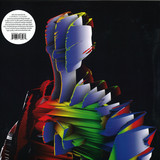
Begun last August and finished on 25 October, the album started life as an idea born from a casual listen to final Sugarcubes album Stick Around For Joy that Krash had bought a copy of years before in a charity shop. Contemplating the cover art while listening to the LP and the track Hit in particular, it came to him that here might be the musical basis for a concept LP in the grand tradition of the hip-hop mash-up album. Thus the project was born, becoming something of an obsession as lockdown restrictions recommenced through a sanity-testing autumn. As it developed, the provisional title of Stick Around For DOOM morphed into Sugar Coated DOOM and Brighton artists Leigh Pearce and Rob Crespo were roped in to create the artwork. So pleased was Krash with the results that he decided to self-finance the pressing of the LP to vinyl which in turn would allow him to send a copy to DOOM in the most fitting format. On that basis, along with his dad’s advice that if you want something done properly; do it yourself’, he initiated the process for a limited press run as soon as the project wrapped and telephoned his dad (who’d been shielding and who he hadn’t seen for months) to say he’d done precisely that. In a tragic twist, this turned out to be their last ever conversation, for Krash’s dad died suddenly the next day. Two months later of course, while waiting for the Covid-slowed vinyl pressing process to complete, came a further tragic twist as the world received the delayed news that DOOM himself had also passed away back in October – in the event, only five days after Krash’s father. So it’s no understatement to say that Sugar Coated DOOM carries significant emotional resonance for its maker, forever linked as it will be to the deaths of two of his personal heroes.
Which brings us to the content. The album contains seven vocal tracks, with an alternate version of one and instrumental versions of five of the seven across two sides of an album with the music, track names, LP title and cover art mashing up musical, lyrical/ textual and visual elements of The Sugar Cubes’ Stick Around For Joy with DOOM acapellas, track names and references. Listeners won’t need long to appreciate that Krash Slaughta was right to be proud of his creation, almost certainly correct in thinking DOOM would dig it and no doubt The Sugarcubes too. Also, who would have thought The Sugarcubes had so much potential for beat-mining? But then seeing potential in the unexpected was always a vital skill from the golden era of sampling in hip-hop and those who follow in the tradition. The first track proper, for example, swipes Madlib’s lo-fi beat from underneath the vocals for Figaro and replaces it with the looped and beefed-up opening bars of the Cubes’ I’m Hungry. The result is a natural fit. But then the blending of elements in every track on this release provides evidence of the effort and love put into its creation, reinvigorating DOOM’s classic vocals while re-purposing The Sugarcubes in a manner that will delight. Indeed, if you’d didn’t know the work of Bjork’s former band, you’d be unlikely to pin an early 90s alt-rock LP as the sample source. I imagine listeners will have a hard time picking a favourite too. Perhaps Hit It (based on the track which triggered the project idea in the first) which splices the Bond-theme-ish Hit with My Favourite Ladies might prove the most popular, or the monkey’s favourite, Nurse Chong, which blends Happy Nurse with Raedawn (named for Tommy Chong’s daughter) from Viktor Vaughn LP Vaudeville Villain. Whichever one punters pick though, anyone who hears anything off this will know it’s one to rank alongside your other favourite hip-hop mash-up albums. And who knows – perhaps even Mr Daniel Dumile himself might have considered it a not unfitting epitaph.
Alan Vega’s name is synonymous with unfettered, tireless creativity. Beginning in the late 1950s, when he was a fine art student at Brooklyn College, through his years playing in Suicide, and all the way up until his death in 2016, Vega was constantly creating. That
process naturally led to a wealth of material that didn’t see the light of day immediately when it was recorded, which came to be known as the Vega Vault. Mutator is the first in a series of archival releases from the Vault that will come out on Sacred Bones Records.
Mutator was recorded alongside Vega’s longtime collaborator Liz Lamere at his NYC studio from 1995-1996, and it serves as a document of a particularly fertile time in his creative life. He had 11 full-length solo albums come out during the ’80s, ’90s and ’00s - plus numerous collaborations, and Suicide records A Way of Life and Why Be Blue. Mutator wasn’t shelved intentionally, but Vega’s back-to-thegrindstone M.O. meant that he had moved on to making his next record before this one was finished. Lamere and Vega’s friend and confidante Jared Artaud (The Vacant Lots) rediscovered the raw, unmixed recordings from the Mutator sessions in the Vault in 2019. Soon after, they mixed and produced them into the visionary album that was lurking within those tapes.
“Our primary purpose for going into the studio was to experiment with sound, not to ‘make records,’” Lamere recalls. “I was playing the machines with Alan manipulating sounds. I played riffs while Alan morphed the sounds being channeled through the machines.”
At the time of the Mutator sessions, Vega was massively inspired by what was happening in the streets of New York - not only the hip hop scenes that were exploding throughout the outer boroughs, but also the literal sounds of the streets, the traffic noise and industrial ambience of city living. That influence trickled into the sounds he and Lamere captured in those sessions. That sensibility, paired with Vega’s unmistakable voice and force of personality, is what made it the great album it is now. The final piece was the production job, completed by Lamere and Artaud 25 years after the songs were first captured.
Alan Vega’s name is synonymous with unfettered, tireless creativity. Beginning in the late 1950s, when he was a fine art student at Brooklyn College, through his years playing in Suicide, and all the way up until his death in 2016, Vega was constantly creating. That
process naturally led to a wealth of material that didn’t see the light of day immediately when it was recorded, which came to be known as the Vega Vault. Mutator is the first in a series of archival releases from the Vault that will come out on Sacred Bones Records.
Mutator was recorded alongside Vega’s longtime collaborator Liz Lamere at his NYC studio from 1995-1996, and it serves as a document of a particularly fertile time in his creative life. He had 11 full-length solo albums come out during the ’80s, ’90s and ’00s - plus numerous collaborations, and Suicide records A Way of Life and Why Be Blue. Mutator wasn’t shelved intentionally, but Vega’s back-to-thegrindstone M.O. meant that he had moved on to making his next record before this one was finished. Lamere and Vega’s friend and confidante Jared Artaud (The Vacant Lots) rediscovered the raw, unmixed recordings from the Mutator sessions in the Vault in 2019. Soon after, they mixed and produced them into the visionary album that was lurking within those tapes.
“Our primary purpose for going into the studio was to experiment with sound, not to ‘make records,’” Lamere recalls. “I was playing the machines with Alan manipulating sounds. I played riffs while Alan morphed the sounds being channeled through the machines.”
At the time of the Mutator sessions, Vega was massively inspired by what was happening in the streets of New York - not only the hip hop scenes that were exploding throughout the outer boroughs, but also the literal sounds of the streets, the traffic noise and industrial ambience of city living. That influence trickled into the sounds he and Lamere captured in those sessions. That sensibility, paired with Vega’s unmistakable voice and force of personality, is what made it the great album it is now. The final piece was the production job, completed by Lamere and Artaud 25 years after the songs were first captured.
Dexta and Crypticz are delighted to announce their long awaited 12" single, 'Together', featuring two remixes from Munich-based Danny Scrilla. Two years in the making, the project will finally see the light of day on 10th November 2017 via Diffrent Music.
A fusion of Drum & Bass, Jungle, House and Garage, 'Together' is built for the dancefloor. The track borrows vocals and breaks from the early '90s, while blending drum machines, bass samples and vintage effect processes crafted by Dexta & Crypticz.
Danny Scrilla debuts on the label with a pair of remixes. The 'Reslice', is a great example of signature Scrilla, manipulating the original parts into an exploration of dubby, half time soundsystem music. His 'Reflop', meanwhile, is a 140bpm re-think, splicing chopped up breaks and bass stabs from the original along with strong percussion lines and weird vocal edits.
Since his outing on Hospital Records in 2015, and his debut 'SE4 EP' on Diffrent Music last year, Dexta - otherwise known as Londoner Chris Royle - has released the third part in an ongoing series for None60 Recordings, honing tracks for dancefloors and stereos alike.
Somerset's Crypticz (aka Jordan Parsons) has had quite an eventful 12 months, with his 'Echo Sound EP' on Doc Scott's 31 Recordings, and more recently the 'Forever EP' Om Unit's Cosmic Bridge imprint, while evolving his club performance from a DJ set to a custom live show consisting solely of his own music and explorations in sound design. This single comes two weeks after his latest release, the 'Access You EP', also on Diffrent Music, which set a new benchmark for Jordan, refining his sound to its highest quality.
Danny Scrilla (born Daniel Pirkl) has gone from strength to strength this year, dropping a cassette tape project on Cosmic Bridge, compiled of 16 synth and hardware-led experiments. Last month Dan also released a collaborative 12" with Sam Binga called 'Weird In Munich' - a superb effort, pushing boundaries from both their usual styles - before putting out an EP for Amit's AMAR imprint in early September.
'Together' will be available as a limited 300 run of 180gsm coloured 12" vinyl, and will be officially released on 10th November 2017. An exclusive small batch will be available at the Clashmouth D&B Label Market on 28th October 2017 at Cafe 1001 on London s Brick Lane.
Constant Sound welcome a true stalwart of underground UK house and techno, the one and only 100HZ. Lee Renacre has been delivering distinctive club tracks with an ear-snagging kink since the early '90s, and he's sounding as inspired as ever on this new release. "Jive" skips and swings with urgency, but the synths soar like the loftiest Motor City anthems. "Honkey (Crazy Hats)" is a more obscure affair that uses subtle inflections of rhythm and texture to create an immersive trip anchored to a steady kick. "Ochos" is a dreamier cut that places the emphasis on melody and atmospherics rather than straight up beats, creating a beautiful slice of machine soul in the process.
The album 'Balance' by Frank Bretschneider & Taylor Deupree was originally released in 2002 by Mille Plateaux on CD only. The 9 tracks on 'Balance' are a perfect example for the aesthetics to arise within the Click & Cuts scene and (ambient-)glitch music movement of the late 90s and early 2000s.
The two masters of microscopic sounds and sine wave/white noise-based music constructed these seamlessly mixed pieces around rhythms and melodies, which grants the album plenty of dynamics. The wide variety of carefully chosen ambient sounds throughout the whole work endows 'Balance' warmth and intimacy.
The recordings are now available for the first time on vinyl within the KeplarRev series, presented in a new updated artwork based on the original layout with photographs by Taylor Deupree.
From the original press release in 2002:
"Balance is the first and so far only collaborative release from Frank Bretschneider (Berlin) and Taylor Deupree (Brooklyn). Both of these artists are no strangers to the ears of many; Taylor Deupree is one of New York's most vibrant electronic producers. From his early techno days as a member of Prototype 909 to his current status as one of N. America's key "microscopic" electronic composers and to add runs the prestigious 12K and LINE labels. Frank Bretschneider is a key member and founder of the prestigious Raster Music label, he has critically acclaimed releases under the names Komet and Produkt. It's easy to say that Frank Bretschneider has created some of the most influential spatial electronics of the late 90's.
Utilizing both artists keen ears for carefully crafted sounds, Balance blends the clean sine wave / white noise of Bretschneider with the defined grit of Deupree's granular synthesis. Realized entirely on Nord Modular synthesizers, Bretschneider and Deupree exchanged patch files through email and began constructing foundation loops. Bretschneider then created initial mixes of 9 songs and then sent them to Deupree who remixed and re-processed them. This digital exchange allowed for them to work using their own methods and aesthetic while combining the similarities of each others interests. The result is a looping and churning rhythmic work that is both synthetic, warm, dubby and tonally challenging. Thus Balance creates an engaging balance between the 2 artists aesthetics."
Post lockdown does not mean we need to fall back into the same patterns like we did before. This EP contains a smooth transition to a new reality. ULTRATERRENO is TAGLIABUE`s (@josephtagliabue) newest EP on the Berlin and Zurich based micro Label Lustpoderosa.
The celestial sounds from the italian producer Tagliabue is a healing process of well tempered analog synthesizers. The cure is in the mix of pre dancefoor and ambient tracks inlcuding a slow trancy chug from well known and apreciated selector @AnatolianWeapons.
Tagliabue is not just inspired by the afro cosmic heritage of Beppe Loda and Daniele Baldelli, but also from post-folk, rock, prog and kraut infuences of 70’s and early 80’s, passing through New Wave and Synth Pop ofGaznevada or The Stupid Set and not to forget italians rave culture of the 90s with Franceso Farfa and MarcoDionigi just to mention a few.
This very intimate EP is a meditative and transcendental journey to another world. Literally
Amnesia Scanner announces Tearless, the Berlin-based duo’s second LP. As Amnesia Scanner founders, Ville Haimala and Martti Kalliala watch their icy home country of Finland thaw, the staggering scale of political recalibration and the worldwide climate crisis to come blows open old norms. This album reflects what it feels to experience Earth at a time when collapse is emerging as the prevailing narrative.
The musical scope of the record is expansive, with guest vocalists—the Peruvian artist Lalita and the Brazillian DJ/producer LYZZA—descending into a vast uncanny valley of sound. Tearless follows the 2014 AS Live [][] mixtape, 2015 audio play Angels Rig Hook, two EP’s for Young Turks, and their 2018 debut album, Another Life (PAN).
“There’s a looming sense of radical change,” they note, connecting the present to a fin de siecle horror and curiosity regarding what new world is being ushered in. Someone called Tearless a “breakup album with the planet.” To which Amnesia Scanner responds, on the LP’s closing track: “Youwill be fine, if we can help you lose your mind.”
With the crossfader on Tearless sitting closer to pop than abstraction, so too does the audience for this record widen in scope. Listening through: Opener “AS Enter” sets a sombre tone until the fucking riffs of the second track(the titular, Lalita-helmed “Tearless”) make clear there’s plenty of roaring to come. A feature from metalcore band Code Orange on “AS Flat” follows, along with “AS Trouble” (feat. Oracle, the third, machinic ghost-member of Amnesia Scanner) and together they hit as black-metal-gaze dirges. At the album’s midpoint, Lalita returns for the beautiful, operatic breakdown of “AS Acá” (released as a single in 2019), before “Call of the Center” guides listeners through three club ready tracks—the grain-processed dembow of “AS Too Late” and “AS Going” with LYZZA, and then the ambientheadbanger “AS Labyrinth.” Closing “Tearless” is the sadboy grunge of “AS U Will Be Fine” with a clear statement of intent: doom, despair, insanity, absurdity, it’s all natural, all cathartic, and all OK. Refuse like the ‘90s and party like the ‘20s—if that seems senseless, you are doing it right.
Palette 71 kicks off with legendary Warp artist Plaid on remix duties. Transforming the title track, re-synthesized 909 samp-les and lua scripted sequencing, Plaid builds melodies and ar-rangement to epic proportions in classic Plaid fashion.
Tejada’s new EP is an homage of sorts to the sample heavy production style of the late '90s. "Limiting the options and just creating and manipulating a batch of samples is my happy place,” says Tejada. The title track hints back to a personal favorite, Optical’s "Moving 808s." While the sound is quite different, the approach is similar: samples, editing, some fil-ters and not a whole lot more opens up a lot of creative possi-bilities without too much getting in the way. Of course, the bass plays an important role. Combing through some older influences of varying styles, the production became more in line with Tejada classics like “Timebomb” and “Western Star-land,” both sample collage pieces focused on groove.
The final track, "Infinity Room" also follows this production process while resulting in a slightly moodier sound.
Apollo are delighted to welcome Steve Legget & Mark Hand to the fold with their lush new single ‘If You Cannot Try’ featuring the dulcet vocals of Greg Blackman. Originally released as an uplifting bumping house track on Ramrock Records Blackman sent the stems of the release to longtime collaborator Steve Legget for a rework. Legget tore the original to pieces, deconstructing it into a much more ambiguous form. ”I’ve never been a fan of a chorus in a song,” Legget muses. "I like songs that are not direct that leave room for your imagination - Mark and I ended up building a new song around the texture of the original.”
Hand and Legget met in the early 90s at the Northern College of Art in Middlesbrough, and have collaborated at various times in the intervening years, through a shared love of Detroit techno, experimental electronic music, jazz and funk. Their creative process involves sending audio files back and forth - “The release was written in collaboration over the internet Greg in Colchester, Mark in Hartlepool, and me in St Albans."
Hand added spaced out textures and riffs from his collection of vintage Fender Rhodes and classic synths - taking the track into sunny space funk realms that comes on like a lost release from joe Claussell’s Spiritual Life label or Basic Channel jamming with Herbie Hancock.
Using their new version as the seed - Hand decided to try his own ’Teesside Techno’ version - "I wanted to give the track more of a 'machine funk' vibe with my rework” he explains. “I generally like to work by jamming with hardware - the bass line is generated by triggering the arp on my Juno 6..using triggers from a TR606 kick drum and hats replaced by a TR909.. the result being more of a jackin' electronic funk mutation!"
This continuing game of musical pass the parcel has indeed born some juicy fruit -
R&S welcome electronic composer Matthew Puffett AKA Future Beat Alliance with his killer single ’Never Forever’ a sublime slice of broken beat techno that originally had a limited release on his “Patience and Distance” album in 2009. It now comes backed with a first rate remix courtesy of R&S regular Afriqua.
A veteran of the UK electronic scene originally from Oxford but now located in Berlin, Puffett made his name in the late 90s with a string of sought after releases on Void Records under the aliases Mode-M and Soul Electrik before settling on the Future Beat Alliance handle. Notching up releases with the likes of Delsin, Rush Hour and Versatile as well as with the storied Tresor imprint, both as a DJ and an artist. In 2019 Matt started his new imprint Reward System to self release new creations.
Life long friend from Oxford, Mo’ Wax and Unkle maestro James Lavelle reached out in 2012, which led to a further creative chapter in Puffett`s story that culminated with him co-writing & programming on Unkle’s 5th studio album ’The Road Part 1’ as well as some singular work in film and television. “The moving image plays a key creative motive in my process,” Matthew explains. “Sound & picture married together is such a powerful combination that always inspires me every time to make my own version, 'Never Forever' is one of my many attempts to try and
capture that.”
Taking cues from modern cinema masters like Denis Villeneuve, Panos Cosmatos, Steven Soderberg and Jonathon Glazer and their respective composers, Puffett's widescreen sonic craftsmanship alongside his irresistible rhythmic sense are a key part of what makes Future Beat Alliance music so alluring; "I want my tracks to guide the listener on a exit route far from this world”
Emerging this January with a duo of debut EPs, Black (Vegan Tinder Lord) and White (Hexxex) , Ϟᑢrəən ϟHAᗌ/W blends pummelling techno, industrial grit and experimental noise for a mood-spanning sound inspired by everything from Google Street View to visiting the dentist.
The Black EP gleans from the heavier end of the club music spectrum, plunging into a hardcore well of nosebleed kicks and synapse-frying synths that bang with raw dancefloor energy. The White EP pauses for reflection, transforming Screen Shadow's spiky reveries into tightly-woven technicolour dreamscapes.
Track highlights include the humour-spiced, pitch-shifted "Vegan Tinder Lord"— immortalised by its disembodied, Amnesia Scanner-esque voice — and the percussive, hardstyle-tinged assault course of "Scanna Hex". Inspired by the unpleasant act of a dentist drilling a tooth cavity, "Bodies" burrows deep into your brain, while the glitchy experimentalism of "Corridor" gets under your skin.
Across the two EPs, vocals are processed and reshaped into other sounds using the sculpture-primed Nord modulars. These '90s instruments have since been discontinued, but remain a staple in the Screen Shadow studio and the upcoming live setup.
Artwork and music go hand in hand, with logo designer Number III (Paul Nicholson, Aphex Twin logo designer ) cooking up the striking black and white imagery.
Ever since dropping her critically-acclaimed debut LP Online Dating through Central Processing Unit back in 2017, Tryphème (Tiphaine Belin) has marked herself out as one of the more unique voices in contemporary electronica. We mean that literally - Belin's productions are characterised by frequent use of vocals, either processed to provide atmosphere or deployed high in the mix as passages of singing/spoken word. When these are wedded to her typically deft electronic productions the results are lush, atmospheric and moving.
Two years on from Online Dating and Tryphème has returned to CPU with the six-track Aluminia EP. While Online Dating leaned into a range of rave styles, Aluminia is more painterly, with Belin putting greater emphasis on timbre and texture. 'Lava', 'Fey' and 'Cry Silent Cry' are some of the most innovative tracks Belin has produced to date.
While another producer would allow listeners to luxuriate in such warm synth tones, Belin doesn't let you get comfortable, constantly surprising you with innovative structural choices or unexpected sounds. The way in which 'Lava' is agitated by chattering voices and processed singing recalls both the uncanniness of Holly Herndon and the maximalism of A. G. Cook, while the synth line that snakes through 'Cry Silent Cry' nods to Lorenzo Senni's recent trance deconstructions. Beats and bass take precedence in Aluminia's midsection.
This is the portion of the record which most closely recalls Online Dating - 'Eedyu' and 'X-Ray Mantra' are more settled than the other cuts on Aluminia, and it's here that the 90s electronica influences that so often inform CPU's output are most keenly felt. Those who enjoyed Bochum Welt's recent Seafire full-length - itself another CPU drop - will be able to get behind these tunes.
The two sides of Aluminia are combined in penultimate number 'In A Cyber Spiral'. The track's eerie beginning, with its ghostly vocals and nagging drums, is reminiscent of Hype Williams. Soon things morph into a leftfield digi-dub replete with speaker-crushing sub. Halfway through Belin wrong-foots us again, cleverly flipping the drums from half-time to a kind of fluttering breakbeat. It's the most diverse and unique production in a record full of them, drawing on everything from IDM to Eskibeat, and a track which furthers Tryphème's status as an exciting new artist on the European electronics scene.
Master of ambient spaces and far out places, long-time Finnish producer Sasu Ripatti (aka Vladislav Delay) blesses us once again with another release, this from his 'Visa' period of unreleased tracks.
The first track out of the gate is a recognizable Vladislav Delay piece, but instead of gently flowing rivers of sound, instead we have a series of stiff, machine-like rhythms applied to his classic infinitely deep pads and ambient environmental sounds.
It just continues to pile in more elements until becoming almost indistinguishable from his natural, organic flow.
From there we move into somewhat more familiar territory but still unusually stripped down and mechanical for a Vladislav Delay joint.
It’s fascinating to see such an intricate songwriting process laid bare in such a way, often exposing each individual, nearly bottomless sound in isolation.
Deeper into the album, things veer into decidedly more abrasive and synthetic territory, at times becoming an almost unrecognizable artist for a moment, only to be eventually subsumed under layers of shifting ambience that could only be Sasu.
This austere minimalism makes these tracks some of the most hypnotic since the early 90s excursions, but at the same time seems to have left its organic, analog roots and melded with the harsh gridlocked modern sequencer. ~Clint Anderson
7 track EP/mini album by L/F/D/M 's Richard Smith - ‘Dream Bleeds’ overflows with body jerking industrial, raw acid/techno, and hints of the warehouse sound of the late ‘90s and the caustic spirit of EBM.
Richard Smith says about ‘Dream Bleeds’, “attaching meaning to songs is often arbitrary but when the visceral feeling of music, particularly instrumental body music, is laid bare, the interaction is immediate and physical. These tracks thread together; each starting point completely open, each new step informed by the last. I find it interesting that the process is the same but the outcome somewhat unexpected; shaped by emotion, inspiration or even constraints of time, they evolve as they do in that time. They reach a different end point due to that evolution of circumstance.”
For the label's second release, Amsterdam imprint yeyeh has brought together two musicians from vastly different backgrounds to celebrate the far-sighted musical potential of the Theremin on the 100-year anniversary of the instrument's invention.
'Waves' is the product of two weeks of studio collaborations between award-winning composer and Theremin soloist Carolina Eyck and Eversines, an electronic music producer who has previously released music on yeyeh's sister label ninih. It builds on Eyck's work composing for 'Theremin & Voice', with both artists playing a part in processing, modulating, layering and arranging vocal and Theremin sounds to create six breathtaking electronic compositions.
Varied in tone and execution, the album's six tracks are arguably closer to instrumental pop than academic electronic music. Some tracks bear comparison to the cyclical melodic movements associated with the greats of American minimalism, while others recall the alien, otherworldly futurism of the Radiophonic Workshop, classic ambient music and the sun-bright bliss of early '90s IDM. Yet despite these possible perceived parallels, 'Waves' sits on its own as a stunning work crafted from the simplest of musical elements.
serenitatem, the fifteenth installment of FRKWYS, RVNG Intl.'s collaboration series pairing intergenerational artists in creative conversation, joins Visible Cloaks with Yoshio Ojima and Satsuki Shibano, two trailblazers of the Japanese avantgarde music and visual arts scenes of the 1980s and 90s.
Yoshio Ojima began his career as a composer of environmental and ambient music, with a particular interest, and optimism, in the possibilities of generative software. His compositional pursuit of human synthesis with computerized forms was realized in its fullest potential alongside Satsuki Shibano, a pianist renowned for her interpretations of Erik Satie and Claude Debussy. Together, they were among a handful of influential Japanese artists whose innovations still resonate, if not more vibrantly than ever, well beyond the tightly-knit scene's original core. In the early 90s, Ojima was among the programmers of the influential satellite radio experiment St. Giga, a constantly-evolving sonic landscape that combined field recordings and sound collage with occasional readings of Japanese poetry. Satsuki was a regular reader for the station. This musical terrarium bloomed out of sight in a small Tokyo studio, a greenhouse of sound with no set start or finish time that audiences could tune into, absorb, and immerse.
The perpetual flow state of St. Giga — recordings of which Ojima shared with Visible Cloaks — would be highly influential to serenitatem's constitution. As Visible Cloaks, the Portland, Oregon duo of Spencer Doran and Ryan Carlile have developed their own set of creative strategies that form an aesthetic fuse point between human intention, aleatoric composition, and improvisation.
These are notions most recently reflected in 2017's Reassemblage and Lex, a respective album and EP in which the duo combined generative software and virtual representations of global instruments into lacy, interlocking patterns. Long time admirers of Ojima's work on albums like 1988's Une Collection Des Chainons, Doran and Carlile discovered after an online introduction that they shared with Yoshio and Satsuki an abiding interest in pre-classical composers, the Lovely Music, Ltd. label, and the British avant-garde, as well as a mutual respect for one another's techniques and processes.
The four musicians met in Tokyo, Japan at Sounduno Studios in December 2017, at the tail end of Visible Cloaks' first Japanese tour, to commence work on serenitatem. Leading up to the studio sessions, Doran and Carlile sent Ojima processed sound sketches recorded while on a European tour, which Yoshio would add to and return. Visible Cloaks would then fold Yoshio's edits back into the original compositions, which Doran and Carlile brought to the exploratory recording session. During that week together in Tokyo, the quartet made use of a number of creative strategies — 'echoing sound together,' as Yoshio puts it. Among the strategies, MIDI randomization gave the quartet melodic lines and what Doran calls 'randomized clouds,' or 'tightly grouped notes that become smeared tonal clusters functioning more like chords in themselves.' Carlile would also feed Ojima and Satsuki's text into Wotja, a generative music software which produced a MIDI language around which the quartet expanded their compositions.
'The aim,' Doran says of serenitatem, 'was to make a work that was not specifically ambient (or environmental), but something more multi-hued, weaving these deconstructive concepts into an album that has a deeper architecture underpinning it.' Accordingly, serenitatem is a marvelously sharp record, its sutures between human and machine virtually impossible to find but suggested everywhere you turn. The collaboration among Ojima, Satsuki, and Visible Cloaks is both musically and conceptually inseparable from the technology that made it possible. Throughout the album, Shibano's playing resonates like Satie's, her rhythms cascading like drops from leaves an hour after the rain. Overtones are stretched and warped like modeling clay, then spun around and shown off from multiple angles.
A single soaring note might seem to be suddenly plunged underwater, its richness of sound made shallow and its sharp edges blunted. Pittering chimes and rapidly warping vocal samples hang in the luxuriously glossy space, water trickles from ear-toear, familiar melodies rise from nothing and dissolve before they can be traced. With the depth of its emotional charge, serenitatem burns away the easy cynicism of the day, presenting itself as the kind of delocalized work of art the internet promised us decades ago — a synthesis of artistic visions, technological sophistication, futurist ambition, and, occasionally, ancient polyphony. Listening to it can feel a bit like tuning in to a 21st Century version of St. Giga: It's a place where the future still grows.
Visible Cloaks, Yoshio Ojima, and Satsuki Shibano's serenitatem, FRKWYS Vol. 15, will be available across LP, CD, and digital formats on April 5, 2019. The quartet will perform select live shows throughout 2019.
- A1: Daisy Fields
- A2: Sruthi Dub Resonance
- A3: Barefoot
- A4: Pollinator (Eternal Opuscule #120)
- A5: Stamens (Eternal Opuscule #121)
- B1: Oregano In Dub Minor
- B2: Sunken Forest
- B3: Daisy Dub
- B4: Beat Resonance (Eternal Opuscule #118)
- B5: Gyration (Eternal Opuscule #119)
- C1: Time Zone Conversations
- C2: Deeping Breathely
- C3: Oregano In E-Minor
- C4: All That Spins (Eternal Opuscule #124)
- D1: Sruthi Box Resonance
- D2: Galaxea
- D3: Be As You Are
- D4: Be As You Will (Eternal Opuscule #126)
- E1: Sundog Suite
- E2: Pear Strings
- E3: Pair Of Seeds (Eternal Opuscule #122)
- F1: Spiral Activator
- F2: Final Oscillator (Eternal Opuscule #117)
- F3: Sundog Reprise (Eternal Opuscule #125)
It gives me the greatest honour to finally be able to announce the release of this amazing triple vinyl masterpiece by log(m) and Laraaji on Invisible, Inc.
It's been over a decade since Laraaji first joined forces with log(m) in their Canadian studio in early 2007. In those ten years the trio recorded many hours of music. Over time these recordings, beginning essentially as live jams, were polished, dissected, processed, re-arranged and then finely and painstakingly distilled down to the 105 minutes of music that now form this album, which finally reached completion just earlier this year. The wait has been more than worth it.
The Onrush Of Eternity is a melding of minds like no other. Ever the pioneer of experimental ambience, Laraaji's signature hammered dulcimer, zither, mbira, auto harp, sruthi drone box and of course his exceedingly positive vibes are here combined with log(m)'s unique vision of gronky hi-tech psychedelic space dub. The resultant voyage into deeply meditative ambience and trance-inducing dub is as unexpected an outcome as it is a bona fide "Eureka" moment. It sounds neither like log(m) OR Laraaji....but of course like both. It is one of those rare collaborations that is, without a doubt, even greater than the sum of its already great parts.
Log(m) started making waves in the early '90s as Legion Of Green Men with their visually striking 12"s, complete with eternal opuscules (locked grooves) and mathematically inspired titles, all lovingly issued on their own Post Contemporary imprint. These deservedly got the attention of Richie Hawtin who promptly asked the duo for an album on his own classic Plus 8 Records. 20+ years later and the music (much like their name) has morphed into something more sophisticated: even more complex, atmospheric and deeper than ever.
Laraaji's reputation of course precedes him: he first came to wider attention when Brian Eno released his "Day Of Radiance" as part 3 of his Ambient Series in 1980. Since then, Laraaji has released over 40 albums, yet his stellar path seems still to be on the ascendant - a recent landmark being the 2017 "Sun" series of albums for the wonderful All Saints' Records.
This unique triple LP in tri-fold sleeve is limited to 200 copies on coloured vinyl and 300 copies on black vinyl featuring ten of log(m)'s signature eternal opuscules and cryptic engravings on all three discs.
"Master of ambient spaces and far out places, long-time Finnish producer Sasu Ripatti (aka Vladislav Delay) blesses us once again with another release, this from his 'Visa' period of unreleased tracks.
The first track out of the gate is a recognizable Vladislav Delay piece, but instead of gently flowing rivers of sound, instead we have a series of stiff, machine-like rhythms applied to his classic infinitely deep pads and ambient environmental sounds. It just continues to pile in more elements until becoming almost indistinguishable from his natural, organic flow. From there we move into somewhat more familiar territory but still unusually stripped down and mechanical for a Vladislav Delay joint. It’s fascinating to see such an intricate songwriting process laid bare in such a way, often exposing each individual, nearly bottomless sound in isolation.
Deeper into the album, things veer into decidedly more abrasive and synthetic territory, at times becoming an almost unrecognizable artist for a moment, only to be eventually subsumed under layers of shifting ambience that could only be Sasu.
This austere minimalism makes these tracks some of the most hypnotic since the early 90s excursions, but at the same time seems to have left its organic, analog roots and melded with the harsh gridlocked modern sequencer. ~Clint Anderson
For this third release on Dais, Drew McDowall reaches into concept, ritual, and immersion, in an exercise of unravelling the DNA of hallucination. The Third Helix is McDowall's product of deconstructive exploration, twisting the fibers of being into new structure, shape, pattern, and pulse, without reconstituting its inscribed template.
The result is a true third act,in McDowall's career, that has seen him peregrinate from the late-70s art-punk of the trio Poems to his work with Psychic TV and Coil throughout the 80s and 90s, into his current home of New York City, where he has composed with CSD, Compound Eye, as well his solo work. That triangulation is central to The Third Helix, as it begins with his dive into the existence of a sensory toolkit unique to McDowall before twisting faculties and reconfiguring consciousness by honoring inherent power, cognizant of memory yet agnostic of context.
With the tenet that journey is rarely linear, but rather an omnipresent oscillation of matter, sound is stripped to salient and primal, propelled by McDowall's boring into the core of memory and impulse, suturing together the silent awareness of excogitating experience.
Featuring eight new tracks of McDowall's dark, experimental electronics, including the opener "Rhizome", The Third Helix is a churning descent into emotion, provoking thought and reflection while carving out haunting space only to fill it with baffling and wondrous structures of layered sound. McDowall solidifies himself as an architect who transforms otherworldly materials into something fascinating and challenging in the process.
Unnerving, trancelike anthems for nervous meditation and anxious relaxation, fans of Coil will immediately connect and immerse, while the complex compositions welcome listen for drone and ambient enthusiasts.
Packaged within a thick sturdy matte sleeve jacket featuring artwork/design by artist J.S. Aurelius (Ascetic House/Marshstepper).
Cat.no.: DAIS 122 LP
Tracklisting
For this third release on Dais, Drew McDowall reaches into concept, ritual, and immersion, in an exercise of unravelling the DNA of hallucination. The Third Helix is McDowall's product of deconstructive exploration, twisting the fibers of being into new structure, shape, pattern, and pulse, without reconstituting its inscribed template.
The result is a true third act,in McDowall's career, that has seen him peregrinate from the late-70s art-punk of the trio Poems to his work with Psychic TV and Coil throughout the 80s and 90s, into his current home of New York City, where he has composed with CSD, Compound Eye, as well his solo work. That triangulation is central to The Third Helix, as it begins with his dive into the existence of a sensory toolkit unique to McDowall before twisting faculties and reconfiguring consciousness by honoring inherent power, cognizant of memory yet agnostic of context.
With the tenet that journey is rarely linear, but rather an omnipresent oscillation of matter, sound is stripped to salient and primal, propelled by McDowall's boring into the core of memory and impulse, suturing together the silent awareness of excogitating experience.
Featuring eight new tracks of McDowall's dark, experimental electronics, including the opener "Rhizome", The Third Helix is a churning descent into emotion, provoking thought and reflection while carving out haunting space only to fill it with baffling and wondrous structures of layered sound. McDowall solidifies himself as an architect who transforms otherworldly materials into something fascinating and challenging in the process.
Unnerving, trancelike anthems for nervous meditation and anxious relaxation, fans of Coil will immediately connect and immerse, while the complex compositions welcome listen for drone and ambient enthusiasts.
- 1: Only A Man (Feat. Dan Salem)
- 2: Same Old Game (Feat. Leo Will)
- 3: Against All Odds
- 4: Let The Music Play (Feat. Manoo)
- 5: Only Rainbows (Feat. Dan Salem)
- 6: Can't Be No Crime (Feat. Rick)
- 7: Fast Lane
- 8: Gain Station
- 9: Rush Zone
- 10: The Turnaround
- 11: The Modern Way (Feat. Dan Salem)
- 12: Cranberry Dream (Feat. Elaine Thomas)
Confunktion Records own Mr. Confuse returns with his fifth studio album 'Only A Man'.
This album is about the depths of Mr. Confuse and therefore a very personal album in a way. From well-known soul topics of love and hate to social issues of modern life - this album is all about an odyssey through time, rhythm and music.
Times of big studio personals are long gone so a big part of creating this album was the imagination what kind of instruments, musicians and sound design is wanted. With up to 16 international musicians, Mr. Confuse created incredible sounding big arrangements.
The way Mr. Confuse produces his music is inspired by growing up with the 90s hip hop producer technique of creating something new by referring unheard funk and soul. This from of appreciating 60s and 70s music in order to bring it on a new level of musical expression is a clear trademark of Mr. Confuse.
The process of sampling and resampling recorded musicians creates an organic, powerful, authentic and danceable funk sound, which can be heard in each and every second on this record.
Twisting electro funk from the 80s into heavy 60s and 70s funk that could have been the blue print for the original version became a true Mr. Confuse feature already years ago. This time he re-funked the well-known freestyle electro classic 'Let The Music Play' by Shannon.
Also one of the reasons it's entitled 'Only A Man' is because it means composing, producing, arranging, mixing, recording, organising, promoting and going abroad preforming by just one 'man'.
Thomas Fehlmann steps away as co-member of The Orb following two acclaimed full lengths on Kompakt (COW - 2016, Moonbuilding 2703 AD - 2015) and embarks back on his solo career with a career defining album 'Los Lagos' - from Detroit to Schaffel techno he conducts a broad spectrum of electronic music into a seamless flow.
Thomas Fehlmann has been active since the late 1970's from Palais Schaumburg, the Tresor defnining trio 3MB (with Moritz von Oswald and Juan Atkins), Ocean Club (together with Gudrun Gut) and of course The Orb.
Artwork direction and design by DESIGNERS REPUBLIC.
'Los Lagos' is Thomas Fehlmann's seventh solo full-length, his 4th for Kompakt following his Berlin inspired 2010 full length 'Gute Luft'. in the musician's own words it's about "checking the juice".
Establishing a picture of his current artistic condition, as suggested by the title - los lagos / die lage / the situation (literally translating to 'the lakes' but taking the meaning of 'wassup' in the context of a relaxed discussion between friends), the album refers to Fehlmann's "musical motivation, dreams and wishes" through the language of music exclusively: a way to "allow myself to techno" he says, "to techno as a means to deconstruct and rebuild again. Set up an area of tension, loose it in the flow of the grooves. Magnifying some detail out of proportion, regroup around that and slowly knit a texture. Expand."
"It was time to take a bend and head where the sun rises or sets, wherever my heart drives me." This is pretty much the kind of decision Thomas Fehlmann has made. 61 and shining, longstanding member of The Orb, multi-talented composer and boundless experimentalist, had to make in the twilight of his collaboration with Alex Paterson, eager to taste the flavours of the unknown on his own again. "It was the moment when felxibility would have become compromise'. Far from being the demise of their joint dream, this was bound to split it in two distinct, parallel fantasies - rich of their own singularity.
As goes with that essential love of his for the free-flowing nature of electronic music, a fascination born out of its "lack of borders", capable of "inventing, changing the emphasis, experimenting with an unpredictable outcome", 'Los Lagos' "freely connects disparate extremes. Art, disco, minimalism, schmalz, jazz and funk". As he likes to say, Fehlmann's head functions as a sampler, capturing elements and re-assembling them under his own embracing perspective ; not afraid to leap from a deep, dubbed-out hypnotism ('Window', 'Morrislouis', 'Freiluft') to the playfulness of '90s-style bleepy schaffel ('Tempelhof' featuring Max Loderbauer), through out-there, muscle-flexing dancefloor cuts ('Triggerism') onto the calmness of ambient ('Geworden').
In need to keep his inner balance in check, Fehlmann committed himself to "switch off the control" and follow his intuition, which isn't so much of an easy process as he also wanted to incorporate the side disturbances experienced: "it's a complex process of search and destroy to bring out a new beauty trying to expand my vocabulary". With 'Los Lagos', Fehlmann looked at finding "the structure that's surprising, disturbing and rewarding". The artwork for the record, courtesy of contemporary artist and friend Albert Oehlen whom he shares lots of artistic ambitions with, echoes the producer's "funky use of shape and space, sludge and clarity" like a second skin. A search for light and harmony that Fehlmann sums up eloquently: "Does your inner musical voice respond", that is the question. Then "doors open up in unexpected corners, rays of light appear; you follow through and you're in - in your oasis."
- 1: Landing
- 2: Beneath The Ice
- 3: Endless Tide
- 4: Station Life
New 4-track Ep From Austin, Texas Analogue Hardware Enthusiast Bill Converse. Immersed In The Early Days Of The 90s Midwest Rave Scene, Bill Began Djing At A Young Age In Lansing, Michigan. Luminaries Such As Claude Young, Traxx, And Derrick May Were Key Early Influences. Techno, Noise, Ambient And Tape Processing Are All Part Of His Uncanny Sound Palette. His Debut Album 'meditations/industry' Was Released On Cassette In 2013 And Edited For A Vinyl Release On Dark Entries In 2016 Followed By Two 12' Singles 'warehouse Invocation' And '7 Of 9' The Same Year. In 2017 Converse Released His Second Album 'the Shape Of Things To Come' Followed By The Double Ep 'salt Of Mars'.
'hulled' Is A 25 Minute Journey Spread Across 4 Tracks Of Glacial Abandon. All Tracks Were Recorded Directly To Tape With No Overdubs, Made At Converse's Home Studio. Bill Says These Tracks Represent 'ocean Waves In Stormy Conditions, Dark Grey Blue Water, Or More Generally Speaking Something Ominous And Beautiful.' The Songs On This Album Reveal A Sublime Influence From Detroit Techno, Idm, And Acid. Built Around Vintage Synthesizer Lines And Gritty Drum Machine Percussion, The Tracks Ebb And Flow Like The Effect Of Sun Shimmering On Water, Woozy, Gauzy And Ephemeral. All Songs Were Mastered For Vinyl By George Horn At Fantasy Studios In Berkeley.
Each Ep Is Housed In A Die-cute Jacket Designed By Eloise Leigh With Peachy Pink Patterns Landing On An Alien Water Planet And Seeing Mysterious Playing Forms Under The Turquoise Water. Each Copy Includes A Postcard Featuring Photo Of Bill With Notes.
Cat.no.: De 222
Format: Ep
Tracklisting
Lowfish is back! The electro veteran, who's been programming 808s since the early '90s, returns to Suction Records, the label he co-founded and debuted on in 1997, for his first release since 2011. This is suction046 - the 'Hypersensitivity' EP. It's been a while, but as the sprinkling of Lowfish compilation appearances - on labels like Analogical Force and Fundamental Records - over the intervening years have shown, Lowfish isn't interested in radical changes; it's all about quality and consistency. Flawlessly produced 808 drums, meticulously processed for maximum slam, combine with Lowfish's trademark synthesizer melodies and heavily-manipulated dialogue samples... best heard on standout cuts 'Apr294ms' - a melodic techno/electro dancefloor killer - and 'Favourable Reports' - a slice of 808 synthpop with melodic nods to vintage OMD and Gary Numan.
Southend quartet Ghost Music release their evocative debut album I Was Hoping You'd Pass By Here via Arlen on 19 January. They create careful, considered songs, weaving lo-fi lullabies with gliding guitars and understated arrangements. Influenced by Silver Jews, Flying Nun and K Records, they explore themes of nature, love, loss and a melancholic English romanticism embellished with beautifully spectral melodies and executed with startling subtlety.
Despite this record being their debut, the band has produced a veritable wealth of music over the past 20 years in various guises. Ghost Music revolves around the songwriting partnership of Matt Randall and Lee Hall, who had played together in the 90s with John Peel favourites Beatglider. More recently Randall has received critical acclaim as Plantman, with his three albums Closer to the Snow, Whispering Trees and To The Lighthouse receiving praise from The Guardian, Uncut and Mojo. When Randall and Hall reunited to collaborate on another album together, they brought in the talents of Roy Thirlwall on bass (Melodie Group) and Leighton Jennings on drums (Dark Globes) to complete the band.
The original idea would be that the songs would be 'ghosts' and create 'ghost music' to resurrect and dust off old songs that they had already started. Lee had found the beginnings of 'Home Dog' on a dusty old 4-track and he had recorded 'Strange Love' on his iPhone in 2014, whilst Matt had written 'My Cloud' as far back as 1997 (the night he moved out of his parents' house). As the album began to take shape, the ghostly premise took a back seat, as they began to breathe new life into the songs they found the impetus to write new ones.
Randall explains the songwriting process; 'When we were in Beatglider together and in the past we'd made a 'thing' out of writing long songs with a lot of changes. This time we pared it back a bit and stuck to the melodies more. We really wanted to make a proper guitar record. Lee's my favourite guitarist and it was lovely to see him stretch out on these songs with his diamond fingers.'
Not afraid to wear their influences on their sleeves, Ghost Music's sound is instantly familiar, echoing beloved bands from the 90s such as Pavement ('Home Dog' has a definite 'Range Life' feel), Galaxie 500 ('Blindspot'), Yo La Tengo ('Heart Shaped Holiday' is influenced by the languid YLT songs that peak after a short intro) and even old-school rock'n'roll ('Strange Love' was born out of an appreciation for the instantly engaging opening riff in 50s songs). Yet Ghost Music's work never feels derivative, being instead effortlessly emotive, melancholic and affecting, creating a world of sound that is hugely reassuring and a tonic for the modern age.
Visible Cloaks' Lex proposes a utopian dream language and its accompanying sound, a limitless, delicate space developed by fluid musical techniques and subconscious voices. The six pieces comprising Lex simulate a more peaceful future, their mysteries telling a new tale in an unknown but imaginable melodic language. Visible Cloaks are the Portland-based musicians Spencer Doran and Ryan Carlile. Utilizing software-based composition rooted in randomization, MIDI-translation and chance operations, the duo has established an improbable humanist mode of music from esoteric processes. Following their self-titled debut album, Visible Cloaks offered Reassemblage, an album simultaneously honoring the post-Yellow Magic Orchestra school of avant musical adventure and diverging from it. Veering from the paths cleared by Japanese and Italian electronic pop and ambient artists of the mid-80s / early-90s, Reassemblage established Visible Cloaks' own camp in a forest of deep sound canopied by trees grown from synthetic seeds.The sound represented on Lex is webbed with sculptural arrangements and interpolated by the sounds of alien speech. These strange and serene utterances were created by Doran feeding a chain of multiple dialects and accents through a language translation software to create an auditory poetry of an evolved place and time.
Lex features both the final version of this process and earlier, simplified experiments with it ( Keys'). The idea - building on 'fourth world' or 'global village' type concepts - was to create a projected language that was a fusion of many,' Doran explains. The result was a very disorienting form of non-language that amplifies the lapses in meaning that occur with the inaccuracy of auto-translation software.'
Permutate Lex, a companion short film to Lex made by Visible Cloaks in collaboration with artist Brenna Murphy (who also created the artwork for Reassemblage and several virtualist videos for the album), is an integral counterpart, both visualizing an aesthetic alive with human form and guiding the sonic experience of the first five pieces: Wheel,' Frame,' Transient,' Keys,' and title track Lex.' World,' the longest piece presented on Lex, is redrawn from a generative composition originally produced for an installation Doran made with Murphy.
The original work incorporates LFOs and randomized MIDI-information, and was intended to variate indefinitely. In this 'fixed' version, World' provides a more conclusive view into the impossible musical environments Visible Cloaks make real. Longer than any track on
Reassemblage, World' expresses the deepening, patient intimations suggested by Lex.
Doran says the Lex attempts to communicate the essence of a world distant enough that it can't be captured or comprehended from the present, appearing only surreal and inscrutable.' The statement reveals a broader musical philosophy fueling this new moment, an awakened voice woven through complex melodic shapes and phrases establishes communication between listeners and the unknown, here presented by Visible Cloaks as sounds coloring the very edge of the envisionable.
Following a run of local transmissions from A Sagittariun, Crump, Rob Smith and Atki2, Idle Hands turns its attention to Berlin and the straight-up, no-nonsense techno thrust of Johanna Knutsson and Hans Berg. Both respected artists and DJs in their own right, the pair have been turning out 12"s together for The Free Spirit Society, Klasse and Crime City Disco over the past few years, but most importantly they've been steering the excellent UFO Station Recordings as a vessel for their punchy, primal techno tracks.
The sound on this EP taps into the pure form of stern, dark dancefloor tackle favoured at Idle Hands - no extraneous filler, plenty of space in the mix, but equally built with warmth and personality rather than monochrome functionality. If you need further proof, just look to the fact the EP is named after a Swedish soap opera from the 90s.
The bleeps and bass tones that pulse through "Taggen" are so finely crafted they need not skip and dance around the arrangement. The melodic interplay on "Klimax" is subtle but ultimately uplifting and optimistic where so much techno concerns itself with oppressive gloom. "Bimbo" finds the pair embracing a more psychedelic approach, but even here the modulating effects processes are kept within certain boundaries so as to not dilute the impact on the floor. After all, this is music to dance to, to be felt over a large system (where possible).
Moving from leftfield bass excursions to minimalist 2-step, UK techno and now onto this much more continental sound, theMälarviken EP continues to widen the range of Idle Hands' musical tastes without losing sight of the complete picture.