
Reservar19.10.2026
debe ser publicado en 19.10.2026
13,40 €
debe ser publicado en 19.10.2026

Erleben Sie die zeitlose Faszination der Country- und Westernmusik auf einer hochwertigen LP. Diese Compilation vereint unvergessliche Klassiker und präsentiert die größten Stimmen des Genres – authentisch, emotional und voller musikalischer Geschichte.
Mit legendären Künstlern wie Hank Williams, Patsy Cline, Willie Nelson, Elvis Presley und Johnny Cash bietet diese Vinyl-Ausgabe eine Auswahl der schönsten Country- und Western-Songs aller Zeiten. Von gefühlvollen Balladen über traditionelle Honky-Tonk-Klänge bis hin zu mitreißenden Klassikern – jede Seite dieser LP lädt zu einer musikalischen Reise durch das Herz Amerikas ein.
Highlights:
Große Country- & Western-Klassiker auf Vinyl
Mit den Legenden Hank Williams, Patsy Cline, Willie Nelson, Elvis Presley und Johnny Cash
Zeitlose Songs voller Emotion, Tradition und authentischem Country-Feeling
Ein Muss für Vinyl-Liebhaber und Fans klassischer Countrymusik
Ideal zum Sammeln, Verschenken und Genießen
Diese LP bringt den unverwechselbaren Klang der goldenen
Ära des Country & Western direkt auf Ihren Plattenspieler – ein musikalischer Schatz für alle Liebhaber echter Klassiker
debe ser publicado en 21.08.2026

Haga su pedido ahora y le encargaremos el artículo en nuestro proveedor.

Modern Sounds in Country and Western Music Vol. 1 is a studio album by American singer and pianist Ray Charles. It was recorded in February 1962 at Capitol Studios in New York City. It featured country, folk, and Western music standards reworked by Charles in popular song forms of the time, including R&B, pop, and jazz. Charles produced the album with Sid Feller and performed alongside saxophonist Hank Crawford, a string section conducted by Marty Paich, and a big band arranged by Gil Fuller and Gerald Wilson. Modern Sounds in Country and Western Music Vol. 2 features one side performed by the Ray Charles Big Band with the Raelettes, while the other side features a string section and the Jack Halloran Singers. Including "I Can't Stop Loving You", Bye Bye Love", "Half As Much", "You Win Again", "Careless Love", “You Are My Sunshine” and many more.
debe ser publicado en 24.01.2025

A New Entry In The Canon Of The Genius Ray Charles The First Black Artist To Record A Country Music Album His Original Iconic Country Recordings Includes ""I Can't Stop Loving You"" & ""Seven Spanish Angels"" Mastered By Multi-GRAMMY® Winning Engineer Michael Graves Produced In Full Cooperation Of The Ray Charles Foundation
Ray Charles changed the way the world perceived country music.
A new, stand alone album, with a track-list of iconic songs cherry picked from across Ray’s country music recordings. With thoughtful attention to detail, this piece looks and feels authentic and period appropriate. This collection not only showcases Ray’s unparalleled interpretations of country classics, but also serves as a timely reminder of his role as a cultural pioneer who helped bridge racial divides through the universal language of music.
debe ser publicado en 15.11.2024

El artículo no se ha publicado. Tú puedes reservar ahora el artículo y después de ser pagado se te será enviado.

El artículo no se ha publicado. Tú puedes reservar ahora el artículo y después de ser pagado se te será enviado.

El artículo no se ha publicado. Tú puedes reservar ahora el artículo y después de ser pagado se te será enviado.

Elements of breakcore, shoegaze, and obtuse slacker rock find home on An Insult, at times with no bridge at all between the disparate styles. In TAGABOWs.
The Brazil, a stop-on-a-dime is the only thing that separates hazy slowcore and adventurous drum n bass, unambiguous evidence of the bands penchant for iconoclast composition. A Country Westerns side of the split entertains similar stylistic mashups, opening with the atmospheric jungle of Lung before lurching into the alt- rock Keeping up with the Joneses, whose fuzzed- out lead riff calls back to bygone eras. On paper, the combination of styles may read as cacophonous or incompatible, but the end result is instead a measured contrast
of sounds, a reflection of the inescapable influence of our chaotic time and the groups environments.
debe ser publicado en 26.05.2023

Die zwei Stars, beides hervorragende Sänger, die später zu preisgekrönten Schauspielern wurden, arbeiteten erstmals 1952 zusammen, während Dino immer noch die Hälfte des
Comedy-Duos von Martin und Lewis war. Ihre Freundschaft entwickelte sich in den späten 50er Jahren trotz ihrer sehr unterschiedlichen Persönlichkeiten - Dino entwickelte eine immer
lässiger werdende Herangehensweise, während Sinatra sich als extrovertiert und oft stürmisch erwies. Die beiden fühlten sich auch über ihre italienischen Wurzeln verbunden. Diese LP
offeriert mit "Ghost Riders In The Sky", "South Of The Border" und vielen weiteren Songs einen schönen Querschnitt durch das Country-Genre.
debe ser publicado en 02.12.2022

debe ser publicado en 14.10.2022

debe ser publicado en 22.11.2024

The success of the 1962 Modern Sounds in Country And Western Music albums paved the way for Charles’ creative freedom as an artist. Throughout the rest of his career, he continued to show his deep affinity for country music. 1965’s Country and Western Meets Rhythm and Blues (aka Together Again) features Ray’s timeless version of the Buck Owens country standard “Together Again.” It also holds the distinction of being the first album Charles recorded in his own RPM International recording studio. While on 1996’s Crying Time album Ray delivers the definitive version of that Owens song and earned Ray the GRAMMY for Best Rhythm & Blues Solo Vocal Performance Male and recognition as Producer of Best Rhythm & Blues Recording by The National Academy of Recording Arts and Sciences. As if that weren’t enough, the album also boasts Charles #1 Billboard smash “Let’s Go Get Stoned.”
debe ser publicado en 18.10.2024

debe ser publicado en 27.09.2024

debe ser publicado en 27.09.2024
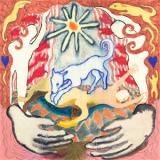
,Lick the Spoon, Let it Soften" ist das zweite Album von Lamplight, dem Projekt des in Virginia ansässigen Songwriters Ian Hatcher-Williams und seiner Band aus bewährten Mitstreitern, darunter Mitglieder von Lightning Bug und hemlock. Das selbstbetitelte Debütalbum aus dem Jahr 2024 wurde von KEXP, Stereogum, WBUR, Brooklyn Vegan und The FADER gelobt, landete auf Playlists von Apple Music, KEXP und der Numero Group und führte zu gemeinsamen Auftritten mit Jake Xerxes Fussell, Advance Base, John Andrews und Mutual Benefit. Während das Debüt über mehrere Jahre hinweg Gestalt annahm, entstand dieses Album recht schnell. Die meisten Songs entstanden im August im Rahmen einer ,Ein-Song-pro-Tag"-Schreibübung, teilweise inspiriert von Kahlil Gibrans ,Der Prophet". Das Album wurde dann komplett in Eigenregie in einer Hütte am See in Vermont produziert und aufgenommen, mit einer weiteren Session in der Stadt im selben Winter. Das Ergebnis ist zugleich gemeinschaftlich und privat: ein Album über Trauer und ein verändertes Verständnis von Liebe in all ihren Formen, das sich durch straffere Arrangements und prägnanteres Songwriting auszeichnet als sein Vorgänger. Es ist außerdem unverhohlen appalachisch geprägt. Das ist kein Alt-Country, aber selbst seine vielschichtigsten Momente tragen einen natürlichen Twang in sich.
debe ser publicado en 23.10.2026
En el almacen y preparando para el envío
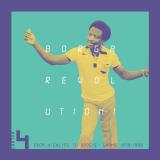
Kalita presents the fourth and final instalment of their groundbreaking ‘Borga Revolution!’ series, uncovering another selection of essential recordings from the rich and far-reaching world of Ghanaian highlife. Spanning deep, hypnotic highlife through to the vibrant electronic productions of 1980s Burger Highlife, Volume 4 captures a period of extraordinary musical change, as Ghanaian artists absorbed influences from funk, disco, boogie, and new synthesizer technology. With previous volumes championed by tastemakers including Gilles Peterson, Antal, Tom Ravenscroft, and Hunee, this final chapter turns its attention once again to the music of the Ghanaian diaspora.
Volume 4 brings together rare recordings from artists such as Rex Omar, Nat Fredua, and CST Amankwah, alongside the elusive, deeply hypnotic and beautiful sounds of the Abibifo Dance Band of Ghana (led by the legendary bassist Ralph Karikari) and Baffour Kyei. Unearthing recordings that have languished in obscurity for over forty years, the compilation moves between deep highlife, rhythmic dancefloor cuts, and pioneering digital productions, revealing yet more musical ingenuity of Ghanaian artists both home and abroad. The final instalment in the ‘Borga Revolution!’ series, it offers another vital collection of forgotten favourites and hidden treasures for DJs, collectors, and anyone drawn to the endlessly inventive sounds of Ghanaian music.
The 1970s and 80s saw Ghanaian musicians begin to incorporate Western sounds like funk and disco into their music, reflecting the changing global musical landscape. However, the country's political instability and economic hardships, marked by military regimes and curfews, forced many artists to leave Ghana in search of better opportunities abroad. In Europe and the U.S., these musicians fused their traditional highlife roots with emerging digital sounds, using cutting-edge technology like the DX7 synthesizer and drum machines to create the genre now known as Burger Highlife.
With ‘Borga Revolution!’ Kalita offers a vivid exposition of this musical transformation, using rare interviews, archival photos, and detailed liner notes to bring to life the pioneering spirit of both well-known icons and unsung innovators of Ghanaian Highlife, one of West Africa’s most exciting musical movements.
· The final installment in Kalita's 'Borga Revolution!' series, examining the development of Ghanaian dance music in the 1970/80s, and focussing on the phenomenon of Burger highlife (a blend of Ghanaian highlife with disco, boogie and synths).
· 2xLP in gatefold sleeve, with printed inner sleeves examining the stories of the artists featured on the volume.
· Includes 10 highly sought-after and under-the-radar recordings, including those by the phenomenal Rex Omar, Nat Fredua, CST Amankwah, Baffour Kyei, Chief Kofi Sammy, and the Abibifo Dance Band of Ghana.
debe ser publicado en 30.10.2026

A counterculture movement united by an expansive, experimental and deeply soulful sensibility, Japan’s rebel protest music challenged the status quo and changed the country’s music industry in the process.
The birth of Japan’s nascent acid folk scene was rooted in the messy and invigorating political climate of the late 1960s. It is a story of Dadaists, communists, pharmacists and cult leaders, led by a young generation of upstart students, artists and dreamers hellbent on turning their world upside down.
Born on the campuses of Tokyo, Kyoto and Osaka, and centred around newly formed independent label and left-wing stronghold URC, this uniquely Japanese form of folk expression provided an outlet for musicians who were tired of aping Western sounds and instead found ways to sing in Japanese and integrate traditional forms in new ways.
At the forefront of this movement was Yellow Magic Orchestra’s Haroumi Hosono, a polymath innovator whose band Happy End released the first Japanese language rock album, and whose influence would go on to be felt across Japanese music for decades. Alongside, and informed by the Kansai scene’s Takashi Nishioka and Happy End collaborator Ken Narita, they experimented with cadences and accents of the Japanese language to open the door for others to experiment with their own forms of psychedelic folk too.
Some, like Nishioka, were more inspired by Dadaism than drugs, while others, like Kazuhisa Okubo, would ultimately find work as a chemist, having founded two further folk groups that flirted with varying levels of success. Obstinately uncommercial, relentlessly creative, the music featured on Time Capsule’s Nippon Acid Folk represents a broad church of influences.
Perhaps the wildest addition to this congregation however was Hiroki Tamaki, a classically-trained violinist and committed iconoclast, whose synth-prog odysseys hinted at his obsession with the divine. Subsumed by the teachings of Bhagwan Shree Rajneesh, he penned an album in praise of the infamous religious leader of which two superbly mind-bending tracks are featured on this compilation.
Charting the decade from 1970 to 1980 as the dreams of political and spiritual liberation seeded in the ‘60s turned to dust, Nippon Acid Folk surveys a little explored corner of Japanese music history, but one which ultimately laid the foundations for an independent music industry, launching the careers of Hosono and others in the process.
Nippon Acid Folk 1970-1980 is pressed on 12” vinyl and represents the start of Time Capsule’s deep dive into Japan’s rich history of folk and psychedelic soul music.
En el almacen y preparando para el envío

'Electronic lullabies and folk songs from Ethiopia! A landmark recording from Ethiopia’s vibrant cassette era of the 1980s, Resonance of Time features pioneering composer Wesenyeleh Mebreku reimagining Ethiopian folk melodies through the humble circuitry of an early Casiotone keyboard.
'Historically, the works featured on Resonance of Time (የጊዜ ቃና Yegizie Kana) stand as quiet documents of Ethiopian musical memory. Many of the original songs included in this release emerged during important moments in Ethiopian history when music carried the collective emotion of the nation - love, loss, resistance, dignity, and hope. By arranging these pieces from Ethiopia’s musical heritage instrumentally, Wesenyeleh Mebreku aimed to preserve their essence while protecting them from being confined to a single era or performance style. In doing so, his preservation of Ethiopia’s musical heritage became a contribution to his country’s musical legacy itself, as Resonance of Time serves as an important musical milestone of this composer’s innovative recordings and musical developments in the prolific era of Ethiopia’s 1980s cassette tape culture.
'On Resonance of Time, Wesenyeleh made use of the first Casio electronic keyboard - the Casiotone CT-201 - to arrange and perform Ethiopian folk songs in his own unique style. Implementing the soulful, lo-fi character of the keyboard, Wesenyeleh’s interpretations of these works take on a life of their own. Charming analog tones interpret swirling sounds of organ and piano in kignit modality to the beat of a nostalgic rhythm machine while twinkling synthesizer sounds carry the melodies drifting out of time. The recordings reflect a watershed moment in Ethiopian musical history - when traditional melodies started being interpreted on electronic keyboards, and the advent of cassette tape recording allowed for music to be transmitted more accessibly than centuries-old oral traditions. During this time, Ethiopian musical modes were syncretized with new technology and budding musical experimentation, and Wesenyeleh’s interpretations on Resonance of Time are a landmark recording of this era, following in the tradition of reflecting upon and re-interpreting historical Ethiopian music for a new generation.
'Featured on the release are timeless Amharic folk songs and lullabies, Tigrinya love songs, Gurage and Oromifa popular songs, and even works closely associated with performers from Ethiopia’s 1970s popular music era such as Tiz Alegne Yetintu (ትዝ አለኝ የጥንቱ) which was famously performed by Tilahun Gessesse. Each piece, thoughtfully chosen by Wesenyeleh, is beautifully transformed into instrumental music of his own style - allowing these worlds of song to echo into the future while they are synthesized with the electronic innovations of the 1980s and Wesenyeleh’s own musical history.
'Wesenyeleh says this about his musical approach - ”Instrumental music, for me, is a space of reflection. Without words, the listener is invited to remember, imagine, and feel freely. In Resonance of Time, I hear my own musical philosophy: respect for Ethiopian kignit, careful dialogue with Western harmony, and a deep trust in melody as a storyteller.”
'Each piece performed on Resonance of Time speaks to a time when Ethiopian music was shaped by oral transmission through live performance and communal listening. In today’s fast-moving musical environment, revisiting these works is an act of cultural responsibility. These works remind us that melody once traveled slowly, settling deeply in the listener’s heart. The instrumental format allows these works to cross linguistic and generational boundaries, making them accessible to audiences who may not know the original lyrics but can still feel their spirit.
'Resonance of Time also reflects a broader historical dialogue: the meeting of tradition and adaptation. Ethiopian music has always evolved while holding onto its core identity. These arrangements affirm that evolution does not mean abandonment. Instead, it can be a form of safeguarding - ensuring that the musical wisdom of the past continues to resonate in the present and inspire the future.
'In this sense, the album is both personal and collective. It carries Wesenyeleh Mebreku’s own musical fingerprint, shaped by decades of practice, but it ultimately belongs to a wider cultural continuum. It is the artist’s contribution to keeping time audible so that memory, history, and sound may continue to speak to one another.'
En el almacen y preparando para el envío

There was nothing in contemporary music like Chris Isaak’s Heart Shaped World when it hit shelves in June 1989. More than three decades later, the singer-songwriter’s third album still sounds unique — and claims a backstory nearly as fascinating as the retro-leaning material and standout performances that propelled it to sales of more than 2.5 million copies. Home to the Top 10 smash “Wicked Game,” the set remains a masterful mood piece that invites you to pour a late-night drink, sit in a dimmed room, and relish Isaak’s elegant albeit raw ruminations on love, relationships, and questionable decisions.
Sourced from the original master tapes, pressed at Fidelity Record Pressing, strictly limited to 3,000 numbered copies, and featuring the bonus track “Diddley Daddy,” Mobile Fidelity's UltraDisc One-Step 180g 45RPM 2LP box set of Heart Shaped World unearths the staggering inner details, saturated tones, and brilliant atmospherics of the crisp production. It brings you up close and personal with Isaak’s spectacular singing — impeccably controlled, tense, brooding, steamy, smoldering, haunted — situated amidst stripped-down backdrops that allow every note to fully bloom and decay.
While Isaak’s ever-steady baritone remains the anchor, the contributions of his trusty backing band, the aptly named Silvertone, come across with just as much cool, command, and realism. The indispensable playing of guitarist James Calvin Wilsey particularly emerges with superb clarity and dimensionality. The character of his 1965 Fender Stratocaster, shivering twang of his spring-coiled fills, and his signature use of reverb, delay, and vibrato seamlessly match Isaak's patient deliveries and the band’s unhurried rhythms. Experienced on UD1S with ultra-black backgrounds and a nearly invisible noise floor, Heart Shaped World is in every regard a demonstration disc.
The premium packaging of this UD1S pressing befits its elevated status. Housed in a deluxe slipcase, it features foil-stamped jackets and faithful-to-the-original graphics. Aurally and visually, this reissue is for discerning listeners who desire to immerse themselves in everything involved with the album, not the least of which is the cover art depicting a lost-in-thought Isaak staring ahead and sitting in what appears to be an efficiency apartment. The image epitomizes the record’s lonesome temperaments and pensive themes.
Of course, if not for director David Lynch hand-picking two cuts from Heart Shaped World for his 1990 film Wild at Heart, the record would’ve probably suffered the same fate as Isaak’s prior efforts and gone unnoticed by the mainstream. Despite receiving raves from outlets such as NME, Chicago Tribune, and Rolling Stone upon its original release, the album stalled in the lower quadrants of the Billboard charts and, after a few weeks, dropped off.
Cue the ear of Lee Chesnut. Then the music director for a large Atlanta radio station, Chesnut heard the instrumental version of “Wicked Game” on Lynch’s soundtrack and started airing the album rendition at all hours of the day. Aided by a sensual video featuring Isaak and supermodel Helena Christensen, the song found its way into the public consciousness by early ‘91 and helped make Isaak a most unlikely mainstream star in an era where his techniques had little to nothing in common with popular tastes.
Despite its vintage vibes and shared DNA with legends such as Roy Orbison, Chet Baker, and Glen Campbell, Heart Shaped World transcends nostalgia, rockabilly, and throwback tropes. For all the melodrama and sadness at hand, Isaak’s gorgeously transparent singing dives deep underneath emotional surfaces. He mines subtleties that indicate his feelings go beyond heartbreak and anguish, and occasionally suggest frustration, menace, and anger. You can hear it in his quivering falsetto, and the slow and methodical ways he allows delicate whispers to break into shadowy phrasing that crosses over to the darker sides of romance and desire.
That approach bolsters the title track, which suggests calm yet moves on ominous currents — its simmering pace and snare-drum snappiness foreshadowing Isaak raising the volume and urgency during the coda. The southwestern-tinged “Wrong to Love You” plays with similar concepts of hesitation, unease, and discord, Isaak careful never to fully erupt and give anything away. His poised deliveries offer a master class in the art of insinuation and hurt on “Nothing’s Changed,” sent up with a wordless backing chorus and crackling guitar lines straight out of a Memphis blues joint.
Heart Shaped World further boosts its merit via its abundant stylistic variations, from the upbeat country-and-western trot of “I’m Not Waiting” and Spanish acoustic shimmer of the jazz-based ballad “Blue Spanish Sky” to the swinging horn-accompanied grooves of “Don’t Make Me Love You” and desert smokiness of the understated “Kings of the Highway.” On the latter, Isaak comes across as resigned and absolute. His singing and pain worm their way into your soul, and echo akin to the way the music prepares to strike when you least expect.
“Trouble going 'round,” Isaak croons right as the album begins. “Trouble going down.” Damn straight.
El artículo no se ha publicado. Tú puedes reservar ahora el artículo y después de ser pagado se te será enviado.
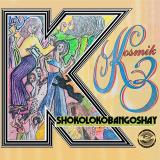
Shokolokobangoshay was a collaboration between three members of Pogo Ltd. The three of us felt we were crazier than the other members of Pogo Ltd. and decided to work together on the Kosmik 3 album. Robo was worked in the graphics department of NTA Benin. He was an amazing artist, a crazy guy, he was extremely creative, he invented a musical notation language that only he understood. He was amazing, he took me to his place in Asaba and showed me his compositions, he must have had over 500 songs.
Emman Osagie was my floor manager when I was a producer at NTA (Nigerian Television Authority) Benin. We were all on the same wavelength. He was a member of Severe 7, and heavily involved in the Bini music scene working with Ehi Duncan and others. we really enjoyed making Shokolobangoshay, it’s a river of influences, a bit of this, a bit of that, but it is really our thing. The musical ideas we were playing with at the time.
Emmanuel Ogosi. 3rd March 2026.
This record is why I went into reissuing records with Odion. The feeling to sharing records that went under the radar when they were initially released, with a greater audience. Shokolokobangoshay is uniquely Nigerian in a very personal way, it makes references to the societal and political ills that plague us in Africa. It’s title, Shokolokobangoshay, references a play song, kids in Lagos and western Nigerian sing when they play in the streets. Most Nigerians can relate. The music references afro beat, country music, reggae without falling firmly on any side. This is one for the ages. Amazing production, I personally love this record for the free spirit, creativity and excellent song selection. We had to licence it, we just had to. Limited repress only 500 copies.
It is also excellently produced. Big up to all involved, from the Vinyl Rip (James Law, Fidgit Studio, South Africa), to the master production by DJ Simbad (Cape Town, SA) and the cover restoration by Angelo Mitchell (SA). I am so happy to be doing it with the boys in the motherland. Peace and appreciation to all. Special dedication to Mother Tongue for creating a great pressing. Please file under Afro.
Blessings,
Temitope Kogbe, Odion Livingstone
En el almacen y preparando para el envío

"After being praised as one of the best releases of 2025 by multiple platforms, the highly praised debut album from Obeka lands on vinyl via YUKU.
The rhythmic dynamics and emotive attitudes of A World No More captures the density of soundsystem culture in Obeka's ancestral roots. YUKU presents the Bermudians debut album capturing a Neo-Colonial dystopia, protest and Afro-Futurism hyperextended through decaying sonic structures of a dark past and its grievances which very much exist today.
Growing into adulthood within the walls of British and European Colonial systems meant the disconnection and lostness in a new country hid me from the world at a young age. Unlike London's vast and culturally engaging migrant communities, the industrial milling town of Stockport introduced a coldness towards people from other countries I experienced in my first year after relocating from Bermuda. I couldn't understand why. Whether cold words thrown towards me or actions upon other people who look like me, it has shown to be a dooming societal virus with no cure. The most comfort was found through what was familiar - drums and rhythmic spirituality of my homeland. It was a safe-haven, a place to empty the anger and confusion. It's been 15 years since relocating and as my sound evolved, it seems classism, racism, oppression and civil control of ethnic peoples has become worse - even now more legalised and normalised. Ogun (a powerful Yoruba deity associated with anger, justice and war) acts as the opening sequence of the record and its symbolism. Using distorted bass frequencies and dissected Regga-Dub immersed in live-sampled ghostly voices of the lost ones. This sonic exercising is also applied in Drillaman - a stampede of industrial framework and metallic instruments wielded over moody Dancehall MC'ing, magnifying two parallel worlds in cocooned evolution. The resurrection of Transatlantic African cultures and identity have never been silenced, rather carried elsewhere through trade routes of enslavement, which was pivotal when composing and completing the album upon returning home to the Caribbean for the first time ever. After reconnecting with my heritage my blurred vision of what's wrong in the world became so clear. Guidance in empty plains seek truth throughout the pain - A statement of finding oneself expressed on the poetic closing track A World No More.
On Fawohodie (A West African Adinkra symbol that represents independence, freedom, and emancipation stamped on the album cover) the motive and atmosphere begins to change. Afro-Caribbean idealism which refers to the philosophical concept that emphasizes the interconnectedness of individuals and the importance of community, often contrasting with Western individualism, begins to take shape in a new universe. We can co-exist. The track framework uses machine-led software forming frequencies we have no control over, then manipulated through decomposing soundscapes, scattered hand-drums and human-made weapons of control - exposing the hidden disparity that's been carried over generations whilst balancing hopeful and musical foundations towards equality and peace. On Pressure and Kuduro! the writing direction attempts to wake people up. Not settling for a composed approach like in past projects, quite the opposite. A call for native sonic awareness, dismantled vocals of protests, eroded percussion using chains, gears and motorised harmonies sculpted in challenging abstract behaviors far outside my comfort zone. A direct abrasiveness and weight I want people to feel, whilst finding hope and solace through enchanting choirs and hypnotic basslines in complete synchrony.
"Purity in sound manifests when you least expect it. The smallest memory or feeling grows from a seed into a sonic language that you, and only you can interpret and release back into the world." "
En el almacen y preparando para el envío
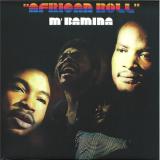
Gatefold Sleeve
M’Bamina – African Roll (1975)
The story of an album born between Africa, Italy, and the nightclub culture of the 1970s
In the heart of 1970s Italy — a country undergoing profound social change and a music scene just beginning to open itself to distant sounds and cultures — an extraordinary, almost improbable story took shape. It is the story of a group of young African musicians who found their way to Europe, of a Turin nightclub that became a crossroads for communities and experimenters, and of an album which, released in small numbers and largely unnoticed at the time, is now considered a rare jewel of Afro-fusion.
The band called themselves M’Bamina — an ensemble of musicians from Congo, Cameroon, and Benin, who arrived in Italy in the early Seventies. Settling between northern Italy and the Pavia area, they began performing in small clubs and community events, bringing with them a vibrant rhythmic heritage: African polyrhythms, call-and-response vocals, funk-infused bass lines, and Caribbean or Afro-Latin colours absorbed along their musical journeys. Their raw, contagious energy on stage quickly drew attention.
Meanwhile, in Turin, another story was unfolding. There was a venue becoming almost legendary: Voom Voom, one of the city’s liveliest nightclubs, run by Ivo Lunardi. The club attracted an eclectic crowd — students, artists, foreigners, night owls — and Lunardi quickly understood that the dancefloor wasn’t just a place for music, but a melting pot for a new kind of cultural energy. Out of this vibrant atmosphere came his idea: to turn the club’s name into a small independent record label, Voom Voom Music, capable of capturing the spirit of those years and giving voice to unconventional projects.
When Lunardi heard M’Bamina, he immediately sensed that this was the sound he had been searching for: fresh, different from anything circulating in Italy at the time, and capable of blending African tradition with funk and European sensibility. He brought them into the studio.
Production was handled by Lunardi along with Christian Carbaza Michel, while the engineering was entrusted to Danilo Pennone, a young sound technician with a sharp, intuitive ear.
The recording sessions — held in Turin in 1975 — produced a remarkably warm and direct sound. The music feels almost live: grooves rooted in African tradition, but open to funk-rock structures and modern arrangements. It is a natural fusion, never forced. Tracks move between tribal rhythms, funk basslines, light electric guitars, congas and Afro-Latin percussion, with call-and-response vocals and melodies that echo both Congolese tradition and the lineage of Latin jazz. Not by chance, one of the album’s most striking tracks, Watchiwara, reinterprets a Latin standard through M’Bamina’s own rhythmic language.
The album was titled African Roll — a name that was already a statement of intention. It is African music that “rolls,” that moves, adapts, transforms within a new geographic and cultural setting. It is not strictly Afrobeat, nor Congolese rumba, nor Western funk: it is a spontaneous, hybrid blend, shaped more by lived experience than by any calculated aesthetic program.
When African Roll was released, the world around it barely noticed. Distribution was limited, and 1970s Italy had yet to develop a cultural framework for receiving such music. The national music press rarely paid attention to African or “world” productions. The album slipped into silence — though the band’s own story did not.
M’Bamina continued performing across Europe and Africa, even sharing a stage in Cameroon with none other than Manu Dibango. By the late Seventies, they moved to Paris, signed with Fiesta/Decca, and recorded a second LP, Experimental (1978). Meanwhile, the peculiar record they had made in Turin began to resurface quietly among vinyl collectors, Afro-funk enthusiasts, and DJs hunting for forgotten grooves.
That is when the album’s fate began to shift.
Over the decades, African Roll emerged as an almost unique document: a snapshot of an intercultural Italy before the word “intercultural” even existed, a fragment of migrant history, a spontaneous experiment in musical fusion born far from major industry circuits but rich in authenticity. Original copies began commanding high prices on the collector’s market, and the album became recognized as one of the hidden classics of European Afro-fusion from the 1970s.
Today, more than fifty years later, this reissue finally restores visibility and dignity to a project that deserves to be heard, studied, and celebrated. It is not simply an album: it is the testimony of a rare cultural encounter, born in an Italy unaware of how fertile such exchanges would one day become.
It is the story of a visionary producer, an extraordinary band, and a fleeting moment in which music, migration, and nightlife came together to create something genuinely new.
African Roll is — now more than ever — the sound of a bridge: between continents, between eras, between cultures. A record that, after rolling far and wide, has finally come home.
En el almacen y preparando para el envío

Daniele Baldelli
"A pleasant surprise to find in this release various atmospheres and sounds that have always been part of my DJing. It even made me rediscover M’Bamina, whom I used to play back in 1974 at the Tabù Club in Cattolica.
There are afro vibes as well, with Black Line – Myele, which is featured on one of my Cosmic tapes, and Nowhere by the Stratosferic Band recalls a track I used to play at the Baia degli Angeli…
Excellent work!"
Voom Voom Music was an independent Italian record label based in Turin, founded and managed by record producer Ivo Lunardi (Turin, December 6, 1940 – December 9, 2010). A pivotal figure in the Piedmont music scene, Lunardi was active both as a DJ and as the owner of several disco clubs.
The label operated for several years in the latter half of the 1970s, releasing mainly productions connected to the Italian dance and pop scene.
Since 2016, the original master tapes from the Voom Voom Music catalog have been owned by Gianluca Pandullo (I-Robots), a close friend of Ivo and Luca Lunardi. Through his labels Opilec Music and Turin Dancefloor Express, Pandullo oversees their preservation and historical enhancement.
The artistic direction of Voom Voom Music was marked by a distinct sonic identity — eclectic yet visionary. The Turin-based label founded by Ivo Lunardi embraced a sound that blended disco, pop, and rock influences, interwoven with African American grooves in a pioneering, international perspective.
Voom Voom Music was among the first Italian labels to introduce this kind of musical language in the country. A prime example is the Italian edition of the debut album by B.T. Express, Do It ('Til You're Satisfied), released in LP, 8-Track Cartridge, cassette, and 7" single formats.
The label’s productions clearly reflected the influence of black and funk music, as evidenced by the references and inspirations running through its catalogue. The track “Lady Pick-Up”, for instance, includes direct nods to “Do It Good” by KC & The Sunshine Band and Manu Dibango’s iconic “Soul Makossa”, revealing a musically refined and contemporary sensibility.
Among the label’s most representative works is Splash (1977) by the Stratosferic Band, a project conceived by Luigi Venegoni — producer, songwriter, and guitarist of Arti e Mestieri. Venegoni’s artistic journey spanned from progressive rock to space and Italo disco. The album artwork was designed by Piero D’Amore (1944 - 2022), a charismatic and multifaceted figure of Turin’s art scene (one of his works was even acquired by the MoMA in New York).
The record includes a disco reinterpretation of Van Morrison’s classic “Gloria”, and “Splashdown”, a track fusing the disco-rock energy of Rockets and Space. In contrast, “Nowhere” revisits the 1975 single by Hokis Pokis, a soul/disco band from Nassau County (New York), transforming it into a vibrant disco-funk number.
Another significant expression of the label’s catalogue is the afro-rock sound of M’Bamina, an Italo-Congolese group whose rhythmic energy and dialogue between African percussion and Western funk evoke the style of international formations such as Osibisa — themselves linked to a rich artistic history in Italy.
En el almacen y preparando para el envío

Limited run 10” vinyl, arrives in risograph printed cover, with additional insert.
Elijah Minnelli returns to Accidental Meetings, following stand out records for FatCat Records, ZamZam & his own BCC imprint, which have garnered support and AOTY charts from The Guardian, The Quietus and The Wire to mention a few.
Minnelli has a unique dub-wise take, fusing eastern & western folk influences with cumbia and earthy drones, cumulating in his own distinct sonic world and his ever evolving lore. Within Ball & Socket, Minnelli pushes his own vocals to the forefront for the first time, compared to the more accustomed background approach previously. The record also sees a collaboration with Osaka's Kiki Hitomi (Waqwaq Kingdom, ex King Midas Sound) on Unkind, the two intertwining throughout. Fans of the pairing will be happy when it gets a re-up halfway through on the Discomix.
Ball & Socket is a personal record on many a level for Minnelli, and the result ends up as one of his most beautiful body of works yet. It finds it's home on the Bristol imprint Accidental Meetings, four years after his first outing on the label.
Design by Oliver Kay, photography by Aleksandra Sandakow, printed & assembled by The Error Press.
En el almacen y preparando para el envío
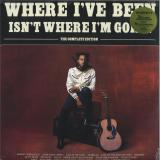
Rising multi-media artist Shaboozey intends to build his own world.
Determined to carve his own lane in the Alt-Country / Hip-Hop space; he crafts a sound that pays homage to a cast of traditional Western influences, such as Bob Dylan, Lead Belly, Johnny Cash, and Leonard Cohen, while looking into the future of what the two genres have yet to introduce.
Remaining true to his Virginia roots, Shaboozey hopes to continue the region’s long-standing tradition of producing some of the most prolific creatives of the new millennium. This time through elevating the scope of contemporary hip-hop and introducing a modern Americana culture to a global audience.
Fresh off of his inclusion in the groundbreaking Beyonce album, Cowboy Carter, of which he was the only featured artist to appear twice, Shaboozey is set to release his own album, Where I've Been, isn't Where I'm Going. An album that has been years in the making, it includes standout singles “Let It Burn,” “Vegas,” “Anabelle,” & the infectiously fun singalong anthem “A Bar Song (Tipsy).” Millions of streams later, and appearances on esteemed programs such as COLORS and The Late Show with Stephen Colbert, Shaboozey is set to become the new face of modern American country music.
En el almacen y preparando para el envío
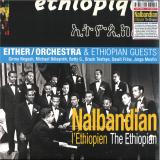
The Éthiopiques series returns! Essential archive recordings from an extremely fruitful period in Ethiopian music.
Before “Swinging Addis” took over the world, there was Moussié Nerses Nalbandian — the Armenian-born composer who shaped modern Ethiopian music. Mentor, arranger, and pioneer, he laid the foundations of Ethio-jazz.
This Éthiopiques volume revives his forgotten legacy, recorded live by Either/ Orchestra First issue ever with new exclusive photos and in depth liner 8-page insert.
“Ethiopian jazzmen are the best musicians that we have seen so far in Africa.
They really are promising handlers of jazz instruments.”
Wilbur De Paris
(1959, after a concert in Addis Ababa)
አዲስ፡ዘመን። *Addis zèmèn* **A new era.**
The time is the mid-1950s and early 1960s, just before "Swinging Addis" bloomed – or rather boomed – onto the scene. Brass instruments are still dominant, but the advent of the electric guitar, and the very first electronic organs, are just around the corner. Rock’n'Roll, R’n’B, Soul and the Twist have not yet barged their way in. Addis Ababa is steeped in the big band atmosphere of the post-war era, with Glenn Miller's *In the* *Mood* as its world-wide theme song, neck and neck with the Latin craze that was in vogue at the same period. Life has become enjoyable once again, with the return of peace after the terrible Italian Fascist invasion of Ethiopia (1935-1941). The redeployment of modern music is part and parcel of the postwar reconstruction. *Addis zèmèn* – a new era – is the watchword of the postwar period, just as it was all across war-torn Europe.
The generation who were the young parents of baby boomers** were the first to enjoy this musical renaissance, before the baby boomers themselves took over and forever super-charged the soundtrack of the final days of imperial reign. Music is Ethiopia's most popular art form, and very often serves as the best barometer for the upsurge of energy that is critical for reconstruction. Whether it be jazz in Saint-Germain-des-Prés or the *zazous* who revolutionised both jazz and French *chanson* after the *Libération*, be it Madrid's post-Franco Movida, or Dada, the Surrealists and *les années folles* that followed World War I, the periods just after mourning and hardship always give rise to brighter and more tuneful tomorrows. Addis Ababa, as the country's capital, and the epicentre of change, was no exception to this vital rule.
**Two generations of Nalbandian musicians**
Nersès Nalbandian belonged to a family of Armenian exiles, who had moved to Ethiopia in the mid-1920s. The uncle Kevork arrived along with the fabled "*Arba Lidjotch*", the** "*40 Kids*", young Armenian orphans and musicians that the Ras Tafari had recruited when he visited Jerusalem in 1924, intending to turn their brass band into the official imperial band. If Kevork Nalbandian was the one who first opened the way of modernism, pushing innovation so far as to invent musical theatre, it was his nephew Nersès who would go on to become, from the 1940s and until his death in 1977, a pivotal figure of modern Ethiopian music and of the heights it. Going all the way back to the 1950s. Nothing less. And it is Nersès who is largely to thank for the brassy colours that so greatly contributed to the international renown of Ethiopian groove. While the younger generations today venture timidly into the genealogy of their country's modern music, often losing their way amidst a distinctly xenophobic historiographical complacency, many survivors of the imperial period are still around to bear witness and pay tribute to the essential role that "Moussié Nersès" played in the rise of Abyssinia's musical modernity.
Given the year of his birth (15 March 1915), no one knows for sure if Nersès Nalbandian was born in Aintab, today Gaziantep (Turkiye/former Ottoman Empire) or on the other side of the border in Alep, Syria... What is certain is that his family, like the entire Armenian community, was amongst the victims of the genocide perpetrated by the Turks. Alep, the place of safety – today in ruins.
Before Nersès then, there was uncle Kevork (1887-1963). For a quarter of a century, he was a whirlwind of activity in music teaching and theatrical innovation. *Guèbrè Mariam le Gondaré* (የጎንደሬ ገብረ ማርያም አጥቶ ማግኘት, 1926 EC=1934) is his most famous creation. This play included "ten Ethiopian songs" — a totally innovative approach. According to his autobiographical notes, preserved by the Nalbandian family, Kevork indicates that he composed some 50 such pieces over the course of his career. This shows just how much he understood, very early on, the critical importance of song as Ethiopia's crowning artistic form. Indeed, for Ethiopian listeners, the most important thing is the lyrics, with all their multifarious mischief, far more than a strong melody, sophisticated arrangements or even an exceptional voice. (This is also why Ethiopians by and large, and beginning with the artists and producers themselves, believed for a long time — and wrongly — that their music could not possibly be exported, and could never win over audiences abroad, who did not speak the country's languages).
Last but not least, one of Kevork's major contributions remains composing Ethiopia's first national anthem – with lyrics by Yoftahé Negussié.
Nersès Nalbandian moved to Ethiopia at the end of the 1930s, at the behest of his ground-breaking uncle. Proficient in many instruments (pretty much everything but the drums), conductor, choir director, composer, arranger, adapter, creator, piano tuner, purveyor of rented pianos,... he was above all an energetic and influential teacher. From 1946 onwards, thanks to Kevork's connexion, Nersès was appointed musical director of the Addis Ababa Municipality Band. In just a few years, Nersès transformed it into the first truly modern ensemble, thanks to the quality of his teaching, his choice of repertoire, and the sophistication of his arrangements. It was this group that would go on to become the orchestra of the Haile Selassie Theatre shortly after its inauguration in 1955, which was a major celebration of the Emperor's jubilee, marking the 25th anniversary of his on-again-off-again reign.
At some point or other in his long career, Nersès Nalbandian had a hand in the creation of just about every institutional band (Municipality Band, Police Orchestra, Imperial Bodyguard Band, Army Band, Yared Music School…), but it was with the Haile Selassie Theatre – today the National Theatre – that his abilities were most on display, up until his death in 1977. To this must be added the development of choral singing in Ethiopia, hitherto unknown, and a sort of secret garden dedicated to the memory of Armenian sacred music, and brought together in two thick, unpublished volumes. Shortly before his death (November 13, 1977), he was appointed to lead the impressive Ethiopian delegation at Festac in Lagos, Nigeria (January-February 1977).
His status as a stateless foreigner regularly excluded him from the most senior positions, in spite of the respect he commanded (and commands to this day) from the musicians of his era. Naturally gifted and largely self-taught, Nerses was tirelessly curious about new musical developments, drawing inspiration from the very first imported records, and especially from listening intensely to the musical programmes broadcast over short-wave radio – BBC *First*. A prolific composer and arranger, he was constantly mindful of formalising and integrating Ethiopian parameters (specific “musical modes”, pentatonic scale, and the dominance of ternary rhythms) into his “modernisation” of the musical culture, rather than trying to over-westernise it. It even seems very probable that *Moussié* Nerses made a decisive contribution to the development of tighter music-teaching methods, in order to revitalise musical education during this period of prodigious cultural ferment. Flying in the face of all the historiographical and musicological evidence, it is taken as sacrosanct dogma that the four musical modes or chords officially recognised today, the *qǝñǝt* or *qiñit* (ቅኝት), are every bit as millennial as Ethiopia itself. It would appear however that some streamlining of these chords actually took place in around 1960. It was only from this time onward that music teaching was structured around these four fundamental musical modes and chords: *Ambassel*, *Bati*, *Tezeta* and *Antchi Hoyé*. A historical and musical “details” that is, apparently, difficult to swallow, especially if that should honour a *foreigner*. Modern Ethiopian music has Nersès to thank for many of its standards and, to this day, it is not unusual for the National Radio to broadcast thunderous oldies that bear unmistakable traces of his outrageously groovy touch.
En el almacen y preparando para el envío
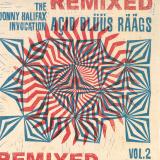
‘Açid Blüüs Räägs Vol.2’ is the latest evolution of the sound of last year’s Volume 1. The debut album was described by Joe Banks for Shindig! Magazine as; “Shivering slabs of drone blues transcendentalism…a burning junkyard of sheet metal blues… Hot stuff.” Volume 2 builds on the skronk blues guitar, sax and electronic drones of it’s predecessor, to explore cosmic free jazz, concrete exotica and dub, channelling influences of Moondog, Terry Riley, 75 Dollar Bill and Wolf Eyes. Playing like the imagined film soundtracks to a dystopian, re-wilded, post eco crash world in the style of Tarkovsky's ‘Stalker’ and ’Solaris’, Jodorowsky's surreal desert western ‘El Topo’, or the early novels of JG Ballard. This new collection sees the addition of minimal analogue drum machine loops as well as live instrumental contributions from the new players of the ever evolving Invocation band, plus some superstar guest contributors.
Featuring five brand new tracks, including the forthcoming single; ‘Cosmic Fanfare’, has already picked up BBC 6 Music support from Gideon Coe. The new album was mixed by Alex McGowan (aka Captain Future) of Space Eko Studios and features Invocation band regulars Rick Jensen of Apocalypse Jazz Unit, Skronk and Oneirologist on sax and bass clarinet, Will Emms aka Tiki Eerie on melodica, horns and claviola, plus special guest appearances from Duke Garwood on clarinet and Mikey 'Moondog' Chestnut of Snapped Ankles on bass synth. “….Acid fried kosmiche blues meets drone raag transcendentalism”. Jonny Halifax is a primitivist free blues outsider, sonic shaman of the acid fuzzed lap steel guitar, demented blower of the howling harmonica of doom. His new band project now combines avant swamp blues heaviosity with kosmic free jazz experimentalism in a fluid collective of godless raag brut improvisations - sonic visions of an hallucinatory apocalyptic near future. Inspired by Henry Flynt’s avant bluegrass experiments fusing country blues with eastern acoustic musical stylings, Spacemen 3’s contemporary sitar music, and the monolithic drone doom immersion of Sunn 0))), THE JONNY HALIFAX INVOCATION build hypnotic instrumental soundscapes using lap steel and homemade slide guitars, harmonica and alto sax. Underpinned by layers of acoustic and electronic drone instruments and fed through an arsenal of pedalboard electronics that would make Kevin Shields weep, the blues are transmogrified, unhinged, reduced and re-imagined as intoxicating, trance-inducing, feedback-drenched noise paintings. THE JONNY HALIFAX INVOCATION follows Jonny’s junkshop skronk blues one man band Honkeyfinger, and the Julian Cope endorsed gospel fuzz psychedelia of Jonny Halifax & The Howling Truth, whilst not forgetting his ambient drone metal side project; Deathenteredinerror. His musical CV also includes studio contributions to tracks by Andrew Weatherall’s Two Lone Swordsmen, UK metal behemoths Orange Goblin, Heck and Melting Hand.
En el almacen y preparando para el envío

This compilation features tracks released between 1978 and 1988 in Western France.
Through this compilation, we strove to highlight a little-known regional scene, characteristic of the diverse and sometimes opposing music movements of the 80s. Through this musical journey across the Brittany, Normandy, and Pays-de-la-Loire regions, we sought to showcase a resolutely indie aesthetic, sometimes conceived in some of France’s most unusual studios, such as a bunker and a caravan.
We’ve found it difficult to make attribute an established, well-defined genre to some of the tracks featured on this compilation. They draw, each in their own way, from the rock scene that dominated the 80s in France, from countercultures, from American stars who shone on the country’s radio stations and in its record stores, and even from local folk music.
While one could hear an harmony across the tracks featured on Le Grand Ouest, channeling this manifold energy onto a record required extensive research through the Brittany, Normandy, and Pays de la Loire regions’ discographies. Over the three years since the release of Le Grand Sud-Est, we have meticulously researched the references of artists, musicians, studios, labels, and publishers from each region. We sought to trace each artist to identify and listen to all their works from that period, and, when possible, collect unreleased recordings, left as demo cassettes on the artists' dusty shelves.
The synthesis of this research, presented here under the title Le Grand Ouest, hopes to remind us of the timelessness of the indie scene in our country, through the lens of the 80s Western France’s scene. Whereas Le Grand Sud-Est exhibited the funkiest sides of the Provençale and Rhône-Alpes scene, Le Grand Ouest leans towards a more mellow, introverted music, an expression of groups of friends united by the joy of playing together.
The first 500 copies of the record come with an extensive booklet with unpublished photos, press clippings, and texts for each track.
En el almacen y preparando para el envío

Their newest release “For Barney, Who Was A Bad Dog, But A Good Boy, And Very Much Loved” comes from Brooklyn-based Dekalb Works (debut ‘Duologue’ on Where To Now? Records), the collaborative project of Austin Peru (Vision Fortune) & Daniel Creahan (Sweat Equity / Alien D).
The release summarizes a series of experimentations between live performance contexts and sample-heavy collage work. Since starting their residency on Radio alHara, Dekalb Works found themselves drawn to the act of performing, whether as a live act or DJing, and the space between these two often overly rigid modes.
“For Barney…” draws heavily on the sonic palette of American country and western music, treated through the lens of heavy studio processing and the production techniques of dub, ambient, and trip-hop. Recording hours-long live improvisations with guitar, piano, or drum machines and samplers, they pillaged these sessions as source material. Whereas previous work focused on the voice and the interaction of text, voice and music, these recordings pulled from the sounds of musicians playing together in a room. The arrangement process remains the same, chopping and manipulating small samples and momentary gestures into dense, rhythmic collages.
En el almacen y preparando para el envío

When the first cargo ships from Western Europe docked in Klaipėda after the fall of the Iron Curtain, no one could have imagined that a completely new and unknown musical culture would arrive in Lithuania along with them. It was the first city in this country to get a taste of what was then called electronic rave music. This is why it is unsurprising that the most iconic Lithuanian electronic music band of the 1990s was born in Klaipėda, the port city of this country.
The first release from Lizdas Records is a nod to the past. Because if it weren’t for EXEM and their legendary tracks, which even made their way into the mainstream media in those days, today’s Lithuanian electronic music scene would be completely different.
En el almacen y preparando para el envío

Fruit Express is here! This is their debut EP and "they" are Roma and Madis. A mellow electronica producer meets multi-instrumentalist and old time guitar hero. The outcome? Funky shit with its roots in dub and what seems like some smoky country music.
The title track is prominently catchy & poppy, while "Harlan County Line" crosses the border jamming away with a heavy spaghetty western feel. "Samurai" jam holds the mystique levels high, all spacey and mushy in its dub sauce.
The 12" is spotlessly sewn together by Tapes who throws the original "No Secret" into a 8-bit blender and out comes... well a sensational 8 bit version "The Secret"."
En el almacen y preparando para el envío

Two years after his acclaimed ‘Darkos LP’, Jonquera is back to Charlieu’s surrounding vales for his second album on Bamboo Shows.
Through ‘La Croix des Cros’, the French Musician delivers a loner-folk eclogue about the fantasized inner demons of a country dweller. Just like clay, audio recordings here are a malleable substance, slowly reworked over a year, following a sinuous production process where all mishaps are welcomed as breaches to step into.
Far from the spaghetti western myth of the reckless bounty hunter, riding his faithful horse in the great outdoors to spill blood; this 14-track album is the grieving lament of a wistful cowboy, longing for a simple patch of peace where one’s free to cultivate the earth and noodle on the guitar.
Heldon’s cosmic space-rock, Badalamenti’s Twin-Peaksesque foggy jazz or Morricone’s glorious soundtracks, so many references to portray another fertile imprint by Jonquera, available from February 13, 2023 on a 12” vinyl.
En el almacen y preparando para el envío

German-Syrian band Shkoon will release their long-awaited debut album “Rima”, sending out a message of cultural diversity to the world. Shkoon’s concerts have attracted a diverse audience for many years, bringing together people of all religions, colors and backgrounds. For their album-tour through Germany and Switzerland, stops in Berlin, Hamburg, Cologne, Munich and Zurich are planned.
Musically, the album is situated between influences of electronic downbeat, deep house, dub and hip-hop. The band members come from a variety of different musical backgrounds and have created their very own sound with a mix of influences between the Arabic and Western world. Piano, violin, synthesizers, percussion and vocals merge oriental melodies with western electronic beats, taking the listener on a journey that blurs the boundaries of cultures.
Shkoon is more than a German-Syrian live act with Arabic lyrics. In addition to their own lyrics, the band uses traditional musical folklore elements of the Arab community, which today appear more relevant than ever. The title song of the debut album is inspired by a story from Arabic folklore, in which a mother tells peaceful tales to her child as the world sinks into chaos. This song is accompanied by the singer and rapper Tareq Abu Kwaik, also known as "El Far3i", by the band
47Soul.
After the war in their home country drove the two Syrians to relocate to Germany, Ameen, Thorben and Maher met in the hanseatic city of Hamburg in 2015. During a spontaneous jam session, an unexpected energy and thus the project Shkoon emerged, which was soon followed by the release of the band’s very first EP a few months later.
During the first performances of Shkoon, a spark quickly jumped over to the audience, which soon allowed the group to play major festival stages all over Europe. Even as Shkoon’s musical expression knows no boundaries, it is not easy for the band to travel other countries, as Ameen (the vocalist) and Maher (the violinist) consistently face difficulties of getting visa documents due to their refugee status.
This is particularly lamented in Arab countries, where the band has long been celebrated as stars, for example when they played a sold-out show in Beirut for an audience of more than 3,000 people. But also in Europe, especially in Germany, there is immense enthusiasm in their fans-base is huge.
En el almacen y preparando para el envío

Acclaimed harpist and songwriter Mikaela Davis’ new album, Graceland Way (due TK via Kill Rock Stars), builds an expansive, kaleidoscopic neo-western dystopia from the cozy origin point—that duality compounded by a subtle exploration of light and dark, grace and struggle, rose and thorn, as well as the mystical power found at their meeting points. The “canyon country” epic born of that work is indebted to the titular street in Chevy Chase Canyon where she recorded the album, the lineage of Laurel Canyon, the mythos of Elvis’s Graceland, and Paul Simon’s restless reinvention. “At the end of the journey, the place you were destined for all along isn’t even a place, it’s a state of mind: Graceland Way,” Davis says. Featuring an unreleased Cass McCombs track (Mizmoon) as well as contributions from Karley Hartzman (Wednesday), Tim Heidecker, Madison Cunningham, Neal Francis, James Felice (The Felice Brothers), Clay Finch (Mapache) & Hannah Read.
El artículo no se ha publicado. Tú puedes reservar ahora el artículo y después de ser pagado se te será enviado.

Death Is Not The End present the first volume in a survey of a form of Brazilian country music known as música caipira ("hillbilly music") - a stripped-back forerunner to música sertaneja, the Brazilian equivalent to US country & western which in it's contemporary form has come to dominate the domestic music industry in recent decades. This collection covers some of the earliest recordings made by the pioneering folklorist Cornélio Pires at the end of the 1920s, through to records from the 30s, 40s & 50s and the beginning of the 60s.
Somewhat rooted in Portuguese troubadour folk traditions, música caipira is typically performed by a duo singing in parallel thirds and sixths, drawing upon a Portuguese-Brazilian style known as moda de viola - with the viola being the viola caipira, a Brazilian-style ten-string guitar that is the core instrument of the music. Born out of the "outback"-style region in north-eastern Brazil, these songs tell stories of pain, love, loss & betrayal - often backed by homemade guitars using invented tunings. Away from the polished pop country & western-stylings of the sertaneja, these recordings could be viewed as the Brazilian equivalent to the roots music of the American dustbowl or Appalachia.
debe ser publicado en 21.09.2026
Dublin-born, thirty years an immigrant. That's the spine of henryohenry's debut, Apocrypha, not as a concept but as a condition. He's spent three decades in the United States working in the trades, absorbing the country's mythologies and building what he calls "an idiosyncratic American language" out of them, something closer to Whitman's vision than what he found. He is, by his own account, "formally and informally not a musician" — all but two of the songs were written on a $6 charity-shop guitar with a repaired headstock and strings that distorted unpredictably. It doesn't appear on the record. Produced by filmmaker Rick Alverson, the album is anchored by guitarist Eamon O'Leary and his son Ned Steves, recording together for the first time, without rehearsal. Erik Hall mixed and contributed overdubs; Emilie Rex of Lean Year lends harmonies to three songs; poet Callie Garnett appears on another. Album standout "There" captures something harder to name: how powerful feelings drive you to the page, and how the thing you make can outlast the feelings that made it. "It feels like a triumph over something," he says, "even if you're a bit embarrassed by some of the sentiment."
Apocrypha arrives as a debut but carries the patience of a life lived in full. For fans of John Cale, Nick Drake, Leonard Cohen.
debe ser publicado en 18.09.2026

Kitsune No Yomeiri, which translates to the fox’s wedding, is an endearing expression used to describe sunshowers. Dawson returned home from a recent tour of Japan with a collection of field recordings documenting the spring rain he encountered throughout his travels. These curious sounds, stretching from peaceful shrines to clattering city streets, underpin the material.
Dawson also credits the wonderful folks he met on that tour with profoundly shaping the direction of the album. After each show he found himself immersed in inspiring conversations about the guitar. Through navigating the language barrier, he discovered he was communicating with an immense sincerity that he would ordinarily avoid at all costs. “I’ve always just made records at home in a vortex, but this time it felt like those conversations were there with me in the studio.”
Musically the album has a slight western slant. It’s not country, but it does see Dawson lean softly into his prairie past. Constellations of stray notes and rusted tones form nostalgic melodies, like chance encounters between old friends. Dawson allows phrases and gestures to repeat across the record, resulting in a collection that’s more akin to turning the pages of a novel than a series of vignettes vying for attention.
debe ser publicado en 04.09.2026

Haga su pedido ahora y le encargaremos el artículo en nuestro proveedor.
