The Esbjörn Svensson Trio, e.s.t. for short, are still
celebrated today as one of the most important and
influential European jazz bands of the last 20
years.
In 1999, the three Swedes achieved their
international breakthrough with ‘From Gagarin’s
Point Of View’. A star rose in the musical sky and a
unique world career followed. But sometimes stars
shine for much longer than one thinks. On ‘e.s.t.
Live 95’ there are recordings that prove that this
was also true for the Esbjörn Svensson Trio.
The band, founded in 1993, found their very
specific sound early on but it was not initially
noticed outside its home country. In 1995, when
the trio’s namesake still wore long hair and a
headband, these recordings were made at various
locations in Sweden. And whoever hears how the
trio played back then is left breathless.
Much of what distinguishes e.s.t. was already
strongly pronounced here: the coherence and
powerful grip of the playing; the catchy themes that
immediately jump out at the listener and yet do not
become clichéd; the fusion of the music of role
models like Thelonious Monk and Keith Jarrett into
a style of their own, always infected by the forward
thrust of rock. Magical moments were saved for
eternity by these recordings.
Now this e.s.t. early work is available on double
vinyl.
ACT News
- Song From The Valley (Traditional)
- Calling The Goats (Traditional)
- Kauk (Traditional)
- Kristallen (Traditional)
- Mattmar (Traditional)
- Lakk (Traditional)
- Höpsi (Traditional)
- Calling The Cows (Traditional)
- Lullaby (Traditional)
- Simple Song (Traditional)
- Layers Of Light (Svensson, Esbjörn)
- Lonely At The Lakeside (Traditional)
- Norwegian Fox Trot (Traditional)
- Nils Walksong (Traditional)
- The Farewell (Wallin, Bengt-Arne)
Nils Landgren was born in 1956 and grew up with the music of his
father, a jazz cornetist, and the church music of his grandfather, a
pastor. He never lost his strong affinity for his own musical heritage.
Esbjörn Svensson, born in 1964, didn’t want to play folk music at first.
At home with the music of Chopin, Ellington, or disco-pop groups
such as The Sweet, the pianist had first found his place in the
competitive music scene in Sweden. His trio was a success and in his
homeland, he was voted Jazz Musician Of The Year in 1995 and
1996. The first sprinkling of jobs became a steady flow. Svensson
proved himself in the bands of his friend Nils Landgren. The music
was about funk and soul, occasionally pop and, in the main, classic
jazz. But not folklore.
It was through the influence of Landgren and Svensson’s former
teacher Bengt-Arne Wallin, who recorded the landmark album ‘Old
Folklore In Swedish Modern’ back in 1962, that Svensson and
Landgren were inspired to make a duo album centred around folk
songs. In August 1997, both went into the studio and, with only
trombone and piano, recorded ‘Swedish Folk Modern’. Their
improvised treatments of the classic songs of the folk culture not only
impressed the public; it brought praise from the press. Svensson and
Landgren had created more than just a few impressions in duo.
Discarding any sort of large conceptual superstructure, they had
continued what Jan Johansson’s Jazz på Svenska and Bengt-Arne
Wallin had begun in the early Sixties and what has since become a
major force within the inner workings of European jazz.
The time after ‘Swedish Folk Modern’ was hectic and exciting. Nils
Landgren’s Funk Unit advanced to the position of a celebrated festival
act. Svensson’s own trio, E.S.T., expanded beyond Scandinavia’s
borders, where the band’s fortunes skyrocketed. Inundated with jobs,
the musicians finally found the time to once again get together, in
December 1999 in Oslo’s Rainbow Studio. It would be a meeting full
of exceptional jazz energy. Even more than the first time, they would
rely on the force of reduction. Moods would be suggested, left open.
Melodies worked out in simple clarity. Delicate variations
supplemented and amplified both the original and traditional motifs of
the central musical im- pressions. ‘Layers Of Light’ is an affair of the
hearts of two artists who went back to their roots. That makes their
music truthful, direct and authentic in a wondrous way.
‘Paint It Blue’ is dedicated to the man who, for many still today embodies
the central figure at the genre’s source: Julian Edwin ‘Cannonball’
Adderley (1928 - 1975). Maybe he didn’t invent Funk. Together with his
co-musicians in his 60s quintet, Cannonball’s alto sax style, his attitude,
humour great musicality, and his love for his audience allowed him to
become a synonym for funk.
Nils Landgren, born in 1956, grew up between the music of his father, a
Jazz cornet-player, and the music of his grandfather, a pastor on the
island Gotland. He first heard Cannonball Adderley on ‘Kind Of Blue’. In
this Miles Davis Sextet of the late 1950s, they were all together: “Miles,
the master of beauty. Coltrane, the master of sound. And Cannonball
Adderley, the master of funk,” Nils Landgren writes in the liner notes to
‘Paint It Blue’. From that point on, he procured everything of
Cannonball’s that he could lay his hands on. “Without the soul of
Cannonball it would have been impossible to form my group Funk Unit
many years later,” he writes.
Landgren edited Cannonball’s live concert announcements into his own
arrangements, so that the time jump between the original and the
nouveau arrangement appears non-existent. An effective device that
literally brings this revered musician into the fold of Nils Landgren’s Funk
Unit.
Whoever speaks of Cannonball Adderley, must also speak equally of his
brother Nat Adderley. It was an obvious thought to invite the most
important brothers in Jazz after the Adderleys to guest on ‘Paint It Blue’;
with the high energy Funk-Jazzrock of the late 70s, the Brecker brothers
have proven worthy heirs to the Adderleys. Both of them solo on
Landgren’s track ‘You Dig’.
The equally noble and forcible groove is delivered by the sideman to
countless Soul greats, Bernard Purdie. Bernard’s own stylistically related
production with the Brecker Brothers, Nils Landgren, amongst others is
now strongly in the public consciousness on ‘Soul To Jazz’. Much like
Cannonball Adderley, Airto Moreira owes important impulses to his time
with Miles Davis.
‘Paint It Blue’ is possibly Nils Landgren’s most lavish record to date and
with some certainty also his best. Landgren’s playing is cool and smooth,
with warmth, temperament and thought. Here his sound combines
organically with everything he surrounds himself with. The album sounds
as if the recordings for it were a pure joy for all participants. Nils
Landgren has the prerequisite for serious fun, the gift of intelligent
serenity.
When hearing Anna Gréta at the piano, you become witness to an
astonishingly mature artist, with absolutely profound technique, a
complex understanding of style and harmony and an impressively
wide range of musical expression, who has made an extraordinarily
good name for herself in just a few years on the Scandinavian scene.
Over a period of two years, partly influenced by isolation, the twelve
compositions of ‘Nightjar in the Northern Sky’ emerged, for Anna
Gréta not only as a pianist but also as a singer.
The album title ‘Nightjar in the Northern Sky’ sets the tone for the
world of the album: A metaphor for the Scandinavian expanse,
tranquility and the close connection between people and nature, a
theme that runs through the songs in many pictures. “Nature is just an
enormous force in life. It is so much bigger than most of the other
things that otherwise seem so significant to us. And it is, in its infinite
facets, perhaps the greatest inspiration for my music. A place where
the noise falls silent and you can feel and hear yourself again,” before
adding: “Recently I have been developing a passion for bird-watching
- something that I reflect on in the title track. When you observe
nature carefully you can experience or see something unique. Sort of
like searching for love. The nightjar is a bird that is rarely seen flying
across the sky in Sweden and has been observed in Iceland less than
five times. I feel that everyone is looking for something unique in their
lives. And that nature can offer that to the ones open to see it.”
With each of the tracks on the album she creates little, self-contained
worlds that fit into a bigger picture. Light-footed, relaxed, reduced,
concentrated. An art that required a great deal of work and attention
to detail. Together with pop-experienced producer Albert
Finnbogason, Anna Gréta chose the perfect, hand-picked line-up and
sound for each of her extraordinarily refined - harmoniously and
rhythmically - compositions.
Although always in a coherent framework, Anna took elements from a
very diverse range of musical styles, alternating between jazz
elements and influences from pop music to excerpts from classical
and folk. All these elements create a remarkably multi-layered album,
which at the same time tells a coherent, bigger story.
CD in 4-page digipack with 12-page booklet.
180g vinyl with digital download code
- Tänk Att Få Vakna / Morning
- Has Broken (Traditional)
- Nature Boy (Eden Ahbez)
- A Minor (Nils Landgren)
- In A Sentimental Mood
- (Duke Ellington)
- Solitude (Duke Ellington)
- Värmlandsvisan
- (Traditional)
- Allt Under Himmelens Fäste
- (Traditional)
- Der Mond Ist Aufgegangen
- (Traditional)
- Nu Sjunker Bullret
- (Traditional)
- Din Klara Sol Går Åter Opp
- (Traditional)
- Som Stjärnor Små (Evert
- Taube)
- Den Blomstertid Nu
- Kommer (Traditional)
- Jag Lyfter Ögat Mot
- Himmelen (Traditional)
- Sov På Min Arm (Evert Taube)
“40 years ago my international career started for real when I got
a call from the musical mastermind Thad Jones, asking me to
join his new big band project Ball of Fire in Milan, Italy.
“Guess if I said yes!
“Since then I have walked winding musical paths and I still do.
“As the pandemic started to spread, I got stranded at home in
Skillinge Sweden from 13 March 2020.
“Many many months later, I can present something I’ve never
done before, a solo performance. Only me, myself and my
trombone in a beautiful-sounding church not far away from
where I live with my wife Beatrice, Ingelstorp Kyrka.
“I do not really know exactly when the idea got stuck in my head
but I guess around Christmas 2020. Having spent a strange but
personally wonderful year being at home, I suggested a solo
recording to my wife, and she thought it was a great idea.
“I called the priest in the church, named Maria, and she
immediately said ‘Yes, go for it. I will see to it that the church is
heated and ready for you.’
“The first time was almost a shock. Such a beautiful sound,
making the tone of my trombone just fly through time and
space. Beatrice and I looked at each other in silence, knowing
that this can become something special.
“I picked a wide range of songs and hymns for these occasions
and it felt very special to be able to record it in a wonderful room
with only one person in the audience, the one I love the most.
“All the songs have a special meaning to me, whether they are
songs I sang in church as a child or just picked them up on the
way. One is even written by one of my ancestors, Israel
Kolmodin.
“They present a side of me that is always there, but not always
to be seen. I hope you like it.
“Love, Nils.” - Nils Landgren
- My Mistress’ Eyes (Sonnet No. 130)
- When In Disgrace (Sonnet No. 29)
- Tired With All These (Sonnet No. 66)
- When Most I Wink (Sonnet No. 43)
- Sin Of Self-Love (Sonnet No. 62)
- As An Unperfect Actor (Sonnet No. 23)
- Mine Eye Hath Played The
- Painter (Sonnet No. 24)
- Let Me Not To The
- Marriage Of True Minds (Sonnet No. 116)
- How Like A Winter (Sonnet No. 97)
Birgit Minichmayr captures the imagination and holds centre-stage on
‘As An Unperfect Actor: Nine Sonnets by William Shakespeare’. This
won’t come as a surprise to people in the German-speaking world,
where the Austrian actor is well-known from countless appearances on
TV and a substantial filmography. Perhaps equally unsurprising is the
deep experience she can bring to Shakespeare: as an ensemble
member of the Burgtheater company in Vienna, she has repeatedly lived
out the searingly dramatic lives of the Bard’s characters, notably the
daemonic anger of Lady Macbeth, the sadness of Ophelia and even the
uncomfortable truths of the Fool in King Lear.
What might be more of a surprise, however, is the exhilarating musicality
she shows on this, her first complete album as a vocalist. One could
have predicted the crystal clarity, meaning and intent in her words - the
desolation in her voice in “the very birds are mute... the leaves look pale”
in Sonnet 97, for example. And yet there is more, much more, not least
Minichmayr’s uncannily instinct to find artful and felicitous ways to shape
musical phrases.
Composer/ pianist Bernd Lhotzky has provided a wonderful array of
musical contexts. As Minichmayr says: “He got so deep into the meaning
of each sonnet, his music made it different every time. And we talked a
lot about the colour, the meaning of each poem.” The opening track, ‘My
Mistress’ Eyes (Sonnet 130)’ is a masterfully deft piece of gender-fluid
irony. In the poem, a man is describing possibly the ugliest woman he
has ever seen - while also declaring that she is the one he loves.
Lhotzky gives us an acerbic version in that most male-led of dances, the
tango, complete with bandoneon, in which the words are sung by... a
woman. Minichmayr then gives a masterclass in how to end a song as
she hits, holds and nails the words “false compare” with triumphant
fearlessness.
Throughout the course of the album, we are magically transported to
new musical and emotional places. As Minichmayr says: “Through
singing, through just doing it, I was able to find deep love, or deep
sadness. I was really touched by it.”
One of the secrets to this album’s success is Lhotzky’s wish to find
melodies which have a certain ease and straightforwardness about
them. He says that he approaches all music - whether he is listening to it
or writing it - with one simple and direct question: “What story is this
telling me?” Lhotzky is known for his work in the field of early jazz, but
the range here is far broader, with allusions to such examples of fine
songwriting as Brassens, Robert Plant and James Taylor.
LP pressed on 140g black vinyl.
The Süddeutsche Zeitung hailed Johanna Summer’s performance
at the Young Munich Jazz Prize in 2018 as “a small sensation.”
The pianist, born in Plauen in Saxony in 1995, had encompassed
the whole gamut, from jazz freedom to classical rigour. The critic
from this respected newspaper marvelled at her “amazing gift to
make well-known melodies sound so convincingly her own, they
develop a real sense of creative urgency.” Summer’s winning of
the prize itself became almost incidental; far more significant was
the fact that this competition heralded the arrival of one of the
most interesting new pianists in European jazz.
For her debut album, Summer has chosen to make compositions
by Robert Schumann the point of departure for her journeys into
pianistic fantasy. Schumann’s cycles of piano pieces
‘Kinderszenen’ (scenes from childhood) and ‘Album für die
Jugend’ (album for the young) had been familiar to her since
childhood, not just as player and listener but also - because
Schumann was from nearby Zwickau - as works by someone from
her region of Germany. From an early age she was enchanted by
both the melodic and the pictorial aspects of these short pieces.
And yet, to make her own adaptations of seven of the pieces was
a far from a simple task: “I worked for a long time on re-casting
them, trying out all of the pieces in all keys and in a lot of different
time signatures, creating several miniature interpretations and
finally arrived at this selection, which I shaped into a cohesive
sequence with a single arc.”
The depth of her involvement with the original Schumann pieces
comes across strongly on the album. As does her impressive and
complex personality as a jazz musician with a very wide range of
expression: romantic passages and an instinct for melody but also
powerful grooves and exciting innovations. And all imbued with a
sense of how to tell stories through music, a mature and clear
vision of dramaturgy, dynamics, tension and atmosphere. A
sentence written by Schumann seems to predict exactly the kind
of new life that Johanna Summer has breathed into these pieces:
“How infinite is the realm of forms, with everything that can be
used and worked on for centuries to come.”
All music improvised by Michael Wollny, Emile Parisien, Tim Lefebvre
and Christian Lillinger (except ‘Nostalgia for the Light’, written and
arranged by Michael Wollny).
The music we hear doesn’t fit into any category. We’re in uncharted
territory, so a good way to capture its essence might be to break it
down into its four component parts. First there’s Michael Wollny, here
for the very first time playing only on electronic keyboard instruments.
He creates a characterful world of retro-futuristic sounds that is very
much his own. We find the occasional nod to early Jean-Michel Jarre,
references to science fiction and horror movies and also vivid
memories of the sounds of avant-garde Krautrock: Can and Irmin
Schmidt and Klaus Schulze.
As for Tim Lefebvre, here is a musician who has plied his very great
craft with stars such as David Bowie, the Tedeschi Trucks Band, John
Mayer, Knower, Steely Dan, Elvis Costello and Wayne Krantz. Here
he is like a rock in a tempestuous sea. He propels the music forward
with a combination of bass and effects. He builds structures and
tames unruly elements. The way he lays down a groove is
overwhelming.
As a counterbalance we find the explosive yet highly sensitive playing
of drummer Christian Lillin-ger. He stacks layer upon layer of rhythms
and textures.
And the melodic lines of Emile Parisien on soprano saxophone
always have an astonishing springy inventiveness. Such is Parisien’s
latent energy, it seems as if at any moment he could suddenly
become airborne.
The players’ eager curiosity as to what the next turn, the next
impulse, the next push will be is palpable to the listener. One can
sense the tension between the urge to construct forms, lines,
grooves, harmonies, textures, versus the illicit joy of tearing such
fragile structures apart before they have even been heard. There are
beats and patterns from the 90s, 80s and 70s, all coalescing into
cinematic bacchanalia of sound. These four master improvisers and
composers all have the urge to rewrite the rules of their musical world
- and to do so in real time.
LP pressed on 180g vinyl with digital download code.
- I Remember Clifford (Benny Golson)
- Pandemic Of Ignorance
- (David Helbock)
- Prelude In E-Minor, Op
- 28: No. 4 (Frédéric Chopin)
- Truth (David Helbock)
- Hymn For Sophie Scholl (David Helbock)
- Time After Time (Cyndi Lauper & Rob Hyman)
- Solidarity Rock (David Helbock)
- I Feel Free (Jack Bruce)
- On The Shore (Arne Jansen)
- Korona Solitude #1 (Sebastian Studnitzky)
- Angel Eyes (Matt Dennis)
- Surrounded By The Night (Peter Madsen)
“It was my wish to cool things down a bit,” says David Helbock. The
Austrian-born pianist has formed a new trio with guitarist Arne
Jansen and trumpeter Sebastian Studnitzky and it is clear when he
talks about it how far he has already moved on since his previous
group: “In the Random Control Trio we had a lot of instruments on
the stage, there was a lot of changing from one instrument to
another… and a lot of notes.” And the new group? “It is more about
emotions. And emotions are the most important thing in music.”
There are other differences too. Whereas Helbock’s previous groups
have consisted of musicians from his native Austria, he has now lived
in Berlin for five years, and ‘The New Cool’ presents his first group
formed with players who have also adopted Berlin as their home city.
With Arne Jansen, originally from Kiel, what appeals to Helbock is
that “he is such an unselfish player, very centred and very calm - and
subtle too. With him it’s all about the music.” Studnitzky is originally
from the Black Forest and Helbock liked “his style of playing with that
very airy sound” and the fact the range of timbres and moods he
creates with just one effects device. And how does it work in the
trio? “All three of us are melody players, but we are all capable of
holding back and giving space to the others.”
It would be wrong, however, to see the elegiac feel of much of this
album as a response to the pandemic. Helbock and producer Siggi
Loch were having “a productive and fruitful discussion” about these
ideas a full year before the recording sessions took place at the Emil
Berliner studios in August 2020. Loch has a fascination for the way
cool jazz “turned the wheel around” to connect with a wide audience
and references and connections with the cool jazz movement are
scattered throughout this album. It is also the very first time that
Helbock has included a tune by his teacher for over a decade,
American pianist Peter Madsen, who toured extensively with Stan
Getz and also taught Maria Schneider.
Helbock has been inspired by the innovations and concepts of Lennie
Tristano and his sense of affinity with the Chicago-born genius runs
deep. Tristano once decreed that “the jazz musician’s function is to
feel.” Helbock, Jansen and Studnitzky have taken that maxim to their
hearts.
LP pressed on 180g vinyl with digital download included.
- 01: Mosaïque Bleu (Leonhard Kuhn / Patricia Römer) Feat. Nesrine, Vocals / Nils Landgren, Trombone
- 02: Ai 101 (Leonhard Kuhn) Feat. Jelena Kuljić, Vocals / David Helbock’s Random/Control (David Helbock, Piano, Keys, Synthesizer & Fx / Andreas Broger, Tenor & Soprano Saxophone, Flute / Johannes Bär, Tuba, Trumpet, Beatbox & Didgeridoo) / Wolfgang Haffner, Drums
- 03: Make Craft Perform (Leonhard Kuhn) Feat. Viktoria Tolstoy, Vocals / Nils Landgren, Trombone
- 04: Green Sun (Theresa Zaremba) Feat. David Helbock, Piano, Keys, Synthesizer, Fx & Toys / Jakob Manz, Alto Saxophone
- 05: Der Literat (Leonhard Kuhn) Feat. Jelena Kuljić, Vocals / Jakob Manz, Recorder
- 06: Hurricane Ride (Andreas Unterreiner / Antonia Dering) Feat. Viktoria Tolstoy, Vocals / Kalle Kalima, Guitar / Wolfgang Haffner, Drums
- 07: What It Is (Leonhard Kuhn)
- 08: Decadence (Andreas Unterreiner / Antonia Dering)
- 09: Shuffling Steps (Leonhard Kuhn)
- 10: Green Sun Return (Theresa Zaremba) Feat. David Helbock, Piano, Keys, Synthesizer, Fx & Toys / Jakob Manz, Alto Saxophone
“Jazzrausch Bigband is making jazz sexy again” -
Bayerischer Rundfunk
The ensemble’s ingenious mix of techno and big
band jazz has proved to be just as accessible to
people listening to the band from the comfort of
their seats in a concert hall as it has to those
sweating it out on the dancefloor.
Since 2015 Jazzrausch Bigband have been in
residence at Harry Klein in Munich, a club
renowned for its house and techno acts as well as
for its stunning live visuals; this cooperation
between a techno club and a big band is a truly
unique one.
DownBeat magazine singled out not just the
band’s “high-voltage performances” and “party
atmosphere” but also the amount of
experimentation going on.
LP pressed on 180g vinyl.
- Warm Canto (Mal
- Waldron)
- Allegretto, Symphony No
- 7: (Ludwig Van
- Beethoven)
- A Remark You Made (Joe
- Zawinul)
- Sintra (Joachim Kühn)
- Ponta De Areia (Milton
- Nascimento)
- Redemption Song (Bob
- Marley)
- Touch The Light (Joachim
- Kühn)
- Fever (John Davenport &
- Eddie Cooley)
- Blue Velvet (Bernie
- Wayne & Lee Morris)
- Stardust (Hoagy
- Carmichael)
- Purple Rain (Prince)
- Last Tango In Paris (Gato
- Barbieri)
- Peace Piece (Bill Evans)
The variety of Kühn’s pianism in this collection is
quite remarkable.
The listener is first welcomed into the inviting,
comforting and regular pulse of Mal Waldron’s
‘Warm Canto’. And yet later, by complete contrast,
Kühn’s own composition ‘Sintra’ gives a
masterclass in freedom, delay and the alchemical
art of keeping the listener waiting on tenterhooks.
Prince’s ‘Purple Rain’ is achingly soulful, whereas
Kühn found the encouragement to revisit Bill
Evans’ ‘Peace Piece’ from the dignity and restraint
of classical pianist Igor Levit’s version.
LP pressed on 180g vinyl.
- A1: Niels Landgren & Jan Lundgren - Blekinge
- A2: Gregoire Maret & Romain Collin & Bill Frisell - Wichita Lineman
- A3: Wolfgang Haffner - Tango Magnifique (Feat Ulf Wakenius & Christopher Dell)
- A4: Michael Wollny & Emile Parisien - White Blues
- B1: Paolo Fresu & Lars Danielsson - Darduso
- B2: Kadri Voorand & Mihkel Malgand - Ageing Child
- B3: Andreas Schaerer - Embraced By The Earth (Feat Vincent Peirani)
- B4: Joachim Kuhn & Mateusz Smoczynski - Epilog Der Hoffung
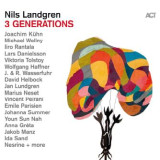
‘Hörtest-Edition IV - Visions of Jazz’ is a listening experience to be cherished. It offers a specially curated programme which can be compared across different media and in various formats. Enjoy an audiophile adventure in perfect sound quality: the 180gram LP, cut at half speed, has been subject to the most exacting demands during the pressing process, rendering the quality of a turntable audible. Compare the special features of vinyl with the strengths of a conventional audio CD, or alternatively feast your ears on the sound quality attainable in the hi-res world of 24-bit. For this listening experience, ACT has curated a selection from its current releases by renowned artists, all recorded and produced to the highest standards and with an uncompromising focus on sound quality. Test… compare… but above all, enjoy the music. Under the motto ‘Visions of Jazz’, ‘Hörtest-Edition IV’ presents a multi-faceted kaleidoscope of current jazz. This ‘Hörtest-Edition’ includes gatefold 180g LP, CD and 24Bit high resolution digital download files. Curated and compiled by Marco Ostrowski.
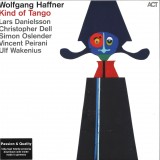
‘Kind of Tango’ is a kaleidoscope of shifting emotions. Wolfgang Haffner’s conception of tango has drama and propulsion in it but also melancholy and longing, with room for frenetic outbursts too. All this is unified by his inimitable groove and feel that commentators have called “an absolute dream,” “magical” and “profoundly relaxed.” Alongside trusted co-protagonists Christopher Dell and Lars Danielsson, he has two guests with him who defy all the clichés associated with tango: guitarist Ulf Wakenius cut his teeth musically in Oscar Peterson’s band and his Swedish heritage always shines through in his playing; Vincent Peirani is one of the leading innovators on the accordion and he finds new ways to define the instrument’s role in the tango. Also, young pianist Simon Oslender makes a first appearance with the band. Jazz and tango find a natural yet constantly shifting equilibrium - to be heard particularly effectively on ‘Close Your Eyes And Listen’ by Astor Piazzolla. In addition to compositions by Haffner himself and by his band members, pieces by the celebrated Argentinian bandoneon player and composer are the focal point of the album. Piazzolla’s innovations with the tango, such as bringing jazz into it, date from around 1955. Haffner and the tango
seem perfectly matched to each other. Tango is no longer a fixed style nowadays, it is above all an attitude to playing and an attitude to life. Wolfgang Haffner’s approach to tango is both authentic and new. It is his and his alone and it is irresistible.