A Postcard from California is Al Jardine’s debut studio solo album & will be re-issued on CD + LP . For the album, Jardine recruited several music icons including his former Beach Boys band mates, America, Neil Young, Steve Miller & more. The album also contains several unreleased Beach Boys songs, including “Don’t Fight the Sea”, “Looking Down the Coast” and “Waves of Love”.
Search:al jardine
- 1
The landing isn’t soft. The collision with the wax sends waves of sound and matter. Basslines deep as craters, elliptical grooves, harmonies both dissonant and familiar. The astronaut realizes that this isn’t a crash. He’s arrived on Planet Tapes.
The new EP takes you on a dynamic sonic adventure, blending introspection with dancefloor energy.
A1 – Produced by Riccardo. This track is a mystic and introspective voyage, built on warm, enveloping sounds, a captivating rhythm, and subtle electro textures. Perfect for deep listening.
A2 – Crafted by Two Opposites. This cut is all about movement, interlocking melodies and arpeggios designed to storm the dancefloor with relentless energy.
B1 - Italomario delivers pure electro soul sharp, dark, and packed with attitude. A raw, hypnotic groove that commands attention.
B2 – Torrent closes the journey with a harmonious farewell romantic, serene, and reflective. The calm after the storm.
This riotous, psychedelic Latin funk anthem, taken from Martín Buscaglia's 2006 classic album "El evangelio según mi jardinero", sees its very much requested first time on a 7". To celebrate this, and thinking about the AA side, we decided to ask Bosq for a remix.
When we approached him, he said "This track is wild, I love it!" and he started to make his thing. When he finished it, he told us, "I resisted the temptation to bump it up closer to 120 bpm – the world needs more midtempo dancefloor treats!". We couldn't agree more on the midtempo bit, but especially we couldn't be more chuffed with the remix. Bosq has added his magic and a tad of cumbia feel as well and the result is way more than a treat, it's an everyone-smiling-on-the-dancefloor kind of track.
Soul Jazz Records are issuing this album as a one-off pressing special orange coloured vinyl edition, fully remastered and with exact reproduction artwork especially for Black Friday 2024.
In similar vein to groups such as Mandrill, Jimmy Castor Bunch, The Blackbyrds, Pleasure and Kool and the Gang, Tribe blends together elements of funk, jazz, rock, latin and soul music into a unique sound (their first album was aptly named ‘Ethnic Stew’).
‘Dedication’ is a fantastic long-lost album of deep funk, soul and jazz from the group, originally released independently in 1977 and out-of-print for over 45 years.
Tribe was the brainchild of multi-instrumentalist Earl J Foster, who put together the band along with producer Big Dee Ervin in 1974. Aside from Earl Foster the band features Clyde Jardine Powell on bass, Billy Soto on guitar, Jimmie A. Clapper on sax, Benjamin Taylor and Harold Clayton on vocals and Harold Davis on drums.
The group made three albums, but ‘Dedication’ remains their tour de force, a fantastic slice of spaced-out funk, jazz and soul.
Französisches und spanisches Gefühl für Nostalgie mit dem Pianisten Alexandre Tharaud "Ravels Konzert in G-Dur ist frisch und mozartisch in seinen Farben, während sein Konzert für die linke Hand von dunklen Schatten und unterdrückten Ängsten heimgesucht wird", erzählt Alexandre Tharaud. Ravels Musik liegt dem Pianisten besonders am Herzen. In Zusammenarbeit mit dem Orchestre National de France und dem Dirigenten Louis Langrée spielte er nun die beiden Klavierkonzerte des Komponisten ein.
Er kombiniert sie mit Noches en los jardines de España (Nächte in spanischen Gärten), Manuel de Fallas schwelgerischem Werk für Klavier und Orchester.
- A1: Cerebro, Orgasmo, Envidia & Sofía
- A2: Ante La Duda Todo
- A3: Lavapies (Jesus Is My Coach)
- A4: Trivial Polonio
- A5: Chupame La Mente Cable
- A6: El Toscano Del Papa
- B1: Lovin' You
- B2: Vagabundo
- B3: El Evangelio Según Mi Jardinero
- B4: Presiento Que Esta Noche Soy Un Lirio
- B5: Ocelote Alondra
- B6: Viajar Contigo Es Como Escuchar La Vida Secreta De Las Plantas
- B7: Budismo Tropical
- B8: Sin Título
Landmark albums deserve to be released on Glorious Vinyl, and that's why Lovemonk is presenting the first ever vinyl edition of Martín Buscaglia's 2006 corker, El Evangelio Según Mi Jardinero.
"Brain, brain, thanks for being in my head and not in my knee, if not, I wouldn't be able to kneel down to pray or keep that promise I cannot reveal". Those are the first words (translated from Spanish) of 'Cerebro, Orgasmo, Envidia y Sofía', the song that kicks off El Evangelio Según Mi Jardinero, the fourth album by Uruguayan pop genius Martín Buscaglia and his second on Lovemonk.
El Evangelio is a wonderful collection of deliciously cheeky and brutally honest songs composed by a man who was lucky enough to grow up in a home where several of his home country's cultural greats (Eduardo Mateo, Urbano Moraes, Rubén Rada, all three of legendary candombe innovators El Kinto, and Hugo Fattoruso, of Opa) would drop by to chat, write and hang out. They, and other heroes like Marvin Gaye, Tom Waits, Stevie Wonder, and Jorge Ben, have had a lasting influence on Martín's music, and it's no different on El Evangelio. Martín wrote most of the songs and plays all kinds of instruments, conventional and not so conventional (the ravanahatha - an ancient bowed, stringed instrument used in South Asia, different toys such as the Simon device and a carousel), and there are cameos by the likes of Arnaldo Antunes, Nicolás Ibarburu and Juana Molina.
El Evangelio Según Mi Jardinero is a dazzling piece of work that will make you dance your ass of and take you to place you haven't visited since childhood. Even 12 years on, the at times complex songs actually sound deceptively simple and stunningly fresh.
HIGHLIGHTS: 1965 samba jazz gem recorded by Humberto Clayber, Hermeto Pascoal and Airto Moreira in the early days of their careers. Includes the killer 'Joao Sem Braço' featuring Hermeto's howling flute and Airto's overwhelming percussion work. This is the only album ever released by this Brazilian all-star group and has remained unavailable for decades. First time vinyl reissue. More: 1965 samba jazz gem recorded by Airto Moreira on drums, Humberto Clayber on double bass and Hermeto Pascoal on piano in the early days of their careers. As the original notes state it, the recording session of the album was such a stunning experience for those involved in the studio work: "After going through 'Aleluia' and 'Samba Novo', as a prelude to a sound cataclysm that was transmitted in the tense atmosphere of the studio, they gave us a composition by José Neto Costa (Hermeto's brother), which left everyone amazed. The arrangement created for 'Duas Contas', soft, whispery, subtle, broke the local tension as if on impact. But behold, when they no longer seemed to see the possibility of new surprises, they then performed 'Nem O Mar Sabia' and 'Arrastao', the first revealing totally unknown concepts regarding the trinomial piano-bass-drums.
- A1: Sampuesana - Los Dinners
- A2: La Borrachita - Junior Y Su Equipo
- A3: Paga La Cuenta Sinverguenza - Manzanita
- A4: Infinito - Hugo Blanco Y Su Arpa Viajera
- B1: El Jardinero - Manzanita Y Su Conjunto
- B2: Feito Parrandero - Los Feos
- B3: Bien Bailadido - Junior Y Su Equipo
- B4: Saturno 2000 - Los Santos
- C1: La Danza Del Mono - Lucho Gavilanes
- C2: Capricho Egipcio - Conjunto Tiupico Contreras
- C3: El Chacarero - Los Gatos Blancos
- C4: Pa Oriente Me Voy - Los Atomos De Paramonga
- D1: Alegrate - Junior Y Su Equipo
- D2: Todo Lo Tengo De Ti Menos Tu Amor - Grupo Celeste
- D3: La Fuga Del Bandido - Los Ecos
Analog Africa delves deep into the scene of the Mexican's sonideros (sound-system operators) to present the "Rebajada" movement they've created using locally made pitch controls, speakers and sound effects.
"In 2010, I had asked Eamon Ore-Giron - aka DJ Lengua - if he would be interested in compiling a Latin project for Analog Africa, and if so, if he had a theme in mind. He replied, “Have you ever heard of rebajada?“ The question mark above my head, together with the wall of China, must have been the only other object visible from out of space because Eamon, probably noticing I got paralysed, continued, “Rebajada in Spanish means “to reduce, to lower”. It’s basically Mexican sonideros (soundsystem operators) slowing down the beat of a Cumbia to create a much more tangible music to dance to. I’ll send you a mix I made last year and let me know what you think.“ And so he did.
That mix was called Rebajada Mota Mix and I began listening to it on a loop. Although I was not immediately hooked it was intriguing from the get-go, and so I kept listening until magic began unfolding. Slowed down music allows you enough time to hear right through it, revealing itself in ways I had rarely experienced before. Everything became more transparent and I was noticing sounds normally only perceptible by bats. A near psychedelic experience. That mysterious mix included a few Ecuadorian songs by Junior y su Equipo - aka Polibio Mayorga (a cult figure in the sonidero scene), a couple of Mexican tunes, one Colombian, and various Peruvian songs, undoubtedly the driving force behind this project.
The sonidero who brought Peruvian and Ecuadorian music to Mexico was the legendary Pablo Perea from Sonido Arco-Iris, and although his fingerprints are all over the compilation Saturno 2000, this selection of songs in rebajada is exclusive to DJ Lengua. With the exception of a few classics from Polibio Mayorga and La Sampuesana – the queen of all rebajadas – most of these songs were probably never performed as such before, let alone released.
So how did rebajada come to be? In a nutshell; Rebajada started with two families of brothers – the Pereas and the Ortegas – who travelled all over Latin America and returned to Mexico with heavy loads of records which they would sell to the various sonideros always on the lookout for new tunes. Colombian beats especially seemed to fit almost perfectly with the Mexican dance steps – but they were just a bit too fast. As a result some sonideros began experimenting with equipment, and Marco Antonio Cedillo of Sonido Imperial created a revolutionary pitching system that could slow records down to an extent other players could only dream about. And so rebajada was born . . . or so we thought.
At the same time in north of the country, in Monterrey, sonidero Gabriel Dueñez almost got electrocuted by a short circuit that nearly set his record player on fire. As a result the platter started spinning in slow motion for the rest of the party, turning Cumbia into a different affair altogether. The youngsters went crazy for it and started harassing the sonidero with requests to record cassettes for them. Reluctant at first, Dueñez finally began recording a series of pirated cassettes called “Rebajada” which included mainly Colombian cumbia and porro in slow-mo exclusively. Those tapes took the city by storm and turned rebajada into a celebrated and defiant movement of the youth.
Of course it would not be a Mexican urban legend if it didn’t include dramaturgical elements, and so for nearly 30 years, until this day and probably for ever, both cities have been arguing and claiming ownership the creation of rebajada for themselves. But sonidera Joyce Musicolor, who never has time for such trivial arguments, got straight to the point: “Rebajada, and the equipment to perform it, is from here Mexico City but it was Monterrey that popularised it.“
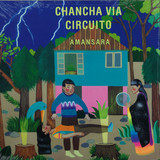
Argentine producer Pedro Canale returns from a three-year sojourn with his long awaited third album. Originally coming out of Buenos Aires's famed digital cumbia scene, Chancha has notoriously broken way outside those boundaries to forge unprecedented mergers between Brazilian rhythms, Paraguayan harp, Andean mysticism and the solitude of Argentinian folklore - all processed through his own futuristic style of postdubstep.
Chancha's sound is without question truly unique and instantly recognizable to the point he has become a key reference point for an entire crop of artists that have begun to carry his genes.
Hailed by the Washington Post, the New York Times, Pitchfork, NPR and countless others, Chancha Via Circuito defies even the shrewdest of marketing geniuses. On one hand, he is something of a cult artist within micro-circles of electronic music, having been invited to perform at Montreal's MUTEK as well as the Roskilde and Vive Latino Festivals. At the same time, Chancha's music has found broad appeal outside of the avant-garde, most notably his magnificent remix of Jose Larralde's "Quimey Neuquen" which was heavily featured in 2013 as part of the final season of the critically acclaimed television series Breaking Bad. Fans of the show undoubtedly remember Walter White burying his millions in the desert, soundtracked by the wide and gentle grooves of Chancha Via Circuito.
Amansara is a natural progressing of Chancha's special strain of electronic South America. Lead single "Coplita" features the haunting vocals of previous collaborator Miram Garcia, while "Sueno En Paraguay" merges Andean folklore sounds with bleeps and blips and pounding drums in a way that sounds completely natural and ordained. "Jardines" features the driving vocals of Lido Pimienta merging with heavy synths, percussion and bells into an unforgettable track, while both "Tarocchi" and "Guajaca" ramp things up into deep, electronic dancefloor inna rainforest territory.
Art for Amansara comes from Argentinian psychedelic folklore painter Paula Duro who has crafted the look of all of Chancha's previous releases.
- 1