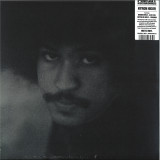
As one of the most enigmatic figures of the 1970's Italian soundtrack and library music network Emma De Angelis and her short recording career provides thirsty fans of speedball psychedelic rock and drum heavy instrumental funk with a tight discography rivalling many of the long-standing bastions of the otherwise male-orientated business. * Strictly limited to 1000 copies.*
.
Born in Rocca di Papa, near Rome, into a flourishing musical environment Emma was the younger sister of future award-winning composers Guido And Maurizio De Angelis, a duo, who under names like Oliver Onions and Dream Bags, would write chart-topping lyrical theme tunes for a wide range of Italian crime, Giallo and Spaghetti Western films featured alongside full scores by Ennio Morricone and the Magnetic System composers (Bixio Frizzi Tempera).
With encouragement from her brothers, Emma, who would also write music under the pseudonym of Juniper, would record a tight clutch of solo-penned material and seldom credited studio contributions to Guido And Maurizio's film commissions, such as the score for Giuliano Carnimeo's Simone e Matteo: Un gioco da ragazzi (aka Convoy Buddies). While simultaneously pursuing a career as an illustrator and set designer the De Angelis family contacts would lead Emma to the offices of Romano Di Bari, whose up-and-coming Flirt label was finding success providing custom built mood music for use in TV and film. Alongside important composers like Alessandro Alessandroni, Gerardo Iacoucci and A. R. Luciani, the young Emma Di Angelis would record a small number of tracks for a compilation called Underground Mood (credited in the small print to E De Angelis - not to be confused with Italian singer Edoardo De Angelis). It is from this rare LP that the record you are now holding is compiled. Within the Flirt family of labels Emma De Angelis would also share schedules with other important female composers such as Daniela Casa and Giulia Kema' De Mutiis - both of whom have appeared on dedicated Finders Keepers releases.
The tracks on this record provide us with a rare glimpse into Emma De Angelis' short musical career before she became a full-time visual artist. With an unknown personnel or studio date it is easy to speculate a potential family jam in Piero Umiliani's Sound Workshop studio in 1972. One only has to take a listen to Guido And Maurizio's instrumental theme Gangster Story from Enzo G. Castellari's 1973 thriller High Crime (which later appeared on Tarantino's Death Proof soundtrack) or the trippy title theme to Paolo Poeti's kinky 1976 drama Inhibition to spot the family resemblance
Suche:alessandro in
- A1: Polysick - Laguna
- A2: Iron Blu - Ylem
- A3: Teslasonic - Conscious Machine
- A4: Phalangius - Elite Galaxy
- A5: Lo-Lo - Ubik
- B1: Heinrich Dressel - Der Greifer
- B2: Nursiø - Murder On Paestrum St
- B3: Alessandro Parisi - Dungeon R16
- B4: Alessandro Adriani - Blood Runs Down
- B5: C-34 - Sanitarium
- C1: David Kristian - Electric Empire
- C2: Ian Martin - Roark
- C3: Stefano Rocchi - Sospeso
- C4: Sonobe - Daydream
- D1: Fabrizio Lapiana - Lost In Negative Thoughts
- D2: Lamanna Breaking Wood - Tristesse
- D3: Key Clef - No Body
- D4: Cassandra - Bran Creak Hotel
"Eux sont de ceux qui trament en accordant desseins sur dessins." MinimalRome is back with the second volume of Trame compilation. A full lenght 2xLP release gathering Legowelt (as Phalangius), Heinrich Dressel, Alessandro Adriani, Ian Martin, Teslasonic, Polysick, C-34, Iron Blue and David Kristian among others. Traveling through these eighteen ambient cosmic tracks from true heirs of library music, you'll expand the surrounding space. Limited to 300 copies
- 1: Shout
- 2: Rise Up
- 3: It Owns You
- 4: When You Came Into My Life
- 5: Mother Love
- 6: Rise Above No Fear
- 7: Candy Love
- 8: I’m Leaning On It
- 9: Welcome To The Thunder
- 10: Glow
The new HARDLINE album ‘Shout’ sees the band helmed by American vocalist Johnny Gioeli (Axel Rudi Pell, Crush 40) and his Italian team mates, keyboardist Alessandro Del Vecchio, guitarist Luca Princiotta, bassist Anna Portalupi and drummer Marco Di Salvia, take up where their 1992 Melodic Rock masterpiece "Total Eclipse" left off.
With "Jamaican (Bam Bam)," HUGEL and SOLTO breathe new life into Sister Nancy's iconic anthem - a bold, rhythm-charged reinterpretation built for the modern dancefloor. It grips from the first beat: dynamic drumming, crisp claps, and a bassline that rolls deep with sway and sensuality. Layers tighten and unfold, teasing the body as electronic tinctures flicker beneath, building lift and slow, simmering tension. Through it all, Sister Nancy's voice cuts steady and alive, grounding the track in its roots while driving it forward. The energy keeps rising vibrant, climactic, and free. "Jamaican (Bam Bam)" smolders from within, a kinetic force that turns motion into release.
Artwork by Rachael D’Alessandro. Words by Marie Floro. Executive Producer Mimmo Falcone. Distribution by Muting The Noise.
Blending elements of Disco and House, deep and funky the EP delivers a rich and highly effective sound palette built on infectious basslines, crisp drums, and a strong feel for arrangement. There is a playful elegance running through the whole release, balancing feel-good vibes with enough depth and musicality to keep things sophisticated. It is a record made for crowded floors, open smiles, and long nights.
Signaling their long-anticipated debut on ICONYC, the label welcomes acclaimed Italian duo Glowal with their Future Faces EP. Uncompromising in its intent, this two-track capsule extends the duo’s emotional vocabulary, threading new ideas through their unmistakable sonic lens for a release that underscores the expressive precision at the heart of their craft.
Casting their gaze forward on “Future Faces”, Fabio Giannelli and Alessandro Gasperini open proceedings with a fractured rhythmic chassis driven by a throbbing low-end pulse that warps with each passing beat. Heavy percussive strikes carve their path into the night before a disarming female vocal emerges from the shadows, injecting a sense of yearning and fragile wonder into the piece. A sudden brake—like tires skidding across rain-slick asphalt—ushers in laser-etched synth lines that cry out with an anthemic resolve, while iridescent sequences bubble to the surface, sealing a striking first statement on the label.
Turning the corner, Glowal unveil the esoteric “Desert Soul,” a slow-burning reverie that expands on the EP’s emotional terrain. Patiently unfolding over fragmented rhythms and a meandering bassline, neon traces guide us toward a robotic vocal presence that introduces a subtle human-machine tension. Stripped to a minimal core yet rich in sentiment, “Desert Soul” resonates with quiet introspection—an understated meditation on self-discovery that lingers well beyond its final echo.
A label compilation can be the first sign of a new cycle. After years shaped by individual trajectories, it brings the focus back to what made scenes powerful in the first place: shared language, mutual influence and a sense of collective movement.
For a label built on deep rhythm, organic textures and emotional drive, this carries an even stronger meaning. These musical spaces hold connection, memory and exchange at their core.
In this light, a compilation becomes more than a format: it becomes a statement of identity, a meeting point where different voices contribute to one evolving vision.
“MoBlack presents: MELODIC NIGHTS” marks the start of this new MoBlack path guided by careful curation and artistic exchange, blending percussive depth with a more melodic approach.
The result is a four-track selection navigating different shades of introspection and release, held together by a strong and recognizable sonic character.
Klement Bonelli – “It’s My Life” sets the tone with a bold, emotionally charged cut that balances melodic lift with a club-focused pulse. it’s jud, MR.FULLTIM€ – “Jackfruit” adds a distinctive twist to the journey, playful in texture yet precise in its impulse, widening the palette with character and movement. Jay’ (CH) – “Our Fire” leans into atmosphere and intensity, building momentum through evocative harmonies and a steady emotional current. Max Zotti, Blaxx – “Release Your Pain” closes the collection with a cathartic, rhythm-led energy, delivering what feels both intimate and dancefloor-ready. More than a one-off release, “MELODIC NIGHTS” introduces a collection designed to highlight converging sensibilities, where each track stands on its own while contributing to a wider narrative.
Artwork by Rachael D’Alessandro. Executive producer Mimmo Falcone. Distribution by Muting The Noise.
ELSI celebrates the 40th anniversary of Marimba Do Mar with a special reissue of the highly sought-after record produced by Roberto Lodola, one of the pioneers of Italy’s Afro-Funk movement.
Four decades on, Marimba Do Mar remains a true Balearic anthem. This special edition includes Feeling Of The Sun, created in 2014 from rediscovered original tapes and reimagined by Lodola into a sun-soaked, electronic version of the original. The B-side delivers two vinyl debuts: Marty’s Beach, driven by elegant piano riffs and a memorable sax solo from long time collaborator Alessandro Bertozzi, and Mother Africa (Ibiza Dub Mix), a deep Afro-Funk interpretation in a modern electronic key produced during his stay on the magic island.
This limited pressing, distributed by Sound Metaphors, offers selectors a rare opportunity to celebrate a landmark chapter in Balearic history, with ELSI placing your next summer record directly into your hands.
- A1: Jon Hopkins - Embodiment Breathing (With Fearne Cotton)
- B1: Cherub Sanson, Tim Wheater And Rommek - Bliss Code 000
- B2: Hannah Holland - Ambient Chronolight 1
- B3: Djrum - Come Find Me
- C1: Alessandro Cortini - Iv
- C2: Wata Igarashi - Mineral
- C3: Silent Shadow - Red World
- D1: Cherub Sanson & Tim Wheater - Stillpoint
- D2: Manami - Sown
- D3: Jennifer Loveless - If You Let It
- D4: Ruthlss - Dark Angel
- D5: Hannah Holland - A Door To Who Knows
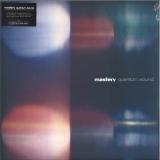
Mastery, London’s pioneering sound studio, has spent its first two years creating live experiences and installations exploring sound as a gateway to altered states. Now, with co-founders LWE, Mastery enters recorded music with Quantum Sound, a first-of-its-kind project combining sound meditation, breathwork, neuroscience and ambient electronic composition. Announced in December in collaboration with Houndstooth, the album builds on Mastery’s ongoing exploration of sound as both meditation and live electronic music, first introduced through immersive performances by Cherub Sanson, Tim Wheater and Daniel Avery.
Released on 12th February, Quantum Sound positions sound as a psychedelic catalyst, designed for eyes-closed listening. The multi-artist album spans ambient and transcendental spaces, featuring Jon Hopkins, Hannah Holland, Wata Igarashi, Manami, Jennifer Loveless, Silent Shadow and Alessandro Cortini. It also includes a continuous 60-minute mix by Hannah Holland, alongside a 15-minute sound meditation by Cherub Sanson and Tim Wheater with electronic composer Rommek. Following Djrum’s Come Find Me, Ruthlss'’ Dark Angel is out today. Ruthlss is a live electronic artist, composer and producer building a singular musical universe where club culture, classical virtuosity and emotional
storytelling collide. At the centre of the project is a fully authored live show - written, produced and performed entirely by Ruth - that treats electronic music with the emotional and structural depth of film scores and symphonic works, while retaining the physical impact and communal release of the dancefloor.
- A1: Echi Tribali 2 01
- A2: Danza Della Pioggia 2 31
- A3: Totem 2 51
- A4: Danza Della Morte 3 14
- A5: Rito Della Fecondazione 2 45
- A6: Danza Di Guerra 2 29
- B1: Rito Nuziale 1 55
- B2: Iniziazione 2 09
- B3: Rito Del Sole 1 14
- B4: Invocazione 1 07
- B5: Rito Della Fertilità 1 23
- B6: Danza Dello Stregone 2 28
- B7: Rito Di Propiziazione 2 35
- B8: Adorazione 1 58
Blue Vinyl[22,65 €]
“Alle Sorgenti Delle Civiltà Vol. 3 - Africa, Australia, Nuova Zelanda” (1971) is the third and final chapter of a triptych of folk-based sound recordings released by Folkmusic. The album contains a total of fourteen tracks by Braen and Raskovich, i.e. the a formidable multi-instrumentalists Alessandro Alessandroni and Giuliano Sorgini, each grappling with seven different compositions characterised by a tribal mood. Among the grooves of this record, repressed on vinyl for the first time by Musica Per Immagini, it is possible to discern an in-depth study of one of those forms of popular culture referring to a specific geographic area, comprising the types of traditions often handed down orally and concerning knowledge, beliefs, fairy tales, legends, myths, narratives linked to the dimension of the fantastic, customs and traditions, namely music. Festivals and propitiatory rites, fights and dances, magical and sacred representations were all expressions of life whose sound and rhythm contributed to an appropriate description of the environment. Alessandro Alessandroni and Giuliano Sorgini have chosen some of the most significant musical characters that even belong to specific ethnic realities scattered across two distant continents, where the use of some of the typical instruments has favoured the realisation of sonorities of considerable interest.
- A1: Anything (Feat. Maja)
- A2: Holding Patterns
- A3: Whirlwind (Extragalactic Mix)
- B1: Flicker Of Us
- B2: Fluffy Toy (Feat. Creams)
- B3: We Can Touch The Sky
- C1: Wawes Of Desire (Sunset Mix)
- C2: Cool Breeze
- C3: Back To Nowhere (Feat. Ben Holz)
- D1: It's In Your Eyes (Feat. Aérea Negrot)
- D2: Oh Boy (Feat. Alessandro Tartari)
- D3: Flawed People (Feat. Unconscious Honey)
Massimiliano Pagliara celebrates 20 years of music production with a special anniversary compilation on Funnuvojere. The release brings together solo productions and collaborations spanning a rich and abundant period that began when Pagliara acquired his first analogue machines, five years after moving to Berlin from Milan, where he worked as a professional dancer and choreographer.
The compilation features 20 previously unreleased tracks, deeply infused with italo grooves, wonky bass-lines, balearic pads, drama, love, sex, and dreams. These tracks evoke a wide spectrum of moments, ranging from intimate, pleasure-driven home listening to full-blown dance-floor euphoria. Throughout the compilation, one can feel Pagliara’s enthusiasm for discovery—his excitement in encountering new machines and immediately putting them to work.
Pagliara’s sonic identity is unmistakable, present in every track and in the compilation as a whole. Like the facets of a crystal, the music reflects his many nuances while maintaining a strong, coherent core. Tracks such as Waves of Desire pay homage to Dream House, reimagined through contemporary production with cosmic tones and infectious drums. Flicker Of Us reveals a dramatic tension between a rowdy bass-line and melancholic pads, while We Can Touch The Sky features Pagliara himself on vocals, blending synth-pop with elements of new wave and glam rock. Cool Breeze unfolds as a sunlit, optimistic walk through a wide Berlin avenue—funky, warm, and filled with curiosity for what lies ahead.
A notable strength of the compilation lies in its collaborations, which highlight Pagliara’s joy in working with other producers and vocalists. Each collaboration reveals a distinct character: the balearic sensibility of A Journey of Discovery with Gatto Fritto, the French house flavour of Neon Memories with Alinka, the 70s disco inflection of It’s In Your Eyes with the late Aérea Negrot, and the driving techno attitude of Whirlwind with Fabrizio Mammarella, to name just a few.
Ultimately, this compilation stands as both a gift to Massimiliano’s long-time fans and an open invitation to new listeners. It offers entry into a world shaped by beauty, order, balance, and ecstasy—guided by an enduring love for the craft.
- A1: Amedeo Tommasi - Brasilia (The Sound)
- A2: Max Rocci & His Friends - Colorombo (Il Mondo Dei Giovani, Vol 4)
- A3: Max Rocci & His Friends - Niagara Falls (Il Mondo Dei Giovani, Vol 4)
- A4: Alessandroni E Il Suo Complesso - Via Mare (L'ora Del Cocktail)
- A5: Joël Vandroogenbroeck - Electronic Jungle (Images Of Flute In Nature)
- A6: Kema - Pescatori (Canto Femminile) (La Natura E L'uomo)
- B1: Desert - Leaving (Desert)
- B2: The Swingers - Depressione (Jazz Video)
- B3: Latrudi - Feeling (Teleobiettivo)
- B4: Narassa, Amedeo Tommasi Trio - Lalo (Made In The Usa)
- B5: The Swingers Feat Marco Di Marco - Meditazione (Il Mondo Dei Giovani, Vol. 1)
- B6: The Swingers - Nostalgia (Il Mondo Dei Giovani, Vol 3)
Blue note / Schema / Far Out recordings artist shares a new compilation of golden age italian library music.
Following his acclaimed five-part Viagem compilation series celebrating Brazil's forgotten bossa nova and samba jazz, Far Out, Blue Note and Schema recording artist and international DJ Nicola Conte turns his curatorial attention homeward with Viaggio, an extraordinary exploration of Italy's library music renaissance 1970-79.
The 12-track compilation spotlights the remarkable creative explosion that occurred during the seventies: when some of the greatest yet most historically overlooked composers, including Amedeo Tommasi, Alessandro Alessandroni and Max Rocci, were composing and recording huge amounts of original music for film and television libraries.
Unlike commercial releases designed for mass consumption, library music was created specifically to accompany images on screen. This meant creative freedom for composers who imagined scenarios, feelings and worlds to soundtrack. Pressed in limited quantities, these recordings were distributed only to internal circles of music supervisors, journalists, and television professionals – making them virtually invisible to the general public for decades.
"This is a journey through a largely forgotten world," explains Conte. "While major jazz recording opportunities were scarce, an incredible network of small labels owned by publishing companies – often created by the composers themselves – began to flourish. This created an open space where musicians could express more experimental and free thinking sounds."
At the heart of Viaggio stands Amedeo Tommasi, the sophisticated jazz pianist who emerged in 1960 backing international stars like Chet Baker, Bobby Jaspar, and Jacques Pelzer. Tommasi was among Italy's earliest artists to introduce Black US modal jazz influences, and when traditional recording opportunities dwindled, he pivoted to soundtrack and library music, helping define a distinctly Italian sound that bridged experimental jazz with the emerging possibilities afforded by developments in synthesizer and recording technologies.
The compilation features rare gems from small label outputs, namely the Cenacolo and Rotary label catalogs. Tommasi's contemporaries include the great Alessandro Alessandroni and his vocalist wife Giulia De Mutiis (Kema), Stefano Torrosi (under the alias Farlocco - meaning fake/phony), and Belgian composer Joël Vandroogenbroeck. The recordings capture the technological evolution of the era as beguiling synthesis often combines with global influences spanning Brazilian rhythms, jazz-funk explorations, and Middle Eastern scales.
"You can hear both the haunting melodies and sun-kissed atmospheres so typical of Italian culture from that era," Conte observes. "Some of these albums could have been proper artist releases, while others were specifically designed for accompanying images on screen, yet all were crafted with exploratory creativity that still resonates powerfully today."
Despite immense challenges, SOYUZ have delivered a career-defining album in KROK.
“Krok” means “step” in Belarusian - and for Alex Chumak and his band this word comes with a lot of meaning. It’s the title and theme that ran throughout СОЮЗ (SOYUZ)'s fourth album, reflecting the journeys the band has navigated in recent years, having moved to Warsaw due to political unrest in their homeland of Belarus and the outbreak of war in Ukraine. Embracing the uncertainty became both the inspiration and main lyrical theme for Alex Chumak, SOYUZ’ composer and arranger, who also decided to go a step further and change the language in which he writes songs from Russian, which is used as lingua franca in many post-Soviet countries, to his native Belarusian. The result is nine songs about dreams and outer space, ordinary miracles, things very close and very distant at the same time.
In early 2022, Chumak and original members, Mikita Arlou and Anton Nemahai, joined tens of thousands of Belarusians seeking safety abroad. Resettling in Warsaw, the band released Force of the Wind in October 2022, garnering widespread acclaim, a string of major European gigs, and led to Polish musicians Albert Karch and Igor Wiśniewski joining the band.
Deeper and more melancholic than previous works, KROK is quintessentially SOYUZ, laced with hope, dreams and a celebration of life. Given the difficulties with finding rehearsal and recording spaces in Warsaw and the departure of the drummer Anton Nemahai from the band, Chumak explored alternative options. He reached out to friend and fellow musical collaborator, Sessa, about the possibility of recording the new album in his recently finished studio in São Paulo, with Sessa and Biel Basile coming onboard as recording engineers.
At the tail end of 2024, Chumak and SOYUZ’ new drummer, Albert Karch, made the trip to São Paulo to record the first sessions for KROK. Laid down directly to tape, these sessions featured prominent Brazilian musicians Sessa, Biel Basile, and Marcelo Cabral, with a guest vocal feature by Tim Bernardes recorded at a later date. The final touches were then added back in Europe. Lush string and woodwind arrangements written by Chumak and Karch were recorded at the Polish Radio studio in Warsaw, and Rhodes parts were added by Chumak at Sven Wunder’s studio in Stockholm.
Though primarily recorded in Brazil, KROK is not a Brazilian or MPB album. It blends the band’s Eastern European roots with jazz, folk and global influences. The genre of the music is hardly identifiable: there are folk ballads and jazz-driven pop compositions covered in lush and often dissonant string and woodwind arrangements where each note is placed with care and meaning behind it.
The title track was the first song Chumak wrote in Belarusian as an adult, making for a fitting opener and one of the band’s finest tracks. Darker than most of SOYUZ’ songs, the tensions lift and lighten as the track progresses. The cinematic library jazz of 'Voo Livre', with ghostly vocals sung by Ciça Góes and Ina, feels like a modern twist on the Italian library composer Alessandro Alessandroni through its sublime choir and woodwind orchestration. Elsewhere, the heartfelt 'Lingua Do Mundo', composed, written, and sung by Chumak and the incredible Tim Bernardes, features one of the standout string arrangements from Chumak and Karch. 'Cichi Karahod' is an instant SOYUZ classic, almost Pat Metheny-esque as it opens, with the acoustic guitar and bass riff transitioning into jazzy AOR / pop-folk territory. The record closes with 'Smak žyćcia', a gentle, dreamy spoken-word poetry piece in Japanese by singer-songwriter Manami Kakudo.
- A1: Paul Older - Che Disco Vuoi (Extended Version)
- A2: Riva Starr - Allora Amore (Extended Mix)
- A3: Valentino Vivace - Statua Greca
- B1: Hey Cabrera! - Tutto Matto (Extended Version)
- B2: Sam Ruffillo & Fimiani Feat Gianni D'uomo - Non Era Facile (Extended Version)
- B3: Kymono - Lasciati Andare (Extended Version)
- C1: Dov'e Liana - La Notte Infinita (Extended Version)
- C2: Mille Punti - Matto (Extended Version)
- C3: Bruno Belissimo - Donna Piu
- D1: Fimiani - Proibito (Extended Version)
- D2: Alessandro Rotter - La Sera, La Discoteca, La Spiaggia
- D3: Alberto Melloni – Credimi
Toy Tonics ITALOMANIA Vol. 3 is a compilation dedicated to NEW ITALIAN DISCO. (Not Italo Disco.) 14 young contemporary Italian producers made new organic disco, indie dance, pop house tracks with Italian vocals. Everything on this compilation has been produced in 2024. Fresh dance music by Italian artists Paul Older, Riva Starr, Valentino Vivace, Sam Ruffillo & Fimiani, Kymono, Mille Punti, Mind Enterprises, Bruno Belissimo and legendary cosmic disco pioneer Daniele Baldelli + french italo hitmakers Dov'e Liana. The ITALOMANIA compilation was initiated by Toy Tonics boss Kapote. Italo-German producer, DJ, keyboarder and head of Toy Tonics and Gomma records. ITALOAMNIA is a MANIFESTO to show the status of Italian Disco of today. Kapote invited the most relevant Italian producers to make new tracks with Italian vocals and show different styles of modern Italian disco with Italian vocals.
Italian Disco is not Italo Disco. The last years the trashy pop music of the 1980’s called Italo Disco (with English lyrics) had a big revival. But this compilation is about something else: It’s about this Italian Disco. Because the popularity of good Italian pop music is rising all over the world. And Toy Tonics want to show a new way to combine Italianity with dance culture. Its funny that also in France, Swiss and Germany there are new artists singing in Italian. Let’s not forget: The culture of party, dancing, show bizness and pop music would be unimaginable without the heritage and creativity that Italians contributed Italy is not just the country of good food, beaches and high fashion, but it’s also the original country of dance music. Since the ancient roman times the Italians have been the kings of entertainment. And if it comes to music; The DISCO wave of the 1970ies and the Pop music of the 1980ies has been co-created by Italians (and Italoamericans in New York).
In 1970, Italian composer Sandro Brugnolini recorded the two psychedelic lounge masterpieces Overground and Underground at Dirmaphon Studios in Rome. Featuring a lineup of some of Italy’s finest musicians—Silvano Chimenti (guitar), Angelo Baroncini (guitar), Giorgio Carnini (organ and piano), Giovanni Tommaso (bass and effects), and Enzo Restuccia (drums)—these sessions were deeply rooted in the late 1960s psychedelic sound but uniquely fused jazz improvisation, funk, and Latin and African rhythms with cinematic melodies.
This fusion defines their distinctive character and cements them as two of Brugnolini’s most impressive works, remaining among the most sought-after artifacts from the golden era of Italian library music. Overground—which Sonor Music Editions reissued in 2024—was originally released as the soundtrack to Persuasione, a documentary commissioned by Ente Provinciale Per Il Turismo Di Trento. Meanwhile, Underground was issued in two separate releases, RT 104 and RT 16, on the library and soundtrack label Record TV Discografica, founded by Alessandro Derevitzky in the late 1950s. In 2014, we compiled both versions for Underground's first-ever reissue (SME 3), featuring the longer version of ”Psichefreèlico" from RT 16, instead of the shorter ”Sostenuto” and ”Ballata" versions from RT 104, along with new artwork. Now, in this 2025 reissue, Underground returns in its original RT 104 attire, with its original track listing and artwork. Sourced and carefully remastered from the original mono tapes and lacquer cut by Jukka Sarapää at Timmion Cutting, this edition features carefully restored Record TV Discografica label design artwork, printed on high-quality card stock.
- A1: Resist
- A2: Mainframe
- B1: Northern Safety Route
- B2: Continental Drift
- C1: Self Synchronise
- C2: Weather The Storm
- D1: Comms Down
- D2: Phase B
- E1: Underneath
- E2: After Effects
- E3: As A Glacier
- F1: Trust The Process
- F2: Simulation Cult
- G1: Simulation Cult (Alessandro Cortini Remix)
- G2: Self Synchronise (Lord Of The Isles Remix)
- H1: Resist (John Talabot Remix)
- H2: After Effects (Surgeons Girl Remix)
- H3: Mainframe (Kaitlyn Aurelia Smith Remix)
Electronic music visionary Pye Corner Audio, a master of blending nostalgia with forward-thinking production, has carved out a unique niche in the electronic music landscape. Drawing inspiration from 1970s and 80s synthesizer music, Detroit techno, and cinematic soundtracks, his work often evokes a sense of eerie futurism.
Lapsus Records is proud to present Where Things Are Hollow: No Tomorrow, a comprehensive box set revisiting and expanding his acclaimed Where Things Are Hollow series. This release includes the first two volumes—with Volume 2 featuring an unreleased track—and two additional chapters that further enrich the series’ narrative. Once again, Pye Corner Audio delivers innovative soundscapes, drawing inspiration from ambient techno, cinematic electronica, and experimental slow disco.
The third installment unveils a constellation of entirely new tracks, weaving the ambient, synthwave, and retro-futuristic textures that define Jenkins' work. Meanwhile, Where Things Are Hollow 4 amplifies this narrative, incorporating reinterpretations by some of today’s most visionary artists: Alessandro Cortini, Kaitlyn Aurelia Smith, Lord Of The Isles, and Surgeons Girl, alongside the popular 2020 John Talabot remix of "Resist".
As with previous entries, the visual identity of Where Things Are Hollow: No Tomorrow is a striking collaboration between Basora Studio and renowned illustrator Alex Trochut, offering a visual counterpart to the series' otherworldly audio.
With all tracks remastered for this release, Where Things Are Hollow: No Tomorrow is a testament to Jenkins' enduring influence and creative evolution, cementing Pye Corner Audio as a key figure in modern electronic music.
MARTHIAL joins NECHTO with ‘NECH029’, a four-track vinyl release blending tradition and futurism. The record pays homage to a genre central to MARTHIAL’s imagination, drawing on its history to shape a forward-thinking sonic vision. The Milan-born and -based artist describes the EP as “a reflection on change: everything transforms, everything evolves, and we are tasked with finding harmony between what has been and what could be”.
Born Alessandro Vaccari, MARTHIAL is a DJ, producer, and founder of Milan’s independent cultural hub, the Tempio del Futuro Perduto. Through this unique space and his 24/H Records label, MARTHIAL has collaborated with influential artists like Stanislav Tolkachev and Fabrizio Rat. His music evokes ethereal atmospheres and hypnotic rhythms, bridging Detroit-inspired soundscapes with innovative, interstellar journeys.
The EP represents a personal journey for MARTHIAL, who describes the process of revisiting this sonic language as an opportunity to redefine himself and his perspective on the world. By channelling the past as a guide and embracing the future as a responsibility, he crafts a cohesive narrative that combines deep emotional resonance with forward-thinking energy.
‘NECH029’ is a cohesive exploration of these elements, delivering pulsating energy and emotional depth across its four tracks: ‘Don’t Wanna’, ‘Soul Groove’, ‘The Dancer Gift’, and ‘Infinito Imperfetto’.
2024 Repress
Alessandro Alessandroni's "OPEN AIR PARADE" is finally reissued through SME. The very best library record by the cult maestro on the dreams podium alongside SPONTANEOUS, the 2 FARFALLA's recordings and RITMO DELL'INDUSTRIA we released 2 years ago. A long-awaited masterpiece and sought-after gem by record collectors all over the world originally released in 1972 on the mythical SR Records with two tracks by the great bassist Giovanni Tommaso who surely played in this session. A dreamy album with the top-notch, strung-out Psychedelic Funk sounds ever recorded in Italy during the early 70s, laden Beat and groovy music with lush arrangements and insane vocal themes by Alessandro Alessandroni's Cantori Moderni chorus. Italian Library gem!
Limited Edition White Vinyl
At the forefront of a rising wave of Brazilian artists captivating international audiences, Nyron Higor brings a quiet yet potent sense of wonder to his new self-titled album. Born in Maceió, Higor’s latest work is rooted in the traditions of Northeastern Brazilian music and golden-era MPB. Within the peaceful surroundings of his home, Higor weaves these roots together with global influences and contemporary production techniques, for a uniquely dreamlike vision of hope.
Following the success of his self-released debut Fio de Lâmina—an instrumental record of delicately balanced rhythmic and harmonic patterns, which earned support from tastemakers like Mr. Scruff, Gilles Peterson, and John Gomez—Higor’s new album is a move towards a more expansive, lyrical exploration of transcendence and triumph. As Higor explains, “This album is a test of resistance and a big event in my life as a young Black man from the Northeast and coming from a humble background, financially speaking, its context is political.”
Taking his demos and unfinished tracks to São Paulo, Higor worked alongside friends and collaborators from Brazil’s vibrant contemporary music scene—including fellow Maceioense artists Bruno Berle, Batata Boy, and New York-based Brazilian vocalist Alici Sol—assembling a rich musical landscape and a cutting edge development on the musical world from which he emerges.
For Higor, the process of recording and producing in close collaboration with Berle and Batata Boy allowed him to fully cultivate the emotive power of his compositions. Album opener "Ciranda" sets the tone with a slow frevo rhythm, as wistful trombone melodies and melancholic acoustic guitar harmonies create an atmosphere both intimate and grand. Lead single "São Só Palavras," featuring Alici Sol and Bruno Berle, captures both the lightness and depth of young love in an all too fleeting minute-and-a-half moment of soaring brilliance.
Building upon the instrumental sound of his debut, “Louro Cantador” with its playful organ, birdlike whistles and elegant acoustic guitar, emanates a kind of rare natural beauty, as each sound dances amidst the gentle pulse of Higor's bass—his main instrument.
Through ten carefully crafted tracks, Higor’s acuity for sound and silence draws listeners into a place that feels both deeply personal and universally resonant. “Above all, I value making music that brings me genuine satisfaction. I’m always looking for depth in the things I create.”
This album is a testament to the timeless themes that define Higor’s artistry, as well as his creative drive to overcome the obstacles he faces. Conveying his feelings of jubilance for his work, Higor notes, “This work is liberating, contemplative and victorious!” Each track invites the listener to experience the raw intimacy, the joy and longing, and the otherworldly ingenuity of Brazilian music, which seems to endlessly keep us coming back for more.
CREDITS
Ciranda (Nyron Higor)
Tico Lima: Trombone, Nyron Higor: Drums, Bass, Synthesizers, Electric Piano, Guitar, Molho de Jatobá, Ganzá, Caxixi, and Indigenous Whistle
Louro Cantador (Nyron Higor)
Nyron Higor: Drums, Bass, Keyboards, Guitar, Percussion, and Direct Sound
Demo Love (Nyron Higor)
Nyron Higor: Drums, Bass Synth, Keyboards, and Synthesizers
São Só Palavras feat. Alici, Bruno Berle (Nyron Higor, Batata Boy, Alici Sol, and Bruno Berle)
Alici Sol: Vocals, Bruno Berle: Vocals and Bass, Nyron Higor: Drums, Guitar, Keyboards, Synthesizers, and Whistles
Estou Pensando Em Você feat. Johanna (João Menezes, Rubens Adati)
Nyron Higor: Vocals, Johanna: Vocals. Bruno Berle: Vocals, Rubens Adati: Piano, Guitar, Programming, Stefan Costilhes: Bass, Batata Boy: Programming
Maravilhamento feat. Nathalia Grilo (Nyron Higor, Nathalia Grilo)
Nathalia Grilo: Vocals, Nyron Higor: Drums, Bass, Guitar, Keyboards, and Synthesizers
Som 24 (Nyron Higor)
Nyron Higor: Sampler, Keyboard, Bass Synth, Vocoder, and Steel Guitar
Pizzicato (Nyron Higor)
Nyron Higor: Double Bass and Keyboards
Eu Te Amo (João Menezes)
Nyron Higor: Vocals and Bass, João Menezes: Guitar, Batata Boy: Rhodes Piano, Bruno Berle: Xylophone
Me Vestir De Você feat. Johanna (Paulo Novaes and João Menezes)
Nyron Higor: Vocals, Johanna: Vocals, Bianca Godoi: Drums, Bruno Berle: Bass, Guitar, Percussion, and Rhodes Piano, Batata Boy: Rhodes Piano and Guitar
===================
Tracks 1, 2, 3, 4, 6, 7, and 8 were recorded by Nyron Higor in Maceió
Track 4: Bass and Synthesizers recorded by Ico dos Anjos. Vocals recorded by Batata Boy at Estúdio Rural
Track 5: Guitars, Bass, Programming, and Pianos recorded at Inhame Estúdio. Coproduced by Rubens Adati
Tracks 9 and 10 Recorded and Co produced by Ico dos Anjos
Mixed by Batata Boy, Ico dos Anjos, Bruno Berle, and Nyron Higor
Mastered by Batata Boy
Produced by Batata Boy, Bruno Berle, and Nyron Higor
Lacquer Cut by Caspar Sutton Jones @ Gearbox Records
Cover photo by Claudio Virginio
Vinyl centre label artwork by Tadáskía
Sleeve design by Alessandro Renaldin
The project to found this new independent label, owned by the Italian DJ and producer Alessandro Baglioni, stems from the intention of promoting top and emerging artists on the international scene linked to the contemporary electronic music movement.
The predilection for deep sounds, the search for new percussion and the care of harmonic sounds, represent the distinctive signs of this newborn Italian label from Milan.
Habitat Recordings L.T.D presents its second various artists of a series dedicated to contemporary electronic music created through a careful selection of sounds and grooves in line with the recording project.
A sonic ode to Italy's 2023 Capital of Culture, Brescia-Bergamo, "Brixia Sonora" by Rebirth celebrates the city's diverse music scene. Breaking free from genre constraints, the project unites fragmented musical paths into a collective identity. Featuring remixes from heavyweights like Fred P, K-Lone, Rahann, Bruise, Map.Ache, and Pedro Ricardo, the original tracks are transformed for the dancefloor. With a limited pressing, swift action is essential.
'Tema di Susie' is one of the main themes from the soundtrack composed by Alessandro Alessandroni for the 1976 Italian noir Sangue di sbirro, known in English as Blood and Bullets, as well as Knell, Bloody Avenger (the Susie in the original title refers to the female love interest of the film's hero, who is on a mission to seek revenge for the gangland murder of his policeman father).
At once sweet and sentimental, haunting and melancholic, 'Tema di Susie' stands out from the other tracks in the film, which are more action oriented. Like the rest of the score, however, it exemplifies the way in which, during the '70s, Italian film composers created their own version of the sound of American blaxploitation cinema, with its groovy blend of funk, jazz, and soul. It is no coincidence that the film's director, B-movie specialist Alfonso Brescia, specifically requested music in the style of Shaft, the iconic film that defined that sound in 1971.
Though seemingly simple, 'Tema di Susie' is a perfect example of Alessandroni's style – in particular his unique ability to effortlessly blend groove and melody, funk and feeling, into one musical piece. So, we invited different artists with different backgrounds, influences and approaches to bring their individual take on this elegant and now timeless tune.
Neapolitan duo Fratelli Malibu have taken Alessandroni's melodic theme and woven it into a mesmerizing tapestry of rhythmic beats, world percussion and ethereal atmospheres. Drawing inspiration from funk/Afrobeat, synth-pop and Italo-disco, they've conjured a psychedelic-tinged, afro-cosmic groove that's bound to transport you to another dimension.
As the music unfolds, you'll feel like you've stepped into a vibrant, fantasy world. The breaks, outro, and intro are woven with a psychedelic thread that leaves you yearning to return once the final note fades away. And that's not all – they've injected an irresistible pop sensibility into the track with the use of drum machines and synths. The result? A rework that not only amplifies the dreaminess of the original but also seamlessly marries the past with the future.
We love the track so much that we decided to double the fun with a vocal retouch version, courtesy of the Italian funk/soul collective Banda Maje. Their vocalists, Chiara Della Monica and Cristina Cafiero, elegantly infuse cinematic and Balearic vibes into the mix, paying a wonderful homage to Fratelli Malibu's exquisite arrangement.
Flexi Cuts is pleased to introduce Lazy Snail's new EP, Lucky Life. A truly valuable work, the result of time and research, where Alessandro (aka Lazy Snail) wanted to explore different sides of electronic music of an inner and mature nature at the same time.
Lucky Life is like going up to the attic and finding something precious to take care of; it sums up a long musical journey, from the past to the present, in five tracks full of meaning.
The first track, Remèrcier, is a tribute to 'dance' music, an intense talk over a hypnotic moog bass.
This is followed by Vagrants, dedicated to his hometown (Cudgnola), where we find an 808 rhythmic patterns as involving and beating as a walk in the rain.
The B-side opens with One Place, which features a vocal stunning collaboration with Flicker Fox, who brings the track into a techno universe with percussion and intimate echoes.
Climbin' High was inspired by Alessandro's passion and admiration for the mountains. He composed it imagining an extreme climb, and immediately afterwards an equally dangerous but necessary descent. Just like in reality.
The record ends with No Evil, an ambient-flavoured gem that opens on the climax in a riot of expert snares and synths.
We’re happy to announce the reissue of this italo club classic on 12″ vinyl. Written by Goomy aka Duke Lake aka Antonio Gabelli and produced by Alessandro Zanni and Stefano Cundari for the legendary Memory Records imprint back in 1983. This action-packed-track was one of those few italo disco productions that made it to the US airwaves with radio play on stations like WBMX. The original release was a double A-side while it mistakenly stated it had an instrumental version. This instrumental was nowhere to be found on the master tapes, so our in-house production duo Vanzetti & Sacco made one for the flip side after almost 30 years! Time for changes, time for love…
Through the alias Trascend∆nce, coined in 2021, Riccardo Buccirossi obtains an alchemical mixture of techno, electro and acid, which are precisely the strands from which he draws inspiration for the debut album of Havalon Records founded by Alessandro Di Fulvio and Jacopo. In "Formula", a title in line with the alchemical world, he unrolls a red-hot metal spiral on a soft and malleable beat that melts like butter under the desert sun. "Reaction" moves on similar coordinates through TB-303 barbed wire and bleepy squares in the background.
Finally, the left setting of "Creation" is followed by "Havok" which summarizes the Detroit lesson by intertwining it with vibrant and virtuous acid veins.
Emerging from the shadows, Hesperius Draco returns to Frigio with a solo release for the first time since his 2016 album Actus Tragicus.
Directive V conjures up the magic of giallo horror, silver screen slashers and smoky synthlines, while exploring something altogether new. Tempered percussion and low bass-lines introduce the 12” with “Lexploitation”. Cinematic influences percolate in the steady percussion and lonesome elation of “Memories of Sex Desire.” The mood changes on the flip with “Leaders In Space.” Guitar strings and breathy samples blend to create a leering late lounge track spiked with acid notes and vocoder bitterness. The finale brings something totally different. The gurgling acid line is amplified as Hesperius Draco unveils “Cyber Bondage.” Floor centric and machine steeped, stabbing synth-lines, rusted rhythms and an inchoate energy course through this finale to display yet another side of Alessandro Parisi’s sound.
Mannequin's 100th - a comp looking forward featuring an international and serious cast... BIG TIP!
The modern synthwave scene would be significantly poorer without the keen ear and tireless efforts of the Mannequin label run by Alessandro Adriani. Geographically situated within the nerve centers of Rome and Berlin, yet with a musical spirit that easily transcends these boundary lines, Mannequin's back catalog has been an important component in the modular assemblage that makes up electronics-based independent music in the 21st century, and an important reference point for those who need to defend against the lazy accusations that this such is purely retro' in its form and content. Recent accolades and accomplishments - being named Resident Advisor's label of the month' for May of this year, starting the 'Death of the Machines' 12' series, and being given the 'green light' for bi-monthly parties at the Säule room in Berghain - have been earned through Mannequin's unflagging commitment to sonic diversity and Adriani's own realization that the anxious and sharp-edged sounds associated with, say, the Cold War of the 1980s can convey a completely different message today. Adriani says it best when claiming that there is no such thing as 'old' or 'new' music...only the music of now'. With this cogent statement of intent, Mannequin continues to go on exploratory missions to find the best and most relevant aspects of genres like acid, industrial, EBM, post-punk, coldwave and still more.
Which brings us to Mannequin's newest project and 100th release overall: the Waves of the Future double LP compilation, which itself is not a conventional retrospective collection. Case in point - none of the artists appearing on this collection have put out their own releases on Mannequin yet, despite acting as Mannequin's unofficial ambassadors (via DJ sets and other means). This makes the set even more compelling rather than less so, since it shows how Mannequin fits into a larger picture that includes other scene leaders and label owners including Beau Wanzer, Willie Burns (WT Records), Silent Servant (Jealous God) and Ron Morelli (L.I.E.S.). Of equal importance is how Waves of the Future projects a sense of aesthetic resilience and continuity, showcasing just how well the current artists allied with Mannequin employ and re-interpret the sonic lexicon that appears on that label's reissues of 'classic' acts such as Nocturnal Emissions, Bourbonese Qualk, Din A Testbild and Doris Norton.


However, none of this would matter as much if the music itself didn't have strong potential for lighting a blaze in the dark corners of the human imagination, and of course for forcing bodies into motion. Each track here pivots around a couple of key sound elements that seem to set the stage for the next track to come: see the sputtering / chopped ghost voices on Morelli's Charges Won't Stick,' which easily informs the slicing drone and authoritarian beat of Shawn O' Sullivan's Ill Fit,' which then lays down the emotional foundation for the sequencer-powered With You' from An-I & Adriani or the glassy landscape of Illum Sphere's Exhaustion'. Elsewhere, the wired mischief of Not Waving intersects easily with the spherical electro-funk and coded commands of Beau Wanzer. When all the disparate parts of Waves of the Future are soldered together, it perfectly illustrates Mannequin's non-linear philosophy and Adriani's suggestion that Mannequin listeners directly engage with the music rather than trying too hard to analyze or dissect it.
Originally released by Legowelt's Strange Life on a CD-r back in 2007, 'Mons Testaceum' finally has its first vinyl press on Mannequin Records.
First full length released by Heinrich Dressel aka Valerio Lombardozzi, boss of the mighty Minimal Rome, 'Mons Testaceum' together with 'Escape From The Hill' and 'Completion Of The Amphoras Table ' represented the first of a trilogy dedicated to the 'Monte Testaccio', an artificial mound in Rome composed almost entirely of 'testae', fragments of broken amphorae dating from the time of the Roman Empire.
'Mons Testaceum' is the second appearance of Valerio Lombardozzi on Mannequin Records, after the noirish atmospheric 'Sighing Melodies Thru The Graves' mini lp released in 2012 as MNQ 027 on white vinyl.
The sound of the album is moving somewhere hidden between Fabio Frizzi ('Paura Nella Città Dei Morti Viventi') and Goblin ('Buio Omega'), thanks the extensive use of the Italian - better, Roman - legendary synthesizer Elka Synthex in every single track, with touches of the Berlin electronic school, 'mixed with irresistable futuristic soulfunk synth solos (Kool and the Gang goes cosmic!)'.
Impressive stuff, which influenced deeply the sound of Mannequin Records itself during the years after it was released. TIP! Mastered by Andrea Merlini.
Graphic design by Dave Grave and Alessandro Adriani.
Limited Edition of 400 copies.
- A1: Echi Tribali 2:01
- A2: Danza Della Pioggia 2:31
- A3: Totem 2:51
- A4: Danza Della Morte 3:14
- A5: Rito Della Fecondazione 2:45
- A6: Danza Di Guerra 2:29
- B1: Rito Nuziale 1:55
- B2: Iniziazione 2:09
- B3: Rito Del Sole 1:14
- B4: Invocazione 1:07
- B5: Rito Della Fertilità 1:23
- B6: Danza Dello Stregone 2:28
- B7: Rito Di Propiziazione 2:35
- B8: Adorazione 1:58
Black Vinyl[23,74 €]
“Alle Sorgenti Delle Civiltà Vol. 3 - Africa, Australia, Nuova Zelanda” (1971) is the third and final chapter of a triptych of folk-based sound recordings released by Folkmusic. The album contains a total of fourteen tracks by Braen and Raskovich, i.e. the a formidable multi-instrumentalists Alessandro Alessandroni and Giuliano Sorgini, each grappling with seven different compositions characterised by a tribal mood. Among the grooves of this record, repressed on vinyl for the first time by Musica Per Immagini, it is possible to discern an in-depth study of one of those forms of popular culture referring to a specific geographic area, comprising the types of traditions often handed down orally and concerning knowledge, beliefs, fairy tales, legends, myths, narratives linked to the dimension of the fantastic, customs and traditions, namely music. Festivals and propitiatory rites, fights and dances, magical and sacred representations were all expressions of life whose sound and rhythm contributed to an appropriate description of the environment. Alessandro Alessandroni and Giuliano Sorgini have chosen some of the most significant musical characters that even belong to specific ethnic realities scattered across two distant continents, where the use of some of the typical instruments has favoured the realisation of sonorities of considerable interest.
Refined, trippy, and beautifully hypnotic. PIRAT005 marks a deep and elegant statement from Pirat Records and delivers exactly the kind of timeless, hypnotic minimalism that turns heads on first listen and stays in the bag for years. A record built on restraint, texture, and atmosphere: rolling, seductive, and deeply functional for long sets and late hours. With a clear nod to that unmistakable Perlon-inspired aesthetic, Venedig moves with precision, subtle tension, and groove-driven detail, stripped back, but full of character. The collaboration spirit on this release gives it a special depth, while the overall sound remains focused, classy, and unmistakably underground.
- 1: Former Shells
- 2: Coiled (Ft. Patrick Shiroishi)
- 3: Black Sheep
- 4: Slow Motion Somnia
- 5: Remain/Remind
LAVENDER Vinyl[24,79 €]
Amulets is the solo project of Portland-based audio and visual artist Randall Taylor. Amulets employs handmade cassette tape loops and live processed guitar loops to create live, lush soundscapes and immersive drones. Through the recontextualisation of cassettes, sampling, field recording, and looping, these long-form compositions blur the genres of ambient, drone, noise, and electronic music. Amulets has steadily built a catalog defined by tactile intimacy and patient exploration. Deeply immersive, the album navigates the dreamy boundaries between the tangible and the ethereal, where sound behaves as memory itself: unstable, layered, and quietly transformative. Known for his ability to weave soundscapes that evoke powerful emotions with minimalistic instrumentation, Taylor's newest project is a masterful exploration of mood, atmosphere, and texture.Throughout the ambient soundscapes is introspection, melancholy, and an almost hypnotic calm. The album resists forward motion, instead inviting the listener to linger inside its evolving textures, to sit with what's left behind rather than rush toward resolution. Central to Amulets' identity is Taylor's insistence on working, quite literally, outside the box. While many contemporary experimental artists rely heavily on software, Taylor's process remains rooted in physical interaction with sound. "This album differs from previous albums because it's a lot of found sounds, song fragments, and other samples that I have that I wanted to fuse together. I also heavily relied on a lot of ambient guitar and live guitar recording to marry all the sounds together." (Randall Taylor) FOR FANS OF Tim Hecker * Ben Frost * Lawrence English * Alessandro Cortini * This Will Destroy You * Mono * Windy & Carl
Amulets is the solo project of Portland-based audio and visual artist Randall Taylor. Amulets employs handmade cassette tape loops and live processed guitar loops to create live, lush soundscapes and immersive drones. Through the recontextualisation of cassettes, sampling, field recording, and looping, these long-form compositions blur the genres of ambient, drone, noise, and electronic music. Amulets has steadily built a catalog defined by tactile intimacy and patient exploration. Deeply immersive, the album navigates the dreamy boundaries between the tangible and the ethereal, where sound behaves as memory itself: unstable, layered, and quietly transformative. Known for his ability to weave soundscapes that evoke powerful emotions with minimalistic instrumentation, Taylor's newest project is a masterful exploration of mood, atmosphere, and texture.Throughout the ambient soundscapes is introspection, melancholy, and an almost hypnotic calm. The album resists forward motion, instead inviting the listener to linger inside its evolving textures, to sit with what's left behind rather than rush toward resolution. Central to Amulets' identity is Taylor's insistence on working, quite literally, outside the box. While many contemporary experimental artists rely heavily on software, Taylor's process remains rooted in physical interaction with sound. "This album differs from previous albums because it's a lot of found sounds, song fragments, and other samples that I have that I wanted to fuse together. I also heavily relied on a lot of ambient guitar and live guitar recording to marry all the sounds together." (Randall Taylor) FOR FANS OF Tim Hecker * Ben Frost * Lawrence English * Alessandro Cortini * This Will Destroy You * Mono * Windy & Carl The single colour edition comes as Lavender vinyl!
Repress.
Step into a journey through time with Lapa Dula's debut album "Agua", proudly presented by the Early Sounds team. “Agua” is a sonic and aesthetic collage, a tribute to the sounds and memories of Naples and its surroundings in the vibrant cultural and social scene of the mid 1980s, not just a reflection of producer’s Alessandro La Padula childhood memories, but also a nod to the myths and legends of Partenope. Written between Rome and Naples and co-produced by label head Pellegrino, "Agua" is the latest addition to the imprint’s distinctive "Mediterranean sound" blending funk, Latin, world music, and disco, with songs like the balearic title track "Agua" and the nostalgic ode to rural life "Sibilla", also inspired by the myth of the Sibyl of Cumae, this album takes you on a journey of emotions and experiences.
From vernacular "Scemanfu", a fun play on the French expression "je m'en fous" (I don't care), to the contemplative "Navigante", dedicated to those who have found solace in the sea or in the virtual world, and the final track "Baibai", inspired by the adventurous and licentious affairs of English nobleman Sir Nathaniel Thorold, who lived on the island of Capri, each song tells a story and adds a piece to this mosaic of sounds, images, and places.
- 01: Architettura Industriale
- 02: Fabbrica - I Versione
- 03: Fabbrica - Ii Versione
- 04: Termomeccanica
- 05: Dinamica
- 06: Raffineria
- 07: Dinamica - Ii Versione
- 08: Meccanizzazione Agraria
- 09: Industria Metallurgica
- 10: Chimica Industriale
First-ever official reissue - 180g black vinyl edition
In the late 1960s, a distinctive musical movement began to flourish in Italy—while also gaining momentum abroad, particularly in France and the United Kingdom. Known as library music (or sonorization), this genre consisted of genuine music libraries created specifically to accompany audiovisual productions such as television programs, commercials, documentaries, and films.
Produced under conditions of complete artistic freedom, these recordings often defy clear categorization, as they are not tied to any single musical genre. This creative independence allowed composers—frequently working in total anonymity—to experiment boldly, crafting avant-garde and forward-thinking sounds that, in many cases, anticipated musical trends that would only become widespread years later.
Oronzo De Filippiis known not only for his contributions to library music, but also for being part of the projectThe Braen's MachinealongsideAlessandro Alessandroni, one of the most significant figures in this field.
Meccanizzazione is a fully instrumental album—as is typical of the genre—literally dominated by the distinctive sound of the harpsichord. The record essentially alternates between two main compositional approaches: on one hand, more accessible and "friendly" tracks with a refined jazz-lounge and bossa nova flavor; on the other, darker and more hypnotic pieces, whose repetitive structures vividly evoke the rhythms and mechanical pulse of the industrial world.
- A1: Dialogando
- A2: Circolazione
- A3: Numero Uno
- A4: Basso Regime
- A5: Vie Motrici
- B1: Escursione
- B2: Transizione
- B3: Riproduzione
- B4: Cantiere
- B5: Moto Blues
Sonor Music Editions proudly presents an absolute Italian mood music grail and one of the best Library Music recordings ever - A.ALESSANDRONI's RITMO DELL'INDUSTRIA n.2, a true legend in the field. This is the maestro most prized and sought-after album, produced in 1969 on the small Grand Prix label, part of the Leonardi publishing group. A mindmelting record featuring some of the most killer driven beats ever! - dark vibes and haunting atmospheres with constant and moody Industrial rhythms, filled with tons of drum breaks, trippy Scat vocals and eastern inspired obsessive grooves. Music has been remastered from the original stereo master tape and the back sleeve will feature deluxe liner notes written by Mr. Jonny Trunk. HOLY GRAIL ALERT!
- The Praise Of Folly - Part 1
- The Praise Of Folly - Part 2
- Stigma
- Rosencratz And Guildenstern Are Dead
Ripple Grey & Cherry Transparent LP[23,49 €]
Out on February 20th 2026. The album release will be preceded by the single " The Praise of Folly part 1". First 13 minutes of a long composition that will take up the entire side A of the album for a total of 21 minutes. Guitarist Alessandro Santori says about the album: " We are very excited to finally release these three songs that we have worked hard to arrange on over the past two years. Once again we invite the listener to join us on a journey beyond the constraints of song form and genre, and to dive into The Praise of Folly like reading a book where you never know what will happen when you turn the page... sometimes exactly what you expect, but very often... absolutely not.
From the production point of view we pushed even more on the live aspect and sounds of the single performance. We decided to not edit and comping between different takes of each song but to choose which one to use on the base of general feeling and then add some post arrangements to emphasize specific passages. We definitely did not want to create a perfect Frankenstein but to take the listener in the room with us during the performance, as in concert".
Black Vinyl[21,43 €]
Out on February 20th 2026. The album release will be preceded by the single " The Praise of Folly part 1". First 13 minutes of a long composition that will take up the entire side A of the album for a total of 21 minutes. Guitarist Alessandro Santori says about the album: " We are very excited to finally release these three songs that we have worked hard to arrange on over the past two years. Once again we invite the listener to join us on a journey beyond the constraints of song form and genre, and to dive into The Praise of Folly like reading a book where you never know what will happen when you turn the page... sometimes exactly what you expect, but very often... absolutely not.
From the production point of view we pushed even more on the live aspect and sounds of the single performance. We decided to not edit and comping between different takes of each song but to choose which one to use on the base of general feeling and then add some post arrangements to emphasize specific passages. We definitely did not want to create a perfect Frankenstein but to take the listener in the room with us during the performance, as in concert".
Grupo um celebrate 50 years with release of lost dictatorship-era album nineteen seventy seven!
First time release - vinyl comes with printed innersleeves
Brazilian avant-jazz vanguardists Grupo Um celebrate their 50th anniversary, sharing a second previously lost 1970s album from the vaults. Nineteen Seventy Seven (titled after the year it was recorded) is another rip-roaring instrumental fusion treasure from the band which spawned from within Hermeto Pascoal’s famed mid-1970s São Paulo collective.
Like their debut album Starting Point, Grupo Um’s Nineteen Seventy Seven was recorded when Brazil's military dictatorship was at its most repressive. “There were no open doors to those who dreamt to be protagonists in creative instrumental music”, remembers drummer Zé Eduardo Nazario, “even popular composers and singers had to submit their songs to censors and many records were banned and confiscated from the stores.”
Just like Hermeto Pascoal's Viajando Com O Som (1977) and Grupo Um's previous album Starting Point (1975), both of which remained unreleased until the 21st century, Zé Eduardo asserts that the 1977 album was flatly 'without any chance to be released at that time."
Recorded at Rogério Duprat’s Vice-Versa Studios in São Paulo, the group were under both time and space restraints, “we chose the small Studio B,” Lelo Nazario recalls, “which had a Tascam (TE AC) 12x8 console and a 4-channel AMPEX AG 440 machine. Therefore, we had to record without overdubs, everything straight to tape.”
Expanding from a trio to a quintet, original Grupo Um members Lelo Nazario (keys), Zé Eduardo Nazario (drums), and Zeca Assumpção (bass) were joined by saxophonist Roberto Sion and percussionist Carlinhos Gonçalves. Carlinhos, Zé and Zeca had already played together in the group Mandala, while brothers Lelo and Zé had just finished a stint backing Hermeto Pascoal during his years in São Paulo.
Lelo was deeply immersed in modular synthesizer experimentation during this period, working extensively with the ARP2600 and EMS Synthi AKS. These electroacoustic explorations formed the sonic foundation for "Mobile/Stabile," one of his first compositions to merge modular synthesis with Brazilian music, a fusion that would ripple throughout the Brazilian jazz scene. The piece premiered at the first São Paulo International Jazz Festival in 1978, performed by Grupo Um with guest trumpeter Márcio Montarroyos. In a shocking moment, festival organizers interrupted the show mid-performance, sparking fierce backlash from both audience members and journalists who denounced the incident as artistic censorship during Brazil's era of political and cultural repression. The version on Nineteen Seventy Seven is the first recording of the composition.
Nineteen Seventy Seven combines Afro-Brazilian rhythm, modular synthesis and a plethora of whistles, percussion and effects pedals. Album opener “Absurdo Mudo” - so titled for the absurd difficulty it poses to the musicians performing it - starts out in a cloud of mysterious dissonance, before the haze breaks for a glorious keyboard and saxophone interplay atop an uptempo samba groove. “Cortejo dos Reis Negros (Version 2)” (Procession of the Black Kings), based on the maracatu rhythm, inverts the traditional jazz song structure by beginning with improvisations, which are followed by the theme and a final coda. “The studio also had two Parasound electronic reverb units,” Lelo notes, “and the timbre is very audible on the soprano sax and percussion.”
Grupo Um’s daring music represents a manifesto of resistance during the dictatorship years, but it’s one which remains just as relevant today. As Lelo puts it: “For me, the aesthetic issue has always been about combining contemporary avant-garde languages with Brazilian music, independent of categories and commercial interests. The result of this fusion takes music to a new level.”
Recording credits (1977)
Recorded at Vice-Versa B Studio, São Paulo, November 9, 1977
Produced by Lelo Nazario and Zé Eduardo Nazario
Engineered by Ricardo “Franja” Carvalheira
Lelo Nazario – Wurlitzer electric piano, acoustic piano, signal generator, percussion
Zé Eduardo Nazario – drums, percussion
Zeca Assumpção – electric bass
Carlinhos Gonçalves – percussion
Roberto Sion – soprano sax, clarinet
Release credits (2025)
Produced by UTOPIA Studio, São Paulo
Project Coordination in Brazil by Irati Antonio (Utopia Studio)
Tape Restoration and Digital Mastering by Lelo Nazario at Utopia Studio, July 2025
Liner Notes by Lelo Nazario and Zé Eduardo Nazario
Photography by Jorge Las Heras, Lelo Nazario, and artists' personal archives
Photo Restoration by Lelo Nazario
Artwork and Design by Alessandro Renaldin
On »Empty Room,« David Granström works with slow transformations, cyclical and isometric patterns as well as just intonation as a way to create harmonic stability, allowing his long-form pieces to develop their own unique temporal and spatial qualities. A prolific figure in Stockholm’s experimental drone scene and a collaborator of Hallow Ground label mates Maria W Horn and Mats Erlandsson, the Swedish composer navigates through moments of quietude and crushing volume on these five tracks. Sonically and atmospherically, the pieces on »Empty Room« simultaneously call to mind Fennesz’s most meditative work or the physical experience of seeing Sunn O))) live, blending guitar recordings and synthesised sounds with forceful effects similar to those of Mario Díaz de Leon’s Oneirogen project while still being as moving and delicate as Alessandro Cortini’s solo work. The album is marked by melodies and harmonies that are the product of a peculiar working process that turned the composer into an intent listener collaborating with, rather than simply using technology.
Having been invited by the self-organising artist group The Non Existent Center for a residency to Ställbergs Gruva, a defunct iron ore mine in Sweden’s Bergslagen region, Granström took his guitar as a starting point for his compositional work that heavily relies on real-time sound synthesis. »I seldomly use the instrument as a sound source in the final compositions and rather transcribe and orchestrate the harmonic structures using sound synthesis,« he explains. »On this album however, I chose to include the actual recordings of the guitar in order to extend the spectra between non-referential synthetic sounds and embodied referential sounds.« Working with precise tunings in order to blend the timbre of the synthesis with the harmonic structures of the composition, he created composite sound objects in which the harmonic elements blend into each other.
Through the re-amplification of synthetic musical materials from the inside of the abandoned mine, his original compositions were enriched with site-specific sound qualities before he further refined them in a singular working process. Granström works with algorithmic and generative processes, using the SuperCollider programming environment and thus blurring the lines between generative and creative forms of composition. »One of the things that I like about this way of working is that it creates a distance between myself as a composer and myself as a listener of the music that is produced entirely by the system,« he says. Granström’s technologically aided eschewing of the conventions of composing doesn’t make the end result any less personal, however. By listening again and again to the newly generated output, Granström simply took on a different role in the process of finalising the music, with the technology and the sounds becoming his co-authors.
By creating systems that generate music, he gains a new perspective on (musical) time, says Granström. »There doesn't have to be a fixed length to the music at all,« he explains. »And by writing music with this in mind, my focus tends to shift towards writing cyclical structures that gradually change and transform over time.« Simple parts, in other words, that emerge as the five complex wholes that form »Empty Room,« a record that itself seems to take on different forms with every new listen.