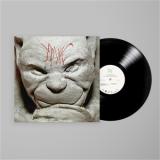
Darning Woman is an intentional, beautiful, sometimes confrontational album that shreds expectations of DIY, bedroom music, and feminine themes. There's a lushness and maternal instinct at play, as Coope connects the dots between physicality, ephemera, and the ultrafeminine. "I don't really like to deal that much with themes of personal hardships, or heartache and love," says Anastasia Coope. "Ultimately, I work most honestly with the language of what is happening in a moment and the passage of time around it. That, coupled with my reaction to entering the artistic landscape, and my thoughts about what does and doesn't get representation, comprises most of this album." Darning Woman explores, among other things, the meditative aspect of sewing, patching and embellishment, care and repair, collection not as modern, craven consumption but as a counterpoint to materialism. This sort of collection - the good kind, the gathering of things to make a home - can be, in Coope's words, "A very baby way to critique capitalism. Birds make nests, right? It can be a new life for a thing that was made. What you surround yourself with matters." To that end, Anastasia Coope is also the founder and leader of the Bonzo collective and show series, an exciting new home for the type of expansive, profoundly creative scene that New York has been missing for some time. And while Bonzo may well be the ascent of a new community, Darning Woman is the story of Anastasia Coope, herself. It is the sound of Coope entering the world as an artist, acknowledging the tangle of what changes - the gaze of the world, Coope's art in reaction and community to art in general - and what does not: her ideas and her own self.
Suche:anastasia coope
- 1
Darning Woman is an intentional, beautiful, sometimes confrontational album that shreds expectations of DIY, bedroom music, and feminine themes. There's a lushness and maternal instinct at play, as Coope connects the dots between physicality, ephemera, and the ultrafeminine. "I don't really like to deal that much with themes of personal hardships, or heartache and love," says Anastasia Coope. "Ultimately, I work most honestly with the language of what is happening in a moment and the passage of time around it. That, coupled with my reaction to entering the artistic landscape, and my thoughts about what does and doesn't get representation, comprises most of this album." Darning Woman explores, among other things, the meditative aspect of sewing, patching and embellishment, care and repair, collection not as modern, craven consumption but as a counterpoint to materialism. This sort of collection - the good kind, the gathering of things to make a home - can be, in Coope's words, "A very baby way to critique capitalism. Birds make nests, right? It can be a new life for a thing that was made. What you surround yourself with matters." To that end, Anastasia Coope is also the founder and leader of the Bonzo collective and show series, an exciting new home for the type of expansive, profoundly creative scene that New York has been missing for some time. And while Bonzo may well be the ascent of a new community, Darning Woman is the story of Anastasia Coope, herself. It is the sound of Coope entering the world as an artist, acknowledging the tangle of what changes - the gaze of the world, Coope's art in reaction and community to art in general - and what does not: her ideas and her own self.
Moon Diagrams – the solo project of Deerhunter co-founder and drummer Moses Archuleta – returns with a second album, Cemetery Classics, on June 21. The 12-track album is a co-release between Sonic Cathedral (in the UK and Europe) and Angus Andrew from Liars’ new label No Gold (in the US and the ROW) and was mixed by James Ford. It features guests including Anastasia Coope, Patrick Flegel (Cindy Lee) and Josh Diamond (Gang Gang Dance). It’s Moses’ first new music since 2019’s Trappy Bats mini-album and the follow-up to 2017’s acclaimed debut Lifetime of Love and everything seems a bit more extreme – from the Basinski-esque degradation of ‘Neptune’ to the Faustian industrial noise of ‘Listen To Me’ via Art of Noise-style postmodern pop (the first single ‘Very Much My Promise to You’), Daft Punk bangers (‘Fifteen Shows at One Time’), trip-hop, shoegaze, Jan Hammer, Depeche Mode, late Leonard Cohen and more. “It’s about finding out your arms are too short to box with god,” says Moses of the emotional force that courses through Cemetery Classics. “It’s the inverse of a desert island disc – a graveyard disc. Songs to take into the afterlife.”
- 1