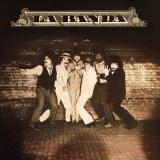
- A1: Tanguedia Iii (Lp1: La Camorra: The Solitude Of Passionate Provocation)
- A2: Milonga Del Angel
- A3: Concierto Para Quinteto
- A4: Milonga Loca
- A5: Michelangelo '70
- A6: Contrabajisimo
- A7: Mumuki
- B1: Soledad (Lp2: La Camorra: The Solitude Of Passionate Provocation)
- B2: La Camorra I
- B3: La Camorra Ii
- B4: La Camorra Iii
- B5: Fugata
- B6: Sur: Los Suenos (South: The Dreams) (South: The Dreams)
- B7: Sur: Regreso Al Amor (South: A Return To Love) (South: A Return To Love)
- C1: Prologue (Tango Apasionado) (Tango Apasionado)
- C2: Milonga For Three
- C3: Street Tango
- C4: Milonga Picaresque
- C5: Knife Fight
- C6: Leonora's Song
- C7: Prelude To The Cyclical Night (Part 1)
- C8: Butcher's Death
- C9: Leijia's Game
- C10: Milonga For Three (Reprise)
- C11: Bailongo
- C12: Leonora's Love Theme
- C13: Finale (Tango Apasionado) (Tango Apasionado)
- C14: Prelude To The Cyclical Night (Part 2)
Suche:astor piazzolla
- 1
- A1: Tanguedia Iii (Lp1: La Camorra: The Solitude Of Passionate Provocation)
- A2: Milonga Del Angel
- A3: Concierto Para Quinteto
- A4: Milonga Loca
- A5: Michelangelo '70
- A6: Contrabajisimo
- A7: Mumuki
- B1: Soledad (Lp2: La Camorra: The Solitude Of Passionate Provocation)
- B2: La Camorra I
- B3: La Camorra Ii
- B4: La Camorra Iii
- B5: Fugata
- B6: Sur: Los Suenos (South: The Dreams) (South: The Dreams)
- B7: Sur: Regreso Al Amor (South: A Return To Love) (South: A Return To Love)
- C1: Prologue (Tango Apasionado) (Tango Apasionado)
- C10: Milonga For Three (Reprise)
- C11: Bailongo
- C12: Leonora's Love Theme
- C13: Finale (Tango Apasionado) (Tango Apasionado)
- C14: Prelude To The Cyclical Night (Part 2)
- C2: Milonga For Three
- C3: Street Tango
- C4: Milonga Picaresque
- C5: Knife Fight
- C6: Leonora's Song
- C7: Prelude To The Cyclical Night (Part 1)
- C8: Butcher's Death
- C9: Leijia's Game
Egle Martin enjoyed a long career as a dancer, actress, singer and played an important role in the promotion of Afro roots in Rio de la Plata and in reclaiming Afro-Argentine culture. Her performances were fresh and powerful, showcasing diversity and, later on in her career, her desire to diffuse Afro-Latin American culture. By the time this single was recorded, Egle Martin had already performed in several plays and films; she had already sung with Dizzy Gillespie and the Berlin Symphony Orchestra; she had already released an album with composer and bandoneon player Astor Piazzolla. And she was already beginning to frequent the Casa Suiza, with its gatherings and carnivals in the neighborhoods of San Telmo and San Nicolás in the beautiful Buenos Aires of the 1960s, teeming with happenings and avant-garde galleries. Egle sings in Spanish and her voice dazzles with a very distinctive sound and texture as she performs these rhythms; you can clearly appreciate the freedom and power in her vocals. In 'El Dombe' tenderness permeates the lyrics as she tells the world what this dance and its cadenced rhythm is all about. 'Dombe Bariló' is bolder and more sweeping in scope: the ritual and empowering message is uplifting... Roberto Montiel's arrangements are a prime example of the brilliant fusion of soul, funk and Latin American music, all linked through Afro roots. Originally released in 1970 on Music Hall in Argentina, it has become an elusive and sought-after record over the years, at the top of many collectors wants list due to its amazing dance floor energy. First time 7” reissue. TRACKLIST Side A EL DOMBE Side B DOMBE BARILO
Individually, Kronos Quartet and Sun Ra are two of the most groundbreaking names in contemporary music. The former is the legendary San Francisco-based string quartet that laid a blueprint for what concert music could become, working with the likes of John Cage, Tanya Tagaq, and Astor Piazzolla. The latter was a singular jazz and avant-garde bandleader, as well as a philosopher and poet, who honed an extraordinary strain of cosmic experimental music from the 1950s until his ascension in 1993. As a capstone to Kronos Quartet’s 50th anniversary, the group has joined forces with the Red Hot Organization for the new album Outer Spaceways Incorporated: Kronos Quartet & Friends Meet Sun Ra. It’s stacked with some of the most innovative artists active today — everyone from multidimensional electronic musician Jlin, to Moor Mother and DJ Haram’s radical noise / rap project 700 Bliss, to abstract hip hop luminaries Armand Hammer, to avant-garde hero Laurie Anderson, to minimalist pioneer Terry Riley.
Mit einer fesselnden Zusammenstellung neu-geschriebener, klangmalerischer Arrangements für Violine und Orchester von bekannten Film- und Serien-Soundtracks und neuen Kompositionen der Oscar-prämierten Komponistinnen Rachel Portman und Anne Dudley zeigt die Geigerin Esther Abrami auf Cinéma ihre Vielseitigkeit, musikalische Sensibilität und Raffinesse. "Ich bin so stolz auf mein neues Album. Ich wollte eine abwechslungsreiche musikalischer Reise zusammenstellen, die meinen klassischen Hintergrund, mein französisch-jüdisches Erbe, meine Unterstützung für Frauen in der Musik und meine Liebe zu Filmen und Anime widerspiegelt und verschiedene Genres, Kulturen und Generationen verbindet. Ich hoffe, dass sich die Zuhörer*innen in die Musik von Cinéma genauso verlieben wie ich", erklärt Esther Abrami. Cinéma enthält neue Arrangements von Blockbuster-Hits aus Animes, Serien und Kinofilmen wie Naruto und Demon Slayer, The Witcher oder The Hunger Games, genauso wie Musik aus ikonischen französischen Filmen wie die Die fabelhafte Welt der Amelie und Die Kinder des Monsieur Mathieu. Darüber hinaus sind klassische Stücke aus Filmen mit Musik von Pjotr Tschaikowsky, Dmitri Schostakowitsch und Astor Piazzolla sowie zwei Weltpremieren der Oscar-prämierten Komponistinnen Anne Dudley und Rachel Portman enthalten, mit denen Esther Abrami persönlich bekannt ist. Besonders emotional ist die Verbindung der durch ihre Großmutter zur Geige gekommenen Musikerin jedoch zu den Filmen Das Leben ist schön und Das Tagebuch der Anne Frank. Ein ebenfalls sehr emotionales Stück auf Cinéma ist das neue Arrangement vom Thema des Protagonisten "Zeyn" aus dem Oscar-nominierten libanesischen Sozialdrama Capernaum, das Komponist und Film-Produzent Khaled Mouzanar eigens für Esther Abrami geschrieben hat. Für die Erstellung der Arrangements von Cinéma hat Esther Abrami mit einem Team von Arrangeur*Innen zusammengearbeitet. Bis auf das ursprünglich für Klavier geschriebene Stück "Comptine d'un autre été, l'après-midi" aus Die fabelhalte Welt der Amelie, das Esther Abrami mit einer Loop-Station auf der Geige neu aufgebaut hat, und "Libertango" von Astor Piazzolla aus Le Pont du Nord, für das sie nur von dem Gitarristen Marcin begleitet wird, ist jedes Stück auf dem Album mit Orchester produziert. Die Aufnahmen zu Cinéma fanden mit dem City of Prague Philharmonic Orchestra unter der Leitung des Dirigenten und Arrangeurs Ben Palmer in den legendären Smecky Studios in Prag statt.
Juan Pablo Torres was one of the best trombone players in the Latin-jazz community of the second half of the 20th century.
He was the director of Algo Nuevo and a member of Irakere, two of the leading exponents of Afro-Cuban jazz in the 1970s and 1980s. He has also directed various Cuban supergroups such as Estrellas de Areito and Cuban Masters.
Almost all of his albums were made for Areito de La Habana, Cuba.
‘Cuba Disco’ was the only album released in his name in Europe; recorded in Milan in 1984 and produced by Aldo Pagani. In Italy in the same year he participated in two records by Pino Daniele and one by Astor Piazzolla.
Accompanied by his faithful Gruppo Algo Nuevo, with the addition of some guests such as the Italian jazz guitarist Angelo Arienti, his traditional Afro-Cuban vein is contaminated by disco and balearic moments; as in the case of the magnificent ‘Bermuda Triangle’ which anticipates the current atmosphere of Nu Genea.
Limited edition. Released from the transfer of the original master tape.
- A1: Banana Peel Samba
- A2: Thrasher In The Fastlane
- A3: Girl In The Random Dark
- A4: Una Noche En Tijuana
- A5: Satellite Samba
- A6: Space Jazz From Spazzmotica
- A7: Nu Roman Tek Ride
- B1: Weird Thrash Hop
- B2: World Of End
- B3: The Serious Metal Question
- B4: The Salsatronic Theme
- B5: Funky Spy Suite
- B6: Theme Of The Heroine
- B7: Hummn' With Mr Synth
Original compositions for virtual game music recorded in 1995 by Los Microwaves founder David Javelosa. That period in the 90s was one of rare times that Los Angeles was sort of a fun. You'd go somewhere for a drink and hear the late 1950s-early 1960s quirky instrumental pop that became known that year by the "Space Age Bachelor Pad Music" sobriquet. Many of the 14 tracks you are ideally hearing now for the first time were inspired by that long-gone cocktail-glass-shaped crack in time. Made in a tiny Santa Monica studio, surrounded by bits and pieces of torn-apart game consoles, trashed Casios and forgotten keyboards, inventing this set of ephemeral computer-generated sounds. Javelosa remembers what begat the tunes. Thrasher in the Fast Lane, inspired by driving on Bay Area freeways, fast, after hours, an Astor Piazzolla melody blowing with the wind, a party in Mexico City, an exotic perfume, Chet Baker in the background. He's always been fascinated by the concept of computer-generated jazz – still is. The sound of uncertainty, musical cut 'n' paste, excitement when something occurs that maybe has never happened before.
Former member of Rodolfo Alchourrón and Gato Barbieri's bands, Cevasco's first solo effort is a combination of fusion jazz with a pinch of unexpected Brazilian flavours and electronic sounds that now, more than 30 years after the original release of the album, still evoke a refreshing feel of modernity in the same vein as many other experimental Argentine and Uruguayan artists from the same era. Includes guest appearances from artists such as Litto Nebbia or Ruben Rada. Reissued on vinyl for the first time, including insert with liner notes and previously unseen photos. Details: Few musicians can boast of having played with "the greatest" without some eyebrows to be raised. The bass of Adalberto Cevasco has been heard in multiple concerts and recording sessions of artists as diverse as the Spanish divas Rocío Jurado and Isabel Pantoja, tango genius Astor Piazzolla or the cream of the Argentine jazz scene -from Pocho Lapouble, Gustavo Kerestezachi, Rubén López Furst or Andrés Boiarsky to the great Gato Barbieri- With the latter, as part of a dream band that included artists like Nana Vasconcelos as well as other Argentines such as Lapouble or Domingo Cura, he recorded two fundamental pieces in the Impulse! label catalogue in sessions held in Argentina and Los Angeles and also toured across various countries. The daily sold-out shows at the Regina Theater in Buenos Aires and their overwhelming performance at Montreux Festival are still well remembered. It is therefore out of question that Adalberto Cevasco belongs to that top-level league of musicians whose talent has also contributed to enhance those who accompany them. The history of this album begins with an encounter. Adalberto Cevasco joins Rodolfo Alchurrón's jazz-funk project Sanata y Clarificación as bassist and meets Litto Nebbia, who is invited to sing along. Some years on, when Nebbia's Melopea record company was developing, he would receive a cassette with a collection of demos recorded by Cevasco over the years. Some of the songs dated back to 1981 while others were made well into the decade and included such outstanding collaborations as that of the Uruguayan Rubén Rada, whom Adalberto Cevasco had met playing in a group of fusion candombe called Candonga. In addition to producing the complete album, Nebbia would also collaborate in a special way in one of the most outstanding tracks (Reencuentros Nº2) by adding to Cevasco's fusion jazz some unexpected Brazilian flavours and electronic sounds that now, more than 30 years after the original release of the album, they still evoke a refreshing feel of modernity. As the Argentine press of the moment highlighted, it'd seem as if the influences received and developed by the bassist during his career as a freelance musician - from post-Piazzolla tango to proyección folclórica (a movement of revision and modernization of the Argentinian musical roots) - had been added to their superb rhythmic work in this album. "Pájaros Eléctricos" was never presented live and has remained as the only published work by Cevasco as a soloist since the date of its release.
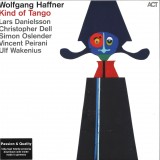
‘Kind of Tango’ is a kaleidoscope of shifting emotions. Wolfgang Haffner’s conception of tango has drama and propulsion in it but also melancholy and longing, with room for frenetic outbursts too. All this is unified by his inimitable groove and feel that commentators have called “an absolute dream,” “magical” and “profoundly relaxed.” Alongside trusted co-protagonists Christopher Dell and Lars Danielsson, he has two guests with him who defy all the clichés associated with tango: guitarist Ulf Wakenius cut his teeth musically in Oscar Peterson’s band and his Swedish heritage always shines through in his playing; Vincent Peirani is one of the leading innovators on the accordion and he finds new ways to define the instrument’s role in the tango. Also, young pianist Simon Oslender makes a first appearance with the band. Jazz and tango find a natural yet constantly shifting equilibrium - to be heard particularly effectively on ‘Close Your Eyes And Listen’ by Astor Piazzolla. In addition to compositions by Haffner himself and by his band members, pieces by the celebrated Argentinian bandoneon player and composer are the focal point of the album. Piazzolla’s innovations with the tango, such as bringing jazz into it, date from around 1955. Haffner and the tango
seem perfectly matched to each other. Tango is no longer a fixed style nowadays, it is above all an attitude to playing and an attitude to life. Wolfgang Haffner’s approach to tango is both authentic and new. It is his and his alone and it is irresistible.
- 1