Search:bad boys blue

Styles
All
  • 1
Ivor Cutler - Privilege LP
 
38

Ivor Cutler is loved by generations of fans - including Paul McCartney, Billy Connolly and Alex Kapranos - for his unique music and poetic humour. A phenomenal stage presence for 50 years, with a prolific output. Championed by legendary DJ John Peel for whom Cutler recorded 21 sessions. 'Privilege' was produced as a vinyl LP for Rough Trade Records in 1983 and has been unavailable for decades. The album is only one of two where Cutler collaborates with other artists. It is unique in that there is a second voice - singer Linda Hirst. Musicians Steve Beresford and David Toop play several instruments and produced the record.

In Stock

On Stock and ready to ship

14,92
Moby - Ambient (LP)

Moby

Ambient (LP)

12inchIDIOT2
Little Idiot
18.02.2026

Vinylneuauflage von Mobys "Ambient" Album von 1993, seine erste Exkursion in die Ambient-Musik, die seitdem zu einem seiner Markenzeichen wurde. Mit Ausnahme einer limitierten Clear-Vinyl-Ausgabe 2022 gab es dieses Album nur als CD, nie flächendeckend auf Vinyl. Moby hat die Techno/Electronic-Szene massgeblich beeinflusst, später den Popmarkt erobert und Acts wie David Bowie, Public Enemy, Ozzy Osbourne, die Beastie Boys und Daft Punk produziert und geremixt.

out of Stock

Order now and we will order the item for you at our supplier.

27,69

Last In: 21 days ago
THE GOOD, BAD & ZUGLY - NOVEMBER BOYS
  • November Boys
  • How To Do Nothing
  • Norwegians Abroad
  • Dig A Ditch
  • A Blazer In The Northern Sky
  • Scandinavian Crispr Brat
  • Fomo (Fear Of Missing Oslo)
  • Hadeland Hardcore
  • All My Friends Are Dead Inside
  • New Kids On The Blockchain
also available

Pink Vinyl[36,56 €]


Through the album trilogy Misanthropical House, Algorithm and Blues and Research and Destroy, The Good The Bad and The Zugly have limped their way through midlife crises and pubescent antics. Loud-mouthed and bitter, we have embraced our fate as mediocre losers on the narrow and winding Scandirock path. Haunted by a constant bad conscience over the outcome of our miserable lives, which in addition to bitterness, have resulted in substance abuse, pettiness, greed, spiritual lethargy, bastard offspring, excessive self-confidence, understated self-awareness, and of course - bodily decay. In breif; A urinal without a drain. The question has always been nagging: Why us? Why have we, since the dawn of time, been made to curse the day we were born? Well, the truth shall set you free, as they say.

pre-order now05.09.2025

expected to be published on 05.09.2025

34,24

Last In: 2026 years ago
THE GOOD, BAD & ZUGLY - NOVEMBER BOYS

THE GOOD, BAD & ZUGLY

NOVEMBER BOYS

12inchINDIEPL387
Indie Recordings
05.09.2025

Limited pink vinyl. Through the album trilogy Misanthropical House, Algorithm and Blues and Research and Destroy, The Good The Bad and The Zugly have limped their way through midlife crises and pubescent antics. Loud-mouthed and bitter, we have embraced our fate as mediocre losers on the narrow and winding Scandirock path. Haunted by a constant bad conscience over the outcome of our miserable lives, which in addition to bitterness, have resulted in substance abuse, pettiness, greed, spiritual lethargy, bastard offspring, excessive self-confidence, understated self-awareness, and of course - bodily decay. In breif; A urinal without a drain. The question has always been nagging: Why us? Why have we, since the dawn of time, been made to curse the day we were born? Well, the truth shall set you free, as they say.

pre-order now05.09.2025

expected to be published on 05.09.2025

36,56

Last In: 2026 years ago
Killa P & Numa Crew - Killing Time LP

After many years of artistic collaboration, the long-awaited album, KILLING TIME, bringing together London-based MC Killa P and Italian Bass music collective Numa Crew, has finally arrived.

Killa P, a name synonymous with potent lyricism and raw energy in the Grime scene, delivers a vocal masterclass throughout his debut long-player, soundtracked by the stellar production of the Numa Crew. Together they expertly navigate genres including dubstep, grime, dub, and jungle, while maintaining a distinct and cohesive musical identity.

Not simply a collection of individual tracks, Killing Time is a meticulously crafted journey through sound system music. There are no stylistic boundaries, as the long-player encompasses the entire musical spectrum that unites the Italian crew with the London-based MC, with Killa P free to showcase his evolution as an artist. Alongside them, the album also brings together a diverse cast of friends and collaborators, vocalists, and producers, each adding their own unique flavor.

From the pulsating dubstep-infused Boys in Blue, a searing commentary on social inequality, to the reggae-tinged steppa tune Love Inna We Heart featuring Charlie P and Long Range, a plea for unity and love, Killa P's lyrical dexterity shines.

Tracks such as Champion Sound, Badman City Pt.2 featuring the French Ragga legend Big Red, and No Laugh featuring Big Chain and Bristol’s Buggsy are a nod to Killa P's roots, beautifully showcasing his mastery of grime's signature sound, while the sped-up tempos of the Fleck collaboration Jungle Leng, and Can't Get Me Down featuring Ras Demo, inject a jolt of Junglist attitude. Different Life is a vibrant ‘carnival’ jam, that infuses grime and dancehall moods and sees the great Lady Lykez on the second verse.

The album wraps on a contemplative note with Dreaming, a collaboration with Abstract Sonance, and Heartless, featuring Killa’s son GK on production, revealing an introspective note that adds yet more depth to Killa P's artistry.

As the album’s second track, Family, proclaims: ‘man a deal with family, not friends’ - a fitting line to define the album as a whole… An ode to the unity and strength of family.

out of Stock

Order now and we will order the item for you at our supplier.

22,65

Last In: 51 days ago
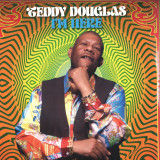
Teddy Douglas - I’m Here LP 2x12"

US House Music legend Teddy Douglas of Basement Boys and Jasper St. Co. fame gets set to unleash his first solo artist album, ‘I’m Here’, on the iconic label, Nervous Records. Teddy has gone all out to deliver one of his most creative and musically diverse albums to date. ‘I’m Here’ is a colourful pallet of meaningful songs and grooves that reach far beyond Teddy’s signature soulful Baltimore House sound, with added infusions of Funk, Rock and Jazz, yet still loaded with plenty of Teddy’s trademark House and Disco sounds that we all know and love.

Across the album he’s pulled together an array of heavyweight international vocal talent including; UK vocal diva Pauline Taylor; Danish award winning Folk and Blues artist, Richard Farrell; Chi Town Hip House legend, Fast Eddie; dance music’s legendary No.1 vocal queen, Ultra Naté; up and coming Brit Soul talent, Sipho; and Buckshot from Blackmoon appearing as BDI Thug. From the shimmering cover of The Frontline Orchestra’s ‘Don’t Turn Your Back On Me’ with Pauline Taylor on the vocals, to the downtempo rocky vibes of ‘Help!’ with Sipho delivering a spine-tingling gravelly vocal, ‘I’m Here’ is testament to Teddy’s finely tuned expert musicianship and impeccable knack for penning great songs and delivering vibrant covers.

Baltimore’s Teddy Douglas has produced everyone from Michael Jackson, Lenny Kravitz, Crystal Waters, Erykah Badu, Martha Wash and Ultra Nate’ and was an important figure in the development of the Baltimore “House” Sound. Teddy has held down a long and successful DJ career since 1983 staring out in Baltimore and spreading his wings globally gracing the decks at clubs such as Yellow in Japan to London’s Ministry of Sound and beyond. In 1985 he met Jay Steinhour and Thommy Davis, who later formed The Basement Boys production company. The Basement Boys have produced countless dance classics like Crystal Waters’ 1991 Gold single, ‘Gypsy Woman’. In the mid 90’s Teddy Douglas and Jay Steinhour opened Basement Boys Records and released club anthems from Teddy Douglas, Jasper St. Co., Ann Nesby, Those Guys, DJ Spen, Byron Stingly, Karizma, Kenny Bobien, Taja Seville and more

out of Stock

Order now and we will order the item for you at our supplier.

24,66

Last In: 8 months ago
Cass Elliot - Don`t Call Me Mama Anymore LP

After her success with The Mamas & The Papas and two albums under the Mama Cass alias, the 1972 album Cass Elliot was her first record under her real name. After her success with The Mamas & The Papas and two albums under the Mama Cass alias, the 1972 album Cass Elliot was her first record under her real name. The album created the atmosphere of 1930’s Hollywood with a beautiful cover shot by George Hurrell. The music consisted of great songs written by Judee Sill, Bobby Darin, and Bruce Johnston of the Beach Boys. These perfectly showcase the amazing vocalist that Cass was.
Cass Elliot is available as a limited edition of 1000 individually numbered copies on silver coloured vinyl, housed in a gatefold sleeve.

pre-order now24.05.2024

expected to be published on 24.05.2024

32,35

Last In: 2026 years ago
Valerie from the Galerie - Long Time Listener First Time Caller

Valerie from the Galerie steps back into the low-key, light-dark with another long-playing release for What About Never. An ode to the lost FM waves of talk radio, late-night Quiet Storm jams and WBLS mastermixes, Long Time Listener First Time Caller scans the frequencies between dream house music and midnight blue ambient moods.

out of Stock

Order now and we will order the item for you at our supplier.

22,06

Last In: 2 years ago
Various - Fetenhits - The Real 90s LP 4x12"
 
41

„The 90’s are back!“ – 30 Jahre später ist das beliebte Jahrzehnt musikalisch wieder voll im Trend! Auf der „FETENHITS - The Real 90’s“ sind die Originale der größten Party-Hymnen der Dekade vereint.

Ob die groovigen Sounds von „No Diggity“, der absolute Ohrwurm „Wannabe“ oder die Kult-Nummer „Mambo No. 5“ - Der bunte Mix der besten Party-Songs und Klassiker der 90‘s ist voller „Good Vibrations“!

Mit dabei sind u.a. U2, Britney Spears, Salt-N-Pepa, 20 Fingers & Gillette, Freddie Mercury, La Bouche, DJ Bobo, TLC, Backstreet Boys und viele mehr.

„We Bring It All Back“ mit den größten Party-Hits der 90er! Erhältlich als 4LP, 4CD und eAlbum ab dem 29. September 2023!

out of Stock

Order now and we will order the item for you at our supplier.

36,93

Last In: 20 days ago
Robbie & Mona - Tusky LP

Robbie & Mona

Tusky LP

12inchSPINNY010
Spinny Nights
04.07.2023

On their sophomore effort Tusky, surrealist duet Robbie & Mona ascend beyond the lo-fi scrawlings of their debut album to something altogether more grandiose. Between the lights down drama of sprawling opener ‘Sensation’, to the ‘roll credits’ coda of closer ‘Always Gonna Be A Dead Man’, Tusky exists as a glitzy, lucid journey playing out before the listener.
While debut album EW captured William Carkeet and Ellie Gray as they were finding their feet with one another, creating Tusky was a wholly symbiotic process from day one. “We got better at knowing what each other wanted,” William offers. “This was the album that we were trying to make from the beginning.”

Simultaneously evoking multiple eras of music, the album drifts through worlds of synth pop, jazz, trap, drill, ballroom waltz and leftfield electronica, with the scatterbrain sound palette melded by a peppering of instrumental motifs and William’s addiction to sampling sounds across multiple tracks. “I wanted there to be this weird dimensional thing going on,” William explains, “where songs from the album are playing in multiple places.”

The record sees an expansive cast of musicians assembled, with a much heavier focus on live instrumentation than previous outings. Alongside the expected fare of crackly synths, samplers and drum machines, Tusky gets its glossy sheen from a rich tapestry of jazz drums, double bass, grand piano and saxophone.

Most of the tracks are laden with improvised saxophone from Campbell Baum (Sorry, Broadside Hacks) and Ben Vince (Housewives, Joy Orbison), much of which was scrambled by William in post-production, lifting scraps from one song and layering them atop an entirely different track. Elsewhere, session musicians were cherry picked, including Bingo Fury, his drummer Henry Terrett, and a string ensemble led by Caelia Lunniss and Jo Silverston (Spindle Ensemble).

Most surprising is a rap feature from Monika (of South-East London collective Nukuluk), who brings album centrepiece ‘Mildred’ to new heights with a fiery verse on pain. Aside from being the most unlikely addendum to a sombre piano ballad, it demonstrates Robbie & Mona’s natural state of playfulness, forever following emotions and sensuality over any notion of traditional compositional boundaries.
Many of Tusky's tracks owe their inception to cinema, be it the soundtrack to Betty Blue, the glowing films of Wim Wenders, or the surprising parallels between La Belle Et La Bete and Bad Boys. Equally, much of Robbie & Mona's new-found sense of tension and spectacle comes from William’s recent work soundtracking independent filmmakers, while Ellie gave greater priority to threading a narrative through her stream of consciousness writing style.

In all its majesty, Tusky celebrates creativity with creation. “If you begin to see fiction as real, you can reincarnate and become different things. You can grow,” Ellie implores. “Nothing stays the same. You can shed old characters in yourself. There’s great joy in that.”

out of Stock

Order now and we will order the item for you at our supplier.

23,49

Last In: 2 years ago
Mötley Crüe - Crücial Crüe - The Studio Albums 1981-1989 (5x12")
 
51

Nach der erfolgreichen "The Stadium Tour" von MÖTLEY
CRÜE mit DEF LEPPARD, bei der sie in diesem Jahr vor
über einer Million Fans in Nordamerika gespielt haben,
kündigt BMG die Veröffentlichung des limitierten Box-Sets
"Crücial Crüe: The Studio Albums 1981-1989" mit den
ersten fünf Platin-Alben von MÖTLEY CRÜE auf farbigem
Vinyl an: "Too Fast For Love" (weiß/schwarz Splatter),
"Shout At The Devil" (gelb/schwarz Splatter), "Theatre Of
Pain" (pink/schwarz Splatter), "Girls, Girls, Girls"
(cyanblau/schwarz Splatter) und "Dr. Feelgood" (Coke
Bottle Green/Oxblood Splatte). Die 5LP Box kommt in
einem edlen schwarzen Schuber

pre-order now17.02.2023

expected to be published on 17.02.2023

142,82

Last In: 2026 years ago
Lee Tracy & Isaac Manning - Is it What You Want

As the sun sets on a quaint East Nashville house, a young man bares a piece of his soul. Facing the camera, sporting a silky suit jacket/shirt/slacks/fingerless gloves ensemble that announces "singer" before he's even opened his mouth, Lee Tracy Johnson settles onto his stage, the front yard. He sways to the dirge-like drum machine pulse of a synth-soaked slow jam, extends his arms as if gaining his balance, and croons in affecting, fragile earnest, "I need your love… oh baby…"

Dogs in the yard next door begin barking. A mysterious cardboard robot figure, beamed in from galaxies unknown and affixed to a tree, is less vocal. Lee doesn't acknowledge either's presence. He's busy feeling it, arms and hands gesticulating. His voice rises in falsetto over the now-quiet dogs, over the ambient noise from the street that seeps into the handheld camcorder's microphone, over the recording of his own voice played back from a boombox off-camera. After six minutes the single, continuous shot ends. In this intimate creative universe there are no re-takes. There are many more music videos to shoot, and as Lee later puts it, "The first time you do it is actually the best. Because you can never get that again. You expressing yourself from within."

"I Need Your Love" dates from a lost heyday. From some time in the '80s or early '90s, when Lee Tracy (as he was known in performance) and his music partner/producer/manager Isaac Manning committed hours upon hours of their sonic and visual ideas to tape. Embracing drum machines and synthesizers – electronics that made their personal futurism palpable – they recorded exclusively at home, live in a room into a simple cassette deck. Soul, funk, electro and new wave informed their songs, yet Lee and Isaac eschewed the confinement of conventional categories and genres, preferring to let experimentation guide them.

"Anytime somebody put out a new record they had the same instruments or the same sound," explains Isaac. "So I basically wanted to find something that's really gonna stand out away from all of the rest of 'em." Their ethos meant that every idea they came up with was at least worth trying: echoed out half-rapped exhortations over frantic techno-style beats, gospel synth soul, modal electro-funk, oddball pop reinterpretations, emo AOR balladry, nods to Prince and the Fat Boys, or arrangements that might collapse mid-song into a mess of arcade game-ish blips before rallying to reach the finish line. All of it conjoined by consistent tape hiss, and most vitally, Lee's chameleonic voice, which managed to wildly shape shift and still evoke something sincere – whether toggling between falsetto and tenor exalting Jesus's return, or punctuating a melismatic romantic adlib with a succinct, "We all know how it feels to be alone."

"People think we went to a studio," says Isaac derisively. "We never went to no studio. We didn't have the money to go to no studio! We did this stuff at home. I shot videos in my front yard with whatever we could to get things together." Sometimes Isaac would just put on an instrumental record, be it "Planet Rock" or "Don't Cry For Me Argentina" (from Evita), press "record," and let Lee improvise over it, yielding peculiar love songs, would-be patriotic anthems, or Elvis Presley or Marilyn Monroe tributes. Technical limitations and a lack of professional polish never dissuaded them. They believed they were onto something.

"That struggle," Isaac says, "made that sound sound good to me."

In the parlance of modern music criticism Lee and Isaac's dizzying DIY efforts would inevitably be described as "outsider." But "outsider" carries the burden of untold additional layers of meaning if you're Black and from the South, creating on a budget, and trying to get someone, anyone within the country music capital of the world to take your vision seriously. "What category should we put it in?" Isaac asks rhetorically. "I don't know. All I know is feeling. I ain't gonna name it nothing. It's music. If it grabs your soul and touch your heart that's what it basically is supposed to do."

=

Born in 1963, the baby boy of nine siblings, Lee Tracy spent his earliest years living amidst the shotgun houses on Nashville's south side. "We was poor, man!" he says, recalling the outhouse his family used for a bathroom and the blocks of ice they kept in the kitchen to chill perishables. "But I actually don't think I really realized I was in poverty until I got grown and started thinking about it." Lee's mom worked at the Holiday Inn; his dad did whatever he had to do, from selling fruit from a horse drawn cart to bootlegging. "We didn't have much," Lee continues, "but my mother and my father got us the things we needed, the clothes on our back." By the end of the decade with the city's urban renewal programs razing entire neighborhoods to accommodate construction of the Interstate, the family moved to Edgehill Projects. Lee remembers music and art as a constant source of inspiration for he and his brothers and sisters – especially after seeing the Jackson 5 perform on Ed Sullivan. "As a small child I just knew that was what I wanted to do."

His older brother Don began musically mentoring him, introducing Lee to a variety of instruments and sounds. "He would never play one particular type of music, like R&B," says Lee. "I was surrounded by jazz, hard rock and roll, easy listening, gospel, reggae, country music; I mean I was a sponge absorbing all of that." Lee taught himself to play drums by beating on cardboard boxes, gaining a rep around the way for his timekeeping, and his singing voice. Emulating his favorites, Earth Wind & Fire and Cameo, he formed groups with other kids with era-evocative band names like Concept and TNT Connection, and emerged as the leader of disciplined rehearsals. "I made them practice," says Lee. "We practiced and practiced and practiced. Because I wanted that perfection." By high school the most accomplished of these bands would take top prize in a prominent local talent show. It was a big moment for Lee, and he felt ready to take things to the next level. But his band-mates had other ideas.

"I don't know what happened," he says, still miffed at the memory. "It must have blew they mind after we won and people started showing notice, because it's like everybody quit! I was like, where the hell did everybody go?" Lee had always made a point of interrogating prospective musicians about their intentions before joining his groups: were they really serious or just looking for a way to pick up girls? Now he understood even more the importance of finding a collaborator just as committed to the music as he was.

=

Isaac Manning had spent much of his life immersed in music and the arts – singing in the church choir with his family on Nashville's north side, writing, painting, dancing, and working various gigs within the entertainment industry. After serving in the armed forces, in the early '70s he ran The Teenage Place, a music and performance venue that catered to the local youth. But he was forced out of town when word of one of his recreational routines created a stir beyond the safe haven of his bohemian circles.

"I was growing marijuana," Isaac explains. "It wasn't no business, I was smoking it myself… I would put marijuana in scrambled eggs, cornbread and stuff." His weed use originated as a form of self-medication to combat severe tooth pain. But when he began sharing it with some of the other young people he hung out with, some of who just so happened to be the kids of Nashville politicians, the cops came calling. "When I got busted," he remembers, "they were talking about how they were gonna get rid of me because they didn't want me saying nothing about they children because of the politics and stuff. So I got my family, took two raggedy cars, and left Nashville and went to Vegas."

Out in the desert, Isaac happened to meet Chubby Checker of "The Twist" fame while the singer was gigging at The Flamingo. Impressed by Isaac's zeal, Checker invited him to go on the road with him as his tour manager/roadie/valet. The experience gave Isaac a window into a part of the entertainment world he'd never encountered – a glimpse of what a true pop act's audience looked like. "Chubby Checker, none of his shows were played for Black folks," he remembers. "All his gigs were done at high-class white people areas." Returning home after a few years with Chubby, Isaac was properly motivated to make it in Music City. He began writing songs and scouting around Nashville for local talent anywhere he could find it with an expressed goal: "Find someone who can deliver your songs the way you want 'em delivered and make people feel what you want them to feel."

One day while walking through Edgehill Projects Isaac heard someone playing the drums in a way that made him stop and take notice. "The music was so tight, just the drums made me feel like, oh I'm-a find this person," he recalls. "So I circled through the projects until I found who it was.

"That's how I met him – Lee Tracy. When I found him and he started singing and stuff, I said, ohhh, this is somebody different."

=

Theirs was a true complementary partnership: young Lee possessed the raw talent, the older Isaac the belief. "He's really the only one besides my brother and my family that really seen the potential in me," says Lee. "He made me see that I could do it."

Isaac long being a night owl, his house also made for a fertile collaborative environment – a space where there always seemed to be a new piece of his visual art on display: paintings, illustrations, and dolls and figures (including an enigmatic cardboard robot). Lee and Issac would hang out together and talk, listen to music, conjure ideas, and smoke the herb Isaac had resumed growing in his yard. "It got to where I could trust him, he could trust me," Isaac says of their bond. They also worked together for hours on drawings, spreading larges rolls of paper on the walls and sketching faces with abstract patterns and imagery: alien-like beings, tri-horned horse heads, inverted Janus-like characters where one visage blurred into the other.

Soon it became apparent that they didn't need other collaborators; self-sufficiency was the natural way forward. At Isaac's behest Lee, already fed up with dealing with band musicians, began playing around with a poly-sonic Yamaha keyboard at the local music store. "It had everything on it – trumpet, bass, drums, organ," remembers Lee. "And that's when I started recording my own stuff."

The technology afforded Lee the flexibility and independence he craved, setting him on a path other bedroom musicians and producers around the world were simultaneously following through the '80s into the early '90s. Saving up money from day jobs, he eventually supplemented the Yamaha Isaac had gotten him with Roland and Casio drum machines and a Moog. Lee was living in an apartment in Hillside at that point caring for his dad, who'd been partially paralyzed since early in life. In the evenings up in his second floor room, the music put him in a zone where he could tune out everything and lose himself in his ideas.

"Oh I loved it," he recalls. "I would really experiment with the instruments and use a lot of different sound effects. I was looking for something nobody else had. I wanted something totally different. And once I found the sound I was looking for, I would just smoke me a good joint and just let it go, hit the record button." More potent a creative stimulant than even Isaac's weed was the holistic flow and spontaneity of recording. Between sessions at Isaac's place and Lee's apartment, their volume of output quickly ballooned.

"We was always recording," says Lee. "That's why we have so much music. Even when I went to Isaac's and we start creating, I get home, my mind is racing, I gotta start creating, creating, creating. I remember there were times when I took a 90-minute tape from front to back and just filled it up."

"We never practiced," says Isaac. "See, that was just so odd about the whole thing. I could relate to him, and tell him about the songs I had ideas for and everything and stuff. And then he would bring it back or whatever, and we'd get together and put it down." Once the taskmaster hell bent on rehearsing, Lee had flipped a full 180. Perfection was no longer an aspiration, but the enemy of inspiration.

"I seen where practicing and practicing got me," says Lee. "A lot of musicians you get to playing and they gotta stop, they have to analyze the music. But while you analyzing you losing a lot of the greatness of what you creating. Stop analyzing what you play, just play! And it'll all take shape."

=

"I hope you understood the beginning of the record because this was invented from a dream I had today… (You tell me, I'll tell you, we'll figure it out together)" – Lee Tracy and Isaac Manning, "Hope You Understand"

Lee lets loose a maniacal cackle when he acknowledges that the material that he and Isaac recorded was by anyone's estimation pretty out there. It's the same laugh that commences "Hope You Understand" – a chaotic transmission that encapsulates the duality at the heart of their music: a stated desire to reach people and a compulsion to go as leftfield as they saw fit.

"We just did it," says Lee. "We cut the music on and cut loose. I don't sit around and write. I do it by listening, get a feeling, play the music, and the lyrics and stuff just come out of me."

The approach proved adaptable to interpreting other artists' material. While recording a cover of Whitney Houston's pop ballad "Saving All My Love For You," Lee played Whitney's version in his headphones as he laid down his own vocals – partially following the lyrics, partially using them as a departure point. The end result is barely recognizable compared with the original, Lee and Isaac having switched up the time signature and reinvented the melody along the way towards morphing a slick mainstream radio standard into something that sounds solely their own.

"I really used that song to get me started," says Lee. "Then I said, well I need something else, something is missing. Something just came over me. That's when I came up with 'Is It What You Want.'"

The song would become the centerpiece of Lee and Isaac's repertoire. Pushed along by a percolating metronomic Rhythm King style beat somewhere between a military march and a samba, "Is It What You Want" finds Lee pleading the sincerity of his commitment to a potential love interest embellished by vocal tics and hiccups subtlely reminiscent of his childhood hero MJ. Absent chord changes, only synth riffs gliding in and out like apparitions, the song achieves a lingering lo-fi power that leaves you feeling like it's still playing, somewhere, even after the fade out.

"I don't know, it's like a real spiritual song," Lee reflects. "But it's not just spiritual. To me the more I listen to it it's like about everything that you do in your everyday life, period. Is it what you want? Do you want a car or you don't want a car? Do you want Jesus or do you want the Devil? It's basically asking you the question. Can't nobody answer the question but you yourself."

In 1989 Lee won a lawsuit stemming from injuries sustained from a fight he'd gotten into. He took part of the settlement money and with Isaac pressed up "Saving All My Love For You" b/w "Is It What You Want" as a 45 single. Isaac christened the label One Chance Records. "Because that's all we wanted," he says with a laugh, "one chance."

Isaac sent the record out to radio stations and major labels, hoping for it to make enough noise to get picked up nationally. But the response he and Lee were hoping for never materialized. According to Isaac the closest the single got to getting played on the radio is when a disk jock from a local station made a highly unusual announcement on air: "The dude said on the radio, 107.5 – 'We are not gonna play 'Is It What You Want.' We cracked up! Wow, that's deep.

"It was a whole racist thing that was going on," he reflects. "So we just looked over and kept on going. That was it. That was about the way it goes… If you were Black and you were living in Nashville and stuff, that's the way you got treated." Isaac already knew as much from all the times he'd brought he and Lee's tapes (even their cache of country music tunes) over to Music Row to try to drum up interest to no avail.

"Isaac, he really worked his ass off," says Lee. "He probably been to every record place down on Music Row." Nashville's famed recording and music business corridor wasn't but a few blocks from where Lee grew up. Close enough, he remembers, for him to ride his bike along its back alleys and stumble upon the occasional random treasure, like a discarded box of harmonicas. Getting in through the front door, however, still felt a world away.

"I just don't think at the time our music fell into a category for them," he concedes. "It was before its time."

=

Lee stopped making music some time in the latter part of the '90s, around the time his mom passed away and life became increasingly tough to manage. "When my mother died I had a nervous breakdown," he says, "So I shut down for a long time. I was in such a sadness frame of mind. That's why nobody seen me. I had just disappeared off the map." He fell out of touch with Isaac, and in an indication of just how bad things had gotten for him, lost track of all the recordings they'd made together. Music became a distant memory.

Fortunately, Isaac kept the faith. In a self-published collection of his poetry – paeans to some of his favorite entertainment and public figures entitled Friends and Dick Clark – he'd written that he believed "music has a life of its own." But his prescience and presence of mind were truly manifested in the fact that he kept an archive of he and Lee's work. As perfectly imperfect as "Is It What You Want" now sounds in a post-Personal Space world, Lee and Isaac's lone official release was in fact just a taste. The bulk of the Is It What You Want album is culled from the pair's essentially unheard home recordings – complete songs, half-realized experiments, Isaac's blue monologues and pronouncements et al – compiled, mixed and programmed in the loose and impulsive creative spirit of their regular get-togethers from decades ago. The rest of us, it seems, may have finally caught up to them.

On the prospect of at long last reaching a wider audience, Isaac says simply, "I been trying for a long time, it feels good." Ever the survivor, he adds, "The only way I know how to make it to the top is to keep climbing. If one leg break on the ladder, hey, you gotta fix it and keep on going… That's where I be at. I'll kill death to make it out there."

For Lee it all feels akin to a personal resurrection: "It's like I was in a tomb and the tomb was opened and I'm back… Man, it feels so great. I feel like I'm gonna jump out of my skin." Success at this stage of his life, he realizes, probably means something different than what it did back when he was singing and dancing in Isaac's front yard. "What I really mean by 'making it,'" he explains isn't just the music being heard but, "the story being told."

Occasionally Lee will pull up "Is It What You Want" on YouTube on his phone, put on his headphones, and listen. He remembers the first time he heard his recorded voice. How surreal it was, how he thought to himself, "Is that really me?" What would he say to that younger version of himself now?

"I would probably tell myself, hang in there, don't give up. Keep striving for the goal. And everything will work out."

Despite what's printed on the record label, sometimes you do get more than one chance.

out of Stock

Order now and we will order the item for you at our supplier.

11,72

Last In: 3 years ago
Lee Tracy & Isaac Manning - Is it What You Want LP

As the sun sets on a quaint East Nashville house, a young man bares a piece of his soul. Facing the camera, sporting a silky suit jacket/shirt/slacks/fingerless gloves ensemble that announces "singer" before he's even opened his mouth, Lee Tracy Johnson settles onto his stage, the front yard. He sways to the dirge-like drum machine pulse of a synth-soaked slow jam, extends his arms as if gaining his balance, and croons in affecting, fragile earnest, "I need your love… oh baby…"

Dogs in the yard next door begin barking. A mysterious cardboard robot figure, beamed in from galaxies unknown and affixed to a tree, is less vocal. Lee doesn't acknowledge either's presence. He's busy feeling it, arms and hands gesticulating. His voice rises in falsetto over the now-quiet dogs, over the ambient noise from the street that seeps into the handheld camcorder's microphone, over the recording of his own voice played back from a boombox off-camera. After six minutes the single, continuous shot ends. In this intimate creative universe there are no re-takes. There are many more music videos to shoot, and as Lee later puts it, "The first time you do it is actually the best. Because you can never get that again. You expressing yourself from within."

"I Need Your Love" dates from a lost heyday. From some time in the '80s or early '90s, when Lee Tracy (as he was known in performance) and his music partner/producer/manager Isaac Manning committed hours upon hours of their sonic and visual ideas to tape. Embracing drum machines and synthesizers – electronics that made their personal futurism palpable – they recorded exclusively at home, live in a room into a simple cassette deck. Soul, funk, electro and new wave informed their songs, yet Lee and Isaac eschewed the confinement of conventional categories and genres, preferring to let experimentation guide them.

"Anytime somebody put out a new record they had the same instruments or the same sound," explains Isaac. "So I basically wanted to find something that's really gonna stand out away from all of the rest of 'em." Their ethos meant that every idea they came up with was at least worth trying: echoed out half-rapped exhortations over frantic techno-style beats, gospel synth soul, modal electro-funk, oddball pop reinterpretations, emo AOR balladry, nods to Prince and the Fat Boys, or arrangements that might collapse mid-song into a mess of arcade game-ish blips before rallying to reach the finish line. All of it conjoined by consistent tape hiss, and most vitally, Lee's chameleonic voice, which managed to wildly shape shift and still evoke something sincere – whether toggling between falsetto and tenor exalting Jesus's return, or punctuating a melismatic romantic adlib with a succinct, "We all know how it feels to be alone."

"People think we went to a studio," says Isaac derisively. "We never went to no studio. We didn't have the money to go to no studio! We did this stuff at home. I shot videos in my front yard with whatever we could to get things together." Sometimes Isaac would just put on an instrumental record, be it "Planet Rock" or "Don't Cry For Me Argentina" (from Evita), press "record," and let Lee improvise over it, yielding peculiar love songs, would-be patriotic anthems, or Elvis Presley or Marilyn Monroe tributes. Technical limitations and a lack of professional polish never dissuaded them. They believed they were onto something.

"That struggle," Isaac says, "made that sound sound good to me."

In the parlance of modern music criticism Lee and Isaac's dizzying DIY efforts would inevitably be described as "outsider." But "outsider" carries the burden of untold additional layers of meaning if you're Black and from the South, creating on a budget, and trying to get someone, anyone within the country music capital of the world to take your vision seriously. "What category should we put it in?" Isaac asks rhetorically. "I don't know. All I know is feeling. I ain't gonna name it nothing. It's music. If it grabs your soul and touch your heart that's what it basically is supposed to do."

=

Born in 1963, the baby boy of nine siblings, Lee Tracy spent his earliest years living amidst the shotgun houses on Nashville's south side. "We was poor, man!" he says, recalling the outhouse his family used for a bathroom and the blocks of ice they kept in the kitchen to chill perishables. "But I actually don't think I really realized I was in poverty until I got grown and started thinking about it." Lee's mom worked at the Holiday Inn; his dad did whatever he had to do, from selling fruit from a horse drawn cart to bootlegging. "We didn't have much," Lee continues, "but my mother and my father got us the things we needed, the clothes on our back." By the end of the decade with the city's urban renewal programs razing entire neighborhoods to accommodate construction of the Interstate, the family moved to Edgehill Projects. Lee remembers music and art as a constant source of inspiration for he and his brothers and sisters – especially after seeing the Jackson 5 perform on Ed Sullivan. "As a small child I just knew that was what I wanted to do."

His older brother Don began musically mentoring him, introducing Lee to a variety of instruments and sounds. "He would never play one particular type of music, like R&B," says Lee. "I was surrounded by jazz, hard rock and roll, easy listening, gospel, reggae, country music; I mean I was a sponge absorbing all of that." Lee taught himself to play drums by beating on cardboard boxes, gaining a rep around the way for his timekeeping, and his singing voice. Emulating his favorites, Earth Wind & Fire and Cameo, he formed groups with other kids with era-evocative band names like Concept and TNT Connection, and emerged as the leader of disciplined rehearsals. "I made them practice," says Lee. "We practiced and practiced and practiced. Because I wanted that perfection." By high school the most accomplished of these bands would take top prize in a prominent local talent show. It was a big moment for Lee, and he felt ready to take things to the next level. But his band-mates had other ideas.

"I don't know what happened," he says, still miffed at the memory. "It must have blew they mind after we won and people started showing notice, because it's like everybody quit! I was like, where the hell did everybody go?" Lee had always made a point of interrogating prospective musicians about their intentions before joining his groups: were they really serious or just looking for a way to pick up girls? Now he understood even more the importance of finding a collaborator just as committed to the music as he was.

=

Isaac Manning had spent much of his life immersed in music and the arts – singing in the church choir with his family on Nashville's north side, writing, painting, dancing, and working various gigs within the entertainment industry. After serving in the armed forces, in the early '70s he ran The Teenage Place, a music and performance venue that catered to the local youth. But he was forced out of town when word of one of his recreational routines created a stir beyond the safe haven of his bohemian circles.

"I was growing marijuana," Isaac explains. "It wasn't no business, I was smoking it myself… I would put marijuana in scrambled eggs, cornbread and stuff." His weed use originated as a form of self-medication to combat severe tooth pain. But when he began sharing it with some of the other young people he hung out with, some of who just so happened to be the kids of Nashville politicians, the cops came calling. "When I got busted," he remembers, "they were talking about how they were gonna get rid of me because they didn't want me saying nothing about they children because of the politics and stuff. So I got my family, took two raggedy cars, and left Nashville and went to Vegas."

Out in the desert, Isaac happened to meet Chubby Checker of "The Twist" fame while the singer was gigging at The Flamingo. Impressed by Isaac's zeal, Checker invited him to go on the road with him as his tour manager/roadie/valet. The experience gave Isaac a window into a part of the entertainment world he'd never encountered – a glimpse of what a true pop act's audience looked like. "Chubby Checker, none of his shows were played for Black folks," he remembers. "All his gigs were done at high-class white people areas." Returning home after a few years with Chubby, Isaac was properly motivated to make it in Music City. He began writing songs and scouting around Nashville for local talent anywhere he could find it with an expressed goal: "Find someone who can deliver your songs the way you want 'em delivered and make people feel what you want them to feel."

One day while walking through Edgehill Projects Isaac heard someone playing the drums in a way that made him stop and take notice. "The music was so tight, just the drums made me feel like, oh I'm-a find this person," he recalls. "So I circled through the projects until I found who it was.

"That's how I met him – Lee Tracy. When I found him and he started singing and stuff, I said, ohhh, this is somebody different."

=

Theirs was a true complementary partnership: young Lee possessed the raw talent, the older Isaac the belief. "He's really the only one besides my brother and my family that really seen the potential in me," says Lee. "He made me see that I could do it."

Isaac long being a night owl, his house also made for a fertile collaborative environment – a space where there always seemed to be a new piece of his visual art on display: paintings, illustrations, and dolls and figures (including an enigmatic cardboard robot). Lee and Issac would hang out together and talk, listen to music, conjure ideas, and smoke the herb Isaac had resumed growing in his yard. "It got to where I could trust him, he could trust me," Isaac says of their bond. They also worked together for hours on drawings, spreading larges rolls of paper on the walls and sketching faces with abstract patterns and imagery: alien-like beings, tri-horned horse heads, inverted Janus-like characters where one visage blurred into the other.

Soon it became apparent that they didn't need other collaborators; self-sufficiency was the natural way forward. At Isaac's behest Lee, already fed up with dealing with band musicians, began playing around with a poly-sonic Yamaha keyboard at the local music store. "It had everything on it – trumpet, bass, drums, organ," remembers Lee. "And that's when I started recording my own stuff."

The technology afforded Lee the flexibility and independence he craved, setting him on a path other bedroom musicians and producers around the world were simultaneously following through the '80s into the early '90s. Saving up money from day jobs, he eventually supplemented the Yamaha Isaac had gotten him with Roland and Casio drum machines and a Moog. Lee was living in an apartment in Hillside at that point caring for his dad, who'd been partially paralyzed since early in life. In the evenings up in his second floor room, the music put him in a zone where he could tune out everything and lose himself in his ideas.

"Oh I loved it," he recalls. "I would really experiment with the instruments and use a lot of different sound effects. I was looking for something nobody else had. I wanted something totally different. And once I found the sound I was looking for, I would just smoke me a good joint and just let it go, hit the record button." More potent a creative stimulant than even Isaac's weed was the holistic flow and spontaneity of recording. Between sessions at Isaac's place and Lee's apartment, their volume of output quickly ballooned.

"We was always recording," says Lee. "That's why we have so much music. Even when I went to Isaac's and we start creating, I get home, my mind is racing, I gotta start creating, creating, creating. I remember there were times when I took a 90-minute tape from front to back and just filled it up."

"We never practiced," says Isaac. "See, that was just so odd about the whole thing. I could relate to him, and tell him about the songs I had ideas for and everything and stuff. And then he would bring it back or whatever, and we'd get together and put it down." Once the taskmaster hell bent on rehearsing, Lee had flipped a full 180. Perfection was no longer an aspiration, but the enemy of inspiration.

"I seen where practicing and practicing got me," says Lee. "A lot of musicians you get to playing and they gotta stop, they have to analyze the music. But while you analyzing you losing a lot of the greatness of what you creating. Stop analyzing what you play, just play! And it'll all take shape."

=

"I hope you understood the beginning of the record because this was invented from a dream I had today… (You tell me, I'll tell you, we'll figure it out together)" – Lee Tracy and Isaac Manning, "Hope You Understand"

Lee lets loose a maniacal cackle when he acknowledges that the material that he and Isaac recorded was by anyone's estimation pretty out there. It's the same laugh that commences "Hope You Understand" – a chaotic transmission that encapsulates the duality at the heart of their music: a stated desire to reach people and a compulsion to go as leftfield as they saw fit.

"We just did it," says Lee. "We cut the music on and cut loose. I don't sit around and write. I do it by listening, get a feeling, play the music, and the lyrics and stuff just come out of me."

The approach proved adaptable to interpreting other artists' material. While recording a cover of Whitney Houston's pop ballad "Saving All My Love For You," Lee played Whitney's version in his headphones as he laid down his own vocals – partially following the lyrics, partially using them as a departure point. The end result is barely recognizable compared with the original, Lee and Isaac having switched up the time signature and reinvented the melody along the way towards morphing a slick mainstream radio standard into something that sounds solely their own.

"I really used that song to get me started," says Lee. "Then I said, well I need something else, something is missing. Something just came over me. That's when I came up with 'Is It What You Want.'"

The song would become the centerpiece of Lee and Isaac's repertoire. Pushed along by a percolating metronomic Rhythm King style beat somewhere between a military march and a samba, "Is It What You Want" finds Lee pleading the sincerity of his commitment to a potential love interest embellished by vocal tics and hiccups subtlely reminiscent of his childhood hero MJ. Absent chord changes, only synth riffs gliding in and out like apparitions, the song achieves a lingering lo-fi power that leaves you feeling like it's still playing, somewhere, even after the fade out.

"I don't know, it's like a real spiritual song," Lee reflects. "But it's not just spiritual. To me the more I listen to it it's like about everything that you do in your everyday life, period. Is it what you want? Do you want a car or you don't want a car? Do you want Jesus or do you want the Devil? It's basically asking you the question. Can't nobody answer the question but you yourself."

In 1989 Lee won a lawsuit stemming from injuries sustained from a fight he'd gotten into. He took part of the settlement money and with Isaac pressed up "Saving All My Love For You" b/w "Is It What You Want" as a 45 single. Isaac christened the label One Chance Records. "Because that's all we wanted," he says with a laugh, "one chance."

Isaac sent the record out to radio stations and major labels, hoping for it to make enough noise to get picked up nationally. But the response he and Lee were hoping for never materialized. According to Isaac the closest the single got to getting played on the radio is when a disk jock from a local station made a highly unusual announcement on air: "The dude said on the radio, 107.5 – 'We are not gonna play 'Is It What You Want.' We cracked up! Wow, that's deep.

"It was a whole racist thing that was going on," he reflects. "So we just looked over and kept on going. That was it. That was about the way it goes… If you were Black and you were living in Nashville and stuff, that's the way you got treated." Isaac already knew as much from all the times he'd brought he and Lee's tapes (even their cache of country music tunes) over to Music Row to try to drum up interest to no avail.

"Isaac, he really worked his ass off," says Lee. "He probably been to every record place down on Music Row." Nashville's famed recording and music business corridor wasn't but a few blocks from where Lee grew up. Close enough, he remembers, for him to ride his bike along its back alleys and stumble upon the occasional random treasure, like a discarded box of harmonicas. Getting in through the front door, however, still felt a world away.

"I just don't think at the time our music fell into a category for them," he concedes. "It was before its time."

=

Lee stopped making music some time in the latter part of the '90s, around the time his mom passed away and life became increasingly tough to manage. "When my mother died I had a nervous breakdown," he says, "So I shut down for a long time. I was in such a sadness frame of mind. That's why nobody seen me. I had just disappeared off the map." He fell out of touch with Isaac, and in an indication of just how bad things had gotten for him, lost track of all the recordings they'd made together. Music became a distant memory.

Fortunately, Isaac kept the faith. In a self-published collection of his poetry – paeans to some of his favorite entertainment and public figures entitled Friends and Dick Clark – he'd written that he believed "music has a life of its own." But his prescience and presence of mind were truly manifested in the fact that he kept an archive of he and Lee's work. As perfectly imperfect as "Is It What You Want" now sounds in a post-Personal Space world, Lee and Isaac's lone official release was in fact just a taste. The bulk of the Is It What You Want album is culled from the pair's essentially unheard home recordings – complete songs, half-realized experiments, Isaac's blue monologues and pronouncements et al – compiled, mixed and programmed in the loose and impulsive creative spirit of their regular get-togethers from decades ago. The rest of us, it seems, may have finally caught up to them.

On the prospect of at long last reaching a wider audience, Isaac says simply, "I been trying for a long time, it feels good." Ever the survivor, he adds, "The only way I know how to make it to the top is to keep climbing. If one leg break on the ladder, hey, you gotta fix it and keep on going… That's where I be at. I'll kill death to make it out there."

For Lee it all feels akin to a personal resurrection: "It's like I was in a tomb and the tomb was opened and I'm back… Man, it feels so great. I feel like I'm gonna jump out of my skin." Success at this stage of his life, he realizes, probably means something different than what it did back when he was singing and dancing in Isaac's front yard. "What I really mean by 'making it,'" he explains isn't just the music being heard but, "the story being told."

Occasionally Lee will pull up "Is It What You Want" on YouTube on his phone, put on his headphones, and listen. He remembers the first time he heard his recorded voice. How surreal it was, how he thought to himself, "Is that really me?" What would he say to that younger version of himself now?

"I would probably tell myself, hang in there, don't give up. Keep striving for the goal. And everything will work out."

Despite what's printed on the record label, sometimes you do get more than one chance.

out of Stock

Order now and we will order the item for you at our supplier.

23,49

Last In: 3 years ago
The Boppers - White Lightning

The Boppers

White Lightning

12inchKING100LP
WILD KINGDOM
01.07.2022

Die Geschichte von The Boppers begann wie ein Märchen über ein paar Teenager aus Stockholm, die zur falschen Zeit am richtigen Ort waren.
Sie gründeten die Band 1977, als der Punkrock auf der ganzen Welt explodierte, und ihre Interpretation des Doo Wop und Rock n Roll der 50er Jahre hätte nicht unpassender sein können, aber sie weigerten sich, sich anzupassen und machten daraus einen Erfolg.
Ihr Debütalbum 'Number One', das hauptsächlich Coverversionen ihrer 50er-Jahre-Lieblingslieder von Roy Orbison, Dion & Belmonts usw. enthielt, verkaufte sich in Schweden über 450 000 Mal! Eine Empfehlung für Fans von Bands wie Rockpile, Drifters, Darts, Dion, Beach Boys, Chuck Berry, Marcels, Blasters, Stray Cats oder Coasters!

pre-order now01.07.2022

expected to be published on 01.07.2022

23,32

Last In: 2026 years ago
Various - BLACK SOLIDARITY PRESENTS : STRING UP THE SOUND SYSTEM

At the beginning of the eighties reggae music became increasingly in tune with what was happening in Kingston’s dance halls… probably more so than at any time since the sound system operators had started to make their own shuffle and boogie recordings in the late fifties. The international audience and the critics were too busy looking for a new Bob Marley to appreciate what was happening downtown and failed to acknowledge that this was a return to the real, raw roots of the music. Brash, confident, young record producers who were totally in tune with the youth audience stepped forward and seized the moment…

Oswald ‘Ossie’ Thomas began his apprenticeship in the music business at the age of fourteen and served his time as a record salesman for Bunny ‘Striker’ Lee and Winston ‘Niney The Observer’ Holness before moving on to Miss Sonia Pottinger’s Tip Top Records.

“I ended up working in three record stores on Orange Street from 1976 to 1981… Yeah man! Me deh ‘pon me bicycle till I buy my motorcycle! Them days records were coming out left, right and centre… every day!” Ossie Thomas

It was during his time with Miss Pottinger that Ossie began to produce records for himself and in 1979 Ossie and Phillip Morgan began the Black Solidarity label based deep in the Kingston ghetto on Delamere Avenue. Phillip initially inspired Ossie to start the label and soon Triston Palma, Phillip Frazer and “a youth named Gary Robertson” joined in although Gary later left for Canada.

The Soul Syndicate rehearsed in the Delamere Avenue area and Tony Chin gave Ossie a cut of a rhythm that he used for Triston Palma’s ‘A Class Girl’… the label’s inaugural release. The record was a sizeable success and paved the way for hit after hit after hit on Black Solidarity. Ossie worked with just about everybody who was anybody during this critical period of the music’s development including vocalists Robert Ffrench, Little John, Sugar Minott, Frankie Paul and most notably Triston Palma.

“But Delamere must be considered as a music street sheltering as it does such artists as Junior Byles, Don Angelo, Triston Palma, Phillip Frazer and producer Ossie of the Black Solidarity label…” Beth Lesser
And the man who had made his name in the business selling other people’s records now became one of the most important and influential record producers of the era.
With grateful thanks to: Paul Coote, Nick Hodgson & Hasse Huss

out of Stock

Order now and we will order the item for you at our supplier.

13,66

Last In: 3 years ago
BILL GAGE & CHEATER SLICKS - PIANO TUNNELS

Bill Gage is a quasi-famous singer with a raw, rock ’n’ roll voice.
Cheater Slicks are an infamous, raw, rock ’n’ roll band. Put the two
together and the resulting album is a stream-of-conscious stew of
wild, fuzz-drenched rock ’n’ roll!
Some history: both Cheater Slicks and Bill Gage’s band BILL
began in Boston in 1987, and it was sometime around then that Gage
first sang with Tom and David Shannon playing guitars, in Gage’s
bedroom in Laconia, New Hampshire. It was an intense and primal
sound that was not forgotten by those involved.
Gage’s singing has been compared to Captain Beefheart, David
Thomas, Damo Suzuki, and Yoko Ono. However, Gage clearly has his
own sound, which includes guttural yells, sweet crooning, and bluesy
meanderings—all seemingly told from a tarpaper shack porch under
the oceans of Mars.
Cheater Slicks have from the start been a brain-melting rock ‘n’ roll
dream / nightmare of a band. Steeped in the wild guitar interplay and
pounding drums of classic noisy underground rock groups (Cramps,
Scientists, Velvet Underground), they have created their own unique
and ever-evolving style that has only gotten deeper and sharper over
the years.
In spring 2018, when Cheater Slicks were presented with the idea
of a collaborative record with Gage, they wasted no time, and began
writing and arranging new songs for the project. Gage traveled to
Columbus to record at the legendary Musicol studios in November of
that year. It was a great session and came together as if it were always
meant to be. After thirty years of performing, is the world finally ready
for Bill Gage—accompanied by the seismic Cheater Slicks?
All profits from this record will benefit the Arts Resources programs
of the National Association for Down Syndrome.

pre-order now22.10.2021

expected to be published on 22.10.2021

25,67

Last In: 2026 years ago
The Electric Chairs - The Electric Chairs

Future transgender pioneer Jayne County began as Wayne County, starring in Femme Fatale with Patti Smith and fronting the Backstreet Boys at CBGB and Max’s Kansas City, where County was an early punk deejay. Moving to London in 1977, County formed controversial proto-punk band, The Electric Chairs and this immortal self-titled debut LP, released by Safari Records in 1978, has many highlights, like the Teddy Boy-meets-punk of ‘Eddie and Sheena’ and full punk ‘Out Of Control’ and ‘On The Crest’; even the spacy ‘Plain Of Nazca’ is a mighty rockin’ storm, led by JJ Johnson’s pounding rolls and Greg Van Cook’s jagged guitar, though ‘Big Black Window’ somehow ropes in shades of country and blues-rock and ‘Rock And Roll Resurrection’ sums up County’s ethos, excessive, filthy and raw. In a word: indispensable!

pre-order now12.06.2021

expected to be published on 12.06.2021

28,53

Last In: 2026 years ago
The Allergies - When The Heat Comes Down / Big Bad Woman

"Omne trium perfectum" is an ancient Latin phrase suggesting everything that comes in threes is perfect, or, every set of three is complete. And in this case, it certainly rings true as the third single from The Allergies' third album 'Steal The Show' is pure musical gold…

Mixing it up amongst international hip-hop big guns - ASM the boys get the floor moving with 'When The Heat Comes Down'. The ASM crew have been doing hip hop right for over 10 years and have collaborated with some giants of the music world including Bonobo, Wax Tailor and DOOM.

Bombastic and always strutting, the track is built around a bouncing guitar riff and classic funk horn stabs - the perfect home for some upbeat party raps from Green T and Funk E Poet. We're inclined to agree - when the heat comes down they're definitely coolin'…

Honey LaRochelle is a 'Big Bad Woman' and she'll eat you alive. And that's exactly what she threatens to do in the track of the same name… It's a hand clapping, foot stomping, 12-bar fiesta on a jazzy piano rhythm and blues tip. Yes Ray Charles himself would be happy with this one and as an added bonus The Allergies use the instrumental gaps to showcase their skills on the decks.

out of Stock

Order now and we will order the item for you at our supplier.

9,79

Last In: 5 years ago
Green River - Dry as a Bone 2x12"

Green River

Dry as a Bone 2x12"

2x12inchSP1261
Sub Pop
29.01.2019

The story of Seattle's rise to global rock supremacy in the late 80s and early 90s begins with Green River. Made up of Jeff Ament (bass), Mark Arm (guitar/vocals), Bruce Fairweather (guitar), Stone Gossard (guitar) and Alex Shumway (drums), the
quintet put out three 12's and a 7' single during its brief existence.
Green River's influence on Seattle's music scene spread far and wide thanks to the members' dispersion into bands including Pearl Jam, Mudhoney and Love Battery, as well as the punk glam sludge rock songs they left behind. 'By '83, '84, there was
definitely a movement that was happening within hardcore, like Black Flag slowing down for My War,' says Arm. 'The Replacements and Butthole Surfers were rearing
their heads, and they're very different bands, but they're not hardcore - the Replacements are pretty much straight-up rock, and Butthole Surfers were God knows what. Sonic Youth's Bad Moon Rising was around, and a lot of really
interesting post-hardcore things were happening.'
Green River, formed in 1984, were part of that evolution, with a sound that straddled a lot of different genres - blues, punk, bloozy straight-ahead rock. The mini-LP 'Dry As A Bone' - which came out in 1987 - and the band's lone full-length
'Rehab Doll' - which came out in 1988 - were released as a single CD with a few bonus cuts, including their sneering cover of David Bowie's 'Queen Bitch' and their marauding version of Dead Boys' 'Ain't Nothin' to Do', in 1990 - but they've been
unavailable on vinyl for years.
Now, these slices of Seattle music history are not only back in print, they're accompanied by items from the vaults that had been forgotten about for decades.
'Dry As A Bone' was recorded at Jack Endino's Reciprocal Recording in 1986 and it shows the band in furious form, with Arm's yowl battling Fairweather and Gossard's
ferocious guitar playing on 'This Town' and 'Unwind' opening as a slow bluesy grind then jump-starting itself into a hyperactive chase. The deluxe edition includes Green
River's cuts from the crucial Seattle-scene compilation 'Deep Six', as well as long-lost songs that were recorded to the now-archaic format Betamax.
'Rehab Doll', recorded largely at Seattle's Steve Lawson Studios., bridges the gap between the taut, punky energy of 'Dry As A Bone' and the bigger drums and thicker
riffs that were coming to dominate rock in the late 80s. This new edition of 'Rehab Doll' includes a version of 'Swallow My Pride' recorded to 8-track at Endino's Reciprocal Recording, which features a more accurate depiction of how the band
sounded when they played live. 'When I listen to these mixes, I think, 'This is how we actually sounded - this is the kind of energy we had,'' says Shumway.
Green River's place in American music history is without question but these recordings paint a more complete picture of the band - and of rock in the mid to late 80s, when punk's faster-and-louder ideals had begun shape-shifting into other ideas.
CDs in digipack with 12-page booklet. 2LP formats in gatefold jacket with custom dust sleeve and digital download code.

out of Stock

Order now and we will order the item for you at our supplier.

30,21

Last In: 7 years ago
  • 1
Items per Page:
N/ABPM
Vinyl