Ein Schlussakt voller Dissonanzen, Spannungen und Unklarheiten mit süchtig machendem Potenzial.
Der aus Kanada stammende und in Europa lebende Pianist, Entertainer und Grammy-Gewinner Chilly Gonzales ist für den innigen Klavierklang seiner Erfolgsalben "Solo Piano" (2004) und "Solo Piano II" (2012) ebenso bekannt wie für seine Selbstdarstellung auf der Bühne und Kompositionen für preisgekrönte Stars wie Jarvis Cocker, Feist und Drake. "Gonzo", wie ihn engste Weggefährten nennen, strebt stets danach, ein Mann seiner Zeit zu sein. Er nähert sich dem Klavier auf der Basis einer klassischen und jazzmusikalischen Ausbildung - aber mit der Haltung eines Rappers. Wie die beiden vorangegangenen "Solo Piano"-Alben findet auch die dritte Folge ein glückliches Ende in C-Dur, doch auf dem Weg dorthin finden sich mehr Dissonanzen, Spannungen und Unklarheiten als früher. Denn mittlerweile ist es Chilly Gonzales egal, ob seine Musik gefällt oder nicht, und damit werden falsche Noten auch nicht mehr glattgebügelt. Dadurch erhalten seine geheimnisvollen Akkorde und seltsamen Strukturen einen solchen Suchtfaktor, dass sie schließlich wie unvermeidlich klingen. Im Gegensatz zu den ersten beiden Editionen ist die musikalische Reinheit von "Solo Piano III" kein Gegengift für unsere Zeit, sondern reflektiert all das Schöne wie auch Hässliche, das uns umgibt.
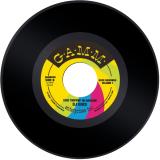
Warm Tapes Adjustment returns with the Second Volume once again performed by SCM a Gari Romalis.
On the A Side two raw and dusty live sample sessions from SCM.
On the B side two lo-fi disco styled house tracks from one of Detroit's finest underground producers
Four house tracks fused in a combination that makes this record unique! Vinyl Only release
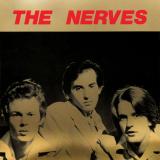
We worked closely with surviving members of The Nerves, Paul Collins and Peter Case along with Jack Lee's daughter Cynthia to bring The Nerves - Best Collection to you.
Unlike previous releases that often relied on secondary copies or rips from vinyl and CDs, we were able to locate the original source recordings and have Warren Defever master/remaster them at Third Man Mastering in Detroit for this release. This is what makes this record so special—it features the definitive versions of these tracks as they were originally intended, some have not been heard since the day they were recorded. We hope you enjoy it.
We worked closely with surviving members of The Nerves, Paul Collins and Peter Case along with Jack Lee's daughter Cynthia to bring The Nerves - Best Collection to you.
Unlike previous releases that often relied on secondary copies or rips from vinyl and CDs, we were able to locate the original source recordings and have Warren Defever master/remaster them at Third Man Mastering in Detroit for this release. This is what makes this record so special—it features the definitive versions of these tracks as they were originally intended, some have not been heard since the day they were recorded. We hope you enjoy it.
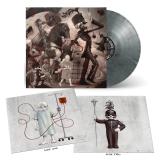
My Chemical Romance's "The Black Parade (20th Anniversary Edition) vinyl" includes the original fourteen-track album. Released in October 2006, The Black Parade follows The Patient through his reflections on life and his passage into the afterlife, built on the concept that death visits people in the form of their earliest cherished memory.
Pressed as a single LP on Concrete Grey vinyl in a single-pocket jacket with a new art insert and printed inner sleeve.
My Chemical Romance's "The Black Parade (20th Anniversary Deluxe Edition) CD" includes the original album plus six bonus tracks: three live performances from The Black Parade World Tour (2007), never before released on physical music formats, and three rare B-sides. The live performances include "Someone Out There Loves You," long referred to by MCR fans as "Stay," performed on the tour but never officially recorded. Released in October 2006, The Black Parade follows The Patient through his reflections on life and his passage into the afterlife, built on the concept that death visits people in the form of their earliest cherished memory.
Packaged in an O-card and wallet with a 16-page lyric folder and new art insert
For more than two decades, Vidmantas ?epkauskas has occupied a singular position within European underground culture. As the driving force behind Opium Club and gallery 1986 in Vilnius, founder of Ant Bangos, Alfavilnius and OLE festivals, curator, label owner, promoter, DJ and artist, he has spent much of his life creating the conditions for other people's music to be heard.
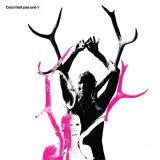
It makes sense then that he has no shortage of friends and collaborators in play. Across ten tracks, V presents shades of Italo, krautrock, post-punk, minimal synth, industrial pop and neon-noir romanticism, arriving somewhere between the dancefloor and a dream-state. The cast of collaborators both contextualize and help sharpen the vision.
First and foremost, much of the album was crafted alongside Frankfurt's Philipp Lauer, whose friendship with V grew through marathon studio sessions. Curses lends his unmistakable blend of dark romance and theatrical energy to "Is This What You Want?", Australian cosmic journeyman Dreems joins for the kaleidoscopic "Blitz Disc," Domenique Dumont brings their unmistakable emotive touch to "Avventura," while Lithuanian artists Noyus and Ruta MUR, both distinctive voices from the country's queer scene, whose vocals add another dimension to the record's emotional palette. As V puts it, "These are the people I've been vibing with."
That he finally delivers a full-length LP with such elusive qualities is more than a clue to his character. The title itself, a nod to Magritte's famous paradox and his years living in Brussels, suggests that any attempt to define V through a single image is destined to fail. At once playful and philosophical, 12:55 (Ceci n'est pas une V) questions ideas of identity and artistic value while marking the closing chapter of the musical persona that followed ?epkauskas' earlier success as Vidis. Neither retrospective nor statement of intent, it feels like a connected set of reflections spanning a lifetime of influences.
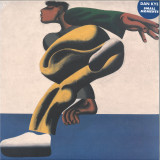
Dan Kye is the mysteriously evoked moniker from multi-instrumentalist, producer, and vocal sensation Jordan Rakei. The New Zealand-born artist - who now resides in London - presents his first long-player from Dan Kye, ‘Small Moments’, on Bradley Zero’s Rhythm Section INTL. An ode to the dancefloor, the musical project was born out of Jordan’s lockdown experience, created from the comfort of his own home. Recorded with just a laptop, extra live instruments and guest musicians, ‘Small Moments’ seamlessly transcends across electronica, jazz and funk, with each genre being effortlessly fused with Jordan’s melancholy vocals. Allowing himself to push the boundaries, Jordan’s Dan Kye moniker draws on the energetic and uplifting elements of house and techno and perfectly mixes it with the sultry vocals and emotion that come with the live elements we know and love from Jordan Rakei. The record offers listeners a journey through more floor-heavy tracks such as ‘Mogeri’ and ‘Raro’ to more groove infused offerings such as ‘Rainbow Road’ (which is named after one of the maps in Mario Kart and inspired by the energy of Prince’s iconic live concert at The Aladdin in Las Vegas), whilst tracks, like ‘Sober’, take on a more lyrical and anthemic feel.
Jordan Rakei: “Rhythm Section INTL was my entry point into dancefloor orientated music, and it was Bradley who asked me whether I could head in that direction so he could play my music out in the clubs. Dan Kye has still got melodies, but the main focus is to keep it high energy.”
After meeting Bradley Zero online whilst living in Australia, Jordan eventually moved to London in 2014. The same day he landed, he went straight to a Rhythm Section party to meet Bradley, and it was here that he first got a taste for house music. He enjoyed Rhythm Section INTL’s ability to draw on both live and electronic talent; and thus, after Bradley asked him for some productions for the parties, the idea for Dan Kye was born. ‘Small Moments’ is a musical masterpiece that can be enjoyed as much on the dancefloor as it can in the comfort of your own home and is a perfect step into Jordan’s landscape and idealism of dance orientated music.
Bradley Zero - “In around 2014 the proprietor of the famous Northside Records in Melbourne handed me a self released 12” from a new, unknown artist based in Brisbane. It was Jordan Rakei - Franklin’s Room. I’d been home almost a year before I actually got round to listening to it and I remember that moment like it was yesterday. I lay down on the sofa, put the record on and was transported! The Dan Kye project is a testament to the experimental and independent ethos Jordan lives by and is a product of an artist reaching full stride but not afraid to still try something new. This ‘Small Moments’ LP was conceived in a record store, born in a club on Rye Lane and is now flying the nest, throwing caution to the wind and making a bold statement.”
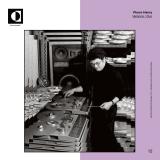
On the occasion of the centenary of composer Pierre Henry,
Transversales Disques is very glad to announce the release of these lost tapes "Variance" & "Duo" by the electroacoustic music pioneer.
"Pierre Henry was born in 1927 in Paris. He began studying music as early as the age of 7. In 1944, guided by Olivier Messiaen, he envisioned and began composing the music of the future.
His meeting with Pierre Schaeffer was pivotal to his creative path, leading the two of them to found the G.R.M. (Groupe de Recherches Musicales).
"Inventing new compositional techniques that would, in time, become widely used on a large scale, he continually gave this music a far-reaching power no one had anticipated at the outset.
He also forged a sound entirely his own — as instantly recognizable as that of the most famous jazz musicians."
The fifteenth release of Barro comes with an exclusive: behind the Transylvanian mask of Orlok 101 lies Nöle himself, the boss of the label.
Remember that he used this vampiric AKA to kick off Barro—his The End Of The Beginning being the first release, published in late 2018. That same year, his techno-industrial sound—packed with references from the famous work of Bram Stoker and nightmare atmospheres—helped launch another label: Soil, the Valencia-based imprint, with a project that included a suitably fitting remix of The Horrorist. The following year, he released an EP with five original tracks, titled Runaway, while also “spreading blood” on Antikhrist Visions Vol I alongside his Industrias Mekanikas comrades.
His dark influence has been felt across Barro’s catalogue, whether through his own tracks or remixes—sinking his teeth into artists like The Hacker (under his real name, Amato) or Nebula Circuit. In 2025, Orlok made his debut on Aspecto Humano with a powerful EP, equally gritty and dark. In Barro, we’ve recently had Nöle—the most techno side of Imanol Pagola—with the EPs Electro Bloody Music and Demencial Chico Aceleradom, two great showcases of his ability to keep us dancing nonstop, following the popular Mendekua, released by Xtraperlo.
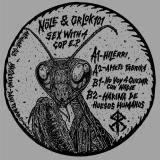
For Barro 15, the two sides of the producer and DJ come together on this EP, titled Sex With a Cop—four tracks released on vinyl and digitally, plus an alternate version of the final composition as a bonus track.
Nöle's knowledge of the dancefloor and Orlok 101's ability to create atmospheres that will give you goosebumps come together on this EP to create an explosive mix.
Sex With a Cop starts with Hilerri, a techno EBM track where Orlok provides repetitive, screeching sounds and a ghostly melody, while Nöle adds incisive synths and a catchy, addictive vocal sample that warns you of the danger of the material you’re listening to. Orlok then takes over with his industrial and metallic sonorities on the next track, Amets Fabrika, although Nöle’s influence still comes through with his powerful bass and addictive synth lines. A stifled scream and a production packed with a thousand details create an unsettling atmosphere that will surprise you on the dancefloor.
The flip side begins with No Voy A Quedar Con Nadie, a track closer to Nöle’s technooid world. Even with its unsettling opening, it doesn’t take long to turn into a danceable bomb, with that dark touch typical of the Navarro producer.
Surprisingly, he saves the best for last: Harina de Huesos Humanos is one of the most interesting tracks created by Imanol Pagoda, and we can hear it in two versions, one as a bonus track. Thanks to complex production full of details and sounds that come and go, a punchy, hard as granite kick drum, and a carefully crafted industrial atmosphere, it all ends up being the perfect union between the two sonic worlds. A spectacular finale for the label’s fifteenth release.
December 2012 I showed up totally exhausted in Vancouver BC after touring stupidly and relentlessly for however many straight months and got a job at a call centre raising money for the Red Cross. It was a scent free office but one time this woman cooked a piece of fish in the microwave for 10 minutes on low and hot boxed the whole office - we got sent home early no pay. There was the other woman I named the Call Centre Coltrane because her pitch and routine usually involved improvised flights of fancy that went off in both directions at once somehow landing back down with a credit card number and a donation. I used to sleep under the desk. I was there a few months and at the time I reconnected with John Brennan who I had played with briefly in Montreal at the Mutek Festival. In Montreal John was running an experimental music night at a burrito shop downtown called Garbage Night. While in Vancouver I began connecting with the music scene there and would go hang out with the Shearing Pinx lads who I think lived with Sydney the bass player at the time. I knew Nic and Jer from an AIDS Wolf Tour and was so stoked to get to know them both better. I really fell in love with that era of Vancouver's music scene.
Fast Forward to today. 2024
Actually it was the dying days of 2023 but you get it and John asks if I'll sit in with Earth Ball and I keep thinking about Earth Balance, the vegan butter everyone eats here. I brought my aching bones and my ipads on the beautiful ferry named the Queen of Oak Bay and out to Nanaimo BC, home of the nanaimo bar (a dessert treat - special to this region - that seems to be more popularly found under the weird glass sneeze guards in office building deli's out east in Ontario.... anyhoops ). No one in Nanaimo wants to talk to me about the famous treat. I asked a couple of people. Silence. Nanaimo is like London, Ontario but more fried and by the sea. The town is filled with blown out old sea dawgs with tin coffee pots and loose leaf tobacco, then there's the usual streetfolk you find in this part of the Canadian Pacific Northwest and a bunch of bohemians who I guess have left Vancouver behind - that fine city having become uninhabitable for those not making over 100k a year. And then up the way are all the retirees.
Yup Nanaimo is a strange one. They mined the shit out of this region and Nanaimo is surely haunted by those buried in mining shafts or maimed by the heavy machinery or blown up by accident in the explosives store house. And when Earth Ball fire up the amps in Izzy and Jer's basement you can hear the voices of the ghosts hum through electrical lines and out the speakers, Kellen's hued feedback, Izy's sturdy basslines, Jer's paperbag guitar tone and rumble pack zaps, Liam's (aka the Kid) sheets of sound and Brennen's multidirectional drums.
You wouldn't guess Earth Ball was auto-composing and from what my rat brain can tell - the lyrics are improvised too...Improvising lyrics and singing them is the hardest thing to do in all of music.. Izzy and Jer are pros. And their attitudes are pro too.
The live show is scorched and without naming names they've been known to make headliners nervous. Lucky ones will get to see them live as they tour this beast of a record entitled ‘It’s Yours’ (out May 17th on Upset The Rhythm) and I hope I'm one of them.
But now you, fan of fun but totally fucked up music, have the opportunity to Ball with them thanks to Upset The Rhythm. Enjoy
-Alex Moskos, Montreal QC, Feb 2024
33rpm Lacquer-cuts: Kevin Gray
200g Double Ultimate Record®
Limited Edition: 4000 copies
Box and Tip-on Gatefold printed in Italy
Pressed by Simon Garcia, Marciac, France
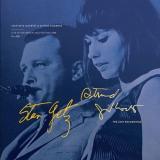
When the concert started that 4 November 1966 at the famous Berliner Jazztage, four musicians took the stage. Close-knit to the point of telepathy, they were about to give one of their last concerts. The mythical partnership of Stan Getz on saxophone and Gary Burton on the vibraphone was coming to an end, but were they even aware that this was one of their last acts? Accompanying them was an exceptional rhythm section with Chuck Israels on bass and the great Roy Haynes on drums.
With the first notes of “On Green Dolphin Street” the audience was won over by the rapport of empathy within the quartet. The programme was beautifully compiled to alternate flamboyant standards conducive to the most exuberant solos (“The Blues Walk”), heady ballads where Getz demonstrated his splendid sound and lyrical singing (“The Shadow of Your Smile” and “Once Upon a Summertime”), and compositions by Gary Burton where the vibraphonist displayed his subtle harmonic universe (“The Singing Song” and “Edelweiss”).
Suddenly, a high-spirited version of “O Grande Amor”, the standard by Antônio Carlos Jobim and Vinícius de Moraes, sounded out to prefigure the distinctly bossa nova vibe of the second part of the concert: Astrud Gilberto was to take the stage. With the opening bars of “Samba de Uma Nota Só” the flavours of Brazil were palpable. Gilberto’s voice, fragile yet mischievous against the background of the iridescent vibraphone and wrapped within the airy countermelody of the saxophone, recreated all the freshness and innocence of the legendary recording of 1964. As if they were performing together for the first time, Gilberto and Getz played a subtle game of seduction to create music that was sensual, light and melancholic.
The colourful sequence of bossa nova standards – “Você e Eu” by Gilberto Gil, “Corcovado” and “The Girl from Ipanema” by Jobim – intermingled with numbers that were jazzier in both form and spirit – “Jive Hoot” by Bob Brookmeyer, “The Shadow of Your Smile” and “It Might as Well Be Spring” – was simply irresistible.
With the final notes of “Jive Hoot”, Stan Getz smiled and bid farewell to the audience with a simple “Auf Wiedersehen”. The recording of this dream-like performance lay untouched for nearly sixty years, until we unearthed the original tapes in the archives of Berlin Radio. This album is the very first edition of a memorable live concert, entirely restored using Phoenix Mastering®.
Introducing the first in a series of reworks on GAMM from Macedonia's finest curator of urban music, DJ Goce...
Deeply rooted in hip-hop, Goce has a worldwide rep for exploring all things funky, soulful, and jazzy, releasing tracks on labels like Dusty Donuts and Baller Beats.
For his GAMM debut, he tackles a classic Beatnuts anthem, complete with a wild intro using the original sample source.
On the B, Goce keeps the momentum going with a rework of an Al Hirt rare groove classic, famously sampled by De La Soul and The Roots.
Keep an eye out - there is plenty more to come from DJ Goce on GAMM !
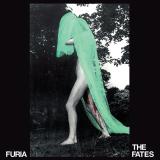
Following her foundational role in the early years of The Fall, and then the searing post punk of The Blue Orchids, as well as several tours serving as a backing group for Velvet Underground chanteuse Nico, Una Baines found herself starting 1985 without a band. Drafting together members of the all-female Beyond The Glass, and compatriots associated with her past projects, she entered the studio with a clutch of songs and a willingness to experiment. Separating the sides into “waxing”, for the more traditional songs, and “waning”, where the structures become looser and varied, the resulting album was the sole release on her Taboo Records and seemed quickly lost to time, but feels shockingly current in both feminist content, and freak folk execution.
It is a collection of influences that would emerge decades later in the wyrd folk movement, and Furia is not out of place at an intersection of Devendra Banhart and Meg Baird, but there was absolutely nothing like it in 1986. Upon release, Mark E. Smith famously likened it to Third Ear Band, having to dip back to 1970 for a touchstone. Songs like “Bridget of Ireland” could be traditional ballads from decades past, while “No Romance” is a lo-fi new wave hit waiting to happen. “Sheila/Beats My Heart” fashions The Velvet Underground as a feminist protest band, and “Ritual” plays out like all of the Motown girl groups banding together to tell the world that they don’t need a boyfriend to solve all of their problems. It all draws on sources that are so familiar, yet turns them upside down in a celebratory fashion. Is it freak folk? Pagan punk? Pastoral drone? It is all of that and so much more. It is the sound of a woman, and an artist, truly finding her voice, and it is both magical and compelling.
“Remarkably prescient and weirdly beautiful record. A creative, challenging and memorable companion, with a distinct voice and identity of its own: in turn playful, political and experimental. It's highly recommended.” – The Quietus
2027 marks two decades since musician and producer Paul ‘Mudd’ Murphy struck out on his own and launched Claremont 56, a label initially dedicated to “music by Mudd and friends” and named after the house he grew up in. To celebrate its 20th anniversary, Murphy has assembled the label’s first ever decades-spanning vinyl retrospective: a six-LP re-mastered collection bringing together key cuts, cult classics, personal favourites, hard-to-find gems and inspired remixes from across the catalogue.
Unlike the label’s previous 10th anniversary box set, which focused on unreleased material and never-before-heard remixes, 20 Years of Claremont 56 traces the musical story of the imprint to date. Across six records, it showcases the distinctive Claremont 56 sound in all its many forms: acoustic, electric and electronic instrumentation, Balearic sunshine, krautrock grooves, folk-inflected psychedelia, slow-burning chuggers and deeply considered dancefloor music.
The set comes housed in a custom box featuring cover art by long-term label illustrator Mark Warrington. Inside are six slabs of vinyl across three gatefold sleeves, accompanied by liner notes from music journalist and author Matt Anniss, Murphy himself, and many of the artists whose music features in the collection.
The journey begins with a selection of formative late-noughties releases, including Mudd & Pollard’s chugging, picturesque ‘Villa Stavros’, the folksy beauty of Smith & Mudd’s ‘Shulme’ and Murphy’s exotic reworking of Ahmed Fakroun’s ‘Drago’. From there, the collection moves freely through deep cuts, overlooked gems, album highlights and some of the most inspired remixes in the label’s catalogue.
Among those remixes is Murphy’s own über-Balearic rework of Zee Erf’s cover of ‘Southern Freeez’, a mix dedicated to his partner Emma; an extraordinary 22-minute, Manuel Göttsching-meets-ambient-dub revision of Smith & Mudd’s ‘Vegetable Square’ by friends-of-the-family Idjut Boys; Larry Heard’s typically deep and immersive house treatment of Jack Cutter’s ‘Serpent Strut’; and Quiet Village’s ambient-house ‘deep space dub’ of Mudd’s ‘Spielplatz’. Also included are lesser-celebrated but no less rewarding reworks by Recloose, Jex Opolis, Felix Dickinson and Deep88.
The collection represents every corner of Claremont 56’s self-contained musical universe, from the Murphy-assembled in-house collectives Hillside, Paqua and Bison - whose members famously included the late Holger Czukay and his life partner Ursula, to long-serving label artists such as Almunia and Hear & Now, as well as later additions and artists who took some of their first steps on the label through its much-loved Claremont Editions compilations.
That means the deeply cosmic krautrock of Bambi Davidson, the folk-meets-Americana of Torn Sail and the samba-electrofunk of Jpye sit alongside baggy Balearic sing-alongs such as Bel’s ‘Ready To Die’ and Sillyboy’s Ghost Relatives’ ‘In a Small Place’, recent high-profile guest releases such as Chaz Jankel’s ‘Rhumba Jam’, and string-laden ambient pieces such as Four Hands’ wonderful ‘Hizou’.
Packed with classic cuts, formative gems and overlooked treats, 20 Years of Claremont 56 is not only a fabulous label retrospective, but also an essential collection of timeless music from a label whose output has remained distinctive and unique for two decades.
Cristina Camargo broke onto the Brazilian boogie scene in 1980 with the single "Moral Tem Hora", penned by the by then already famous brothers Marcos and Paulo Valle. They were soon joined by the arranger/producer/musician powerhouse Robson Jorge and Lincoln Olivetti, who worked with practically all the big MPB stars from Jorge Ben and Gal Costa to Caetano Veloso and Gilberto Gil. Armed with the endless possibilities that the burgeoning Brazilian music scene provided, the group went into the studio and produced the eponymous debut album Cristina Camargo.
The result is a very special record built around that successful single that does what Brazil does best: blending their own musical heritage with sounds in vogue in the rest of the world, in this case the boogie disco that was all the rage in the USA in the first half of the 1980s. Expect endearing choirs, tight grooves, and a killer production value on par with the big-budget studios up north.
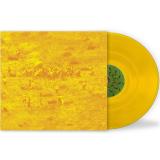
Cristina Camargo is available as a limited edition on yellow vinyl and includes an insert with lyrics.
Anyone who has had the sheer pleasure of seeing and hearing Leroy Burgess perform in concert will know just how amazing the live renditions of his iconic compositions of Disco Boogie hits and classics sound with a full band and a fully fueled audience. Accompanied by the ten piece French band and long time Leroy Burgess collaborative outfit Saving Coco, BBE Music is releasing live versions of two of those classics Let’s Do It and Big Time. Recorded and released by Rick James in 1980 Big Time is an absolute killer of a track that sounds so fresh decades later in this crowd energising performance. Famously released by Convertion Let’s Do It was a huge club hit in the early 1980s and is the perfect track to accompany Big Time on this release. Leroy Burgess is a certifiably genuine legend of Black music; his compositions have moved dancefloors across the world since the early 1970s as a member of Black Ivory, then Convertion, Paradise Garage favourites LOGG, Kleer and electro outfit Aleem. His collaborations with Patrick Adams, Inner Life, Dazzle and solo artists such as Eddie Kendricks, Rick James and Fonda Rae have cemented Leroy Burgess’ place in the annals of Black Music History. As a founder-member of the Universal Robot Band he co-wrote the massive perennial favourite Barely Breaking Even. Leroy Burgess feat. Saving Coco-Big Time/Let’s Do It is released as a 12″ vinyl and digital download and definitely belongs in the ‘make sure you get this’ category. Mixed by Marc Mac and mastered at the Grammy-nominated Carvery Studio by Frank Merritt. Available as 12″ vinyl and digital download. Release date September 25th, 2026
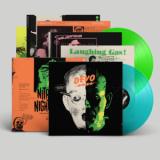
Futurismo are proud to present DEVO’s NITROUS NIGHTMARE, Halloween Live ‘75. Never before released, or heard in it’s entirety, this legendary live performance is presented here in it’s full chaotic glory on limited edition 2xLP and 2xCD. The live release all hardcore Devo fans have been waiting for, Nitrous Nightmare demonstrates a band harnessing their artistic greatness in the purest of forms. This mythic performance captures Devo perfecting some of their most iconic concepts in the raw. Expertly restored, this live recording makes for a thrilling experience, it also captures Devo as a lightening rod for hostility. On Halloween 1975, Devo took the stage at the WHK Auditorium in Cleveland, in a supporting capacity for jazz legend Sun Ra, to perform for a raucous crowd dressed in the finest of Halloween cliché. Already riding high on Nitrous Oxide and booze supplied by the sponsoring radio station, this unaware horde was expecting to see a slick cover band churning out renditions of Bad Company hits, only to be subjected to an act of subversive performance art that would send the growingly aggravated crowd into eventual meltdown. Physical threats ensued, but Devo played on. Acting as a live companion release to Futurismo’s much lauded Art Devo, the tracklist featured here showcases the origins of de-evolution theory in a live setting. These songs would become some of their most famous material, with this recording believed to be the very first time ‘Jocko Homo’ was performed in front of a live audience; the full 12 minute version documented here is sure to please fans, even if it displeased the urban hippies and horror masked onlookers that evening. Whilst Devo may have felt they were trapped inside a negative energy vortex during that era, it is clear in retrospect that the band was using this energy to carve out the genesis of a sonic and visual art that has truly stood the test of time. The music performed that evening would mutate culture for decades to come, long after the denizens of the auditorium packed away their cheap vampire costumes and returned to their day jobs. Spanning 2xLP’s of unreleased live material, most of which has never been heard before, this wondrous performance draws purely from that integral early history. Mixed and mastered directly from recordings kept in the bands personal vaults, this live collection showcases why Devo was, and still is, one of the most important bands in American history. De-evolution is real. The art of DEVO is real. Here is the evidence. This 2xLP is housed in a gloss laminated wide spined sleeve. It has a tracklist that has been sourced directly from the archives, and contains colour inner sleeves and a fold-out containing archival imagery and liner notes by Gerald V Casale.
*Originally pressed in 2021 - this is a brand new master and cut.**
In partnership with Analogue Foundation, Oshu Records is proud to present the exclusive vinyl repress of "Laroyê" in a thick cardboard tip-on gatefold jacket on 2x 180g vinyl.
Acclaimed Hungarian, Berlin-based producer, composer and pianist Àbáse (AKA Szabolcs Bognár) returns, sharing a special, 5 anniversary remaster of his breakthrough project 'Laroyê'. Releasing on Friday 1 May via Bridge The Gap & Oshu Records, this sensitive exploration of Afro-Brazilian culture originally began as an audio diary, documenting Szabolcs’ travels and collaborations in Brazil through a collection of voice memos, fragmented beats, sketches and field recordings. As his journey progressed, and his collaborations and research deepened, the music project started to take on its own life:
"Laroyê evolved through weeks and months of research and collaborations into the album that it is now. That means that all the sessions were done in different apartments, small studios, often with borrowed equipment, which all adds to the character, but makes the creation of a coherent sound a challenge. Benjamin Tierney, Erik Breuer and Analogue Foundation did an incredible job with the mixes and with this new remaster. I truly believe that we are able to hear the tracks in a new light, with even more depth and clarity."
Coming from the West African Yoruban language, Àbáse stands for "collaboration" – a key element of the music perfectly encapsulated on 'Laroyê'. Recorded in Rio de Janeiro and Salvador, Àbáse spent five months working with diverse artists, from young talents to veterans of the Brazilian scene including Letieres Leite, Luciane Dom, Dofono d'Omolu, Afrojazz and more. The album explores the rich heritage of afro-brasilian culture through samba, MPB and Candomblé, mixing these with broken beat, hip hop and afrobeat, creating a contemporary homage to the classic Brazilian sound. Szabolcs shares:
"Despite already leading and managing musical projects that are close to my hearth, I always felt that one day I would like to start a solo project, where I could take full responsibility for the artistic direction and the music would reflect a truly personal vision. In 2017, I decided to take five months to fulfil a childhood dream and travel to Brazil to expand my creative horizon and expose myself to new influences."
An album standout is the bass-heavy, afro-brazilian ‘Agangatolú, which Àbáse describes as "best exemplifying the story and concept of Laroye as a collaborative effort - a research project exploring the rich heritage of Afro Brazilian culture through my own lens." The track features singers and percussion players Jadson Xabla and Gabriel Santana - two artists based out of one of the oldest terreiros (houses of worship) in Bahia, whilst drummer Jorge Dubman is an integral part of one of the most famous afrobeat bands from Salvador IFA. The contributions of one of Szabolcsoldest collaborators - Hungarian flautist Fanni Zahar - also made the track a full-circle moment.
On a quest for cosmic grooves of unity, Àbáses music pulls from an eclectic blend of global reference points, including modal jazz, Hungarian folk, West African, Brazilian, hiphop and underground electronic music. His work has drawn widespread critical acclaim from the likes of MOJO, Songlines, Soulection and The Guardian, and been supported by key tastemakers including Gilles Peterson, Jamz Supernova and BAMBII. As a keyboard player, Szabolcs has also collaborated with the likes of Wayne Snow, Dele Sosimi, Patti Smith, Emmanuel Wilkins, Gulty Simpson and Zeitgeist Freedom Energy Exchange.
'Laroyê' (2026 Remaster) will release on Friday 1st May via Bridge The Gap & Oshu Records.
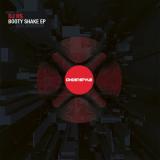
A legendary figure of the Belgian electronic scene and one of the iconic DJs of the famous Lagoa, DJ HS returns to Ghoststyle with Booty Shake EP, a four-track release showcasing the sound that has made him a favourite among clubbers for decades.
Featuring Booty Shake, Spectrum, Shut Up and Acid Twist, the EP delivers four driving cuts packed with infectious grooves, pounding rhythms and unmistakable acid flavours. Staying true to DJ HS's signature style, each track is built for maximum dancefloor impact while preserving the raw spirit of authentic underground electronic music.
Whether you're looking for energetic peak-time weapons or timeless club grooves, Booty Shake EP is a solid addition to any DJ bag and vinyl collection.
Français
DJ HS présente "Booty Shake EP" sur Ghoststyle
Figure emblématique de la scène électronique belge et DJ incontournable du mythique Lagoa, DJ HS signe son retour sur Ghoststyle avec Booty Shake EP, un EP de quatre titres qui reflète parfaitement le son qui fait vibrer les clubs depuis des décennies.
Composé de Booty Shake, Spectrum, Shut Up et Acid Twist, cet EP rassemble quatre productions percutantes mêlant grooves entraînants, rythmiques puissantes et touches acid irrésistibles. Fidèle à l'univers musical de DJ HS, chaque morceau est pensé pour offrir un impact maximal sur le dancefloor tout en conservant l'esprit brut de la musique électronique underground.
Que ce soit pour les DJs à la recherche d'armes redoutables pour le peak time ou les amateurs de vinyles électroniques authentiques, Booty Shake EP trouvera naturellement sa place dans toute collection.
Ashley Beedle’s remix of "Unmask Me" by MAMA is a masterpiece of deep, atmospheric house music. Characterized by shimmering chords and shuffling percussion, Beedle transforms the original into a sunlit, Balearic-tinged gem. It famously became a signature track for the late DJ Andrew Weatherall, he notoriously played and closed his set with it at his Convenanza Festival in September 2017. Where a now trended meme video of The Guvnor vibing to the gem, whist the crowd was in absolute euphoria to the magic being made.
Now released on purple vinyl, with all profits donated to our friend Mr Beedle and his ongoing care.
Cosmic Voodoo is an immersive musical experience that combines the best of cosmic disco with the pulsating energy of contemporary electronica. Through alternating synthesizers and acoustic instruments, this project presents an irresistible arsenal of sounds.
This is the third volume of four that will create a unique graphic work created by the famous Aldo Drudi.
Written and produced by Daniele Baldelli, undisputed master of cosmic-disco, and Mattia “Matta” Dallara, sound explorer and producer of Cosmic Temple, this EP is a journey that evokes dreamy and nostalgic atmospheres, perfectly in line with disco roots.
The tracks unfold between enveloping grooves, spacey synthesizers and rhythms that pay homage to the 1980s, generating a sound that is both classic and innovative. An electronic tribal ritual, a dancing spell that can transport the listener to a parallel universe full of psychedelic sounds and magnetic beats.
Ideal for those who like to lose themselves in the depths of sound and be guided by vibrations that oscillate between past and future.
The Godfather of Hardcore, Marc Acardipane, needs no introduction. His outstanding releases over the past 30 years speak for themselves. He has been instrumental in helping to create electronic music history, with countless well-known productions which have been unsurpassed by any other artist of this calibre. His timeless masterpieces have been and always will be heard at hardcore raves spanning the circumference of the Planet. With "9 Is A Classic", "Slaves To The Rave", "Pitch-Hiker", "Stereo Murder" and "We Have Arrived", just to name a few, he clearly proves who's the boss. "The Most Famous Unknown" is a well compiled collection of Marc's music, which showcases a mere portion of what he has composed and produced since the early nineties! The vinyl and digital selection of "The Most Famous Unknown" features remixes by Body Sushi a.k.a. VTSS & Randomer, Dasha Rush, Gabber Eleganza feat. Delirio, Jasss, Kilbourne, Minimum Syndicat, Nina Kraviz, Perc, Solid Blake, Stranger, Umwelt and VTSS, which all deliver excellent interpretations of tracks they have chosen to revamp. All original tracks have been re-mastered to the highest possible standard of quality.
(Orange transparent vinyl, limited edition) Age Of Love's 3 most famous remixes on 1 record: the legendary 1992 Jam & Spoon 'Watch Out For Stella' Mix, Charlotte de Witte & Enrico Sangiuliano's 2021 Remix & Solomun's 2017 remix.
Age Of Love wrote and released their most iconic track in 1990. It went on to become a stone-cold dance classic that inspired a whole trance movement that has endured throughout the years.Now its 3 most famous remixes are available on 1 record: the legendary 1992 Jam & Spoon 'Watch Out For Stella' Mix, Charlotte de Witte & Enrico Sangiuliano's 2021 Remix & Solomun's 2017 remix.
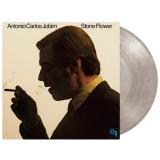
Antonio Carlos Jobim was definitely one of the most important artists in the bossa nova movement of the 1960s. The pianist and guitarist wrote the iconic "Desafinado" and, probably the most famous song in the genre, "The Girl from Ipanema". His elegant style of playing the music became the blueprint for the genre and inspired many.
Stone Flower is the album where you hear Antonio Carlos Jobim evolve in response to the new trends of the 1970s. His gentle and signature melodies are still there, but there are new elements; you here for example an electric Fender Rhodes. These changes only add to the timeless sound of Stone Flower.
The album has an impressive line-up of artists that were at their creative peak such as Ron Carter, Airto Moreira, and Eumir Deodato. Producer Creed Taylor and engineer Rudy Van Gelder give it the warm, high-quality sound that's typical of many CTI releases.
Stone Flower is available as a limited edition of 2000 individually numbered copies on transparent/black marble vinyl.
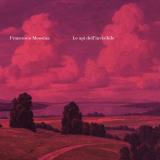
Francesco Messina is perhaps best known for his split album with fellow composer Raul Lovisoni, Prati Bagnati del Monte Analogo, originally released on the seminal Italian label Cramps in 1979. Along with contemporaries Franco Battiato, Juri Camisasca and Giusto Pio, Messina helped reshape the world of modern composition with an organic rawness and haunting beauty.
In November 2023, Messina performed Prati Bagnati live for the first time in Milan, Italy – along with pianist Michele Fedrigotti, who appeared on the original LP. The concert was a tremendous success and led the composer to further reflect upon the music he made over 40 years ago. From his home piano – a hundred-year-old Schimmel with magnificent resonance – new pieces began to emerge out of these meditative sessions.
As Messina says in the liner notes, "The idea of making a new album wasn't the driving force at all; what mattered was trying to reconnect with the 'freedom' I had experienced back then while creating that music. I started over without haste or deadlines, simply trying to find a deeper, inner connection."
W.25TH / Superior Viaduct is honored to present Le api dell'invisibile. From the hazy drone of "For Florian" and the title track to the gentle swells of "Letter for an Absent Friend," the album is a lush amalgam of new age and ambient minimalism that is vividly reminiscent of Messina's earlier work.
The title draws inspiration from a famous reflection by Austrian poet Rainer Maria Rilke: "We are the bees of the invisible. We ceaselessly gather the honey of the visible, to store it in the great golden hive of the Invisible." It is a phrase that has long shaped the way Messina looks at his music – transforming lived experience into sound, making audible what normally eludes the eye.
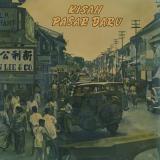
Kisah Pasar Baru: The Modern Sound of 1950s Indonesia
When Indonesia gained its independence from the Dutch colonial government in 1945, politicians and soldiers weren’t the only ones playing a major role in building the sense of national identity.
Also working on the nationalist front were merchants and traders of phonograph records, who prior to the country’s independence served as local agents for foreign labels like Odeon and Beka. In Batavia, one of these traders were Tio Tek Hong, distributor of the international label Odeon and the other figure was Soejoso Soekarso, who also served in the Indonesian Military as an Air Force Marshall.
Irama Records, the music label he founded in 1951, was first attempt to “nationalize” the means of production of “indigenous music” from both foreign labels and intermediaries like Tio.
Soejoso stood at the intersection of music, business, and nationalism. He was the vanguard in the process of popularizing of a new breed of “national” music, especially the type he showcased in the compilation Kisah Pasar Baru: The Modern Sound of 1950s Indonesia, released in 1958.
Yet, the idea of an indigenous music championed by Soejoso was in fact the amalgamation of a myriad of cosmopolitan strands. As an air force officer, Soejoso spent some of his time playing in the Hawaiian band Lieve Souvenier in Semarang before relocating to Jakarta and started jamming with the band Elshinta Hawaiian Senior.
In addition to Hawaiian music, Soejoso was a versatile musician who also had the chops for jazz, a musical genre wildly popular in the 1940s and early 1950s Indonesia. And it was jazz that he first recorded for his Irama Records label.
One night in 1951, he squeezed pianist Nick Mamahit, bassist Max van Dalm, drummer Dirk van der Capellen, and guitarist Dick Abel into a 2×3-meter studio on Jl. H. Agus Salim, Central Jakarta, to record the first local jazz album of the post-independence era.
Kisah Pasar Baru is a compilation of hybrid music that Soejoso and his coterie of musicians championed in the early 1950s, a mix of Hawaiian, Keroncong and Jazz and it became a hit soon after being release.
One of the best compositions on this album, “Pajung Fantasi,” composed by the legendary composer Ismail Marzuki, is essentially built from Bing Slamet’s baritone—Indonesia’s equivalent of Bing Crosby--and the distinctive Hawaiian-styled steel guitar. The most famous song on the album, “Sabda Alam,” also written by Ismail Marzuki, follows the same pattern, its steel-guitar works now backing Theresa Zen’s hauntingly ethereal vocals.
Kisah Pasar Baru was never designed to be a long-playing record, and its presence on the market was to capitalize on a new trend in the recording industry. The album is a greatest-hits compilation, with songs in this album previously circulating individually on 78-rpm discs—a format that was gradually abandoned following the invention of the 7-inch single and the 12-inch long-play vinyl.
This is the first time this monumental record is being reissued for the international market outside of Indonesia.
DJ Linus came up with the basic idea for You Are House Music while DJing. He provided the vocals himself and refined them through numerous tests during his DJ residency at Munich's Pacha club. The track is a tribute to the party people and became the secret anthem of Pacha during its six-month production period. The vocals seem to work...
A.O.D.S. - DJ Linus' self-created genre: Adults Oriented Disco Soul. He organizes parties and plays vinyl records from 1975-1985, covering everything from AOR to soul and disco.
Senium refers to DJ Linus's newfound love for the chillwave/retrowave genre, for which he has acquired a small new record collection.
DJ Linus spent a whole year working on the EP, including relentless testing and sound adjustments. DJ Linus: “I am very happy with the result—thank you!”
By the way: DJ Linus released his first records on Compose, Compost's 90s house label.
About DJ Linus
DJ Linus is one of the very first House DJs in Munich and in Germany. He started way back end of the 80s, early 90s.
Linus is said to be a great influence to many a famous Tech House DJ today.
His solo album “Fantasmagorique“ was the first german House Music long player of its kind.
Linus was owner of two record shops and the famous “exun records“ label.
Nowadays he is resident at the incredible Pacha Munich – since 18 years now – and is running his current label “Sujet Musique” with great success since 2013.
Linus is also resident at the legendary “Palais Club” and the asian, high class restaurant “Izakaya“.
He works as a mastering engineer and as a lecturer for DJing and Producing @ Musicversity. DJ Linus won twice the Munich Night Life Award for best DJ “House/ Techno“ in 2013 and 2019.
DJ Quotes:
“Loving the sound of You Are...! Just the kind of percussive, bassline-led house I love to play out!” – Jimpster
“Very nice!” - Fred Everything
“Tune(s)! Big up Linus.” - Bill Brewster
“Nice funky stuff.” – youANDme
“YOU are house music ! :-):-)” - Acid Pauli
“Enjoying the original You Are House Music track. ” - Josh Wink
“Beautiful!” – Reznik
“Mega EP” – Sandrino
“Really like all the tracks on this EP, Linus has been always special about his production work. Will play the tracks out for sure” - Kiko Navarro
“What a beauty!“ - Phuncadelica
Links:
Disco Collected celebrates the dance music which originally developed from R&B, soul, and funk from the late 60s and 70s and turned into a mighty subculture in discotheques, with Studio 54, Manhattan, New York as one of the most famous and extravagant discos all over the world. Disco used a steady four to the floor beat, string sections, horns which created a perfect setting for DJs who mixed their special 12 inches to an eager dance crowd.
Movies like Saturday Night Fever and Thank God It’s Friday contributed to disco’s mainstream popularity. Compiled on Disco Collected are some of the best, well-known and great disco hits by Rose Royce, Chic, Kool & The Gang, The Trammps, Thelma Houston, KC & The Sunshine Band and 16 more guaranteed floor fillers.
The 2LP Disco Collected is available as a limited edition on disco ball silver vinyl and includes an insert.
SHORT INFOS
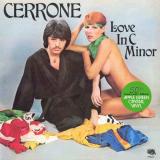
Because Music celebrates the 50th Anniversary of Cerrone's debut album "Love In C Minor (Cerrone I)" .
A record which is one of the mots important of its time. It brought French Disco to the World and established Cerrone as the French King of Disco.
- Pressed in exclusive 2026 Apple Green Crystal Clear vinyl
- Original 1976 artwork - Digitally remastered from original tapes.
BIOG
Cerrone I
Love in C Minor (1976)
The story behind Cerrone's first album could be summarised in the libertarian atmosphere and the creative energy of the 70s, inherited from the 60s revolutions, spiritual, aesthetic or sexual. Looking back now, this record is one of the most important of its time. It helped creating the sound of an era and brought French disco to the world. It is also, and this is fundamental to understand its success, the result of a man's vision: Marc Cerrone, a free spirit inhabited by music, who ended up with a major work of art. With this album, Cerrone accumulated the main elements that make a record timeless, even bigger than its creator: the pure originality, the madness of a vision without compromise, a sense of the market and a great dose of luck too. To some extent, this is the perfect record to start a career, even though Cerrone's one already existed in an implicit way. He actually began in a rather popular band, Kongas, signed by Barclay. Between 1972 and 1974, the band was famous and made it abroad, particularly in Japan, where people loved its sound. Despite this success, probably fed up with the music and not ready to follow the orders of a label that wanted the band to sound more pop, Cerrone disbanded Kongas. He had the sound of his instrument in mind and mostly its central element: the bass drum. The idea of this first solo album came to him after a detour via selling records. Wishing to forget about the studios, he took the head of a small chain of stores, selling records imported from the States. That's when he discovered a daring new sound coming from New York: disco music. This energy inspired him to record again. He then remembered the crazy reaction of the audience when, during the Kongas' concerts, he used to hit his bass drum hard. Cerrone felt like going back into the studio but to make something different. He decided to record a sixteen minutes long track, driven by its beat, that would fit on its own on one side of a LP (during these vinyl days, musicians used to think in terms of sides…), with girls' voices simulating sex. This concept of musical and physical orgasm was recorded at Trident Studios in London (where pop stars used to record at the time… ) with Don Ray, of Kongas, man in the shadows and brilliant arranger who'd follow Cerrone during his whole career. Obviously, like always in pop music (it happened to the Beatles), record companies started by turning this weird track down, convinced that radios would never play sixteen minutes of beats and moaning. Cerrone, a born fighter, decided to trust his instinct (a mix of ego and business sense) and chose to believe that if the radios wouldn't play the track, people would dance to it in the clubs. He released the record himself, with a sexy cover a bit provocative where he wore a black bathrobe, a young short-haired girl leaning on him. Being played here and there, thanks to Cerrone's own network, the record started to work a bit in France. But luckily, things really happened in the States. Due to a mistake, a box of "Love In C Minor" albums were sent to the States via Cerrone's record shop instead of some unsold American LPs. Once in New York, the box was opened and the record with its intriguing cover was instantly loved and passed through the hands of radio and club DJs. All of a sudden, and unknown to its creator, the track that was turned down by every French label, became a hit on the New York disco scene. Casablanca, the US disco label, released a cover recorded by an ad hoc band because nobody knew Cerrone of how to find him. Once he discovered what was happening in the States, Cerrone flew to New York. He realised he had a hit, one of the biggest then, that opened the doors to every record company and especially Atlantic. He was welcome by Ahmet Ertegun, one of the main visionaries of the American music who, among other artists, signed Aretha Franklin and John Coltrane. It's believed that Ertegun understood that the French young musician, like some Atlantic artists, was about to define the sound of his time and that his work would live long after its birth date. "Love In C Minor" was the first step, adamant and successful.
The highly acclaimed U.K post- punk band Joy Division was originally called Warsaw . Formed in Manchester, England in the late 1970s, the group consisted of Ian Curtis on vocals, Bernard Albrecht (aka Sumner, aka Dicken) on guitar, Peter Hook on bass and Stephen Morris on drums. Hook, Albrecht and Curtis hooked up at a local concert and later formed the group Warsaw. The band's name was taken from a David Bowie- Brian Eno composition, "Warszawa". The 5 bonus tracks on this album are demos cut by the group at Pennine Studios in Manchester on July 18, 1977 with Steve Brotherdale on drums. The first eleven tracks presented here were the result of a recording session for that album that took place in early May of 1978. Rehearsals leading up to the session resulted in two new songs being added to the group's existing repertoire: "Interzone" and "Transmission." "Interzone" was based on the backing track of the song "Keep On Keepin' On," to which the band added their own lyrics. The result was a song distinctively their own. "Transmission" was written by the band during the final week of rehearsals. The first verse contains a quotation from Alistair Crowley's The Book Of Thoth. The two recordings are interesting renditions of songs which would later became famous.
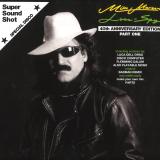
This year marks the 40th anniversary of one of the true cult classics of the Italo Disco universe: Mike Mareen’s “Love Spy.” Released in 1986, the track sounded strikingly different from much of the dance music around it: futuristic, dramatic, playful and instantly recognisable. It quickly found its way into DJ cases across Europe and became one of the records that would define Mike Mareen’s electronic sound.
But the story actually began under a different name. An early incarnation of the song was called “Batman,” with lyrics inspired by the adventures of the famous comic-book hero and the villains surrounding him. A small number of promotional copies circulated before copyright concerns meant that the concept had to be abandoned. The title and lyrics were rewritten and “Love Spy” was born. The early “Batman” version has since become one of the most fascinating curiosities in Mike Mareen’s catalogue.
Four decades later, we felt an anniversary like this deserved something special.
LOVE SPY 40th Anniversary will therefore arrive in two parts, bringing together some of our favourite producers from today’s Italo, synth and electronic scene.
Part One features brand-new remixes by Luca Dell’Orso, Flemming Dalum, Also Playable Mono and Disco Computer. And enthusiasm was never going to be a problem here. “Love Spy” is not simply an ’80s classic, it remains a genuine DJ favourite, loved by old-school collectors and a new generation of Italo-wave selectors alike.
Alongside four killer new interpretations, we are bringing back the original Badman Mix, plus the highly sought-after “MAKE YOUR OWN MIX” material – rare set of individual elements created for DJs to deconstruct, combine and rebuild “Love Spy” themselves. These samples have become particularly desirable among collectors and make the perfect addition to the first chapter of our anniversary edition.
Four new remixes. Two pieces of history. Forty years of LOVE SPY.
And we are only halfway there.
LOVE SPY 40th Anniversary Part Two, featuring another line-up of major names from our scene arrives in November.
Deep in the sea lives one of Earth's most ancient creatures: the Nautilus. Hunted for its beautiful shell and now, through our global evolution, endangered, like so many other beings. Perhaps most astonishingly, no one has ever observed a baby Nautilus in the wild. The title track of this debut EP takes you on a dark journey, searching through the deep ocean for this elusive animal.
On the other side, I don't believe in Fermi’s Golden Rule, is a sonic interpretation of a statement made during a quantum field theory lecture, questioning the experimental mathematics often used to derive the famous rule. But actually, trying to express the confusion about quantum physics in general.
The dub-infused EP is mainly inspired by the pioneering magic of Detroit’s electronic music scientists and the experiments of European electro wizards.
A pure goa-trance-classics compilation; back on vinyl with Astral Projection, MFG, Xenomorph, Shakta, Oforia,... !
This compilation opens with a track of Roy Sasson, who was famous in the 90s as part of Shidapu. Here he opens with a deep & groovy psychedelic dancefloor monster. The second track has a darker atmosphere, is super powerful but also melodic and spiralling! Xenomorph hasn't released any music for a long time, but he clearly kept his magical touch! That darker touch is carried on by Battle of the Future Buddhas, who went towards pure acid 303 territories in his haunting track! Shakta brings back some sunshine with his funky uplifting "Expedition To Earth"! Now after this first part of the CD come two of the most famous Goa-trance names ever: Astral Projection & MFG! They both do what they do best: creating wonderful melodic soundscapes! Sensitive, emotional & harmonious trancy music for people that want to feel a sunny dancefloor through music! Then RA mixed his known euphoric type of melodies & chords with a more modern sound! The result? Music that will do the trick on every dancefloor around the world. The ender is a more floating, warm track of Oforia, who showcases his more mellow style :)
We hope to create the same heartwarming feeling in your heart, as the one we had when we heard goa-trance for the first time! Enjoy and make sure to land again after reaching the sky!
How enduring is the signature song from Harry Chapin’s Verities & Balderdash? So timeless that it became the subject of a 2025 documentary in which artists from multiple generations weigh in on its impact on their lives and craft. “Cat’s in the Cradle” doubtlessly remains the main event on the singer-songwriter’s 1974 album. The legendary opening track also serves as a guidepost for the bold personal and social material that follows — as well as the gorgeous folk-rock arrangements that underpin the New York native’s most commercially successful work.
Sourced from the original master tapes, pressed at Fidelity Record Pressing, housed in a Stoughton jacket complete with a four-page insert, and strictly limited to 3,000 numbered copies, Mobile Fidelity’s 180g 33RPM LP of Verities & Balderdash presents Chapin’s fourth full-length in audiophile quality for the first time on vinyl. Captured during a golden era for sonics and production, the Top 5 effort features remarkable tonal balance, instrumental separation, and organic naturalism. Those valued aspects come into supreme focus on this reissue, which plays with dead-quiet surfaces and a low noise floor.
The newfound clarity, openness, and imaging underscore the lasting appeal of Chapin’s tender deliveries, soulful timbre, and careful phrasing. Every word comes across with incredible realism, while his underrated guitar playing occupies its own distinctive space. Also notable: The extension of the tasteful string accents; airiness of the backing vocals; depth and shape of the spare bass lines; and width and depth of the soundstaging. When on “Six String Orchestra” Chapin calls out names of instruments, they appear like magic, the band performing feet from you. Chapin has never sounded so lifelike on record.
Certified double platinum, Verities & Balderdash resonated with the times and public. “Cat’s in the Cradle” reached No. 1 on the chart on its way to being inducted into the Grammy Hall of Fame. The romantic ballad “I Wanna Learn a Love Song” flirted with the Top 40 and wrapped listeners in the equivalent of a cozy blanket. The record’s other single, the mini-epic “What Made America Famous?,” helped establish Chapin as one of the country’s most incisive and insightful commentators.
Verities & Balderdash teems with situational devices and topical matters. Chapin observes everything from the polarization of the nation to changes in moral standards and cultural priorities. He investigates pressing themes without ever turning preachy or elevating himself above the matters at hand. On “Halfway to Heaven,” whose coda races to the finish and ranks as the most urgent moment on the record, Chapin inhabits the mind of his frustrated protagonist akin to an eagle-eyed novelist.
Conveying emotions that range from melancholic to carefree, Chapin is as much of a singer as a storyteller. He assumes the voice of multiple characters within a single narrative. During the quirky “30,000 Pounds of Bananas,” a tale based on a delivery-truck accident in 1965, Chapin alters his delivery, pronunciation, and diction to become an old man reflecting on the mishap and mess. The tempo, too, adjusts to match the speed of the vehicle Chapin describes.
Adorned with timely laugh tracks to reinforce the bittersweet humor, the stripped-down “Six String Orchestra” takes everything up another notch, with Chapin intentionally missing guitar notes or playing a broken passage to illustrate the failures of the hopeful protagonist who doesn’t have what’s required to make it as an artist.
Chapin, of course, did not have any such problem. The lynchpin of a career cut short by a tragic traffic incident, Verities & Balderdash is Exhibit A of the savvy craft, feeling, and perspective he lent to American music.
Birchy is a relative newcomer to the Kniteforce label, although his previous release (KF266) that played with the Terminator theme tune was a big seller. It's not overly surprising, as Birchy may be new to the label, and a new name to many old skool heads, but he is an experienced producer who has been around for decades, with releases spread far and wide...
This EP samples the classic news broadcast surrounding the famous Castle Morton event in the UK, and the whole EP is deeply old skool and classic in feel. Full on breakbeats, pianos and authentic rave sounds are the name of the game here, and Birchy creates a timless feel to all of it!
Recorded in 1970 with a host of young blues and rock musicians, Blue Memphis is recognized as one of the best dates released by fellow blues artists in that era. On this album, the famous American blues pianist, singer, and composer Memphis Slim (John Peter Chatman) is backed by several British musicians, including Chris Spedding, John Paul Jones, Duster Bennett, and Peter Green.
Carly Simon’s No. 1 smash “You’re So Vain” lingers as one of the most clever and famous songs ever recorded. The subject of mass speculation ever since its release, soon after which it occupied the top spot on multiple Billboard charts for weeks, the anthem kept a captive public guessing at the identity of its smug subject for decades. The question surrounding the protagonist’s identity remained perhaps the only mystery on the otherwise sexually open and autobiographically daring No Secrets, Simon’s commercial breakthrough and ‘70s singer-songwriter staple.
Sourced from the original master tapes, pressed at Fidelity Record Pressing in California, strictly limited to 3,000 numbered copies, and housed in a Stoughton gatefold jacket, Mobile Fidelity’s 180g 45RPM 2LP set affords the platinum-certified 1972 effort the finest sonic treatment it’s received on vinyl. Helmed by Richard Perry and recorded at London’s Trident Studios — where Beatles, David Bowie, and Elton John captured landmark LPs — No Secrets touts exceptional production qualities highlighted by this restorative reissue.
Audiophiles and record collectors, take note: This is the first time No Secrets has been available on 45RPM. The wider grooves and dead-quiet surfaces pay instant dividends. Simple, elegant, and disarming, songs seemingly float amid wide, deep soundstages. Simon’s voice takes on a confident, assertive tenor that emerges with accurate imaging, balanced tonality, and palpable presence. String arrangements and backing vocals come through with similar realism.
Enhanced by an all-star cast — Simon’s then-husband James Taylor, Paul and Linda McCartney, Mick Jagger, Lowell George, Klaus Voorman, Bobby Keys, Jim Keltner, Nicky Hopkins, and Bonnie Bramlett are among the renowned musicians who lend a hand — No Secrets advances Simon’s themes of personal introspectiveness, no-holds-barred reflectiveness, and feminist-inspired boldness. She makes every moment of No Secrets worth savoring. Simon invests her all in the songs, handling beautiful ballads, sassy folk-rock numbers, and bluesy fare with calm, composure, and candor.
While acknowledging her own regrets (“You’re So Vain”) and loss (“The Carter Family”), Simon champions the highs (“The Right Thing to Do”) and pains (“His Friends Are More Than Fond of Robin”) of love in a sincere manner indicative of her maturity as both an artist and singer. The New York native distinguishes “When You Close Your Eyes” with deep-rooted spirituality, recalls childhood joys via charming sentimentality on “It Was So Easy,” and and takes ownership of her persona on a cover of Taylor’s “Night Owl.”
“We have no secrets
/We tell each other everything,” Simon sings at the record’s midpoint, encapsulating both the themes and bravura of an effort that was nominated for four Grammy Awards and saw her write or co-write every song but one. Combined with Perry’s savvy instrumental arrangements, her self-assured performances and forthright lyrics grant No Secrets an edginess and relevance immune to the ravages of time.
Key long-term collaborators and Coil's "secret third member" Danny Hyde located the original Hellraiser studio session tapes, and the bonus material recovered from them is presented here as an "expanded ritual" edition.
For fans of pain & pleasure, Throbbing Gristle, lost horror soundtracks & haunted electronics.
Back in 1987, Clive Barker's supernatural body-horror classic Hellraiser hit cinemas worldwide and introduced audiences to the demonic Cenobites. Barker was a devoted COIL fan (Peter Christopherson and John Balance), and he famously said they were the only band he'd ever heard on record whose music he'd had to take off because, in his words, "theymade his bowels churn.". He initially invited them to compose the film's music, and the group began recording cues. But the producers at New World Pictures ultimately rejected the material in favor of a more traditional approach, bringing in Christopher Young, whose final score remains excellent, if less experimental. What remains from Coil is an unfinished soundtrack with surviving fragments and rough ideas, abruptly left behind mid-process, a glimpse into an alternate Hellraiser movie, one we can only fantasize into existence.
Nearly 40 years later, key long-term collaborators and Coil's "secret third member" Danny Hyde located the original Hellraiser studio session tapes, and the bonus material recovered from them is presented here as an "expanded ritual" edition, reassembled into a standalone, possibly definitive and strangely beautiful nightmare suite. Play it in the dark and experience the consequences of raising hell...
MUSIQUE POUR LA DANSE presents The Unreleased Themes From Hellraiser expanded ritual by Coil
Back in 1987, Clive Barker's supernatural body-horror classic Hellraiser hitted cinemas worldwide and introduced audiences to the demonic Cenobites. Barker was a devoted COIL fan (Peter Christopherson and John Balance), and he famously said they were the only band he'd ever heard on record whose music he'd had to take off because, in his words, "theymade his bowels churn.". He initially invited them to compose the film's music, and the group began recording cues. But the producers at New World Pictures ultimately rejected the material in favor of a more traditional approach, bringing in Christopher Young, whose final score remains excellent, if less experimental. What remains from Coil is an unfinished soundtrack with surviving fragments and rough ideas, abruptly left behind mid-process, a glimpse into an alternate Hellraiser movie, one we can only fantasize into existence.
Nearly 40 years later, key long-term collaborators and Coil's "secret third member" Danny Hyde located the original Hellraiser studio session tapes, and the bonus material recovered from them is presented here as an "expanded ritual" edition, reassembled into a standalone, possibly defnitive and strangely beautiful nightmare suite. Play it in the dark and experience the consequences of raising hell...
Notes by Danny Hyde
Original artwork by Trevor Brown
For fans of pain & pleasure, Throbbing Gristle, lost horror soundtracks & haunted electronics.
MUSIQUE POUR LA DANSE presents The Unreleased Themes From Hellraiser expanded ritual by Coil
Back in 1987, Clive Barker's supernatural body-horror classic Hellraiser hitted cinemas worldwide and introduced audiences to the demonic Cenobites. Barker was a devoted COIL fan (Peter Christopherson and John Balance), and he famously said they were the only band he'd ever heard on record whose music he'd had to take off because, in his words, "theymade his bowels churn.". He initially invited them to compose the film's music, and the group began recording cues. But the producers at New World Pictures ultimately rejected the material in favor of a more traditional approach, bringing in Christopher Young, whose final score remains excellent, if less experimental. What remains from Coil is an unfinished soundtrack with surviving fragments and rough ideas, abruptly left behind mid-process, a glimpse into an alternate Hellraiser movie, one we can only fantasize into existence.
Nearly 40 years later, key long-term collaborators and Coil's "secret third member" Danny Hyde located the original Hellraiser studio session tapes, and the bonus material recovered from them is presented here as an "expanded ritual" edition, reassembled into a standalone, possibly defnitive and strangely beautiful nightmare suite. Play it in the dark and experience the consequences of raising hell...
Notes by Danny Hyde
Original artwork by Trevor Brown
For fans of pain & pleasure, Throbbing Gristle, lost horror soundtracks & haunted electronics.